Author: Philip Gardner
-
The Cantanti Project: Far and Near
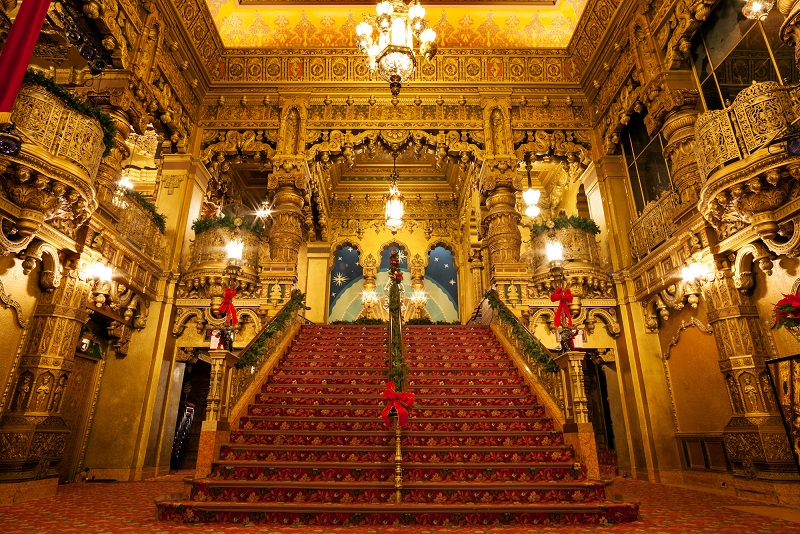
Above: the grand foyer of The United Palace of Cultural Arts
~ Author: Oberon
Monday June 25th, 2018 – The Cantanti Project, an enterprising collective of young singers headed by Artistic Director Joyce Yin, brought a truly enjoyable program of live music to Northern Manhattan this evening. In the fantastical lobby of the United Palace of Cultural Arts at 4140 Broadway, eight singers and an expert pianist performed operatic numbers, songs – both classical and contemporary – and tunes from the Broadway stages. That all the vocalists were women transformed the evening into a celebration of feminine pride and empowerment; when they joined for the finale – Go The Distance from Alan Menken’s HERCULES – they were really inspiring.
The United Palace originally opened as the Loew’s 175th Street Theatre in 1930; it was an ornate vaudeville house and movie theatre. In 1969, when many of the city’s grand movie theaters were slated for demolition, the United Palace of Spiritual Arts (formerly known as United Christian Evangelistic Association) took over the property.
I’d never been to this Palace before, but the foyer struck me an incredible ready-made setting for opera; the MAGIC FLUTE came immediately to mind, and dozens of operas from the Baroque era would look right at home there. For tonight, a grand piano had been rolled out and comfortable seating arranged in the space so that the performance seemed intimate even in such a grandiose setting. The acoustics are superb for singing: no mikes needed, thank you very much.
William Lewis accompanied the singers throughout the program; his playing was both supportive of the voices and very attractive in its own right.
Mr. Lewis opened the evening with the rhapsodic introduction to the Canzone di Doretta from Puccini’s LA RONDINE; this familiar aria was then taken up by soprano Rebecca Richardson, her big-lyric voice sounding vibrantly in the space. Joyce Yin’s If I Loved You from CAROUSEL profited well through her clear diction, pretty tone, and sincere delivery. Jane Hoffman and Brittany Fowler made a nice vocal blend in the enchanting Flower Duet from LAKME by Léo Delibes; with Mr. Lewis’s lovely support, they created a charming, sisterly atmosphere.
The distinctive voice of Tara Gruszkiewicz transformed the Aaron Copland arrangement of At The River into an almost operatic experience; her fine diction and magisterial delivery made for a winning performance. Another intriguing voice and personality, that of Aumna Iqbal, made her first appearance of the evening with Robert Schumann’s Wanderung to which she brought a dramatic lilt. Ms. Iqbal, who made such a great impression as Orfeo the the Cantanti Project’s production of Caccini’s EURIDICE earlier this year, had her arm in a sling this evening…but it didn’t hamper her singing.
Rebecca Richardson returned for Joaquin Rodrigo’s De Ronda – an all-too-short song. Mary Kathryn Monday’s Seguidilla from CARMEN was characterful, wherein she played with the dynamics to make an enticing effect. Lee Hoiby’s The Serpent has a wonderful rhythmic start; Ms. Yin sang the song with plenty of zest, moving thru the vocalise passages to a big, sustained high note at the end.
With the all-female line-up of singers tonight, it was only fitting that songs by female composers should be featured. The first of these was Consuelo Velázquez‘s Besame Mucho, the voices of Tara Gruszkiewicz and Mary Kathryn Monday filling the seductive melody with nicely contrasting timbres and skillfully-managed vibratos. Jane Hoffman sang Eva dell’Acqua‘s lovely Villanelle with its coloratura vocalise passages and showy cadenzas. We don’t hear Amy Beach‘s music often enough these days; Ms. Hoffman offered Beach’s beautiful I Send My Heart To Thee which reaches a passionate climax before subsiding to a pensive ending. Brittany Fowler chose Fanny Mendelssohn‘s Nachtwanderer which seems like a quietly rapturous waltz into which a dramatic mid-section is introduced.
Mr. Lewis’s arrangement of the traditional song Shenandoah suited Brittany Fowler well, showing off her depth of tone and commitment. The Evening Prayer from HANSEL & GRETEL benefited from an appealing blend of voices: the sweetly lyrical Angela Dixon and the steadfast, poetic Aumna Iqbal. Ms. Monday then gave an expansive and pleasing rendering of Build My House from Bernstein’s PETER PAN.
To Dvořák’s poignant Als die alte Mutter, Ms. Gruszkiewicz brought an Olde World duskiness of timbre that was quite haunting. In Home, from Alan Menken’s BEAUTY AND THE BEAST, Ms. Iqbal’s dramatic, songful performance marked her out as a singer with something to say.
Mr. Lewis’s arrangement of Harold Arlen’s Somewhere Over the Rainbow is one of the best versions of that classic song I have ever heard; Ms. Richardson and Ms. Yin meshed their voices to captivating effect, finishing with a rising, harmonized passage that recalls the last phrase of Sophie and Octavian’s final duet in DER ROSENKAVALIER.
Then came the ensemble-finale, Go the Distance, with the women soloing and duetting along the way to a concerted finish. I admit that seeing the ‘musical theatre’ pieces listed on the program gave me pause, but they ended up being some of the highlights of the evening.
~ Oberon
-
Air des Larmes
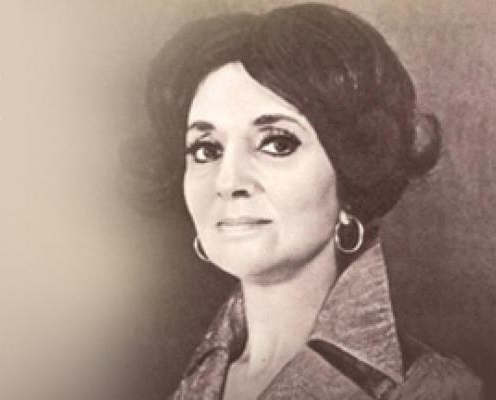
Zara Dolukhanova sings Charlotte’s Air des Larmes from Massenet’s WERTHER.
Zara Dolukhanova – Air des Larmes – WERTHER
“Go! Let my tears flow…they do me good, my dear! The tears that are left unshed sink back into our souls…their steady drops hammer the despairing heart which becomes hollow and weak…and too soon breaks.”
-
Rehearsal: Two Duets by Cherylyn Lavagnino

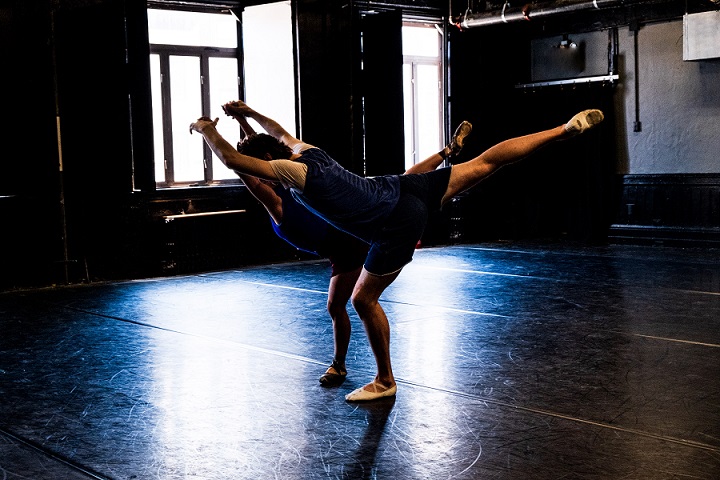
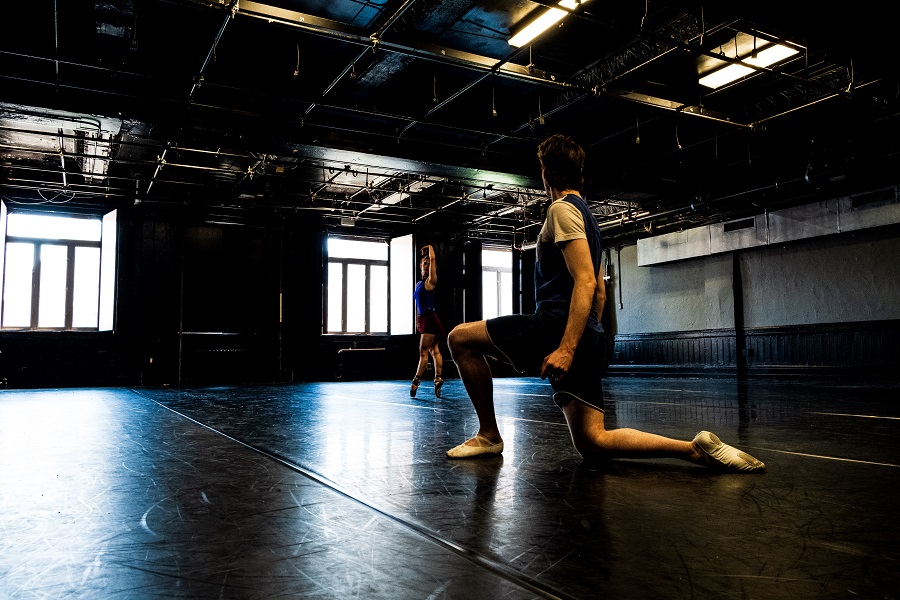
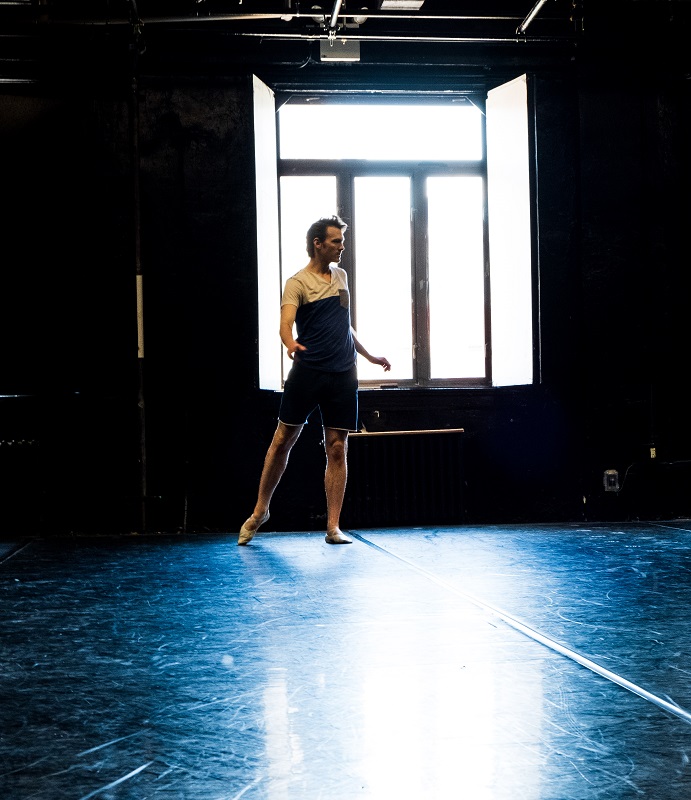
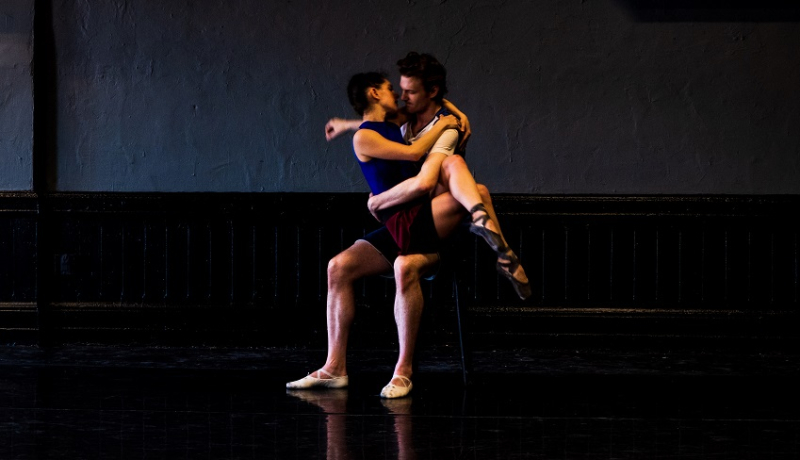
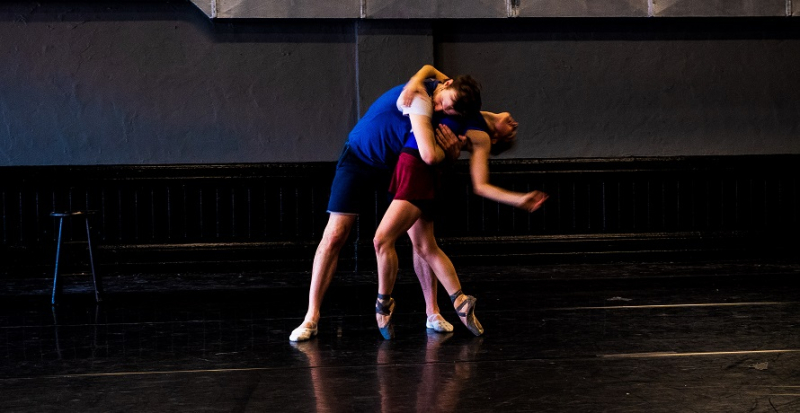
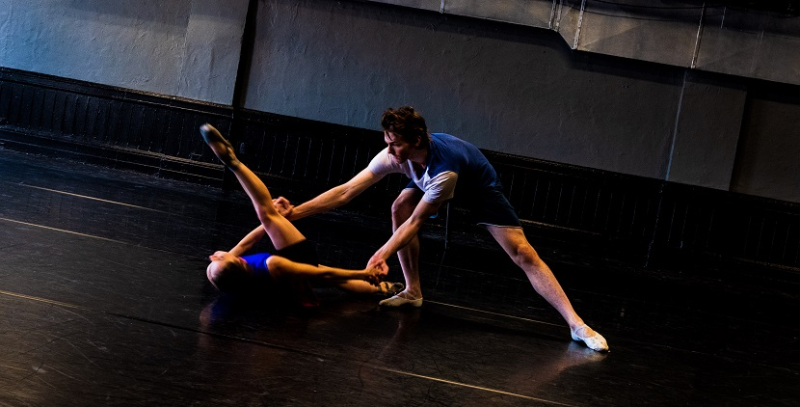
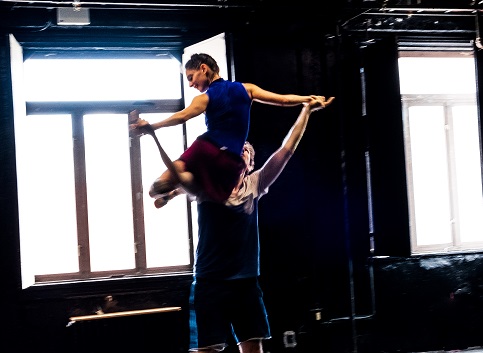
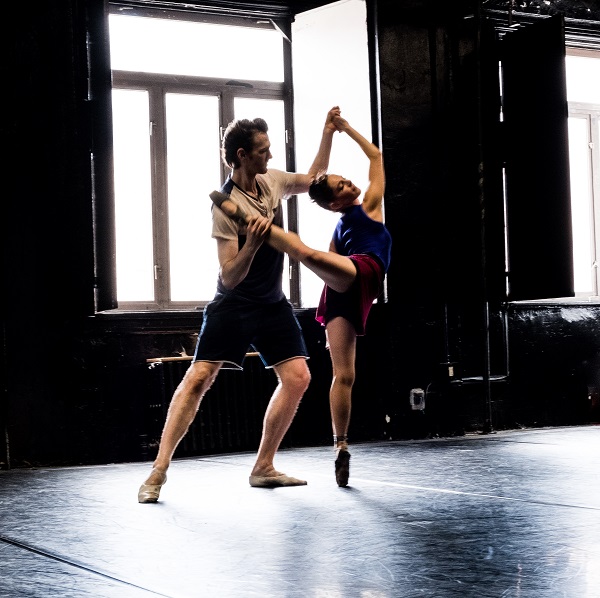
Above: Ramona Kelley and Daniel Mantei rehearsing for Cherylyn Lavagnino Dance; photo by Dmitry Beryozkin
~ Author: Oberon
Thursday June 21st, 2018 – Cherylyn Lavagnino Dance are preparing for their annual New York season with performances at the Tisch School of the Arts’ Jack Crystal Theatre on June 27th and 28th, 2018. Details and ticket information here.
I had missed Cherylyn’s performances last season due to my prolonged ‘indisposition’; I was all set to attend the performance this month when a family obligation took over. So I was very grateful indeed to be able to go down to the Tisch studios this afternoon watch a rehearsal of two duets from the upcoming program: one from the ballet Kamila, set to the song cycle The Diary of One Who Vanished by Leoš Janáček, and a free-standing duet set to Janis Joplin’s classic rendering of Gershwin’s Summertime. The delightful ballerina Ramona Kelley and former ABT dancer Daniel Mantei were paired in these two distinctively different pas de deux. My friend Dmitry Beryozkin was there to photograph the dancers:







~ Oberon
-
The Search for a Symphony @ Merkin Hall

Above: Johannes Brahms
~ Author: Oberon
Tuesday June 19th, 2018 – The last concert the St Luke’s Chamber Ensemble‘s series, Facets of Brahms, at Merkin Hall brought us Andy Stein’s octet-arrangement of the Beethoven Symphony No. 2 in D Major, Op. 36, and Alan Boustead’s nonet-reconstruction of Johannes Brahms’s Serenade No. 1 in D Major, Op. 11, which – in its orchestrated form – might have been designated as the composer’s first symphony.
Brahms seems to have been hesitant to attempt composing a symphony in large part because he could hear “the footsteps of a giant” – Beethoven – walking behind him. Brahms’s anxiety meant that it wasn’t until 1876 that his 1st symphony premiered, some 14 years after he’d made preliminary sketches.
This evening, the St. Luke’s Chamber Ensemble opened with Beethoven 2nd Symphony in an octet realization conceived by Andy Stein. Two violins, one viola, a cello, a bass, and clarinet, bassoon, and horn made up the ensemble. Their full, rich playing did not give a feeling of a ‘reduction’ in any sense of the word. Instead, it was a very pleasing, absorbing experience; and Mr. Klein was called to the stage for a bow, warmly greeted by the crowd.
The 2nd opens with a slow introduction which in a flash turns into a lively Allegro; this is ‘glad music’, rich in melodies. In the Larghetto, Beethoven churns out cordial, lyrical themes. The music summons up thoughts of Springtime, flowering meadows, and blue skies. The Scherzo shows the composer’s sense of humour, which to me seems even more evident in the witty opening of the final Allegro molto, which seems to have a touch of sarcasm.

Above: Jon Manasse
In tonight’s ensemble, Jon Manasse’s clarinet playing made a superb impression: I have heard him play often in recent seasons and he makes the music so alive, with his fragrant tone and attention to dynamic detail. His subtle playing in the final movement gave me a smile. Of equal note was the sound of Marc Goldberg’s mellow bassoon. Violinist Krista Bennion Feeney, so fine in last week’s concert, impressed again, as did bassist John Feeney.
The Brahms 1st Serenade is in six movements. The composer noted it as a ‘Sinfonie-Serenade‘, later enlarging it for full orchestra at the urging of Clara Schumann. Alan Boustead gives the music back to its chamber roots in his excellent rendering.
Jesse Mills was the principal violinist in this work tonight, with Ms. Bennion Feeney, violist David Cerutti, cellist Daire FitzGerald along with Mr. Feeney’s bass filling out the string contingent. Joseph Anderer provided warm-toned horn-playing, and clarinetist Dean LeBlanc joined Mr. Manasse. Elizabeth Mann’s flute sang forth with serene, appealing tone.
The first three movements of this Serenade each felt a bit long tonight, as if the composer wanted to keep presenting his admittedly lovely themes to us again and again. By the fourth movement, a double Menuetto featuring the winds, Brahms was showing more economy. Ms. Fitzgerald and Mr. Anderer made the most of the ‘hunting call’ motif of the Scherzo, whilst Ms. Mann’s playing in the Rondo~Allegro was very pretty indeed. And throughout, Mr. Manasse continued to display the artistry that makes him such a valuable player on the Gotham scene.
~ Oberon
-
Marta Fuchs

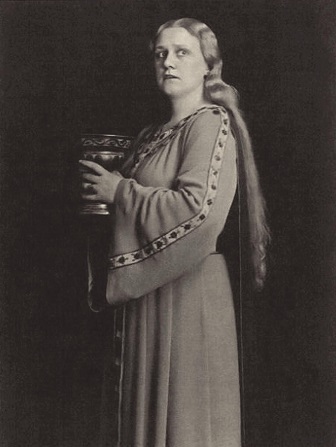
Above: Marta Fuchs as Kundry
Marta Fuchs began her career as a contralto in 1923; for the first five years, she sang only concerts. In 1928, at Aachen, she began singing such operatic roles as Gluck’s Orfeo, Verdi’s Azucena, and Carmen. Then, in 1930, Fuchs made the switch to dramatic soprano, though she retained parts of her old repertoire. At the Dresden Oper, she sang the world premieres of several now-forgotten operas.
In 1931, she debuted at the Deutschen Opernhaus, Berlin, as Octavian in Der Rosenkavalier; she had a great success. From 1935, she was associated with both Dresden Oper and Berlin’s Staatsoper. Marta Fuchs became one of her generation’s foremost interpreters of the great Wagner roles. From 1933 to 1942, at Bayreuth, she was a celebrated Isolde (1938), Kundry (1933-1937), and Brünnhilde (1938-1942).
In 1936 she appeared as a guest with the ensemble of the Dresden State Opera at the Covent Garden Opera in London as Donna Anna in Don Giovanni, as Marschallin in Rosenkavalier, and as Ariadne in Ariadne auf Naxos; and in 1938, she sang Isolde at the Théâtre des Champs-Élysées in Paris. 1942 brought successful guest appearances at the Maggio Musicale, Florence (as Leonore in Fidelio), and the Vienna State Opera, where she continued to appear until 1944.
An ardent Christian, Fuchs steered clear of the rising tide of National Socialism. Because Adolf Hitler was an ardent lover of Wagner, he had met Fuchs. In 1936, the soprano told Hitler: “Mr Hitler, you are going to make war!” After Hitler’s protestation, she replied, “I don’t trust you.” In May 1939 Hitler greeted her asking, “Now, have I made war?” Fuchs replied, “I still don’t trust you.”
Marta Fuchs fled the destruction of Dresden, eventually settling in Stuttgart and appearing with the opera company there. She retired from singing in 1954, and passed away some twenty years later.
Many years ago I had heard the Fuchs voice during a time when I was exploring singers of the past. But recently, I came back to her, and am much taken with the beauty and expressiveness of her singing in Brünnhilde’s pleading of her case to Wotan from Act III of Walkure:
Marta Fuchs – War es so schmählich ~ WALKURE
And here is her wonderful Liebestod from Tristan und Isolde:
Marta Fuchs – Liebestod ~ Tristan und Isolde
~ Oberon
-
Brahms & The Schumanns @ Merkin Hall

Above: pianist Pedja Mužijević, photographed by Jacob Blickenstaff
~ Author: Oberon
Tuesday June 12th, 2018 – Works by Johannes Brahms, Robert Schumann, and Clara Schumann were on offer as musicians from the Orchestra of St Luke’s joined pianist Pedja Mužijević in this concert at Merkin Hall which is part of a series entitled Facets of Brahms.
Johannes Brahms, Clara Schumann, and Robert Schumann were close friends and confidantes. Schumann had pronounced Brahms the heir of Beethoven, marking him out as third of the Three Bs. Following Schumann’s mental deterioration and his eventual death in an asylum, Brahms and Clara continued a flirtatious friendship that endured for many years.
Johannes Brahms’ Scherzo from the Sonatensatz in C-Minor was the composer’s share in an 1863 collaborative musical gift for the violinist Joseph Joachim; Robert Schumann and Albert Hermann Dietrich each contributed movements of their own.
In this evening’s performance, violinist Krista Bennion Feeney joined Mr. Mužijević. We were seated very close to the stage, and at the Scherzo‘s animated start, the sound of the piano seemed often to overwhelm the violin. Ms. Bennion Feeney is a subtle artist, and it took a few moments for the balance between the two instruments to be achieved. Thereafter, the performance became distinctive, with alternating currents of passion and lyricism. Ms. Bennion Feeney’s arching tonal glow in the central violin theme was most appealing; the piece then moves on to a big finish.
Returning with cellist Myron Lutzke – whose playing with the St Luke’s orchestra has often endeared itself to me – the violinst and pianist gave a wonderfully simpatico rendering of the Schumann Piano Trio No.1, Op. 63. Mr. Lutzke’s dusky timbre and his Olde World cordiality of style seemed beautifully matched to Ms. Bennion Feeney’s superb control of dynamics whilst Mr. Mužijević at the Steinway reveled in the many marvelous piano passages Schumann has provided.
The opening movement is marked, “Mit Energie und Leidenschaft” (‘With energy and passion’). Throughout the first movement, achingly expressive passages from the violin over piano arpeggios alternate with dramatic outbursts. The cello’s incursions are relatively brief but telling. A change of mood near the end builds slowly to a kind of grandeur. Deep tones from the cello then have a calming effect, before another build-up leads to a return to the first theme, now altered and lovingly styled by Ms. Bennion Feeney. The music flows on to a rather unusual minor-key finish.
The second movement has a lively, scherzo-like quality. Its repeated rising theme and sense of rhythmic drive have a wonderfully familiar feeling. The rising motif returns in the Trio section, although here it is slower and more thoughtful. Violin and cello sing up and down the scale, then we zoom back to the original ascending theme, to a sudden ending.
Marked “Langsam, mit inniger Empfindungen” (‘Slowly, with inner feeling’), the third movement ravishes with a poignant violin melody, the cello providing a tender harmony. Things grow more animated; the violin hands over the melody to the cello and their voices entwine. This music drew me in deeply as it lingered sadly, with sustained low cello notes. The movement ends softly, and the three musicians went directly into the Finale, with its joyous song. An exhilarating rush to the finish brought warm applause for the three players.
As the audience members returned to their seats after the interval, it was apparent that our neighbors had stepped out for a cigarette: the smell was dense and unpleasant. We made a quick dash to the balcony where the usher was welcoming. We found a quiet – though chilly – spot from which to enjoy the concert’s second half.
Ms. Bennion Feeney and Mr. Mužijević’s radiant performance of Clara Schumann’s Romances for Violin, Op. 22, assured that Frau Schumann’s music more than held its own when set amidst that of her more celebrated husband and the masterful Brahms.
From its lovely start, the first Andante molto has a sense of yearning, the violinist bringing both depth of tone and gentle subtlety. Lightness of mood marks the Allegretto, with its passing shifts to minor, decorative trills, and a wry ending. A lilting feeling commences the final movement, melodious and – again – modulating between major and minor passages. The piano takes up the melody, and all too soon the Romances have ended.
Ms. Bennion Feeney and Mr. Mužijević rounded out their busy evening with the Brahms Horn Trio, Op. 40, joined by Stewart Rose. Mr. Rose’s tone can be robust or refined, depending on the musical mood of the moment. A few passing fluffed notes go with the territory: as a frustrated horn-player, I know it all too well.
I did find myself wishing that the violinist and horn player had been seated during this piece; I think it makes for a more intimate mix with the piano. The music veers from the pastoral to the poignant, from rich lyricism to sparkling liveliness, and the ‘hunting horn’ motifs in the final Allegro con brio always give me a smile. The three players made this quintessential Brahms work the crowning finale of a very pleasing evening.
~ Oberon
-
BroadwayWorld Review: Lydia Johnson Dance

Above: Lydia Johnson Dance in Undercurrent; photo by Dmitry Beryozkin
This review by Barnett Serchuk for BroadwayWorld of Lydia Johnson Dance‘s recent program at Ailey Citgroup Theatre reminds me of my own first encounter with Lydia Johnson’s work.
On a whim, I went to one of Lydia’s studio showings in 2009, knowing nothing about her and with zero expectations. Nine years on, I still think she’s one of the very few truly distinctive choreographers on the New York scene.
A gallery of Dmitry’s photos from the LJD Ailey show here.
-
Bonaldo Giaiotti Has Passed Away

~ Author: Oberon
Bonaldo Giaiotti (photo above) was my favorite basso. Though he sang at a time when several wonderful bassos were to be heard at both of the houses at Lincoln Center – Tozzi, Siepi, Hines, Treigle, Ghiaurov, Raimondi, Moll, and Ramey, among others – there was something about Giaiotti’s voice that I simply loved. Even in relatively brief roles like the Commendatore in DON GIOVANNI or Monterone in RIGOLETTO, he always made a distinctive mark.
Over a span of nearly 30 years – beginning with his Met debut as the High Priest in NABUCCO on opening night, 1960, and concluding with a performance of Don Basilio in BARBIERE DI SIVIGLIA in 1989 – Giaiotti sang more than 400 performances with the Metropolitan Opera Company in New York City and on tour.
I first saw Giaiotti onstage in what was to become one of his signature roles – Timur in TURANDOT – at the Old Met in 1965. He performed it over 50 times with The Met, and countless times worldwide. How movingly Giaiotti conveyed the character’s heartbreak:
Bonaldo Giaiotti as Timur in Puccini’s TURANDOT
In 1964, Giaiotti sang a magnificent Banco in Verdi’s MACBETH on a Texaco/Met broadcast.
Bonaldo Giaiotti – Come dal ciel precipita ~ MACBETH
Once the New Met had opened in 1966, I saw Giaiotti often in such roles as Timur, Colline in BOHEME, Ramfis in AIDA, Raimondo in LUCIA DI LAMMERMOOR, and King Henry in LOHENGRIN. He was particularly impressive as Alvise in LA GIOCONDA where he more than held his own amidst such powerhouse co-stars as Tebaldi, Corelli or Tucker, MacNeil, and Cossotto.

Roles Giaiotti sang at The Met less frequently – and in which I sadly never saw him – included Mephistopheles in FAUST, Prince Gremin in EUGENE ONEGIN, Philip II in DON CARLO, and Sarastro in ZAUBERFLOETE.
Here are more samples of Giaiotti’s singing:
Franco Corelli & Bonaldo Giaiotti – Nume custode e vindice ~ AIDA – Rome 1966
Though not of the best sound quality, this aria from BOCCANEGRA shows the basso’s ability to bring down the house:
BOCCANEGRA aria – Bonaldo Giaiotti – NY 1968
Would that we had an Italian basso today of Giaiotti’s caliber and versatility.
~ Oberon
-
Nicholas Phan: ILLUMINATIONS
~ Author: Oberon
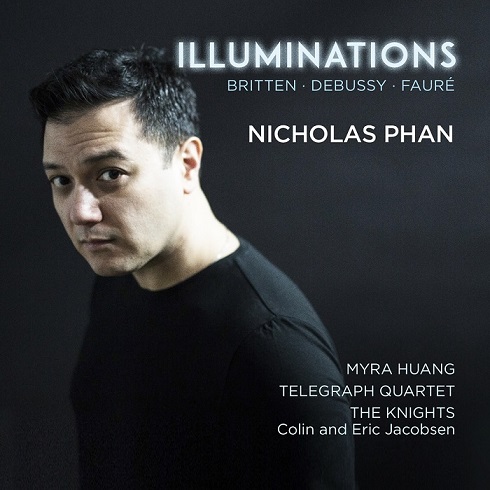
A new disc from tenor Nicholas Phan has come my way. Entitled ILLUMINATIONS, the CD features works by Britten, Debussy, and Fauré. During the classical music season, I don’t listen to a lot of music at home; I’m so busy attending and writing about live performances that I need downtime during the day so that everything stays fresh. But Mr. Phan’s voice being a particular favorite of mine, and the repertory on ILLUMINATIONS being extremely enticing, I soon found time to listen.
Having Myra Huang at the keyboard is an added attraction: she and Mr. Phan gave a memorable recital at the Caspary Auditorium in 2009, and their work together on ILLUMINATIONS confirms the appeal of their partnership.
While the three composers represented on the disc are all high on my list of favorites, Gabriel Fauré‘s La Bonne Chanson is the least-familiar to me of the pieces Mr. Phan has programmed. These songs were composed mainly in the summers of 1892 and 1893, when the composer had fallen in love with the soprano Emma Bardac, a married woman. Fauré chose poems by Paul Verlaine that reflected his romantic exultation; the cycle – for voice, piano, and string quartet – is dedicated to Mme. Bardac, who later married Claude Debussy.
Even before we hear the voice of Mr. Phan on the recording, the briefest opening phrase from the Telegraph Quartet establishes the mood. The tenor then begins to sing – “Une Sainte en son aureole” – and his expressive gifts are immediately evident, the words coloured by a sense of romance that is at once calm and urgent. Ms. Huang’s rippling piano motif sets the mood for “Puisque l’aube grandit“, the singing filled with desire which becomes quietly rhapsodic.
To a gently rolling accompaniment, “La Lune blanche luit dans les bois” evokes moonlight; the words themselves are picturesque, and on the final phrase – ‘C’est l’heure exquise!’ – Mr. Phan rises to a delicately perfumed finish. “J’allais par des chemins perfides” brims with the glow of reassuring love and companionship, wherein the tenor paints with delicious vocal colours. At first expressing a fear of loving too much – too deeply – “J’ai presque peur, en verite” settles into steadfastness, the lover prepared to face any potential setbacks to his infatuation.
Whispering piano and poignant strings open “Avant que tu ne t’en ailles“; the music takes on a fluttery feel as the poet sings of birds in flight and breezes on the meadow. In this song, Mr. Phan ideally captures a sense of wonderment before powerfully summoning his beloved from slumber to greet the sunrise Following on, “Donc, ce sera par un clair jour d’ete” is all light and joy until the final verse becomes a hymn to married love.
The tenor brings poetic nuances, supported by tender strings, to “N’est-ce pas?” This song is dreamy at first, becoming more passionate. A silken violin passage sustains the romantic atmosphere: the lovers will face the future with hope: ‘Our love is unalloyed…isn’t that so?’ Animated piano figurations announce the end of Winter in “L’hiver a cesse“; straightforward lyricism from the singer greets the Spring, confident of his future. The song’s final reflective phrases tell of his assured delight in their love.
I can’t recall ever having heard Debussy’s Ariettes oubliées sung by male voice before. The six poems by Paul Verlaine that make up the set Debussy published in 1903 were revisions of originals the composer had written between 1885 and 1887. The dedication of the 1903 edition is to Mary Garden, ‘an unforgettable Mélisande’, though they were not necessarily meant for her particular voice. Mr. Phan and Ms. Huang make magic with them.
“C’est l’extase langoureuse” is sung and played with dreamy softness. Sounds of nature are evoked before passion briefly rouses itself. The song fades to a whisper.
“Il pleure dans mon coeur” is pervaded with an air of gentle sadness. The piano murmurs quietly in a raindrop motif. The tenderness in Mr. Phan’s voice at “Il pleure sans raison” (“To weep without reason”) is ravishing; Ms. Huang’s playing has a haunting sense of fragility. The two artists maintain their sense of the poetic in the quiet despair of “L’ombre des arbres“, Mr. Phan’s final phrases here can only be described as exquisite.
The mood brightens considerably in “Chevaux de bois“, a song about the wooden horses on a merry-go-round. The amusing text pours out over lively piano motifs. At nightfall, the music calms, and the final verse is very gently sung. The carousel runs down.
“Green” finds the poet bringing flowers and fronds to his beloved, suggesting that they nap together – though he probably has something else in mind. The rippling piano speaks of his restlessness before calming to a hushed state of day-dreaming.
The final song, Spleen, has a simple start from the piano. It’s a song about lost love, and of recalling happier times when one is in despair. Mr. Phan’s final sigh of “…hélas…” signals his resignation.
It was through Elisabeth Söderström‘s intriguing recording that I became familiar with Benjamin Britten’s Les Illuminations. These settings of poems by Arthur Rimbaud, begun in Suffolk in March 1939 and completed a few months later in the USA, were originally written for soprano Sophie Wyss. The songs are often performed by a tenor: Britten’s longtime lover and muse Peter Pears sang them frequently in recitals, starting in 1941.
Rimbaud (1854-1891) wrote all of his poetry in a three-year period from 1872-1875. His writing career, often under the influence of hashish, was marked by disappointment, restlessness, and scandals involving Rimbaud and his fellow poet Paul Verlaine. The poems of Les Illuminations were probably his last creative efforts.
Britten chose a sentence from one of the poems as a sort of emblem for the cycle: “J’ai seul la clef de cette parade sauvage” (“I alone have the key to this savage parade”). This phrase is sung three times in the course of the songs.
The songs might be thought of as a series of dreams. That’s how I felt listening to them in Mr. Phan’s rendering, wherein he forms a marvelous collaboration with the orchestral collective The Knights.
Opening with instrumental shivers of anticipation and heraldry, Fanfare brings the first declaration of “I alone have the key to this savage parade!”, the song’s only text. A poignant violin solo follows. Pulsing strings and urgency of expression – excitement, in fact – from the singer fill Villes: descriptions of the rush and clamour of cities. The music accelerates to a gallop before calming again, letting the strings sputter out.
Phrase is eerie, high, quietly ecstatic…and brief. Mr. Phan’s evocative final phrase, “Et je danse…” is dreamy indeed. Antique, which follows immediately, is plaintive and erotically tinged. Over delicately strummed strings, the singer’s soft singing delights again, as does a lingering violin. Royaute is a vivid, strutting salute to self-proclaimed royalty; in Marine, the tenor sings the words on isolated notes, with a downward swoop at the end. Interlude brings a repeat of the emblematic ‘key’ phrase.
Being Beauteous, the longest song of the cycle, has a sweetly langourous feel, and Mr. Phan sings it like a vocal caress. The music becomes more animated, but then reclines again. The violin ascends, and the tenor offers some of the disc’s most beautifully expressive singing here. The end of the song strikes me as ironic, with its gentle string flurry.
Parade sings of the great sideshow of life, its feeling droll and swaggering. The singer again reminds us that he alone holds the key to these visions. The music is march-like, trilling itself away. For the final Départ, the poet anticipates moving on to new loves, new views, new sensations. But it ends on a darkish note.
~ Oberon
 Oberon's Glade