Author: Philip Gardner

  • Gražinytė-Tyla|Rachvelishvili|MET Orchestra

    AR

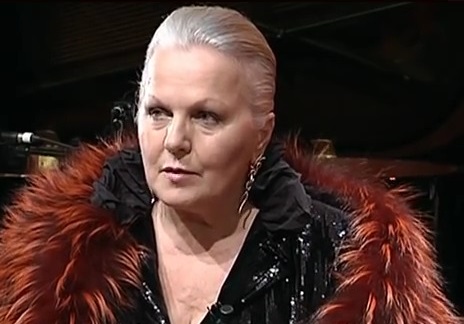
    Above: Anita Rachvelishvili, the stellar soloist at Carnegie Hall tonight

    ~ Author: Oberon

    Friday May 18th, 2018 – Mirga Gražinytė-Tyla conducting The MET Orchestra with mezzo-soprano soloist Anita Rachvelishvili at Carnegie Hall. Works by Debussy, Mussorgsky, and Tchaikovsky were on the bill.

    Claude Debussy’s Prélude à l’après-midi d’un faune opened the evening; this score, now beloved of ballet fans worldwide, was the setting for the controversial ballet by Vaslav Nijinsky who – at its 1912 premiere in Paris – caused a scandal with his portrayal of the exotic faun. It has since been performed in various choreographic versions, most notably that of Jerome Robbins for New York City Ballet (1953) where it remains a mainstay of the repertoire.
     
    Tonight, The MET Orchestra brought just the right glow of mystery and languid sensuality to this music.  Beautifully atmospheric playing from flautist Seth Morris was an outstanding feature of the performance; his solo bow rightfully drew bravos. Throughout, the numerous wind and harp solo passages were poetically played. At times, the pacing seemed just a shade too fast; but the overall effect was sublime. So nice to see the Met’s peerless concertmaster, David Chan, getting out of the pit and out onto the stage where his musicianship could shine the brighter.  
     
    CH1384284
     
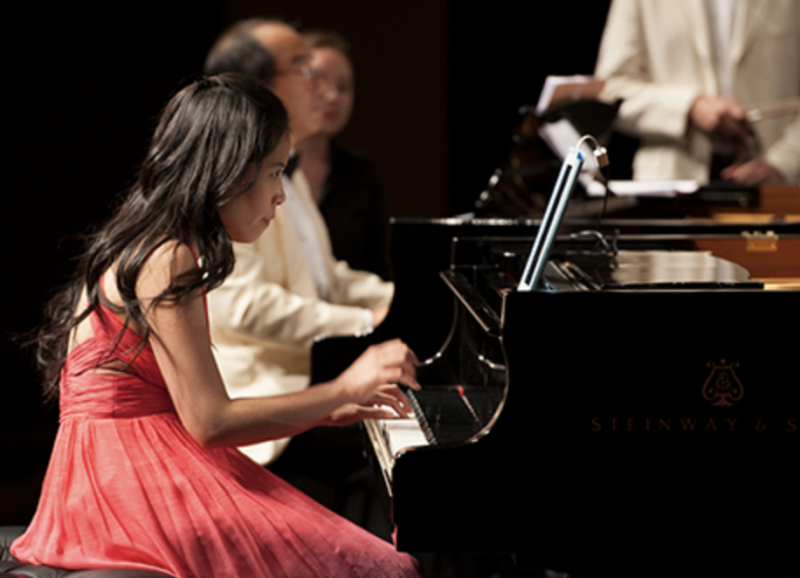
    Ms. Rachvelishvili (above, in a Chris Lee photo from the performance) then appeared for Modest Mussorgsky’s Songs and Dances of Death (performed in the Shostakovich orchestration). The Georgian mezzo, who is making quite a name for herself these days, looked and sounded splendid, with her softer singing carrying superbly in the Hall, and producing a thrilling effect when she unleashed her full power.  

    Songs and Dances of Death, composed in the mid-1870s, is a set of four songs. In Lullabye, a mother cradles her sick child, who grows increasingly feverish. Death appears, disguised as a babysitter, and rocks the infant to eternal sleep. Here Ms. Rachvelishvili displayed a haunting use of almost straight-tone, employed as a means of lyrical expression. Her timbre is darkish, wine-coloured, with a haunting quality.

    Serenade depicts the figure of Death waiting outside the window of a dying woman, serenading her like a wooing lover. Ms. Rachvelishvili was simply magnificent here, the lushness and house-filling strength of her voice making a vivid impression. The music rises to a passionate conclusion. 

    In Trepak, a drunken peasant stumbles outside into the snow and becomes caught in a blizzard. The figure of Death invites him to dance the Trepak with him. The drunken man freezes to death, dreaming of summer fields and doves. The song starts softly, then a rhythmic figuration springs up; the bass-clarinet is prominent. Ms. Rachvelishvili’s vocal power, unleashed, was something to hear; and she brought forth some simply massive chest tones. For all the thrill of her voluminous, rich sound, she can also be extraordinarily subtle. 

    The Field Marshal is the final song, wherein the figure of Death is depicted as an officer summoning the dead troops of opposing armies after a horrific battle. As the ghostly soldiers parade before him, the Field Marshall speaks of them in remembrance. A bit of tension on some of the singer’s upper notes was swept aside by the visceral impact of her singing; in a calmer interlude, the straight-tone was again brought forth to extraordinary effect.

    Ms. Rachvelishvili received rapturous applause and was called back twice for additional bows. Someone handed flowers up to her, always nice to see. The crowd clearly wanted an encore, but perhaps the singer knew best; she left us with the echoes of the powerful Mussorgsky songs.   

    Following the interval, Ms. Gražinytė-Tyla led Tchaikovsky’s Symphony No. 4 in which the orchestra shone. Written in 1877-1878, the symphony is dedicated to the composer’s patroness and ‘dear friend,’ Nadezhda von Meck.

    Following his catastrophic marriage to his former student, Antonina Miliukova, which lasted all of two months, Tchaikovsky began writing his fourth symphony. Struggling with his sexuality and battling depression, he produced a symphony which, he is quoted as saying, is about Fate: “the fatal power which prevents one from attaining the goal of happiness”.

    The 4th is vastly pleasing in so many respects, with its titanic fanfares, its plaintive oboe solo in the Andantino, its originality in a Scherzo full of plucking strings, and the rush and plush of the final Allegro con fuoco. What is doesn’t do – for me, at any rate – is reach the depths of feeling that the composer so often evoked in other works.

    Mirga Gražinytė-Tyla’s extremely animated podium style became wearying to watch after a while. This orchestra plays so well on their own; the musicians hardly need a conductor at all. Constantly in motion, Ms.  Gražinytė-Tyla rose on her toes, hopped up and down, waved her baton overhead, and energetically gave cues. I ended up closing my eyes, to avoid this visual distraction.

    Though the 4th does not seem to me to be peak Tchaikovsky – though the composer himself thought highly of it, apparently – it did make me long to see EUGENE ONEGIN, SWAN LAKE, SLEEPING BEAUTY, and Balanchine’s SERENADE.

    There were empty seats around me, and the couple behind me remarked that the MET Orchestra series no longer seems to be the sell-out it has always been in seasons past. I wonder if the absence of James Levine has anything to do with it?

    ~ Oberon
  • The Schumann Quartet @ Chamber Music Society

    30738946_10155657104388666_6425725551075393536_n

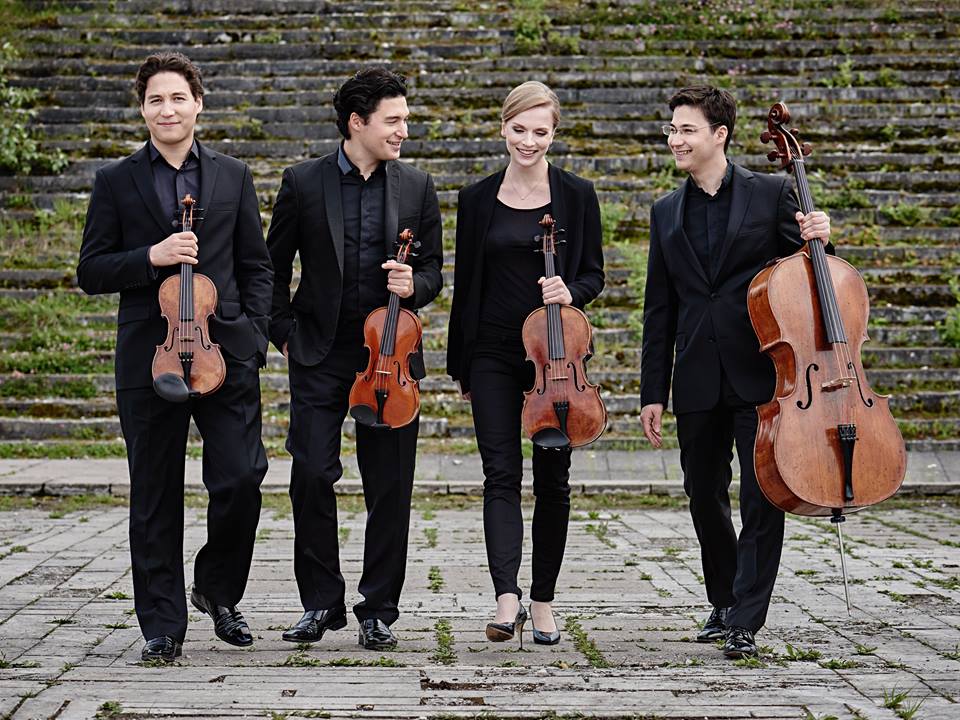
    Above: The Schumann Quartet

    ~ Author: Oberon

    Sunday April 29th, 2018 – The Schumann Quartet‘s finely-contrasted program at Chamber Music Society this evening brought us works composed in four different centuries, including the US premiere of a piece composed in 2006 by Aribert Reimann.

    One of the (many) nice things about attending Chamber Music Society frequently: your opinions on various composers change. Over the past few seasons, being exposed often to the music of Haydn has altered my feelings towards his music, which had always seemed to me attractive and well-crafted but lacking in the emotional qualities that make Mozart, Beethoven, and Brahms so satisfying. 

    So this evening’s opening Haydn – the Quartet in B-flat major for Strings, Hob. III:78, Op. 76, No. 4, “Sunrise” (1797) – didn’t give me the old reaction: “If only they’d programmed _____________ instead,” but rather a feeling of appreciation, especially as it was so finely played. Each member of the Schumann Quartet has a beautiful ‘voice’, and as they blended in this music the effect was heavenly.

    The “Sunrise” Quartet is indeed worthy of its name: seconds into the piece, an ascending phrase from the violin depicts the moment of dawning day. Soon afterward, the music turns lively, and the players show off their expert sense of timing. When the music turns darkish, the layering of the four musical lines is truly atmospheric.

    In the Adagio which follows, a lovely sense of calm pervades. The high violin sings serenely over the warmth of the lower mix; modulations are graciously set forth, the cello with glowing tone. The Menuetto has an oddly ‘Scottish’ feeling, and in a da capo, subtly charming hesitations are felt. The quartet then dove immediately into the final Allegro, ma non troppo – ‘non troppo‘ being the key, for the pacing had a gentle lilt. As things turn more lively, the harmonizing violins bring a witty touch. A sudden gear shift sets up a super-fast conclusion.

    The Schumann Quartet then moved on to Bartók: his Quartet No. 2 for Strings, BB 75, Op. 17 (1914-17), a wartime work which was given a remarkable interpretation by the young musicians: thoroughly engrossing.

    The Bartók 2nd’s three movements each seem to represent an emotional state: solitary life, joy, sorrow. An eerie sense of restlessness sets the mood of the opening Moderato; contrasting passages of intensity and somber beauty find the Schumanns at their most expressive, the probing cello making a special impression. Tonal richness wells up, angst and poignant longings are finely delineated. A rocking motif, plucked cello, duetting violins, and dusky viola drift thru our consciousness before the music takes on a searing quality. This subsides to movement’s sudden, near-silent finish.

    The Allegro is scrambling, animated, constantly pulsing. The Schumanns relish the passages of plucking with brief bits of melody tucked in. The music becomes driven, then suddenly stalls. Following more hesitations, staccati, and snatched commentary, energy is restored. Trilling, the music plunges on. But we are not there yet: another pause, and some agitato scurrying before a big finish. The rhythmic vitality of the Schumanns gave this Allegro just the perfect sense of dancing. 

    An alien sense of gloom descends over the concluding Lento as a bleak melodic motif is passed violin to violin to viola to cello. From muted, pensive blendings, the violin rises to the heights. Intense harmonies bring a density of sound that is suddenly stilled. From quietude, another unsettling passage builds. Plucked notes bring us to a whispered ending.

    Throughout the Bartók, I was deeply engaged by the Schumanns’ playing, sitting forward to catch every nuance. My focus was so intense that the hall and everyone around me seemed to vanish; it was just me and the music – a rare, profound feeling.

    I confess to never having listened to much of Aribert Reimann’s music; I took a recording of his opera LEAR from the library a few years ago and found it off-putting in the extreme. I cannot say that the composer’s Adagio zum Gedenken an Robert Schumann for String Quartet – in its US premiere performance this evening – did anything to make me want to explore more of the composer’s work, despite the excellence of the playing.

    Dark viola and cello and powerful staccati from the violins open the piece. The music becomes woozy; at times it sounds seasick. Moments of beauty in the richness of the lower voices, and high-lying phrases from the second violin are welcome. The cellist taps his cello. 

    From nowhere, a hymn-like melody appears, then goes askew; these motifs alternate for a bit before the music turns metallic. High violin notes and strange harmonies carry the 8-minute work forward. As an imagining of what music Robert Schumann in his madness might have heard in his head, Reimann’s Adagio is touching; this alone might make it worth hearing again in future.

    To round out the evening, Robert Schumann’s Quartet in F major for Strings, Op. 41, No. 2 (1842). This was Schumann’s first effort in the quartet genre, and both my companion and I had a sense that the composer was rather feeling his way into it: sometimes the flow of musical ideas seems a bit disjointed. However, there are plenty of passages to savour – and a wonderfully deft Scherzo – which the players brought forth in their polished, melodious performance.

    ~ Oberon

  • New Music @ Rose Studio

    ~Author: Scoresby

    Thursday April 26 2018 – At the Chamber Music Society of Lincoln Center’s last New Music concert of the season, the Schumann Quartet and pianist Gloria Chien gave a wide-ranging performance. The first piece on the program was the last movement of Swiss composer Helena Winkelman‘s Quadriga Quartet for Strings titled “Sleipnir the eight-legged” based on the eponymous horse in Norse mythology. While only the last movement of the quartet, Ms. Winkleman is open to it being played alone. It is a rollicking piece that includes references to Bartok, jazz, metal, and Swiss folk music all in a contemporary idiom.

    The Schumann Quartet played through the virtuosic material with enthusiasm, indulging in all the fun timbres Ms. Winkleman imbeds in the score and still able to bring out the lyricism that punctuates the more cacophonous moments. In fact, violist Liisa Randalu and cellist Mark Schumann seemed to blend incredibly well as duo – matching each other to create a delicious backdrop for first violinist Erik Schumann and second violinist Ken Schumann’s lyrical melodies. Through the work, the rhythmic pulse sounds like a frenetic horse stomping through – it is a shame we only got to hear one movement of this quartet. I look forward to hearing more of Ms. Winkleman’s music soon.

    Screen Shot 2018-05-01 at 5.25.18 PM

    Above: Schumann Quartet; Photo Credit: Kaupo Kikkas

    The second work on the program was Timo Andres’s five continuous movement work Quintet for Piano, Two Violins, Viola, and Cello. The aptly named first movement Cannons and Fables, sounds like an upbeat riff on minimalist Schumann. The most interesting was the second movement, which is based on large dusty tremolos in all of the instruments. The quartet’s tight and structured sound contrasted the more rustic sounding piano part. While interesting to listen to – this doesn’t seem to Mr. Andres’s most interesting work.

    Henze’s brief “Sonatina for Violin and Piano” seemed highly structured and a completely different sound world than the earlier Andres. Second violinist Ken Schumann and Ms. Chien presented the work based off of themes from one of his operas. The Allegretto has an active piano work full of counterpoint and dissonance, with what seem to be quotes from Messiaen’s Quartet for the End of Time. Mr. K Schumann captured the almost romantic nostalgia in the second movement, his mute letting him produce a supple ghostly sound and his phrasing emphasizing the lyrical quality of the music. Ms. Chien in the last movement embraced the drama in the piano part and gave heft to the huge chords that end the piece below Mr. K Schumann’s highpitched violin.  

    After the rigidly structured world of Henze, the program moved into two selections from “Piano Etudes” by Augusta Read Thomas. The first (etude 3), titled Cathedral Waterfall – Homage to Messiaen, is a spacious work that uses the extreme reaches of the piano and heavy use of pedal to evoke a large cathedral. Ms. Chien let the piano boom in these chords, making the small space seem like an echo chamber. She managed to let the color of each chord be clear without blending into the next – thus producing a chiming sound. This effect sounded at once like Feldman’s sparse tone mixed with the large spaciousness that Crumb’s Makrosomos evoke. The second work (etude 2) called “Fire Waltz – Homage to Bartók” is a thrillingly fun Ligeti-esque work. Ms. Chien seemed to stick to its incisive rhythm and sound like a machine that kept getting interrupted. It was a fun reading that seemed to relish in Ms. Thomas’s jazzy composition style.

    Screen Shot 2018-05-01 at 5.22.19 PM

    Pianist: Gloria Chien

    The most well-known piece on the program was Arvo Pärt’s Fratres. Mr. Pärt originally composed the work in 1977 and has rearranged it over 15 times for different instrument combinations. While all share a structural chord sequence and something percussive, each one has a slightly different sound. In her speech beforehand, Ms. Randalu shared that Mr. Pärt thought of his music as existing not for a particular timbre or instrument, but in absolute forms – structural music. All four members of the quartet gave a dedicated performance. 

    Mr. K Schumann held the same note for all 10 minutes of the performance, letting everyone blend around and atop his drone. This version of Fratres is more spiritual and less earthy than other versions of the piece. They took the chords slowly, the instruments started in the high harmonics and over the course of the piece moved to the lowest notes through the chord sequence – Mr. M Schumann’s warm cello pizzicato breaking up the sequence. The lack of contrast in this version of the work, makes it much more sparse – perhaps intentional to evoke a choir. While certainly a beautiful work and given a detailed rendering here, it seemed like an odd way to end such an exciting program – perhaps it would have been better served an opener? Nonetheless, it capped another great performance in the CMS New Music Series.

  • Classical Evolution @ Chamber Music Society

    2aaf32_c2a51dd8031d4d7cab51a39159e29b1e~mv2_d_4048_3215_s_4_2

    Above: Tommaso Lonquich, photographed by Anna Grudinina

    ~ Author: Oberon

    Friday April 27th, 2018 – Chamber Music Society of Lincoln Center brought together clarinet phenomenon Tommaso Lonquich, the outstanding pianist Gilles Vonsattel, and a quartet of sterling string players for an evening of music-making that was by turns stimulating and soothing. Audience distractions were annoying, but the music prevailed.  

    According to one of his students at the time, Mozart wrote his Trio in E-flat major for Clarinet, Viola, and Piano, K. 498, “…on 10 sheets (19 pages)…” in Vienna, dating it August 5, 1786. It’s not clear how the nickname “Kegelstatt” came to be applied to this trio; the word refers to ‘a place where skittles are played’ – skittles in those days referring not to the colorful candies but rather to a nine-pins bowling game which Mozart sometimes enjoyed. At any rate, the name stuck, and thus has the trio come down to us today.

    Home music-making being all the rage in Vienna at the time, the trio was first played at a ‘house concert’ in the von Jacquin family’s residence: Anton Stadler played clarinet, Mozart the viola, and Franziska von Jacquin – a pupil of Mozart’s to whom the piece is dedicated – the piano. The clarinet at that time was only just coming into its own, so an alternate version of the trio with the clarinet part transcribed for violin was also published.

    This evening, clarinetist Tommaso Lonquich joined violist Yura Lee and pianist Gilles Vonsattel for an first-rate performance of this delightful trio. Mr. Lonquich, whose playing made a truly memorable impression when I first heard him in 2015, displayed all the same fascinating qualities of his artistry tonight: prodigious breath-control, a wonderful sense of melodic flow, and a magical finesse of the dynamic range. He and his two colleagues here were very nicely matched, for Mr. Vonsattel’s playing readily displays both verve and nuance – his tapered phrases so elegant – whilst Ms. Lee, ever a joy to encounter, aligned her tonal quality to the clarinetist’s, making their harmonizing especially attractive.

    The Menuetto was particularly enjoyable tonight; after a big start, the music simmers down and the three musicians seemed to vie with one another to see who could play the softest. Then the viola sets up an animated figuration, keeping things lively. Detail-oriented playing from all three – and their keen awareness of one another – put a smile on my face.

    In the concluding Rondeaux: Allegretto, a rolling song sets forth; clarinet and piano sing to one another. Mr. Vonsattel’s summons up sparkling sounds from the Steinway before turning more lyrical. Ms. Lee introduces a viola theme which is passed about and harmonized. Throughout, the dynamic arc keeps the ear on the alert: some glowing pianissimo motifs from the keyboard captured my imagination.

    Mr. Lonquich then took the lead in Carl Maria von Weber’s Quintet in B-flat major, Op. 34 (1811-15), with a stylish string quartet: Erin Keefe, Ida Kavafian, Yura Lee, and Nicholas Cannellakis. Like Adolphe Adam’s score for GISELLE, von Weber’s music is very operatic: one continually imagines a baritone launching a cavatina, or a soprano doling out elaborate roulades in some kind of auf Deutsch mad scene. It is perhaps this operatic connection that makes Weber’s music so appealing to me.

    After a hesitant opening of string chords, the clarinet enters very softly and takes an impressive crescendo on a single note. From here, Mr. Lonquich embarked on his astonishing performance, his tone dulcet in every register, his swift coloratura and dizzyingly accurate scales full of life and light. Cellist Nick Canellakis takes up a theme of ‘vocal’ quality; later, his gorgeous tone will be a steadying element as Mr. Lonquich continues to revel in mad bravura.

    Mr. Canellakis’s somber-sounding cello opens the Fantasia: Adagio ma non troppo, with Mr. Lonquich taking up a poignant melody; there’s heartfelt beauty in his thoughtful measuring out of the tone. Meanwhile, Mr. Canellakis continues to savour each cello passage. Clarinet scales and long, soft phrases develop, and then things come to a halt. The strings play a lament; the clarinet’s re-entry will bring us more delicate scales and whispered pianissimi before the elegant melody is resumed.

    The lively Menuetto features delightful warbling effects from Mr. Lonquich’s clarinet, along with madcap zips up to his high range; in contrast, some ultra-soft playing a bit later hung gorgeously on the air. Erin Keefe’s violin introduces a cordial interlude, followed by the clarinet resuming his fanciful warbling.

    As the concluding Rondo: Allegro giocoso commenced with the rhythm of a gentle galop, I scrawled “A treat!” across my Playbill. Mr. Lonquich sounded forth brightly, the clarinet melody drawing us forward to his spectacular scale-forays to the top before reeling off fantastic passages of fiorature in a marvelous bravura display.

    As the players sailed on their merry way thru this vastly enjoyable music, one sensed a build-up of excitement in the hall: Mr. Lonquich’s virtuosity dazzled, and the crowd’s reaction was a vociferous standing ovation, with the players called out twice as a feeling of sheer joy filled the hall.

    Main

    Following the interval, Mr.Vonsattel (above) returned to the Steinway for a perfectly polished rendering of the Brahms Quintet in F minor for Piano, Two Violins, Viola, and Cello, Op. 34 (1862), with Ms. Kavafian now in the first chair.

    At first we are lulled by a melodious start, but suddenly: drama – a big theme takes over. The string voices come alive: silky violin, mellow viola, rich cello. Mr. Vonsattel, Ms. Kavafian, and Mr. Canellakis play in unison; the piano gets rapturous before a lull, whereupon a hush sets.  Softly Mr. Vonsattel lures in a thread of sound from the violin and a warmer depth from the cello. The music builds to a mysterious dance, with glimmering piano. Intoxicated by the music and the detailed playing, I recalled a state we sometimes achieved back in the Flower-Power era: of being blissed out.

    The gentle start of the Adagio, hampered by thoughtless audience activity, nevertheless made its mark. Lovely harmonies rose, Ms. Lee and Mr. Canellakis mellifluous, with Mlles. Kavafian and Keefe duetting sweetly. The movement concludes with a tender fade-away.

    The Scherzo begins with a low cello pulse, and suddenly a big theme explodes that is both mysterious and passionate. A marziale motif takes over, a paean – to music? to life? – which subsides into a calm interlude. When things re-bound, Mr. Vonsattel at the keyboard turns sprightly as a rise in propulsion takes us to an emphatic end.

    Mr. Canellakis – shall we say here what a simply terrific cellist he is? – commences the concluding movement in a surprisingly sorrowful mood, and Mr. Vonsattel at the piano sounds richly. Now the dancing Rondo commences, veering from impetuous quietness to nervy turbulence. Themes are rewoven, and we are being borne along towards the finish when, at the worst possible moment – and with only a minute of music left to go – someone noisily began unwrapping a snack.

    ~ Oberon

  • Huguette Tourangeau Has Passed Away

    Tourangeau

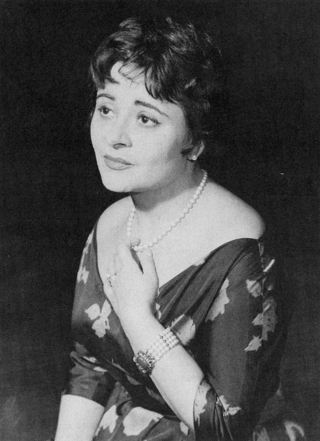
    Above: Huguette Tourangeau as Parséïs in Massenet’s ESCLARMONDE at The Met

    It’s sad to read of the death of the French-Canadian mezzo-soprano Huguette Tourangeau, a strikingly attractive woman possessed of a truly unique voice. Her sound was sensuous, her lower range incredibly resonant. I saw her at The Met as Nicklausse in CONTES D’HOFFMANN and as Parséïs in Massenet’s ESCLARMONDE in the 1970s.

    OPERA NEWS caught up with Mlle. Tourangeau in 2011: read the article here.

    A frequent colleague of Dame Joan Sutherland, Huguette Tourangeau scored a great personal triumph as Elisabetta in Donizetti’s MARIA STUARDA opposite the Australian diva at San Francisco in 1971.

    Huguette Tourangeau – scena d’Elisabetta – MARIA STUARDA~Act I – San Francisco 1971

  • Pontus Lidberg’s UNE AUTRE PASSION

    Une_autre_passion_c_gregory_batardon_12

    Photo by Gregory Batardon

    ~ Author: Oberon

    Tuesday April 24th, 2018 – Ballet du Grand Théâtre de Genève have brought Swedish choreographer Pontus Lidberg’s abstract take on Johann Sebastian Bach’s Saint Matthew Passion – UNE AUTRE PASSION – to The Joyce.

    Pontus’s trademark flowing – and fluent – choreography is beautifully executed by the Geneva dancers, and – needless to say – the music is sublime. The audience seemed literally enthralled by the production, in which some stunning underwater film segments add a striking visual dimension.

    Pontus turns to the classic 1959 Karl Richter recording of the Saint Matthew Passion, featuring the legendary Dietrich Fisher-Dieskau and the no less marvelous Hertha Töpper; the choreographer excludes the recitatives, assembling a soundscape of choruses and arias. He does not attempt a narrative of the story of Christ’s final hours, but rather an abstract essay in movement on the theme of the Passion, full of desire, uncertainty, and consolation.

    At curtain-rise, six tall white panels form a wall at the back of the dancing area. Overhead, shadowy clouds hover and moonlight pierces the gloom. The dancers emerge, all in white: their skirts, trousers, shirts, and tank-tops are not gender-specific. They dance en ensemble.

    The moveable panels become part of the choreography as the dancers slide them about the space; illusions are conveyed when one dancer vanishes behind a moving panel to be replaced by another as the panel slips away. The wall re-forms and the dancers crash into it.

    Now the film begins: white mannequins stand under the water as a nude man swims lyrically among them…could the swimmer be the choreographer himself? From time to time, the film continues throughout the ballet. The mannequins get dis-assembled, and later the ‘lamb of god’ appears to float by in the guise of a stuffed creature.

    The panels are transformed into slides, the dancers sliding down while colleagues dance a stylized ritual; solo passages, and a male ensemble, continue the endless fluidity of movement. A luminous passage shows the dancers in silhouette, like a living frieze. This gives way to a walking motif as groups of dancers cross the space – urgently – in regimented order.

    At the heart of UNE AUTRE PASSION is a pas de deux performed to the great aria ‘Erbarme dich, sung by Ms. Töpper. The couple (I’m sorry to say I am not sure of the dancers’ names) move hypnotically; the woman has a solo and then they are reunited, only to part again. Then the man dances alone, seeking among the moving panels until he finds her again. 

    Now one by one the dancers remove their outer garments. The movement is stylized, filled with gestures of supplication. From solo and duet phrases, the dancers slowly assemble, lying in a row upon the floor along the side of the space. The panels are then formed into a wall, enclosing the bodies. A single man now seeks entry into this repository of souls; a second man prevents him, and their duet becomes yet another memorable passage in this deeply moving ballet. 

    The dancers re-assemble in a swaying motion; a male solo follows as the music becomes a hymn. The voice of Dietrich Fisher-Dieskau fills the space as we wait breathlessly to see how this Passion will conclude. The wall now stands along stage left, and the dancers approach it – at first walking, then running, then rushing. They pound on the surface, pray before it, collide with it, collapse at its feet: but the wall remains impenetrable.

    “We are living through a very hard time, our gift is to be alive,” said Pontus Lidberg in an interview during the creation of UNE AUTRE PASSION. In this ballet, Bach’s immortal music and the poetry of the dance that it has evoked feel like an affirmation of life: a refuge of beauty in a darkening world.

    The ballet ends with a naked man standing before the paneled wall. Has he been shut out of heaven, or does his vulnerable presence mark the dawn of a new day, freed of the hypocrisy, hatred, and oppression that have undermined the great religions?

    ~ Oberon

  • Pontus Lidberg’s UNE AUTRE PASSION

    Une_autre_passion_c_gregory_batardon_12

    Photo by Gregory Batardon

    ~ Author: Oberon

    Tuesday April 24th, 2018 – Ballet du Grand Théâtre de Genève have brought Swedish choreographer Pontus Lidberg’s abstract take on Johann Sebastian Bach’s Saint Matthew Passion – UNE AUTRE PASSION – to The Joyce.

    Pontus’s trademark flowing – and fluent – choreography is beautifully executed by the Geneva dancers, and – needless to say – the music is sublime. The audience seemed literally enthralled by the production, in which some stunning underwater film segments add a striking visual dimension.

    Pontus turns to the classic 1959 Karl Richter recording of the Saint Matthew Passion, featuring the legendary Dietrich Fisher-Dieskau and the no less marvelous Hertha Töpper; the choreographer excludes the recitatives, assembling a soundscape of choruses and arias. He does not attempt a narrative of the story of Christ’s final hours, but rather an abstract essay in movement on the theme of the Passion, full of desire, uncertainty, and consolation.

    At curtain-rise, six tall white panels form a wall at the back of the dancing area. Overhead, shadowy clouds hover and moonlight pierces the gloom. The dancers emerge, all in white: their skirts, trousers, shirts, and tank-tops are not gender-specific. They dance en ensemble.

    The moveable panels become part of the choreography as the dancers slide them about the space; illusions are conveyed when one dancer vanishes behind a moving panel to be replaced by another as the panel slips away. The wall re-forms and the dancers crash into it.

    Now the film begins: white mannequins stand under the water as a nude man swims lyrically among them…could the swimmer be the choreographer himself? From time to time, the film continues throughout the ballet. The mannequins get dis-assembled, and later the ‘lamb of god’ appears to float by in the guise of a stuffed creature.

    The panels are transformed into slides, the dancers sliding down while colleagues dance a stylized ritual; solo passages, and a male ensemble, continue the endless fluidity of movement. A luminous passage shows the dancers in silhouette, like a living frieze. This gives way to a walking motif as groups of dancers cross the space – urgently – in regimented order.

    At the heart of UNE AUTRE PASSION is a pas de deux performed to the great aria ‘Erbarme dich, sung by Ms. Töpper. The couple (I’m sorry to say I am not sure of the dancers’ names) move hypnotically; the woman has a solo and then they are reunited, only to part again. Then the man dances alone, seeking among the moving panels until he finds her again. 

    Now one by one the dancers remove their outer garments. The movement is stylized, filled with gestures of supplication. From solo and duet phrases, the dancers slowly assemble, lying in a row upon the floor along the side of the space. The panels are then formed into a wall, enclosing the bodies. A single man now seeks entry into this repository of souls; a second man prevents him, and their duet becomes yet another memorable passage in this deeply moving ballet. 

    The dancers re-assemble in a swaying motion; a male solo follows as the music becomes a hymn. The voice of Dietrich Fisher-Dieskau fills the space as we wait breathlessly to see how this Passion will conclude. The wall now stands along stage left, and the dancers approach it – at first walking, then running, then rushing. They pound on the surface, pray before it, collide with it, collapse at its feet: but the wall remains impenetrable.

    “We are living through a very hard time, our gift is to be alive,” said Pontus Lidberg in an interview during the creation of UNE AUTRE PASSION. In this ballet, Bach’s immortal music and the poetry of the dance that it has evoked feel like an affirmation of life: a refuge of beauty in a darkening world.

    The ballet ends with a naked man standing before the paneled wall. Has he been shut out of heaven, or does his vulnerable presence mark the dawn of a new day, freed of the hypocrisy, hatred, and oppression that have undermined the great religions?

    ~ Oberon

  • Fellner|Eschenbach|NY Philharmonic

    Till-Fellner Gabriela Brandenstein

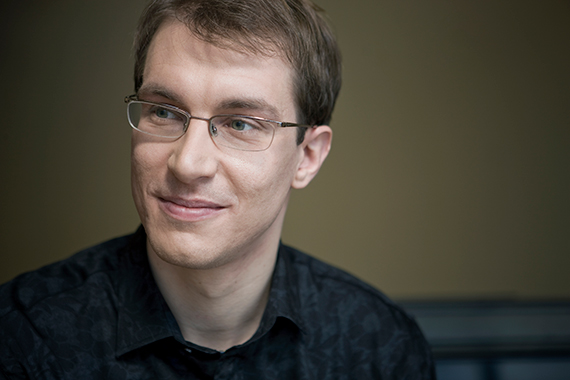
    Above: pianist Till Fellner, photographed by Gabriela Brandenstein

    ~ Author: Ben Weaver

    Saturday April 21st, 2018 – The great Austrian pianist Till Fellner made his belated NY Philharmonic debut last week with an unforgettable performance of Mozart’s Piano Concerto No. 22. Composed in 1785, while he was also composing Le Nozze di Figaro, the E-flat major concerto was following one of Mozart’s most famous works: the 21st concerto’s famous slow movement (two centuries later dubbed “Elvira Madigan” after it was used in a movie of that name.) 

    Whatever the 22nd lacks in fame, it most certainly is one of Mozart’s masterpieces. A big and extended orchestral introduction, which includes timpani and horns, leads to piano’s debut solo. There are several points in the concerto – not cadenzas – that showcase the piano playing without orchestral accompaniment. Mr. Fellner’s beautifully light and quick playing was superb. I have long been a big fan of is artistry: the clarity of his playing, the beauty of sound, perfectly controlled volume and runs, have long placed him among the best pianists of our time. In many ways he reminds me of Murray Perahia at his finest; that’s about the highest compliment I could pay a pianist. Fellner’s playing of this evening’s Mozart was as good as one could expect from anyone. Each note was like a pearl in sunlight. The depth of feeling in the leaping octaves of the slow movement were like love-sick sighs. I think this Andante may actually be Mozart’s most perfect slow movement. And the Allegro finale was thrilling, with some key contributions from flautist Robert Langevin and bassoonist Judith LeClair.

    Having a great concert pianist-cum-conductor Christoph Eschenbach on the podium was a great added bonus. Eschenbach, leading reduced forces of the NY Philharmonic, understands how to accompany the piano and showed extraordinary sensitivity, never rushing or fighting the solo instrument, allowing the piano to sing and lead. It was wonderful to finally have Mr. Fellner with the NY Phil, and I hope he will return regularly in the future.

    As an encore, Mr. Fellner played Liszt’s “Le lac de Wallenstadt” from “Album d’une voyageur“; he played it wonderfully.

    (Just as a side note: The magnificent final movement of the 22nd concerto was among works featured prominently in Miloš Forman’s film adaptation of “Amadeus.” The great Czech/American auteur, who also directed films  “One Flew Over The Cuckoo’s Nest” and “People vs. Larry Flynt,” and led the Columbia University film school for many years, passed away on April 13th.)

    Eschenbach

    Maestro Eschenbach (above) returned to the podium following the interval for Bruckner’s last, unfinished Symphony No. 9. In failing health for the entire composition of this work, Bruckner completed the first three movements and struggled with the finale for a year. He worked on it on the last day of his life, October 11, 1896. But he only left behind sketches (some fully scored) which were not enough for anyone to be able to legitimately piece together a full movement. (Though several have tried, none of the completions are more than curiosities.) Bruckner once suggested that his Te Deum should be performed as the finale if he did not finish the work; most people realize it was not a serious suggestion for a few reasons, one of which being that a choral finale would lead to comparisons to Beethoven’s 9th, which Bruckner would not have wanted. So the work is almost always performed in only three completed movements.

    The symphony begins with murmuring strings, interrupted by horns, like calls to battle. The brass section always gets big workouts playing Bruckner, and this evening they did not disappoint. Overall the orchestra were on spectacular form, and Maestro Eschenbach was able to corral the massive forces into a thundering wave. Bruckner had a truly unique gift for creating columns and walls of sound that sound like no one else’s. Many other composers could compose loud music, but there is something so unique and specific to Bruckner when he unleashes the full orchestra. As a listener, I often feel like I’m inside a cathedral and the walls are shaking with the voice of God. Of the great symphonists, Beethoven was able to represent musically the sounds of Earth. Sibelius is second to none to making us feel the chill of Mother Nature. Mahler could recreate the sounds of heaven. Shostakovich gave us sounds of man, in all his misery and triumph. Bruckner was a deeply religious man and I am not, but in these moments – and they exist in all of Bruckner’s works – I can imagine if God had a voice, he would sound like this.

    In the second movement, the Scherzo, the thundering march of doom is one of Bruckner’s most memorable moments. The relentless pounding of percussion and strings is stuff of nightmares. No doubt John Williams was aware of this Scherzo when he was scoring “Star Wars.” And the final Adagio is the perfect musical farewell, its conclusion sounding like a clock slowly running down.

    It is nice to have the orchestra seated on risers (a welcome change since Jaap van Zweden took over the Philharmonic as principal conductor) so one can see the various players in the back. Maestro Eschenbach also rearranged the cello and viola sections (for both Mozart and Bruckner) to have cellos on the right and violas in the middle next to the violins. Whether this was Eschenbach’s preference or a new full-time arrangement, we shall see.

    ~ Ben Weaver

  • Pierrot Lunaire @ Carnegie Hall

    ~Author: Scoresby

    Thursday April 19 2018 – On a rather chilly Spring day, Carnegie Hall’s Ensemble Connect had one of its last Weill Hall performances of the season. Every two years the ensemble changes over its fellows and this particular set of musicians will move on in June. As this is the last Ensemble Connect concert I was attending this season, it was interesting to see the contrast between when these players first joined and how they play now.

    The program began with Mozart’s incredibly difficult six movement Divertimento for Violin, Viola, and Cello in E-flat Major, K. 563. The program book seemed to have a typo, listing this work as only 15 minutes long (instead of 45) – perhaps thinking of one of the far shorter and earlier Divertimento for String Quartet. This is a virtuosic tour-de-force piece for all involved because it has incredible exposure for all the instruments, here Rebecca Anderson on Violin, Andrew Gonzalez on viola, and Julia Yang on cello. Ms. Yang’s warm, robust sound stood out immediately – she managed to blend well with Ms. Gonzalez and Ms. Anderson matching vibrato perfectly. 

    Screen Shot 2018-05-04 at 12.55.23 PM
    Above: Ensemble Connect

    Stylistically, the group kept the Allegro light and bouncing. During the Adagio Ms. Anderson’s solo passages were played with a touch of sweetness while Ms. Yang’s ascending cello motifs brought a touch of nostalgia. The Andante (the fourth movement) is a charming set of variations – while every instrument gets its line to shine most impressive were the blending between Mr. Gonzalez and Ms. Yang during the active violin variation. They created a supple backdrop for Ms. Anderson to play the sweet melody. In the fifth movement, the group let the music seemed to have fun with the light bouncy textures and brought the music’s humor out by letting the phrases breathe. The duet between Ms. Anderson and Mr. Gonzalez was fully of energy and light-hearted spirit. While there were a few technical glitches – it was a fun performance of a difficult work. 

    The after-intermission performance demonstrated how much the players in ensemble have grown – it was not only a successful performance of Schoenberg’s Pierrot Lunaire – but one of the best performances I’ve heard this year. The instrumentalists were Rosie Gallagher on flute, Bixby Kennedy, on clarinet, Mari Lee on violin, Madeline Fayette on cello, and Mika Sasaki on piano. As is tradition in Ensemble Connect, before the work began there was a short talk about the music – only here Mari Lee interviewed ‘Schoenberg’s Ghost’, who was wearing a Pierrot-like mask. It was a fun and creative way to introduce the music that a more traditional group wouldn’t have dared to do and Ms. Lee’s earnest questions gave both humor and seriousness to it. It seems Ms. Lee adapted some of the material from her own project Salon Séance for the interview.

    Pierrot is one of the landmark works of the twentieth century. Not quite theatre, not quite music – it lies somewhere in-between in a chamber setting. It was Schoenberg’s first major work using free atonality and is before he came up with his twelve-tone system. Musically it is a piece at the height of German Expressionism, set to the brooding poems of Albert Giraud to paint different fragments of the psyche. It feels at once dream-like and nightmarish with extremes of emotion. In order to enhance this feeling, the group used simple lighting to heighten the drama –  they turned off the regular house lights and replaced them with white spotlights during the first section, blood red lights during the second, and back to white spotlights for third. In this darker atmosphere with the glittering Viennese style chandeliers, one really felt immersed into Schoenberg’s world.

    Unfortunately soprano Mellissa Hughes who was originally supposed to sing the soprano part withdrew due to illness. Luckily, Ensemble Connect managed to get one of the most venerable Pierrot singers alive today: Lucy Shelton.  She was simply spellbinding and elevated the level of the young players to match her. In Columbine the Ms. Lee and Ms. Sasaki’s violin and piano duo gave heft to match Ms. Shelton’s Meine banges Leid (my pain) and immediately changed dynamics to match the zu lindern (soothing). Such precise dynamics from moments like that were the hallmark of this performance – but at the same time the players swelled to match the more crazed sections of the piece.  Ms. Shelton for her part, embodied the music taking a no-holds-barred style. Using hand gestures to and acting to portray the different facets of the characters, from the wisps of nostalgia in the last movement to the crazed laughter and anxiety in the Rote Messe to the cackling gossip in the Gallows Song, Ms. Shelton seemed like she was a witch reciting an incantation and with the dream-like lighting she was spellbinding. In the small hall, her voice filled the entire space and one felt completely immersed – it felt like she was telling you a story and drawing you into her world complete with horrors, traumas, sweetness, and nostalgia for the past. Rather than just a “crazy” approach as many singers bring to this piece, Ms. Shelton captured all the nuance of emotions embedded in both the text and music. Her yearning for the past in the end sounded sweet and  wistful as she whispered “And dream beyond for blissful stretches, O old perfume–from fabled times!”

    Screen Shot 2018-05-04 at 12.54.11 PM
    Above: Soprano Lucy Shelton

    The instrumentalists were no less into the music. While perhaps the could have captured some of the softer tones and romanticism in the third book, they were all precise and together.  A powerful moment at the end of the third movement, Ms. Gallagher’s impressive fluttering as Ms. Shelton sung “With a ghostly moonbeam” – Ms. Gallagher capturing the timbres with precise but soft tones. Ms. Fayette during her nervous outburst in Rote Messe mimicked Ms. Shelton’s crazed line. In the interlude before the last song of the second book, Mr. Bixby deep clarinet melded with Ms. Gallagher’s playing. In that last song, Ms. Lee captured the same timbre as Ms. Shelton’s singing – sounding like a dreamed echo. Ms. Sasaki let the piano. During Gemeinheit Ms. Fayette and Ms. Gallagher matched their vibrato perfectly, creating an ethereal dream-like texture. 

    In the Barcarole, Ms. Lee, Ms. Sasaki, and Ms. Gallagher created a disorienting backdrop of what sounded like a drunken boat ride. All in all, this group of musicians worked hard to create an excellent performance – a great end to the last Ensemble Connect performance in Weill.