Author: Philip Gardner

  • An Afternoon in Allemonde

    Xl_avatar

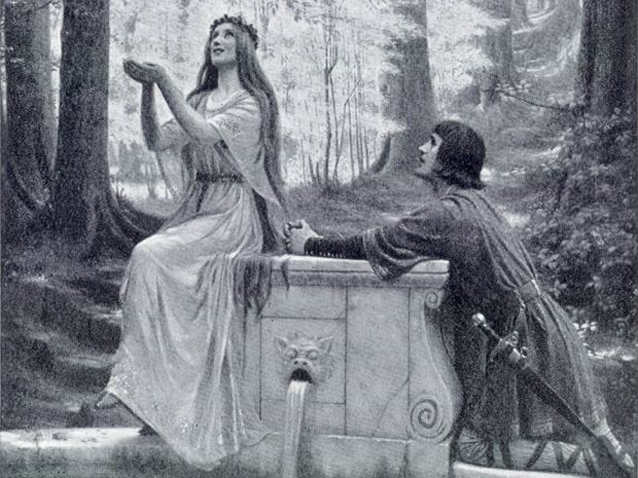
    Above: Mélisande and Pelléas at the fountain; by Edmund Blair Leighton (1852-1922). Click image to enlarge.

    (An article that originated on Oberon’s Grove in 2019.)

    ~ Author: Oberon

    Saturday January 19th, 2019 matinee – Despite serious reservations about one member of the cast, I went to this afternoon’s performance of Claude Debussy’s Pelléas et Mélisande at The Met, determined to stay to the end. I have always loved the Met’s gently updated and incredibly atmospheric production (even though the lighting has gone awry over the years), so I decided on a seat with a view rather than a score desk today. My sister-in-law loaned me a pair of high-power binoculars, and I brought a book with me as a defense against the Met’s interminable intermissions.

    Pelléas et Mélisande is a unique opera, and it needs poetic singers and a truly sensitive conductor if it is to properly cast its spell. My first live encounter with the opera came in 1970 at New York City Opera when Patricia Brooks was an unforgettable Mélisande. The performance had a light baritone (who soon became a tenor) as Pelléas – André Jobin – and one of the greatest Golauds ever: Louis Quilico. In 1983, at the Met, Jeannette Pilou was an exquisite Mélisande, opposite baritone Dale Duesing; here the Golaud was the magnificent Jose van Dam.

    The Met’s current production opened in 1995, with performances that celebrated Frederica von Stade’s 25th anniversary at the Met; my first mezzo-soprano Mélisande, von Stade gave a sublimely nuanced portrayal. I last saw the opera in 2010, a beautifully-cast revival conducted by Sir Simon Rattle. I very much regret having missed the 1978 Met performances with Teresa Stratas as Mélisande and Gabriel Bacquier as Golaud; and I really should have gone to see Susanne Mentzer’s Mélisande. 

    I often use score desks at the Met, and when doing so, am very careful about turning the pages of my score silently so as not to disturb the people next to me. Today, I was one of the people with a view, and the women next to me using score desks were less considerate; it was very distracting, and when opportunity came, I changed seats. They also brought cookies, and chatted loudly during the intermission. No reverie for Debussy.

    Overall, it was an engrossing performance. Since I have been going to more symphonic and chamber music concerts in recent years, Debussy’s orchestration – which I have always admired – fascinated me today as I am now far more attuned to what the orchestra is doing; the music takes on a deeper meaning, bringing immersive pleasure.

    Yannick Nézet-Séguin was on the podium and, as the musicians played magnificently, all was well. But the mystery and the shadowy softness of the score did not always come thru, and at times the conductor allowed the voices to be covered. To date, Maestro Nézet-Séguin’s most memorable conducting at the Met has been his Parsifal; Pelléas this afternoon came close, without quite reaching an exalted level. (There was a sound of one person booing as the conductor returned to the pit after each intermission: a minority reaction, to be sure. I wonder what the complaint was, whether it had anything to do with the Maestro’s interpretation or was simply an expression of anger that the intermission had been so long.) 

    A weak Yniold made the character’s two scenes seem really long today; the ‘dream’ scene, at any rate, seems expendable dramatically, despite the music. In the small roles of the Shepherd and the Physician, Jeremy Galyon and Paul Corona were fine.

    Marie-Nicole Lemieux gave a perfect portrayal of Geneviève, her singing clear and warm with a nice glow to the timbre. She looked lovely and was dignified without being overly prim and proper; she also played the character as somewhat younger than we often see or hear. All to the good. Brava!

    An announcement was made pre-curtain that both Paul Appleby (Pelléas) and Kyle Ketelsen (Golaud) were suffering from colds but would sing anyway. With ticket prices hovering near a $500 top this afternoon, it seems to me that the audience deserved to hear singers who are in good health. 

    In the case of Mr. Ketelsen, he hardly needed an announcement: he sounded glorious, with only a trace of tiring as the long opera neared its end. Mr. Ketelsen’s sound is commanding, house-filling, and vivid in expression. Tall and slender, he looks dapper (and slightly menacing) in his costumes and moves with authority. Regret, that most poignant of emotions, comes too late (doesn’t it always?), and Mr. Keletsen’s singing in the final scene had a heart-rending quality. Golaud is a bit of a thug, and this element too sometimes surfaced in the Ketelsen portrayal; his murder of Pelléas was vicious indeed. 

    Mr. Appleby, who reportedly had vocal problems at the prima, sang well all afternoon with only the slightest hints that he was unwell. The voice is handsome, lyrical but masculine of timbre, and expressive of the poetry that fills the libretto. The conductor occasionally allowed the tenor’s voice to be covered. In the scene between the lovers leading up to the murder, Mr. Appleby’s high notes suddenly took on such epic ring that I wondered if amplification was in play. More likely the tenor, nearing the end of his role and having made it successfully thru thus far, simply decided to let loose; the dramatic situation certainly called for it.

    Looking through some of my diaries from my first years of living in New York City, I find that I heard Isabel Leonard on at least three occasions while she was at Juilliard; she seems not to have captured my imagination then (I left halfway thru her solo recital) and to this day I do not understand why she has such a huge career. Her tone is surely attractive, despite a tendency to thin out and spread a bit higher up. She sang all of the music of Mélisande perfectly well, and evocatively at that, but the sound of her voice does not leave a distinctive imprint. Ms. Leonard’s Mélisande is impeccably gowned and coiffed, and her make-up is Vogue-ready; she even looks gorgeous on her deathbed.
    Pelleas_1839_C-XL2

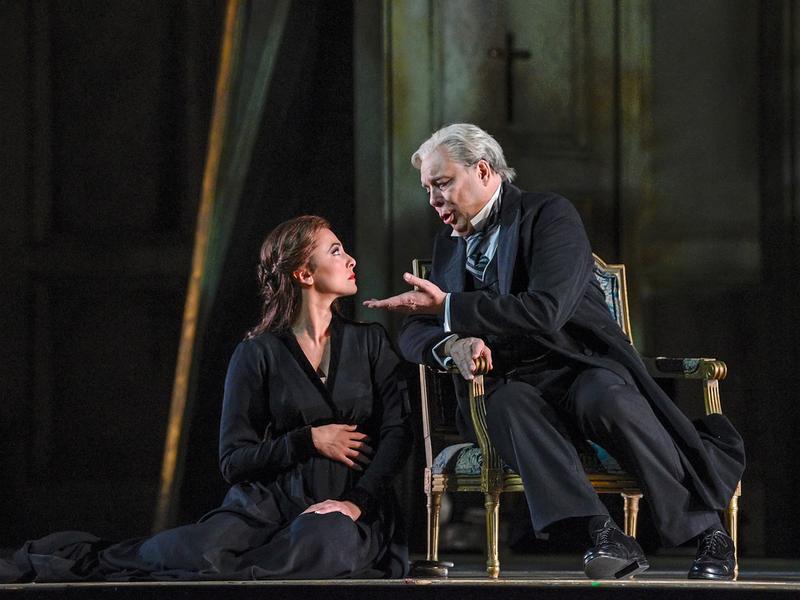
    Above: Isabel Leonard as Mélisande and Ferruccio Furlanetto as Arkel, a Karen Almond/MET Opera photo. Click on the image to enlarge.

    Along with the excellence of Mlle. Lemieux’s Geneviève and Mr. Ketelsen’s Golaud, it was the great basso Ferruccio Furlanetto’s performance as the old King Arkel that made this afternoon so engrossing. Every word, note, and gesture in Mr. Furlanetto’s portrayal had the marvelous resonance that a great and dedicated singing-actor can bring to a role. Some people found the basso’s singing too “tearful”, but Arkel has every reason to weep as he watches the fabric of his family rent by jealous passions. How moving was Mr. Furlanetto as he sang of the destiny of Mélisande’s daughter; it is moments like these that will endure in my operatic memory until the end.

    As this afternoon’s performance unfolded, I decided that I would try to meet Ferruccio Furlanetto after the opera ended. He has, over the years, given me so many wonderful performances to remember, starting with his Zaccaria in Nabucco at Hartford in 1982.

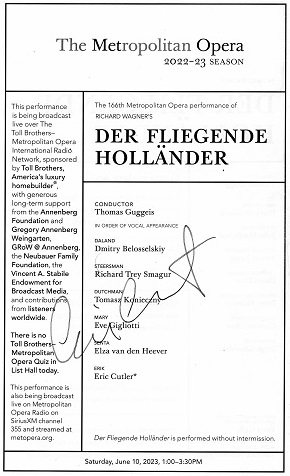
    After a short wait, Mr. Furlanetto emerged from the stage door; we shook hands, and he signed my program. He’s had such a great career, and his calendar for 2019 appears to be full. I hope he’ll be back at the Met soon. (Click on the cast page below to enlarge.)

    Scanned Section 10-1

  • MOISE ET PHARAON @ Carnegie Hall ~ 2011

    (Still bringing articles forward from Oberon’s Grove to The Glade. I wanted to hold onto the memory of this night full of Rossini treats.)

    Eric_Cutler_-_Headshot_1

    Wednesday November 30, 2011 – The Collegiate Chorale presented a concert performance of Rossini’s rarely heard MOISE ET PHARAON at Carnegie Hall this evening. A fine and distinctive collection of solo voices – notably tenor Eric Cutler’s (above, in a Werner Kmetitsch photo) – prevented any threat of ennui creeping in. The Collegiate Chorale and the American Symphony Orchestra provided a well-woven tapestry of sound to back Rossini’s flights of bel canto fancy, and conductor James Bagwell had his forces well-in-hand. The composer’s self-borrowings were sometimes evident, and the work ends with an over-extended orchestral postlude which is both melodically and harmonically predictable. But there’s also a lot of really demanding music for the soloists to cope with, which they did – admirably for the most part.

    The opera is a classic tale of “my-god’s-bigger-than-your-god” with two cantankerous heterosexual (basso) males – Moses and Pharoah – each trying to keep his cult under firm control by bellowing commands he’s purportedly received directly from his respective deity. To keep things on an operatic keel, a love interest is developed: Egyptian prince meets nice Jewish girl. But heaven forbid (literally) that they should be happy for even a moment as their elders lay one guilt trip after another on their pretty heads. (These mind control games have endured for centuries; my Methodist parents would quietly whine because both the girls I dated in high school were Catholic; I sometimes think being gay was my revenge.) So instead of viewing the young lovers as a bridge between two cultures and belief systems, they are torn apart. The girl reaches the Promised Land; the prince drowns in the Red Sea. The gods have spoken. Yet again.
    Anyway, to the singing (which is what Rossini is all about anyway): I really enjoyed hearing Eric Cutler again. He has the clarity and warmth of tone as well as the stylistic nuances of dynamic and colour to make this florid music come alive. Whether in finely tapered long lines or in bursts of fiorature and forays to the top, Eric’s heady voice seemed just right for this music. And his harmonic blends with the other singers were beautiful.

    Kyle Ketelsen 2006

    Another major source of aural joy came from basso Kyle Ketelsen as Pharoah. His voluminous and dramatically-edged vocalism and his slender, vivid presence onstage kept us keenly focused on him whenever he stood up to sing.

    James Morris, the great Wotan of our age, was in top current vocal form tonight as Moses. His solemn pronunciations were delivered with innate grandeur and he looked like a benevolent prophet, even in his tux. A bit of flatting on higher notes was the only slight detriment to Morris’s vocalism; overall it was a very impressive undertaking.

    Soprano Marina Rebeka recently made her Met debut as Donna Anna. Tonight as Anais she revealed a sizeable lyric-to-spinto sound with a lovely sheen on it. A striking beauty, Ms. Rebeka received the evening’s longest applause after her big scena. When she harmonized (superbly) with Eric Cutler, I immediately had thoughts of hearing them together in TRAVIATA or MANON. I’ll keep my eye out for Ms. Rebeka in the future.

    On the Egyptian side, soprano Angela Meade as Sinaide made much out of a somewhat limited role. At full sail, her voice could be a bit over-vibrant but she controlled this tendency for the most part and gave us some really lovely piani and phrasing along the way. Ms. Meade already has a following and they were out last night to cheer her on.

    Ginger Costa-Jackson (as Miriam, wife of Moses) managed to make a vocal mark despite the brevity of her role, and tenor Michele Angelini lent his clear, Italianate sound to the role of Eliezer. 

    I feel certain I’ll never experience this opera in a live setting again; that’s the big plus about concert opera: a chance to hear real rarities without the expensive trappings of a staged production. Of course the endless raising and lowerings of the soloists’ music stands was a distraction. And what would Maria Callas say about all the indiscreet swigging from bottles of Poland Spring?

    UPDATE: I have just received some photos from the evening’s performance; these images are by Erin Baiano. Click on each photo to enlarge.

    IMG_5601Moise small

    Marina Rebeka & Eric Cutler

    IMG_5684Moise small

    Angela Meade & Kyle Ketelsen

    IMG_6227Moise small

    Ginger Costa-Jackson & James Morris

    December 01, 2011

  • Fliegende Holländer @ The Met ~ 2023

    Hollander ken howard

    Above: Tomasz Konieczny as The Dutchman; a Ken Howard/Met Opera photo

    (Another article from Oberon’s Grove; I wanted to bring this onto the Glade because tenor Eric Cutler, who I’ve known since his days as a Met Young Artist, gave us a wonderful Erik.)

    Click on images to enlarge.

    ~ Author: Oberon

    Saturday June 10th, 2023 matinee – My final opera performance of the Met’s 2022-2023 season; overall, it has been a very fine season, with some of the Met’s most satisfying performances in recent years. I found today’s Fliegende Holländer thoroughly engaging and often very moving. On other sites, this season’s cast and conductor came in for a lot of criticism; their voices may not be to all tastes, but for me the power and mystery of Wagner’s opera came through, quite thrillingly.

    My afternoon began 45 minutes before curtain time. I always love sitting in the big hall, watching it slowly fill; and today, the delightful sound of a clarinetist having a nice, long warm-up fell pleasingly on the ear. Despite Norman Lebrecht’s hand-wringing over the Met’s under-sold houses, today’s Holländer (and the two previous matinees of Don Giovanni and Zauberflöte) looked nearly full from my vantage point in a balcony box near the proscenium: one of the few spots from which you can accurately gauge the size of the audience.  

    The young conductor, Thomas Guggeis, took over these Holländer performances from the originally-announced Jaap van Zweden. As the latter ends his brief, mostly disappointing tenure at the New York Philharmonic, I think the change was probably beneficial overall today. For me, Mr. Guggeis paced the score most persuasively, with a fine forward momentum contrasting with the more pensive, brooding passages. He did, however, sometimes succumb to the current trend among Met conductors of casually drowning the voices. (Exceptions have been Manfred Honeck for Idomeneo and Nathalie Stutzmann’s magical Flute and Don Giovanni).

    The orchestra sounded marvelous today, as did the chorus; the choristers did some stylized gesture patterns and dance steps which seem to be a common element in M. Girard’s Met Wagner productions. Overall, the afternoon’s sonic tapestry was rich and darkly hued.

    Heever cutler ken howard

    Above: Eric Curter as Erik with Elza van den Heever as Senta; photo by Ken Howard/Met Opera

    Top vocal honors today must go to tenor Eric Cutler, in the role of Erik. In the years since he came onto the scene as a Met Young Artist, Eric has had many successes in the bel canto repertoire; in recent seasons he has been shifting to such demanding German roles as Bacchus, Lohengrin, and Siegmund. Tackling this difficult repertoire has not affected the inherent tonal beauty of Eric’s voice, and so today in the music of Erik, we heard a combination of lyricism and passion that made a perfect impression. 

    From his hair-raising opening line, so clear and sustained, on through his two big arias – which are so rooted in the bel canto style – Eric showed the advantage of coming to these roles from on high rather than as a pushed-up baritone. As the point where a rising line can cause helden-ish tenors to tighten up, the Cutler voice blooms. Especially beautiful was the third act cavatina where Eric’s singing blended ideally with the pliant sound of the oboe. Earlier, in telling Senta of his terrifying dream, Mr. Cutler made the story come to vivid life. There was a big, warm salute for the tenor at his curtain calls. 

    Eve Gigliotti, as Senta’s nurse, Mary, seemed unsure of how to deal with her visionary young charge. Eve sang warmly, with her usual verbal acuity. As the Steersman, Richard Trey Smagur displayed an interesting timbre, with an appealing middle range and powerful, rather gritty top notes. He could become an interesting Siegmund in time.

    Dmitry Belosselskiy was a huge-voiced Daland, very effective in both his singing and stage presence. His jovial aria (excellently supported by the orchestra) as he introduces the Dutchman to Senta was a vocal highlight of the afternoon, as was the trio after his daughter’s pledge to be faithful onto death. The basso, who in the past has seemed just a good, routine singer, has become both more nuanced and more plush-toned of late. I look forward to hearing him again next season.

    As Senta, Elza van den Heever carried off the long mime sequence of the overture convincingly. Her singing of the role was uneven; she has taken on some of opera’s most demanding roles (Senta is one of them) and her voice is showing some wear and tear in places. Sustained notes tend to fluctuate, and while her ballad was excellently expressed from a musico-dramatic standpoint, the sound of the voice was less appealing than in the past. Most of the arduous music of the Senta/Dutchman duet was skillfully – even impressively – handled, but her voice faltered on the highest phrase at the end of the duet’s andante section. 

    The soprano pulled herself together, finishing the duet and ensuing trio on fine form, and singing quite thrillingly in the opera’s final moments. Her sense of commitment to the music never wavered, but she might think of moving to some less strenuous roles: Countess Almaviva? The Marschallin? Desdemona? For now, though, she seems headed for Salome.   

    Hollander

    Above: Elza van den Heever as Senta and Tomasz Konieczny as the Dutchman; Ken Howard/MetOpera photo

    The Polish bass-baritone Tomasz Konieczny first thrilled me as Jochanaan in a concert performance of Salome at Carnegie Hall in 2014, and then again in 2019 in his Met debut role as Alberich in the Ring Cycle. Although Mr. Konieczny’s voice is unlikely to be described as “beautiful”, it can be strangely alluring. He has both a personal and a vocal charisma which are hard to describe but which make his performances so captivating.

    The subtle start of the great monologue is underscored by a chilling tension. Mr. Konieczny’s reserves of vocal strength – the sound seems to expand as he goes higher – soon had me entranced, and the audience could not resist bursting into applause after “Ew’ge Vernichtung, nimm mich auf!” (“Eternal destruction, take me!”). Mssrs. Konieczny and Belosselskiy were grand in the duet which concludes Act I.

    The Dutchman rises magically from the floor of Daland’s house, causing Senta to cry out. After Daland has left them, their great duet  – the heart of the opera – begins with Mr. Konieczny singing so softly as to draw us deeply in; here, Maestro Guggeis kept the orchestra under subtle control. With rising passion, the singing becomes thrilling, with the bass-baritone – a hypnotic presence to watch – pouring out the music with palpable power. After Senta has made her pledge, Mr. Konieczny fell to the floor, overcome with relief and gratitude. The act’s concluding trio was strongly sung, with a cut sparing the soprano from some very arduous phrases.

    In the final act, the Dutchman is present – hunkered down on the rocky shore – during the meeting of Senta and Erik. He hears it all, and rejects Senta’s pleas of innocence. Mr. Konieczny rose majestically to the demands of the scene wherein he reveals his identity, capping his brilliant success.

    Hollander eric cutler-1jpg

    After an enthusiastic ovation, I went down to the stage door to say hello to Eric, who I had not seen for many years. Back in the days when he was a Met Young Artist and I was working at Tower Records, we became friends; thereafter, his career kept him mostly in Europe. I had last heard him live in 2011, in a concert performance of Rossini’s Moïse et Pharaon at Carnegie Hall.

    It was really nice today to find that the voice remains as beautiful and expressive as ever, and that he’s still the same friendly guy I remember.

    ~ Oberon

  • Philip Neal’s NYCB Farewell

    6a00d8341c4e3853ef01310f4732dc970c-800wi

    (The deadline is approaching for moving articles from the Grove to the Glade. Here is the story of Philip Neal’s farewell performance at New York City Ballet.)

    Click on the images to enlarge.

    Sunday June 13, 2010 – Back in the day, I developed the worst crush on Philip Neal. He was a long-legged Southern boy in the New York City Ballet corps and he was just so nice-looking. Once I sat outside the stage door after one of his performances thinking I simply had to meet him or at least get a closer look. What did I hope to accomplish? I don’t know, but anyway he must have gone out via the lobby because I never got my chance. Much later, when he was a star and I was working at Tower, he came in a few times and I was always too shy to talk to him.

    Philip was a bit coltish in those early days, not quite yet the polished danseur he was to become. What’s struck me about him is that in the last two or three seasons he has been giving some of his most memorable performances and I guess I just assumed he would continue to do so. But now the day of his farewell has arrived all too soon and I found myself sitting there watching this incredibly elegant dancer and wishing I could turn the clock back so we could enjoy him for another ten years or so.

    Wendy Whelan and Philip Neal have been a dream partnership during these past few years that I’ve been living in New York City. At the holiday season each year, they take their NUTCRACKER pas de deux on the road and bring joy to people who rarely get to see dancers of this caliber live. I bet I’ve seen them in NUTCRACKER together twenty times, give or take, and it’s always an exquisite treat.

    Photo2

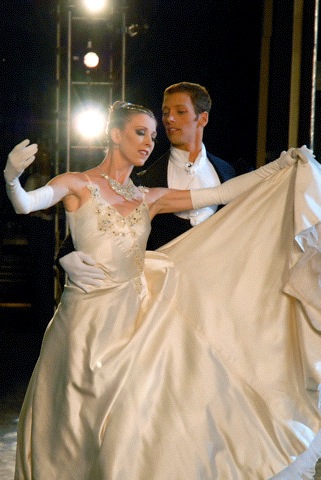
    The other ballerina with whom Philip danced most frequently was Kyra Nichols. Here they are (above) in rehearsal and (below) in VIENNA WALTZES. My thanks to Kyle Froman for sending me these images.

    Photo

    As her career moved into its final stages, Kyra danced almost exclusively with Philip and there was something so elegant and courtly about their partnership.  At her farewell, watching them dance together, it would have been impossible to imagine that Philip would be making his farewell so soon.

    But: here we were, watching him dancing two of his finest roles for the last time, both by Balanchine: SERENADE and CHACONNE. In a recent revival of MIDSUMMER NIGHT’S DREAM, Philip partnered Jenifer Ringer is a sumptuous rendering of the divertissement pas de deux. and their dancing today in SERENADE recalled that very special occasion. Megan Fairchild and Sara Mearns also danced beautifully and Ask LaCour made a princely impression in the other male role.

    In a somewhat truncated rendition of WHO CARES? Robert Fairchild seemed a worthy successor to Philip Neal in this ballet, and there was delightful dancing from Tiler Peck, Sterling Hyltin and Ana Sophia Scheller.

    In CHACONNE, the Whelan/Neal partnership seemed to be at its apex rather than at the point of drifting into memory. They are simply perfect together. Both Wendy and Philip seemed to be in a highly emotional state today and once or twice I thought they might just stop dancing and start hugging each other. And no one would have blamed them if they had.

    115182393

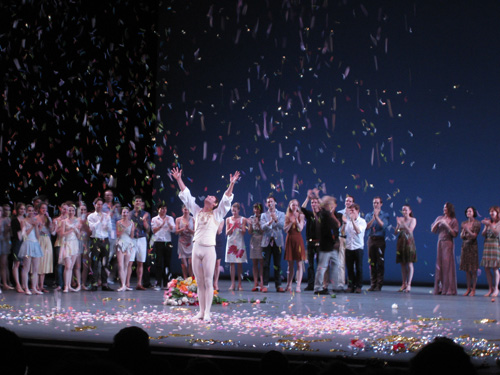
    All too soon the performance had swept by and Philip was being feted with streamers, confetti and flowers. Kyra Nichols presented him with a bouquet, and there was a procession of current NYCB ballerinas led off by Wendy and Jeni Ringer presenting flowers to the man who had made them all look so good so many times. Photo: Art’s Place.

    765.da.x491.open

    Despite waves of nostalgia, especially during the heart-tugging music of SERENADE, it was in fact a joyous farewell since Philip has left us at the peak of his artistry and his future looks very sunny as he heads to Palm Beach, Florida to be with his partner. He will take up responsibilities as a stager of Balanchine and Robbins works and he says he will guest-teach at SAB whenever he is back in New York.

    Bon voyage, and bonne chance!

  • Kyra’s Farewell

    (Bringing this from the Grove to the Glade: a luminous ballerina’s farewell. Kyra Nichols – above – photographed by Paul Kolnik.)

    Friday June 22, 2007 – When it was announced several months ago that Kyra Nichols would be making her farewell appearance at New York City Ballet on June 22, 2007 it seemed like we had ample time. June 22? That’s weeks away. She’ll be dancing quite often during the season. The days flew by, ans suddenly it seemed we were literally rushing thru June. The 22nd? That’s next week. No, it’s this week. It’s tomorrow. It’s tonight. And then time caught up with us and we were sitting there waiting for SERENADE to begin.

    Cry? No, I’m not going to cry. What’s there to cry about? She had a great and long career and she actually knew Mr. B; she’s retiring by choice rather than necessity. She has her children and she’ll be teaching. I’ve seen her dance hundreds of times and I have all the images stored neatly away, like flowers pressed in a beloved book. There’s a large and luminous roster of beautiful young women who will inherit Kyra’s roles and make them their own. The ballets will endure and we won’t forget her. Nothing to cry over – except knowing you will never again turn your opera glasses on Kyra and find that she is looking back at you with those radiant eyes…looking right thru you actually and into some distant source of inspiration, some little bit of heaven where Mr. B is calmly watching over her. That’s something to make you weep.

    I found the cast page from the very first time I saw Kyra onstage. I would love to be able to say that I picked her out of the corps, singled her out as a future star. But of course she was just a name, another dancer at the start of her career. That’s always one of the intriguing aspects of watching NYC Ballet: you never know. You are sitting there now watching Briana Shepherd or Brittany Pollack and you just never know if one day you might be sitting in the same theatre watching them bid farewell as a beloved ballerina. It happens.

    Wei and I were waiting for Tonya by the stage door and had the opportunity to meet the dancer we love to love, Faye Arthurs. She was so nice, stopping to talk to us before going in to put on her creamy  gown for VIENNA WALTZES. Earlier Kristin Sloan came by; she was setting up to film the evening backstage…I can’t wait to see what she comes up with! We also greeted Yvonne Borree, Dena Abergel and Pauline Golbin as well as the much-missed Sarah Ricard.  After  they all went in I was kicking myself for not taking pictures of them.

    Above, a beloved partnership: Kyra Nichols and Philip Neal

    Kyra’s choice of repertoire for her farewell programme was inspired: SERENADE has always been one of her most moving ballets and she danced tonight with the trademark Nichols lyricism at full sail. I remember many seasons ago when a kind of skinny but very elegant young dancer named Philip Neal was tapped to become Kyra’s partner. They have always looked ideal together and had a wonderful rapport. Philip’s upper body developed while maintaining the graceful line and his partnering skills blossomed as they were frequently cast together; the Robbins IN G MAJOR was always one of my favorite Nichols/Neal ballets. Their partnership was beautifully showcased tonight in SERENADE and VIENNA WALTZES. Sara Mearns was heavenly and Ashley Bouder – her one tiny slip reminding us that the dancers are human – gave a remarkable performance on all counts. Ask La Cour’s tall and princely bearing was another asset; Megan LeCrone’s pirouettes so beautifully articulated. The four demi-solistes were a nice mixture of blondes and dark-haired beauties: Alina Dronova, Ashley Laracey, Georgina Pazcoguin and Rachel Piskin. Laracey really makes such a lovely impression onstage. I feel like writing a paragraph about each of the corps girls and believe me, I could do it.

    DAVIDSBUNDLERTANZE reaches its apex with the solos for Kyra and Charles Askegard and their heart-breaking parting. Kyra’s tenderness and grace strove to fend off the inevitable; Charles is a potent dramatic dancer, so moving as he departed in a dream-like state. The excellent cast further included Ringer, Somogyi, Jared Angle, Nilas Martins and Philip Neal. Maria Kowroski was on thrilling form, her flashing turns and incandescent extension a constant source of amazement. Kyra’s final gesture of despair was so moving.

    Kyra’s long solo that opens the ROSENKAVALIER waltz allowed us to savor this treasure of an interpretation one last time.   Her last dance with Philip must have brought a flood of memories for both of them. Scanning the whirling couples I quickly found several favorite dancers: Dena with Craig Hall, Pauline with Rob Fairchild, Vincent Paradiso with Lauren King, Faye with Giovanni Villalobos and Kaitlyn with Will.   

    In the end it was a happy farewell; I did cry during the first two ballets but VIENNA WALTZES makes it almost impossible to feel blue. Kyra was tumultuously hailed in numerous bows and she was showered with flowers. She received bouquets and embraces from her frequent partners and basked in the enthusiastic and genuine applause of her colleagues. Her husband and two sons were on hand to share the flood of affection for the beloved ballerina.

    Rather than feeling depressed I felt euphoric, and extremely grateful to have seen her dance so often over the years. She seemed happy; clearly the audience did not want to let her go.

    ~ Oberon

  • NYCB Farewells: Albert Evans


    (Flashback to a brilliant farewell afternoon for the great – and much lamented – Albert Evans.)

    Above: photo I took of Albert on the promenade during a ballet matinee.

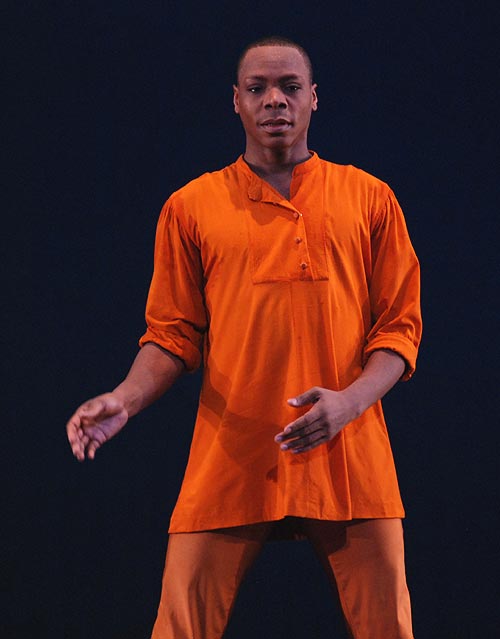
    Sunday June 20, 2010 – Whenever you see Albert Evans in the street, if you say ‘hello’ you will be greeted with a tremendous smile and a flood of warmth as if you have just made his day, rather than vice-versa. He will stop and chat you up, and he will make you feel like you are the celebrity. That warmth – and Albert’s big, beautiful spirit – have always made his performances at New York City Ballet particularly enjoyable.

    Sexy dancers? There have been many, but few to match Albert with his stunning physique and trademark gorgeous close-shaved head. Muscular and powerful, he seems so athletic that his classically classy technique often surprises viewers, and he long ago mastered the art of the velvety landing.

    37324_10150213372385529_112319735528_13069989_4446430_n

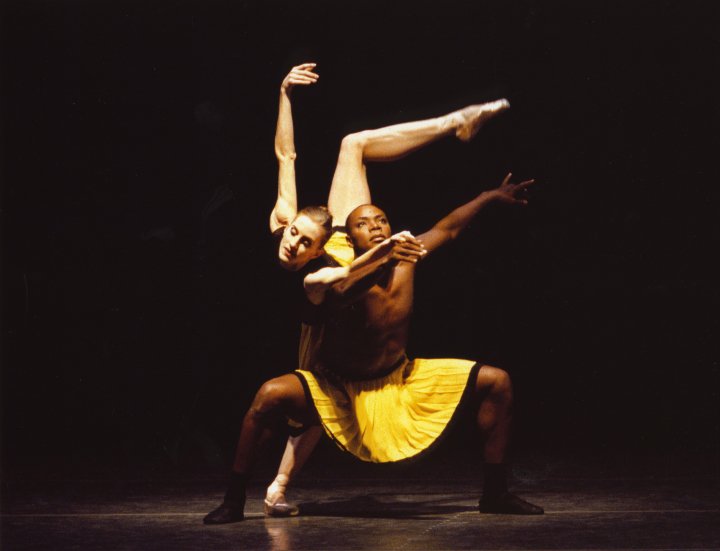
    This afternoon at New York City Ballet audience and Company members alike had a chance to express their love and gratitude to this magnetic and marvelous dancer. Albert danced the Forsythe HERMAN SCHMERMAN pas de deux with Wendy Whelan (above, in Paul Kolnik’s photo) as an apotheosis of one of the ballet world’s grandest partnerships.  Wendy and Albert have always been a joy to watch together and today their technical prowess and wit found a perfect distillation in this quirky duet where Albert dons a yellow skirt midway thru. Their curtain calls were full of love and mutual admiration.

    6a00d8341c4e3853ef01157074ebb2970b-800wi

    Albert’s choice of a leave-taking ballet was Balanchine’s FOUR TEMPERAMENTS (above) and he danced his solo as well as he ever has which is saying a lot. Everyone is the cast seemed to be giving that extra ounce of passion and commitment to make Albert’s send-off truly memorable.

    23drea.1.650

    So many memories today: Albert’s Puck in MIDSUMMER NIGHT’S DREAM (Kolnik photo above with Arch Higgins and Alexandra Ansanelli); his Rhinestone Cowboy in WESTERN SYMPHONY, CONCERTO BAROCCO, BUGAKU, RED ANGELS

    Pk-liturgy-wendy-whelan-albert-evans-drifting-duet_500

    …with Wendy in Wheeldon’s LITURGY

    Jr_russian_evans_close_077_500

    …Ratmansky’s RUSSIAN SEASONS (John Ross photo, above)…

    270_2077

    ,..AGON (above with Wendy in a Paul Kolnik photo).

    Then there were the roles he should have done but which never came his way. I suppose that is one thing about all great dance careers: the ballets you would have been perfect in but never had the opportunity.

    Inalandscape2

    Choreography: To date Albert has choreographed three works for New York City Ballet; his HAIKU is a ballet I would especially like to see again. Above: Philip Neal and Wendy Whelan in IN A LANDSCAPE. I am hoping his future plans include more choreographic explorations.

    One of my favorite Albert moments in recent seasons happened when he appeared as Rothbart in the Peter Martins SWAN LAKE: “Albert Evans took one of the grandest curtain calls I ever saw: stepping onto the stage, Rothbart’s nastiness drew a volley of boos and hisses. Albert came forward and with an expansive gesture bowed to the House and then stopped to glare: “Careful, or I’ll turn you into a Swan!”

    Jr_agon_evans_wheelan_armslocked_072_500.sized

    Many of the ballerinas Albert has partnered were on hand for the celebration today including Wendy of course (AGON in a John Ross photo above)…

    Mariaalbert

    …and Maria Kowroski (above with Albert in LITURGY).

    I was really hoping Miranda Weese would appear; she and Albert danced together often during her career at NYC Ballet. Tess Reichlen, Jennie Somogyi, Jeni Ringer, Yvonne, Darci, Abi and Janie Taylor were among the lucky gals to have a last twirl with one of ballet’s best partners.

    The flowers, streamers and volleys of ‘bravos’ swept onward as Albert waltzed and hip-hopped his way around the stage surrounded by his colleagues. One time the curtain rose to find him alone onstage striking an iconic pose as the audience roared with delight.

    Tonya and I waited a long time at the stage door to say goodbye to Albert and wish him well…but he never materialized. Word came out that an impromptu dressing-room party had turned into champagne celebration. But we did meet and talk to a lot of the dancers: it’s amazing how young they all are.

    It was Albert’s Day for sure but I should also mention that Megan Fairchild, Joaquin de Luz and Lauren King opened the matinee with a beautiful rendition of LA SOURCE and that Sterling Hyltin and Andrew Veyette gave intense, nuanced performances in THE LADY WITH THE LITTLE DOG with its ear-tingling score. 

    Sharing the stage with Albert in FOUR TEMPERAMENTS were Sebastien Marcovici (spacious, passionate dancing), Jennie Somogyi & Jared Angle (simply grand in their pas de deux) and the riveting Teresa Reichlen. Stephanie Zungre and Alina Dronova looked super in Melancholic and the three opening duets are especially well-danced this season: Faye Arthurs with Christian Tworzyanski, Lauren King with Allen Peiffer, and Rebecca Krohn with Adrian Danchig-Waring. A word of praise also for the four girls who shared the stage with Albert in Phlegmatic: Gwyneth Muller, Ellen Ostrom, Marika Anderson and Dara Johnson.

    Happy farewell, Albert! I will miss you both as a dancer and as a personality. 

    Above: Albert in Balanchine’s FOUR TEMPERAMENTS with Saskia Beskow, Sophie Flack, Ellen Ostrom, and Gwyneth Muller. Photo by Henry Leutwyler.

    June 21, 2010

  • Encore: Met RHEINGOLD

    Wendy Bryn Harmer as Freia, Garrett Sorenson as Froh, Charles Taylor as Donner, Yvonne Naef as Fricka, and James Morris as Wotan in Wagner’s “Das Rheingold.” Photo: Beatriz Schiller/Metropolitan Opera

    (Article from Oberon’s Grove, one of the last to be copied and posted onto the Glade.)

    Monday April 27, 2009 – I enjoyed RHEINGOLD so thoroughly on Thursday, but as magnificent as John Keenan’s conducting was that night, I sort of felt it would be appropriate to say goodbye to this RING with a performance where James Levine was on the podium; it’s always sort of been his RING. Though WALKURE was the opera I’d most liked to have seen again, I felt no desire to hear either of the Brunnhildes on offer. So when Dmitry decided to go to this RHEINGOLD I asked him to get me a ticket, too. Counting the dress rehearsal, this was my fourth RHEINGOLD this year. The major attraction of the evening was in having a new Wotan, Albert Dohmen.

    The air was oppressively hot and dry up in standing room, and throughout the performance there were distractions as people wanted to go out to the bathroom and then re-enter; the usher had to explain in very loud whispers that if you go out you can’t come back in.

    I suppose it should not surprise me, but really: don’t people realize (or take the time to find out) that RHEINGOLD is a one-act opera lasting almost 3 hours? This isn’t the fucking cinema, kids. You don’t just wander out and back in during the dull moments. Next thing you know, they’ll be wanting popcorn.

    But, on to the performance:

    258_Beethoven-Fidelio-pa347690

    Anyone who gets an opportunity to sing Wotan in this production automatically gets compared to James Morris, and not just to current-form Morris but to memories of his performances over the years. Albert Dohmen (above) was more than just a viable alternative: he has house-filling power and he spans the full range of the role without strain on top or grumbling at the the lower end. The voice falls pleasingly on the ear, reminding me tonally a bit of Theo Adam and in terms of attack and vocal ‘presence’ of George London. I’d very much like to hear Dohmen in WALKURE and SIEGFRIED – both of which are to be aired over Sirius – and in other rep as well; I would imagine he’d be a very fine Dutchman. He certainly impressed tonight.

    Wendy Bryn Harmer again gave a notable performance in terms of both vocal power and richness of sound (plus a sense of urgent desperation as Freia’s fate is bandied about); she seems more than ready for larger assignments both vocally and in terms of presence. Again enjoying a great success were the giants, Rene Pape (Fasolt) and Sir John Tomlinson (Fafner). Richard Paul Fink was a magnificent Alberich tonight and Yvonne Naef again was a passionate, vocally distinctive Fricka. Kim Begley (Loge), Dennis Peterson (Mime), Wendy White (Erda), Garrett Sorenson (Froh) and especially Charles Taylor (Donner) were thoroughly satisfying. Continuing to illuminate the music of the Rhinemaidens as the Cycles move forward are Lisette Oropesa, Kate Lindsey and Tamara Mumford.

    Levine’s pacing seemed right and the orchestra were playing quite well despite signs of fatigue here and there. The evening’s most entrancing moment musically came as Ms. Naef questioned the efficacy of the gold in holding onto her husband’s affections, while David Chan wove that theme of longing and desire around her wine-coloured vocalizing.

    ~ Oberon

  • Nico Muhly’s DARK SISTERS

    2bd30709ab512d82f5425b68d168dbbb1b218aba

    Friday November 11, 2011 – Above: Caitlin Lynch and Kevin Burdette in the long-awaited premiere performances of Nico Muhly’s DARK SISTERS, given by Gotham Chamber Opera. Photo: Richard Termine. The opera is co-commissioned and co-produced by Gotham Chamber Opera, Music-Theatre Group, and Opera Company of Philadelphia.

    Click on Richard Termine’s images to enlarge.

    (The article first appeared on Oberon’s Grove immediately after the performance. I’ve brought it forward to the Glade as I truly enjoyed the piece, and would like to see a revival.)

    The opera is based on the story of the seizure of the children of the many wives of a polygamist ‘prophet’ of the Church of Latter Day Saints, the appearance of the wives on national television, the return of the children to their mothers, and the choices made by the individual women in the wake of the experience.

    Nico Muhly’s score is striking in its clarity and texture; his music doesn’t sound like anyone else’s (always a plus) and he steers clear of Broadway and Americana, avoiding easy accessability by instead favoring the creation of a sound-world particular to his subject matter. In this regard the opera reminds me of PELLEAS ET MELISANDE. Conductor Neal Goren and his thirteen musicians delivered the music, which often shimmers in the upper instrumental voices, with a fine sense of transparency.
    The treble-oriented vocal writing keeps the female voices largely in the upper-middle of their respective ranges. This creates the buzzy sensation of community while the under-lying tensions (which eventually boil down to: who gets to sleep with The Prophet on any given night) come to a head during a scene while the man of the house is away. On his return, the wives tend to fall back to complacency.

    The opera doesn’t attempt to deal with the larger themes which provide the basis of the story: there’s no judgement passed on whether polygamy is right or wrong; whether the women are beloved wives or simply brain-washed concubines; whether the way they raise their children is good or bad. It is an intimate, domestic story which never reaches the operatic heights of outright conflict and theatrical climax. 

    As the opera nears its end, one of the women (the mentally unstable Ruth) commits suicide while another (Eliza) finds the courage to leave the relative security of the extended-family situation despite the fact that her teen-aged daughter chooses to stay behind. The Prophet and his remaining women depart quietly for their ranch-haven as Eliza ponders her choice.  

    Kevin Burdette is The Prophet, a zealous and upright Mormon fellow who feels that practicing his beliefs here in a country that Constitutionally embraces freedom of religion extends to his practice of polygamy: this is a man who gets his orders directly from god. I was at Kevin Burdette’s senior recital at Juilliard a decade ago and remember him as a handsome-voiced basso of serious musical intent. That description still holds true today. His dual role as Prophet and ‘Larry King’ was finely sung and vividly enunciated.

    RT_MG_0141A copy small

    In the above photo by Richard Termine, mezzo-soprano Eve Gigliotti as Ruth. Her lonely monolog preceding her suicidal leap was one of the opera’s highlights. At her burial, The Prophet and the other wives intone the hymn ‘Abide With Me‘, a deft touch on composer Muhly’s part.

    Caitlin Lynch used her strong lyric soprano to fine effect as the conflicted Eliza while Jennifer Zetlan’s soubrette sound worked perfectly – even to the extent of being annoying – as the ultra-faithful Zina. Mezzo-soprano Margaret Lattimore was superb as she offered some of the evening’s most dramatically urgent singing as Presendia. Kristina Bachrach did very well in the brief role of Lucinda, Eliza’s teen-aged daughter about to be married off to a man in his sixties. 

    DARKSISTERS_BER8093

    Soprano Jennifer Check (Almera) in a Stephanie Berger photo. Of all the voices heard in DARK SISTERS, Jennifer’s stood out for beauty of tone and expression, her dynamic control and persuasive turning of phrase a consistent joy to experience.

    A disastrous late-seating five minutes into the opera was particularly unfortunate since it broke the spell that the composer was weaving. And in the end it did seem to me that, despite its musical appeal, the opera would have been more effective if delivered in a single one-hour span; the often-repetitive libretto could have been tightened and the intermission replaced by interludes as the action moved from ranch to television studio and back again.

    DARK SISTERS is thought-provoking on so many levels, especially as we contemplate the effects of religion on contemporary life. So much of the unrest and mortal conflict which now permeate our world is religion-based. Getting free of these belief patterns is our only hope, but they are so ingrained in each culture. It’s easy to scoff at such notions as Kolob and magical garments, but each religion/cult has its own fantasies and superstitions – virgin births, communion/confession, circumcision, burkas, forbidden foods or activities – that basically serve no purpose but to control thought and behavior. We have to shed these empty and divisive practices and thought-patterns if we are to move forward. And forward is the direction in which time and the universe are ever-flowing.

    November 12, 2011

  • City Lyric Opera: Dress Rehearsal of Viardot’s CENDRILLON ~2021

    Cendrillon

    (Souvenir of an operatic rarity; this article is one of the last to be imported to Oberon’s Glade from Oberon’s Grove.)

    Tuesday December 14th, 2021 – When I received news that City Lyric Opera would be presenting the New York premiere performances of Pauline Viardot’s CENDRILLON, I knew it was something I’d want to see. But I was already committed on the dates of the performances; luckily, publicist April Thibeault arranged for me to attend the dress rehearsal, which took place two days before the opening night.

    Pauline_Viardot

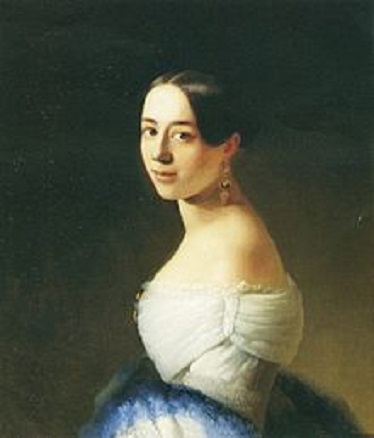
    Above: Pauline Viardot, painted by Carl Timoleon von Neff

    Pauline Viardot‘s is the one voice from the pre-recording era that I most wish I could have heard. After she retired from the stage, Mme. Viardot organized salons at which her students performed. It was for one such salon, in 1904, that Viardot (then 83 years old) presented her final opera, CENDRILLON.

    The opera was sung French, with the spoken dialogue given in an English translation by Rachel M. Harris. The production is directed by Rose Freeman, produced by CLO Co-Founder Megan Gillis, and is under the musical direction of Michelle Rofrano (…what a delightfully operatic name!).

    The cast: Marie, aka Cinderella: Shaina Martinez-Azzopardi (soprano); Fairy Godmother: Yejin Lee (soprano); Armelinde: Linda Collazo (mezzo-soprano); Maguelonne: Allie Altieri (soprano);  Barigoule: Corey Don (tenor); Le Baron de Pictordu: Joseph Parrish (bass-baritone); The Prince: Nicholas Huff (tenor)

    The chorus members are Luxana Zepeda (soprano), Mithuna Savaraman (soprano), Erin Rosales (mezzo-soprano), Brian Jeffers (tenor), Ramon Gabriel Tenefrancia (tenor), and Nathaniel Mattingly (baritone)

    Members of the orchestra: Flute: Mitzy Nonaka; Oboe: Alexis Porcaro; Clarinet: Elia Foster; Bassoon: Steven Palacio; Horn: Jessica Santiago; Harp: Tiffany Wu; Violin 1: Aurora Mendez; Violin 2: Lucia Lostumbo; Viola: Kayla Williams; ; Cello: Iva Casian-Lakos; Bass: Camellia Aftahi;.

    Here is the Company’s program note for CENDRILLON:

    The plot follows roughly that of Rossini’s CENERENTOLA, with some extra twists. Instead of a step-mother, this story has the foolish Baron de Pictordu, with his two vain daughters, Maguelone and Armelinde, who  are both after the Prince. Cinderella reads about a fairy-tale prince at the beginning, and her father is revealed to be a former grocer with a dubious past.

    ~~~~~~~~~~~~~~~~~~~~~~~~~~~~~~~~~~~~~~~~~~~~

    I arrived punctually for the dress rehearsal, and met the LCO’s wonderful co-founder, Megan Gillis. She advised me that the start time for the rehearsal had been pushed forward one hour. No problem! I got to chat with the beauteous Maestro Rofrano, and hear her take the orchestra thru some passages from the opera; she’s a meticulous musician who knows the score inside out . And what an orchestra! These players are superb, every one of them. In addition to strings and piano, Mme. Viardot’s score calls for a harp (delicious!) and a quintet of winds (horn, flute, oboe, clarinet – doubling on bass clarinet – and bassoon. The bassoonist, Steven Palacio, in particular impressed me with his plush tone and easy agility,

    The setting is simple, with glowing electroluminescent rope lights draped in the branches of a central tree. The characters all seem like woodland creatures in human guise. Clever projections depict such events as the transformation of pumpkin, mice, and lizards into coach, horses, and footmen. At the ball, disco globes provided a jolt to memories of my dancing days. The glass slippers here become chunky disco boots in hot pink. Inflatable gremlins join in the fun. At the ball, clear notes from the harp strike midnight. There is a hilarious scene where the women queue up to try on the shoe, and even Baron de Pictordu has a go at it. All’s well that ends well, and of course Cinderella and her Prince live happily ever after.

    The cast was impressive; both vocally and physically, with each singer seeming well-suited to his/her role. As the mean step-sisters, Allie Altieri and Linda Collazo were wonderfully lazy, whining, and snobbish. Viardot gives them nice things to sing, and they sang very well. Corey Don as Barigoule, the valet who temporarily becomes Prince, sang strongly, and was especially fine in the scene where he “unmasks” Baron de Pictordu.

    In Viardot’s version, the Fairy Godmother assumes the spirit of Marie’s dead mother and turns the girl’s hapless existence to joy in the course of a singe day. In this magical role, soprano Yejin Lee sang with full lyric tone in her mid-range, ascending to shimmering soft-halo high notes..

    Shaina Martinez-Azzopardi as Cinderella_CityLyricOpera

    Above: Shaina Martinez-Azzopardi as Cinderella, photo by Mary Rice

    Nicholas Huff as the tall Prince showed a clear, expressive lyrical tenor voice. He and Shaina Martinez-Azzopardi as Cinderella joined in the opera’s love duet, wherein they simply pour out rapturous melody, much as Puccini’s new-found lovers do in BOHEME.  Ms. Martinez-Azzopardi was just perfect in the opera’s title-role; her singing was rich and expressive, and her portrayal embodied Cinderella’s hope and steadfast kindness, for which the girl is rewarded in the end. 

    Joseph Parrish  baritone as Le Comte du Pictordu_CityLyricOpera

    Stealing the show, bass-baritone Joseph Parrish (above, photo by Mary Rice ) as the Baron de Pictordu is a singer who has it all: a handsome face, a lithe and nimble stage presence, clarity of diction and of expression, and a wide-ranging voice of power and warmth. Bravo…bravissimo! .

    ~ Oberon

  • Verdi REQUIEM @ Tanglewood ~ 1981

    Mirella-freni

    Above: Mirella Freni

    (Only two days remain for me to locate articles from Oberon’s Grove that did not come thru in the big transfer to Oberon’s Glade. I’m doing my best to locate stories that were especially important to me at the time of writing…such as this one.)

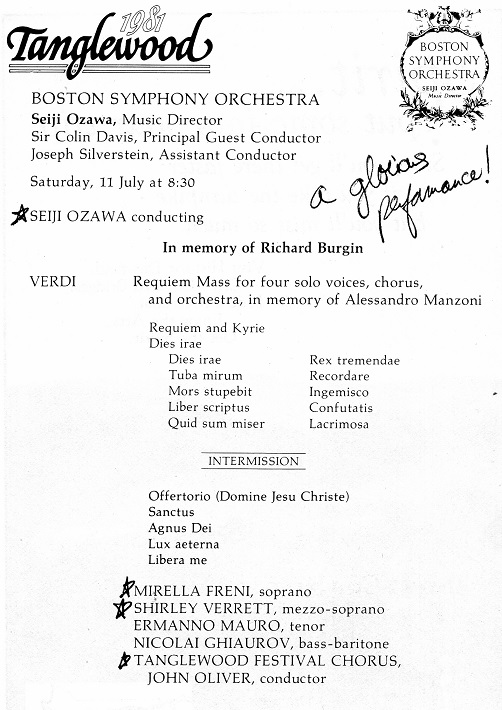
    One of the greatest musical experiences of my life took place at Tanglewood on July 11th, 1981: a performance of the Verdi REQUIEM by the Boston Symphony Orchestra conducted by Seiji Ozawa, with soloists Mirella Freni, Shirley Verrett, Ermanno Mauro, and Nicolai Ghiaurov.

    Tanglewood requiem jpg

    Here’s what I wrote in my opera diary the day after the performance:

    “A spectacular night at Tanglewood – one of the most thrilling performances of anything I have ever attended. Everything clicked: even the weather was perfect. Orchestra, chorus, and soloists all threw themselves into the music with passion, making this dramatic and beautiful score come to vibrant life.

    The day was magnificent, wandering about the lawns with me dear friend Richard. We met up with Andrew and Father Rick, who had driven over from Boston. They’d brought a picnic (this, following a great lunch at Miss Ruby’s). As the bright sky began to fade to evening and the huge crowd moved into the Shed, a great sense of excitement welled up.

    Mirella Freni led the soloists on; and then, as the first whispered notes of the music stole through theatre, a palpable hush settled over the crowd, which remained transfixed until the final note faded away and an an enormous ovation was unleashed.

    Seiji Ozawa gave a masterful rendering of the score; there were no attempts to make the REQUIEM anything but what it is: a sacred opera. With his luminous orchestra and splendidly fervent chorus responding in the most astute and passionate way to the Maestro’s every command, Ozawa summoned forth all the blood and thunder – and the spine-tingling subtleties – that make this work such a treasure. With the chorus and orchestra providing a glorious tapestry of sound, the four wonderful vocal soloists poured forth their heavenly melodies with true splendour.

    Basso Nicolai Ghiaurov ‘s voice may have lost a bit of its plush over the years, but his is still very much a voice to be reckoned with. His upper notes were a bit effortful in places; set against his authority and deep commitment, it didn’t matter much. Time and again he brought the bass line to the fore. A most impressive performance!

    Ermanno Mauro sang in a straight-forward manner for the most part; his full-throated, warmly Italianate sound was always a pleasure. When Ozawa was able to coax the tenor into a more refined phrase or note, the result was lovely. Mauro’s singing was less “precious” than we sometimes hear in this music, and was well in keeping with Ozawa’s largely extroverted feel for the music. Not only in his solos but also in his blendings with his colleagues, the tenor made an excellent impression.

    Shirley Verrett gave a spell-binding interpretation of the mezzo role, which combined flawless vocalism with the trademark Verrett flame. From the moment this gorgeous woman opened her mouth, she seized upon the imagination, bringing forth her ringing top notes, rich and smouldering chest voice, and her great gift for dynamic control; and underneath every phrase, the fire was burning. Watching her sing is as thrilling as hearing the sound she produces: the intensity and passion of this woman is thrilling beyond words.

    Verrett’s “Liber scriptus” was glorious, and her duets with Mirella Freni were extraordinary musical experiences. She launched the “Lux aeterna” with special warmth and beauty of tone, and – like Ghiaurov – she was able to highlight her musical lines in the ensembles. Shirley Verrett remains one of the most exciting singers of our time. Watching and listening to her tonight, with everything in gear and the fire at the blazing point, it’s hard to imagine anything more thrilling. Bravissima!!

    It had been twelve years since I last heard Mirella Freni live, and as she led the soloists out this evening, I simply fell in love with her. Time has been more than kind to her, not only vocally but physically: what a tremendously appealing woman she is – so utterly feminine, and having a simple air of dignity that is captivating.

    Freni has ventured far from her Susannas and Juliets, and the voice has held up superbly – now a plusher sound, and with a more intense delivery than in her younger days. She gave a performance of great assurance, tonal enchantment, commitment, and poignancy. With the pearly tone, the expressive use of chest notes without pressure, and the urgency of diction and expression at moments of drama, she rendered the music with true authority. And over all she shed her luminous personal beauty.

    Freni showed that she can beam in on those uncanny high piani, demonstrating awesome control. She brought all her gifts to bear in her singing of great “Libera me“, culminating on a suspended B-flat of celestial radiance. The soprano’s passion in the final glorious passages as she soared over the chorus and orchestra was something to hear…and to see. And then, the final hushed plea: “Libera me…” brought the work to a touching close.

    Now commenced an ovation of epic proportions. Symphony audiences can be rather staid in showing their appreciation after a concert, but here we had a genuine ‘operatic’ response. Freni, now beaming like an angel on Easter Sunday, led the soloists out; Verrett, more austere but breath-takingly beautiful, stood beside the soprano as fervent cries of brava! rang out. The contrasting physical appeal of Freni and Verrett was fascinating to behold, and I would give anything to have a photo of the two of them during these emotionally super-charged moments. The singers and Maestro were called out repeatedly, the chorus and orchestra reaping deafening roars of cheers whenever they rose to bow. 

    With the stage filled with such remarkable musicians, the audience seemed reluctant to let them go. What a gift, to create such sheer beauty…it gave me the chills. An evening I’ll never forget!”