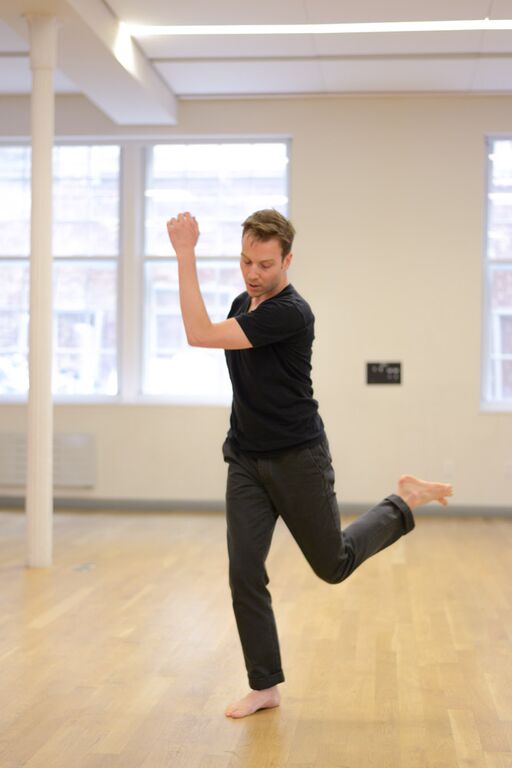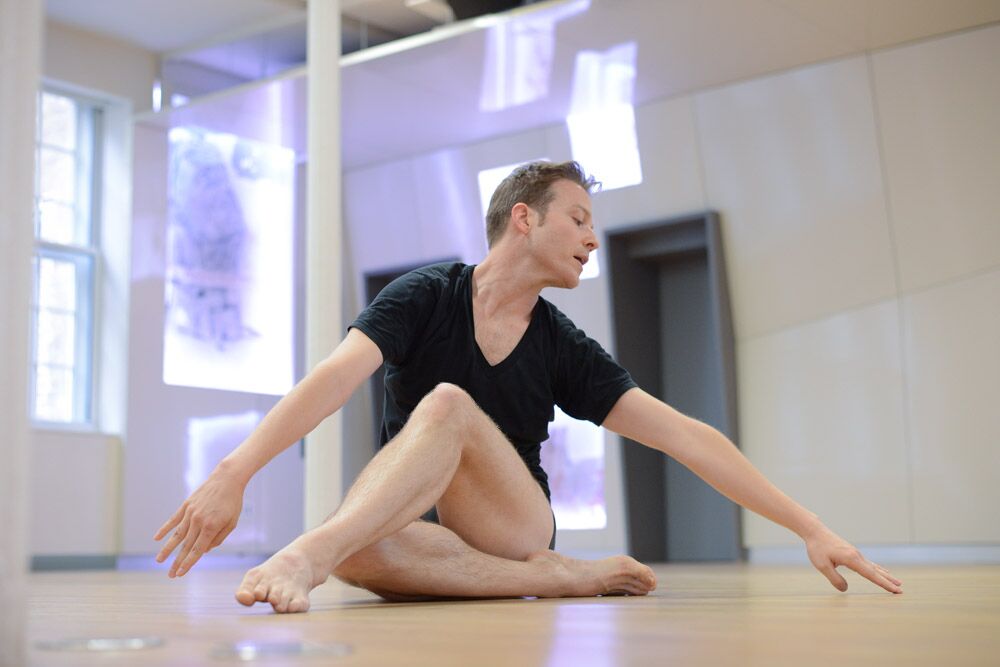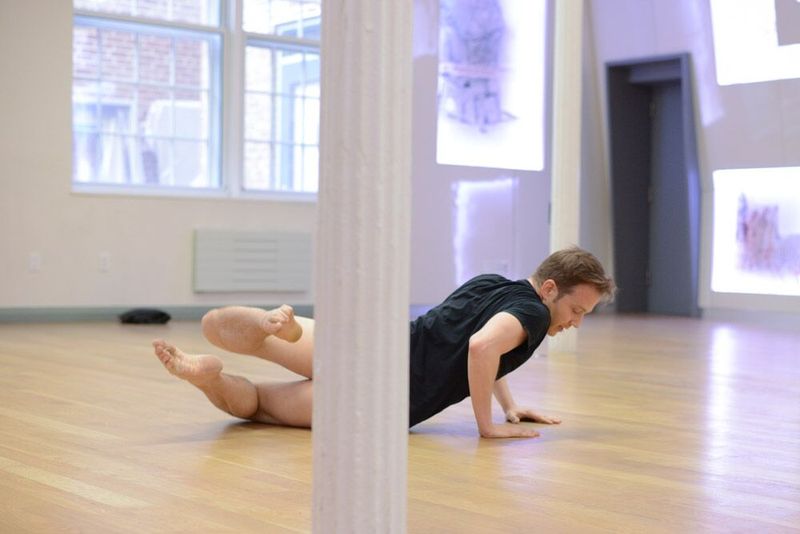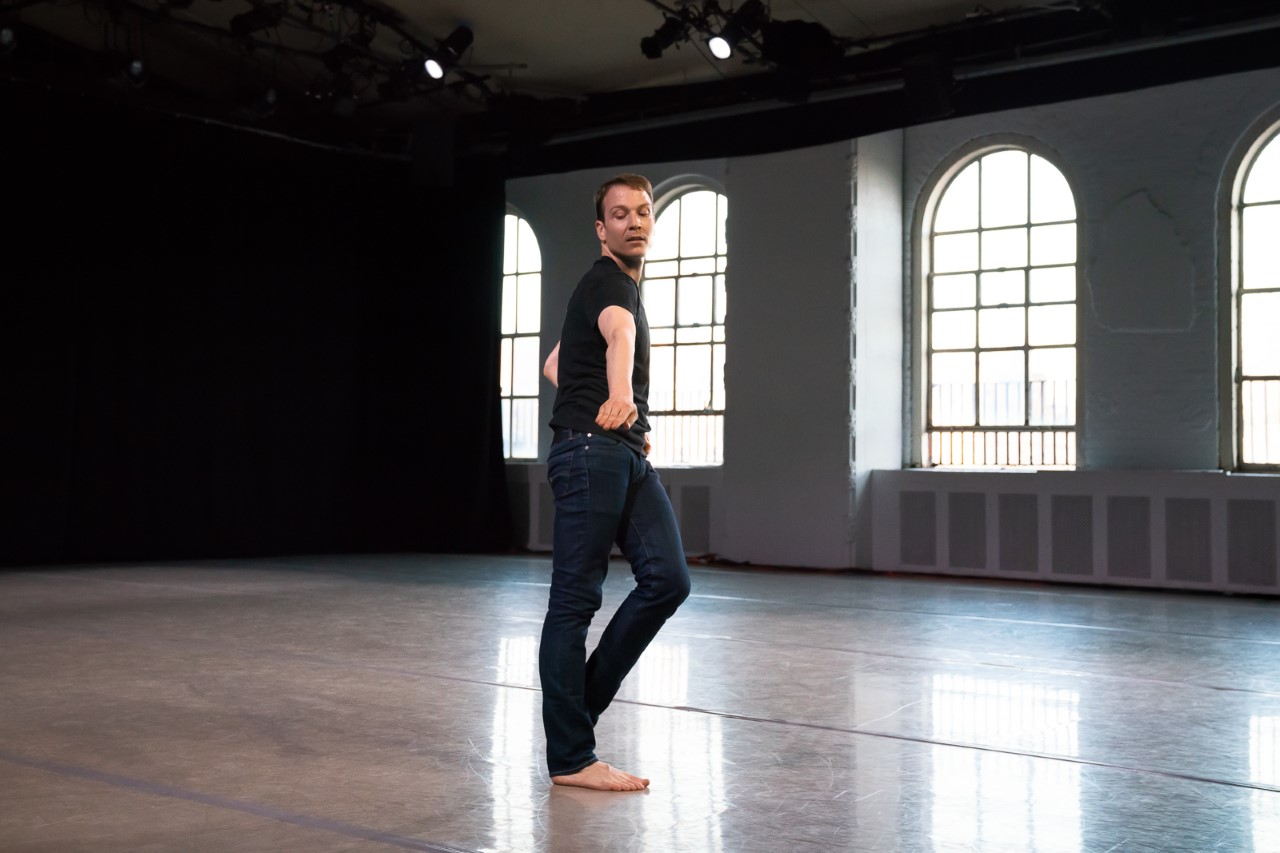
Author: Philip Gardner

  • Bloody Nightgown

    20106811_10154543710912102_8844537453792161211_n

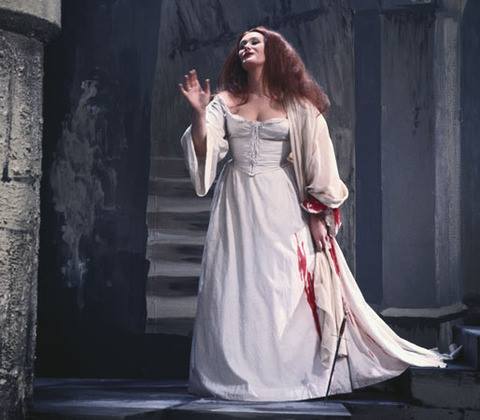
    Above: Dame Joan Sutherland as Lucia di Lammermoor; click on the image to enlarge

    (In the final days of access to my original blog, Oberon’s Grove, I’m trying to rescue some articles that were left behind in the mass transfer. I wrote this in 2017.)

    ~ Author: Oberon

    I fell in love with opera on January 12th, 1959. I know the exact date because the television program that so captured my imagination was released – many years later – on video. It was a Bell Telephone Hour presentation of Renata Tebaldi singing excerpts from Puccini’s MADAMA BUTTERFLY.

    That half-hour mesmerized me: who was this woman in a kimono singing in a language I could not understand? Why was her voice so big and rich? Why were these melodies reaching a depth of feeling in me that I’d never realized existed? Why did she kill herself? To a small, unhappy 11-year-old boy living in a tiny town, this experience opened a portal for me: a gateway into another world where I could be safe, wrapped in music and poetry of uncanny beauty. 

    What I didn’t know at the time was that an operatic event took place in London within a month of my Tebaldi-revelation: an Australian soprano named Joan Sutherland, who had been singing Mozart and Wagner for a few years, had a stunning triumph in Donizetti’s LUCIA DI LAMMERMOOR at The Royal Opera House, Covent Garden, on February 17th, 1959. Sutherland’s break-thru performance would colour my earliest years as an opera-lover.

    After that first televised Tebaldi experience, it took a while for me to construct my own operatic world. At that point, I was sadly unaware of the Texaco-Metropolitan Opera Saturday matinee broadcasts; had I known of them, I could have heard some wonderful performances between Spring 1959 and December 1961. Instead, I had to settle for few-and-far-between tidbits on television: any opera singing on the Ed Sullivan Show, the Voice of Firestone, and the Bell Telephone Hour became unmissable opportunities for me.

    My parents kindly bought me a two-LP set of RCA Victor artists singing Verdi and Puccini arias. It is not an exaggeration to say I wore the records out with constant playing. The singers were Albanese, Milanov, Peters, Bjoerling, Peerce, Merrill, Warren, and Tozzi. Thus I cut my operatic teeth.

    Then, on Friday December 8th, 1961, I chanced to see a small notice in the Syracuse newspaper that the Texaco-Metropolitan Opera Saturday matinee broadcast season would begin the following day, and would continue for twenty consecutive Saturdays. What??? I was of course the only person in my household to care. 

    The broadcast was to be LUCIA DI LAMMERMOOR featuring Joan Sutherland, who had just a few days earlier made her Met debut. I tuned in a full hour before the broadcast was to start. Radio reception was spotty, but then suddenly the voice of Milton Cross was heard. Oh, my god, someone is actually talking about opera! I was on cloud nine. Milton Cross told us about Sutherland – her leap to fame at Covent Garden and her fresh triumph at The Met. The phrase “high E-flat” was bandied about. I ran to the piano and struck the note and sang it – an easy reach for my pre-pubescent boy soprano.   

    Then Milton Cross told the story of the opera’s first act: I was thrilled – thrilled, I tell you! – to hear him speak of a forbidden love, of a ghost in a well, of a secret meeting, and a desperate parting. It was everything! 

    The opera finally started, and I was riveted to the old ivory-coloured box radio. Unfortunately my grandmother, who lived with us, had been sick to her stomach all morning and now she was feeling worse. I could hear her moaning and groaning, but I ignored her and clung to the music I was hearing. Such romance and passion! Sutherland had become my idol, and Richard Tucker as Edgardo sang thrillingly.

    My mother suddenly announced that we must take my grandmother to the hospital, about ten miles away. I threw my own mad scene, saying I had to stay at the radio until the opera ended. My mother wouldn’t hear of it. I think my hatred of my grandmother started that afternoon. No exaggeration.

    At any rate, the Saturday matinee Met broadcasts became my lifeline: nothing could interfere with my Saturday afternoons. I got my parents to buy me a reel-to reel-tape deck and I went back over and over the broadcasts of each succeeding week. I joined the Metropolitan Opera Guild, and devoured each issue of Opera News ravenously. I began to dream of going to The Met, and – in 1963 – my parents took me. I was able to see eight performances at the Old Met, accompanied by my parents or an older family friend. At last, in the late Summer of 1966, having graduated from high-school, I made my first solo trip to New York City and was on the ticket line for the opening weeks of the New Met.

    But…back to LUCIA:

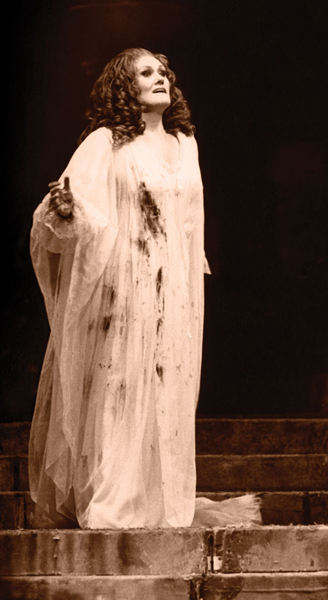
    When Sutherland returned to the role of Lucia at The Met in 1982, she had a colossal success. I was at the performance that was telecast (!), and the atmosphere in the House was electric. Dame Joan’s Mad Scene literally stopped the show.

    Here’s the soprano in Lucia’s final moments:
    Sutherlandlucialg12110

    Above: Sutherland as Lucia at the Met, 1982.

    In the years that followed Sutherland’s first Lucias, there were a number of sopranos who made wonderful and vastly different impressions in the role: Roberta Peters, Renata Scotto, Beverly Sills, Patricia Brooks, Patricia Wise, Rita Shane, Gianna Rolandi, June Anderson, Edita Gruberova, and Mariella Devia.

    Flash forward nearly 60 years from Sutherland’s first London Lucia, and the reverberations of La Stupenda’s Bride of Lammermoor are still hovering in the operatic air: my beloved friend and lyric-coloratura extraordinaire Lisette Oropesa recently took on the role of Donizetti’s hapless mad-woman on the same stage where Sutherland had triumphed in 1959.

    The bloody nightgown is still an iconic symbol of Lucia’s tragic destiny, but of course the Royal Opera production’s director could not resist tampering with the story to try to make it more…whatever…and thus the blood is now the result of a miscarriage, because of course Lucia was pregnant. Odd that Donizetti hadn’t picked up on that.

    Be that as it may, Lisette enjoyed an enormous London success with her Lucias: rave reviews, and standing ovations.

    ~ Oberon

  • My First TRISTAN UND ISOLDE

    Nilsson

    Above: Birgit Nilsson as Isolde; click on the image to enlarge

    (Another copy-and-paste from Oberon’s Grove, about my first-ever experience seeing TRISTAN UND ISOLDE.) l

    Wagner’s TRISTAN UND ISOLDE has always been a somewhat problematic opera for me. I remember a strong sense of anticipation leading up to my first experience of hearing the opera: on a Met broadcast in February 1963. The prestigious cast included Birgit Nilsson, Karl Liebl, Irene Dalis, and Jerome Hines, and the conductor was none other than Sir Georg Solti. The story, which I read over several times in Opera News, sounded like just my cup of tea: vengeance, passion, a love potion, death. I’d already gotten somewhat interested in LOHENGRIN and FLYING DUTCHMAN and had become intrigued with the RING Cycle. I felt confident that hearing TRISTAN would be a life-altering experience.

    The prelude was enthralling, but soon after my attention began to waver. The opera flowed on and on, slowly and without anything that particularly grabbed my imagination. I stuck with it for two acts, and then during Tristan’s long monolog in Act III it seemed so tedious that I asked my grandmother if we could play a few hands of honeymoon bridge while I listened. The Liebestod was nice, but overall I felt that TRISTAN was beyond my comprehension.

    The next time I encountered TRISTAN was some eight years later. By this point (1971) I had a lot more opera under my belt, both live performances and broadcasts, and had been going to New York City for opera performances frequently. All of my opera-friends thought that the premiere of a new production of TRISTAN was going to be the highlight of the season; I decided to go and give the opera a try, having scrupulously avoided listening to any part of it (aside from the Liebestod) since that 1963 broadcast. I thought that perhaps seeing TRISTAN would make it more appealing to me, just as seeing MEISTERSINGER and PETER GRIMES had given me revelations about those works that simply listening to them on the radio didn’t quite produce.

    And in fact seeing TRISTAN did indeed make a vital and lasting impression on me; here’s what I wrote in my diary the morning after:

    TRISTAN UND ISOLDE! First time ever! A magnificent performance in all respects, a great experience and one I will never forget. I’ve been avoiding this opera for years and it’s high time I came to grips with it. This performance went a long way in making the opera appealing to me. It’s uneven and I admit the first 40 minutes of Act III are kind of a trial. But the prelude, the first two acts and the Liebestod are all pretty spectacular.

    Erich Leinsdorf returned to The Met tonight and he had a great triumph, very warmly greeted as he took the podium [Leinsdorf had made his Met debut in 1938; he had participated in the 1966 closing night gala of the Old Met and had led some performances of NOZZE DE FIGARO when The Met visited Paris in 1966. This TRISTAN marked his return after five years and his first time conducting at the new house.] He led an impressive performance, with the orchestra playing quite beautifully. The opera flowed forward smoothly, with ample opportunity for the singers to work their magic.

    The production is simply beautiful: in Act I, the huge ship with its towering sails looks striking. Act II opens at nightfall in a leafy garden…it looks quite voluptuous. As the love duet begins, Tristan and Isolde are spot-lit; as if in a dream they seem to rise up above life itself, appearing to hover above the Earth’s edge. As the duet comes to an end, they advance down the raked disc, descending from their paradise and forced back to reality and to their fate. A gorgeous late-Autumnal tableau sets the stage for Marke’s monolog, with everyone standing stock-still while the shattered king poured out his despair. The monochrome setting for Act III did not enhance the long scene of Tristan’s ravings, though it aptly suggested his loneliness and nightmarish longing. For the Liebestod, only Isolde’s face is illuminated. As the great aria moves forward, rays of bluish light flood the stage from above. In the postlude, Tristan’s face is slowly illuminated. He raises his hand and clasps Isolde’s in a moving depiction of their life after death.

    Throughout the evening the lighting and staging were most effective, and I loved Isolde’s red gown in Act I and her blue one in Act III.

    The singers were just great. John Macurdy was a richly dark-toned Marke who made his long monolog perfectly palatabe. Thomas Stewart was an excellent Kurwenal in every respect. Jess Thomas displayed both the power and the poetry needed for Tristan; the voice has aged somewhat but still has passages of expressive beauty, and he looks well onstage. He made the most of that endless scene which opens Act III.

    The ladies were simply incredible! Mignon Dunn created a superb Brangaene both vocally and dramatically. She was a warm and sympathetic figure onstage, and was totally in command of all the score’s demands. Above all I will always remember the heart-rending effect of her Tower Watch in Act II as her voice sailed out of the darkness, caressing these phrases with mellow, gorgeous sound which perfectly captured Wagner’s moving idea at this point.

    Birgit Nilsson was the jewel in the crown of this glorious production. This sort of interpretation is difficult to describe: a flooding, all-feeling, all-knowing, larger than life yet magnificently human portrayal. Her acting was superb, her feeling for the role absolutely right, her word-colourings and nuances strikinglly effective.  And she really looked beautiful. But the voice!! That incredible instrument was in solid-gold condition for a performance on unequalled excitement and splendour. It retains its huge size but is now rounder, fuller, richer, and warmer than ever before.

    Glowing like a rich ruby, Nilsson’s voice encompassed every demand that Wagner placed on it. Her narrative and curse in Act I – especially the sustained passage at the end of the latter – were marvelous, and as she greeted Tristan in Act II, Nilsson really cut loose with the fireworks. She did encounter some pitch problems in the love duet [it was later said that she and Thomas were so far upstage during much of the duet that they could not heard the orchestra] but overall she and Jess Thomas rhapsodized convincingly here. Birgit’s Liebestod was indescribably thrilling, the voice sailing into the House with overwhelming power and beauty. We are so very fortunate to have this paragon of sopranos singing for us.

    The performance generated a spectacular standing ovation which lasted about 15 minutes, the stars and the Maestro coming out repeatedly to enormous waves of applause and cheers. A super night! I could not have asked for a better first TRISTAN!”

    Metropolitan Opera House
    November 18, 1971
    Benefit/Sponsored by the Metropolitan Opera Guild
    New Production

    TRISTAN UND ISOLDE
    Wagner

    Tristan.................Jess Thomas
    Isolde..................Birgit Nilsson
    Kurwenal................Thomas Stewart
    Brangäne................Mignon Dunn
    King Marke..............John Macurdy
    Melot...................Rod MacWherter
    Sailor's Voice..........Leo Goeke
    Shepherd................Nico Castel
    Steersman...............Louis Sgarro

    Conductor...............Erich Leinsdorf

    Director................August Everding [Debut]
    Designer................Günther Schneider-Siemssen

    And yet, though this performance opened the TRISTAN door for me, I still found myself hesitant for some reason to embrace it fully. I skipped revivals with two of my favorite sopranos – Hildegard Behrens and Dame Gwyneth Jones – and could not bring myself to attend the premiere of a new production in 1999 featuring Jane Eaglen and Ben Heppner, even though by then I was living in New York City.

    It wasn’t until 2008 that I saw TRISTAN again: my friend Dmitry assured me that I’d love the production, and he was right. I saw it three times with Deborah Voigt, Katarina Dalayman, and Waltraud Meier as my Isoldes. Now I very much want to see it again, though the Dieter Dorn/Jürgen Rose production that I have enjoyed so much is rumored to soon be discarded (after only having been done 25 times); the next time the opera is given at The Met, it’ll most likely be a new production.

    I’ve realized that TRISTAN is an opera I need to experience in-house for full enjoyment. In fact, I still don’t think I’ve ever played thru a complete performance of it at home. Which is curious, since I can listen to the RING operas endlessly.

    TRISTAN has been described as being filled with “too much longing.” Now that most of my own longings have been fulfilled, I can perhaps begin to appreciate this undeniably great opera in a new way.

    ~ Oberon

  • Nothing But Strings @ Chamber Music Society

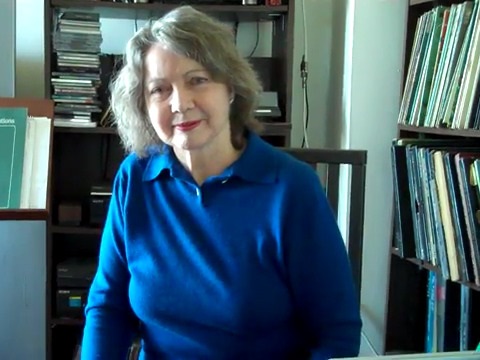
    Zwilich

    Above: composer Ellen Taaffe Zwilich

    (The last few days of importing articles from Oberon’s Grove onto Oberon’s Glade are here. I especially wanted to keep this story of meeting composer Ellen Taaffe Zwilich.)

    Click on each image in this article to enlarge.

    ~ Author: Oberon

    Sunday March 2nd, 2025 – Chamber Music Society of Lincoln Center gave us an evening of music for strings – and only strings – at Alice Tully Hall. Nine superb musicians joined together for the program, bringing us works dating back to the early 19th century thru the dawn of the 21st century.

    A 1984 Carnegie Hall commission, Ellen Taaffe Zwilich’s Double Quartet for Strings, opened the concert. This was my second experience with a Zwilich score this Winter: in late December, the NY String Orchestra offered her Prologue and Variations at Carnegie Hall. Read about it here.

    The two quartets involved in the Zwilich piece were peopled by wonderful artists: Francisco Fullana, Julian Rhee (a violinist new to me), Paul Neubauer, and Dmitri Atapine formed one quartet, and Ani Kavafian, Kristin Lee, James Thompson (playing viola), and Mihai Marica made up the other.

    A note is struck by all to open the Allegro moderato, and it is sustained by the violins. A strong unison passage follows. The violins from the two quartets exchange phrases to a vibrant, insistent beat.  Cello animation sets up vivid, searing music; the celli sing on high and Mr. Thompson sounds wonderful in a viola passage. Ms. Lee plays on, to the prevailing accents, and Mr. Fullana commences some bright plucking. The movement fades to silence.

    Msrs. Fullana and Rhee harmonize to open the Lento; Ms. Kavafian joins, and the violas and cellos have their say. Mr. Fullana makes a stunning impression, playing over cello chords. Dense harmonies, and a terrific blend of timbres, make the music so alive. There is a pause, and then a repeated note sounds as rich cello phrases are joined by the others, one by one. Mssrs. Fullana and Rhee shine here, but it is Ms. Lee, on a sustained note, who has the final moment.

    The Allegro vivo springs up suddenly; there is wonderful energy in this music. Cellos trill, and dynamic variety lures the ear. Mssrs. Fullana and Rhee sustain a note while Ms. Kavafian shimmers on high; violas and cellos add sonic texture. Then there’s a preparation and launch of fresh ideas; more trills, and Mr. Fullana playing passionately in alt. With a long, sustained note, the music vanishes into thin air.

    For the concluding Adagio, an ethereal mood emerges, with the four violins sustaining on high while violists Neubauer and Thompson join in a duet, later transformed to a quartet when cellists Atapine and Marica join. Ms. Kavafian plays in the upper range over somber harmonies and sustained tones. A cello duet leads to a unison passage for the four violins. Lower notes sound, and the work reaches its poignant finish.

    The composer was warmly greeted as she stood in her box for a bow; meanwhile, she had sent a rose to each of the musicians onstage. What a lovely moment!

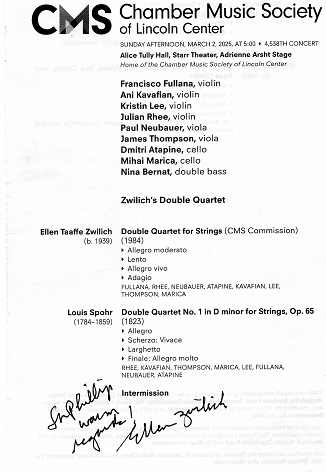
    While waiting for the concert to start, I had noticed Ms. Zwilich’s presence; I decided I would go up and meet her during the interval. She was very kind and signed my program. While I was there, a friend of hers asked her what she had thought of tonight’s performance of her Double Quartet. “Well, they knocked it out of the ballpark!” was her reply. I couldn’t agree more.

    Scanned Section 2-2jpg

    We reach back to 1823 for Louis Spohr’s Double Quartet No. 1 in D minor for Strings, Op. 65. For this, two distinct quartets appeared rather than having all eight musicians in a semi-circle. Stage left, one quartet was led by Ms. Lee with Mssrs. Fulllana, Neubauer, and Atapine, while – stage right – the other was expertly led by Mr. Rhee, with Ms. Kavafian and Mssrs. Thompson and Marica. Since the latter quartet were directly in my line of sight, I tended to pay more attention to them. 

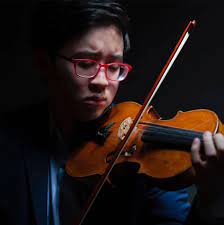
    Rhee

    In the opening Allegro, Mr. Rhee (above) made an excellent impression, with a magical dynamic range and persuasive phrasing. Mihai Marica, always a favorite of mine, was most impressive this evening, as was Mr. Thompson, who made the most of a beautiful viola theme, taken up soon after by Mr. Marica. Blending perfectly with their colleagues in the stage-left quartet, they turned the Allegro into a most appealing experience.

    The Scherzo has a lively start, and Mr. Rhee continues to delight here; across the stage, Kristin Lee sometimes echoed Mr. Rhee’s phrases. A gallant beat is established as Mssrs. Rhee, Thompson, and Marica have solos, whilst Ms. Kavafian makes the most of every opportunity. In a sort of da capo, Rhee and Marica communicate to fine effect. The music drifts away.

    Rhee leads off the Largetto, and Marica plays gorgeously here; sometimes he and his counter-part, Mr. Atapine, join forces.  Meanwhile Ms. Lee and her group have a reprise of their own. Everyone’s playing very well indeed.

    A scurrying feeling and amiable harmonies set the concluding Allegro molto on its way. Lively exchanges of themes mean everyone gets a chance to shine. The movement has a bustling feeling, with some brief detours along the way. It’s music that’s melodious…and full of delights.

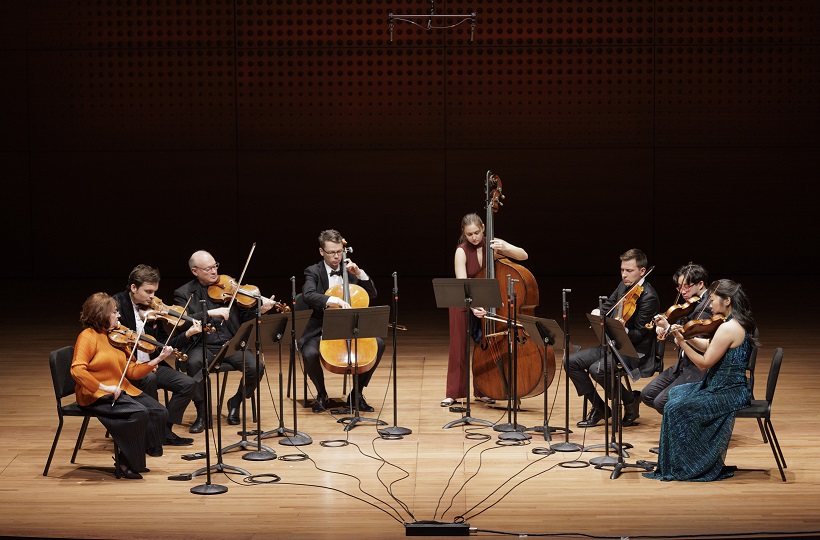
    20250302_DressIMG_7878

    Above, playing the Spohr: Julian Rhee, Ani Kavafian, Mihai Marica, James Thompson, Paul Neubauer, Dmitri Atapine, Fracisco Fullana, Kristin Lee; photo by Tristan Cook:

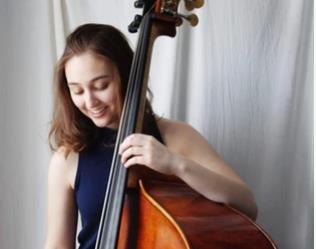
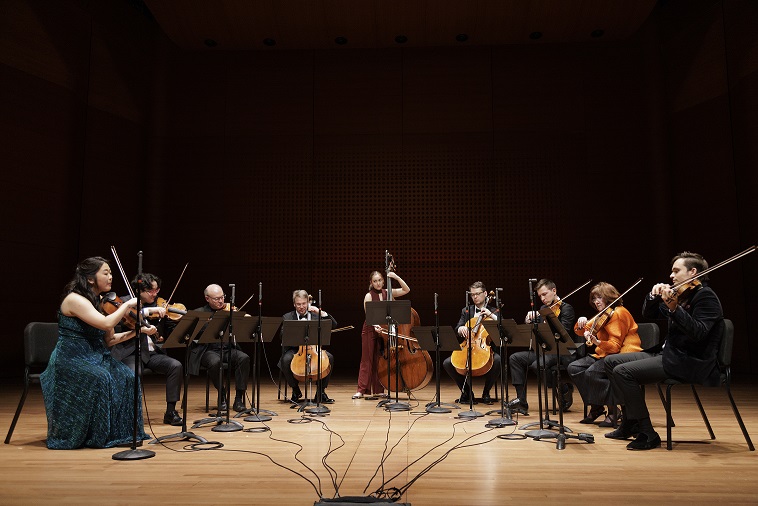
    Max Bruch’s 1920 Octet for Strings brought the four violinists (Ms. Kavafian taking the lead), and two violists together, with Mr. Marica. But rather than a second cellist, Nina Bernat joined the ensemble with her double bass; this brought fresh colours into the mix. 

    20250302_DressIMG_8018

    Playing the Bruch: Ani Kavafian, Francisco Fullana, Paul Neubauer, Mihai Maruca, Nina Bernat, James Thompson, Julian Rhee, Kristin Lee; photo by Tristan Cook

    Bruch’s Octet is in three movements, opening with an Allegro moderato.  Paul Neubauer’s sublime theme is taken up sweetly by Ms. Kavafian. Ms. Bernat’s playing is perfect, Mssrs. Fullana and Marica are splendid, and Kristin Lee, and Mssrs. Rhee and Thompson maintain their high level. There is a big unison passage, then tremelos support Ms. Kafavian’s lyricism….so very appealing. The movement has a grand finish.  

    Bernat

    Above: Nina Bernat

    The only work on the program for more than eight musicians was Olli Mustonen’s Nonet II which adds a bass player to the mix of four violins, two violas, and two cellos. Nina Bernat, a singular bassist, was again very impressive.

    The Nonet lists four movements, but I could only discern three; perhaps I missed a transition thanks to the disruptive chatterboxes seated in front in me. At any rate, the music has an itchy start; the cellos and bass add depth whilst the violins slash away. A trudging beat takes over; the music builds excitingly, with repeated chords leading to a sudden stop.

    The Adagio was especially fascinating: a 4-note motif repeats endlessly throughout the movement, but, with varying instrumentations and shifting harmonies, it becomes spellbinding. There is a key change, and a rise of emotion…really gorgeous colours emerge.

    The concluding movement has the feel of a Mendelssohn scherzo: light-filled and lovely. Brisk bass figurations from Ms. Bernat and a vivid agitato from Mr. Fullana sustain our interest. Intensity rises until the music meets with a sudden halt.

    20250302_DressIMG_8903

    Above, playing the Mustonen: Lee, Rhee, Neubauer, Atapine, Bernat, Marica, Thompson, Kavafian, and Fullana; photo by Tristan Cook.

    My thanks to Beverly Greenfield of Kirschbaum Associates for sending the performance photos by Tristan Cook.

  • Ian Spencer Bell @ The Center

    MREYDxwyETuRmmTtnIyqjGO3ObEnINmQo42l204th2A

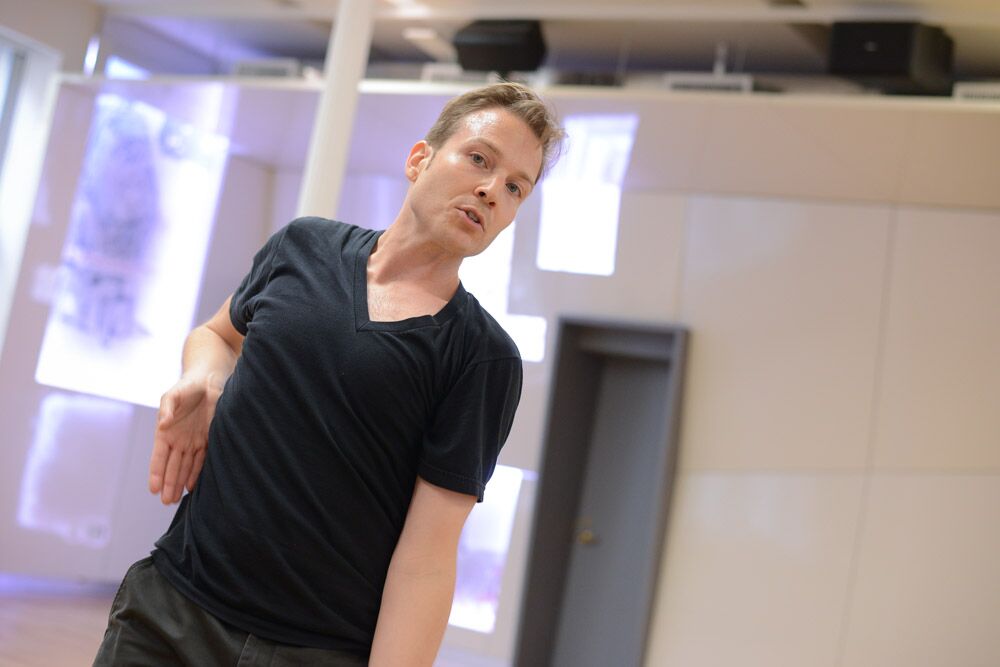
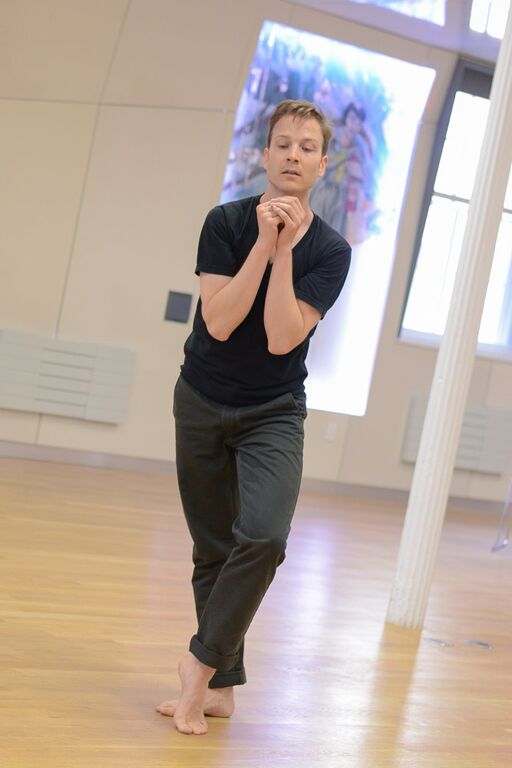
    Thursday June 4, 2015 – The Bureau of General Services – Queer Division and The LGBT Community Center presenting dancer/choreographer/poet Ian Spencer Bell in a solo performance. The day before the presentation, photographer Nir Arieli and I watched Ian’s dress run where Nir took the photos accompanying this article.

    Click on each of Nir’s images to enlarge.

    0RbOJlL87Wk4rEiRkGPMSZAfcMkINasFfSy8VRpkGn8

    Ian Spencer Bell holds a unique place in the Gotham dance firmament. At a time when so much contemporary dance looks – and sounds – so much alike, Ian’s solo concert was like a breath of fresh air. Performing at the recently-renovated LGBT Community Center in a white room spaced with slender columns, Ian’s fluid and gently athletic movement and his beautifully articulated renderings of his poems combined to hold the standing-room-only crowd in a state of receptive focus.

    2uGNVCAUd13_EbxW-M6J46FiryeQFjQvsO4bkLOYnIY

    GEOGRAPHY SOLOS are five rather short danceworks, each set to a poem reflecting on a particular time and place in the poet’s life. These intensely personal vignettes forge a link with the listener, Ian’s narration evoking memories of people and events in our own lives. The word “formica” for instance took me back to my mother’s laundry room. When was the last time anyone mentioned Bobbie Gentry, and who today ever thinks about the Tallahatchie Bridge? (Ironically, Ian’s dress rehearsal took place on June 3rd, the date of Billie Joe McAllister’s mysterious death). Ian’s experience at The Met parallels mine at The Frick.

    ZTybGurP1V-t81ieF3FdHSTq97gsPBNeb9x_pBsVBFs

    As these memories loom up, Ian continues to dance; although the choreography is thoughtfully mapped out, it often seems spontaneous. Moving about the space, the dancer’s hands carve the air gracefully or – almost unconsciously – explore his own body. Despite being in constant motion, Ian maintains his breath control, projecting the works at an ideal volume level which keeps the listener engaged.

    GjGINe6OCJLJ-Fn2Kw_9BzFC8NdHzcJnjlXBEiDavoY

    The final GEOGRAPHY SOLO has transported us to San Francisco; as an interlude, Scott McKenzie’s iconic flower-power hit “San Francisco” is played and there’s another flood of recollections: of getting stoned,  passing around a bottle of Boone’s Farm, and wondering if I should surrender to Meme’s husband: Houston was my San Francisco. As this counter-culture anthem wafts softly thru the space, Ian maintains his limberness with yoga poses.

    BKN4Xq-3HZWdpzb_3ngOCQM7FrOgSN-iLbWl2TsPvSA

    Stepping out of his trousers, the dancer continues in his black briefs with HOLLER, a poem in which Ian recalls the first time he heard his mother yelling; I had the same jolting experience the night my mother uncharacteristically lashed out at my ‘juvenile delinquent’ older brother. HOLLER eventually turns from narrative into a simple listing of objects, animals, places, and events from the poet’s youth. It seemed to me that with each word, fresh visions sprang up. Meanwhile the slender blonde dancer, now at his most vulnerable, drew us deeper and deeper into an elusive dreamworld.

    FIaSeFPBL2gzmKYRm6zGb0KcggumRBqGoYZ-FmTb8I8

    In conjuring up his own past, Ian Spencer Bell invites us each to experience a similar journey. His words and movement become transportive. Watching and listening to him, I kept thinking of something Zelda Fitzgerald once wrote:  “Nobody has ever measured, not even poets, how much the heart can hold.”     

    All photos by Nir Arieli.

  • Ian Spencer Bell @ Westbeth

    Thumbnail__KCF2588LowRes

    Above: Ian Spencer Bell in Duet, photo by Kyle Froman

    (Another friend from the dance world: Ian Spencer Bell…dancer/choreographer/poet. This article first appeared on Oberon’s Grove in 2018.)

    Note: Click on Kyle Froman’s images to enlarge.

    ~ Author: Oberon

    Wednesday May 9th, 2018 – Poet/dancer/choreographer Ian Spencer Bell in an evening of words and movement at the Martha Graham Studio Theater down in the venerable Westbeth Building.

    The space was hung with black drapes, the east-facing windows exposed with a view of the skyline in the fading light of a beautiful Spring evening; subtle lighting by Nicholas Houfek blended well with this natural light.

    The program opened with Duet which – ironically – is a trio. Set to Temptation by New Order, it’s performed by Ian along with Joshua Tuason and Gary Champi. The dancing is airy and stylized, with two bluejean-clad dancers moving together while the third circles the space; as the piece progresses, they switch places. The couple speak in a gestural dialect whilst the circling dancer varies his speed and gait.

    Joshua and Gary take a break while Ian begins to speak. The poem, Duet, is a reflection on the start and development of a relationship between two men; in telling it, the presence of the third dancer is explained. As with so much of Ian’s poetry, it conjures up visions from my own past; in the case of Duet, I began thinking of that first summer on the Cape with TJ, having sex in the ballet studio after everyone else had gone home. It’s that sort of thing that makes me feel a real connection to Ian’s work.    

    Finishing, Ian moves to the window and stands looking out on the City and the sky. The other boys soon join him there: the three of them look so beautiful – calm and pensive – creating one of the most moving images of the evening.

    This leads directly to Marrow, an Ian Spencer Bell classic. As the voice of Bobbie Gentry sings the still-enigmatic lyrics of Ode to Billie Joe, the dancers – first one, then two, and then all three – re-claim the dance-space. The space is then cleared for Ian’s solo rendering of his poem, Marrow. In movement by turns animated and languid, he recounts episodes from his life – from idle reveries to imminent dangers – as a small boy growing up in the South among people who did not understand him. This could of course be the story of any gay kid facing the realities of a life of being different, but it’s Ian’s personal way with putting memories words, and the shaping of his expressive body, that make it compelling.

    Thumbnail__KCF3266LowRes

    Above, from Goldwater; photo by Kyle Froman

    For the concluding work, Goldwater, two additional dancers – Vanessa Knouse and Lexie Thrash – joined Joshua and Gary, along with four young poets: Nadra Mabrouk, Francisco Márquez, Vanessa Moody, and Angelo Nikolopoulos.

    Goldwater in this instance refers to the NYU Goldwater Fellows Writing Workshop, a program at the Coler-Goldwater Hospital on Roosevelt Island wherein these teaching Fellows work with the Hospital’s severely physically-challenged patients in creative writing workshops for a group of twelve to twenty residents, meet with them in individual tutorials, and assist in transcribing their work. The Fellows also help publish the Golden Writers’ Anthology at the end of each semester. All four of the poets who read tonight are (or have been) NYU Goldwater Fellows, as was Ian Spencer Bell in the past. Ian adapted the poems for tonight’s performance, and dedicated the dancework to the Goldwater Writing Workshop.

    Moving in almost ritualized stylization, the four dancers fill the space with movement as the poets read parts of the works that were created in their workshops with the patients; fleeting partnering motifs in the dance spoke of the connection between poets and patients. This layered creative concept gave Goldwater a poignant expressive depth. The poets, incidentally, were each attractive in their own particular way, and – though probably not otherwise connected with dance – they joined the movement group in the end, again emphasizing connectedness. 

    Among the words spoken, these touched me deeply: 

    “I dream I’m a saint, beard long and gray, hiding the crucifix I wear. Then I wake, take my medications,  remember the stories of youth — the paramours, the enemies, the ghosts — and know, This is the only life I could wish for.” ~ Frank 

    The sound of the late Nick Drake singing From The Morning then seeped into the space as one by one the dancers and poets walked away. Drake was an English singer and song-writer who was born the same year I was; he committed suicide in 1974, which was the year that I stopped feeling suicidal and began living.

    ~ Oberon

  • Echoes by Isadora @ The Center at West Park

    DwD_Steven_Pisano_Spring_20250513-DSC09258 1

    Above: Ian Spencer Bell and the ensemble in Isadora Duncan’s Schubert’s Symphony #9/Andante; photo by Steven Pisano. Click on the image to enlarge. 

    ~ Author: Oberon

    Tuesday May 13th, 2025 – Francesca Todesco’s Dances We Dance presenting works by Isadora Duncan and Rae Ballard at a venue new to me: The Center at West Park. Guest artists Catherine Gallant, Faith Kimberling, and Ian Spencer Bell as well as Ms. Ballard’s troupe Thoughts in Motion joined in this program entitled Echoes by Isadora.

    The space, at the West Park Presbyterian Church, is in danger of losing its landmark status; if that happens, Gotham will lose yet another performance space.

    I’d been in the building only once previously, a few years ago when Take Ueyama had a rehearsal in a small studio space upstairs; even then, I felt the timeless resonance of being in a hallowed place. This evening, in the sanctuary, the significance was palpable…even though I’d left organized religion behind me at an early age. My up-bringing is so ingrained in me that I immediately felt at home tonight: I felt the spirit of Terpsichore hovering in the air of this venerable space. Sounds hokey? Maybe…but it’s my reality.

    DwD_Steven_Pisano_Spring_20250513-DSC08516 1

    Above: Lauren Naslund, Lana Hankinson, and Rae Ballard in Ballard’s Alla Primavera; photo by Steven Pisano

    It felt comforting to be “in chiesa“, gazing at a stained-glass panel over the altar whilst listening to songs being sung in French and waiting for the dancing to begin. The house went dark and three muses appeared: Rae Ballard, Lauren Naslund, and Lana Hankinson in soft tunics with flowers in their hair. They moved with poetic grace in Ms. Ballard’s work, Alla Primavera (To Springtime), danced to a Brahms piano intermezzo. This was my first time seeing Rae Ballard dance, though Francesca has spoken of her to me many times; Ms. Ballard  is both powerful and poetic. Ms. Naslund has a special place in my dance-world…

    Lana

    …and Ms. Hankinson’s lovely gaze (photo above by Steven Pisano) immediately endeared herself to me. These three would be back in other guises later in the evening.    

    DwD_Steven_Pisano_Spring_20250513-DSC08697 1

    Above: Faith Kimberling and Nira Solene in Schubert’s Symphony #9/Andante; photo by Steven Pisano. Click on the image to enlarge. 

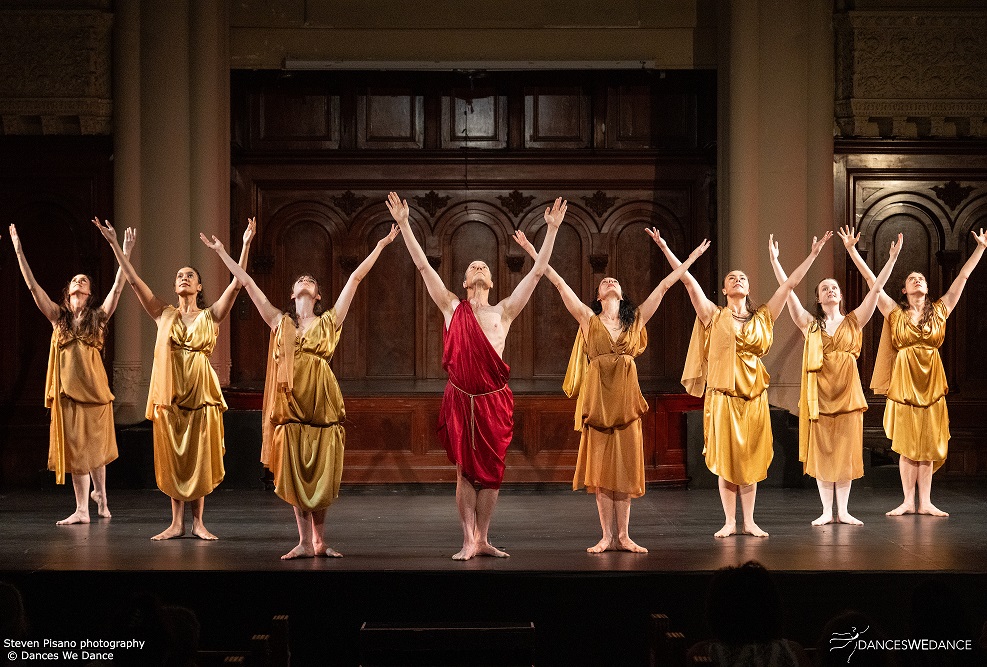
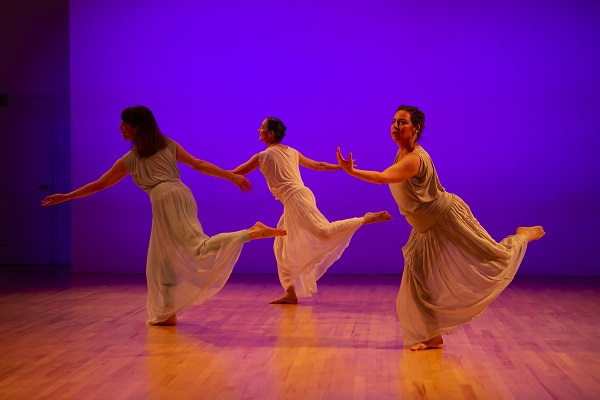
    Isadora Duncan now casts her spell as a troop of golden-clad women take the stage for two movements from Franz Schubert’s monumental Symphony #9: the Andante con moto and the Scherzo. This is a ceremonial work in which the raven-haired beauty Faith Kimberling takes a leading role. All shall be named: Jewel Cameron, Camille Constanti, Rosy Gentle, Thandi Nyambose, Nira Solene, Mary Garrett Turner, and Haley Wolfsberger bring their distinctive personalities and a sense of ecstatic commitment to the rituals of the Andante, looking especially radiant when a lyrical central section features a stately procession. Hands and arms expressively speak of the joys of service, and of sisterhood. 

    DwD_Steven_Pisano_Spring_20250513-DSC09062 1

    Now a young man appears in the hypnotic person of Ian Spencer Bell (above, photo by Steven Pisano); clad in a red tunic, this youthful-looking poet of the dance joins the rites as all raise their arms heavenward, invoking peace. A solemn air of ecstasy fills the space.

    DwD_Steven_Pisano_Spring_20250513-DSC09197 1

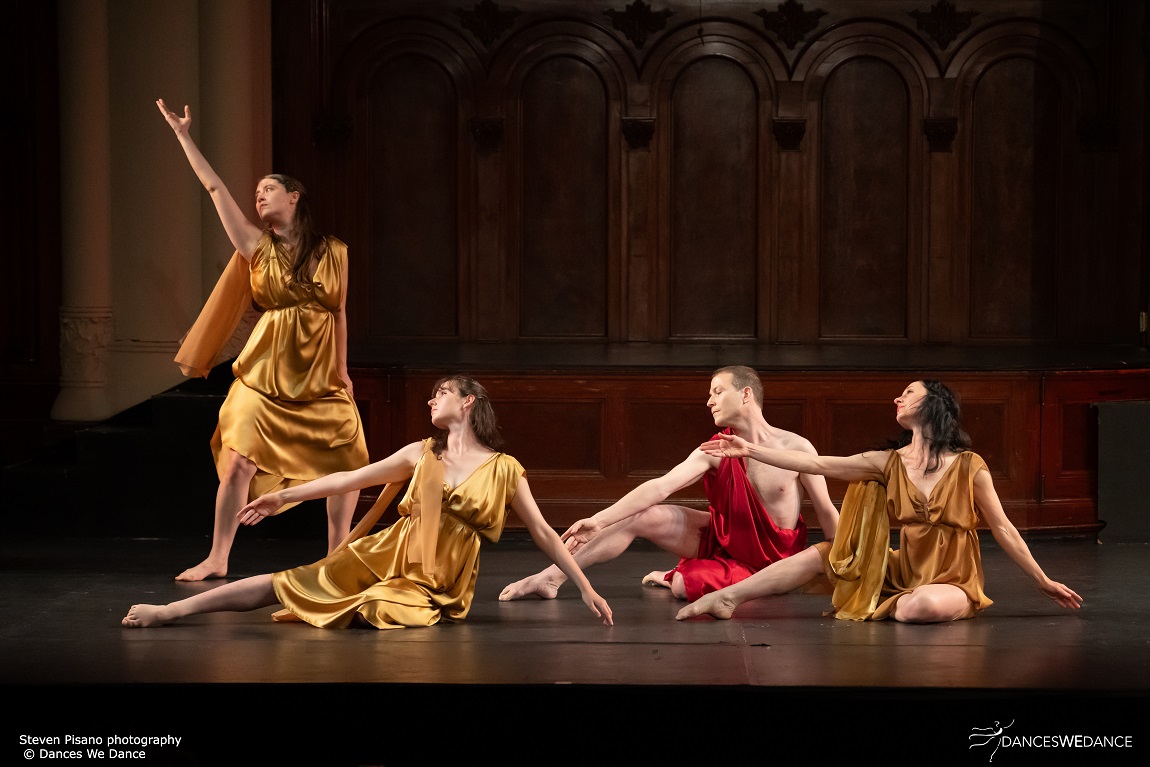
    Above: Camile Constanti, Rosy Gentle, Ian Spencer Bell, and Faith Kimberlng in Schubert’s Symphony #9/Andante; photo by Steven Pisano

    DwD_Steven_Pisano_Spring_20250513-DSC09692 1

    Above: Rosy Gentle and Haley Wolfersberger in Schubert Symphony #9/Scherzo; photo by Steven Pisano. Click on the image to enlarge.

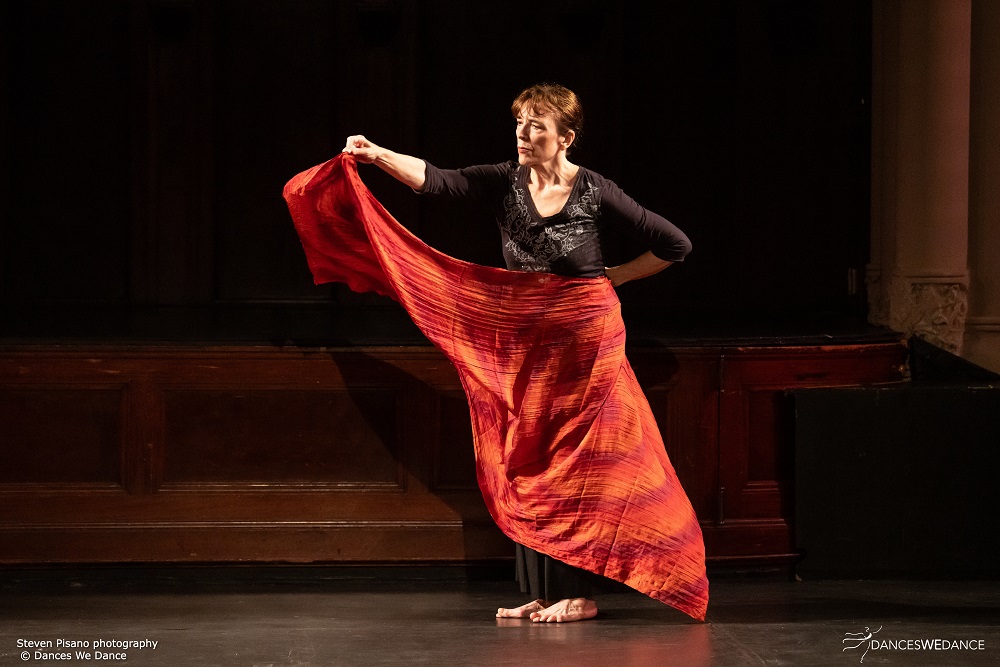
    In the ensuing Scherzo, non-stop movement fills the stage: Kathleen Caragine and Colleen Edwards join Mlles. Gentle and Wolfersberger in dancing that is at once lively and poised. Ms. Kimberling, a flame-orange scarf over her gold tunic, dances a solo that is the epitome of all things Duncan. I loved watching these dancers, so alert to one another and so dedicated to their art. 

    DwD_Steven_Pisano_Spring_20250513-DSC00148

    Rae Ballard (above, photo by Steven Pisano) now brought forth Passages, to musical pieces by four truly disparate composers. Dancing again with Ms. Naslund and Ms. Hankinson, the choreographer commences with a trio which gives way to solos for each dancer. Red scarves offset the dancers’ black, subtly bejeweled costumes.

    The opening pas de trois commences to Luiz Costa’s solemn music as the dancers perform their rituals. Ms. Naslund has the first solo, with music by Craig Armstrong which has a metallic launch followed by solo piano; the dancer has floorwork with a prayerful feeling which becomes a plea. To Max Richter’s lovely music, Ms. Ballard wafts a red cloth behind which she sometimes hides; the dancing is slow and entrancing. Cello music from Fauré illuminates Ms. Hankinson’s solo: a Novice whose poetic movements have a sense of innocence. At the end, she is alone in the fading light. 

    DwD_Steven_Pisano_Spring_20250513-DSC08303

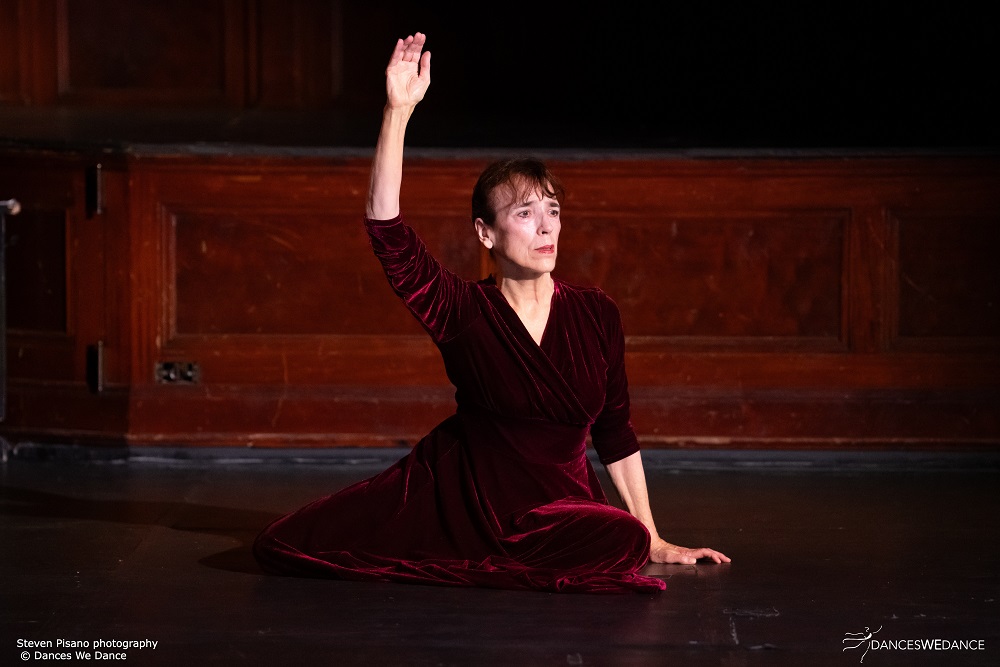
    Next, two of Isadora’s Scriabin Études were performed. Rae Ballard (above) was spell-binding in Mother; clad in somber maroon, the bereft woman mourns her absent child in a state of inconsolable despair.

    DwD_Steven_Pisano_Spring_20250513-DSC08311

    Catherine Gallant (above), a dancer whose quiet power belies her petite stature, was mesmerizing in the pensive, questing drama of Revolutionary. In these brief portraits, the two dancers personified the timeless impact of Isadora’s work.

    DwD_Steven_Pisano_Spring_20250513-DSC08622

    Above: Lauren Naslund, Lara Hankinson, and Rae Ballard in Ballard’s Third Wheel. Photo by Steven Pisano. Click on the image to enlarge.

    A comic interlude brought us Ms. Ballard’s ‘ranch-hand’ trio, Third Wheel. Clad in blue jeans, and passing a cowboy hat amongst them, the Ballard-Naslund-Hankinson trio cavorted about the space to a song by Aloe Blacc that had a bouncy beat and curiously meaningful lyrics…like this: “All this time I was finding myself, and I didn’t know I was lost.”

    DwD_Steven_Pisano_Spring_20250513-DSC09122

    Above: from Dance of the Furies, photo by Steven Pisano

    The evening concluded with Francesca Todesco’s arrangement of Isadora’s Dance of the Furies from Gluck’s opera ORFEO ED EURIDICE. Opening with a brief echo of Orfeo’s harp, the insistent chorus accompanies the crawling, writhing Furies: these are goddesses of vengeance and justice, symbolized by snakes in their hair and blood-smeared bodies. Their mission is to punish evildoers, tormenting their souls in the Underworld, whence Orfeo has come to rescue his beloved Euridice following her untimely death. I would love to see this work enlarged, to actually bring Orpheus and his lyre into the action. 

    More of Steven Pisano’s images from Isadora Duncan’s Dance of the Furies; click on each one to enlarge. 

    DwD_Steven_Pisano_Spring_20250513-DSC09115
    DwD_Steven_Pisano_Spring_20250513-DSC09624

    All photos by Steven Pisano

    ~ Oberon

  • Celebrating Francesca Todesco

    (An article from Oberon’s Grove about a dancer/choreographer who has since become a very dear friend.)

    JulieLemberger_2018-6884

    Above: Francesca Todesco in Isadora Duncan’s REVOLUTIONARY; photo by Julie Lemberger

    ~ Author: Oberon
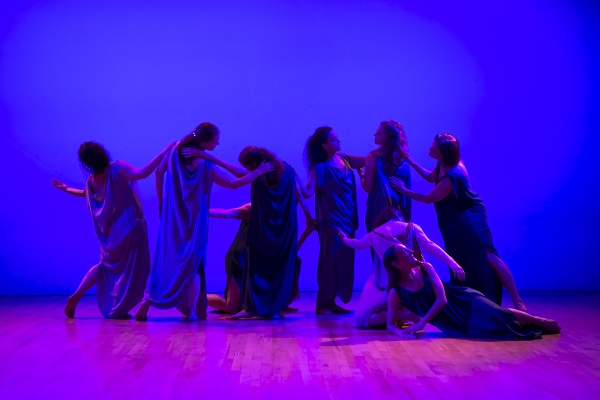
    Sunday November 4th, 2018 matinee – Francesca Todesco, a dancer whose performances in works by Isadora Duncan and Anna Sokolow have moved me in recent seasons, celebrated her twenty-year journey in New York City today with a program of danceworks in which she shared the stage with longtime colleagues in pieces choreographed by Isadora Duncan, Anna Sokolow, Catherine Gallant, Rae Ballard, and Jim May.

    The performance took place in Speyer Hall, at University Settlement on Eldridge Street: kind of a long trek for me, but eminently worthwhile in the long run. In a finely-paced production, gorgeously lit and featuring live music from the excellent young pianist Nathaniel LaNasa, the value of seeing dance in an up-close-and-personal setting was again affirmed.

    Dancers Rae Ballard, Eleanor Bunker, Ilana Cohen, Daniel Fetecua-Soto, Catherine Gallant, Samantha Geracht, Erika Langmeyer, Lauren Naslund, Loretta Thomas, and Margherita Tisato all participated in Francesca’s fête today. The legendary Jim May appeared as The Poet in Anna Sokolow’s IDEAS OF AN ACROBAT (from MAGRITTE, MAGRITTE).

    Solo works by Anna Sokolow and Isadora Duncan opened the performance, with Francesca Todesco dancing the choreography of the two iconic female dancemakers with whom the dancer is closely associated. For Ms. Sokolow’s POEM (1995), composer Bruno Belthoise wrote a new piano score (Poème) which is pensive to begin with, then begins to ripple. The dancer is quite still, her hands and arms slowly becoming animated. As the music rises in passion, she enfolds an empty embrace and then backs away.

    Meems_181103_035

    Above: Improvisation to Brahms, photo from MeemsImages

    While Ms. Todesco changed costumes, Mr. LaNasa played one of Johannes Brahms’ piano solos from Opus 118 whilst all the women dancers filled the space in what seemed like an improvisational dance with sylphlike lightness and gestural language in the Duncan vein. As this interlude progressed, individual dancers would sometimes pause – close enough for me to reach out and touch – making me feel almost a part of the dance.

    JulieLemberger_2018-6445

    Above: Francesca Todesco in Isadora Duncan’s HARP; photo by Julie Lemberger

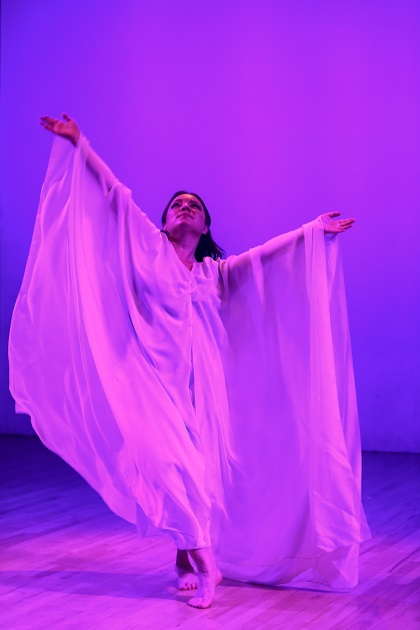
    The Isadora Duncan solo HARP (c. 1917) refers to the mythic Aeolian Harp and is danced to a Chopin étude. Now gowned in flowing white, with long draping sleeves, Ms. Todesco moves radiantly to the rippling piano music to and ecstatic ending. Simply gorgeous!

    44985072_2381270468566592_6744819811324264448_n

    Above: Loretta Thomas and the ensemble rehearsing Isadora Duncan’s POLONAISE MILITAIRE

    Loretta Thomas led a quartet of women in Isadora Duncan’s marvelous POLONAISE MILITAIRE (c. 1914), also set to Chopin. Eleanor Bunker, Ilana Cohen, Erika Langmeyer, and Margherita Tisato – all wearing classic Isadora tunic-style frocks – were excellent, and Ms. Thomas danced with distinctive authority. This work is an affirmation of feminine power and sisterhood.

    Music of Chopin brought Ms. Todesco forth in two Isadora Duncan solos, NARCISSUS (1904) and MINUTE WALTZ (1905). In the first of these, Ms. Todesco – in a rose-shade over-tunic – moves expressively to the sad, familiar melody. As the tempo accelerates, she executes soft turns in place before taking a series of poses on the floor and finally collapsing.

    In MINUTE WALTZ, Ms. Todesco is bathed in warm light; she begins to sway gently, then fills the space with restless, questing movement.

    Meems_181103_218

    Above: Catherine Gallant, Eleanor Bunker, and Margherita Tisato in Catherine Gallant’s WAVE; photo from MeemsImages

    Catherine Gallant’s WAVE (2001) continued in a Chopin mode (his Mazurka #43); from a statuary pose, three women – Ms. Gallant, Eleanor Bunker, and Margherita Tisato – dance a sisterly trio in an homage to Isadora. At its end, they resume their original pose. To all these Chopin works, Mr. LaNasa’s playing brought freshness and verve.

    For the piano four-hands pieces by Florent Schmitt used by Isadora Duncan for her 1914 work, REFLETS D’ALLEMAGNE, Isidora Vladic shared the keyboard with Mr. LaNasa. In the first of two excerpts, Lübeck, Eleanor Bunker, Catherine Gallant, and Loretta Thomas display the trademark movement motifs and gestures that define the Isadora style: their dancing has a natural grace and musical affinity. They are joined for Nuremburg by Ms. Tisato; fleeting solo passages here are lovingly communicative. 

    Concluding the program’s first half, Ms. Todesco had one of her dreams come true as she danced Jim May’s 1985 duet SLEEPING BOUQUET, which she had first seen some 20 years ago and always wanted to dance. The only work today performed to recorded music (the familiarly romantic Adagio from the Rachmaninoff second piano concert), Ms. Todesco was partnered here by Daniel Fecetua-Soto, former Limón principal.

    After the interval, there was a piano four-hands prelude to the program’s second half: Mr. LaNasa and Ms. Vladic played Brahms’ Hungarian Dance #8 in such a lively manner that I half-expected audience members to rise and kick up their heels.

    Thumbnail_Meems_181103_319

    Above: Jim May as the Poet in IDEAS OF AN ACROBAT; photo by Meemsimages

    Anna Sokolow’s IDEAS OF AN ACROBAT (from MAGRITTE, MAGRITTE) is performed to a specially-composed piano work by Haziel Masiello. Jim May, standing directly before me in a suit and bowler à la Magritte, intones poetry by Paul Eluard with his hauntingly inflected voice as dancers Eleanor Bunker, Samantha Geracht, and Lauren Naslund perform a stylized, ritualistic dance. Spotlit, the women’s shadows become part of the movement. The dancers become more animated, yet remain stationary for the most part. This atmospheric work ends in fading light.

    JulieLemberger_2018-6752

    Above: Daniel Fetecua-Soto and Francesca Todesco in Rae Ballard’s FADOS DOS AMANTES; photo by Julie Lemberger

    Two premieres with a Portuguese flavour are next, both choreographed by Rae Ballard – a name new to me. These were commissioned by Ms. Tedesco. In the first, FADOS DOS AMANTES (music by Eduardo Burnay and Alexandre Rey Colaço), a pair of lovers move thru various states of their relationship.

    Ms. Todesco dances the first movement while Mr. Fetebua-Soto slumbers on the floor: Francesca wears a long black dress, sometimes giving her skirt a provocative twitch. The male solo is more searching, and more animated. The concluding duet shows the couple bound to each other, for better or worse.

    Meems_181103_454

    Above: from Rae Ballard’s PORTUGUESE SUITE; photo from MeeemsImages. From left: Ms. Ballard, Lauren Naslund, and Samantha Geracht

    Rae Ballard’s lyrical choreography for herself and Mlles. Geracht and Naslund in EXCERPT FROM PORTUGUESE SUITE is lovely to behold. They dance in silence, and also to music by Luis Costa. This excerpt is part of a work-in-progress to be premiered in 2019.

    To conclude the program, Isadora Duncan’s SCRIABIN ÉTUDES (1921-1923) were strikingly played by Mr. LaNasa and superbly danced by Ms. Todesco. In the course of the work’s three movements, we can savour Francesca’s gift for making emotional connections both to the music and to her audience. Clad in red, the dancer’s expressive face and sublime use of gesture move from anxious animation thru the quiet despair of bereavement, to the embodiment of a passionate revolutionary: a woman who peers out at us and who utters a series of silent screams. 

    Bouquets were presented as a lively standing ovation greeted Francesca and all her colleagues at the end of this truly wonderful performance.

    ~ Oberon
  • ERWARTUNG @ The Met Museum ~2017

    Sunday December 3rd, 2017 matinee – ERWARTUNG (“Expectation“) is a one-act monodrama in four scenes by Arnold Schoenberg (photo above); the libretto is by Marie Pappenheim. Composed in 1909, ERWARTUNG was first performed on June 6th, 1924, at Prague, with Marie Gutheil-Schoder as soloist and conducted by Alexander Zemlinsky.

    Today’s performance of ERWARTUNG was part of the Sight & Sound series featuring The Orchestra Now in a set of concerts at The Metropolitan Museum of Art in which works of a particular artist or from a particular school of art are linked with pieces of associated music which are performed live

    The first half of the evening was given over to a lecture by Maestro Leon Botstein; he led the orchestra and soprano soloist Kirsten Chambers in passages from ERWARTUNG as an exploration of Expressionism in music. This was followed by a slide show of paintings by the composer Arnold Schoenberg, a man of multiple talents, and also of works by the Norwegian painter Edvard Munch.

    The idea behind the program is a good one, and there was a lot of valuable information to be gleaned about ERWARTUNG, its composer and librettist, and the Expressionistic period in art and music . The talk could have been slightly shorter, though, and the artwork shown would have been better-served if the screen was brought further forward. Late seating during the first several minutes of the program was a serious distraction.

    But the full performance of ERWARTUNG that followed a brief intermission erased any concerns about the overall presentation.   

    Of ERWARTUNG, Arnold Schoenberg wrote: “The aim is to represent in slow motion everything that occurs during a single second of maximum spiritual excitement, stretching it out to half an hour.”

    In this monodrama, The Woman is in a state of both apprehension and expectation. She wanders along a forest path, seeking a man: her lover. She talks distractedly to herself, by turns frightened or reassured. She grows more anxious, as the man she is looking for cannot be found. Suddenly, she stumbles upon a dead body, and, to her horror, realizes it is her beloved. She cries out for help, but there is no response. She attempts to revive the man, and speaks to him as if he can hear and understand her. She accuses him of infidelity with a woman who has delectable white arms. She then asks herself what she is to do with her life, now that her lover – who was the soul of her existence – is dead.

    The young players of The Orchestra Now rose to every challenge this demanding score presents. Under Maestro Botstein’s savvy baton, the music took on the darkling glow that makes it so distinctively magnificent. There are numerous opportunities for the individual orchestral voices to make their mark, and I must specifically mention concertmaster Lili Sarayrah and harpist Emily Melendes.

    1579715

    In October, 2016, Soprano Kirsten Chambers (above) made a very fine impression in a concert performance of Strauss’s FRIEDENSTAG with the American Symphony Orchestra at Carnegie Hall. This afternoon, in ERWARTUNG, she excelled. A comely blonde, Ms. Chambers tackled this complex and difficult role with total commitment, spending the voice freely and rising up to some bright, sustained high notes. In the more conversational passages, she found appropriate word-colours, and everything she sang had an intense quality that gave her singing a sense of urgency. I should like to hear her as Marie in WOZZECK and also as Cassandra in LES TROYENS.

    In a brief Q & A that followed the ERWARTUNG, my long-held belief that it’s The Woman herself who has killed her lover and the “white-armed woman” was seconded by another gentleman, who said he was a psychiatrist.

    The Met was horribly crowded, and the lines to get in were extraordinary. I had arrived early and planned to do some gallery-wandering, but ended up fighting crowds and trying to avoid the many screaming infants who were there but clearly wished they were elsewhere.

    ~ Oberon
    My Photo
  • A Met MEISTERSINGER Matinee ~ 2014

    4449ad6b72bb109f1fe46d193300aac7

    Saturday December 13th, 2014 matinee – A large, very attentive and enthusiastic audience for this matinee of MEISTERSINGER at The Met, the only Wagner on offer by the Company this season. It was a very good – though not great – performance. James Levine, the Met’s orchestra and chorus, and the opera itself were the stars of the afternoon, along wth some exceptional individual portrayals onstage.

    My first in-house experience with MEISTERSINGER was 46 years ago – almost to the day – and it was also a Saturday matinee: it was a Robert O’Hearn/Nathaniel Merrill setting, Joseph Rosenstock conducted, and the main roles were taken by Jean Fenn, Mildred Miller, Sandor Konya, Loren Driscoll, Giorgio Tozzi, Karl Dönch, and Ezio Flagello. Then at the height of my fan-boy stage, I waited afterwards at the stage door and got everyone’s autograph. It wasn’t til 25 years that I saw the opera again, in the current Otto Schenk production, which has held up fairly well though – as wth so many older Met productions – the lighting has suffered a decline. Also it seemed that there were fewer attendees at the St. John’s Day festival than I recall from earlier seasons.

    MEISTERSINGER is one of James Levine’s conductorial masterpieces; his love for the score is evident from the rich sonorities of the opening theme all the way to the majestic finale –  six hours later. Of particular appeal today was the autumnal prelude to the third act. The orchestra, while showing tiny signs of fatigue here and there, produced many heart-touching passages, notably some excellent cello solo work shortly after curtain-rise. With David Chan in the concertmaster’s chair, the musicians gave their all. Sharing in the glory were the Met choristers: their roof-raising “Wacht auf!” in Act III was just one example of the key part they played in the performance.

    I try not to make comparisons between past and present singers; it’s not really fair, and yet sometimes it’s difficult to forget a particularly luminous interpretation of a role while listening to a current incumbent. Thus the echos of such Evas as Mari Anne Haggender, Karita Mattila, and Hei-Kyung Hong hung in the air whilst today’s Annette Dasch gave a serviceable performance, sometimes a bit under-powered and lacking in tonal radiance. Likewise, it’s a challenge for anyone essaying David to rise to the level of Loren Driscoll or the marvelous Matthew Polenzani in this long and demanding part; Paul Appleby seemed slightly stretched vocally by the Act I narrative today, though his portrayal was endearing. Both Ms. Dasch and Mr. Appleby certainly had their appealing passages, and the audience gave them favorable applause at the end of the opera. 

    Matthew Rose sang well as the Night Watchman (he gets a solo bow) and the Mastersingers were a fine lot – only those seated stage left in Act I were visible from our box – and I especially like Benjamin Bliss (as Vogelgesang – a tall, handsome young man with a clear voice and gentlemanly presence) and David Cangelosi (expert stage savvy, witty and animated). Martin Gantner’s characterization of Kothner was apt though the voice was not rich. Hans-Peter König’s huge voice was reined in (though still more than ample of tone) to suit the music of Pogner, the most artstocratic of the Masters. Karen Cargill’s warm timbre and alert acting as Magdalene sustained the excellent impression she has made at The Met as Waltraute in GOTTERDAMMERUNG and Anna in LES TROYENS.

    The three central male roles were very well-taken today. If a bit of the velvet has worn off Johan Botha’s voice in his 25-year career of singing some of the most arduous roles ever written, it still rings out tirelessly and in fact his finest singing came in the final scene’s Prize Song at a point when most tenors are struggling to stay afloat. Never a very credible stage figure in romantic roles, Mr. Botha simply stands his ground and belts it out, and there’s something to be said for that in this killer music.

    MEIS_0616a-X3_500px

    Above: Johannes Martin Kränzle as Beckmesser, a Ken Howard/Met Opera photo

    In a superb interpretation, Johannes Martin Kränzle‘s Beckmesser stands proudly amid such memorable portrayals of the town clerk as those of Karl Dönch, Eike Wilm Schulte, Hermann Prey, and Sir Thomas Allen. Mr. Kränzle is an attractive man with a lithe figure, and as such there’s no reason why he would not consider himself a contender for Eva’s hand. The baritone played down the slapstick elements of the role, favoring a genial (though conniving) manner, and thus his degrading defeat at the song contest was more poignant than usual. And before launching his pilfered, askew song, Kränzle gave a wonderfully subtle portrayal of the proverbial nervous wreck. Aligned to this his excellent stagecraft, the singer also has a voice to be reckoned with: clear, warm, and expertly deployed with some bel canto manifestations in his attempts at a serenade. Herr Kränzle’s bio shows a vast and diverse repertoire: Amfortas, Wolfram, Don Giovanni, Don Alfonso, Bartok’s Bluebeard, Alberich, Tchaikovsky’s Count Tomsky, and even Papageno. Let’s have him back at The Met, and soon!

    Volle

    I first heard Michael Volle (above) on a tape from the 1993 Cardiff Festival. Like many a fine lyric baritone, he has matured into a robust-voiced singing actor and is now in the major leagues, singing such roles as Wotan, Scarpia, and Wozzeck. Following a success as Mandryka in ARABELLA at The Met last season, Volle has come back to us for two performances as Hans Sachs when the scheduled artist, Johan Reuter, withdrew from the cast.

    With a wonderfully natural stage presence, Volle’s Sachs is younger-looking than many who have essayed the role. Sachs is often seen as a father figure in Eva’s imagination, but with Mr. Volle he might seem more like an older brother. Pacing himself wisely over the course of the long role, the baritone sang sturdily throughout and in the ‘Wahn’ monolog of Act III his poetic aspects began to well up. The entire third act was especially impressive, with just a miniscule trace of vocal fatigue in his long final address; yet he called forth un-tapped reserves to carry him thru the final passages and to a big victory: the audience gave him a much-deserved ovation.

    The opera had me in a highly emotional state; it was the Met performance I’d most been looking forward to this season, and it was a rewarding experience in every way. Massive waves of love for Maestro Levine, who continues to accumulate laurel wreaths nearly 45-years into his Met career.

    Metropolitan Opera House
    December 13, 2014 matinee

    DIE MEISTERSINGER VON NÜRNBERG
    Richard Wagner

    Hans Sachs..............Michael Volle
    Eva.....................Annette Dasch
    Walther von Stolzing....Johan Botha
    Magdalene...............Karen Cargill
    David...................Paul Appleby
    Beckmesser..............Johannes Martin Kränzle
    Pogner..................Hans-Peter König
    Kothner.................Martin Gantner
    Vogelgesang.............Benjamin Bliss
    Nachtigall..............John Moore
    Ortel...................David Crawford
    Zorn....................David Cangelosi
    Moser...................Noah Baetge
    Eisslinger..............Tony Stevenson
    Foltz...................Brian Kontes
    Schwarz.................Ricardo Lugo
    Night Watchman..........Matthew Rose

    Conductor...............James Levine

  • WOZZECK @ The Met ~ 2020

    82428966_10163016411480533_3099776351058526208_o

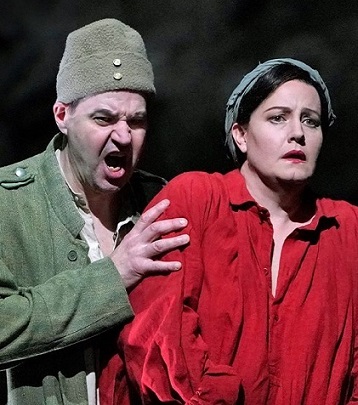
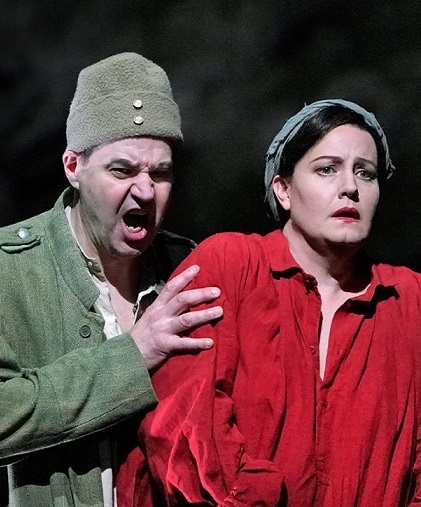
    Above: Peter Mattei as Wozzeck, Elza van den Heever as Marie; a Met Opera photo

    Author: Oberon

    Sunday January 19th, 2020 – The Met has developed a knack for getting rid of wonderful productions and replacing them with productions that are ugly (TRISTAN, the Bondy TOSCA – which has itself since been replaced – and the tedious RING Cycle), unsuited to the size of the theatre (the Chereau ELEKTRA), or simply unnecessary.  Into that last category would fall WOZZECK, which in its previous, ideal production (by Mark Lamos) was given less than forty times over a twenty-year period. The William Kentridge production which replaces it has its moments, but essentially it is visually busy, and seemingly more intent on pop-up gimmicks than telling the story of the downtrodden soldier and the hopeless life he’s leading.

    There were interesting elements in the production, to be sure. Some of the dark, charcoal outlines in the big projections put me in mind of the work of Georges Rouault, designer of the iconic original settings for Balanchine’s PRODIGAL SON. A central raked boardwalk divided the playing area, and each scene cropped up in its own area of the set. Stagehands clothed like ragged homeless people stealthily re-arranged the set furniture and props as the opera unfolded. One visually stunning moment came when the projected enormous, dark silhouettes of marching musicians appeared ominously while the Drum Major strutted in his white uniform. 

    The heroes of the afternoon were the players of The Met Orchestra. They were at their magnificent best today, and not only in the pit: the stage band ensemble in the Tavern Scene were simply terrific…and rightly drew cheers when they took a bow at the end. Throughout the opera, Berg’s imaginative textures were set forth with spine-tingling clarity. The numerous instrumental solo opportunities were so evocatively played, with the harp and celesta adding to the gorgeously nightmarish atmosphere. 

    While Yannick Nézet-Séguin won tumultuous applause at his curtain call, he was sometimes prone to allowing the orchestra to swamp the singers during parlando passages. Despite the size of the orchestra, the opera is very intimate, and every word and note from the singers deserves to be heard.

    The cast was a perfect one, down to the one-line characters. In a personal triumph on the level of his peerless Amfortas, Peter Mattei brought great beauty of tone and of feeling to Wozzeck’s music. He conveyed both the desperation and the humanity of the character, and made me crave a chance to hear him sing Barak in DIE FRAU OHNE SCHATTEN. As Marie, Elza van den Heever’s powerfully-projected upper range set the Met’s acoustic aflame. She used her vibrato to cunning effect, and made her Bible-reading scene an engrossing experience, at once intimate and intense. If only she’d had a real child to interact with!

    As The Captain and The Doctor who complicate Wozzeck’s sorry existence with their mad theories and kinky experiments, Gerhard Siegel and Christian Van Horn were perfect. The tenor, a fabulous Mime, makes every word count as his cannily-projected tenor vibrantly sails into the hall; he’s a verbal colorist of the highest order. With his impressive physical presence and ample tone, the basso’s portrayal was a tour de force.  

    Christopher Ventris sang vibrantly as the Drum Major, and Tamara Mumford, a street-sweeper Margret, sang so vividly that one wished the role was much, much longer. Andrew Staples, with a clear and pliant lyric tenor, was a very impressive Andres, and Brenton Ryan made his mark as The Fool who smells blood on Wozzeck’s hands. As the two Apprentices, Miles Mykkanen and Richard Bernstein were scene-stealers of the first order in their vignette in the Tavern Scene, sung and acted with drunken zest.

    Listening to the opera’s powerful final interlude today, Berg’s great masterpiece once again re-affirmed its high place in my operatic pantheon. I’ve experienced WOZZECK live in so many memorable incarnations over the years, and – in today’s performance – it once again cast its spell. 

    ~ Oberon

    January 20, 2020 | Permalink