Author: Philip Gardner

  • Recordare

    Angel

    Recordare, Jesu pie,
    quod sum causa tuae viae:
    ne me perdas illa die.

    Quaerens me, sedisti lassus;
    redemisti crucem pacem:
    tantus labor non sit causas.

    Juste judex ultionis:
    donum fac remissionis
    ante diem rationis.

    Recordare – Verdi~Messa da Requiem – Luba Organasova & Anne Sofie von Otter


  • NY Phil: THE PLANETS + Williams’ Tuba Concerto

    PJ-BW140_FIXBAG_DV_20140723162140

    Above: Alan Baer of The New York Philharmonic in a Chris Lee photo

    Saturday May 28th, 2016 – Aside from Mars, I am not really a fan of the famous Gustav Holst work The Planets (composed in 1914-1916). I remember many years ago tuning in to a radio broadcast of the piece and finding my interest diminishing steadily once the spaceship left Mars for Venus; I never made it back to Earth.

    Tonight, a chance to hear The Planets in concert at Geffen Hall provided an opportunity to test my earlier reaction. Under the baton of David Robertson, The New York Philharmonic‘s performance of this sprawling epic was nothing short of marvelous. But the music itself just doesn’t reach me, beyond a surface appeal – and despite the composer’s obvious skill in orchestration. And so – yet again – upon departing Mars, I felt lost in space. 

    The remaining six movements do have their very appealing passages, of course, but also their longueurs. The only time I truly connected with any of the music was when the theme of the hymn ‘I Vow To Thee My Country strikes up as Jupiter looms in the sonic heaven. The stay on Uranus seemed endless: not much going on there. I simply couldn’t wait for this trip thru the solar system to end. Maestro Robertson had the huge forces doing his bidding to fine effect, and making a splendid sound; featured violin solos from Sheryl Staples were saving graces on this journey to nowhere. 

    But enough grumbling, lest I be mistaken for Bernie Sanders; the first half of the program was indeed thoroughly enjoyable.  

    Edward Elgar’s Introduction and Allegro (composed in 1905) opened the evening; it’s a beautiful piece and would make a great ballet score (maybe it’s been done?). The composer gives a prominent role to a string quartet, setting them before the full string contingent of the orchestra. As this quartet consisted of Sheryl Staples, Lisa Kim, Cynthia Phelps, and Carter Brey, the playing was remarkable – I especially was entranced by a solo from the viola of Ms. Phelps. When the Philharmonic strings played en masse, the richness of sound was truly savorable.

    The tall and slender Alan Baer then appeared with his silver tuba for John Williams’ Tuba Concerto. This rather brief work (just over 15 minutes in length) was very pleasing from start to finish, for Mr. Baer’s sound has a warm glow and a toothsome dark-chocolate richness in the lower range.

    The opening passages made me think of a sea shanty: good-natured, a bit brusque, with fog-horn low notes along the way. Later the tuba converses with the French horn, and in the concerto’s second movement, the tuba sounds deep phrases over a horn chorale before embarking on a polished cadenza.

    The violins strike up. The oboe has a theme that is passed to the flute, and then the flute and tuba talk to one another. After another – briefer – tuba cadenza, fanfares sound and there is a cabaletta of sorts, with trumpets giving propulsion and the tuba singing some skittish coloratura. Harp and timpani have a part to play: another inventive mix on the composer’s part. Swift-rising scales for the tuba herald a jovial conclusion.

    Philharmonic audiences love it when artists from the orchestra step forward in featured roles; there was lovely enthusiasm for the string quartet after the Elgar, and Mr. Baer received hearty cheers from the crowd, as well as the admiring applause of his colleagues.

  • NY Phil: THE PLANETS + Williams’ Tuba Concerto

    PJ-BW140_FIXBAG_DV_20140723162140

    Above: Alan Baer of The New York Philharmonic in a Chris Lee photo

    Saturday May 28th, 2016 – Aside from Mars, I am not really a fan of the famous Gustav Holst work The Planets (composed in 1914-1916). I remember many years ago tuning in to a radio broadcast of the piece and finding my interest diminishing steadily once the spaceship left Mars for Venus; I never made it back to Earth.

    Tonight, a chance to hear The Planets in concert at Geffen Hall provided an opportunity to test my earlier reaction. Under the baton of David Robertson, The New York Philharmonic‘s performance of this sprawling epic was nothing short of marvelous. But the music itself just doesn’t reach me, beyond a surface appeal – and despite the composer’s obvious skill in orchestration. And so – yet again – upon departing Mars, I felt lost in space. 

    The remaining six movements do have their very appealing passages, of course, but also their longueurs. The only time I truly connected with any of the music was when the theme of the hymn ‘I Vow To Thee My Country strikes up as Jupiter looms in the sonic heaven. The stay on Uranus seemed endless: not much going on there. I simply couldn’t wait for this trip thru the solar system to end. Maestro Robertson had the huge forces doing his bidding to fine effect, and making a splendid sound; featured violin solos from Sheryl Staples were saving graces on this journey to nowhere. 

    But enough grumbling, lest I be mistaken for Bernie Sanders; the first half of the program was indeed thoroughly enjoyable.  

    Edward Elgar’s Introduction and Allegro (composed in 1905) opened the evening; it’s a beautiful piece and would make a great ballet score (maybe it’s been done?). The composer gives a prominent role to a string quartet, setting them before the full string contingent of the orchestra. As this quartet consisted of Sheryl Staples, Lisa Kim, Cynthia Phelps, and Carter Brey, the playing was remarkable – I especially was entranced by a solo from the viola of Ms. Phelps. When the Philharmonic strings played en masse, the richness of sound was truly savorable.

    The tall and slender Alan Baer then appeared with his silver tuba for John Williams’ Tuba Concerto. This rather brief work (just over 15 minutes in length) was very pleasing from start to finish, for Mr. Baer’s sound has a warm glow and a toothsome dark-chocolate richness in the lower range.

    The opening passages made me think of a sea shanty: good-natured, a bit brusque, with fog-horn low notes along the way. Later the tuba converses with the French horn, and in the concerto’s second movement, the tuba sounds deep phrases over a horn chorale before embarking on a polished cadenza.

    The violins strike up. The oboe has a theme that is passed to the flute, and then the flute and tuba talk to one another. After another – briefer – tuba cadenza, fanfares sound and there is a cabaletta of sorts, with trumpets giving propulsion and the tuba singing some skittish coloratura. Harp and timpani have a part to play: another inventive mix on the composer’s part. Swift-rising scales for the tuba herald a jovial conclusion.

    Philharmonic audiences love it when artists from the orchestra step forward in featured roles; there was lovely enthusiasm for the string quartet after the Elgar, and Mr. Baer received hearty cheers from the crowd, as well as the admiring applause of his colleagues.

  • Joffrey Ballet Concert Group @ NYLA

    2016 St. Saens 4th mvmt. fouette jump Lindsey Felix, Daniel White, Genaro Freire JBS_CONCERT GROUP_5-25-2016_by Lucas Chilczuk-1277

    Above: Lindsey Felix, Daniel White, and Genaro Friere of the Joffrey Ballet Concert Group in Gerald Arpino’s Suite St. Saens; photo by Lucas Chilczuk

    Friday May 27th, 2016 – The JOFFREY BALLET CONCERT GROUP, under the Artistic Direction of Davis Robertson, performing a mixed program of classics (Gerald Arpino’s Suite St. Saens, and Balanchine’s Valse Fantaisie) along with newly-created pieces by Gabrielle Lamb, Robert Jeffrey, and Dwight Rhoden plus an Asaf Messerer pas de deux à la Russe to music by Rachmaninoff which brought down the house. A very attractive company of dancers held the audience in an attentive, appreciative state; excellent lighting (David Moodey) enhanced each ballet as this highly enjoyable program of dance unfolded before us. 

    Valse Fantaisie - Shaina Wire & Sergio Arranz saute de chat

    Above: Shaina Wire and Sergio Arranz in Valse Fantasie; photo by Lucas Chilczuk

    To start a ballet evening with Balanchine is always a good thing, and Valse Fantaisie – to the intoxicating Glinka score – engaged us immediately. Stacey Caddell has staged the ballet on the young Joffrey dancers, and they did very nicely by it. Four lovely ballerinas sailed thru the lyrical (and sometimes tricky) Balanchine choreography with a sense of joy; in the principal roles, Shaina Wire and Sergio Arranz were appealing in both appearance and technique, displaying a fine mixture of nobility and charm.

    Mr. Arranz was back onstage moments later, in silhouette, for the opening of Robert Jeffrey’s Confianza. This intimate, moody pas de deux is set to a collage of music by Benjamin Brown, Steven Stern, Eric Satie, and Max Richter. The choreographer gives the dancers – Victoria Santaguida and Mr. Arranz – complex and demanding partnering motifs which the couple handled with persuasive aplomb, bringing tenderness tinged with sensuousness to their dancing.

    And So It Goes - Sierra French & Genaro Freire in ecarte pull

    Above: Sierra French and Genaro Friere in And So It Was…photo by Lucas Chilczuk

    Dwight Rhoden’s And So It Was… is danced to Bach’s Partita #2 in D-minor. As smoke wafts across the dramatically-lit stage, a sexy atmosphere is developed with the seven boys in silky briefs and the girls sleekly costumed. The choreographer’s sense of musicality serves up a succession of duets – sometimes with all seven couples duetting at the same time – with an endless flow of dancers coming and going. As is so often the case in using Bach’s music, the ballet eventually began to feel repetitive; the dancers were able to sustain this longish work thru their personal attractiveness and commitment.

    Tessellations - Shayla Hutton & Sergio Arranz arabesque

    Above: Shayla Hutton and Sergio Arranz in Tesselations; photo by Lucas Chilczuk

    Gabrielle Lamb’s Tessellations provided a wonderful change of pace; using a brilliant mix of music by The Amestoy Trio and Cat Power, Gabrielle’s ballet at first seems to be just another ‘loner vs community” narrative, but it is far more quirky – ironic, moving, and witty by turns – and was expressively danced by the Joffrey troupe. 

    The dancers wear dark clothing and socks. The Amestoy Trio’s fresh meshing of gypsy, Parisian, and Latino influences is a kick to hear, and Cat Power’s vocals for a pas de deux has its own slightly gritty appeal. Periods of silence allow us a bit of reverie before the dancing moves on. The dancers alternately dance and observe, forming fleeting cliques and chains, standing in ordered designs, communicating in gestures, and creating a world in which alternating currents of sentiment and low-key street savvy hold us under a spell. It’s been a while since I’ve seen any of Gabrielle’s work, and this was really refreshing to experience.

    Spring Waters - Mariana Perez and Jon-Paul Hills ecarteJBS_CONCERT GROUP_5-25-2016_by Lucas Chilczuk-813

    Above: Mariana Perez and Jon-Paul Hills in Spring Waters; photo by Lucas Chilczuk

    Asaf Messerer’s Spring Waters, the boyish and muscular Jon-Paul Hills wowed the audience with the fearless strength of his partnering, placing his ballerina – Mariana Perez – in improbable lifts with the assurance of an Olympic athlete, catching her as she rushes to his arms and sweeping her overhead. The duet ends with a spectacularly high lift as Mr. Hills rushes across the stage and into the wings, bearing Ms. Perez aloft like an exulted icon: the audience simply went nuts as they sped away.  

    Gerald Arpino’s Suite Saint-Saëns was the closing number this evening, a large-scale work filled with movement and alert to the music’s many fragrances. The dancers enter one by one, with brisk jetés and meeting up in fleeting partnerings. Lindsey Felix, a featured soloist in the first two movements (Caprice Valse and Serenade) was agile and lovely to watch.

    The Serenade has a dreamier quality; four couples to start, with other dancers joining. The simple act of walking takes on its own resonance. An intimate pas de trois for Ms. Felix, Maria Sol Maratin, and William Hall evolves beautifully as other dancers come and go.

    A march-like theme jolts us, but soon settles in to a Minuet with a ‘classic’ pas de deux – and another big lift – before hastening on to the concluding Pas Redoublé which features leaping boys and even a set of fouetté turns. The music is bouncy, the dancing exuberant.

    Amid all the bustle and swirl of this wonderful ballet, a dancer who had not appeared earlier in the evening – Haojun Xie – made a very fine impression with his lithe jump and sincere presence.

  • Sumptuous Strings @ Chamber Music Society

    Photo

    Above: violist Yura Lee

    Sunday May 22nd, 2016 – Bringing together a sextet of first-class string players, Chamber Music Society of Lincoln Center presented the final program of their Alice Tully Hall season (a program which will be repeated on Tuesday, May 24th); music by Richard Strauss, Brahms, and Dvořák was on offer.

    In Richard Strauss’s intimate opera CAPRICCIO, a rehearsal of Flamand’s newly-composed string sextet is in progress as the curtain rises on the salon of the Countess Madeleine’s château. As the opera evolves, the Countess will be called upon by her rival suitors – the composer Flamand and the poet Olivier – to answer the eternal question, “Which is the greater art, poetry or music?”, and thus to determine which of the two gentleman she favors. The opera, which includes the beloved Moonlight Music and ends with the Countess’s ravishing final aria, has been a vehicle for such beloved sopranos as Lisa Della Casa, Dame Kiri Te Kanawa, and Renee Fleming.

    It was a real treat to hear the string sextet this evening in a concert setting, and especially as it was given such a radiant performance by today’s ensemble…an ensemble of stars. Erin Keefe, wearing a striking pleated gown of gunmetal grey which set off her auburn hair, displayed (all evening, really) her ability to spin out magical phrases over a vast dynamic spectrum: she can taper her tone down to a shimmering piano/pianissimo only to soar in full-bodied melody moments later. Across from Ms. Keefe, Yura Lee, in a deep persimmon shawl and be-jeweled stilettos, summoned heartfelt sounds from her viola. A delicious “trembling” motif heralded Nicholas Canellakis’ solo, with his lustrous depth of tone.

    As Wu Han remarked in a program note, one of the things players love most about performing string sextets is: you have a mate playing the same instrument sitting next to you. And when – as in today’s Strauss – these are musicians of the calibre of Ani Kavafian (violin), Matthew Lipman (viola), and David Finckel (cello), the level of music-making is off the charts. Such gorgeous and immaculate blendings of sound, and such congenial lyricism.

    From the Strauss, so deeply engaging both musically and emotionally, the players turned to Johannes Brahms’ String Quintet No. 1. This piece was a particular favorite of the composer himself, or at least that is the impression he gave in writing this to his publisher: “You have never before had such a beautiful work from me.”

    Ms. Kavafian took the lead here, playing with her signature grace and expressiveness; she and Ms. Keefe formed a de luxe violin duo, their voices mingling with engaging clarity and savoring their many pinpoint dynamic nuances. In the melodically abounding first movement of this work, Yura Lee’s viola sings – three times – a melody that brings to mind some of the composer’s most beloved lieder. At one point, Yura and Ani ‘converse’ with one another. Nick Canellakis’s cello gives the music its resonant grounding, whilst Mr. Lipman’s evident enjoyment of the music he is playing makes him a musician as pleasing to watch as to hear. 

    In the quintet’s second movement, the instrumental voices created a lovely chorale-like atmosphere; a more animated interlude soon gives way to a return to wistfulness, and then fades mysteriously away. For the concluding Allegro energico, the five players could cavort amiably thru the rhythmic shifts with zestful playing and much mutual eye-contact as the piece sailed on to its merry conclusion.

    Following the interval, Antonin  Dvořák’s Sextet in A-major, with its goodly portion of folkish elements, found all six players on optimum form. Right from the start, with Erin Keefe’s shining tone in the opening theme, one could sense we were in for a special treat. Nick Canellakis took up the melodic thread as the Allegro moderato proceeded thru some very imaginative harmonies.

    [A cellphone went off, but at least it was between movements…and it was a ‘classical-music’ ringtone.]

    In the second movement, Dumka: Elegie; Poco allegretto, a dance which is at once both droll and dolorous is heard. The music has a sad gypsy lilt. David Finckel’s cello sets up a treading motif, over which a lament from his fellow players suggests a walk to the graveyard. In a swift change of mood, the Furiant: Presto is lively as fleeting snatches of melody pass from voice to voice. A swaying feeling pervades the music.

    The resonantly poetic sound of Matthew Lipman’s viola sets forth the theme of the final movement; variations follow where we could again savour the silver-lit sheen of Ms. Keefe’s playing and delight once more in her ability to colour phrases with her dynamic gradations.

    A sprightly dance gives way to a thoughtful cello theme from Mr. Canellakis; things intensify before subtle turns of phrase draw us to a lingering fade-out. Ms. Keefe weaves a new variation on the melody as Mr. Finckel and the violas offer plucking support. And then a high-energy dance bursts forth, only to accelerate to double-time before an urgent rising motif sends us on to a grand finish.

    The players were called out twice by the delighted audience; both the players and their admirers seemed reluctant for the concert – and the season – to end.

    Now we will have a hiatus from CMS concerts, though the musicians we’ve come to love will stay busy playing here, there, and everywhere worldwide. For the second year, the Society will offer a Summer festival at Alice Tully Hall – details here – which will help to sustain us til the Autumn.

    The Repertory:

    The Participating Artists:

  • Ballet Academy East ~ Spring Performance 2016

    Facebook_logo1

    Friday May 20th, 2016 – Students from Ballet Academy East’s Pre-Professional Division took the stage at the Gerald W. Lynch Theater tonight to dance a mixed program marking the end of term.

    Alan Hineline’s ravvishing ballet Sans Nuages opened the evening, and as soon as it ended my companion Claudia Schreier and I agreed that we wanted to see it again…right away. It’s that wonderful. The ballet is set to the Serenade for Strings in E, Opus 22 by Antonín Dvořák and is danced by an ensemble of fifteen, including a principal couple and female soloist; we had seen a preview of it in March.

    With the girls in sumptuous creamy tutus, the ballet has a romantic swirl to it. The structure and musicality of Mr. Hineline’s choreography – and the way it showed the dancers always to best advantage – make it a ballet that companies everywhere should want to acquire. Excellent dancing from Petra Love in the soloist role and Yuki Takahashi and Alejandro Andrade in the central pas de deux; the entire cast in fact danced beautifully, clearly inspired by the lovely Dvořák score.

    Darla Hoover created two brief ballets for the youngest dancers from BAE; in setting the works to Salieri (Une Petite Introduction) and Bach (Un Petit Menuet), Darla wisely sets a standard of musical choices that will hopefully inspire these youngsters both in their dancing and in their lives. (The Bach melody, incidentally, was borrowed for a 1960s pop hit, Lover’s Concerto, by The Toys; it was later taken up by The Supremes.)

    Slightly older dancers took the stage for Jenna Lavin’s Gossec’s Gavotte, to music composed by François-Joseph Gossec. Central to this piece was a a solo turn for the petit danseur Tristan Massa; his charming performance won the hearts of the audience. 

    Following an intermission, TO BE CONTINUED…, Jenna Lavin’s second work on the program, found five of the advanced dancers backed by a younger corps de ballet. Ms. Lavin gets an extra  bouquet of roses for choosing music of Henry Purcell, a composer whose work simply cries: “Dance!”

    In this “blue” ballet, Alejandro Andrade gave a truly impressive display of male bravura dancing; he also partnered each of the four main girls in well-constructed duet passages. Mr. Andrade’s performance brought down the house.

    Alan Hineline’s de l’innocence brought forth pianist Steven Mitchell to perform Franz Schubert’s 16 German Dances. This very pretty ballet featured spacious dancing from Tallison Costa, four soloists, and a corps de ballet of ten. Mr. Hineline’s choreography flows nicely on the music here, as dancers in varying combinations sweep on and rush away in a succession of finely-shaped vignettes. Once again, the choice of music contributed greatly to the overall enjoyment of the program.

    To close this evening, the third act of Coppélia, choreographed ‘after Petipa’ by Roger Van Fleteren (Alabama Ballet’s Associate Artistic Director) was performed by the BAE dancers with handsome sets and costumes on loan from Alabama Ballet.

    Every time I hear music from Coppélia, I recall my own very brief ballet career. Watching this evening’s re-creation was actually quite a nostalgic experience for me: I found myself wondering where my dancing mates from so long ago are now, especially TJ.

    The large cast, skillfully deployed by Mr. Van Feteren in the limited stage space, all entered into the spirit of this naive, musically brilliant ballet. Mary Watters built a real character as Swanhilda, her bridal bouquet trembling in her hands until Franz said “I do.” The ballerina showed lovely musicality in her solo, with its musical hesitations mirrored by subtle pauses in her dancing. Mr. Andrade, in addition to his commanding virtuosity, showed himself to be a real stage creature with his easy, affable stage demeanor. Petra Love’s lyrical dancing as Dawn and the poetic reverie of Yuki Takahashi’s Prayer both reflected lovingly on the music, and Joseph Marlborough was the authoritative Burgermeister.

    As the unstoppable joy of the Delibes finale propelled the dancers on to the finish line, Ms. Watters reeled off an attractive set of fouettés whilst Mr. Andrade leapt and swirled about the stage with unabashed vitality.

  • Silberne Rose

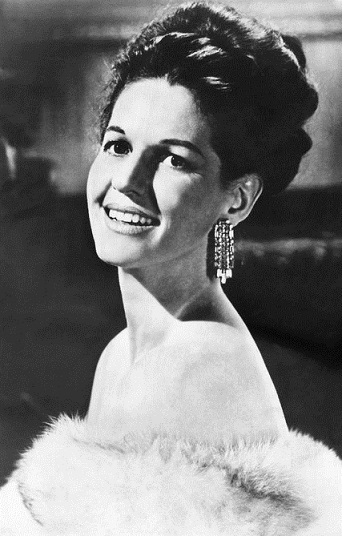
    Crespin Marschallin

    Regine Crespin in the closing moments of Act I of DER ROSENKAVALIER.

    Regine Crespin as The Marschallin ~ end of Act I – Buenos Aires 1961