Author: Philip Gardner

  • Enthralling TRAVIATA @ The Met~ 2023

    (Continuing to bring articles from Oberon’s Grove forward to the Glade. Many items were somehow skipped in the initial transfer. I am racing against time to copy-and-paste stories that are especially dear to me.)

    Jaho violetta

    Above: Ermonela Jaho as Violetta; photo by Jonathan Tichler/Met Opera. Click on the images in this article to enlarge.

    Sunday January 8th, 2023 matinee – One of the most thrilling Met performances in recent years, today’s matinee of LA TRAVIATA centered on the mesmerizing Violetta of the Albanian soprano Ermonela Jaho. Her colleagues – the Spanish tenor Ismael Jordi and the Mongolian baritone Amartuvshin Enkhbat – aligned perfectly with the beloved diva, and a strong supporting cast joined the stellar trio to make Verdi’s masterpiece come vividly to life.

    Ms. Jaho’s voice sounded rather dry and throaty at first, but by the time the Brindisi was being sung, she had found her vocal footing, and she sent her incandescent, spinning upper notes gleaming into the hall. In “Un di felice” Mr. Jordi proved himself a perfect partner for the soprano; their timbres blended to spine-tingling effect, their sustained, tapering harmonies displaying a shared gift for piano/pianissimo colourings. A wonderfully intimate atmosphere was created.

    Now alone on the great stage,  Ms. Jaho drew us deep into the character’s thoughts with the hushed introspection of her “Ah, fors e lui” in which the lines were spun out to delectable effect. Her “Sempre libera”  was subtle rather than extroverted, the silvery top notes lingering magically in the air, the final note sustained until the curtain fell.

    In Act II, Violetta’s fragile happiness is shattered by the intrusion of Alfredo’s father. Throughout their long scene together, Ms. Jaho made every note and word count; in phrase after phrase, the soprano put up a valiant fight to keep her world from from falling apart. The whispered desperation of “Era felice troppo,..“, the terrified uttering of “Gran dio!” when Germont tells her that her love for his son is hopeless, the bitter resignation of “Cosi alla misera…” were all part of the Jaho magic, leading to her surrender with the hushed tracery of “Dite alla giovine…” upon which her fate is sealed.

    In Amartuvshin Enkhbat, Ms. Jaho had an ideal vocal partner, for the rich-timbred baritone could scale his tone down to a fine piano. And even though he is winning, this Germont could not help but be touched by Violetta’s suffering, since Ms. Jaho’s expressive vulnerability could move a heart of stone. 

    The plaintive clarinet solo as Violetta writes her farewell letter to Alfredo has never sounded so forlorn. Despite the conductor’s bungling of the accompaniment, “Amami, Alfredo…!” made its usual heart-breaking effect.

    The tension at Flora’s party was palpable, and even while arguing, Ms. Jaho and Mr. Jordi could not stop themselves from embracing. But she keeps her resolve and bravely faces his denunciation. Mr. Jordi’s instant realization of the damage he has done was indeed touching, and as Ms. Jaho sang to him of her enduring love in “Alfredo, Alfredo, di questo coreshe slowly crossed the stage and knelt before him where he sat, shunned by all, and tried to comfort him.

    The crushing sadness of the opera’s final scene seemed more poignant than ever today, with Ms. Jaho’s hypnotic reading of Germont’s letter, and the alternating currents of despair and of a passionate desire to live that pulsed thru the soprano’s multi-hued singing of “Addio del passato”, gnawed at my heart. The fleeting joy of their reunion, the sweetly harmonized, desperate hope of “Parigi, o cara…” and the bitter realization that it is all too late felt so real, and so devastating, today.

    Throughout my sixty years of opera-going, having seen so many memorable Violettas – from Albanese to Zylis-Gara – I must say that Ermonela Jaho has assumed a unique place in that pantheon. Meeting her briefly after the performance, all I could say to her was “I love you!”  
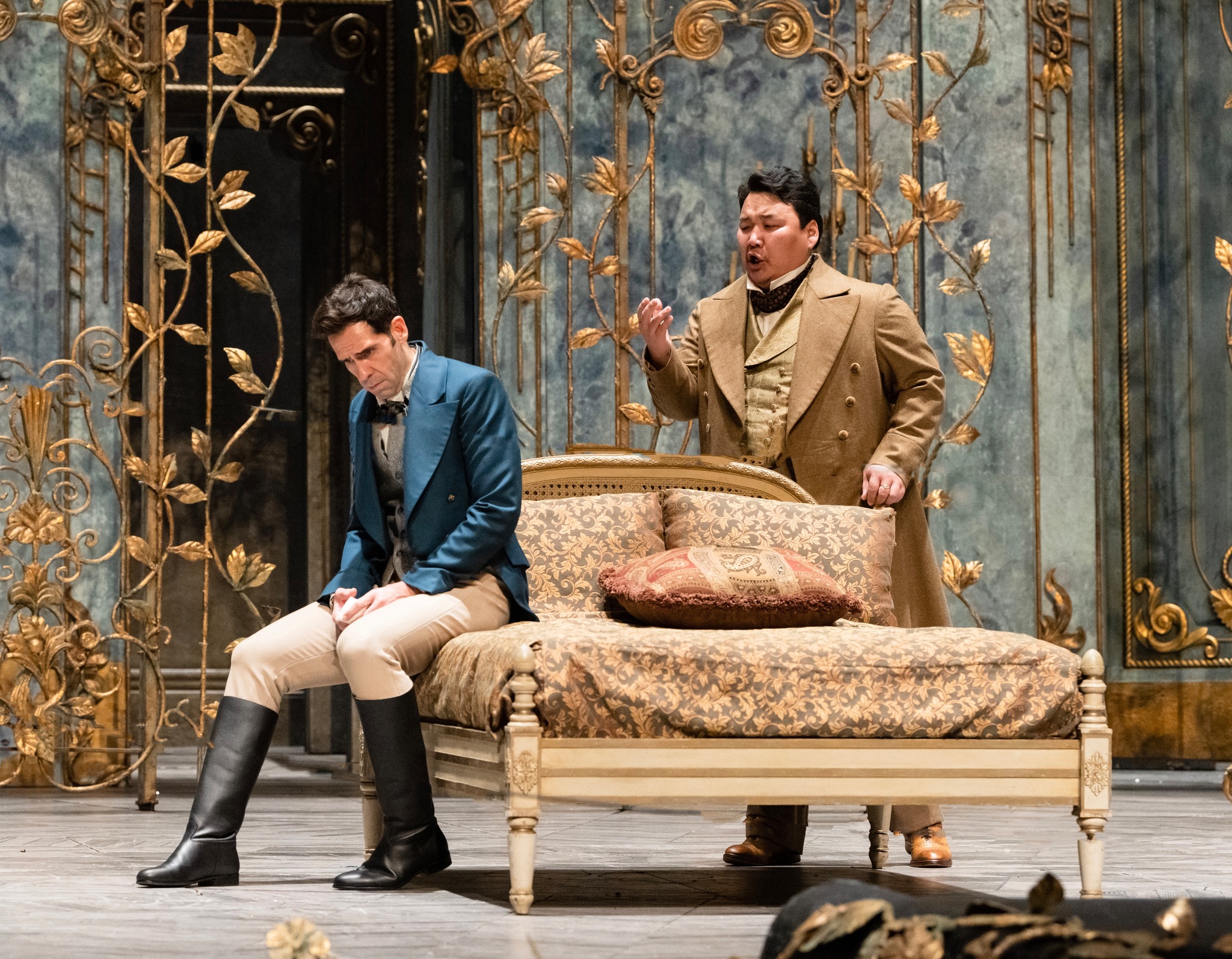
    Jordi enkhbat

    Above: Ismael Jordi as Alfredo and Amartuvshin Enkhbat as Germont; photo by Jonathan Tichler/Met Opera

    Mr. Jordi, tall and slender, was a truly convincing Alfredo both vocally and dramatically. His ardent, pleasing lyricism made his duets with Ms. Jaho so appealing, and his singing of the Act II aria was most beautifully and persuasively phrased, although his sustained top-C in the cabaletta was ungraciously covered by Armiliato’s thoughtlessness. A handsome and compelling actor, Mr. Jordi captured the youthfulness, rebelliousness, wild jealousy, and desperate remorse of the young man to perfection.

    Mr. Enkhbat sounded glorious in the big hall. One of the many voices to emerge triumphant from the Cardiff Singer of the World Competition – he won the Audience Prize there in 2015 – he is most welcome at The Met. Displaying a rich, darkish, and powerful sound, Mr. Enkhbat showed a natural affinity for the Verdian line, and brought to the music a wealth of dynamic nuance. His great aria, “Di Provenza“, was gloriously sung, and he even made me like the ensuing cabaletta, “No, non udrai rimproveri ” which I normally find holds up the action; today I found myself wishing for the second verse, the better to savour the Enkhbat voice. The baritone won a huge volley of cheers at his curtain calls, and we can only hope that we shall be hearing him here again very soon.

    Edyta Kulczak made a lovely impression as Flora, with Christopher Job as her admirer d’Obigny. Paul Corona was a powerfully-sung Dr. Grenvil, and Scott Scully a lively Gastone. Patrick Miller actually made something out of Giuseppe’s lines, and Jonathan Scott delivered Violetta’s message firmly. Mezzo-soprano Deborah Nansteel created a moving Annina, singing handsomely as Violetta’s faithful maid. I had been looking forward to hearing John Hancock as Baron Douphol, but Dwayne Croft stepped in and sounded very impressive. In the silent role of Mlle. Germont, my dancer/friend Allegra Herman was a poignant witness to Violetta’s death; I was moved by the moment when Alfredo embraced his sister, showing that he bore her no ill will in the end.

    In the pit, Marco Armiliato’s pacing was very fine, and he allowed the singers leeway to sustain lines and to introduce piano effects at just the right moments. But he also sometimes covered the singers, which seems to be pretty commonplace at The Met these days. 

    It was a great pleasure for me to join in the ecstatic ovation for Ms. Jaho at the end. I felt a curious need to go to the stage door and thank the singers personally, but with my innate shyness I was unable to express myself adequately once I stepped up to meet them. Of course, after they had all left, I thought of so many things I should have said.

    Ms. Jaho was so kind, and so understanding:
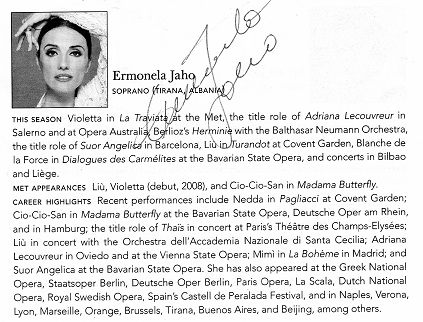
    Jaho-1 jpg

    The tenor was very friendly; my pen unfortunately ran out of ink as Mr. Enkhbat was signing:

    Jaho jordi k howard foto

    Above: Ermonela Jaho and Ismael Jordi as Violetta and Alfredo; photo by Ken Howard/MET Opera

    Watch the curtain calls here.

  • OtherShore ~ Rehearsal in 2011

    (Souvenirs of a beautiful dance memory, captured by my friend Kokyat.)

    Click on each image to enlarge.

    Copy of 17

    Monday March 14, 2011 – OtherShore’s Sonja Kostitch and ABT soloist Sascha Radetsky (above, in Kokyat’s photo) team up to dance a duet from Edwaard Liang’s dramatic work LIFT for the upcoming performances of Dancers Responding to AIDS: Dance from the Heart, an annual benefit which this year features a powerhouse roster of dancers in many genres who will converge on March 21st and 22nd at Cedar Lake theater for these special evenings.

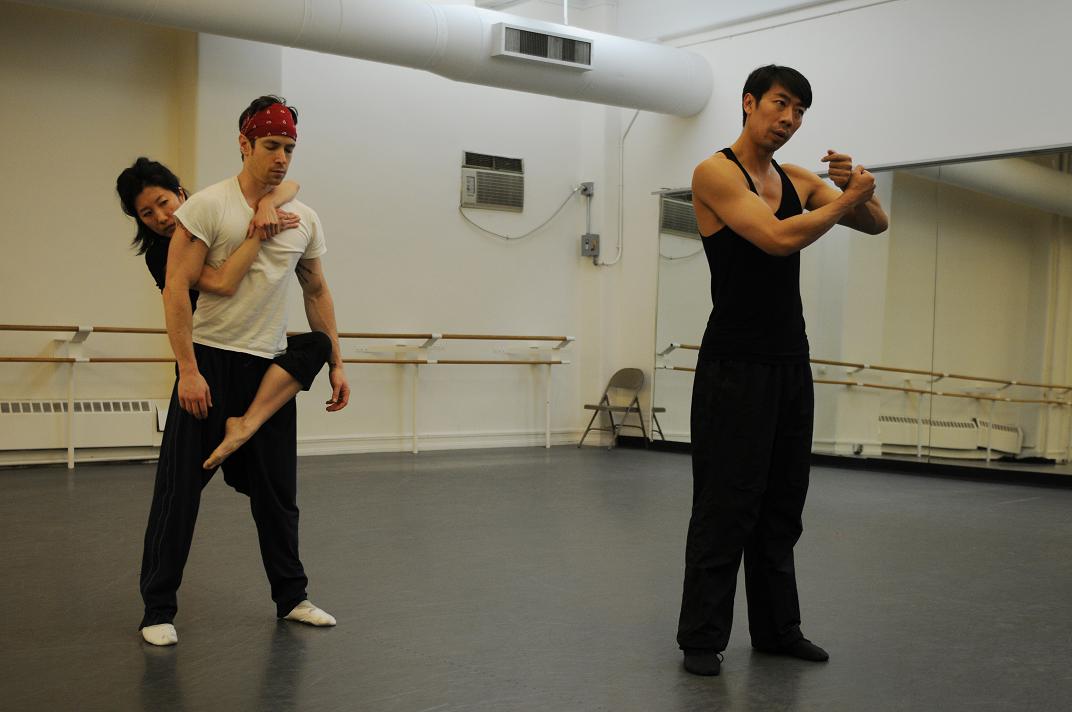
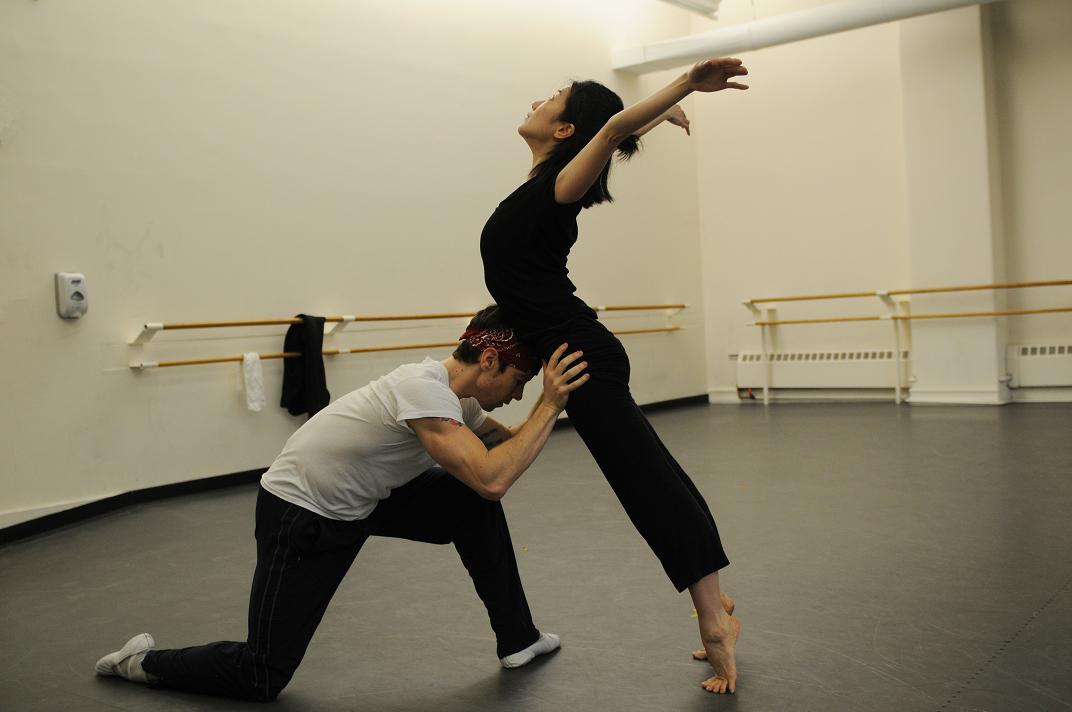
    In February, Kokyat and I went to Brooklyn to watch a rehearsal for one of the pieces to be performed at the DRA programmes: VESPERS, a duet by David Grenke. It was great to meet David who I remember vividly from his days dancing with Paul Taylor Dance Company. Kokyat loved photographing dancers Shannon MacDowell and Brian Runstrom in the late-Winter light of the studio.

    Copy of 10

    After this, I decided to see if Sonja would like us to cover her rehearsal as well; we’d been to OtherShore’s showing of THE SOCIAL BAND which Kokyat photographed and we had connected with her there; she graciously invited us to watch her and Sascha rehearse today. The frosting on the cake was that Edwaard Liang would also be there, a peerless danseur and now firmly ensconced in the choreographic pantheon.

    Copy of 12

    OtherShore premiered LIFT in 2008 and I really enjoyed it.  Since then, Edwaard Liang’s choreographic career has taken off like crazy; whenever you check in with him on Facebook he’s in a different city working on something. Luckily today he was home in New York City (just back from Singapore and Washington DC, and leaving again in a few days) and was at the studio to work with Sonja and Sascha on the duet.

    The music for LIFT comes from Clint Mansell, the noted film composer whose most recent score for BLACK SWAN was the best thing about that uneven film.

    Copy of 13

    When we arrived, Sonja and Sascha had the pas de deux down in terms of movement and partnering; they did several more run-thrus both with and without music, ironing out elements of placement, perfecting the nuances of gesture and expression, and giving the dance the seamless flow of motion that Edwaard was seeking. Both Edwaard and OtherShore co-founder Brandi Norton were able to suggest slight alterations which Sonja and Sascha immediately filtered into their work.

    Copy of 19

    The two dancers look beautiful together, and I’m looking forward to seeing this piece next week at Cedar Lake where it will be danced at both the 6:30 and 8:30 PM showings on the 22nd.

    Copy of 29

    Edwaard Liang retired from dancing a year-and-a-half ago, much to my dismay; observing him demonstrating some of the elements of his pas de deux today reminded me keenly of how much I simply love watching him move. While Sonja and Sascha took a break, Edwaard worked a bit on a solo he is devising as a compulsory element for the male entrants in the upcoming Boston International Ballet Competition; although he modestly said that as a retiree, his dancing was rusty he looked perfectly wonderful to Kokyat and me.

    Copy of 16

    Although in recent months I’ve met some of the greatest dancers on the planet in studio settings, I’m still starstruck and a little nervous in their presence. Meeting Sascha Radetsky today was a genuine pleasure: he’s sincere, down-to-earth and truly committted to what he’s doing. It was a real privilege to watch him and Sonja working together at close range.

    Here are a couple more of Kokyat’s images from the rehearsal:

    Copy of 31
    Copy of 25

    All photos by Kokyat. 

  • Lisette Oropesa as Violetta @ The Met ~2020

    Lisette violetta richard termine photo

    Above: Lisette Oropesa as Violetta in LA TRAVIATA, photo by Richard Termine. Click on the image to enlarge.

    ~ Author: Oberon

    Monday March 9th, 2020 – Cuban-American soprano Lisette Oropesa has been enjoying a great success as Violetta in the Metropolitan Opera’s production of LA TRAVIATA; Wei and I attended tonight, and it’s clear that this role suits her to perfection: both vocally and dramatically, she is outstanding.

    TRAVIATA is the opera I’ve seen more than any other. My Violettas have included everyone from Albanese to Zylis-Gara; the last time I counted (a few seasons back) I had seen some sixty different sopranos in this opera, not to mention those experienced on recordings and videos. I know most of the words and all of the notes, and I have very definite ideas about what I want to hear in a performance of this demanding role. To date, Patricia Brooks, Anna Moffo, and Diana Soviero have been the most memorable of my many dames aux camellias, and now Lisette Oropesa enters this elite echelon.

    The Met’s production would be much more attractive if the Dinseyeqsue techni-colour schemes were toned down. A large bed smack in the middle of the stage means everything must be played around this piece of furniture. The set is otherwise sparsely furnished – desk, piano, a couple of chairs – and these remain onstage throughout. Thus at Flora’s party, the men play cards on top of Violetta’s pianoforte which in previous scenes had been in the courtesan’s Paris townhouse and her country retreat.

    The bed is also the site of part of Violetta’s interview with Germont père, providing that gentleman an opportunity to make a pass at his son’s girlfriend. Frank Corsaro’s 1970 production at NYCO also featured such an incomplete pass. But probably the biggest defect in the current Met production is the introduction of Germont’s daughter as a silent presence. It doesn’t make sense for the upright Germont to bring his virginal teenaged daughter into the presence of a whore: the girl might get ideas. Later, Mlle. Germont witnesses Violetta’s death; I kept hoping Alfredo would smack her.

    Of course, both preludes are ‘staged’, but in a way this was not really off-putting. One aspect of the production I really liked was the ‘change of seasons” subtly depicted as the story evolved. The ballet, on the other hand, suffered from hideous costumes and awful choreography; still, it was nice to see Barton Cowperthwaite on the Met stage, as a shirtless matador.

    The conducting of Bertrand de Billy was dutiful but not inspired, and there were minor failures of communication between him and his singers; usually, I felt, those onstage wanted faster tempi than the maestro was serving up.

    For all these misgivings, the overall effect of the evening was of being much more than the sum of its parts: the opera stood emphatically on the power of Ms. Oropesa’s interpretation of the title-role. She was extremely moving.

    As Lisette began to sing, my mind wandered back to the night I first heard her, in a tiny role in Mozart’s IDOMENEO, in 2006. At that time, it was just the intriguing sound of her voice that captivated me; I could not have predicted then all that would transpire for her…all I knew was: this was a voice to love.

    Lisette’s voice fills the cavernous Met with clarity of tone and a remarkable range of vocal hues; her way with the words captivated me all evening, and she brings numerous individual touches to the music that make it very much her own. In this role, she darkened the tone in certain lower passages – understandably – for dramatic effect, though she really didn’t need to as her voice speaks so perfectly in the House without over-emphasis. It almost goes without saying that the coloratura of Act I was delivered with brilliance and a feeling of desperate gaiety as she tries to block out the offstage voice of Alfredo reminding her that “…love is the heartbeat of the universe”. 

    How I missed, at this point, the emblematic solo bow that all the great Met Violettas of the past have always taken after “Sempre libera“…the bow lights coming up, the gold curtain parting, the soprano – usually both exhausted and elated – stepping out…roses being flung…the roar of the crowd.  Sometimes, an especially beloved Violetta would be called out three or four times. But those days will never return; nowadays, audience members rush up the aisle immediately at the curtain’s fall, checking their cellphones.

    I’m sure everyone expected the Act I scena to be a tour de force for Ms. Oropesa, but it was in the remaining scenes of the opera, as Violetta’s world collapses and her doom is is sealed, that the soprano revealed depths of feeling and emotion that moved me to the core. At “Dite alla giovine…”, the phrase with which Violetta capitulates to Germont’s demand that she give up his son, Lisette sustained the long note that leads into the phrase, as if knowing that by speaking these words, her fate would be determined. Throughout the duets with Luca Salsi, the evening’s very impressive Germont, Lisette made every word and note count. Later, bidding what she believes is her final farewell to Alfredo with “Amami Alfredo…”, Lisette poured out the iconic melody with great lyrical intensity.

    In the Gambling Scene, where – unfortunately – Alfredo ‘showered’ Violetta with franc notes rather than hurling them scornfully at her, Lisette’s reply to her errant lover’s tirade was so simply and directly sung, so full of pain yet also of understanding: Alfredo simply doesn’t know what he has done.

    In the entire final scene of the opera, Lisette’s interpretation of every phrase and gesture ranked with those of the most compelling singing actresses I have watched move though this character’s resignation, momentary elation, hope, terror, and despair. Ever the scrupulous musician, Lisette perfectly etched in the written trills at “Ora, son forte…vedi?…sorrido.” which are so often glossed over.

    Now we come down to the ultimate heartbreak that opera can inflict on us: Violetta gives Alfredo her miniature portrait and bids him find a new love, marry her, and that she – Violetta – will watch over them in heaven. I was actually trembling in my seat. But then, Lisette sent me over the edge with the most poignant speaking of Violetta’s final words I ever heard: “È strano! Cessarono…gli spasimi… del dolore…In me…rinasce…m’agita.. insolito vigor! Ah! ma io ritorno a viver! Oh, gioia!!”  

    The ensuing ovation was huge, as ovations go these days. I had a momentary vision of Lisette, in her white nightgown, kneeling before a gold curtain in a shower of white roses. That’s what she deserved.

    Piero Pretti as Alfredo and Luca Salsi as Germont are beloved colleagues of the soprano, so this was in a way a family affair. Both gentlemen were well-cast – with the tenor displaying lovely nuances in the tender passages, fierce (yet musical) fury in his denunciation of Violetta, and a long and ringing top-C to cap “O mio rimorso“, whilst the baritone made a perfect duet-partner for Lisette, and brought interesting dynamic shifts and powerful feeling to his expressive “Di provenza“. Being from Sardinia and Parma respectively, Pretti and Salsi sounded beautiful in their native language.

    Among the rest of the cast, Maria Zifchak and Kevin Short as Annina and Dr. Grenvil stood out. Both are longtime associates of The Met (though Mr. Short was absent for over a decade, returning in 2018 in ELEKTRA) and both were touching and vocally “on” tonight. Baritone Dwayne Croft continues to make his mark at The Met in smallish but important parts; tonight he was the patient but ultimately fed-up Baron Douphol.

    Metropolitan Opera House
    March 9th, 2020

    LA TRAVIATA
    Giuseppe Verdi

    Violetta.....................Lisette Oropesa
    Alfredo......................Piero Pretti
    Germont......................Luca Salsi
    Flora........................Sarah Larsen
    Gastone......................Brian Michael Moore
    Baron Douphol................Dwayne Croft
    Marquis D'Obigny.............Jeongcheol Cha
    Dr. Grenvil..................Kevin Short
    Annina.......................Maria Zifchak
    Giuseppe.....................Patrick Miller
    Messenger....................Ross Benoliel
    Germont's Daughter...........Kendall Cafaro
    Dancer.......................Barton Cowperthwaite

    Conductor....................Bertrand de Billy

    ~ Oberon

  • Doubting Thomas

    (An unexpectedly great WOZZECK at The Met. This review from the Grove was over-looked in the mass transfer to The Glade. I have copied-and-pasted it to the Glade in honor of Thomas Hampson and Deborah Voigt.)

    Thomas-Hampson

    Above: baritone Thomas Hampson

    Monday March 17th, 2014 – When the Metropolitan Opera announced that Thomas Hampson and Deborah Voigt – as refugees from a forsaken revival of PARSIFAL – would be heading the cast of this season’s performances of Alban Berg’s WOZZECK, alarms went off throughout the operatic world. The vast majority of opera buffs seemed to think this was the most blatant case of double miscasting imaginable. Someone went as far as to send an open letter to Sarah Billinghurst, currently in her final season at The Met, asking her to remove Voigt from the cast so opera fans everywhere could breathe easier. The notion of Gelb paying off a high-fee singer like Voigt and then hiring someone to replace her was laughable, especially given the current state of The Met’s finances…and the fact that WOZZECK is not really a box-office draw no matter who sings.

    While I agreed from the start that Voigt was a very unlikely candidate for Marie, after some initial thought I decided Hampson’s Wozzeck would not be such a bad thing after all. In the event, Hampson missed the first two performances due to illness; he was replaced at the prima by Matthias Goerne (a lucky catch for The Met), and at the second performance by Daniel Sutin. Tonight was Hampson’s second performance in the role, and he firmly dispelled any doubts about his capabilities in the role. He was, in fact, thoroughly impressive both as singer and actor.

    As Wozzeck, Hampson’s imposing physique is beset by stiffness of stance and gait; he is a man worn down by the callouness of those with whom he comes in daily contact and his vacant stare and hesitant gestures reveal the depths of his inner emptiness. Marie is the one solace in his life – how poetically Hampson spoke her name in the scene where the doctor is prodding him (both physically and mentally) and how expressive that passage where Wozzeck gives Marie his earnings. Jealousy of the Drum Major and Wozzeck’s shame at having been beaten by his rival send the hapless soldier over the edge. The entire third act was vividly declaimed and acted by Hampson. A trace of roughness on a couple of notes may have been an after-effect of his recent bout with bronchitis; otherwise the voice sounded firm and secure. James Levine sometimes gets carried away with his orchestra and unleashes great torrents of sound; Hampson wisely didn’t try to outshout the music. Overall Hampson’s Wozzeck was a fine addition to his gallery of roles, and his performance adds to a long list of evenings in which he has impressed me both vocally and in his sense of commitment. In a long career, he has stayed at the top of his game.

    Hpwozzeck2

    Above: Thomas Hampson as Wozzeck and Deborah Voigt as Marie; a Met Opera photo

    Overall, tonight’s performance was thrilling. Much credit goes to Maestro James Levine who draws out the cosmic beauty of this music in all its brutality and warped lyricism. The orchestra is simply magnificent, and the opera – down to the one-line character parts – was most impressively cast.

    As Marie, Deborah Voigt pulled out all the stops tonight, giving a blazing vocal performance and digging deeper into the character than she had at the prima. Blistering top notes – not pretty by any means, but jaw-droppingly intense – rang out into the house, and she seemed far more at home in the lower range/parlando passages. Freed from the demands of a 4-hour Wagner role, Voigt spent the voice freely while embracing the character’s lust, guilt and maternal tenderness in a convincingly acted performance.

    There were performances of surpassing excellence from Peter Hoare (Captain) and Clive Bayley (Doctor) who have both somehow upped the level of their already-fabulous interpretations during the run. Every word and note counted for these two masterful singing-actors. Simon O’Neill’s Drum Major was another tour de force, and Russell Thomas (Andres) and Richard Bernstein (First Apprentice) were superb. Beauty of tone is not a pre-requisite in this music, but Tamara Mumford’s opulent singing (and her vivid portrayal) as Margret were a special element in this evening’s presentation: we should hear her more often at The Met, and in larger roles.

    This is opera – as good as it gets.

    Metropolitan Opera House
    March 17, 2014

    WOZZECK
    Alban Berg

    Wozzeck.................Thomas Hampson
    Marie...................Deborah Voigt
    Captain.................Peter Hoare
    Drum Major..............Simon O'Neill
    Doctor..................Clive Bayley
    Andres..................Russell Thomas
    Margret.................Tamara Mumford
    Apprentice..............Richard Bernstein
    Apprentice..............Mark Schowalter
    Fool....................Philippe Castagner
    Soldier.................Daniel Clark Smith
    Townsman................Raymond Aparentado
    Child...................Anthony Reznikovsky
    Piano Solo..............Bradley Moore

    Conductor...............James Levine

  • Rebecca Krohn’s Farewell @ New York City Ballet

    (I fell in love with Rebecca Krohn when she danced a small role in a now mostly-forgotten ballet. Her farewell to New York City Ballet was an event I’ll always remember. I’ve brought this review over from the Grove, since it eluded the mass transfer to the Glade.)

    (Click on each photo to enlarge.)

    76b92b0303f7a6ef1001c561fc409a52--city-ballet-ballet-shoes

    Above: Rebecca Krohn, photographed by Paul Kolnik

    Saturday October 7th, 2017 – Watching Rebecca Krohn dance with the New York City Ballet was a favorite experience of mine during the years when I was seeing the Company often. She joined NYCB as an apprentice in 1998, the year I moved to New York City, and became a member of the corps de ballet the following year. In 2006 she was promoted to soloist, and in 2012 to the rank of principal.

    Thru the passing seasons since I started going to New York City Ballet in 1975, I’ve developed several serious ‘dancer crushes’; Marnee Morris was the first, and then there was Pauline Golbin, and then a select group of others. Rebecca Krohn had been dancing there for a year or two, sometimes catching my eye, when in 2001 she made a great leap onto my radar screen in the Peter Martins ballet BURLESKE. This beautiful ballet, with its surprise ending, is set to a Richard Strauss score; I often hoped to see it revived, but – as with so many appealing ballets – it seems to have vanished into thin air. But it did serve as an entrée for Ms. Krohn – I recall she wore a violet-coloured frock – and after that I was always on the lookout for her.

    I save everything: here’s the cast page from the night when it all began:

    Scanned Section 4-1

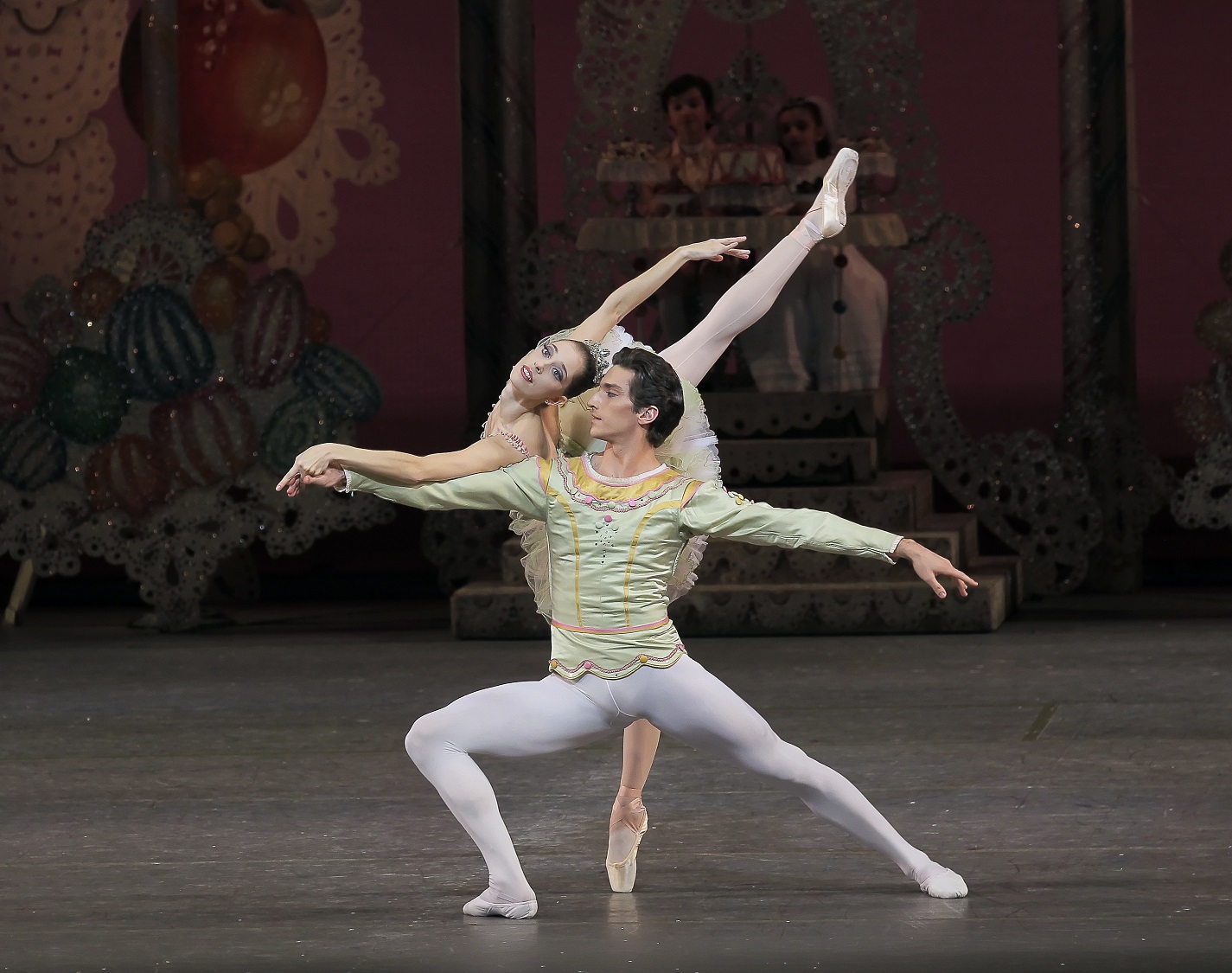
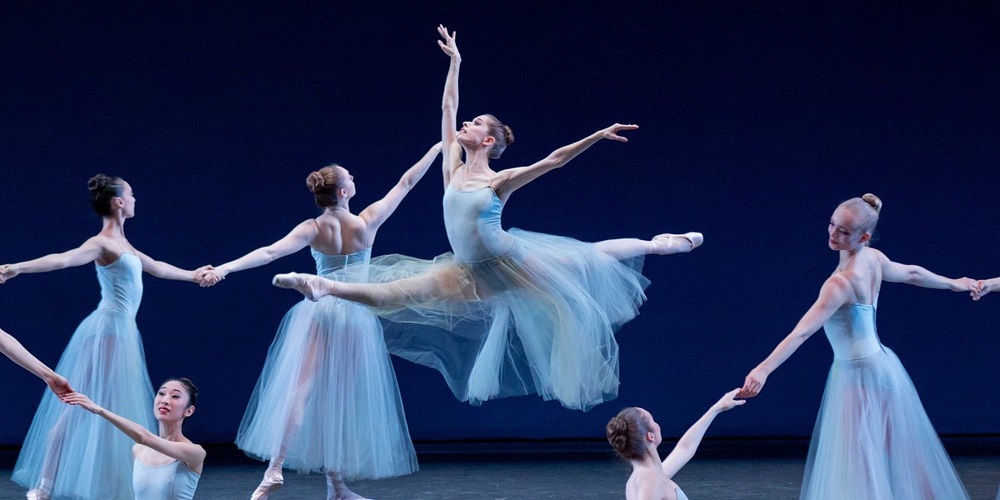
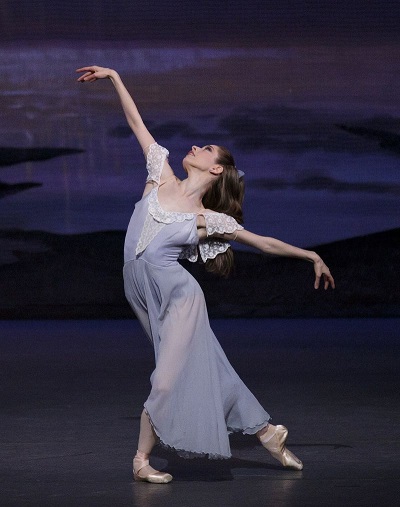
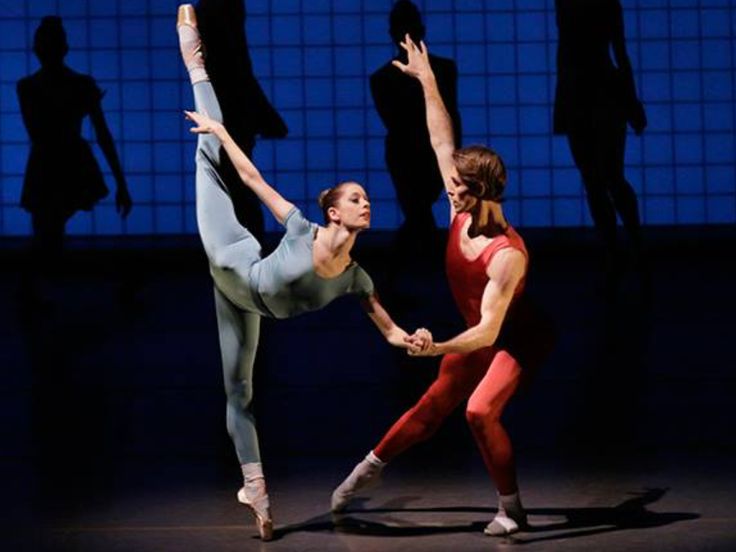
    As her career progressed, Rebecca Krohn took on a wide range of roles, excelling as both Arabian and Sugar Plum in NUTCRACKER; as both the Lilac Fairy and Carabosse in SLEEPING BEAUTY; multiple roles in SWAN LAKE; in sleek leotard ballets like STRAVINSKY VIOLIN CONCERTO and MONUMENTUM/MOVEMENTS; as the Queen in THE CAGE; in IN G MAJOR, GLASS PIECES, and ANTIQUE EPIGRAPHS. She was sublime in the Élégie of BRAHMS-SCHOENBERG QUARTET, charming as Helena in MIDSUMMER NIGHT’S DREAM, sultry in ‘Summer‘ from THE FOUR SEASONS, and a born Princess in FIREBIRD. She made an especially fine impression as the Dark Angel in SERENADE. The one ballet I wished she’d danced that she apparently never did was EMERALDS.

    6a00d8341c4e3853ef0147e13e7612970b

    Balanchine’s NUTCRACKER with Zachary Catazaro

    Pk-russian-seasons-rebecca-krohn-silent_1000

    At a later revival of RUSSIAN SEASONS, Rebecca took on the role of the bride; photo by Paul Kolnik 

    Slide-11

    Balanchine’s SERENADE; photo by Paul Kolnik

    8a38098e6a9cb3f4dadc8a7b95f43ea4--city-ballet-ballet-class

    Balanchine’s SERENADE with Janie Taylor, Ashley Bouder, and Ask LaCour; photo by Paul Kolnik

    6a00d8341c4e3853ef0133f4c90d0e970b-800wi

    Balanchine’s SERENADE with Jenifer Ringer and Ask LaCour; this Paul Kolnik photo is one of my all-time favorite dance images

    Img

    Balanchine’s SERENADE; photo by Paul Kolnik

    Davidsbündlertänze

    Balanchine’s Davidsbündlertänze; photo by Paul Kolnik

    971a45502d6c7f1e8dc5277177766d13--releve-glasses

    Jerome Robbins’ GLASS PIECES with Adrian Danchig-Waring; photo by Paul Kolnik

    6a00d8341c4e3853ef01b7c6eb6c93970b

    From Justin Peck’s gorgeous BELLES-LETTRES, with Taylor Stanley and Anthony Huxley; photo by Paul Kolnik

    04_Belles-Lettres_TAngle-Krohn_c38158-2

    BELLES-LETTRES with Tyler Angle; photo by Paul Kolnik

    Looking back over these pictures, so many memories spring up. Rebecca’s career began just as I took up residency in New York City, and it was a great pleasure to watch her bloom from a somewhat reticent young beauty in the corps to the assured, elegant ballerina we’ve come to love. 

    ~~~~~~~~~~~~~~~~~~~~~~~~~~~~~~~~~~~~~~~~~~~~~

    And so we come down to the evening of Rebecca Krohn’s farewell performance; unlike the bitter-sweetness that tinges some farewells, this was a joy-filled evening saluting a dancer who has never really seemed to seek the spotlight but who – when the opportunities came – stepped into it with her own personal brand of glamour and grace.

    The program, subtitled 20th Century Violin Concertos, was rewarding in many ways. We saw a revival of Peter Martins’s THE RED VIOLIN, originally made on Jennie Somogyi and Sebastien Marcovici; and we experienced Maria Kowroski’s stunning debut in IN MEMORY OF… before Rebecca Krohn joined her colleagues Sterling Hyltin, Ask LaCour, and Amar Ramasar in one of her finest roles: in Balanchine’s STRAVINSKY VIOLIN CONCERTO

    I went back to my notes on the premiere of THE RED VIOLIN in May 2006 to see how I’d felt about it at first viewing. All of the things that bothered me about this ballet at the premiere still bother me, and I gathered from intermission chatter that several people in the audience felt the same way. First off, it’s way too long. Despite appealing passages and interesting textures, the score tends to meander…and the choreography meanders right along with it. Both in terms of length and orchestration, it’s too big of a score to be sustained by eight dancers, however wonderful they might be; at times on the big stage they seemed terribly diminished. The partnering motifs are tricky but they are repeated too often to be effective, and after a while the choreography became tedious. On top of which, the ballet seemed seriously under-rehearsed.

    Philippe-quint-violin

    Fortunately, violinist Philippe Quint (above) gave a thoroughly impressive – even mesmerizing – rendering of the concerto, with excellent support by Maestro Andrew Litton and the always-fine and often under-acknowledged playing of the NYC Ballet orchestra. The charismatic Mr. Quint faced a barrage of cheers as he came out for his bow; now I want to hear him in a recital or in a concert setting.

    The dancers did everything humanly possible to make THE RED VIOLIN a viable dance experience; alas, their efforts were in vain. My hat’s off to Unity Phelan, Megan LeCrone, Taylor Stanley, and Zachary Catazaro for a valiant effort; and a special ‘bravo‘ to Harrison Coll whose sheer energy and commitment went a long way to give us something to savour in this uphill battle of a dancework.

    Following the intermission, the evening took a major up-sweep with a luminous performance from Maria Kowroski, debuting a new role in Jerome Robbins’ IN MEMORY OF…

    LivingINSTRUMENTS__t640

    The Alban Berg violin concerto was splendidly played by NYCB concertmaster Kurt Nikkanen (above): what a great asset for the dancers to have this world-class violinist playing for them night after night. This evening, Kurt’s performance was perfect, making a kozmic connection to the magic of the inimitable Ms. Kowroski.

    Maria’s portrayal of the young girl who fights a heroic – but losing – battle with death is a masterpiece. Looking younger than springtime and with her technique at full flourish, the great ballerina summoned forth gentle lyricism for her duet with the ever-noble Jared Angle, then drew us deeply into the drama of her struggle against the relentless figure of Death, as personified by Zachary Catazaro. Stripped down to her vulnerable essence, the character of the girl – based on the real-life figure of Manon Gropius who died at the age of nineteen – drew from Maria Kowroski a devastating portrayal of a person succumbing to fate. Devoid of theatricality, Maria let the young woman’s life seep out her as Death claims a victory. The ballet, though, ends optimistically, with the ballerina borne aloft amidst white-clad angels.

    When the curtain rose for the bows, a veritable torrent of applause and cheers greeted Ms. Kowroski and her colleagues. I think the entire audience were hoping for a solo bow from Maria, but it wasn’t to be. I can only imagine what sort of an uproar a solo bow would have evoked.

    The Stravinsky violin concerto sounded fabulous tonight – what a great piece of music! – as played by the Company’s principal 2nd violinist Lydia Hong. Once again, the orchestra under Maestro Litton played with great clarity, upholding Mr. B’s dictum: “The music is always first.” 

    Sterling Hyltin is onstage as this ballet opens: Sterling is one of the dancers I miss most in this time of self-imposed exile, and it was such a great feeling to experience her dancing again tonight. She has made this role her own, bringing an ideal mixture of wit, energy, and vision to her very musical dancing of it. Ask LaCour’s effortlessly space-filling dancing is always pleasing to experience and, as he towered over Sterling in that memorable passage of stillness where – with a simple sweep of his arm – he shows her the world, I simply felt a deep satisfaction of seeing these two dancers again. 

    A wave of applause greeted Rebecca Krohn as she came swirling into view. Moments later, she and her partner Amar Ramasar had the audience under their spell in one of the most fascinating duets Balanchine ever devised. At its end, Amar goes from standing to flat on the floor faster than the eye can see, whilst Rebecca leans into a luxuriant back-bend. The audience went wild; the two dancers could have taken a couple of bows here, but instead the ballet surged forward.

    The rather ironic rhythmic vitality of the concerto’s concluding Capriccio found the stage-full of dancers investing the à la Russe steps and gestures with infectious joy. This led to a warm ovation for the corps and the two principal couples, who came before the curtain twice to vigorous applause.

    Then the stage was cleared and the curtain rose on Rebecca Krohn standing alone as an tidal wave of bravas swept over her. Her fellow-principals presented her with bouquets and single roses, then the entire Company came on to give her a remarkable send-off. At last, Rebecca’s husband, former NYCB soloist Adam Hendrickson, brought his wife an enormous bunch of flowers.

    IMG_1503

    Above: Rebecca Krohn and the dancers of The New York City Ballet

  • A Farewell @ ABT

    (I hardly ever went to ABT farewells, but I had to go to Sascha Radetsky’s…on my birthday, in 2014. This story resisted the transfer from Grove to Glade, but I could not let it get lost.)

    SaschaRadetsky

    Above: Sascha Radetsky

    UPDATE: Sascha’s farewell curtain call is now on YouTube, but there was another five minutes of applause and more bows after the clip ends.

    Thursday July 3rd, 2014 – I met Sascha Radetsky in 2011 when my friend Kokyat and I covered a rehearsal of a duet entitled LIFT, choreographed by Edwaard Liang, in which Sascha was dancing with Sonja Kostitch; the piece was shown ten days later at the annual Dancers Responding to AIDS gala. Sascha was so friendly and gracious after the rehearsal: I’ll always remember the conversation we had that afternoon, and the feeling of having met a dancer whose heart was as big as his talent.

    When the casting for the current ABT season came out, “COPPELIA Reyes/Radetsky” immediately caught my eye: thinking that – both as indivduals and as a couple – Xiomara and Sascha would be ideal in this ballet, I circled the date (my birthday) in red. I knew I would be there tonight, long before it became known that this would be Sascha’s farewell.

    The music of COPPELIA holds a special place in my heart: it’s the only ballet I ever danced in, and whenever I hear themes from this melodically rich Delibes score, I’m carried back to that long-lost Summer of 1974 which I spent on Cape Cod with my first male lover, working for an amateur ballet company. Who would have thought that – 40 years on – I’d be immersed in the New York City dance scene and be able to count a number of the most prominent dancers and choreographes of the day among my friends? 

    ABT‘s candy box settings frame this sweet ballet well enough; they’ve been in use for years but there’s really no reason to scrap them for something different. A few traces of end-of-season fatigue from the orchestra scarcely mattered, and the Company looked to be in fine shape, giving an extra dose of vitality to their dancing in honor of Mr. Radestsky who is obviously a much-loved and admired colleague.

    Alexei Agoudine was a lively Dr. Coppelius, with a number of pratfalls. This production puts the Czardas in Act III (I’m used to seeing it in Act I); it was led with authority by Christine Schevchenko and Blaine Hoven. The Mazurka, right where it should be, featured Adrienne Schulte squired by Sascha Radetsky, with Ms. Schevchenko and Mr. Hoven joining in the lively dance.

    In the Act III solos Dawn and Prayer, the costuming was a distraction: nothing kills a ballerina’s line like an Empire waistline. Nevertheless, Devon Teuscher danced very attractively as Dawn and Luciana Paris rendered the celestial music of Prayer with beautiful phrasing and presence.

    Xiomara-reyes

    Above: Xiomara Reyes

    Whilst recalling such iconic Swanhildas as Gelsey Kirkland and Patricia McBride, I’m happy to say that Xiomara Reyes was well nigh perfect in the role. Petite and saucy in her lovely opening waltz, the ballerina showed both her temper and her romantic inclinations in developing a wonderful chemistry with her leading man. After neatly dispatching the thespian demands of Act II, Ms. Reyes went on to some truly impressive dancing in the final act, with a luscious set of fouettés in the coda of the wedding pas de deux.

    There can’t be a more natural balletic actor than Sascha Radetsky; he simply inhabited the role of Franz from the moment he walked onstage (to a wave of applause from the crowd). As the boy who wears his heart on both sleeves – one for his Swanhilda and one for the distracting doll on the toyshop balcony – Sascha endeared himself to the audience in his portrayal of Franz’s charming dilemma. Charismatic but free of vanity, Sascha’s performance was a natural meshing of dancer and role. Cutting loose with some virtuoso pyrotechnics in the Act III variation and coda, Sascha’s dancing took flight, buoyed by the admiring bravos of the audience.

    The ovation at the end was as expected: loud and long: it seemed that neither the audience nor his colleagues wanted to let Sascha go. Loved seeing Maria Kowroski, Wendy Whelan, Joaquin de Luz, Gillian Murphy and Ethan Stiefel all joining in the celebration; and Sascha’s wife, Stella Abrera (in a knockout black frock) elicited whoops of delight from the crowd when she appeared onstage to present her husband with a bouquet and a kiss. Even after many bows and much cheering – with the bow lights off, the curtain firmly closed and the house lights blazing – the fans continued yelling “Sascha! Sascha!” until finally the danseur came out alone one last time, receiving the acclaim with his dazzling smile.

    The Next Phase: Sascha, who became widely known outside the immediate sphere of classical ballet when he appeared in the 2000 film CENTER STAGE, returns to acting in the in-production Starz TV series FLESH AND BONE which is currently filming in Brooklyn and scheduled to premiere in 2015.  Something tells me he’ll be dancing a few combinations along the way. Hail and farewell, Sascha!

  • Jennie Somogyi’s Farewell @ New York City Ballet

    (Some articles about farewells at NYC Ballet did not make the leap from Grove to Glade. I’ve cut-and-pasted this one, honoring a unique ballerina.)

    4 Temps JS & JA

    Above: Jennie Somogyi with Jared Angle in Balanchine’s FOUR TEMPERAMENTS; photo by Paul Kolnik

    Sunday October 11th, 2015 matinee – Breaking my self-imposed exile from New York City Ballet, I attended Jennie Somogyi’s farewell performance this afternoon. I wouldn’t have missed it for the world.

    Ms. Somogyi has a special place in my balletic affections, in part because of her vivid stage presence and deep sense of commitment, and also because she has heroically overcome a series of injuries that might have caused a lesser ballerina to give up.

    You have to wonder how the Somogyi career would have mapped out had the injuries not happened: her technique was vividly secure, and her distinctive beauty and lithe, supple body always kept the viewer engaged, no matter who else was onstage at a given moment. Without the ‘ballerina: interrupted” setbacks, there’s no role that would have daunted her. 

    I was in the audience on two of the three occasions when she sustained injuries mid-performance; these were heart-breaking moments, especially in view of her long road back following her original injury. In returning each time, she modified her repertory somewhat and took on roles she might otherwise never have been cast in – and made them her own.  

    I had the great good fortune to see one of her rare performances of Odette/Odile in the Peter Martins SWAN LAKE and it was, in a word, thrilling. She found a beautifully poetic aspect in expressing Odette’s vulnerability and hope, and her Odile was a sensation: glamorous, devious, and whirling thru the fouettés with delicious abandon. Other tutu roles on which Ms. Somogyi put her definitive stamp were the Sugar Plum Fairy in NUTCRACKER and the Lilac Fairy in SLEEPING BEAUTY. (She was also a remarkable Dewdrop; many faithful NYCB-goers rate her as their favorite in that bejeweled role.)  

    313184580-01165346

    Above: Somogyi’s Sugar Plum, photo by Paul Kolnik

    In ballets with a more contemporary feel, including such Balanchine Black & Whites as AGON, FOUR TEMPERAMENTS and EPISODES, Ms. Somogyi was marvelously at home. She blazed forth in RED ANGELS and was superb in Peter Martins’ FEARFUL SYMMETRIES, MIRAGE, and RED VIOLIN, the latter made specially for her. Her performances in CHIAROSCURO and VIOLA ALONE are happily in my video collection, recorded off-the-air. 

    Nycb052006rvsm

    Above: from Peter Martins’ RED VIOLIN, Jennie Somogyi and Sebastien Marcovici; photo Paul Kolnik

    Somogyi smoldered as The Coquette in LA SONNAMBULA and sizzled in Margo Sappington’s erotically charged duet ENTWINED, which she danced with Charles Askegard for Ballet Next in 2011. Another role in which she excelled was as the stylized seductress in THE CHAIRMAN DANCES.

    6a00d8341c4e3853ef0120a8b281ce970b

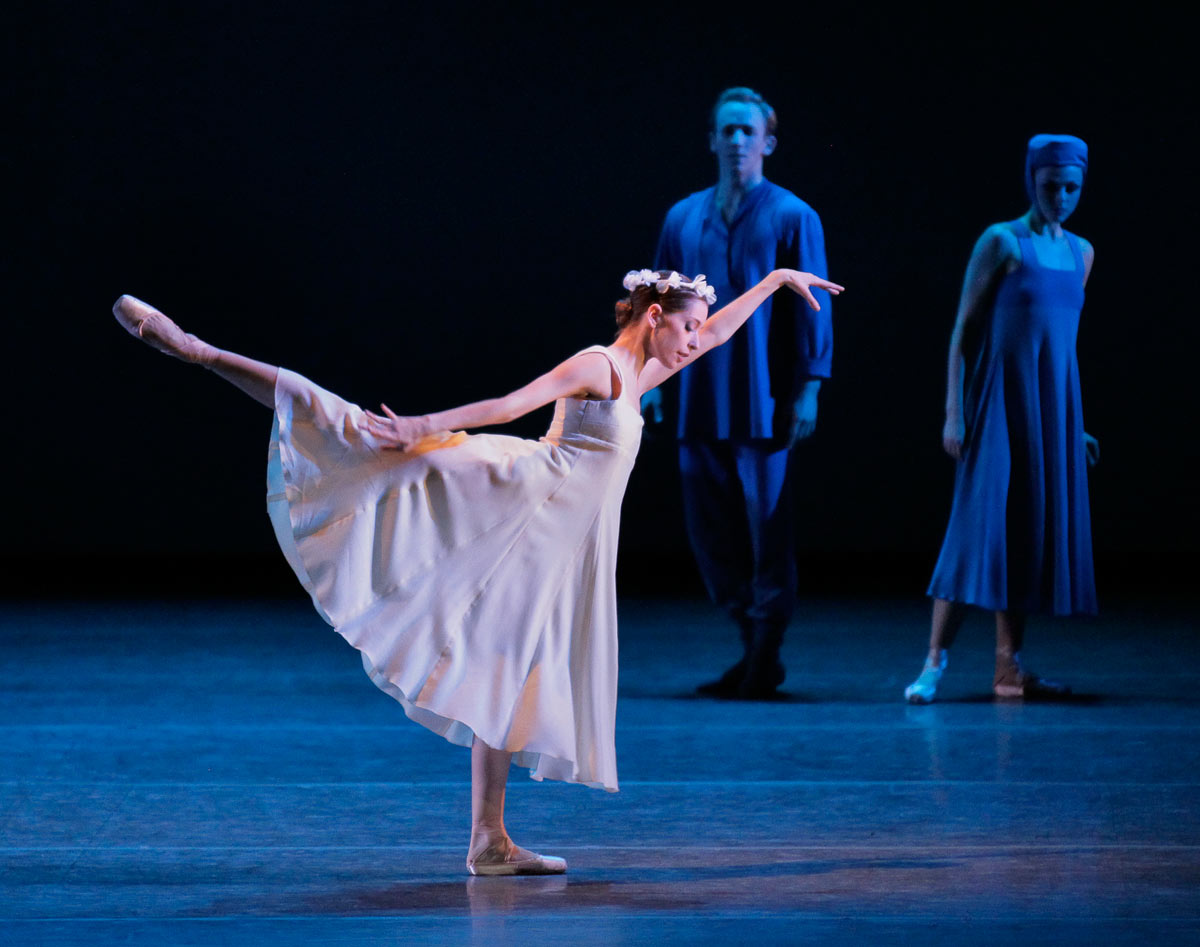
    In 2010, Ms. Somogyi appeared in Balanchine’s timeless romantic classic, LIEBESLIEDER WALTZES, dancing with Justin Peck (photo above, by Paul Kolnik), and it was in this ballet that she made her farewell appearance this afternoon.

    Today’s matinee opened with a grand performance of Balanchine’s TCHAIKOVSKY SUITE #3, with conductor Paulo Paroni and the NYC Ballet musicians playing the melodious score for all it’s worth, and concertmaster Arturo Delmoni delighting us with his deft playing of the violin solo.

    Each movement of the ballet featured a finely-matched couple in the leading roles. Rebecca Krohn and Russell Janzen were so touching in the Elegie, with its alternating currents of allure and evasion, and their final parting deeply moving. Megan LeCrone and Justin Peck in the Valse echoed the subtle romantic turbulence of the music and looked great together. Ana Sophia Scheller swirled thru the restless turns of the Scherzo with magical aplomb, well-matched by Antonio Carmena’s vividly-danced cavalier. And Tiler Peck and Andrew Veyette pulled out all the stops for performance of Theme and Variations that had the crowd cheering. Excellent dancing from the demi-solistes and corps in this marvel of Balanchine structuring.

    After the interval we are transported to the candlelit salon of LIEBESLIEDER WALZER where Andrews Sill and Susan Walters were at the keyboard and an amiable quartet of singers (the men slightly out-shining the women) created a gracious romantic atmosphere for the eight elegant dancers. A queenly Sara Mearns with her consort Ask LaCour danced with spacious impetuosity and grace, and I was so glad to see Ashley Laracey, ever a favorite of mine, dancing in this ballet in which, by tradition, only the ballerina elite are cast; her partner was Justin Peck, whose ever-so-subtle sense of restlessness played so well in this refined atmosphere. I was thoroughly bowled over by Sterling Hyltin’s ravishing, sublimely nuanced performance; ideally matched to the nobly handsome Jared Angle, Sterling was simply exquisite.

    Jennie Somogyi was all lyricism and loveliness in her final dances on this stage; she could not have asked for a more dashing and attentive partner than Tyler Angle, and together – to the mellifluous singing of tenor Blake Friedman – they held the house in an atmosphere of poignant quietude in their gently rapturous duet which ends with Tyler kneeling and kissing the ballerina’s hand. This was the singular moment of the day, and the most perfect tribute to Ms. Somogyi one could imagine. Later, as bouquets piled up, flowers flew across the footlights, and confetti and streamers rained down from the rafters, it was that sublime moment that lingered in the mind.

    L1630213

  • OSL Chamber Ensemble/Liv Redpath/George Li

    (What a marvelous evening at Weill Hall! I’ll always remember meeting one of my idols: Jon Manasse.)

    _DSC1264

    Photo: Chris Lee; click on the images in this article to enlarge.

    ~ Author: Oberon

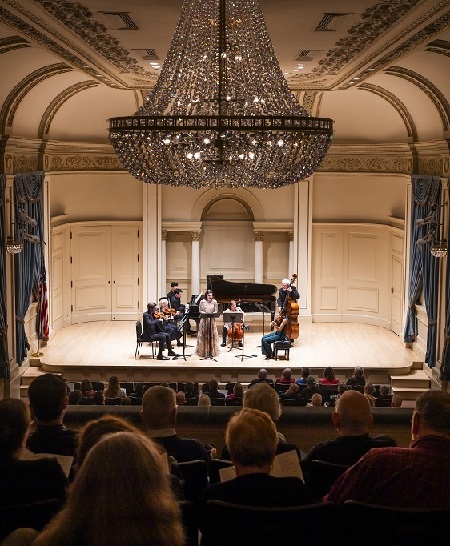
    Wednesday October 16th, 2024 – This evening, soprano Liv Redpath and pianist George Li joined musicians of the Orchestra of St. Luke’s Chamber Ensemble for a concert at Carnegie’s Weill Hall. I was expecting first-class music-making; what I got was one of the most delight-filled and engrossing musical experiences ever.

    Ms. Redpath, who has been a perfect Oscar in Verdi’s BALLO IN MASCHERA and Pamina in Mozart’s MAGIC FLUTE at the Met – and who sang a superb HAMLET Mad Scene at last season’s Tucker Gala – was truly magical in music of Grieg, Schubert, Strauss, and Fauré this evening. The comely soprano, gowned in a shimmering frock (looking like Shakespeare’s Titania having just stepped out of a particularly lovely dream) together with the handsome, dapper George Li, opened the program with a thoughtfully assembled set of songs.

    _DSC0196

    Above: George Li at the piano and soprano Liv Redpath; photo by Chris Lee

    The soprano commenced the program with the first of two songs from Edvard Grieg’s Sechs Lieder, Op. 48: ‘Die verschwiegene Nachtigall’. Immediately, the limpid lyricism of Ms. Redpath’s voice seized the imagination, whilst Mr. Li’s poetic playing gleamed, making for an ideal blend. Schubert’s Heidenroslein is utterly charming, with its slight hesitations. The soprano’s voice is even and alluring throughout its range. and she soon had the audience under her spell.

    Richard Strauss’s Four Last Songs are among the composer’s most cherished works, but in fact he had finished one more song prior to his death: ‘Malven‘. Dating from 1948, the manuscript was discovered among the papers of the late soprano Maria Jeritza when she passed away in 1982. In 1985, I was at a New York Philharmonic concert which included Dame Kiri Te Kanawa’s performance of the Four Last Songs, conducted by Zubin Mehta. Then came the surprise announcement of the discovery of ‘Malven’, which Dame Kiri then sang its world premiere with Martin Katz at the Steinway.

    This evening at Weill Hall marked the first time I have heard the song since that long-ago premiere; Ms. Redpath and Mr. Li gave a lovely rendering.

    Schubert’s immortal “Du bist die ruh” has been sung thousands of times and recorded by singers of every voice type. Ms. Redpath’s performance was sublime, her tone enthralling. Mr. Li wove the poignant piano part around the voice to perfect effect; the song’s emotional buildup leads to a return to peace, perfectly expressed by tonight’s artists. Ending the set was the second Grieg song, ‘Ein traum‘, so warmly sung by Ms. Redpath, whilst the subtleties of Mr. Li’s playing were spine-tingling. The song reaches an ecstatic finish. 

    _DSC1017

    Above: Jesse Mills, Krista Bannion Feeney, George Li, Daire FitzGerald, Dana Kelley, and John Feeney; photo by Chris Lee 

    For Gabriel Fauré’s charming song cycle, La Bonne chanson, Ms. Redpath and Mr. Li were joined by a string quintet from the OSL ranks: violinists Jesse Mills and Krista Bennion Feeney, violist Dana Kelley, cellist Daire FitzGerald, and the inimitable John Feeney on bass.

    The cycle’s nine songs are set to texts by Paul Verlaine. The opening ‘Une Sainte en son aureole‘ has a delicate start; the voice is so reverent, the viola and bass ideal. Puisque l’aube grandit’ opens with rippling piano figurations; Ms. Redpath’s affinity for the French language is so appealing, and Mr. Feeney’s velvety sounds punctuate the music to lovely effect.

    A gently rocking feeling sets the scene for ‘La Lune blanche luit dans les bois‘; here I began to get the feeling that Ms. Redpath was singing directly to me (a sensation the great Victoria de los Angeles could evoke) and what a pleasant experience that was. Ms. Kelley and Mr. Li blend phrases, and Mr. Mills’s violin spins out a silken line. Mr. Feeney again makes his mark.

    Ms. FitzGerald’s dusk-hued cello opens ‘J’allais par des chemins perfides‘ which proceeds with its cordial blend of string timbres. Mr. Li and Mr. Feeney were so impressive here.J’ai presque peur, en verite” has a restless start; Ms. Redpath’s voice pours forth golden-hued tones, ending with “…que je t’aime‘.

    Avant que tu ne t’en ailles‘ heralds the dawn, with alternating passages of animation and musing; Ms. Redpath relishes the song’s rapturous end. ‘Donc, ce sera par un clair jour d’ete’ has a breezy start, with rippling piano motifs. Gorgeous string harmonies abound here, and the sheer clarity of the Redpath voice is a joy in itself.

    Mr. Li sets off ‘N’est-ce pas ?‘ with animated phrases; the string are plucked, the singing is achingly beautiful, especially the floated final note. ‘L’Hiver a cesse‘ hails the changing seasons. There are touches of humor from Mr. Li’s keyboard, and the string playing is just marvelous. Ms. Redpath’s voice lures us in; there’s a sudden stop, and a brief instrumental coda. The soprano, the musicians, and M. Fauré have indeed given us “the good music”.

    Following the interval, Mr. Li joined the St. Luke’s gorgeous violist Dana Kelley and clarinetist de luxe Jon Manasse for a perfect performance of for Mozart’s Trio in E-flat Major, K. 498, “Kegelstatt“.

    What’s ‘Kegelstatt’, precious? We wonders, aye we does: the woman next to me (a thoroughly delightful person) asked me, and I had no idea…so we agreed that we’d each go home and Google it. So here’s the answer: the German word Kegelstatt means “a place where skittles are played”, akin to a duckpin bowling alley. Whatever this music has to do with bowling remains in question.

    The three musicians played impeccably. The opening Andante has a wry, hesitant start, then the music flows on in a sweet blend of timbres. Jon Manasse, one of Gotham’s greatest musicians, offered his trademark sumptuous tone and astounding technical mastery, Ms. Kelley her smooth, violet-coloured timbre, and Mr. Li his sensitive, elegant playing, laced with appealing dynamic shifts.

    The following Minuet is more folksy than courtly; the Manasse sound so plush here. A cunning little interlude is a bit of a tease, and it ends on a spectacular sustained pianissimo from our clarinetist. Then back to the merry minuet.

    The final movement has a theme and variations feel; Mr. Manasse’s free-flowing phrases, Mr. Li’s rhythmic playing embroidered with fanciful fiorature, and the velvety sound of Ms Kelley’s viola all entwined to delight us. The audience burst into enthusiastic applause following this piece, which was so magnificently played. “Mozart Forever!!!”  

    _DSC2133

    Above: Jon Manasse, George Li, and Liv Redpath; photo by Chris Lee

    The evening ended with a revelatory performance of Schubert’s beloved “Der Hirt auf dem Felsen,” D. 965. The trio of Redpath/Manasse/Li gave a strikingly fresh and opulent performance of this thrice-familiar masterpiece. George Li led off with hypnotic playing in the opening measures, and then Mr. Manasse entered on an incredibly prolonged note that went directly to my soul. Ms. Redpath then joins in, her melodious voice falling ever so-pleasingly on the ear.

    The dynamic control and finesse of Li and Manasse, and their expert timing, made the music so fresh and vibrant. In the sustained passages of the work’s central section, Ms. Redpath was at her most touching. Then Mr. Manasse launched the finale: a veritable feast of scales and decorative effects which ended with a final Manasse flourish. Bravi bravi bravi!

    The audience showered applause and cheers on the three paragons; it seemed especially lovely to me that there was not the now-customary standing ovation but rather a deep, joyous display of respect and admiration for these marvelous musicians.

    In the green room, there was a real feeling that we and the musicians had shared something truly wonderful. The artists posed endlessly for photos and selfies. I met Mlles. Redpath and Kelley, and Mr. Li; and I finally had an opportunity to thank Jon Manasse for all the great music-making I have heard from him over the years. Watching him lean into the music as he plays from the depths of his soul is just such a beautiful thing. I’ve spent a lifetime listening to great musicians, and Jon’s one of the very best.

    Souvenir of the evening, signed by Liv, Dana, George and Jon:

    Weill hall-1 jpg

    Performance photos by Chris Lee, courtesy of 21 Media Group.

    ~ Oberon

  • Angela Hewitt @ The Orchestra of St. Luke’s Bach Festival 2025

    (I couldn’t let my article about this lovely concert get lost in the move from Grove to Glade.)

    2025_Bach-Fest-III_Selects_by Nicholas V. Hall-12

    Above: Angela Hewitt, photo by Nicholas V. Hall

    ~ Author: Oberon 

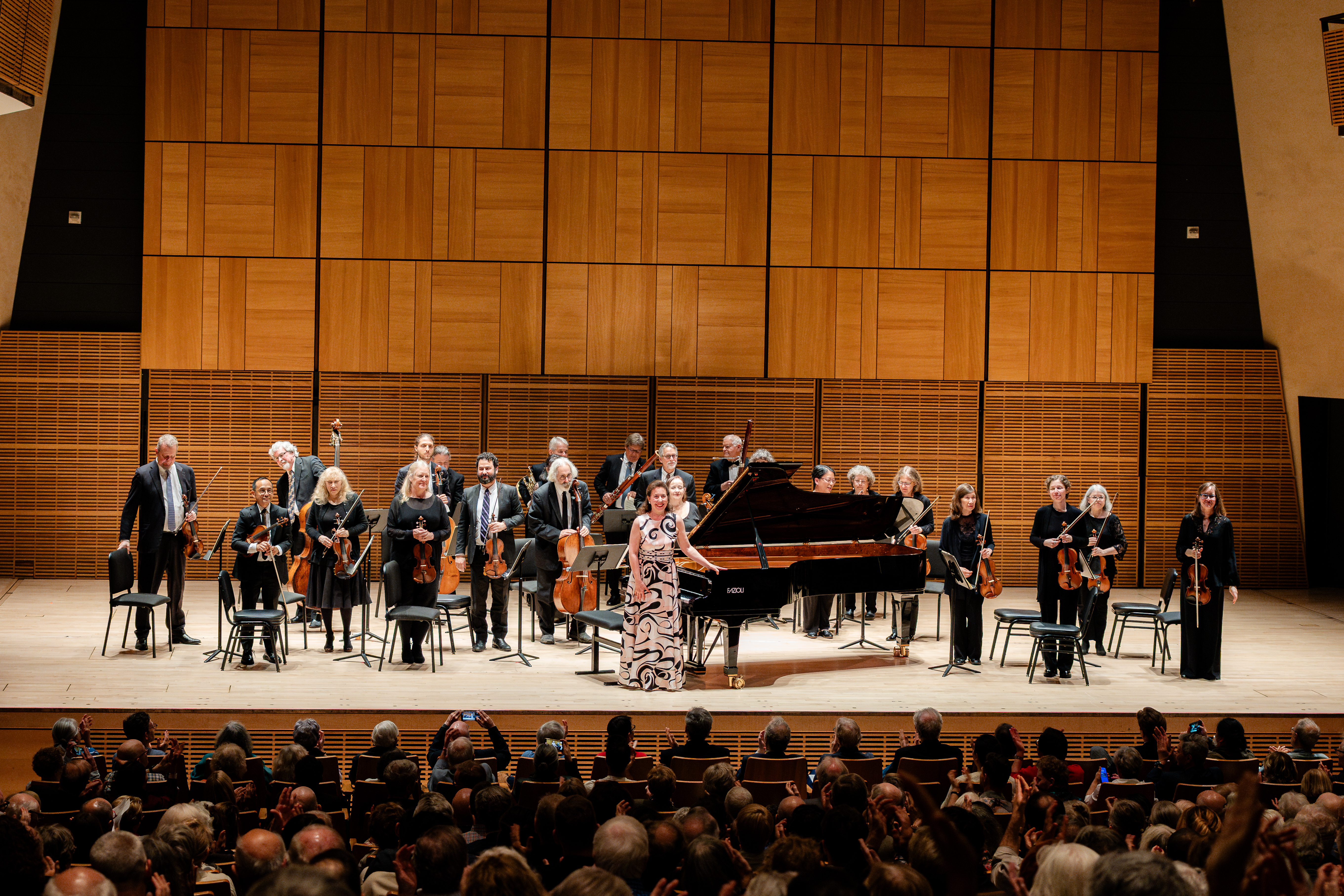
    Tuesday June 17th, 2025 – The renowned pianist Angela Hewitt joined the players of the Orchestra of St. Luke’s at Zankel Hall this evening as the orchestra’s Bach Festival 2025 continued with a program of masterworks by Bach and Mozart.

    The concert felt like a ray of light and hope in an ever-darkening world. The full-house crowd at Zankel Hall were amazingly attentive, and a pin-drop silence filled the space as Ms. Hewitt and the OSL players captivated us with their artistry.

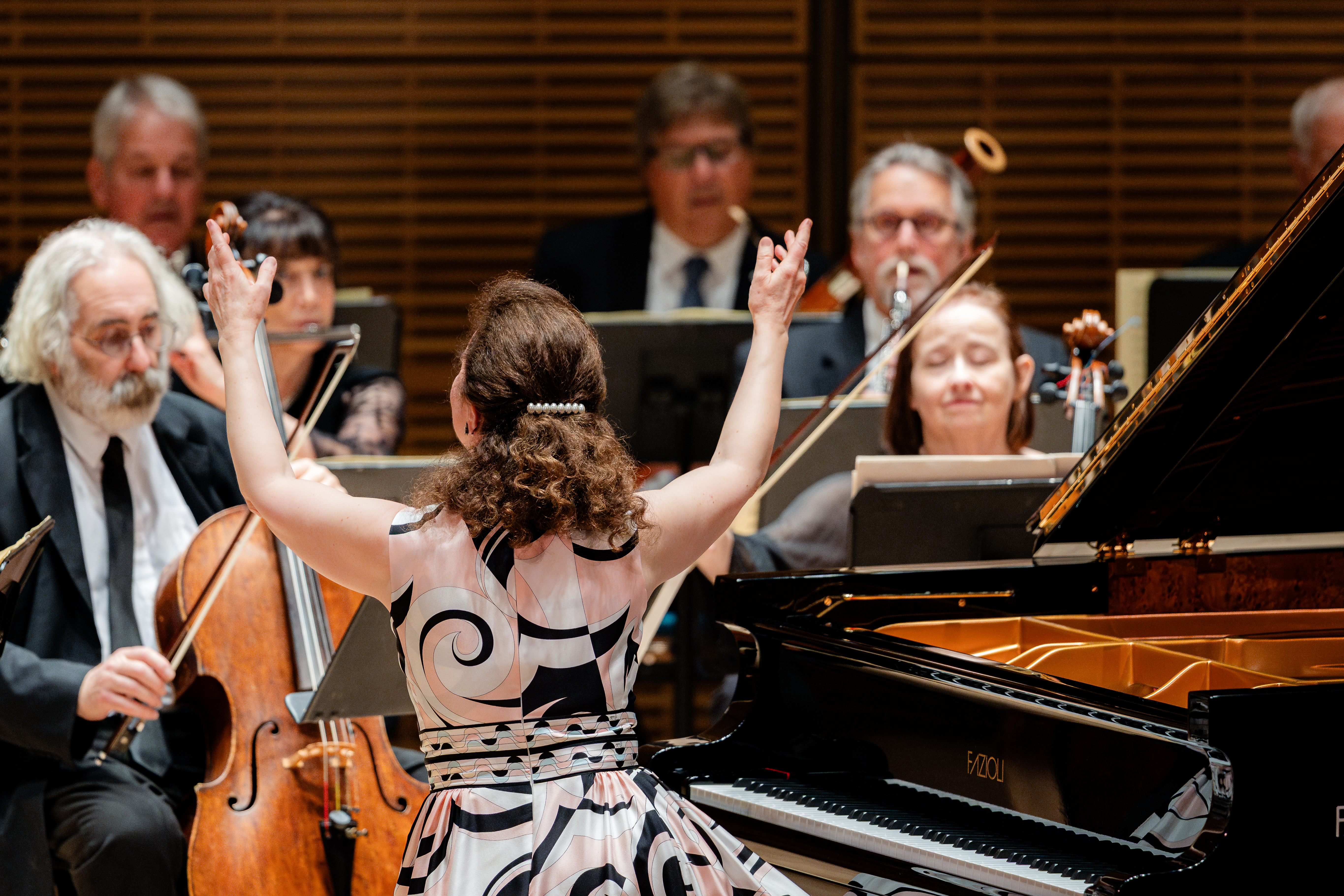
    The pianist, who I was hearing live for the first time, looked fetching in a black-on-white frock. Her stage presence is as lyrical as her playing, and when she turned to the musicians to conduct from piano bench, her gestures had the elegance of a ballerina’s port de bras

    And what a piano she had at her finger tips! The sleek Fazioli was parked on the stage like a regal Rolls-Royce, and the sound was rich and resonant. Every nuance of Ms. Hewitt’s playing hung marvelously on the air.

    J. S. Bach’s keyboard Concerto in G-Minor was an adaptation of a violin concerto in A-minor, thought to have been written during Bach’s period as music director in Cöthen (1717-23).

    The work is the very model of an Italian baroque concerto, with its classic layout of fast-slow-fast movements. Bach treats this formula so graciously: by dove-tailing the soloist’s material with that of the ensemble, the music feels integrated and unified, with the musical motifs passed effortlessly between soloist and strings.

    The opening Allegro has a lively start: the blend of keyboard and strings so cordial, Ms. Hewitt’s perfect articulation graced with delightful subtleties. And here I must immediately mention the magic of John Feeney’s benevolent bass-playing; as always with this artist, the music is built upon his sure, steady, and velvety tone.

    In the ensuing Andante, which opens with stately chords, Ms. Hewitt played with such feeling, her lower range meshing with the Feeney bass to splendid effect. The music veers between passionate and reflective: these mood swings are relished by the players. An exquisite trill was Ms. Hewitt’s finishing touch as the movement reached its conclusion. The finale, a Gigue, sets forth in minor mode, with animated, infectious rhythms. Here Ms. Hewitt charmed us with some sweet touches of rubato, and flourishes of impeccable fiorature.

    2025_Bach-Fest-III_Selects_by Nicholas V. Hall-6

    Above: the pianist as conductor, photo by Nicholas V. Hall

    Mozart’s Piano Concerto No. 17 in G-major, K. 453, brought forth the OSL’s talented wind players; from my vantage point, they were mostly hidden by the piano, but they certainly made their impressive mark with their playing.  

    The Allegro‘s charming start is laced with pauses. Each wind voice is heard from in turn. Sprightly playing from Ms. Hewitt entwines with the ensemble, and brief solo piano passages are etched into the mix. The bassoon has some special moments, and a sly echo effect is part of the fun. The wind voices are supported by rippling keyboard figurations before Ms. Hewitt has a jewel-like cadenza. Throughout, I simply loved watching when the pianist turned to conduct.

    In the Andante, prayer-like lyricism and fine harmonies among the ensemble transport us. A piano solo is laced with punctuating wind chords. Music that moves between serenity and melancholy made beautiful contact with my soul. A splendid cadenza took Ms. Hewiit from the depths to the heights of the piano’s range, polished off with a heavenly trill.

    Wit and grace alternate in the concerto’s Allegretto finale, which commences with a light and airy dance. Ms. Hewitt’s playing is fast and florid, and the winds have their opportunities to shine. The music turns wistful, and then string shivers and horn calls lead us to the end.  

    Following the interval, we heard Mozart’s Quintet for Piano and Winds in E-flat major, K. 452, wherein Ms. Hewitt was joined that magician of the clarinet, Jon Manasse, and Stephen Taylor (oboe), Marc Goldberg (bassoon), and Stewart Rose (horn). 

    The first movement commences with chords; seriousness prevails here. The extended slow introduction presents solos from each of the wind players, interlaced with piano passages. This Largo develops into an Allegro moderato: graceful yet curiously hinting at darkness. Jon Manasse’s playing is marvelous and subtle.

    The Larghetto highlights the finely-blended wind mix; each musician has his/her say, each playing their finest. Mozart’s operatic ensembles are brought to mind in this well-structured movement.

    The concluding Rondo begins almost hesitantly, but soon begins its joyful dance. The music is charming, and so very well-played; I especially relished a very long trill from Mr. Manasse. Mozart thought highly of this quintet: “The best thing I have ever written,” is how he described it to his father Leopold, a few days after its premiere on April 1, 1784, at Vienna’s Burgtheater. 

    Back to Bach for the program’s finale: his keyboard Concerto in D-Minor, BWV 1052, has a Vivaldian air about it. After a unison start, the opening Allegro features restless piano phrases over simmering strings. John Feeney’s bass is a major force here, whilst Ms. Hewitt displays her vast dynamic range at the Fazioli…her brief, cascading cadenza is especially radiant. A return to the unison theme closes the movement as it began.

    The ensuing Adagio again starts with a unison passage, rather mournful. Ms. Hewitt takes up a sad, melodically simple song which leads to an uplifting passage, only to subside into a shadowy mood. The unison theme recurs, the music doleful.

    From its swift and sure start, the concluding Allegro sweeps us onward. Dotty notes from the keyboard give way to rippling passage-work, Ms. Hewitt’s playing so very gracious and assured. John Feeney’s bass shepherds the music on to its glorious end.

    2025_Bach-Fest-III_Selects_by Nicholas V. Hall-10

    As the last note faded into silence, the spell-bound audience erupted with heartfelt applause and shouts of brava! for the beloved Ms. Hewitt and the musicians of the OSL. (Photo above by Nichols V. Hall). Called back for a second bow, the pianist announced an encore: the classic Largo from Bach’s F-minor concerto. Her haunting, sublime playing was underscored by the gentle heartbeat of Mr. Feeney’s bass, bringing the evening to a heavenly conclusion.

    (Performance photos by Nicholas V. Hall, courtesy of Emily Walsh at 21C Media Group. Click on each image to enlarge.) 

    ~ Oberon

  • Spectacular Met Debut

    (Reaching back nearly 20 years to bring this article over to the Glade from the Grove.)

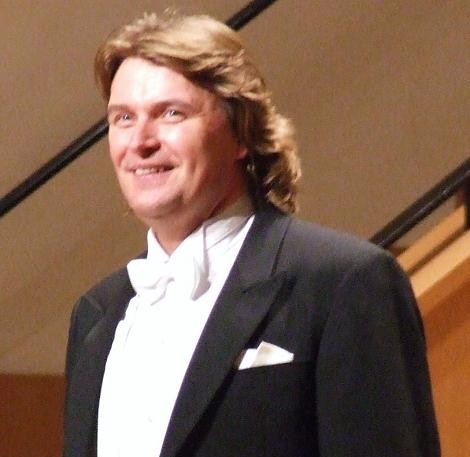
    Above: Klaus Florian Vogt

    May 3rd, 2006 – Opera was always my first love, and even though in recent years I have found myself going to NYCB far more frequently than to either of our opera companies, I can still get a thrill when all the elements come together at the opera – as they did last night in a performance of Wagner’s LOHENGRIN at the Met.

    This is the controversial Robert Wilson production. The staging is very static; the chorus is largely stationary. The singers move in slow motion, using stylized hand gestures that sometimes recall old photos of the Nijinsky L’APRES MIDI D’UN FAUN. I would imagine it is quite strenuous on the performers and have heard stories of singers needing chiropractic treatment after a run of performances. The opera takes place against a (mostly) blue cyclorama with large panels of blinding white light drifting in and out at key moments. Aside from a throne for the King and an empty chair for the “tower” scene the only bit of stage decor is a large wing to represent the swan. You either love it or hate it.

    Karita Mattila has a great role as Elsa and even though her voice seemed sometimes to be at the very limits of what she can do, the results were thrilling. Her silver-blue clarity fits the music, and the production, to a T. Margaret Jane Wray, once a lyric mezzo who went into soprano rep and was a fine Sieglinde a couple years ago was here trying out Ortrud; she sang most of the music with far more beauty of tone than we normally hear, but she did not have the easy top needed for her Invocation or her confrontation of Elsa at the wedding. Her final interjections were a bit more desperate than one wants to hear. Greer Grimsley, a sinister and almost alien-looking presence, hurled out his darkish tones with great passion and turned what is usually an ungrateful role into a key element of the evening. Rene Pape is simply magnificent, his beautiful basso voice just keeps flooding the hall. Young up-and-comer Charles Taylor took a few bars to warm up and then delivered the Herald’s pronouncements with striking depth of tone.

    Ben Heppner’s been doing the Lohengrins this season and, much as I admired him in the role about 6 years ago, he has been going thru some ups & downs; on the recent broadcast he had some vocal cracks. So I decided to try the alternate, Klaus Florian Vogt, who was making his Met debut. You just never know these days what you are going to get in a 2nd cast or cover performance; the Met is apparently economizing by hiring less-than-stellar back-ups. And so I waited for Vogt’s first lines with some trepidation, fearing he might be some old strenuous-sounding heldentenor-has-been. And then he literally caressed the ear with his sweet sound. It became clear that we were in for a very different-sounding Lohengrin than we are accustomed to. This was more a Tamino voice than anything remotely “helden”.  He used dynamics with skill, and his almost vulnerable quality gave the music an other-worldy aspect which truly suits the character. I’m sure there were people in the audience who wanted a more hefty sound, but for me it was a revelation. In his long Act III narration, Vogt seemed to enthrall the audience – you could hear the proverbial pin drop – as he unfolded the story of the Grail and the swan to the distraught Elsa.

    Phillippe Auguin was replacing the recuperating James Levine on the podium and he drew a glorious account of the score from the orchestra and from the chorus, who can sound rather “elderly” at times – but not here. Concertmaster David Chan, one of the Met’s treasures, is fascinating to watch from my extreme high-side vantage point.

    The performance won an enormous audience response and the ovation that greeted Mr. Vogt seemed to take him off-guard. He stood there as if dumbfounded. People above me were pounding on their score desks and everyone was screaming “bravo!” at the tops of their lungs.  This was reminiscent of the great ovations that were an everyday experience back in the Last Golden Age at the Met (’60s – early ’80s). It’s been a while since a night at the opera seemed this thrilling.

    ~ Oberon