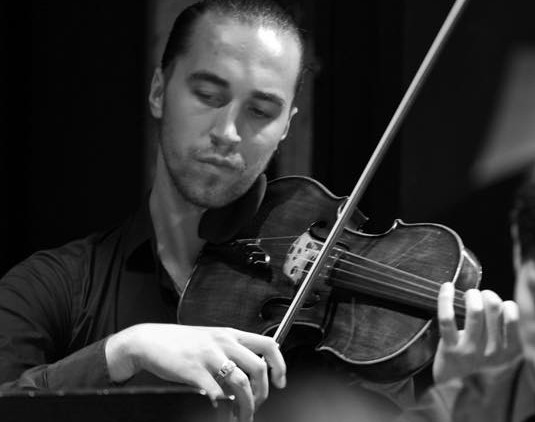
Max Bruch’s Kol Nidrei played by violist Janeks Niklavičs (above) with the Jēkabpils Chamber Orchestra conducted by Mārtiņš Bergs.
Watch and listen here.
Max Bruch’s Kol Nidrei played by violist Janeks Niklavičs (above) with the Jēkabpils Chamber Orchestra conducted by Mārtiņš Bergs.
Watch and listen here.
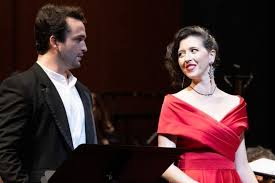
Xabier Anduaga and Lisette Oropesa (above) head the cast in this concert performance of Bellini’s I PURITANI from the Teatro San Carlo, Naples, in 2022. The conductor is Giacomo Sangripanti. Watch and listen here.
Full Cast:
Arturo Talbo – Xabier Anduaga; Elvira – Lisette Oropesa; Sir Riccardo Forth – Davide Luciano; Sir Giorgio – Gianluca Buratto; Enrichetta di Francia – Chiara Tirotta; Lord Gualtiero Valton – Nicolò Donini; Sir Bruno Roberton – Saverio Fiore
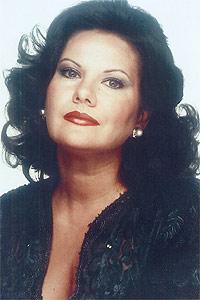
The great Hungarian soprano Eva Marton (above) sang the “In questa reggia” from Puccini’s TURANDOT at the Metropolitan Opera’s 100th Anniversary Gala on October 22, 1983. I was there, and was very impressed by her interpretation of the aria. Watch and listen here.
About 3 weeks later, my partner Jan and I went up from Hartford to Boston (our first excursion together) to hear Marton sing the entire role of Turandot for the first time in her career. That performance has just recently turned up on YouTube: listen to it here.
Turandot: Éva Marton; Calaf: James McCracken; Liù: Sarah Reese; Timur: Harry Dworchak; Ping: James Rensink; Pang: Steven Schnurman; Pong: Noel Velasco; Emperor Altoum: Michael Hume; Mandarin: James Rensink; Prince of Persia: Michael Olsen
Conductor: Sarah Caldwell/Chorus and Orchestra of the Boston Opera Company
Aside from the powerhouse duo of Ms. Marton and tenor James McCracken, the cast included a lovely Liu from Sarah Reese and an excellent Timur: Harry Dworchak.
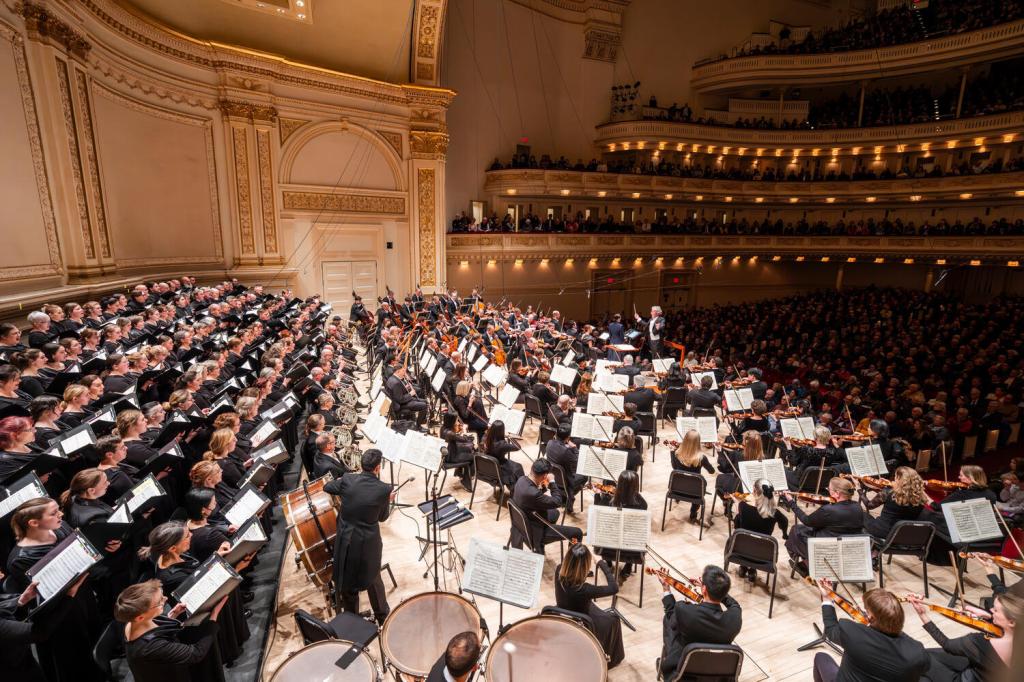
Concert photo by Chris Lee, courtesy of Carnegie Hall
~ Author: Oberon
Tuesday January 20th, 2026 – This evening’s performance of the Verdi REQUIEM at Carnegie Hall was one of the first events to go on my calendar when Gotham’s classical music venues began announcing their 2025-2026 plans nearly a year ago.
Over the years, I have experienced this masterpiece at such expansive settings as Tanglewood and in more intimate spaces like the Chapel at Trinity College in Hartford. Though spiritual in nature, the REQUIEM is very operatic; I sometimes think of it as my favorite Verdi opera. It’s been performed at The Met nearly 60 times since 1901; in 1981, the Company even took the piece on tour. In 1982, I attended a Met matinee performance with Leontyne Price heading the cast and conducted by James Levine; in 2017, another matinee marked Maestro Levine’s last appearance on the Met podium. In 2023, Yannick Nézet-Séguin conducted a performance at the Met from which I snuck out after the Lacrymosa.
Tonight at Carnegie Hall, Franz Welser-Möst, the Cleveland Orchestra’s Music Director, was wielding the baton. The Cleveland Orchestra Chorus, under the direction of Lisa Wong, were in full flourish, and the soloists were:
Asmik Grigorian, Soprano
Deniz Uzun, Mezzo-Soprano
Joshua Guerrero, Tenor
Tareq Nazmi, Bass
Of these artists, only Asmik Grigorian was familiar to me.
On this bitterly cold evening, the Hall was packed; anticipation was running high. We kept our coats on as we waited nearly 15 minutes past start-time. At last the soloists and the Maestro took the stage and we were drawn in by the chorus’s nearly- whispered words “Requiem…requiem aeternam“. The magic of this masterpiece was already casting its spell.
What I loved most, as the evening unfolded, was Maestro Welser-Möst’s forward impetus; things never seemed rushed, but the flow of the music was steady; no contrived piety from long pauses and drawn out phrases. After the Requiem’s first half, the conductor did not take a prolonged break but kept the soloists standing so that there was no interruption in the emotional arc of the evening.
The chorus, in their A cappella passage, established the necessary reverent mood, and then the soloists rose to introduce their voices to us. Tenor Joseph Guerrero has a full, lyrical sound with traces of an Italianate sob that I always find intriguing. The tall basso Tareq Nazmi has a huge, resonant voice that immediately established his authority; as the evening progressed, he proved to also be a very subtle singer. Asmik Grigorian sounded angelic as her voice wafted on high, and mezzo-soprano Deniz Uzun displayed a wide ranging voice which would keep the alto line nicely prominent all evening.
The chorus’s “Dies irae” was powerfully launched, but the voices and the orchestra brought an interesting dynamic range to this music. The trumpet sounded from the upper reaches of the Hall, and then a massive sustained chord was cut off suddenly, the choral voices echoed thrillingly – a moment I always love.
Mr. Nazmi’s “Mors stupebit” was chillingly rendered, and Ms. Uzun’s “Liber scriptus” allowed us to savor both the power and subtlety of her singing, with sure-voiced tops and ample chest tones mixed in with her hauntingly hesitant “Nil…nil…”
The bassoon’s playing during the “Quid sum miser” was so appealing. Mr. Guerrero’s sound continued to allure, Ms. Grigorian floating her high phrases sweetly. The “Rex tremendae” was galvanizing, the soprano’s “Salva me” was delicious…and was echoed by the basso’s beautiful intoning of the same plea.
The contrasted timbres of Mlles. Grigorian and Uzun made for interesting colorings in the “Recordare“, which was laced with enticing traces of rubato. Their duetting was truly lovely, with a polished finish. Mr. Guerrero’s “Ingemisco” brought a fine mix of poetry and strength. He sang from the heart, with some attractive mezza voce effects mixed in, and with power to spare. The sweet sounds of the oboe led to the tenor’s wonderfully hushed “Interoves locum praesta” before rounding off with a blazing finish.
Mr. Nazmi then gave us a stupendous “Confutatis maledictus“, covering its vast range with finely contrasted elements of lyricism and strength. The basso’s haunting singing of “Ora suplex at acclinis” and his heartfelt “Gere curam…” led us to his superb finish of this moving segment of the Mass.
The Lacrymosa was given a beautiful start from Ms. Uzun; the basso joins, and Ms. Grigorian keeps hovering magically in the heights. The four voices harmonize in a extended unaccompanied passage. Their final “Amen” brings a key change, a captivating moment to end the Requiem’s first half.
Ms. Uzan and Mr. Guerreo remain standing – preventing unwanted applause – and they are ready to go with “Domine Jesu Christe“, aided by the cello. What music! This soon becomes a quartet, over which Ms. Grigorian’s soft, sustained tones float angelically. Mr. Guerrero’s “Hostias” has a marvelous hush to it, and he offers the trills which elude some tenors. The basso chimes in, and Ms. Grigorian’s crystalline “Fac eas de morte transire ad vitam” leads to the simply gorgeous postlude.
The chorus sings the joyous “Sanctus” to perfection. The duet “Agnus Dei” was taken just a shade too fast but was lovingly sung by Mlle. Grigorian and Uzun. The mezzo-tenor-basso trio “Lux aeterna” was finely done, the a cappella section with nicely integrated timbres.
Ms. Grigorian’s “Tremens, factus sum ego et timeo” was wonderfully detailed, and her “Requiem aeternam” was mesmerizing. She soared over the chorus before reaching the austere beauty of her final “Libera me.”
For me, this was a performance that fulfilled all expectations, reminding me yet again how well I know – and how much I love – this music. A special bravo! to Maestro Welser-Möst for his thoughtful, clear vision of this monumental work.
~ Oberon
(If you are on Facebook, find more performance photos here.)
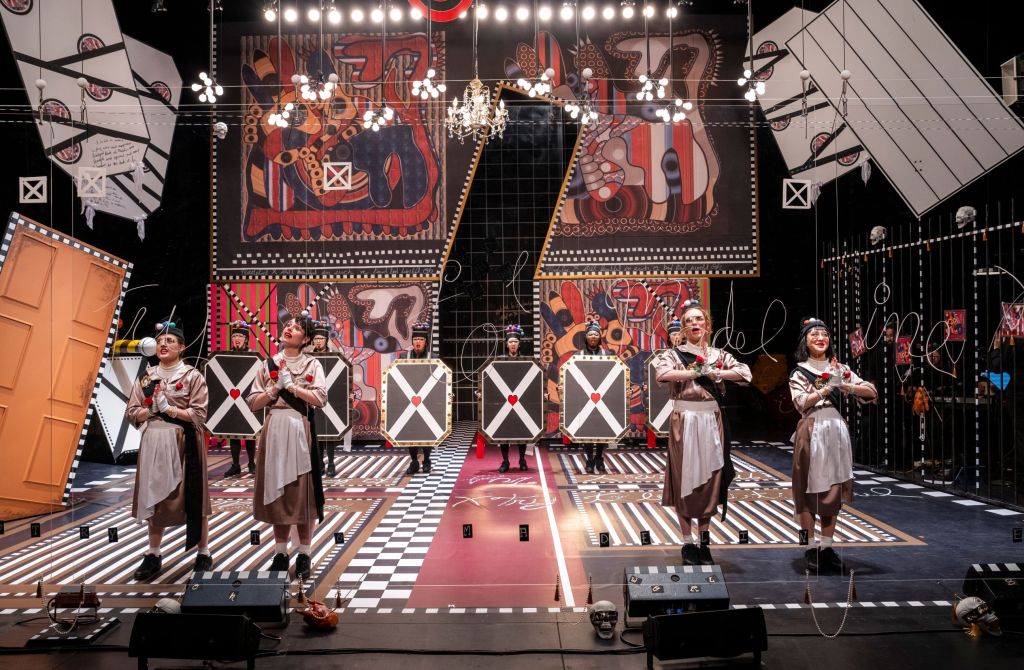
Production photo by Stephanie Berger
~ Author: Shoshana Klein
Saturday January 17th, 2026 – I had no idea what to expect when I went to What to Wear at BAM on Saturday. I think it’s often somewhat safe to assume that when something is hard to explain in promo materials, it might be hard to describe in a review. Unfortunately, those are often the performances I am drawn to. I’m still not sure what would have helped prepare me — this opera is about someone named Madeline X, and also a duck, and also beauty and ugliness.
The set of What to Wear had a Queen of Hearts/Alice and Wonderland vibe — it was hard for me to pinpoint exactly why, but everyone I talked to had the same impression. The set also had sheets of plexiglass between the stage and the audience, with some of the lyrics written on them. I wondered if there was some acoustic reasoning for them, or just aesthetic. The musicians were all amplified, and sounded quite good together.
I found myself wishing I had the lyrics with me during the performance (the program was all digital). You’d think with something so repetitive, it wouldn’t be necessary, but somehow it seemed it would be helpful. I read through later, which tied things together a little bit, though there was no narrative. While there was a lot of repetition in the lyrics and the music, there was also a lot going on — visually, in the set and costumes, and the choreography. It was very engaging, and I didn’t want to miss anything — I had the sense that if I did it would be something very important.
I don’t want to give the impression I had no idea what to expect — I know Michael Gordon’s work, and Bang on a Can, and those elements were familiar. The minimalist textures and repetitive melodies are in the same family as a Phillip Glass opera, and the other oratorio-like pieces that have come out of that downtown, minimalist scene (not to lump them all together, they have tones and styles distinctive from one another, but also related).
Knowing more about Richard Foreman may have given one an idea what to expect — it seems this is more his creation than anyone else’s: his voice provided some narration, and this was a recreation of a production from 2006 for which Foreman had quite a lot of artistic control (in addition to having written the libretto). The surrealist, experimental quality seems to be his influence. One specific example: the lights went down and immediately back up at times that seemed almost random, sometimes in the middle of scenes.
One notable moment was around halfway through, there was something of a solo aria by the “ugly duckling” that I noted as a tone shift and a beautiful moment. It turns out it was a guest appearance of the musician St Vincent — a detail I may not have noticed if my concert companion hadn’t guessed and double-checked in the program.
The whole thing was an interesting combination of abstractions and structure: absurdist visuals and words, but organized music and choreography. Unfortunately, this was the only Prototype event I was able to go to, but it seemed like one not to miss.
~ Shoshana Klein

~ Author: Grayson Kilgo
Monday January 12, 2026 – I was seated in the rear orchestra at Carnegie Hall on Monday night for the Orchestra of St. Luke’s concert performance of Oklahoma!. It’s a seat where small details register quickly. You also hear, with unfortunate clarity, when someone’s hearing-aid battery starts noisily dying. For much of the first act, a persistent squeaking pitch had those of us in the back rows exchanging puzzled glances, silently trying to locate the distraction. By intermission the situation had resolved itself, and I could finally stop tuning it out.
The orchestra filled most of the stage, leaving limited space for the cast. That imbalance set the terms of the evening early. The concert was part of Carnegie Hall’s United in Sound: America at 250 Festival. Scripts were in hand, movement was spare, and the ensemble intentionally utilized the entire room. Singers entered from the aisles and from behind the orchestra, working around the players rather than only in front of them. The musicians were dressed in denim and handkerchiefs, and a cowboy hat perched high on the harp’s column, almost overseeing the entire evening.
The overture was played in full under Rob Berman’s direction. It was full and lush, and I realized I had never actually heard this score played in its entirety. The music had time to build, and it was captivating because of it.
Curly’s first entrance stopped me short. Emmett O’Hanlon has a stunning baritone, rich and warm and velvety in texture, and he wielded it with remarkable control. His entrance from the rear of the orchestra, his warm presence carried effortlessly, and it was clear he was suited to carry the role forward through the evening. The effect was immediate and disarming.
Micaela Diamond’s Laurie came from a very different place vocally: precise diction, legit soprano placement, rounded vowels, and a light regional inflection that felt deliberately old-fashioned without tipping into affectation. It gave the character contour rather than mere polish.
Jonathan Christopher’s Jud, by contrast, was all physical presence. His voice carried a slight rasp and a deep fullness, particularly in the upper register, that filled the hall. The menace came from density of tone rather than volume, and it lingered in the space.
With movement kept to a minimum, most performances relied on delivery and timing. Jasmine Amy Rogers was the gleeful exception. Fresh from BOOP! on Broadway, she played Ado Annie with irrepressible charisma. She stood on chairs, flirted playfully with members of the orchestra, and treated the concert format less as a constraint than as a dare. The role demands a scene-stealer, and Rogers delivered.
David Hyde Pierce gave Andrew Carnes a grounded, unshowy presence, and Ana Gasteyer anchored the evening as Aunt Eller. Chase Brock’s choreography was limited by necessity, with Laurey’s dream ballet omitted entirely. But that constraint proved clarifying, forcing the music to carry its emotional weight directly.
During the final reprise of “Oklahoma!” an extended cast of young singers moved into the aisles and sang from multiple points throughout the hall. The effect was joyful and unexpected, though Carnegie’s acoustics made it difficult to fully register; from my seat, I could hear the single soprano line nearest me rather than the full arrangement.
Oklahoma! is not a show that has ever topped my favorites list. Its place in musical theater history is secure, but it has earned its share of criticism: dated sensibilities, racial undertones that sit uneasily with contemporary audiences, a book that stretches thin, characters whose motivations feel sketched rather than examined. None of that changed on Monday night. But stripped of scenic distraction, the concert format made a compelling case for what the show does well.
The architecture of the score came through clearly, and hearing it this way left me newly attentive to its construction and sweep. Voices like O’Hanlon’s and Rogers’s commanded the room. The Orchestra of St. Luke’s trusted Rodgers and Hammerstein enough to let the material stand largely on its own. For all of the show’s well-documented flaws, that trust was rewarded.
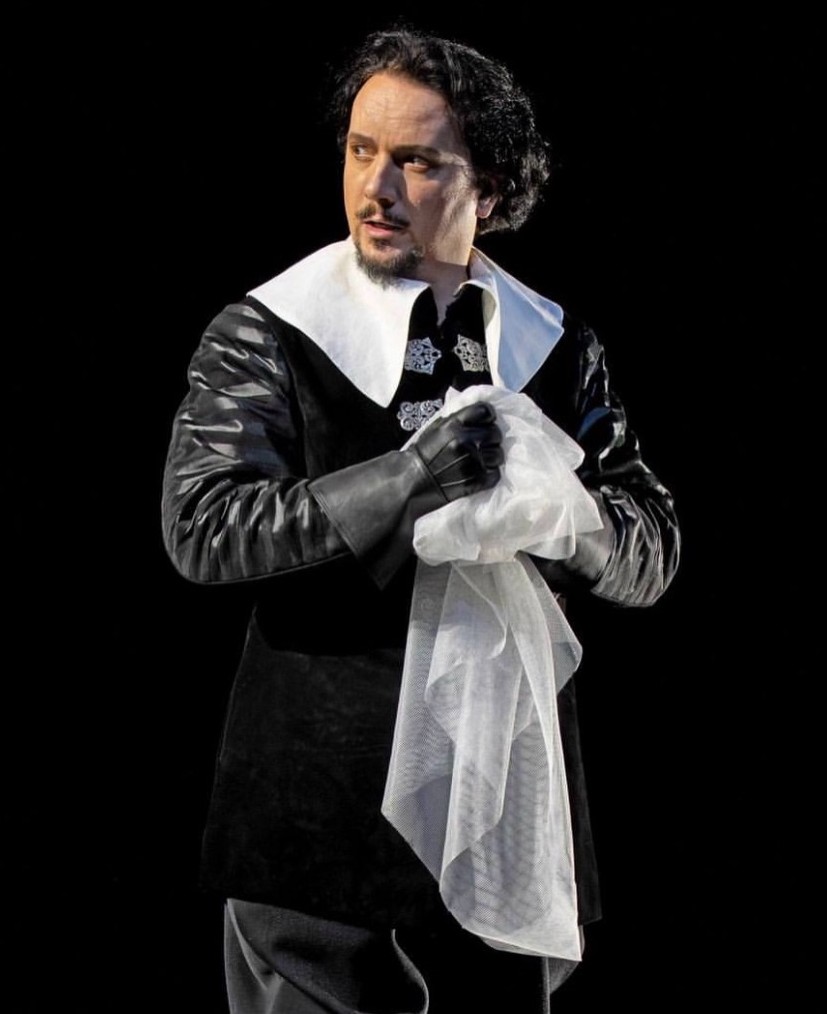
Above: Artur Ruciński as Riccardo/a MetOpera photo
~ Author: Oberon
Sunday January 18th, 2026 matinee – This afternoon marked the Metropolitan Opera’s final performance of Bellini’s I PURITANI this season. The production has been much disparaged, but the vocalism has been – for the most part – fantastic. There were illnesses (announced or not) among the cast, and the singers had to deal with over-loud playing from the pit…a trend nowadays at the world’s biggest opera house.
The house was literally sold out, and enthusiasm ran high all afternoon. The conducting was not inspiring, and the volume from the pit often caused voices to be covered. There’s a lot of filler in the score; unlike NORMA – where every bar of music counts – there are passages in PURITANI that, while aurally appealing, keep the story – such as it is – from flowing.
Eve Gigliotti (Queen Henrietta), Tony Stevenson (Bruno), and David Pittsinger (Gualtiero) repeated their strong performances.
The great Polish baritone Artur Ruciński, having missed the HD performance due to illness, was simply magnificent as Riccardo today. His opening aria was so appealingly phrased, his timbre warm and rich, and his technique so assured. In the exciting cabaletta that follows, the singer brought down the house by sustaining an incredible high-G throughout the orchestral postlude. Mr. Ruciński’s scene of aiding and abetting the escape of Queen Henrietta – thus improving his chances with Elvira, the object of his desire – was most impressively sung, and he and Christian Van Horn gave the performance some of its greatest thrills with their big duet, finishing with super-charged vocalism in “Suoni la tromba…”
Mr. Van Horn had a grand afternoon, his tone pouring forth, his marvelous singing of the gentle aria “Cinta di fiori…” – and its more intense passages – was a highlight of the afternoon. Despite its house-filling power, even this voice was at times blunted by the orchestra.
The bel canto duo of Lisette Oropesa and Larry Brownlee captivated the audience with their lyrical compatibility and their derring-do in rising to their interpolated – or in some cases, written – extreme high notes. Both singers are masters of beautiful dynamic shadings, long vocal lines, and compelling turns of phrase. Their singing of this opera put them in an echelon with the Sutherland/Pavarotti pairing – or, perhaps more aptly, with Sills/Gedda.
A prolonged ovation marked the end of the opera, the audience screaming and carrying on excitedly as each singer stepped forward to bow.
Then, after this kozmically demanding afternoon of singing, the principals had to sit onstage for another twenty minutes to chat with Peter Gelb. Do these sessions really do anyone any good? And I have a feeling the singers don’t get paid overtime.
~ Oberon
This performance of a rarity, the Hymne an die Nacht #2 by Alphons Diepenbrock, captured my interest on first hearing. I’ve sent it on to several friends.
Nathalie Stutzmann (above, photo by Daniele Ratti) is the soloist, with the Concertgebouw Orchestra under the direction of Riccardo Chailly. The concert took place in October 1997, at the Royal Concertgebouw.
Listen here.
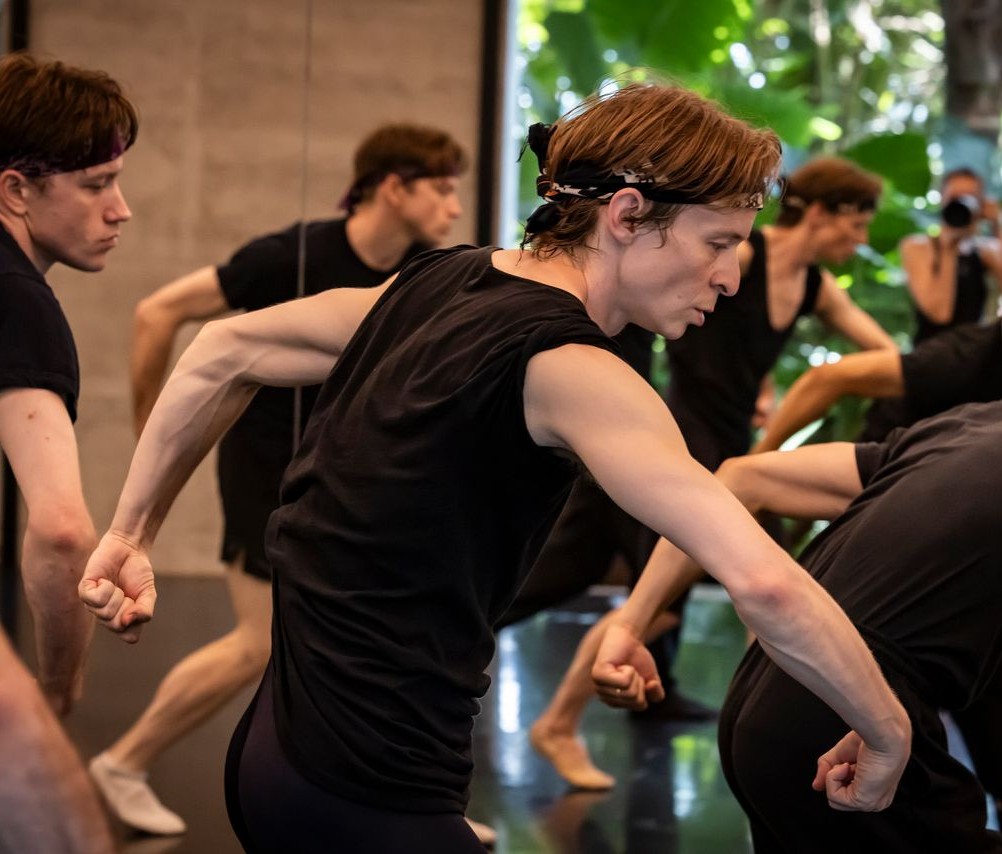
Above: Daniil Simkin, photo by Mariam Medvedeva
~ Author: Oberon
Wednesday January 14th, 2026 – SONS OF ECHO, a new program from international ballet star Daniil Simkin, brings together five male principal dancers at the height of their careers – Jeffrey Cirio (Boston Ballet), Osiel Gouneo (Bayerisches Staatsballett), Alban Lendorf (Royal Danish Ballet), Siphesihle November (National Ballet of Canada), and Mr. Simkin – in works choreographed by Lucinda Childs, Drew Jacoby, Tiler Peck, and Anne Plamondon.
Tonight’s opening drew a packed house; the show started with a ‘ballet class’ in which the five dancers – joined by ballerina Maria Korchetkova – went thru their paces in a campy setting. Vladimir Rumyantsev was the intrepid pianist.
The pianist remained at his post to play (beautifully) pieces by Matteo Myderwyk for Lucinda Childs’ gorgeous trio NOTES. The three dancers – Mssrs. Cirio, Lendorf, and November – were costumed by Amy Page in long skirts, and Manuel Da Silva’s lighting designs (all evening, actually) were a key element in the dance’s visual appeal. The dancers moved thru the ritual’s stylized passages with hypnotic grace. This captivating dancework could be performed by either men or women; either way, I’d love to see it again.
Mr. Da Silva’s lighting was especially striking in REAL TRUTH, a trio for Mssrs. Gounea, Lendorf, and Simkin, choreographed by Tiler Peck, and having its world premiere this evening. Gregory Porter’s song “Real Truth” – the text both spoken and sung – carried the dancers thru some beautiful combinations, and there were partnering motifs of brotherhood and tenderness woven into their dancing.
My companion (relatively new to the dance world) and I agreed that Anne Plamondon’s WILL YOU CATCH MY FALL (world premiere) was our favorite work of the evening. To an original composition by Ouri, and once again finely lit by Mr. Da Silva, Jeffrey Cirio and Siphesihle November played out a relationship into which the viewer might read various scenarios; the piece is both edgy and consoling, the two men captivating in their charismatic performance. The lighting draws the dancers to a perfect ending, but the piece goes on – needlessly, in my view. Still, the power of this dancework is indisputable.
I remember Drew Jacoby from her days of dancing with Rubinald Pronk – an electrifying dance duo – and I loved seeing her in the house tonight, her presence so vivid. Her 2019 quartet, JACK, ended the program this evening, danced by Mssrs. Cirio, Gounea, Lendorf, and Simkin. A musical collage, including scratchy old LPs of Gershwin tunes, set the mood, and again Mr. Da Silva’s lighting (in this case dazzlingly theatrical in its chiaroscuro effects) was an eyeful. A solo by Jeffrey Cirio was especially impressive. The entire piece made for a visually and aurally satisfying finale to the evening, though it would have been more meaningful to have all five dancers involved. If I was going to take this show on the road, I would ditch the “Class” segment and have someone cook up a closing piece for all of the participating dancers.
The curtain calls were fun, and Ms. Childs looked particularly luminous taking her bow. The program wasn’t at all what we were expecting, but then – these days – nothing is.
~ Oberon

 Oberon's Glade