Author: Philip Gardner

  • Music from the Sole @ The Joyce

    Music from the Sole jpg

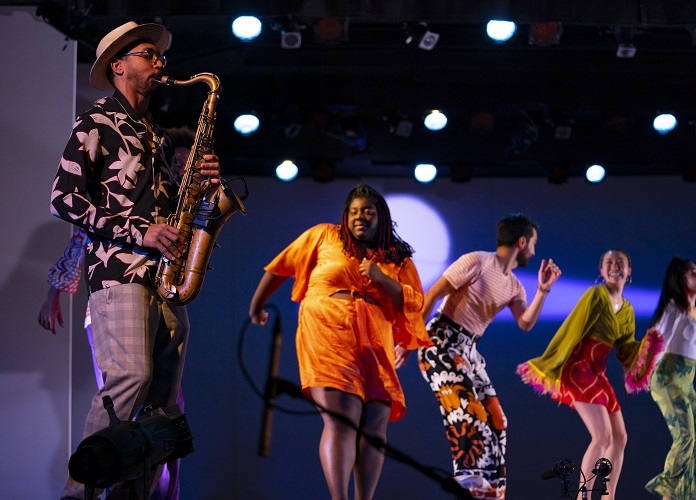
    Above: sax man José Carlos Cruzata Revé, and dancers Roxy King, Orlando Hernandez, Naomi Funaki, and Ana Tomioshi; photo by Titus Ogilvie Laing

    ~ Author: Oberon

    Tuesday January 30th, 2024 – I haven’t had this much fun in years…in decades, really! I Didn’t Come to Stay, an evening-length work from the New York City-based company Music From The Sole, opened at The Joyce on Tuesday night and it left me feeling higher than a kite. Everything about the evening was uplifting: such a joy to see…and to hear: for the musicians were beyond fabulous…and they can dance, too!

    The Brazilian tap dancer and choreographer Leonardo Sandoval had rocked me with the brilliant piece he devised for the Philip Glass études program earlier this season.

    Bassist/composer Gregory Richardson led the five-piece band featuring Jennifer Vincent (cello & bass…such resonant sounds!), José Carlos Cruzata Revé (delicious tones from his sax & flute), and stellar percussionists/keyboardists Noé Kains and Josh Davis, both of whom showed singing talent as well. The sounds and rhythms this ensemble produced were wondrously vivid and inspiring. And when they joined in the dancing, it gave the show one more thing to love.

    As we settled in, a projected ‘logo’ floated on the backdrop: a circle and a triangle; these changed colors throughout the evening. The lighting for the entire performance, by Kathy Kaufmann, was a major factor in the brilliance of the show: shadow effects, and a segment with the dancers in silhouette, were meshed with vibrant saturated hues illuminating the backpanel. The costumes, by Dede Ayite, seemed ideally matched to each dancer’s personality.  

    As the houselights dimmed, a commotion developed at the back of the hall: the dancers and musicians made a spectacular entrance, parading down the aisle and up onto the stage, singing and jamming. This created a feeling of rejoicing, which permeated the evening.

    02_TitusOgilvieLaing_MusicFromTheSole-GiseleSilva_LeonardoSandoval_LucasSantana_AnaTomioshi jpg

    Hypnotic, irresistible rhythms filled the space as the dancing progressed from full ensemble numbers (including the musicians) to solos and passages for smaller groups. Both abundant, full-out athletic energy and intriguing subtlety came naturally to these titans of tap. A particularly engaging quartet brought together Gisele Silva, Mr. Sandoval, Lucas Santana, and Ana Tomioshi (photo above by Titus Ogilivie Laing). Early in the evening, a solo by Orlando Hernandez displayed his appealingly casual grace and smoothness of style; then we didn’t see him again until the finale was imminent. Tall and super-cool, Gerson Lanza looked totally at home in every step and gesture; he also seemed to have a natural, effortless gift for acting. Along with Mlles. Silva and Tomioshi, the women all excelled technically: Naomi Funaki, a veritable speed-demon in some of the most demanding passages, and Roxy King, whose lively, suave dancing and sheer enjoyment in her art made her an audience favorite.

    The evening sped by; most of the crowd – myself included – were bouncing and swaying in our seats the whole time. There was a roaring standing ovation at the end as the company made their exit up the aisle, high-fiving people, smiling, singing, drumming, and blowing kisses to as, whilst tossing streamers into the air.

    What made the evening so special on a personal level was the fact that it made me feel young again. I was remembering how much I used to love going out dancing: in my late 30s, I had a much younger lover, and we would go out dancing most weekends, either in Hartford or P’town. Tonight, for the first time since then, I felt like dancing again.

    ~ Oberon

  • Riccardo Muti ~ Verdi REQUIEM

    Ombuena

    Above: tenor Vicente Ombuena

    Maestro Riccardo Muti conducts a performance of the Verdi REQUIEM at Ravenna, 1994. The soloists are Michele Crider, Luciana D’Intino, Vicente Ombuena, and Dean Peterson.

    Watch and listen here.

  • An Evening with David Finckel and Wu Han

    Wu han - finckel

    ~ Author: Oberon

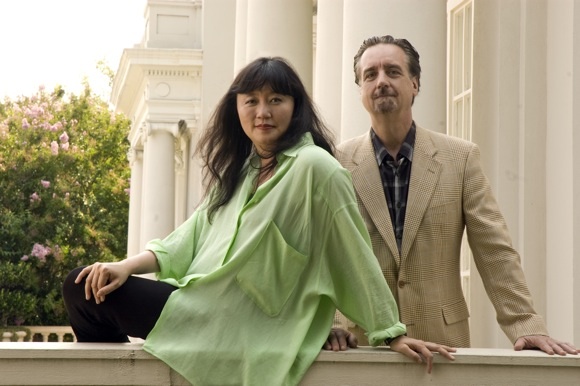
    Sunday January 28th, 2024 – Pianist Wu Han and her husband, cellist David Finckel (photo above), are the co-Artistic Directors of Chamber Music Society of Lincoln Center. This evening at Alice Tully Hall, they shared the stage to present a well-devised program of works by Debussy, Bruce Adolphe, Shostakovich, and Dvořák.

    Claude Debussy’s Sonata for Cello and Piano, composed in 1915, was initially subtitled “Pierrot is angry at the moon“. It is a charming piece in three brief movements. The opening Prologue calls for very subtle piano playing, which Wu Han is always so good at. Skittering music is heard, followed by an awakening of tenderness. The music then goes deep. Plucking cello and staccato notes from the piano decorate the Serenade, which has a jazzy feel. For the Final, swirls of notes from the keyboard and appealing melodic fragments carry the players to a fast finish.

    In 1998, Bruce Adolphe wrote Couple for Cello and Piano for Wu Han and David Finckel. The four movements suggest different aspects of an evolving relationship: the first begins dreamily, then accelerates before fading away. A warm, nostalgic feeling arises in the second movement, with the cello digging in. The slow third movement has a sentimental air, and the final section is animated and light-hearted. The composer joined the artists for a bow at the end.

    Dmitri Shostakovich’s Sonata in D-minor for Cello and Piano, Op. 40 dates from 1934. A beautiful feeling of restlessness runs thru the opening Allegro moderato; the piano glitters on high, and a lovely cello theme is heard. Plucked notes and staccati spring up, and then the music slows. The following Allegro is a kind of scherzo: a swirling dance with music that slips and slides into an insistent rhythm. The songful Largo commences with a wistful cello theme that sinks to the depths; the piano sounds a steady heartbeat. The music turns dreamy, with the piano evoking feelings of peace. The cello carries us into the minor mode, seeking a quiet ending. At last we reach the final Allegro: a big, folksy dance, full of animation. There is a grand piano ‘cadenza’ which develops a sense of irony. The sprightly cello joins, and all seems well with the world. Wu Han and David Finckel basked in a sustained standing ovation, called back for a second bow as the packed hall resounded with shouts of approval.

    In 1889, Antonín Dvořák wrote his Quartet in E-flat major for Piano, Violin, Viola, and Cello, Op. 87. For this finale to the evening’s program, pianist and cellist were joined by Richard Lin (violin) and Timothy Ridout (viola). These two young gentlemen looked very dapper, and they played superbly.

    The opening Allegro con fuoco has an urgent start. The piano takes over, leading to an anxious passage before a joyous melody arrives. We hear colorful playing from the violin and viola as they exchange phrases or harmonize, The Finckel cello adds depth to the textures. Mr Lin’s violin sings on high, and Wu Han offers luminous piano phrases. A buzzy tremelo exchange between violin and viola is a delightful touch. Brilliant playing from all!

    With a simply gorgeous cello motif, David Finckel opens the Lento, and there is magical duetting here from Mssrs. Lin and Ridout. The music turns passionate…and then charming. Achingly beautiful harmonies tug at our souls; Mr. Finckel then resumes his poignant melody, amiably supported by pizzicati from the violin and viola. There is a marvelous sheen to the sound as a progression of modulations leads us onward and Wu Han’s hypnotic playing casts a heavenly spell.

    Now comes the waltz-like opening of the Allegro moderato, grazioso with its gypsy tinge. This movement contains and endless supply of marvels, including sizzling tremelos and rhythmic tapping of the strings. Melodious, dancing phrases carry us onward.

    The gypsy spirit prevails into the final Allegro ma non troppo: a veritable celebration of Czech folk dance. Mssrs. Lin and Ridout were simply incredible here, for their beauty of tone and of expression. Together with Wu Han and David Finckel, they made this Dvořák masterpiece an exuberant statement about the power of music to inspire and reassure us in dark times. Tonight, these four artists gave us one of the outstanding musical experiences of recent seasons, reaffirming yet again the invaluable role Chamber Music Society of Lincoln Center plays in the life of the City.

    ~ Oberon

  • @ My Met Score Desk for CARMEN

    Aigul

    Above: Aigul Akhmetshina

    ~ Author: Oberon

    Saturday January 27th, 2024 matinee – Feeling no need to see a 6-ton tractor trailer on the stage of the Metropolitan Opera House, I took a score desk for today’s matinee of the Met’s new production of CARMEN. I wasn’t feeling my best this morning as I prepared to leave for Lincoln Center, and even considered staying home. But once the house lights dimmed, my spirits perked up, CARMEN is an opera I had not heard for a very long time, and the music seemed truly fresh to me today.

    The main draw of the day was Aigul Akhmetshina, the gorgeous Russian mezzo-soprano, in the title-role. I fell under she spell when she sang Maddalena in Verdi’s RIGOLETTO here last season, which I saw three times.

    Maestro Daniele Rustioni got the opera off to a fast start, setting a brisk tempo with the start of the prelude. Unlike some of the other conductors the Met favors these days, Rustioni is not a volume freak; the voices were – for the most part – clearly audible throughout the opera, and his tempi always felt right. I especially like his accelerations as each repeat of the theme of the Act II Danse Bohème sped up: exhilarating! The preludes to the four acts were beautifully played, particularly the touching music that introduces Act III. All the choral work was super as well, notably the lovely smoking chorus in Act I.

    The first solo voice we hear is that of Morales, sung very impressively today Benjamin Taylor; it’s a Met-sized voice of handsome timbre. Equally striking was the singing of Wei Wu as Zuniga. Both these gentlemen deserve more opportunities at The Met.

    Carmen’s friends – Frasquita (Sydney Mancasola), Mercedes (Briana Hunter), Dancairo (Michael Adams), and Remendado (Frederick Ballentine) – joined Ms. Akhmetshina for the quintet in Act II, excelling at the quick repartee. Ms. Mancasola popped off some bright top notes at the end of the Toreador Song and at “La Liberté!” to end the third act.  

    Micaela is the first principal character to appear, in the person of Angel Blue. This role suits Ms. Blue far better than Violetta did last season. She sounded warm and lyrical in the duet with Don José, etching in some appealing piano effects. And her aria in Act III – with its finely-played horn introduction – was a vocal highlight of the afternoon; Ms. Blue’s rich voice could be tapered smoothly to a sweet softness, making for a spine-tingling finish. Her final plea, with its stunning drop at “Ah, José!“, was beautifully handled.

    Maestro Rustioni provided a whiplash start to the famous Toreador Song; Kyle Ketelsen sang the familiar tune engagingly, and he was excellent in his ‘fight’ duet with José in Act III. Later – before the bullfight commences – he and Ms. Akhmetshina shared a lyrical moment. 

    Beczala 2

    Above: Piotr Beczala

    Piotr Beczała’s bio says he is 57 years old, but he certainly doesn’t sound it…nor look it, when I chatted him up at the stage door after the performance: he’s a very handsome guy, with an easy-going charm. His singing today as was most impressive, covering a wide dynamic range, from passionate, house-filling outpourings to ravishingly heady tones.  He and Angel Blue blended voices perfectly in their Act I duet, trading phrases persuasively, and finishing off with Piotr’s amazingly hush-toned “Souvenirs du pays…” 

    Chez Lillas Pasta, after Carmen upbraids José for abandoning her when the trumpets summon him back to the barracks, Mr. Beczala gave us his poetic Flower Song, so ardently voiced…and with a fascinating pianissimo climax to the final phrase. 

    When the music turns darker and the menacing edge of jealousy overtakes Don José, Mr, Beczala unleashed the power of his voice to thrilling effect. The character’s descent into madness was set forth in vocal terms, with a manic desperation in his singing of the final, deadly encounter with Carmen.

    Aigul Akmenshina established herself as one of the finest Carmens imaginable. Introducing herself with a sultry Habanera – the second verse sung with enticing subtlety – the comely mezzo displayed a warm, dusky timbre with a plushy low range and smooth forays to the top. Aigul’s Seguidilla put both the tenor and the audience under her spell with her creamy, gorgeous voice, topping it off with sustained final note. 

    Her singing of the the Chanson Bohème in the tavern scene veered from subtle to triumphant, but the fact that her later castanet song was not working on José as she’d expected unleashes her temper.  After listening patiently to José’s love plea, Carmen returns to enticement. Zuniga’s arrival causes José to capitulate, and he joins the smugglers. My feeling here is that Carmen already hates him.

    At the smugglers’ den, Aigul’s reading of the tarot cards was sung with doom-ladened low notes and a sense that time was running out for her. Her final meeting with Mr. Beczala’s José was fiery, their exchanges quickly descending to threats and taunts. In this production, José kills Carmen with a baseball bat, which I am glad I could not see; the audience gasped.

    Ms. Akhmetshina’s is a welcome voice and presence on the Met stage, and I will always look forward to her performances; I also hope to one day hear her in Chausson’s Poème de l’amour et de la mer, for which I think she has the perfect voice. 

    The few times I glimpsed the the stage setting today, it looked cheap and junky. A real eyesore.

    After the performance, I went to the stage door where I met Aigul and Piotr; they are such kind and lovely people.

    Carmen met-1jpg

    ~ Oberon

  • FORZA DEL DESTINO ~ Napoli 1963

    Stella 2

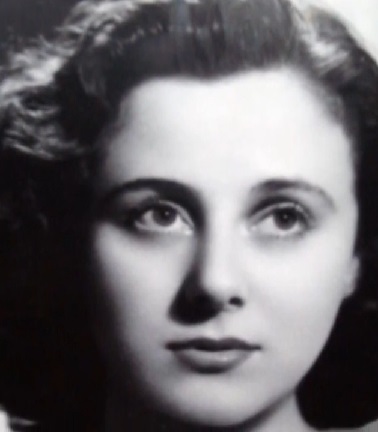
    A 1963 audio-only recording of Verdi’s LA FORZA DEL DESTINO from the Teatro San Carlo, Naples, starring Antonietta Stella (photo above), Carlo Bergonzi, Dino Dondi, and Nicola Zaccaria, with Franco Capuana on the podium.

    Listen here.

  • They’ll Remember You

    Stauffenberg

    Last week, I was re-watching the 2008 film VALKYRIE, which is based on the story of a plot to kills Adolf Hitler. By mid-1944, it was clear that Germany was losing the war. Hitler, growing increasingly deranged, was firm that Germany should fight to the last man and never surrender.

    There was a group of high-level German military officers who foresaw the massive destruction and loss of civilian lives that the final months of the war would bring; among these was Count Claus von Stauffenberg, who was a decorated hero of the war in North Africa, where he lost a hand and an eye in serving the Reich.

    A plot was hatched to assassinate Hitler at a war council meeting of German officials to be held at Hitler’s hideaway, the Wolf’s Lair. Count von Stauffenberg managed to sneak a bomb into the conference room, but on realizing that Himmler was absent from the gathering, the plan was dropped. 

    A few days later, at a second meeting, the Count was able to detonate the bomb by a time-delay fuse, after he had hastily left the meeting saying he was called to Berlin on an urgent matter.

    The bomb exploded, killing four attendees and injuring several others; but Hitler was only slightly hurt. von Stauffenberg, back in Berlin with his fellow conspirators, soon learned that the plot had failed. He and the other conspirators were subsequently executed. The war lingered on for nine more months, with catastrophic property damage and loss of German lives, until Hitler committed suicide on April 30th, 1945. 

    I realized, in my latest viewing of the film, that I had never played thru the credits to the end. In the last moments of the soundtrack, there is a moving hymn to the heroes who tried to bring down a tyrant and madman. It was composed, as was the film’s score, by John Ottman.

    The text is drawn from Wanderer’s Nightsong II by Johann Wolfgang van Goethe, translated as follows:

    Up there all the summits
    are still.
    In the tree-tops
    you will feel but the dew.
    The birds in the forest have stopped singing.
    Soon, done with walking,
    you shall rest, too.”

    Listen to “They’ll Remember Youhere, with mezzo-soprano Sylke Schwab as soloist.

  • They’ll Remember You

    Stauffenberg

    Last week, I was re-watching the 2008 film VALKYRIE, which is based on the story of a plot to kills Adolf Hitler. By mid-1944, it was clear that Germany was losing the war. Hitler, growing increasingly deranged, was firm that Germany should fight to the last man and never surrender.

    There was a group of high-level German military officers who foresaw the massive destruction and loss of civilian lives that the final months of the war would bring; among these was Count Claus von Stauffenberg, who was a decorated hero of the war in North Africa, where he lost a hand and an eye in serving the Reich.

    A plot was hatched to assassinate Hitler at a war council meeting of German officials to be held at Hitler’s hideaway, the Wolf’s Lair. Count von Stauffenberg managed to sneak a bomb into the conference room, but on realizing that Himmler was absent from the gathering, the plan was dropped. 

    A few days later, at a second meeting, the Count was able to detonate the bomb by a time-delay fuse, after he had hastily left the meeting saying he was called to Berlin on an urgent matter.

    The bomb exploded, killing four attendees and injuring several others; but Hitler was only slightly hurt. von Stauffenberg, back in Berlin with his fellow conspirators, soon learned that the plot had failed. He and the other conspirators were subsequently executed. The war lingered on for nine more months, with catastrophic property damage and loss of German lives, until Hitler committed suicide on April 30th, 1945. 

    I realized, in my latest viewing of the film, that I had never played thru the credits to the end. In the last moments of the soundtrack, there is a moving hymn to the heroes who tried to bring down a tyrant and madman. It was composed, as was the film’s score, by John Ottman.

    The text is drawn from Wanderer’s Nightsong II by Johann Wolfgang van Goethe, translated as follows:

    Up there all the summits
    are still.
    In the tree-tops
    you will feel but the dew.
    The birds in the forest have stopped singing.
    Soon, done with walking,
    you shall rest, too.”

    Listen to “They’ll Remember Youhere, with mezzo-soprano Sylke Schwab as soloist.

  • Compagnie Hervé KOUBI ~ Sol Invictus

    Abdelghani FERRADJI

    Above: dancer Abdelghani Ferradji; photo by Nathalie Sternalski

    ~ Author: Oberon

    Tuesday January 23rd, 2024 – Compagnie Hervé KOUBI returning to The Joyce with “Sol Invictus,” a dancework which brings elements of breakdance, martial arts, capoeira, and acrobatics together. Named after the all-powerful god of the sun, the theme of the piece is the ideal of love as the basis for peace. The original score is by Mikael Karlsson, interwoven with excerpts by Beethoven, Steve Reich, and Maxime Bodson.

    Hervé Koubi’s dancers are spectacular athletes who are also artists. The dancing all evening was jaw-droppingly sensational: for seventy-five minutes, the dancers flung themselves into the air, spun on their heads, executed daredevil flips and airborne somersaults, and tossed their fellow dancers heavenward with unflagging energy and commitment. The production was splendidly lit by Lionel Buzonie, and the staging was enhanced by a huge, billowing sheet of cloth-of-gold.

    Francesca BAZZUCCHI

    Above: dancer Francesca Mazzucchi; photo by Nathalie Sternalski

    While there was a narrative feeling, I could not discern a story line. In a program note, the choreographer said he wanted to make the stage “a playground of all possibilities” and that was indeed the best way for the large and wonderfully attentive audience to relate to the performance. It is impossible to describe the fantastical moves these dancers make: they have to be seen to be believed.

    At one point, the nurturing light of the sun goes out; the stage is plunged into smoky darkness, and the dancers appear as silhouettes, bereft of their source of energy.  Then, In the ballet’s most stunning moment, the light slowly returns, and emerging from under the golden shroud a beautiful new sun-king is born.

    The community rejoices in the renewed light, and the physical feats this inspires drew gasps from the audience. The dancers cheered each other on which shouts and whoops of joy as insane airborne combinations were daringly executed. 

    When the curtain fell, the audience released their pent-up excitement, hailing the dancers with a vociferous standing ovation. Once again, Hervé Koubi has brought life to Gotham.

    ~ Oberon

  • ADORATION @ The Sheen Center

    Adoration_Baranova-8660

    Photo by Maria Baranova

    Saturday January 20th, 2024 – I’m so glad I managed to get to see Adoration as part of the Prototype Festival. I haven’t seen the movie that it was based on, but would be interested in seeing it now – the story was well done but I would be curious to see how much more detail is explored in a movie version. For those who don’t know, the story is about a teenage kid (Simon) coming to terms with his parents’ death and their pasts. Simon reveals at school that his father was a terrorist and it seems that he opens up discussions with his classmates and online that are incredibly relevant at this moment in time. 

    I ended up being very focused on the storytelling and messaging of the difficult content, but want to make sure to first say that the music was amazing – Mary Kouyoumdjian’s score was beautiful – the instrumental parts often unassuming but supporting the drama, and the vocal lines soaring and satisfying. I don’t have the best ear when it comes to vocalists, but I thought they all sounded great – particularly Omar Najmi in the role of Simon. The choice to have them all mic’d was an interesting one which seemed mostly relevant for the purpose of adding reverb to certain scenes. It was a nice effect and changed up the sound a bit, though it didn’t seem necessary to me. Overall I imagine it added more control and an even sound – everyone was heard clearly throughout the show. 


    The set was simple but striking. I really liked the gradual beginning to the show – young Simon is on stage before the show starts, writing and sitting on the floor. The staging and set used live video that I’ve seen at many new opera productions recently – though in some interesting new ways, juxtaposed with recorded video, or used to project a photograph. 


    Adoration_Baranova-8840


    Photo by Maria Baranova


    Still, the most interesting part of this show was the story, for me. I was constantly asking myself questions and hoping to get clarity – which were mostly answered, though not explored in too much depth (understandable in the one act setting). I thought it was interesting that the main theme that was brought continually back was “innocence” rather than what many people might see in this type of source material: justice or justification, or motive. The real discussion of these themes comes from the actions of the character of Simon’s teacher, who is mentoring him and pushing him to explore his parents’ past. Her motives are questioned until we learn her backstory and understand her involvement in a new light. Was that the point? 


    It’s very hard to present something like this at any moment in time, but particularly now. I commend those who decided to do it anyway – and am curious what they hoped for us to get from it. I hope the piece has a long life and more people have the opportunity to ask these questions.


    ~ Shoshana Klein

  • The Cleveland Orchestra ~ Prokofiev & Webern

    Sergei-prokofiev

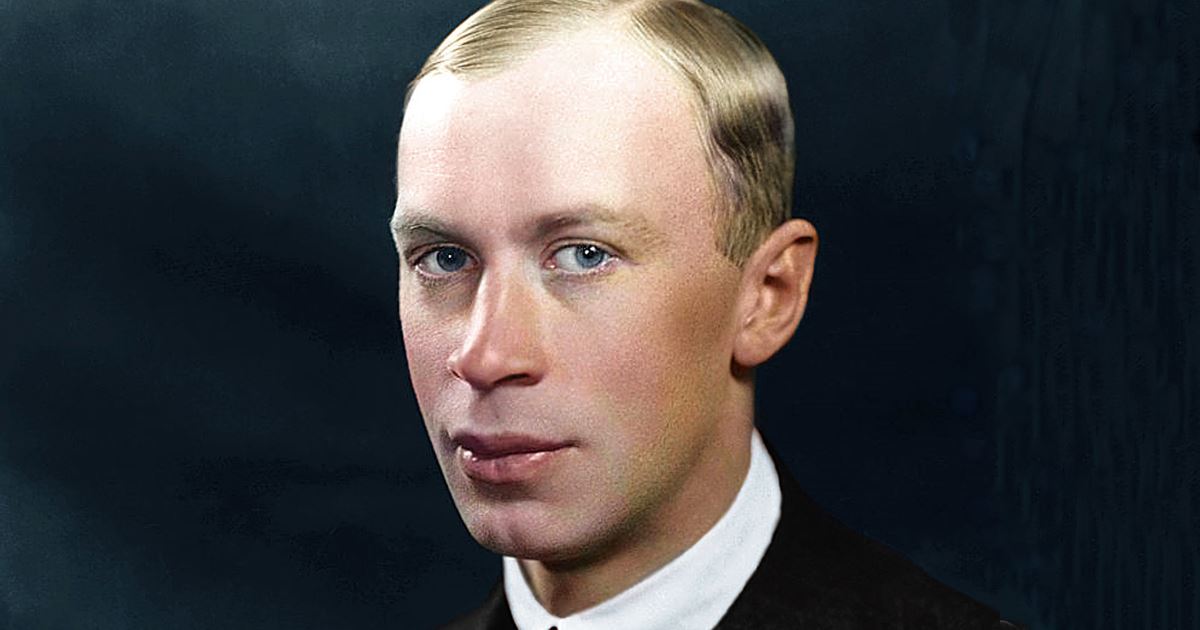
    Above: Sergei Prokofiev

    ~ Author: Oberon

    Sunday January 21st, 2024 matinee – The Cleveland Orchestra offering an afternoon of symphonies by Sergei Prokofiev and Anton Webern, conducted by Franz Welser-Möst, at Carnegie Hall. Maestro Welser-Möst has recently returned to conducting following several weeks of treatment for cancer. The program was rather unusual, with two Prokofiev symphonies book-ending a performance of Anton Webern’s rarely-played Symphony, Op. 21.

    Prokofiev’s Symphony No. 2 in D-Minor, Op. 40, in rather odd piece, consisting of only two movements. It opens with a dazzling Allegro ben articolato: brass voices issue vivid calls, rollicking strings join in, and a march springs up. Plucking violins and rich motifs from the basses lend a cinematic quality. The music rolls on like a big machine, calming briefly only to turn into a fugue, with the horns blazing away. Battling rhythms bass and turbulent strings add to the excitement, with the trumpet sounding a repeated phrase. A new march emerges, going faster and faster. The horns! The drums! And then: a sudden silence.

    The theme-and-variations second movement begins with a gently poised theme played by the oboe and then taken up by the violins. Solo wind voices – flute, clarinet, bassoon – sound over dense strings with somber basses. A slow, ponderous dance gains momentum. The music moves thru various moods, from witty to pensive; with percolating winds and urgent strings, a big sway develops, turning into a whirlwind agitato. Suddenly, a full stop. The music resumes, trudging forward; after potential endings prove evasive, the oboe is heard again over lulling strings. To me, this second movement went on a bit too long…but it was all so beautifully played.  

    Webern jpg

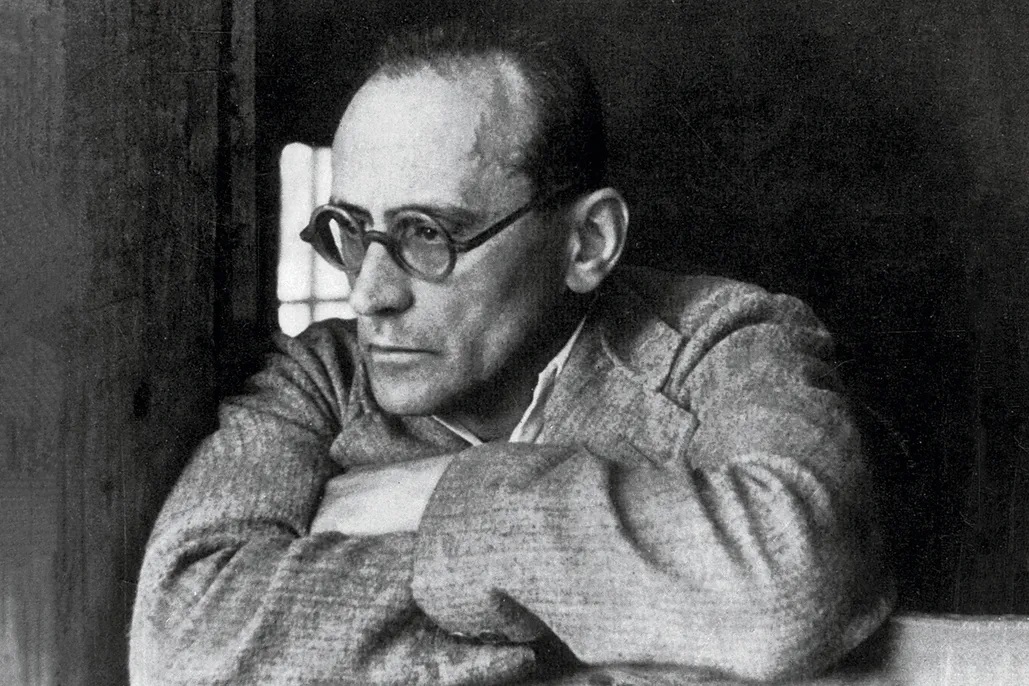
    Anton Webern (above) composed his Symphony, Op. 21 in 1928. Set for strings (without double-basses), harp, clarinet, bass-clarinet, and two horns, this miniature lasts all of ten minutes and is divided into two movements. The writing of the opening Ruhig schreitend (“Walking quietly”) is very spare: the wind instruments have brief phrases, whilst the strings comment. The harp adds an interesting texture. The second movement, Variations, has more substance musically. To the general listener, the piece may seem quizzical and a bit aimless, though it is highly regarded by musicians and scholars as a distillation of “symphonic logic”.

    Following the interval, we heard a thrilling performance of the Prokofiev 5th symphony, spectacularly played. It opens with an Andante that for a moment made me think Enzo Grimaldo’s ship riding its anchor in the sea off Venice in Act II of LA GIOCONDA. Where do these imagined connections come from?  Sixty years of opera-going! New themes are heard, richly played, and a sense of grandeur develops. The Cleveland basses are just fabulous, underlining so much gorgeous music-making: with a vast breadth of sound that is overwhelming to experience, the Andante reaches its glorious conclusion.

    The Allegro marcato that follows was the highlight of the evening – and of the season to date. Right from its sprightly start, this music is brilliant and dynamic, with superb bits for the various wind instruments etched in. Wit and irony abound in this technicolored music: a sumptuous treat. The music speeds up, with marvelous unison violins taking us to a sudden end. 

    The ensuing Adagio begins with an off-kilter waltz from which a lush theme for the strings emerges. The velvety depths of the basses enrich and ennoble this massively lyrical sonic feast, which later develops another simply gorgeous violin melody, and a luminous clarinet passage: an abundance of riches, all strikingly played.

    The final Allegro giacoso has a songful start, which turns agitated. The wind soloists exchange mini-themes, and then the basses introduce a fresh song, which builds and hustles along, sailing forward. Prokofiev pauses for a brief, nostalgic interlude before the momentum resumes with an optimistic rush to the finish line. Brilliant!!

    Welser-Möst

    The thrilling performance of the 5th symphony was greeted with fervent applause. Welcome back, Maestro Welser-Möst!

    Note: Photo of the conductor by Roger Mastroianni.

    ~ Oberon