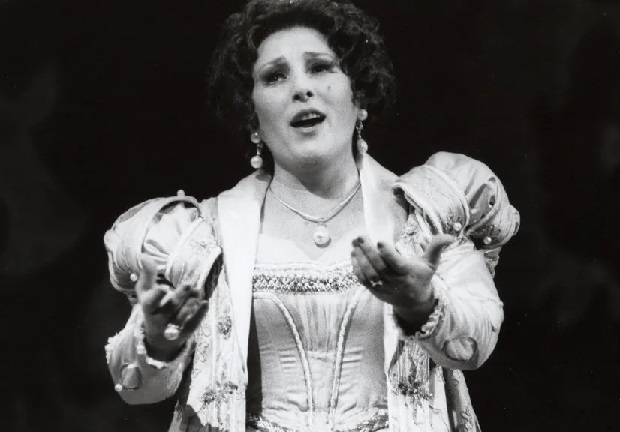
A 1963 audio-only recording of Verdi’s LA FORZA DEL DESTINO from the Teatro San Carlo, Naples, starring Antonietta Stella (photo above), Carlo Bergonzi, Dino Dondi, and Nicola Zaccaria, with Franco Capuana on the podium.
Listen here.
A 1963 audio-only recording of Verdi’s LA FORZA DEL DESTINO from the Teatro San Carlo, Naples, starring Antonietta Stella (photo above), Carlo Bergonzi, Dino Dondi, and Nicola Zaccaria, with Franco Capuana on the podium.
Listen here.
Last week, I was re-watching the 2008 film VALKYRIE, which is based on the story of a plot to kills Adolf Hitler. By mid-1944, it was clear that Germany was losing the war. Hitler, growing increasingly deranged, was firm that Germany should fight to the last man and never surrender.
There was a group of high-level German military officers who foresaw the massive destruction and loss of civilian lives that the final months of the war would bring; among these was Count Claus von Stauffenberg, who was a decorated hero of the war in North Africa, where he lost a hand and an eye in serving the Reich.
A plot was hatched to assassinate Hitler at a war council meeting of German officials to be held at Hitler’s hideaway, the Wolf’s Lair. Count von Stauffenberg managed to sneak a bomb into the conference room, but on realizing that Himmler was absent from the gathering, the plan was dropped.
A few days later, at a second meeting, the Count was able to detonate the bomb by a time-delay fuse, after he had hastily left the meeting saying he was called to Berlin on an urgent matter.
The bomb exploded, killing four attendees and injuring several others; but Hitler was only slightly hurt. von Stauffenberg, back in Berlin with his fellow conspirators, soon learned that the plot had failed. He and the other conspirators were subsequently executed. The war lingered on for nine more months, with catastrophic property damage and loss of German lives, until Hitler committed suicide on April 30th, 1945.
I realized, in my latest viewing of the film, that I had never played thru the credits to the end. In the last moments of the soundtrack, there is a moving hymn to the heroes who tried to bring down a tyrant and madman. It was composed, as was the film’s score, by John Ottman.
The text is drawn from Wanderer’s Nightsong II by Johann Wolfgang van Goethe, translated as follows:
“Up there all the summits
are still.
In the tree-tops
you will feel but the dew.
The birds in the forest have stopped singing.
Soon, done with walking,
you shall rest, too.”
Listen to “They’ll Remember You” here, with mezzo-soprano Sylke Schwab as soloist.
Last week, I was re-watching the 2008 film VALKYRIE, which is based on the story of a plot to kills Adolf Hitler. By mid-1944, it was clear that Germany was losing the war. Hitler, growing increasingly deranged, was firm that Germany should fight to the last man and never surrender.
There was a group of high-level German military officers who foresaw the massive destruction and loss of civilian lives that the final months of the war would bring; among these was Count Claus von Stauffenberg, who was a decorated hero of the war in North Africa, where he lost a hand and an eye in serving the Reich.
A plot was hatched to assassinate Hitler at a war council meeting of German officials to be held at Hitler’s hideaway, the Wolf’s Lair. Count von Stauffenberg managed to sneak a bomb into the conference room, but on realizing that Himmler was absent from the gathering, the plan was dropped.
A few days later, at a second meeting, the Count was able to detonate the bomb by a time-delay fuse, after he had hastily left the meeting saying he was called to Berlin on an urgent matter.
The bomb exploded, killing four attendees and injuring several others; but Hitler was only slightly hurt. von Stauffenberg, back in Berlin with his fellow conspirators, soon learned that the plot had failed. He and the other conspirators were subsequently executed. The war lingered on for nine more months, with catastrophic property damage and loss of German lives, until Hitler committed suicide on April 30th, 1945.
I realized, in my latest viewing of the film, that I had never played thru the credits to the end. In the last moments of the soundtrack, there is a moving hymn to the heroes who tried to bring down a tyrant and madman. It was composed, as was the film’s score, by John Ottman.
The text is drawn from Wanderer’s Nightsong II by Johann Wolfgang van Goethe, translated as follows:
“Up there all the summits
are still.
In the tree-tops
you will feel but the dew.
The birds in the forest have stopped singing.
Soon, done with walking,
you shall rest, too.”
Listen to “They’ll Remember You” here, with mezzo-soprano Sylke Schwab as soloist.
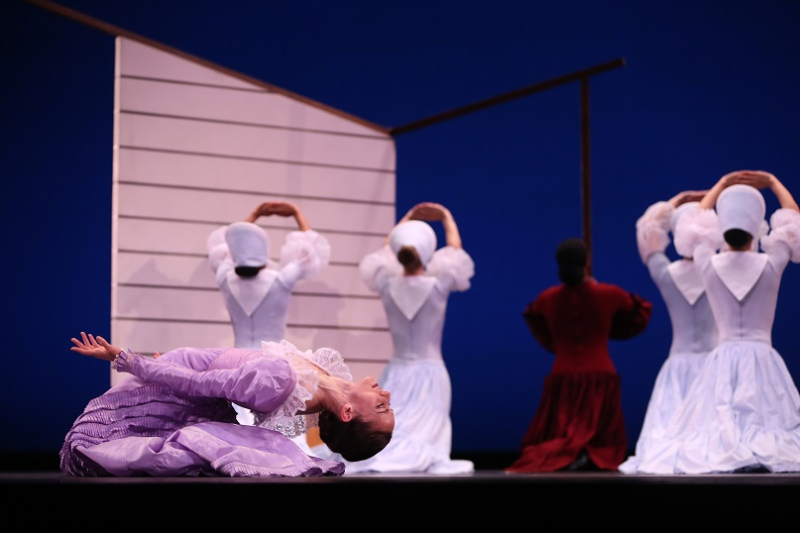
Above: dancer Abdelghani Ferradji; photo by Nathalie Sternalski
~ Author: Oberon
Tuesday January 23rd, 2024 – Compagnie Hervé KOUBI returning to The Joyce with “Sol Invictus,” a dancework which brings elements of breakdance, martial arts, capoeira, and acrobatics together. Named after the all-powerful god of the sun, the theme of the piece is the ideal of love as the basis for peace. The original score is by Mikael Karlsson, interwoven with excerpts by Beethoven, Steve Reich, and Maxime Bodson.
Hervé Koubi’s dancers are spectacular athletes who are also artists. The dancing all evening was jaw-droppingly sensational: for seventy-five minutes, the dancers flung themselves into the air, spun on their heads, executed daredevil flips and airborne somersaults, and tossed their fellow dancers heavenward with unflagging energy and commitment. The production was splendidly lit by Lionel Buzonie, and the staging was enhanced by a huge, billowing sheet of cloth-of-gold.
Above: dancer Francesca Mazzucchi; photo by Nathalie Sternalski
While there was a narrative feeling, I could not discern a story line. In a program note, the choreographer said he wanted to make the stage “a playground of all possibilities” and that was indeed the best way for the large and wonderfully attentive audience to relate to the performance. It is impossible to describe the fantastical moves these dancers make: they have to be seen to be believed.
At one point, the nurturing light of the sun goes out; the stage is plunged into smoky darkness, and the dancers appear as silhouettes, bereft of their source of energy. Then, In the ballet’s most stunning moment, the light slowly returns, and emerging from under the golden shroud a beautiful new sun-king is born.
The community rejoices in the renewed light, and the physical feats this inspires drew gasps from the audience. The dancers cheered each other on which shouts and whoops of joy as insane airborne combinations were daringly executed.
When the curtain fell, the audience released their pent-up excitement, hailing the dancers with a vociferous standing ovation. Once again, Hervé Koubi has brought life to Gotham.
~ Oberon
Above: Sergei Prokofiev
~ Author: Oberon
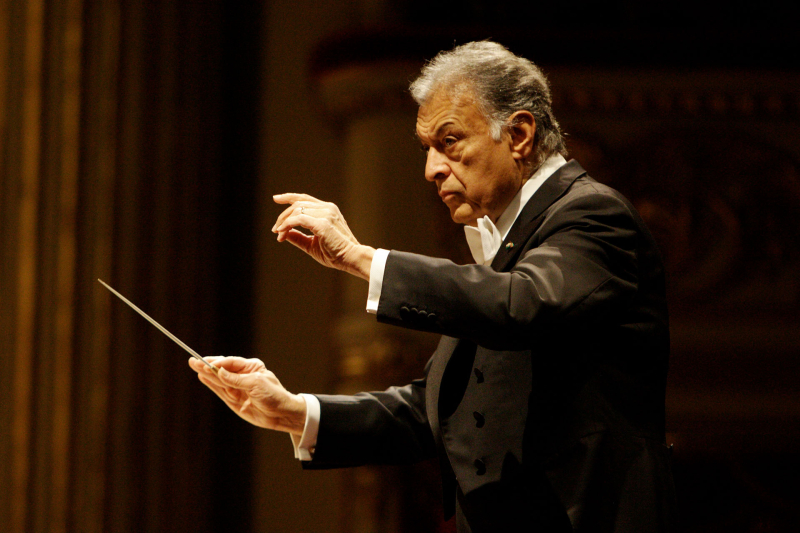
Sunday January 21st, 2024 matinee – The Cleveland Orchestra offering an afternoon of symphonies by Sergei Prokofiev and Anton Webern, conducted by Franz Welser-Möst, at Carnegie Hall. Maestro Welser-Möst has recently returned to conducting following several weeks of treatment for cancer. The program was rather unusual, with two Prokofiev symphonies book-ending a performance of Anton Webern’s rarely-played Symphony, Op. 21.
Prokofiev’s Symphony No. 2 in D-Minor, Op. 40, in rather odd piece, consisting of only two movements. It opens with a dazzling Allegro ben articolato: brass voices issue vivid calls, rollicking strings join in, and a march springs up. Plucking violins and rich motifs from the basses lend a cinematic quality. The music rolls on like a big machine, calming briefly only to turn into a fugue, with the horns blazing away. Battling rhythms bass and turbulent strings add to the excitement, with the trumpet sounding a repeated phrase. A new march emerges, going faster and faster. The horns! The drums! And then: a sudden silence.
The theme-and-variations second movement begins with a gently poised theme played by the oboe and then taken up by the violins. Solo wind voices – flute, clarinet, bassoon – sound over dense strings with somber basses. A slow, ponderous dance gains momentum. The music moves thru various moods, from witty to pensive; with percolating winds and urgent strings, a big sway develops, turning into a whirlwind agitato. Suddenly, a full stop. The music resumes, trudging forward; after potential endings prove evasive, the oboe is heard again over lulling strings. To me, this second movement went on a bit too long…but it was all so beautifully played.
Anton Webern (above) composed his Symphony, Op. 21 in 1928. Set for strings (without double-basses), harp, clarinet, bass-clarinet, and two horns, this miniature lasts all of ten minutes and is divided into two movements. The writing of the opening Ruhig schreitend (“Walking quietly”) is very spare: the wind instruments have brief phrases, whilst the strings comment. The harp adds an interesting texture. The second movement, Variations, has more substance musically. To the general listener, the piece may seem quizzical and a bit aimless, though it is highly regarded by musicians and scholars as a distillation of “symphonic logic”.
Following the interval, we heard a thrilling performance of the Prokofiev 5th symphony, spectacularly played. It opens with an Andante that for a moment made me think Enzo Grimaldo’s ship riding its anchor in the sea off Venice in Act II of LA GIOCONDA. Where do these imagined connections come from? Sixty years of opera-going! New themes are heard, richly played, and a sense of grandeur develops. The Cleveland basses are just fabulous, underlining so much gorgeous music-making: with a vast breadth of sound that is overwhelming to experience, the Andante reaches its glorious conclusion.
The Allegro marcato that follows was the highlight of the evening – and of the season to date. Right from its sprightly start, this music is brilliant and dynamic, with superb bits for the various wind instruments etched in. Wit and irony abound in this technicolored music: a sumptuous treat. The music speeds up, with marvelous unison violins taking us to a sudden end.
The ensuing Adagio begins with an off-kilter waltz from which a lush theme for the strings emerges. The velvety depths of the basses enrich and ennoble this massively lyrical sonic feast, which later develops another simply gorgeous violin melody, and a luminous clarinet passage: an abundance of riches, all strikingly played.
The final Allegro giacoso has a songful start, which turns agitated. The wind soloists exchange mini-themes, and then the basses introduce a fresh song, which builds and hustles along, sailing forward. Prokofiev pauses for a brief, nostalgic interlude before the momentum resumes with an optimistic rush to the finish line. Brilliant!!
The thrilling performance of the 5th symphony was greeted with fervent applause. Welcome back, Maestro Welser-Möst!
Note: Photo of the conductor by Roger Mastroianni.
~ Oberon
Above: Sergei Prokofiev
~ Author: Oberon
Sunday January 21st, 2024 matinee – The Cleveland Orchestra offering an afternoon of symphonies by Sergei Prokofiev and Anton Webern, conducted by Franz Welser-Möst, at Carnegie Hall. Maestro Welser-Möst has recently returned to conducting following several weeks of treatment for cancer. The program was rather unusual, with two Prokofiev symphonies book-ending a performance of Anton Webern’s rarely-played Symphony, Op. 21.
Prokofiev’s Symphony No. 2 in D-Minor, Op. 40, in rather odd piece, consisting of only two movements. It opens with a dazzling Allegro ben articolato: brass voices issue vivid calls, rollicking strings join in, and a march springs up. Plucking violins and rich motifs from the basses lend a cinematic quality. The music rolls on like a big machine, calming briefly only to turn into a fugue, with the horns blazing away. Battling rhythms bass and turbulent strings add to the excitement, with the trumpet sounding a repeated phrase. A new march emerges, going faster and faster. The horns! The drums! And then: a sudden silence.
The theme-and-variations second movement begins with a gently poised theme played by the oboe and then taken up by the violins. Solo wind voices – flute, clarinet, bassoon – sound over dense strings with somber basses. A slow, ponderous dance gains momentum. The music moves thru various moods, from witty to pensive; with percolating winds and urgent strings, a big sway develops, turning into a whirlwind agitato. Suddenly, a full stop. The music resumes, trudging forward; after potential endings prove evasive, the oboe is heard again over lulling strings. To me, this second movement went on a bit too long…but it was all so beautifully played.
Anton Webern (above) composed his Symphony, Op. 21 in 1928. Set for strings (without double-basses), harp, clarinet, bass-clarinet, and two horns, this miniature lasts all of ten minutes and is divided into two movements. The writing of the opening Ruhig schreitend (“Walking quietly”) is very spare: the wind instruments have brief phrases, whilst the strings comment. The harp adds an interesting texture. The second movement, Variations, has more substance musically. To the general listener, the piece may seem quizzical and a bit aimless, though it is highly regarded by musicians and scholars as a distillation of “symphonic logic”.
Following the interval, we heard a thrilling performance of the Prokofiev 5th symphony, spectacularly played. It opens with an Andante that for a moment made me think Enzo Grimaldo’s ship riding its anchor in the sea off Venice in Act II of LA GIOCONDA. Where do these imagined connections come from? Sixty years of opera-going! New themes are heard, richly played, and a sense of grandeur develops. The Cleveland basses are just fabulous, underlining so much gorgeous music-making: with a vast breadth of sound that is overwhelming to experience, the Andante reaches its glorious conclusion.
The Allegro marcato that follows was the highlight of the evening – and of the season to date. Right from its sprightly start, this music is brilliant and dynamic, with superb bits for the various wind instruments etched in. Wit and irony abound in this technicolored music: a sumptuous treat. The music speeds up, with marvelous unison violins taking us to a sudden end.
The ensuing Adagio begins with an off-kilter waltz from which a lush theme for the strings emerges. The velvety depths of the basses enrich and ennoble this massively lyrical sonic feast, which later develops another simply gorgeous violin melody, and a luminous clarinet passage: an abundance of riches, all strikingly played.
The final Allegro giacoso has a songful start, which turns agitated. The wind soloists exchange mini-themes, and then the basses introduce a fresh song, which builds and hustles along, sailing forward. Prokofiev pauses for a brief, nostalgic interlude before the momentum resumes with an optimistic rush to the finish line. Brilliant!!
The thrilling performance of the 5th symphony was greeted with fervent applause. Welcome back, Maestro Welser-Möst!
Note: Photo of the conductor by Roger Mastroianni.
~ Oberon
The magnificent Polish contralto Ewa Podleś (above) passed away on January 19, 2024, at the age of 71. Hers was one of the most remarkable voices I ever heard, but ironically I only saw her live one time: she sang Mahler’s Kindertotenlieder with the American Symphony Orchestra under Leon Botstein’s baton at a concert given at Alice Tully Hall in 1999.
That evening, the Mahler cycle was the last thing on the program. Ms. Podleś walked onstage, a short and rather plump woman. She took a stance on the stage and, as, the music commenced, she tipped her head back slightly and began to pour the music forth as if from the depths of her soul. The richness of the voice, with its cavernous lower register, was like nothing else I had ever heard. For one magical half-hour, she had the audience completely under her spell. A the end, she took a couple of bows, nodding to us slightly.
Back in those days, Alice Tully Hall still had its cozy greenroom, and I went there to greet Maestro Botstein and the evening’s two soloists: soprano Edith Wiens, and Ms. Podleś. Of course, I was too shy to say anything, so Ms. Podleś signed my program, and nodded to me with a slight smile. I will always recall that evening as one of the most profound musical experiences of my life.
You can read all about the Podleś career here, and listen to her unique voice in Wagner…
The Norns~GOTTERDAMMERUNG – Eva Podles – Stephanie Blythe – Margaret Jane Wray – Seattle 2006
…and Rossini:
Ewa Podles – scena d’Arsace – SEMIRAMIDE
And her monumental rendering of “Cara sposa” from Handel’s RINALDO can be savored here.
Spoczywaj w pokoju, beloved Ewa.
Hungarian counter-tenor Zoltán Daragó sings “Lascia ch’io pianga” from Handel’s RINALDO.
Watch and listen here.
Hungarian counter-tenor Zoltán Daragó sings “Lascia ch’io pianga” from Handel’s RINALDO.
Watch and listen here.