Author: Philip Gardner

  • Sasha Cooke/Kirill Kuzmin ~ how do I find you

    Sashacooke

    Above: Sasha Cooke in a Stephanie Girard portrait

    Author: Oberon

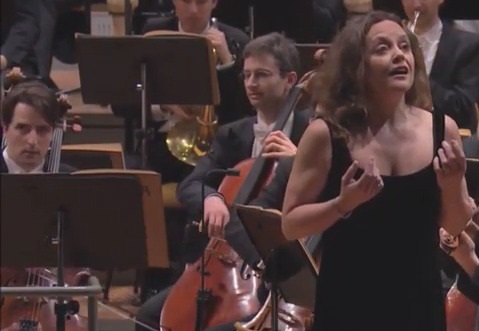
    Thursday May 25th, 2023 – Mezzo-soprano Sasha Cooke presenting a program of songs she commissioned from some of the most distinctive composers of our time in a concert at Merkin Hall. This ambitious project was conceived by Ms. Cooke in 2020, at the height of the devastation of COVID-19, and many of the songs reflect a wide range of experiences tied to the pandemic, from the virus’s global effects to intimate, domestic stories of isolation and loneliness. Pianist Kirill Kuzmin was Sasha’s perfect musical partner for the evening. 

    In approaching the composers and lyricists for this project, Sasha had put no limits on subject matter. Of course, the pandemic was on everyone’s mind, but other important topics were brought forward: California wildfires, school shootings, current US politics, and the internment of Asian immigrants on Angel Island in the 19th and 20th centuries.

    The artists took the stage to a sustained round of applause. Sasha looked radiant in a shimmering gown, and within a few moments we were basking in the glow of her wide-ranging voice and her thoughtful way with words. 

    Caroline Shaw wrote both the music and the words for the evening’s title song, how do i find you. In this lyrical, melodious piece, everything that is dear to me about Sasha’s voice came into play: the warmth of her timbre, the cushioned, unforced low notes and rapturous highs, and the sheer seamlessness of it all. And she is sounding more gorgeous and expressive than ever.

    A five-note descending scale is a recurring motif in Ms. Shaw’s song, tailored so perfectly to the words. The music gets quite grand, and then briefly declamatory, before a final passage of sustained tones.  

    Listen (music by Kamala Sankaram, words by Mark Campbell) features some lovely writing for the piano, and explores a wide tonal range for the voice. There comes a great outpouring, and then a mix of pastel colors at the end. The poet’s words are simple yet infinitely moving: “Listen, as you would to the words of a dying friend…”

    Risk Not One (music by Matt Boehler, words by Todd Boss) Sasha jumps right in, and a rhythm develops; The words are urgent: “Go for broke!” Sasha’s voice is big and rich here, and Kirill at the piano has lots of lively notes to play. Glorious singing, with a big finish.

    Self-Portrait with Dishevelled Hair (music by Missy Mazzoli, words by Royce Vavrek) Inspired by Rembrant’s painting of the same name, and by the idea that a self-portrait captures a moment in time, the music veers from pensive to animated to moving. “I will paint you a self-portrait of me…so that you and I, separated by centuries, might lock into each other’s gaze.”

    Spider (music by John Glover, words by Kelley Rourke) was one of my favorite songs on the program, though – to be honest – all the songs were favorites. The piano begins to ripple as the spider builds her web, and the music is thoughtful. Sasha’s voicing of the words is so clear…and then she begins to hum, like a lullaby.

    MasksUsedToBeFun (music by Frances Pollock, words by Emily Roller) was the most political song of the evening. It’s a light-hearted take on serious matters. From a bright start, the words are sometimes sung and sometimes spoken. Full of irony – and finger snapping – the piece rushes along, eventually taking singer and pianist to the brink of madness. The final lines are a hymn to our beloved democracy, followed by a touching piano postlude.

    (During a Q & A after the performance, a woman in the audience asked why “we” (left wingers) don’t reach out to “them” (the right wingers). The answer is simple: “they” are inflexible, cannot be reasoned with, nor think of anything other than imposing their beliefs on everyone else, and getting their own way – by hook or by crook. That’s why “we” end up “talking to ourselves”, as the woman so blithely put it.)

    Everything Will Be Okay (music by Christopher Cerrone, words by John K. Samson) was another favorite of mine; it tells of the recovery of a lost ‘treasure’. The song grows from a low start via simple voice and piano lines to a more dramatic passage before finding a tranquil ending, as peace of mind is restored. 

    After the Fires (music by Lembit Beecher, words by Liza Balkan) is a poetic narrative recalling the California fires of 2020, wherein the writer tells of returning home after the devastation. “There’s a feeling of memories having been erased along with the place.” The music covers a wide dynamic range, and the role of the piano is key. The song becomes very reflective, and finishes with a sense of quiet resignation. I loved watching Sasha sing this piece.

    (A Bad Case of) Kids (music by Andrew Marshall, lyrics by Todd Boss) is a drunken song, and Sasha’s take on it made me think of Flicka von Stade’s hilarious PERICHOLE aria. A poor bloke is stuck at home with the kids all day, day after day.  He pleads: “Find me a bed on the topmost floor, far from the cries of the maternity ward!” Sasha and Kirill had a blast with this song, which is quite operatic at times. The music rolls along, like something out of a music hall revue: a vivid finale to the concert’s first half. 

    The Work of Angels (music by Huang Ruo, words by David Henry Hwang), which tells of Angel Island and the Chinese Exclusion Act of 1882, where Asian immigrants were held, some for months…or even years. Of course this made me think of my beloved Wei, and the ongoing threats to Asians in this country. The singing is intimate, contrasting with some grand passages for the piano. The sound of the words becomes hesitant, as if afraid to speak of the things that happened to these people. It was some of the most poignant music we heard tonight, and it ends with a wordless vocalise.

    Altitude (music by Timo Andres, words by Lola Ridge), an enigmatic and strangely captivating song, in which Sasha almost compulsively repeats words whilst Kirill plays dotty accents. Then Sasha concludes this unique song in a gorgeous high phrase. 

    Still Waiting (music by Joel Thompson, words by Gene Scheer) is the harrowing tale of a mother in this age of school shootings. Reassuring at first, humming to herself, the woman misses a text from her daughter telling of a shooter in the school, followed by a second text: “”I’m OK, We’re evacuating. I love you.” This brings a huge outpouring of voice. In the final unaccompanied passage, Sasha almost lost control. I imagine this song is very difficult for a mother to sing, but it needs to be heard.

    In the Q & A at the program’s end, Sasha spoke of her difficulty in deciding what should follow Still Waiting. She chose That Night (music by Hilary Purrington, words by Mark Campbell), a long and rambling paean to the vitality and chaos of New York City life. It was a lot of fun to watch Sasha toss off the words; despite all the extroversion, the song has a thoughtful finish.

    Inward Things is Nico Muhly’s setting of a text by the 17th century English poet and theologian, Thomas Traherne. Muhly fashioned the piece so compellingly, and Sasha brought opulent tone and an engaging dynamic palette to bear on this beauteous music. The song’s end was especially sublime.

    Dear Colleagues (music by Rene Orth, words by Colleen Murphy) details the abundant problems masses of people faced during the pandemic while trying to work from home where kids, pets, and daily domestic stuff keep interrupting. The song is a working mother’s melodrama, which Sasha sang and acted with flair, whilst Kirill relished the choice piano interjections. The song has a hilarious ending.

    The Hazelnut Tree (words and music by Gabriel Kahane) tells of emerging from the confines of the indoors, of newspapers and television screens, into the natural world where we can find the true beauty of life. Mr. Kahane gives the words a fine melodic flow, which Sasha voiced so persuasively.

    Where Once We Sang (music by Jimmy López Bellido, words by Mark Campbell) marked the end of the evening. From the title, we knew what it would be about: lost time, lost opportunity…the pandemic months depriving musicians, dancers, and performing artists of their reason for living. Some were taken from us, others gave up. And by the time it was deemed safe again, the lost days were irretrievable.

    From the song’s unaccompanied start, Sasha conveyed everything those of us for whom music is our lifeblood felt and feared throughout those dark days. The song grows in fervor, which is then becalmed, and a sense of hope and quiet rapture settles over us.

    What I will always remember about this evening is the great pleasure of having been in that space with that voice.

    ~ Oberon

  • Composer Portraits: Suzanne Farrin

    Farrin

    Above: composer Suzanne Farrin at the ondes Martenot; photo by Rob Davidson

    Tuesday May 23rd, 2023 – The final program of the season in the Miller Theatre’s unique Composer Portraits series featured Suzanne Farrin, who hails from a small town on the Maine coast. It was an incredible musical experience which moved me deeply.

    Two fascinating singers – soprano Alice Teyssier and countertenor Eric Jurenas – joined virtuoso members of the International Contemporary Ensemble for an evening of magical music-making, with conductor Kamna Gupta leading the large ensemble works, and the composer joining in for the program’s world premiere finale, playing the ondes Martenot. Special kudos to audio engineer Caley Monahon-Ward and lighting designer Philip Treviño for their expertise in making it a memorable evening in every possible way.

    I knew nothing about Ms. Farrin’s work until this evening; in the days leading up to the performance, I read her bio but didn’t sample any of her compositions, as I like to be introduced to new music live whenever possible. All day, I felt an odd sense of anticipation for the concert, as if something special was about to happen. This was prophetic: from first note to last, the program mesmerized me.

    Five excerpts from Ms. Farrin’s 2016 opera, dolce la morte, were presented during the evening. I cannot imagine anything that could more perfectly have captivated my imagination than the opening measures of the aria unico spirto, which begins with oboe (Kemp Jernigan) and bassoon (Rebekah Heller) on a sustained tone. Matching the pitch, countertenor Eric Jurenas joins them with a straight tone of unearthly beauty. Mr. Jurenas’s fantastical voice was heard with a subtle halo of echo, evoking an ancient world which lingers only in the imagination.

    Suzanne Farrin Composer Portrait 170

    Above: Kyle Armbrust (viola), Evan Runyon (double bass), conductor Kamma Gupta, and countertenor Eric Jurenas; photo by Rob Davidson

    Odd harmonies from the wind players wrap around the vocal line; the texts are drawn from letters of Michelangelo to the young Italian nobleman Tommaso dei Cavalieri, and Mr. Jurenas voiced them with a spine-tingling air of sensuality. Near the end, Evan Runyon’s double bass introduces tension with a shivering tremolo. The aria ends with the singer’s magical voice fading into thin air.

    The other excerpts from dolce la morte were interspersed thru the concert’s first half. The first of these was come serpe in which Mr. Jurenas’s timbre was almost unbearably gorgeous. Bassoonist Rebekah Heller displayed amazing breath control, whilst double bassist Evan Runyon brought forth tones from the depths. At times, the music seemed to be reaching us from a distant galaxy.

    veggio found the countertenor veering between the ethereal and the dramatic; his is an uncanny sound, delighting me constantly with its kozmic beauty. The ensemble meanwhile sighed, trembled, and groaned, with pulsing notes played pianissimo by the bass, and insistent high notes beaming from Nuiko Wadden’s enchanted harp.

    In an oboe solo from the opera, l’onde della non vostra, Kemp Jernigan summoned squawking, stuttering, twittering sounds, along with trills and sagging tones, before rising to a high finish. From there, Mr. Jurenas took up the oboe’s final note and commenced rendete, the final excerpt from dolce la morte. His voice blended marvelously with the oboe and bassoon, soon joined by violinist Josh Modney, violist Kyle Ambrust, and cellist Clare Monfredo. Ms. Wadden’s harp twinkled in the high range as the singer ventured upward. There were shivering motifs from Mr. Runyon’s bass, leading to a big, grinding sound from the ensemble. Overall, the heavenly voice of Mr. Jurenas sounded with utter clarity.

    Suzanne Farrin Composer Portrait 38

    Backtracking, the concert’s first half had offered soprano Alice Teyssier (above, photo by Rob Davidson) in Il Suono (from 2016) in which Ms. Wadden’s harp sounded in skittering passages and entrancing melismatic flourishes whilst Ms.Teyssier’s voice floated dreamily on the air, with straight tones of alluring purity.

    Suzanne Farrin Composer Portrait 101

    Above: Nuiko Wadden; photo by Rob Davidson

    Three works for solo instruments put members of the International Contemporary Ensemble in the spotlight. The first of these was polvere et ombra (2008) for harp, in which Ms. Wadden delivered swirls of notes and cascading glissandi, followed by some crisp plucked notes. The piece ends with the strings being gently brushed, almost a caress.

    Suzanne Farrin Composer Portrait 81

    Above, the evening’s string contingent: John Modney (violin), Clare Monfredo (cello), Kyle Armbrust (viola), and Evan Runyon (double bass); photo by Rob Davidson

    In Time is a Cage (2007), violinist John Modney produced a wide range of sonic motifs: tremolos and trills,  and passages of fluttering, buzzing, slithering sounds. In the piece’s most delicate moments, the music went from being impressive to being spellbinding. 

    Suzanne Farrin Composer Portrait 354

    Following the interval, cellist Clare Monfredo (above, photo by Rob Davidson) played corpo di terra (2009). From quietly tapping the strings, trills carried the music to a discordant passage. After rising to quiet, repeated notes, and a feeling of quivering, the cello drops to a drone. A lullaby-like motif turns astringent, and then rather ominous. Calming, the strings are gently brushed. There follows a sort of coda, with an upward rush to a sort of oozing sound, ending in a trembling state. Ms. Monfredo took all of this in stride, making the music feel like a poem that expresses many moods.

    Suzanne Farrin Composer Portrait 500

    Above, Evan Runyon, Nathan Davis, Alice Teyssier, and Suzanne Farrin; photo by Rob Davidson

    Concluding the evening, the world premiere of Ms. Farrin’s Their Hearts are Columns (2020) brought together Mlles. Teyssier and Wadden, Mr. Runyon, percussionist Nathan Davis, and the composer herself, seated at the ondes Martenot. This work, a setting of poems about love and its meaning to the woman’s character, begins with quiet drumming and bass tones, and then the voice of Ms. Teyssier emerged, remote and beckoning. The sound of the ondes Martenot entices the ear, like the soundtrack of a dream. The entwining timbres of this unique instrument with the bass, harp, and percussion made for some extraordinary textures, An unexpected outburst from the singer brings the work to a sudden end.

    In a mid-concert interview with the Miller’s Melissa Smey, Ms. Farrin spoke of the essential elements for  living in our increasingly disquieting world: compassion and empathy. This confirmed what I felt while listening to her music: she and I are on the same wave-length,

    ~ Oberon

  • Montserrat Caballé as Norma ~ Madrid 1978

    Caballe norma

    Montserrat Caballé sings the title role in Bellini’s NORMA in a performance given at Madrid in 1978.

    Watch and listen here.

    Vinco norma

    Ivo Vinco (above) is an impressive Oroveso, Pedro Lavirgen sings Pollione, and Fiorenza Cossotto – though somewhat past her peak – has many wonderful passages as Adalgisa. But…it’s all about Montserrat.

  • ORPHEUS: A Paul Robeson Celebration & “Egmont”

    Carnegie hall

    ~ Author: Oberon

    Saturday May 20, 2023 – ORPHEUS presenting the world premiere of Jasmine Barnes’ Songs of Paul, celebrating the 125th birthday of the great singer/activist Paul Robeson; this was followed by Beethoven’s Egmont in an arrangement by Andreas Tarkmann, with a new translation of the narrative by Philip Bohem. Soprano Karen Slack and baritone Will Liverman were the excellent soloists for the Barnes, and Ms. Slack also sang the soprano arias in the Beethoven, sharing the stage with the inimitable Christine Baranski, who was the Narrator. 

    Robeson

    Above: Paul Robeson

    Ms. Barnes’ new work was warmly received by the audience tonight; her arrangements are beautiful, and were finely played by the artists of ORPHEUS. Sometimes the music seemed too symphonic, detracting a bit from the voices; I grew up hearing these songs on my grandmother’s 78s, with Lawrence Brown playing piano, and the orchestral settings tonight at times felt too glossy. Be that as it may, the songs were superbly sung by Will Liverman (“Didn’t My Lord Deliver Daniel?”, “Deep River”, “Swing Low, Sweet Chariot”, and “Sometimes I Feel Like a Motherless Child”) and Karen Slack (“There’s A Man Going Round Taking Names” and “My Soul’s Been Anchored in the Lord“). The two singers joined together for a grand finale, starting with the profound “Go down, Moses” which gave way to the rousing “Joshua Fit the Battle of Jericho“. Both singers sounded marvelous in the great Hall; composer Jasmine Barnes joined them for a bow, to loud cheers from the crowd.

    Egmont jpg

    The Beethoven did not seem the right companion piece to the Robeson fest this evening; though both Paul Robeson and Lamoral of Egmont were idealists and freedom fighters, that is their only real connection. There was a feeling of restlessness in the Hall as the Beethoven went on, and at least four different cellphones went off, which was distracting. At any rate, Egmont is not one of Beethoven’s masterpieces; the music mostly feels dutiful rather than inspired.

    The historical story of Lamoral of Egmont (above) began in Brussels, in the second half of the 16th century. The Low Countries, under the heavy yoke of Philip II and his Spanish Inquisition – reference Verdi’s DON CARLO – found their civil rights curtailed and the Protestant movement crushed. Egmont, although himself a loyal Catholic, went to Madrid to plead for clemency for the Protestants. He was received with honors by King Philip, but when Egmont returned to his homeland, the king sent the Duke of Alva to Brussels to squash all resistance to Spain’s will. Egmont was imprisoned and eventually executed for treason; his martyr’s death roused the Lowlanders to rebel and cast off their Spanish overlords.

    Beethoven took up the tale of Egmont in 1809, when he was commissioned to compose incidental music for the Vienna premiere of the Goethe play. Beethoven composed a set of musical numbers for Egmont, beginning with the dramatic overture, now a free-standing staple of the concert repertory. There are four entr’actes, two songs for Klärchen, and the final scenes of Egmont’s trial and death. It ends with Egmont’s exultant call to the people to overthrow their oppressors: “Defend your land! And to liberate your loved ones, give yourselves joyously, as I do now, for you!”

    Ms. Baranski, clad all in white, read the narrative, which veers from poetic to melodramatic, with her distinctive voice and innate sense of drama. Ms. Slack sang Klärchen’s two brief arias attractively. The orchestra – all evening – played splendidly, with several notable solo passages for the winds.

    ~ Oberon

  • ORPHEUS: A Paul Robeson Celebration & “Egmont”

    Carnegie hall

    ~ Author: Oberon

    Saturday May 20, 2023 – ORPHEUS presenting the world premiere of Jasmine Barnes’ Songs of Paul, celebrating the 125th birthday of the great singer/activist Paul Robeson; this was followed by Beethoven’s Egmont in an arrangement by Andreas Tarkmann, with a new translation of the narrative by Philip Bohem. Soprano Karen Slack and baritone Will Liverman were the excellent soloists for the Barnes, and Ms. Slack also sang the soprano arias in the Beethoven, sharing the stage with the inimitable Christine Baranski, who was the Narrator. 

    Robeson

    Above: Paul Robeson

    Ms. Barnes’ new work was warmly received by the audience tonight; her arrangements are beautiful, and were finely played by the artists of ORPHEUS. Sometimes the music seemed too symphonic, detracting a bit from the voices; I grew up hearing these songs on my grandmother’s 78s, with Lawrence Brown playing piano, and the orchestral settings tonight at times felt too glossy. Be that as it may, the songs were superbly sung by Will Liverman (“Didn’t My Lord Deliver Daniel?”, “Deep River”, “Swing Low, Sweet Chariot”, and “Sometimes I Feel Like a Motherless Child”) and Karen Slack (“There’s A Man Going Round Taking Names” and “My Soul’s Been Anchored in the Lord“). The two singers joined together for a grand finale, starting with the profound “Go down, Moses” which gave way to the rousing “Joshua Fit the Battle of Jericho“. Both singers sounded marvelous in the great Hall; composer Jasmine Barnes joined them for a bow, to loud cheers from the crowd.

    Egmont jpg

    The Beethoven did not seem the right companion piece to the Robeson fest this evening; though both Paul Robeson and Lamoral of Egmont were idealists and freedom fighters, that is their only real connection. There was a feeling of restlessness in the Hall as the Beethoven went on, and at least four different cellphones went off, which was distracting. At any rate, Egmont is not one of Beethoven’s masterpieces; the music mostly feels dutiful rather than inspired.

    The historical story of Lamoral of Egmont (above) began in Brussels, in the second half of the 16th century. The Low Countries, under the heavy yoke of Philip II and his Spanish Inquisition – reference Verdi’s DON CARLO – found their civil rights curtailed and the Protestant movement crushed. Egmont, although himself a loyal Catholic, went to Madrid to plead for clemency for the Protestants. He was received with honors by King Philip, but when Egmont returned to his homeland, the king sent the Duke of Alva to Brussels to squash all resistance to Spain’s will. Egmont was imprisoned and eventually executed for treason; his martyr’s death roused the Lowlanders to rebel and cast off their Spanish overlords.

    Beethoven took up the tale of Egmont in 1809, when he was commissioned to compose incidental music for the Vienna premiere of the Goethe play. Beethoven composed a set of musical numbers for Egmont, beginning with the dramatic overture, now a free-standing staple of the concert repertory. There are four entr’actes, two songs for Klärchen, and the final scenes of Egmont’s trial and death. It ends with Egmont’s exultant call to the people to overthrow their oppressors: “Defend your land! And to liberate your loved ones, give yourselves joyously, as I do now, for you!”

    Ms. Baranski, clad all in white, read the narrative, which veers from poetic to melodramatic, with her distinctive voice and innate sense of drama. Ms. Slack sang Klärchen’s two brief arias attractively. The orchestra – all evening – played splendidly, with several notable solo passages for the winds.

    ~ Oberon

  • Kathleen Battle ~ Oh! quand je dors

    Snapshot battle

    Kathleen Battle sings Franz Liszt’s ‘Oh! quand je dors‘ from a recital she gave at the Temple of Dendur, Metropolitan Museum of Art, in 1990. Warren Jones is at the piano.

    Watch and listen here.

  • Stratas & Domingo ~ BOHEME scene

    Stratas domingo boheme

    Teresa Stratas and Placido Domingo are Mimi and Rodolfo in a scene from Act I of Puccini’s LA BOHEME from a 1970 televised Gala Performance given at Sadlers Wells in London. Sir Charles Mackerras conducts.

    Watch and listen here.

  • A Matti Salminen Rarity

    Matti S

    As with so many treasures, I came upon this by chance on YouTube: Matti Salminen, the great Hunding and Hagen, sings Wotan in the finale of DIE WALKURE opposite Birgit Nilsson’s Brunnhilde.

    Here in the link.

  • Nelsons/BSO: Mozart/Adès/Sibelius @ Carnegie Hall

    CH11371830_Medium_res

    Above: Maestro Andris Nelsons; photo by Fadi Kheir

    Author: Ben Weaver

    Tuesday April 25th, 2023 – The Boston Symphony Orchestra, under the baton of their music director Andris Nelsons, returned to Carnegie Hall last week. The concert of April 25th, 2023 was a marvelous evening of music by Mozart, Adès, and Sibelius, featuring two outstanding soloist artists. 

    CH11371826_Medium_res

    The great Anne-Sophie Mutter (above, photo by Fadi Kheir) performed two works: Mozart’s Violin Concerto No. 1 in B-flat major, KV 207 and the New York premiere of Thomas Adès’ Air (Homage to Sibelius) for Violin and Orchestra.

    Mozart’s violin concertos have been part of Mutter’s repertoire for her entire career; it’s music she has played and internalized, and performances she has perfected, through the years. The magical performance on Tuesday night of the 1st Concerto, composed in 1773, was essentially perfect. Mutter’s golden, rich, steady tone never wavered; the soulfulness of her playing made the audience lean in. Mozart’s virtuosic writing gave Mutter no difficulties; she dispatched every run, double stop, and trill with absolute ease.

    The new composition by Adès, Air (Homage to Sibelius), is a very different work from Mozart. Composed for Ms. Mutter in 2022, it’s a single-movement, semi-minimalist work (running about 13 mins) that lets the soloist stay in the upper reaches of the instrument for almost its entire run time. While the soloist played a canon – Ms. Mutter’s perfect control and steadiness were wondrous to hear – the orchestra shifted the landscape through orchestration and rhythms. Maestro Nelsons shepherded the forces around Ms. Mutter beautifully, the BSO letting the music ebb and flow. While Mr. Adès explicitly says Air is an homage to Sibelius, I heard more Arvo Pärt and John Adams than Sibelius.

    CH11371825_Medium_res

    Above: soprano Golda Schultz sings Sibelius; photo by Fad Kheir

    Two works by Sibelius book-ended the evening’s program. The vocal tone poem Luonnotar, Op. 70, is one of Sibelius’ most mystical and magical works. With text taken from the first “song” of the Finnish epic national poem Kalevala (a work that inspired several other major works from Sibelius), it tells the story of the (non-religious) Creation. The huge leaps and range of the vocal writing makes Luonnotar one of the most demanding works for a soprano, and South African soprano Golda Schultz was mesmerizing. Her rich voice is even throughout the range, even in the uppermost reaches it remains creamy and ravishing. Her breath control ensured she never ran out of air for Sibelius’ long and achingly beautiful melodies. Maestro Nelsons was sensitive to never let the orchestra drown out the singer. This is a work I wish would be performed more often.

    CH11371827_Medium_res

    Above: Maestro Nelsons and the BSO; photo by Fadi Kheir

    The concert ended with an expansive performance of Sibelius’ Symphony No. 5 in E-flat major, Op. 82. Sibelius’ sound-world is really like no other. I don’t think there is another composer who composed music of such surging coldness and brilliant light. You can feel the winds sweeping across the snow and the icy water glistening in the Sun. The episodic nature of Sibelius’ writing, in the hands of lesser conductors, can be difficult to stitch together. Maestro Nelsons managed it beautifully, and the Boston Symphony – which has a long history of playing Sibelius – responded to every nuance. The orchestra’s marvelous brass section deserves special recognition here because the very exposed writing for the horns in the first and third movements was played perfectly by the ensemble. The final movement, one of Sibelius’ most famous compositions, with the majestic tolling of the horns and sweeping melody from the strings, is one of those rare truly breathtaking glories of music. It’s interesting that this overwhelming section – supposedly inspired by a flock of swans he watched passing overhead – is only played in all its Romantic glory once. When it is repeated in the second half of the movement, it changes to a darker, almost sinister tone. And the work ends with 4 chords and 2 unisons – broken by pauses. A stark and startling conclusion.

    The Boston Symphony is second to none playing Sibelius; years ago Sir Colin Davis – one of the great exponents of the Finnish bard’s music – played and recorded his works with the BSO extensively. Andris Nelsons doesn’t miss a beat.

    Performance photos by Fadi Kheir, courtesy of Carnegie Hall

    ~ Ben Weaver

  • FLIEGENDE HOLLANDER ~ NYCO 1977

    Sarabia

    Above: Guillermo Sarabia as the Dutchman

    Audio-only performance of Wagner’s Der Fliegende Holländer performed at The New York City Opera in 1977, conducted by Julius Rudel, with the following cast:

    Holländer – Guillermo Sarabia
    Senta – Johanna Meier
    Daland – Ara Berberian
    Erik – Richard Taylor
    Mary – Diane Curry
    Steuermann – Jerold Siena

    Listen here.

    Ms. Meier, Ms. Curry, and Mr. Berberian were all great favorites of mine, and I saw Mr. Sarabia’s Dutchman twice: once in Houston and later in Springfield, Massachusetts. Mr. Siena sings the Steersman beautifully.