Author: Philip Gardner

  • Amihai Grosz ~ Schumann’s Fantasiestücke

    Amihai

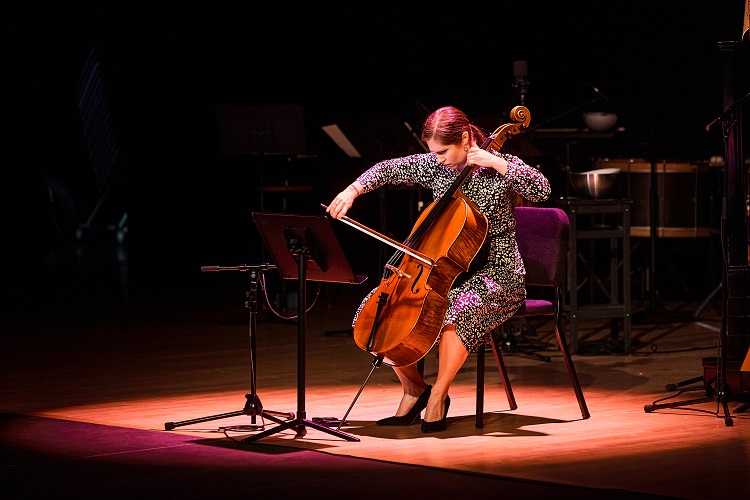
    Violist Amihai Grosz (above) plays Robert Schumann’s Fantasiestücke, Op. 73, with pianist Ohad Ben-Ari.

    Watch and listen here.

  • Verdi REQUIEM @ La Fenice ~ 1972

    Requiem la fenice

    Many, many years ago, my fellow opera-lover Susan Gould sent me a poster from a performance of the Verdi REQUIEM given at the Teatro La Fenice in Venice in 1972. With her usual thoughtfulness, Susan very kindly took the time to have it autographed for me by the four soloists – Katia Ricciarelli, Beverly Wolff, Nicolai Gedda, and Bonaldo Giaiotti – and by Maestro Thomas Schippers. It’s one of my treasures.

    Today, completely by chance, I found the performance on YouTube. Listen to it here. 

  • Stutzmann/Weilerstein/NY Philharmonic

    Stutzmann

    Author: Ben Weaver

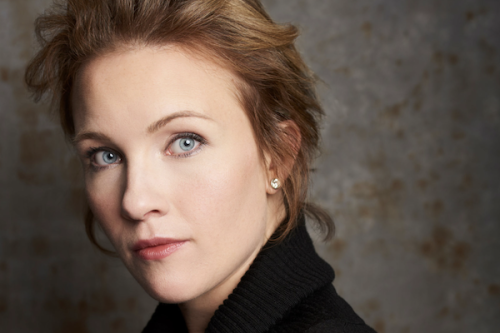
    Thursday February 23rd, 2023 – For many years,  Nathalie Stutzmann (photo above) has been a highly accomplished singer, with numerous operatic and lieder recordings under her belt, and many awards, too. In recent years she has begun to spend more time on the conductor’s podium. I am always skeptical of performers transitioning to conducting because these are all highly specialized crafts. There have, certainly, been many extremely successful switch-overs, but mostly coming from the instrumentalist sides (people like Vladimir Ashkenazy and Christoph Eschenbach come to mind). It’s rare for singers to make the jump, and while someone like Plácido Domingo has conducted many operas over decades, he has never become more than passable in the pit. Which brings me back to Nathalie Stutzmann, who made her New York Philharmonic debut with these concerts, conducting a varied program of Wagner, Prokofiev, and Dvořák. Based on what I heard, Maestro Stutzmann is a phenomenal musician and she would have been a far more interesting new Artistic Director for the Philharmonic than the flashy but vapid Gustavo Dudamel.

    The concert opened with a superb overture to Wagner’s Tannhäuser – an opera Stutzmann will conduct at the Bayreuth Festival this summer. The mournful strings that open the work were lovingly molded as the drama built, the Philharmonic’s wonderful string section matching Stutzmann’s passion at every step. The rock solid wall of horns, trombones, and tuba was heavenly. Appearance of Venus had a magical, light sound that – perhaps for the first time for me – sounded like a Mendelssohn fairy got lost in Wagnerland. The explosive, thrilling climax of the work brought down the house. I suspect Maestro Stutzmann’s Tannhäuser in Bayreuth will be very special indeed.

    Weilerstein jpg

    Above: Alisa Weilerstein

    One of my favorite musicians, cellist Alisa Weilerstein (in a glorious red pantsuit) played Prokofiev’s Sinfonia concertante, Op. 125. Composed for (and with the help of) a very young Mstislav Rostropovich, this is a supremely difficult piece, which posed no difficulties for Weilerstein. The playful opening – like a ticking clock – is echt Prokofiev, and the cello enters almost immediately. Weilerstein’s gorgeous, mellow, glowing tone is always a balm to the ear. Even the crazed, breathless opening of the second movement sounded like the most romantic love song. Weilerstein’s passion and commitment never wavered; even when not playing, she gently swayed to the music. Prokofiev’s kaleidoscopic music – sweepingly romantic one moment, mockingly blowzy the next – can be tricky to navigate, but Weilerstein and Stutzmann had a deep connection and made everything whole. Stutzmann’s history of singing for conductors no doubt make her deeply sensitive to her soloists. She was careful to let Weilerstein room to breathe and to never let the orchestra overpower the cello. I hope Weilerstein and Stutzmann enjoyed working together because they make wonderful, deeply sympathetic music together; may their partnership continue and grow.

    Antonin Dvořák’s Symphony No. 9 in E-minor, Op. 95 (subtitled hastily by the composer “From the New World” as he handed the score off to be copied for the world premiere performance by the NY Philharmonic in 1893) is easily one of the most standard works in the classical repertoire: a warhorse as popular as Beethoven’s  5th and Tchaikovsky’s Nutcracker. It’s easy to get jaded and cynical, and roll our eyes when another performance is on the program. These works can be played by any orchestra with their eyes closed, and the audience will dutifully applaud. But sometimes you hear a performance that makes you sit up and rethink your cynicism, and reevaluate why these works are warhorses in the first place. It’s not pure chance that some of these compositions have been played more than others, and will continue to be played.

    This evening’s performance of Dvořák’s 9th was such a performance: Maestro Stutzmann led a revelatory, fresh, thrilling interpretation of a work we’ve all heard countless times. She struck a perfect balance between embracing the familiarity of the melodies while not lingering on them for their own sake. Harking back to Mendelssohn’s fairies dropping in on Wagner’s Tannhäuser, many moments of Dvořák symphony sounded like his beloved Slavonic Dances of decades earlier, effortlessly swirling and swaying. The second movement was perhaps the most wonderful music making of the evening from all involved. It’s chamber music-like orchestration, with small sections of the orchestra handing off music to one another, was wondrously coordinated. I was reminded of that famous speech Salieri delivers in Peter Shaffer’s “Amadeus” about Mozart’s Serenade for Thirteen Wind Instruments: “A single note, hanging there, unwavering. Until a clarinet took it over, sweetened it into a phrase of such delight!” That’s what the entire Largo felt like tonight: every note being sweetened into phrases of delight. The opening notes of the final movement have never sounded more like the theme from “Jaws” (wouldn’t be even a little bit surprised if that’s where John Williams got the idea considering how many of his ideas were directly lifted from existing works). The swirling rhythms and melodies have seldom sounded this fresh and exhilarating.

    The ovation that greeted the performance was huge, people leaving the theater were buzzing about the debuting conductor. I hope we see and hear much more of Maestro Stutzmann at David Geffen Hall.

    ~ Ben Weaver

  • Fifty Years Ago Today

    Of mice and men-1

    Fifty years ago, on this date, I was in Houston, Texas, attending a Houston Grand Opera performance of Carlisle Floyd’s OF MICE AND MEN with my friends the Humeniuk sisters – Ann(e) and Helen – and Larry Knickerbocker.

    Helen, Larry, and I had moved down to Texas in January 1973 where Ann(e) was attending the University of Houston and working as a waitress. Helen started taking courses, and Larry got a job as an auto mechanic; they had fallen in love and they would eventually marry.

    I was working in a drugstore at the Astroworld Hotel. We went to basketball games and to the roller derby, but we were poor so we spent most evenings at the apartment, singing folk songs while passing a joint and a bottle of Boone’s Farm Strawberry Hill. At night, we’d fall asleep with Jackson Browne’s first album, Saturate Before Using, playing on endless repeat:

    “Well, I looked into a house I once lived in
    Around the time I first went on my own
    When the roads were as many as the places I had dreamed of,
    And my friends and I were one…”

    Pg

    It was a peaceful, laid-back life I was leading, and it could have gone on indefinitely. But I often found myself thinking of New York City, of The Met and New York City Opera, and of my opera-loving friends. And there was also this restlessness: a feeling that time was passing me by and that a different life was meant for me.

    I was very attracted to one of Ann(e)’s male friends, but he was married to a woman and they had a daughter. A couple of times I got a vibe that the feeling was mutual, but I simply didn’t know how to go about making something happen. 

    By March, I was getting weary of the situation. A falling out with my boss at the drugstore prompted me to quit my job. For a couple of days I looked at some job ads, but nothing appealed to me. Then one day I got up, feeling that something had to give; Ann(e) and Larry were at work, and Helen was studying. I began packing my stuff into my car. Helen asked, “Are you leaving us?” but she didn’t try to persuade me to stay.  I left a note for Ann(e) and took off.

    On the 1,600-mile journey, I spent two nights in motels and finally arrived back in the little town. I hadn’t let my parents know I was returning; I walked into the kitchen where my mom was puttering around, and asked: “What’s for supper?”

    After a few days, I got a job in a pharmaceutical supply warehouse in Syracuse and took a tiny apartment nearby. But there were some crazies in the building, and after a few weeks, I moved back home and made the hour-long drive to work every morning.

    Meanwhile, New York City was calling me. It wasn’t until June that I got back to the City, for an AIDA with my beloved diva, Gilda Cruz-Romo. I loved seeing all my old friends again; during the intermission, we were standing about, gossiping.  Z, a boy I was attracted to, was standing next to me. He was wearing a maroon sweater-vest and on his chest a stray bit of white thread caught my eye. I reached out and picked the thread off; he gave me a big smile. For the first time, everything felt right. But it wasn’t until October that anything actually happened between us. 

    I often think back to the interlude in Houston, and what might have happened had I stayed on there. But in time, Ann{e), Helen, and Larry moved back to Syracuse and our friendship picked up where it had left off. Helen and Larry married and raised a family; Ann{e) also got married.

    Meanwhile, in the City, after my hopeless love for Z sputtered out, I took up with TJ: my first domesticated gay relationship. After I moved to join TJ at Sarah Lawrence College, I began to lose touch with my Syracuse friends. After TJ finished school, we moved to Hartford and, after spending 22 years there, I finally moved to my dream City in 1998, just shy of my 50th birthday.

    One sad story that came out of the weeks I spent in Houston was that D, the married boy I had a crush on, did eventually leave his wife and enter into a gay relationship. But it was terribly difficult being gay in those years, especially deep in the heart of Texas. I eventually heard that D had committed suicide, and I found myself regretting that I had not responded to his shy flirting; like so many of life’s possibilities, it remains a troubling enigma. When the Facebook era arrived, I became friends with his wife and daughter.

    In 2017, I received news that Helen had passed away; although I had not seen or heard from her for many years, her death upset me deeply. I found Helen and Larry’s two eldest daughters, Katherine and Rebecca, on Facebook where I see them often and keep tabs on their kids, being constantly reminded of those close friendships from so long ago.

  • Accordion & Saxophone @ The Morgan Library

    Yca

    Above: Steven Banks and Hanzhi Wang

    Tuesday February 22nd 2023 – Young Concert Artists presenting a noontime concert at The Morgan Library featuring the unusual combination of accordion and saxophone. The players – Hanzhi Wang (accordion) and Steven Banks (saxophone) – have both previously appeared at The Morgan in solo recitals; they are brilliant, unique artists, and I was eager to hear them live again. But the afternoon did not turn out as planned.

    We settled into our seats, but after a few minutes we were shivering. We put our coats back on, but the damp chill was pervasive. Looking around, it seemed that everyone in the audience was bundled up, and I was recalling an evening many years ago when the young Frederica von Stade gave a recital in a frigid hall in Syracuse, NY, where the maintenance staff had inadvertently shut off the heat; luckily, someone located a small space heater which was set up onstage to keep the singer somewhat warm.

    This afternoon’s musicians took the stage, Mr. Banks towering over the petite Ms. Wang. They launched their program with an arrangement of Handel’s Recorder sonata in G-minor, HWV 360; it took a moment to adjust to the brighter sound of the saxophone in music we are accustomed to hearing played with the softer timbre of the recorder, but Mr. Banks immediately scaled back his dynamic palette, bringing delicious subtleties to the music. Meanwhile Ms. Wang, looking so lovely in her pleated white frock, transformed her accordion into a compact organ, playing with such cordial tone and bending the phrases with consummate skill. As he music veered from courtly to festive, the players were wonderfully in sync and so attentive to one another, making for a musical treat.

    Three miniatures by Krzysztof Penderecki – the great and sorely missed Polish master-composer – were so fascinating to hear. The first, Allegro, is weirdly spastic; it seems to reach its quirky end in a matter of seconds, with the players wryly relishing the innate humour of the piece. A dark and doleful Andante cantabile followed, the timbres of the two instruments blending to perfection. The concluding Allegro ma non troppo is a bouncy dance, polished off zestfully by Ms. Wang and Mr. Banks.

    Now Ms. Wang offered excerpts from Bach’s Goldberg Variations: the very familiar Aria, played with great depth of feeling, followed by four variations which called for all manner of fanciful fiorature, dispatched with effortless grace and polish by this remarkable virtuoso.

    Virtuosity continued in abundance as Ms. Wang gave us two works by Martin Lohse: Autumn Rain, with its dotty raindrops sparklingly defined, and the more somber Winter’s Tale, in which gentle snowflakes drift down on an overcast wintry afternoon. Ms. Wang’s incredible dexterity was simply mind-boggling to observe, her fingers flying nimbly over the keys as she spun out the music, much to our delight.

    But we were now chilled to the bone, and we silently agreed that we needed to leave and seek some warmth. We slipped up the stairs as the stage was being set for the next piece, and a few other audience members followed us out. I was sorry to miss Mr. Banks’s set, and the anticipated Astor Piazzolla finale.

    ~ Oberon

  • Accordion & Saxophone @ The Morgan Library

    Yca

    Above: Steven Banks and Hanzhi Wang

    Tuesday February 22nd 2023 – Young Concert Artists presenting a noontime concert at The Morgan Library featuring the unusual combination of accordion and saxophone. The players – Hanzhi Wang (accordion) and Steven Banks (saxophone) – have both previously appeared at The Morgan in solo recitals; they are brilliant, unique artists, and I was eager to hear them live again. But the afternoon did not turn out as planned.

    We settled into our seats, but after a few minutes we were shivering. We put our coats back on, but the damp chill was pervasive. Looking around, it seemed that everyone in the audience was bundled up, and I was recalling an evening many years ago when the young Frederica von Stade gave a recital in a frigid hall in Syracuse, NY, where the maintenance staff had inadvertently shut off the heat; luckily, someone located a small space heater which was set up onstage to keep the singer somewhat warm.

    This afternoon’s musicians took the stage, Mr. Banks towering over the petite Ms. Wang. They launched their program with an arrangement of Handel’s Recorder sonata in G-minor, HWV 360; it took a moment to adjust to the brighter sound of the saxophone in music we are accustomed to hearing played with the softer timbre of the recorder, but Mr. Banks immediately scaled back his dynamic palette, bringing delicious subtleties to the music. Meanwhile Ms. Wang, looking so lovely in her pleated white frock, transformed her accordion into a compact organ, playing with such cordial tone and bending the phrases with consummate skill. As he music veered from courtly to festive, the players were wonderfully in sync and so attentive to one another, making for a musical treat.

    Three miniatures by Krzysztof Penderecki – the great and sorely missed Polish master-composer – were so fascinating to hear. The first, Allegro, is weirdly spastic; it seems to reach its quirky end in a matter of seconds, with the players wryly relishing the innate humour of the piece. A dark and doleful Andante cantabile followed, the timbres of the two instruments blending to perfection. The concluding Allegro ma non troppo is a bouncy dance, polished off zestfully by Ms. Wang and Mr. Banks.

    Now Ms. Wang offered excerpts from Bach’s Goldberg Variations: the very familiar Aria, played with great depth of feeling, followed by four variations which called for all manner of fanciful fiorature, dispatched with effortless grace and polish by this remarkable virtuoso.

    Virtuosity continued in abundance as Ms. Wang gave us two works by Martin Lohse: Autumn Rain, with its dotty raindrops sparklingly defined, and the more somber Winter’s Tale, in which gentle snowflakes drift down on an overcast wintry afternoon. Ms. Wang’s incredible dexterity was simply mind-boggling to observe, her fingers flying nimbly over the keys as she spun out the music, much to our delight.

    But we were now chilled to the bone, and we silently agreed that we needed to leave and seek some warmth. We slipped up the stairs as the stage was being set for the next piece, and a few other audience members followed us out. I was sorry to miss Mr. Banks’s set, and the anticipated Astor Piazzolla finale.

    ~ Oberon

  • Ensemble Connect @ Weill Hall

    Connect = Photo-Credit-Fadi-Kheir jpg

    Above: the artists of Ensemble Connect; photo by Fadi Kheir

    Author: Oberon

    Tuesday February 21st 2023 – Ensemble Connect offering a wide-ranging program at Weill Hall this evening, opening with Jennifer Higdon’s Dark Wood, a work for bassoon and piano trio. Nik Hooks, the Ensemble’s excellent bassoonist, kicked off his busy evening here (he played in three of the four works); for the Higdon, he was joined by pianist Joanne Kang, cellist Laura Andrade, and guest violinist Stephanie Zyzak. The piece’s title refers to the lustrous, deep-dark polish of the bassoon. 

    Dark Wood opens with staccati for the bassoon and piano; the plucking violin and cello soon join. The music is jagged, buzzing with trills and big accents, full of nervous energy. A prolonged note for bassoon launches a sprightly, animated passage; then the piano begins to rumble, the bassoon and cello playing deep. Another long, dark bassoon tone leads to slithering strings and a pulsing piano motif.

    CH11325029

    Above: bassoonist Nik Hooks; performance photo by Fadi Kheir

    The violin and cello sigh, and things turn dreamy. Dotty violin notes sound over a wistful bassoon melody and then the cello offers a rich theme; this is all quite beautiful to hear. Things perk up, with the bassoon trilling and the strings sizzling, and then Ms. Kang at the keyboard takes over, with big playing, agitated and insistent. Heartfelt strings and a forlorn song for bassoon and piano follow; Ms. Kang offers plucked notes with a “prepared piano” sound, the others playing poignantly. Now the music rushes forward, somewhat chaotically, to a brisk finish.

    Ms. Kang and Mr. Hooks were soon back onstage for Mozart’s delightful Quintet for Piano and Winds in E-flat Major, K. 452, joined by three more of the Ensemble Connect’s brilliant wind players: Amir Farsi (flute), Jasmina Spiegelberg (clarinet), and Cort Roberts (horn).

    Mozart apparently thought highly of this piece, and he would doubtless have loved this evening’s performance of it. It opens rather hesitantly; Mr. Roberts plushy, golden tone immediately grabbed me,  frustrated high-school horn player that I am. The blend of wind voices was sonorous, and after the piano introduces a new and more animated theme, it is passed about from instrument to instrument.

    CH11325032

    Above: Cort Roberts (horn) and Jasmina Spiegeberg, clarinetist; performance photo by Fadi Kheir

    The Larghetto brings us a gracious, courtly melody, with Ms. Spiegelberg’s lambent tone and persuasive phrasing leading the way; flute, horn, and bassoon take up the line in succession. A bel canto atmosphere  develops, with the piano offering accentuations; Mr. Roberts’ horn cavatina is so stylish, with the others harmonizing expressively.

    The final Rondo/Allegretto rolls along, each player showing a vibrant sense of virtuosity: a sustained flute trill from Mr. Farsi was but one of many decorative delights.

    Wiancko

    Above: composer Michi Wiancko

    Michi Wiancko’s 7 Kinships, a Carnegie Hall commission, was having its New York premiere this evening. The composer charmingly introduced the work; she spoke of how 7ths and 9ths express a feeling of longing. I could not agree more.

    CH11325030

    Above: The evening’s wind players – Mssrs. Farsi, Hooks, and Roberts, and Ms. Spiegelberg – giving a sterling performance of the Wiancho; performance photo by Fadi Kheir

    In the work’s seven brief movements, Ms. Wiancho’s thoughtful craftsmanship gave the players ample opportunity to revel in their artistry. The music ranges from lyrical to animated, with moods veering from  whimsical to lamenting. The sounds of the instruments entwine to delight the ear, sometimes in strange harmonies, whilst rhythmically the composer displays touches of wit. The musicians seemed to genuinely enjoy playing this music.

    Before commencing the program’s final work, Robert Schumann’s Piano Quintet, violist Halam Kim read one of the composer’s letters to his beloved Clara; I admit this outpouring of love brought tears to my eyes. And then to recall that it was Clara who played the quintet’s demanding piano part at the work’s public premiere, making it all the more touching.

    CH11325026

    Above, playing the Schumann: Mr. Rengel, with Mlles. Zyzak, kang, Andrade, and Kim; photo by Fadi Kheir

    The Ensemble Connect’s marvelous violinist, Rubén Rengel, led the ensemble, with Ms. Kang honoring Clara Schumann with her delectable playing, and Mlles. Zyzak, Kim, and Andrade all sounding gorgeous.

    This beloved work is bursting with magical passages: the ‘dialogue’ for cello and viola in the opening movement, a theme to which Mozart frequently returns, is especially endearing, and in the dirge-like second movement, Mr. Rengel ‘s playing is exceptional. Mlles. Zyzak and Kim take ups this calmly funereal theme, and Ms. Abdrade’s sumptuous tone is ever at the heart of the matter.

    In the bustling Scherzo, Mr. Rengel is again in his element, and Ms. Kang has much to do, her rising scales setting the scene for a fast dance, her music-making on the grand scale. It is Ms. Kang who initiates the final Allegro ma non troppo with her scintillating playing. A hymn-like interlude arises, and then low rumblings from the piano develop into a slow sway; this then accelerates, dancing us on to the finish.

    All performance photos by Fadi Kheir, courtesy of Carnegie Hall.

    ~ Oberon

  • Bernadette Greevy

    Bernadette-Greevy

    Bernadette Greevy (above), the Irish contralto, was born in Clontarf, a coastal suburb of Dublin.  She studied voice with Jean Nolan and at the Guildhall School of Music and Drama, in London, with Helene Isepp. Her operatic debut was at Dublin, as Siebel in Gounod’s FAUST; she was 18 years old. At the Wexford Festival in 1962, she debuted as  Beppe in Mascagni’s L’AMICO FRITZ, returning often to Wexford in the ensuing seasons to sing operas by Verdi, Massenet, Haydn, and Handel.

    Ms. Greevy appeared with Scottish Opera and at Covent Garden, as well as in Buenos Aires, Oslo, and Ottawa, and made concert tours of China (in 1985), the USA, and throughout Europe. She became best-known for her recital and concert work. Her performances of Elgar’s Sea Pictures and the great Mahler vocal works – Songs of a Wayfarer, the Rückert Lieder, the Kindertotenlieder, and Das Lied von der Erde – were highly acclaimed.

    Bernadette Greevy passed away in 2008 at the age of 68, leaving us with some very fine recordings of her Elgar and Mahler specialties as well as music of Bach, Handel, Berlioz, Brahms, and Duparc. Below are some samplings of the Greevy voice; it takes a few seconds for the Handel to start.

    Bernadette Greevy – Lascia ch`io pianga ~ Handel’s RINALDO

    Bernadette Greevy – Mahler ~ Ich bin der Welt abhanden gekommen

  • Rarity: Honegger’s “Les Mille et Une Nuits” (1937)

    Edouard_kriff_02

    Above: Édouard Kriff as Samson

    Searching for recordings by the Algerian tenor Édouard Kriff, I came upon this delicious work by Arthur Honegger: LES MILLE ET UNE NUITS (A Thousand and One Nights) written in 1937: LINK

    I found these very informative paragraphs about Édouard Kriff by Philippe Olivier of The Orel Foundation:

    “During Kriff’s first contract year at the National Opera House of Paris of September 1938, he sang the roles of Samson, Radames and Faust in LA DAMNATION DE FAUST by Berlioz. After the armistice of June 1940 , he appeared at the National Radio, mostly under the direction of Paul Bastide, in thirty leading roles. Denounced as a Jew by employees of the theater, he was arrested by collaborationist French police on 22 January 1943, along with his mother, but he escaped by jumping from the train to Sobibor; Kriff joined up with the snipers and partisans operating in the Ardèche.

    In 1944, the tenor resumed his activities at the Opéra-Comique, where he sang Don José, Werther, Hoffmann and Canio in PAGLIACCI. He sang Julien in Charpentier’s LOUISE in 1950. From 1956 to 1958 he was stage director of the Opéra-Comique.”

    Cernay1

    It’s also wonderful to hear Germaine Cernay (above) in this exotic Honegger work. She’s long been a favorite of mine among voices from the past. Cernay she made her debut in 1925 at the Paris Opéra in Fauré’s Pénélope. She was a beloved star at the Opéra-Comique (Salle Favart), where she made her debut in 1927 in Alfano’s Risurrezione opposite Mary Garden and went on to appear there as Mallika (Lakmé), Suzuki, Mignon, Geneviève, Carmen, and Charlotte. She was also a favorite at La Monnaie, Brussels, and sang often at provincial French opera houses. She toured North Africa, England, Ireland, Italy, and Switzerland. Cernay is remembered as a fine interpreter of J.S. Bach.

    Germaine Cernay was deeply religious, and in 1942 she retired from the stage and prepared to take her vows as a nun. She died – of an epileptic seizure – in 1943, before having fulfilled her wish to enter the convent.

    Germaine Cernay sings Nevin’s The Rosary

    CLOEZ - 1959

    The Honegger is conducted by Gustave Cloëz (above).

  • Rarity: Honegger’s “Les Mille et Une Nuits” (1937)

    Edouard_kriff_02

    Above: Édouard Kriff as Samson

    Searching for recordings by the Algerian tenor Édouard Kriff, I came upon this delicious work by Arthur Honegger: LES MILLE ET UNE NUITS (A Thousand and One Nights) written in 1937: LINK

    I found these very informative paragraphs about Édouard Kriff by Philippe Olivier of The Orel Foundation:

    “During Kriff’s first contract year at the National Opera House of Paris of September 1938, he sang the roles of Samson, Radames and Faust in LA DAMNATION DE FAUST by Berlioz. After the armistice of June 1940 , he appeared at the National Radio, mostly under the direction of Paul Bastide, in thirty leading roles. Denounced as a Jew by employees of the theater, he was arrested by collaborationist French police on 22 January 1943, along with his mother, but he escaped by jumping from the train to Sobibor; Kriff joined up with the snipers and partisans operating in the Ardèche.

    In 1944, the tenor resumed his activities at the Opéra-Comique, where he sang Don José, Werther, Hoffmann and Canio in PAGLIACCI. He sang Julien in Charpentier’s LOUISE in 1950. From 1956 to 1958 he was stage director of the Opéra-Comique.”

    Cernay1

    It’s also wonderful to hear Germaine Cernay (above) in this exotic Honegger work. She’s long been a favorite of mine among voices from the past. Cernay she made her debut in 1925 at the Paris Opéra in Fauré’s Pénélope. She was a beloved star at the Opéra-Comique (Salle Favart), where she made her debut in 1927 in Alfano’s Risurrezione opposite Mary Garden and went on to appear there as Mallika (Lakmé), Suzuki, Mignon, Geneviève, Carmen, and Charlotte. She was also a favorite at La Monnaie, Brussels, and sang often at provincial French opera houses. She toured North Africa, England, Ireland, Italy, and Switzerland. Cernay is remembered as a fine interpreter of J.S. Bach.

    Germaine Cernay was deeply religious, and in 1942 she retired from the stage and prepared to take her vows as a nun. She died – of an epileptic seizure – in 1943, before having fulfilled her wish to enter the convent.

    Germaine Cernay sings Nevin’s The Rosary

    CLOEZ - 1959

    The Honegger is conducted by Gustave Cloëz (above).