Author: Philip Gardner

  • More Schubert @ Chamber Music Society

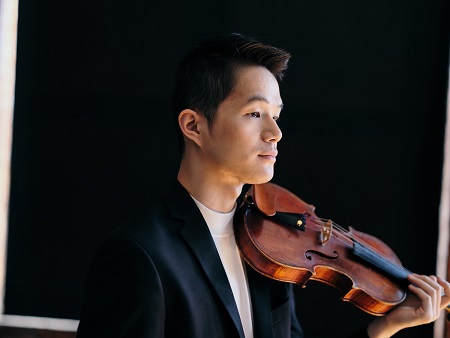
    Ben beilman

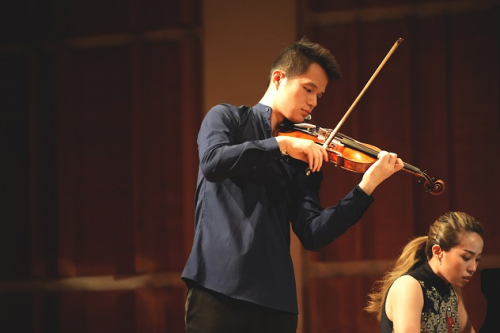
    Above: violinist Benjamin Beilman

    Sunday January 29th, 2023 – Continuing their Schubert-centric Winter Festival, Chamber Music Society of Lincoln Center today offered a full evening of the master’s works, performed by an elite sextet of artists.

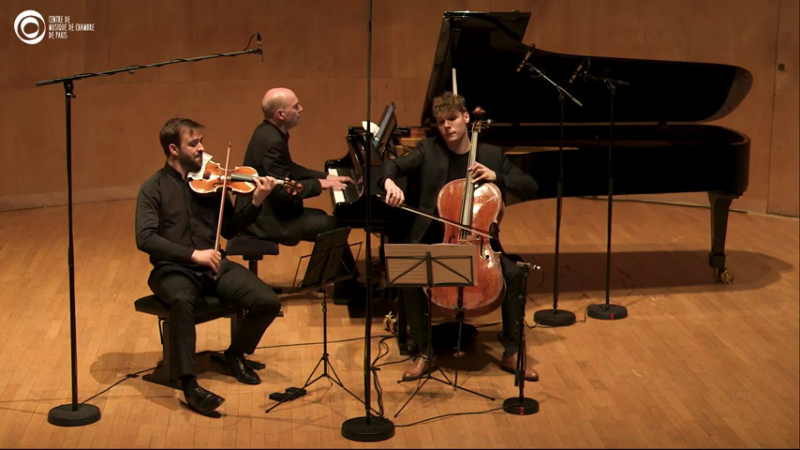
    Schubert’s Adagio and Rondo concertante in F-major for Piano, Violin, Viola, and Cello, was composed in 1816. It is essentially a miniature piano concerto. At the Steinway, Gloria Chien was joined by Benjamin Beilman (violin), Paul Neubauer (viola), and David Requiro (cello).

    Extraordinary richness of tone as the players struck up the introductory phrases; Mr. Beilman then set forth with a dreamy melody. Ms. Chein’s crystal-clear technique offered a counter-song to the dense string harmonies as the music turned dramatic and then sprightly. Things get quite merry, with dancing rhythms propelled by vivid bowing. The music turns delicate before accelerating to a lively finish.

    For the composer’s Allegro in A -minor (“Lebensstürme”), dating from 1828, the pianists were Wu Han, taking the lower octaves, and Alessio Bax, taking the upper. From its dramatic start, the music has a restless quality. Passages of extroverted energy mingle with wonderfully subtle moments: huge crashing chords give way to a haunting misterioso passage, and sharp attacks are becalmed by a poignant, pensive theme. Suddenly, silence falls. And then the pianists play on to a swift finish. 

    Ben Beilman, looking very dapper in his velvet jacket, and pianist Gloria Chien then blew the roof off Alice Tully Hall with their sensational playing of the long and demanding Fantasy in C-major for Violin and Piano, composed in 1827. To Ms. Chein’s lovely, rippling piano modulations, Mr. Beilmen embarked on an achingly gorgeous violin theme, his playing so hushed and tender as he spun out magically pure sustained tones at super-pianissimo. The audience seemed to hold its collective breath, overcome by the sheer beauty of the playing.  

    Now a charming allegro springs up. The music – lilting, light, and dazzling – calls for festoons of fiorature from both players. After a dramatic outburst, with searing violin phrases, a piano cadenza restores peace. Then, in a moment of total silence, a cellphone sounded; I momentarily thought Mr. Beilman was going to stop playing, but instead he countered the intrusion with playing of ineffable sweetness.

    The music turns dancelike, with the violinist alternating edgy plucking with sweeping upward phrases. Virtuoso playing from both artists leads to an interlude, and to a gossamer violin cadenza. Then we return to the beginning: to the enchantment of the work’s first measures. Now commences an onward flight towards the finish, with Mr. Beilman’s incredible tremelos on succeeding notes taking on the air of a demented fiddler. As their astounding performance reached its end, the crowd’s pent up excitement burst forth in a tidal wave of applause and cheers; Ms. Chein and Mr. Beilman faced a full-house standing ovation as a great feeling of joy filled the hall.

    CMS_100721_Gloria_Chien

    Above: pianist Gloria Chien

    Following the interval, Wu Han strode onto the stage in her ruby-red shoes to tell us about some of the programs CMS will be offering in their 2023-2024; we picked up brochures in the lobby after the concert, and immediately marked off several dates to put on our calendars.

    The evening’s concluding work, also composed in 1827, was the Trio No.1 in B-flat major for Piano, Violin, and Cello. For this, Mr. Bax joined Mssrs. Beilman and Requiro.

    The trio’s movement, marked Allegro Moderato, begins in a celebratory mood. It’s lovely to welcome Mr. Requiro back to Alice Tully Hall: he is a cellist of noble tone, capable of great subtlety; here, he takes up a serene melody, to be joined soon after by Mr. Beilman. As the movement flows on, the two string players are heard in unison or with their timbres entwining. Mr. Bax’s playing is so fluent, and with a keen sense of timing.

    In the ensuing Andante un poco mosso, Mr. Bax leads off with a lullabye-like theme; the cello then commences a familiar melody, which is later passed on to the violin and piano. Mr Beilman’s flawless dynamic control is again something to relish, whilst the sound of Mr. Requiro’s cello tore at my heart. Counter-melodies and elegant tonal blends illuminate the music, which has a heavenly conclusion.

    The light and lively Scherzo Allegro draws on dance rhythms. It comes to a full stop, then rebounds, with fresh themes being passed from player to player. The concluding Rondo, with its sprightly start, is full of witty dotted motifs, arpeggios, and trills. The music dances on to a merry finish, leaving the players to savor the audience’s grateful applause and shouts of bravo!

    ~ Oberon

  • Dialogues des Carmélites @ The Met

    Gigliotti goerke marty sohly

    Above: Christine Goerke as Mme. Lidoine with Eve Gigliotti as Mother Jeanne, and their sister-nuns; photo by Marty Sohl/Metropolitan Opera

    Saturday January 28th, 2023 matinee – An incredibly powerful performance of Francis Poulenc’s masterpiece, Dialogues des Carmélites, at The Met this afternoon. The John Dexter production, one of the treasures of the Company’s repertoire, never fails to move me with its utter simplicity and the clarity of its story-telling. It was lovely to see several small groups of nuns among the audience this afternoon.

    The performance was somewhat compromised by the conducting of Bertrand de Billy; though his tempi and feel for the music were spot-on, he too often allowed the orchestra to cover the voices. This seems to be a trend at the Met these days, for the recent RIGOLETTO(s) and TRAVIATA I saw, conducted by Speranza Scapucci and Marco Armiliato respectively, suffered from the same problem. As there are no huge voices around nowadays – no Nilsson, nor even a Grob-Prandl, and no Cossotto, del Monaco, or Norman Treigle either – such waves of sound rising from the pit cause singers to either force or simply be drowned out. The Met’s huge space is hard enough fill in and of itself; having to compete with mega-decibels of orchestral sound must be daunting indeed. Perhaps some people feel that a high-volume orchestra makes opera more “exciting”…? Well, it doesn’t.

    The cast today was peopled by expressive singing-actors, down to the smallest roles. Benjamin Taylor (Thierry), Paul Corona (Dr. Javelinot), Siphokazi Molteno (Sister Mathlde), and Jeongcheol Cha (Jailer) did well, though the last-named’s task – reading the names of the nuns condemned to death – was lessened in impact by the orchestra’s loudness; it’s an affecting moment, deserving to be better-handled.

    Piotr Buszewski Perez Barton

    Above: Piotr Buszewski as Chevalier de la Force, Ailyn Perez as his sister Blanche, and Jamie Barton as Mother Marie; photo by Marty Sohl/MET Opera

    The Polish tenor Piotr Buszewski, in his Met debut role, displayed a handsome timbre and fine sense of nuance as the Chevalier de la Force. Laurent Nouri made his mark as the Marquis de la Force. Tony Stevenson was excellent as the Chaplain, and Eve Gigliotti made much of the moving role of Mother Jeanne. It is Mother Jeanne who brings forth the figurine of the Christ Child, the breakage of which seems to signify the breakup of the convent. In the end, Mother Jeanne, using her cane, walks with great dignity to the guillotine. Ms. Gigliotti made the character seem essential, and her warm, plush mezzo timbre is always appealing. Tenor Scott Scully and basso Richard Bernstein are the Commissioners who come to shut down the convent; Mr. Bernstein, ever the effective stage creature, eyed each nun with suspicion; his voice is strong and steady.

    Perez dialogues

    As Blanche de la Force, the opera’s central character, Ailyn Pérez (above, in a Marty Sohl photo) brought gleaming lyricism with a sense of fragility to her music. She forms a bond with the naive, optimistic young Sister Constance (Sabine Devieilhe); in their prayer following the death of the Old Prioress, their timbres meshed to magical effect. And in the scene where her brother visits her and asks her to return home, Ms. Pérez and Mr. Buszewski did some of the loveliest singing of the afternoon. Having fled the convert, Blanche seeks refuge, working as a maid in her old family home; but Mother Marie tracks her down and urges her to return to the fold. Here Ms. Pérez’s desperation becomes palpable. But at the end, stepping from the crowd to bid farewell to Sister Constance and to face her own death calmly, Blanche finds release. 

    Coote barton

    Above: Alice Coote as Madame de Croissy and Jamie Barton as Mère Marie; photo by Marty Sohl

    During the pandemic, I often turned to YouTube to keep music vividly in my life whilst live performances ceased, and I came upon a film of Alice Coote singing Mahler’s “Ich bin der welt abhanden gekommen” which moved so deeply. Watch and listen here.

    Today, as Madame de Croissy, Ms. Coote held the House under a spell as the character’s horrific death scene was played out. For a woman whose faith was always deep and seemingly unshakable, the Old Prioress finds herself terrified as she faces her end, wracked with pain. Ms. Coote, a wonderfully word-conscious singer, made the scene the centerpiece of the performance. Both vocally and dramatically, she was living the role: a riveting singer and personality. Rapturous applause greeted her at her solo bow at the opera’s end.

    Jamie Barton has a perfect role in Mother Marie, and she made a splendid vocal impression. Her wide-ranging voice, from dusky chest tones to searing top notes, was in peak form. She held the stage with authority, and finely captured the character’s desperation and guilt on having been separated from her sisters during their final hours on Earth.

    Devieilhe-Sabine-04[Caroline_Doutre]

    Above: Sabine Devieilhe, photo by Caroline Doutre

    How wonderful to see the French soprano Sabine Devieilhe on the Met stage! Having attended her Weill Hall recital in 2019, I have been hoping to see and hear her again…and now she is here with us. As Sister Constance, the petite and lovely Ms. Devieilhe was ideally cast. Her silvery, shimmering tones gleamed in the House, a contrast to the opera’s deepening darkness and sense of impending doom. In the end, her hope of seeing Blanche again gives her the courage to walk to the guillotine, her lone voice the expression of innocence and human fragility. Then the voice of Blanche is heard: she has stepped from the crowd to join her sisters in death. The two girls have a last moment together before fate overtakes them. Incredibly touching.  

    Goerke barton

    Above: Christine Goerke as Madame Lidoine and Jamie Barton as Mother Marie

    Towering, literally, over the sisterhood, Christine Goerke made a splendid impression as Madame Lidoine. If some of the highest notes did not bloom as one might wish, Ms. Goerke’s presence – and her vocal authority – gave the afternoon its center. Her portrayal, so dignified, so lovingly maternal, so…human…was touching to experience. It is Madame Lidoine who leads the procession to the guillotine, by which time I was already weeping.

    The audience, the quietest and most attentive to have been part of in recent seasons, hailed the singers with great affection and admiration at the end. I felt a desire to go to the stage door, where a large crowd had gathered; I particularly wanted to greet Ms. Coote, Mlle. Devieilhe. and Ms. Gigliotti.

    Carmelites 2-1 jpg

    The French soprano was in a rush, probably to catch a flight, but was very gracious and charming; she told me she is already booked for a return to The Met. Ms. Gigiotti signed my program in a distinctive way, matching her distinctive personality; I thanked her for some unique videos she has made (watch here) and for her past performances in works of Nico Muhly and Sergei Taneyev. Ms. Coote walked briskly thru the crowd; undoubtedly she had someplace she needed be.

    The story of the martyrdom of the Carmelite nuns becomes even more poignant when one realizes that their execution took place just ten days before the end of the Reign of Terror. The women were beatified in 1906; this plaque commemorates their deaths:

    Carmelites

    It is always difficult to return to the real world after a performance like this; there was so much to ponder after experiencing this opera about man’s inhumanity to man. What harm had these nuns done that merited a death sentence? Why is cruelty so rampant in the history of mankind?  Why do people feel a need to control the beliefs and lifestyles of others?

    ~ Oberon

  • Yuja Wang ~ Rachmaninoff @ Carnegie Hall

    Yuja wang

    Above: pianist Yuja Wang

    Author: Ben Weaver

    Saturday January 28th, 2023 – Sergei Rachmaninoff’s four piano concertos are among the most challenging works in any pianist’s repertoire. Today, at Carnegie Hall, pianist Yuja Wang raised the bar for her colleagues by playing all four – plus Rhapsody on a Theme of Paganini – in one afternoon, accompanied by the Philadelphia Orchestra under the baton of Yannick Nézet-Séguin. These kinds of Olympic feats are rare; I’ve heard of the complete Beethoven Symphonies being conducted in a single day and Brahms’ two Piano Concertos in one concert, but I’m unaware of a single soloist taking on 5 concertos in one afternoon. Overall, the concert lasted nearly 5 hours, with two intermissions. Carnegie Hall was completely sold out, and, as a testimony to the artists and to the music, no one seems to have left early.

    One unscheduled extended pause was caused by a member of an audience collapsing and, apparently, dying just as the second movement of the 2nd Concerto ended. The man was revived in the hallway before the performance resumed. Maestro Nézet-Séguin informed us before performance of the 3rd Concerto that the gentleman was out of surgery and was expected to make a full recovery. That’s how long the concert lasted: a man died, was brought back to life, and was out of surgery at the 2/3 point of the afternoon!

    The marathon started with Rachmaninoff’s most enduring work and one of the most beloved works in the classical repertoire: the Piano Concerto No. 2 in C minor, Op. 18, composed in 1900-01 after an extended composers’ block Rachmaninoff suffered because of the disastrous premiere of his Symphony No. 1. After seeing a psychiatrist in France – which included hypnosis – Rachmaninoff composed this magnificent, melodic work which decades later would have pop-songs written to its tunes. (Eric Carmen’s “All By Myself” being perhaps the most successful chart-topper.) Ms. Wang’s strong, incisive solo introduction was a preview of the muscled playing that dominated the entire afternoon. She easily produced massive sounds from the Steinway, rising above Rachmaninoff’s dense orchestrations. Even on recordings, the piano sometimes gets lost in the famous melody at the beginning of Second Concerto’s Moderato movement. Not with Wang, who summoned torrents of sound that cut through the orchestra.

    Rachmaninoff was quite fond of the clarinet and wrote a number of magnificent music for it in his works, including in the Adagio sostenuto of this concerto. (The clarinet’s dark hues are also prominently featured in the contemporaneous Symphony No. 2). Clarinetist Ricardo Morales’ playing was invaluable here. I did feel the tempi in the first two movements were perhaps a bit too languorous; momentum seemed to be lost. But (after the performance resumed following the incident with the ill audience member), the closing Allegro scherzando was an exhilarating conclusion.

    Rachmaninoff’s Piano Concerto No. 1 in F-sharp minor, Op. 1 (composed 1890-91 and revised extensively in 1917) and Piano Concerto No. 4 in G minor, Op. 40 (composed in the US in 1924-26, and premiered by the composer with Leopold Stokowski and the Philadelphia Orchestra) are his least known concertos. Perhaps their melodies are not as hummable as the other works, but they are filled with melodies nonetheless, and wonderful writing for the piano. Ms. Wang met every obstacle with ease and bravura. Concerto No. 1, composed when Rachmaninoff was only 17, has all the trademarks that would define his style as he matured, including expansive, romantic melodies and dark orchestrations. And though Rachmaninoff always maintained that he was a romantic composer through-and-through (and was criticized for it by the modernists), his Concerto No. 4 sometimes echoes – intentionally or not – Ravel’s Piano Concerto and Gershwin’s Rhapsody in Blue (which Rachmaninoff heard at its 1924 world premiere performance.) So while he never became a modernist, Rachmaninoff was certainly influenced by the sounds of his contemporaries. I’ve heard Ms. Wang play a magnificent Ravel Piano Concerto live, and I was getting flashes of some of those moments as she played the Fourth here.

    The Rhapsody on a Theme of Paganini, Op. 43, composed in 1934 and premiered by the composer with Stokowski again conducting the Philadelphia Orchestra, is one of Rachmaninoff’s most brilliant works. Using the same Paganini Caprice that inspired numerous others to compose variations (Schumann, Brahms (two separate works), Liszt, Lutosławski, Schnittke), Rachmaninoff’s compact work never flags. It is a magnificent, tenacious bulldozer of invention. The original tune is shaped, reshaped, stretched in every imaginable way, and yet each variations is a beautiful thing of its own. The most famous of these, the immortal 18th Variation, is the original melody played upside down. The joy maestro Nézet-Séguin took in conducting of this section was clear: he seemed to be floating off the podium. Ms. Wang – needless to say conquered every technical challenge – but also the poetry, the beauty of her playing was unmatched.

    The concert ended with the Mount Everest of the concerto repertoire, the towering Piano Concerto No. 3 in D minor, Op. 30. Composed in 1909, while Rachmaninoff still lived in Russia, he intended it to be his calling card in the West, as he was embarking on his first American tour. And so the concerto was premiered in New York with the New York Symphony Orchestra, conducted by Walter Damrosch. (Six weeks later Raxhmaninoff played it again in New York, this time with the New York Philharmonic- the two orchestras later merged into one – under the baton of Gustav Mahler. There are stories that Mahler was not entirely happy with the collaboration.)

    I don’t know if this concerto actually drove David Helfgott to madness, but it is certainly enough to scare anyone into an asylum, and for Ms. Wang, playing it after roughly 4 hours of performing, was a brave decision. Fortunately for us her hands seem to be made of steel. This was not an example of someone crawling across the finish line: Ms. Wang crossed it at full speed. I noticed her hanging her hands down between playing, seemingly resting/stretching. But her playing did not show any sign of fatigue. Every note was crystal clear, and she – and Maestro Nézet-Séguin – did not shy away from the grandness and romanticism of Rachmaninoff’s music. And there is no better orchestra to play Rachmaninoff than his own favorite Philadelphians. They have this in their blood.

    One thing Yuja Wang is known for – outside of her extraordinary pianism – is outfits (she wore 5, one new ensemble for each work), but another is encores. She is very generous with encores: as long as the public wants more, she is happy to provide. I joked to a friend that really this concert was just a performance of the Second Concerto followed by encores of the rest of Rachmaninoff’s concertos. In the end – after such a grueling afternoon – she gave just one encore, an achingly beautiful “Dance of the Blessed Spirits” from Gluck’s Orfeo ed Euridice, transcribed by Giovanni Sgambati.

    There is so much to admire in Yuja Wang’s artistry. Some people seem to be distracted by her showmanship and outfits. I’m struck by her genuine love of performing live and love for her audience. It’s why she’s so happy to keep playing encores as long as her audience is on their feet. Another great pianist I recently saw live at Carnegie, after an extraordinary concert, offered an encore of just literally a few notes (something by Schoenberg.) Really, it was a joke, but it was also rude. Ms. Wang’s joy at being on stage is infectious. We’ve read about Liszt and Paganini’s shenanigans. Why can’t a contemporary artist do more than roll out, play, and leave? Brava, Ms. Wang, for treating this music as a living, breathing being and engaging with your audience with such generosity.

    ~ Ben Weaver

    Here’s a gallery of performance images by photographer Chris Lee documenting this unique evening:

    CH11298876

    CH11304127

    CH11304129

    CH11304132

    CH11304130

    CH11298873

    CH11298875

    Above: Maestro and soloist at the close of the evening; performance photos by Chris Lee, courtesy of Carnegie Hall

  • Ronnita Miller

    Ronnita Miller

    Above: mezzo-soprano Ronnita Miller; photo by Fadi Kheir

    I was bowled over by Ronnita Miller’s singing as the 1st Norn in Wagner’s GOTTERDAMMERUNG at The Met in 2019. Soon I’ll have a chance to see Ms. Miller onstage again: she will sing the role of Gaea in a concert performance of Richard Strauss’s DAPHNE with the American Symphony Orchestra at Carnegie Hall on March 23, 2023. Details here.

    Sample Ms. Miller’s singing here.

  • Consolation

    Consolation

    Alim Beisembayev, winner of the 2021 Leeds International Piano Competition, plays Franz Liszt’s Consolation III. The young pianist was born in Kazakhstan and trained primarily in the UK.

    Watch and listen here.

  • CMS Winter Festival: All-Schubert Evening

    Gilbert-kalish-header

    Tuesday January 24th, 2023 – This year, Chamber Music Society of Lincoln Center‘s annual Winter Festival is centered on the works of Franz Schubert. Tonight’s program featured the eminent pianist Gilbert Kalish and my beloved Escher String Quartet in three masterworks from the composer’s brilliant – but all too brief – career.

    The single-movement Quartettsatz in C-minor for Strings, D. 703, was composed in 1820. It seems to have been intended to be the first movement of a full quartet, but the composer never composed additional movements.

    From its scurrying start, the Escher Quartet’s performance of the Quartettsatz was a complete delight; their rhythmic attentiveness and tonal appeal were amply on display, their playing full of both vitality and nuance. The silken sheen of Adam Barnett-Hart’s violin made its distinctive mark in solo passages, the music flowing onward to a sudden tempest. This is soon calmed, but Brook Speltz’s restless cello figurations keep things lively. There is a da capo, a sort of coda, which draws on to a full-toned chordal passage; here, the classic Escher blend could be deeply savoured.

    Gilbert Kalish then took the stage for Schubert’s Sonata in B-flat major for Piano, D. 960, composed in 1828. This long and demanding work begins with an Allegro Moderato. Mr. Kalish delivers the theme with a sense of serenity; then a low trill sounds, seeming rather ominous – a trill which later brings music of great tenderness. As things become more intense, so does the playing: modulations are beautifully handled by the pianist. The low trill returns before a final recapitulation.

    Mr. Kalish brought forth the austere calm – and the poignant colours – of the ensuing Andante sostenuto; the music’s steady rhythmic pulse puts us in a trance. The movement’s ending feels like a benediction.

    In a striking volte face, the pianist takes up the boundless animation of the Scherzo. The music breezes along, pausing only for a courtly interlude. The sonata’s concluding Allegro ma non troppo is filled with an uplifting sense of buoyancy and good humor. Passing shadowy clouds momentarily blot out the sun, but by the end, all is bright and fair.

    Mr. Kalish was hugely applauded by the packed house at Alice Tully Hall. If Wikipedia is correct, the pianist is 88 years young…simply remarkable! 

    Escher qt

    Above, the players of the Escher String Quartet: Adam Barnett-Hart, violin; Brendan Speltz, violin; Brook Speltz, cello; and Pierre Lapointe, viola.

    The gentlemen of the Escher Quartet returned after the interval for the G-major quartet, Opus 161, dating from 1826. From the work’s striking beginning, this music – which I first heard ions ago in the Woody Allen film CRIMES AND MISDEMEANORS – always casts a deep spell over me. Incredibly rich and vividly detailed, the opening movement features tremelo effects – introduced  by the Escher’s stellar violist Pierre Lapointe – and achingly beautiful, ethereal themes for Mr. Bernett-Hart’s violin. The music becomes triumphant, reaching a passionate end.

    As the sonata moves on, cellist Brook Speltz’s role takes on increasing prominence. In the Andante, his sublime cello melody sets the tone, with his colleagues providing gorgeous harmonies. The music becomes intensely poignant, and Mr. Speltz’s playing has me thoroughly engrossed…hypnotized, really.

    But suddenly the music stopped; at first, I thought someone had broken a string, but apparently it was a tuning issue; corrections were made, and, after a few moments, the players resumed. It took a while to re-establish the mood; the music becomes hushed, with 2nd violinist Brendan Speltz and Mr. Lapointe sharing a duet passage. Then tremelos again are heard, and the music draws us on to an elegant finish.

    Things had been set to rights following the interruption, and the final Allegro assai should have been the frosting on this delicious cake: a deftly Mendelssohnian affair wherein the cellist has more opportunities to enchant us…which he did. But, a jingling cellphone began to sound. The musicians played on, the music so reminiscent of Mendelssohn’s Italian Symphony. The phone ceased for a bit, then rang again. Could the timing have been any worse?

    The players persevered, and the audience hailed them with a boisterous standing ovation at the end. While the intense connection to the music I was experiencing prior to the unexpected lull was never re-established, it was still a wonderful evening.

    ~ Oberon

  • Oberlin Orchestra & Choral Ensembles/Carnegie Hall

    001-CHR-OC-Carnegie-012023

    Above: Maestro Raphael Jiménez with the Oberlin Orchestra at Carnegie Hall; photo by Fadi Kheir

    Author: Brad S Ross

    Friday January 20th, 2023 – On Friday evening, New York audiences were once again treated to a fine performance by the Oberlin Orchestra and Choral Ensembles as they returned to Carnegie Hall for the first time (publicly, anyway) since January 19, 2019. They were conducted by Oberlin Orchestras Director Raphael Jiménez, who led the performers in a unique program that included one repertory standard, one New York City premiere, and one buried gem.

    The evening began with long—very long—opening remarks by Oberlin College and Conservatory President Carmen Twillie Ambar and Oberlin Conservatory Dean William Quillen.

    Ambar’s remarks focused on two of the evening’s headlining pieces having been written by minority composers and therefore made all the requisite extollations about the need for representing historically marginalized groups. As important as this message is, it would be nice to hear the music of under-appreciated composers like Will Marion Cook, William Dawson, Florence Price, George Walker, etc., without this ever-obligatory preamble. My continued hope is that someday we will be able to let their music simply speak for itself.

    Quillen’s remarks, while less political, were a seemingly endless list of “thank you”s, not unlike an Oscar acceptance speech—only this time, there was no hope of the music playing him off. All the parents and staff in attendance no doubt appreciated the acknowledgements, but after a full quarter hour of talking I was getting pretty antsy for things to move along.

    Nevertheless, once the opening remarks concluded, the Oberlin musicians were finally able to grace the Isaac Stern Auditorium with their abilities—and what a pleasure they were to hear!

    First on the program was Johannes Brahms’s Tragic Overture, Op. 81, from 1880. There’s not much one can say about this work that hasn’t already been expressed over the last one hundred and forty years, so I won’t labor on it here. It’s a pleasant and undemanding symphonic poem, lasting about fourteen minutes and chock-full of the lyrical gestures typical of that Romantic master. Needless to say, the Oberlin musicians tackled the piece expertly, but it did leave me wanting to hear more of their technical skills.

    I was not left wanting for long, however, as the second work of the evening—the New York premiere of Iván Enrique Rodríguez’s A Metaphor for Power—immediately livened up the proceedings.

    Written in 2018, A Metaphor for Power is a single-movement essay for orchestra lasting about thirteen minutes. Rodríguez—a 32-year-old Puerto Rican native—composed the piece as a comment on the turbulence and inequalities of contemporary life in the United States, despite the promise of its founding (the title, indeed, comes from a quote by James Baldwin). His use of social commentary through music was much more subtle than that of other recent protest works, however (Anthony Davis’s quite overt You Have the Right to Remain Silent comes to mind), making for a composition that was both cleverly referential and electrifying to hear.

    The music opened with a bang before quickly diminuendoing into dream-like textures, complete with harp, mallets, and woodwind writing that sounded as though they had descended straight from Maurice Ravel’s Daphnis et Chloé. A contemplative middle section featured, among other memorable effects, distorted quotations from “America the Beautiful” and unsettling vocalizations from the orchestra as they recited overlapping lines from the Declaration of Independence. A great crescendo announced the beginning of the third, final section, which was marked by dramatic gestures that were almost filmic in execution. It all came to an energetic and wickedly engaging ending that lit up the room with excitement.

    002-CHR-OC-Carnegie-012023

    Above: Maestro Jiménez and composer Iván Enrique Rodríguez take a bow; photo by Fadi Kheir

    The composer practically leapt from his seat and ran to the stage to share an emotional embrace with Jiménez before they took their bows together. The moment was as touching as it was well-earned. The composer having been unknown to me until that evening, I must say that I look forward to hearing much more from him in the future.

    003-CHR-OC-Carnegie-012023

    Above: the vocal soloists for the Dett oratorio: Chabrelle Williams, Ronnita Miller, Limmie Pulliam, and Eric Greene; photo by Fadi Kheir

    The final and most substantial work of the evening was Robert Nathaniel Dett’s oratorio The Ordering of Moses. Dett, a Canadian-born American composer of the early 20th century, became the first black man to graduate with a double major from the Oberlin Conservatory in 1908. He initially wrote The Ordering of Moses as a thesis project while completing his Masters of Music from the Eastman School of Music in Rochester in 1932. Dett later revised and expanded the work, however, and it was premiered in its final form by the Cincinnati Symphony Orchestra under Eugene Goosens in 1937.

    Clocking just under an hour, the oratorio is divided into nine sections and is cast for orchestra, chorus, and four vocal soloists. Joining the Oberlin musicians for this performance were soprano Chabrelle Williams, mezzo-soprano Ronnita Miller, tenor Limmie Pulliam, and baritone Eric Greene.

    020-CHR-OC-Carnegie-012023

    Above: soloists Ronnita Miller and Eric Greene; photo by Fadi Kheir

    The first section opened on warm instrumentation that favored the lower voices of the orchestra. A lone cello voice emerged for an occasional solo before Greene’s sonorous tones took center stage as “The Word,” describing the bondage of the Israelites under the Pharaoh. He was joined briefly by Miller, who cried out for mercy as the voice of the Israelites. The music was rather languid here, until a great exclamation of “Mercy, Lord” announced an upbeat transition into the second section, “Go Down Moses.”

    010-CHR-OC-Carnegie-012023

    A recent last-minute Metropolitan Opera debutant, tenor Limmie Pulliam (above, in a Fadu Kheir photo) then entered as the voice of the reluctant Moses, who is given the famous command by God, “Go down Moses, way down in Egypt’s land; tell Pharaoh: ‘Let my people go!’” (this section featured a particularly cheeky musical joke where Moses sings “I am slow of tongue!” at the most sluggish pace imaginable). The drama then moved fairly seamlessly into the third section “Is it not I, Jehovah!” as God affirms his edicts to Moses.

    This was followed by a mostly uneventful instrumental interlude as the story was transported forward to Moses’s parting of the Red Sea (“And When Moses Smote the Water”). This exuberant, celebratory section was followed by two more instrumental interludes: “The March of the Israelites through the Red Sea” and “The Egyptians Pursue.” The former was an almost jaunty affair, complete with military snare and wordless chorus, while the latter featured brassy blasts and dramatic descending runs as the crashing waters swept away the pursuers.

    021-CHR-OC-Carnegie-012023

    Above: soprano Chabrelle Williams; photo by Fadi Kheir

    Ms. Williams’s soaring vocals finally entered the proceedings in the waltz-like “The Word,” as the Israelites jovially sang praises to Jehovah. All forces joined for the triumphant finale “Sing Ye to Jehovah,” as the oratorio built to a final satisfying tutti instrumental blast.

    Everyone performed splendidly throughout and the piece was met with one of the most enthusiastic standing ovations I’ve seen in a while, yet I couldn’t help feeling slightly underwhelmed by the music itself. Considering the scale of forces at work, the writing was not terribly economical. The instrumentation was often sparse and seldom were all of the elements brought together for fuller effect. The solo parts also heavily favored the male voices, leaving Williams and Miller very little to do for most of its duration.

    This isn’t to say it was bad—far from it—, but it did leave me wanting a little bit more. Had Dett not died of a heart attack at the relatively young age of 60 in 1943, one cannot help but wonder what other and more exciting large scale works he might have brought to the concert hall. Nevertheless, it was exciting as always to hear a buried musical gem such as this get dusted off and given new life. It was a grand conclusion to another memorable concert by the Oberlin Conservatory musicians, who will hopefully return again soon to grace New York City audiences with another memorable program.

    014-CHR-OC-Carnegie-012023

    All performance photos by Fadi Kheir.

    ~ Brad S Ross

  • Oberlin Orchestra & Choral Ensembles/Carnegie Hall

    001-CHR-OC-Carnegie-012023

    Above: Maestro Raphael Jiménez with the Oberlin Orchestra at Carnegie Hall; photo by Fadi Kheir

    Author: Brad S Ross

    Friday January 20th, 2023 – On Friday evening, New York audiences were once again treated to a fine performance by the Oberlin Orchestra and Choral Ensembles as they returned to Carnegie Hall for the first time (publicly, anyway) since January 19, 2019. They were conducted by Oberlin Orchestras Director Raphael Jiménez, who led the performers in a unique program that included one repertory standard, one New York City premiere, and one buried gem.

    The evening began with long—very long—opening remarks by Oberlin College and Conservatory President Carmen Twillie Ambar and Oberlin Conservatory Dean William Quillen.

    Ambar’s remarks focused on two of the evening’s headlining pieces having been written by minority composers and therefore made all the requisite extollations about the need for representing historically marginalized groups. As important as this message is, it would be nice to hear the music of under-appreciated composers like Will Marion Cook, William Dawson, Florence Price, George Walker, etc., without this ever-obligatory preamble. My continued hope is that someday we will be able to let their music simply speak for itself.

    Quillen’s remarks, while less political, were a seemingly endless list of “thank you”s, not unlike an Oscar acceptance speech—only this time, there was no hope of the music playing him off. All the parents and staff in attendance no doubt appreciated the acknowledgements, but after a full quarter hour of talking I was getting pretty antsy for things to move along.

    Nevertheless, once the opening remarks concluded, the Oberlin musicians were finally able to grace the Isaac Stern Auditorium with their abilities—and what a pleasure they were to hear!

    First on the program was Johannes Brahms’s Tragic Overture, Op. 81, from 1880. There’s not much one can say about this work that hasn’t already been expressed over the last one hundred and forty years, so I won’t labor on it here. It’s a pleasant and undemanding symphonic poem, lasting about fourteen minutes and chock-full of the lyrical gestures typical of that Romantic master. Needless to say, the Oberlin musicians tackled the piece expertly, but it did leave me wanting to hear more of their technical skills.

    I was not left wanting for long, however, as the second work of the evening—the New York premiere of Iván Enrique Rodríguez’s A Metaphor for Power—immediately livened up the proceedings.

    Written in 2018, A Metaphor for Power is a single-movement essay for orchestra lasting about thirteen minutes. Rodríguez—a 32-year-old Puerto Rican native—composed the piece as a comment on the turbulence and inequalities of contemporary life in the United States, despite the promise of its founding (the title, indeed, comes from a quote by James Baldwin). His use of social commentary through music was much more subtle than that of other recent protest works, however (Anthony Davis’s quite overt You Have the Right to Remain Silent comes to mind), making for a composition that was both cleverly referential and electrifying to hear.

    The music opened with a bang before quickly diminuendoing into dream-like textures, complete with harp, mallets, and woodwind writing that sounded as though they had descended straight from Maurice Ravel’s Daphnis et Chloé. A contemplative middle section featured, among other memorable effects, distorted quotations from “America the Beautiful” and unsettling vocalizations from the orchestra as they recited overlapping lines from the Declaration of Independence. A great crescendo announced the beginning of the third, final section, which was marked by dramatic gestures that were almost filmic in execution. It all came to an energetic and wickedly engaging ending that lit up the room with excitement.

    002-CHR-OC-Carnegie-012023

    Above: Maestro Jiménez and composer Iván Enrique Rodríguez take a bow; photo by Fadi Kheir

    The composer practically leapt from his seat and ran to the stage to share an emotional embrace with Jiménez before they took their bows together. The moment was as touching as it was well-earned. The composer having been unknown to me until that evening, I must say that I look forward to hearing much more from him in the future.

    003-CHR-OC-Carnegie-012023

    Above: the vocal soloists for the Dett oratorio: Chabrelle Williams, Ronnita Miller, Limmie Pulliam, and Eric Greene; photo by Fadi Kheir

    The final and most substantial work of the evening was Robert Nathaniel Dett’s oratorio The Ordering of Moses. Dett, a Canadian-born American composer of the early 20th century, became the first black man to graduate with a double major from the Oberlin Conservatory in 1908. He initially wrote The Ordering of Moses as a thesis project while completing his Masters of Music from the Eastman School of Music in Rochester in 1932. Dett later revised and expanded the work, however, and it was premiered in its final form by the Cincinnati Symphony Orchestra under Eugene Goosens in 1937.

    Clocking just under an hour, the oratorio is divided into nine sections and is cast for orchestra, chorus, and four vocal soloists. Joining the Oberlin musicians for this performance were soprano Chabrelle Williams, mezzo-soprano Ronnita Miller, tenor Limmie Pulliam, and baritone Eric Greene.

    020-CHR-OC-Carnegie-012023

    Above: soloists Ronnita Miller and Eric Greene; photo by Fadi Kheir

    The first section opened on warm instrumentation that favored the lower voices of the orchestra. A lone cello voice emerged for an occasional solo before Greene’s sonorous tones took center stage as “The Word,” describing the bondage of the Israelites under the Pharaoh. He was joined briefly by Miller, who cried out for mercy as the voice of the Israelites. The music was rather languid here, until a great exclamation of “Mercy, Lord” announced an upbeat transition into the second section, “Go Down Moses.”

    010-CHR-OC-Carnegie-012023

    A recent last-minute Metropolitan Opera debutant, tenor Limmie Pulliam (above, in a Fadu Kheir photo) then entered as the voice of the reluctant Moses, who is given the famous command by God, “Go down Moses, way down in Egypt’s land; tell Pharaoh: ‘Let my people go!’” (this section featured a particularly cheeky musical joke where Moses sings “I am slow of tongue!” at the most sluggish pace imaginable). The drama then moved fairly seamlessly into the third section “Is it not I, Jehovah!” as God affirms his edicts to Moses.

    This was followed by a mostly uneventful instrumental interlude as the story was transported forward to Moses’s parting of the Red Sea (“And When Moses Smote the Water”). This exuberant, celebratory section was followed by two more instrumental interludes: “The March of the Israelites through the Red Sea” and “The Egyptians Pursue.” The former was an almost jaunty affair, complete with military snare and wordless chorus, while the latter featured brassy blasts and dramatic descending runs as the crashing waters swept away the pursuers.

    021-CHR-OC-Carnegie-012023

    Above: soprano Chabrelle Williams; photo by Fadi Kheir

    Ms. Williams’s soaring vocals finally entered the proceedings in the waltz-like “The Word,” as the Israelites jovially sang praises to Jehovah. All forces joined for the triumphant finale “Sing Ye to Jehovah,” as the oratorio built to a final satisfying tutti instrumental blast.

    Everyone performed splendidly throughout and the piece was met with one of the most enthusiastic standing ovations I’ve seen in a while, yet I couldn’t help feeling slightly underwhelmed by the music itself. Considering the scale of forces at work, the writing was not terribly economical. The instrumentation was often sparse and seldom were all of the elements brought together for fuller effect. The solo parts also heavily favored the male voices, leaving Williams and Miller very little to do for most of its duration.

    This isn’t to say it was bad—far from it—, but it did leave me wanting a little bit more. Had Dett not died of a heart attack at the relatively young age of 60 in 1943, one cannot help but wonder what other and more exciting large scale works he might have brought to the concert hall. Nevertheless, it was exciting as always to hear a buried musical gem such as this get dusted off and given new life. It was a grand conclusion to another memorable concert by the Oberlin Conservatory musicians, who will hopefully return again soon to grace New York City audiences with another memorable program.

    014-CHR-OC-Carnegie-012023

    All performance photos by Fadi Kheir.

    ~ Brad S Ross

  • Françoise Pollet sings Chausson

    Francoise-pollet

    Françoise Pollet (above) gives a marvelous rendering of Ernest Chausson‘s Poème de l’amour et de la mer; the Orchestre Philharmonique de Monte-Carlo is conducted by Armin Jordan.

    Listen here.

  • Renaud Capuçon/ORPHEUS @ Carnegie Hall

    _DSC8907

    Saturday February 21st, 2023 – Violinist Renaud Capuçon (above, performance photo by Chris Lee) joining the Orpheus Chamber Orchestra at Carnegie Hall for a program featuring works by Hanna Benn, Sergei Prokofiev, and Modest Mussorgsky.

    The East Coast premiere of Ms. Benn’s View (Un)titled, an Orpheus commission, opened the evening. The composer was inspired by artwork she had viewed at MoMA; she drew inspiration for the work’s structure from the beloved Mussorgsky piece which closed tonight’s program. Thus, View (Un)titled opens with a promenade: a walking motif set to a pacing rhythm from Orpheus’s rock-star bass player, Jordan Frazier.

    The musical exploration of the various artworks (eight of them) showed that Ms. Benn is a composer who values melody; her music has a fresh and vital feeling, and she has a gift for making a visit to a museum seem important. Which it is! 

    As the movements unfolded, my companion and i lost track of exactly where in the order of the things we were. So we simply enjoyed the work as a whole: its rhythmic variety, the rich strings, the distinctive sounds of the wind voices, and the cunning use of percussion. Cinematic one moment and intimate the next, this music continually delighted the ear…and the imagination.

    Hanna benn

    Above: composer Hanna Benn

    Ms. Benn was called to the stage for a bow after her work was played, and she was warmly greeted by the audience; returning to her seat, Ms. Benn received another around of applause, and she made a charming curtsey to the hall. During the interval, she slowly made her way up the aisle, pausing for autographs and selfie seekers. One tiny girl wanted to meet her, but was overcome by shyness (I know how she feels!); Ms. Benn knelt and spoke to her, putting the child at ease, and then they had a photo together: really such a sweet moment. 

    M. Capuçon then took the stage for a stunning performance of Prokofiev’s Sonata in F-Minor in an arrangement by Andrei Pushkarev.

    The opening Andante assai has a doleful feeling, from which the trilling of the violin emerges. Unison strings are heard in lamenting themes as M. Capuçon’s playing becomes increasingly passionate; the celli and bass play dirge-like passage. Now the enchanting sound of the marimba comes into play. The violinist executes slithering scales – and then a plucking passage – as the music fades away.

    In the Allegro brusco which follows, a military mood is established, the celli and bass trudging along, the drums issuing a stirring summons. M. Capuçon takes up a song, the accompaniment dance-like. The pace picks up, and reaches the sizzling point. The striking of the wood block draws our attention to the orchestra’s percussionist de luxe, Maya Gunji, who at one point plays the snare and bass drum simultaneously. The violin sings forth again, and this militant movement marches to its end. 

    Now comes the sonata’s luminous Andante. The delicious sounds of the marimba create a dreamy mood, and a lyrical melody from M. Capuçon becomes a duet with cello. The sound of the violin shimmering on high and meshing with the marimba evokes thoughts of the same composer’s Opus 19/The Dreamer.  Spine-tingling pianissimo arpeggios from the violinist bring the movement to an ethereal close.

    The concluding movement has a bustling start; the percussionist is kept endlessly busy, as is the violinist. But in a surprise move, the music gradually transforms to an andante, the violin turning lyrical, a fugue developing, the marimba sounding isolated notes.  A solo passage from the bass, and then the music slithers to silence.

    _DSC8797

    Above: M. Capuçon danced and swayed throughout his performance…very engaging; photo above by Chris Lee. The violinist won a fervent ovation, the Orpheus players joining in. He was re-called to the stage for two extra bows; the crowd was clearly hoping for an encore, though I am not sure what could have followed M. Capuçon’s dazzling playing of the Prokofiev.

    _DSC0128

    Modest Mussorgsky’s Pictures at an Exhibition was given in a fresh arrangement by Jannina Norpoth, and she gets major kudos for her luxuriant, imaginative vision of the music. Ms. Norpoth took a bow at the end, winning much-deserved shouts of approval from the hall…and spirited applause from the players, too. Chris Lee captured the moment in the above photo.

     A trumpet call heralds our entrance to the galleries where the pictures are on exhibition, and our tour is underway, interrupted periodically by a revisiting of the “promenade” theme. Applause between movements was distracting tonight, though understandable given the high level of the playing.

    Gnomes, a dolorous march, is by turns bustling, eerie, and clumsy…and superbly played. The Old Castle is an evocative, very slow dance for solo cello, joined later by violin and viola. The charming Tuileries tells of a dispute between children at play in the gardens. Bassoonist Gina Cuffari took a star turn with the droll and lumbering Cattle – music which gets big by the end. The whimsical, fluttery Ballet of the Chicks in Their Shells was charmingly set forth, and then we have Samuel Goldenberg und Schmuyle, which paints a picture of two Jewish citizens – one rich and one poor. The Market at Limoges is brisk and joyous, with a fast finish; in contrast come the long, organ-like chords of The Catacombs. Next, we feel shivers of mystery in Among the Dead. Following the big and boisterous Hut on the Fowl’s Legs (based on Baba-Yaga), we at last stand before The Great Gates of Kiev: a timely reminder of the world in which we now live.

    _DSC0175

    All of this was played sumptuously by the ladies and gentlemen of Orpheus, and the Carnegie acoustic suits them to a T: a wonderful night of music-making! At the end, the players and Ms. Norpoth formed a line-up stretching across the Carnegie Hall stage – Chris Lee’s photo above – enjoying the audience’s acclaim.

    ~ Oberon