
Argentine counter-tenor Franco Fagioli makes a splendid impression in the aria ‘Vo solcando un mar crudele‘ from Leonardo Vinci’s ARTASERSE from a performance given at Nancy in 2012.
Watch and listen here.
Argentine counter-tenor Franco Fagioli makes a splendid impression in the aria ‘Vo solcando un mar crudele‘ from Leonardo Vinci’s ARTASERSE from a performance given at Nancy in 2012.
Watch and listen here.
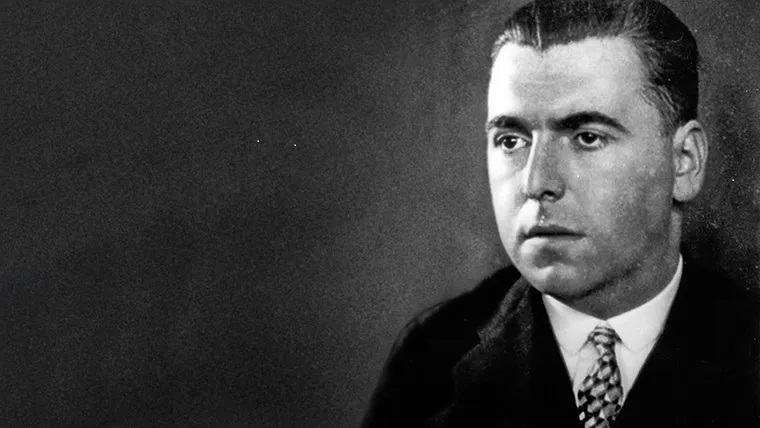
Above: composer Erwin Schulhoff
~ Author: Ben Weaver
Thursday February 24th, 2022 – Conductor Manfred Honeck returned to the New York Philharmonic with a thrilling concert of old chestnuts and a fresh take on an unfamiliar classic. Maestro Honeck and composer Tomáš Ille have created some marvelous orchestral arrangements of familiar pieces like a suite of Richard Strauss’ Elektra, Dvořák’s Rusalka, among others. In 2021 they premiered what may be their most successful collaboration yet: an orchestral arrangement of Erwin Schulhoff’s Five Pieces for String Quartet, composed in 1923 (and dedicated to Darius Milhaud).
Shulhoff’s marvelous composition, a collection of dances (including a valse, a tango, and a tarantella), is a lively and inventive piece. Honeck and Ille created a highly imaginative suite, filled with a wide range of colors, with a touch of jazz (a style of music Schulhoff loved). Each movement – featuring a great deal of fun percussive instruments (including a marimba, a vibraphone, woodblock, tambourines, tom-toms, and castanets) – burst at the seams with excitement. A playful Alla Serenata gives way to a blousy Czeca. A soulful and passionate Tango milonga (with a lovely solo played by concertmaster Sheryl Staples) is followed by a head-spinning Tarantella, all played magnificently by the orchestra. Special kudos to the percussion section who juggled their instruments with aplomb. And more kudos to Honeck and Ille for giving this wonderful pieces new life.
Schulhoff is not as known as he should be. He was born Ervín Šulhov (Erwin Schulhoff being the Germanized version of the name) in 1894 in Bohemia. When he was 6 years old, Antonín Dvořák told his family to prepare their child for a musical career. Schulhoff was friends with people like Alban Berg. Schulhoff was arrested by the Nazis in 1941 and died in the Wülzberg Concentration Camp in Bavaria on August 18, 1942.
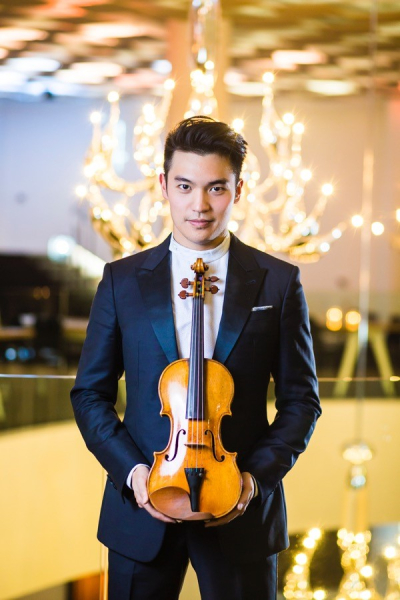
Above: violinist Ray Chen
Felix Mendelssohn’s famous E minor Violin Concerto, composed in 1844, is one of the standard violin concertos in the repertoire. Young violinist Ray Chen was making his Philharmonic debut this season and there’s alway ssome risk playing a work as familiar as this because everyone has heard it numerous times and no doubt has some favorites already in mind. Chen was dazzling. His playing is gorgeous and secure, with beautifully honeyed tones from the violin, and a very passionate and committed interpretation. He received wonderful support from Maestro Honeck, who supported the soloist at every turn. The audience greeted Chen enthusiastically. As an encore, he played dazzling variations on Waltzing Matilda, the unofficial anthem of Australia, the country of Chen’s birth.
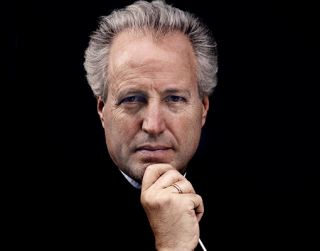
Above: Maestro Manfred Honeck, in a Felix Broede portrait
Antonín Dvořák’s cheerful Symphony No. 8 (composed in 1889), is one of his most enduring works. I’ve always called it Dvořák’s “Pastoral” symphony. Filled with sunshine and joy, melodies you feel like you’ve known your entire life (including a magical Waltz of the third movement), it came as a big contrast from the dark and stormy Symphony No. 7. Maestro Honeck clearly loves his work (he conducted it without a score), etching every moment and phrase with relish. The orchestra (including another wonderful solo from Sheryl Staples) was on peak form once again. A rousing ovation was well-deserved.
~ Ben Weaver

Above: Gonzalo Garcia in George Balanchine’s immortal APOLLO
Sunday February 27th, 2022 matinee – Gonzalo Garcia, one of the handsomest men ever to grace the ballet stages of the world, bade farewell to the New York City Ballet this afternoon.
Gonzalo, a native of Zaragoza, Spain, won the Prix de Lausanne in 1995 at the age of 15 – the youngest dancer to win that coveted prize. He joined San Francisco Ballet in 1998 at the age of 18, and at 22 he became a principal dancer there.
In 2007, Gonzalo made a great leap from one coast to the other, leaving San Francisco Ballet to join New York City Ballet. Since then, he has performed many roles for us here; among them, I have especially loved his Apollo, Oberon in MIDSUMMER NIGHT’S DREAM, the Princes in the Peter Martins productions of SWAN LAKE and SLEEPING BEAUTY, Franz in COPPELIA, the principal male roles in BALLO DELLA REGINA, RUBIES, and BAISER DE LA FEE, the leads in Jerome Robbins’ OPUS 19/THE DREAMER, DANCES AT A GATHERING, and GLASS PIECES, in Christopher Wheeldon’s POLYPHONIA and LES CARILLONS, and Alexei Ratmansky’s CONCERTO DSCH. Most recently, I greatly enjoyed seeing Gonzalo in Justin Peck’s ROTUNDA, an excerpt from which he danced at his farewell gala.
Some wonderful Gonzalo Garcia partnerships:

Above: Gonzalo Garcia and Ana Sophia Scheller in SLEEPING BEAUTY; photo by Paul Kolnik

Above: Gonzalo with Sterling Hyltin in RUBIES; photo by Paul Kolnik

Above: Gonzalo with Tiler Peck in OTHER DANCES; photo by Erin Baiano

Above: with Megan Fairchild in NUTCRACKER
When time has allowed, Gonzalo has danced as a guest artist:

…in STARS AND STRIPES at a gala in Italy…

…and, in Madrid, as Albrecht in GISELLE
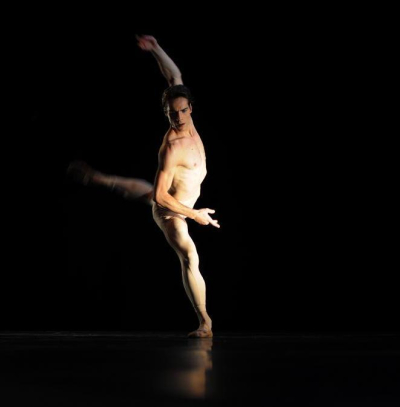
Closer to home: dancing with MORPHOSES in Central Park 2009; photo by Kokyat

And in this charming film, Gonzalo shows us how he kept in shape at home during the pandemic.
““““““““““““““““““““““““““““““““““““““““““““““
For his farewell performance at New York City Ballet, Gonzalo danced works by Balanchine, Robbins, and Justin Peck. The program was book-ended by ballets set to two of Sergei Prokofiev’s most fascinating scores: the Violin Sonata #1 in D-major sets the stage for my favorite Jerome Robbins ballet – OPUS 19/THE DREAMER – and PRODIGAL SON, which marked the only time George Balanchine used Prokofiev’s music. In between, a studio film of Gonzalo working on a solo from Justin Peck’s ROTUNDA (to a fine Nico Muhly score) was followed by a live performance of part of the ballet, with its cast of twelve. Andrews Sill was on the podium, and Kurt Nikkanen’s playing of the violin concerto was simply spectacular. How meaningful it was today to hear the scores of Prokofiev, a son of the Ukraine.
During the interval, I loved running into Carlos Lopez, Charles Askegard, David Fernandez, and Wendy Whelan.
Gonzalo was alone onstage as the curtain rose on OPUS 19, and the audience greeted him with a warm round of applause. His opening solo as the restless dreamer was hypnotically beautiful…his arms and hands are so expressive. For this occasion, two ballerinas took turns dancing with Gonzalo: first, Sterling Hyltin skimmed about the space with an airy lightness before their sublime pas de deux. Tiler Peck then appeared for the allegro passages, and then Sterling returned; it was Tiler who ended the ballet, resting her head on Gonzalo’s palm. The corps danced splendidly, and the three principals exchanged embraces of mutual affection during the curtain calls.
The filmed excerpt from ROTUNDA gave us an up-close view of the danseur at work, whilst the soundtrack included accolades from Gonzalo’s colleagues and his own words about what it means to be a dancer. The live performance went brilliantly, Gonzalo sharing some moments with another of his frequent partners, the spirited Megan Fairchild. The ballet ends with Gonzalo rushing forward into a sudden blackout.
The distinctive setting for PRODIGAL SON was created in 1929 by painter Georges Rouault. This poignant ballet tells of a young man who leaves his home and his gentle family to find excitement in the wide world; seduced, beaten, and abandoned, he returns home in shame and abject misery only to be enfolded in his father’s loving arms. Gonzalo, looking youthfully handsome, danced the role with the verve and commitment of a spirited teenager. His degradation and downfall were poignantly portrayed, and the moment where he creeps into his father’s forgiving embrace was extraordinarily moving.
Sara Mearns was the deceitful Siren. Harrison Coll and Lars Nelson excelled in their dancing “duel”, and Mary Elizabeth Sell and Jenelle Manzi were lovely as the sisters. Arron Sanz made a profound impression as the father.
The gala ended with a massive ovation which Gonzalo accepted with humility and great joy, pounding his heart with his hand to express his love for us. His colleagues came out one by one, presenting flowers and hugs: they all seemed genuinely sincere. Then Gonzalo’s husband came out, and they shared a kiss, to the audience’s great delight. And so, Gonzalo finished his dancing career while still at peak form, truly one of the finest – and best-loved – dancers I’ve had the pleasure to watch.
~ Oberon

On the last day of 2011, Kokyat and I visited the Ukranian Museum; we then passed by the St. George Ukranian Catholic Church (above). During these sad days of late February 2022, I was remembering the experience.
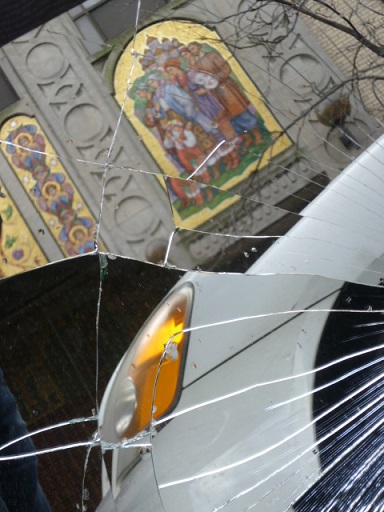
A shattered mirror left by the curb gave me this sad image.

Above: British pianist Martin James Bartlett
Author: Oberon
Thursday February 24th, 2022 – Young Concert Artists presenting pianist Martin James Bartlett in recital at Merkin Hall.
Opening his refreshing and unique program with two Bach transcriptions, Mr. Bartlett immediately established himself as an engaging artist with his performance of the Busoni arrangement of Ich ruf du dir, Jesu Christ, BWV 639, wherein an air of mystery was created and the sustained to spellbinding effect. This was followed by Dame Myra Hess’s arrangement of Jesu, Joy of Man’s Desiring in which the lyrical flow of the music was enhanced by Mr. Bartlett’s mastery of dynamics.
The lively animation of Rameau’s Suite in A-Minor, RCT 5/VII. Gavotte et six doubles, was played as a gallant invitation to the dance, with virtuosic spirit in the changing dance rhythms, and a grand finish.
Haydn’s Sonata No. 31 in A-flat Major; HOB. XVI:46 began life as a divertimento. Mr. Bartlett’s marvelous agility and sense of fun made the opening Allegro moderato a delight. The Adagio, commencing with a left-handed opening passage, is quite gentle, with some elegant little trills etched in. In the concluding Presto, Mr. Bartlett dazzled us with his virtuosity, whilst introducing sly subtleties along the way. By this point, the engaging young pianist had the audience in the palm of his hand.
Following the interval, Franz Liszt’s solo piano arrangement of the Liebestod from Wagner’s TRISTAN UND ISOLDE was a wonderful treat, starved as I am for live performances of the music of the Master of Bayreuth. Mr. Bartlett played with great passion, and also great tenderness; again, his dynamic range put a personal mark on this sublime music.
Contemporary British composer Julian Anderson wrote She Hears to honor the memory of Imogen Holst. Ms. Holst was the daughter of Gustav Holst, and was a composer herself as well as an educator and writer; she was known for her uncanny gift for hearing music on a transcendental level. The Anderson work, and Mr. Bartlett’s playing of it, had a fascinating sense of introspection that seemed to captivate the audience.
Three Rachmaninoff gems came next. The first two were transcriptions by Earl Wild: both the melodious flow of Where Beauty Dwells and the rhapsodic qualities of the Vocalise, Op. 34, No.14, displayed Mr. Bartlett’s true affinity for the music of the Russian composer. The third Rachmaninoff work, Polka de W.R. was jaunty, and spiced with wry hesitations: music that played to the young pianist’s sense of humor…and his brilliant technique.
My ballet-loving companion and I were so pleased to hear Ravel’s La Valse as the concert’s closing work, our thoughts drifting back to the many performances of Balanchine’s haunting ballet of the same title that we have witnessed. From its rumbling start, and thru the moods of mystery and drama in which Ravel’s score abounds, we were drawn deeper and deeper into the music. By the final madness, Mr. Bartlett seemed possessed, his fingers sweeping the keyboard with fiery passion to summon the vision of dancing on the edge of a volcano.
The audience had clearly taken this personable and vastly talented young pianist to their hearts, and he responded to our avid applause with a silken rendition of Gershwin’s Embraceable You.
~ Oberon

Above: Sir Geraint Evans and Renata Tebaldi in FALSTAFF
February 23, 2022 – Fifty years ago this evening, the Metropolitan Opera presented a memorable performance of Verdi’s FALSTAFF. The evening marked the first time Renata Tebaldi sang Alice Ford in New York City; beloved Met luminaries Regina Resnik and Sir Geraint Evans sang Dame Quickly and Sir John Falstaff, and Christoph von Dohnanyi made his Met debut on the podium. Of key interest for me was the beauteous Jeannette Pilou, a great favorite of mine, in the role on Nannetta.
This was my diary entry, written right after the performance:
“A great performance in every way. Christoph von Dohnanyi’s Met debut was a success, despite some moments that seemed under-rehearsed. When the curtain rose on the opera’s second scene and the audience caught sight of La Tebaldi, a sustained round of applause caused the opera to come to a halt. For a moment, no one seemed quite sure what to do, til someone yelled “Start over!”, and that’s what Maestro von Dohnanyi did.
The cast was incredibly good. Two de luxe character tenors – Paul Franke (Dr. Caius) and Andrea Velis (Bardolfo) – scored numerous verbal points at the opera progressed. And…they can sing! Richard Best was a sturdy-voiced Pistola and Joann Grillo a comely, warm-toned Meg Page.
Kostas Paskalis sang splendidly as the jealous Master Ford, his monolog being one of the vocal highlights of the performance. His voice is huge, with a darkish tint. Luigi Ava was a sweetly lyrical Fenton, and he played the role of the love-struck youth well. Regina Resnik was a fabulous, genuinely funny Dame Quickly. The voice is not really very attractive these days, but she knows how to sing, and she uses her voice as a dramatic instrument. She is, in every respect, a great Dame.

Jeannette Pilou (above, as an enchanting Nannetta) seemed so alive, so real, no mannerisms. Her voice is so pretty and clear, and she brought some very appealing pianissimo effects to her Act III aria. Pilou is such a beautiful woman; her arrival on a white Shetland pony as Hearne’s Oak was a lovely moment. Bravissima!
Renata Tebaldi enjoyed an immense success in her first Met appearance as Alice Ford. The voice seemed fresher than in recent seasons: very sweet and warm. Her high notes came quite easily tonight. On the last top-C, she really sailed, whilst Pilou tossed her head back and joined her, bringing this romp of an opera to a joyous end. Tebaldi’s sensational good looks, her charm and humor, and her lively entrance into the spirit of the evening made for another triumph for the great diva. Bravissima!
Towering above all others was that magnificent singing-actor, Sir Geraint Evans, as Sir John Falstaff. In his revelatory portrayal, one sees every aspect – the comic and the tragic – of this incredible character. So pompous at first, so funny and full of himself at Alice’s, so frighteningly degraded as he runs to the Garter Inn at the start of Act III, so touchingly terrorized at Hearne’s Oak, and so human in the opera’s final moments. I’ve heard the role sung with more sheer voice, but never with such flair and nuance. Bravissimo, Sir Geraint: you are Falstaff!

The final ensemble was so much sheer fun: the singers lined up along the footlights and mocked the audience…and themselves. And then that great dual-high-C. The curtain calls were numerous, with everyone staying on, and a big gathering at the orchestra rail where flowers were thrown and we all yelled ourselves hoarse.”

Above: Jeannette Pilou with New York’s most famous opera fan, Lois Kirschenbaum
~ Oberon

Tuesday February 22nd, 2022 – The Brutal Journey of the Heart, the final installment of a trilogy on love by choreographer Sharon Eyal, opened this evening at The Joyce, performed by L-E-V. With a score by Ori Lichtik, costumes by Dior creative director Maria Grazia Chiuri, and superb lighting by Alon Cohen, this dancework explores the ways we heal from wounds of the heart. As an oft-wounded romantic living in an unromantic world, I have had much experience with these healing processes. And – I am sorry to have to admit – I have also thoughtlessly inflicted such wounds on people who deserved better. And so, I expected The Brutal Journey of the Heart to speak to me with poignant clarity; what it ended up doing was make me want to go out dancing.
At curtain rise, a solitary woman on the dramatically lit stage begins to move to a fascinating beat. She is soon joined by her five colleagues who show off witty ways of walking, and pausing to pose. The movement is inventive and everything feels wonderfully fresh and vivid. As one alluring song melds into another, the urge to dance is increasingly difficult to suppress. After about fifteen minutes, though, one begins to wonder what comes next: a change of lighting? Maybe a pas de deux, something slow and heart-achy?
But, no: the dancers simply draw into a cluster, swaying and writhing in place while their arms and hands weave stylized gestures. Then they spread out again and repeat passages from earlier in the piece. Meanwhile, the music is pretty much relentless, and a feeling of ‘too much of a good thing’ starts to creep in. A male duet and a female solo are briefly eye-catching, but the ensemble keeps giving us recycled moves; it begins to feel like we’re in the purgatory of lost love.
Maybe this is the brutal thing about the journey of the heart: it never really ends, and there’s no redemption to be found. The dancers continue on to a false ending, and though it seems that the woman who opened the performance alone onstage has now found some kind of peace, we don’t really know how, beyond the notion that dance is wonderfully therapeutic, especially to this music.
Despite a sense of aimlessness at times, the evening was very much worthwhile for the excellence of the dancing, the atmospheric lighting, and most of all for the score.
The dancers – Clyde Emmanuel Archer, Keren Lurie Pardes, Darren Devaney, Guido Dutilh, Dana Pajarillaga, and Edit Domoszlai – were hailed at the end with a whooping standing ovation, which they truly deserved.
~ Oberon

February 23rd, 2022 – I have just read of the death of the Italian soprano Antonietta Stella; she passed away on this date at the age of 92.
In 1950, she made her operatic debut at Spoleto as Leonora in TROVATORE and soon after was singing at the opera houses of Rome, Florence, Naples, Parma, Turin, Catania, Venice, and the Arena di Verona.

Above: Antonietta Stella as Leonora in TROVATORE
In 1954, Ms. Stella debuted at the Teatro alla La Scala in Milan as Desdemona in OTELLO; she continued to sing at La Scala thru 1963 in the great soprano roles of Verdi and Puccini, and as Maddalena in ANDREA CHENIER. In 1955, she made debuts at the Wiener Staatsoper, the Royal Opera House in London, the Paris Opera, La Monnaie, and the Lyric Opera of Chicago.
She came to the Metropolitan Opera in 1956 as Aida, and went on to sing there thru 1960 as Cio-Cio-San, Violetta, Tosca, Elisabetta in DON CARLO, Leonora in TROVATORE,and Amelia in BALLO IN MASCHERA.
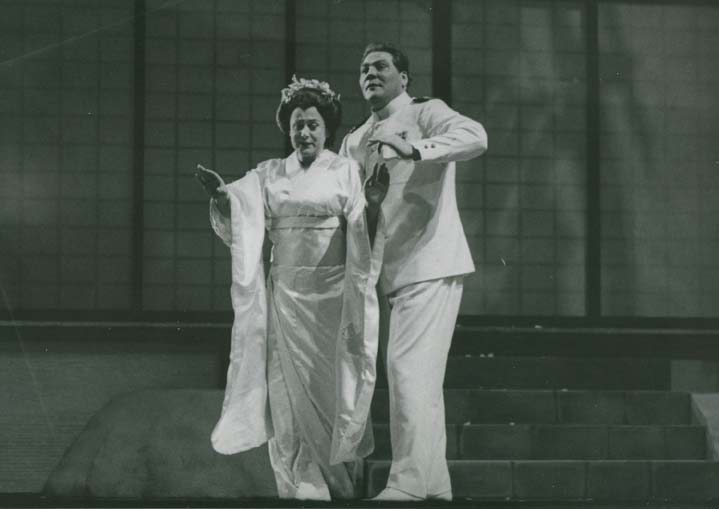
Above: Antonietta Stella and Eugenio Fernandi in the Aoyama BUTTERFLY at The Met
In 1958, Ms. Stella portrayed the title-character in Yoshio Aoyama’s classic production of MADAMA BUTTERFLY; the production remained in the Met repertoire thru the 1990s.
Antonietta Stella – Un bel di – BUTTERFLY – Met bcast 1958
Among Antonietta Stella’s commercial recordings, her DON CARLO (with Flaviano Labo, Fiorenza Cossotto, and Boris Christoff), her TROVATORE (with Cossotto and Carlo Bergonzi), and especially her ANDREA CHENIER (with Franco Corelliand Mario Sereni) are my special favorites. She is also heard on several “pirate” recordings.
Ms. Stella sang Minnie in the televised Japanese premiere performance of Puccini’s FANCIULLA DEL WEST (The Girl of the Golden West) given at Tokyo on November 2nd, 1963. The NHK Symphony Orchestra is conducted by Oliviero De Fabritiis.
Watch and listen here.
CAST:
Minnie: Antonietta Stella
Dick Johnson: Gastone Limarilli
Jack Rance: Anselmo Colzani
Nick: Mario Guggia
Ashby/Jake Wallace: Bruno Marangoni
Sonora: Arturo La Porta
Wowkle: Anna Di Stasio
Sid/Billy Jackrabbit/Jose Castro: Giorgio Onesti
Trin: Antonio Saba
Bello: Marco Scotti
Harry: Augusto Pedroni
Joe: Antonio Pirino
Happy: Paolo Mazzotta
Larkens: Mario Rinaudo
Postman: Takeshi Nakamura
And here is part of the Act II duet of Violetta and Germont from TRAVIATA with Ms. Stella and Tito Gobbi:
Antonietta Stella & Tito Gobbi – Dite alla giovine ~ TRAVIATA

Above: the singers of Stile Antico, photographed by Marco Borggreve
Saturday February 19th, 2022 – Stile Antico, the London-based Early Music vocal ensemble, gave a wonderful program this evening at Columbia University’s Miller Theater. The music – and the ensemble’s hauntingly beautiful singing of it – was a balm to the spirit in these uncertain times.
In this program, entitled Toward the Dawn, Stile Antico brings us works – both sacred and secular – that sing of the hours between dusk and dawn: nocturnal music of mystery and of assurance that carries us through the watches of the night.
The twelve singers of Stile Antico stood in a semi-circle on the bare stage, all clad in black, rearranging themselves for each work. The program was devised in three sections: Evening, Nightfall, and Dawn. After the first piece of the evening – John Wilbye’s Draw on sweet night – there was a lovely silence, and then people started applauding. Although the singers seemed prepared for this intrusion – they took a bow – for me it broke the atmosphere. Thereafter, each piece was applauded and bows were taken.
The opening Wilbye set the mood for everything that follows: dreamlike, and tinged alternately with hope and uncertainty. in Thomas Tallis’s Te lucis ante terminum, we hear a prayer for God to watch over us throughout the night. John Ward’s Come, sable night is extraordinarily beautiful, both in words and music. From William Byrd, we heard Vigilante, a dramatic work that urges true believers to remain faithful…and aware.
The Nightfall section of the program commenced with Orlande de Lassus’ Toutes les nuitz, which tells of the restlessness of sleeping alone. This rang true with me as I thought back on the very few nights in the past twenty years that my beloved has not been there to have and to hold. Both in music and words, and in Stile Antico‘s singing of it, this song was a highlight of the program.
Next came the most familiar work of the evening: Gregorio Allegri’s Miserere. I first heard this heavenly music in a movie theatre, while watching the iconic gay film, Maurice. Jonathan Hanley was the tenor soloist, and the high-spinning soprano line was beautifully woven into the sonic tapestry. An interesting program note told of the transformation of this work over the years, so that it probably is quite unlike what Allegri originally wrote. Nevertheless, its enduring enchantment is easy to understand, especially when it is as poetically sung as it was tonight.
John Sheppard’s In manus tuas also calls for a soloist: bass James Arthur’s tone had a poetic sonority. The words, from Psalm 31:6, are wonderfully simple: “Into your hands I commend my spirit; you will redeem me, Lord, God of truth”.
The only contemporary work on the program, Nico Muhly’s Gentle sleep, composed in 2015 to a text by Shakespeare, did not seem at all out-of-place. The bending harmonics in fact gave a pleasing contrast to the rest of the works on the program. Muhly’s score has an intriguing and somewhat anxious feeling.
Now the dawn is heralded by Thomas Tallis’s O nata lux de lumine, which hails Christ as the “Light of the World”; this is followed by Claudio Monteverdi’s Ecco mormorar l’onde, a poem describing the morning breeze out of the Orient, stirring the ocean’s waves and bringing the world to wakefulness.
The evening concluded with Ave Dei Patris Filia by John Taverner: a longish work of varying moods that extols the Virgin Mary. While a blend of timbres is essential in a choral ensemble like Stile Antico, I did find myself frequently listening to individual voices as the program unfolded; the altos, in particular, impressed me in the concluding Taverner.
The concert ended with a joy-filled Amen, whereupon the singers were given a hearty and very well-deserved ovation. I’d had high expectations for this program, and they were surpassed: extraordinary music-making…bravi Stile Antico!
The hall seemed full, and for the most part silence reigned during the music. Invariably, though, if there is one thoughtless person in an audience, that person is destined to sit next to me. This individual arrived as the lights were going down, with a suitcase, and all bundled up; he/she clambered over me, took forever to settle in, and then spent the evening flipping noisily thru the dreaded texts booklet. Yet another case of the triumph of indifference.
~ Oberon
 Oberon's Glade