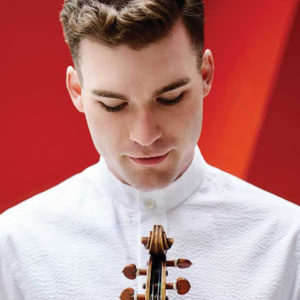
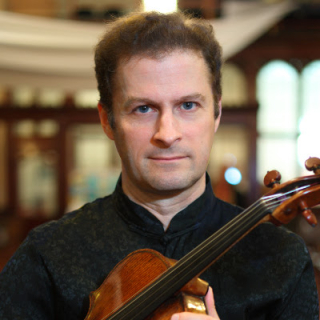
Author: Philip Gardner

  • CMS Brandenburgs ~ 2021

    Bach

    Sunday December 19th, 2021 – Chamber Music Society of Lincoln Center‘s annual Yuletide performances of Bach’s immortal Brandenburg Concertos are always a highlight of the New York musical season. Music lovers turn out on droves for each of the program’s three presentations, giving themselves an early Christmas gift.

    One tradition at the CMS Brandenburgs is the annual reshuffling of the order in which the six concetros are played. This year, the odd-numbered concertos were played first, with the even-numbered ones coming after the interval.

    The 1st Brandenburg (in F-major) briought together the program’s largest ensemble of players, which produced a wonderful fullness of sound. The wind instrument lineup tonight was impressive indeed: there are three oboes, led by Stephen Taylor with Randall Ellis and Mr. Smith, two mellow horns (David Byrd-Marrow and Stewart Rose); and Marc Goldberg’s rich-toned bassoon. On the string team, led by violinist Daniel Philllips (excellent in the Adagio), Arnaud Sussmann and Sean Lee (violins) were joined by Che-Yen Chen (viola) and Dimitri Atapine (cello). The outstanding continuo duo – Kenneth Weiss (harpsichord) and Joseph Conyers (double bass)- made marvelous music all evening. Mr. Phillips made a lovely thing of the Adagio, where he and Mr. Taylor duetted cordially. The bustling Allegro drew a warm round of applause, but then comes a built-in ‘encore’, in which the wind players outdid themselves.

    The 3rd concerto, in G-major, is unique in that the anticipated central slow movement is replaced by a mere couple of chords and a violin flourish before going immediately on to the exhilarating Allegro. Bach calls for three trios of strings: violinists Sean Lee, Arnaud Sussmann, and Alexander Sitkovetsky gave us lively playing in the opening movement, whilst Mr. Phillips traded his violin for his viola to join Mr. Chen and Yura Lee. Add the cello trio of Timothy Eddy, Mr. Atapine, and Inbal Segev, and you have a veritable string-fest. My companion, Cherylyn Lavagnino and I were much taken with Mr. Conyers’ rich and nimble bass playing. The final Allegro sailed blithely onward: so many notes! 

    In the 5th concerto (in D-major), harpsichordist Kenneth Weiss mesmerized the crowd with his fantastic playing of the long cadenza; people stood up and cheered when he stepped forward for a bow at the end of the evening’s first half. From its familiar opening theme, the 5th concerto puts the violin (Sean Lee) and the flute (Ransom Wilson) in the spotlight; these two gentlemen played the central Affetuoso divinely, whilst Mr. Weiss’s harpsichord cunningly etched a filigree around their melodies. In the concerto’s light and lively final Allegro, Mssrs. Sitkovetsky, Phillips, Eddy, and Conyers were a top-class ensemble. 

    Following the interval, flautist Tara Helen O’Connor drew a warm welcome as she walked out onto the Tully Hall stage, goddess-like in a glimmering red gown. Yura Lee and Inbal Segev had also chosen red frocks for the evening, giving the scene a festive Yuletide glow.  In the 2nd concerto (in F-major), dazzling trumpet virtuosity from David Washburn set the hall alight, whilst Ms. O’Connor’s timbre had its familiar crystalline clarity.

    In the Andante, the quartet of Ms. O’Connor, James Austin Smith (oboe), Arnaud Sussmann (violin), and Timothy Eddy (cello) wove a tapestry of sound that warmed the soul: simply perfect. Then Mr. Washburn’s trumpet calls rang out, summoning us to revel in the concerto’s festive finale. A rock-star ovation saluted these extraordinary musicians as they returned for a bow.

    Yura Lee and Che-Yen Chen put us under a viola spell with their playing of the 6th concerto (B-flat major) – the one in which no violins are heard: a trio of cellists (Mr. Atapine, Ms. Segev, and Mr Eddy) and the continuo players are all Bach needed here. The Adagio – one of Bach’s most moving and melodious inventions – was entrancing as Ms. Lee and Mr. Chen exchanged phrases. This could have gone on and on – such a balm to the ear – but the closing Allegro sweeps us inexorably forward with its thrice familiar theme..

    The evening ended with the fourth concerto (in G-major), in which Alexander Sitkovetsky dazzled us with his silky tone and incredible dexterity. Duetting flautists Ransom Wilson and Tara Helen O’Connor displayed jewel-like qualities in their playing of the animated phrases of the outer movements, whilst bringing a sweet sadness to the harmonies of the central Andante. Mr. Conyers’ double bass and Ms. Segev’s cello provided a resonant counterpoise to the high voices of the flutes and violin. Then we are down to the final Presto: a fugue-like race in which Mr. Sitkovetsky’s fabulous virtuosity led his colleagues in a final sprint to a victorious finish. The audience saluted the musicians with a vociferous standing ovation, recalling them for a second bow.

    Leaving Alice Tully Hall, which has become dear to me over these past few years as a refuge of peace and beauty in an increasingly perilous world, we stepped out into the brisk evening air, feeling on top of the world. How wonderful to experience this concert with my friend Ms. Lavagnino, who is truly a kindred spirit.

    ~ Oberon
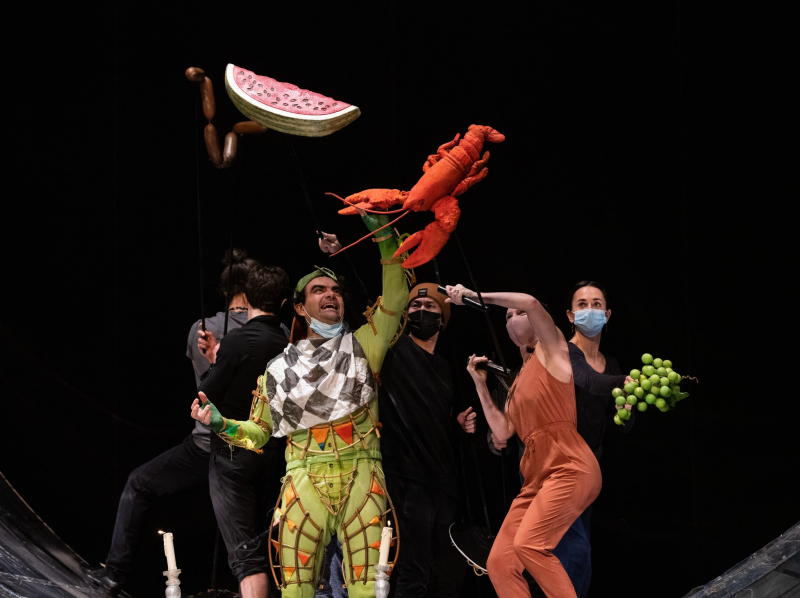
  • Rolando Villazón’s Papageno @ The Met

    Villazon papageno

    Above: Rolando Villazón rehearsing the role of  Papageno; a Met Opera photo

    Saturday December 18th, 2021 – Though I would like to have seen The Met’s Julie Taymor MAGIC FLUTE again, financial constraints decided me to get score desks for all but a couple of Met performances this season. One of the main draws for FLUTE this time around was to hear Rolando Villazón essaying the role of Papageno. When Villazón’s career as a primo tenore faltered a few years back, he shifted into different repertory. But I believe his taking on Papageno might be a first step towards joining the ranks of baritones

    In the event, though he was HUGELY cheered at his solo bow, Villazón’s Papageno didn’t really work in vocal terms. His voice is no longer very attractive, being a bit dry and lacking in resonance. Much of the time he semi-spoke his musical lines, whilst the actual spoken passages, charmingly accented, were not always understandable. He made bird noises from time to time; his rooster crow was hilarious. It struck me that Placido Domingo in his 80s has more voice at his disposal than Villazón, who is not yet 50.

    The remainder of the cast has its pluses and minuses. Outstanding were Matthew Polenzani’s beautifully turned phrases, exquisite piano notes, and clear diction as Tamino, and the rich and rolling sound of basso of Morris Robinson, whose diction was also superb, as Sarastro. Patrick Carfizzi’s Speaker, Rodell Rosel as Monostatos, and Ashley Emerson’s Papagena were excellent, making much of their roles. Daryl Freedman’s Third Lady and Adam Lau’s Second Guard stood out. 

    Kathryn Lewek dazzled with the Queen of Night’s first aria, climaxing with a sustained high-F; later, in her Vengeance aria, Ms. Lewek’s singing was not quite as impressive as she has been in previous seasons. Hera Hyesang Park’s attractive lyric timbre acquired an edgy quality when she put too much pressure on the tone higher up. Felicia Moore has impressed me on YouTube, but today as the First Lady she sang well but not memorably, though the voice blossomed more as the afternoon went on. Sarah Larsen was fine as the 2nd Lady, Matthew Burns and Mark Schowalter spoke clearly as the Priests, and Richard Trey Smagur was a forthright 1st Guard. The Three Spirits were under-powered and pitchy; I hope when The Met gets a new ZAUBERFLOETE, the music of these Three Spirits will once again be sung by petite women, of the same ilk as Suzanne Adams, Christine Weidinger, Frederica von Stade, Helen Vanni, and Joann Grillo, all of whom were Spirits at The Met over the years.

    Jane Glover’s conducting was well-nigh perfect, and the orchestra played well; Chelsea Knox’s flute solos fell gracefully on the ear.

    An annoying child in the Family Circle whined and muttered often throughout the opera, and the sound of moving sets around behind the drop curtain during “O Isis and Osiris” spoiled that beautiful passage. But…all’s well as ends well. As the Three Spirits remind Papageno – and us: “You have a life, so live it while you can!”

    Saturday December 18th, 2021 matinee
    THE MAGIC FLUTE}
    Wolfgang Amadeus Mozart

    Pamina.......................................Hera Hyesang Park
    Tamino.......................................Matthew Polenzani
    Queen of the Night...........................Kathryn Lewek
    Sarastro.....................................Morris Robinson
    Papageno.....................................Rolando Villazón
    Papagena.....................................Ashley Emerson
    Monostatos...................................Rodell Rosel
    Speaker......................................Patrick Carfizzi
    First Lady...................................Felicia Moore
    Second Lady..................................Sarah Larsen
    Third Lady...................................Daryl Freedman
    Genie........................................Julian Knopf
    Genie........................................Julian Fertel
    Genie........................................N. Casey Schopflocher
    Priest.......................................Ashraf Sewailam Priest.......................................Mark Schowalter
    Guard........................................Richard Trey Smagur
    Guard........................................Adam Lau
    Slave........................................Stephen Paynter
    Slave........................................Kurt Phinney
    Slave........................................Craig Montgomery
    Solo Dancer.......................................Maria Phegan

    Flute Solo...................................Chelsea Knox

    Conductor....................................Jane Glover

    ~ Oberon 

  • EUGENE ONEGIN ~ Ottawa 1983

    Bouleyn

    Above: Kathryn Bouleyn

    An English-language production of Tchaikovsky’s EUGENE ONEGIN given in 1983 at the National Arts Centre, Ottawa, Canada. Watch and listen here.

    Neeme Järvi conducts this performance, staged by John Copley. 

    The singers are Thomas Allen, Kathryn Bouleyn, David Rendall, Don Garrard, Diane Loeb, Gabrielle Lavigne, Lois Marshall, and Bernard Fitch 

    I am especially glad to have this souvenir of the wonderful soprano Kathryn Bouleyn, who I saw at the New York City Opera as Countess Almaviva. It is also lovely to see Lois Marshall as Filipyevna; this great singer had a highly successful concert career but rarely appeared in staged opera. Mssrs. Allen, Rendall, and Garrard are excellent.

  • Timo Andres @ Merkin Hall

    Andres jpg

    Thursday December 16th, 2021 – Pianist/composer Timo Andres (above) in recital at Merkin Hall. This evening’s program, part of The Kaufman Music Center’s Piano Dialogues series, grew out of the musical friendship of Mr. Andres with his fellow composers, Sarah Goldfeather and Eric Shanfield. Honoring the continuing influence of Robert Schumann’s piano music, Mr. Andres performed the composer’s Waldszenen.  Ms. Goldfeather’s new work for Mr. Andres, and Mr. Shanfield’s aptly titled new work, Timo Variations, based on a theme which Mr. Andres composed for Eric in 2019, completed the program.

    Sarah Goldfeather

    I simply loved the new work by Sarah Goldfeather, entitled Fern Canyon, which opened the evening in its world premiere performance. Ms. Goldfeather could not have asked for a finer interpreter of her new work than Mr. Andres, a tall, bookish-looking fellow with beautiful hands.

    Fern Canyon is at first whimsical and repetitive at the start, keeping in the piano’s mid-range. Little flourishes turn up, and then the music gets more lyrical. Mr. Andres then lingers in the high range, with delicate figurations tickling the ear. Suddenly, the music turns grand, and Rachmaninoff springs immediately to mind. But the piece ends magically, with Mr. Andres keeping his foot on the pedal to sustain the sound of the final note, which hung beautifully on the air. Fern Canyon would make a wonderful dancework, in my view.

    Without taking a break, Mr. Andres then commenced Schumann’s Waldszenen, Opus 82. These nine short solo piano pieces were inspired by the German woodlands. In the Teutonic imagination, forests are ancient, restful, and – sometimes – eerily haunted places. Schumann’s nine miniatures conjure up such visions of the woods.

    Composed in 1849, this series of intimate scenes from Nature begins with Eintritt, the entry into a cool and shaded grove filled with forest murmurs. A simple, folkish tune emerges as the forest-stroller’s eye wanders about.

    Horn calls and the sounds of rifle-fire herald the human invasion of Nature’s sanctuary; in Jäger auf der Lauer, huntsmen who have been stalking their prey break into wild pursuit. The music conveys the thrills of the chase.

    The two ‘flower’ pieces that follow are very different in feeling: the simplicity of Einsame Blumen (Lonely Flowers) leads to the shadowy, flowing Verrufene Stelle (Haunted Places) which describes a dark red flower that draws its colour from Earth saturated with human blood.

    Things brighten with Freundliche Landschaft (Friendly Landscape) while the coziness of sitting before the fire with a pint are evoked in the almost hymn-like Herberge (The Inn).

    The best-known of the Waldszenen is Vogel als Prophet (Bird as Prophet), which captures a sonic image of forest birds, flitting from tree to tree. A central, more poetic passage praises the mystical powers of the forest’s avian dwellers.

    Then the music sings of hunters again: in Jagdlied (Hunting Song) the woodland sportsmen look forward to feasting on their catch of the day. The final Abschied (Farewell) was so affectingly played, but the jarring sound of a cellphone came at the worst possible moment.

    Throughout this Schumann cycle, Mr. Andres’s playing moved from the poetic to the passionate with a lovely mastery of dynamics, and an unfailingly distinctive style. 

    E shanfield

    Eric Shanfield‘s Timo Variations brought the program to an end. The theme was Mr. Andres’ own creation, brief and uncomplicated; thereafter the pianist embarked on a 9-variation journey, with a closing Aria.  Theme I, Scheletrica (“emaciated, meager”) features sharp accents. A reference to the Waldszenen comes next, in a brisk and brusk reply to Schumann’s Vogel als Prophet. Then, bell-like sounds give way to rippling effects in the 3rd variation. 

    Variation 4 is marked Espressivo (‘ritmico ma no meccanico’) – “rhythmic but not mechanical”  – wherein Mr. Andres followed those instructions to the letter. Variation 5 begins with a pulsing feeling, later flowing freely. Continuum (Variation 6) maintains a steadiness, then gives over to a fluttering feeling in Variation 7, which ends up expansively. In the 8th Variation, entitled Kreisleriana, flourishes are played over sustained notes before the music turns quite majestic. The ‘delicate and precise’ music of the 9th Variation is really fun to hear. 

    Each of these variations is rather longer than one might expect, but they are very inventive and pleasing to hear. Mr. Andres reveled in each of the variations Mr. Shanfield crafted for him. The Timo Variations end with a final Aria which is marked “Elegante“, a word that truly describes Mr. Andres’s playing.   

    I usually don’t stay for post-performance talks, but this evening I was in no rush to get home, so we stayed to hear what Mssrs. Andres and Shanfield and Ms. Goldfeather had to say. Being well-acquainted with one another, the three hardly needed a moderator. They chatted blithely, and some interesting things popped up along the way: Ms. Goldfeather noted the influence of Rachmaninoff on Fern Canyon, and also revealed that she does not own a piano. Mr. Shanfield said that he owns a piano, but admits to being “a terrible pianist”. 

    ~ Oberon

  • GIULIO CESARE ~ Vienna 1985

    Snapshot cesare

    Above: Marjana Lipovsek as Cornelia and Ann Murray as Sesto 

    A performance of Handel’s GIULIO CESARE at the Vienna State Opera in 1985

    Watch and listen here.

    CAST:

    Caesar – Benjamin Luxon; Cleopatra – Roberta Alexander;  Cornelia – Marjana Lipovsek;  Sesto – Ann Murray; Curio – Rudolf Katzböck; Tolomeo – Roderick Kennedy; Achilla – Thomas Hampson; Nireno – Anton Scharinger

    Conductor: Nicolas Harnoncourt

  • Sonia Prina Sings Porpora’s SALVE REGINA

    Sonia_Prina

    The Italian contralto Sonia Prina (above) sings Nicola Porpora’s Salve Regina with Accademia Bizantina.

    Listen here.

  • Sonia Prina Sings Porpora’s SALVE REGINA

    Sonia_Prina

    The Italian contralto Sonia Prina (above) sings Nicola Porpora’s Salve Regina with Accademia Bizantina.

    Listen here.

  • Monteverdi ~ Laudate Dominum

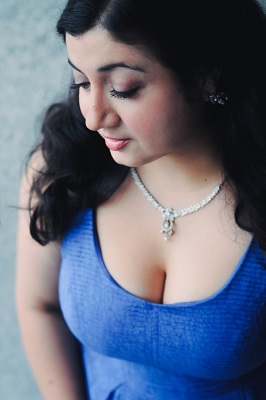
    Panthaki

    A performance of Claudio Monteverdi’s Laudate Dominum with soprano Sherezade Panthaki (above) and members of Voices of Music: Elisabeth Reed (viola da gamba), Hanneke van Proosdij (Baroque organ) and David Tayler (archlute).

    Watch and listen here.

  • ONEGIN ~ Final Scene ~ Rebeka/Shushakov

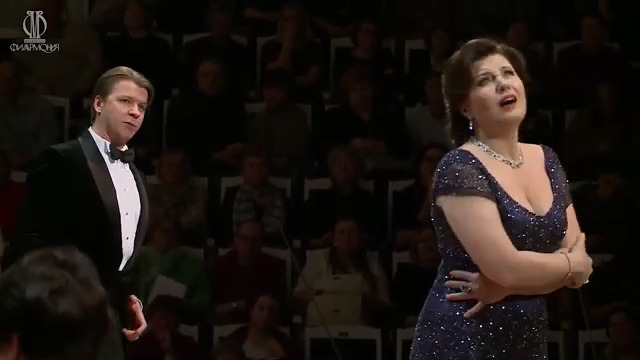
    Snapshot onegin

    Marina Rebeka and Konstantin Shushakov in the dramatic final meeting of Tatyana and Onegin from Tchaikovsky’s EUGENE ONEGIN at a concert by the Svetlanov Symphony Orchestra conducted by Vassily Sinaisky. The performance took place at the Tchaikovsky Concert Hall in Moscow in 2020.

    Watch and listen here.

  • CMS ~ Music From Four Countries

    Nick yura

    Above: cellist Nicholas Canellakis and violist Yura Lee

    Sunday November 21st, 2021 – This evening at Alice Tully Hall, Chamber Music Society of Lincoln Center gave us a wonderfully satisfying program of music by composers from Russia, Germany, Hungary, and France. The works were all composed between 1849 and 1890.

    A very high level of playing is maintained by the Society, making it almost impossible to single out certain concerts as being of particular merit; but tonight was surely one of the most impressive and enjoyable programs have experienced since I started going to CMS concerts regularly a few seasons back.

    The program opened with the Andante Cantabile from Tchaikovsky’s String Quartet No. 1, performed in a 1888 arrangement for solo cello and strings. “Cantabile” is an Italian word meaning “singable” or “song-like”, and that’s exactly how cellist Nick Canellakis performed it: as if singing an operatic cavatina.

    From the work’s tranquil start, Nick gave us impeccable playing: warm of tone and alive with dynamic subtlety. Seated next to him, the Society’s co-Artistic Director David Finckel threaded a lovely line to compliment his cellist-colleague. Mr. Finckel and violist Misha Amory offered a gentle plucking accompaniment as Nick’s cello continued to sing a melody with a vaguely Asian feeling. Violinists Cho-liang Lin and Alexi Kenney gave silken textures to the music. The work ends on a sweetly blended pianissimo.  Mr. Finckel urged Nick Canellakis to stand first; then the other players refused to rise, leaving Nick with a solo bow, much to the delight of the crowd.

    Lin

    Above: Cho-liang Lin

    Johannes Brahms’ Quintet in G-major for Two Violins, Two Violas, and Cello, Op. 111, was written in 1890, at the start of the last decade of the composer’s life. It provides a veritable feast for the ear to listeners who – like me – love the sound of stringed instruments. Mssrs. Lin, Kenney, Amory, and Canellakis were joined by that delectable violist, Yura Lee.  Ms. Lee, who always delights with her choice of footwear, tonight wore white pumps; her one-shoulder black frock showed off some beautiful tattoos.

    The opening movement, marked Allegro non troppo, ma con brio (“…fast, but not too fast, but with a lively feeling…”) gets off to a joyous start, the violas begin duetting in a passage taken up by the violins. The music is so melodious and congenial, with Cho-liang Lin’s poignant violin theme standing out. The music turns mysterious; then Yura Lee’s passionate playing leads back to a reprise of the earlier pairings of violins and violas. Meanwhile, Mr. Canellakis’s cello is giving everything a velvety cushion. The entire movement kept me entranced: simply fantastic playing from everyone. 

    The ensuing Adagio, in D-minor, has a feeling of melancholy as Yura Lee leads off with a familiar melody. Soon the music had me so engrossed that the rest of the world seemed to vanish: they were playing this music sublimely, and playing it just for me. Yura’s ‘cadenza’ near the end was hypnotically beautiful. 

    Mr. Lin’s violin sets the third movement, Allegretto, in motion. This is essentially a scherzo, and the melodies flow merrily on. Inspired by Hungarian folk dances, the quintet’s finale is marked  Vivace ma non troppo presto (“…lively, but not too fast…”). Yura Lee’s viola is aglow, and Mr. Lin relishes his opportunities to spin more silk with his subtle playing. Suddenly the pace doubles, and the players break into an exultant dance. The crowd went wild: the only possible reaction to this kind of playing.     

    Inon

    Pianist Inon Barnatan (above) kept the audience under a spell with his magical playing of Franz Liszt’s “Funérailles” from the Harmonies poétiques et religieuses, written in 1849. The pianist, who in 2016 gave us a mesmerizing performance of Ravel’s Gaspard de la Nuit in this very hall, was spell-binding again this evening.

    This piece, which my companion Monica Wellington soon recognized as the music to which the late Liam Scarlett’s 2014 ballet for New York City Ballet, Funérailles, is set. I did not see that pas de deux, costumed by Alexander McQueen, but hearing the music tonight, it’s hard to image a dancework set to it: the music seems to wander thru many mood swings, but Mr. Barnatan’s playing made it cohesive.

    The piece opens with gloomy funeral chimes in the slow register. A plodding rhythm reminds us of mourners in a cortège; this stops, and a somber fanfare-like passage is heard. The sense of doom lessens, and then a nostalgic melody is heard, which gets rhapsodic. Animated figurations for the left hand give rise to militaristic passages, followed by a great rise in passion, Full stop. A soft, sad tune is played, whilst low-register rumblings are heard. The music ends suddenly. All this was splendidly played by Mr. Barnatan.

    Alexi-Kenney

    Above: Alexi Kenney

    The concert concluded with Gabriel Fauré’s Quartet No. 2 in G-minor for Piano, Violin, Viola, and Cello, Op. 45. The piece premiered on January 22nd, 1887, at the Société Nationale de Musique; it is dedicated to Hans von Bülow, the pianist and conductor who was the first husband of Cosima Liszt who later married Richard Wagner.

    Amory

    Above: Misha Amory

    Inon Barnatan returned to the Steinway for this evening’s de luxe rendering of the Fauré; he was joined by violinist Alexi Kenney and violist Misha Amory, both displaying exceptional beauty of tone, whilst Nick Canellakis rounded off his stellar evening with still more phenomenal playing.

    The opening Allegro molto moderato commences dramatically, and with passion. The restless piano supports unison strings; the violin, and then the viola, have solo melodies, exquisitely played. Mr. Barnatan continues to work his magic with the music, whilst the strings bring us gorgeous blends, with Mr. Kenney’s upper register truly affecting. Nick Canellakis keeps the cello line prominent without being over-bearing.   The opening restive piano and unison strings return, moving to a sublime finish.

    The Scherzo: Allegro molto contains lively string pizzicati heard over the piano’s dazzling agitato; though the music is tinged with a strange sense of worry, there is a forward impetus. Marvelous flourishes from the keyboard lead to a sudden stop.

    In the Adagio non troppo, in which the composer drew on childhood memories of the sound of church bells, provides lyrical passages for each instrument. There is much subtlety and also much passion in their playing. A curious little interlude develops into a feeling of yearning. This quietens, as piano and viola converse; then the violin takes over. Cello and piano, soon joined by the higher strings, bring us a dreamy ending.

    The Finale : Allegro molto has a vibrant start; again Mr. Kenney’s heavenly high-range lures the ear. The music gets bouncy, and then quite grand, as the quartet sails on thru shifting moods. The audience expressed their delight in the music – and with the the playing of it – with a joyous ovation, calling the artists back for a second bow. I felt elated as I headed out into the chilly evening air. 

    ~ Oberon