Category: Ballet

  • Cherylyn Lavagnino’s Salon

    L1520411

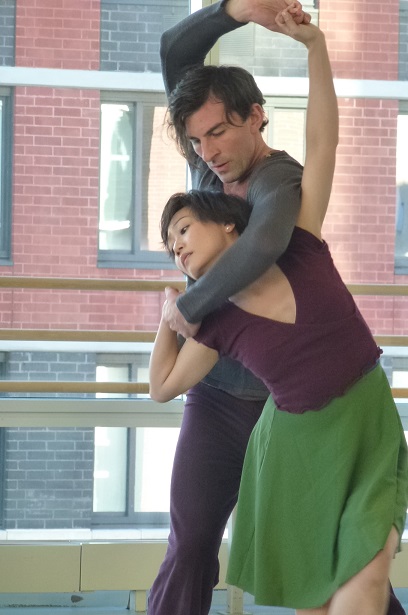
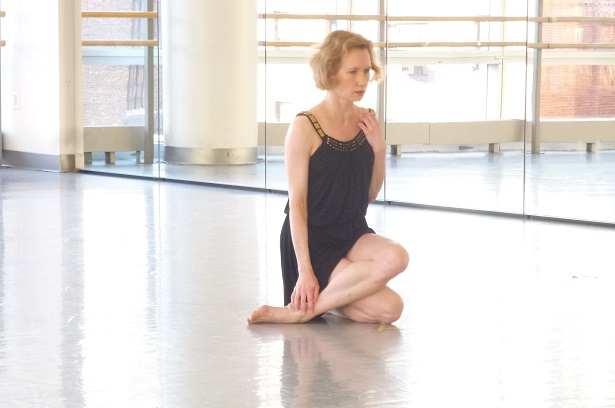
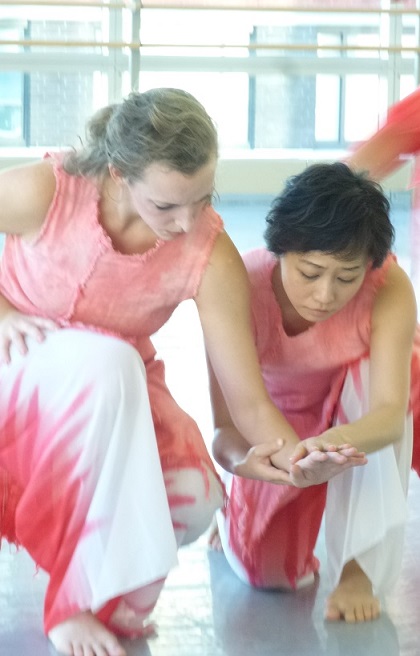
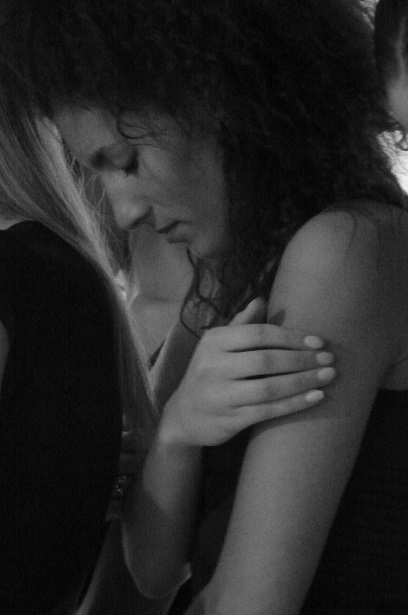
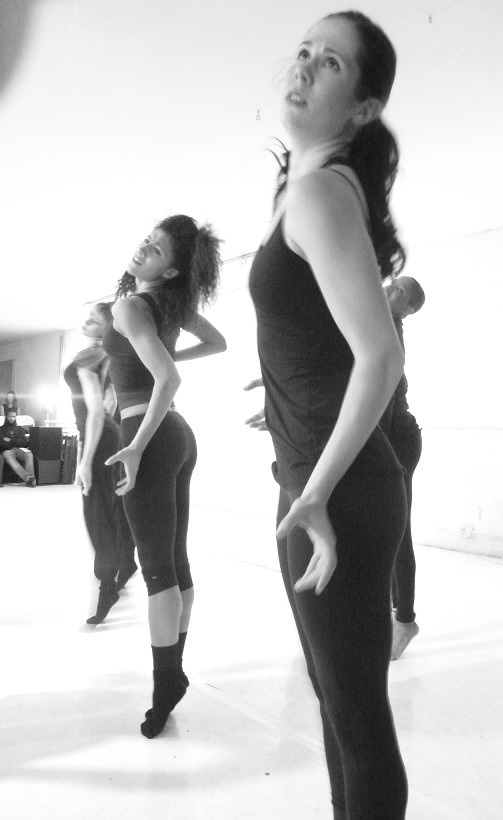
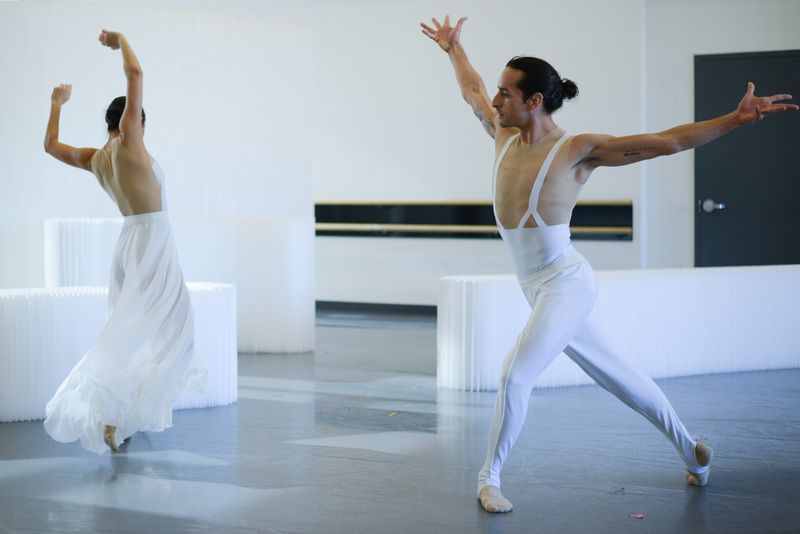
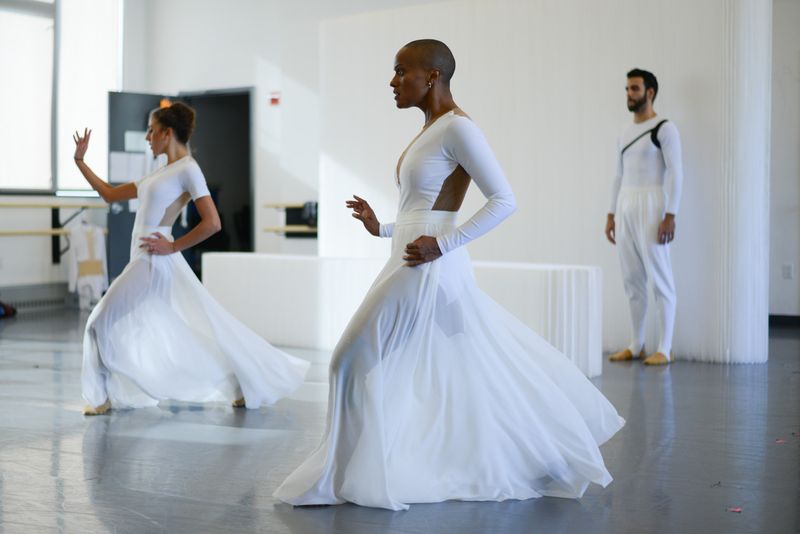
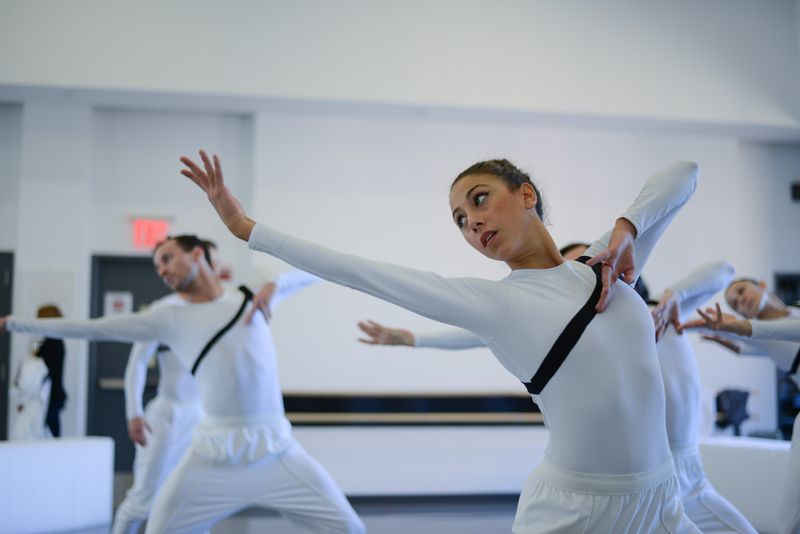
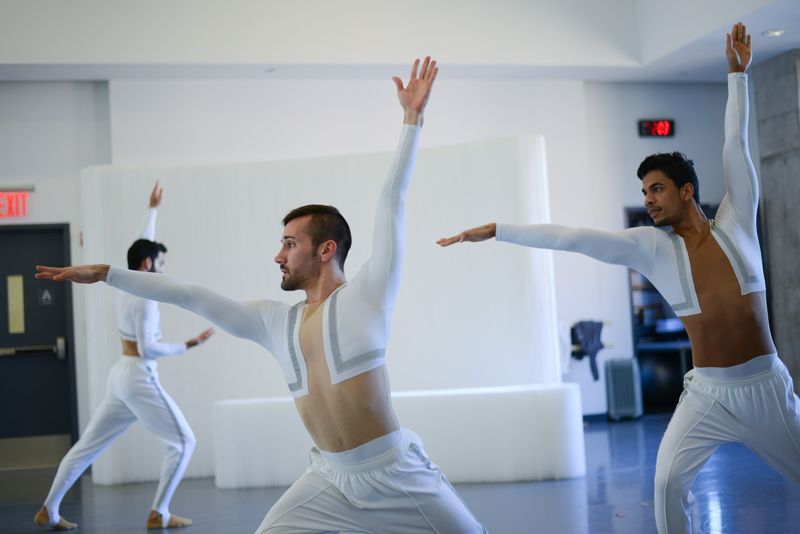
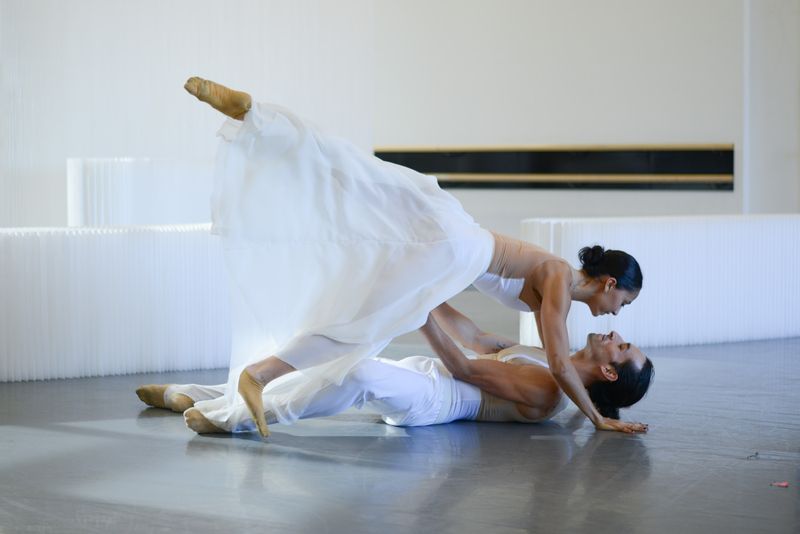
    Above: dancers are Claire Westby, Adrian Silver, and Selina Chau of Cherylyn Lavagnino Dance in a salon-showing of Naděje, a work-in-progress by Ms. Lavagnino

    Sunday December 14th, 2014 – On this cold, clear afternoon, friends of Cherylyn Lavagnino Dance gathered for a studio showing of works (and works-in-progress) by Cherylyn and by Christine McMillan, a dancer/choreographer with enduring ties to Cherylyn’s company.

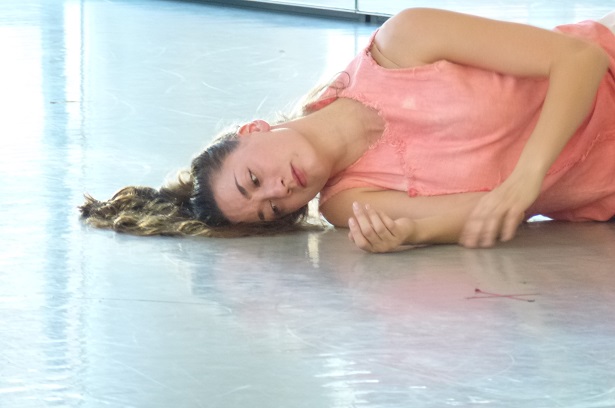
    The programme opened with Naděje (‘Hope’) a piece Cheylyn is in the midst of creating. Drawing inspiration from the life of Václav Havel, the great Czech writer, philosopher, dissident, and statesman, Cherylyn turns to music of Havel’s fellow countryman Leoš Janáček: the composer’s violin sonata, composed in 1914 (and later revised). The ballet calls for a large cast and the choreography displays Cherylyn’s characteristic flow of movement and her spot-on sense of structure. I look forward to following the development of this new work.

    Here are a few more images from Naděje:

    L1520394

    Giovanna Gamna, Travis Magee

    L1520425

    Selina Chau

    L1520403

    Justin Faircloth

    L1520391

    Giovanna Gamna, Travis Magee in Naděje
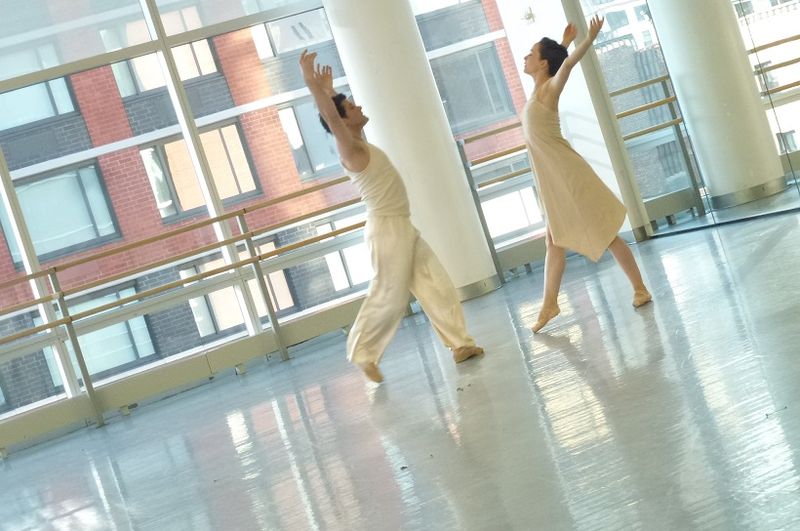
    L1520434

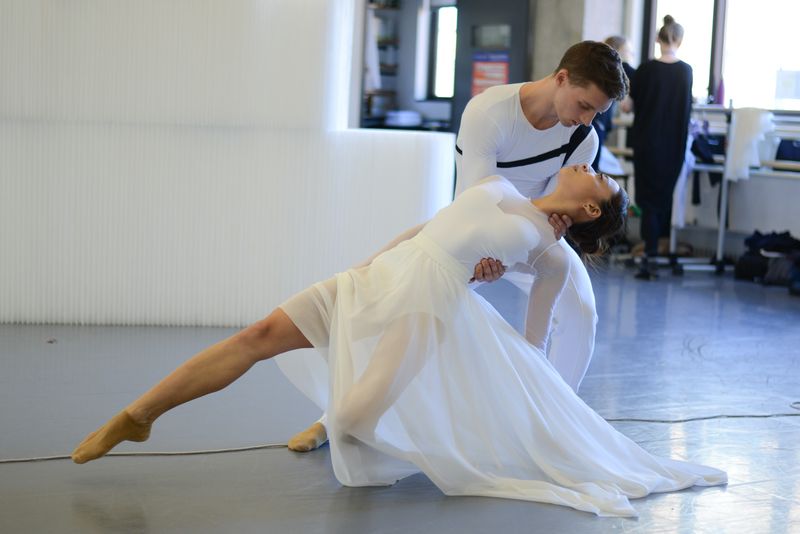
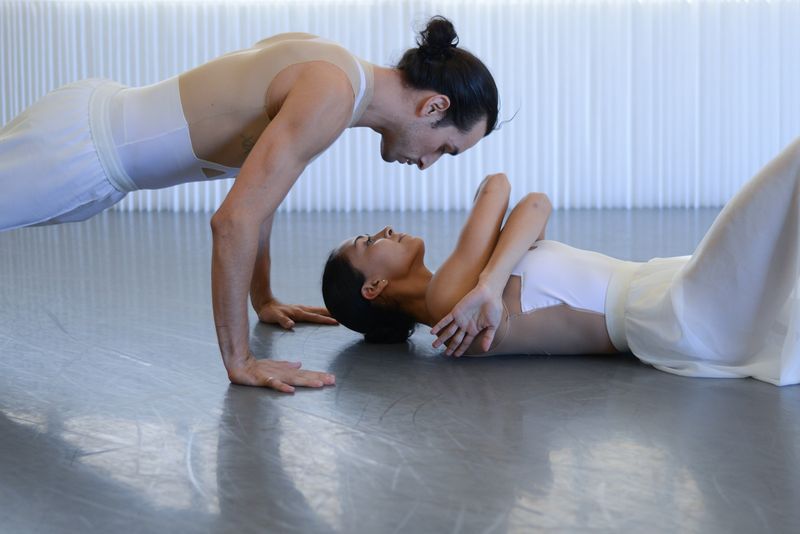
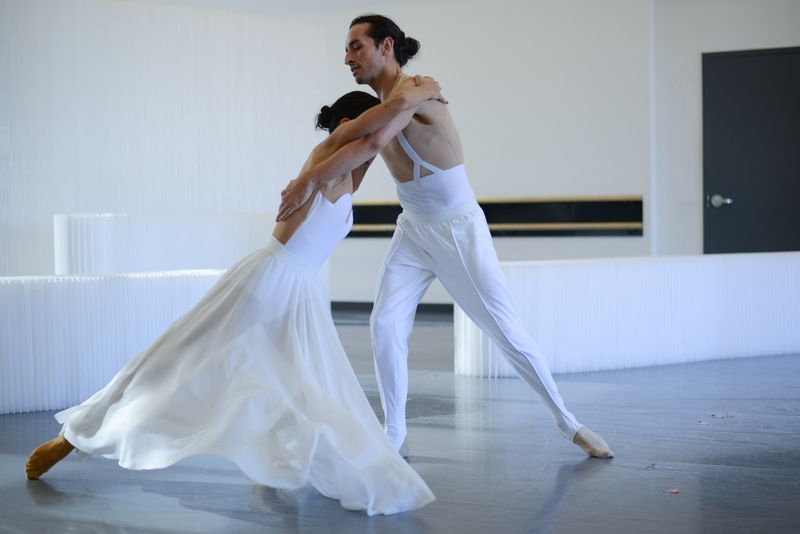
    Above: Assaf Benchetrit and Laura Mead, dancing to Rachmaninoff

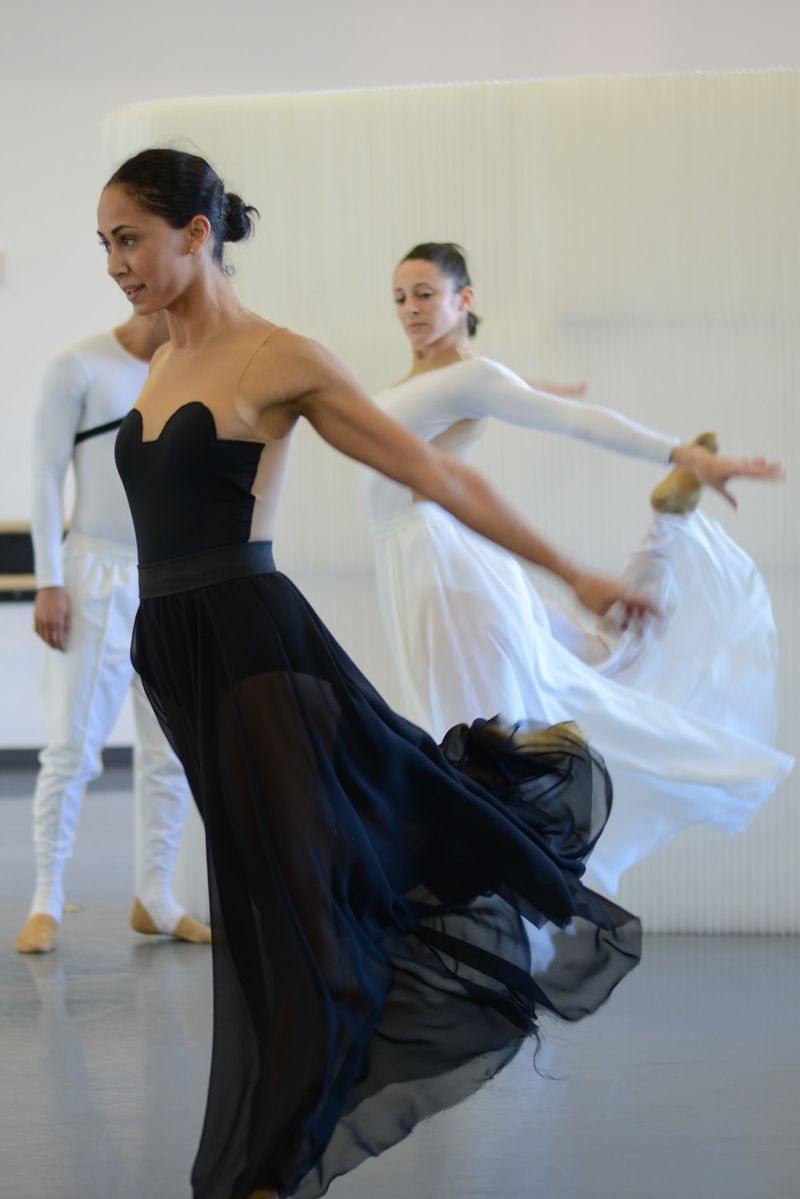
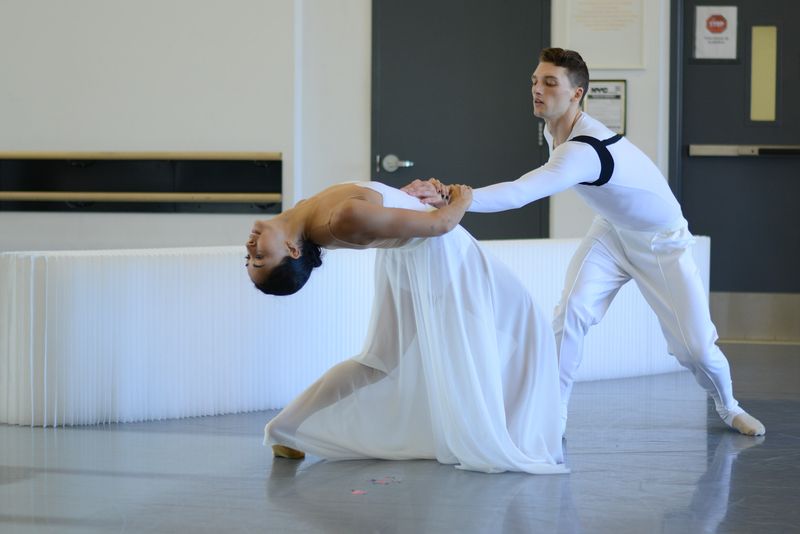
    A portion of an as-yet-untitled duet which Cherylyn is creating for Indianapolis City Ballet is set to piano music of Sergei Rachmaninoff. Clad in creamy white, dancers Laura Mead and Assaf Benchetrit move with impetuous lyricism thru combinations drawn from the classic ballet vocabulary but with a fresh accent.

    L1520430

    Above: Assaf Benchetrit and Laura Mead

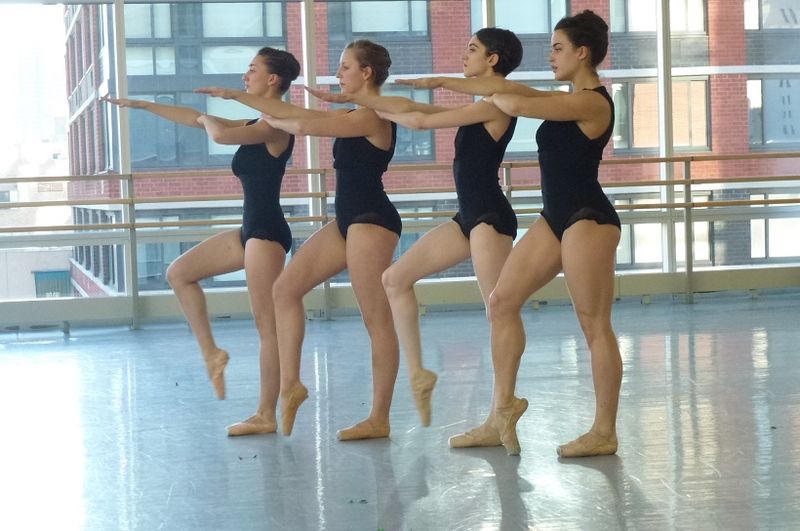
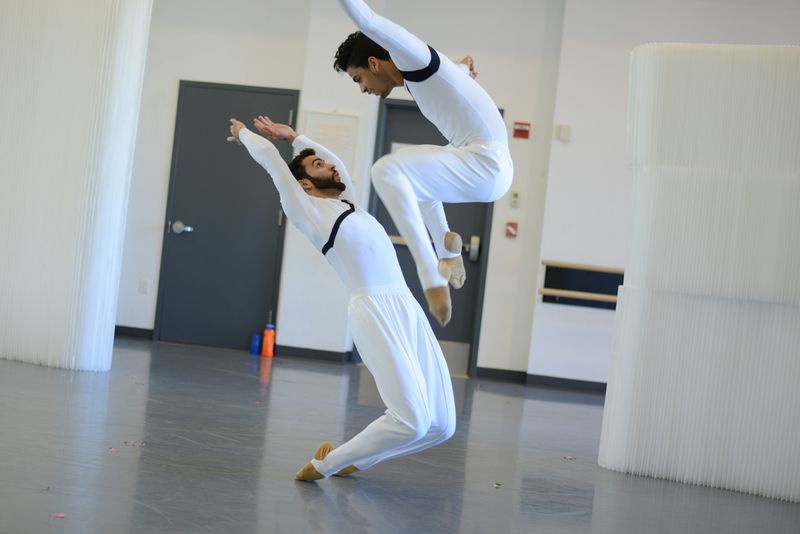
    Cherylyn’s 2010 dancework Snap Shots is an ensemble work danced to an original score by Kyle Olson. Set in four movements, the work features a double pas de deux, a male soloist with a quartet of ballerinas, a duet for two men, and a full-cast finale. The work is spacious and animated, including a passage where two men race about the space as if pursued.

    Images from Snap Shots:

    L1520444

    Adrian Silver, Selina Chau

    L1520463

    Adrian and Selina

    L1520485

    Christine Luciano, Lila Simmons, Giorgia Bovo, Claire Westby

    L1520566

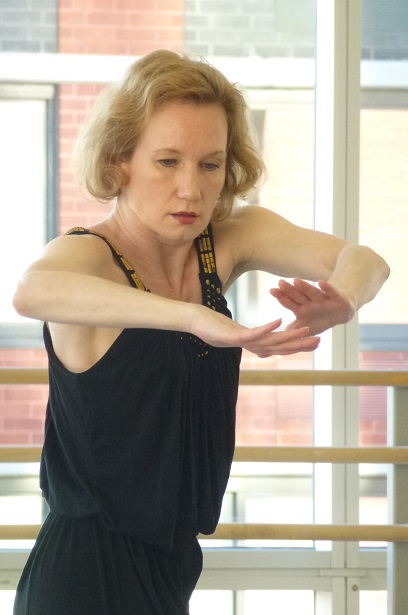
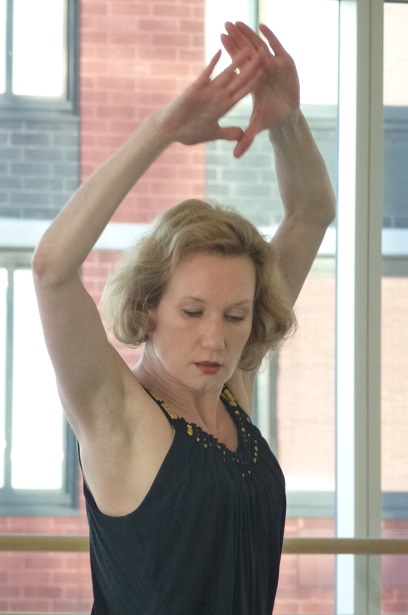
    Above: Christine McMillan in her solo Woman in Dress

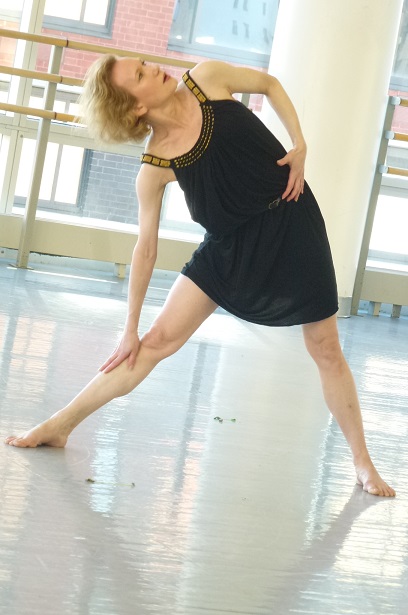
    Christine McMillan’s self-choreographed solo, Woman in Dress, unfolds to music by Hildur Gudnadóttir and Ólafur Arnalds. The dancer, who presents an interesting mixture of feminine strength and delicacy, uses her expressive arms and hands to poetic effect. In the course of the dance she moves from ecstatic heavenward reach to elements of self-examination, a self-portrait with an intrinsic emotional quality.

    Images of Christine McMillan in Woman in Dress:
    L1520529

    L1520532

    L1520554

    L1520547

    Christine McMillan: Woman in Dress

    The presentation ended with a performance of Cherylyn’s Ru, which premiered last season and is set to a score by Scott Killian. Inspired by the Saigon-born writer Kim Thúy’s novel of the same title, Ru, which means ‘lullabye’ in Vietnamese, depicts the flight of a young girl’s family from the Communists who have seized their home, first to Malaysia and eventually to Canada. Furtive and desperate, the women in this dancework bond together in quiet rituals; the men – in sexy costumes – alternately seem like oppressors and protectors. Scott Killian’s music provides the atmospheric setting for some of Ms. Lavagnino’s most expressive choreography.

    Some of the dancers in Ru are:

    L1520601

    Giovanna Gamna

    L1520613

    Travis Magee, Selina Chau

    L1520622

    Justin Faircloth

    L1520659

    Christine Luciano

    L1520637

    Adrian Silver

    L1520656

    Lila Simmons and Selina Chau in Ru
  • Shostakovich Reflected @ Chamber Music Society

    Images of D S

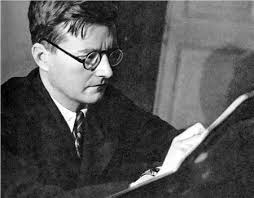
    Above: Dmitry Shostakovich

    Sunday November 23rd, 2014 – We seem currently to be in the midst of an impromptu Shostakovich Festival at the halls of Lincoln Center. Last night, the New York Philharmonic gave an epic performance of the composer’s 8th symphony under the baton of Jaap van Zweden. This afternoon, Chamber Music Society of Lincoln Center offered a very satisfying programme entitled Shostakovich Reflected, with works by Sibelius and Debussy mixed with a Shostakovch song cycle and his Trio #2. At the Metropolitan Opera, the composer’s LADY MACBETH OF MTSENSK is holding forth, conducted by James Conlon (I’ll see it on November 29th). In February, New York City Ballet will jump in with a revival of Christopher Wheeldon’s ballet, MERCURIAL MANOUVRES, set to the Shostakovich piano concerto #1. The Philharmonic meanwhile will offer two more Shostakovich symphones later in their season: the 5th (conducted by Long Yu, from January 22nd-24th, 2015) and the 10th (Alan Gilbert conducting; from April 8th-11th, 2015).

    At Alice Tully Hall today, Chamber Music Society‘s Shostakovich Reflected programme again left me searching for adjectives (superlatives, really) to describe the level of music-making by the participating artists: musicians who are rapidly becoming icons for me much as the great opera singers were back in my early days of opera-going in the 1960s and 1970s.

    The Sibelius Trio in G minor opened the programme today; this brief, single-movement work has a rather dark-hued, wintry feel. The music evokes a sense of longing but also of resignation. It’s unknown why Sibelius never enlarged upon this work beyond the opening movement, though he apparently made sketches, they were never developed. Yura Lee (violin), Mark Holloway (viola), and Jakob Koranyi gave a deeply-felt performance, establishing the mood so convincingly that one wanted it to go on. 

    Soprano Dina Kuznetsova then appeared for Shostakovich’s Seven Romances on Poems of Alexander Blok, with Gilbert Kalish at the Steinway, Yura Lee, and Mr. Koranyi. The soprano’s voice at first seemed overwhelming in the hall, but soon the proper balance was found and she and the musicians worked in a fine state of rapport, the vocal line now well-controlled with some very expressive dynamics. Mr. Kalish played with his customary mixture of finesse and passion, and both Ms. Lee and Mr. Koranyi displayed their intrinsic mastery of their instruments in songs where the accompanying voices take a prominent place. The audience reacted with great enthusiasm to this set, calling the artists back three times. 

    It’s always nice to find links to the ballet on programmes of symphonic or chamber music; this afternoon my friend Monica Wellington and I were especially pleased to hear Claude Debussy’s Six épigraphes antiques for Piano, Four Hands, which we both love in its danced incarnation at New York City Ballet: ANTIQUE EPIGRAPHS, a Jerome Robbins masterpiece with an all-female cast. Gilbert Kalish and Soyean Kate Lee shared keyboard, with much hand-crossing. Their refined playing evoked Nature and the rites and rituals of a long-lost tribe. 

    The concert concluded with a thrilling performance of Shostakovich’s Trio No. 2 in E minor, composed fifty years after the opening Sibelius trio. This work opens with solo cello playing in the highest register; here Mr. Koranyi displayed incredible control. Violin and piano (the two Ms. Lees) join in a fugue; the underlying feeling is one of pensive melancholy, the playing from all three artists nothing less than ravishing. New themes rise up, and the music flows with much interchange of the three voices.

    The brisk and rather jagged scherzo that follows seems alternately joyous and frantic: a lively dancelike theme cascades along, played with marvelous virtuosity by our trio tonight. The piano ripples thru scale passages or emphatic rhythmic motifs; the violin and cello alternately pluck and sing.

    Yura Lee’s poignant introduction of the third movement’s lamenting theme set the tone for this Largo, with its heart of darkness. The voices melded in music which seemed to summon up the despairing tread of a funeral procession, the misty veil shot thru with glimpses of burnished light. 

    The finale sweeps aside this heavy sense of grief, yet proceeds under a threat of returning gloom. The pianist sets the music marching, and there’s more dance-rhythms as well; wit and humor are not forbidden, but are delivered with irony. The song-like theme of the first movement is recalled, setting up a continuum of memory even as the work plunges forward.

    I can’t say enough in praise of the three musicians who wrought this superb performance. And the  audience clearly shared my sense of deep appreciation: at the end, everyone stood up and cheered as the players were summoned back for repeated bows.

    The Program:

    The Artists:


  • At Jennifer Muller’s Studio

    L1510781

    Above: from Jennifer Muller’s MISERERE NOBIS, with dancer Shiho Tanaka in the left-foreground

    Thursday November 20th, 2014 – Celebrating the remarkable milestone of a 40th anniversary, Jennifer Muller/The Works invited friends of the Company to a studio showing tonight. Excerpts from five Jennifer Muller danceworks – plus a complete showing of her most recent creation, MISERERE NOBIS – were performed by The Works’ distinctive, dynamic dancers.

    L1510656

    Above: dancer Michael Tomlinson warming up

    The dances shown tonight ranged in date-of-creation from 2005 (ISLAND) to Jennifer’s current and wonderfully-contrasted successes MISERERE NOBIS and WHEW!  As with all the finest choreographers over time, she has delved deeply into the vast catalog of music: tonight alone we heard Allegri, Mozart, and Barber in tandem with such contemporary composers as Julia Kent, Peter Muller, and Marty Beller. One moment we are in church and the next we are being jazzed; this musical variety keeps everything at The Works fresh and vivid.

    In the intimate studio space, we the viewers come as close to dance as we are likely to get. The dancers of Jennifer’s company know this room so well that they are able to dance full-out without concern for spatial limitations. Big lifts, often a motif in Jennifer’s choreography, are often accomplished with just centimeters of head-room; but the dancers all seem to have a sixth sense of just how far they can take things.

    The programme was so well-devised, with Jennifer’s illuminating commentary between works just enough to give us insight without becoming too chatty. The dancing was vivid and personal. 

    L1510747

    I attempted to take some photos but most of the movement was too swift for me to capture. Gen Hashimoto (above) was briefly almost still in his beautifully-executed solo from ARIA, performed to the poignant “Dalla sua pace” from Mozart’s DON GIOVANNI.

    Otherwise, my only successful images came from MISERERE NOBIS which happens to be a particular favorite of mine from among Jennifer’s works. Here are a few photos from this all-female ensemble work:

    L1510770

    L1510773

    Elise King

    L1510787

    L1510796

    L1510802

  • Preview: Ballet Hispanico’s CARMEN.maquia

    NIR_6757

    Above: Ballet Hispanico‘s Chris Bloom and Kimberly van Woesik in rehearsal for CARMEN.maquia  Photo: Nir Arieli

    Normally I don’t do previews of upcoming dance productions unless I’m planning to see them in performance. Ballet Hispanico‘s premiere presentation of Gustavo Ramirez Sansano’s CARMEN.maquia happens to fall on a night when I have tickets for the New York Philharmonic. But because I admire the Hispanico dancers so much (and their director, Eduardo Vilaro, is such a wonderful guy) I jumped at the chance to see a rehearsal today. I was so impressed with the work – for so many different reasons – that I have to send out the word: this is a must-see dancework. Ticket information for the November 22nd performance at the Apollo Theater here

    Luckily, photographer Nir Arieli was available to meet me and document the rehearsal today, which – as it turned out – was the first ‘costume-run-thru’ of the full work. I’m so grateful to publicist Michelle Tabnick for arranging things and to Ballet Hispanico‘s rehearsal director Michelle Manzanales for welcoming us to the studio.

    As a long-time opera-goer (yes, I even went to the Old Met!) Bizet’s CARMEN has been in my blood for over half-a-century, starting with my first experience of hearing the great Rise Stevens singing the ‘Habanera’ on an old LP my parents owned. I know all the music intimately…and 99% of the words, which I found myself singing along today.

    I don’t want to give away any secrets, but Mr. Sansano takes a non-literal stance towards the opera’s score for his new ballet, and he even incorporates music from other Bizet works. One interpolation in particular was truly daring, but I’m not going to spoil the surprise. In terms of relating to the story as told in the Bizet opera, we have dancers representing Carmen, Don Jose, Escamillo, and Micaela as well as smugglers, cigarette girls, and soldiers. But the choreographer makes some stunning re-assignments of music normally associated with one scene in the opera to a different situation in his ballet. For example…no, wait…you’ll have to go and find out for yourself!

    In fact, I should not really say anything more lest I say too much. But I will mention that the black-and-white costumes are inspired by Picasso’s drawings, and that the personifications of the main characters by the marvelous Hispanico dancers transcend steps, acting, and music to create living, breathing men and women who wear their passions proudly. The work is provocative in so many different ways, from the aforementioned musical placements to the characterizations of the major players (they don’t always fit our stereotyped ideas), and even a bit of nudity.

    So, rather than let too many cats out of the proverbial bag at this pre-premiere stage, I’ll share with you some of Nir Arieli’s rehearsal images. I had a terrible time deciding which ones to include, because I wanted to post them all. 

    NIR_5132

    Kimberly van Woesik (Carmen)

    NIR_6211

    Kimberly van Woesik and Chris Bloom (Don Jose)

    NIR_6024

    Mario Ismael Espinoza (Escamillo)

    NIR_5369

    Min-Tzu Li (Micaela) and Chris Bloom

    NIR_6612

    Min-Tzu Li and Chris Bloom 

    NIR_4851

    Melissa Fernandez

    NIR_4887

    Jessica Alejandra Wyatt

    NIR_5721

    Jamal Rashann Callender

    NIR_5762

    Joshua Winzeler, Johan Rivera Mendez, and Lauren Alzamora

    NIR_5020

    Christopher Hernandez and Marcos Rodriguez

    NIR_6271

    Martina Calcagno

    NIR_6668

    Johan Rivera Mendez and Marcos Rodriguez

    NIR_6334

    The ensemble

    NIR_6596

    Min-Tzu Li and Chris Bloom

    The following images are from a duet for Carmen and her toreador: Kimberly van Woesik and Mario Ismael Espinoza:

    NIR_6042

    NIR_6068

    NIR_6074

    NIR_6084

    All photography by Nir Arieli.

  • Eryc Taylor Dance: New Choreography

    10488074_10152831497854666_2393990510578167467_n

    Saturday November 15th, 2014 – Eryc Taylor Dance, Inc. presented an evening of danceworks by the three recipients of the 2014 ETD New Choreography Grants: Daniel Holt, Ana C. Sosa, and Eryn Renee Young. The performance took place at the Martha Graham Dance Center on Bethune Street.

    Glancing out the window of the big Graham studio/theater while waiting for the performance to begin – the Empire State Building looking all silvery and shining – I was thinking of all the wonderful hours I have spent there in the past few years. In his opening remarks, Eryc Taylor expressed a similar affinity for the space where he worked with Merce Cunningham for five years.

    And then the dancing began.

    Eryn Renee Young’s Symphonie Miroir opened this concert of three well-contrasted works. To percolating music by Bela Bartok, the work commences with the girls (on pointe) in a diagonal; the music – plucked and skittery – sets off the dancers in contemporary stylings of classic ballet vocabulary. Isaac Owens, the group’s lone male, dances a dynamic pas de trois with Jasmine Chiu and Jacline Henrichs. A musical ‘explosion’ ignites the finale, a pas de sept which features pose-striking and breaking down the group into sub-units, with brief solo passages assuring that all the dancers have their chance to shine. Building a pulsing finale, there’s a sudden unexpected lull as the music turns a bit spacey; then a push onward to the finish. Ms. Young’s choreography showed a fine sense of exploring space and a knack for visual polyphony. And she gets extra roses and champagne for choosing Bartok.

    Ana Sosa danced in her own work, The Logical Road to Insanity, with a quartet of fellow dancers who  all seemed so young. Ms. Sosa chose some interesting vocal music, from Fleet Foxes and Cocorosie, which included ear-tweaking harmonies. The quintet of dancers work in-sync, with occassional passages of solo work, notably a somewhat B-boyish moment for Cesar Brodermann. Ms. Sosa’s accomplished use of floor work and of a gently ironic tip-toeing motif underscored the signs of impending mental collapse among the dancers; at one point the music goes totally looney, and the choreographer’s fleeting self-solo showed her on the brink of madness. It was all done well, and performed with commitment by the youthful cast, right down to the silent ending.

    Daniel Holt, that charismatic Dirty dancer, brought out a trio of girls to dance with him in Bermuda. They all wore black shorts, bright-coloured cartoonish tank tops, and black socks. Things start casually, almost slow-mo, and then a grinding beat develops. Spastic synchronized movement with breakout solos and detached walkabouts underscore the complex approach-avoidance relationships of the foursome, all laid out with raw physicality. They collapse, but rise again for the work’s most haunting passage – an entangled quartet set to Owain Phyfe’s recording of ‘La prima vez: a highlight of the evening.

    Pressing onward to a dark, dense beat, there are stylized clusters, escapes, and outright antagonism. Then the music suddenly takes on a celestial quality, with a deep bass underglow, as the dancers – in spastic gestures – attempt to communicate. But this dissolves in the end, and one of the girls gives Daniel the finger…which he kisses.

    ‘La prima vez’ translation:

    “The first time I saw your eyes
    I fell in love with you.
    I loved you from that moment
    And until the grave, I will love you.
    Come close to me, my dear one,
    You have saved me.
    Discover me and tell me/open yourself and tell me
    Your life’s secrets.”

  • Joshua Bell & The NY Philharmonic

    Joshua-bell_s345x230

    Thursday November 13, 2014 – Violinist Joshua Bell (above) plays the Glazunov violin concerto in a series of five concerts with The New York Philharmonic. Case Scaglione takes the podium for these performances, which also features Debussy’s Afternnoon of a Faun and Prokofiev’s symphony #5.

    My friend Monica and I attended the second evening of the programme; since we are both passionate ballet enthusiasts, we very much enjoyed experiencing the Debussy in a concert setting; we have often seen the Jerome Robbins setting of the work at New York City Ballet, and recently Boston Ballet brought their ‘original’ version to Lincoln Center.

    One of the composer’s most famous works, Claude Debussy’s Prélude à l’après-midi d’un faune referred to in this evening’s Playbill by its English title – premiered in 1894. The work is considered a turning point in the history of music: Pierre Boulez once said he considers the score to be ‘the beginning of modern music’. Tonight the Philharmonic gave a beautifully shaped rendering of this sensuous piece, which commences with the languid flute theme. Individual voices emerged dreamily from the overall soundscape and Debussy’s alluring colour scheme was indeed seductive. Neither Monica nor I could recall having previously heard the gentle chime of a triangle near the end of the piece; it seemed very prominent tonight. Case Scaglione rightly summoned the Philharmonic’s principal flautist, Robert Langevin, for a solo bow during the warm applause that greeted this opening work.

    Composer Alexander Glazunov (1865-1936) managed to endure ten years in Russia following the Bolshevik Revolution; he fled to Paris in 1928. His compositions from that point on are considered less impressive than his earlier works which include the richly melodic score for the ballet RAYMONDA, a suite from which was recently featured in ABT’s Autumn season at Lincoln Center.

    The violin concerto, Glazunov’s most frequently-performed work, was composed it in 1904. It is dedicated to, and was premiered by, the great Hungarian violinist Leopold Auer, the teacher of Heifetz, Milstein, and Elman, among others. Glazunov casts this concerto in an unbroken arc, with the three vari-paced movements subtly linked. A virtuosic cadenza carries us to the exuberant finale in which the soloist dazzles against a tapestry of orchestrated fireworks.

    Joshua Bell, taller than I had imagined and retaining a youthful energy of demeanor in his mid-40s, displayed the warmth of tone and the clear shimmer of upper-range diminuendo that are hallmarks of his playing. I was a bit surprised to note that he was using a score, but he handled it with casual assurance. Creating a fine rapport with conductor and musicians, Joshua drew the succession of themes in the opening movement into long, impeccably turned phrases; in the almost frantic pacing of the final allegro, he seized upon the sparkling coloratura passagework with thrilling dexterity. The crowd called him out for a well-deserved solo bow.

    After the interval, the Prokofiev: he wrote his fifth symphony during the summer of 1944, while staying at a dacha in the countryside outside Moscow. Having stored up his musical ideas over time, he wrote with speed and surety. The symphony was first performed in Moscow in January 1945 with the composer conducting.

    The first movement is dense of texture and thick with themes: there are five distinct tunes to be discerned, and the composer integrates them with skill. The movement closes on a grandiose note; I must say I wasn’t totally enamoured of this opening andante; it seemed a bit turgid and over-extended. But thereafter, the Prokofiev I have come to love was very much in evidence. The second movement in particular is a great delight with its relentless forward motion decorated by interjections of wit and melodic irony. The tempo gradually accelerates, almost to the point of veering out of control.

    The adagio conjures up the blend of unhappy romance and wistful tenderness we associate with the composer’s ROMEO AND JULIET, with a turbulent central passage. Then on to the final Allegro giocoso, where we again find Prokofiev at his most inventive, opening with an echo of the first theme of the first movement, and then a passage for the clarinet – Prokofiev at his most magical – superbly voiced by principal Anthony McGill. The symphony plunges forward to its conclusion, re-affirming the composer’s fixed positon in my constellation of favorite composers.

  • Celebrating 70 Years of APPALACHIAN SPRING

    Masha lloyd hibbard nash photo

    Above: Mariya Dashkina Maddux and Lloyd Mayor in Martha Graham’s APPALACHIAN SPRING; photo by Hibbard Nash

    Thursday October 30th, 2014 – Friends of the Martha Graham Dance Company gathered this evening at the Company’s home space on Bethune Street to celebrate the 70th birthday of the great American dance classic, APPALACHIAN SPRING. The event, Appalachian Spring Up Close and Personal – a complete performance of APPALACHIAN SPRING in costume and with the classic Noguchi set pieces – came on the exact 70th anniversary of its premiere, October 30, 1944.

    This once-in-a-lifetime event also featured film clips and projected photographs from the premiere, and a spoken introduction with quotes from Martha Graham’s correspondence with Aaron Copland at the time of the ballet’s creation. Mariya Dashkina Maddux headed the cast in Graham’s role of The Bride. She was joined by Lloyd Mayor, Natasha Diamond-Walker, Lloyd Knight, Xiaochuan Xie, Ying Xin, Charlotte Landreau, and Lauren Newman. This was my first opportunity to see Masha, Natasha, and Lloyd Mayor in these roles; Lloyd Knight repeated the role of the Preacher in which he was wonderfully cast during the Company’s City Center season earlier this year.

    This brief film features some of the dancers who have performed the principal roles in this ballet over the years.

    Janet Eilber, the artistic director of the Martha Graham Dance Company, is always such a wonderful hostess at Company events. Her speaking voice falls pleasingly on the ear and the information she imparts is always meaningful and illuminating to the dance we are about to see. This evening, Janet’s voice faltered tearfully as she spoke the names of the immortal dancers who first performed APPALACHIAN SPRING seventy years ago: Martha Graham, Erick Hawkins, May O’Donnell, and Merce Cunningham. 

    And then APPALACHIAN SPRING unfolded before us in all its heartfelt glory, the dancing taking place just a few feet away from us. The timeless simplicity of the Noguchi setting tells us immediately where we are; and for tonight we seemed in fact to be very much a part of the action, like observant guests at the wedding.

    Mariya Dashkina Maddux gave a powerfully poetic interpretation of the role of The Bride, her eyes shining and filled with hope, her body fluently expressive. Lloyd Mayor’s Husbandman danced with a spacious energy that could fill the Great Plains. In both the expansive and the intimate moments of this role, Lloyd’s handsome presence was captivating. Together Masha and Lloyd brought all the hopes of youth and forward-looking courage to their portrayals of this iconic couple.

    Natasha Diamond-Walker, lithe and elegant of posture and surpassingly fair of face, danced vividly as the Pioneering Woman. The strength of her dancing matches the character’s strength of virtue, yet Natasha was also deeply feminine in her portrayal and in her womanly rapport with Masha’s young Bride. Lloyd Knight’s Preacher was a powerful force in his stillness and a dynamic force when he danced. His vivid delineation of the steps underscored the great demands Graham puts on her dancers: technique and theatrical nuance must mesh in perfect balance. These demands extend to the quartet of Followers –   Xiaochuan Xie, Ying Xin, Charlotte Landreau, and Lauren Newman – who have a great deal of tricky dancing to do, though we tend to view them more for their decorative loveliness.

    The performance overall marked one of the most engrossing and meaningful dance experiences in my long ‘career’, in part because of the intimacy of the setting, and also because of the sense of dance as a resonating continuum that draws us ever back into the past whilst time and the universe sail inevitably forward. Evenings like this serve as illuminated markers on our journey.

    In a beautiful gesture at the end of the performance, the Lloyds (Mayor and Knight) presented bouquets to Janet Eilber and to Denise Vale, the Company’s senior artistic associate. Both Janet and Denise have danced the Pioneering Woman in APPALACHIAN SPRING, and thus the sense of lineage in the realm of Graham was graciously underscored.

  • BalletCollective @ The Skirball

    Troy Schumacher, by Matthew Murphy

    Above: Troy Schumacher, photo by Matthew Murphy

    Wednesday October 29th, 2014 – The dancing tonight as Troy Schumacher’s BalletCollective opened at The Skirball was fantastic. Drawing from the roster of his resident Company, New York City Ballet, Troy presented an ensemble of dancers with spectacular technical and communicative gifts.

    The program opened with the impulse wants company (premiered in 2013), set to a score by Ellis Ludwig-Leone, and drawing inspiration from a poem by Cynthia Zarin. The music was played live (as in fact was the entire programme) the contemporary ensemble Hotel Elefant

    BALLET_COLLECTIVE, Claire Kretzschmar, by Matthew Murphy

    Above: Claire Kretzschmar, photo by Matt Murphy

    Long-limbed and with an innate sense of the dramatic, Claire Kretzschmar launched the evening in a solo passage. This distinctive NYCB ballerina really made her mark tonight, Troy’s choreography showing her off to fine effect in both the opening and closing works. (Meet Claire in this video, in which the Collective’s Taylor Stanley also appears.) She is soon joined by Ashley Laracey, Lauren King, Meagan Mann, David Prottas, Taylor Stanley, and Troy Schumacher. This dynamic group  highlighted Troy’s inventive choreography with propulsive energy mixed in with moments of pensive repose. A spectacular solo by Taylor Stanley left me feeling awestruck. 

    BC, Blackbirds, Ashley Laracey, Troy Schumacher, by Matthew Murphy

    Above: Ashley Laracey and Troy Schumacher, photo by Matt Murphy

    Following the interval, the premiere of a new duet, dear and blackbirds, was danced by Ashley Laracey and Troy Schumacher to music by Ellis Ludwig-Leone; again, a poem by Cynthia Zarin was the frame of reference. Troy had not originally planned to dance in the performance this evening, but he stepped in on short notce after a colleague sustained an injury. This pas de deux had a Jerome Robbins flavour, the couple exploring the possibilities of mutual interest, alternately hesitant and impetuous. Romantic partnering with touches of playfulness give way to the two dancers trading short phrases. Ashley Laracey displayed the lovely qualities of lyricism that have kept her shining in my dance firmament since I first saw her onstage.

    BC, ATWS, Taylor Stanley, by Matthew Murphy

    Above: Taylor Stanley, photo by Matt Murphy

    In all that we see, the addition of wind players to the strings and piano gave the sonic landscape a fresh vista. Meagan Mann, Lauren King, Claire Kretzschmar, David Prottas and Taylor Stanley all danced exceptionally well. Claire again made superb use of the space and she has a restless angularity that draws the eye. There’s a very nice duet for Lauren and Taylor, and Meagan at one point enters in a tip-toeing motif, adding a sense of mystery. David and Taylor came face to face in a dramatic moment: I thought they might punch each other…or kiss. 

    In an evening so well-danced and featuring choreography which reaches for new combinations in a familiar vocabulary, a lack of contrast in the musical settings was a minor drawback. The composer of all three works has definite skill and his music is appealing, yet a whole evening of it doesn’t quite hold up. The musicians of Hotel Elefant were excellent and warmly acknowledged by the audience.

    The Skirball stage was stripped back to the bare back wall and wings, giving the ballets an industrial look. The lighting design produced some striking moments, but at times the dancers were too heavily shadowed. The costuming had an every-day feeling in the first two works; a credit to artist David Salle for painting the clothes for all that we see piqued my curiosity but from where I was sitting I couldn’t get a feel for his work. The big projections that were a key element in the Collective’s inaugural presentations weren’t part of the current presentation, but the dancers and the dance successfully held the stage in this rather stripped-down setting. The evening drew a real New York dance crowd, laced with celebrities and keen in their attentive focus.

    All photography by the marvelous Matthew Murphy.

  • Fauré & Ysaÿe at Chamber Music Society

    AnneMarie-McDermott-Jan-2013-468x310

    Above: pianist Anne-Marie McDermott

    Sunday October 26th, 2014 – Works by the Belgian violinist/composer Eugène Ysaÿe and his better-known French contemporary Gabriel Fauré were on the bill at Alice Tully Hall as Chamber Music Society of Lincoln Center presented this dusk-hour concert on a cool Autumn day. My friend Monica Wellington and I are both very much admirers of the Fauré works used by George Balanchine in his poetic ballet EMERALDS, but neither of us were much familiar with the music of Ysaÿe.

    The opening work: why is it called the Dolly Suite? Excellent question, and one I’d never thought to delve into until now, when I’m hearing it played live for the first time. ‘Dolly’ was the affectionate nickname of Helene Bardac, the young daughter of Fauré’s long-time mistress, Emma Bardac. Fauré composed the brief works that comprise the suite between 1893 and 1896, to mark birthdays and other events in Helene’s life.

    The suite’s movements are:

    Berceuse (a lullabye), honoring Helene’s first birthday (Allegretto moderato).
    Mi-a-ou, which gently mocks Helene’s attempts to pronounce the name of her elder brother Raoul, who later became a pupil of Fauré’s.
    Le Jardin de Dolly (Andantino); this was composed as a present for New Year’s Day, 1895. It contains a quotation from Fauré’s first violin sonata, composed 20 years earlier.
    Kitty-valse: this is not about a cat, but rather about the Bardacs’ pet dog, named Ketty.
    Tendresse, an andante, was written in 1896 and presages the composer’s beloved Nocturnes.
    Le pas espagnol (Allegro) denotes a lively Spanish dance tune which brings the suite to its close.

    Cms_01

    The suite is set for piano four-hands, and as I watched Wu Han (above) and Anne-Marie McDermott together at the keyboard, I couldn’t help but think of them as the Dolly Sisters. In her opening remarks, Wu Han spoke of the intimate nature of chamber music and the fact that there’s nothing quite so intimate as playing piano four-hands. She and Ms. McDermott seemed to be having a grand time with this music. Their immaculate playing illuminated the six contrasted movements, which veer from boisterous to delicate, sometimes in the twinkling of an eye. The audience were as charmed by the work as by the players.

    Index

    Yura Lee (above) is a favorite with CMS audiences; she seems most often to be heard here as a violist, but tonight she had a lovely opportunity to bring forth her violin for a subtle and ravishing performance of Ysaÿe’s Rêve d’enfant (a CMS premiere) in which she played with clear lyricism and great control. Ms. McDermott at the Steinway underscored her colleague’s transportive musicianship with playing of calming refinement.

    Dautricourt

    In a rare performance of Ysaÿe’s Sonata in A minor for Two Violins (tonight marked the work’s CMS premiere), a duet sometimes deemed unplayable, Yura Lee and Nicholas Dautricourt (above) remained undaunted by the composer’s overwhelming technical demands, and they formed a spirited team, spurring one another on in a friendly atmosphere of “Anything you can play, I can play sweeter…softer…faster…” Mr. Dautricourt appeared for this piece in his shirtsleeves, tieless and untucked: clearly he meant business. The two virtuosos sailed on and on through the intricacies of this long duet, the audience with them every step of the way and saluting them sincerely at the end for having triumphed against improbable odds.

    Carr cellist

    After the interval, cellist Colin Carr (above) indeed charmed Monica and me with his gorgeous playing of Fauré’s Sicilienne; originally set for cello and piano, as we heard it performed tonight, this melodious gem was later re-worked by the composer into his score of incidental music for a production of Maeterlinck’s Pelléas et Mélisande; and from that incarnation, Balanchine plucked it to be part of his elegant ballet EMERALDS. Mr. Carr, with Wu Han’s polished support, brought his warm tone and a particularly nice, merlot-flavoured lower register to this evocative performance. As a contrast, cellist and pianist gave us another Fauré miniature: Papillon (‘Butterfly’) in which the cellist’s fingers flutter up and down the strings, twice pausing in more sustained passages.

    In Fauré’s Quartet No. 1 in C minor for Piano, Violin, Viola, and Cello, Op. 15 – the concluding work tonight – Ms. McDermott summoned up the rhapsodic qualites of the opening movement, then turned vividly playful in the scherzo which follows. Ms. Lee  – her viola really singing – along with Mssrs. Dautricourt and Carr treated us to some genuinely poetic playing, especially in the adagio where the three voices passed the melodies between themselves with playing of a satiny eloquence. Indeed, the level of playing throughout the evening left me yet again in awe of the Society’s unique roster of artists.

    The Program:

    Fauré Dolly Suite for Piano, Four Hands, Op. 56 (1894-96)

    Ysaÿe Rêve d’enfant for Violin and Piano, Op. 14 (1895-1900)

    Ysaÿe Sonata in A minor for Two Violins (1915)

    Fauré Sicilienne for Cello and Piano, Op. 78 (1898) 

    Fauré Papillon for Cello and Piano, Op. 77 (before 1885)

    Fauré Quartet No. 1 in C minor for Piano, Violin, Viola, and Cello, Op. 15 (1876-79)

    The Participating Artists


  • Glazounov & Chausson at ABT

    Jalteuscher1gs

    Above: Devon Teuscher as Caroline in JARDIN AUX LILAS, in a Gene Schiavone photo

    Thursday October 23rd, 2014 – Music, as much as dance, can draw us to the ballet. Tonight’s ABT programme featured works by Alexander Glazounov and Ernest Chausson. You’re unlikely to hear any of the enchanting score of RAYMONDA in the concert hall, and Chausson’s poignant Poème for violin and orchestra seems rarely to get programmed (the composer’s grander and even more gorgeous Poème de l’amour et de la Mer is equally neglected these days.) The opportunity to hear these works, as much as to see the ballets set to them, drew me to Lincoln Center tonight.

    RAYMONDA DIVERTISSEMENTS, billed as a world premiere, seems to be a re-mix of excerpts from the ballet previously given by the Company. The Petipa choreography has been staged by Irina Kolpakova and Kevin McKenzie; they took a bow together at the end. The costumes, all white with black fur trim, were oddly bland. Hee Seo, that elegant ballerina, was a bit too reticent in the principal ballerina role. A touch more grandeur of delivery or a dash of spice would have cast her very fine dancing into higher relief. James Whiteside seemed somewhat miscast in this classically-styled work; his dancing was a little stiff, his plié needing a deeper cushion at times. Nonetheless, the steps were clearly executed and his partnering was fine. He’s a handsome guy, and I look forward to seeing him in other ballets.

    Misty Copeland and Sarah Lane danced well in a duo variation which did not allow them to display their finest aspects; a pas de quatre for four boys failed to have any sense of unity. Delightful varations from Skylar Brandt and Christine Shevchenko were highlights of the performance. The fussy bows, with the girls striking poses as they curtsied, were pointless.

    In JARDIN AUX LILAS, violinist Benjamin Bowman played Chausson’s romantically steeped score with silky tone. Devon Teuscher danced lyrically as the unhappy Caroline, doomed to be parted from her beloved; Devon’s performance had the right feeling of grace under social pressure and was danced with a nicely nuanced sense of controlled urgency. Cory Stearns was superb as her beloved, so touching as fate intervenes in his hopes and desires: a poignant, noble youth in the throes of romantic despair. Veronika Part held the stage magnificently as the mysterious mistress, a character equally pitiable in her own right. Roman Zhurbin’s cool, controlled performance as The Man She Must Marry left us wondering just exactly how much he knew.