Category: Ballet

  • Wheeldon’s LITURGY @ Pennsylvania Ballet

    10153943_10203599386119332_4916660980318399099_n

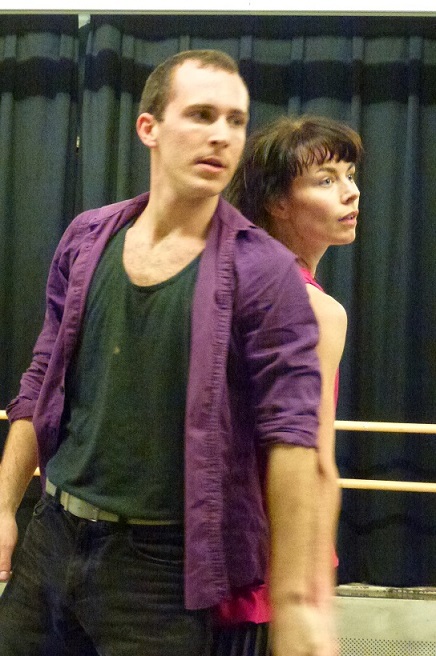
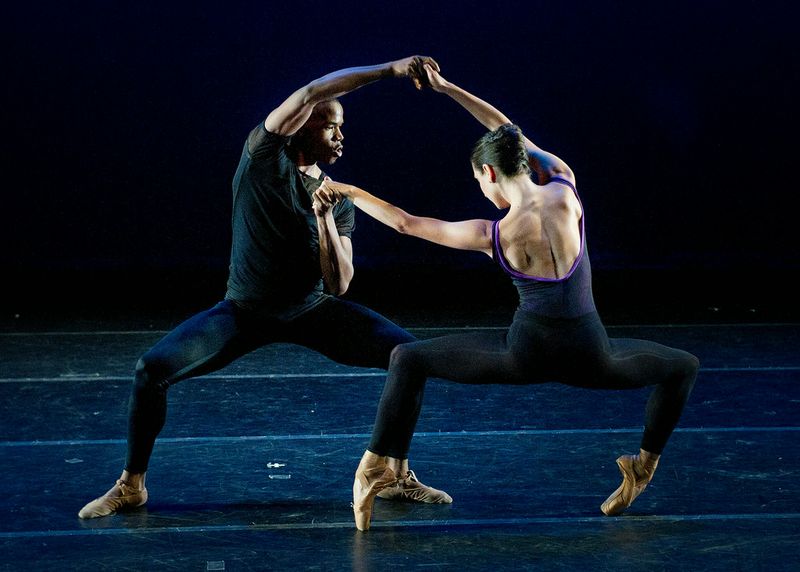
    So proud of my beautiful young friend, Elizabeth Mateer, who has just performed Christopher Wheeldon’s LITURGY at Pennsylvania Ballet. Watch an excerpt here. The duet was coached by Jock Soto, on whom it was made.

    The programme marked the opening of the debut season of Angel Corella as the Company’s artistic director.

    Rehearsal photo of Elizabeth and her partner Lorin Mathis by Alexander Iziliaev

  • Sunhwa Chung|Ko-Ryo Dance Theater Rehearsal

    Wave Rising Series -1

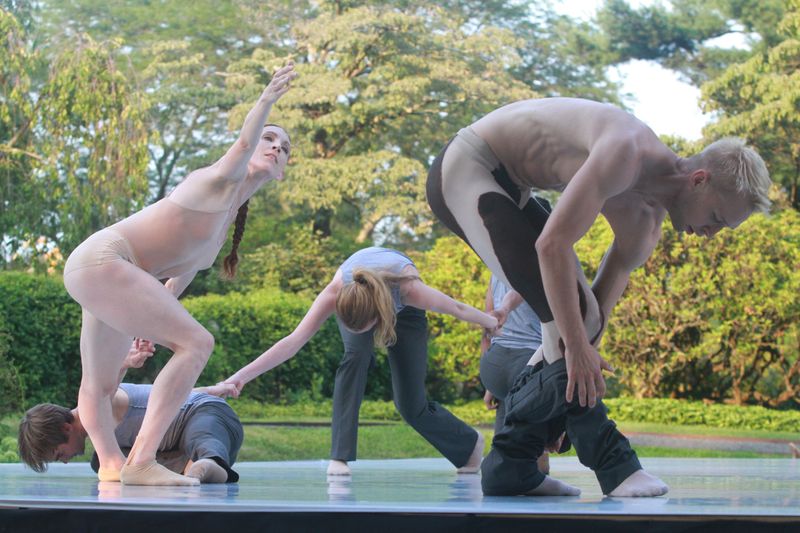
    Monday October 20th, 2014 – I stopped in at the DANY studios this evening where Sunhwa Chung’s Ko-Ryo Dance Theater were rehearsing for their upcoming performances at the John Ryan Theater in Brooklyn. They will present BACK TO AND AWAY FROM: LIFE IS EVERY DAY IV as part of the 9th annual Wave Rising Series.

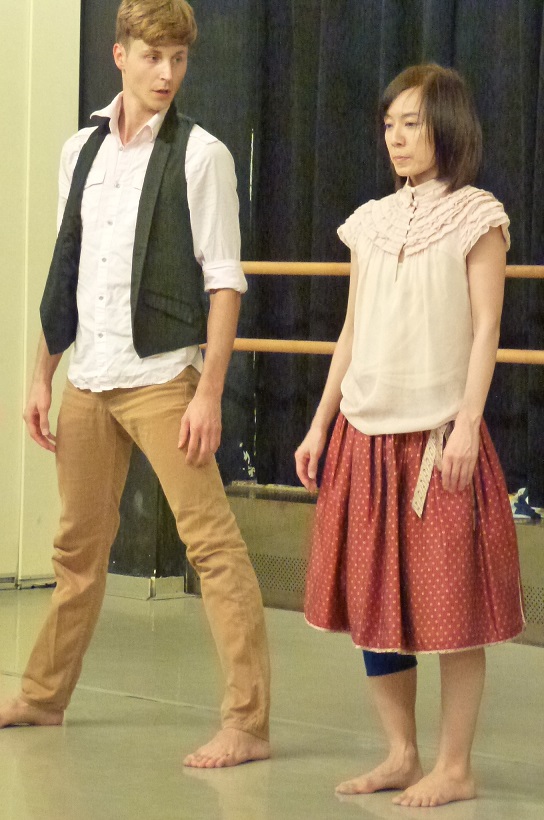
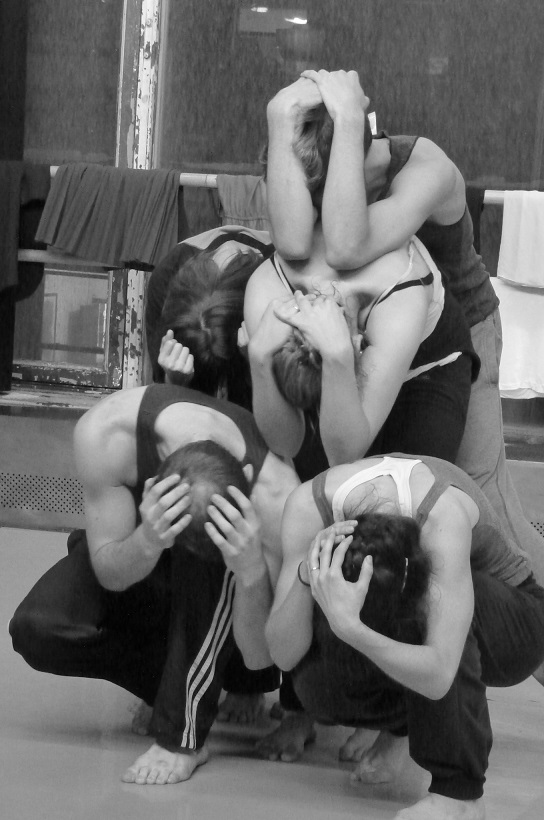
    Sunhwa was polishing up the piece when I arrived; then the dancers did a complete run-thru, in costume. The dancing is fast-paced, eluding my photography skills. Here are some pictures that survived the cut:

    L1500163

    Tommy Seibold, Marie Vestermark

    L1500060

    L1500179

    Alexandre Balmain, Kumiko Hara

    L1500010

    L1500038

  • Promotion at New York City Ballet

    307993_2245998383481_1924770756_n

    Please join me in congratulating Russell Janzen on his promotion to the rank of soloist at New York City Ballet.

  • Claudia Schreier’s HARMONIC

    Harmonic 1

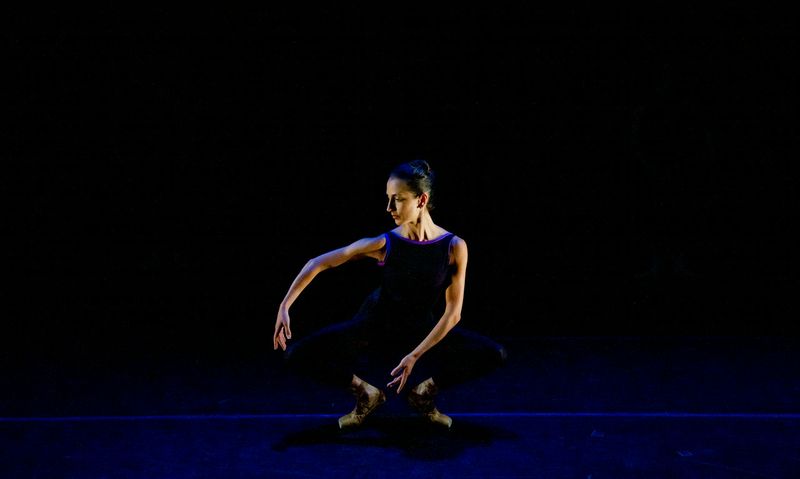
    Above: from Claudia Schreier’s ballet HARMONIC; photo by Lindsay Perry

    Claudia Schreier’s award-winning ballet HARMONIC is now on YouTube. Watch it here.

    Originally created for Columbia Ballet Collaborative and later staged for Craig Salstein’s Intermezzo Dance Company’s performances at Vassar, HARMONIC comes to us in this video from the 2014 Breaking Glass competition for female choreographers. Nicole Graniero (ABT), Edward Spots, Nadia Vostrikov and Amber Neff are seen dancing to a magical score: “Motion” by Douwe Eisenga.

    HARMONIC won the 2014 Breaking Glass award which provides Claudia with an opportunity to create/present a full evening of dance, to take place in Summer 2015; details of that performance will be forthcoming.

    More of Lindsay Perry’s images from HARMONIC as performed at the 2014 Breaking Glass Project:

    Harmonic 2

    Nicole Graniero in the ballet’s opening moments

    Harmonic 3

    Nadia Vostrikov

    Harmonic 5

    Edward Spots and Nicole Graniero

  • Pontus Lidberg Dance: Recent & Upcoming

    Pnts1515

    Above: from Pontus Lidberg’s FAUNE; photo by Nir Arieli

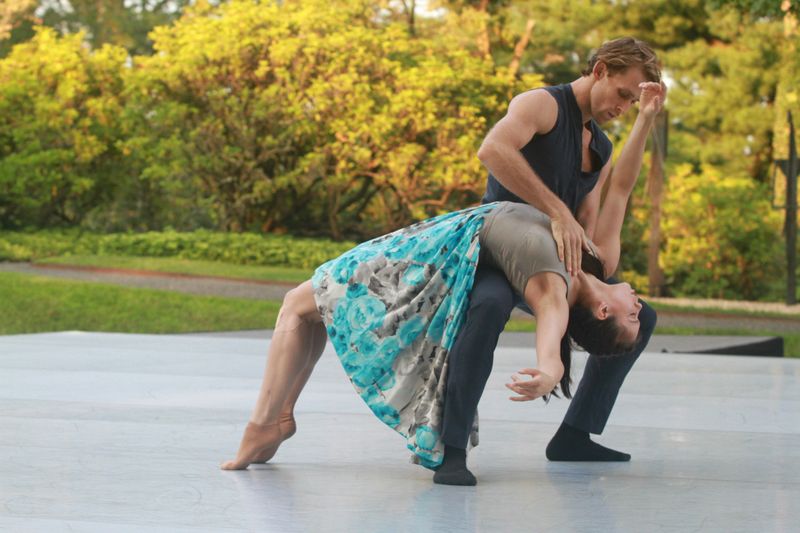
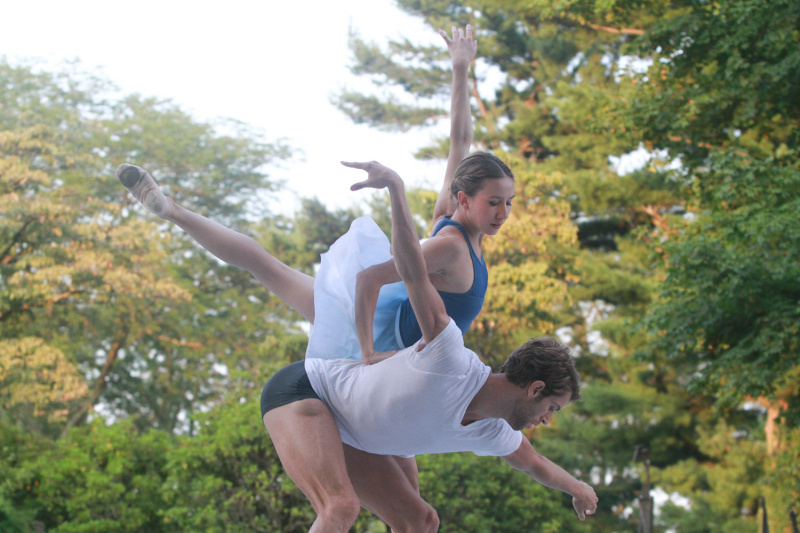
    Photographer Nir Arieli has sent me some images from Pontus Lidberg Dance‘s recent performance at Kykuit, the Rockefeller Estate at Pocantico, NY. The Company danced there on August 8th, 2014, in beautiful outdoor setting.

    Pnts1534
    Above: Adrian Danchig-Waring and Georgina Pazcoguin in an excerpt from WITHIN (Labyrinth Within)
     
    Pnts1551
    Above: Isabella Boylston and James Whiteside in a work-in-progress: a new duet scheduled to premiere at Fall For Dance on October 18th, 2014.
     
    Pnts1576
    Above: Adrian Danchig-Waring and Nadja Sellrup in TACTILE
     
    Pnts1594
    Above: Pontus Lidberg Dance in TACTILE
     
    Pnts1596
     
    Above: Pontus Lidberg Dance in TACTILE
     
    UPCOMING: Pontus Lidberg Dance will perform Pontus’s atmospheric Debussy ballet FAUNE on Saturday October 11th at the Hudson Valley Dance Festival. And on October 18th and 19th, Pontus’s duet for  Isabella Boylston and James Whiteside will premiere at the annual Fall For Dance Festival at New York’s City Center.

  • Tchaikovsky/Balanchine @ New York City Ballet

    10708211_10152712762704814_256726488_n

    Above: at a New York City Ballet rehearsal; photo by Craig Hall

    Wednesday September 24th, 2014 – An impressive line-up of favorite dancers in familiar roles, the music of Tchaikovsky, the choreography of Balanchine: what better way for me to start a new season at New York City Ballet?

    Under Clothilde Otranto’s baton, the four Tchaikovsky scores were nicely served up by the NYC Ballet‘s intrepid musicians. Tonight was probably considered an ‘easy’ night for these players: scores they have played dozens of times. They always deserve their spot-lighted ‘curtain call’ at the end of the evening, and it was good to hear a warm swelling of applause for them tonight.

    Ms. Otranto seemed to be favoring fast tempi in SERENADE tonight; the musicians assured that the emotional colours of the music came thru, and the dancers took it all in glorious stride. From curtain-rise, the corps provided an endless panorama of beautiful faces, forms, and personalities. It’s funny that I still find myself looking for people like Amanda Edge and Pauline Golbin among these ice-blue-gowned angels: and where’s Amanda Hankes tonight? Ah, well, they have danced into other phases of their lives – gone from this stage but never forgotten. 

    For present loveliness, we have a delectable quartet of demi-solistes: Faye Arthurs, Alina Dronova, Meagan Mann, and Mary Elizabeth Sell. And Gwyneth Muller always moves me as the consoling maternal figure at the end of the ballet.

    This was a blonde SERENADE: Sara Mearns, Sterling Hyltin, and Teresa Reichlen all looked sumptuous, especially when their hair came down for the final movement. Sara’s luxuriant dancing was given noble grounding by Jared Angle, ever the ideal cavalier. Sterling – her lingering balances spot-on – found just the right mixture of elegance and vivacity, catching the many musical moods in which her ‘character’ finds herself. Tess was divine lyricism personified, and Adrian Danchig-Waring seemed to have come down from Mount Olympus. The sight of Adrian and Tess crossing the stage together, raising Sara from her dream, and Tess’s marvelous slow-turning supported arabesque summed up everything that is SERENADE. The audience responded with a deeply resonant ovation; I am sure there were people in the audience seeing SERENADE for the first time, and I’m sure they will want to see it again.

    The quiet radiance of Maria Kowroski’s Preghiera in MOZARTIANA showed the great ballerina at her most communicative: the lovely passage with her hands in prayerful attitude was especially evocative tonight, as was the gentle silence of her pin-point bourrées. Later, as the ballet’s mood becomes more expansive, Maria’s swirling turns and trademark extension were woven into the music with queenly assurance. I couldn’t take my eyes off her. Tyler Angle was on fine form, his dancing marking the first of three displays of male virtuosity which had the audience cheering this evening. Maria and Tyler have formed an impressive partnership and I look forward to their future endeavors. The ever-excellent Daniel Ulbricht maintained the elegance of the ballet with his stylish dancing – his Gigue has become a signature role – and the Menuet was graciously performed by Marika Anderson, Megan Johnson, Emily Kikta, and Gwyneth Muller.

    A rousing rendition of the TCHAIKOVSKY PAS DE DEUX caused the audience to shed any trace of decorum and yell lustily as Ashley Bouder and Gonzalo Garcia traded technical fireworks in a vivid and smile-inducing performance. After a graciously musical adagio, Gonzalo gave an astonishing performance of his solo – some of the best dancing he’s ever done – nailing the myriad turns at the end before a final brilliant combination to the knee, expertly timed. The crowd went wild. Ashley then swept thru her own dazzling display of danced coloratura, tossing in spicy little pauses and teasing us with her technical savoir faire. Another roar went up as her solo’s final fantastical turns stopped on the proverbial dime. Now with the audience squarely in the palms of their hands, these two magicians of dance swept thru a blazing coda – Ashley’s deluxe fouettés yet another savorable moment – and brought down the house. 

    In the haunted ballroom setting for the Élégie of TCHAIKOVSKY SUITE #3, Rebecca Krohn and Ask LaCour brought tears to my eyes with their poetic evocation of an ideal found…and lost. Rebecca’s restless, almost feral allure was captivating to behold. And Ask is so perfect here: covering the space with questing leaps in pursuit of his elusive muse. Their performance moved me deeply, their parting and Ask’s sinking back into a reverie of heartache drawing up so many emotions.

    Abi Stafford and Justin Peck sustained a mood of mystery in the Valse Mélancolique, Justin’s innate sense of drama nearly drawing the coolly captivating Abi into his world. Yet it is she who prevails: at the end he backs away from her, completely under her spell. Abi and Justin are among my favorite dancers to watch; having them cast together here was a very nice gift.

    In the Valse, a particularly appealing trio of diverse beauties – Olivia Boisson, Lara Tong, and Claire Kretzschmar – looked fetching in one of the ballet’s many featured corps passages.

    In a bewitching performance, Erica Pereira spun marvelously thru the plentitude of pirouettes Balanchine demands of her in the Scherzo; her lustrous black hair and shimmering silver-white tulle flowing as she traced a comet-like trajectory around the stage. Antonio Carmena matched Erica’s spinning flourishes with his airy leaps; they fly off in opposite directions at the end. 

    And now we come to the grand finale: Theme and Variations. The recently refurbished costumes for this ballet seem to glow as Tiler Peck and Joaquin de Luz set forth the elegant opening Theme. Moments later, in her first solo variation, Tiler displayed her epic perfection as a classical ballerina with some truly glorious dancing. The audience showered her with a torrent of applause. The ballet progressed – with excellent suppport from the corps – as Tiler and Joaquin moved continually from one peak of perfection to another. Joaquin’s marziale variation was thrillingly executed, the devilishly handsome dancer basking in another avalanche of cheers, the iconic de Luz smile justifiably lighting up. The ballet swept forward, buoyed not only by the two spectacular principals but by a very impressive quartet of demi-solistes: Lauren King, Brittany Pollack, Mary Elizabeth Sell, and Lydia Wellington. Their cavaliers in the finale were Daniel Applebaum, Allen Peiffer, David Prottas and Andrew Scordato.

    As Ms. Otranto guided the evening to its triumphant close, the audience burst yet again into a passionate ovation: Tiler and Joaquin – and indeed the entire Company – were saluted at the end of a great evening…a great evening for dance, for Tchaikovsky, and for the enduring magnificence of Mr. B.

  • Yin Yue/Jiangxi Zhongshan Dance School

    10557287_10152602223041926_5101198420257482650_n

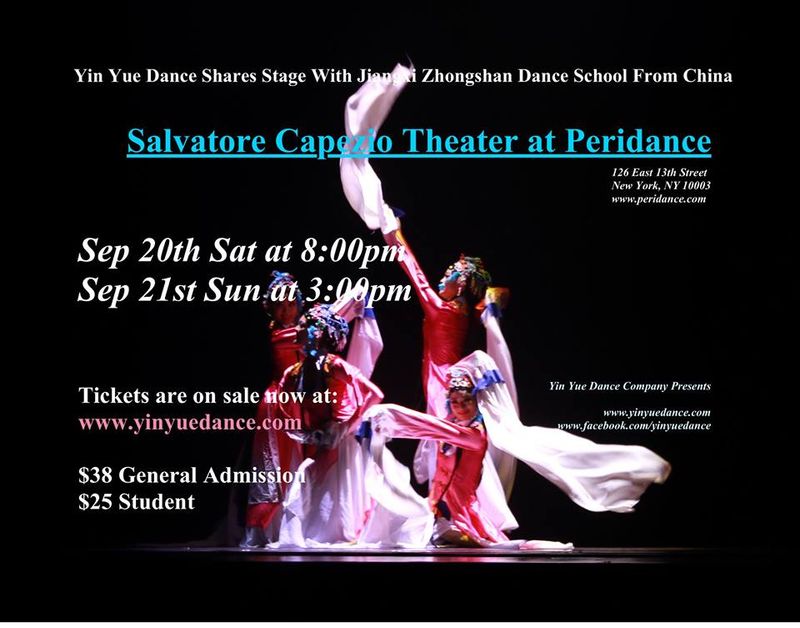
    Sunday September 21st, 2014 – Yin Yue Dance Company and students from China’s Jiangxi Zhongshan Dance School shared the stage at Peridance this afternoon in a programme that combined the contemporary with the classical in an East-Meets-West cultural dialogue.

    Yin Yue is an award-winning Shanghai-born choreographer who graduated from Tisch, New York University. For this event, she summoned a contingent of dancers from the Jiangxi Zhongshan Dance School, a private professional dance school located in Nanchang, Jiangxi Province, China, who have arrived in New York City, bringing  traditional Chinese classical/contemporary and folk dance as they meet the New York audience for the first time.

    The programme was well-devised to contrast the two styles: the young women from Nanchang performed in colourful, elaborate costumes while Yin Yue’s dancers appeared in stark settings and casual contemporary streetwear. The two companies alternated throughout the afternoon.

    The student company opened the show with a brilliant and festive piece Gan Yun You You in which elements of Chinese opera were featured. Later – in Spring Ballet – the girls danced on pointe in long pink tutus to the voice of a pop-oriented coloratura soprano. A quartet of solos – each dancer in red-highlighted costumes – went on a bit too long. Then Qinghua Rhyme was danced on pointe to a pop beat, while an Arabian Nights atmosphere pervaded Blossom: the girls all wearing red harem-style costumes and each carrying a red rose. Nuo Dance, the afternoon’s concluding work, featured the dancers wearing masks. At the end, a baby was delivered and he started to cry. Throughout their peformance, the dancers from the Jiangxi Zhongshan School showed surprising maturity of presentation and seemed thoroughly at home on the stage.

    Yin Yue and her fellow dancers – Liane Aung, Grace Whitworth, and Luke Bermingham – performed five works, ranging from quartets to a solo by Mr. Bermingham. Yin Yue’s choreography is strong and sure; she makes excellent use of space and lighting and she persuasively employs partnering and passages of dancing in-sync. Her strongest work was the solo for Mr. Bermingham – One Step Before The Exit – which seemed to express the loneliness of contemporary life and a (thwarted) desire to connect.

    Yin Yue’s undoubted gift for impressive dramatic movement is somewhat compromised by a lack of variety in her choice of music. Everything seems to be danced to a beat overlain in darkly throbbing industrial noise and/or static. The vaguely ominous atmosphere created by this type of music – so favored by many of today’s younger choreographers – becomes a cliché after a while. A bit of Chopin, alluded to in the playbill, never materialized. In taking a wider view of musical possibilities, I believe the choreographer will find ever-expanding avenues of expression.

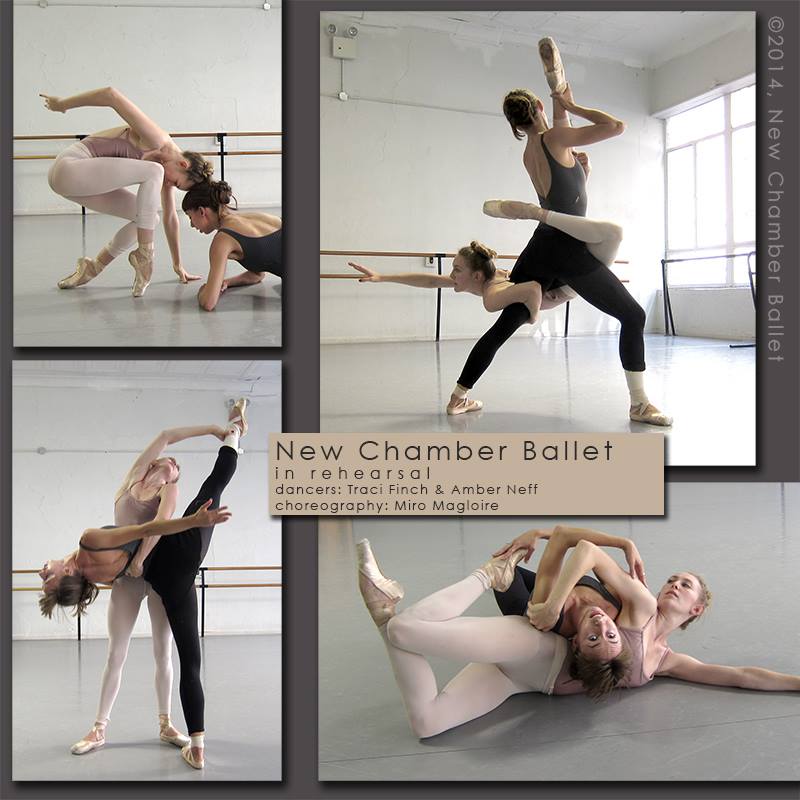
  • 10th Anniversary @ New Chamber Ballet

    Miro ncb rehearsal

    Above: New Chamber Ballet company class; photo by Amber Neff

    Friday September 19th, 2014 – Miro Magloire’s New Chamber Ballet have inaugurated their tenth anniversary season with a programme featuring three Miro Magloire premieres and a work by NCB resident choreographer Constantine Baecher’s “Happy Dance Of The Wild Skeletons” (to music of John Cage), as well as Miro’s intriguing “Tilting and Leaning“, set to piano music by Pierre Boulez.

    Over the past decade, New Chamber Ballet have carved out a special niche for themselves in the Gotham dance world. Their “up-close-and-personal” concerts – always danced to live music – have drawn ever-expanding audiences, and tonight they played to a standing-room-only crowd.

    Much praise is due pianist Melody Fader and violinist Doori Na who perform the often complex scores that Miro likes to use with a high level of musicality. Exceptional tonight was their performance of Mauricio Kagel’s ‘Klangwölfe’ for the ballet RAW.

    In recent seasons Miro has presented narrative works: domestic dramas about ghosts, sibling rivalries, or mysterious letters. This evening’s three new works are more abstract though of course certain themes might be implied. The first ballet is aptly titled FAST FORWARD; danced to Beethoven’s ‘Rondo for Violin and Piano’, the work has three ballerinas – Sarah Atkins, Holly Curran, and Traci Finch – rushing about the space in speedy (even risky) combinations. The breathless quality of the movement is a fine response to the zesty drive of the Beethoven as played by Doori and Melody.

    Miro020-3289003989-O

    Above: Sarah Artkins in Miro’s TILTING/LEANING; photo by Adam Jason

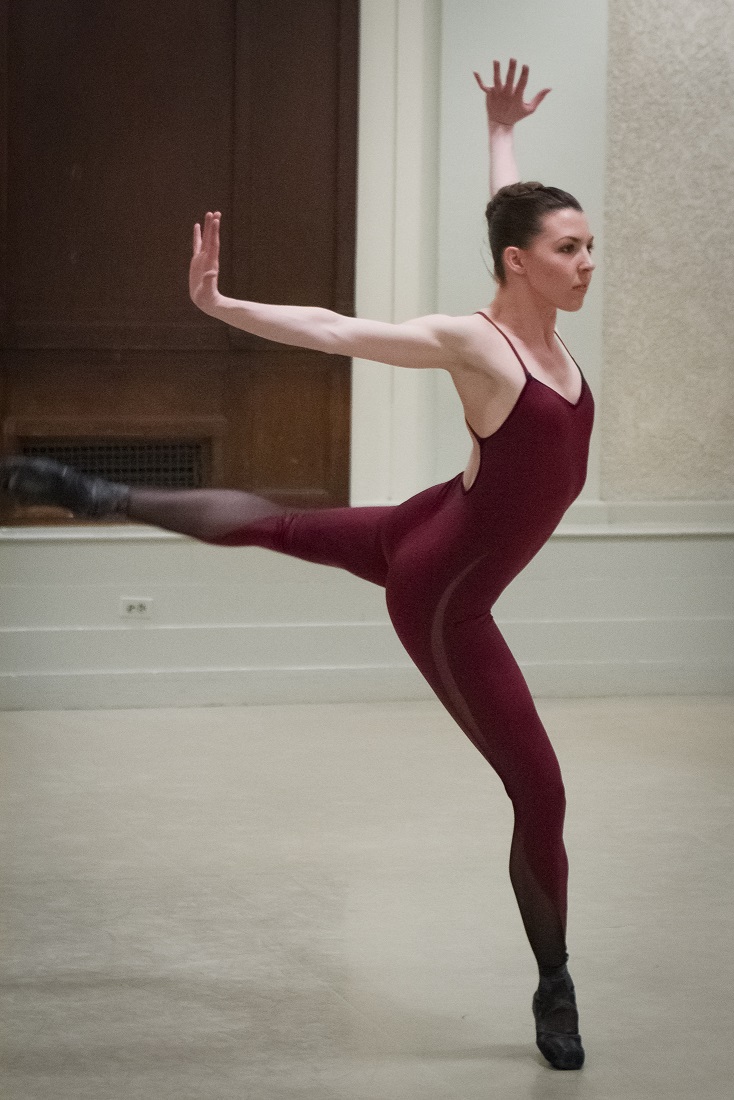
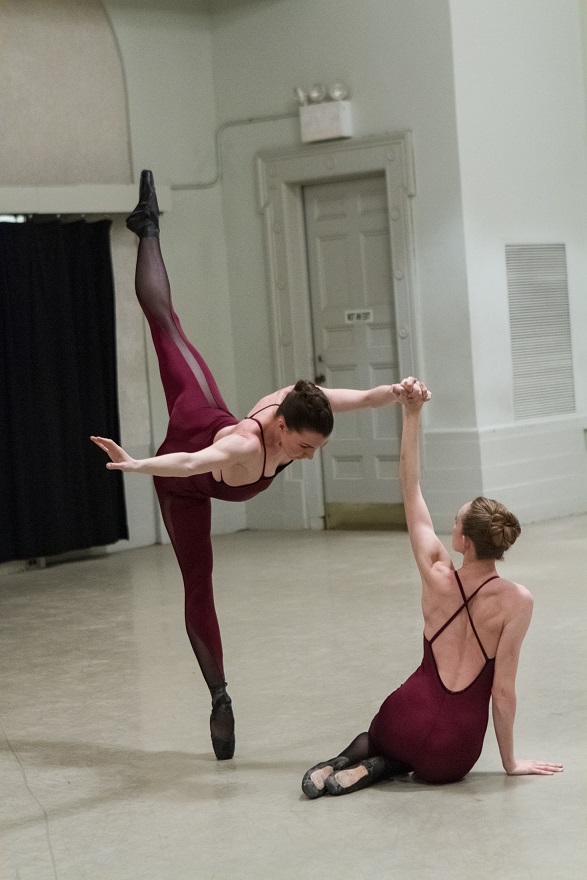
    Melody Fader took in stride the demands of Pierre Boulez’s ‘Notations’ which accompanies last season’s intriguing duet TILTING/LEANING. Dressed in Sarah Thea Swafford’s sleek wine-coloured body tights, dancers Sarah Atkins, Traci Finch, and Amber Neff go from intense to playful and back again in choreography where they balance against one another in unique and quirky shapes.

    Miro052-3289006317-O

    Supported arabesques are a signature motif in TILTING/LEANING (Sarah and Amber above, in an Adam Jason photo). At the end Sarah and Amber appear to ‘fold’ Traci into an improbable little bundle. This ballet rewards repeated viewings with its resonant nuances.

    L1480519

    For Holly Curran (rehearsal image, above), Miro has created an unusual tour de force solo entitled IN THE COLD. While Melody Fader spins out some Satie at the piano, Holly appears alternately shell-shocked, frantic, or trembling with the chills. Repetitive, compulsive moves give way to a spacious manège of leaps; the dancer periodically assumes a potent arabesque or pauses to rearrange herself before contemplating her next move. The solo, which choreographically rather plays against the expected responses to the Satie melodies, was excellently mastered by dancer and pianist.

    10486513_10152694171488571_8874687051716580051_n

    Above: rehearsal images from Miro’s new duet RAW

    Miro’s meshing of music and movement created yet another fresh vision with RAW. Introducing the work, Miro spoke affectionately of the German-Argentine composer Mauricio Kagel who was Miro’s composition teacher. The choreographer pays homage to his musical mentor with one of his most inspired works to date: RAW is such a fascinating piece that when it ended I immediately wanted to see (and hear) it again.

    Doori Na – his strings muted – and Melody Fader evoked a misterioso atmosphere: Doori showed great control as he spun out a thread of sound, and Melody later drew forth a shimmering, high-lying theme from the keyboard. Dancers Traci Finch and Amber Neff are literally entwined much of the time in this duet; their handling of the strenuous partnering motifs, including lifts and intimate bondings, gave the ballet a captivating intensity. An aggressive passage eventually leads to serene, almost worshipful images as Amber leans against the piano and Traci kneels at her feet. RAW seems to veer from sensuous to sterile to pensive, and it is perhaps Miro’s most intimate creation to date.

    To end the evening, Miro invited the viewers to circle the dancefloor, the better to watch Constantine Baecher’s impetuous romp of a duet, HAPPY DANCE OF THE WILD SKELETONS. Melody Fader plays John Cage’s ‘Bacchanale’ on a prepared piano as dancers Traci Finch and Amber Neff – in girlish playsuits and bobbi-sox – indulge in playful, slap-happy hijinx. Their hair comes down at the end, as they revel in the sheer joy of being silly.

    Happy anniversary, Miro!

    The Company’s next performances will be on November 21st and 22nd. 2014. Visit their website here.

  • Isadora: Lament, Hope, and Renewal

    Duncan_2

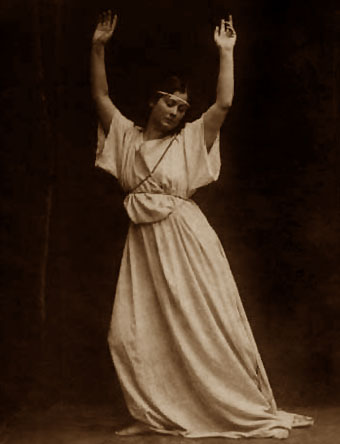
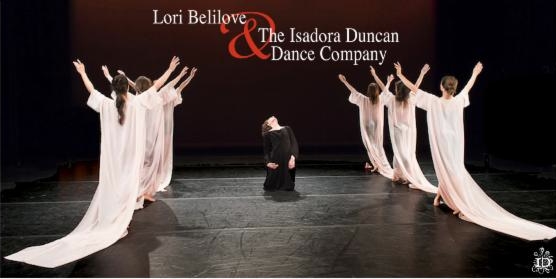
    Wednesday September 17th, 2014 – Lori Belilove and the Isadora Duncan Dance Company presented an evening of film, live performance and discussion in an intimate salon setting at the Company’s home space on West 26th Street. A few days after marking the anniversary of Isadora’s untimely death (on September 14th, 1927), Lori and her Company keep the spirit of ‘the mother of modern dance’ vividly alive.

    For me, this week brought the unusual happenstance of back-to-back evenings of Martha Graham and Isadora Duncan. These two pioneering forces on the frontiers of modern dance seem to me to be twin goddesses: from them, so many blessings flow – even onto the present day.

    Central to this Isadora evening was the showing of a silent film clip of brief fragments from Dance of the Priestesses, a ‘lost’ Duncan work. This film, made in 1963, features extremely rare footage of Anna Duncan, one of the original Isadorables. In the film,  Anna dances with Julia Levien and Hortense Kooluris, two women who were the teachers of Lori Belilove: thus the direct line of passing the torch from generation to generation is maintained. 

    The film was entrusted to Lori Belilove and it inspired her to embark on a restoration of Dance of the Priestesses which, until now, had been little more than a legend. The dance is set to music by Christoph Willibald von Gluck from his opera IPHIGENIE EN TAURIDE. In the film, Anna, Julia and Hortense show a wonderful weighted quality. Lori was able to impart this to the dancers of her current Company and, after viewing the film, we were treated to a beautiful live rendering of the piece. Lori has set it for five women (Isadora’s ensemble works can be danced by small or large contingents of dancers). The girls looked stately in their midnight-blue gowns, with Morgana Rose Mellett in a prominent role and Kim D’Agnese, Emily D’Angelo, Faith Kimberling, and Nicole Poulos as her sister/priestesses. Their performance evoked the ancient gods and the mythic rituals of times long vanished.

    686

    Also on film, we saw a full performance of Slow March (photo above) as performed by the Company last May.

    Isadora created danceworks in several moods, stemming from her mental state at the time of creation. Joyous, celebratory dances gave way to dark, lamenting themes following the death of her two children. Lori Belilove performed two of these despairing solos tonight: Death and The Maiden (set to Chopin) and Mother (set to Scriabin). The mood was brightened by two Chopin mazurkas danced by Mlles. D’Agnese, Mellett, Kimberling and D’Angelo in signature pink-and-white Grecian tunics. Lori and the four girls joined in an extended finale: Dance of the Blessed Spirits and Orpheus’ Lament, both drawn from themes from Gluck’s opera ORFEO ED EURIDICE

    Pianist Melody Fader played all the selections for the evening, an enhancement to the atmosphere of the performance. 

    Watching the dances this evening, I couldn’t help but think that today’s young choreographers could benefit greatly in studying Isadora’s work. In terms of musicality, structure and creation of mood, Isadora’s instincts always seem spot-on. As dancer Miki Orihara wrote in her notes for her recent solo concert, we may look into the future of dance by investigating the past.

  • Notes on a Voyage

    Mg

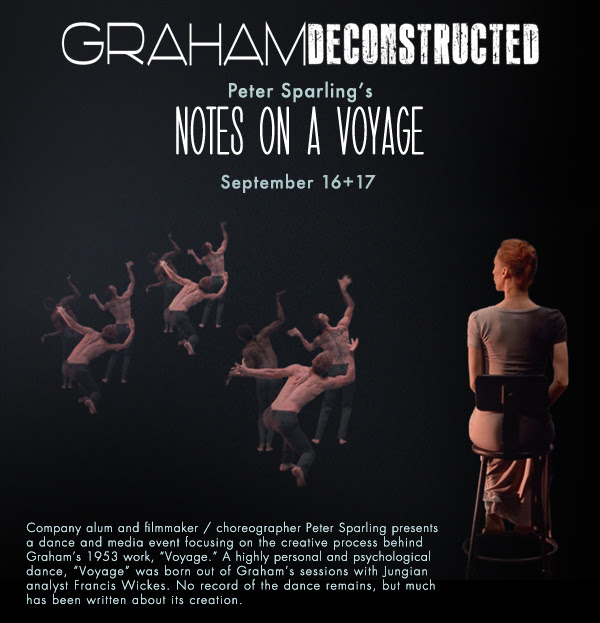
    Tuesday September 16th, 2014 – Whenever I come away from a performance (or rehearsal) of the Martha Graham Dance Company, I feel the need to invent new adjectives to describe both the works being danced and the people dancing them. Tonight, as part of the on-going GRAHAM/Deconstructed series, we saw an open rehearsal of the 1947 Graham classic, Errand Into the Maze, and a new work, Notes on a Voyage, created by former Graham dancer Peter Sparling.

    Errand Into the Maze, with its powerful score by Gian Carlo Menotti, seems startlingly fresh and meaningful each time I see it. Though billed as a ‘rehearsal’, the dancers – PeiJu Chien-Pott and Ben Schultz – gave a performance of deep commitment and generous physicality. Pei-Ju, luminous in a white shift, painted the terror and the ultimate triumph of her journey in a vividly nuanced performance. With his handsomely inked torso, Ben seemed an unconquerable force as he stalked his prey. Yet in the end, PeiJu overcomes her fear and casts him down. The packed house watched this masterpiece with intense focus and burst into an enthusiastic and richly-deserved applause for the two dancers at the end.

    6a00d8341c4e3853ef017ee9f9df65970d

    And now let me take a moment to congratulate the award-winning PeiJu Chein-Pott (above)! Read the story here.

    Photo antonia k miranda

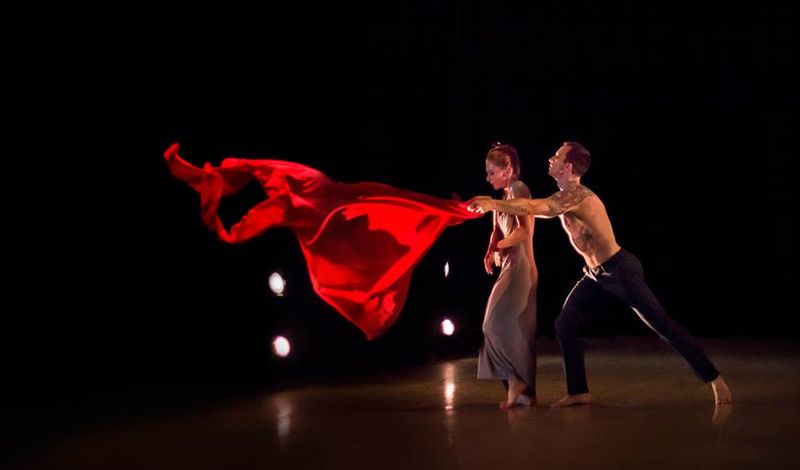
    Above: Blakeley White-McGuire and Ben Schultz in Notes On A Voyage, photo by Antonia K Miranda

    In his striking multi-media work, Notes On A Voyage, Peter Sparling has summoned up a vision of Martha Graham’s lost 1953 work, Voyage. Stuart Hodes, who was among the original cast, gave valuable insights into the creation (and ultimate disappearance) of Voyage which evolved out of Martha Graham’s sessions with Jungian analyst Francis Wickes. No filmed or notated record of the dance remains, but it has been written about and spoken of in Grahamian circles over the intervening decades.

    Mr. Hodes revealed that, after a two-year period of creation, Voyage premiered and Martha Graham was not pleased with it. She immediately began re-working it, but it never again saw the light of day outside the studio…until now, in Mr. Sparling’s thoughtful and provocative rendering.

    The original Voyage had a Noguchi setting. Martha’s notes indicate she viewed the piece as taking place in a house on the edge of a desert; yet Noguchi’s design showed a boat. This paradox was somehow resolved at the time. For the current re-imagining, the space is empty aside from an extremely high stool in one corner, and a bolt of red fabric.

    Mr. Sparling found the William Schuman piano music, and he conceived a brilliantly executed film to accompany the dance. The voice of Ellen Lauren is heard, reading excerpts – fragments, really – from Martha Graham’s journals and letters. The overall atmosphere compellingly fuses the elusive past with the vibrant presence in the personages of the four magnificent dancers: Blakeley White-McGuire, Tadej Brdnik, Lloyd Knight, and Ben Schultz.

    Descibed as ‘a woman seeing herself thru the eyes of three men’, the central character takes on – in a succession of duets – the aspects of a goddess, a warrior, and a lover. Shirtless in fitted trousers, the three men display the agility and strength that Graham always demanded of her male dancers. Dancing first with Lloyd, then Ben and finally Tadej, Blakeley filled the space with both restless energy and moments of pensive calm, sometimes skittering up to the high seat from which she could view her own world. Blakeley’s performance was a pure astonishment of personal magnetism, her alluring physicality and her compelling gift for turning movement into magic gave me one heart-racing thrill after another. What a remarkable and generous artist she is.

    A great night, then, in every regard. So lovely to find Xiaochuan Xie, Alessandra Larson, Abdiel Cedric Jacobsen, and Ian Spencer Bell among the crowd.

    ~~~~~~~~~~~~~~~~~~~~~~~~~~~~~~~~~~~~~~~~~~~~~~~~~~~~~~~~~~~~~~~~~~~~~~~~~~~~~~~~~~~~~~~~~~~

    Upcoming: On October 30th, the Martha Graham Dance Company will present Appalachian Spring Up Close and Personal – a complete performance of Appalachian Spring in costume and with the classic Noguchi set pieces. This performance marks the 70th anniversary of the work’s premiere on October 30th, 1944. This one-night-only event will also feature film and photos from the premiere, and an introduction with quotes from Graham’s correspondence with Aaron Copeland as they created this beloved American classic. Mariya Dashkina Maddux will lead the cast in Graham’s role of The Bride. She will be joined by Lloyd Mayor, Natasha Diamond-Walker, Lloyd Knight, Xiaochuan Xie, Ying Xin, Charlotte Landreau, and Lauren Newman. Ticket information will be forthcoming.