Category: Ballet

  • Honoring Isadora Duncan’s GRANDE MARCHE

    AVT_Isadora-Duncan_4025

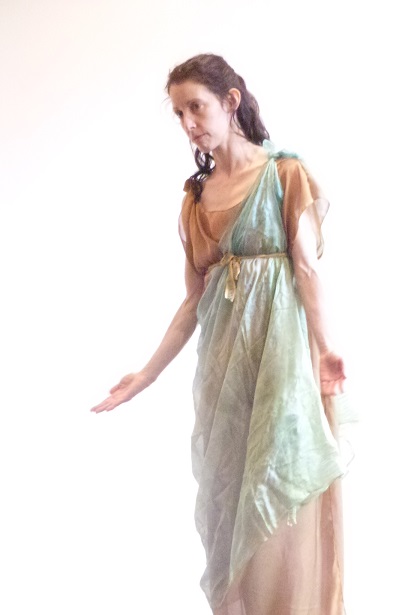
    On Saturday, May 31, 2014 at 5:00 PM, the Green-Wood Historic Fund will host a tribute to Isadora Duncan (above), one of the most innovative and fascinating figures in the history of dance, as Catherine Gallant and her dance company (Catherine Gallant/DANCE) perform some of Duncan’s most memorable works. 

    Green-wood

    Green-Wood (above) is located at 5th Avenue and 25th Street in Brooklyn.  Further information and tickets here.

    L1420039

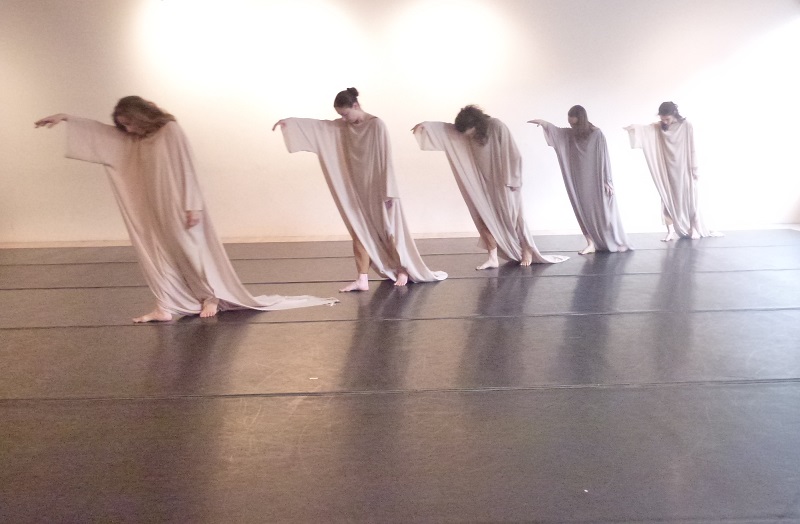
    The performance marks the centennial of Duncan’s GRANDE MARCHE (created in 1914), set to the music of Franz Schubert, and further includes other late-period Duncan dances born of her sorrow. The Company will also present works of hope and rebirth, set to a Nocturne and Polonaise of Chopin, followed by Isadora Duncan’s dances of exuberance and light to celebrate the rising of the sun.

    L1410784

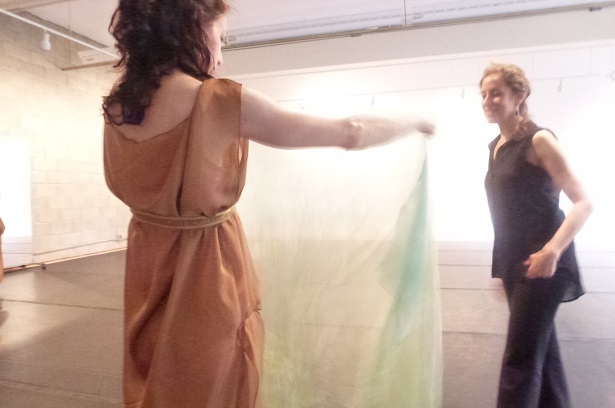
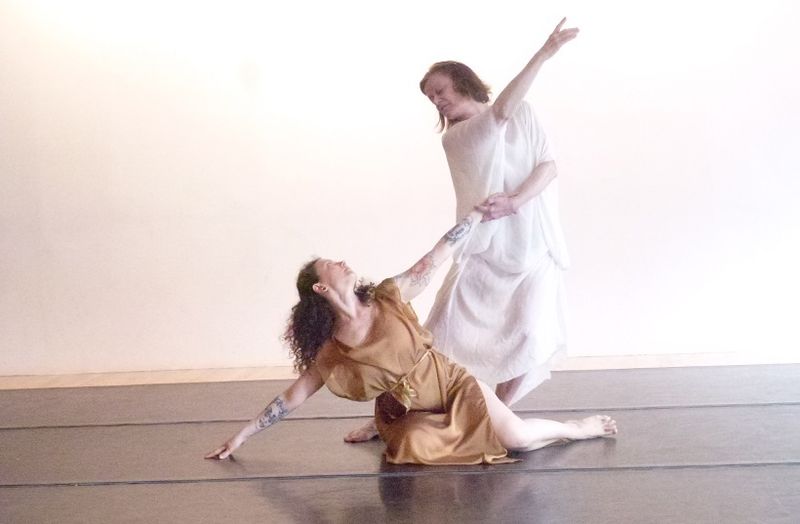
    Since I was otherwise engaged on the day of the performance, Ms. Gallant (above, with dancer Michelle Cohen) very kindly welcomed me to a studio run-thru of her programme; this took place on an overcast, rainy afternoon at the Gibney Dance Center. Beautiful atmosphere in the studio as the women prepared their costumes and arranged their hair for the dances to come.

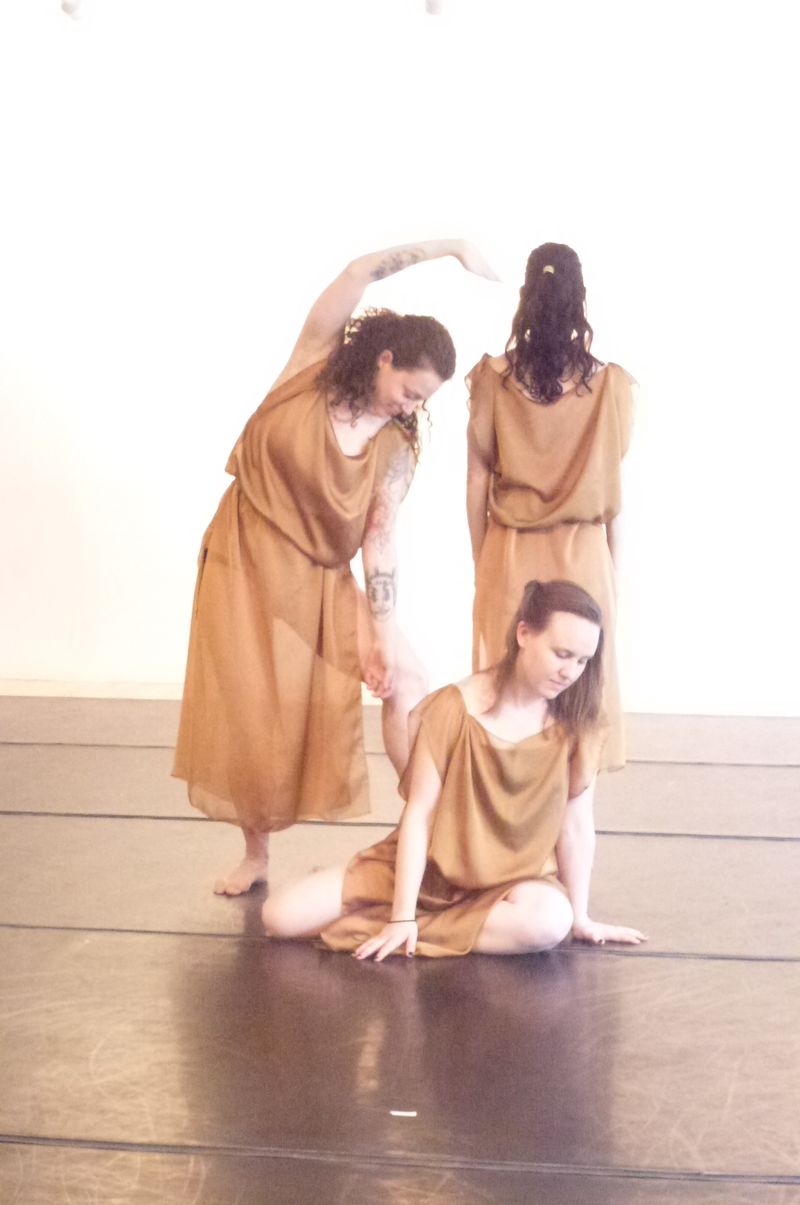
    In addition to the Duncan works beging presented, Catherine Gallant has created new pieces which resonate with the inspiration of Isadora. One of these, WAVE (set to Chopin) was being rehearsed when I arrived:

    L1410643

    Above: Magherita Tisato, Megan Minturn (seated) and Michelle Cohen rehearsing WAVE

    L1410758

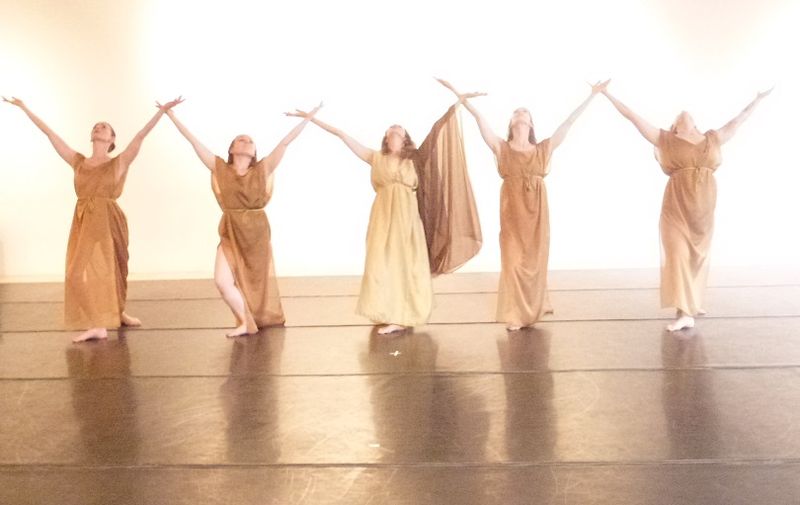
    …and (above), the same moment in costume. Ms. Gallant has also created PRAYER, set to music of Leonard Bernstein, which will close the programme.

    In addition to GRANDE MARCHE, the Duncan works to be presented are: POLONAISE (1919); HARP (1920); MOTHER (1923); ANDANTE (1917); SCHERZO (1917); and NOCTURNE (1914).

    Here are some photos from my studio visit:

    L1410761

    Megan Minturn in WAVE

    L1410856

    The ensemble in POLONAISE

    L1410971

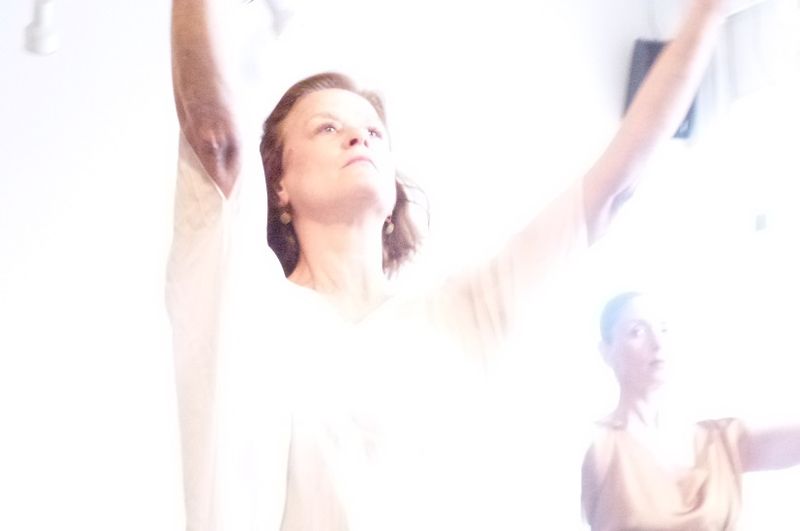
    Margherita Tisato, Megan Minturn, and Natalia Brillante

    L1410967

    Michelle Cohen

    L1410984

    Catherine Gallant

    L1420077

    Loretta Thomas, soloist in GRANDE MARCHE

    L1420123

    Margherita Tisato and Loretta Thomas in GRANDE MARCHE

    L1420134

    Loretta Thomas and Margherita Tisato

    L1420149

    Loretta Thomas

    L1420098

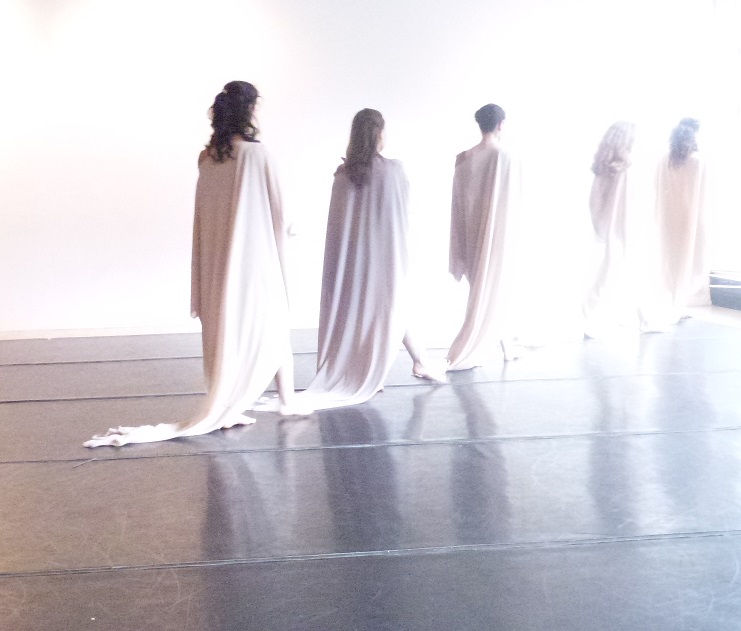
    Recessional from GRANDE MARCHE

    This was one of those studio experiences that seemed to touch upon the very essence of dance; as Miki Orihara said of her recent solo concert RESONANCE, we must look to the past to find the future of this art form.  Those who think that Isadora’s dances are outdated and irrelevant today should perhaps stop thinking and start feeling. In the work of Ms. Gallant and her dancers, the past finds us in the present; I commend them all for keeping the flame burning.

  • Benedetti/Jurowski @ The NY Phil

    Vladimir_Jurowski

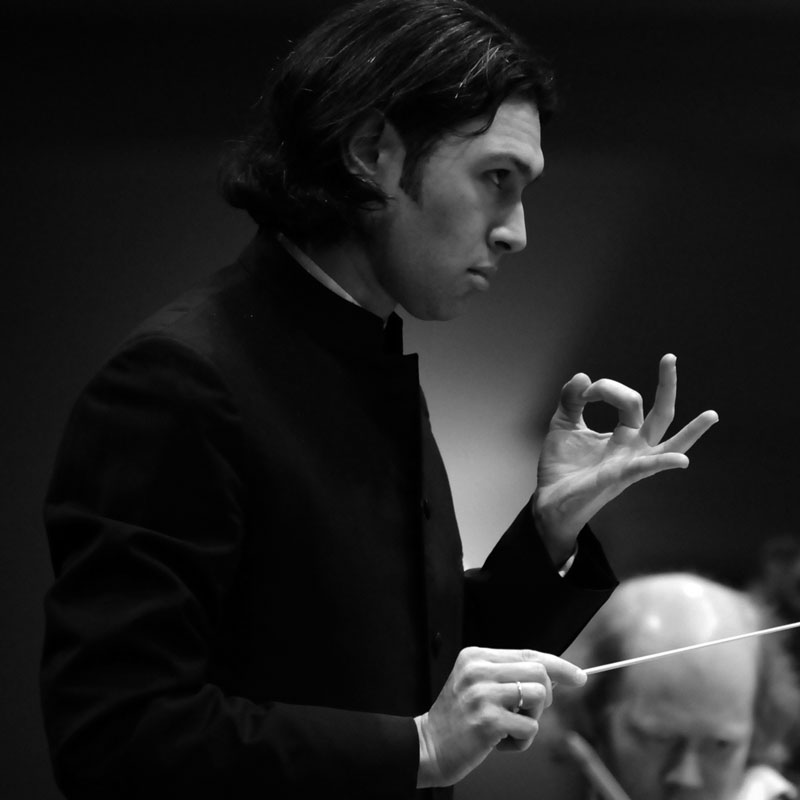
    Wednesday May 21, 2014 – Vladimir Jurowski (above, in a Matthias Creutziger photo), who led a series of very impressive performances of Strauss’ DIE FRAU OHNE SCHATTEN at The Met earlier this season, was on the podium at Avery Fisher Hall tonight for his New York Philharmonic debut. The programme featured works by Szymanowski and Prokofiev. In the days just prior to tonight’s concert it was announced that the scheduled violin soloist, Janine Jansen, was indisposed and would be replaced by Nicola Benedetti.

    Arts_ents_benedetti__33199b

    Ms. Benedetti (above) hails from Scotland, of an Italian family. She trained at the Yehudi Menuhin School in Surrey and she maintains a full calendar of orchestra, chamber music, and recital engagements worldwide. A Decca recording artists, Ms. Benedetti takes an active role in music education and outreach. Tall and strikingly attractive, she was welcomed warmly by the NY Phil audience tonight following her excellent playing of the Szymanowski violin concerto #1. This was her Philharmonic subscription debut.

    Karol Szymanowski wrote this concerto #1 in 1916. In the course of his musical career, this Ukraine-born but definitively Polish composer progressed from a Late Romantic style of writing thru an embrace of Impressionism (and a flirtation with atonality) to a later period when folk/national music became a strong influence.

    Szymanowski’s violin concerto #1, often referred to as the “first modern violin concerto”  leaves aside the customary three-movement concerto structure and instead unfolds as a tone poem with the violin ever-prominent. Tonight’s performance was entrancing from start to finish, Ms. Benedetti showing great control in the sustained upper-range motifs that permeate the violin part: here she was able – at need – to draw the tone down to a silken whisper. The composer further calls for some jagged, buzzing effects as well as flights of lyricism from the soloist; a long cadenza requires total technical mastery. Ms. Benedetti delivered all of this with thoroughly poised musicality. Meanwhile the orchestra, under Maestro Jurowski’s baton, paints in a brilliant range of colours, periodically breaking into big melodic themes that have an almost Hollywood feel. Both the piece and tonight’s performance of it were thrilling to experience, and Ms. Benedetti truly merited her solo bow and the enthusiastic acclaim of both the audience and the artists of the Philharmonic.

    Following the intermission during which my friend Monica and I were enjoyably chatted up by a young reporter from the Times of London, Maestro Jurowski led a one-hour suite of selections from Prokofiev’s ballet CINDERELLA. This is a ballet I’ve never seen in live performance, though the music’s familiarity comes as no surprise. Tonight’s sonic tapestry of excerpts allowed us to easily follow the narrative, and the Philharmonic musicians gave full glory to the rhapsodic waltzes while individual players took advantage of the ballet’s numerous colorful, characterful solo vignettes. The marvelous, ominous tick-tock leading up to the stroke of midnight and the ensuing mad dash were all terrific fun. The score, full of romance, humour, and irony – and the charming introduction of maracas – provided a superb debut vehicle for Maestro Jurowski. Let’s hope he’ll be back at Avery Fisher Hall soon. And Ms. Benedetti as well.

  • Balanchine’s “Davidsbündlertänze” @ NYCB

    C37708-3_Davidsb_LaraceySuozzi

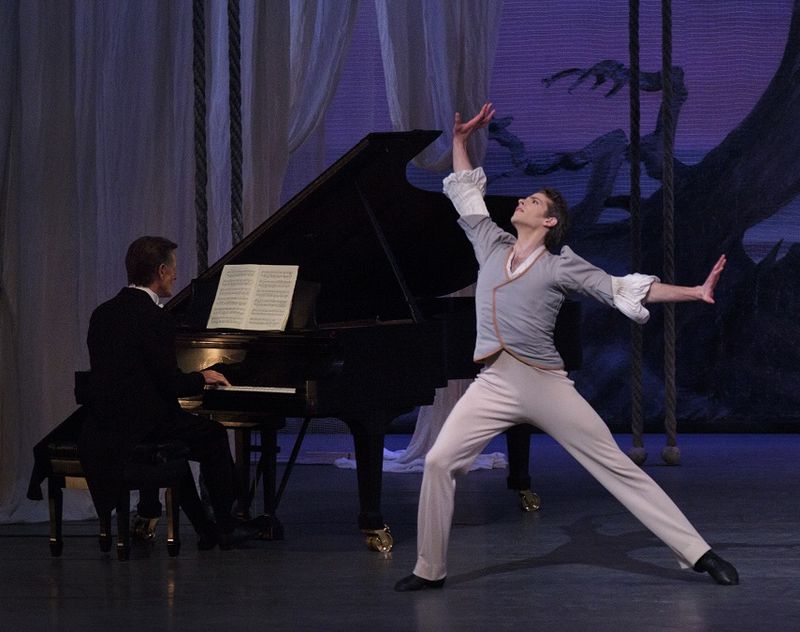
    Above: Ashley Laracey and Sean Suozzi in Robert Schumann’s Davidsbündlertänze, photo by Paul Kolnik

    Tuesday May 20, 2014 – Created in 1980, George Balanchine’s setting of Robert Schumann’s Davidsbündlertänze was one of the choreographer’s last works. It’s a unique ballet, deeply moving in its depiction of the composer Robert Schumann’s descent into madness. 

    During the winter of 1854, Schumann’s developing insanity took a dramatic turn: he began hearing “angelic” voices which evolved into the bestial cries of wild animals. One February morning he walked to a bridge over the Rhine and threw himself in; he was rescued by fishermen. Schumann himself asked to be institutionalized, to prevent his becoming a burden on his wife, Clara. He was placed in a sanatorium. His doctors prevented Clara from seeing him for more than two years, until days before his death.

    The Rouben Ter-Arutunian setting for this ballet, which has an antique look, surrounds the dancing area with gauzy curtains. The backdrop shows a body of water – perhaps alluding to Schumann’s attempt to drown hmself – and a far-shining cathedral hovering in the sky, the source perhaps of the “angelic” voices summoning the composer. At one point, mysterious figues all in black and holding large quill pens appear: these represent the Philistines, whose admonishing writings were poised to oppose art or innovation in the arts and against who the Davidsbündler (the League of Davidthe composer’s imaginary society of artists) took a firm stance.

    The ballet, danced by four couples, seems to depict various phases of the relationship between Schumann and Clara; it may also hint as certain aspects of Balanchine’s many romances. In Suzanne Farrell’s book, Holding Onto The Air, the great ballerina says that Balanchine never told her what Davidsbündlertänze was “about” during the course of the ballet’s creation. It wasn’t until later that she made the connection to Schumann’s own life.

    Suzanne Farrell came very much to mind tonight in the ballet’s opening duet, for Rebecca Krohn reminded me more than ever of Farrell, who was of course Balanchine’s longtime muse. Partnered by the dashing Zachary Catazaro, Rebecca’s sweeping lyricism and the communicative range of her expressions and gestures kept me riveted to her throughout the ballet. This was Farrell’s role (the girl in blue) at the ballet’s premiere and – like Suzanne – Rebecca may eventually take on the “Clara” role (the woman in white). Tonight her dancing was spell-binding.

    C37699-15_Davidsb_Krohn

    Above: Rebecca Krohn in Robert Schumann’s Davidsbündlertänze, photo by Paul Kolnik

    This evening’s entire cast in fact were new to this ballet, having all debuted in it together the previous week. Continuing to make a vibrant effect in each new assignment, Ashley Laracey was at her most delightful here…impetuous, charming, and dancing so very well. Sean Suozzi, who always brings his own distinctive energy to each role he undetakes, was her excellent cavalier. Tyler Angle, dancing with space-filling generosity and fineness of line, courted Tiler Peck with gentle urgency. Tiler, who to my mind seems to move from one pinnacle to another in the progress of her career, was just spectacular, her lush swirls of pirouettes radiating confidence and grace.

    In her portrait of Clara, Teresa Reichlen, so elegant in her presence and so refined in her line and port de bras, strove poignantly to comprehend the changes that were overtaking her beloved. Her attempts to draw him back to her embracing tenderness became increasingly desperate, and Tess at the end must finally accept their parting: in an exquisite moment, she bows her head in silent grief as the light fades.

    In a major career leap, the tall and poetic Russell Janzen’s portrayal developed a melancholy acceptance of Schumann’s tragic destiny. At the end of his very first duet with Tess, Russell’s visage showed an early indication of madness with a far-away look. These momentary drifts away from reality eventually overtake him, and at the end of the ballet he withdraws with an expression mingling fear and resignation. Earlier, Russell’s solo – set to the score’s most haunting melody – was beautifully danced.

    C37701-8_Davidsb_Janzen_Crop1

    Above: Russell Janzen, with Cameron Grant at the piano, in Robert Schumann’s Davidsbündlertänze, photo by Paul Kolnik

    Cameron Grant, seated at the onstage grand piano, played the Schumann score with clarity and with tempos that seemed to propel the dancers while allowing them opportuniy for nuance. 

    Just as singers have sometimes told me they can’t sing anything after performing Franz Schubert’s “An die Musik”, it’s difficult to imagine watching (or dancing in) another ballet after Davidsbündlertänze, such is the haunting atmosphere it creates. And so I didn’t stay beyond the intermission: even going out to the Promenade seemed too hasty a return to reality. I was in a very subdued mood, and glad of a peaceful train ride home to reflect on the beauty of Schumann and touching artistry of tonight’s dancers.     

    ROBERT SCHUMANN’S “DAVIDSBÜNDLERTÄNZE”: Reichlen, Krohn, Laracey, T.Peck; Janzen, Catazaro, Suozzi, T. Angle [Solo Pianist: Grant]

  • All-Robbins @ New York City Ballet

    Wendy-Henry-Leutwyler-©-2010

    Above: Wendy Whelan, photo by Henry Leutwyler

    Saturday May 17th, 2014 (evening) – My first opportunity to see Wendy Whelan dancing since her return to the stage following surgery. She danced tonight in Jerome Robbins’ GLASS PIECES. I can’t begin to tell you how much I’ve missed her; at least I had the pleasure of running into her a few times in the interim.

    From the moment she appeared tonight, seemingly floating into view in Adrian Danchig-Waring’s big, beautiful hands, everything suddenly seemed right with the world again: the rift in the time-space continuum was sewn up, clocks started ticking again, the lights came back on. This is what’s been missing these past few months, why everything has seemed ever-so-slightly awry. Wendy’s been such a symbol for me of my whole New York Experience, of my dream that came true; seeing her dancing again was like an affirmation of faith.

    She and Adrian cast a spell over the crowd in their mesmerizing, other-worldly duet. With their stylized gestures, they speak to us over the trance-like repetitive musical motif. We are drawn into their parallel universe, and it’s breath-taking to behold. Beautiful creatures. 

    If their pas de deux could have gone on and on I would have been content, but as Wendy is gently borne away the jungle drums begin to beat. And who is this tall, handsome demi-god who comes wheeling into view? It’s Russell Janzen, and he’s coming into his own at NYC Ballet now: Barber Violin Concerto this past February, and now he’s been cast in the lead role of Davidsbundlertanze, which I hope to see in the coming week. He looked fantastic tonight, leading off the third movement of the Glass. 

    Earlier, in the ballet’s opening segment, the three ‘angels-among-us’ couples were Ashley Laracey with Daniel Applebaum, Meagan Mann with Joseph Gordon, and Emilie Gerrity with Andrew Scordato. They all look wonderful, and Mr. Gordon is stepping up nicely in each assignment.

    Clothilde Otranto was on the podium tonight, and for the Prokofiev score of OPUS 19/THE DREAMER, she had City Ballet’s excellent concert-master Kurt Nikkanen spinning out the music, by turns tranquil and restless. Speaking of gods, Gonzalo Garcia certainly looked divine and his dancing was powerfully expressive. Sterling Hyltin has just debuted in this ballet and she makes a vibrant impression; the ballerina here is not always dreamy – she has some jagged, almost harsh moments mixed in – and Sterling handled these transitions with compelling musicality.  She and Gonzalo looked superb throughout; the ballet ends in its iconic pose with the dancers resting their heads gently in one another’s open palms. Quiet murmurs from the crowd as the music faded indicated that OPUS 19 had again bewitched us.

    Several newcomers to the cast of THE CONCERT were enough to keep me in the theatre for this ballet, one that I often skip out on. Good thing I stayed, because it was a genuinely great performance. Pianist Elaine Chelton not only played the Chopin selections very well indeed, but entered into the drama with gusto. Sterling Hyltin was back in a role as different from OPUS 19 as one could imagine; she is as fine a comic muse as she is a lyrical one. Joaquin de Luz was perfect as the hen-pecked husband who finally rebels, and Lydia Wellington debuted in the role of the wife – which has been so memorably undertaken by Delia Peters and Gwyneth Muller – and made it her own: Lydia’s timing was spot on, and her facial expressions were a characterful delight. I hardly recognized Troy Schumacher, even though I had bumped into him before the show: he had transformed himself into a total nerd. Marika Anderson’s be-spectacled ballerina was another gem; she is so versatile, and – joined by five other off-beat sylphs – drew a prolonged round of applause and laughs as they presented an epically un-coordinated pas de six.

    GLASS PIECES: Laracey, *Mann, *Gerrity, Whelan, Applebaum, *Gordon, Scordato, Danchig-Waring

    OPUS 19/THE DREAMER: Hyltin, Garcia [Solo Violinist: Nikkanen]

    THE CONCERT: Hyltin, *Scordato, *Adams, *Segin, Anderson, De Luz, *Wellington, Schumacher, Peiffer, Nelson

  • Morales Dance @ Ailey Citigroup

    _DSC6850

    Above: Karina Lesko and Christopher Rudd of Morales Dance; photo by Rachel Neville

    Friday April 18th, 2014 – In one of those perfect-timing happenstances, photographer Rachel Neville sent me her photos from Morales Dance‘ production entitled FOR YOU just as I was sitting down to write about the performance. Rachel’s beautiful images so perfectly captured many of the individual moments which lingered in the mind and are now made tangible thru her artistry. The only problem was in deciding which of the pictures to post since they are all so fine.

    Tonight at Ailey Citigroup Theater, Tony Morales put together a programme of new and older works which he’s choreographed, as well as bringing forth a Leni Wylliams ballet QUIET CITY (re-staged by Tony) to open the evening. 

    DSC_8896

    Above: the ensemble in QUIET CITY, photo by Rachel Neville

    Aaron Copland composed QUIET CITY from 1939 to 1941 as incidental music for a play by Irwin Shaw. Shaw’s play of the same name was a flop, never making it out of previews, and Copland’s original score went unpublished for years until it was restored to currency by sax player Christopher Brellochs. And thank goodness, because it’s really evocative music.

    In the Wylliams/Morales setting, the ballet opens with a stylized triple pas de deux; the three women and then the three men dance separate trios and then there are three brief, intermingling pas de deux. It’s a piece that makes big use of the space and it was very well-danced, and especially well-lit (as was the entire production) by Mike Riggs.

    DSC_8737

    Cassandra Lewis and Antonio Fini in QUIET CITY, photo by Rachel Neville
    DSC_8857

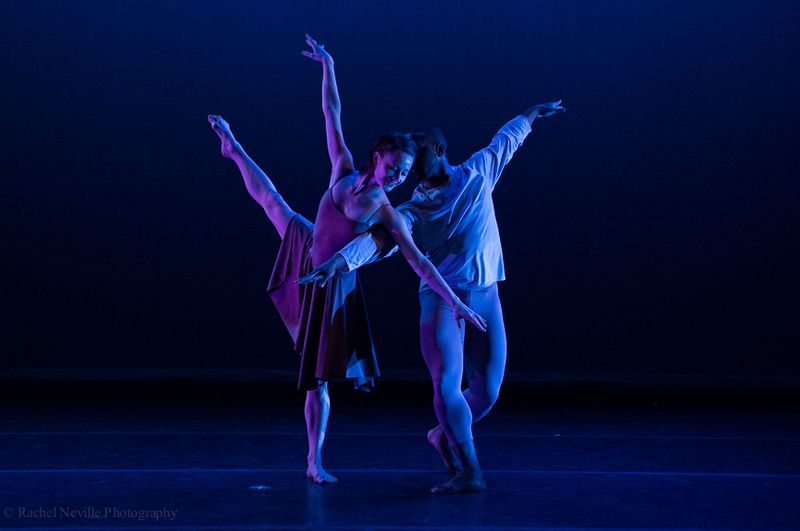
    Jessica Black and Christopher Rudd in QUIET CITY, photo by Rachel Neville

    Three familiar works from Tony Morales’ repertory followed:
    DSC_9124

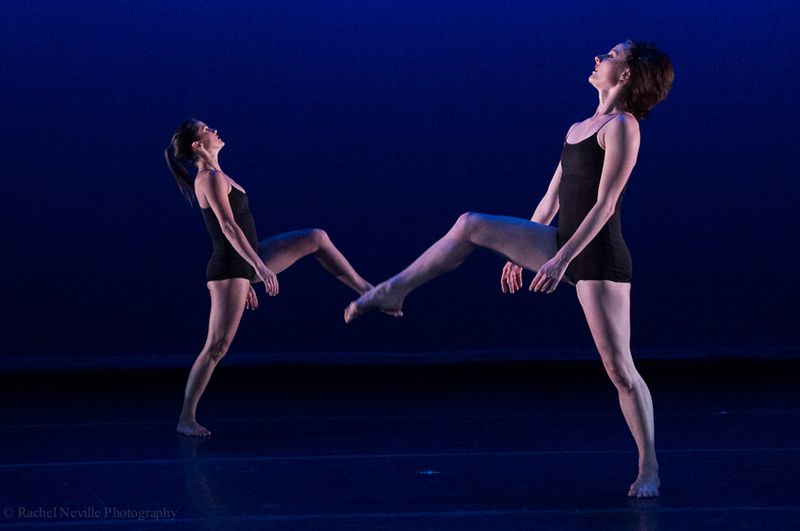
    PLEASED 2 MEET U is a duet, sometimes danced by two men and sometimes by two women, set to a folkish score by Bohuslav Martinů. Tonight this sporting, light-hearted piece was performed by Jessica Black and Karina Lesko, as seen in Rachel Neville’s photo above.

    DSC_9484

    Above: Jerome Stigler in ABLUTION, photo by Rachel Neville

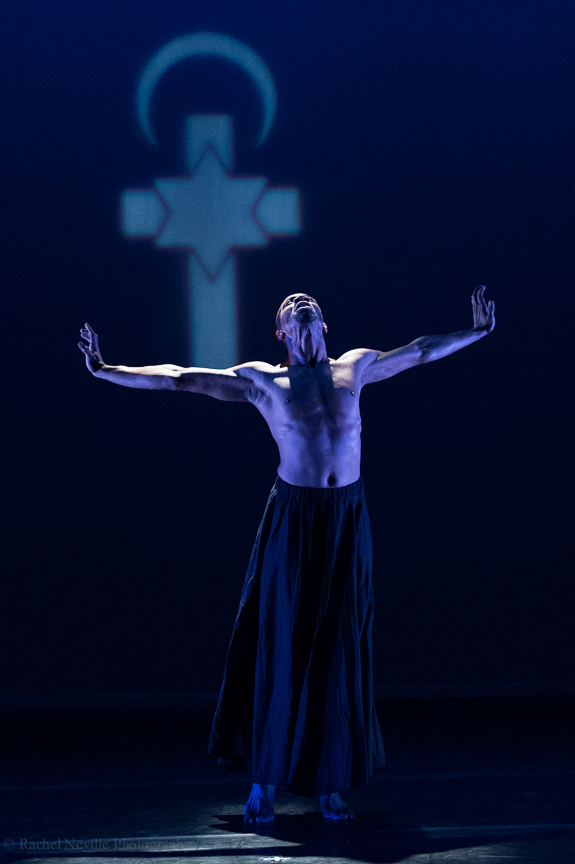
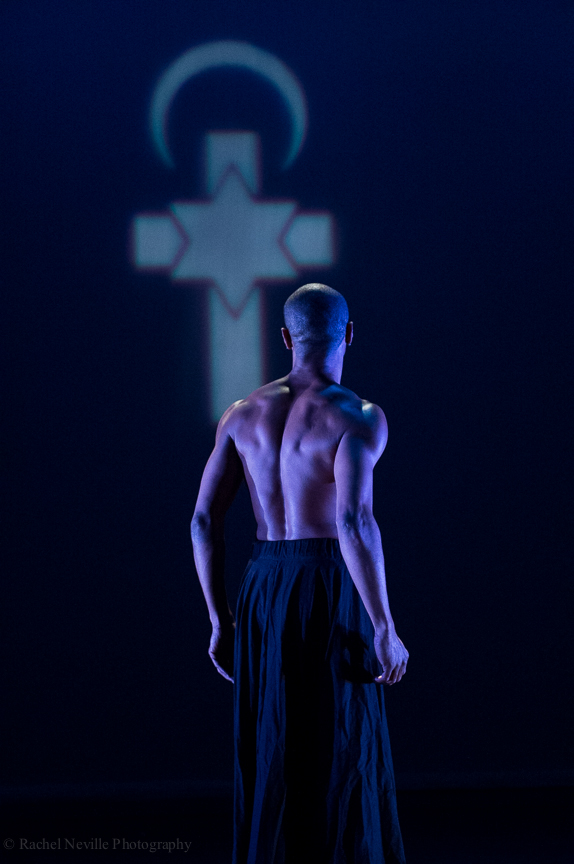
    ABLUTION, which for me is Tony Morales’ most potent work, is a solo danced to music of Bach; it was chroeographed in 1992 and retains its full power to this day. Danced tonight by Jerome Stigler, the solo is ritualistic and athletic by turns with the dancer covering the space in agile leaps or bowed down in supplication on the floor. Jerome’s performance was intense and moving.
    DSC_9582

    Above: Jerome Stigler in ABLUTION, photo by Rachel Neville
    DSC_9619

    By the way, I love the symbol of the three religions which is projected during this solo: Islam, Judaism and Christianity are united in this image – and how lovely the world would be if that image became reality. 

    _DSC6972

    Above: Christopher Rudd and Karina Lesko in TRANSITIONS, photo by Rachel Neville

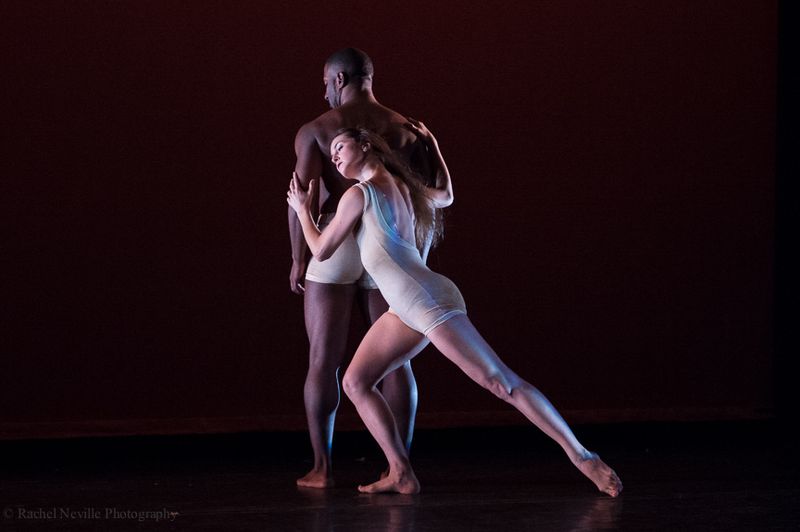
    Lyricism, passion and tenderness were drawn forth in TRANSITIONS, a 1998 duet to music of Maurice Ravel. Here the Costa Rican beauty Karina Lesko was at her most ravishing, dancing with Christopher Rudd. In the second part of this sensuous – but also sometimes wary duet – each dancer moves in an individual pool of light.
    DSC_9647

    Above: Rachel Neville’s photo of Karina Lesko and Christopher Rudd in TRANSITIONS

    DSC_9664

    Above: Karina Lesko in TRANSITIONS, photo by Rachel Neville

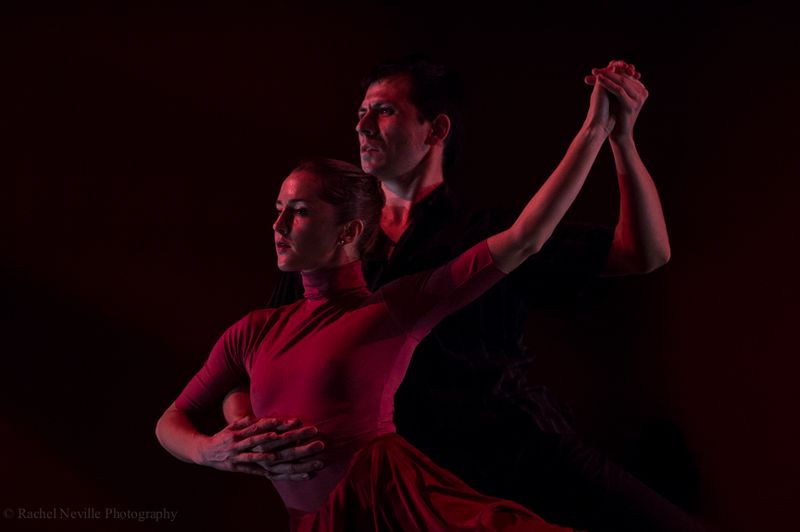
    After a pause, Tony Morales’ domestic dance drama AMOR BRUTAL was performed to a mix of songs by Manuel de Falla and the title song, performed by Tony’s father Isaac ‘Casito’ Morales on an old recording.
    _DSC7038

    Above: Karina lesko and Antonio Fini in AMOR BRUTAL, photo by Rachel Neville

    In AMOR BRUTAL, a long-married couple – a devoted but controlling wife and a care-free husband – find themselves in a love-hate tangle as each seek to align their three teen-aged daughters’ affections and loyalty. Although she looks far too young to be the mother of grown children, Ms. Lesko did a fine job expressing the emotional turmoil of the anxious woman while the handsome Mr. Fini danced with free-spirited energy as the errant but likeable husband. Jessica Black, Elaine Gutierrez and Cassandra Lewis were the lovely daughters.
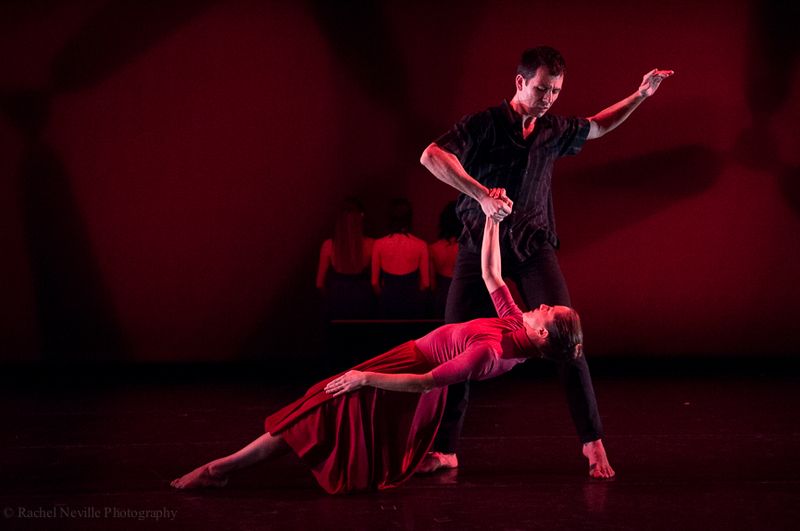
    DSC_9880

    Above: Karina Lesko and Antonio Fini in AMOR BRUTAL, photo by Rachel Neville
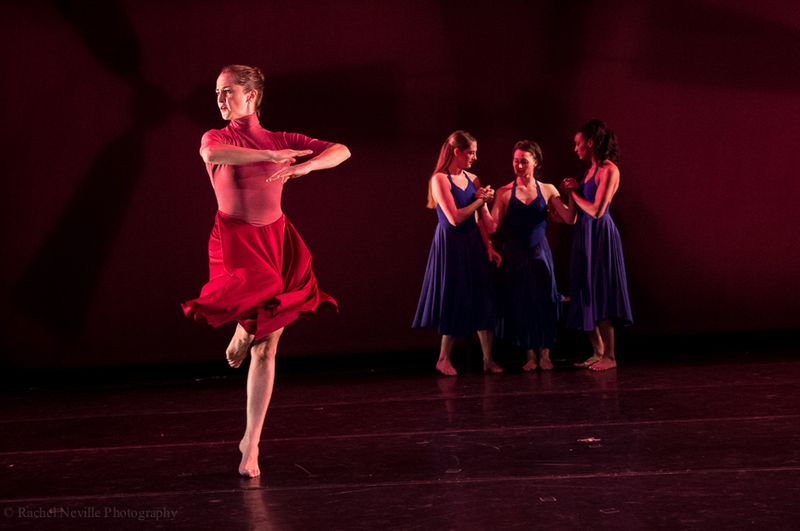
    DSC_9934

    Above: mother and daughters…Karina Lesko with Mlles. Lewis, Black and Gutierrez in AMOR BRUTAL, photo by Rachel Neville

    DSC_0293

    Antonio Douthit-Boyd of the Alvin Ailey Company (above) made a guest appearance dancing a new solo by Tony Morales, FOR YOU, set to the Elton John pop classic. In this tailor-made dancework, Mr. Douthit-Boyd was able to show off his astonishing technique and his emotional generosity, to the audience’s delight. Antonio dances with his whole body and soul; what a pleasure it must be to create something on such a dancer.
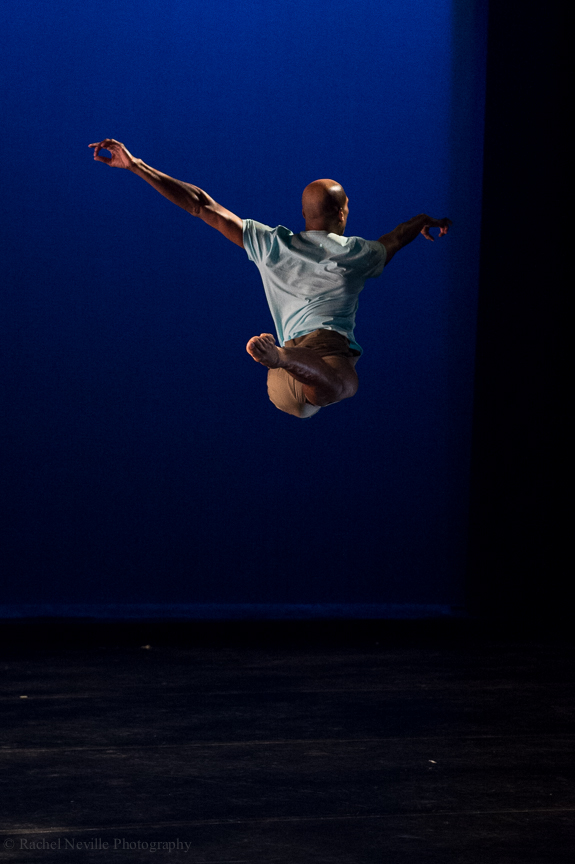
    DSC_0299

    Above: a great leap by Antonio Douthit-Boyd, photo by Rachel Neville
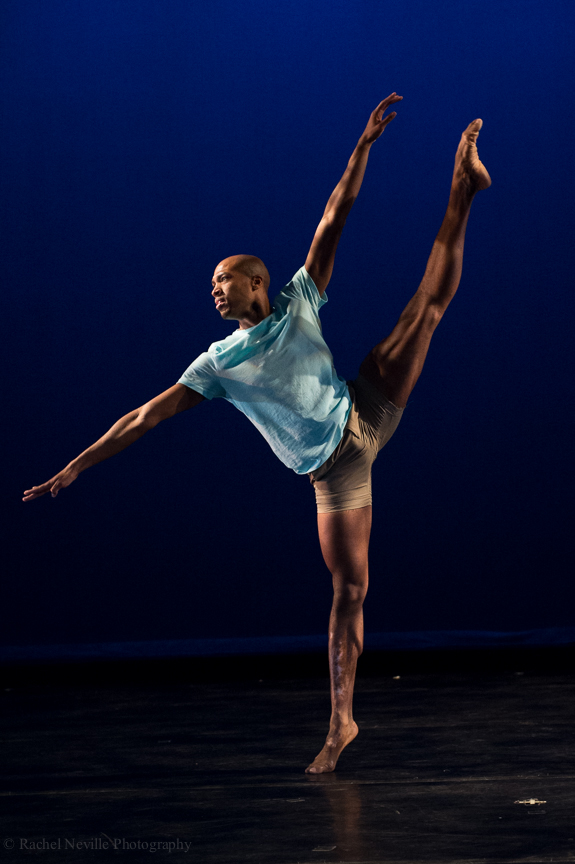
    DSC_0391

    Above: the majestic extension of Ailey’s Antonio Douthit-Boyd, dancing Tony Morales’ FOR YOU in a Rachel Neville photo
    DSC_0570

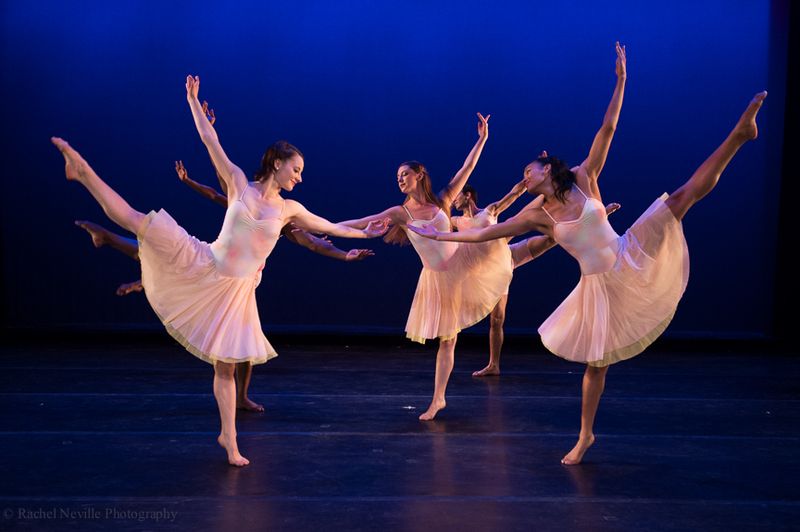
    Six young women from Ballet Forte (above) put me in mind of Isadora Duncan in the opening phrases from SCENES, a 2012 Tony Morales work dedicated to the memory of Ruth Currier. Dancing at first in silence, the sextet of nymphs begin exploring the space to music of Benedetto Marcello. Their dance has a celebratory innocence about it.
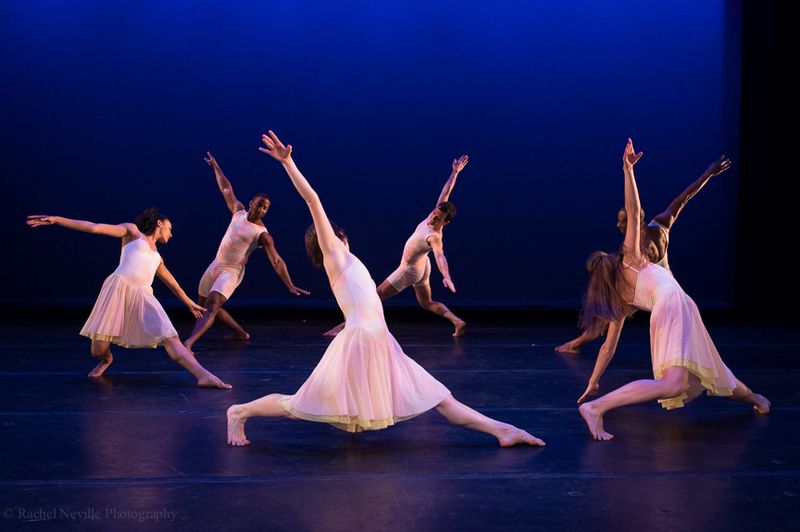
    DSC_0619

    In the ballet’s second part, six dancers from Morales Dance (above) dance in varying combinations, both in silence and to music by Chopin.

    DSC_0750

    At the end, the twelve dancers unite in a communal circle: a grace-filled final image from this evening of dance.

    All photography by Rachel Neville; my gratitude to her for her timely delivery of these inspiring images.

  • Joan Tower + Bach @ The Miller Theatre

    Joan_tower

    Above: composer Joan Tower

    Thursday April 17th, 2014 – “Bach is everything that I am not,” said Joan Tower modestly in a mid-concert interview at The Miller Theatre tonight where her works were interspersed with movements from JS Bach’s fifth Brandenburg concerto, all played live – and superbly. The programme indeed was something of a study in contrasts though also there’s also a commonality since Ms. Tower is a comtemporary composer with a heart and soul, as evinced in her music.

    This programme, part of the Miller Theatre’s Bach, Revisited series, took wing on the artistry of an assemblage of excellent players: the young musicians of Curtis 20/21, a ‘new music’ ensemble based at Philadelphia’s Curtis Institute of Music, performed In Memory, Tower’s 2002 work for string orchestra. Players from Curtis 20/21 also appeared in the Brandenburg #5, joined by flautist Patrick Williams and harpsichordist Bryan Anderson. And pianist Lisa Kaplan from eighth blackbird was joined by 20/21‘s Eunice Kim (violin) and John-Henry Crawford (cello) for Joan Tower’s 2000 trio Big Sky. Tower’s string quartet #5, White Water (2011) was performed by Joel Link and Bryan Lee (violins), Milena Pajaro van de Stadt (viola) and Camden Shaw (cello). It was first-class playing all evening, with a special nod to Ms. Kim and Mr. Crawford for swinging effortlessly from Bach to Tower (and back), and to Mr. Anderson for his polished keyboard cadenza in the Brandenburg.

    The movements of the Brandenburg #5 were played in sequence but with works by Ms. Tower alternating in the order, so that ones ear was constantly lured in different directions; the two styles really complemented each other, with the Bach seeming ever-fresh and the Tower works somehow ‘familiar’, even carressive, though I’d never heard any of them before.

    The Brandenburg, so familiar, took on a youthful glow thru the poised and affectation-free playing of the ensemble. In the central movement, the trio of Ms. Kim and Mssers. Williams and Anderson developed a nice interplay of voices. The concerto’s concluding allegro brought the evening to a melodious conclusion.

    Without reading the program note, I found Tower’s Big Sky progressing in alternating veins of mystery and of passion laced with a sense of yearning. In fact, this trio was inspired by the composer’s girlhood memories of riding her horse in the Andes-surrounded valley of La Paz, Bolivia. What an experience that must have been!

    In Memory, for large string ensemble, opens with Eunice Kim playing a plaintive violin solo; the music evolves thru buzzing motifs and darkish strains of lyricism to a poignant minor-key adagio and then to a swirling agitato. A unison rhythmic passage followed by a pensive moderato for solo viola, joined by the cello, leads into a big theme which seems on the brink of fading but then goes impulsive and driven. A heady uphill climb thru the registers brings us to a sustained concluding note: a shining aural plateau.

    The Miller Theatre’s Melissa Smey interviewed Ms. Tower briefly; the composer – subtle of wit and with a touch of self-effacement – spoke of how the current situation in classical music shows a marked change since the days when composers were also performers: now the two tasks are mostly separate careers. Ms. Tower, herself a concert pianist, reminded us of such names as Mendelssohn and Beethoven – to which I might immediately add Vivaldi, Chopin, Liszt and Mahler – as both writing and conducting or playing music. She often assigns composing tasks to her music students: a learning experience they might not enjoy but which expands their horizons, and is all to the good.
    Tower’s string quartet #5, sub-titled White Water, a twenty-minute, single-movement work, commences with solo viola in a rising theme, to be taken up by the cello and then the violins in turn. The upward motion of the music is a persistent motif. My notes, scrawled in the darkness as the quartet moved onward, include “ghostly glissade“, “dense harmonics”, “seasick lurches”, “shimmering…delicate…buzzing violins”.  A pacing unison passage is followed by up-and-down swoops in the violin’s high range. The music plunges to the depths, then rises and pushes onward to a finale where glissandos burst forth and the voices part ways at the end.

     
    So much of Joan Tower’s music seems well-suited for choreography, as Pascal Rioult showed us in 2012.

  • Ballet Hispanico @ The Joyce 2014

    Umbral 1 (c) Paula Lobo

    Above: from Ballet Hispanico‘s production of UMBRAL, photo by Paula Lobo

    Tuesday April 15th, 2014 – Opening night of Ballet Hispanico‘s two-week season at The Joyce. This fantastic Company have quickly made their way to my top echelon of Gotham dance-world favorites: the dancers are sexy and spectacular, the choreography is invariably exciting, the musical range is broad and seductive…what more could one ask?

    Tonight’s program opened with UMBRAL, choreographed by Edgar Zendajes to an original score by Owen Belton. This ballet honors the traditional Mexican celebration of the Dia de los Muertos (‘Day of the Dead’). Dark and evocative, UMBRAL benefits greatly from Joshua Preston’s lighting and the sleek costuming by Diana Ruettiger which displays the dancers’  lithe figures to maximum effect.

    Umbral 7 (c) Paula Lobo

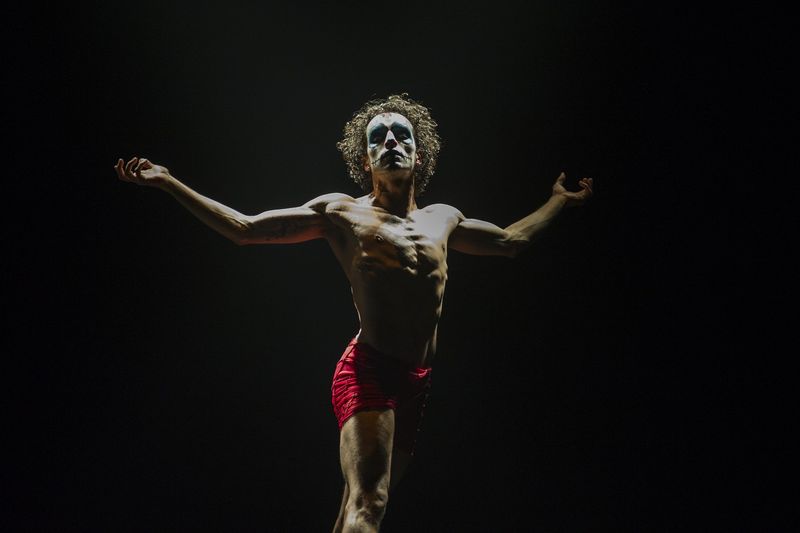
    Light smoke drifts across the landscape as Mario Ismael Espinoza (above, in a Paula Lobo photo) appears in a sleek blood-red leotard, with his face painted deathly white, lips sewn shut: a living corpse. Mario, one of New York’s most alluring dance personalities, moves thru the community – an unseen spectre. His dancing has a remote beauty and mystique so perfectly suited to this role.

    There is a pas de trois for Mario, Vanessa Valecillos, and Jamal Rashann Callender and then a solo for Mario danced in silence. This is interrupted by the ringing of a telephone – a message from the other side? – which the boys attempt to shush. In a passionate duet, Min-Tzu Li and Christopher Bloom display lyrical physicality. Then the six women appear, topless but discreet, as Mario moves subtly among them. The ballet ends with a stylied ensemble for the entire Company; as the dancers withdraw, Mario stands in a pool of shining light as if ascending to heaven. A brilliant piece, and a real tour de force for Mr. Espinoza.

    Sombrerisimo 7 (c) Paula Lobo-1

    Above, from SOMBRERISIMO, photo by Paula Lobo

    Last season’s hit, SOMBRERISIMO, returned in triumph to The Joyce stage. Choreographer Anabelle Lopez Ochoa, using a collage of music that veers from propulsive to sensuous, evokes Magritte’s bowler-hatted men in this vastly pleasing ballet; and again the costumes (Ms. Ruettiger) and lighting (Mr. Preston) show off both the dancers and the dance to perfection.

    Six men – Christopher Bloom, Jamal Rashann Callender, Alexander Duval, Mario Ismael Espinoza, Johan Rivera Mendez, and Marcos Rodriguez – move with vibrant authority thru the sexy, witty ensembles which include some sleight-of-hand passing of the hat and a bit of bowler-Frisbee. The men are jaunty, playful and ironic. Last year Christopher Bloom looked like a rising star, and now he’s shining brightly in the Big Apple’s firmament of dance: a man who moves with a particular energy that keeps our eye on him whenever he’s onstage. Both here and in EL BESO which followed, Chris served notice that he has arrived.

    Ballet Hispanico in fact have a particularly strong contingent of male dancers and in SOMBRERISIMO each man has a chance to shine; the ballet drew a whooping ovation from the packed house as the boys stepped foward for several bows. And now someone needs to make a new and special piece for Hispanico‘s gorgeous women

    Paula_Lobo_BH_EL_Beso-9370

    Above: Ballet Hispanico‘s Kimberly Van Woesik in EL BESO, photo by Paula Lobo

    After watching a studio rehearsal of Gustavo Ramiriez Sansano’s new ballet EL BESO (‘The Kiss’) I was very curious to see how it would look onstage. In contrast to the dazzling colours and stately rhythms of the music (drawn from the enchanting scores of the zarzuela), the setting was much darker than I expected. I had imagined costumes of scarlet and canary yellow, with black lace and golden filagree, but instead designer Angel Sanchez has put the dancers in rather utilitarian outfits of black and dark blue. The stage lighting could be just a notch brighter so that the subtle interplay of the dancers and their many kisses becomes clearer. Some of the intimacy of the work has been lost in the move from studio to stage.

    Once I adjusted to the unexpected black-and-blue setting, there was much to enjoy in this piece, for the choreography has wit and sparkle. EL BESO opens with Johan Rivera Mendez alone onstage, looking a bit shy. He is soon the object of Kimberly Van Woesik’s flirtatious affection. The ballet goes on to explore many variations of relationships and many varieties of kissing, including a passionate smooch for two men (Mssers. Bloom and Callender). A big unison ensemble heralds the finale, but at the last moment everyone rushes away leaving Mr. Mendez alone onstage as at the start.

  • At Nai-Ni Chen’s Rehearsal

    L1370928

    Above: Justin Dominic and Ekaterina Chernikhova of Nai-Ni Chen Dance Company

    Monday April 14th, 2014 – In preparation for her Company’s upcoming performances at Peridance, Nai-Ni Chen invited me to watch a rehearsal today at Jacques D’Amboise’s National Dance Institute on West 147th Street. I’d never been to this venue before, and it’s really nice; Nai-Ni had a big, spacious studio to work in and her dancers – some of them new to me – look super.

    Nai-Ni Chen Dance are celebrating their 25th anniversary with these Peridance performances on April 26th and 27th, 2014: tickets and more information here.

    The Prism Saxophone Quartet will be performing a score by Chen Yi, a contemporary composer from Guangzhou, China, for Na-Ni’s newest work Not Alone, inspired by a poem by Li Bai entitled Drinking Under the Moon.

    Joan La Barbara will appear for Incense, a quartet in which her voice is heard over a tape, commissioned by the Company in 2011. Incense has been performed on Company tours since then across the U.S. and to Asia and Europe.

    The lovely young ladies of the Ahn Trio will perform original music by Kenji Bunch for Grooveboxes, an excerpt from the trio’s full-evening collaboration with Nai-Ni called Temptation of the Muses. And Glen Velez, a four-time Grammy Award winner and one of the world’s leading drum masters and an expert in Central Asian music, composed the score for Nai-Ni  Chen’s Whirlwind. Mr. Velez will appear in an excerpt from this work with the Company.

    Nai-Ni Chen is a detail-oriented choreographer and today’s rehearsal was largely spent in refining works the dancers already know quite well. Here are a few photos I took today: most of the time the dancers were moving too fast for me to capture.

    L1370651

    Kristen Lau, Daniel Johnson

    L1370675

    Justin Dominic

    L1370816

    Yoosik Kim, Greta Campo

    L1370841

    Kristen Lau

    L1370808

    Yoosik Kim

    L1370940

    Justin Dominic

  • At Cherylyn Lavagnino’s Rehearsal

    5941803_orig

    Sunday April 13th, 2014 – This afternoon I stopped in at the NYU/Tisch studios where Cherylyn Lavagnino Dance are preparing for their upcoming performances (details above) at St. Marks Church near the end of June. 

    Cherylyn’s musical sensibilities, her keen sense of structure, and the way she draws nuances of personal  expression from her dancers have put her on my A-list of current choreographers. Having watched her work for the past few seasons, I haven’t sensed a single false step either in her choreography or her choice of music…or of dancers. 

    L1370241

    Above: dancers Lila Simmons and Michael Gonzalez

    For the upcoming St. Marks season, Cherylyn will present movements from two earlier works: her Bach/Couperin ballet Triptych and last season’s beautifully crafted Treize en Jeu, set to Franz Schubert’s Trio in E Flat Major for piano, violin and cello. A new work, Ru, is inspired by Kim Thúy’s novel of the same name and centers on a young woman’s life as a post-Vietnam War political refugee. Drawing upon the passive resistance of T’ai Chi and to be styled in costumes reminiscent of the traditional Vietnamese áo dài dress, Cherylyn’s new work – so evocative even now in a studio setting with the dancers in practice clothes – is set to a score by Scott Killian.

    Here are a few photos I took of Cherylyn’s dancers at today’s rehearsal:

    L1370313

    Michael Gonzalez and Giovanna Gamna

    L1370221

    Christine Luciano

    L1370260

    Eliza Sherlock-Lewis

    L1370555

    Travis Magee and Elliot Hammans

    L1370387

    Giovanna Gamna

    L1370487

    Claire Westby

    L1370559

    Adrian Silver and Selina Chau

    L1370477

    Lila Simmons and Giovanna Gamna

    L1370228

    Michael Gonzalez

    L1370522

    Claire Westby discussing the fine points with Christine McMillan

    L1370583

    Adrian Silver and Selina Chau

    L1370256

    Travis Magee

    L1370416

    Selina Chau

    L1370433

    Selina and Travis

    Visit the Cherylyn Lavagnino Dance website here.

  • Andonis Foniadakis’ GLORY @ The Joyce

    20133155045

    Sunday March 30th, 2014 – I like to think of myself as the first person in Gotham to have ‘discovered’ Andonis Foniadakis. The Greek choreographer brought his solo setting of THE RITE OF SPRING to Joyce SoHo in 2008; I was invited to the dress rehearsal and I went, not knowing what to expect. It was a thrilling experience, made even more memorable by the incredible dancing of Joanna Toumpakari. I was so blown away by this RITE that I immediately arranged to see it again the following evening.

    In May 2013 Andonis created HORIZONS for Cedar Lake Contemporary Ballet, and earlier this month his simply gorgeous ECHO was by premiered by The Martha Graham Dance Company.  And now Ballet du Grand Théâtre de Genève have brought Andonis’ GLORY, created on them in 2012, to The Joyce. I was only able to attend today’s final performance of the run; I wished now that I’d planned to see it more than once.

    Take a look at GLORY here.

    The first thing I love about GLORY is the music: Andonis starts with a selection of vocal and instrumental works by George Frideric Handel which Julian Tarride has woven into a tapestry of sound incorporating strains of contemporary vocalism, fleeting rhythmic gestures, and the occasional sonic thunderclap. The only slight miscalculation is the use of the Hallelujah Chorus which – in my view – is too familiar to be included; there are dozens of celebratory choral works in the Handel catalog and I would have chosen something rarer. Nonetheless, between Handel and Tarride, the dancers can take wing in this hour-long work which flows on endless waves of lyrical, expansive movement.

    The lighting (Mikki Kunttu) plays a major role in the visual appeal of GLORY: shafts of light radate thru the dancing area in ever-shifting patterns, creating chiaroscuro effects, variously illuminating the dancers from all sides and evoking the sunlight pouring into the dark caverns of antique cathedrals. Costume designer Tassos Sofroniou has clad the dancers like dark angels at first; later brilliant ruby red gowns will bring a satanic touch to the proceedings. The dancers change costumes often, some taking on pale yellow and lighter hues, and at one point the men appear in dance-belts like living statuary as they manipulate a single woman in complex lifts. 

    Andonis has structured GLORY in such a way that there seems to be more than the twenty listed dancers onstage. They come and go in various movement units and from time to time simply march forward, having descended the two steps a the back of the stage, like oncoming armies. At times they arrange themselves in mirror-image Rorschach-patterns. The Geneva dancers are remarkably flexible and strong, their energy level seeming to soar as this physically demanding work progressed: the ballet is a non-stop panorama of movement.

    Graham-like rituals alternate with knotted clusters of bodies, and visual polyphony plays a key role: there are usually several things happening at once. Along the way, solos or pas de deux bring individual dancers into focus. In the ballet’s most striking passage, a woman appears in a long cape of black parachute silk which is manipulated by the black-clad men using metal rods (photo at the top).

    Although at times there was a sense of repetitiveness in the choreography and a feeling that the work was perhaps a bit too long for optimum effect, the overall beauty and the combined theatrical power of the dancers, the choreography, the music and visual representation made for a very pleasing afternoon.