Category: Ballet

  • PRINCE IGOR @ The Met

    PrinceIgor-copy-2

    Above: Ildar Abdrazakov as Prince Igor at The Met

    Monday February 24th, 2014 – I fell in love with Borodin’s PRINCE IGOR back in the late 1960s when I saw several performances of it in an English-language production at New York City Opera. The staging was traditional and featured unforgettable performances by my beloved Maralin Niska (Yaroslavna) and that great singing-actor William Chapman (doubling as Khan Konchak and Prince Galitsky); much of the music became imbedded in my operatic memory, and the famed Polovtsian Dances were staged as a warriors-and-maidens extravaganza, led by the great Edward Villella who was on-loan from New York City Ballet.

    The City Opera’s production used painted drops and built set-pieces to evoke the locales, with era-appropriate costumes. It spoke to us directly of the time and place that Borodin’s music conveys. The Metropolitan Opera’s new production of PRINCE IGOR is more generalized; the women of Putivi are seen in 1940-ish dresses and coats even though the action supposedly takes place in the year 1185. 

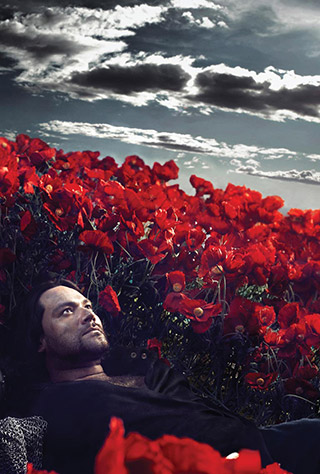
    The evening overall was a rather mixed affair: musically sound and with some interesting visual elements (the field of poppies) it does not really end up making a strong dramatic statement; this may be due in part to the episodic character of the opera itself. In this updated setting we don’t get much of a feel for exoticism. Khan Konchak for example is not seen as an Asiatic warlord with a scimitar but rather as a rather anonymous military type in a toxic-yellow uniform.

    The opening scene takes place not in a public square in Igor’s capital but rather in a great hall where the Prince’s troops assemble in preparation for going to war. This is fine, but it rather short-circuits the effect of the solar eclipse that is taken as a bad omen by the populace. Despite this warning, Prince Igor leads his troops out to fight the Khan; he is defeated and captured.

    Black-and-white films of the Prince and of his soldiers are shown during interludes; these are rather superfluous though it’s nice to see two men in a gentle embrace as they await the coming battle. The field of poppies is really very attractive and the ballet – with the dancers is gauzy cream-coloured costumes – is sensuous and flowing rather than militant and grand. I loved spotting several of my dancer-friends: Loni Landon, Michael Wright, Anthony Bocconi, Kentaro Kikuchi, Matt Van, and Bradley Shelver.

    In this production, the three scenes of Act II all take place in the same spacious great hall as the prologue; nevertheless, there are longish pauses between scenes.

    The first intermission stretched out unduly and the far-from-full house seemed bored waiting for the opera to resume. There were very short rounds of applause after the arias, which were for the most part attractively sung. A huge double explosion as the Act II curtain fell with Putivi under attack almost made me jump out of my seat.

    Gianandrea Noseda conducted with the right sense of grandeur, but also with a nice feeling for the more reflective moments. Perhaps what was missing was a Scheherazade/mystique in the Polovtsian scene. Noseda sometimes tended to overwhelm his singers; and the very open sets did not help to project the voices into the hall. The orchestra and chorus were on optimum form.

    In the title-role, Ildar Abdrazakov sang beautifully, especially in his great aria of anguish over his defeat and of his longing for his beloved Yaroslavna far away. The role, often sung by baritones, seemed to work well for Abdrazakov even though his voice is more basso-oriented. Read about Mr. Abdrazakov’s recently-issued CD of Russian arias Power Players, here. Igor’s lament is a highlight of this excellent disc.

    Stefan Kocan and Mikhail Petrenko appeared as Khan Konchak and Prince Galitsky respectively and both sang well though neither seemed as prolific of volume as I have sometimes heard them. Sergei Semishkur’s handsome tenor voice and long-floated head-tone at the end of his serenade made his Vladimir a great asset to the evening musically, though he was rather wooden onstage. The veteran basso Vladimir Ognovenko was a characterful Skula, with Andrey Popov as his sidekick Yeroshka.

    Oksana Dyka’s stunning high-C as she bade farewell to Igor in the prologue sailed impressively into the house; but later, in her Act I aria, the voice seemed unsteady and lacking in the dynamic control that made Maralin Niska’s rendering so memorable. Niska always took a flaming, sustained top note at the end of the great scene with the boyars where the palace is attacked. Dyka wisely didn’t try for it. The sultry timbre of Anita Rachvelishvili made a lush impression in the contralto-based music of Konchakovna, and it was very nice to see Barbara Dever onstage again in the brief role of Yaroslavna’s nurse: I still recall her vivid Amneris and Ulrica from several seasons ago.

    Deonarine_Kiri_046_ret4 2

    A particularly pleasing interlude came in the aria with female chorus of the Polovtsian Maiden which opens the scene at Khan Konchak’s camp. Singing from the pit, the soprano Kiri Deonarine (above) showed a voice of limpid clarity which fell so sweetly on the ear that one could have gone on listening to many more verses than Borodin provided. It was a definite vocal highlight of the evening, and also showed Mr. Noseda – and the Met’s harpist – at their senstive best.

    Metropolitan Opera House
    February 24, 2014

    PRINCE IGOR
    Alexander Borodin

    Prince Igor.............Ildar Abdrazakov
    Yaroslavna..............Oksana Dyka
    Vladimir................Sergey Semishkur
    Prince Galitzky.........Mikhail Petrenko
    Khan Konchak............Stefan Kocán
    Konchakovna.............Anita Rachvelishvili
    Skula...................Vladimir Ognovenko
    Yeroshka................Andrey Popov
    Ovlur...................Mikhail Vekua
    Nurse...................Barbara Dever
    Maiden..................Kiri Deonarine

    Conductor...............GIanandrea Noseda

  • Jessica Lang Dance @ The Joyce

    Jessicalang1

    Above: from Jessica Lang’s The Calling, photo by Takao Kamaru

    Thursday February 20, 2014 – Jessica Lang Dance are at The Joyce this week, presenting an exciting programme of danceworks in varied musical styles, all of it choreographed with Lang’s innate sense of sophistication and grace. And it’s all beautifully danced as well.

    Lines Cubed is a Lang work new to me and I loved every moment of it. Set to a score by composers John Metcalfe and Thomas Metcalf, the ballet takes on the aspects of a danced symphony: there’s a prelude, an andante, a scherzo, an adagio, and a finale – and each movement is colour-coded for the costuming and set decor. Throbbing mechanical rhythms and passages of lyricism allow the choreographer to explore various movement motifs: much of the ballet has a stylized, ritualistic quality with questing port de bras. The lighting (Nicole Pearce) and the use of accordian-like set pieces which the dancers open and close in passing create a shifting visual framework.

    Following a ritualistic opening movement, Black, the space glows in ruby-rich light for Red with an evocative solo danced by Kana Kimura backed by four men. Bright sun and infectious joy are expressed by a trio of women – Julie Fiorenza, Sarah Haarmann and Laura Mead – in Yellow. This gives way to a rather sombre Blue adagio, danced by Claudia MacPherson and Milan Misko. The colours are mixed and matched for the full-cast finale. Such was the cumulative effect of the setting, music and dancing that I could have immediately watched this ballet again.

    For Mendelssohn/Incomplete, Jessica Lang has turned to my favorite chamber work – the Mendelssohn piano trio #1and created an ensemble work of longing and gentle melancholy in a dusk-like setting. The women in purple dresses and the men in soft shades of grey cross the stage in a clustered formation, a community seeking something in the impending darkness. They pause to dance: here the choreographer shows us tenderness and consolation in choreography that quietly illuminates the music. In the end, the group seem to be moving on – one woman lingers in the space, but she is not left behind. This poignant ballet, so touching in its sincerity and humanity, made a fine impression and was superbly danced by Mlles. Fiorenza, MacPherson and Haarman with Clifton Brown, Milan Misko and Kirk Henning.

    In Aria, a quartet set to Zenobia’s restless-fury aria “Son contenta di morire” from Handel’s RADAMISTO, three boys (Todd Burnsed, Kirk Henning and Milan Misko) in grey tights and bright red shirts sail thru strongly musical combinations while Laura Mead – in a flame-red frock and dancing on pointe – comes and goes in a breathlessly-paced virtuoso performance. Mr. Burnsed is her primary partner; there are lifts, escapes, and swirling entrances and exits in this portrait of a woman on the brink.

    The Calling, a mind-bendingly gorgeous solo, is culled from a Lang signature work Splendid Isolation II. It was performed tonight by the radiant Kana Kimura. The dancer – in a long white gown – basically remains stationary, using port de bras and gentle shiftings of the upper body, neck and head to enthrall the viewer while music by Trio Mediaeval lends a timeless sense of rapture. This work, and Ms. Kimura’s sheer expressive elegance, enthralled the packed house tonight.

    White, a dance-on-film made in 2011 and having its New York premiere at these performances, shows six white-clad dancers against a jet-black background. The perspective makes them appear large or small as they dance across the screen, sometimes with witty inflection. Their comings and goings have a silent-movie flair, and the music of Edward Grieg makes White an especially pleasing interlude.

    i.n.k. is a Jessica Lang work that I have experienced from its earliest formative stages. Visually engrossing, the ballet features black-clad dancers moving before a snow-white back-panel, sometimes dancing with their shadows. Meanwhile drops or waves of dark ink splash across the screen. The other-worldly score by Jakub Ciupinski, the costuming of Elena Comendador, Nicole Pearce’s lighting, and the intriguing film elements (KUSHO by Shinichi Maruyama) all combine to draw the viewer into this dream-like world.

    Clifton Brown – truly one of the great dancers of our time – and the celestial Kana Kimura have a remarkable adagio in i.n.k. which ends with a mesmerizing slow backbend from Kana, supported on high in Clifton’s arms. This passage is so compelling and I felt this evening that i.n.k. should actually end here; and my companion felt the same way.

    On my dance wish-list is Jessica Lang’s production of Pergolesi’s STABAT MATER which premiered at Glimmerglass in the Summer of 2013; I’m hoping it could be brought to New York City.

  • Violin Concertos @ NYC Ballet

    318356_2232197878477_977158597_n

    Above: Russell Janzen of New York City Ballet

    Wednesday February 19th, 2014 – Ballets by Jerome Robbins, Peter Martins, and George Balanchine – each set to a great 20th century violin concerto – were on the bill at New York City Ballet this evening. To an already-great line-up of dancers there was a late addition: Russell Janzen made his debut in BARBER VIOLIN CONCERTO; Tiler Peck and Amar Ramasar were also making role debuts tonight.

    Three conductors passed the baton one to another as the evening progressed; the Company’s two concertmasters – Kurt Nikkanen and Arturo Delmoni – shared the soloist spotlight, Kurt playing the Prokofiev and Arturo playing Barber and Stravinsky. It was a programme during which really missed my beautiful seat in Fourth Ring AA where I used to watch the orchestra from on high.

    The evening opened on a high note: the curtain rose on Robert Fairchild, all in white, as the restless dreamer of Jerome Robbins’ OPUS 19/THE DREAMER – my favorite Robbins ballet. Robert danced the ballet’s opening solo with deep musicality and supple fluidity of movement. Out of the blue, his muse materializes: Tiler Peck, in this role for the first time, found a perfect balance between the classical vocabulary and the sometimes jagged expressionism the ballet requires. In the more lyrical passages, her lush pirouettes had remarkable clarity; to a role that has been gorgeously danced in recent seasons by Wendy Whelan, Jenifer Ringer, and Janie Taylor, Tiler brought her own distinctive touches. Robbins gives the corps some dreamy moves – and also some athletic ones – in OPUS 19; I very much enjoyed tonight’s collective which was made up of some of my favorite dancers.

    It took me a few hearings to figure out exactly what it is about the opening measures of the Barber violin concerto that sings to me so clearly: it’s the use of the piano, especially the opening chord. It gave me a little frisson again tonight; while I love so many violin concertos I think sometimes the Barber is my actual favorite. I remember one summer driving very fast out Route 6 with Kenny to the end of the world – Provincetown – with the Barber blasting on the car stereo. Music and memory are so often indelibly linked.

    In tonight’s performance of the Barber, Teresa Reichlen and Russell Janzen looked great together – not just because they are long-limbed and attractive, but because they share a sense of elegance that manifests itself in their bearing and the grace of their line. A chill passed thru me as Amar Ramasar entered, a fallen angel with a dangerous ‘loner’ appeal who will eventually draw Tess to the dark side. Megan Fairchild excels in the barefooted role created by Kate Johnson: it’s a far cry from the charming, pristine pointe-work that is Megan’s specialty, but she jumps right in and makes it happen.

    After their classical parterning passages in the first movement, Tess and Russell will each experience a transformation. At first seeming to console Amar, Tess falls under his spell and is borne away to an unknown fate; their duet is a psychological conflict which reaches its turning point when the subjugated woman lets her hair down. Amar’s character is not so much seductive as simply a force that cannot be withstood; Tess in her vulnerability looks ravshingly ravished. Random thought: I’d love to see Amar in the Martha Graham rep.

    In the final allegro, Russell strives to withstand the endless torment of Megan’s advances: she’s playing one of the most annoying characters in all dance. She ends up writhing on the floor as Russell backs away, covering his eyes to blot out the vision of her over-sexed frenzy. In a final attempt to get what she wants, Megan literally climbs up Russell’s back to perch on shoulder; in a last defense, he flips her over and sends her crashing to the floor. The two dancers handled this tricky finale with aplomb and in fact danced the whole third movement to perfection.

    6a00d8341c4e3853ef014e887730ac970d-800wi

    Above: Janie Taylor, in a Henry Leutwyler portrait

    Tonight’s Stravinsky had a special energy; it was in fact one of the finest performances of this ballet I’ve seen. Part of the singular excitement in the atmosphere tonight may have stemmed from the presence of Janie Taylor, the Company’s enigmatic/charismatic principal ballerina who is soon to retire. I’ve been crazy about Janie since she first stepped out, a mere slip of a girl just over from SAB, to dance the lead in LA VALSE. After building a reputation as a dancer at once fragile and fearless, a long hiatus due to a complicated injury took her away from the stage for months…years, even. Her ‘second career’ has been a real source of joy for me and so tonight it was bittersweet to think that in a few days she will be vanishing from this stage, leaving only perfumed memories. But what memories they are!

    Tonight’s performance showed off of Janie’s balletic split personality: a palpable vulnerability alinged to a steely technical resiliance: she’s simply extraordinary…and irreplacable. Ask LaCour’s partnering of this blonde enigma developed a wonderful simpatico, a sense of tenderness in what is after all an abstract and ’emotionless’ ballet. In that marvelous moment where the ballerina stands against her partner as he shows her a view of the world with a sweeping gesture of the arm, I thought I’d never seen anything so beautiful.

    Janie and Ask seemed poised to walk off with the gold tonight, but the other Stravinsky couple – Rebecca Krohn and Adrian Danchig-Waring – were so potent technically and so vivid in their presentation that the entire ballet took on a grand dynamic, abetted by the excellent corps (the quartet of leaping boys won a ‘bravo’ all their own). Rebecca Krohn has really done wonders in the leotard ballets; she looks phenomenally confident and polished, and for me she’s the equal of any ballerina I’ve seen in this rep, going way back to Suzanne and Karin. Her generous dancing found a fine match in Adrian Danchig-Waring’s vibrant physicality; together these two dancers crafted amazing shapes as they moved thru the ballet’s demanding partnering motifs, ending their pas de deux with Adrian in a finely-timed fall to the floor and Rebecca in a sweeping back-bend.

    Extra delight: Faye Arthurs in a brief partnered segment with Adrian; she danced in both the Prokofiev and the Stravinsky tonight. So nice to run into Erica Pereira and Caitlin Dieck…and Tess, after the show.

    OPUS 19/THE DREAMER: *T. Peck, R. Fairchild [Conductor: Sill, Solo Violin: Nikkanen]

    BARBER VIOLIN CONCERTO: Reichlen, *Ramasar, M. Fairchild, *Janzen [Conductor: Otranto, Solo Violin: Delmoni]

    STRAVINSKY VIOLIN CONCERTO: Taylor, la Cour, Krohn, Danchig-Waring [Conductor: Capps, Solo Violin: Delmoni]

  • Intermezzo Dance Company: Rehearsal

    L1310640

    Above: dancers Kaitlyn Gilliland and Stephen Hanna

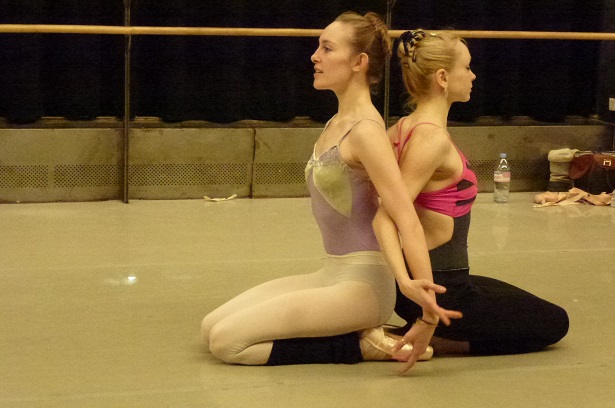
    Thursday January 30th, 2014 – Intermezzo Dance Company are in rehearsal, preparing for their January 31st appearance at the 92nd Street Y as part of the series “Movement Talks” presented by Edward Henkel. The program, which will explore the theme of beauty in dance and choreography, is sold out. Newly created works by Gemma Bond, Claudia Schreier, and Craig Salstein will be danced by Intermezzo‘s Kaitlyn Gilliland, Amber Neff, Nadezhda Vostrikov, and Stephen Hanna. I was able to see a run-thru of all three ballets this evening at DANY Studios.

    L1310802

    Above: Kaitlyn Gilliland rehearsing Claudia Schreier’s ballet Harmonic which originally premiered at Columbia Ballet Collaborative‘s November 2013 performances; a great score for dancing by Douwe Eisenga propels a quartet of dancers thru this fast-paced work.

    L1310925

    Gemma Bond, a member of ABT‘s corps de ballet, has created a sisterly duet to Schubert, danced by Amber Neff and Nadia Vostrikov (above). And Craig Salstein has choreographed an arrangement of Beethoven’s Ode to Joy as a pas de trois for Kaitlyn Gilliland, Amber Neff, and Stephen Hanna.

    L1310666

    Nadia

    L1310730

    Amber

    L1310918

    Stephen

    L1310866

    Kaitlyn

    Following the evening at the Y, Intermezzo Dance Company will begin preparations for their upcoming performances at Vassar College.

    Performance dates are March 29th (evening) and 30th (matinee), 2014. Tickets are free. Send an e-mail to [email protected] write “Intermezzo” in the subject line and the number of tickets and which performance date you wish to attend in the body of the e-mail.

    Details of repertory and participating dancers for the Vassar performances will be forthcoming.

  • Gina Gibney’s Celebration

    L1310562

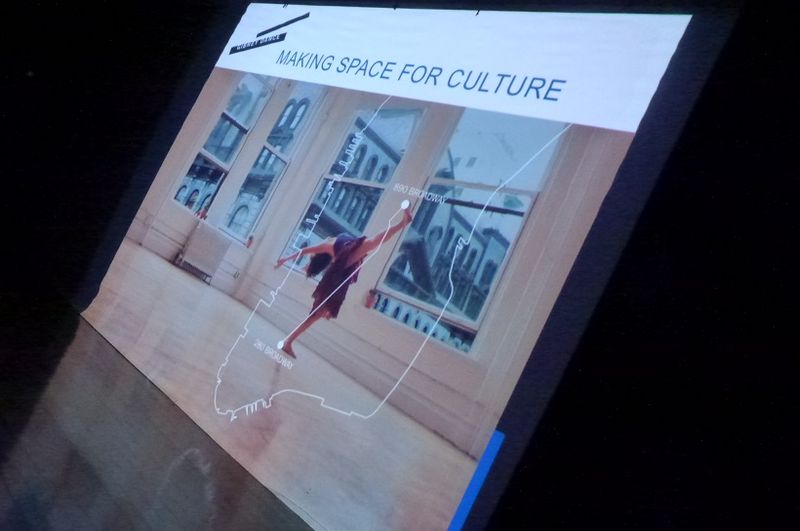
    January 29th, 2014 – The recent announcement by Gina Gibney that Gibney Dance would be expanding their activities to 280 Broadway, known for years as Dance New Amsterdam, is cause for celebration: the Gibney Dance Center at 890 Broadway now has a sister site further downtown where classes, rehearsals, performances and community events will bring this space back to vibrant life.

    Tonight at a gathering at 280 Broadway, a standing-room-only crowd assembled in the venue’s theater as Ms. Gibney outlined plans for the re-opening of this space which has stood forlornly empty for the past several weeks. I frankly never thought I’d see the inside of 280 Broadway again – a place where I have spent many happy hours watching classes, rehearsalsperformances and other dance-related activities over the past few seasons – so I was particularly pleased to be back in the columned hall this evening as Gina set forth her extraordinary vision of a Renaissance in these studios, so redolent with the essence of dance.

    Gina Gibney’s plans for 280 Broadway include creating a digital media center, a high-tech performance lab, and a black box theater. And the latest good news – a $3-million gift from the Agnes Varis Trust – will help bring these plans to fruition sooner rather than later.

    Among the many exciting aspects of the revival of 280 Broadway is the news that The Playground, the vibrant series of affordable dance labs founded by Loni Landon and Gregory Dolbashian, will be partnered by Gibney Dance in their mission to bring choreographers and dancers together in an open, dynamically creative setting.

    This evening’s announcement/kick-off event, liberally laced with applause as each new facet of Gina Gibney’s grand design for 280 Broadway was revealed, seemed to herald a bright new day for dance in New York City.

  • BalaSole: IDIOMS

    L1310260

    Above: dancer Marion Helfenstein

    Saturday January 25th, 2014 – BalaSole Dance Company presenting IDIOMS at the Ailey Citigroup Theatre.  A sold-out house, including many people who were experiencing BalaSole for the first time, reacted enthusiastically to each solo work performed, covering a wide stylistic and musical range. The Company’s artistic director Roberto Villanueva selected and mentored nine solo artists for this program which also featured Emerging/Re-Emerging artists Hailey Bates, Lea Clay, and Nicole Roberts. And no BalaSole performance would be complete without Roberto himself dancing.

    True to the customary BalaSole formula, all of the evening’s participating dancers appear together in the opening and closing pieces on the program; these danceworks are created during the week-long run up to the performance dates, and for IDIOMS they were danced to a delicious musical fusion of Richter and Vivaldi.

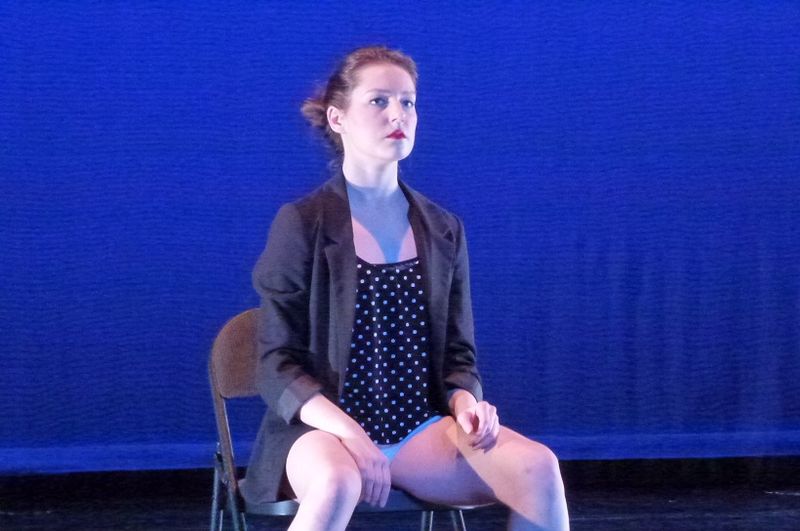
    Marion Helfenstein commenced her solo Who Are Those Ugly Ladies In The Mirror? seated in a chair. A spoken passage gives way to a pulsing mandolin rhythm as the dancer’s gestures tell her story. When the music (by Rene Aubry) develops a deeper resonance and more intense beat, she rises to dance swiftly about the space; yet in the end she cannot escape her chair.

    Trashina Conner first enters in a state of calm wonderment to the sound of a piano; as the cello takes over, a ritual of mourning takes place. The dancer then veers between hope and despair as the music becomes more intense; she runs around the space – either pursuing something or being pursued. At last she speaks: a date – March 26, 2006 – “A nightmare…with eyes wide open…” This recollection of a traumatic event gives this solo its title 3.26.06. This intensely personal work was expressively danced, evoking real emotion from both dancer and viewer.

    Jonathan Breton’s solo Memories was performed to a beautiful score by Ezio Basso; the dancer’s slender form moved with supple grace and lyrical port de bras thru combinations from the classic ballet vocabulary persuasively meshed into a contemporary statement. Jonathan’s lithe torso and handsome line created a lyrical atmosphere, whether he was standing in a pool of light or moving freely about the space. A self-embrace near the end was a fine expressive touch.

    Ashley Peters appeared as an Emerging Artist in BalaSole‘s Autumn 2013 concert: VISAGES. I thought then that she showed real potential, and tonight she was back in a solo work: Past and Pending. To music by Outside – violin over a heavy metallic beat – Ashley covered the space in restless, dynamic moves, her body talking to us directly.

    Paulina Bracone’s solo It’s Possible developed well in the unusual juxtaposition of spoken word and ballet-based movement. This restless solo showed the dancer’s vulnerable femininity; as the music swells under the spoken narrative, her movement becomes more expansive. This improbable combination of masculine (the voice) and feminine (the dancer) elements ended up working well thanks to Paulina’s sense of commitment.

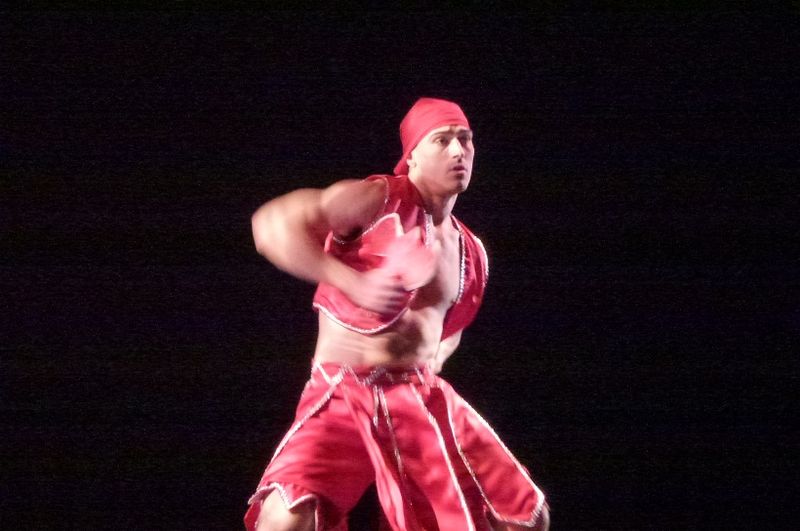
    Hunter Frederick Houde’s Afro-Cuban solo Changó emerges from Santeria folk legend: Changó is the owner of fire, lightening, thunder, and war, but he is also the patron of music, drumming, and dancing. He represents male beauty and virility, passion and power. Dressed in red and carrying a small hatchet, the dancer’s moves were vibrant and instinctive; rolling thunder, folklike chant/vocals and intense drumming push this fiery solo to its conclusion: a huge thunderclap as the lights go out. 

    Christen Quattlebaum’s solo Fireflies opens to a piano tune and is later taken up with the whimsical lyrics of the title-song. Christen shows off an expansive developpé and zooming extension, but her quirky choreography also includes gentle hops and an arcane gestural language. This off-kilter solo drew our focus in its movement, while making us wonder what the song was really about. 

    Tracy Singer enters rather dejectedly for her solo What I Did With What You Left Me. This is a proud woman who’s been shot down by love, but she’s going to bounce back. Sultry jazz marks her sense of post-breakup lethargy, but agitation emerges in supple nuances. She hits the floor – literally – but then takes off in a space-filling self-absorbed danced passage to a big blues anthem.

    Caroline Brethenoux’s solo Message Send Failure opens in silence, the dancer having difficulty breathing. At last she is able to enunciate: “There was something that I wanted to tell you.” Since she finds difficulty in speaking, she hesitantly begins to express herself in dance, though remaining on the floor; her frustration leads to a silent scream. In the end she rises, suggesting she is ready to pull herself together. But then…she can’t.

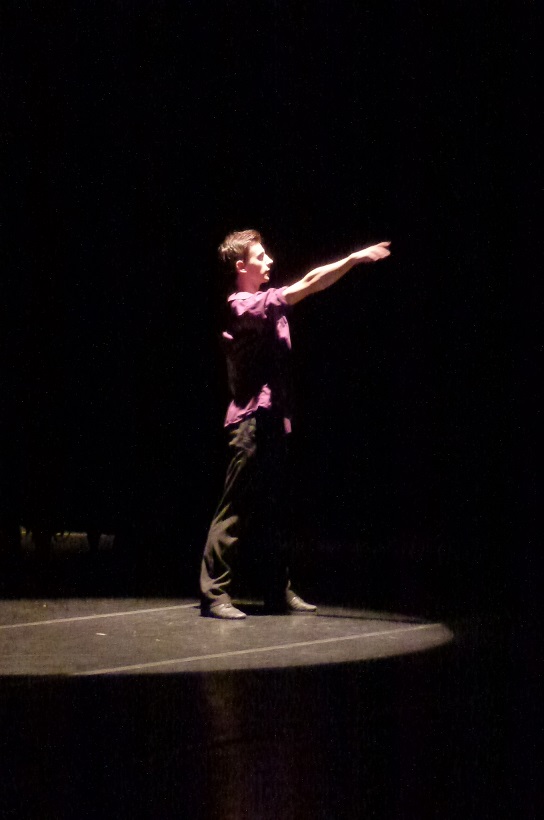
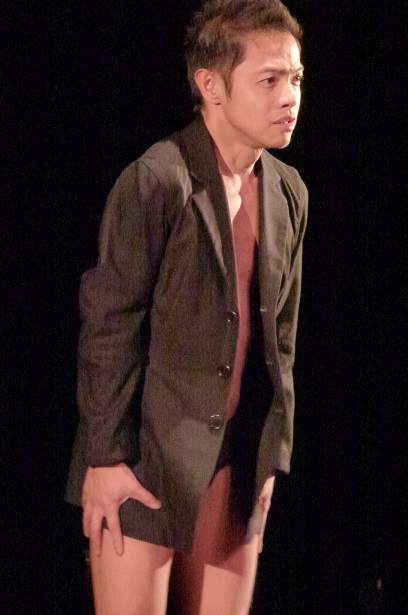
    Roberto Villanueva’s solo Incomplete – performed to solo guitar – found the dancer clad in abbreviated black briefs and a dinner jacket. He alternately reveals and conceals his torso; the dance however is not provocative but instead reflects an inner dilemma: it’s sexy but not at all sexual. On the surface we can savor Roberto’s handsome physique, but there’s more going on beneath the exterior attraction. The apex of expression is reached in a long, slow-developing arabesque. As the solo ends, delicate tremors in the hands indicate the dancer has a lot on his mind. This dance is personal: while it exposes the dancer physically, in the end Roberto retains his mystique.

    I didn’t have very good luck taking pictures at the dress rehearsal, but here are a few of the individual dancers (sorry that I didn’t get everyone!):

    L1310169

    Christen Quattlebaum

    L1310302

    Trashina Conner

    L1310321

    Jonathan Breton

    L1310389

    Hunter Frederick Houde

    L1310525

    Roberto Villanueva

  • Gautier Capuçon @ The NY Philharmonic

    Gc

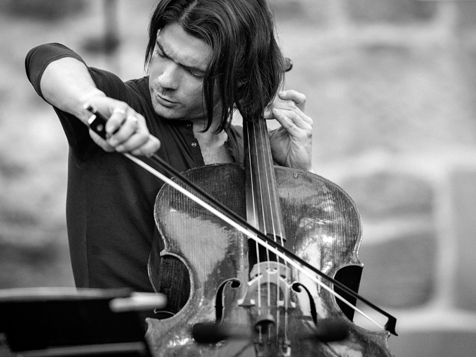
    Friday January 24th, 2014 matinee – Cellist Gautier Capuçon (above) gave an inspired rendering of the Shostakovich cello concerto #1 at this afternoon’s New York Philharmonic concert. Conducted by Andrey Boreyko, the programme was book-ended by works of two Russian composers with close ties to the world of classical ballet.

    The name Nikolai Tcherepnin immediately conjures visions of the Ballets Russes, for it was he who not only conducted the first performance of Diaghilev’s troupe in the West (on May 19th, 1909, at the Chatelet) but also composed the score of that evening’s opening ballet – Le Pavillon d’Armide – which swept the Parisians into a fever as they beheld Karsavina and Nijinsky onstage.

    Today the Philharmonic opened their concert with Tcherepnin’s tone poem The Enchanted Kingdom which dates from 1909-1910. The “kingdom” referred to in the work’s title is that of Katschei the Immortal – yes, the same sorcerer who was soon to appear in the Fokine/Stravinsky Firebird. In seems fact, Tchrepnin’s score may have been under consideration by Diaghilev as a setting for Fokine’s ballet. That didn’t transpire, but the score Tchrepnin left us is quite magical in its own right.

    The huge orchestra under Maestro Boreyko gave a richly-coloured performance: right from its sombre opening, this music reveals a vibrant sound-palette: celesta, piano and harp produce magical effects while solo wind voices add characterful touches. The cinematic central melody is simply gorgeous.

    Gautier Capuçon then took the stage for the Shostakovich; this charismatic artist took all the demands that the composer sets before the cellist in his stride. M. Capuçon’s playing of the central theme of the moderato literally gave me the chills, such was the spell he was able to cast; and as he played he sometimes seemed to be gazing off into some distant horizon: truly poetic. In the very long and technically demanding cadenza, the cellist’s clarity and his mastery of dynamics was most impressive – and a great smile illuminated his face when this sustained solo passage came to an end and the orchestra began to play again. Capuçon’s playing won the audience’s unstinting praise, and after the customary bows with the conductor the soloist was called out yet again for a solo bow, evoking a standing ovation.

    The Shostakovich was excellently played by the artists of the Philharmonic, with the prominent horn solos finding Philip Myers at his finest: amazingly plush sound, a real treat for the ear.

    Boreyko

    Above: conductor Andrey Boreyko

    The Philharmonic’s final offering today was the Tchaikovsky Suite #3, immortalized for dance lovers in Balanchine’s marvelous ballet of the same name. Of course throughout this performance the Balanchine choreography unfolded in the mind’s eye. Is there any music so romantically overpowering as the Élégie, especially when played as sumptuously as it was today? Throughout the forty-minute piece (it seems much shorter when there’s dancing to be watched), Maestro Boreyko kept a precise pulse: he was especially adept in the subtle rhythmic shifts of the Valse, and the final polonaise was regally done. The playing was stellar.

  • GrahamDeconstructed: CAVE OF THE HEART

    Light-a-fire

    Thursday January 23rd, 2014 – Tonight Martha Graham’s CAVE OF THE HEART was danced in a studio setting at the Martha Graham Dance Company‘s home space on Bethune Street. Although described as an open rehearsal – the dancers wore practice clothes and the ballet’s Noguchi set pieces had already been shipped out West for the Company’s upcoming tour performances – the work’s power and immediacy provided a vibrant theatrical experience.

    In both her opening remarks and in a Q & A at the end of the evening, the Company’s artistic director Janet Eilber gave us valuable insights into CAVE OF THE HEART. It was interesting to learn, for example, that Graham first approached Aaron Copland to write the music for this work which she was conceiving: Copland demurred. She then turned to the Mexican composer Carlos Chavez who delivered a score that  the choreographer found unsuited to her needs (she eventually set another work, DARK MEADOW, to the Chavez music…and now my curiosity is piqued indeed: I want to see it!). And so it was Samuel Barber who crafted the music that became CAVE OF THE HEART; later Barber excerpted his famed piece Medea’s Dance of Vengeance from the score. 

    Before showing us the work, Janet asked each of the participating dancers to demonstrate a key movement motif from their role; these provide keys to the individual characters. Once the ballet began, the communicative powers of the four dancers – Graham has stripped the Medea story down to the bare essentials – took things beyond the context of a rehearsal: they danced with an expressive clarity that revealed yet again the depth of Graham’s genius.

    Miki Orihara’s Medea moved from the torment of jealousy to final triumph in a performance rich in intimate detail, and Tadej Brdnik’s compelling athleticism as Jason perfectly embodied the character’s masculine vanity. At once majestic and lyrical, Carrie Ellmore-Tallitsch’s appeared as The Chorus with her elegant wingspan and the face of a goddess. Jacquelyn Elder’s princess was lovely in her bridal innocence and terrifying as Medea’s wedding gift – a poisoned crown – began to work its insidious power. Together these generous artists gave us a richly rewarding evening, so inspiring to watch at close range.

    The Martha Graham Dance Company will be at New York’s City Center in March. Details here.

  • BUTTERFLY @ The Met: First of Three

    Butterfly0607.12

    Above: dancer Hsin-Ping Chang in the Met’s production of MADAMA BUTTERFLY; photo by Ken Howard

    Monday January 20th, 2014 – Three sopranos are slated to sing Butterfly at The Met this season and I’ll be in the House for one performance by each; although I like the current BUTTERFLY production very much, as a matter of practicality I’ll be at a score desk for all three performances.

    Pierre Vallet, an assistant conductor at The Met, took over the baton tonight as the scheduled Philippe Auguin seems still to be indisposed. Vallet has worked at The Met for several seasons; tonight was only his second appearance on the podium (in 2011 he led a FAUST during which mezzo-soprano Wendy White suffered a serious onstage injury). He got BUTTERFLY off to a brisk start tonight with a nimble prelude, and although there were some moments when pit and singers were not precisely coordinated, overall he shaped a very appealing performance.

    Vocal honors tonight went to Bryan Hymel, the tenor who was a Met Auditions winner in 2000 and who returned to the House in triumph last season, replacing Marcelo Giordani in the arduous role of Aeneas in Berlioz LES TROYENS. Considering the difficulty, complexity and duration of many of the roles in Bryan’s current repertory, Pinkerton must seem like something of a ‘vacation role’ (that’s how Birgit Nilsson referred to Turandot). He sang with clear lyric thrust, with easy and sustained top notes zooming out into the House. The voice is fragrant and passionate; I had looked forward very much to hearing him in the aria and trio of the opera’s final act but in the event I didn’t end up staying that long.   

    Tonight’s Butterfly, the South African soprano Amanda Echalaz, revealed a vibrant and somewhat metallic timbre; her voice – which I would describe as ‘big lyric’ – projects well, but tonight much of the time she tended to sing sharp. This offset any pleasure I might have derived from her singing. By the end of the first act I’d decided that I’d heard enough, and I headed home after the love duet. The soprano’s bio indicates that BALLO and SALOME are in her rep; I’m wondering if she’ll wear herself out prematurely.

    Tony Stevenson was an outstanding Goro: clear and musical in his presentation, he sang the role more as a lyric than a ‘character’ tenor. The pleasing singing of Elizabeth DeShong as Suzuki was another possible reason to stay beyond the first intermission but there was no guarantee that Ms. Echalaz would overcome her sharpness, and the rest of the opera is a long haul if the Cio-Cio-San is off the mark. Scott Hendricks’  Sharpless was reasonable enough and Ryan Speedo Green was a strong Bonze.

    All the elements were here for a good BUTTERFLY except the essential one: a vocally inspiring heroine. In the coming weeks Kristine Opolais and Hui He will be taking on Butterfly at The Met and hopefully one or both of them will sustain my interest to the end of the opera. 

    Metropolitan Opera House
    January 20, 2014

    MADAMA BUTTERFLY
    Giacomo Puccini

    Cio-Cio-San.............Amanda Echalaz
    Pinkerton...............Bryan Hymel
    Suzuki..................Elizabeth DeShong
    Sharpless...............Scott Hendricks
    Goro....................Tony Stevenson
    Bonze...................Ryan Speedo Green
    Yamadori................Alexey Lavrov
    Kate Pinkerton..........Maya Lahyani
    Commissioner............Paul Corona
    Yakuside................Craig Montgomery
    Mother..................Belinda Oswald
    Aunt....................Jean Braham
    Cousin..................Patricia Steiner
    Registrar...............Juhwan Lee
    Dancer..................Hsin Ping Chang
    Dancer..................James Graber

    Conductor...............Pierre Vallet

  • Parsons Dance at The Joyce

    Parsons-dance

    Sunday January 19th, 2014 (evening performance) – Parsons Dance are holding forth at The Joyce for a two-week season. Due to my ever-crowded calendar, this was my only chance to see them this time around. It was a typically top-flight Parsons programme, danced with the artistry and boundless verve I’ve come to expect from the Company over my long years of following them. The Company are celebrating 30 years of dancing…and I feel I’ve been with them almost from day one. 

    Introduction is a Parsons premiere and it is just what the title says: the audience is introduced to each member of the Company. David’s longtime lighting designer Howell Binkley has done the dancers proud yet again – Binkley lit all but one of the danceworks seen today. Rubin Kodheli‘s colorful score sets the stage as the Company’s luscious Italian firecracker Elena D’Amario steps forth first in a vibrant solo passage; and then we meet in turn the rest of the dancers: welcome to newcomers Geena Pacareu and Omar Roman De Jesus, and a warm welcome-back to Parsons favorites Sarah Braverman and Miguel Quinones. The lively and lyrical Christina Ilisije and those two handsome devils – Steve Vaughn and Ian Spring – are essential members of the Parsons family.

    Brothers is next: typically, Steve and Ian bounced back immediately from the opening work and were back onstage seconds later to give classic Parsons-style energy to this two boyz duet: an athletic and witty piece (co-choreographed by Parsons and Daniel Ezralow). To a quirky Stravinsky score (Concertino for 12 Instruments) the two boys nudge, flip, twist and turn their way thru this comradely duet. 

    Parsons Dance commissioned The Hunt from choreographer Robert Battle in 2001. Set to a savage, compulsive percussion score by Les Tambours du Bronx, this amazing piece is being alternately danced by the men and the women of Parsons Dance during this Joyce season. Today we had the men – Miguel Quinones, Steve Vaughn, Ian Spring, and Omar Roman de Jesus – and what a sensational performance they gave! Clad in long black skirts lined in blood red, the dancers move with fercious attack through this almost violent choreography. The audience seemed held in a state of amazement by the sheer dynamic passion of both the music and the movement and gave the guys a massive ovation at the end, so thoroughly deserved.

    Miles Davis’ “So What?” sets the stage for a jazzy quartet, Kind of Blue, danced with tenderness and a touch of seduction by Mlles. Ilisije and D’Amario along with Ian Spring and Omar Roman De Jesus. This was an interlude of near-calm in an otherwise power-packed programme, and Mr. De Jesus seems already to be developing a fan club among Parsons aficianados.   

    Steve Vaughn enjoyed a rock-star triumph in the famed Parsons solo Caught; last year I had the good fortune of watching Steve in one of his rehearsals for this challenging dancework: an iconic piece in which the dancer – caught by strobe flashes – seems to literally be walking on air. Timing and stamina are the keys to success here: the solo contains more that 100 jumps which must be perfectly coordinated with the lighting. Steve, with his boyishly beautiful torso, simply thrilled the crowd, and at the end he basked in wave after wave of applause and cheers, bowing gallantly to the adoring throng.

    Nascimento Novo is a superb Parsons closing work: the music of the Brazilian composer Milton Nascimento seems tailor-made for the Parsons style and in this (yet again) marvelously lit ensemble piece the dancers celebrate, sway, and seduce with effortless charismatic appeal. Two duets – one for Sarah and Christina, the second for Elena and Steve – are highlights in this evocative tapestry of dance which evoked sultry sunlight on a freezing Winter’s evening.

    The frosting on this delicious 30th-birthday cake was running into Abby Silva Gavezzoli, a beloved Parsons star who has taken some time off to raise her adorable son. So nice to see her, it really made my evening complete.

    I missed my usual rehearsal invite to David’s studio this year where I might have had the opportunity to bring a photographer to capture the new configuration of dancers; but perhaps there’ll be another chance at some point.

    What has maintained over the years of watching Parsons Dance is the sensation of dance at its most satisfying: no filler, no marking time or standing about; just perpetual motion and – always – remarkable dancing.