Category: Ballet

  • At Nai-Ni Chen’s Rehearsal

    L1370928

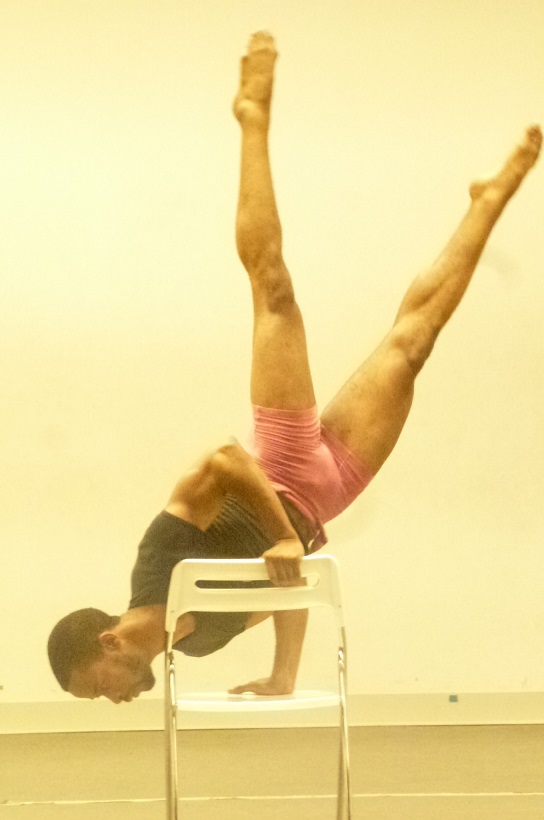
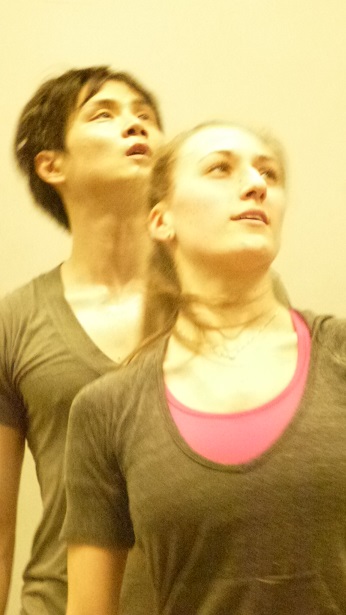
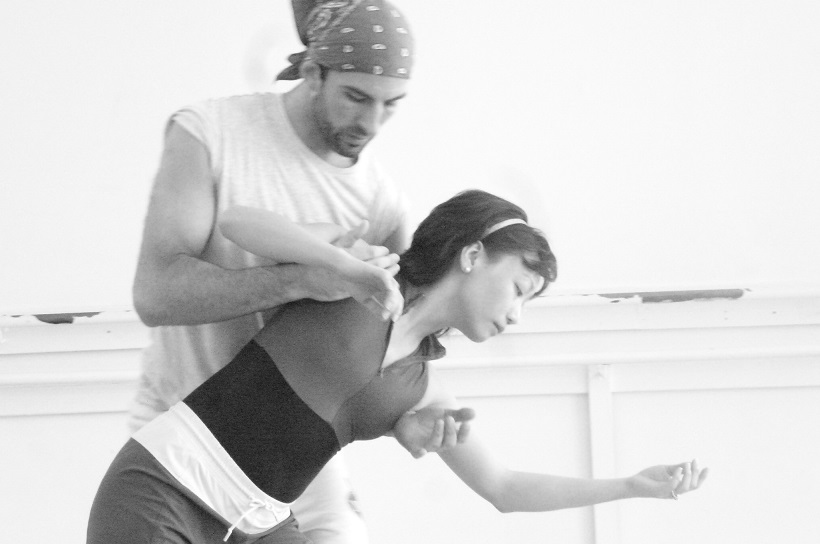
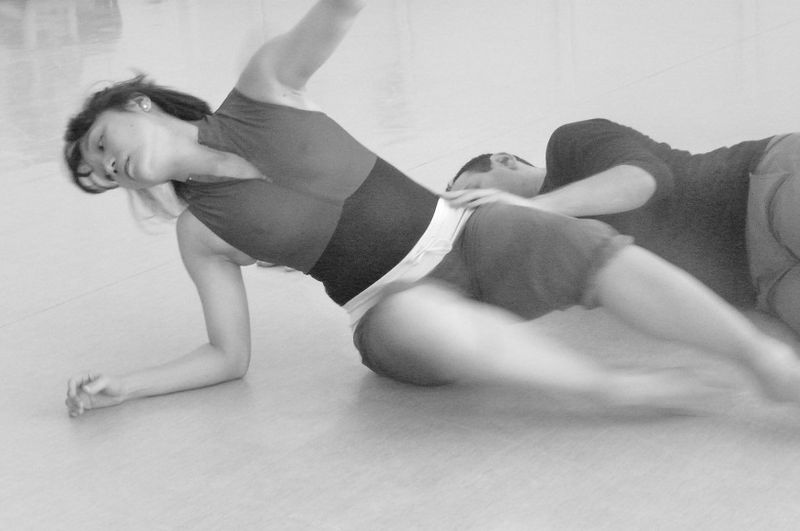
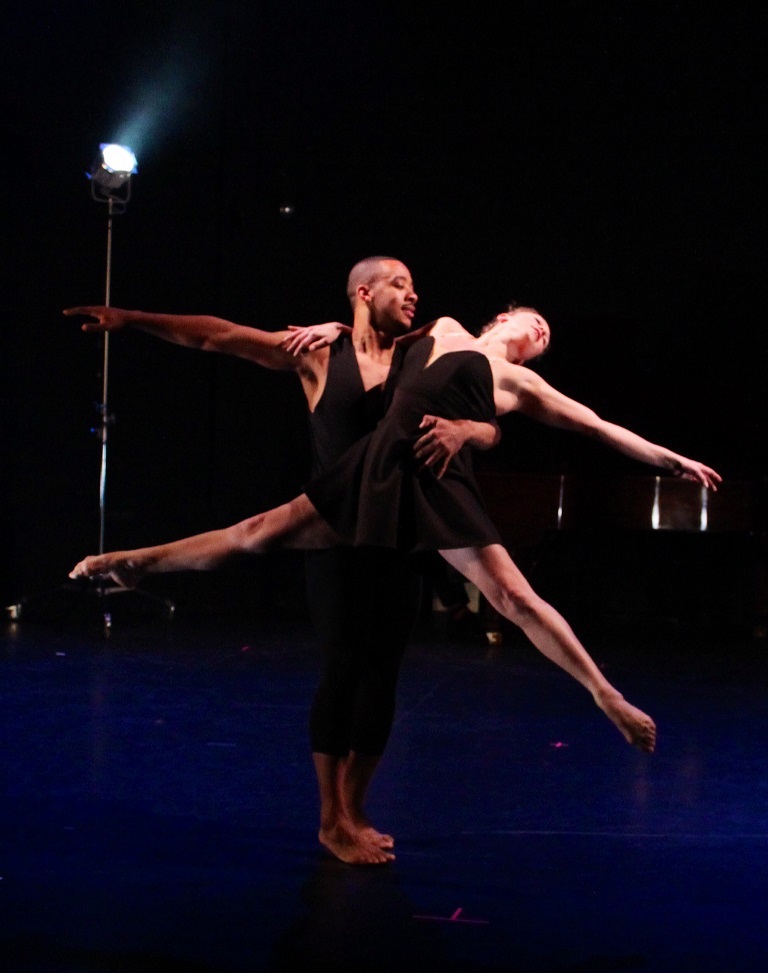
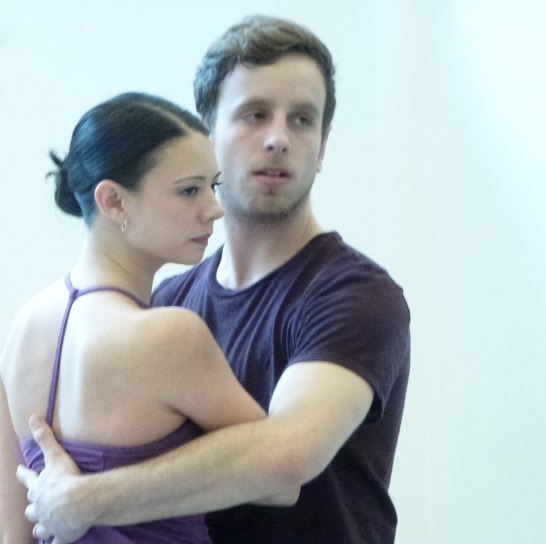
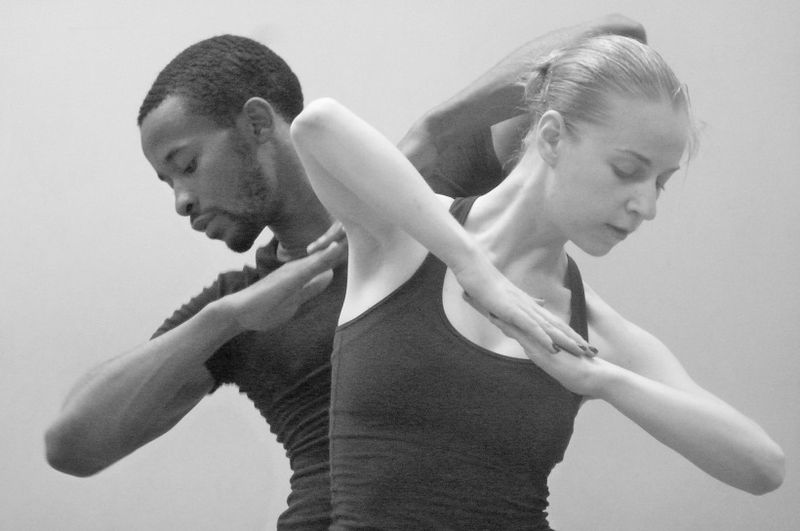
    Above: Justin Dominic and Ekaterina Chernikhova of Nai-Ni Chen Dance Company

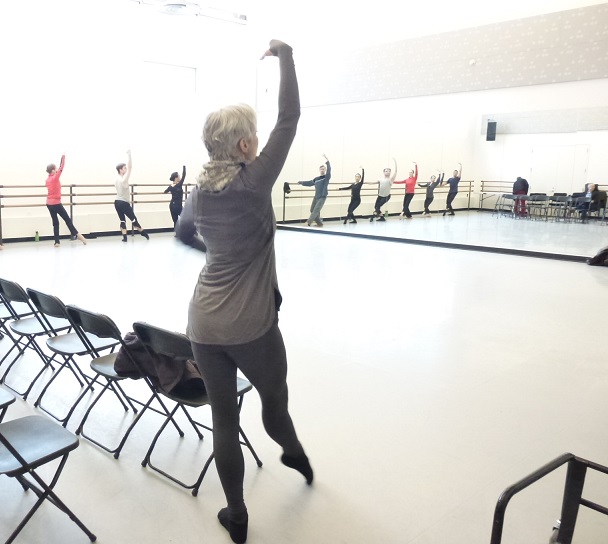
    Monday April 14th, 2014 – In preparation for her Company’s upcoming performances at Peridance, Nai-Ni Chen invited me to watch a rehearsal today at Jacques D’Amboise’s National Dance Institute on West 147th Street. I’d never been to this venue before, and it’s really nice; Nai-Ni had a big, spacious studio to work in and her dancers – some of them new to me – look super.

    Nai-Ni Chen Dance are celebrating their 25th anniversary with these Peridance performances on April 26th and 27th, 2014: tickets and more information here.

    The Prism Saxophone Quartet will be performing a score by Chen Yi, a contemporary composer from Guangzhou, China, for Na-Ni’s newest work Not Alone, inspired by a poem by Li Bai entitled Drinking Under the Moon.

    Joan La Barbara will appear for Incense, a quartet in which her voice is heard over a tape, commissioned by the Company in 2011. Incense has been performed on Company tours since then across the U.S. and to Asia and Europe.

    The lovely young ladies of the Ahn Trio will perform original music by Kenji Bunch for Grooveboxes, an excerpt from the trio’s full-evening collaboration with Nai-Ni called Temptation of the Muses. And Glen Velez, a four-time Grammy Award winner and one of the world’s leading drum masters and an expert in Central Asian music, composed the score for Nai-Ni  Chen’s Whirlwind. Mr. Velez will appear in an excerpt from this work with the Company.

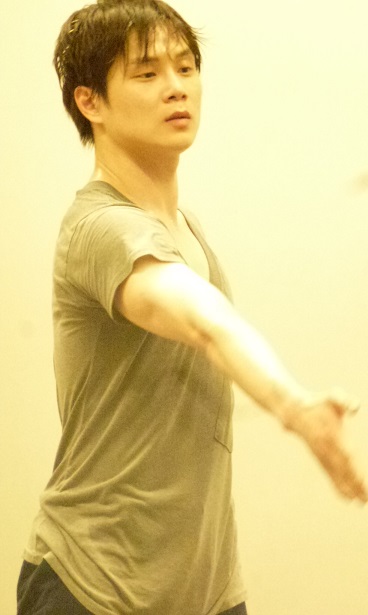
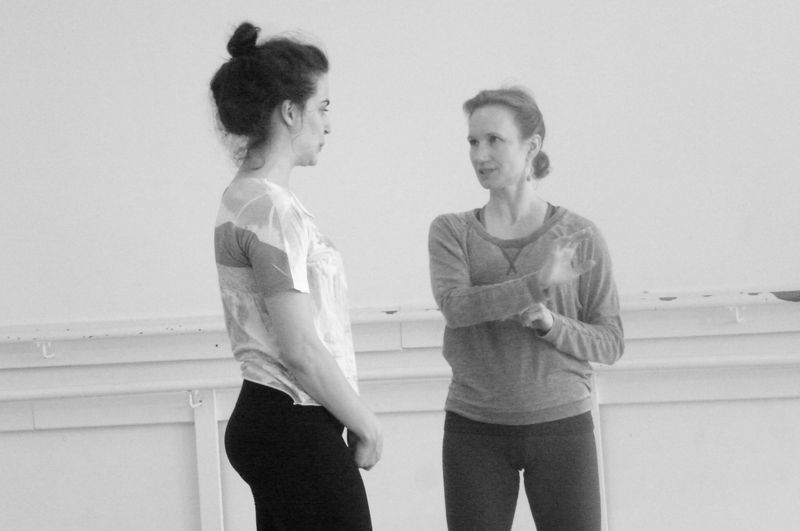
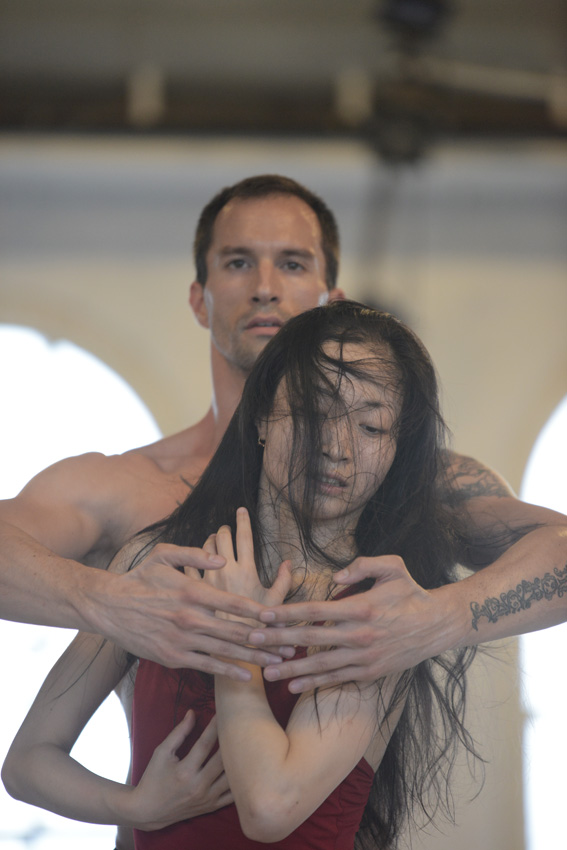
    Nai-Ni Chen is a detail-oriented choreographer and today’s rehearsal was largely spent in refining works the dancers already know quite well. Here are a few photos I took today: most of the time the dancers were moving too fast for me to capture.

    L1370651

    Kristen Lau, Daniel Johnson

    L1370675

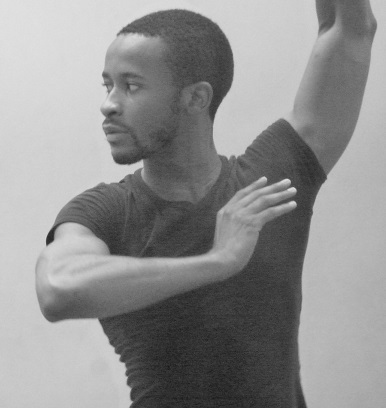
    Justin Dominic

    L1370816

    Yoosik Kim, Greta Campo

    L1370841

    Kristen Lau

    L1370808

    Yoosik Kim

    L1370940

    Justin Dominic

  • At Cherylyn Lavagnino’s Rehearsal

    5941803_orig

    Sunday April 13th, 2014 – This afternoon I stopped in at the NYU/Tisch studios where Cherylyn Lavagnino Dance are preparing for their upcoming performances (details above) at St. Marks Church near the end of June. 

    Cherylyn’s musical sensibilities, her keen sense of structure, and the way she draws nuances of personal  expression from her dancers have put her on my A-list of current choreographers. Having watched her work for the past few seasons, I haven’t sensed a single false step either in her choreography or her choice of music…or of dancers. 

    L1370241

    Above: dancers Lila Simmons and Michael Gonzalez

    For the upcoming St. Marks season, Cherylyn will present movements from two earlier works: her Bach/Couperin ballet Triptych and last season’s beautifully crafted Treize en Jeu, set to Franz Schubert’s Trio in E Flat Major for piano, violin and cello. A new work, Ru, is inspired by Kim Thúy’s novel of the same name and centers on a young woman’s life as a post-Vietnam War political refugee. Drawing upon the passive resistance of T’ai Chi and to be styled in costumes reminiscent of the traditional Vietnamese áo dài dress, Cherylyn’s new work – so evocative even now in a studio setting with the dancers in practice clothes – is set to a score by Scott Killian.

    Here are a few photos I took of Cherylyn’s dancers at today’s rehearsal:

    L1370313

    Michael Gonzalez and Giovanna Gamna

    L1370221

    Christine Luciano

    L1370260

    Eliza Sherlock-Lewis

    L1370555

    Travis Magee and Elliot Hammans

    L1370387

    Giovanna Gamna

    L1370487

    Claire Westby

    L1370559

    Adrian Silver and Selina Chau

    L1370477

    Lila Simmons and Giovanna Gamna

    L1370228

    Michael Gonzalez

    L1370522

    Claire Westby discussing the fine points with Christine McMillan

    L1370583

    Adrian Silver and Selina Chau

    L1370256

    Travis Magee

    L1370416

    Selina Chau

    L1370433

    Selina and Travis

    Visit the Cherylyn Lavagnino Dance website here.

  • Andonis Foniadakis’ GLORY @ The Joyce

    20133155045

    Sunday March 30th, 2014 – I like to think of myself as the first person in Gotham to have ‘discovered’ Andonis Foniadakis. The Greek choreographer brought his solo setting of THE RITE OF SPRING to Joyce SoHo in 2008; I was invited to the dress rehearsal and I went, not knowing what to expect. It was a thrilling experience, made even more memorable by the incredible dancing of Joanna Toumpakari. I was so blown away by this RITE that I immediately arranged to see it again the following evening.

    In May 2013 Andonis created HORIZONS for Cedar Lake Contemporary Ballet, and earlier this month his simply gorgeous ECHO was by premiered by The Martha Graham Dance Company.  And now Ballet du Grand Théâtre de Genève have brought Andonis’ GLORY, created on them in 2012, to The Joyce. I was only able to attend today’s final performance of the run; I wished now that I’d planned to see it more than once.

    Take a look at GLORY here.

    The first thing I love about GLORY is the music: Andonis starts with a selection of vocal and instrumental works by George Frideric Handel which Julian Tarride has woven into a tapestry of sound incorporating strains of contemporary vocalism, fleeting rhythmic gestures, and the occasional sonic thunderclap. The only slight miscalculation is the use of the Hallelujah Chorus which – in my view – is too familiar to be included; there are dozens of celebratory choral works in the Handel catalog and I would have chosen something rarer. Nonetheless, between Handel and Tarride, the dancers can take wing in this hour-long work which flows on endless waves of lyrical, expansive movement.

    The lighting (Mikki Kunttu) plays a major role in the visual appeal of GLORY: shafts of light radate thru the dancing area in ever-shifting patterns, creating chiaroscuro effects, variously illuminating the dancers from all sides and evoking the sunlight pouring into the dark caverns of antique cathedrals. Costume designer Tassos Sofroniou has clad the dancers like dark angels at first; later brilliant ruby red gowns will bring a satanic touch to the proceedings. The dancers change costumes often, some taking on pale yellow and lighter hues, and at one point the men appear in dance-belts like living statuary as they manipulate a single woman in complex lifts. 

    Andonis has structured GLORY in such a way that there seems to be more than the twenty listed dancers onstage. They come and go in various movement units and from time to time simply march forward, having descended the two steps a the back of the stage, like oncoming armies. At times they arrange themselves in mirror-image Rorschach-patterns. The Geneva dancers are remarkably flexible and strong, their energy level seeming to soar as this physically demanding work progressed: the ballet is a non-stop panorama of movement.

    Graham-like rituals alternate with knotted clusters of bodies, and visual polyphony plays a key role: there are usually several things happening at once. Along the way, solos or pas de deux bring individual dancers into focus. In the ballet’s most striking passage, a woman appears in a long cape of black parachute silk which is manipulated by the black-clad men using metal rods (photo at the top).

    Although at times there was a sense of repetitiveness in the choreography and a feeling that the work was perhaps a bit too long for optimum effect, the overall beauty and the combined theatrical power of the dancers, the choreography, the music and visual representation made for a very pleasing afternoon.

  • Matthew Westerby’s SWAN LAKE FANTASY

    Photo

    Above: Gierre Godley and Kristin Licata in SWAN LAKE FANTASY; photo by Dylan Baker

    Friday March 28, 2014 – Matthew Westerby’s SWAN LAKE FANTASY was premiered tonight at the Hudson Guild Theater. In addition, two recent works choreographed by Matthew Westerby were performed.

    LIFELINE is an ensemble work danced to music of Lusine ICL and Jonsi & Alex. An air of mystery pervades the space: moveable spotlights surround the dance floor and are variously pushed about by the dancers to illuminate their colleagues. A solo commencing in silence is danced by Kayla Farrish; as the music seeps into our consciousness, she is joined by Dylan Baker and Gierre Godley. This evolves to a duet for Kayla and Gierre; Gierre’s fluent movement and emotional investment made a hypnotic impression all evening. The other women – Dina-Verley Christophe, Nicole Kadar, Alessandra Larson and Kristin Licata – appear in quiet rites: their blue frocks have a somewhat Isadora Duncan/Grecian tunic look. There’s a lyrical duet passage for Alessandra and Gierre – two dancers I particularly admire – and the community join together as a hymn-like theme rises up. The piece ends as it began, with Kayla alone in the fading light.

    DUET X, with music by Ben Frost and Daniel Bjarnason, is handsomely danced by Dylan Baker and Matthew Westerby. These two slender boys are onstage as the spotlights – now focused on high – begin to glow and a gentle fog fills the air. To a misterioso opening theme, they advance towards us, moving in sync with stylized, winged gestures but without physical contact. They dance in tandem or echo one another’s moves. Repeating the opening synchronized phrase, they again advance but now Matthew places his hand on Dylan’s shoulder. A sense of intimacy and trust develops as they fall back onto one another, but this becomes something of a conflict as Matthew tends to manipulate Dylan. They back off in a state of seeming rejection, but the duet ends tenderly with Matthew cradling Dylan in his arms.

    During the intermission, pianist Matei Vargas warmed up onstage for the SWAN LAKE FANTASY. Composer Matt Van Brink had this to say about his vision of the Tchaikovsky score:  “Making an arrangement of a great piece of music means breaking it apart, inspecting the pieces and from them creating something new again…in the piano world, there is already a unique genre of “arrangement”: the transcription, a flexible term ranging from faithful adaptations to fantastic interpolations. I enjoy solving musical puzzles, so when Matei Varga approached me to create this work for him, I liked the idea of not only making the arrangement, but doing it in such a way that it fits into the canon of piano transcriptions…by presenting the themes and dances in a new, perhaps surprising order, an entirely new story emerges out of the old one.”

    Matthew Westerby’s SWAN LAKE FANTASY is just that: a fantasy. There’s no literal re-telling of the story, nor are the roles specifically assigned to individual dancers. In his opening solo – beautifully expressed to the music of the White Swan adagio – the black-clad Matthew might be Odette or he might be the Prince. Dina-Verley Christophe, dancing in a pre-maternal state of grace, assumes the classic floor pose of the Swan Queen as Dylan Baker hovers about her, re-arranging her limbs, shoulders and neck into variations on an iconic theme. The four cygnets – all in black – appear but contrary to expectations they do not dance in linked formations but rather they move freely about the space. We hear themes from the Russian and Hungarian dances as Gierre Godley gives us some expansive moves. The swans and the would-be-brides meet in a confuson of music and movement; a male pas de trois celebrates while the swans kneel en reverence to the pianist.

    Suddenly a jazz-inflected passage interferes; the dancers then pair off for a promenade as the music turns grandiose. Alessandra and Gierre dance together and then the Rothbart theme is heard for a pas de six transporting us at last to the final lakeside setting where Alessandra Larson evokes Odette’s despair in a lyrical solo. The ensemble rush in and go thru a series of big lifts before turning upstage to greet the dawn with a final ecstatic salute.

    This rush of music and movement may sound a bit random as I’ve described it, but thanks to the persuasive dancing and to Mr. Varga’s effortless dexterity at the keyboard, this fantasy took on a dreamlike quality. And in dreams, anything can happen.

  • Paul Taylor Dance Company/Lincoln Center 2014 #3

    ImageProxy.mvcptdc

    Wednesday March 26, 2014 – With America going to pot, Paul Taylor’s A FIELD OF GRASS was a particularly timely opening work on tonight’s programme as the venerable choreographer’s troupe of outstanding dancers neared the end of their three-week season at Lincoln Center. To the gently joyous and sometimes ironic songs of Harry Nilsson, the dancers evoked the joys of getting high.

    Robert Kleinendorst’s opening solo has an innocent air, a toke or two getting him there as he savors a summer afternoon. He’s joined by others from the commune, everyone relaxed and ever-so-slightly paranoid. There’s a blissful, light-stepping duet for Robert and the sensational Michelle Fleet, and Aileen Roehl is simply groovy in a featured role. Eran Bugge, Christina Lynch Markham, Sean Mahoney and Francisco Graciano bend, sway and celebrate under the influence; all that’s missing is the obligatory trip to the grocery store.

    In a violent mood swing, the second work tonight was Taylor’s 2005 ballet BANQUET OF VULTURES set to Morton Feldman’s eerie Oboe and Orchestra. A quote from 19th-cenutry Scottish poet John Davidson’s ‘War Poem‘ heralds the encompassing darkness of this work:  “And blood in torrents pour In vain–Always in vain, For war breeds war again!”

    The curtain opens on a shadowy stage, with an ensemble of camouflage-clad dancers writhing in candlelight. The dancers’ moves suggest the hopeless stupor of those long held in tortured captivity; awakened to another day of terrorized despair, they begin to rush about in furtive panic, seeking routes of escape.

    Michael Trusnovec, a malevolent power-figure in a dark suit and red tie, emerges from the gloom; with a reptilian slither in his walk and an emphatic stamping of his heels, this sadistic jailer strikes fear in the huddled captives. Seizing upon his prey, Jamie Rae Walker, Michael systematically breaks her down, with a brutal act of rape before he stabs her and drags her body away to be discarded.

    The narrative is destined to be endlessly repeated: a new master of war, Robert Kleinendorst, now appears and dances a spastic solo, flinging himself to the floor in paroxyms of rage before he approaches the prisoners, instilling them with visions of a fresh hell. 

    The communicative powers of Ms. Walker and Mssers. Trusnovec and Kleinendorst were at full sail in this powerful work which evokes the now largely-forgotten bastions of cruelty – Guantanamo and Abu Ghraib – and the unfettered vanity of George W Bush and his war-mongering administration.

    I first experienced CLOVEN KINGDOM at Jacob’s Pillow not long after its creation; Paul Taylor’s works were my first exposure to modern dance and CLOVEN KINGDOM struck me an an especial favorite and it remains so to this day, after many viewings. 

    Meshing music by Arcangelo Corelli, Henry Cowell and Malloy Miller, Paul Taylor develops this visually stunning ballet against a sound collage that combines the elegant formality of the Baroque with sensuous back-beats and jungular vibrations. Treading along the fault lines between the civilized and the savage, the quartet of men in tuxedos – Michael Trusnovec, Michael Apuzzo, Michael Novak and George Smallwood – move with a kind of predatory elegance. The women wear sweeping gowns in attractive hues and later some of them add mirrored heardresses, casting jewel-like refractions of light about the stage and into the theatre. Urgently lyrical swirls, stylized gestures, and witty pairings decorate the evolving choreography for the female ensemble: Michelle Fleet, Eran Bugge, Laura Halzack, Jamie Rae Walker, Aileen Roehl, Heather McGinley, Christina Lynch Markham and Kristi Tornga. In one of those inimitable Taylor touches, Ms. Roehl – in lime green – periodically crosses the stage in a leaping diagonal: a woman with a mission…though we have no idea what impels her quest. Brilliant!

    As this was my last Taylor performance of the current season, I want to express my sincere appreciation to the marvelous Taylor dancers – with roses for the newcomers Ms. Markham and Ms. Tornga for their excellent work – and a note of thanks to the Company’s Lisa Labrado, who is always so helpful. And then, of course, there’s the Great Man himself.

  • Deborah Wingert/Lydia Johnson Dance Salon

    L1340657

    Above: Deborah Wingert

    Sunday March 23, 2014 – Friends – long-time and new – of Lydia Johnson Dance gathered at Manhattan Movement and Arts Center this afternoon for a salon/studio presentation of Lydia’s latest work-in-progress, set to the Mozart Fantasy in C-minor, K. 475. Wearing one of her many hats, the extraordinary Deborah Wingert – teacher, choreographer, stager for the Balanchine Trust, and ballet mistress for Lydia Johnson Dance – gave a pre-salon class, demonstrated her inspirational coaching abilities, and spoke of her life as a dancer whose career took wing with Balanchine’s blessing.

    L1340608

    First, a class. The dancers of Lydia’s company come from varied backgrounds. Deborah, who teaches Company class weekly for LJD, has been imbuing a feeling of stylistic unity in the dancers. Lydia’s choreographic vision is an unusual fusion of ballet and contemporary; Deborah’s class work places an emphasis on ballet while at the same time encouraging the individuality of expression of each dancer. It seems like a paradox, but it’s happening.

    The Mozart-in-progress opens with a lyrical solo danced by Katie Martin; throughout this work, Lydia provides each of her dancers with prominent passages allowing their singular qualities to shine thru.

    L1340648

    One extended segment is a duet for Sarah Pon and Anthony Bocconi (above), dancing in a realm of tenderness and trust.

    L1340633

    A duet for Blake Hennessy-York and Chazz Fenner-McBride (above), which the boys have just started working on, was coached by Deborah and in the span of a few moments took on a more vivid quality, having made slight adjustments in placement and support. Chazz, the newest dancer in Lydia’s company, brings the same sincerity to his dancing here that made his performances in Robin Becker’s INTO SUNLIGHT so meaningful.

    Kerry Shea, Laura DiOrio, Lisa Borres and Min Kim along with Katie and Sarah create beautiful shapes and a sense of quiet urgency as they come and go with dream-like unpredictability – all of this to Mozart’s peerless melodies.

    L1340686 - Copy

    LJD‘s Steve Cramer interviewed Deborah (above); she spoke of the affinity that has developed between Lydia Johnson and herself, and of their shared belief in the communicative power of music. Deborah further regaled us with stories of working for Mr. B, sharing anecdotes which were moving and witty by turns.

    L1340692

    As a savory ‘dessert’, Kerry Shea and Eric Williams (above) performed a duet from Lydia’s ballet NIGHT OF THE FLYING HORSES, to a score by Osvaldo Golijov. My friend Lisette Oropesa and I shared a secret smile as the haunting melody of “Je crois entendre encore” from Bizet’s PECHEURS DES PERLES suddenly materializes in a Golijovian incarnation. I was so glad to have my friends Lisette, Steven and Joe at the studio today; this was Lisette’s first opportunity to witness dance at close range, and I think it really moved her, especially since her beloved Mozart was an integral element of the afternoon.

    The new Mozart, along with the Golijov and Lydia’s ravishing Schubert ballet NIGHT AND DREAMS, will all be part of her upcoming season at Ailey Citigroup in June; details will be forthcoming.

  • Martha Graham @ City Center 2014 #2

    6a00d8341c4e3853ef017d416357b9970c-800wi

    Above: Katherine Crockett, photo by Matthew Murphy

    Friday March 21st, 2014 – Gods and goddesses never leave us, but they do sometimes move from one sphere to another, the better to bring light to the entire universe. Tonight at City Center I watched two of the great Graham dancers of our day – Katherine Crockett and Maurizio Nardi – in their final performances as members of the Martha Graham Dance Company. (Maurizio actually bids farewell on Saturday evening, but I am unable to be there). Both of them – I hope – will come back as guests in future Graham seasons; or perhaps we will see them in different contexts in the months ahead.

    This evening’s performance was brilliant in every regard: the Company danced to perfection and the two contrasting Graham works framed an Andonis Foniadakis creation to which the word ‘gorgeous’ can be most aptly applied.

    Ms. Crockett, as Clytemnestra in a one-act distillation of the 1958 Graham classic, was beyond the beyond. To be tall, shapely of limb, and fair of face is all well and good, and to put these gifts at the service of art and music with such total conviction is Katherine Crockett’s great achievement. Her performance was so clear of focus and so striking in every step and gesture and expression that it seemed impossible that we might be seeing her in this role for the last time. Katherine has always seemed to me to be the incarnation of an ancient goddess, alive and speaking to us today of the luminous vitality of the feminine spirit. As the audience and her fellow dancers hailed her with flowers and waves of applause at her curtain calls, she seemed to have attained iconic status. And yet, we were to see her again in a subtle encore, wafting across the stage in an angelic white gown in MAPLE LEAF RAG, the evening’s closing work.

    CLYTEMNESTRA, to a musical score by Halim El Dahm with sets by Isamu Noguchi and costumes by Ms. Graham and Helen McGehee, affords many solo-character opportunities for the Graham dancers and so we are able to bask in the power and poetry of the individual personalities in this fascinating Company.  Starting at curtain-rise, Lloyd Knight as the Messenger of Death set the tone for the whole work with his natural armor of musculature set off in a flowing royal-purple skirt. Martha Graham unabashedly admired the male form, and a veritable parade of masculine marvels strode before us: Ben Schultz as the towering King Hades – armed and epically dangerous – and Abdiel Jacobsen with a handsome mixture of vulnerability and resolve as Orestes (Abdiel is having quite a season!); Maurizio Nardi’s drunken lout of an Agisthes was personified by his slender strength and Hollywood cheekbones, and Lorenzo Pagano – already a valuable asset to the Company – gave a powerful rendering of the Night Watchman’s solo. As the hapless Agamemnon, Tadej Brdnik was perfect – and, after his character’s death, Tadej reappears in high platform shoes and the ballet becomes a ghost story.

    The women are equally superb, with the calculating urgency of Electra brought vividly to life by that impeccable Graham priestess, Blakeley White-McGuire. Natasha Diamond Walker (Helen of Troy), Mariya Dashkina Maddux (Iphigenia), PeiJu Chien-Pott (Cassandra) and Xiaochuan Xie (Athena) were distinctive as these mythic females, and the blessed assurance of their dancing and of their commitment augur well for the future of the Company.

    Andonis echo for graham fotochristopher jones

    Above: rehearsal image from Andonis Foniadakis’ ECHO, photo by Christopher Jones

    In their quest to bring new choreography into the Graham repertoire, the Company have struck gold with Andonis Foniadakis’ ECHO. Drawing inspiration from the ancient tale of Narcissus and Echo, this work fits like a glove into the Company’s scheme of things, where myth, magic and mystery are their daily bread.

    Andonis, who in 2008 brought his mind-blowing solo version of RITE OF SPRING – danced by the divine Joanna Toumpakari – to Joyce SoHo, is now becoming more widely known here in Gotham (his ballet GLORY will be seen the The Joyce this coming week, performed by Ballet du Grand Theatre Geneve…details here). 

    ECHO opens in silence in a foggy landscape with a shallow circular pool. It is here that the beautiful Narcissus is held captive by his own reflection. Andonis uses two of the Graham company’s handsomest men to personify the self-obsessed youth: Lloyd Mayor and Lorenzo Pagano. They are clad in long sheer skirts and the theme of self-infatuation is embodied in their constant embracing and intimate partnering. They are all but inseparable.

    As the rapture of Julien Tarride’s musical score takes wing, we meet the lovely and lonely Echo, danced with flowing grace by PeiJu Chien-Pott – a dancer who this season has emerged at a stellar level. The dance swirls forward on waves of lyricism, with a time-evoking gamelan theme of particular appeal. Angelic voices from another cosmos permeate the atmosphere as the ensemble of dancers, hair down and skirts drifting as they fly swiftly about the space, come and go from the dark recesses of the stage. Tadej Brdnik, Mariya Dashkina Maddux, Lloyd Knight, Xiaochuan Xie and Ying Xin are all to be savored, and a duet passage for Natasha Diamond Walker and Ben Schultz suggested a partnership to be cultivated.

    ECHO rightfully received a sustained ovation, both for the dancers and the choreographer. 
    News_27721_2

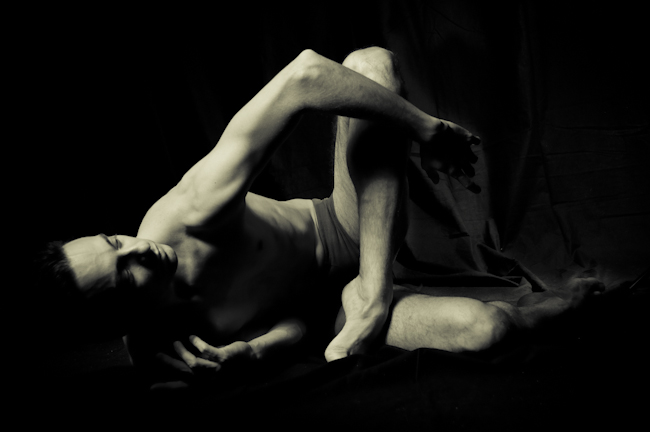
    Above: Maurizio Nardi

    Having my last look – for now – at Maurizio Nardi in the evening’s closing work, MAPLE LEAF RAG; Maurizio was one of the first Graham male dancers to seize my imagination when I began following the Company a few years ago. One of my regrets is never having seen him in the Graham solo LUCIFER which he has danced at galas. Perhaps an opportunity may still come. His immediate future I believe is wrapped up with Key West Modern Dance. I like to imagine him under a palm tree, sipping a cool drink after teaching class. Bon voyage, Maurizio!!

    I’d never seen MAPLE LEAF RAG and it is, in a word, adorable. Adorable in two ways really: first for its wit and sparkle and second for its gentle pandering to admirers of the male physique: all the Graham hunks spend the whole ballet shirtless, in tights.

    The stage is dominated by what appears to be a fusion between a ballet barre and a balance beam. The dancers will use this in myriad ways during the ballet. All wearing pastels, the eighteen dancers romp about the space to Scott Joplin tunes. Ying Xin and Lloyd Knight, in canary-yellow, are birds of a feather in their quirky, animated pas de deux. Periodically Katherine Crockett wafts across the stage, a tongue-in-cheek representation of Graham spoofing herself. Stylized Graham movement takes on a charming vibrancy here and the piece, just long enough to dazzle us without wearing out its welcome, is a great way to end the evening.

    During the curtain calls, Tadej Brdnik came striding out in his Agamemnon platforms and stopped the applause to ask that we donate to Dancers Responding to AIDS on our way out. I would do anything Tadej asked of me, and so I gave them – literally – my last dollar.

    So, a vastly pleasing evening in every regard with my lovely companion Roberto Villanueva, and so nice to run into Ian Spencer Bell. My thanks to Janet Eilber, Denise Vale, Andonis Foniadakis, Janet Stapleton, and all of the Graham dancers, and a champagne toast to Katherine and Maurizio. And a million roses for Martha.
  • Martha Graham @ City Center 2014

    6a00d8341c4e3853ef019104b3b731970c-800wi

    Above: Xiaochuan Xie and Ben Schultz rehearsing Martha Graham’s RITE OF SPRING; photo by Nir Arieli.

    Thursday March 20th, 2014 – Spring was in the air as Martha Graham Dance Company took the City Center stage tonight in a grand performance; Graham’s two (very different) Springtime classics – APPALACHIAN SPRING and RITE OF SPRING – framed the premiere of Nacho Duato’s darkly primeval DEPAK INE. The dancing was on such a phenomenal level, with the Company’s established and rising stars joining forces to create a vivid ensemble of boundless energy and commitment. And I was so happy to run into my fellow Graham-fan, the incomparable Wendy Whelan.

    Whenever Janet Eilber, the Company’s Artistic Director, steps forward to welcome us to a Graham event, I always wish that she was dancing. After her brief opening remarks, the curtain rose on a performance of the 70-year-old Graham masterpiece APPALACHIAN SPRING that had all the freshness and vigor of youth. The iconic Noguchi setting – so bare-boned yet so evocative – and the Americana-essence of Aaron Copland’s score were inhabited by a stellar cast and the ballet soared yet again.

    As the Pioneering Woman, Katherine Crockett’s goddess-like stature imparted a strength of heart and soul drawn from the land and an indomitable feminine spirit. Katherine’s power of gesture and her royal extension, as well as her resonant stillness as she observes the wedding rituals, create an unforgettable character. Lloyd Knight was likewise on spectacular form as the Preacher; whether standing stock still upon the Rock of Ages or marshalling his joy-filled followers, Lloyd’s strength of personality and technical mastery made for a vivid portrayal.

    Blakeley White-McGuire as the bride illuminated the character of this young and hopeful woman with a perfect mixture of vulnerability and joy. Dancing with pure clarity, Blakeley’s nuanced portrayal – both in action and reaction – was so inspiring. She was joined by the long-limbed Abdiel Jacobsen as the Husbandman in what I believe was a role-debut. Abdiel’s beautiful line and fluency of technique were aligned with a far-gazing handsomeness, making for a compleat performance. Towering over his bride, it was clear Abdiel would be Blakeley’s pillar of strength thru all the changing years that the couple would face. The poetry of their portrayals brought tears to my eyes.

    The world premiere of DEPAK INE, created by Nacho Duato to a score by Arsenije Jovanovic and John Talabot, drew a fervent ovation from the audience. Darkness reigns as the curtain rises, with the prone body of PeiJu Chien-Pott face down on the stage-left floor. She will remain totally still throughout the ballet’s opening movement.

    Emerging from the shadowed recesses at the rear of the stage, other dancers approach PeiJu. They soon fall into a kozmic dance with many comings-and-goings, and laced with spectacular feats of partnering. Absolutely amazing dancing from Natasha Diamond-Walker, Blakeley White-McGuire, Ying Xin, Abdiel Jacobsen (in a striking long-skirted costume), Lloyd Knight, and Lorenzo Pagano. To deep chant and exotic jungle sounds, these thrilling dancers do inhuman things with their bodies: unstinting power and commitment propel them through physical feats of uncanny speed and dexterity. 

    Then PeiJu begins to stir; she rises out of a drugged slumber as three dark-clad men – Tadej Brdnik, Ben Schultz and Lloyd Mayor – loom up out of her nightmare. A staggeringly ominous Rave beat fills the hall with a relentless loudness that threatens to bring the house down, literally. PeiJu, in a fantastical performance, is assulted by the men…ravaged, thrown down, lifted and passed from one to another. At last she returns to her silent sleep; in a repetition of the ballet’s opening passage, the other dancers approach her as at the start. At last she is borne away by Abdiel as the curtain falls.

    Giving herself over fully to the choreographer’s demands, PeiJu Chien-Pott scored a definitive triumph. All of the dancers as well as the choreographer were hailed with a mammouth standing ovation. The work, while impressive and sonically overwhelming, is a bit too long and somewhat predictable: that the woman will rise from her stupor and return to it, and that the ballet will ‘start again’, and that she’ll be carried off…all of this happened as if on cue. For me, it was the mastery of the ballet’s ultra-demanding choreography by the dancers that made DEPAK INE worthwhile.

    Sadly, the evening’s closing RITE OF SPRING was seriously compromised for those sitting around me by the incessant chattering of a small child a few seats away. How inconsiderate of the mother not to take the child out; thus those spell-binding moments of piano/pianissimo which Stravinsky created to offset the forceful sonic assaults of his music were simply ruined.

    Nevertheless, this is a Graham masterpiece that thrills us to the core. Graham’s marvelous use of stylized movement for the male and female corps, their ritualistic gestures and worshipful kneelings, fill the stage with a sense of structure and the relentless process of a rite from which the victim cannot possibly hope to escape.

    Snatched by the Shaman almost at random from the back of one of the acolytes, Xiaochuan Xie is suddenly transformed from a nameless girl to the center of the community’s sacrificial dances. Her performance is at once ravishing and disturbing. The lovely and vulnerable Xiaochuan’s terror is ignored by the implacable Shaman intent on shedding her blood to appease the unseen gods and guarantee a bountiful harvest. Ben Schultz is simply ideal as the Shaman, his physique symbolic of his god-like stature in the tribe, and his focus on his duty to the gods intense and unwavering. Maurizio Nardi and Tadej Brdnik are the ministers of death, and the entire ensemble dance with tremendous power and inspiration.

    In the end, the two great Graham works were what made the evening resonate. The dancing all night was simply thrilling and Martha’s double tribute to Spring showed us why her divine gifts still keep giving, some hundred-and-twenty years after her birth. Choreographers come and go, geniuses stay with us forever.

  • Ariel Rivka/CaitlinTrainor/Texture

    1383334044_80fb

    Above: Kaitlyn Gilliland and Caitlin Trainor is a rehearsal photo by Paul B Goode

    Thursday February 27th, 2014 – An evening of dance at Ailey Citigroup featuring three companies: Ariel Rivka Dance, Trainor Dance, and Texture Contemporary Ballet.

    Caitlin Trainor presented two works: KaitlynCaitlin (2013) a duet showcasing Ms. Trainor and former New York City ballet dancer Kaitlyn Gilliland.  This is a danced conversation between the choreographer, Caitlin, dancing barefooted, and guest artist Kaitlyn, dancing on pointe.  To music by Major Scurlock, using piano and electronics, the two girls dressed in ruby-red frocks dance in-sync and then move off on separate trajectories to explore their own vocabularies in combinations that makes great use of the space. The work reaches a peak as they come face-to-face, literally, and the movement stops for a moment.

    In the second Trainor piece, The Air Turned White, Ms. Trainor appears both in person and as a projected image, in filmwork crafted by Maria Niro. The dancer enters from the audience, wearing jeans and a halter top. To a pulsing electronic beat (the musical setting also by Ms. Niro) Caitlin begins to dance while on the huge screen above we see her folding and crawling slowly across the surface. In a miraculous ending, the filmed image shrinks to nothing.                                                                                              

    Take… Taken… Taking (world premiere) was performed by Texture Contemporary Ballet; choreographed by Alan Obuzor to music by Philip Glass. This is a pas de cinq in three movements with the girls on pointe; simple blue costumes and fine lighting set off the dancers in this well-structured ballet in which Mr. Obuzor’s choreography shows imagination and musicality throughout. In the restless opening segment, the flow of movement and stylized port de bras keep us engaged; the vivid dark-haired dancer Alexandra Tiso seems something of an outsider, and the others seek to entice or console her with lovely gestures. Then a chill descends and Mr. Obuzor commences a long solo to the adagio section; seemingly a lost soul, the dancer uses his long limbs to express isolation and fear. The solo takes on a more agitated aspect but there seems to be no escape. Three girls return for the turbulent finale, their hair down. Ms. Tiso is seen again both in solo and duet phrases with Mr. Obuzor. The ending of the work is visually pleasing but slightly inconclusive dramatically…though that in itself adds to the ballet’s mystique. Dancers:  Kelsey Bartman, Jennifer Grahnquist, Alan Obuzor, Alexandra Tiso and Brynn Vogel.

    From Ariel Rivka Dance, The Book of Esther begins with Vashti an homage to Vashti, wife of the ruler of Persia – which the Company performed last year. Set to a melodic score by David Homan for violin, cello, guitar and piano, Vashti features five women – four handmaidens and Queen Vashti – and tells the story of Vashti’s stuggle to choose between obeying her husband’s command that she dance naked before his guests or to maintain her dignity by refusing.

    Hana Ginsburg Tirosh is a poetic Vashti with an expressive face; the dancing of the five women recalls both Isadora Duncan’s works and Jerome Robbins’ Antique Epigraphs.

    Last year, Vashti stood alone; now the choreographer has extended the narrative continues with Esther. As the successor to the displaced Vashti,  Esther is in the difficult position of having to inform the King that she is Jewish. The King’s advisor, Haman, works to undermine Esther.

    Esther begins with the entry of a solo clarinetist (Moran Katz) who crosses the stage playing a wistful melody. The story the unfolds, with Claire Cholak as Esther advised by Mordechai (Kristen Licata) and by a vision of Vashti (Ms. Ginsburg Tirosh) as to how she should deal with her dilemma. Danita Shaheen dressed in red as the Good/Evil Haman brings a welcome vibrancy to the proceedings.

    By extending the dancework to incorporate the stories of both queens, the piece now seems a bit long; it might be well to pare it down just a little to maintain the dramatic flow of the narrative. But that is up to the choreographer; as it stands now The Book of Esther is both musically and visually rewarding.

    A note of praise for the excellent musicians who played the David Homan score live: Ms. Katz (clarinet), Mario Gotoh (violin), Nadav Lev (guitar), Elad Kabilio (cello) and Ben Laude (piano).

  • Preljocaj & Martins @ NYC Ballet

    Stravaganza-key

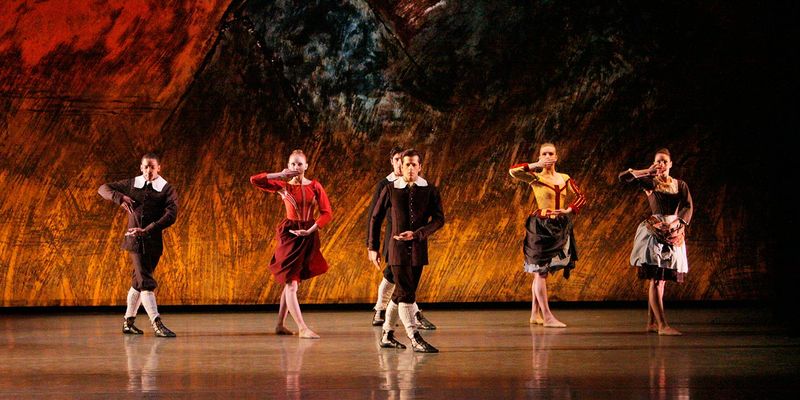
    Above: from LA STRAVAGANZA

    February 25th, 2014 – Angelin Preljocaj’s unusual 1997 ballet LA STRAVAGANZA and Peter Martins’ tango extravaganza TODO BUENOS AIRES (dating from 2000) were on the bill at New York City Ballet tonight, along with a Wheeldon pas de deux A PLACE FOR US.

    To date I’ve admired everything I’ve seen by Mr. Preljocaj, most especially his L’ANNONCIATION which has been perfomed in New York City by Cedar Lake Contemporary Ballet. I was at the NYCB premiere of LA STRAVAGANZA over a decade ago and was very taken with this dancework which revolves around a warp in the time continuum.

    In LA STRAVAGANZA, a sextet of young people in contemporary dress are dancing quietly in the twilight to the music of Vivaldi. At the intrusion of mechanical sounds, a black panel at the rear of the stage rises to review another sextet: three men in Puritan garb and three colourfully-dressed peasant girls. The contemporary group warily explore these aliens from another era who dance in stiff patterns with a stylized gestural language. A pas de deux ensues for one of the contemporary girls and one of he Puritans; in the end the girl is abducted and taken off to the other world. The contemporary dancers return to their original formation and the lost girl magically reappears: the story seems poised to repeat itself, endlessly. 

    In this rather odd ballet, which as I recall tended to baffle people at its premiere, Mr. Preljocaj has successfully merged the heavenly Baroque music with works of 20th century composers Evelyn Ficarra, Robert Normandeau, Serge Morand, and Ake Parmerud. Dance highlights are a duet for two of the Puritan men – Sean Suozzi and Craig Hall – moving in-sync with fast-paced gestures, and the time-spanning pas de deux danced by the ever-intriguing Gretchen Smith and Sean Suozzi.

    The contemporary boys – Devin Alberda, Joseph Gordon and Allen Peiffer – have some demanding combinations and later they stand stock still in a field of light as the girls – Ms. Smith, Brittany Pollack and Sara Adams – tentatively examine their bodies. Daniel Applebaum was the third Puritan, and a very attractive female trio – Emilie Gerrity, Claire Kretzschmar and Lydia Wellington – worked beautifully together and seemed to have stepped out of a Vermeer painting. 

    The title A PLACE FOR US made me think we were in for that cloyingly sentimental song from WEST SIDE STORY; but mercifully Chris Wheeldon turned to far more interesting – and rare – works from Andre Previn and Leonard Bernstein for this duet, the music being performed live onstage by Steven Hartman (clarinet) and Nancy McDill (piano).

    The duet, danced by NYCB‘s beloved couple Tiler Peck and Robert Fairchild, is performed in squares of light gleaming onstage. The piece has a dedication: ‘For Jerome Robbins. A thank you.’ and that choreographer’s work is indeed recalled while watching this pas de deux with its combination of romance and wit. Oddly enough, though – perhaps because of Robbie’s white tights and soft tunic – this pas de deux made me think of Balanchine’s APOLLO more than once. Needless to say, the dancers and musicians did very well by it.

    TODO BUENOS AIRES premiered in 2000 with Darci Kistler and Wendy Whelan in the principal female roles. In 2005, Peter Martins re-worked the ballet to incorporate a featured role for Julio Bocca. It’s the 2005 version we saw tonight, with our own primo bailarín Joaquin de Luz in a virtuoso performance.

    The musicians, led by concertmaster Kurt Nikkanen and featuring JP Jofre on bandoneon, are seated onstage, and two large soft drapes mark out the dance floor of a spacious after-hours club. Five Piazzolla tangos, arranged by Ron Wasserman, provide the setting for a series of duets and ensembles. Maria Kowroski – could her extension be any more heavenly? – danced with cool allure surrounded by a quartet of sexy boys: Jared Angle, Robert Fairchild, Adrian Danchig-Waring and Amar Ramasar. In a performance marked by radiant star-power, Ashley Laracey took on the role created on Wendy Whelan and made it her own. Right from her first duet with the sensuous Amar Ramasar, Ashley was thoroughly captivating; it seems to me that she is a dancer who could take on a huge variety of roles and make them all shine.

    Joaquin had the audience in the palm of his hand from the start: his speed-of-light pirouettes and spacious leaps caused the people around me to gasp in disbelief. The character’s moods range from aloof to seductive, and Joaquin seemed to be having a blast as he covered the stage with his daredevil feats, in the end basking in the adulation of the crowd and flashing his award-winning smile.