Category: Blog

  • US Open Qualifying Tournament 2015 – Day 1

    L1600610

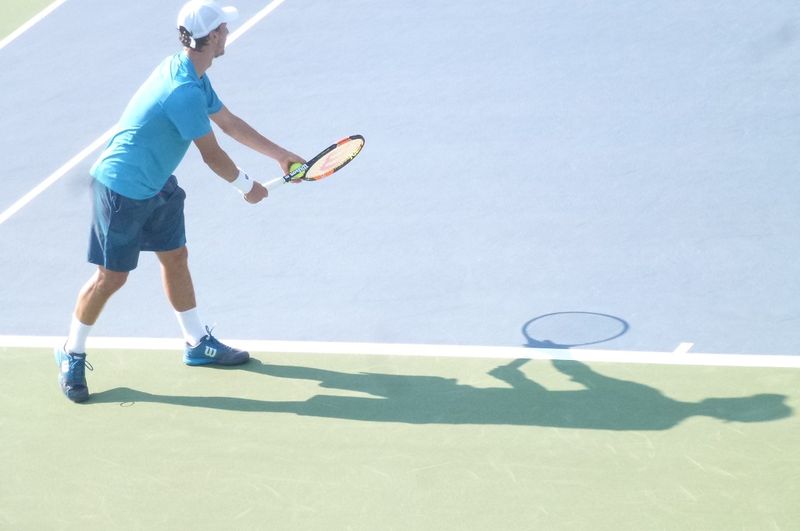
    Above: Renzo Olivo, of Argentina, serving in the sunshine

    Tuesday August 25th, 2015 – Right up until the morning of, I was unsure if I’d be making my annual trek to the US Open qualifying tournament this year. Over the last two or three years, I have changed from being a “Summer person” to being a “Winter person”. I – who used to sunbathe avidly, and always loved hot, steamy weather – have done a complete volte face. I now find heat and humidity oppressive and really annoying.

    But the lure of watching tennis live overwhelmed my concerns for comfort and so, after having a ‘private car’ on the 7 train out to the tennis center, I tried to ignore the sun beating down and the trickles of sweat. Around 2:00 a lovely breeze kicked in, and if you sat high enough up in the stands, you could maintain reasonable comfort.

    L1600516

    The day started badly as two of my favorites went down to defeat: Tatsuma Ito (above) was over-powered by the big-hitting Russian Aslan Karatsev…

    L1600525

    …whilst Somdev Devvarman (above) fell in a three set battle to the Slovakian Norbert Gombos.

    L1600563

    Wei had asked me to check out the tall young Chinese player Ze Zhang (above), who won his first-set in an exciting tie-breaker against France’s Tristan Lamasine. In the second set, Ze Zhang was serving for the match but somehow lost a bit of momentum; Lamasine stepped up his level and took the set. In the deciding third, Ze Zhang seemed to be hobbled by an injury to his serving arm; his big serve was compromised and often he would just tap the ball into play. The trainer was out and did what he could to alleviate the problem, but Lamasine took advantage of the situation, playing even harder and forcing a victory. The Chinese crowd were demoralized. But Ze Zhang has the goods; I’m sure we’ll be seeing much more of him in the seasons to come.

    L1600595

    Japanese-American Taro Daniel (above), who impressed me at last Summer’s tournament, played a beautiful, dominating first set against the Argentine Renzo Olivo; Taro’s serve has a lovely slice to it. Olivo made some headway in the second, but Taro kept his cool and swept to victory.

    L1600592

    I so enjoyed watching Taro’s match from my perch up in the stands. It was everything I love about tennis.

    L1600624

    Above: Taro Daniel after the match.

    I would have loved to have stayed on to see the 19-year-old Swede Elias Ymer, and my longtime favorite Alejandro Falla, but I was already sunburnt, and so I grabbed a big bottle of water and headed for the train. Both Ymer and Falla won their matches today, so hopefully I can catch them in the next round.
  • Summer Morning

    L1590598

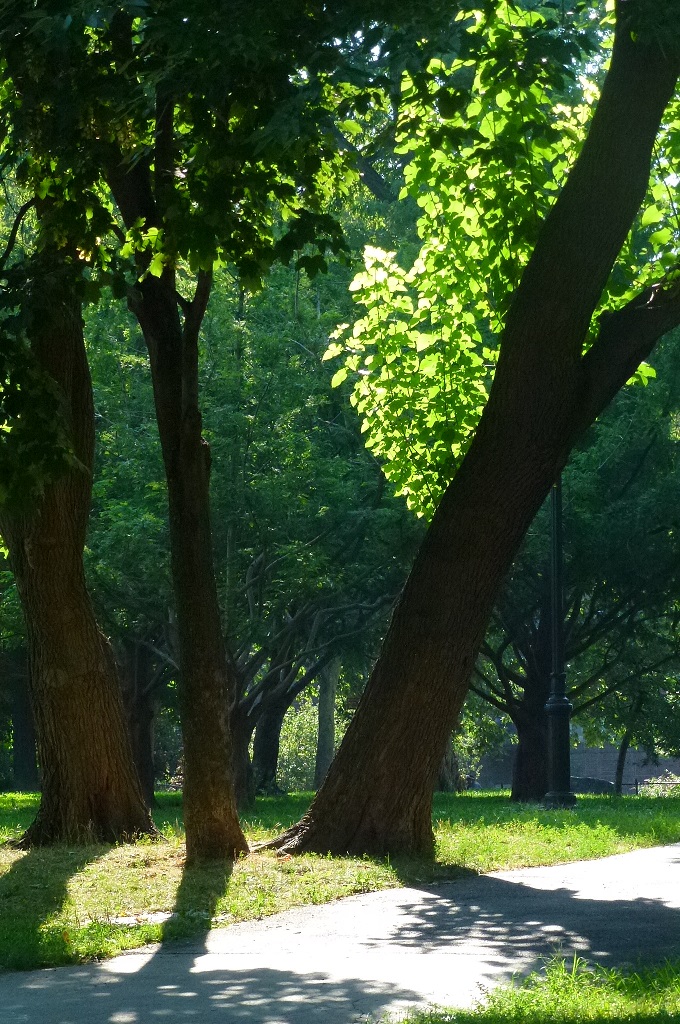
    This is the Summer of my discontent, I guess…

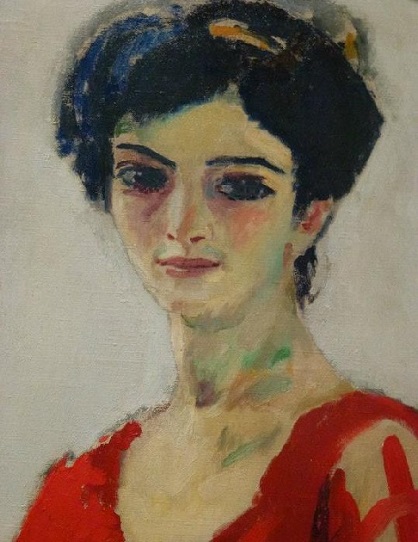
  • Maria

    6a00d8341c4e3853ef0176171e209c970c-pi

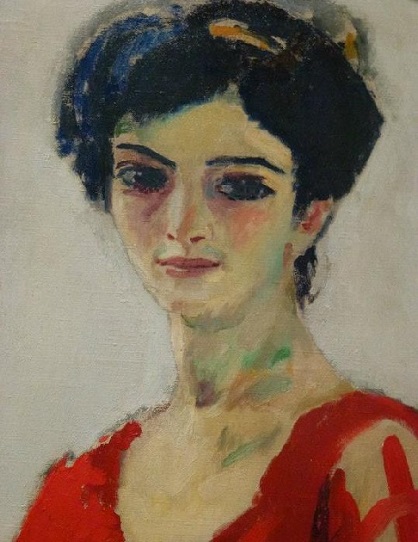
    Maria

    Kees van Dongen (1877-1968)


  • Maria

    6a00d8341c4e3853ef0176171e209c970c-pi

    Maria

    Kees van Dongen (1877-1968)


  • Führerbunker

    Holocaust_Memorial_large

    Above: the Berlin Holocaust Memorial

    On Thursday April 30th, 2015, the 70th anniversary of the death of Adolf Hitler will be marked. On that date in 1945, with the Red Army only blocks from his bunker underneath the Reich Chancellery, Hitler and his wife Eva Braun committed suicide.

    On 16 January 1945, Hitler had moved into the Führerbunker, a secure underground haven of residential and office space from whence he continued to rule Germany for three more months. He was joined by his senior staff, Martin Bormann, and later by Eva Braun. At some point Joseph Goebbels with his wife Magda and their six children also took up residence in the upper Vorbunker. Two or three dozen support, medical, and administrative staff were also living there. These included Hitler’s secretaries (among them Traudl Junge), a nurse named Erna Flegel, and telephonist Rochus Misch. Hitler’s dog Blondi was also one of the occupants of the underground bunker; Hitler could sometimes be seen strolling around the chancellery garden with Blondi.

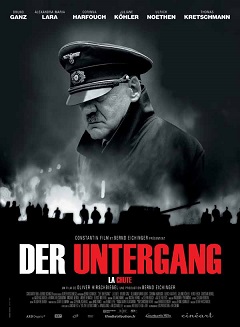
    This recent article in The Guardian tells of the lingering effects of Hitler’s reign of horror on the city of Berlin. Reading the story of course prompted me to watch, yet again, Oliver Hirschbiegel’s 2004 film ‘Der Untergang‘ (Downfall). 

    Der untergang

    In this powerful film, which I cannot recommend highly enough, the Swiss actor Bruno Ganz creates a portrait of Hitler in the final days of his life that has a harrowing feeling of reality. The dictator’s slow grasp of the fact that his Reich is doomed is detailed in scenes in which the character veers from cool efficiency and calculation to epic temper tantrums as he berates his generals and clings desperately to the belief that Germany can still prevail. Once that illusion has been shattered by incoming reports that the bunker is surrounded, Hitler becomes a ghost of himself. He marries Eva, has cyanide capsules tested on his beloved dog Blondi, and finally withdraws with his wife to the private room where they end their lives, having bid farewell to his faithful staff.

    In the film’s most chilling scene, Magda Goebbels (another uncannily ‘real’ characterization, from actress Corinna Harfouch) systematically murders her six children; she then sits down to a game of solitaire before going up to the Chancellery garden where her husband shoots her before taking his own life. This scene so powerfully depicts the sway Hitler held over his followers, creating a vast cult in which he was viewed as nothing less than a god. Following his death, many of the faithful shot themselves rather than face a world where Hitler was no longer.

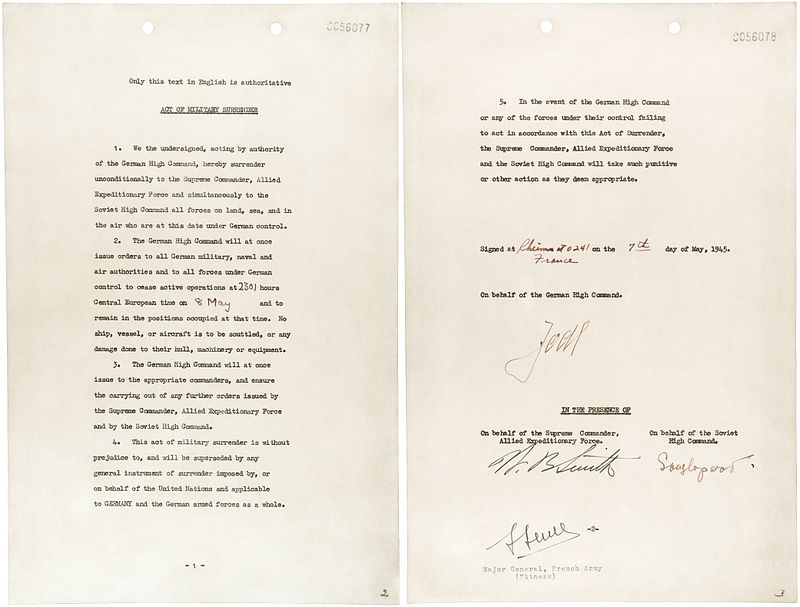
    German_instrument_of_surrender2

    Above: the instrument of surrender, which ended the war in Europe.

  • Lament for the Rohirrim

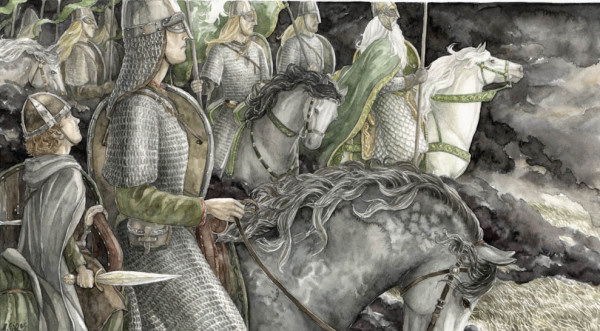
    Riders of rohan

    “Where now the horse and the rider? Where is the horn that was blowing?
    Where is the helm and the hauberk, and the bright hair flowing?
    Where is the hand on the harpstring, and the red fire glowing?
    Where is the spring and the harvest and the tall corn growing?
    They have passed like rain on the mountain, like a wind in the meadow;
    The days have gone down in the West behind the hills into shadow.
    Who shall gather the smoke of the dead wood burning,
    Or behold the flowing years from the Sea returning?”

    ~ THE TWO TOWERS/JRR Tolkien

  • Winter Heavens

    422971_2844873634988_1570027611_n

    Winter Heavens

     gif
    George Meredith (1888)
     
    “Sharp is the night, but stars with frost alive
    Leap off the rim of earth across the dome.
    It is a night to make the heavens our home
    More than the nest whereto apace we strive.
    Lengths down our road each fir-tree seems a hive,
    In swarms outrushing from the golden comb.
    They waken waves of thoughts that burst to foam:
    The living throb in me, the dead revive.
    Yon mantle clothes us: there, past mortal breath,
    Life glistens on the river of the death.
    It folds us, flesh and dust; and have we knelt,
    Or never knelt, or eyed as kine the springs
    Of radiance, the radiance enrings:
    And this is the soul’s haven to have felt.”

  • Rudolf Schock

    Rudolf schock

    Rudolf Schock sings “In fernem land” from Wagner’s LOHENGRIN, conducted by Horst Stein.

  • Persichetti’s WINTER CANTATA

    01

    I’ve fallen in love with Vincent Persichetti’s WINTER CANTATA which I discovered quite by chance when I plucked a CD of the composer’s choral works off the shelf at the library a couple weeks ago.

    Composed in 1964, the work was inspired by a collection of haiku (‘A Net of Fireflies‘) which Persichetti’s daughter had given him as a gift. To the intriguingly spare accompaniment of flute and marimba, the chorus of women’s voices weave a magical tapestry of wintry images. Intricate harmonies and tapering sustained notes are particularly pleasing vocal elements; the flute and marimba evoke cool air and gently swirling flakes of snow. There are eleven brief movements, and an Epilogue which draws its text from one line of each of the previous eleven poems.

    The CD, featuring the Mendelssohn Club of Philadelphia conducted by Tamara Brooks, may be found here.

  • Music for a Summer Afternoon IV

    6a00d8341c4e3853ef01a511e902fb970c-800wi

    Philippe Jaroussky sings Handel’s “Ombra mai fu“ from SERSE.