Category: Blog

  • US Open Qualifying Tournament 2012

    P1260785

    Above: India’s Yuki Bhambri signing autographs after winning his first-round qualifying match at the US Open.

    Tuesday August 21, 2012 – Over the past few years I’ve discovered and followed certain players during the US Open qualifying matches – people like Alejandro Falla, Bjorn Phau, Go Soeda, Tatsuma Ito and Rajeev Ram. This year all five of those men were up in the rankings and so were into the main draw already; congratulations to all of them, but it meant I would be spending this year’s tournament mostly checking out players new to me. Yuki Bhambri was the most exciting new discovery for me: he has an powerful serve and, after losing the first set, he buckled down and gave an impressive display of tennis skills in defeating the excellent and exciting Argentine Horacio Zeballos. It was close match, ending with a tie-breaker for the third set. I will definitely want to see Bhambri play again later in the week.

    It was a beautiful day at the Open, breezy and with a nice mix of sun and clouds. There was a sizeable crowd and the usual annoyances of small children (parents: little kids get restless and cranky at tennis tournaments so leave ’em with a sitter), cellphones, and people gabbing during play. But for the most part I was able to find quiet spots to watch from, or to move if things got distracting. I was delighted to see the great Billie Jean King walking from court to court early in the day (the whole place is named after her, and deservedly so).

    My first match was between two women I didnt know anything about: Dinah Pfizenmaier and Heidi El Tabakh. I initially pegged Pfizenmaier as the likely winner,but on the big points El Tabakh was able to capitalize and she won the match.

    Thailand’s Danai Udomchoke, who I’ve seen play many times, put up a valiant fight but was out-gunned by Spain’s Adrian Menendez-Maceiras.

    Three Asian women – all new to me – scored impressive victories: Ying-Ying Duan (very tall) and SaiSai Zheng (with a tendency to moon-ball) were representing the next generation of Chinese players, while Taipei’s Yung-Jan Chan presented her opponent with a double-bagel victory.

    After watching Yuki Bhambri’s exciting victory, I decided to head home on a high note although there were still matches in progress. There’s some construction going on at the Tennis Center and both the noise and the necessary ‘detours’ are inconveniences.

    P1260793

    But I did take a look at the newly-opened Court 17, a smallish arena-style venue with an intimate feeling. I hope to see a match there at some point this week.

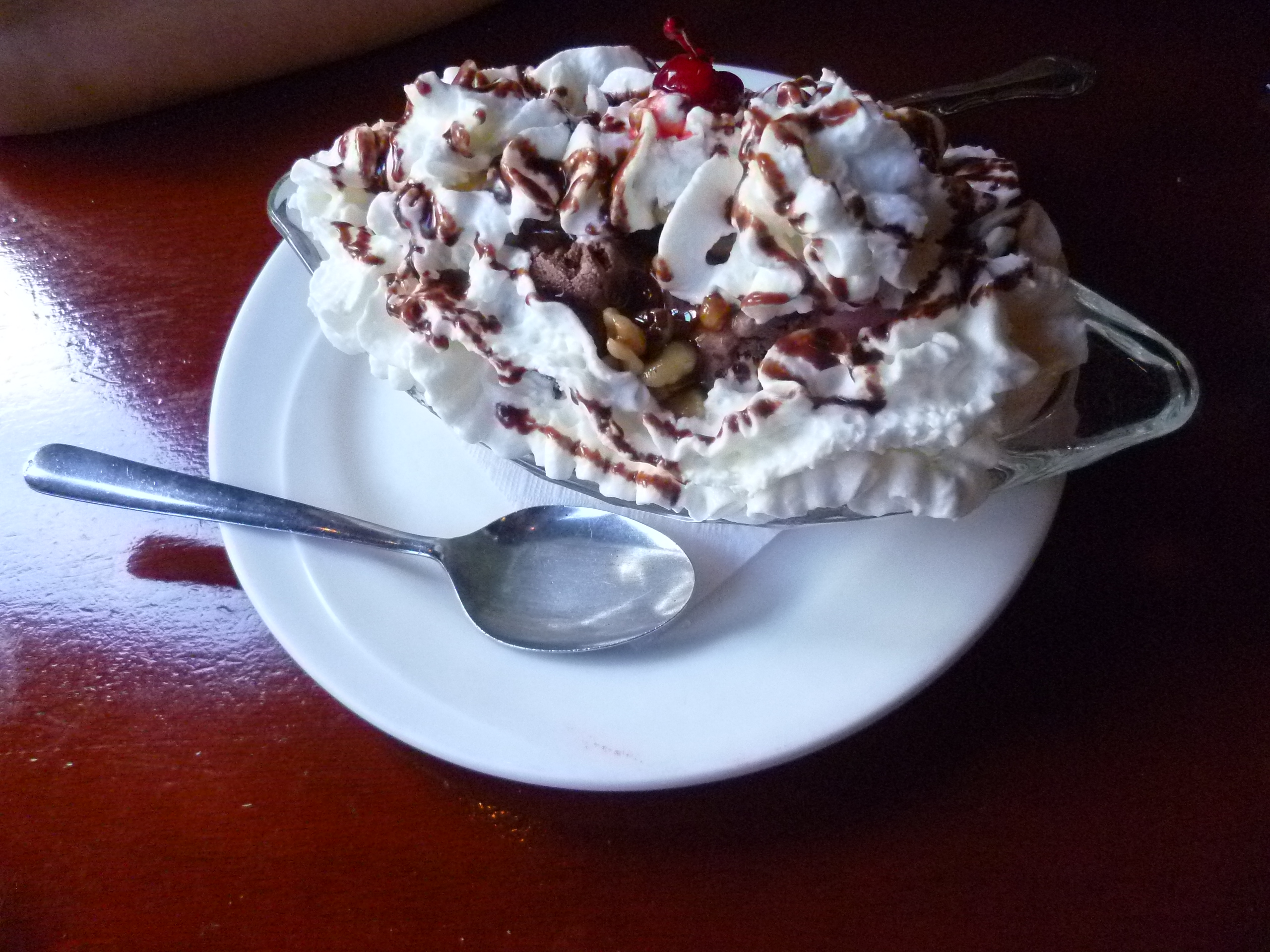
  • Banana Split

    P1260390

    At the Village Den on 12th Street.

  • WENDY!

    539682_3697089179844_2054891402_n

    WENDY at MoMA Ps1 thru September 8, 2012.

  • Hurensohn

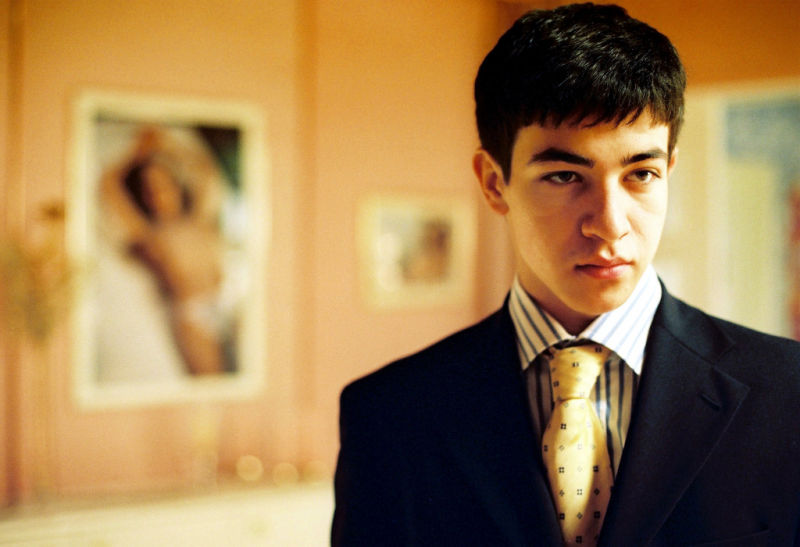
    STANISLAV LISNIC

    Stanislav Lisnic in THE WHORE’S SON.

  • “Amour, viens rendre a mon ame!”

    VerrettPortraithdl11111

    Shirley Verrett sings the great bravura aria “Amour, viens rendre a mon ame!” from ORPHEE ET EURYDICE.

    “Love, fill my soul with your most ardent flame!

    For this love, I shall brave even Death.

    Though Hell should stand in my way,

    The monsters of Tartanus hold no terrors for me.

    I feel love’s power in my breast,

    and for this love I shall brave Death itself”

  • Palazzo Vendramin

    Copy of 7

    Click on the image to enlarge.

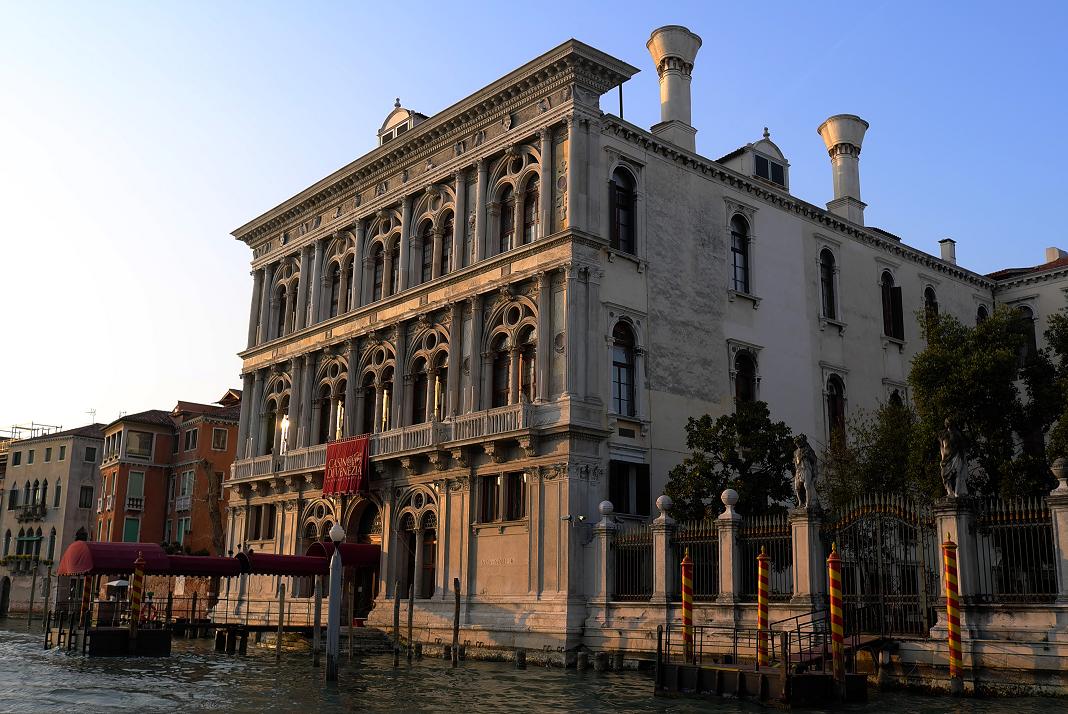
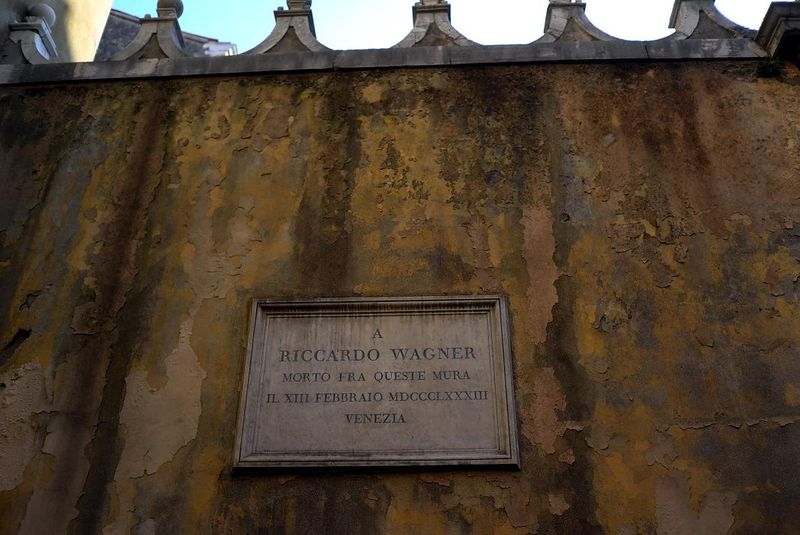
    Late in the evening of February 12, 1883, Richard Wagner sat down at his piano in the Palazzo Vendramin, Venice, and played the Rhinemaidens’ Song from DAS RHEINGOLD. Wagner had been in poor health for weeks, and had come south with his family from Bayreuth following the 1882 festival to recuperate in the warmer climate of Italy. Cosima was with him that night as he finished the Rhinemaiden theme, and he said to her: “I am fond of them, these creatures of the deep with their longings.”

    The next day, February 13th, Wagner felt unwell and decided to stay in his room; Cosima heard him talking to himself and shuffling thru his papers. She went down to luncheon with the children but suddenly the maid rushed in saying that Wagner was calling for his wife. Cosima dashed blindly from the dining room, running head-long into a doorframe which did not deter her. She reached her husband’s side just as he was collapsing of heart failure. His pocket watch fell to the floor. “My watch!” he exclaimed as the life drained out of him. For hours on end, Cosima remained in the room, cradling Wagner’s body. At last she was prevailed upon to return to reality for the sake of her children. Wagner’s coffin was transported back to Bayreuth and he was buried in the garden at Wahnfried. Cosima lived on for nearly fifty years before joining her husband in his resting place.

    Copy of 2

    My friend Kokyat was recently in Venice and he very kindly stopped to photograph the Palazzo Vendramin for me. As someone with a mortal dislike of travel, I’m so grateful to have these images of one of the very few places that I would actually love to visit; Bayreuth is another fantasy destination. If only I could simply be there without having to get there.

    Copy of 1

    The Palazzo Vendramin houses a Wagner museum in the rooms where the composer lived during his last weeks; the main floor of the building is given over to a casino. When Kokyat walked in, he was urged to buy chips and gamble but he declined.

    Copy of 3

    Cosima Wagner kept a detailed diary throughout her marriage to the great composer. The story of his playing of the Rhinemaiden music on the evening before his death marked the journal’s last entry. Although she lived on for decades, her diary ended with her husband’s death.

    All photos by Kokyat.

  • Picasso @ The Frick

    17_Two_Women_with_Hats_1921_PrivateCollection_600-e1324079915260

    Above: Pablo Picasso’s Two Women With Hats (1921)

    Friday December 23, 2011 – Last week my friend Debbie and I spent a delightful hour at The Frick looking at the exhibit of Picasso’s drawings. I couldn’t help thinking how much Kokyat would enjoy this collection, which is so beautifully displayed in the small galleries of The Frick‘s lower level. So this afternoon, after a delicious holiday lunch at LeSteak Bistro on 3rd Avenue, my photographer-friend and I headed to the museum with its restful atrium. I was hoping we would hit a time slot when the galleries were not too crowded, and we were indeed lucky in that regard. One advantage of The Frick is that children under ten years old are not admitted; this eliminates the annoying baby strollers and wailing infants who so often spoil our treks to The Met.

    Photography is not allowed at The Frick so we simply devoted our attention to the incredible drawings which provide a lovely panorama of Picasso’s works from the period 1890 to 1921. The earliest examples come from the nine-year-old prodigy; by the time he was 15, Picasso created a drawing of his father that is uncanny in its depth and style.

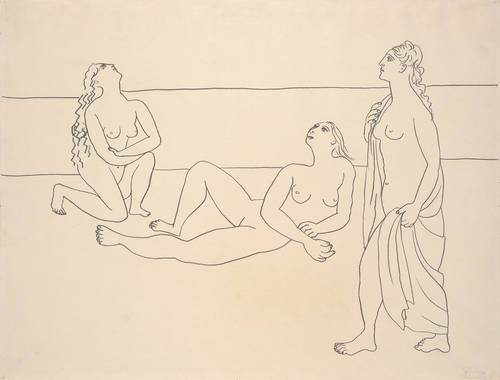
    Picasso-met-2010-18

    One of my favorite drawings on display was Three Bathers by the Shore (above) which has an exact dating of August 20, 1920. Of course you can find images of many of Picasso’s works on the Internet, but nothing compares to standing before these masterworks live and imagining the artist’s hands at work in their creation, and to ponder the thousands of other eyes that have beheld them over the span of the century of their existence. 

    Self6

    Above: self-portrait of the artist as a young man. I’ve always loved reading about the period of time when Pablo Picasso was part of Gerald and Sara Murphy’s circle on the French Riviera…the long afternoons on the plage where everyone was a bit in love with Sara. Ah, to have been alive then.

    1033741

    The Picasso exhibit is only at The Frick til January 8th; it is very much worth seeing. If you go – and you should – be sure to watch a showing of two brief films, one about the Frick Collection and the second about the Picasso exhibit, in the museum’s music room. Very informative.

    Sometime between the day Debbie and I were at The Frick and today, a new space has been opened in the museum: the Portico Gallery. This long, narrow hallway is lined with glass-fronted display cabinets full of delicate porcelains. The far end of the passageway opens onto a small windowed temple-like chamber…

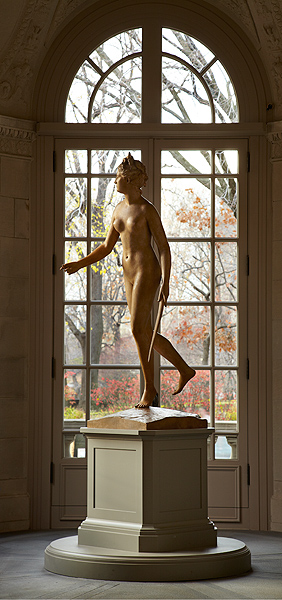
    Diana-the-Huntress

    …where Jean-Antoine Houdon’s Diana the Huntress (above) presides magnificently. I will return to this small shrine, immediately a favorite Gotham place for reverie, often.

    A perfect day with my perfect companion.

  • Another Work by Theyre Lee-Elliott

    IMG_0668

    One of my blog readers has sent me this image of a poster designed by Theyre Lee-Elliott for Southern Railway. An article with more of the artists’s design work here.

    Oberon’s Grove has developed into something of a Theyre Lee-Elliott meeting place since I first carried an article about one of his works in 2009. Follow this link to further links about the artist.

  • The Bisley Boy

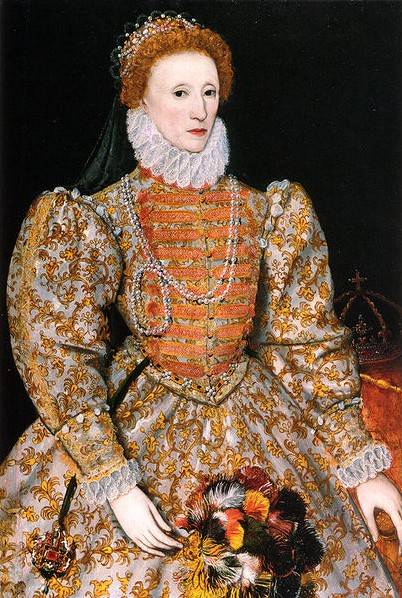
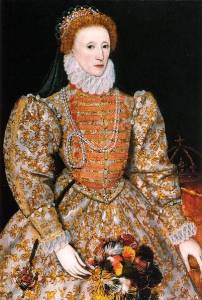
    Queen-Elizabeth-Darnley-Portrait-c1575

    Over the centuries there have been many unsolved-mystery tales about royal offspring, legitimate or otherwise. Bastard babies of monarchs quietly strangled, starved or sold off; a royal infant who dies in the cradle and is secretly replaced by a serving girl’s babe to preserve the succession; twins separated at birth for whatever reason only to meet up again when one is prince and the other pauper. But no such story that I’ve ever read matches Chris Hunt’s fantastical novel of Tudor times: THE BISLEY BOY, which I have just read again after first encountering it a dozen years ago on a shelf at the Different Light bookstore.

    The notion that Elizabeth I of England was actually a man goes back centuries; it stemmed from a time when the child Elizabeth was suffering from one of her many bouts of serious illness. Sent to a royal residence in the tiny town of Bisley to recover in the healthy air, she worsened and died…or so the story goes. A village boy of similar build and colouring was smuggled in to take the place of the dead princess, sparing her caretakers the wrath of Henry VIII.

    But was it not too convenient that such a lad could be found and the substitution so cleverly made? Novelist Hunt solves this ‘problem’ by making his Bisley Boy a bastard son of Henry VIII’s bastard son Henry Fitzroy. Fitzroy was married at the age of fourteen to Lady Mary Howard and while historically it was believed their union was never consumated, novelist Hunt imagines that the teen-aged Fitzroy fathered a son off Lady Mary. Fitzroy died at the age of 17 in 1536. His baby son, born in the very Bisley residence where Elizabeth came to convalesce, was raised in the house by loyal servants of Fitzroy until his death. Then the boy, at age 2 and known as John Neville, was taken in by a kindly Bisley family. Thus in the small village there was a boy who could believably take the place of Princess Elizabeth: a boy who – like the princess – sprang from a Tudor/Howard union.

    John Neville is drawn to the house where he was born but his adoptive father refuses to answer any questions about the place, which now stands empty, and he forbids the boy to go near the royal cottage. But a few years later, sneaking back to his boyhood home, John finds a slender, elfin young girl playing in the walled garden – a girl who looks so much like him it’s uncanny. It is the Princess Elizabeth. Katherine Champernowne (later to be famously known by her married name, Kat Ashley) is nursing Elizabeth back to health. Kat and the princess spot the boy and he becomes a playmate for Elizabeth. His adoptive father can say nothing to discourage the set-up since a royal wish is his command. 

    One day for a joke, Elizabeth and John change clothes. John, dressed in Elizabeth’s gown, fools even the discerning Kat who is astounded by how much John looks like her young charge.

    When the princess suddenly takes ill again, withers and dies, the horrified Kat begs John to take the place of the Tudor princess and save the nurse from severe punishment. The boy, tired of Bisley and knowing himself to be a grandson of Henry VIII in his own right, agrees. It’s planned only as a temporary ruse, but in fact there is no going back.

    Thus the long charade begins: ‘Elizabeth’ passes muster when meeting her father and siblings as they’d seen her but rarely and of course she’d changed a bit since the last encounter. ‘Elizabeth’ survives the death of her half-brother Edward and the difficult years when Bloody Mary Tudor rules England in a reign of Catholic terror. Becoming queen, ‘Elizabeth’ continues the ruse til her death decades later, with only a very few trusted intimates knowing her secret.

    The story, though far-fetched, meshes well with several things we know about Elizabeth: her eternal virginity, her refusal to marry, her hatred of physicians, even her eventual hair loss which was disguised by elaborate wigs and headdresses. Over the years (in the novel) faithful serving girls smuggled phials of rabbit’s blood into the royal bedchamber, spilling droplets onto the sheets to confirm the queen’s periods. 

    But what of her rumoured intimacies with Thomas Seymour and later with Robert, Earl of Leicester? In both cases, John Neville/Elizabeth – a beautifully androgynous gay boy with lustful appetites – so intrigues the men while keeping them at arm’s length that when ‘she’ capitulates and reveals her true sex, they each admit to having had boys before (“What else can a man do while at sea?” asks Admiral Tom) and they are thrilled to have one now who also happens to be the most powerful person in the realm. Other dalliances come and go, the queen’s aroused state in certain situations disguised by her stiff petticoats and voluminous skirts.

    Near the end of John/Elizabeth’s life, the impetuous Robert Devereux, Earl of Essex, bursts into her bathing chamber and discovers Elizabeth’s secret. Already in trouble for suspected treasonous activities against the crown, Essex is condemned to die although if he’d not found her out, Elizabeth, now an old woman in a man’s withering body, would most likely have spared him. On the scaffold, he did not betray her secret – he didn’t reveal the truth – and he died nobly.

    What a film this would make! I even have someone in mind for the title-role.

    In conjunction with THE BISLEY BOY I also read Beverley Murphy’s BASTARD PRINCE, a factual account of the life of Henry Fitzroy. There seems to be a surprisingly vast amount of documentation about him and the incidents of his short life, culled from sources at the time when he was considered very likely to inherit the English throne. Despite his birth status, it was thought by many that a bastard king was preferable to a legitimately-born queen. The arrival of Prince Edward changed the succession quite decisively, and Henry Fitzroy did not live long enough to pose any threat to Bloody Mary’s ascent to the throne following the early death of her half-brother Edward.


  • Addio fiorito asil

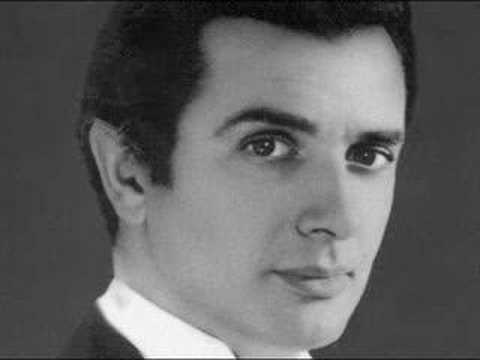
    Franco

    A rarity: Franco Corelli sings Pinkerton’s farewell to the little house where he and Cio-Cio-San were briefly happy together: “Addio fiorito asil” from Puccini’s MADAMA BUTTERFLY.

    “Farewell, flowery refuge
    of happiness and love!
    I shall always be tortured
    by the thought of her sweet face.
    Farewell, flowery refuge:
    here where she waited for me..
    Ah, my remorse I cannot bear.
    I must go, how I despise myself!
    Farewell…
    I must flee…I am vile…I despise myself!”