Category: Dance

  • From Mendelssohn @ Chamber Music Society

    Barnatan-8-gallery

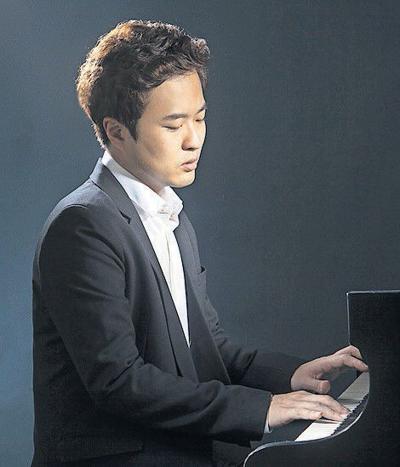
    Above: pianist Inon Barnatan, photographed by Marco Borggreve

    ~ Author: Oberon

    Sunday April 28th, 2019 – Music by Felix Mendelssohn, and by three composers he inspired, was on offer by Chamber Music Society of Lincoln Center at Alice Tully Hall this evening. The Society drew together an international ensemble of extraordinary musicians for a program of mostly familiar works, with a Schumann gem – a piece I’d never heard, nor even heard of – thrown into the mix for good measure. 
    5ae1bc9352939

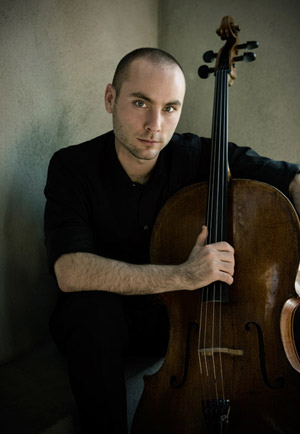
    The Swedish cellist Jakob Koranyi (above in a Lisa-Marie Mazzucco photo) and Israeli pianist Inon Barnatan opened the concert with Mendelssohn’s Lied ohne Worte in D-major, Op. 109. The musicians proved to be an ideal pairing: they both play from the heart. This is a song sung by the cello, with a bittersweet melody, and an interlude that is passionate and then animated, before leading back to theme. The cellist ranges from a ravishingly sustained and tapered high note to – soon after – a plunge to the depths; the music ends with a rising phrase. A packed house called the two gentlemen back for a bow. The evening was off to a wonderful start.

    Robert Schumann’s Märchenerzählungen (‘Fairy Tales‘) for Clarinet, Viola, and Piano, Op. 132, was one of the composer’s last completed works. It was written in 1853, just five months before his attempted suicide and his subsequent confinement in a mental institution, where he died in 1856 at the age of 46. 
    Romie_Formal_2

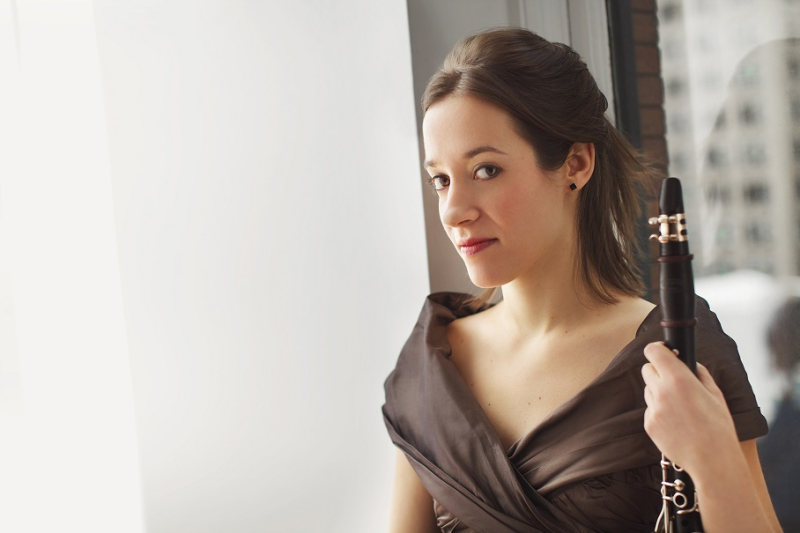
    Märchenerzählungen brought forth the excellent Canadian clarinetist Romie DeGuise-Langlois (above); living as we do in a time when a number of superb clarinetists have thriving careers, it’s always a special pleasure for me to hear Romie, with her colorful tone and abundant technique. She was joined by violist Paul Neubauer and Mr. Barnatan for the four miniatures that comprise Märchenerzählungen

    The entwining of the mezzo-soprano-ranged voices of clarinet and viola was intriguing to hear: in the first movement, the music veers from playful to songful with lightness of mood, and Romie’s dynamic range – and her very pretty trill – were beautifully evident.

    An almost march-like pace commences the second movement, with blithely harmonized duetting from the clarinet and viola. An ensuing darkish mood felt a bit tongue-in-cheek: was Schumann toying with us?

    Mssrs. Neubauer and Barnatan open the third movement with sublime softness, joined soon by the clarinet. A wistfully exquisite blend of the three instruments – with immaculate turns of phrase – became achingly beautiful in its freely flowing lyricism. The movement’s sustained ending was very touching.

    In the final movement, clarinet and viola converse, then are heard as a duo. A charming interlude, with lightly etched motifs from Mr. Barnatan at the Steinway, shifts onward to a gallant finish. The only fault I could find with this Schumann work was that it’s too short: I wanted to hear more from Ms. DeGuise-Langlois.

    Paul-neubauer-by-tristan-cook

    Paul Neubauer (above, in a Tristan Cook photo) returned immediately with Mr. Barnatan for a lustrous performance of Johannes Brahms’ Sonata in E-flat major for Viola and Piano, Op. 120, No. 2, composed in 1894. The opening Allegro amabile brings us a sweet and subtle song, followed by a passionate passage from the pianist. Things then settle into a rather pensive state, both players delighting us with their dynamic palette and their feeling for the ebb and flow of the themes. A Romantic atmosphere, with the music soft and lovely, carries us thru a change of mood.

    In the second movement, Appassionato, the urgent passion of the opening statement subsides, but an underlying restlessness lingers. A hymn-like theme for solo piano lets us savour Mr. Barnatan’s artistry; joining in, Mr. Neubauer’s viola carries the melody to the instrument’s depths. In a sudden upswing, the music turns waltzy…and then finds a cool, darkish ending.

    The sonata’s final movement has a simple theme; the music is slow, with an air of Bach about it. A charming dance variation crops up, playful in its quirky swiftness, which is eventually becalmed. The work ends with a multi-faceted coda. Mssrs. Neubauer and Barnatan were rightly hailed for their warm-hearted performance. 

    Following the interval, Mr. Barnatan had the stage to himself for “Juin – Barcarolle” from Tchaikovsky’s Les saisons for Piano, Op. 37b.  This is echt-Tchaikovsky, with Mr. Barnatan relishing each note of the theme, which is thoughtful, and almost somber. Following a brief animation, descending notes bring us back to the melody. The music takes on a sort of shimmer, and then goes deep before rising to a soft, fading finish.

    Cho-Liang Lin

    Above: violinist Cho-Liang Lin, photo by K C Alfred

    The evening ended with a glorious performance of the Mendelssohn Trio No. 2 in C-minor for Piano, Violin, and Cello, Op. 66, in which Mssrs. Koranyi and Barnatan were joined by master violinist Cho-Liang Lin. The two Mendelssohn piano trios were the first chamber works to seize my attention, back at a time when I listened almost exclusively to opera.

    The passion – and the abundant lyric detail – of the music was served to perfection by Mssrs. Lin, Koranyi, and Barnatan. Their performance had a polish and glow that somehow made the music sound even more gorgeous to me than it ever has. It would be hard to imagine anything more moving – and thrilling – to me on a personal level than experiencing this music (which essentially opened up a new world for me when I heard it by chance on the radio…oh!, so many years ago) played with such lustre and vitality as it was tonight. A sublime, poignant experience; all my emotions were in play.

    It meant so much to me to be hearing this performance, as offered by the Chamber Music Society where – in the past few years, thanks to their generous welcome – I have had the opportunity to explore the vast chamber music repertoire, played by the great artists of our time. I became quite emotional as the trio of musicians produced one glorious passage after another tonight. And, in fact, the entire audience seemed to have fallen under a spell of enchantment. 

    The bows were not even off the strings when the applause commenced, the audience expressing their fervent delight with the performance – and their admiration for the musicians – in a spontaneous, full-house standing ovation. The players took a second bow as shouts of ‘bravo!‘ rang thru the hall. 

     ~ Oberon

  • ABT Studio Company @ The Joyce

    57605248_10157352309708319_238433348500848640_n

    ~ Author: Oberon

    Thursday April 25th, 2019 – The American Ballet Theatre Studio Company has three evenings at The Joyce this week; I went on the second night for a program in which a pair of well-beloved pas de deux book-ended four new (or very recent) works.

    Tarantella, George Balanchine’s Neapolitan duet set to music by Louis Moreau Gottschalk, opened the evening. When the dancers made their entrance, my first thought was that they were too tall for this ballet. They executed all the steps and went thru the motions well enough, but their dancing didn’t sparkle, and the feeling of imminent sex was missing. Perhaps it’s been toned down for the MeToo crowd.

    Neon by Claudia Schreier, having its New York premiere, is set to music by Marc Mellits. The dancers, wearing black belted in teal, look sleek and dashing. At curtain rise, two men stand in a pool of light, one behind the other, their arms in sweeping arcs seeming to depict the hands of a clock. Then the dance erupts to the propulsive Mellits music. The sometimes complex partnering motifs Ms. Schreier demands of her dancers are smoothly executed; this is a choreographer who likes to set challenges for her dancers, then rehearse them astutely so they end up looking well-polished.

    Neon’s first movement ends with all eight dancers in a circle, taking up the rotating arm gestures of the work’s opening moments. A series of departures clears the stage for a men’s trio in which the women eventually join. Sub-groups come and go, enhanced by excellent lighting. The ballet’s third section opens with a striking overheard lift, the couple commencing a luminous pas de deux, wherein Ms. Schreier’s choice of music pays off handsomely. The concluding movement, alive with musical agitation, displays the choreographer’s trademark surety of structure into which a sense of contemporary poetry has been woven.

    As with every Schreier work I have seen to date, Neon ended with the audience whooping up a storm. The choreographers should have been given a bow after their respective ballets tonight, so we could properly show our appreciation.

    Overture by Ethan Stiefel is a ballet that mixes – in perfect measure – gorgeousness with wit. In choosing Beethoven’s Egmont overture, Mr. Stiefel is already halfway down the road to success. And a success it was, in every respect: from the stunning opening tableau with the dancers classically arranged in silhouette, Overture is a pleasure to watch…and to hear. 

    The dancers are prettily costumed in traditional ballet style, but soon we notice contemporary touches – each man has one bare arm. The dancing also mixes old with new: a Romantic atmosphere has been established, and the choreography abounds in classic vocabulary and time-honored partnering themes; but modern modes crop up – a shoulder-shrugging motif and some quirky port de bras keep the ballet vivid. The dancers excelled here, taking their cues from the Beethoven score and bringing touches of tongue-in-cheek charm to their dancing. Overture is a winner on all counts.

    Returning to my seat after the intermission, I found the curtain already up. Soon a lone dancer ambled onto the stage and began chatting us up. The performance of Pliant by Stefanie Batten Bland, he told us, had already started…and we were to be part of it. Dancers moved up and down the aisles, supposedly ‘interviewing’ audience members. Since they did not have hand mikes, the rest of us were not privy to these conversations, so we sat there twiddling our thumbs. 

    Finally the dancers hauled themselves up onto the stage and, to nondescript music, they struck poses and did a bit of dancing (nothing strenuous). While this was going on, I was thinking that I could have been home doing my ironing, whilst one of my fellow writers seated nearby fell deeply asleep. Pliant is exactly the kind of clever, now-for-something-different “ballet” that has dampened my enthusiasm for dance in recent years. 

    Gemma Bond’s Interchangeable Text was a perfect restorative. Some people think Philip Glass has been done to death in the dance world; I disagree, and I’m glad Gemma shares my feeling that it’s ideal music for dancing. Her ballet, impeccably danced by four couples, had the benefit of atmospheric lighting.

    Interchangeable Text opens with a male dancer alone in a pool of light; the music comes from the “romantic” Glass catalog. Soon it begins to pulse, and the dance takes off. Ms. Bond shows off her gift for making classic ballet combinations look fresh. Through ever-shifting patterns, the eight dancers are fully-engaged, the music being their springboard. A chain of pas de deux commences, each couple in turn having their chance to shine. The ballet ends as it began, with the man isolated in the glowing circle.

    The Don QuixoteWedding Suite’ brought the evening to an end; danced with fine technique, lively spirit, and a dash of allure à lEspagnole by Chloe Misseldine and Joseph Markey, this gave the hardcore classical ballet fans in the audience something to cheer about. The two ‘bridesmaid’ solos were woven in, and though they were not named in this evening’s cast list, I believe the dancers were Leah Baylin and Kanon Kimura, who were dancing these solos on the other two nights.

    The ABT Studio Company has always been a place to spot stars of the future: it’s where I first saw David Hallberg dancing! Tonight, one dancer who often caught my eye was Melvin Lawovi, a native of Toulouse. It did not surprise me to read that Mr. Lawovi is the recipient of The David Hallberg Scholarship.

    ~ Oberon

  • Yuja Wang @ The NY Philharmonic

    Thumbnail_Photo by Caitlin Ochs

    Above: pianist Yuja Wang with the NY Philharmonic, photo by Caitlin Ochs

    ~ Author: Ben Weaver

    Wednesday March 27th, 2019 – March 27th was supposed to be an extra-special evening at the New York Philharmonic: the orchestra had announced a one-night-only performance by legendary pianist Maurizio Pollini in honor of the 40th anniversary of his debut with the orchestra (also functioning as a Pension Fund Benefit Gala). Pollini’s appearances with the orchestra have been infrequent over the years, though he did play Chopin’s Piano Concerto (same one as his 1969 debut, Op. 11) in 2015. Alas, it was not to be: the orchestra announced that because of an illness, Mr. Pollini would not be able to appear. Though Mr. Pollini is truly irreplaceable, the Philharmonic did manage to secure a starry replacement: Yuja Wang, in town for appearances at Carnegie Hall, agreed to step in on short notice. The program remained the same: Schumann’s ever popular Piano Concerto in A minor was the centerpiece and Ms. Wang did not disappoint. 

    Though it is alleged that many pianists do not like performing Schumann’s sole piano concerto because they do not find it sufficiently technically demanding, sometimes finding the heart of music can be more demanding than any technical fireworks. Ms. Wang, dispatching every note with ease, also plumbed the depths of Schumann’s great work from the opening moments. The solo section at the beginning of the concerto was played quietly, wistfully, almost regretfully, before the orchestra surged forth. Maestro Jaap van Zweden, always a considerate accompanist, allowed Ms. Wang plenty of leeway to shape her solo moments. Ms. Wang summons a clean, beautiful and strong sound from the Steinway. The lovely slow movement was full of feeling and grace, and the exciting finale was playful and rhythmically alive.

    Ms. Wang is beloved by NY audiences and they demanded encores: she is famous for generous amounts of encores, though tonight she may have been asked to limit it to only two (the audience wanted more.) A gorgeous transcription (by Liszt) for solo piano of Schubert’s heartbreaking Lied Gretchen am Spinnrade kept the audience holding its collective breath. And pianist Arcadi Volodos’ entertainingly jazzy/bluesy arrangement of Mozart’s famous Rondo Alla Turca from the Piano Sonata No. 11 brought down the house. (My companion, whose husband is an established jazz musician who regularly performs with artists like Norah Jones, said approvingly: “You go girl!”)

    The Schumann concerto was sandwiched between two orchestral works. Johan Wagenaar’s forgotten Cyrano de Bergerac Overture, Op. 23 opened the program. This very melodic and entertaining 1905 composition, with its echoes of Wagner and Richard Strauss, deserves more attention than it gets. (Before Maestro Zweden reintroduced it to the Philharmonic’s rep in 2018 it was last performed by the orchestra in 1921 under Willem Mengelberg.) 

    The concert closed with a familiar rendition of Beethoven’s Symphony No. 7, which Wagner once called “the apotheosis of dance.” Maestro Zweden and NY Philharmonic musicians played, one could inelegantly say, the hell out of it. The moody opening quickly gave way to a series of rapturous melodies and dances. The famous Allegretto – many conductors go much too heavy, others speed through it thoughtlessly – was perfectly judged by Zweden. The rest of the symphony built to a thrilling, breathtaking and breathless finale.

    ~ Ben Weaver

  • Lori Belilove ~ Isadora Duncan Dance Company

    Wj180622016-website-featured-image-2

    ~ Author: Oberon

    Thursday March 28th, 2019 – A studio performance by The Isadora Dance Company, founded by and under the artistic direction of Lori Belilove (above), presenting an evening of Duncan works in an intimate salon setting. At the piano, New York City Ballet’s Cameron Grant regaled us with his vibrant playing of works by Chopin, Brahms, Schubert, and Scriabin. 

    The room was packed to the bursting point as Lori greeted us, and then the dancing immediately commenced. A set of Duncan works set to music of Franz Schubert opened the evening, starting with dancers Hayley Rose and Faith Kimberling as light-hearted nymphs Moment Musical. Throughout the evening, the women wore classic Grecian-style tunics, iconic elements of the Duncan repertoire, in various hues. Emily D’Angelo, in pale blue, danced Lullabye, with the evocative Isadora motif of raising the arms heavenward. Becky Allen and Caroline Yamada, in pink with flowers in their hair, gave us Classical Duet, and then Lori Beliliove, in dark blue, spoke to us in Duncan’s striking gestural language in the waltz-like Water Study.

    The music by Frederic of Chopin – waltzes, etudes and mazurkas – came next, all of it immaculately played by Mr. Grant (I was seated just behind his right shoulder, and could follow along in his score). Nikki Poulos was the soloist in the joyous Grande Valse Brillante – a feel-good Isadora work to be savoured for its freshness and vitality. Mlles. Yamada, Allen, Kimberling, and Rose were the attractive ensemble here. Emily D’Angelo’s solo opened Prelude, with Becky Allen and Caroline Yamada transforming it into a trio; this very familiar music was most cordially played by Mr. Grant. Faith Kimberling – always such an appealing dancer to watch – then appeared for a second trio, Line Mazurka, with Becky and Caroline.

    In the solo Ballspiel, Hayley Rose used the space to fine advantage, her dancing responding ideally to the music’s shifting changes of pace. In the moody Slow Mazurka, Mlles. D’Angelo, Rose, Poulos, and Yamada took turns striking stylized poses on the floor – classic Isadora, this – whilst their companions danced. Becky Allen’s dancing of the immortal Minute Waltz was perfectly dovetailed to the playing of Mr. Grant: this was one of the evening’s many highlights.

    Hayley Rose, Nikki Poulos, and Faith Kimberling appeared as woodland sprites in Butterfly Etudes, employing scarves in a space-filling dance. Nikki Poulos gave a poignant performance of Death and The Maiden, her gestures indicating longing and then withdrawal, her expressive face beautifully mirroring the sorrowing music.

    Isadora’s suite of Brahms waltzes entitled The Many Faces of Love opened with Caroline Yamada’s cheerful energy in Greeting, followed by Faith Kimberling’s Frolic, with its folkish flavour, so lovely to watch. Lori Belilove performed Scarf Dance, a lilting, provocative piece, followed by Mlles. Rose, Yamada, and Poulos in the unison trio that opens Cymbals, with its accented music. Ms. Rose then gave Flames of The Heart a Romany flair: fast, passionate, with streaks of wildness. The lyrical, lovely Rose Petals was danced by Emily D’Angelo with cherishing grace; at the end of the dance, she slowly scatters the flowers about the floor.
     
    Two of Isadora Duncan’s great Scriabin solos were given exemplary performances by Lori Belilove: the deep melancholy of Mother, in which she comforts her ghostly children, and the madly passionate, red-clad  Revolutionary, with its silent screams.
     
    As a triumphant finale, honoring Women’s History Month and embracing the power of sisterhood, Nikki Poulos led Mlles. Yamada, Allen, Kimberling, and Rose in the bracing Military Polonaise of Chopin, thrillingly played by Cameron Grant. This made our spirits soar.
     
    ~ Oberon

  • Ballet Hispánico @ The Joyce ~ 2019

    Jared Bogart and Melissa Fernandez (c) Paula Lobo

    Above: Jared Bogart and Melissa Verdecia of Ballet Hispánico; photo by Paula Lobo

    ~ Author: Oberon

    Wednesday March 27th, 2019 – Ballet Hispánico’s season at The Joyce offered a very strong program: Annabelle Lopez Ochoa has re-set her brilliant masterpiece Sombrerísimo, originally danced by the Company’s men, for an all-female cast; and Asian influences came into the mix with world premieres by Edwaard Liang and Bennyroyce Royon, each of which was highly successful in its own way.

    I last saw perform Ballet Hispánico in 2016, and there have been major changes in their roster of dancers since then. Watching the Company tonight at The Joyce, I realized how bad my eyesight has become over time; it’s much more difficult for me now to single out individual dancers, and to put names to faces.

    Edwaard Liang, formerly a soloist at New York City Ballet and now the Artistic Director of BalletMet in Columbus, Ohio, has established himself among the front rank of international choreographers; his works have been danced by the Bolshoi Ballet, Houston Ballet, Joffrey Ballet, Kirov Ballet, New York City Ballet, Pacific Northwest Ballet, San Francisco Ballet, Shanghai Ballet, Singapore Dance Theatre and Washington Ballet. Tonight, Ballet Hispánico opened their program with Liang’s El Viaje (“The Voyage”).

    Set to the lushly lyrical Ralph Vaughan Williams score Variations on a Theme by Thomas Tallis, and gorgeously lit by Joshua Paul Weckesser, El Viaje resonates with themes of emigration and cultural re-location, particularly of Chinese peoples; it speaks to me personally as I married one such emigrant. 

    Liang

    Above: from El Viaje, photo by Paula Lobo

    Melissa Verdecia, striking in a red dress, is spotlit facing upstage as the curtain rises. Such rushes into a high lift as the ballet begins. The dance has a ritualistic feel, and a strong architectural framework. Partnering motifs, performed by the couples in unison, underscore the sense of community. Solo and duet opportunities abound, in which the Hispánico dancers revel in their power and beauty, buoyed by the marvelous music. At the end, the dancers stand together, facing the sunrise, uncertain but hopeful. 

    Dandara

    Above: Dandara Veiga in El Viaje, photo by Paula Lobo

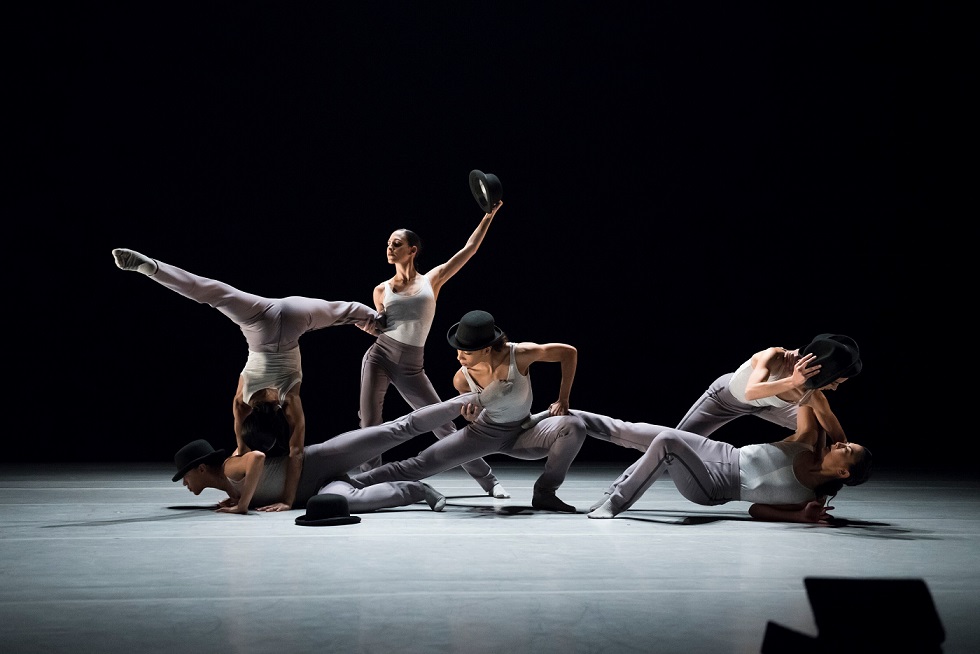
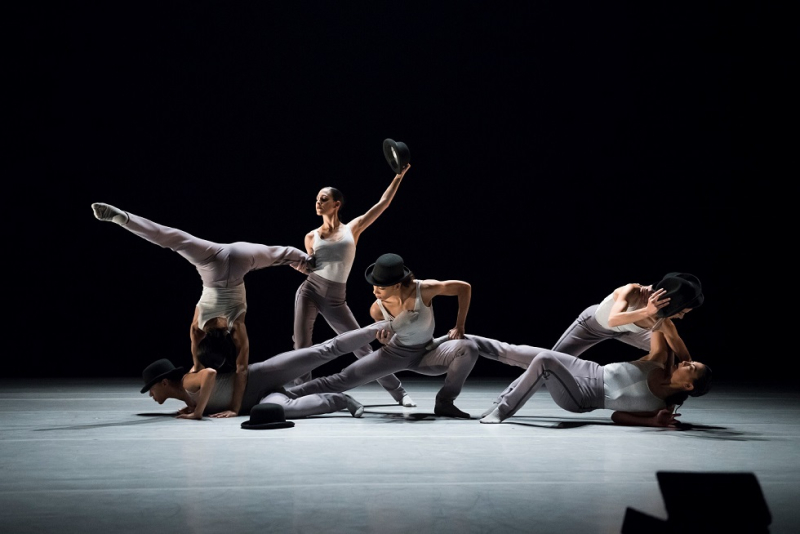
    Sombrerísimo was commissioned by New York’s City Center for Fall for Dance in 2013; I was present at the premiere, which was a huge hit with the audience. Choreographed for an all-male ensemble by Belgian-Colombian Annabelle Lopez Ochoa to a collage score by Banda Ionica, Macaco el Mono Loco, and Titi Robin, it of course now has a very different feel as danced by six women: Shelby Colona, Jenna Marie, Eila Valls, Gabrielle Sprauve, Dandara Veiga, and Melissa Verdecia. The movement ranges from swift and accented to cool and sexy, and there’s much by-play with the hats that inspired the ballet’s title. Joshua Preston’s lighting is atmospheric, and often produces a shadow-dancing effect. At the end, the girls toss their hats into the air while dozens of other hats fall from above.

    Sombrero

    Above: the Ballet Hispanico women in Sombrerísimo, photo by Paula Lobo

    Bennyroyce Royon’s Homebound/Alaala is a danced memory-book of his homeland in The Philippines. On the other side of the world, in Bato, Leyte, mi amor de loin keeps me in daily touch with that world – a unique on-line love affair that made Benny’s ballet especially meaningful to me.

    Chris B

    Above: Chris Bloom in Homebound/Alaala, photo by Paula Lobo

    Opening with a dazzling stars-scape, the stage is full of boxes which the dancers carry, push, construct, take down, open, and close throughout the ballet. Perhaps they are boxes full of memories: some are marked Fragile. To popular songs of the Tagalog, the people work, relax, joke, flirt, and dream. Unison dance passages emphasize the sense of community, which is so very strong in the Filipino culture.

    Central to Benny’s ballet is a gay ‘cruising’ duet, performed in silence. The two men warily circle one another, unsure of a response. In an overwhelmingly Catholic society, being gay in The Philippines faces barriers to acceptance; President Duterte tends to send mixed messages on the subject. My Brix thankfully has the support of his family, which many young people in the life there do not.

    But, back to Bennyroyce’s ballet: flip flops are lined up as the finale is reached. While I might have wished for more dancing in this piece, I loved the music, the spirit of commitment from the dancers, and feeling the connection to my Tico…a love from afar.

    ~ Oberon

  • Ballet Hispánico @ The Joyce ~ 2019

    Jared Bogart and Melissa Fernandez (c) Paula Lobo

    Above: Jared Bogart and Melissa Verdecia of Ballet Hispánico; photo by Paula Lobo

    ~ Author: Oberon

    Wednesday March 27th, 2019 – Ballet Hispánico’s season at The Joyce offered a very strong program: Annabelle Lopez Ochoa has re-set her brilliant masterpiece Sombrerísimo, originally danced by the Company’s men, for an all-female cast; and Asian influences came into the mix with world premieres by Edwaard Liang and Bennyroyce Royon, each of which was highly successful in its own way.

    I last saw perform Ballet Hispánico in 2016, and there have been major changes in their roster of dancers since then. Watching the Company tonight at The Joyce, I realized how bad my eyesight has become over time; it’s much more difficult for me now to single out individual dancers, and to put names to faces.

    Edwaard Liang, formerly a soloist at New York City Ballet and now the Artistic Director of BalletMet in Columbus, Ohio, has established himself among the front rank of international choreographers; his works have been danced by the Bolshoi Ballet, Houston Ballet, Joffrey Ballet, Kirov Ballet, New York City Ballet, Pacific Northwest Ballet, San Francisco Ballet, Shanghai Ballet, Singapore Dance Theatre and Washington Ballet. Tonight, Ballet Hispánico opened their program with Liang’s El Viaje (“The Voyage”).

    Set to the lushly lyrical Ralph Vaughan Williams score Variations on a Theme by Thomas Tallis, and gorgeously lit by Joshua Paul Weckesser, El Viaje resonates with themes of emigration and cultural re-location, particularly of Chinese peoples; it speaks to me personally as I married one such emigrant. 

    Liang

    Above: from El Viaje, photo by Paula Lobo

    Melissa Verdecia, striking in a red dress, is spotlit facing upstage as the curtain rises. Such rushes into a high lift as the ballet begins. The dance has a ritualistic feel, and a strong architectural framework. Partnering motifs, performed by the couples in unison, underscore the sense of community. Solo and duet opportunities abound, in which the Hispánico dancers revel in their power and beauty, buoyed by the marvelous music. At the end, the dancers stand together, facing the sunrise, uncertain but hopeful. 

    Dandara

    Above: Dandara Veiga in El Viaje, photo by Paula Lobo

    Sombrerísimo was commissioned by New York’s City Center for Fall for Dance in 2013; I was present at the premiere, which was a huge hit with the audience. Choreographed for an all-male ensemble by Belgian-Colombian Annabelle Lopez Ochoa to a collage score by Banda Ionica, Macaco el Mono Loco, and Titi Robin, it of course now has a very different feel as danced by six women: Shelby Colona, Jenna Marie, Eila Valls, Gabrielle Sprauve, Dandara Veiga, and Melissa Verdecia. The movement ranges from swift and accented to cool and sexy, and there’s much by-play with the hats that inspired the ballet’s title. Joshua Preston’s lighting is atmospheric, and often produces a shadow-dancing effect. At the end, the girls toss their hats into the air while dozens of other hats fall from above.

    Sombrero

    Above: the Ballet Hispanico women in Sombrerísimo, photo by Paula Lobo

    Bennyroyce Royon’s Homebound/Alaala is a danced memory-book of his homeland in The Philippines. On the other side of the world, in Bato, Leyte, mi amor de loin keeps me in daily touch with that world – a unique on-line love affair that made Benny’s ballet especially meaningful to me.

    Chris B

    Above: Chris Bloom in Homebound/Alaala, photo by Paula Lobo

    Opening with a dazzling stars-scape, the stage is full of boxes which the dancers carry, push, construct, take down, open, and close throughout the ballet. Perhaps they are boxes full of memories: some are marked Fragile. To popular songs of the Tagalog, the people work, relax, joke, flirt, and dream. Unison dance passages emphasize the sense of community, which is so very strong in the Filipino culture.

    Central to Benny’s ballet is a gay ‘cruising’ duet, performed in silence. The two men warily circle one another, unsure of a response. In an overwhelmingly Catholic society, being gay in The Philippines faces barriers to acceptance; President Duterte tends to send mixed messages on the subject. My Brix thankfully has the support of his family, which many young people in the life there do not.

    But, back to Bennyroyce’s ballet: flip flops are lined up as the finale is reached. While I might have wished for more dancing in this piece, I loved the music, the spirit of commitment from the dancers, and feeling the connection to my Tico…a love from afar.

    ~ Oberon

  • Bella Hristova @ Merkin Hall

    Hristova

    Above: violinist Bella Hristova

    ~ Author: Oberon

    Tuesday March 26, 2019 – A thoroughly impressive and enjoyable evening at Merkin Hall, as Young Concert Artists presented violinist Bella Hristova in a recital that mixed the familiar with the rare. A striking Bulgarian-born beauty, Ms. Hristova had a perfect colleague in pianist Anna Polonsky; together, the two women evoked a shouting, standing ovation at the end of their program. 

    Glamorously gowned in black, Ms. Hristova seemed to have stepped off the fashion runway and onto the Merkin stage. The abundant richness of her tone – which maintains its allure throughout the dynamic range and even at speed-of-light tempos – is matched to a mastery of technique and a depth of emotion that makes her a paragon among violinists of the day. 

    Mlles. Hristova and Polonsky opened their imaginative program with Olivier Messiaen’s Theme and Variations, a work which deserves wider exposure. Composed in 1932 – nearly a decade before the composer’s monumental Quartet for the End of Time – the opening Thème has a dreamlike quality, with a sustained violin line and a marvelous role for the piano. The ensuing five variations bring a buildup of speed, tension, and drama which climax with the fourth – marked Vif et passionné – before calm descends in the final Tres modéré, with its sustained ending. At the Steinway, Ms. Polonsky brought a wonderful forward impetus as the first four variations progressed, whilst Ms. Hristova dispatched the swift passages and some lively trills with élan. The Vif et passionné movement found the violinist playing on high over accents from the keyboard: the music reaches a grand passion indeed. The return to a more peaceful mood was finely evoked by the two musicians. Insistent applause drew them back for a bow, the pianist’s red shoes an added delight to the evening’s visual aspects.

    In a violin ‘test piece’ sans pareil, Ms. Hristova dazzled the crowd with Ellen Taafe Zwilich’s Fantasy for solo violin. And a test piece it literally is, having been written by Ms. Zwilich as a compulsory work for the Indianapolis Violin Competition. From a passionate start, Ms. Hristova soars on high; later the music percolates, and there’s a touch of the blues. Stretches of coloratura were effortlessly dispatched, some of them extremely fast…and delicate. The music rises to a shining softness, then morphs into an agitato that develops into a rocking sway. Simmering down, Ms. Hristova plays high and sublime before the Fantasy‘s brilliant ending. The audience went wild for this exciting piece, again summoning Ms. Hristova back to bask in a wave of affection. I was hoping that the composer might be among us, so we could express our admiration. 

    There followed a thrilling rendering of the beloved Partita no. 2 in D-minor, BWV 1004, by J S Bach. Ms. Hristova was not only in total command of every aspect of this music, she brought a distinctive glow to it that made it seem ever fresh and vital. The thoughtful melody of the Allemande showed her radiant tone, pristine articulation, lovely phrasing and dynamics. What more could we ask? In the lively dance of the Courante, Ms. Hristova’s flowing musicality carried us along. The melancholy Sarabande was beautifully played, with exquisite touches, and in the Gigue, the reams of fiorature – played very fast – had true clarity, further enhanced by dynamic nuance. An astonishing display of virtuosity…a real treat!

    In the famous Chaconne which concludes the Partita, Ms. Hristova’s passionate playing – and her inspired control as she shaped her vision of this masterpiece – made me wish it could go on and on. The audience, having been held under her spell throughout, gave the violinist a fervent ovation, so eminently deserved.

    Annapiano

    Above: pianist Anna Polonsky

    Arnold Schönberg’s Phantasy for violin and piano, Op. 47, is a remarkable piece which I’d never heard before. After a jagged start, quiet settles briefly over a misterioso passage for the piano; this peace is broken by slashes from Ms. Hristova’s violin, and her isolated notes, plucked from the air. Music of near violence alternates with moments of gentle, somewhat eerie lyricism.

    With Ms. Polonsky playing twinkling notes in the upper end of the keybord, Ms. Hristova joins on the heights. After a whimsical passage, there’s sudden drama, followed by some sneaky music which then turns quite perky. Again, the lyric and the spiky take turns, becoming intense. A pulsating violin note creates a buzz. The Phantasy ends suddenly. 

    Olde World richness of musicality and grace marked evening’s final offering: Johannes Brahms’ Sonata no. 3 in D-minor, Op. 108. Of this familiar piece, I need only say that both violinist and pianist played with overwhelming tenderness and compelling beauty of sound. The hall felt like a haven for those of us seeking solace in a darkening world; for such moments of hope and contentment – however fleeting – I feel a deep gratitude.

    As the two artists beamingly acknowledged the wildly enthusiastic applause of the standing audience, there was no question that an encore was in demand. With sublimely poised lyricism, the players offered a Bach Largo that felt like a benediction, eliciting murmurs of admiration as the music came to an end.

    ~ Oberon

  • CMS: New Music @ The Rose Studio

    Commissions_pintscher_1024px

    Above: composer Matthias Pintscher

    ~ Author: Brad S. Ross

    Thursday March 21st, 2019 – Thursday was a unique night of sounds with the Chamber Music Society of Lincoln Center in the organization’s cozy and intimate Daniel & Joanna S. Rose Studio.  The all-contemporary music program, featuring four works written between 1983 and 2013, ran the gamut of cutting-edge of sonorities, offering its refreshingly engaged audience a small cornucopia of contemporary classical music.  It was also a heavily American program, featuring only a single piece by a European composer—something that can seldom be said of most music programmed at Carnegie Hall or the New York Philharmonic.  Performing that night of the CMS players were the pianist Micheal Brown, violinist Bella Hristova, violist Richard O’Neill, and cellist Mihai Marica.  Their playing was at such a high level of proficiency that one could be forgiven for scarily noticing the ease with which they navigated such technically demanding music.

    The evening began with some academic and mercifully brief opening remarks by the CMS Director of Artistic Planning and Administration Elizabeth Helgeson about the composition of the first two pieces.  Once finished, the players wasted no time diving into the first work of the evening:  Alexandra du Bois’s L’apothéose d’un rêve for Piano, Violin, and Cello.  L’apothéose d’un rêve, translated in English as “The Apotheosis of a Dream,” was originally commissioned by the pianist Menahem Pressler for the Beaux Arts Trio for the trio’s semicentennial in 2005.  The work is cast in five movements played without pause and features a musical voice much befitting its decidedly ambiguous title.

    Its tone is often longing and somber, lingering and dramatic—a stark contrast to the ferocity for which so many contemporary compositions have been known.  Light on extended technique, but rife with developed thematic material, du Bois achieved an almost tragic beauty in L’apothéose d’un rêve, evoking the dreamlike imagery of its name.  The third movement Molto vivo, with its arpeggiating piano lines, seemed almost to harken the swells of some discontented ocean.  The closing movement Misterioso ended with haunting and almost funereal bell tones on the piano as the strings suspended an eternal minor third above them.  Its beauty set a lofty standard for the works to come.

    Next was the revered octogenarian Charles Wuorinen’s Trio for Piano Violin, and Cello.  Composed in the summer of 1983, the piece was originally commissioned and performed by the Arden Trio.  It is cast in a single movement over approximately ten minutes, making it handily the most concise work of the evening.  Compared with the previous piece by du Bois, Wuorinen’s Trio was volatile and ferocious—rich with exquisite colors and textures that brought the most out of the ensemble.  The players had their best work out here and effortlessly demonstrated their expert musicianship on its numerous intricate runs, tightly dissonant intervals, and relentless difficult counterpoint.  It all culminated in an unsettling and richly dramatic ending that, in the best possible sense, left me wanting more.

    Helgeson returned to the stage for a few more brief words about the program and the performers soon launched into the third work of the evening: Matthias Pintscher’s Janusgesicht for Viola and Cello.  The German-born Pintscher, the sole aforementioned non-American on the program, composed Janusgesicht in 2001.  Its title refers to the god of Roman mythology Janus, whose two faces stair simultaneously in opposing directions.  Janusgesicht, as the composer writes, is “less about correspondence or communication among the two voices, but about the dissolution of one’s voice into the other.”  For this piece, the players thus faced away from each other as the lights in the hall were near-completely darkened, minus some ambient blue lighting cast upon the back wall.  Gimmicky as this setup may seem (I indeed had my doubts), it turned out to be one of the more interesting performances of the evening.

    Janusgesicht was understandably the most dissonant and atonal work of the night—no tone center was to be found amidst its eerie scratchings and unholy strikes as these two string players weathered some of the most discordant sonorities of the evening.  The work is characterized by myriad unnerving atmospheres, haunting silences, and arresting sonic textures, none of which ever outstayed their welcome.  Following a lugubrious and tantalizing final decrescendo, the performers froze in place for what must’ve been half a minute before finally lowering their bows to receive a well-earned applause.  Though it required patience and a mind considerably open to challenging music, Janusgesicht was well-worth the effort—the audience knew it, too.

    The fourth and final piece of the night was David Serkin Ludwig’s Aria Fantasy for Piano, Violin, Viola, and Cello.  Written in 2013, this quartet was the most recent composition of the program, though its roots stretched the furthest back of all. It was inspired, as the program indicated, by the opening and closing arias of Johann Sebastian Bach’s Goldberg Variations from 1741, but was pleasantly light on direct quotations.  Ludwig, who was present for the night’s proceedings, was humorously short-winded in a pre-performance talk about the work, quipping that “a composer should never speak for longer than the duration of the piece.”  What unfolded over the next sixteen minutes turned out to be a wild and adventurous combination of musical idea.

    Aria Fantasy began on a lullaby-like piano line accompanied by almost science fiction-like glissandi in the strings.  This unusual combination of pleasantly tonal melodies contrasted with obstinately discordant harmonies and modern musical techniques played like a dream that was equal parts pleasant and frightening.  After this eerie opening came a dramatic and eventful middle section (andanteadagio), followed by a growing momentum that built to a grand final section (con moto).  When the final diminuendo played the piece to its close (tempo di aria), the audience—including yours truly—was left wanting it to continue long after the piano’s final harmonic resolution.

    This was a resounding finale to a night of superb contemporary music—music that should be performed as often and as widely as anything by the late masters.  Other ensembles would do well to take their example and program more works by living composers.  If Thursday night’s enthusiasm was any indication, audiences are itching to hear it.

    ~ Brad S. Ross  

  • Pianist Dasol Kim @ The Morgan Library

    5bc8cc9dcb693.image

    Above: pianist Dasol Kim, photo by Christian Steiner

    ~ Author: Oberon

    Wednesday February 27th, 2019 matinee – Young Concert Artists presenting pianist Dasol Kim in a noontime recital at The Morgan Library. An imaginative program, superbly played in this intimate, high-ceilinged and sonically alive hall, made for a heart-warming experience on a chilly, overcast day. 

    Mr. Kim has been a prize-winner at numerous competitions. He has been a soloist with major orchestras in Europe and the USA, and his debut disc – of works by Robert Schumann – was released by Deutsche Grammaphon in 2015.

    Opening his recital at the Morgan this afternoon, the lithe-framed pianist displayed a wonderful sense of rhythmic vitality in Beethoven’s Piano Sonata No. 26 in E-flat Major, Op. 81a. The pulse of the music was finely set forth as the atmosphere moves from melancholy to triumphant to joyous. A loud, ill-timed cough from someone in the hall rather spoiled the ending of the first movement, but Mr. Kim was not fazed in the least and proceeded to a perfect rendering of the moody Andante espressivo, which shifts between pensive and hopeful passages. His playing here showed a wonderful delicate touch.  In the sonata’s final movement, the rapid passages were then effortlessly clear and vivid, with big attacks and fiorature aplenty. A sort of coda brings the work to a big end, and brought the first of the afternoon’s volleys of applause from the appreciative audience.

    Chopin’s Scherzo No. 4 in E Major, Op. 54, shows a certain motivic relationship to the Beethoven. Mr. Kim offered fanciful, jewel-like cascades of notes, laced with charming mini-pauses along the way. A sudden shift to sadness is a surprise; the music turns dreamy before returning to this sad theme, which Mr. Kim played so movingly. With a burst of passion, happiness returns. The piece ends grandly.

    Mr. Kim then offered an engrossing – indeed hypnotic – performance of Maurice Ravel’s astonishing Gaspard de la nuit. This most demanding of solo piano works was inspired by a book by Aloysius Bertrand (1807-1841) of the same name which contained verses, prose-poems, and drawings relating to fantasies of imps, devils, nymphs, ill-fated lovers, visions of death, and nightmares. Gaspard de la nuit is a nick-name for Satan.

    The opening movement, Ondine, tells of the attempt of the eponymous water nymph to draw her mortal beloved down to her submerged castle, from which they will rule the deep. Dasol Kim’s playing of the shimmering, rapturous fihurations was so evocative. Music of magical delicacy turns passionate; the pianist plays glittering scales as the sound builds, to be followed by a feeling of dreamlike drifting.

    The incredibly haunting Le gibet (The Gallows) depicts a hanged man silhouetted against the setting sun. This darkly hesitant, eerily beautiful music (so chillingly used in the noir vampire film, The Hunger) was a perfect vehicle for Mr. Kim’s mesmerisingly sustained interpretation: his sublime control here gave me the chills.

    After a sly start, Scarbo (an elusive dwarf who haunts dreams) turns into a high-velocity dance with cunning pauses and crafty mood swings. With dazzling dexterity, Mr. Kim portrayed this sneaky creature; the music turns ghostly before Scarbo vanishes quietly into the night.

    To end his program, Mr. Kim offered Nikolai Kapustin’s ‘Intermezzo’ from Eight Concert Etudes, Op. 40: a jazzy work played with a debonair lilt. The music speeds up, the pianist reeling off the lively, dancing passages with flair. This dazzling finale/encore elicited a standing ovation from the crowd.

    ~ Oberon

  • A Huw Watkins Premiere @ CMS

    Huw-Watkins-3-image-B-Ealovega

    Above: composer Huw Watkins; photo by B Ealovega

    ~ Author: Oberon

    Friday February 22nd, 2019 – The US premiere of Huw WatkinsQuintet for Piano, Two Violins, Viola, and Cello was the centerpiece of this evening’s Chamber Music Society of Lincoln Center concert at Alice Tully Hall. The evening further afforded an all-too-rare chance to hear some Khachaturian. As always, the Society drew together a formidable ensemble of musicians, including some particular favorites of mine.

    Unfortunately, my enjoyment of the performance was seriously compromised by the thoughtless behavior of some audience members who were seated (late) in my immediate area. The opening Debussy sonata – excellently played – was thoroughly to my liking: I felt relaxed amid a crowd of eagerly attentive music lovers. Then the intruders arrived: after having my foot stepped on and being hit in the face by a large pocketbook, I tried to re-connect to the music – the much-anticipated Khachaturian – but these new arrivals took time settling in. Soon we had eating, drinking, texting, and picture-taking going on…to say nothing of someone with a noisy runny nose. It took all my powers of concentration to make it thru the fascinating Watkins, after which I headed home rather than trying to focus – against the odds – on the Brahms sextet that closed the evening.

    Opening a program entitled ‘International Collection‘, France was represented by Claude Debussy’s Sonata for Cello and Piano (1915), a brief work in three movements. Cellist Paul Watkins and pianist Gilles Vonsattel brought us this music in a polished performance that evoked ardent applause, calling the two men back to the stage for a bow.

    The sonata begins with Prologue, which commences with a piano solo. The music veers from animated to pensive; it builds and then becalms. Mr. Watkins’ handsome cello sound made a particularly fine impression in a descending passage where the resonance took on an inviting richness. This leads to a deep, poignant melody. Prologue fades gently away.

    Mssrs. Watkins and Vonsattel then commence the witty Serenade, which has an almost sneaky feel to it. Some rather ironic cello plucking leads to a dance, which slows as Mr. Watkins provides some beautifully sustained notes. The Serenade flows directly into the Finale, which rolls along, alternately animated and somewhat thoughtful, to a quirky finish.

    Now the latecomers were shown in; I looked around to see if there might be a seat I could move to, away from them. But there wasn’t.

    Aram Khachaturian’s Trio for Clarinet, Violin, and Piano (1932) was played by the inimitable David Shifrin, joined by violinist Paul Huang and Mr. Vonsattel. This three-part work opens with an Andante of melancholy mood. Mr. Huang is soon un-spooling his trademark silken tone, to ravishing effect in its high range, whilst Mr. Shifrin’s colourful sound brings a folkish feeling to his swirling roulades. From the Steinway, Mr. Vonsattel provides impeccable turns of phrase. The music fades into air.

    The vari-tempo range of the second movement commences with a sense of mystery and allure; sheer gorgeousness flows from Mr. Huang’s violin. Then things speed up with a peasant dance, which slows to provide a finely-blended mix from the three voices. The movement has an unusual ending.

    Mr. Shifrin opens the concluding Moderato with a marvelously-hued solo, and then Mr. Vonsattel shines in his own solo passage.  The mood turns jaunty, with the clarinet sounding sustained phrases as the violin comments; then they switch roles. Another piano solo takes us to a final dance, which slows and then begins to break down, as though the players have decided it’s time to pause for a drink.

    The Watkins work came next: his Quintet for Piano, Two Violins, Viola, and Cello is a CMS co-commission, composed in 2017 and having its US premiere tonight. The composer could not have asked for a finer collective of musicians to advocate for him: Paul Huang and Alexander Sitkovetsky (violins), Richard O’Neill (viola) and the composer’s brother, Paul Watkins (cello).

    The Quintet’s opening Allegro molto kicks off with a fun, jazzy passage; soon, though, the music turns poetic, with a sense of longing. The strings blend marvelously over rapturous piano figurations. As the music becomes more animated, Mr. Huang’s violin soars: he plays over rippling motifs from Mr. Vonsattel’s keyboard while the other strings mesh in dense, highish passages. Outstanding was a poignant ‘chorale’ for the strings as the piano held onto a simple line…so wonderful to hear. Growing in intensity, the music becomes impassioned; then Richard O’Neill’s moonlit viola sings a sad passage. Things settle into a hesitant calm as the movement draws to a close.

    By this point I am thoroughly intrigued; but there is still more to fascinate us ahead. The Lento opens with a sadly sweet violin theme radiating over teardrop notes from the piano. Paul Watkins’ cello joins, and sustained harmonies rise up from the collective. The O’Neill viola produces ‘shining music’, creating a haunting atmosphere. A sublime blending of timbres makes us want to linger, but we return to the movement’s opening violin/piano duo, so expressively played by Mssrs. Huang and Vonsattel. Briefly the music turns grand, only to shade away into delicacy. Paul Watkins takes up a poignant cello theme. The piano’s ‘teardrop’ motif recurs, now with Mr. Huang carrying our spirits to the heights with his serene playing. A long, long unison note from the strings is sustained as a hush settles over the hall.

    Springlike music fills the air, with the piano shimmering, as the concluding Allegro vivace commences. Rising strings herald an increase in animation…and passion. Calming a bit, we hear Mr. Huang and his fellow violinist Alexander Sitkovetsky duetting whilst the viola and cello take a more settled stance. The music then erupts in a joyous tempest of sound to bring the Quintet to its close.

    As applause resounded, the composer walked out onto the stage, thinking the musicians were right behind him; instead, they held back, leaving Huw Watkins to have a solo curtain call. The players then joined him, to enjoy the waves of approbation filling the house. They all left, but the audience – everyone standing – insisted on a much-merited second bow.  

    In an age when so much ‘new’ music is expertly-crafted but fails to evoke an emotional response, Huw Watkins’ new Piano Quintet felt like a breath of fresh air.

    I was sorry to forego hearing tonight’s excellent group of string players in the Johannes Brahms’ Sextet No. 2, but enough is enough: it’s the triumph of indifference, yet again, as people who don’t care spoil things for people who do.

    ~ Oberon