Category: Dance

  • Compagnie Accrorap @ The Joyce

    Kader.attou.02

    ~ Author: Oberon

    Tuesday January 23rd, 2018 – For their Joyce debut, Compagnie Accrorap performed The Roots, a work for eleven men created by the Company’s founder, Kader Attou, that is at once vibrant and thoughtful. For 90 minutes, to an eclectic score, the men astound us with their break-dancing skills whilst also evoking a wide range of masculine feelings: loneliness, bravado, competitiveness, and camaraderie.

    The Roots begins with a man slumped in a brokedown armchair. On an old turntable, a song is playing that summons up memories. He slips the needle off the disc, and music from a ghostly piano sounds as a group of men materialize: are they out of the past, the present, or the future? We never know. But they are soon dancing up a storm. 

    To a musical collage devised by Régis Baillet – from his solo project Diaphane, and a spectrum of other music – the Company dance in full ensemble, in splinter groups, in in-sync trios, duets, and fantastical solos which display by turns their prodigious break-dance skills, acrobatic grace, and poignant artistry. Nadia Genez’s everyday-wear costuming at once unifies the men as a community whilst allowing ample freedom of movement. In a dilapidated living room (Olivier Boune’s design), a coffee table cunningly disguises a trampoline from which the men launch improbable aeriel feats: they are are truly at home in the air. At one point, all the furniture begins gliding about the stage. A major factor in the overall success of The Roots is Fabrice Crouzet’s expertly atmospheric lighting.

    There’s a lot to take in, both sonically and in terms of movement, over the span of The Roots. In terms of risk-taking, pinpoint timing, and musicality, these dancers have everything to offer. Gentle wit keeps the audience charmed, but much of the time exhilaration is the watchword. The furniture often plays a part in the choreography, as in one of the work’s most memorable passages: a terrifically subtle tap-dance routine done on a table top, whilst the lighting makes it a shadow dance.

    6382c6fdcd82465b9e0e087f1611d1da

    Above photo by João Garcia

    The dancers in The Roots are Babacar “Bouba” Cissé, Bruce Chiefare, Virgile Dagneaux,
Erwan Godard, Mabrouk Gouicem, Adrien Goulinet, Kevin Mischel, Artem Orlov, Mehdi Ouachek, Nabil Ouelhadj, and Maxime Vicente. Superstars individually, as a collective they are incomparable. The roar of applause that greeted their curtain calls attests to their achievement.

    Kader2

    Above: choreographer Kader Attou, founder of Compagnie Accrorap.

    This program continues at The Joyce thru Sunday, January 28th; I give it five stars. Get tickets here, or at The Joyce box office.

    ~ Oberon

  • Franck & Ravel @ The NY Philharmonic

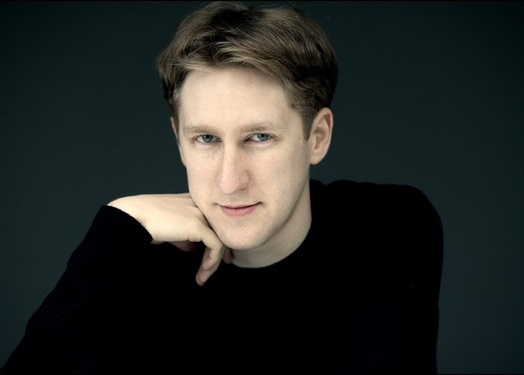
    Thibaudet

    Above: pianist Jean-Yves Thibaudet

    Author: Oberon

    Saturday January 20th, 2018 matinee – This afternoon’s program at The New York Philharmonic might have been subtitled Music for Dancing: we heard a chamber score that’s been transformed into a ballet, and – after the interval – a succession of works inspired by dance forms: a sarabande, a set of waltzes, and finally a boléro that has become one of the most famous musical works ever created.

    From time to time, The Philharmonic programs a chamber work; this not only adds a new dimension to a given performance, but affords fans of the orchestra an opportunity to enjoy hearing some of the esteemed artists of The Philharmonic in a front-and-center setting.

    This afternoon, a sterling performance of César Franck’s Piano Quintet brought guest pianist Jean-Yves Thibaudet together with a quartet of extraordinary string players to play this gorgeous score – music used by choreographer Justin Peck for his lush and exquisite 2014 ballet Belles-Lettres at New York City Ballet.

    César Franck had fallen in love with one of his pupils, Augusta Holmès, who he met in 1875. The Piano Quintet was written under the influence of Franck’s romantic obsession, and thus was detested by Madame Franck to the end of her days. Composer Camille Saint-Saëns (no less) played the piano for the Quintet’s premiere performance, but he seems to have been offended by the music’s sensuality; Saint-Saëns rejected Franck’s proposal of dedicating the quintet to him.

    The players for the Franck quintet this afternoon were Sheryl Staples and Michelle Kim (violins), Cynthia Phelps (viola), and Eileen Moon-Myers (cello) with Mr. Thibaudet at the Steinway. The opening movement, Molto moderato quasi lento, commences with a violin theme played by Sheryl Staples; Ms. Staples throughout the Quintet played with ravishing lyricism. Mr. Thibaudet enters with a somewhat hesitant phrase, and then Ms. Moon-Myers’ dusky cello joins. The piano turns dreamy before a sudden eruption. Ms. Staples and Cynthia Phelps’ richly shaded viola savour every opportunity, and the Quintet has an especially nice role for the second violin which Ms. Kim set forth with lovely tone.

    The strings play in unison over a turbulent piano motif; a change to a more pensive mood finds piano and strings alternating. There’s a spacious, impassioned passage before the movement’s enigmatic end. 

    Late seating at this point was a serious distraction; the players waited patiently as latecomers stumbled to their seats. Ms. Staples was then thankfully able to re-establish the mood quickly with her silken playing of the soft, longing theme over hushed keyboard that opens the Lento con molto sentimento. A heart-wrenching descending motif for piano and cello announces a hauntingly beautiful passage with a poignant mix of voices. Then Mr. Thibaudet takes up another set of descending notes, like raindrops – or heartbeats. Ms. Staples plays with overwhelming beauty; the hesitancy of the piano recurs, and the cellist sustains a remarkable deep note. Mr. Thibaudet in the high register and Ms. Staples’s sweetest tones bring this romantic reverie to an end.

    The concluding Allegro non troppo ma con fuoco opens with Ms. Kim’s agitato figuration which Ms. Staples joins; the piano sounds almost ominous. Unison strings play over an active keyboard, evoking a sense of mystery and restlessness. A big, waltz-like buildup suddenly evaporates into an ethereal violin passage: Ms. Staples again at her finest. The music then grows unsettled in its rush to an abrupt finish.

    Warm enthusiasm greeted the quintet of players as they came out for a bow; I had hopes of an encore, but the stage was now to be re-set for the full orchestra.

    Jw

    Joshua Weilerstein (above) took the podium for the second half of this afternoon’s program, which opened with Ravel’s orchestration of Claude Debussy’s Sarabande et Danse. The sarabande originated in Central America as a dance for women, accompanied by castanets; it had an Arabian lilt. But the sarabande was regarded as too provocative, and was banned. Later the French took it on as a much more staid dance, at a slower tempo.

    Ravel’s setting of this piece, which Debussy wrote for solo piano, opens with a wind chorale; a full string section, with lovely basses, take over. Solo moments crop up – for clarinet (Anthony McGill), bassoon (Judith LeClair) and a trumpeter who I couldn’t see. The work ends with the sound of a gong which fades to nothingness. By contrast, the Danse was upbeat, showing Ravel’s orchestrational gifts to vivid effect. The harp and horn had their moments, and overall this coloristic, rhythmic little gem glowed.

    The Valses nobles et sentimentales is a suite of waltzes published in 1911 by Maurice Ravel as piano solos; an orchestral version was published in 1912. The title was chosen in homage to Franz Schubert, who had published a set of waltzes in 1823 entitled Valses nobles and Valses sentimentales. The Ravel orchestrated setting has a strong balletic association: Balanchine used them for his eerie La Valse, wherein a young girl is stalked by Death in a haunted ballroom.

    Mr. Weilerstein gave a vibrant interpretation, played fantastically by the huge orchestra. Mr. McGill (and a flautist I could not see from my location) made particularly fine impressions.

    Ravel’s Boléro was the closing work on the program, and it’s always great fun to hear it played live. Ravel composed this best-known of his works in 1928 for a ballet choreographed by Bronislava Nijinsky for Ida Rubinstein. Consisting only of repetitions of the same C-major theme over the same insistent rhythm, Boléro hypnotizes with its constant shifts in instrumentation as the music unfolds in one long, slow crescendo.

    The thrill of today’s performance for a devotee of the NY Phil such as myself was in hearing the various solo voices of the orchestra take up the tune: flute, clarinet, bassoon, saxophone (wow, this guy was really wailing!), and on and on in various combinations. And all the while, the relentlessly diligent strings pluck and the snare drums maintain the pace, starting softly and turning militant as the Boléro sways onward with mesmerizing inevitability.

    The crowd went absolutely wild as Boléro ended: everyone stood up and yelled.

    ~ Oberon

  • Franck & Ravel @ The NY Philharmonic

    Thibaudet

    Above: pianist Jean-Yves Thibaudet

    Author: Oberon

    Saturday January 20th, 2018 matinee – This afternoon’s program at The New York Philharmonic might have been subtitled Music for Dancing: we heard a chamber score that’s been transformed into a ballet, and – after the interval – a succession of works inspired by dance forms: a sarabande, a set of waltzes, and finally a boléro that has become one of the most famous musical works ever created.

    From time to time, The Philharmonic programs a chamber work; this not only adds a new dimension to a given performance, but affords fans of the orchestra an opportunity to enjoy hearing some of the esteemed artists of The Philharmonic in a front-and-center setting.

    This afternoon, a sterling performance of César Franck’s Piano Quintet brought guest pianist Jean-Yves Thibaudet together with a quartet of extraordinary string players to play this gorgeous score – music used by choreographer Justin Peck for his lush and exquisite 2014 ballet Belles-Lettres at New York City Ballet.

    César Franck had fallen in love with one of his pupils, Augusta Holmès, who he met in 1875. The Piano Quintet was written under the influence of Franck’s romantic obsession, and thus was detested by Madame Franck to the end of her days. Composer Camille Saint-Saëns (no less) played the piano for the Quintet’s premiere performance, but he seems to have been offended by the music’s sensuality; Saint-Saëns rejected Franck’s proposal of dedicating the quintet to him.

    The players for the Franck quintet this afternoon were Sheryl Staples and Michelle Kim (violins), Cynthia Phelps (viola), and Eileen Moon-Myers (cello) with Mr. Thibaudet at the Steinway. The opening movement, Molto moderato quasi lento, commences with a violin theme played by Sheryl Staples; Ms. Staples throughout the Quintet played with ravishing lyricism. Mr. Thibaudet enters with a somewhat hesitant phrase, and then Ms. Moon-Myers’ dusky cello joins. The piano turns dreamy before a sudden eruption. Ms. Staples and Cynthia Phelps’ richly shaded viola savour every opportunity, and the Quintet has an especially nice role for the second violin which Ms. Kim set forth with lovely tone.

    The strings play in unison over a turbulent piano motif; a change to a more pensive mood finds piano and strings alternating. There’s a spacious, impassioned passage before the movement’s enigmatic end. 

    Late seating at this point was a serious distraction; the players waited patiently as latecomers stumbled to their seats. Ms. Staples was then thankfully able to re-establish the mood quickly with her silken playing of the soft, longing theme over hushed keyboard that opens the Lento con molto sentimento. A heart-wrenching descending motif for piano and cello announces a hauntingly beautiful passage with a poignant mix of voices. Then Mr. Thibaudet takes up another set of descending notes, like raindrops – or heartbeats. Ms. Staples plays with overwhelming beauty; the hesitancy of the piano recurs, and the cellist sustains a remarkable deep note. Mr. Thibaudet in the high register and Ms. Staples’s sweetest tones bring this romantic reverie to an end.

    The concluding Allegro non troppo ma con fuoco opens with Ms. Kim’s agitato figuration which Ms. Staples joins; the piano sounds almost ominous. Unison strings play over an active keyboard, evoking a sense of mystery and restlessness. A big, waltz-like buildup suddenly evaporates into an ethereal violin passage: Ms. Staples again at her finest. The music then grows unsettled in its rush to an abrupt finish.

    Warm enthusiasm greeted the quintet of players as they came out for a bow; I had hopes of an encore, but the stage was now to be re-set for the full orchestra.

    Jw

    Joshua Weilerstein (above) took the podium for the second half of this afternoon’s program, which opened with Ravel’s orchestration of Claude Debussy’s Sarabande et Danse. The sarabande originated in Central America as a dance for women, accompanied by castanets; it had an Arabian lilt. But the sarabande was regarded as too provocative, and was banned. Later the French took it on as a much more staid dance, at a slower tempo.

    Ravel’s setting of this piece, which Debussy wrote for solo piano, opens with a wind chorale; a full string section, with lovely basses, take over. Solo moments crop up – for clarinet (Anthony McGill), bassoon (Judith LeClair) and a trumpeter who I couldn’t see. The work ends with the sound of a gong which fades to nothingness. By contrast, the Danse was upbeat, showing Ravel’s orchestrational gifts to vivid effect. The harp and horn had their moments, and overall this coloristic, rhythmic little gem glowed.

    The Valses nobles et sentimentales is a suite of waltzes published in 1911 by Maurice Ravel as piano solos; an orchestral version was published in 1912. The title was chosen in homage to Franz Schubert, who had published a set of waltzes in 1823 entitled Valses nobles and Valses sentimentales. The Ravel orchestrated setting has a strong balletic association: Balanchine used them for his eerie La Valse, wherein a young girl is stalked by Death in a haunted ballroom.

    Mr. Weilerstein gave a vibrant interpretation, played fantastically by the huge orchestra. Mr. McGill (and a flautist I could not see from my location) made particularly fine impressions.

    Ravel’s Boléro was the closing work on the program, and it’s always great fun to hear it played live. Ravel composed this best-known of his works in 1928 for a ballet choreographed by Bronislava Nijinsky for Ida Rubinstein. Consisting only of repetitions of the same C-major theme over the same insistent rhythm, Boléro hypnotizes with its constant shifts in instrumentation as the music unfolds in one long, slow crescendo.

    The thrill of today’s performance for a devotee of the NY Phil such as myself was in hearing the various solo voices of the orchestra take up the tune: flute, clarinet, bassoon, saxophone (wow, this guy was really wailing!), and on and on in various combinations. And all the while, the relentlessly diligent strings pluck and the snare drums maintain the pace, starting softly and turning militant as the Boléro sways onward with mesmerizing inevitability.

    The crowd went absolutely wild as Boléro ended: everyone stood up and yelled.

    ~ Oberon

  • Mälkki/Skride @ NY Phil

    ~ Author: Scoresby

    Thursday January 11 2018 – Last night at the New York Philharmonic was an evening that I had been looking forward to for a long time. It was conducted by Susanna Mälkki and featured violinist Baiba Skride. I had never heard Ms. Mälkki conduct the New York Philharmonic before, but had heard her during her days as music director of Ensemble intercontemporain, her debut at the Chicago Symphony a few years ago, and most recently conducting L’Amour de Loin. She is one of those conductors that I don’t necessarily agree with stylistically, but she always has an interesting and unique interpretation that is worth hearing.

    The performance began with Baiba Skride performing the Tchaikovsky Violin Concerto in D major, Op. 35, which while a warhorse is also one of the most difficult concerti in the violin repertoire. Immediately from the orchestral introduction it was clear that Ms. Mälkki had prepared the orchestra well – all of the textures were transparent and grand. Ms. Skride for her part had a warm interpretation but that didn’t indulge in large romantic gestures. Instead, she played the piece as one might play Brahms. Each of the tuttis were more memorable though as I don’t think I’ve heard an orchestral accompaniment as vibrant or full of life for a piece like this. Ms. Mälkki followed Ms. Skride’s lead in taking out extravagant gestures usually found in the concerto. In the second tutti, the orchestra felt light, brisk, with the trumpets sounding grand above the violins. Ms. Mälkki produced an almost frantic tempo in the lead up to the cadenza. Ms. Skride was at her best in the fast skittering parts of the first movement, but seemed to have trouble with some of the technical sections of the piece.

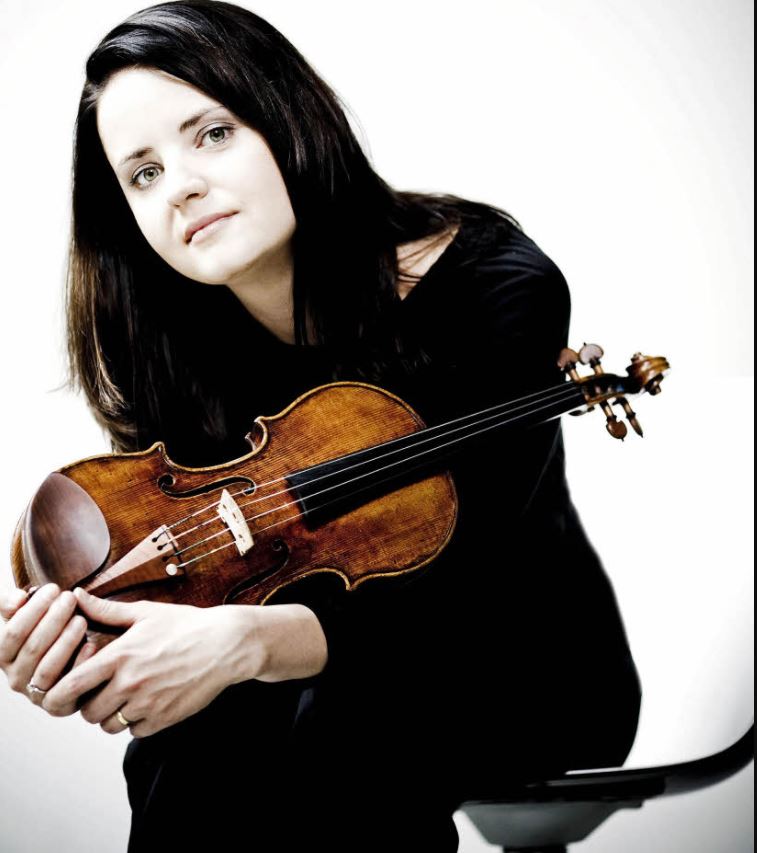
    Capture

    Above: Violinist Baiba Skride; Photo Credit: Marco Borggreve

    The second movement was the best of the concerto, in part because there was more direct interplay between Ms. Skride and the orchestra. Principal clarinet Anthony McGill’s duet with Ms. Skride was crafted beautifully; each note sounding like velvet. Ms. Skride took the third movement at a blistering pace and seemed more in her element here. She got a folksy, scraggily sound out of the violin that made the music feel more dance like.

    After intermission Ms. Mälkki led the orchestra in the NY Premiere of an older piece of Esa-Pekka Salonen’s called Helix. While not the most exciting work by Salonen, this is an enjoyable overture-style piece that builds in momentum and dynamics until the very end. It begins with low gongs beating with high flutes coming in way above them. This extreme tonal range gives an almost primordial sound that one would hear in Ives. As with all Salonen pieces, this one relies on dance-like motifs mixed with a lot of orchestral coloring – thus it made sense to pair with the Debussy that would come later. Most impressive was that as the pieces gains momentum and becomes denser, Ms. Mälkki managed to create absolute clarity with the orchestra. Every instrument could be heard near the end, evening with banging percussion and wild dancing from all the instruments. Ms. Mälkki’s style of conducting reflects this precision: it is punctilious and clear; every beat is perfectly straight.

    Capture

    Above: Conductor Susanna Mälkki; Photo by: Simon Fowler

    The final piece on the program was Debussy’s La Mer. Ms. Mälkki had an unusual interpretation that I found to be thrilling and dull at the same time. On one hand, particularly in the first and last movements, I have never heard the piece played with so attention to orchestral coloring. The winds and the brasses sparkled, the strings gushed at times, and there were thrashes, yet also beautifully delicate moments. Through all three movements every part of the orchestral was ringing with sound and clear. There wasn’t a note out of place. That said, Ms. Mälkki seemed to eschew all sense of ambiguity and impressionism in her interpretation using the same precision as in the Salonen. This worked well in the second movement which has a lot of counterpoint and fast runs, but it made the mystery of the music disappear in the others. I can imagine that anyone that enjoys a more sensual Debussy would be bored by this interpretation, but it is hard to argue with the interpretation as a whole when the orchestra has that much color. Ms. Mälkki obviously has the respect of the orchestra; the players were playing the best I’ve heard them in the past few years and were giving it their all.  I look forward to hearing Ms. Mälkki’s return.

    ~ Scoresby

  • CMS Brandenburgs ~ 2017

    Bach

    Above: the Master of Music, Johann Sebastian Bach

    ~ Author: Oberon

    Tuesday December 19th, 2017 – Chamber Music Society of Lincoln Center‘s annual holiday-season performances of Bach’s immortal Brandenburg Concertos offer an antidote to NUTCRACKER and MESSIAH – not that there’s anything wrong with Tchaikovsky or Handel, to be sure. But the Brandenburgs speak to us without sentimentality or piety: pure music, pure joy.  

    This year marked my fifth CMS Brandenburgs, and as usual the Society have assembled a brilliant ensemble – from beloved Bach specialists to rising stars – to make the season merry and bright:

    Kenneth Weiss, HARPSICHORD • Kristin Lee, Cho-Liang Lin, Daniel Phillips, Danbi Um, VIOLIN • Mark Holloway, Yura Lee, Richard O’Neill, VIOLA • Efe Baltacigil, Nicholas Canellakis, Colin Carr, CELLO • Joseph Conyers, DOUBLE BASS • Robert Langevin, Carol Wincenc, FLUTE • Randall Ellis, James Austin Smith, Stephen Taylor, OBOE • Peter Kolkay, BASSOON • Julie Landsman, Jennifer Montone, HORN • Brandon Ridenour, TRUMPET

    Wu Han, co-Artistic Director of Chamber Music Society, welcomed the packed house with her customary enthusiasm and wit. Does any other Artistic Director on the Gotham scene evince such pride in the organization she heads, in the ‘product’ she dispenses (great music), and in the people – these super-musicians – who make each program so meaningful and enjoyable? The overflow crowd, filling the extra rows of seats installed specially for this program, attest to the fact that she and David Finckel are doing everything right.

    I’ve never before been in a theater when the classic yet ominous line “Is there a doctor in the house?”  comes over the loudspeakers. A gentleman quickly rose and went to see what he could do to help an individual in distress; hopefully it was all resolved to the good.

    Each year at the CMS Brandenburgs, the six concertos are played in a different order: tonight it was the fifth which opened the evening. From the New York Philharmonic, Robert Langevin brought his magic flute to the festivities. In music entwining flute and violin, Mr. Langevin and Cho-Liang Lin were exquisite in matters of subtle dynamics and pristine trills. Cordial playing from the string ‘choir’ – Daniel Phillips (violin), Yura Lee (viola), Colin Carr (cello), and Joseph Conyers (bass) – gave the concerto an appealing, warm resonance. In a dazzling cadenza near the end of this concerto’s opening Allegro, harpsichordist Kenneth Weiss thrilled me with his sparkling dexterity, made all the more alluring with hints of rubato. Although applause between movements is normally unwelcome, I couldn’t blame the audience for breaking in here to salute Mr. Weiss and his colleagues.

    The fifth concerto’s wistful Affetuoso was dreamily played by Mssers. Lin, Langevin, and Weiss. The deeper voices inaugurate the final Allegro, and here is the perfect opportunity to heap praise on the phenomenal Joseph Conyers, whose grand and glorious bass sound was a constant source of pleasure throughout the evening.

    Josephconyers

    Above: Joseph Conyers

    In concerto #6 (B-flat major), violins are absent. Instead, a formidable pair of violists – Yura Lee and Richard O’Neill – face a deluxe trio of cellists (Colin Carr, Efe Baltacigil, and Nicholas Canelakkis) across the music stands. The pulsing Allegro is highlighted by some high-speed coloratura from Mr. Carr; when his fellow cellists join in, watching their swift unison bow-work gave me a smile.

    In the sixth concerto’s Adagio – one of Bach’s most moving creations – commences with Richard O’Neill and Colin Carr (under-pinned by the Conyers bass) poignantly drawing us in. Yura Lee then takes up the theme, and for a few blessed moments, the music gives us a transfusion of hope. Colin Carr’s plush sound here gave a soul-reaching expressiveness. Sublime! But, without a pause, the closing Allegro sweeps us inexorably forward: Mr. Carr and the two violists make music that is fast and fun.

    Carol+Wincec+%281%29

    Above: Carol Wincenc

    The fourth Brandenburg commenced. Flautist Carol Wincenc’s name looms legendary in my pantheon; how wonderful to hear her playing live tonight for only the second time in my experience. Svelte and serene, Ms. Wincenc looked fetching in a ruffled black frock which drew admiring comments from the people sitting around us as she took her bows. Her flute sounds pure and sweet, and in Mr. Langevin she found a duetting partner of equal prestige. Their harmonizing was so elegant, abetted by Mr. Conyers’ amiable bass. Yet another voice is heard: violinist Kristin Lee’s tone mingled with the two flutes in a luminous blend, wondrous and subtle. A petite cadenza from Ms. Wincenc had a shimmering quality.

    For the 4th’s finale, I jotted “Speed Demon” next to Ms. Lee’s name: I vastly enjoyed watching her rapid bowing here: fabulous! The flautists were warbling divinely, and cellist Nick Canellakis contributed his customary polished playing: it felt like these musicians were setting the world to rights. A series of modulations carries the fourth concerto to its finish.

    Following the interval, the second Brandenburg found Danbi Um in the lead, with superb wind playing from Ms. Wincenc, James Austin Smith (oboe), Peter Kolkay (bassoon), and with trumpet virtuoso Brandon Ridenour soaring on high. Cellist Efe Baltacigil’s pacing motif set the stage for a delectable playing of the Andante in which Mlles. Um and Wincenc and Mr. Smith vied to see who could play the sweeter: a ravishing mix of timbres from these great artists. In the concluding Presto, trumpet and oboe matched wits to delight us even further.

    The third concerto, a particular favorite of mine, calls for three violins (Mr. Phillips, Ms. Um, and Kristin Lee), three violas (Richard O’Neill, Mark Holloway, and Yura Lee) and three cellos (Mssrs. Canellakis, Carr, and Baltacigil) whilst the intrepid Kenneth Weiss and Joseph Conyers continued to keep everything vivid. This concerto is unusual in that its Adagio movement consists only of a brief passage from Mr. Phillips’ violin: Bach immediately sends the players back into a swirling Allegro. This evening’s performance of the third showed yet again why the Brandenburgs are so cherished.

    First came last tonight, as the program concluded with the first Brandenburg (in F-major): the one that always reminds me of Handel. The ensemble here features two horns and a trio of oboes. With violinist  Daniel Phillips in charge, Jennifer Montone and Julie Landsman sounded velvety in their harmonized horn calls whilst Stephen Taylor, Randall Ellis, and James Austin Smith piped up to gratifying effect with their oboes, joined by Peter Kolkay on bassoon. Oboe, violin, bassoon, and bass sound the poignant Adagio, then the high horns ring out briskly in the Allegro. You think this concerto is over, but there’s a surprise fourth movement – it veers between Minuet and Polonaise – in which separate choirs of winds and strings summon up rhythms of the dance. This self-fulfilling ‘encore’ gave us a fine opportunity to enjoy Peter Kolkay’s lively bassoon playing.

    ~ Oberon

  • The Orchestra Now: Penderecki & Holst

    Falletta

    Above: conductor JoAnn Falletta, photo by Cheryl Gorski

    ~ Author: Ben Weaver

    Thursday December 14th, 2017 – TŌN (The Orchestra Now) consists of musicians from leading musical conservatoires around the globe, including Julliard, Curtis and Shanghai Conservatory. I’ve heard less impressive and less cohesive playing from big name orchestras. Under the baton of JoAnn Falletta, the concert was a thrilling evening of superb music-making. And filling the entire stage of Alice Tully Hall at Lincoln Center, one was overwhelmed by the sheer impact and presence of their sound. It rather reinforced my belief that David Geffen Hall truly does have dreadful acoustics. Granted, Alice Tully is a much smaller hall, but it’s not the volume alone that impresses. NY Philharmonic can be plenty loud too. It’s feeling the sound envelop you and pins you to your seat that can be truly breathtaking. This does not happen at David Geffen Hall.

    John Adams’ “Short Ride in a Fast Machine” is about five minutes of pure adrenaline. Its percussive opening sets the tone for a repeating loop of fanfares, shrieking woodwinds, and stabbing violins. Adams once described the piece: “You know how it is when someone asks you to ride in a terrific sports car, and then you wish you hadn’t?” Composed in his trademark post-minimalist style, the work constantly shifts, turns, and twists, and the young musicians played it without fear.

    Krzysztof Penderecki is one of the giants of contemporary classical music. His “Concerto Doppio”, completed in 2012, was originally written for violin and viola, but in this TŌN concert the version for violin and cello was performed instead, with soloists Dennis Kim and Roman Mekinulov, respectively.

    Penderecki intended the solo instruments to be adapted to whatever string instruments are needed for the concert, in the style of J.S. Bach perhaps, who allowed arrangements of a lot of his music for different instruments on as-needed basis. This concerto – proving that great music is still being written – begins unusually with an extended duet for the solo instruments. In fact, the entire concerto is something of a conversation between soloists and orchestra. The music alternates from the largely (or entirely) unaccompanied solo instruments back to the orchestra, and so on. The opening minutes had something of Arvo Pärt’s instrumental chanting, and throughout one could grasp influences from Bach and Shostakovich. The concerto’s end reminded me very much of the hushed conclusion of the first movement of Shostakovich’s Symphony No. 4.

    Falletta allowed the excellent soloists, Kim and Mekinulov, to play without conducting them. As so much of their music really is an unaccompanied duet, it allowed the musicians a great deal of flexibility and freedom.

    After the intermission, the orchestra played one of the most popular of all orchestral works: Holst’s “The Planets.” It is appropriate that the concert was given on the day the new Star Wars film, “The Last Jedi,” was released. Hearing the work once again I am struck by how much composer John Williams borrowed from Holst to write the legendary film scores.

    Again, to hear such a great and inventive orchestral work for a large orchestra in a hall like Alice Tully was very exciting. Holst’s endless stream of melodies and remarkable orchestration is a war-horse for a good reason and I do not tire of hearing it. The orchestra played it superbly, relishing every note.

    No doubt many of the musicians were playing it for the first time. I am reminded of a story – perhaps a myth – about Fritz Reiner rehearsing Wagner’s “Die Meistersinger” overture, and one musician kept making a mistake. When Reiner called him out, the musician said: “I am sorry, Maestro, I am playing this for the first time.” Reiner is said to have replied: “Oh, how I envy you.”

    It is not easy to make a work as familiar as “The Planets” sound fresh, but the wonderful young TŌN Orchestra, under JoAnn Falletta’s inspired leadership, not only made it sound fresh, they did it without any noticeable mistakes.

    ~ Ben Weaver

  • The Orchestra Now: Penderecki & Holst

    Falletta

    Above: conductor JoAnn Falletta, photo by Cheryl Gorski

    ~ Author: Ben Weaver

    Thursday December 14th, 2017 – TŌN (The Orchestra Now) consists of musicians from leading musical conservatoires around the globe, including Julliard, Curtis and Shanghai Conservatory. I’ve heard less impressive and less cohesive playing from big name orchestras. Under the baton of JoAnn Falletta, the concert was a thrilling evening of superb music-making. And filling the entire stage of Alice Tully Hall at Lincoln Center, one was overwhelmed by the sheer impact and presence of their sound. It rather reinforced my belief that David Geffen Hall truly does have dreadful acoustics. Granted, Alice Tully is a much smaller hall, but it’s not the volume alone that impresses. NY Philharmonic can be plenty loud too. It’s feeling the sound envelop you and pins you to your seat that can be truly breathtaking. This does not happen at David Geffen Hall.

    John Adams’ “Short Ride in a Fast Machine” is about five minutes of pure adrenaline. Its percussive opening sets the tone for a repeating loop of fanfares, shrieking woodwinds, and stabbing violins. Adams once described the piece: “You know how it is when someone asks you to ride in a terrific sports car, and then you wish you hadn’t?” Composed in his trademark post-minimalist style, the work constantly shifts, turns, and twists, and the young musicians played it without fear.

    Krzysztof Penderecki is one of the giants of contemporary classical music. His “Concerto Doppio”, completed in 2012, was originally written for violin and viola, but in this TŌN concert the version for violin and cello was performed instead, with soloists Dennis Kim and Roman Mekinulov, respectively.

    Penderecki intended the solo instruments to be adapted to whatever string instruments are needed for the concert, in the style of J.S. Bach perhaps, who allowed arrangements of a lot of his music for different instruments on as-needed basis. This concerto – proving that great music is still being written – begins unusually with an extended duet for the solo instruments. In fact, the entire concerto is something of a conversation between soloists and orchestra. The music alternates from the largely (or entirely) unaccompanied solo instruments back to the orchestra, and so on. The opening minutes had something of Arvo Pärt’s instrumental chanting, and throughout one could grasp influences from Bach and Shostakovich. The concerto’s end reminded me very much of the hushed conclusion of the first movement of Shostakovich’s Symphony No. 4.

    Falletta allowed the excellent soloists, Kim and Mekinulov, to play without conducting them. As so much of their music really is an unaccompanied duet, it allowed the musicians a great deal of flexibility and freedom.

    After the intermission, the orchestra played one of the most popular of all orchestral works: Holst’s “The Planets.” It is appropriate that the concert was given on the day the new Star Wars film, “The Last Jedi,” was released. Hearing the work once again I am struck by how much composer John Williams borrowed from Holst to write the legendary film scores.

    Again, to hear such a great and inventive orchestral work for a large orchestra in a hall like Alice Tully was very exciting. Holst’s endless stream of melodies and remarkable orchestration is a war-horse for a good reason and I do not tire of hearing it. The orchestra played it superbly, relishing every note.

    No doubt many of the musicians were playing it for the first time. I am reminded of a story – perhaps a myth – about Fritz Reiner rehearsing Wagner’s “Die Meistersinger” overture, and one musician kept making a mistake. When Reiner called him out, the musician said: “I am sorry, Maestro, I am playing this for the first time.” Reiner is said to have replied: “Oh, how I envy you.”

    It is not easy to make a work as familiar as “The Planets” sound fresh, but the wonderful young TŌN Orchestra, under JoAnn Falletta’s inspired leadership, not only made it sound fresh, they did it without any noticeable mistakes.

    ~ Ben Weaver

  • Janine Jansen and Friends @ Zankel

      Screen Shot 2017-12-19 at 12.47.01 PM

    Above: violinist Janine Jansen

    ~ Author: Scoresby

    Thursday December 7 2017 – This evening had one of the best chamber performances I’ve heard of the year in Carnegie Hall’s Zankel Hall. This commenced violinist Janine Jansen’s six performances as a part of Carnegie Hall’s Perspectives series; where artists of certain acclaim curate concerts in a given season. Ms. Jansen’s will include three chamber music performance (this being one of them), two orchestral performances, and a recital with Jean-Yves Thibaudet. This was the first time I had heard Ms. Jansen in recording or performance, so it was thrilling to hear such a well-programmed concert – though I had heard all the pieces on the program in concert before.

    The performance began with a performance of Bartok’s Contrasts for Violin, Clarinet, and Piano (this recording has Bartok playing along with Benny Goodman, who the piece was written for). Ms. Jansen was on violin, the esteemed Martin Fröst was on clarinet, and Lucas Debargue was on piano. In the first movement’s “recruiting dance”, Ms. Jansen and Mr. Fröst seemed to almost be dancing with each other on stage while playing. Mr. Fröst in particular captured all the jazzy timbres and fun improvisatory sounds – sounding free and loose. Mr. Debargue kept the stormy piano part quiet and atmospheric, never overwhelming the group.

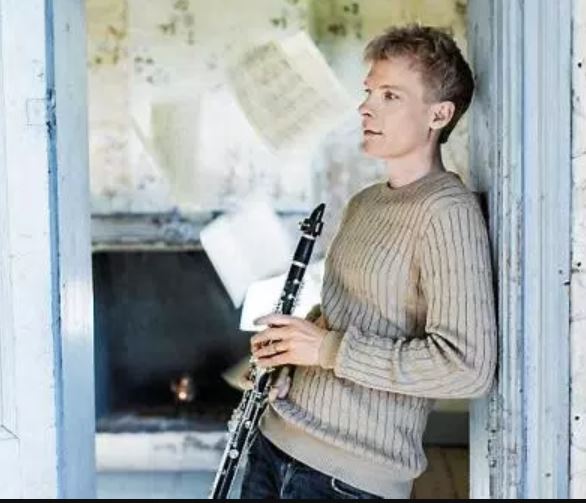
    Capture

    Above: Clarinetist Martin Fröst, photo by Mats Bäcker

    Ms. Jansen provided a rough gritty sound with perfect technique. The second movement brought a different sound world, languid and mysterious. They took a looser approach, letting each line sing. Mr. Debargue captured the folksiness and jazzy rhythms well. The last movement was played with stunning speed and accuracy. While fun through all the various riffs, it sounded a little too rushed. Nonetheless, with big personalities like Ms. Jansen and Mr. Fröst, the fun parts of the piece were giving distinct timbres. Mr. Debargue’s relaxed downward scales sounded contrasted the rougher timbres of Ms. Jansen and Mr. Fröst.

    The second piece on the program was a bit of rarity. Ms. Jansen and Mr. Debargue returned to play Szymanowski’s Mythes for Violin and Piano, Op. 30. For those that don’t know, Szymanowski’s music has a few distinct periods, but his most famous middle period sounds almost like a more radical Debussy with motion. Mr. Debargue played the opening of La Fontaine d’Aréthuse with a delicate color palette and impressionistic quality without making the piano sound too blurry. Ms. Jansen embraced the almost crass strangeness of the violins opening line. For a piece that has this late Debussy sound, one has to embrace all the effects in both instruments for the music to work, and here one couldn’t ask for better interpreters. As the first movement went on to its passionate climax Ms. Jansen seemed to let loose in a way that was missing in the Bartok.

    Screen Shot 2017-12-19 at 12.49.33 PM

    Above: Pianist Lucas Debargue

    The whirr of sound and color was thrilling, followed by a ghostly harmonic sections. Mr. Debargue was equally enjoyable, changing textures every few phrases. I look forward to hearing Mr. Debargue’s newly released Syzmanowski/Schubert album. The third movement, Dyrads and Pan has the violin imitating Pan’s flute for a good portion of the pieces. Through trills, quarter tones, muted sections, natural harmonics and a host of other methods that Syzmanowski dictates Ms. Jansen made the music sound like much more than just a violin. 

    The last piece on the program was The Quartet for the End of Time by Oliver Messiaen. In addition to Mr. Debargue and Ms. Jansen, Martin Fröst returned for the difficult clarinet part and cellist Torleif Thedéen joined on the cello. This is the sort of music that can really only heard live as recordings can’t capture its both apocalyptic and meditative mood in the same way. It also requires utmost coordination between each musician. Of the dozen or so performances I’ve heard in the past three years this was perhaps the best. During the first of eight movements, Mr. Fröst began almost as if he was conducting. His tone small, but his style emphasizing the bird trills. Mr. Debargue made his way softly through the 29 chord cycle that makeup the piano part. The play between Ms. Jansen and Mr. Fröst was again evident here – each seeming to get energy from the other. Nonetheless, they kept the strange mood somber and the atmosphere stagnant. Almost as if one were to walk into a large space and hear some birds chirping and people talking, getting enveloped in it. 

    The second movement brought an entire different style of playing, here letting the apocalyptic element of the piece shine. Mr. Debargue had a rough, almost crass sound explodes out of the quiet atmosphere, announcing the end of time. Mr. Thedéen and Ms. Jansen’s languid duet after maintained the eerie quality of the first movement, meandering through seemingly without direction. To capture these contradictory elements of the music is impressive; the group sounds like it has played together for years and I look forward to hearing their recording of it released earlier this month. One of the more striking aspects of this performance is that all the performers seemed comfortable with Messiaen’s lengthy silences. 

    The third movement is for solo clarinet and the emotional center of the piece. It truly is one of my favorite moments in all of music, so to hear such an excellent clarinet player perform it was moving. Mr. Fröst’s performance was perhaps the quickest I’ve heard in terms of tempo, but it allowed him to make each phrase have more energy and breath. It also made each rest and silence all the more apparent. During the famous long sustained screeches that crescendo from silence to the maximum sound a clarinet can make (only a clarinet can start from complete silence that way), Mr. Fröst’s body seemed to quiver as he approached the maximum sound of his instrument, but that convulsing was perfect for the physicality of the music. During the more active sections in-between each shriek, Mr. Fröst’s fast tempo let the bird-like melodies shine. While all performances sound bird-like, Mr. Fröst’s light tone and nimble trills seemed particularly well suited. 

    The fourth movement is a light interlude and it felt like being sucked out of a trance after the severity of solo clarinet movement. Here, Ms. Jansen, Mr. Fröst, and Mr. Thedéen sounded joyful and played well together. During the passages in unison it felt like they fused into one large instrument. Mr. Thedéen’s low pizzicatos were a delight. Turning back to the meditative mood, the fifth movement is a stunning meandering melody on the cello with a simple piano accompaniment. Mr. Thedéen’s had a drier sound at first, but then settled into a more romantic style by the end. Mr. Debargue played is murmurs on the piano softly, without ever eclipsing the cello. 

    Screen Shot 2017-12-19 at 12.52.25 PM

    Above: Cellist Tortleif Thedéen, photo by Nikolaj Lund

    The sixth and seven movements had the best chamber music playing of the night; each member of the quartet seemed fully invested in the music. During the dark sixth which has an extended section with all the instruments playing in unison with the same dynamic markings, not one instrument seemed eclipse another, an incredibly difficult feat. They played up all of the accents and gave a quick, fierce account. After the long introduction, there is a section where the clarinet and piano pound out longer rhythms that eventually take over the piece. Mr. Fröst and Mr. Debargue played this with verve, making each punctuation sound final until another fast break with all the instruments in unison sputtering a drawn out phrase. This contrast made the movement even more dramatic than it typically is. This led into the dissonant seventh movement, where the group seemed to be both aggressive and colorful in their sound. They managed to make it sound darker and more stormy than I’ve heard before.

    The last movement is an extended passage for violin and piano, similar to the cello section. Here though, Ms. Jansen had a slow ringing sound. Mr. Debargue provided a sublime accompaniment. Again, it was easy to slip into a trance with the slow slide up both the violin and piano. After landing in the highest registers of both, Ms. Jansen sounded the last note – but kept her posture as if there was more. This held the audience from applause and everyone sat in the silence of eternity for a full minute before a hearty applause. I wish more musicians captured those sublime moments of quiet after a performance, it felt just as important as the music itself. I look forward to hearing her next performances apart of her Perspectives series on January 18 and January 21.

  • Upcoming: Barnard/Columbia Dances @ NYLA

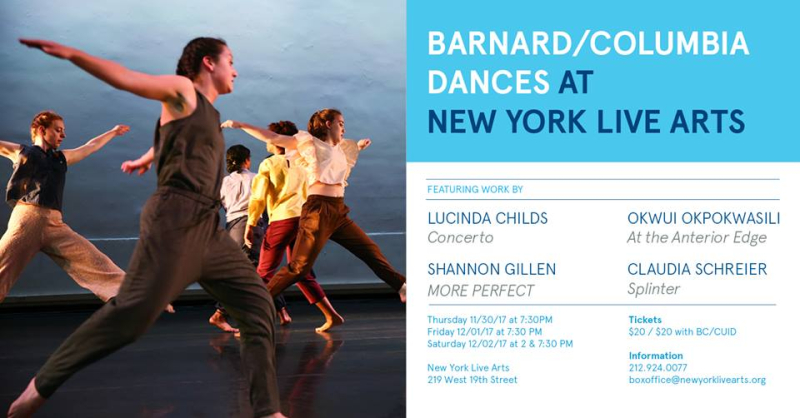
    23622175_1575201285874852_874849280968044420_n

    The premiere of Claudia Schreier’s ballet SPLINTER is one of the works featured on a program at New York Live Arts by Barnard/Columbia Dances. The performance dates are November 30th, December 1st, and two shows on December 2nd. Tickets and more information here.

    Claudia’s SPLINTER gets its name from the Marc Mellits score from which she draws six of eight movements for her dancework. Each movement is named after a type of tree. It’s quite dynamic music, with passing moments of reverie. 

    L1900691

    Above: Claudia Schreier and dancers in rehearsal

  • Flute Affair @ Chamber Music Society

    11.19.17_Flute_Affair

    Above: flautists Ransom Wilson and Tara Helen O’Connor

    Author: Oberon

    Sunday November 19th, 2017 – In a well-conceived program of works composed in four different centuries, Chamber Music Society of Lincoln Center presented two of today’s foremost flautists – Tara Helen O’Connor and Ransom Wilson – joined by an ensemble of top-flight artists. The ink’s probably not totally dry yet on John Luther Adams’ newest score, a CMS co-commission having its New York premiere this evening.

    Music of Bach opened the concert: his Trio Sonata in G-major for two flutes and continuo was given an elegant performance by Ms. O’Connor and Mr. Wilson, with cellist Timothy Eddy and Juho Pohjonen at the harpsichord providing a gracious continuo. The sound of blending flutes has an enchantment that few other instruments playing in duo can evoke. The sonata’s Adagio e piano has an air of sweet melancholy, and in the propulsive rhythmic figures of the two Allegro sections, Mr. Eddy made music that went beyond keeping time.

    For Mozart’s C-major flute quartet, K 285b, Ms. O’Connor was joined by violinist Kristin Lee, violist Paul Neubauer, and cellist Timothy Eddy. In this two-movement work, the composer keeps the flute prominent but doesn’t neglect the other instruments. Rising from the gentle flow of the opening Allegro, Ms. O’Connor’s quicksilver fluting sends a melodic line over to Ms. Lee’s violin. The strings provide a rich yet cultivated blend. We then head into the second movement: a theme-and-variations setting. The theme feels like a courtly dance; in the first variation the flute sings over gently rocking strings. Ms. Lee shines in the second variation and Mr. Eddy in the third, where the Neubauer viola injects an insinuating little phrase that’s so delicious. The fourth variation takes a minor-key turn, with a sighing quality. Flute-song is the attractive essence of the fifth variation: Ms. O’Connor’s playing is soft and sweet. The sprightly closing variation is in spirit of the country dance known as the Ländler. It’s a short dance, but full of charm.

    John luther adams

    Above: composer John Luther Adams

    The new Adams was up next: ‘there is no one, not even the wind’ proved to be both intriguing and a bit problematic. The stage had been set for the work’s large ensemble, which includes our two flautists – Ms.O’Connor now playing alto flute – two percussionists (the excellent Ayano Kataoka and Ian David Rosenbaum, with a marimba for each…and a bass drum as well), piano (Mr. Pohjonen), violin (Ms. Lee), viola (Mr. Neubauer), cello (Mr. Eddy), and bass Anthony Manzo.

    The music begins delicately with the striking of individual bell tones. Ms. Lee’s violin enters on high; slowly, the other voices of the ensemble are mixed in: we seem to be floating thru space and time. Piercing flute notes from Mr. Wilson seem like signals from distant worlds; meanwhile Ms. O’Connor’s alto flute evokes ancient realms on Earth. Notes struck on the marimbas linger on the air, enveloping us in mystery.The bass drum sounds like distant thunder, with deep piano tones adding to an ominous feeling. The flutes resume; the music transcends reality as sound-clouds move across the horizon of the mind.

    The music is marvelously crafted and – needless to say – magically played. But there’s simply too much of it: even the most poetic dream can outlast itself. An annoying cougher infringed on the atmosphere, and a sense of restlessness began to intrude. Much as I loved the sounds I was hearing, I began to wonder if we had been adrift too long. And yet, I could definitely listen to this work again – preferably at home, where the imagination could be allowed full play.

    During the interval, there was considerable buzz about the Adams work: from what I could gather, people around us found it essentially fascinating but too extended.  

    Dutilleux young

    Above: composer Henri Dutilleux around the time he wrote his Sonatine

    Henri Dutilleux passed away in 2013 at the age of 97. His Sonatine for flute and piano was commissioned by the Paris Conservatory as a test piece for the graduating flautists of 1942; tonight, Ransom Wilson and Juho Pohjonen turned it into ten minutes of magic.

    The Sonatine begins mysteriously, the piano soon entwined with the flute. The music is very “French” with lingerings in the upper range and twisty rising scales. A bird-song cadenza shows off Mr. Wilson’s fluency of technique; this leads to a lyrical developmental section. There’s a full stop, and then rippling figurations from the piano draw us into music that’s light, bright, and subtly ironic. The piano writing turns grand before another cadenza – this one heading downhill – carries us on to a witty speed-up to the end. The audience gave the players – and the piece – a warm reception. I’m going to tell some of my choreographer-friends about it.

    We bounced back to the second decade of the 19th century for the evening’s final work: the Septet in D-minor by Johann Nepomuk Hummel. Dating from 1816, this septet sounds rather ahead of its time, thanks to the composer’s ideas about instrumentation, harmony, and modulation. It’s a piece that brings the listener a sense of elation in both its musical freshness and its inspired instrumentation: Hummel calls for a trio of strings and a trio of winds, and he sets them off brilliantly against writing for the piano that calls for great virtuosity and sensitivity.

    Juho pohjonen

    Within moments of the start of the Hummel, the audience could grasp the fact that the man at the Steinway, Juho Pohjonen (above), was playing with extraordinary dexterity, feeling, and commitment. He wasn’t just playing the notes, but investing them with colour and nuance – one could often sense a full dynamic range within a single passage; and how fine were Mr. Pohjonen’s taperings of the many scale phrases to keep us under his spell. When the septet ended, his colleagues urged the pianist to step forward where he was greeted by a barrage of bravos. Called back to the stage, the players sent Mr. Pohjonen out first, then they all held back so that he had a solo bow. It was one of my favorite moments from among the many evenings I’ve spent at Alice Tully Hall.

    The Hummel is simply bursting with great opportunities for each of the seven players to show what they can do. After a full-bodied start, hesitations creep in. Mr. Manzo’s bass makes the first of numerous incursions with rich, rhythmic sound. Mr. Neubauer’s viola pulses as the three wind players comment. Meanwhile, the piano writing is a joy to hear as Mr. Pohjonen veers from extroverted to delicate in the twinkling of an eye. He can be pensive at one moment and wryly light-hearted the next. Before the first movement ends, Mr. Eddy’s cello has its say.

    “It’s a piano thing!”, I wrote as the second movement commenced: it’s cleverly marked Menuetto o scherzo by the composer, and the bass gets us involved before the piano again draws our attention. Cello and viola meld with smooth sounds from Eric Reed’s horn; Mr. Reed repeatedly sustains notes which lead into melodic motifs.

    In the Andante cantabile, a melody gets passed about with variations. Mr. Pohjonen dazzles us yet again, later adopting a ‘toy piano’ sound for some fanciful coloratura. A slow-rising tutti sends the piano swirling; the bass lures us to a fun finish.

    The forward impetus of the concluding Vivace brings us to a conversation between the Neubauer viola and James Austin Smith’s congenial oboe; Mr. Eddy has a heartfelt cello passage with piano, and then Ms. O’Connor’s flute blends beautifully with the oboe and horn as Mr. Pohjonen’s playing is honed down to a thread. Cascades of notes from the keyboard underscore the final measures of this fantastic piece. 

    • Bach Trio Sonata in G-major for Two Flutes and Continuo, BWV 1039 (c. 1736-41)
    • Mozart Quartet in C-major for Flute, Violin, Viola, and Cello, K. 285b (1781)
    • J. L. Adams there is no one, not even the wind for Two Flutes, Two Percussionists, Piano, Violin, Viola, Cello, and Bass (New York Premiere, CMS Co-Commission) (2017)
    • Dutilleux Sonatine for Flute and Piano (1943)
    • Hummel Septet in D-minor for Flute, Oboe, Horn, Viola, Cello, Bass, and Piano, Op. 74 (c. 1816)

    ~ Oberon