Category: Dance

  • Lubovitch’s LEGEND OF TEN @ Martha Graham

    SA3_9126_preview

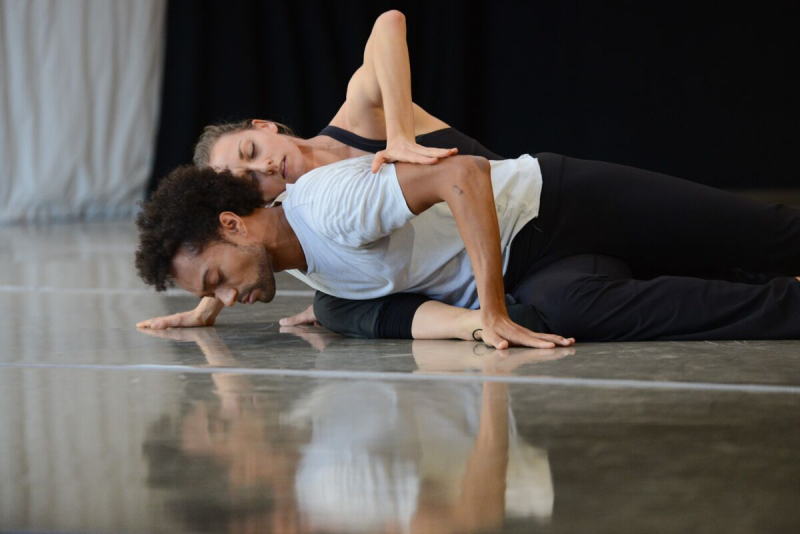
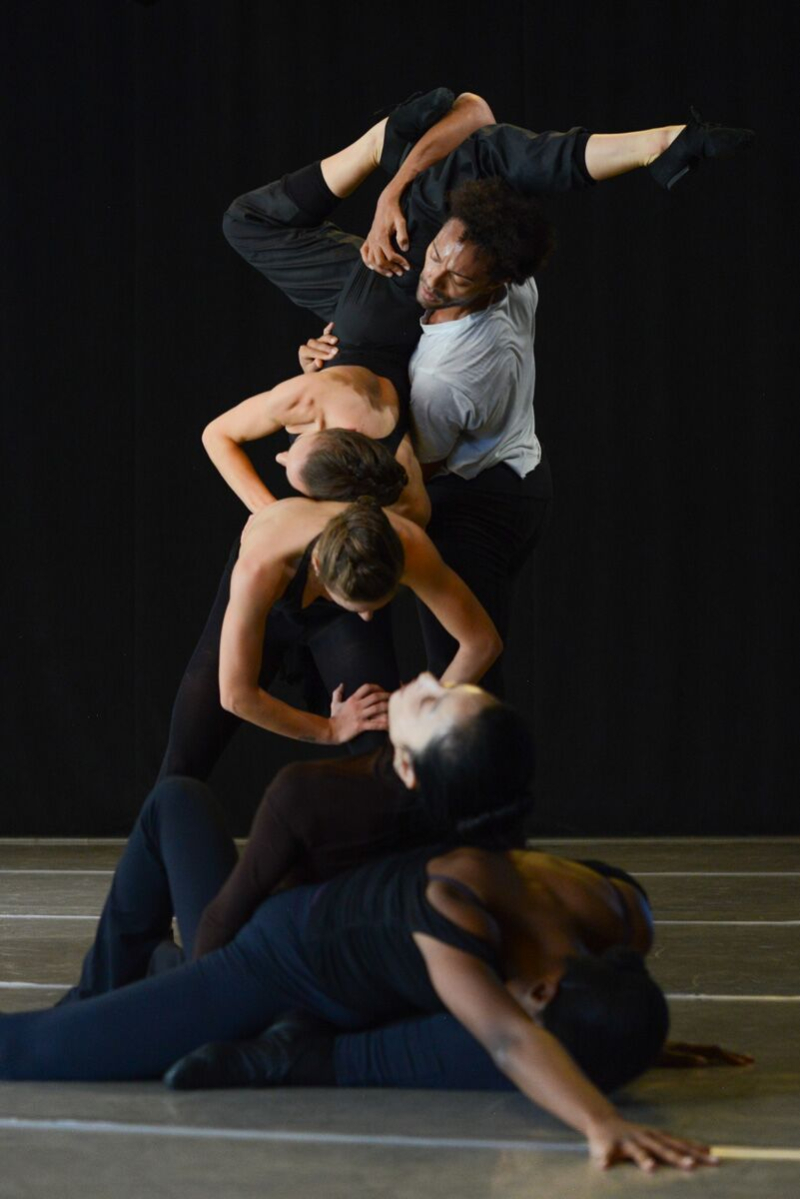
    Above: Abdiel Cedric Jacobsen and Anne Souder of the Martha Graham Dance Company; photo by Nir Arieli

    ~ Author: Oberon

    Friday November 17th, 2017 – The renowned choreographer Lar Lubovitch will celebrate the 50th anniversary of his Company in the coming Spring when the Lar Lubovitch Dance Company will perform two programs at the Joyce Theater from April 17th through April 22nd, 2018. Joining in the celebration, the dancers of the Martha Graham Dance Company will perform the Lubovitch masterpiece LEGEND OF TEN, set to Johannes Brahms’s Piano Quintet in F minor; the Lubovitch Company premiered this work in 2010.

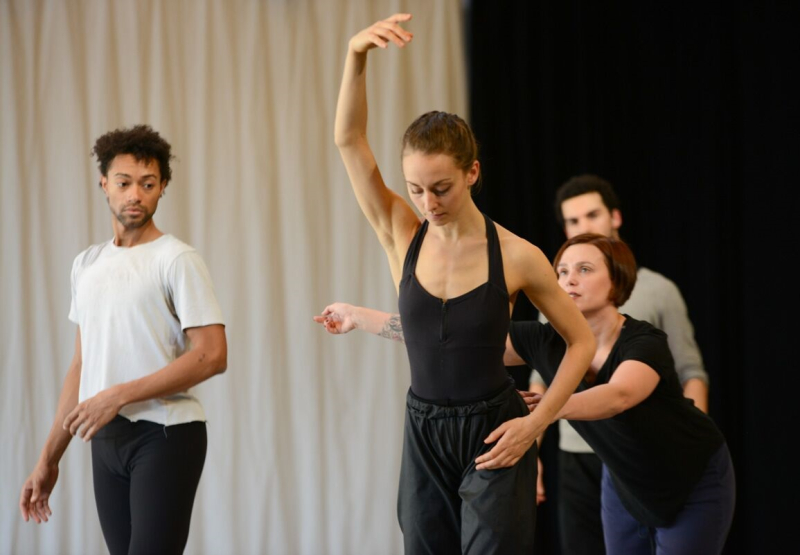
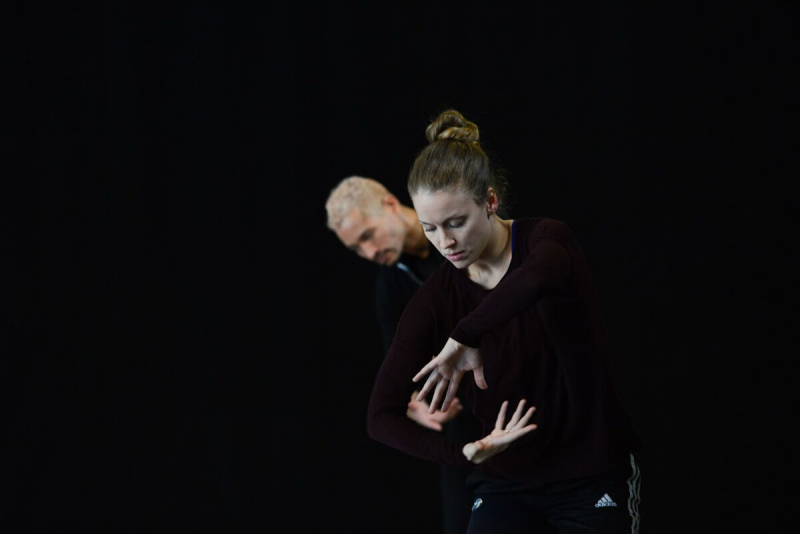
    This afternoon, photographer Nir Arieli and I stopped by at the Graham Studios at Westbeth to watch a rehearsal of LEGEND OF TEN. The Graham dancers are the crème de la crème of the dance world: in their combination of athleticism and artistry, they have few rivals. On top of that, they’re all really nice people. So any chance to be in their presence has a special meaning for me.

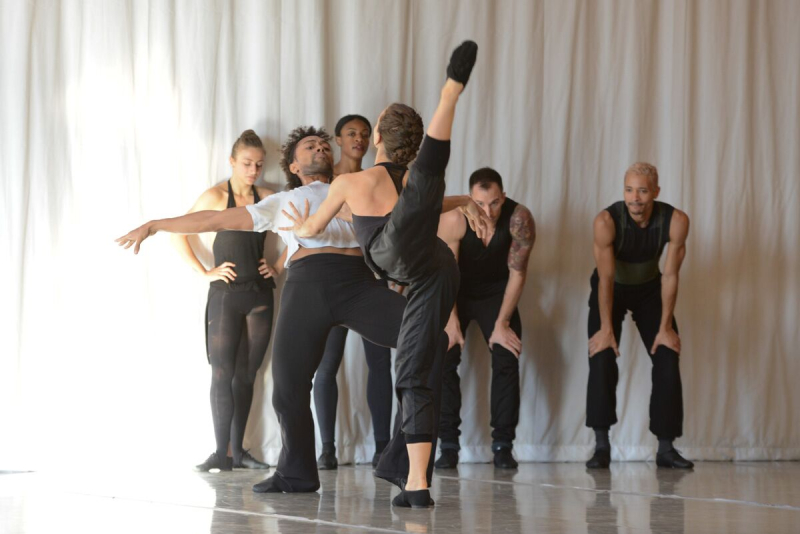
    I’ve seen LEGEND OF TEN three times in the past, danced by the Lubovitch Company. Yet today, I was struck afresh by its power and beauty. Taking wing on the Brahms score, LEGEND sends the dancers swirling thru dynamic movement that melds ballet motifs with elements of folk dance.

    In the course of today’s rehearsal, Mr. Lubovitch did quite a bit of dancing himself as he demonstrated for the Graham dancers. Assisting Mr. Lubovitch was Kate Skarpetowska – an estimable choreographer in her own right who has danced with the Lubovitch Company and is intimately familiar with his work.

    Here’s a gallery of Nir Arieli’s images from this afternoon:

    SA3_8351_preview

    From left: Ben Schultz, Anne O’Donnell, Kate Skarpetowska, So Young An, Leslie Andrea Williams, Lorenzo Pagano

    SA3_8409_preview

    Abdiel Cedric Jacobsen, Anne Souder, and Kate Skarpetowska

    SA3_8470_preview

    Watching a film of LEGEND with Mr. Lubovitch

    SA3_8477_preview

    SA3_8546_preview

    Lar Lubovitch coaching Abdiel and Anne Souder in a duet passage

    SA3_8568_preview

    Anne Souder and Anne O’Donnell

    SA3_8832_preview

    Leslie Andrea Williams

    SA3_8896_preview

    So Young An

    SA3_9155_preview

    Lorenzo Pagano

    SA3_8804_preview

    Ari Mayzick, Anne O’Donnell

    SA3_9348_preview

    Abdiel Cedric Jacobsen

    SA3_9481_preview

    Ecstatic moment

    SA3_8990_preview

    Abdiel with Anne Souder: pas de deux…continued below

    SA3_9101_preview

    SA3_9110_preview

    SA3_9111_preview

    SA3_9125_preview

    SA3_9139_preview

    SA3_9142_preview

    SA3_9144_preview

    Ensemble: Ari, Ben, Lorenzo, Laurel Dalley Smith, Leslie

    SA3_9180_preview

    Leslie Andrea Williams

    SA3_9337_preview

    Abdiel and Anne Souder

    SA3_9492_preview

    Leslie Andrea Williams

    SA3_9505_preview

    Many thanks to Denise Vale of the Graham Company for helping to arrange today’s studio visit, and also to Janet Eilber, publicist Janet Stapleton, to Mr. Lubovitch and Ms. Skarpetowska for letting us eavesdrop on their process, and – of course – to the phenomenal dancers. And although they weren’t dancing today, it was great to catch up briefly with Ying Xin and The Lloyds: Knight and Mayor.

    All photos by Nir Arieli.

    ~ Oberon

  • André Watts|ORPHEUS @ Carnegie Hall

    Watts11_high - david bazemore

    Above: pianist André Watts, photo by David Bazemore

    ~ Author: Oberon

    Thursday October 26th, 2016 – Pianist André Watts joined ORPHEUS this evening as the beloved chamber orchestra kicked off their 2017-2018 Carnegie Hall season with a New York premiere and classics by Mozart and Beethoven. We learned that 600 school-children were in attendance – up in the balcony – having been provided with tickets free of charge. A subtitle for the program might have been “Pianists Who Compose”, as Mozart, Beethoven, and Iyer each first won renown at the keyboard. 

    Vijay-Iyer

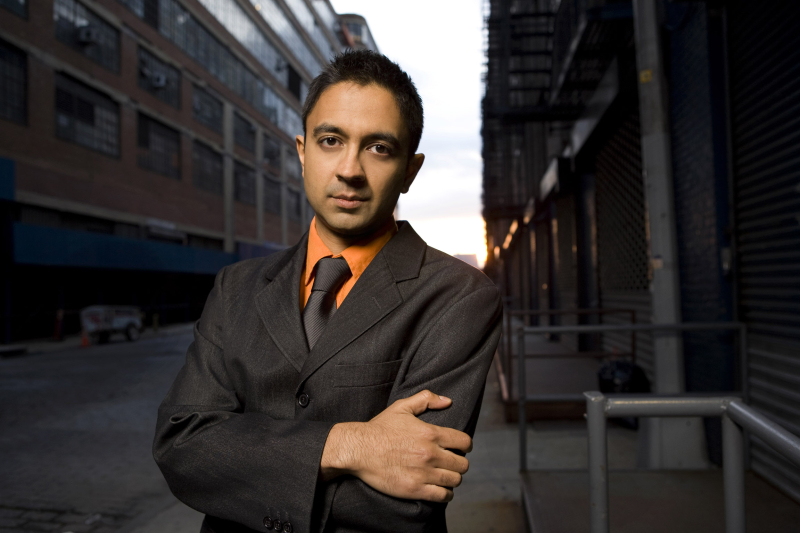
    American composer Vijay Iyer (above) is a jazz pianist, bandleader, producer, electronic musician, and writer. Tonight ORPHEUS offered the New York premiere of Mr. Iyer’s Asunder, an eclectic and vastly pleasing work that suits the ORPHEUS players to perfection.

    In his program note, Mr. Iyer said that, on first receiving the ORPHEUS commission, he thought of writing a piece that would reflect the current deep divisions in our country and “…how it feels to be an American today: pulled apart, broken, anxious, untethered…” He thought of writing big, violent music but then he chose instead to write a piece that “…imagines unity anew…” Bravo! for taking such a stance, Mr. Iyer.

    Asunder is presented in four movements; it opens with pacing horns and an oddly noble feeling. Pulsing rhythms and a somewhat ominous timpani carry us thru to a passage for strident winds. Swirls of notes from both strings and winds allude to the movement’s title: Agitated. It ends with dour, deep sounds.

    Marked Patient and mysterious, the second movement begins with plucking and a jazzy piccolo solo over bass and cello. A Mid-Eastern flavour permeates; following a build-up to an almost militant passage, a Glassian repetitive motif takes over and we settle into a slow sway.

    Calm and precise, like clockwork begins with a gorgeous flute solo; bell tones and other percussive effects designate the effect of time. A repeated downward passage is repeated just a few too many times (my sole reservation about the work).

    Solo oboe over bass accompaniment opens the concluding Lush movement; then a rather drowsy clarinet takes over. The Mid-East is evoked again as the music assumes the feeling of a desert journey, then pulses up over deep bass notes. The glockenspiel sounds again, and after a plucked passage the finale turns cinematic.

    Percussionist Maya Gunji did a great job in the Iyer, as did several of her woodwind colleagues, though I couldn’t see them clearly enough to name names. And the strings sounded superb…all evening, in fact. Mr. Iyer was called to the stage and was enthusiastically applauded by audience and musicians alike.

    The Steinway was then rolled out, and André Watts appeared to a warm welcome from the Carnegie audience.

    André Watts came to public prominence at the age of 16 when Leonard Bernstein chose him as a soloist, making his New York Philharmonic debut on one of the orchestra’s Young People’s Concerts – a concert which was broadcast nationwide on CBS-TV. Two weeks later, Bernstein again called upon the young and charismatic Mr. Watts to substitute at the last minute for the ailing Glenn Gould in performances of Liszt’s E-flat Concerto with the New York Philharmonic. In 1976, André Watts’ recital for the Live From Lincoln Center series was the first full-length recital broadcast in the history of television.

    The Watts career has spanned over half a century, interrupted at times by health issues. Now 70 years old, he plays with the energy and distinction that have endeared him to audiences worldwide over the decades; he played, in fact, like a very jeune homme.

    Mozart’s Piano Concerto No. 9, composed in January 1777, picked up the appellation “Jeunehomme” “young man”) by mistake when Mozart’s mention (in a letter) of the name of the young pianist who inspired the work –  Victoire Jenamy (1749-1812) – somehow got scrambled from Jenamy to Jeunehomme. Victoire was the daughter of the famous 18th-century ballet master Noverre, and she was apparently in Salzburg during the winter of 1776-77 where she met Mozart. This was the first of the composer’s piano concertos to appear in print, published in Paris around 1780.

    My first impression of Mr. Watts as he began to play (I’d never heard him live before) was: “He makes the piano sing!” This concerto is very demanding, and – as the pianist remarks in his program note – shows such  maturity of writing from a 21-year-old that we could easily be convinced it comes from a later time in the Mozart’s career. It is, overall, music that brings genuine comfort and joy.

    In the opening Allegro, Mr. Watts displayed a light touch in a series of delicious trills, with much charming filigree; yet there was also warm power and rhythmic vitality to be enjoyed. An elaborate cadenza held the audience in silent thrall. The following Andantino begins in a somber mood, and the pianist’s sad song (again with some sweet trills) was expressively played. As a more hopeful feeling rises, the orchestra has a really lovely passage: the music has an unusual sense of containment, of assurance and grace. A downward-flowing cadenza, with yet more intriguing trills, showed Mr. Watts’ control and artistic depth.

    The finale, a Rondo, commences with virtuosic feats from the pianist. A fine flow develops, with cascades of piano notes. In the middle of the movement, Mozart injects a courtly Minuet interlude, introduced by the soloist who unfurls the melody gently over a pizzicato accompaniment. Another cadenza, now with a rising aspect, again gives us savourable trills.

    The audience abundantly hailed Mr. Watts and the ORPHEUS players: a full standing-ovation ensued. We hoped for an encore, but the pianist – perhaps wisely – left us to our Mozartean reveries.

    Following a longish intermission, the Beethoven 1st symphony provided a perfect finale to the evening. We’d just heard this work a couple of weeks ago, played by the Orchestra of St. Luke’s in this very hall. It’s such a cordial piece, and I’ve grown really fond of it. It was nice to hear it again so soon. 

    The Beethoven 1st is the symphony that seems to start mid-phrase. The ORPHEUS players gave a marvelous performance, with a breadth and richness of sound that filled the venerable space. Rhythmic acuity and some lovely solo bits from the winds players engaged us from first note to last, and made for an impressive end to a thoroughly satisfying evening of music-making.

    The Program:

    VIJAY IYER: Asunder (New York Premiere)

    MOZART: Piano Concerto No. 9, K. 271 “Jeunehomme

    BEETHOVEN: Symphony No. 1

    ~ Oberon

  • Ensemble Connect @ Weill Hall

    EnsembleConnectBanner

    ~ Author: Scoresby

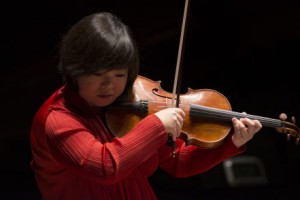
    Monday October 23rd, 2017 – In Carnegie Hall’s intimate Weill Hall, I attended an eclectic concert of American music performed by Ensemble Connect (formerly Ensemble ACJW). For those that do not know, Ensemble Connect is according to the Carnegie Hall website “a program of Carnegie Hall, The Juilliard School, and the Weill Music Institute in partnership with the New York City Department of Education.”  Each member is a two-year fellow who performs, teaches, and educates mainly (but not exclusively) in NYC. The Carnegie Hall and Paul Hall (at Juilliard) series of performances are always interesting, as the ensemble typically plays adventurous mixes of chamber music repertoire. 

    I was excited to see the program began with the wonderful clarinetist Yonnah Kim and the colorful pianist Lee Dione performing the Bernstein Sonata for Clarinet and Piano. While I had never heard the sonata before, I remembered Ms. Kim from her excellent performance last year in Golijov’s The Dreams and Prayers of Isaac the Blind. The sonata is divided into two movements, the first being having a relatively dissonant skittering melody reminiscent of Hindemith. The second is more in the mode of Bernstein’s popular style, with jazzy sections. I couldn’t help but wonder if Bernstein had been listening to the Rite of Spring when composing the piece, there are a few allusions throughout the sonata. 

    Ms. Kim captured the oscillating clarinet in the first movement part well with a clear, mysterious sound – managing to shade the lower register parts of the work with a dusty timbre. In the second movement, she added flair to the jazzy sections making them come to life. Mr. Lee managed to capture the mood well with subtle dynamic phrasing and finesse in the rhythmic sections. While I can’t say I was fond of the sonata musically, both players sounded as if they had playing together for years.

    After the sonata, Mr. Dione gave a short speech tying together the wide-ranging program; highlighting the need for distinct American voices to be heard. The second piece on the program was Missy Mazzoli’s Still Life with Avalanche, which is for flute (Rosie Gallagher), clarinet doubling as bass clarinet (Yoonah Kim), violin (Adelya Nartadjieva), viola (Andrew Gonzalez), cello (Madeline Fayette), piano (Lee Dione), percussion (Brandon Ilaw), and 3 harmonicas. The work begins with the harmonicas and strings creating an atmospheric drone that is then interrupted by the bass clarinet and piano. These interruptions build and become more frequent until the piece takes shape. It sounds like a mix of a few genres ranging from rock to contemporary classical. The players all gave a committed performance, embracing each different style of music and coordinating well. 

    The last piece on the brief first half of the program was Copland’s Sextet for clarinet (Yoonah Kim), violins (Rebecca Anderson and Adelya Nartadjieva), viola (Andrew Gonzalez), cello (Julia Yang), and piano (Mika Sasaki). The piece is a reduction of Copland’s Short Symphony, though I hadn’t heard either before. The writing is densely packed with complex rhythms, jazzy riffs, and lyrical melodies. It is an excellent piece, though there is almost too much to listen to in the first movement. Despite the difficulty of getting the timing correct on this piece, the ensemble seemed very together capturing the nervous trudging quality of the opening. Balance-wise, it was a pleasure to hear Ms. Yang’s resonant voice, she seemed to capture the bouncing character of the piece well. It keeps its momentum all the way until the first chords of the second movement. There is a dramatic shift to a quiet chorale-like second movement, which slowly builds in intensity. The strings did a good job of providing a resonant sound, contrasting the first movement well. The finale is a more calculated cacophony that really emphasizes jazzy rhythms and slides. Duets between Ms. Kim and the various strings provided a light and entertaining sound.

    The second half of the program was devoted to one of Steve Reich’s most important works: Different Trains. The piece is for a quartet and tape (sound engineer Benjamin Furiga assisting in this performance); the quartet consisting of Adelya Nartadjieva on first violin, Rebecca Anderson on second violin, Andrew Gonzalez on viola, and Madeline Fayette on cello. The tape has tracks of trains, the speech of holocaust survivors from interviews with Mr. Reich, and a taped quartet. The music and the speech imitate each other creating a hybrid between speech and music through the three movements of the piece. While certainly an important milestone in 20th century classical music and a well-crafted composition, I’ve never had an affinity for this piece. It seemed particularly strange to hear such an emotional work about the holocaust and the aftermath of World War II in Weill Hall’s intimate grandiloquent setting with gold trimming and a beautiful chandelier. 

    Nonetheless, the musicians executed the performance well, keeping their place despite the fact that there seemed to be technical issues with the spoken part of the tape (while audible some of the time, it seemed to cut in and out at times making it hard to follow). They all seemed invested in the music and it showed: many audience members around me were bobbing their heads to the hypnotic speech/rhythms. I appreciate that Ensemble Connect goes after diverse sets of repertoire that typically wouldn’t be programmed together, especially when the playing is as high caliber as it was this evening.

    ~ Scoresby

  • Bohemia in Bloom @ Chamber Music Society

    Clive Greensmith

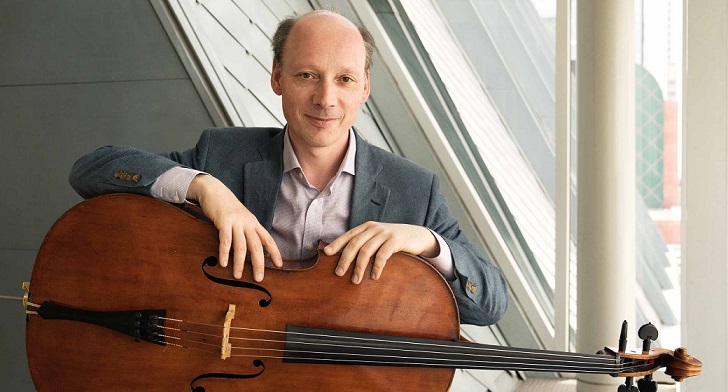
    Above: cellist Clive Greensmith

    Author: Oberon

    Sunday October 22nd, 2017 – This program offered by Chamber Music Society of Lincoln Center of works by three Czech composers got off to a dazzling start with music by Josef Suk, with whose music I’d had little previous connection. Suk’s Piano Quartet in A minor was his opus #1; he dedicated it to his teacher, Antonin Dvorák.

    Hearing this quartet tonight was an experience I would have described in the 1960s as “mind-blowing”. The Suk also provided us with an introduction to a remarkable cellist, Clive Greensmith. For fourteen years the cellist of the Tokyo String Quartet, Mr. Greensmith is now a chamber/symphonic soloist and a member of the Montrose Trio. As the applause for this evening’s opening Suk quartet commenced, my companion and I turned to one another and said, “The cellist!” We’ll be looking for any opportunity to hear him again.

    Composed in 1891, Josef Suk’s piano quartet simply brims over with glorious melody and rhythmic vitality. He writes beautifully for all four instruments, giving each voice ample opportunity to shine forth. Mr. Greensmith, in his first CMS appearance, found himself in the elite company of some of our favorite CMS personalities.

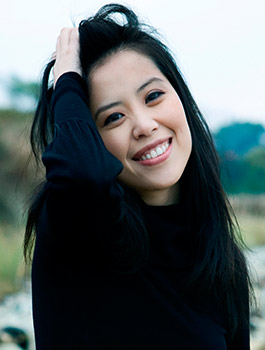
    Danbi

    Above: violinist Danbi Um

    From the very opening, with the strings playing a unison theme from which Danbi Um’s violin takes flight, we are drawn into this music. Gloria Chien at the Steinway brings the tempo down a bit and a flow of melodies commences which will carry us thru the first two movements, evoking spine-tingling sensations thru their heart-on-sleeve beauty. The passion of the music rises and falls, building to grand themes and then subsiding to provide solo opportunities for the players.

    7714943343e43b17749221426c024487-300x200

    Yura Lee (above), always so very welcome among the Society’s many peerless artists, gives her customary dusky glow to the viola passages, and Mr. Greensmith’s cello is thrilling in both its uncanny resonance and immaculate finesse. Playing together in their deeper range, our three string soloists produced a rich texture that gave the impression of a full string orchestra in play. A passage of soul-filling passion brings the first movement to an end.

    Gloria-chien

    Above: Gloria Chien

    Extraordinary softness of touch from Gloria Chien’s keyboard lures us into the central Adagio. Then Mr. Greensmith commenced a cello theme of incredible richness: heavenly playing. Ms. Um’s elegant violin sails sweet and high, and then Ms. Lee joins her string colleagues in an assault on the emotions: “These Players!” is all I wrote.

    But Suk, in this Adagio, has still more to offer us: for Mr. Greensmith’s cello again plunges to the depths. By this point I’m literally entranced. Briefly the music seems to sparkle from the piano and high violin, and then a splendidly rhapsodic feeling takes over. Where one might expect this music to finish with a final grand gesture, it instead goes into a long fade-away and vanishes into thin air.

    Ms. Chien is superb in the quartet’s closing Allegro con fuoco, which is at times scherzo-like in feeling. The pianist plays inventive bridges between solo passages for the three string players. An almost militant feeling develops, only to give way to more tender feelings – expressively played by our quartet – before reaching a joyous close. This performance of the Suk will be held high on my list of magical experiences at Chamber Music Society.

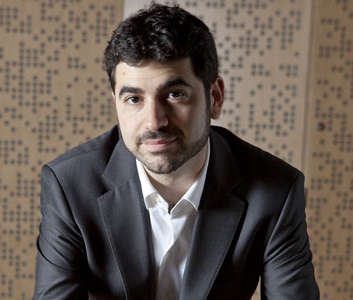
    Michael-Brown-piano

    Above: pianist Michael Brown

    Antonin Dvořák’s first piano quintet, opus 5, was originally performed at Prague in 1872. The composer was not pleased with the work and withdrew it. Fifteen years later, he re-worked the quintet but again was unhappy with it; and so it was that his opus 5 piano quintet was never performed during Dvořák’s lifetime. A manuscript of the 1887 revision was found following World War I and was performed by students at the Prague Conservatory on March 29th, 1922. The score was finally published until 1959.

    Much as I love Dvořák’s music in general, I must say that he was perhaps correct in thinking this particular work doesn’t show him at his best. It’s very attractive music, to be sure, and it goes without saying that it was played to perfection this evening. But somehow it reaches the heart only sporadically.

    Michael Brown at the Steinway opens the quintet, with Mr. Greensmith’s cello passage leading into an appealing violin melody played over a courtly string figure. The tempo slows, then rekindles itself; limpid piano phrases develop into a big tutti finale for the first movement.

    Mr. Brown’s playing was so clear and thoughtful in the sad and somewhat hesitant piano solo that begins the Andante sostenuto. Danbi Um offers an achingly lovely violin solo; the music gets dense and then Danbi and Clive Greensmith trade phrases…like silk and velvet respectively. Mr. Brown’s playing here is truly exquisite, and Ms. Lee took every opportunity to let her viola sound forth. Ms. Um’s violin makes a soft ascent to a quiet ending.

    The final movement begins agitato, with Mr. Brown running off a jaunty piano bit before all join in. The piano is in fact quite prominent throughout this Allegro con brio: from a quaint tune to an almost “toy” piano moment, Mr. Brown has it all superbly in hand. Thru numerous modulations, the music reaches an ebullient end.

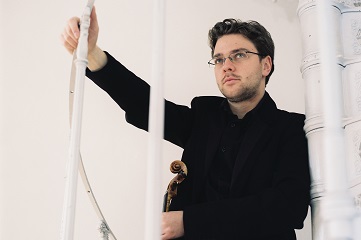
    As2

    Above: violinist Alexander Sitkovetsky

    Following the interval, Alexander Sitkovetsky took the lead in the Smetana G-minor Piano Trio, the opening passages of which provided a perfect showcase for the violinist’s passionate playing. Mr. Greensmith introduces a somewhat sunnier theme, and Mr. Sitkovetsky’s violin soars to the heights. Pulsing energy and a big sweep give way to another flight from the violin. Things get rather turbulent, calmed by Ms. Chien’s fluent piano solo. A grandiose buildup collapses into a swift end.

    The second movement starts out quiet yet lively, with a unison passage. A violin interlude, played lovingly by Mr. Sitkovetsky, is lyrical; then the music turns weightier, with a slow, almost trudging beat. A dancelike feeling emerges, and moves on to an unexpectedly sudden finish.

    The Presto finale opens in a state of near madness, quite a scrambling feeling. Ms. Chien’s piano has a sense of urgency, then she plays single notes in succession to mark a quietening. An affecting cello theme is taken up by the violin. Lovely melodies, over rippling piano figures, vanish in another burst of forward motion; then the tender cello theme is heard once again, with the piano blending, and a really fine, pensive solo bit from the Steinway. The strings sing out, only to give way to a dirge-like passage. But the music rebounds with vitality, Mr. Sitkovetsky’s violin rising in triumph. All seems about to end well, but Smetana briefly lets a cloud creep by before it’s dispelled by a brisk three-bar fortissimo.

    After joining in the standing ovation that greeted the players at the end, my friend Adi and I found ourselves discussing yet again how fulfilling these CMS concerts are, and how wonderful the music always sounds in Alice Tully’s house.

    The Repertory: 

    • Suk Quartet in A minor for Piano, Violin, Viola, and Cello, Op. 1 (1891)
    • Dvořák Quintet in A major for Piano, Two Violins, Viola, and Cello, Op. 5 (1872)
    • Smetana Trio in G minor for Piano, Violin, and Cello, Op. 15 (1855, rev. 1857)

    ~ Oberon

  • Tero Saarinen Company @ The Joyce

    TeroSaarinenCompany1

    Above: from Tero Saarinen’s Morphed; photo by Günther Gröger

    ~ Author: Oberon

    Friday October 20th, 2017 – Tero Saarinen Company, one of Europe’s premiere contemporary dance companies, presenting Morphed, an all-male work, at The Joyce.

    With a running time of just over one hour, Morphed is performed by seven dancers of varying ages and physiques on a truly fascinating set designed by Bessie-award winner Mikki Kunttu, who also supervised the excellent lighting. Finnish fashion designer Teemu Muurimäki’s black & white costumes ideally completed the visual setting. While the eye was constantly intrigued, the ear could revel in music drawn from three works by Finnish composer Esa-Pekka Salonen. Blending all these elements into a cohesive whole made for one of the most satisfying evenings of dance I’ve encountered in the past two decades.

    The sound of the French horn (my instrument!) commenced even as the lights went down immediately seizing the imagination, conjuring visions of both the dawn and of the hunt. This gorgeous music is Salonen’s Concert étude for solo horn (composed 2000). In a space surrounded on three sides by hanging ropes, the seven dancers – all in black hoods – simply walk and walk; sometimes their walking seems casual and free, at other times more regimented. The scene brightens and the dancers appear in silhouette.

    The hoods come off, and new music takes over – from Salonen’s Foreign Bodies (2001) – which has a kozmic energy.  The hanging ropes become part of the choreography as the men walk among them, gathering them, grasping them for support, sending them flying. Solo and duet passages unfold, observed (or ignored) by the men who are not dancing at the moment. One especially powerful pas de deux climaxes with one man dragging the other about by the shirt on his back.  

    Suddenly the music goes haywire and things get wild; the dancers rush about until calm is restored and the music becomes slow and other-worldly. Then, linking arms, the men begin to swirl like a turning wheel. The hanging ropes are activated, creating a mass effect of contrasted motions in the space: really impressive!

    Silence falls, and the agitato of Salonen’s violin concerto accompanies a lighting shift to blue. A solo is danced, which morphs into a trio. Bits of clothing start to come off. Then golden light settles in, and a stylized duet, with motifs reminiscent of Nijinsky’s Faune, is yet another compelling passage. The dancers, some of them now shirtless, continue to move, to strike poses, or to repose upon the floor as the curtain falls.

    I think the highest praise I can give to Saarinen’s Morphed is that, when it ended, I was ready to sit thru it again.

    ~ Oberon

  • Boston Trio @ Weill Hall

    Landing_image_mobi

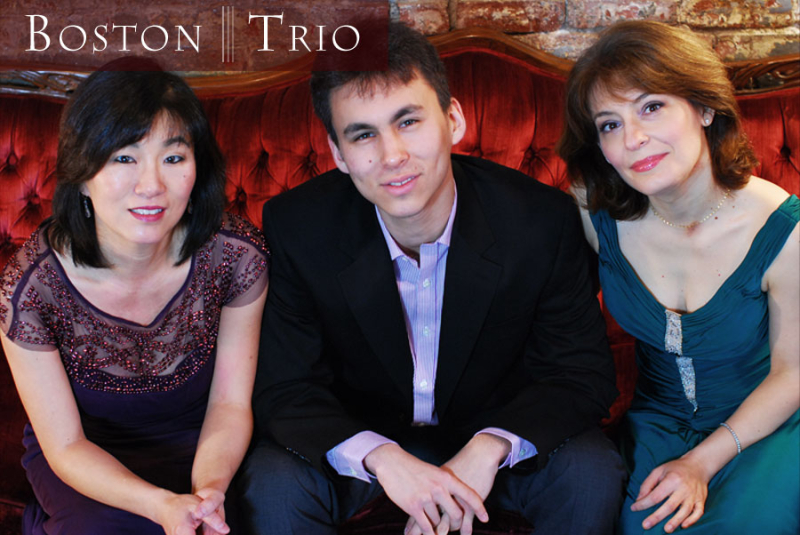
    Above: The Boston Trio: Heng-Jin Park, piano; Jonah Ellsworth, cello; Irina Muresanu, violin

    Author: Oberon

    Thursday September 28th, 2017 – Inaugurating my 2017-2018 Carnegie season with an ensemble new to me – the Boston Trio – in concert at Weill Hall. In terms of both programming and playing, the evening (aptly sub-titled Wheel of Colors) was a genuine pleasure; a large and very attentive audience made for a congenial atmosphere.

    The program was finely-constructed, with some ‘new’ music to begin, followed by an incredibly inventive arrangement of a symphonic classic, and concluding with a familiar and beloved Dvořák piano trio. We sat close, on the keyboard side, and were deeply immersed in the music. The pianist wore red, the violinist a lovely pale lemon-yellow frock, and the cellist an open-collar blue shirt; they were as pleasing to watch as to hear, and Ms. Muresanu’s elegant posture was an added delight.

    Jennifer Higdon: Piano Trio

    I. Pale Yellow

    II. Fiery Red

    I admit to being unfamiliar with Jennifer Higdon‘s music, though her name figures prominently among current composers. The two movements of Higdon’s Piano Trio seemed like miniature tone poems, and they were superbly played by the Boston Trio.

    In the first, Pale Yellow, the composer reveals a romantic bent: the music is lyrical, melodious, devoid of angularity. Yet while harkening back to a more gracious era, the piece seems utterly contemporary and fresh. It served as a perfect introduction to the three artists of the Boston Trio.

    Pale Yellow begins with a wistful passage for the piano; the cello comes in on a soft, sustained tone. The violin joins, entwining its voice with the cello in close, intriguing harmonies. The music flows lovingly: the cello sinks to the deep range as the violin sings high and sweet. Our three players develop a warm resonance of sound and then the music turns turbulent before rising…soaring. There’s a sort of coda, with the violin again lingering on high. A lovely, gradual resolution leaves the audience in a spellbound state.

    A complete volte face for the second movement: Fiery Red is aptly titled. It commences with violent energy, Ms. Muresanu slashing her bow across the strings. At the piano, Heng-Jin Park strikes up a dynamic dance, but suddenly things come to a halt. Then the strings begin to buzz as the piano gets a bit jazzy. This develops into a plodding piano figuration as violin and cello pluck away. An energy build-up sends the violin and cello high with a scratchy edge to their playing. From a piano heartbeat, the volume amps up and the music starts to sway heavily. Musical peaks and valleys eventually surge forward to the ending. 

    Great playing from all three musicians, and the audience really seemed to be soaking it all in. Now I need to hear more of Higdon’s music: it’s refreshing to find a contemporary composer who in unafraid of melody and sentiment on the one hand, and who can then can turn bristling and quirky moments later.

    After the briefest of pauses, the trio returned for the Debussy.  

    Debussy/arr. Beamish: La Mer

    I. De l’aube à midi sur la mer

    II. Jeux de vagues

    III. Dialogue du vent et de la mer

    The idea of hearing Debussy’s  La Mer arranged for piano trio was a key factor in my decision to attend this concert. Sally Beamish, London-born violist and composer, arranged the Debussy masterwork in 2013 for the Trio Apaches, a British ensemble. I can only marvel at what Ms. Beamish accomplished, and marvel further at the Boston Trio’s splendid playing of the piece.

    There’s no sense of miniaturization or of anything being ‘left out” in Ms. Beamish’s adaptation: the sound our trio produced tonight had a quite amazing orchestral quality, and Debussy’s reputation as a colorist didn’t suffer at all as they played with such depth both of tone and of feeling.

    Ms. Beamish hands much of the responsibility for the success of her setting to the pianist, and Heng-Jin Park seized on the opportunity, playing beautifully and conjuring the mood shifts of each of the three movements. 

    The pianist commences De l’aube à midi sur la mer quiet and low, and the tremelo strings join in, developing a sense of mystery. Dense textures evolve, with gently rocking waves evoked by the strings; later, piano and cello pulsate with a violin overlay. Taking on a symphonic quality, the three players bring out delicious colours. The violin shimmers, the cello sings deep, the piano is luminous: sustained, heartfelt, passionate playing from all.

    Rippling sensations from the keyboard open Jeux de vagues, with the strings in agitation. Heng-Jin Park gracefully executes the melismas that Debussy originally assigned to the harp – so atmospheric – and Ms. Muresanu’s trills are a further attraction. The music fades into a hazy mist.

    Low grumbling from Heng-Jin Park’s Steinway and a restless passage from Mr. Ellsworth’s cello set Dialogue du vent et de la mer on its way. The restless yearning of a downward-bending 2 note/4 note motif that recurs in this movement is a signature element of La Mer, and Ms. Beamish’s arrangement employs it intriguingly. The depth of sound the three musicians achieve is most gratifying, and contrasts magically with the calm stillness of the piano repeating the main motif. This theme is taken up by all three, with a build-up of ecstatic tension.

    Experiencing the Debussy in this intimate setting is something I’ll always remember; roses for Ms. Beamish to hail her accomplishment, and gratitude to the Boston Trio for bringing the work to us, and playing it so very well.

    Following the interval, Dvořák provided an ideal conclusion to the evening.   

    Dvořák: Piano Trio in F Minor, Op. 65

    I. Allegro, ma non troppo

    II. Allegretto grazioso

    III. Poco Adagio

    IV. Finale. Allegro con brio

    With the new music and the Debussy arrangement behind us, I simply let the familiar Dvorák play on, genuinely savoring the artistry of the three musicians and vastly enjoying their performance. My companion of the evening, choreographer Claudia Schreier, spoke afterwards of experiencing a deep connection both to this music and the Boston Trio’s performance of it.

    A full-house standing ovation followed the Dvorák; the musicians came out for a couple of bows, and, as it became evident the crowd wanted to hear more music, the trio graciously gave us the Presto from Haydn’s C-major trio. This music is sparkling, with a somewhat ironic quality, and with a darkish interlude. It showed off the three players superbly and brought the evening to a merry end.

    ~ Oberon

  • New Chamber Ballet: From Bach to Beat

    21122624_10155646992488571_4600347794179842337_o

    Above: Elizabeth Brown of New Chamber Ballet

    Friday September 22nd, 2017 – Kicking off their 2017-2018 season, Miro Magloire’s New Chamber Ballet offered an evening of five ballets choreographed by Miro to music by J S Bach, W A Mozart, Luciano Berio, Beat Furrer, and the choreographer himself. Pianist Melody Fader and violinist Doori Na performed these stylistically varied scores to perfection: their playing illuminated the evening in a very special way. Miro’s five ballerinas – Sarah Atkins, Elizabeth Brown, Kristine Butler, Traci Finch, and Amber Neff – rose to every challenge the choreographer handed them, from brisk allegro combinations to extremes of partnering.

    Miro has recently altered the seating configuration for his City Center Studio presentations: the audience now sit on all four borders of the performing space, with the piano in a permanent place at the far end of the hall. This worked exceptionally well. I chose a seat right next to the musicians which proved wonderfully congenial. 

    The revival of Lace provided a stunning showcase for violinist Doori Na: his playing of Luciano Berio’s Sequenza VIII was simply spine-tinglingly sensational. To revel in the exceptional clarity of Doori’s playing – the music’s fleet edginess, intensity, and wide dynamic range all captured to perfection – made for a perfect start to the evening. The choreography creates a sense of ritual as the three ballerinas – Sarah Atkins, Elizabeth Brown, and Traci Finch – seem to personify priestesses in the service of some ancient, long-forgotten goddess. Each dancer has solo passages while the other two sit or kneel, striking poses of reverence or ecstasy. The contrast between agitation and reverence creates an engrossing atmosphere.

    Pianist Melody Fader brought a hypnotic, quiet radiance to the music of Beat Furrer for Voicelessness, a duet inspired by a poem of Sylvia Plath’s and danced by Kristine Butler and Amber Neff. Melody’s control of the music’s piano/pianissimo gradations was so atmospheric. The two dancers moved with intense assurance thru some very demanding partnering sequences; in this and other recent ballets, Miro has created a new mode of same-sex partnering.

    The revival of 104 Fahrenheit, to Magloire’s own score, made me stop to think: have I seen any other  ballets choreographed by their composer before? I can’t think of any. The ballet begins languidly, with Melody Fader again setting the mood with her refined playing. Traci Finch has the first solo passage: a danced agitato with cunning pauses. Kristine Butler’s slower solo reflects the sense of stillness in the music. Skittering motifs from the piano signal Elizabeth Brown’s space-filling solo, a vividly-danced montage of athleticism and repose in which the dancer’s hands create their own visual poetry. Throughout, Melody Fader’s inspired playing gave wing to the exceptional dancing.

    The world premiere of a new duet to music from Johann Sebastian Bach’s Well-Tempered Clavier has a simple working title for now: Bach. Commissioned by longtime friends of New Chamber Ballet, Leslie and Richard Curtis, the duet is lovely as it stands; but Miro already has plans to enlarge on it.

    Wearing Sarah Thea’s frothy pastel frocks, Amber Neff and Kristine Butler drew inspiration from Melody Fader’s spot-on playing of the Bach prelude and fugue #14 in F-sharp minor. The two dancers move from joyous bounciness thru some stretchy give-and-take partnering, and lovely, ecstatic back-bends. It’ll be interesting to see how Miro develops this piece, and whether additional dancers might be included.   

    Amity is set to Mozart’s violin sonata in C Major K.296, and what a wonderful performance of that piece we heard this evening from Melody Fader and Doori Na. Sitting so close to these music-makers, I could really feel their resonance – Doori’s lower register had a nice contralto depth – while Melody’s choice of tempos seemed perfect.

    6a00d8341c4e3853ef01b8d28b748f970c-800wi

    Above: Amity dress rehearsal image by Nir Arieli.

    Wearing Sarah Thea’s gossamer-gold costumes, dancers Sarah Atkins, Kristine Butler, Traci Finch, and Amber Neff affirmed the sense of joy in dancing to Mozart’s music with airy grace. From time to time, Miro has them fall to the floor: an unexpected move that at first seemed accidental. These little touches occur frequently throughout Miro’s choreography, and they keep things fresh.

  • Upcoming: A New Season @ New Chamber Ballet

    L1880359

    Above: dancers Amber Neff and Kristine Butler of New Chamber Ballet

    Monday September 18th, 2017 – Today I stopped by at the Ballet Hispanico studios to visit some of my favorite people from the dance world: Miro Magloire and the ballerinas of his New Chamber Ballet. They are presently in rehearsal for the opening performances of their 2017-2018 season, which will take place on September 22nd and 23rd, 2017, at the City Center Studios. Tickets and more information about the performances here

    The all-Magloire program for the opening performances features a new ballet commissioned by Richard and Leslie Curtis to music by J S Bach. The other composers represented will be Luciano Berio, Beat Furrer, and Miro Magloire. The dancers are Sarah Atkins, Elizabeth Brown, Kristine Butler, Traci Finch, and Amber Neff. In keeping with New Chamber Ballet’s time-honoured tradition, all of the musical scores will be performed live by pianist Melody Fader and violinist Doori Na.

    The overcast sky and a recalcitrant camera kept me from getting any really good images today, but here are some of Amber and Kristine rehearsing the new Bach piece and Voicelessness, the Beat Furrer ballet:

    L1880230

    L1880237

    L1880350

    L1880431

    Kristine Butler is the newest member of New Chamber Ballet

    L1880432

    L1880437

    L1880464

    L1880477

    L1880505

    L1880525

  • John Osborn: A Tribute to Gilbert Duprez

    DE3532Cover-1024x1024

    Tenor John Osborn has released a new disc of operatic arias on the Delos label, and it’s a beauty. While three of the four composers represented are Italian, all of the selections are sung in French. The operas from which the arias are culled were all associated with Gilbert Duprez (1806-1896), who has always been credited with inventing the “do di petto” (the high-C from the chest).

    Mr. Osborn had an exciting success as Rodrigo di Dhu in Rossini’s LA DONNA DEL LAGO at The Met in 2015; his singing on the night I saw it really perked up a pleasing but rather staid evening. The new Delos album shows the tenor’s artistry to striking effect, and he receives admirable support from Maestro Constantine Orbelian, the Kaunas City Symphony, and – in Arnold’s great scène from GUILLAUME TELL – the Kaunas State Chorus.

    The disc begins with two arias from JERUSALEM, the adaptation of his 1843 opera I LOMBARDI that Verdi made for Paris in 1847. The first of these, “Je veux encore entendre ta voix“, is a lilting melody so familiar in its Italian setting (“La mia letizia infondere“). The opera’s hero Gaston, captured and imprisoned while on the Crusade, sings of his longing for his far-away beloved Hélène. The aria is a perfect introduction to Mr. Osborn’s singing, which is graceful, poetic, and full of affecting colors. Dynamic control is this tenor’s long suit, and his beautifully tapered phrases fall sublimely on the ear. Maestro Orbelian conspires with the singer to conjure up some lovely rubato effects, and the first Duprez-like foray to the top is really impressive. Mr. Osborn finishes off the aria with an easy ascent to a ringing high third before the final cadence. 

    The second JERUSALEM selection is less well-known: “Ô mes amis, mes frères d’armes“, in which Gaston, wrongly accused of murder, pleads with his comrades-in-arms to end his dishonored life. One again, Mr. Osborn shows a heartfelt mastery of mood, shading his singing with a sense of vulnerability. For all the drama of the situation, the tenor’s vocalism is wonderfully fragrant, most especially at the phrase “Je pleure, hélas, comme une femme…”

    The first of the disc’s four Donizetti arias is next: the poignant “Ange si pur” from LA FAVORITE. Fernand, on the eve of his marriage to his beloved Leonor, learns that she has been the mistress of the king. He seeks refuge in a monastery where he recalls his brief happiness and laments the shattering of his dream. Mr. Osborn’s rendering of this aria ranks with the best I have heard: imbuing his singing with such sweet sadness, the tenor astonishes with his ascent to the aria’s treacherous high-C. A remarkable cadenza and the singer’s spectacular mastery of the dynamic spectrum left me in a state of awe.

    LES MARTYRS was Donizetti’s French treatment of his opera POLIUTO, a story of Christian martyrdom which met with censorship just before its Italian premiere in 1838. Withdrawing from the fray, the composer moved to Paris and revised the opera specifically for Gilbert Duprez. In the aria “Oui, j’irai dans leur temple“, the Christian leader Polyeucte vows to go to the Roman temple to fulfill a vow of faith, despite the promise of martyrdom. The aria is a statement of resolve and a call to action; with God’s protection, Polyeucte will cast down the Roman idols. Mr. Osborn delivers it magnificently, reveling in the Duprez-inspired high notes and ending in thrilling fashion.

    Inexplicably, I have never listened to Hector Berlioz’s epic BENVENUTO CELLINI all the way thru; this makes no sense, as the composer’s TROYENS, BEATRICE ET BENEDICT, La Captive, and the magical Les nuits d’été are among my all-time favorite works. In the two CELLINI arias which John Osborn includes on his disc are so cordially sung that my curiosity to hear the full opera is now piqued (though finding the time will be another matter…) 

    La gloire était ma seule idole” finds the sculptor Benvenuto Cellini anticipating the arrival of his beautiful mistress Teresa. This expressive aria begins over a delicate accompaniment but soon blooms into a paean to the artist’s beloved. John Osborn brings a delicious feeling of tenderness to his singing here. The second verse is more extroverted, and ends with a prayer that heaven may protect Teresa, and protect their love. Here Mr. Osborn does some of his most affecting singing in an already-affecting program.

    The second CELLINI aria, “Sur les monts, les plus sauvages” is this disc’s ‘secret treasure’. It begins with a very Berliozian introduction leading to a pensive recitative in which we can again savour John Osborn’s gift for colour and verbal acuity. As the drama builds, Cellini rails against his destiny as an artist. When the aria proper begins, the sculptor longs for the life of a simple shepherd; herein, Mr. Osborn treats us to  beautifully sustained and reflective singing with a deliciously plaintive quality. The music becomes slightly more restless, and I am put in mind of Hylas’s lovely aria of longing for his homeland: “Vallon sonore” from LES TROYENS. In the second verse of Cellini’s aria, Mr. Osborn’s vocal control is so impressive, and the music’s rising passion brings us some superbly sustained notes and the singer’s congenial flexing of his dynamic muscles. The aria’s conclusion is superbly rendered.

    From Donizetti’s LUCIE DI LAMMERMOOR, we have Edgard’s great final aria of lament for his ill-fated love for Lucie; here given in the “Duprez/French” setting as “Bientôt l’herbe des champs croîtra“, the desolate young man awaits a duel with Lucie’s brother among the graves of his forefathers. 

    Though it may seem like an over-abundance of praise, I must again remark on Mr. Osborn’s fascinating account of this very familiar scene, for he begins the opening recitative “Tombs of my ancestors…” in an incredibly hushed piano, and his sense of exquisite grief is palpable; his despair over his thwarted love draws us in deeply. A plangent swelling of the tone marks at the recitative conclusion marks Edgard’s hapless expression of longing for death.

    The aria proper is awash with heartbreak, the tenor’s phrasing so persuasive, ravishing in its eloquence. The concluding cadenza is nothing less than fabulously passionate, yet Mr. Osborn then sinks the voice to a sustained delicacy before a final expression of hopelessness. Masterful!

    In Donizetti’s DOM SEBASTIEN, the title character is the king of Portugal. Following a devastating battle against the Moors, he stands alone on the battlefield, surrounded by the dead of both armies, and longs for the consoling sight of his beloved. With its atmospheric harp introduction, the aria is unusually lovely for it’s sad setting. Mr. Osborn’s phrasing is elegiac, and his meshing of the top note into the fabric of the melody is so skillfully handled. The cadenza here again left me in a state of true admiration for the singer.

    The program concludes with the GUILLAUME TELL scene in which Arnold summons his courage – and that of his Swiss countrymen – to throw off the yoke of the cruel Austrian governor Gessler. Constantine Orbelian and his players set the scene in the melancholy introduction, and Mr. Osborn commences the recitative’s “Do not abandon me, hope of revenge” with sublime softness. 

    A GISELLE-like motif sets the aria proper – Asile héréditaire – on its way, with John Osborn’s easy ascents to the high range impressively handled. The melody expands in breadth before a gentle reprise; the tenor’s tender coloration of the phrase “…pour le derniere fois…” is yet another moment to savour. Then comes the fiery cabaletta, “Amis! Amis, secondez ma vengeance!“, an irresistible call to arms which Mr. Osborn ends on a triumphantly sustained high-C.

    To say that this new Delos offering pleased me greatly would be an under-statement. Perhaps the highest praise I can give is to say that the disc joins my long-time favorite tenor collections – Carlo Bergonzi’s first Decca album and Luciano Pavarotti’s all-Donizetti program – to form a triumvirate of tenor trophies which I will turn to often.        

    ~~~~~~~~~~~~~~~~~~~~~~~~~~~~~~~~~~~~~~~~~~~~~~~~~~~~~~~~~~~~~~~~~~~~~~~~~~~~~~~~~~~~~~~~~~~~~

    GilbertDuprez

    Gilbert Duprez (above), the tenor who inspired the new Delos disc, was born in Paris in 1806, studied there, and made his operatic debut at the Odéon in 1825. When his career failed to develop, he sought greener pastures in Italy and was most successful there in Bellini’s IL PIRATA. In 1831, at Lucca, Duprez sang Arnold in the Italian-language premiere of Rossini’s GUGLIELMO TELL and stunned the audience by introducing a high-C from the chest (as opposed to the falsetto approach to top notes which was then the custom). Thenceforth, the tenor’s Italian career burgeoned, including the premiere of Donizetti’s LUCIA DI LAMMERMOOR in 1835.

    Duprez returned in triumph to Paris in 1837 and became a great favorite of Parisian audiences. But by 1844, his voice was beginning to decline, and by 1851 he had stopped singing. It was thought that, despite his revolutionizing of a new sound to high notes, his overall technique was insufficiently grounded.

    He lived on to the grand old age of 90.

  • Table of Silence ~ 2017

    L1870606

    Above: vocal soloist Courtney Cook

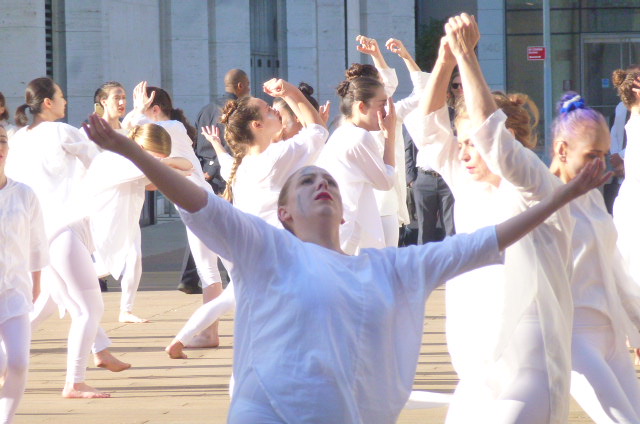
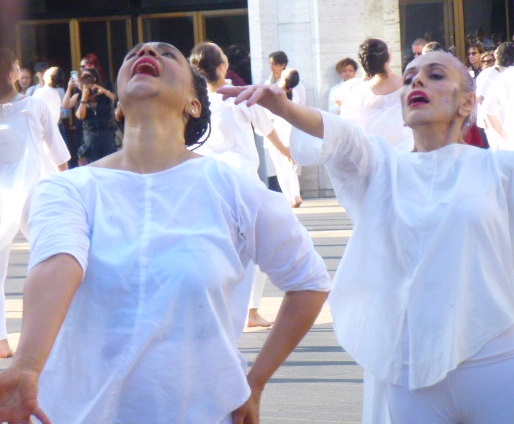
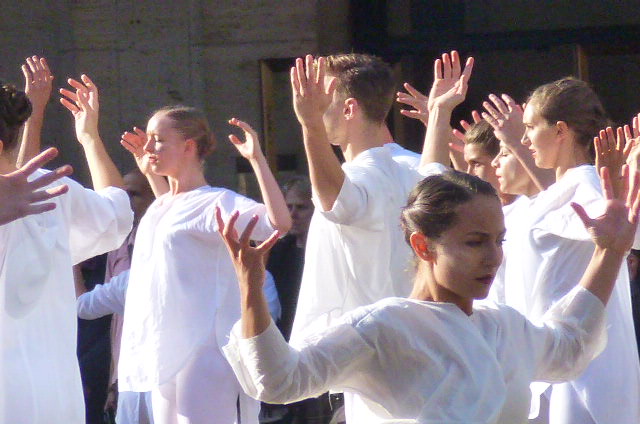
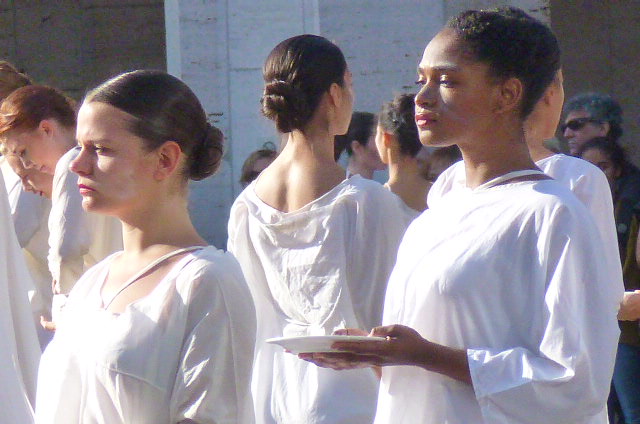
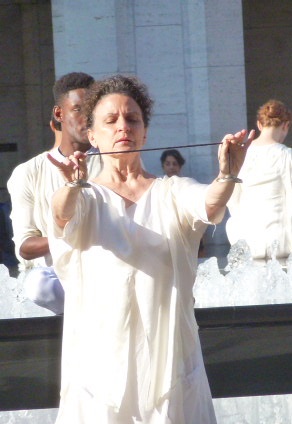
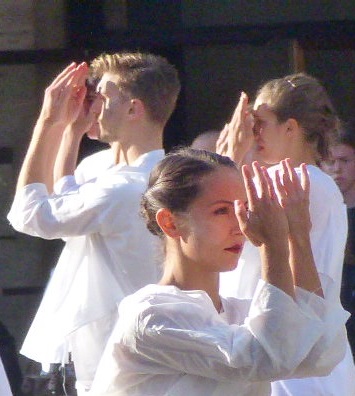
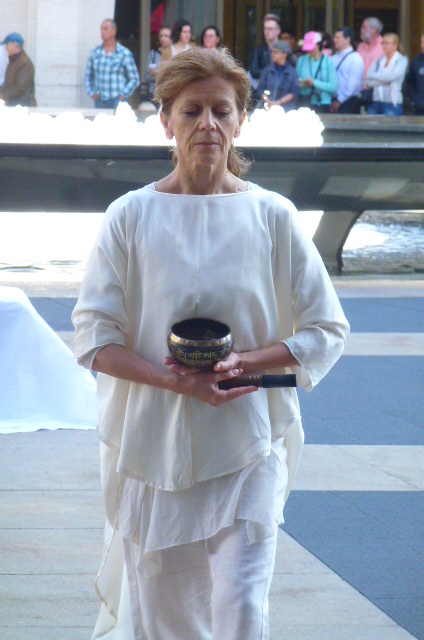
    Monday September 11th, 2017 – The seventh annual performance of Jacqulyn Buglisi’s ritual of hope and peace, Table of Silence, was given on the Plaza at Lincoln Center this morning. Commemorating the 9/11 terrorist attacks, this astonishing work gathers together more than one hundred dancers and an ensemble of singers, flautists, and percussion players who perform an ethereal score conceived by Andrea Ceccomori (flutes) and Libby Larsen (vocals). 

    This year, Table of Silence seemed more moving and more necessary than ever. A pall of darkness hangs over our daily lives as self-serving and often incoherent world leaders, deranged perpetrators of senseless violence, and a succession of natural catastrophes fill the headlines with presages of doom. Thus, we turn ever more fervently to music, dance, poetry, and art, both for solace and to inspire a hope that our common humanity may prevail.

    Here are some images from this morning’s uplifting and thought-provoking performance of Table of Silence

    L1870609

    Percussionists at the ready

    L1870622

    L1870626

    L1870644

    L1870704

    L1870709

    L1870728

    L1870749

    L1870753

    L1870755

    L1870766

    L1870783

    Dance Theatre of Harlem‘s Da’Von Doane on the right

    L1870793

    Graham priestess Virginie Mécène summons the faithful

    L1870802

    L1870807

    L1870819

    Vocalists Lydia Graham and Carla Lopez-Speziale

    L1870830

    Lloyd Knight of the Martha Graham Dance Company

    L1870845

    Courtney Cook

    L1870860

    Graham diva and Associate Founder of Buglisi Dance Theatre: Terese Cappuccilli

    L1870754

    L1870942

    Virginie Mécène signals the end of the rites

    L1870949

    Virginie Mécène

    More photos on Facebook: here.

    “The 9/11 Table of Silence Project represents the common threads of humanity which unite all mankind into a single force with common goals and aspirations regardless of race, culture, or religion. Through this ritual, we celebrate compassion, and honor the bravery of all those affected by acts of war and suppression of freedom…a call for Peace in our world.” ~ Jacqulyn Buglisi