Category: Dance

  • Jennifer Muller’s Stages of Creation

    L1640936

    Striking a pose: the new Warhol piece by Jennifer Muller at a studio preview

    Tuesday November 17th, 2015 – Choreographer Jennifer Muller has been commissioned to create a new dancework for Introdans, the Netherlands-based contemporary dance company. The piece will premiere in February, 2016 on a program entitled Absolutely Amerika. This evening, at her studio on West 24th Street, Ms. Muller presented a sampling of this latest work, along with excerpts from some of the more recent additions to her Company’s repertoire.

    The room was packed with Muller friends and fans, and her lively and distinctive troupe of dancers seemed to ignore the fact that this was a studio showing, instead dancing at performance level. The dance-space is limited but the choreography is spacious and often fast-paced; yet the dancers moved with abandon, often coming within centimeters of the viewers – or of the ceiling, during the many lifts that the Muller repertory calls for.

    L1640814

    Two excerpts from FLOWERS were offered before dancer Michael Tomlinson (above, warming up) demonstrated a signature motif from the new work, which is inspired by quotes from the late Andy Warhol and is danced to a collage of music associated with the Warhol era.

    L1640965

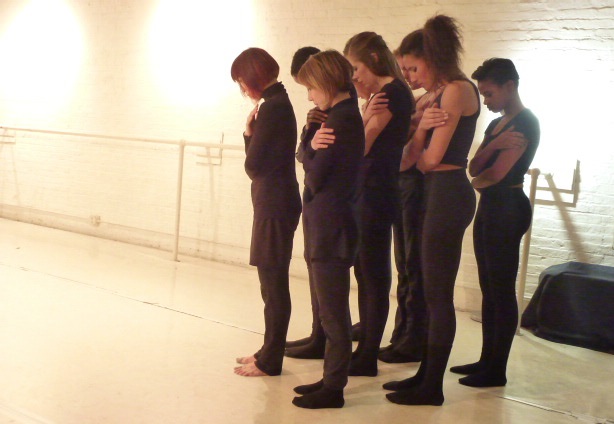
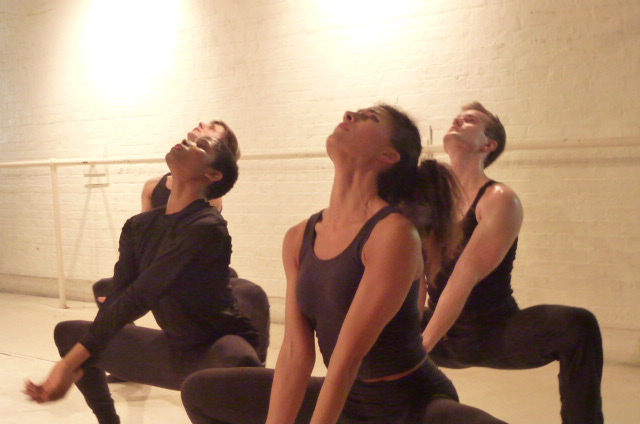
    Above: the opening of MISERERE NOBIS

    I was particularly glad of another opportunity to see some passages from Jennifer’s 2014 masterpiece, MISERERE NOBIS, a compelling piece that has lingered in my mind since first encountering it. Originally danced by an all-female cast, Jennifer has now incorporated the Company’s men into this ritualistic work which is danced to Samuel Barber’s Adagio for Strings, which was inspired by Allegri’s immortal Miserere. The choreographer’s addition of men to the cast changed the flavor of the work slightly but didn’t diminish its power and beauty in the least.

    The evening closed with excerpts from ALCHEMY, an exciting multi-media piece which Ms. Muller premiered at New York Live Arts earlier this year. 

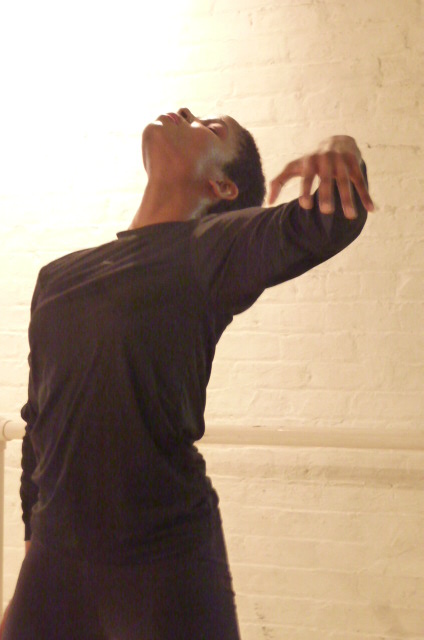
    The dancers were moving too fast most of the time for my camera to catch them, however here are a few images I was able to capture:

    L1640837

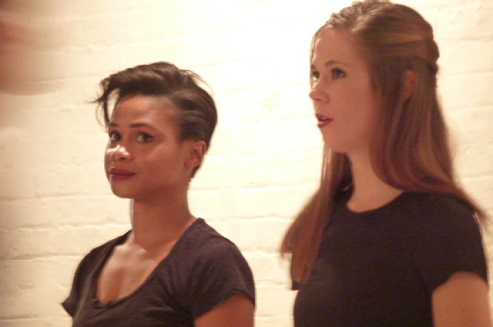
    Brittney Bembry, Michelle Tara Lynch

    L1640900

    Brittney Bembry

    L1640950

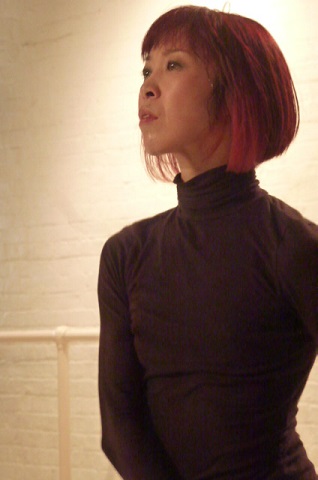
    Shiho Tanaka

    L1640970

    From MISERERE NOBIS

    L1640977
    Seiko Fujita

    L1640985

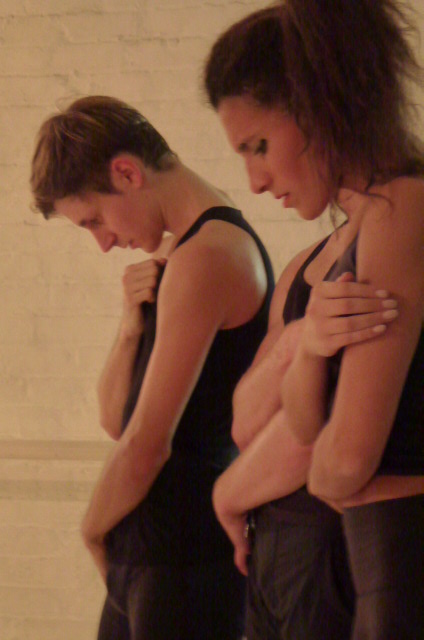
    Alexandre Balmain, Elise King

    L1650025

    Sonja Chung

    L1640989

    MISERERE NOBIS

    L1640915

    Jennifer Muller, ever the perfect hostess

    Jennifer Muller/The Works will be at New York Live Arts June 13th – 18th, 2016.

  • Golden Age of the Violin @ CMS

    Violin

    Following the senseless horror of the terrorist attacks in Paris this past Friday, we turn yet again to music as a source of consolation. These words from Leonard Bernstein have echoed thru my mind over this weekend since the appalling news from France reached us: “This will be our reply to violence: to make music more intensely, more beautifully, more devotedly than ever before.”

    Sunday November 15, 2015 – A trio of superb young violinists were featured at this evening’s concert given by at Chamber Music Society of Lincoln Center at Alice Tully Hall. Paul Neubauer and David Finckel – masters of the viola and cello respectively – joined their young colleagues in celebrating the expressive violin style epitomized by the legendary Fritz Kreisler.

    Kreisler was in fact the first violinist I ever heard; my parents had some of his recordings and by the age or eight or nine I was already preferring these – and Horowitz, Flagstad, and Toscanini – to my mom’s favorites: Lawrence Welk and the McGuire Sisters.

    The first music we heard this evening was also oldest music on the programme: a sonata for two violins by Jean-Marie Leclair. Leclair may be the only violinist/composer in history to have had a highly successful career as a ballet dancer prior to turning to composing full-time around 1723. Today’s sonata dates from 1730 and was played with lively charm by Danbi Um and Sean Lee. Passing the melodies back and forth, the duo were well-matched, nuance for nuance. The tender sadness of the sonata’s Andante graziosa maintained a forward momentum, and then our two violinists sailed confidently thru the swirls of notes than make up the concluding Presto.

    Mr. Lee returned to the stage immediately with Benjamin Beilman and Paul Neubauer for Anton Dvorak’s C-major terzetto, composed in 1887. It opens with a tranquil theme, becomes more animated, then gently shifts between moods. After a passage of hesitations, as if unsure where to go next, the composer gives us a warm lullabye-like melody with a genial ending. A feeling of propulsive dance – and a touch of Mendelssohnian sparkle – fills the Scherzo; a central song with the flavour of a country waltz is most attractive, followed by a da capo which sweeps forward in alternating currents of lyrical breadth and teasing delicacy. In the final movement, Mr. Neubauer’s viola had a shivering motif, followed by an impassioned theme from Mr. Beilman; then there’s a brisk rush to the finish. 

    David Finckel’s name in my Playbill is now triple-underlined and festooned with exclamations marks for his marvelous playing in the Alexander Borodin 1881 D-major quartet. The cello sets the pace for the opening Allegro moderato and is given some heartfelt melodies in the later movements; these were relished by Mr. Finckel whose tone has an intimate, romantic glow.

    A Spring-like feeling pervades the opening of the Scherzo: Allegro, and then a familiar tune is heard: my mother would have recognized it as the melody of the 1950s pop song Baubles, Bangles & Beads(from the musical KISMET) which was recorded – seemingly – by everyone, including Marlene Dietrich and Frank Sinatra. For all the tune’s appeal, it still sounds best in its original Borodin setting. The second movement then rushes ahead, only to withdraw to a pizzicato fadeout at the end.

    Borodin sets the third movement as a Nocturne and Mr. Finckel sets the mood to perfection. Danbi Um, in the first violin chair, then takes up a sweet, high theme. Mssrs. Lee and Neubauer make the middle voices sing, the latter in a lovely melodic exchange with Mr. Finckel’s cello (“Gorgeous blends!” I scrawled in my Playbill.) Ms. Um takes up a shining theme, passing it to Mr. Finckel who descends with it into the cello’s depths. This Nocturne, with all four players deeply immersed in the music, made a particularly satisfying impression. In the concluding movement, the quartet summarized the work in recurrent themes, playing with such conviction that the audience were swept along and responded with especially warm applause, summoning the musicians out for a second bow. 

    After the interval, Ben Beilman stood alone on the stage and delivered a stunning performance of Eugene Ysaÿe’s E-minor sonata (1924). The work is a virtuosic test piece for which Mr. Beilman gets top marks. This young artist displays thorough technical assurance as well as a masterful control of dynamics. He took the strenuous demands Ysaÿe places on the player in stride, and an appealing aspect of modesty in his delivery endeared him to the crowd. This is a serious musician with something to say to us. The applause that enveloped Mr. Beilman at the end of his dazzling performance was amply deserved, bringing him out for a double curtain call. 

    No one could blame Fritz Kreisler for featuring the violin in his A-minor quartet: it was, after all, his instrument. Mr. Beilman, fresh from the demands of the Ysaÿe, was at his most lyrically persuasive here, regaling us with the melodic treats Kreisler has laid out for him. Danbi Um seconded Ben’s beautiful playing with many graceful turns of phrase, while Mssrs. Neubauer and Finckel brought Olde World warmth and expressiveness to their playing.

    Though rife with melodic felicities, including a waltz tune “mit schlag” and a gorgeously-sustained Ben Beilman high fade-away at the conclusion of the Romanze, the Kreisler quartet is one of those perfectly pleasant works that falls short of being truly memorable. But I can’t imagine it being better-played than it was this evening.

    In her welcoming remarks tonight, Chamber Music Society co-artistic director Wu Han had spoken of the distress we have all been feeling after the horrible events in Paris. She said that from Friday night til Sunday morning she had been so consumed with sadness that she couldn’t play the piano, but that at last she sat down to practice and found solace at the keyboard. She promised us that the evening’s programme would be uplifting, and she was right. 

    The Repertory:

     The Participating Artists:

  • Prevailing Winds @ Chamber Music Society

    Romie

    Above: clarinetist Romie de Guise-Langlois 

    Sunday October 25th, 2015 – Kudos, yet again, to the folks at Chamber Music Society of Lincoln Center for putting together this imaginative program for which some of the outstanding wind players of the day gathered together to form a first-rate ensemble. The genial pianist Jean-Efflam Bavouzet brought his own magic to three of the four works presented.

    During the week leading up to this concert, some wonderful news came from the Society – I am sharing this directly from their press release: “Chamber Music Society of Lincoln Center has announced a $4 million unrestricted gift, the largest in its history, from long-time patron and devoted chamber music lover Jane Kitselman, who passed away on March 18, 2015, at the age of 87.  The formal announcement was made at a reception following the October 20th Chamber Music Society concert at Alice Tully Hall, which was performed in her memory.  Ms. Kitselman, a cellist, was especially fond of string quartet literature, and CMS is dedicating its forthcoming performances of the Beethoven String Quartet Cycle to her.  In addition, there will be an annual concert dedicated to Jane Kitselman, to be performed in perpetuity.”

    I couldn’t help but feel that this news, which people around us were discussing prior to the start of this evening’s concert, set the atmosphere in Tully Hall at an even higher degree of anticipation that usual.

    Ligeti’s Six Bagatelles, as performed this evening, are transcriptions by the composer from twelve piano bagatelles; these pieces are very short, lasting two to three minutes each. In the first bagatelle, Allegro con spirito, a playful, percolating rhythm charmingly peters out. The second bagatelle commences with a sad chorale which evolves with a variety textures and harmonies and ends on an ironic “beep”. In the third, Allegro grazioso, the flute sings over bubbling clarinet and bassoon and there’s a gorgeous horn passage. Bagatelle number four is an exuberant Presto ruvidi, vividly dance-like. The following Adagio, dedicated to the memory of Bela Bartok, begins as a somber dirge but is then enlivened when the flute speaks up; a repeated two note theme underlines an exchange of trills between flute and clarinet, and the piece ends on a benedictive chord. The last bagatelle, marked Allegro vivace, has a quirky start and then pulses along as the horn goes high and the piccolo pipes up. Things turn rather frenetic but in the end, a muted horn solo provides an unexpected finish. In these six Ligeti gems, we have met our five wind soloists and they have displayed their outstanding gifts of technique and artistry; they were called back for a bow.

    The least-known composer on the program today was surely Albéric Magnard; his life story ended tragically in 1914 when he stood his ground against the invading Germans and perished when they set fire to his house in Baron, France.

    In a program note, pianist Jean-Efflam Bavouzet spoke lovingly of the evening’s Magnard work: “I hope you will leave the concert with lasting memories of having discovered the captivating music of a hitherto lesser-known composer.” My hope, having heard this revelatory quintet, is that the Society will pursue and present other works from the Magnard catalog, which is sadly limited – by his tragic death – to only thirty compositions.

    Bavouzet

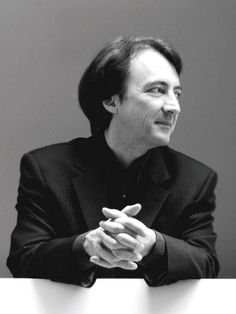
    Above: Jean-Efflam Bavouzet

    Knowing nought of Magnard’s music, I was thoroughly captivated this evening by his D-minor quintet for which the terrific pianist Jean-Efflam Bavouzet joined Mlles. O’Connor and de Guise-Langlois, Stephen Taylor, and Peter Kolkay. The music is intrinsically “French”, loaded with marvelous melodies, and Mr. Bavouzet proved the ideal maître of the keyboard to lead us on this magical journey.

    After an opening piano solo, the wind instruments trade themes over a rippling keyboard motif. Individual voices tantalize, such as in a plaintive passage for Mr. Taylor’s oboe and some delicious trills from Ms. O’Connor’s flute. An unexpected fugue is an intriguing highlight.

    In the ensuing slow movement, marked Tendre, Romie de Guise-Langlois stole my heart yet again with her deeply expressive playing of a poignant melody entwined in M. Bavouzet’s poetic piano sounds. This theme becomes passionate and then pensive; I found myself with tears running down my face from the sheer beauty of Romie’s playing. M. Bavouzet draws us on, though, with a solo passage which continues to ripple under a serene chorale from the winds. 

    Ms. O’Connor’s flute takes on a waltz-like air as she opens the third movement in tandem with M. Bavouzet; the pianist has another vivacious solo before the wind voices enter, evoking Springtime cheer. Mr. Taylor’s oboe seized upon an oddly Mid-Eastern-sounding theme, playing with great control. 

    By now I was thoroughly engrossed in this Magnard work, only to discover fresh vistas in the final movement, charmingly marked Joyeux. A jaunty oboe solo leads off, the other voices passing the idea around. Peter Kolkay’s amiable sustaining of single tones had an ironic quality, and Ms. O’Connor’s flute wafts over us. A mini-fugue is a fleeting delight, and a two-note theme somehow develops into a march. In a mellowing out, Mr. Kolkay’s bassoon glows in a superb passage with M. Bavouzet. The pianist then takes a dynamic lead thru a few small detours before all join in a final tutti melody. 

    Have I rambled on too long, sometimes shifting from past to present tense? It’s because, in remembering, I am still there. Does that make any sense? 

    Following the interval, the only work on the program somewhat familiar to me: the Rimsky-Korsakov B-flat major quintet. This piece was composed in 1876 for a chamber music competition held by the Russian Music Society, but its premiere was spoilt by some indifferent playing. Fortunately, the piece survived this fiasco, for it is – like the Magnard – a thorough delight.

    Following a speedy start, the bassoon draws us in. All the wind voices have their say, including a lovely dialogue between flute and bassoon. There’s a rush to the finish, and then the astoundingly plush sound of Radovan Vlatković’s horn intones a serene theme over M. Bavouzet’s piano.

    (I must pause here to say, as a frustrated high-school horn player, that Mr. Vlatković’s tone quality has the ideal Autumnal richness that always eluded me; his gorgeous playing here – all evening, in fact – made me envious. I even scrawled “I am jealous!” next to his name in my playbill.)

    But – moving on with the Rimsky-Korsakov – clarinet and flute trade dreamy phrases before the piano introduces a new theme, echoed by the ensemble. And then Mr.Vlatković chimed in again – spectacular sound – before the bassoon and clarinet meshed voices leading to a mellow end.

    The final Rondo: allegretto starts with a joy-filled skipping rhythm; there is bassoon irony as the voices swirl about before returning to the theme. Romie de Guise-Langlois brought forth a redolent, deeply ‘Russian’ theme which was passed to the horn. A sparkling flute cadenza and another clarinet passage carry the players to a final sprint. 

    Poulenc’s Sextet for Piano and Winds is a different kind of treasure: including elements of jazz, ragtime, pop songs of the interbellum era, high wit, and gentle sarcasm, there are also stretches of pure lyricism (a bassoon theme, for one) along the way. The players had a grand time of it, and the final Prestissimo felt like a transfusion, an antidote to the world-weariness that’s been creeping up on me of late. Great music, played as it was tonight, does one a world of good.  

    The Repertory:

    The Participating Artists:
  • Bychkov-Batiashvili-Capuçon @ The NY Phil

    Bychkov-semyon-batiashvili-lisa-capucon-

    Thursday October 22nd, 2015 – A Brahms-centric program at The New York Philharmonic this evening, with two of the Master’s most beloved works and an impressive contemporary work inspired by his music.

    Detlev Glanert’s Brahms-Fantasie is one of the most appealing pieces of ‘new’ music I have experienced in the current century. So much ‘classical’ music being written today is expertly crafted and impressive in a cerebral way, but little of it reaches the heart or soul. In this 12-minute, overtly Brahmsian homage, Mr. Detlev eschews the current trend for over-reliance on percussion for achieving effects, and he is unafraid of melody.

    After a dynamic opening statement, the music simmers down to a misterioso passage followed by a delicate section of single notes, quietly played. A dolorous theme develops, with a slow buildup to an episode of rhythmic grandeur. Following some rather gnarly phrases, a minor-key dance eventually gives way to a big turmoil of voices before settling back into simmering mystery. Near the end, a brass chorale takes on a gloomy aspect. Glanert shows his skill at creating varying moods, and the Philharmonic players made the most of the melodic opportunities afforded them, with Maestro Bychkov in sure and steady command.

    Next up was the Brahms “Double” concerto. “I have had the amusing idea of writing a concerto for violin and cello …If it is at all successful, it might give us some fun,” wrote Johannes Brahms to Clara Schumann in the summer of 1887.

    The two soloists – particular favorites of mine: violinist Lisa Batiashvili and cellist Gautier Capuçon – were warmly welcomed when they appeared onstage. As these two artists are as attractive to the eye as to the ear, we were in for a thoroughly absorbing experience. Mr. Capuçon’s soulful playing blends ideally with the silken style of Ms. Batiashvili, and as theme after theme was summoned up by these remarkable players – their voices echoing or entwining – the audience was drawn deeply into the music.

    The central andante was especially congenial this evening, with its beautiful opening melody which is played by the soloists and the strings, enhanced by the orchestra’s solo flute, bassoon, and clarinet. In the concluding movement, Batiashvili and Capuçon were at their most alluring as they introduced the familiar mellifluous second theme. The concerto then sailed on to its inspired finale; the audience erupted in hearty applause the moment the final note had sounded, and an enthusiastic ovation called the soloists and Maestro back twice. 

    Following the interval, we had the Brahms 1st symphony. The composer declared that this symphony, from sketches to finishing touches, took 21 years – from 1855 to 1876 – to complete.

    Here we could bask in Maestro Bychkov’s ideal pacing and his obvious affection for the music; he is a conductor who favors depth over theatricality. And so for 40 minutes we were immersed in this symphony with its wealth of themes and its somewhat Beethovian air. The inner movements were particularly impressive today: the wistful Andante sostenuto with its lovely duet for solo violin and horn, and the charming Allegretto. In the finale (and all evening, actually), Philip Myers and the Philharmonic horns produced wonderfully plush, resonant sound. And it is here that Brahms makes his most obvious salute to Beethoven with a majestic theme, first heard in the strings, that evokes the “Ode to Joy” from Beethoven’s 9th.

    Tonight’s Program:

    DETLEV GLANERT: Brahms-Fantasie
    BRAHMS: Concerto for Violin and Cello A minor op. 102 (Double Concerto)
    BRAHMS: Symphony No. 1 in C minor, Op.68

  • BSO: ELEKTRA @ Carnegie Hall

    Andris-Nelsons-Conductor-007

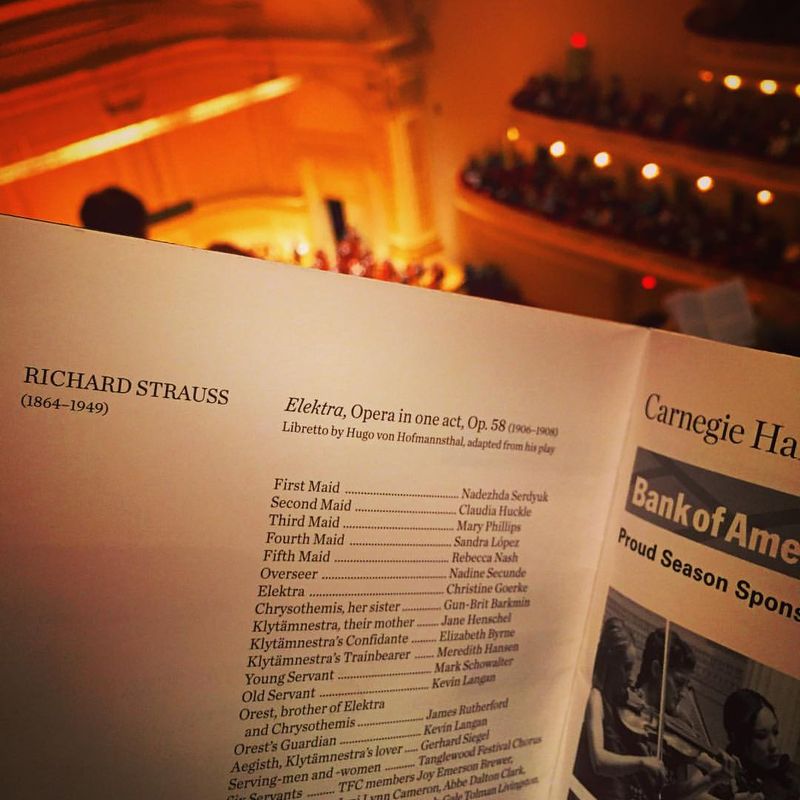
    Wednesday October 21st, 2015 – Conductor Andris Nelsons (above) leading a powerful concert performance of Richard Strauss’s ELEKTRA given by the Boston Symphony Orchestra at Carnegie Hall. The evening was a great personal triumph for soprano Christine Goerke, who gave a vocally and physically super-charged rendering of one of opera’s most demanding roles.

    Strauss calls for a massive orchestra for this, his most demented work; the Boston players were sprawled across the entire space of the Carnegie stage, with the chorus at the end singing from an upper tier of the hall. The musicians played their hearts out and, under Nelsons’ authoritative baton, they delivered the music with tremendous flair in all its glistening glory. There were also superbly refined stretches, notably in the Klytaemnestra scene where the maestro and musicians painted a neurotic sound setting for an amazingly nuanced performance of the role by Jane Henschel.

    The large cast included some names to reckon with in the smaller roles: Nadine Secunde (Overseer), Elizabeth Byrne (Confidante), the Met’s Mark Schowalter (Young Servant) and stalwart basso Kevin Langan (Old Servant/Orestes’ Guardian).

    In the opening scene, the psychopathic maids were a raucous lot; as they carried on their vile gossip session about Elektra – the royal princess reduced to the status of a caged animal in her own home – Ms. Goerke, in a striking blood-red gown, strode among the violins in a state of fevered anxiousness. At last the maids hauled off the fifth of their number to be beaten for defending Elektra, and Ms. Goerke took center stage.

    She began the great monolog with sounds of deep, guttural anguish. As in her recent Met Turandot, Goerke’s voice narrowed as she ventured higher and some of the upper notes were covered by the orchestra. This necessitated an adjustment for those of us inured to the likes of Nilsson, Behrens, and Dame Gwyneth Jones in this music. Yet Goerke knew what she was doing and she went about the music on her own terms; by the scene with Klytaemnestra, the Goerke voice was firing on all cylinders and she delivered a performance on a par with her career-defining portrayal of the Dyer’s Wife at The Met in 2013.

    Cg

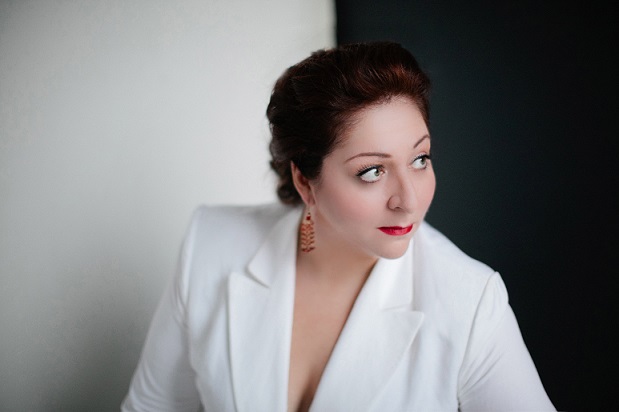
    Above: Christine Goerke

    The soprano’s portrayal of Elektra was so committed and intense: she entered into the physicality of the role as if in a staged performance, interacting brilliantly with her colleagues and even including a frantic, manic dance at the end. Vocally she sailed forth undaunted by the orchestra’s volume and hurling out the character’s dramatic punch lines (“Triff noch einmal!”) with force. Summoning up a colossal effort for the last sprint, Goerke packed a final punch with her ecstatic “Schweig, und tanze!” before collapsing into her chair. The ensuing ovation for the intrepid soprano was epic, and very much well-deserved.

    As the hapless Chrysothemis, Gun-Brit Barkmin made a far better impression than she had as Salome in this same hall in 2014. Slender of frame and of voice, she nevertheless finds a way of projecting over the orchestra and her shining top notes made me think she might be a good SIEGFRIED Brunnhilde. Errant pitch was sometimes evident, but overall Ms. Barkmin did well and was a good foil for Ms. Goerke. 

    Henschel

    Jane Henschel (above), though the top of her voice must now be handled with care, gave such a illuminatingly subtle and detailed performance as the demented Klytaemnestra – playing off the words and using a kozmic array of vocal colours – that a few random strained notes were only of passing worry. She and Goerke made their encounter crackle with verbal vibrancy: the most dramatically engrossing passage of the evening.

    James Rutherford was a sturdy-voiced but not especially imaginative Orestes. The great Recognition Scene was not persuasively staged, though Goerke’s singing after the revelation was wonderful….and deeply felt; and here the orchestra playing was sublime. Gerhard Siegel was a capital Aegisth, vividly neurotic and strongly sung: his final “Weh mir!”, voiced onstage, was a lightning bolt rather than a last gasp.

    Auth.aspx

  • 2015-2016 Season Opens at CMS

    N C

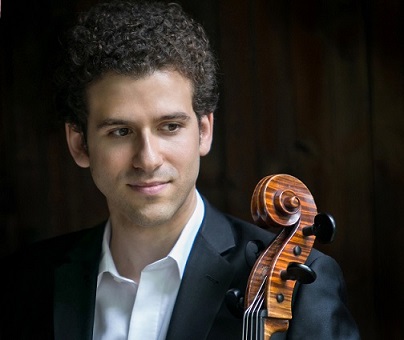
    Above: cellist Nicholas Canellakis

    Sunday October 18th, 2015 – Chamber Music Society of Lincoln Center opening their new season at Alice Tully Hall with a sold-out concert that played to a crowd of music lovers as attentive as they were appreciative.

    As is their wont, Chamber Music Society put together an impressive ensemble of musicians this evening; it was especially gratifying to hear cellist Nicholas Canellakis again after he had bowled me over with his playing of Leon Kirchner’s Music for Cello and Orchestra with the American Symphony Orchestra this past April. Mr. Canellakis played in all three works this evening – a triple treat.

    Over the course of the evening, three pianists took turns at the Steinway. After greeting the audience  tonight in her capacity as co-artistic director of the Society, Wu Han took her place at the keyboard and dazzled us yet again with her subtle, evocative artistry. She was joined for the opening Haydn trio by Ani Kavafian – in her 44th year (!) of participating in the Society’s concerts and playing with her characteristic super-fine style – and Mr. Canellakis, whose deep-burgundy cello resonance was amply pleasing.

    The blended timbres of these three ‘voices’ and the gracious communicative rapport they established immediately drew the audience into the music, setting the tone for the whole evening. Their deeply-felt playing of the central Andante gave way to the foot-tapping dance rhythm of the final Allegro, which they set forth with joyous vigor.

    The Mendelssohn D-major sextet sounded remarkably fresh this evening in a glowing performance of such dazzling clarity that the audience could barely suppress their delight, erupting in a gale of applause the moment the final chord was released. The players basked in a lively ovation, deservedly called out for a second bow.

    And what players! The velvety bass of Joseph Conyers set the groundwork for the piece, with Mr. Canellakis and violists Paul Neubauer and Matthew Lipman summoning up some exceptionally tender harmonies in the Adagio, where Chad Hoopes interjected some sweet violin solo moments. In his first concert with CMS, pianist Michael Brown’s rippling enticements and poised lyricism in the earlier movements gave way to thrilling virtuosity in the concluding Allegro vivace.

    This final movement, taken at an exhilaratingly speedy pace, found all the players reveling in the dancing spirit of the work. A sudden change of pace and mood brought out some of Mr. Brown’s most fabulous playing, and then the work sailed on to its invigorating end. The audience’s spontaneous reaction and their embrace of the players during the ensuing applause was both joyous and heartfelt.

    A tough act to follow, indeed; yet as pianist Anne-Marie McDermott led her colleagues out for the concluding Schumann, I felt certain we were in for yet another revelatory experience. And I was right.

    Here we could more extensively savour Mr. Lipman’s viola skills: this young musician, who made an impromptu CMS debut last season when he stepped in for another artist, displayed handsome tone and a smile that seemed to signal his delight in playing such great music for such an engaged audience. Ms. Kavafian, unspooling silken melodies, was amiably seconded by Mr. Hoopes, whilst Nicholas Canellakis polished off his evening with engaging, expressive playing. Ms. McDermott’s luxuriantly dexterous playing fell ever-so-pleasingly on the ear.

    In the first movement, cellist and violist participate in rise-and-fall scale motif, Mr. Lipman seeming to finish Mr. Canellakis’s sentences.The second movement begins hesitantly; the viola becomes prominent, and Ms. Kavafian plays high and sweet. A rising scale theme is passed from voice to voice. In the concluding movement, we are dancing again; but there’s a sudden volte-face, a slowdown where Ms. McDermott’s piano rumbles in some lower range scalework before the engines are revved up again and the piece dances on to the end.

    Another warm ovation, another double curtain call; and then out into the first chill of early Autumn.

    The Repertory:

    The Participating Artists:


  • ASO Season Opens @ Carnegie Hall

    Strauss

    Above: Richard Strauss, the composer of Also sprach Zarathustra

    Friday October 16th, 2015 – The American Symphony Orchestra opened their 2015-2016 season at Carnegie Hall with a program entitled Mimesis: Musical Representations.

    Gunther Schuller’s 7 Studies on Themes of Paul Klee opened the program, and what a brilliant and highly imaginative piece it is. The seven songs are vividly differentiated in instrumentation and rhythm, becoming aural counterparts for seven paintings by the Swiss modernist Paul Klee (1879-1940). “Each of the seven pieces bears a slightly different relationship to the original Klee picture from which it stems,” Schuller wrote. “Some relate to the actual design, shape, or color scheme of the painting, while others take the general mode of the picture or its title as a point of departure.”

    In “Antique Harmonies” Schuller’s music is sombre and dense. An immediate contract comes in “Abstract Trio” with whimsical winds and a single pluck of the strings. “Little Blue Devil” is captivatingly jazzy, with thrumming bass, muted trumpet, xylophone. Insectuous sounds pervade “The Twittering Machine” with edgy woodwinds and a wood-on-wood tone block marking time. “Arab Village” is an absolute delight, with a flautist playing from offstage; her ‘voice’ inspires a magical dance for harp, viola and, as the full orchestra plays very softly. They play even softer for the opening of “An Eerie Moment” which eventually rumbles grandly before fading away. For the final “Pastorale”, the violins play a repetitive two-note figure while the winds sigh, rather mournfully.

    The Schuller really is a great piece; I’ve only encountered his music rarely over the years…I need to seek it out.

    1869781

    Henri Dutilleux’s Correspondances brought forth the beauteous soprano Sophia Burgos (above). In this cycle of five songs, the composer draws on a variety of texts: poems by Rilke and Mukherjee, and letters written by Solzhenitsyn to the Rostropovichs and by Vincent van Gogh to his brother Theo.

    The singer’s agile, silvery timbre is shot thru with gem-like flecks of colour; she has an extensive range and her voice was beautifully set off by the marvelous instrumental combinations Dutilleux has employed. Countless entrancing passages for various instrumental combinations keep the ear pricked up: an especially appealing tuba outing in the Interlude, and the cunning use of accordion.

    Ms. Burgos moved with thorough vocal command from urgency to passion to evocation; the audience, very taken with her, broke in with applause during the cycle, and Maestro Botstein took it in stride, nodding approvingly. In the final song, the soprano was at her most poignantly expressive: an affecting descending vocalise is heard over the shimmering strings before things take a dramatic turn and she soars to an ecstatic concluding high note. Brava! And bravi to the players as well. 

    Following the interval, Nico Muhly’s Seeing is Believing seemed to me – and to my pianist-companion – the least interesting work on the program. A sort of tone poem for electric violin (played by virtuoso Tracy Silverman) and orchestra, the work stretched out over 25 minutes of rather ‘same-y’ sounds and repetitive motifs.

    According to the program notes, Muhly’s inspiration for the work was the practice of mapping the stars in the sky; yet I could detect no sense of the wonderment one would expect to experience is questing the heavens. Instead the music seemed earth-bound and tended to wallow in its own density. Mr. Silverman was in total command of his electrified instrument, producing some striking effects in the layered, echoing passages. Having been impressed by Muhly’s orchestrational skills in his opera. The Dark Sisters, I was disappointed with tonight’s offering. The composer was present and took a bow from his box. To me, the audience seemed to embrace the violinist without embracing the music he had just played.

    Richard Strauss’s Also Sprach Zarathustra closed the evening on an epic note. Beyond its super-familiar but always impressive opening statement, the work is a rich and royal sonic tapestry into which Strauss has woven one appealing thread after another. Abounding in solo opportunities for individual instruments, this thrilling work further features a gorgeous tutti theme for celli and violins, and some interjections for organ to Westernize its spiritual aspects; an entrancing Viennese waltz looks forward to ROSENKAVALIER in no uncertain terms.

    Overall, a grand finale for an impressively-played concert. And the American Symphony Orchestra‘s next concert, on December 17th, looks fascinating to me.  

  • Preview: Mats Ek’s AXE @ Martha Graham

    AXE

    Wednesday October 14th, 2015 – The Martha Graham Dance Company premiered Mats Ek’s AXE at the Jacob’s Pillow Dance Festival in August 2015, and will give the work’s New York premiere at NY City Center in April 2016 as part of the Company’s 90th Anniversary celebration. This evening, friends and fans of the Graham Company gathered for a studio preview of the Ek duet, which was danced by Company principals Ben Schultz (above) and PeiJu Chien-Pott (below).

    6a00d8341c4e3853ef01b7c716ffe8970b

    These studio events at the Graham homespace at Westbeth on Bethune Street are a great bonus for the Company’s many avid followers: whether introducing us to a new work or delving into explorations of the established classics of the Graham repertoire, we are given an opportunity to experience the works in an intimate setting and have an insider’s look at the creative or re-creative process. And of course there is also the genuine thrill of encountering the phenomenal  Graham dancers at close range.

    The staged version of AXE is based on a work Ek originally created on film. It is an intense domestic-drama duet which revolves around a man splitting wood, observed by his long-time mate. Layered in subtle sheets of emotion, the work takes on a profound quality that transcends the physical action. In a stroke of genius, Ek sets the duet to music of Tomaso Albinoni, giving it a timeless quality.

    Janet Eilber, the Graham Company’s artistic director, spoke of her long-held desire to have an Ek work in the Company’s repertoire, and of how it came to pass, thru chance and persistence. In brief, four Graham dancers – PeiJu Chien-Pott, Anne O’Donnell, Ben Schultz, and Lloyd Knight – traveled to Sweden where the choreographer worked with them to transform his film into a live dancework. The result is nothing less than extraordinary.

    Prior to showing us a full run-thru of the work, Ms. Eilber queried the four dancers about their experience of working with the choreographer who, it seems, was both detail-oriented and enigmatic. PeiJu and Ben then demonstrated key phrases from the ballet before presenting an absolutely stunning ‘performance’ of AXE that literally gave me goosebumps.

    AXE will be a must-see ballet when the Company celebrate their 90th anniversary at City Center in April 2016. It fits superbly into the Graham repertoire, and dance-lovers owe a debt of gratitude to Ms. Eilber for having secured it for us.

    Season-Announce-header

    PeiJu Chien-Pott (above) heralds the coming season…I cannot wait!    

  • Open House @ Jennifer Muller/The Works

    L1620675

    Thursday September 24th, 2015 – Jennifer Muller/The Works kicked off their 2015-2016 season with an open house/studio event attended by friends and supporters of the Company. Ms. Muller, ever the cordial hostess, spoke of the Company’s work (both in terms of performing and outreach) before turning the floor over to her vibrant dancers who performed excerpts from the Muller repertory, dancing full-out in a compact space yet never brushing against the viewers – nor the ceiling, despite some high lifts.

    L1620578

    Jennifer Muller welcoming her guests

    The works presented this evening dated from as far back as 1991 (Gen Hashimoto in a solo from REGARDS set to a Tracy Chapman song) to a glimpse of the Company’s current work-in-progress, INTERVIEW: THE WARHOL PROJECT with music by Steve Reich. Also in the mix were excerpts from FLOWERS (2004), ALCHEMY (last season’s brilliant multi-media dancework), and WHEW! (a light-hearted, full-company work that premiered in 2014).
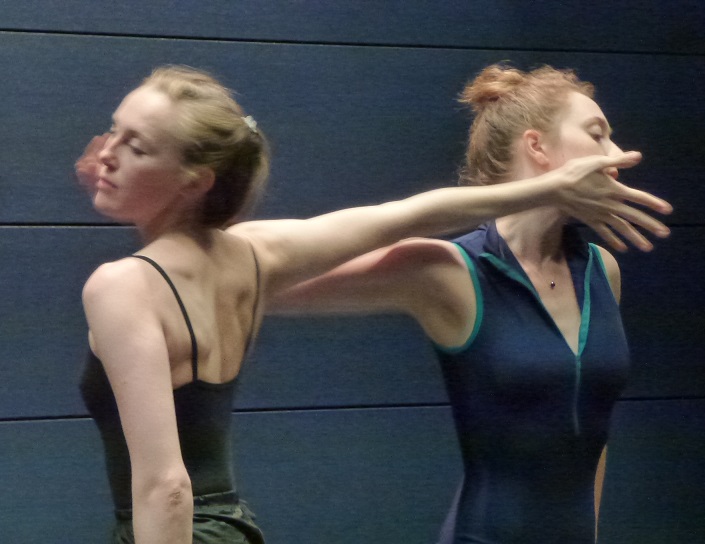
    Jennifer’s dancers are hard to capture in still photos: they are always on the move. I took a few photos during the showing, more as souvenirs for myself:

    L1620611

    Michael Tomlinson, Seiko Fujita

    L1620665

    Caroline Kehoe

    L1620709

    L1620723

    L1620692

    Sonja Chung

    L1620674

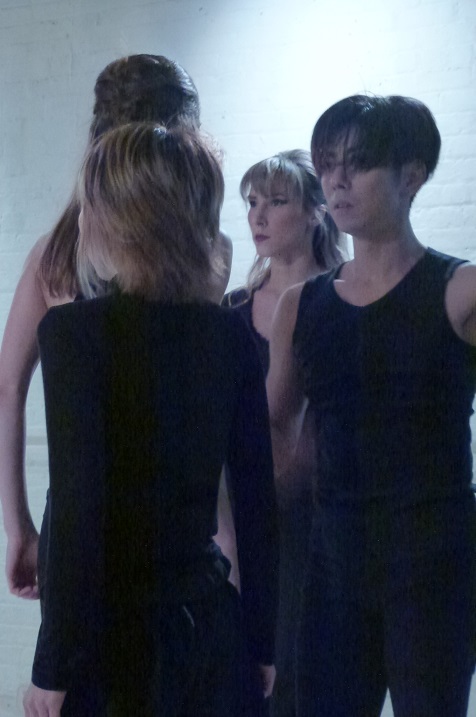
    Michael Tomlinson eyeing the female ensemble

    L1620725

    Jennifer Muller/The Works have always been a mullti-national, multi-cultural dance troupe. This season the young Frenchman, Alexandre Balmain (above) has joined the Company.

  • New Season @ New Chamber Ballet

    11951394_10153559309753571_5653016928534843419_n

    Saturday September 12th, 2015 – After celebrating their tenth anniversary season in 2014-2015, Miro Magloire’s New Chamber Ballet have commenced their second decade of presenting intimate, on-pointe evenings of dance with live music: a formula which maintains NCB‘s unique place in the Gotham dance-sphere and keeps Miro’s loyal followers coming back for more.

    This evening’s programme was all-Magloire in terms of choreography, and mostly ‘modern’ in terms of music: aside from the Mozart setting of the opening ballet, the oldest work played tonight dates from 1952 (Morton Feldman’s Extensions 3), and anything that’s younger than me counts as ‘modern’.

    It is, in fact, Miro’s musical integrity that accounts for my unflagging interest in his work: I can go to his performances knowing I can depend on him to serve up music – whether olde or written last year – that will fascinate. His musicians – Melody Fader (piano) and Doori Na (violin) – seem capable of leaping over whatever technical obstacles might be set in their path – a virtue in itself, since contemporary composers often seem intent on pushing the boundaries of an instrument’s capabilities.

    Likewise, Miro continues to expand the choreographic possibilities of what an all-female troupe of dancers can do. His most recent works – three of them seen tonight – take same-sex ballet partnering into uncharted territory.

    Miro is comfortable with both narrative and abstract works. The evening’s opener – IN THE PARLOUR – is set to Mozart’s violin sonata in E-minor K. 304, which was handsomely played by Melody Fader and Doori Na. In this domestic drama, three women express shifts in friendships and matters of trust. A beautiful solo for Elizabeth Brown begins haltingly, in silence; soon she is wafting serenely about the space. She pauses to write upon the wall; in this she is thwarted by a destructive Sarah Atkins. Meanwhile, a third woman – Holly Curran – seems unsure of whose side she’s on. Holly’s crisis is resolved as she allies with sneaky Sarah. The three girls danced flawlessly and sustained the mysterious atmosphere of the ballet.

    Tristan Murail’s score for LA MANDRAGORE veers from turbulence to high, shining motifs, and then to a misterioso atmosphere; Melody Fader at the piano showed a sure feel for the moods of the piece. The two lithe and wonderfully supple dancers – Traci Finch and Amber Neff – moved thru the enmeshed, intimate partnering passages with physical strength and a sense of mutual assurance that was truly impressive. 

    6a00d8341c4e3853ef0177428f3d23970d-800wi

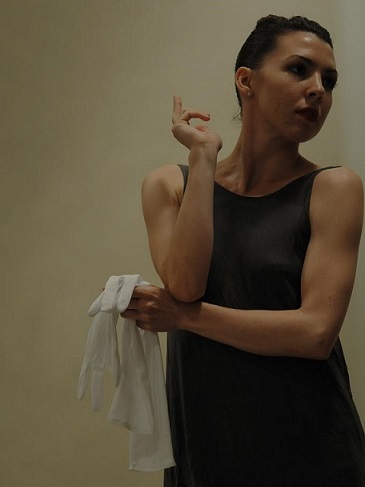
    As Sarah Atkins (above, photo by Kokyat) strolls onto the stage wearing long white evening gloves and smoking a cigarette, a vision of Nijinska’s LES BICHES pops into mind; but Miro’s ballet GLOVE is in fact more intriguing than Nijinsk’a old Poulenc ballet. Melody Fader’s expert playing of Feldman’s Extensions 3 sets the scene for this small jewel of a work in which Holly Curran and Elizabeth Brown become increasingly desirous of obtaining Sarah’s gloves. There are comings and goings – the dancers periodically hide behind the piano, concocting their future moves – and the ballet ends with a mysterious seizure.

    I had seen a rehearsal of parts of Miro’s newest creation GRAVITY; both at the rehearsal and at this evening’s performance, I was captivated by Doori Na’s masterful playing of the score for this ballet: numbers 3 and 5 from Friedrich Cerha’s Six Pieces for Solo Violin. In introducing this premiere tonight, Miro’s enthusiasm for Cerha’s music makes me quite certain we will see the remaining movements of the score being danced to in the near future.

    Tonight’s enticing presentation of the work as it currently stands was delicious both musically and in the dancing: Elizabeth Brown, Traci Finch, and New Chamber Ballet debutante Cassidy Hall formed a strong sisterhood and smoothly wove their way thru the many demanding elements of Miro’s choreography. The work is sculptural, with partnering motifs that can be fluid one moment and angular the next. Among the many felicitous moments were…

    L1610535

    …a rhapsodic wingspan gesture from Elizabeth Brown, supported by Traci…

    L1610643

    …and a lovely slow attitude promenade by Traci and Cassidy, as seen in these rehearsal images.

    GRAVITY has the feel of an impending Magloire masterpiece; let’s see where the Cerha takes the choreographer next.

    L1570060

    Above: rehearsing FRICTION: Amber Neff and Holly Curran

    Doori Na and his violin propelled the evening to a fine finish in Richard Carrick’s In Flow, as set by Miro for his ballet FRICTION. Doori took the music from its hesitant opening thru a rather boozy passage of seasick pitch and on to some skittering and stuttering motifs to a big, passionate rhythm. For the dancers, again the intimacy is palpable; Amber and Holly are in full flourish for the demanding partnering and the dance well-captures the textures of the music. Holly’s black tights and toe shoes were an added visual enticement.

    After ten years of reporting on the Manhattan dance scene, there are times when I think I’ve seen all there is to see. Yet a handful of choreographers and companies continue to hold my attention, and Miro and his New Chamber Ballet are among their small number…as much for the music as for the dancing. And that’s exactly how it should be.