Category: Dance

  • Paul Taylor @ Lincoln Center 2016 – Part II

    ImageProxy.mvc

    Above, one of the best of the best: Robert Kleinendorst of PTAMD

    Tuesday March 29th, 2016 – This evening’s performance by Paul Taylor’s American Modern Dance in the final week of their Lincoln Center season opened with a classic Taylor ‘white’ ballet, Equinox, set to music of Johannes Brahms which was performed (lovingly) live by a string quintet.

    Two principal couples – Laura Halzack with Robert Kleinendorst and Paris Khobdeh with Michael Apuzzo – perform some of Paul Taylor’s most inventive and pleasing partnering passages with a feeling of lyrical athleticism. A long solo by Ms. Halzack was enchanting to behold. A quartet of dancers – too stellar to be deemed “supporting” – moved with captivating urgency and grace: Michelle Fleet, Eran Bugge, Sean Mahoney, and James Samson. The white costumes evoke Summer, but the Brahms themes hint at the approach of Autumn. Heartfelt dancing and playing from everyone involved.

    The Weight of Smoke (a new Doug Elkins work) was a hot mess. The choreography is loaded with gimmicks and clichés while the fusion of Baroque (here, Handel) with contemporary club beats and noisy effects has been done before and has lost its cleverness. The dancers may have enjoyed the opportunity to cut loose, not having to think too much about technique or precision, but to me (and my choreographer-companion) the work seemed endlessly aimless and mildly embarrassing. Laced with gender-bending elements, with two women in a sustained kiss, and sashaying gay-boy stereotypes, the work ambled on with lots of energy being expended on retro-provocations. In the end, I was thinking: “You have sixteen of the best dancers on the planet to work with, and this is what you came up with?” 

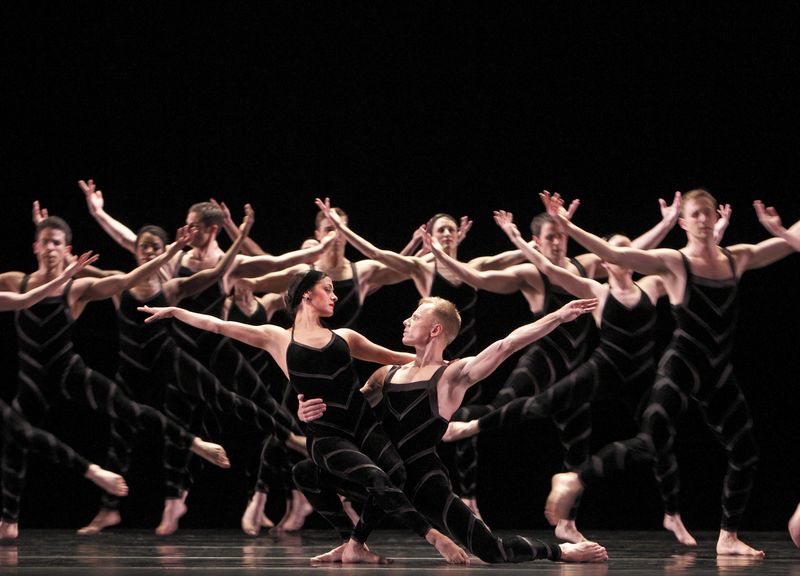
    The evening ended on the highest of possible high notes with Paul Taylor’s Promethean Fire; the same sixteen dancers who slogged their way thru the tedious Elkins now appeared in Santo Loquasto’s incredible black costumes and treated us to a feast of impeccable dancing in this darkly dazzling ballet.

    Paul Taylor’s choreography here gives Mr B a run for his money in terms of musicality and structure…and it looks gorgeous on Mr. B’s own stage. The Leopold Stokowski orchestrations of music by J. S. Bach seem jarring at first but Mr. Taylor was right to choose them as they mesh well with the opulent energy of the dancing.

    The live music (Orchestra of Saint Luke’s under Donald York’s baton) was a wonderful enhancement to the onstage splendour; it’s a great piece for zeroing in on individual dancers as they move with such assurance and beauty of spirit thru choreography that must be a sheer delight to dance.

    Promethean_8456_retouch

    The central passage of Promethean Fire is a pas de deux which was danced tonight by Parisa Khobdeh and Michael Trusnovec (above). Their physical allure and their sense of the importance of the steps and port de bras made this such a richly rewarding experience, both visually and spiritually.

    Production photo © 2015 Paul Taylor’s American Modern Dance

  • Ballet Hispanico in Rehearsal

    Unspecified martina

    Above: Martina Calcagno rehearsing at Ballet Hispanico today; photo by Nir Arieli

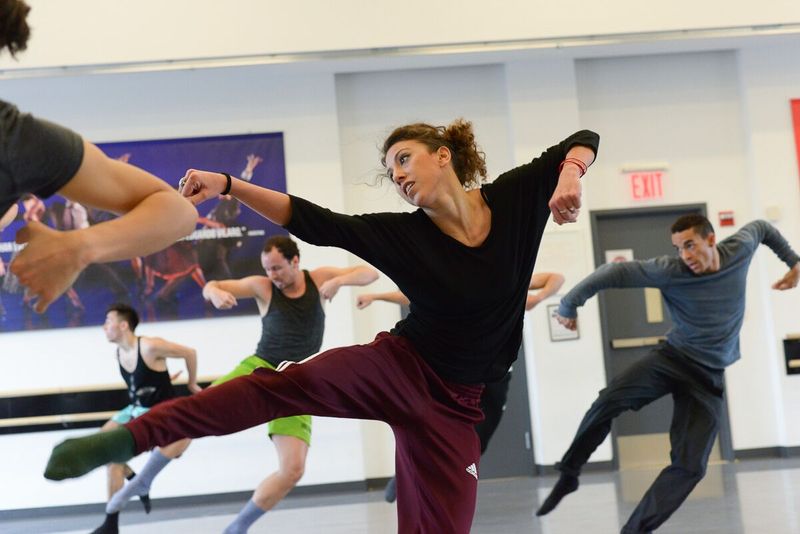
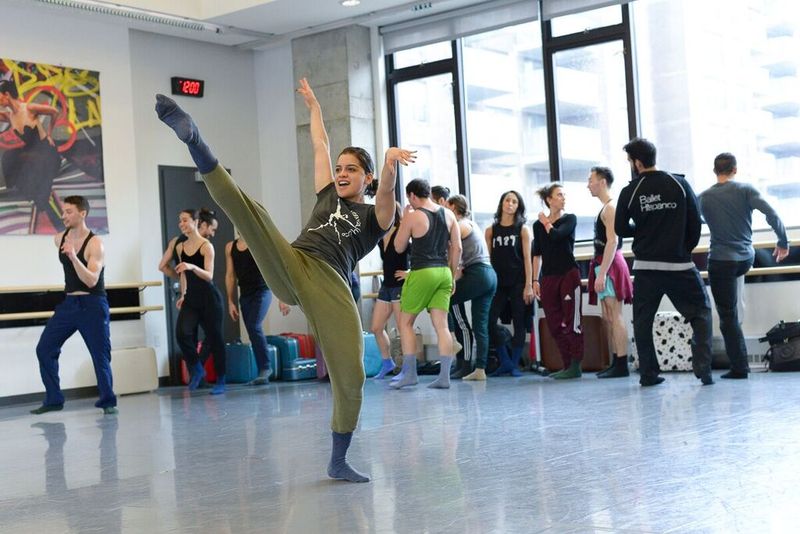
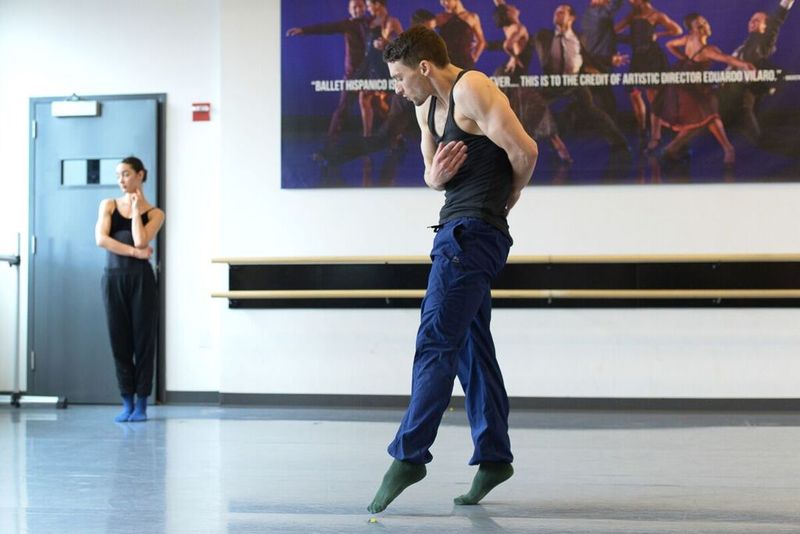
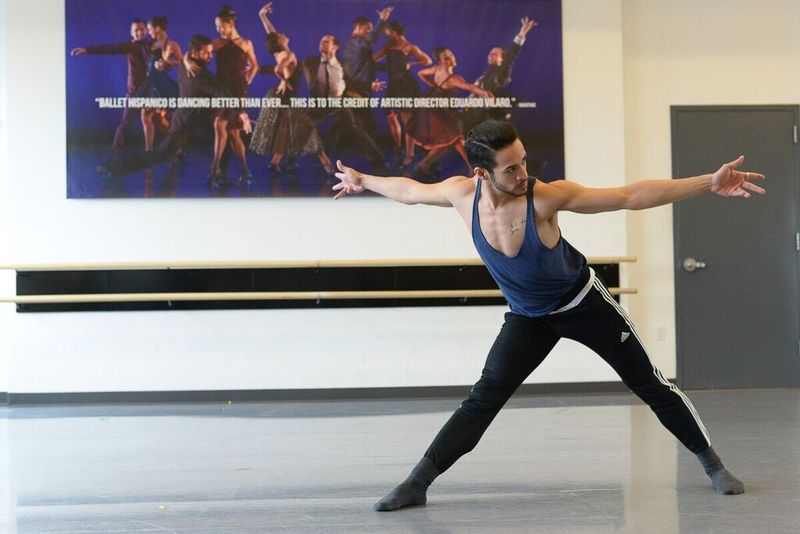
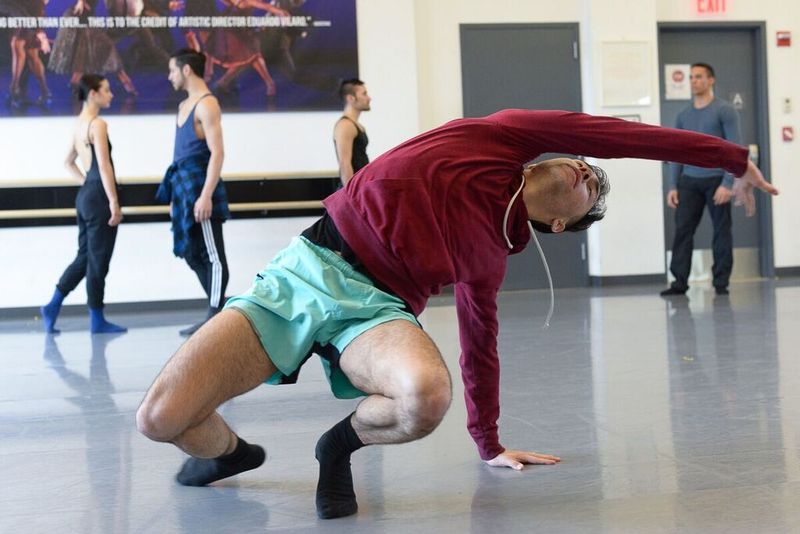
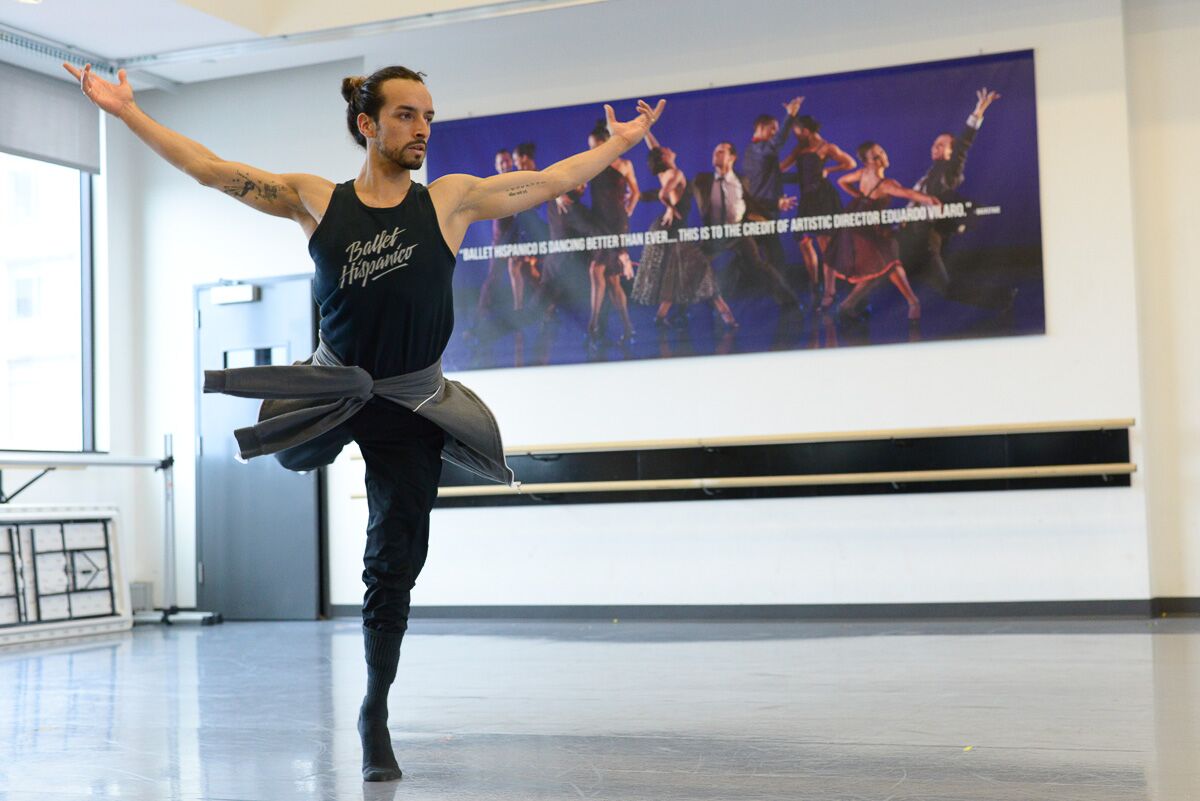
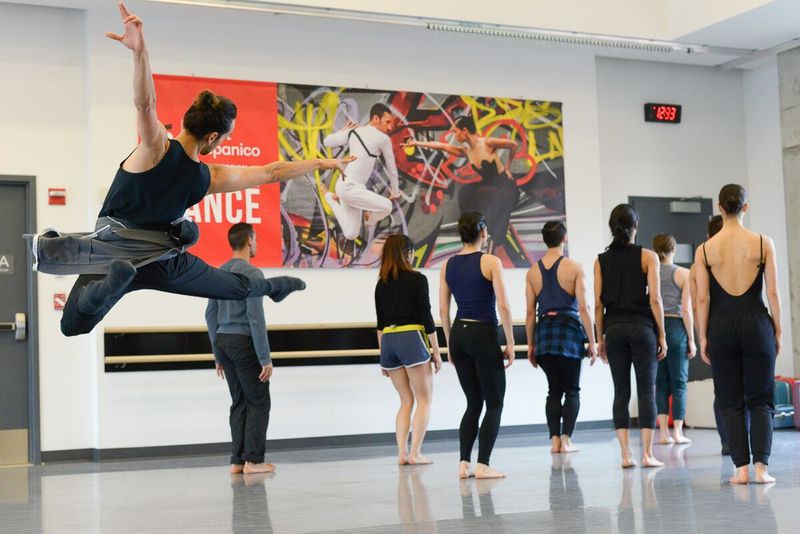
    Monday March 28th, 2016 – In anticipation of Ballet Hispanico‘s upcoming season at The Joyce, photographer Nir Arieli and I stopped by the Company’s home space on West 89th Street to watch a rehearsal.

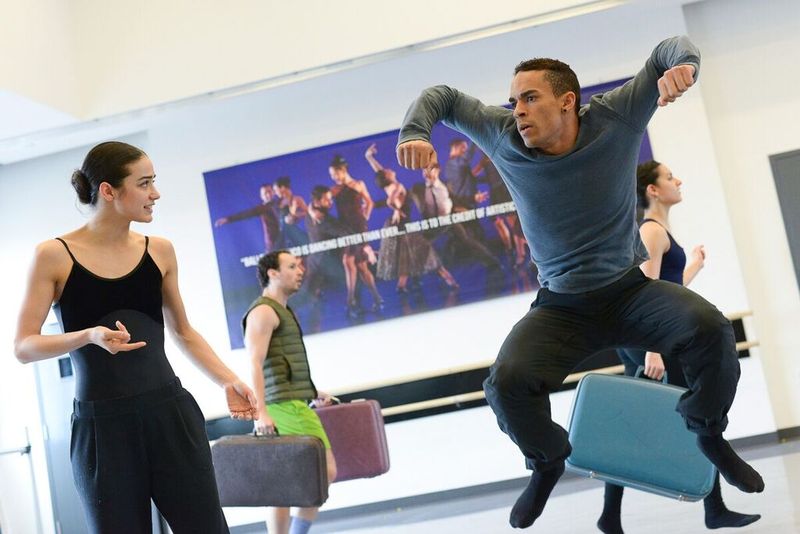
    The Hispanico dancers are among the most vivid in New York City’s vibrant community of dance. Watching them in the up-close-and-personal studio setting, their power, unstinting energy, and sheer sexiness are a testament to their generosity and commitment.

    For their impending Joyce performances, Ballet Hispanico will offer the New York premiere of Gustavo Ramírez Sansano’s Flabbergast. The Company have previously performed Mr. Sansano’s dramatic narrative ballet CARMEN.maquia and his charming El Beso.

    Flabbergast is a complete joy to experience: lively, sexy, and playful, the choreography calls for non-stop action. And the dancers are even called upon to sing, which they do enthusiastically. Here are some of Nir’s images from today’s run-thru of this exciting dancework:

    Unspecified e

    Eila Valls and Lyvan Verdecia

    Unspecified ii

    Kassandra Cruz

    Unspecified g

    Chris Bloom

    Unspecified

    Melissa Fernandez

    Unspecified h

    Mark Gieringer

    Unspecified c

    Mark (foreground) & Company

    Unspecified k

    Kassandra Cruz

    Unspecified b

    Cole Vernon

    Unspecified l

    Mark Gieringer

    NIR_5470

    The Flabbergast ensemble

    As an ideal contrast to the extroverted Flabbergast, choreographer’s Ramón Oller’s darkly ritualistic Bury Me Standing will also be on the Joyce program. A section of this ballet, in which a cortege of mourners move slowly across the space while a male soloist performs an expressive dance of lamentation, was being rehearsed today with Hispanico’s charismatic Mario Ismael Espinoza in the featured role.

    Unspecified m

    Unspecified mario

    Above, and in the following images: Mario Ismael Espinoza

    Unspecified mario2

    Unspecified n

    Unspecified mario3

    During this run-thru from Bury Me Standing, I had one of those unusual experiences that you can only get at a rehearsal: while Mario was performing the solo and Nir was capturing it, I was at the other end of the studio where Mario’s alternate, Christopher Hernandez, was also dancing the solo directly in front of me. Mario and Christopher have very different physiques and stage personalities; shifting my gaze between the two, I was able to experience their interpretations simultaneously; an exciting finale to our studio visit.

    I want to thank publicist Michelle Tabnick for arranging everything, Mr. Sansano for his cordial greeting and very appealing choreography, Hispanico’s Michelle Manzanales – ever the gracious hostess – and every single one of the Company’s incredible dancers.

    And I’m particularly grateful – as always – to photographer Nir Arieli.

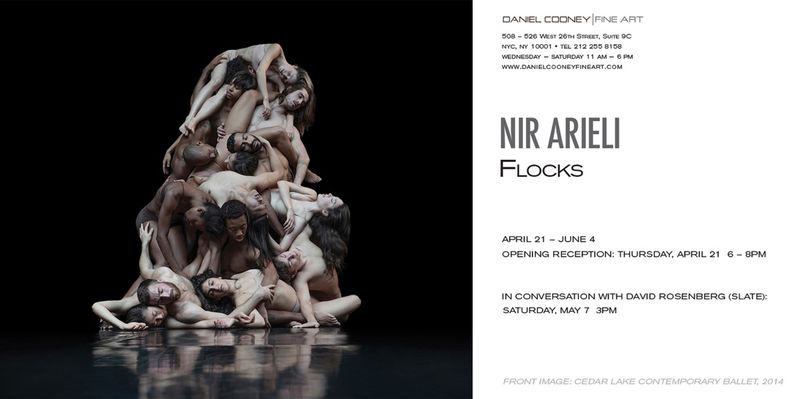
    I want to draw your attention to Nir’s upcoming gallery show of Flocks at Daniel Cooney|Fine Art on West 26th Street, which will run from April 21st thru June 4th, 2016. Ballet Hispanico is among the companies featured in this series. More information below:

    FlocksInvite

  • Paul Taylor @ Lincoln Center 2016

    ImageProxy.mvc

    Wednesday March 23rd, 2016 – “Taylor Does Graham” was my alternate headline for this article. Martha Graham’s Diversion of Angels has triumphantly entered the repertory of Paul Taylor’s American Modern Dance Company. I’ve always loved seeing the Graham dancers in this work, and now I also love seeing the Taylors: between these two companies, some of the greatest movers and shapers of our day are to be found. In the photo at top: Michael Trusnovec.

    Graham paragons Blakeley White-McGuire and Tadej Brdnik set Diversion on the Taylor company. The casting of the work’s three main couples seemed spot-on, with the elegant, patrician Laura Halzack in White paired with Michael Trusnovec; restless, passionate Parisa Khobdeh (in Red) dancing with Sean Mahoney; and the sun-filled joy of Eran Bugge’s Woman in Yellow handsomely partnered by Michael Novak. A women’s quartet consisting of Michelle Fleet, Jamie Rae Walker, Heather McGinley, and Christina Lynch Markham comprised a marvelously high-end “supporting” cast, and George Smallwood’s strong performance as the odd-man-in all made for a great deal of spacious, eye-catching dance.

    Several passages linger in the memory: the long frozen, stylized pose sustained by Ms. Halczak and Mr. Trusnovec early in the piece, and the lovely floated quality of Laura’s series of slow turns; Ms. Khobdeh’s agitated solo amidst the four women, her great sense of urgency as she rushes across the stage on some unknown quest, and Mr. Mahoney’s wonderful “catch” of her as she rushed to him; Ms. Bugge, who captivated me all evening, has a most congenial role; she brought Springtime freshness to her solo passages, and to her lyrically animated duet with Mr. Novak.

    A sustained deep note in the Norman Dello Joio score signals the “White” pas de deux; it almost goes without saying that the Halzack/Trusnovec duo were truly inspired and inspiring here.  

    Paul Taylor’s Three Dubious Memories is a gem of a ballet. When I first saw it a couple of years ago, it was mainly the witty elements that persuaded me of its stage-worthiness. Tonight somehow it seemed much deeper and more of a story-telling ritual than a mere series of relationship-vignettes. 

    In Three Dubious Memories, an incident from the evolving story of a romantic triangle is remembered differently by each of the three people involved. The competition between two men (Robert Kleinendorst and Sean Mahoney) for the affections of Eran Bugge brings the men to blows. But then, in a volte-face, the men are seen as a cozy pair and Ms. Bugge as the interloper. We’ll never know the real story, but Mr. Taylor has left us to ponder the way in which we each remember things.

    In addition to brilliant dancing and acting from the principal trio, Three Dubious Memories provides an intriguing role for James Samson: a silent narrator, a sort of master-of-ceremonies. James summons up each telling of the tale by the three protagonists; he also leads an ensemble of ‘choristers’ in stylized rituals. James did a beautiful job in this role which calls for both expressiveness and athleticism. In one memorable moment, Heather McGinley perches on James’s shoulders like a looming icon. The ballet was beautifully lit by Jennifer Tipton.

    In the evening’s concluding work, Spindrift, dates from 1993 and is set to Arnold Schoenberg’s String Quartet Concerto (after Handel), played live by the Orchestra of St Luke’s. To the sound of wind and waves, Michael Trusnovec emerges from the midst of a communal group moving in stylized slowness. Michael’s character displays the shifting nature of a romantic spirit with an affinity for the natural world; he’s an outsider, cast upon a mystic shore among a rather suspicious tribe.

    Certain movement motifs recall Nijinsky’s Faun, and in fact the costuming also makes us think of the Debussy ballet. The Handel/Schoenberg music seems at once old and new as Mr. Trusnovec pursues Mr. Halzack and is occasionally distracted by the quirky presence of Ms. Bugge.

    In the ballet’s second movement, an adagio solo for Mr. Trusnovec is the heart of Spindrift; in subtle twists of his torso, the power and beauty of this magnificent dancer’s physique given full rein, as is his indelible artistry: so compelling to behold. The movement becomes livelier and more off-kilter for a spell, then slows and – as Mr. Trusnovec melts into a reverential kneeling back-bend, the ballet seems about to end. But there’s another movement, laced with solos and duets for all the participants.

    As is all the great Taylor works, there are moments of seeming simplicity that make an unexpected impact; one such in Spindrift was a passage where four woman crossed on a diagonal, walking slowly. Other impressive passages were a duet for Ms. Bugge and Mr. Trusnovec and another one in which Michael was paired with Robert Kleinendost; Robert was on peak form all evening.

    In fact, the entire Taylor company’s looking pretty extraordinary these days. I was hoping to see more of Michelle Fleet (she only danced in the opening work, with Ms. Bugge replacing her in Spindrift); Francisco Graciano and Michael Apuzzo also appeared all-too-briefly, yet – as always – they each made their mark. Madelyn Ho, the newest dancer on the roster, appeared in the ensemble in Spindrift.

    I had great seats (thank you, Lisa Labrado!) and was delighted to spend the evening with my ballet-loving friend Susan, who I rarely see these days. And it’s always so nice to run into Janet Eilber, Blakeley White-McGuire, Take Ueyama and his wife Ana, and Richard Chen-See.

    Onward now to more Taylor…and then, in April, Graham!

  • Kavakos Plays Sibelius @ The NY Phil

    Kavakos-Leonidas-21

    Above: violinist Leonidas Kavakos

    Saturday March 19th, 2016 – Feeling under the weather today, I was nevertheless determined to hear Leonidas Kavakos play the Sibelius violin concerto with The New York Philharmonic. I’d looked forward to this red-letter evening since the season was announced, and even though I feel strongly that people who are sick are better off staying home, I was determined to go.

    In an unusual programming move, the concerto was the opening work tonight.

    Mr. Kavakos, very tall and with the air of a mythic sorcerer, launched his inspired rendering of the concerto with a magical glow: the spine-tingling opening passage – coolly sensual – immediately drew us in. Maestro Alan Gilbert and Mr. Kavakos have formed a rich rapport over time, and the conductor and his players were at their shining best as the violinist shaped the opening movement with alternating currents of broad-toned lyricism and spiky bravura. Few violinists today can match Kavakos for power – both sonic and emotional – and his playing as the concerto unfolded continually sent chills up and down my spine.

    In the central Adagio, with its heart-fillingly gorgeous main theme, violinist and orchestra were in a particular state of grace. One of the most winning aspects of Mr. Kavakos’ playing is his marvelously sustained phrasing; Maestro Gilbert and the orchestra provided the soloist with perfect support as passage after passage fell gratifyingly in the ear, everything lovingly dove-tailed and with an acute awareness of dynamic nuance. This performance of the Adagio was a high point in a season that has been rich in musical magic. 

    Mr. Kavakos then dug into the opening dance of the concluding Allegro with gusto, and the orchestra sounded simply magnificent in the big tutti passages. Give and take between soloist and ensemble produced some dazzling effects, and the lovely ‘wandering’ passage for violin when the music briefly slows down was particularly appealing. Following an energetic rush to the finish, Mr. Kavakos enjoyed a prolonged ovation, filled with shouts of joy from his listeners. The Philharmonic players seem clearly to revel in performing with this violin-magician, and his warm greeting of concert-master Frank Huang and a lovely embrace for Sheryl Staples indicated a deeper personal connection with his colleagues than we sometimes see between soloist and orchestra. 

    After several bows, Mr. Kavakos granted us a rather long solo encore which showed a more intimate side of his artistry. And now, here’s some excellent news: Mr. Kavakos will be with us more frequently next season as he has been designated the Philharmonic’s 2016-2017 Mary and James G Wallach Artist-in-Residence. In addition to programs featuring him as soloist, he will make his NY Phil conducting debut. Find out more about this residency here

    Much as I wanted to hear the Shostakovich’s The Age of Gold Suite, I knew it was time to go home, take Advil, and rest. I now have some rare downtime: an opportunity to re-charge before this busy season continues. I have lots of wonderful music to listen to, including Mr. Kavakos’s Sony double-disc of Mendelssohn’s concerto and the piano trios, which I highly recommend; find it here.

  • Ian Spencer Bell: Poet and Dancer

    12799298_10206186818733498_6040095322399417585_n

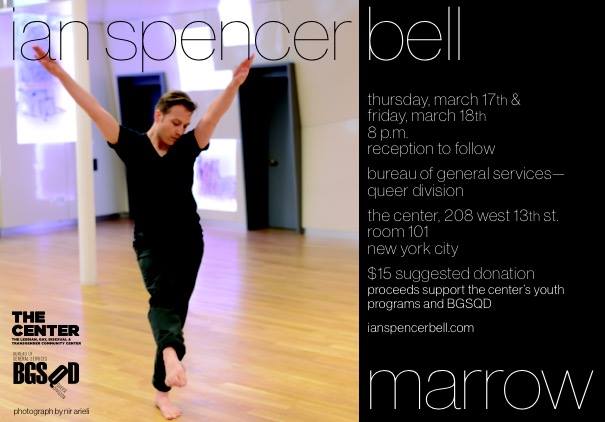
    Friday March 18th, 2016 – There are only a handful of true originals on the Gotham dance scene these days, and Ian Spencer Bell is one of them. In the past, his very sophisticated choreography of small ensemble pieces has always intrigued me; more recently, Ian has been exploring his two passions – dance and poetry – simultaneously in unique solo presentations. 

    Tonight at the Lesbian, Gay, Bisexual & Transgender Community Center on 13th Street, Ian performed his newest work, MARROW, in the intimate yet airy space of the recently-renovated Room 210. It was in the same setting, last June, that Ian’s double bill of GEOGRAPHY SOLOS and HOLLER made such a distinctive impression.

    An attentive and wonderfully silent audience seemed mesmerized this evening by Ian’s every word and move. Lithe and beautiful to behold, Ian dances with a rather gentle physicality; but the choreography can also take on a sharper aspect when the narrative gets more intense. 

    _KCF9145-2

    His poem tonight drew on his experiences as a Southern boy, a youth who was different from everyone else. How many times has this story been told??…and yet, rarely with the same poignancy as in Ian’s words and dancing.

    Waiting for the performance to start, we were listening to Ode to Billie Joe; thus was the setting for what we were about to witness already evoked. Beginning with a story about swarms of bees which attacked his home (“I’m allergic, and alone.”), Ian went on to describe a dream of men climbing out of manholes. (Yes, physical laborers have always created fantasies for gay boys…) As Ian spoke, his body spoke also – in rapid turns, or simple walking, with expansive port de bras; the sweeping motion of a foot; plunges to the floor where he cowered or lazed.

    Confidences and local gossip become part of the story, as does an incident of Ian’s mother falling into a hole on their property while tending horses. This left her with a permanent injury. Meanwhile, his siblings and step-father play out their expected roles: “Boys don’t act like that!” his step-dad yelled, uncomprehendingly. “I wanted my step-father to die,” was young Ian’s thought in response.

    _KCF9035-2

    From repose to restlessness, the dancing moves on: a harrowing episode where his step-father attempts to strangle him is the work’s most dramatic moment; but even the more mundane aspects of daily life – as of waiting in the checkout line at a local store to buy supplies for “making a funeral wreath” – take on an unusual resonance in Ian’s words.

    _KCF8670-2

    In the end, our stories of growing up gay are mostly all the same – a theme-and-variations setting of what it’s like to be different. What’s sad is that, apparently, so little progress was made in the years separating my experience from Ian’s.

    Waiting in the Center’s lobby for the performance to begin, I watched the hordes of young people coming and going. They have found a community and a haven here: such lovely kids, unbounded diversity. And while I am certain they are dealing with many of the same problems that have beset us all, they have resources now that we did not have…and they have each other.

    I had no one to turn to, and nothing to reassure me; I was alone, thinking – as I so often did in those first harrowing years of self-discovery – that I was the only one.

    Thus it is deeply moving to have Ian telling our story, and in such an imaginative and compelling way. 

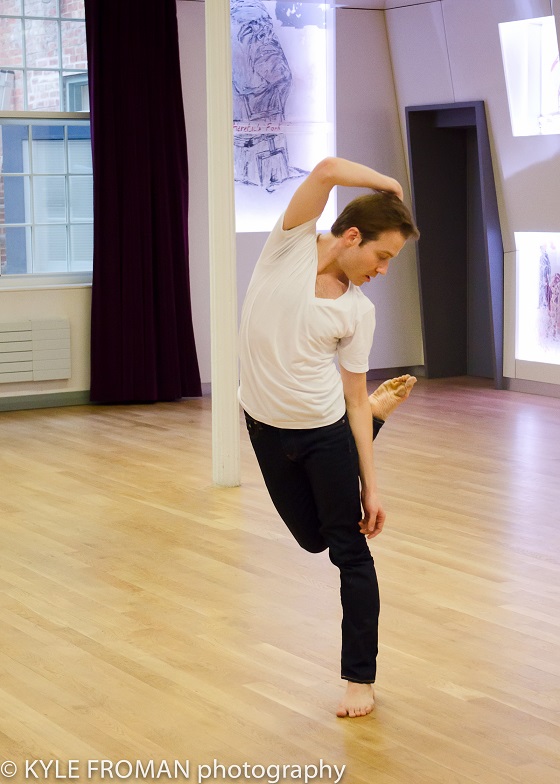
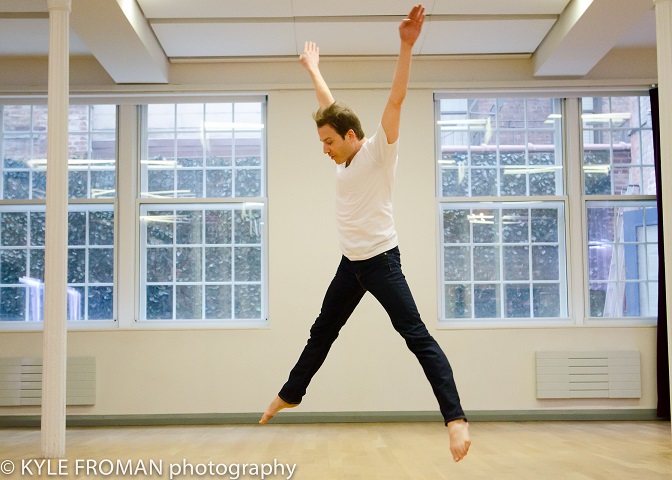
    (Note: this article is now updated with new photos by Kyle Froman)

  • New Chamber Ballet ~ Gallery

    IMG_9128_edited

    Above: dancers Sarah Atkins and Amber Neff in Miro Magloire’s RAVEL’D

    Photographs from New Chamber Ballet‘s February 2016 performances at New York City Center Studios. Read about the program here, and about a rehearsal I attended here.

    All the choreography depicted is by Miro Magloire, and all the images are courtesy of New Chamber Ballet:

    IMG_9225_edited

    Amber Neff and Traci Finch in GRAVITY

    IMG_9239_edited

    Amber Neff, Elizabeth Brown, and Traci Finch in GRAVITY

    IMG_9359_edited-bw

    Shoshana Rosenfield in QUARTET

    IMG_9363_edited-bw

    Shoshana Rosenfield in QUARTET

    IMG_9369_edited-bw

    Shoshana Rosenfield with Sarah Atkins and Traci Finch in QUARTET

    IMG_9389_edited-bw

    Elizabeth Brown, Amber Neff, Traci Finch and Sarah Atkins surround Shoshana Rosenfield in QUARTET

    IMG_9406_edited

    Amber Neff and Shoshana Rosenfield in VOICELESSNESS

    IMG_9431_edited

    Shoshana Rosenfield and Amber Neff in VOICELESSNESS

    IMG_9443_edited

    Shoshana Rosenfield and Amber Neff in VOICELESSNESS

  • New Ravel @ New Chamber Ballet

    L1680670

    Saturday February 27th, 2016 – Miro Magloire’s New Chamber Ballet presenting five Magloire ballets, including a premiere, at City Center Studios. Exceptional music, played live, is always on offer at NCB; then there’s the bevy of ballerinas: five distinctive dancers who bring Miro’s classically-based but sometimes quirky – and always demanding – choreography to life.

    Tonight, the house was packed; extra chairs had to be set out, and some people were standing. The program was one of Miro’s finest to date – and he’s had an awful lot of fine evenings. Two classic French violin sonatas – Debussy’s and (part of) Ravel’s – were in the mix, along with some Schoenberg (the more Schoenberg I hear, the more I like), and works by Beat Furrer and Friedrich Cerha (who just celebrated his 90th birthday). 

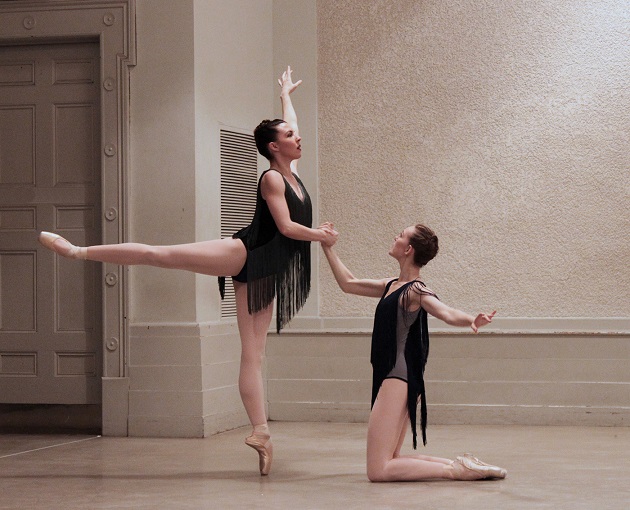
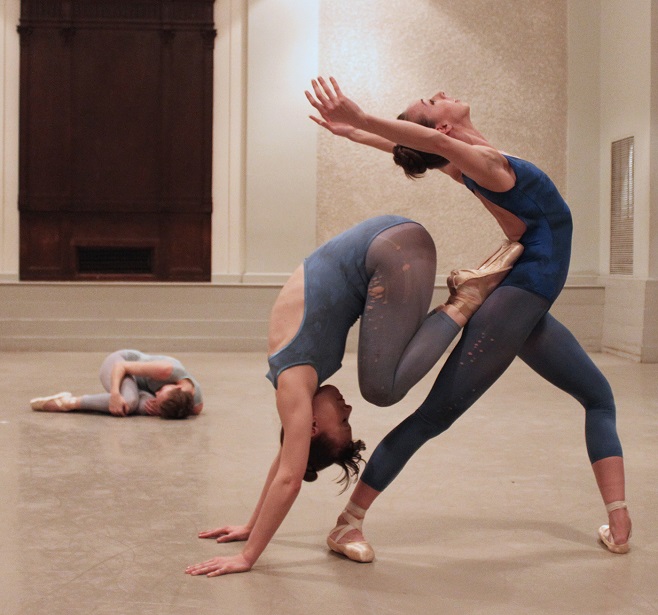
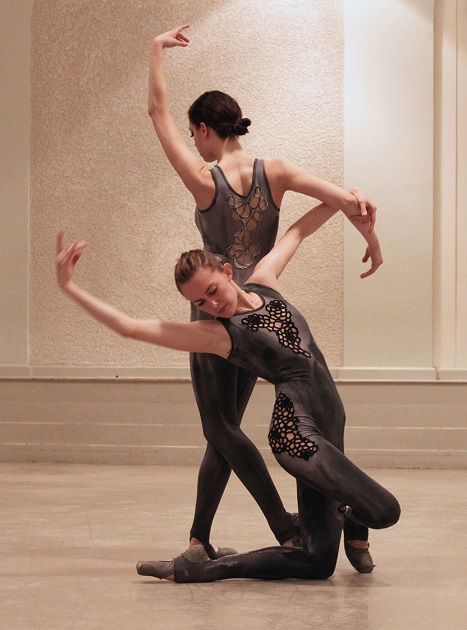
    The opening (premiere) work, RAVEL’D, is still “in-progress”; tonight we saw the first movement, with Miro promising the rest of it for his April performances. Doori Na and Melody Fader played beautifully, and Sarah Thea’s fringed tunics added an unusual flair to the movement. Stylized motifs – eating, praying, biting – are woven into the dance. One girl’s toe-shoed foot rests upon another girl’s head: this is one of several unexpected balancing devices. A space-filling unison trio stands out, and the closing section finds Sarah Atkins in a reverential pose as Amber Neff and Shoshana Rosenfield ‘converse’ in a series of mutually dependent balances. 

    The space was again well-utilized in GRAVITY; we were seeing the finished version of this work that Miro had started on last year. Doori Na’s expert playing of the Cerha score was something to marvel at: great subtlety and control are called for, and Doori delivered. The three dancers – Elizabeth Brown, Traci Finch, and Amber Neff – are engaged in extended paragraphs of the partnering vocabulary Miro has been exploring of late. Extremely challenging and movingly intimate, the intense physicality of these passages push the boundaries of what we expect from women dancing together. Miro’s dancers have taken to these new demands with great commitment: watching some of their improbable feats of balance and elastic strength gives us a fresh awareness of possibility. Adding yet another dimension to the work: when not actively dancing, each ballerina curls up on the floor to sleep. 

    Pianist Melody Fader evoked an air of mystery with her superb playing of Arnold Schoenberg’s Six Little Piano Pieces for the ballet QUARTET. Here Mlles. Atkins, Brown, Finch, and Neff appear in elegant, backless black gowns. They take seats at the four corners of the playing area, facing outward. With her hair down, a waif-like Shoshana Rosenfield dances in the center with a feeling of halting insecurity; her character seems dazed, perhaps drugged. Periodically, the four seated women move their chairs towards the center, slowing encroaching on Shoshana’s space. The four become aware of the lone ballerina as a potential victim: they turn and observe her intently. In the end, the four women have Shoshana trapped; as she sinks down in surrender, they caress her and run their fingers thru her hair. Eerie, and leaving us full of questions, QUARTET is as intriguing to watch as to hear.

    In VOICELESSNESS, Beat Furrer’s mystical score was performed by Melody Fader; her playing had a fine air of somber quietude. Dancers Amber Neff and Shoshana Rosenfield, in Sarah Thea’s sleek body tights, become fervently entwined and mutually dependent in a duet that develops further elements of Miro’s intense and engrossing partnering technique.

    For a revival of TWO FRIENDS, Doori Na and Melody Fader had the lovely experience of playing Claude Debussy’s violin sonata, the composer’s last completed work. Wearing black gauzy tunics and black toe shoes, Elizabeth Brown and Sarah Atkins are the eponymous duo; they partner lyrically, and all seems right with the world. Then Traci Finch appears out of nowhere and the ballet’s dynamic shifts and splinters, with fleeting pair-ups as alliances form and vanish in a trice. The subtexts of attraction and jealousy are very subtly threaded into the movement; an in-sync duet for Elizabeth and Traci is one outstanding moment, and the sonata’s final movement calls for large-scale virtuosic dancing from all three. But then Sarah impetuously rushes off. 

    True to life, TWO FRIENDS often finds multiple narratives developing at the same time, and over-lapping. There is so much to watch and to savor: I especially relished a brief passage where Elizabeth Brown, suddenly finding herself standing alone, quietly runs her hands up and down her arms in a caressive gesture. Elizabeth, a dancer who always lures the eye with her confident technique and personal mystique, turned this fleeting moment into something of deeper resonance.  

    Having followed Miro’s New Chamber Ballet for several seasons now, what I’ve come to appreciate most about him is his musical integrity. His tastes are eclectic, but always sophisticated, and he’s able to win us over to some very unusual and not always ‘easy’ music thru his own personal enthusiasm for the works he presents. The benefits of having the music played live are numerous, and greatly enhance the atmosphere at NCB‘s performances. And Miro’s excellent dancers take up each new musical and choreographic challenge that he sets for them with a wonderful mixture of strength, musicality, willingness, and grace.

    The dancers tonight were Sarah Atkins, Elizabeth Brown, Traci Finch, Amber Neff, and Shoshana Rosenfield, with the music played by Doori Na (violin) and Melody Fader (piano) and costuming by Sarah Thea. Kudos to all, and to Miro for yet another fascinating evening of dance.

    During the intermission, I really enjoyed re-connecting with Melissa Barak, the former New York City Ballet ballerina who now runs her own Los Angeles-based company Barak Ballet. Melissa is currently here in New York City as the inaugural Virginia B. Toulmin Fellow for Women Choreographers at the Center for Ballet and the Arts at NYU. We shared an awful lots of news and ideas in our 15-minute chat. I love her energy!  
  • CAV Without PAG @ The Met

    Mascagni_428

    Above: composer Pietro Mascagni

    Tuesday February 23rd, 2016 – Having looked at photos and video clips of the Met’s current productions of CAV and PAG, I had no desire to see a performance of the famed double bill in such settings. But I do love both operas, and so I opted for a score desk this evening. I knew in advance I would be leaving after CAV. The combination of Barbara Frittoli and Marco Berti in PAG didn’t appeal to me much, and though I would have liked to have heard George Gagnidze’s Prologo, that would have meant enduring a Gelb-intermission. So it was CAV and then a casa, a casa, amici.

    The Met has never felt emptier than it did tonight; I’ve seen some very sparse audiences in the last two or three seasons, but this was really depressing. To be sure, it was a star-less night; and ticket prices are high. But even on middling nights, the ‘affordable’ upper tiers of the House used to be reasonably full. Tonight, only a handful of people were sitting in the Balcony box and Family Circle box sections which are normally fully occupied by hard-core opera lovers. At the end of CAV, there was just barely sufficient applause to get the curtain back up for the bows.

    The reasons for the decline in attendance have been discussed at length on other sites; suffice it to say that The Met seems to be committing a slow suicide, and that no one seems to be doing an intervention.

    Liudmyla Monastyrska sang a good Tosca earlier this season, and it was to hear her Santuzza that I chose to go tonight. Tosca suits her better, or so it seems to me. In Santuzza’s music we are accustomed to an earthier, more chest-resonant sound than Ms. Monastyrska brought to the music of the hapless outcast. But she sang tonight with a fine sense of dynamic variety, and did some really nice lyrical singing in passages like “No, no Turiddu…” in her duet with the tenor and – even more expressively – at “Turiddu mi tolsi…” in the duet with Alfio. Her top notes are bright and house-filling, but with hints of a widening vibrato. In the curse, Ms. Monastyrska was convincing though without the deadly declamatory venom of a Simionato or a Cossotto.

    Brazilian tenor Ricardo Tamura, much maligned last season when he stepped in as Don Carlo for an ailing colleague while himself being under-the-weather, did a reasonable job as Turiddu tonight. He sounded throaty and a bit quavery in the offstage serenade, but once onstage he fared better. The singing is idiomatic, and he kept pace with the soprano in their big duet. Later, as he pleaded with Alfio to consider Santuzza’s fate if he, Turiddu, is killed, Tamura was very persuasive.

    The most idiomatic and vocally satisfying performance tonight came from baritone Ambrogio Maestri; his Alfio has the right vocal swagger and his top notes were full, ripe, and thrilling. My score refers Lola’s little entrance song as “Lola’s Ditty”; Ginger Costa-Jackson did a good job with it, throwing in some nice chesty insinuations along the way as she chided Santuzza. It’s always good to have Jane Bunnell in a cast. I’ve always liked her, and I still do.

    Fabio Luisi’s conducting was the evening’s biggest asset: his pacing was excellent, with an effective build-up to the Easter Hymn, and he refused to over-cook the famous Intermezzo, instead making it a touching musical statement. Throughout the evening, Luisi brought out little nuances in the score that hadn’t previously registered with me, and he maintained an alert balance between voices and orchestra, never swamping his singers.

    Kudos to the Met chorus, who made the Easter Hymn the musical focus of the evening. This great chorale always moves me in its expression of the simple and direct faith of the common folk. Tonight it reminded me yet again of how the great religions have been hi-jacked and politicized in recent years. These days, my own mother’s piety and kind-heartedness would be thought too mushy and weak. I often wonder what she would think of the current situation.     

    Metropolitan Opera House
    February 23rd, 2016

    CAVALLERIA RUSTICANA
    Pietro Mascagni

    Santuzza................Liudmyla Monastryska
    Turiddu.................Ricardo Tamura
    Lola....................Ginger Costa-Jackson
    Alfio...................Ambrogio Maestri
    Mamma Lucia.............Jane Bunnell
    Peasant.................Andrea Coleman

    Conductor...............Fabio Luisi

  • Ballet Academy East @ Ailey Citigroup

    12729135_10102663014065261_1219830271059168853_n

    Above: from Claudia Schreier’s ballet “Charge“, a Rosalie O’Connor photo

    Saturday February 20th, 2016 – Young dancers from Ballet Academy East appeared tonight in performance at Ailey Citgroup Theatre. Ballets choreographed by Ashley Bouder, Jenna Lavin, and Claudia Schreier were on offer, as well as George Balanchine’s classic “Raymonda Variations”, staged by Darla Hoover, BAE’s artistic director and a répétiteur for the Balanchine Trust.

    Though billed as a ‘studio showing’, the presentation was fully staged, with lighting and costumes. The house was packed, with some dance-world luminaries who teach at BAE among the crowd.

    Jenna Lavin’s “Barcarolle” opened the evening; set to the beloved music of the same title from Offenbach’s CONTES D’HOFFMANN, Lavin’s charmer of a ballet was danced by the youngest group of dancers on tonight’s programme: ages 10 to 12 years. The ballet’s three boys were showing early development of the courtly style which is an essential component to classical ballet, whilst the girls – in pretty pink tutus – danced with amiable grace.

    Ashley Bouder, principal ballerina with New York City Ballet, has choreographed “Mozart’s Little Nothings“, a ballet to the great composer’s “Les petits riens” for a cast of 13 BAE dancers ranging in age from 12 to 15. The choreography is elegant and well-structured – as perfectly befits the music. The girls wear white with violet ribbon trim, and the ballet has a classic hierarchy of principal couple, pas de trois, and corps de ballet. The dancing was accomplished, the young dancers successfully imparting a sense of both balletic decorum and the joy of performing, and celebrating in a wonderful ‘big circle’ moment. Ms. Bouder, with a beautiful baby bump, was greeted warmly when she took a bow at the end of her ballet. 

    Boldly and thrillingly choreographed for 22 of the school’s most technically advanced dancers, Claudia Schreier’s premiere, “Charge” calls upon her youthful cast for both strong traditional ballet technique and an unusually supple fluency of the upper body, with correspondingly fluid port de bras. “Charge” is set to the third movement of the contemporary Dutch composer Douwe Eisenga‘s piano concerto.

    Ms. Schreier showed a clear mastery of structure in deploying her large cast with consummate skill from start to finish in this exciting ballet. Opening with a single girl onstage, the choreographer commences to build her ballet with a duo, a trio, and a quartet of dancers arriving in succession, eager to dance. By the time the full cast are onstage, the choreography and Mr. Eisenga’s sparkling, dramatic score are whisking us along on an exhilarating ride.

    Charge” unfolds with a dynamic sense of the inevitable: the music propels Ms. Schreier’s choreography at every moment, and the dancers give it their all. So many highlights along the way: a passage for six boys is echoed by six girls; a stylized pacing motif; a grand circle that rushes to form and then vanishes just as quickly; an off-kilter pas de deux; four quartets in canon; fleeting solos; unusual lifts. Ms. Schreier miraculously managed her large cast – in a limited space – so compellingly that things never seemed over-crowded or chaotic.

    In sum, “Charge” writes another vivid page in Ms. Schreier’s dance diary: a perfect follow-up to the memorable works she presented on this very stage in August 2015. Kudos to the young dancers who illuminated “Charge” with their flair and commitment.

    After the interval, Ms. Lavin turned to Schubert’s piano trio # 2 in E- flat major, Opus 100, for the premiere of “(S)EVEN”. Three girls in blue and four is pale rose comprise the cast. Ensemble moments give way to a series of short solos performed on pointe, each tailored to the specific technical gifts and personality of the seven teen-aged dancers.

    Raymonda Variations”, one of George Balanchine’s signature ballets, offers the BAE dancers a showcase for their diverse lyrical and virtuosic gifts. Darla Hoover cast the Academy’s advanced students with a keen sense of showing them off to best advantage. The level of dancing was high, and was matched by the musicality and Romantic-era sensibilities of the performers.

    Alexander Glazunov’s music, exuding the perfumed elegance of a bygone era, is captivating – and surely inspired the young BAE dancers to put forth their charming and scintillating best. It must have been a thrill to dance Balanchine at a young age, and for a very receptive audience.

    Several individual dancers in tonight’s performance could be singled out for special praise, but I don’t feel it’s really beneficial to do so at a student performance. Everyone gave of his or her best, and these young talents seem to be in very good hands at Ballet Academy East.

  • New York Philharmonic: Bronfman/Valčuha

    Yefim bronfman

    Above: pianist Yefim Bronfman

    Thursday February 18th, 2016 – In recent seasons, as I’ve gradually moved away from opera and dance and into the realm of symphonic and chamber music, concerts featuring the great pianist Yefim Bronfman have consistently been outstanding events; we still talk about these evenings – and about the pianist – with great admiration and affection. To me, Mr. Bronfman is a unique musician: an artist in the highest echelon of great performers today.

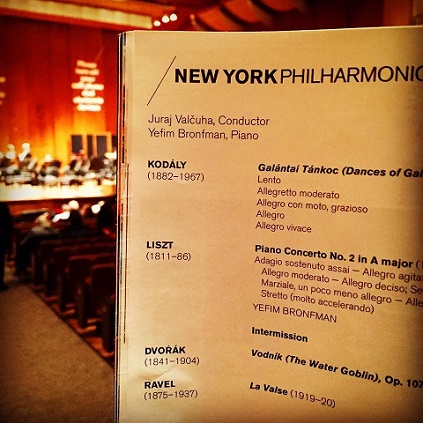
    This evening’s concert at The New York Philharmonic is something my friend Dmitry and I have been looking forward to since it was announced. Maestro Juraj Valčuha was on the podium tonight as Mr. Bronfman performed Liszt’s Piano Concerto #2 on a program that further featured works of Kodály, Dvořák, and Ravel.

    Opening the concert with Kodály’s Dances of Galánta; the Philharmonic had played this piece in 2013 and I was happy to experience this music again: it’s happy music!  Zoltán Kodály wrote his Dances of Galánta to celebrate the 80th anniversary of the Budapest Philharmonic Orchestra. Galánta is a small village in Hungary where the composer spent seven years of his childhood and where, thanks to the town’s popular gypsy band, the young Kodály became aware of of the style and motifs of gypsy music.

    Launched by a clarinet tune from the Philharmonic’s inimitable Anthony McGill, Dances of Galánta has a wonderful lilt and swagger. Flautist Robert Langevin and oboist Liang Wang pipe up charmingly, and the big, passionate main theme is irresistible. Maestro Valčuha – tall, handsome, and with an elegant baton technique – drew out all the vivid colours of the score, which ends with a romping folk dance.

    Mr. Bronfman then appeared, to a congenial welcome from the Philharmonic audience. Meticulous of technique and warmly confident in stage demeanor, the pianist’s performance of the Liszt Piano Concerto No. 2 was impressive in its virtuosic clarity and in its meshing of the piano line with the orchestra. Maestro Valčuha’s feeling for balance and pacing was spot-on. 

    The concerto, which Liszt tinkered with endlessly between 1839 and 1861, is particularly congenial to experience as it sweeps forward in one continuous movement over a span of about 20 minutes; yet it has the feel of a more traditionally structured concerto. Along the way, Liszt pairs the piano with various orchestral voices – a gorgeous piano/cello lullabye; rippling piano motifs as the oboe sings; high and delicate piano filigree over gentle violins; horns and cymbals sounding forth as the piano flourishes triumphantly. 

    Mr. Bronfman’s fluency in the rapid passages was a delight: sprightly in a high-lying scherzo passage, then swirling and cascading up and down the keyboard with joyous bravado. The concerto further alternates moments of big drama with passages of sheer melodic glow, all of which Mr. Bronfman delivered to us with his customary assurance and polish. 

    Audience and orchestra alike embraced the pianist with a prolonged ovation; an encore was given which elicited even more applause, and the affable Mr. Bronfman was called out twice again. Next season, he’s down for the Tchaikovsky 2nd with The Phil: it’s already on my calendar, circled in red. 

    Valcuha-Juraj

    Following the interval, Maestro Valčuha (above) and the Philharmonic players further displayed their cordial rapport in two well-contrasted “tone poems”:  Dvořák’s folkish and finely-orchestrated The Water Golbin (curiously enough, having its Philharmonic premiere tonight – some 120 years after it was written) and Ravel’s darkly magical La Valse, which always makes me think of Rachel Rutherford and Janie Taylor.

    While it seemed a bit odd not to have a symphony on the program, the two shorter works in the second half of the evening worked well together, were beautifully played, and allowed us to savor Maestro Valčuha‘s conducting from both a musical and visual standpoint.

    12742079_10153914529104761_5025851178161479995_n

    Photo by Dmitry.