Category: Dance

  • Bronfman & Braunstein @ Zankel Hall

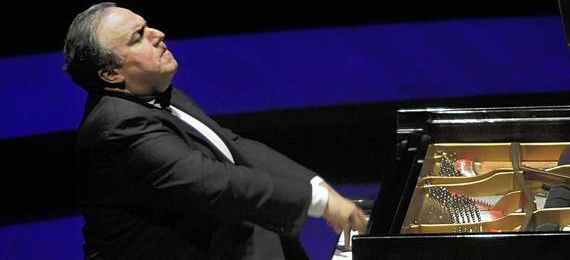
    Yefim-Bronfman

    Saturday June 18th, 2016 – Yefim Bronfman (above) concluding a Prokofiev piano sonata cycle at Zankel Hall this evening, playing the 5th and 9th sonatas. Violinist Guy Braunstein joined Mr. Bronfman for the two Prokofiev violin sonatas.

    After passing some days in a state of reclusive depression over the Orlando shootings, I ventured out tonight even though I was not really in the mood for it. But Bronfman is one of my most-admired musicians, and Prokofiev among my favorite composers, so I felt a strong desire to be there. Prokofiev’s music is not consoling, as a rule, though there are passages that reach to the soul, especially in the Andante of the second violin sonata, where Mr. Braunstein was at his finest this evening.

    Watching Yefim Bronfman perform is a particularly pleasing experience for me. He walks out, bows genially, sits down, and he and the keyboard become one. There are no frills, and no theatricality in his playing: it’s all about the music and his communing with it. Very brief pauses between movements keep the impetus of the music – and our delight in it – in true focus.

    Bronfman’s rendering of the 5th piano sonata was deeply satisfying, the audience engrossed as he immersed himself in the music’s ever-shifting melodic and rhythmic elements. This was exactly the ‘great escape’ from world-weariness I so desperately needed tonight. From its songful start, the opening Allegro tranquillo was a complete delight: the touches of dissonance adding spice, with wit, irony, and drama all having their say. A delicate march heralds the Andantino, with fetching trills, before things get darker and more emphatic, leading to a low-rumbling of a finish. By turns jaunty, lyrical, and pungent, the concluding Poco allegretto was polished off with Bronfman’s inimitable clarity and grace, the music seeming to vanish into a dream at the end.

    Hqdefault

    Above: Guy Braunstein

    Mr. Braunstein then joined the pianist for the violin sonata #1. Here the piano’s somber opening of the Andante assai gives way to a rather hesitant start for the violin, with some buzzing trills before things expand to a rather labored passage. Then the piano’s misterioso murmurs underpin the violin’s sliding scales. The emphatic start of the Allegro brusco drew some energetic foot stamping from Mr. Braunstein as the turbulence envelops us; and then suddenly his violin sings a lusty song. After re-grouping and re-energizing, the music turns more pensive – but only briefly: a riotous dance ensues, subsiding into lyricism before another dramatic surge.

    The Andante features a shimmering piano motif as the violin sings in the alto range; both instruments move to the higher spheres in a unison passage, which eventually goes very high indeed. Back to the alto colourings for more of the violin’s forlorn phrases. High and lilting, the piano signals the movement’s soft ending. A sprightly jig sets off the finale, calming eventually and leading to a delicate pizzicati paragraph. Some lively scrambling makes us think the end is nigh, but instead the violin’s mute goes on and rolling scales summon an impression of “the wind in a graveyard”; the sonata ends sadly.

    The performance drew an enthusiastic response from the sold-out house; a bit of iffy intonation from the violin in places mattered little in the end, since Braunstein’s mixture of poetry and vigor made the music so savorable. 

    Following the interval, Mr. Bronfman returned for the 9th piano sonata. The first movement starts gently, and continues amiably, though there’s an underlying restlessness. More expansive passages, and some low, rumbling scales lead to an eventual quiet finish. The second movement is scherzo-like, with rippling scales and a jogging rhythm; a pensive passage, more jogging, and another soft ending.

    The Andante tranquillo brought forth more Bronfman magic: a wistful melody, followed by a glittering brilliance that subsides to mystery and then to sadness. From deep rumblings, the music rises to a high melancholy. After a big start, the Allegro finale turns ironic; “shining” music gleams forth, surrendering to mirth, percolating on high, whispering a farewell. Here Bronfman’s virtuosity and subtle colorations were at their most alluring.

    To end the evening, Prokofiev’s second violin sonata, which had started life as a flute sonata, and which David Oistrakh had prevailed on the composer to re-cast for violin in 1943. This familiar work was played with a wonderful melding of the two instruments, the players so alert to one another and marking the beauty of the Andante with glowing sound. Traces of my earlier concerns about pitch in the violin line cropped up again, but my pianist-companion seemed to feel that the issue was minor, and so I let the energy and optimism of the Allegro con brio the finale carry me along…together with the rest of the crowd, who swept to their feet at the finish to salute the generous playing and the final expression of joie de vivre from the two players.
  • A Quartet of Female Choreographers

    13407164_3092102065116_6567679795283993630_n

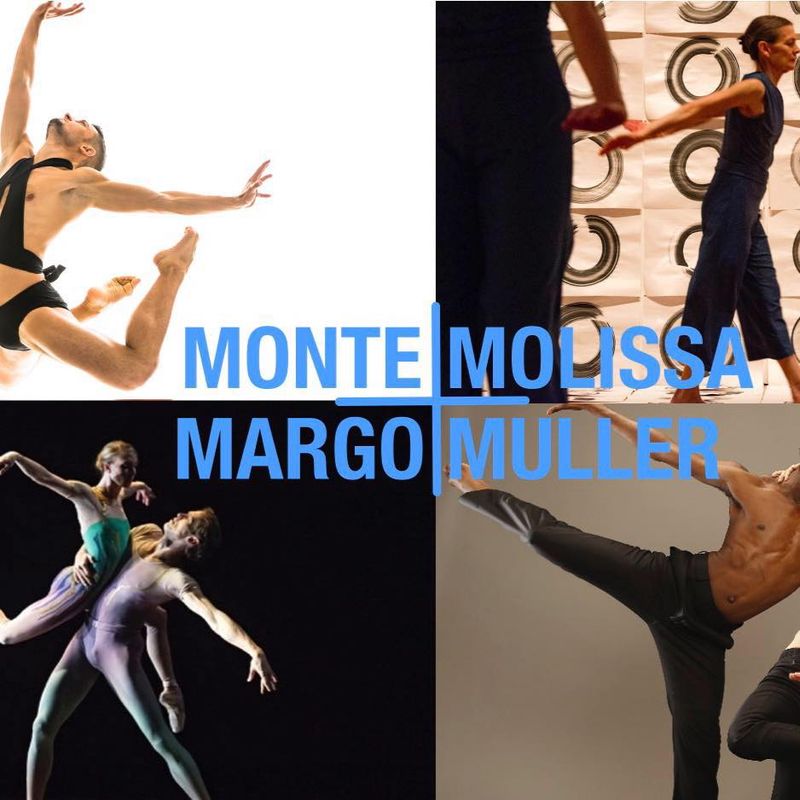
    Wednesday June 15th, 2016 – Works by four prominent contemporary female choreographers were on offer this evening at New York Live Arts. In a well-contrasted program, distinctive dancing and excellent lighting made each piece glow in its own unique way.

    One couldn’t ask for a more engrossing start to an evening of dance than that offered by Molissa Fenley and Company: a duet entitled THE THIRD COAST (Premiere), and MALI, a solo danced by Ms. Fenley. Evocative music by Ryuichi Sakamoto (duet) and Laetitia Sonami (solo), and splendid lighting by David Moodey, were attractive assets to these two works.

    In a violet world, dancers Christiana Axelsen and Rebecca Chaleff dance a stylized duet in-sync. Their moves and gestures imply a secret language. Dawn-light glows as the two continue to mirror one another. In a second, more animated section – to piano music – the lighting goes sea-green. The two dancers bring a compelling grace to the angular movement.

    This mysterious duet leads directly into the solo danced by Ms. Fenley: a captivating experience in every regard as the fusion of the soundscape – clattering, crunching, sloshing – the lighting, and the dancer’s mesmerizing movement held the theatre under a spell. Ms. Fenley’s arms and hands were so expressive, and her sense of commitment gave the work a gorgeous resonance.

    Elisa Monte’s DEXTRA DEI was originally set as men’s quartet: the choreographer’s 1989 response to the devastation of the AIDS epidemic. Ms. Monte has now expanded the work, adding four women to the cast.

    It is a work that is both somber and sexy, full of chiaroscuro effects created by the David Moodey lighting. To atmospheric music by Tibor Szemzo, four men roll onto the stage and form patterns of moving sculpture. The delectable Clymene Baugher rolls on from the opposite corner where she encounters Thomas Varvaro. Their intimate, floor-oriented duet ends in surrender and repose.

    Lithe and supremely feminine, Maria Ambrose appears and is manipulated aloft by the three remaining men; the music is ominous, with deep vocals and bird cries. JoVanna Parks and Shay Bland enter, jungle drums sound softly, reverberating in the rain forest mist. The men withdraw, the woman dance a quartet with fleeting solo passages: an exotic tribal rite of a restless sisterhood.

    The men reappear, repeating the movement motifs that initiated the ballet. Over a sustained note, partnerships form: stylized lifts and turns abound as pulsing music underscores the communal rituals. The work, perhaps just a trifle too long, showed off Monte’s dancers to perfection.

    Margo Sappington’s ENTWINED depicts the melding of bodies and spirits. At once sensual and magical, this on-pointe ballet is set to Erik Satie’s Gnossiennes. I was familiar with this work from having seen Jennie Somogyi and Charles Askegard perform the signature duet from it with Ballet Next in 2011.

    This evening I was particularly delighted to find Lily Di Piazza dancing in the ballet’s opening pas de trois; I remember Lily’s dancing from her SAB days. Ms. Sappington and I had a lovely chat before tonight’s show, and she told me she had originally made this role on Lily. 

    As mists roll by, Lily, Marjorie Fiering, and  Marlon Taylor-Wiles danced with effortless beauty, accenting the classicism of the vocabulary. Marlon’s impressive physique and his powerful charisma were a counterpoise to the elegant feminine allure of the two girls.

    Silken Kelly appears for a solo, danced in pools of light; the lyrical choreography was sublimely articulated by this radiant dancer. The exquisite Chrystyn Mariah Fentroy then joined Mr. Taylor-Wiles for the tender, languid pas de deux; performing with an intimacy which we are permitted to savor, the two dancers fused into a single spirit. The duet’s ensuing, more animated passage gave the dancers space-filling combinations and complex partnering elements.

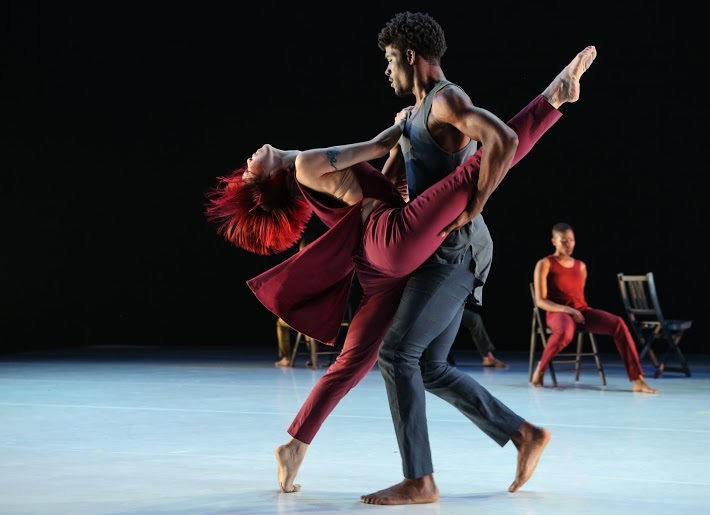
    Earlier this week, I caught a studio run-thru of Jennifer Muller‘s newest creation, WORKING TITLE.  Consisting of four duets – into which interjections by other dancers sometimes occur – the dancing is accompanied live by Yut Chia and Shayne Lebron Acevedo, of Yut and the Hot Four. Ms. Muller told me that she heard Yut playing in the subway station, approached him, and asked if he’d be up for a collaboration. The result is WORKING TITLE, a dancework about relationships that mixes passionate music and dynamic dance. A row of chairs is the setting for the characters, who come and go throughout the ballet, sometimes observing those who are dancing, sometimes isolated, withdrawn, deep in thought.

    In the opening vignette, Alexandre Balmain pursues Michelle Tara Lynch, setting up a duet of passionate turmoil, superbly performed by this alluring pair of dancers. Ms. Lynch’s hair becomes an active participant in the dance as she sought to steer clear of the young Frenchman’s advances. Alexandre’s line, and his lavish extension, continually lure the eye. Elijah Laurant, Ms. Muller’s newest dancer, turns this duet into a trio: his place in the romantic triangle is a bit ambiguous: we can’t tell if he’s just a troublemaker or if there’s some attraction between him and Alexandre…or him and Michelle. This added dramatic aspect keeps things lively.
    Gen Hashimoto then tries to interest Shiho Tanaka. Who could say “no” to Gen? But Shiho does. Their duet becomes tempestuous: Shiho’s solo marks her desire to be left alone, while Gen covers the space with his trademark sexy, bad-boy bravura. As Shiho continues to resist, the music pounds out a big beat.

    Sonja Chung, Elise King, and Seiko Fujita takes seats to observe the denouement of Gen’s attempted seduction: he and Shiho carry on – to no avail – as the music turns bluesy. 

    Index

    Sonja Chung (above, in a Julie Lemberger photo), a phenomenal dancer and presence, meets her match in height and allure in Elise King. As the two tall women veer between attraction and avoidance, emotions well up and feelings are hurt. Seiko Fujita tries to intervene – again, we don’t know her motive – but Sonja and Elise leave things unsorted.

    Index2

    Suddenly, Elijah Laurant sweeps Seiko Fujita off her feet (Julie Lemberger photo above) as they go wild in a high-energy duet, ripe with power and passion. 

    All the dancers then take seats, to ponder their solitary desires. Gen has another vivid solo, as does Sonja, and then a bit more brilliance from Seiko. All seek resolution. Sonja and Elise move off together; Gen finally persuades Shiho of his sincerity. We can’t be quite sure of the Michelle-Alexandre-Elijah situation. Seiko walks forward alone as the lights dim.

  • At Catherine Gallant’s Rehearsal

    L1730590

    Saturday June 11th, 2016 – I stopped in at the Ailey Studios this afternoon where Catherine Gallant and her very attractive troupe of dancers were in rehearsal, preparing for their upcoming performances at Danspace (St. Mark’s Church, 131 East 10th Street. New York, NY). Performance dates are June 23rd – June 25th, 2016, and you can purchase tickets here.

    Retrograde Universe is the title of this world-premiere production presented by Catherine Gallant/DANCE and Dances by Isadora, led by Artistic Director and Choreographer Catherine Gallant. Retrograde Universe includes four pieces by Gallant and three Isadora Duncan works. From Isadora, we will have an historical re-animation of Duncan’s Beethoven No. 7, which has not been performed since 1979; Three Scriabin Etudes, danced by Kristen Foote of the Limón Company on opening night; and Valse Brillante. Gallant’s Retrograde UniverseFinally, The Secret and Meeting #12 will show the contemporary aspects of the Company. The performance will feature musicians Christina Courtin and Yegor Shevtsov, and a visual creation from Nadia Lesy.

    In observing these lovely women today – going about their work with such dedication and such beauty of movement and expression – one feels a direct connection both with the well-spring of modern dance and with the indomitable feminine spirit. Gallant’s company is a collective of generational diversity and highly individual personalities molded into a community by their shared devotion to dance. 

    Today’s rehearsal included detailed work on some of the pieces to be shown at Danspace as well as a run-thru of the program. The woman swiftly changed costumes between works, while speaking quietly to one another and sharing a feminine bond: the atmosphere serious, but also light of heart and spirit.

    Here are some images that I was able to capture in the studio; much of the dancing was simply too fast-paced for me to capture, but I think the distinctive personalities of this bountiful band of women show thru.

    L1730455

    L1730489

    L1730541

    Ella Lang

    L1730657

    Francesca Todesco in Isadora Duncan’s Mother

    L1730671

    L1730687

    Janete Gondim and Eleanor Bunker in Catherine Gallant’s The Secret

    L1730697

    Janete and Eleanor in The Secret

    L1730706

    Eleanor Bunker

    L1730721

    Janete and Eleanor in The Secret. I was particularly moved by this dancework, and look forward to writing more about it after seeing it in performance.

    L1730737

    Michelle Cohen in Retrograde Universe

    L1730746

    The ensemble in Retrograde Universe

    L1730753

    Michelle Cohen

    L1730775

    Loretta Thomas

    L1730766

    Loretta Thomas

    L1730801

    Catherine Gallant

    L1730825

    Loretta Thomas

    L1730834

    Loretta Thomas

    L1730886

    Michele Cohen, Janete Gondim, and Margherita Tisato

    L1730889

    Catherine Gallant

    L1730913

    L1730925

    L1730931

    L1730946

    Michelle Cohen

    L1730952

    Catherine Gallant, Michelle Cohen

    L1730956

  • Joffrey Ballet Concert Group @ NYLA

    2016 St. Saens 4th mvmt. fouette jump Lindsey Felix, Daniel White, Genaro Freire JBS_CONCERT GROUP_5-25-2016_by Lucas Chilczuk-1277

    Above: Lindsey Felix, Daniel White, and Genaro Friere of the Joffrey Ballet Concert Group in Gerald Arpino’s Suite St. Saens; photo by Lucas Chilczuk

    Friday May 27th, 2016 – The JOFFREY BALLET CONCERT GROUP, under the Artistic Direction of Davis Robertson, performing a mixed program of classics (Gerald Arpino’s Suite St. Saens, and Balanchine’s Valse Fantaisie) along with newly-created pieces by Gabrielle Lamb, Robert Jeffrey, and Dwight Rhoden plus an Asaf Messerer pas de deux à la Russe to music by Rachmaninoff which brought down the house. A very attractive company of dancers held the audience in an attentive, appreciative state; excellent lighting (David Moodey) enhanced each ballet as this highly enjoyable program of dance unfolded before us. 

    Valse Fantaisie - Shaina Wire & Sergio Arranz saute de chat

    Above: Shaina Wire and Sergio Arranz in Valse Fantasie; photo by Lucas Chilczuk

    To start a ballet evening with Balanchine is always a good thing, and Valse Fantaisie – to the intoxicating Glinka score – engaged us immediately. Stacey Caddell has staged the ballet on the young Joffrey dancers, and they did very nicely by it. Four lovely ballerinas sailed thru the lyrical (and sometimes tricky) Balanchine choreography with a sense of joy; in the principal roles, Shaina Wire and Sergio Arranz were appealing in both appearance and technique, displaying a fine mixture of nobility and charm.

    Mr. Arranz was back onstage moments later, in silhouette, for the opening of Robert Jeffrey’s Confianza. This intimate, moody pas de deux is set to a collage of music by Benjamin Brown, Steven Stern, Eric Satie, and Max Richter. The choreographer gives the dancers – Victoria Santaguida and Mr. Arranz – complex and demanding partnering motifs which the couple handled with persuasive aplomb, bringing tenderness tinged with sensuousness to their dancing.

    And So It Goes - Sierra French & Genaro Freire in ecarte pull

    Above: Sierra French and Genaro Friere in And So It Was…photo by Lucas Chilczuk

    Dwight Rhoden’s And So It Was… is danced to Bach’s Partita #2 in D-minor. As smoke wafts across the dramatically-lit stage, a sexy atmosphere is developed with the seven boys in silky briefs and the girls sleekly costumed. The choreographer’s sense of musicality serves up a succession of duets – sometimes with all seven couples duetting at the same time – with an endless flow of dancers coming and going. As is so often the case in using Bach’s music, the ballet eventually began to feel repetitive; the dancers were able to sustain this longish work thru their personal attractiveness and commitment.

    Tessellations - Shayla Hutton & Sergio Arranz arabesque

    Above: Shayla Hutton and Sergio Arranz in Tesselations; photo by Lucas Chilczuk

    Gabrielle Lamb’s Tessellations provided a wonderful change of pace; using a brilliant mix of music by The Amestoy Trio and Cat Power, Gabrielle’s ballet at first seems to be just another ‘loner vs community” narrative, but it is far more quirky – ironic, moving, and witty by turns – and was expressively danced by the Joffrey troupe. 

    The dancers wear dark clothing and socks. The Amestoy Trio’s fresh meshing of gypsy, Parisian, and Latino influences is a kick to hear, and Cat Power’s vocals for a pas de deux has its own slightly gritty appeal. Periods of silence allow us a bit of reverie before the dancing moves on. The dancers alternately dance and observe, forming fleeting cliques and chains, standing in ordered designs, communicating in gestures, and creating a world in which alternating currents of sentiment and low-key street savvy hold us under a spell. It’s been a while since I’ve seen any of Gabrielle’s work, and this was really refreshing to experience.

    Spring Waters - Mariana Perez and Jon-Paul Hills ecarteJBS_CONCERT GROUP_5-25-2016_by Lucas Chilczuk-813

    Above: Mariana Perez and Jon-Paul Hills in Spring Waters; photo by Lucas Chilczuk

    Asaf Messerer’s Spring Waters, the boyish and muscular Jon-Paul Hills wowed the audience with the fearless strength of his partnering, placing his ballerina – Mariana Perez – in improbable lifts with the assurance of an Olympic athlete, catching her as she rushes to his arms and sweeping her overhead. The duet ends with a spectacularly high lift as Mr. Hills rushes across the stage and into the wings, bearing Ms. Perez aloft like an exulted icon: the audience simply went nuts as they sped away.  

    Gerald Arpino’s Suite Saint-Saëns was the closing number this evening, a large-scale work filled with movement and alert to the music’s many fragrances. The dancers enter one by one, with brisk jetés and meeting up in fleeting partnerings. Lindsey Felix, a featured soloist in the first two movements (Caprice Valse and Serenade) was agile and lovely to watch.

    The Serenade has a dreamier quality; four couples to start, with other dancers joining. The simple act of walking takes on its own resonance. An intimate pas de trois for Ms. Felix, Maria Sol Maratin, and William Hall evolves beautifully as other dancers come and go.

    A march-like theme jolts us, but soon settles in to a Minuet with a ‘classic’ pas de deux – and another big lift – before hastening on to the concluding Pas Redoublé which features leaping boys and even a set of fouetté turns. The music is bouncy, the dancing exuberant.

    Amid all the bustle and swirl of this wonderful ballet, a dancer who had not appeared earlier in the evening – Haojun Xie – made a very fine impression with his lithe jump and sincere presence.

  • Sumptuous Strings @ Chamber Music Society

    Photo

    Above: violist Yura Lee

    Sunday May 22nd, 2016 – Bringing together a sextet of first-class string players, Chamber Music Society of Lincoln Center presented the final program of their Alice Tully Hall season (a program which will be repeated on Tuesday, May 24th); music by Richard Strauss, Brahms, and Dvořák was on offer.

    In Richard Strauss’s intimate opera CAPRICCIO, a rehearsal of Flamand’s newly-composed string sextet is in progress as the curtain rises on the salon of the Countess Madeleine’s château. As the opera evolves, the Countess will be called upon by her rival suitors – the composer Flamand and the poet Olivier – to answer the eternal question, “Which is the greater art, poetry or music?”, and thus to determine which of the two gentleman she favors. The opera, which includes the beloved Moonlight Music and ends with the Countess’s ravishing final aria, has been a vehicle for such beloved sopranos as Lisa Della Casa, Dame Kiri Te Kanawa, and Renee Fleming.

    It was a real treat to hear the string sextet this evening in a concert setting, and especially as it was given such a radiant performance by today’s ensemble…an ensemble of stars. Erin Keefe, wearing a striking pleated gown of gunmetal grey which set off her auburn hair, displayed (all evening, really) her ability to spin out magical phrases over a vast dynamic spectrum: she can taper her tone down to a shimmering piano/pianissimo only to soar in full-bodied melody moments later. Across from Ms. Keefe, Yura Lee, in a deep persimmon shawl and be-jeweled stilettos, summoned heartfelt sounds from her viola. A delicious “trembling” motif heralded Nicholas Canellakis’ solo, with his lustrous depth of tone.
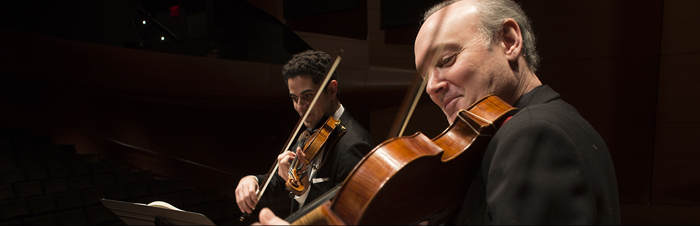
    As Wu Han remarked in a program note, one of the things players love most about performing string sextets is: you have a mate playing the same instrument sitting next to you. And when – as in today’s Strauss – these are musicians of the calibre of Ani Kavafian (violin), Matthew Lipman (viola), and David Finckel (cello), the level of music-making is off the charts. Such gorgeous and immaculate blendings of sound, and such congenial lyricism.

    From the Strauss, so deeply engaging both musically and emotionally, the players turned to Johannes Brahms’ String Quintet No. 1. This piece was a particular favorite of the composer himself, or at least that is the impression he gave in writing this to his publisher: “You have never before had such a beautiful work from me.”

    Ms. Kavafian took the lead here, playing with her signature grace and expressiveness; she and Ms. Keefe formed a de luxe violin duo, their voices mingling with engaging clarity and savoring their many pinpoint dynamic nuances. In the melodically abounding first movement of this work, Yura Lee’s viola sings – three times – a melody that brings to mind some of the composer’s most beloved lieder. At one point, Yura and Ani ‘converse’ with one another. Nick Canellakis’s cello gives the music its resonant grounding, whilst Mr. Lipman’s evident enjoyment of the music he is playing makes him a musician as pleasing to watch as to hear. 

    In the quintet’s second movement, the instrumental voices created a lovely chorale-like atmosphere; a more animated interlude soon gives way to a return to wistfulness, and then fades mysteriously away. For the concluding Allegro energico, the five players could cavort amiably thru the rhythmic shifts with zestful playing and much mutual eye-contact as the piece sailed on to its merry conclusion.

    Following the interval, Antonin  Dvořák’s Sextet in A-major, with its goodly portion of folkish elements, found all six players on optimum form. Right from the start, with Erin Keefe’s shining tone in the opening theme, one could sense we were in for a special treat. Nick Canellakis took up the melodic thread as the Allegro moderato proceeded thru some very imaginative harmonies.

    [A cellphone went off, but at least it was between movements…and it was a ‘classical-music’ ringtone.]

    In the second movement, Dumka: Elegie; Poco allegretto, a dance which is at once both droll and dolorous is heard. The music has a sad gypsy lilt. David Finckel’s cello sets up a treading motif, over which a lament from his fellow players suggests a walk to the graveyard. In a swift change of mood, the Furiant: Presto is lively as fleeting snatches of melody pass from voice to voice. A swaying feeling pervades the music.

    The resonantly poetic sound of Matthew Lipman’s viola sets forth the theme of the final movement; variations follow where we could again savour the silver-lit sheen of Ms. Keefe’s playing and delight once more in her ability to colour phrases with her dynamic gradations.

    A sprightly dance gives way to a thoughtful cello theme from Mr. Canellakis; things intensify before subtle turns of phrase draw us to a lingering fade-out. Ms. Keefe weaves a new variation on the melody as Mr. Finckel and the violas offer plucking support. And then a high-energy dance bursts forth, only to accelerate to double-time before an urgent rising motif sends us on to a grand finish.

    The players were called out twice by the delighted audience; both the players and their admirers seemed reluctant for the concert – and the season – to end.

    Now we will have a hiatus from CMS concerts, though the musicians we’ve come to love will stay busy playing here, there, and everywhere worldwide. For the second year, the Society will offer a Summer festival at Alice Tully Hall – details here – which will help to sustain us til the Autumn.

    The Repertory:

    The Participating Artists:

  • Ballet Academy East ~ Spring Performance 2016

    Facebook_logo1

    Friday May 20th, 2016 – Students from Ballet Academy East’s Pre-Professional Division took the stage at the Gerald W. Lynch Theater tonight to dance a mixed program marking the end of term.

    Alan Hineline’s ravvishing ballet Sans Nuages opened the evening, and as soon as it ended my companion Claudia Schreier and I agreed that we wanted to see it again…right away. It’s that wonderful. The ballet is set to the Serenade for Strings in E, Opus 22 by Antonín Dvořák and is danced by an ensemble of fifteen, including a principal couple and female soloist; we had seen a preview of it in March.

    With the girls in sumptuous creamy tutus, the ballet has a romantic swirl to it. The structure and musicality of Mr. Hineline’s choreography – and the way it showed the dancers always to best advantage – make it a ballet that companies everywhere should want to acquire. Excellent dancing from Petra Love in the soloist role and Yuki Takahashi and Alejandro Andrade in the central pas de deux; the entire cast in fact danced beautifully, clearly inspired by the lovely Dvořák score.

    Darla Hoover created two brief ballets for the youngest dancers from BAE; in setting the works to Salieri (Une Petite Introduction) and Bach (Un Petit Menuet), Darla wisely sets a standard of musical choices that will hopefully inspire these youngsters both in their dancing and in their lives. (The Bach melody, incidentally, was borrowed for a 1960s pop hit, Lover’s Concerto, by The Toys; it was later taken up by The Supremes.)

    Slightly older dancers took the stage for Jenna Lavin’s Gossec’s Gavotte, to music composed by François-Joseph Gossec. Central to this piece was a a solo turn for the petit danseur Tristan Massa; his charming performance won the hearts of the audience. 

    Following an intermission, TO BE CONTINUED…, Jenna Lavin’s second work on the program, found five of the advanced dancers backed by a younger corps de ballet. Ms. Lavin gets an extra  bouquet of roses for choosing music of Henry Purcell, a composer whose work simply cries: “Dance!”

    In this “blue” ballet, Alejandro Andrade gave a truly impressive display of male bravura dancing; he also partnered each of the four main girls in well-constructed duet passages. Mr. Andrade’s performance brought down the house.

    Alan Hineline’s de l’innocence brought forth pianist Steven Mitchell to perform Franz Schubert’s 16 German Dances. This very pretty ballet featured spacious dancing from Tallison Costa, four soloists, and a corps de ballet of ten. Mr. Hineline’s choreography flows nicely on the music here, as dancers in varying combinations sweep on and rush away in a succession of finely-shaped vignettes. Once again, the choice of music contributed greatly to the overall enjoyment of the program.

    To close this evening, the third act of Coppélia, choreographed ‘after Petipa’ by Roger Van Fleteren (Alabama Ballet’s Associate Artistic Director) was performed by the BAE dancers with handsome sets and costumes on loan from Alabama Ballet.

    Every time I hear music from Coppélia, I recall my own very brief ballet career. Watching this evening’s re-creation was actually quite a nostalgic experience for me: I found myself wondering where my dancing mates from so long ago are now, especially TJ.

    The large cast, skillfully deployed by Mr. Van Feteren in the limited stage space, all entered into the spirit of this naive, musically brilliant ballet. Mary Watters built a real character as Swanhilda, her bridal bouquet trembling in her hands until Franz said “I do.” The ballerina showed lovely musicality in her solo, with its musical hesitations mirrored by subtle pauses in her dancing. Mr. Andrade, in addition to his commanding virtuosity, showed himself to be a real stage creature with his easy, affable stage demeanor. Petra Love’s lyrical dancing as Dawn and the poetic reverie of Yuki Takahashi’s Prayer both reflected lovingly on the music, and Joseph Marlborough was the authoritative Burgermeister.

    As the unstoppable joy of the Delibes finale propelled the dancers on to the finish line, Ms. Watters reeled off an attractive set of fouettés whilst Mr. Andrade leapt and swirled about the stage with unabashed vitality.

  • Carter Brey: Schumann @ The NY Phil

    Tumblr_m2ozpelCxd1qa028to1_1280

    Above: NY Philharmonic principal cellist Carter Brey, with his colleague Eileen Moon

    Thursday April 28th, 2016 – Performances of Robert Schumann’s cello concerto seem to be something of a rarity, so I was glad of an opportunity to hear it at The New York Philharmonic tonight. I always love to see the orchestra’s principal players stepping out for a soloist turn. Carter Brey’s playing was most enjoyable, as was watching him play; his colleagues swamped him with affectionate applause as he took his bows.

    A new work by Franck Krawczyk opened the concert. I’m fairly open to new music; when new works are programmed, I am always hoping for two things: that the composer might go beyond good craftsmanship and somehow touch the soul, and that there would be something to remember in the music. I found both tonight in Mr. Krawczyk’s Après, having its world premiere in these performances.

    Both my companion and I felt a sense of narrative in Après: she envisioned a scene in nature with large trees and roaming beasts while I imagined the final days of a war and its immediate aftermath. The program notes imply no story of any kind, but the composer does pay homage to Beethoven, Kurtag, and Dutilleux. 

    Après commences with a poignant, intense theme, the lower voices glowering. A big passage for strings, with the violins soaring upward and the violas then exuding calm follows; a single sustained note from the clarinet introduces somber winds, and things turn ominous. For a few seconds the music ambles restlessly, with percussive effects introduced quietly: chimes, cymbals, snare drum. 

    Suddenly, a clattering arises: all the musicians begin to drum on their stands or tap their instruments. The horns herald an odd dance. An unsettled feeling – almost of being trapped – develops and there’s a huge build-up which evaporates to a single note from the piano.

    The crack of a whip sparks a march-like section, with loud chimes. The lower winds darken, only to give way to the work’s most fantastical passage: the mingling of solo harp and piano creates an eerie tranquility. So atmospheric! The winds re-enter, the violins lament, the harp and piano sound together again. Brass and percussion swell to a great loudness, the violas are plucked, and then, in a wisp, the harp gives us a mysterious ending.

    The youthful-looking composer appeared for a bow; having heard Après – with that bewitching harp and piano motif – and having read of Mssr. Krawczyk’s musical roots (he was an accordionist), I’ll be finding more of his music to explore in the less hectic days of Summer. Of the new works presented in recent months by the Philharmonic, I rate Après very highly indeed.

    Mr. Brey then appeared for the Schumann concerto. Both the work and his playing of it were thoroughly pleasing, as was the feeling he conveyed of truly enjoying the music and of listening to his colleagues attentively in those moments when the soloist is silent. 

    Three movements are listed for this concerto, but they are played without pauses in between so that it becomes an arc, a sort of cello tone-poem. It opens with a heartfelt, rather sad theme. Even when things become more animated, there is a sense of longing. Mr. Brey’s playing is subtle and refined in the more sustained passages: there’s a constant stream of melody for the cello over commenting strings. Rising scales recur, and the French horn has some lovely moments.

    There’s an ironic waltz, with the pensive cello playing deep and lulling as the violins and violas are gently plucked. A tender cello theme leads to what ‘should be’ a cadenza, but the orchestra continues to play a part.

    Suddenly a dance erupts, and Mr. Brey’s animated fiorature cover a wide range at high speed. The virtuosity continues, with the orchestra stately or turbulent by turns, to the end; the audience couldn’t restrain their applause, breaking in before the final note had faded away. The tall cellist was warmly hailed, embraced by the conductor, and lionized by his colleagues.

    The program concluded with the Brahms 2nd symphony; it was (needless to say) gorgeously played, and Alan Gilbert’s vision of it is most congenial. I very much enjoyed watching the Maestro’s podium choreography tonight.

    In a letter on his second symphony, written around the time of its premiere, Brahms apparently referred to the state of melancholy as a signature of this work. There is, to be sure, a tinge of sad regret that runs thru the music, but also passages of hope, romance, affirmation. Overall, it is a warmly wonderful infusion for the spirit.

    The Brahms Second is rather front-loaded; the first two movements together last about 30 minutes while the final two together take less that half that time. The third and fourth movements – for all their  appeal and zest – seem somewhat light-weight after the riches of the first two. Of course, everyone is listening for the famous “lullaby” – which my grandmother actually sang to us when we were small: “Go to sleep, go to sleep, it is night-time for baby.” I also remember Christa Ludwig singing the ‘Brahms Lullaby’ as an encore at a recital she gave in this very hall many moons ago. The theme recurs in various guises throughout the opening movement of the 2nd symphony.

    Horns and winds welcome us, and a unison violin theme develops grandly and spreads thru the orchestra; the playing is resplendent. A horn solo lingers in the memory. The cellos play a lovely theme at the start of the second movement; horns and winds again mingle voices and the adagio moves opulently forward. Winds play over plucked celli, dancing thru the third movement towards a presto finish, and in the fourth movement a gentle start soon goes grand…and oddly Russian. The broad flow of melodies is simply delightful to bask in as the symphony sails to a spirited finale. Maestro Gilbert and his players were at their very finest here (all evening, actually) and the applause was still echoing as I walked up the aisle. 

    Tonight’s concert honored The Philharmonic’s retirees – four who are currently playing their final season, and several former members who were in the audience tonight and who stood for a bow. Retiring violist Irene Breslaw and violinist Carol Webb each made heartfelt speeches, recalling the high points of their years with the orchestra and speaking fondly of their colleagues. Their words were very moving.

    Flautist Sandra Church and violinist Newton Mansfield (a 55-year Philharmonic veteran!) are also in their final season; and violist Katherine Greene was honored tonight as she is celebrating her 25th anniversary with the orchestra.

  • The Romantic Viola @ Chamber Music Society

    042416_TRV

    Sunday April 14th, 2016 – No fewer than eight violas were in play on the Adrienne Arsht Stage at Alice Tully Hall this evening as Chamber Music Society of Lincoln Center offered an exceptional program, curated and head-lined by Paul Neubauer (above), in which the viola was heard in music by seven different composers (plus one anonymous composition). The program ranged from mid-19th century works to a world premiere by Joan Tower, who was present and took a bow…and got a kiss from Mr. Neubauer.

    A Robert Schumann rarity and a fantasy-suite by August Klughardt were the first two works on the program; written about twenty years apart, the two pieces each call for violist, pianist, and a woodwind collaborator. It was our good fortune this evening to have clarinetist Romie de Guise-Langlois and oboist James Austin Smith joining Mr. Neubauer and pianist Alessio Bax. Both Mlle. de Guise-Langlois and the dapper Mr. Smith are elegant players, and both are blessed with astonishing breath control.

    Romie-de-guise-langlois-155x232

    Above: Romie de Guise-Langlois

    The Schumann opens like a breath of Springtime. Clarinet and viola pass melodies back and forth, eventually honed down to a dialogue where they finish one another’s sentences. Underscored by Mr. Bax’s immaculate playing, Mlle. de-Guise-Langlois’ and Mr. Neubauer’s blend of timbres was most appealing. The second movement veers from march-like to moments of ironic deftness to a free flow of song, which the pianist takes up. Poignant and pensive, the third movement has a touch of mystery; here Mlle. de Guise-Langlois was able to sustain long lines with total control, tapering the tone into a sweet blend with the Neubauer viola. The animated fourth movement – which pauses midway thru for a gently-paced passage – was as pleasant to watch as to hear, as the eye-to-eye contact of Romie and Paul was keenly focused; Mr. Bax’s piano provided added joy.

    James-sq

    Above: James Austin Smith

    The slender frame and expressive face of James Austin Smith might have graced the salons at Kellynch Hall or Pendersleigh Park: a youthful, romantic figure. His playing also has an Olde World geniality: dulcet of tone and (as with Mlle. de Guise-Langlois) blessed with an uncanny ability to spin out long lines. In August Klughardt’s Schilflieder, Mr. Smith established at once an ideal rapport with Paul Neubauer.

    The first of the five “fantasies” opens with solo piano, soon joined by the plaintive oboe and the soulful viola; the second brings the restless viola into harmonizing with the oboe. Mr. Bax’s dreamy playing leads off the third movement, with the viola and then the oboe singing sadly and tenderly; the pianist’s sense of delicacy was a lovely asset here. The fourth movement begins dramatically, with viola and oboe sounding forth over a rippling piano motif.

    Mr. Smith’s formidable breath control was much admired in the closing movement; the atmosphere is poetic and sustained, the viola wistful. A nicely-turned cadenza for oboe led to the end of the work with a very sustained joint oboe/viola note. 

    Both the Schumann and Klughardt were brand new to me, and both made me wonder why we don’t hear them played more often. Of course, the Gordon Jacob piece for eight violas will always be a rarity, simply because the logistics of getting eight first-rate violists together to rehearse and perform it would take some doing. Mr. Neubauer was able to call upon his viola-playing colleagues to assemble a classy octet – including Cynthia Phelps, the NY Phil’s principal violist. Ida Kavafian and Daniel Phillips, more usually seen with their violins, took up violas to join in the fun tonight. Along with Mr. Neubauer, Hsin-Yun Huang, Richard O’Neill, Lawrence Dutton, and Pierre Lapointe formed a very impressive ensemble.

    This Suite for Eight Violas, composed in 1976, created quite a buzz. It opens with a unison “Russian” theme, the eight voices blended in song. The second movement, Scherzo and Drone, is a sprightly romp: a folk-dance with a sly finish. Sweet sadness prevails in the Chorale: Lento. Richard O’Neill then kicked off the closing Tarantella with swirling rushes of notes alternating with gentler interludes. A broad melody sweeps us thru to the end. The audience, clearly relishing the combined talents of these eight artists, sent up an enthusiastic ovation. 

    Following the interval, Paul Neubauer appeared alone onstage. 

    I love Joan Tower’s music, and I really enjoyed hearing tonight the two solo works she wrote expressly for Mr. Neubauer, the second of which was having its world premiere. Simply Purple is deceptively simple; a slowly rising scale, with a deep sense of mystery pervading, must be delivered with consummate control and subtle dynamic variants. The premiere, Purple Rush, is a scurrying downward swirl; it goes low and dusky, with cascades of notes and shimmering, slippery slides. Mr. Neubauer’s mastery held the audience throughout; and it was so nice to see Ms. Tower there, sharing the applause with the violist.

    Jennifer_Johnson_Cano

    Stepping across the Plaza from The Met, where she has been appearing as Emilia in Verdi’s OTELLO, mezzo-soprano Jennifer Johnson Cano (above, in a Fay Fox photo) sang the two Brahms viola songs, the only music on the program that I was familiar with. A comely young woman with a voice to match, Ms. Cano’s warm, even tone and her natural feeling for the words – and for finding beautiful hues to express them – provided a most appealing rendering of these two familiar and beloved melodies. She formed an immediate rapport with Mr. Neubauer as they faced one another across their music stands; their blend of timbres was a pleasure to hear, and Mr. Bax, at the Steinway, continued to take a major role in the proceedings with his lustrous playing. May we have Ms. Cano back please – and soon! – perhaps for the Wesendonck Lieder?

    Photo_abax

    Above: Alessio Bax, a superb pianist who played in six of the works on offer this evening

    A flash of Spanish light and colour is welcome on any concert program; tonight, Joaquín Turina’s Escena andaluza proved yet another notable discovery. An opening cascade from the piano becomes a caress. Ms. Kavafian and Mr. Phillips are back with their violins now, and together with Richard O’Neill (viola),  Paul Watkins (cello), and Mr. Bax at the piano they catch the music’s sensuous moodiness and underline Mr. Neubauer’s tonal affluence ideally. Outstanding playing from Romie de Guise-Langlois put the final flourish on this miniature Andalusian tone poem.

    A lilting and passionate violin solo (Ms. Kavafian) is answered by Mr. Watkins’ velvety cello; Mr. Bax’s keyboard shifts between the insinuating and the rhapsodic, and there’s a flurry of string instruments being plucked.

    Ms. Kavafian opens the second section of the Turina playing in the high range. The music glides from sly seduction to rising desire and on to a shimmering glow before the pianist – abetted by the clarinet – urges us to surrender to our passions.

    The same ensemble from the Turina remained onstage for Hermann Schulenberg’s Puszta-Märchen; they were already seated and raring to go. But where was Paul Neubauer? The ensemble struck up – a gypsy romance – and Mr. Neubauer stepped from the wings, already playing, and strolled down the steps and into the audience. He stopped next to me and my friend Claudia Schreier and – fixing me with an intense gaze – played a dusky, wine-drenched melody with great passion; I could actually feel the resonance of the music rising from the viola. He then locked eyes with Claudia and continued to play, totally by instinct. Momentarily he walked away, but then came back to us to continue his serenade. After a few moments he turned his attention to the usherette and played to her on intimate terms.

    Onstage, his colleagues were continuing to play while keeping one eye on the wandering minstrel. Suddenly they switched to a brilliant czardas; Mr. Neubauer returned to center-stage, playing on with virtuoso élan, and evoking swirling roulades from Romie’s clarinet. The music halted as all the players stomped their feet, and the audience burst into applause.

    Mr. Neubauer’s arrangement of Rumanian Canary, with its bird-song ‘cadenza’, was the concluding delight of the program. This led to a joyous standing ovation, and the players being called out twice.

    Being serenaded by Paul Neubauer is something I’ll always remember: an unexpected and charming episode in my life – a life that remains full of surprises. 

    The Repertory:

    The Participating Artists:

  • Sibelius & Mahler @ The NY Philharmonic

    Hampson

    Above: baritone Thomas Hampson

    Friday April 22nd, 2016 matinee – A matinee performance by The New York Philharmonic pairing the Sibelius seventh symphony with Mahler’s Das Lied von der Erde. Alan Gilbert was on the podium, with soloists Stefan Vinke and Thomas Hampson singing the solo parts in the Mahler.

    The two works made an ideal pairing; the Sibelius 7th (first performed in 1925 under the title Fantasia Sinfonica) lasts only about 20 minutes and is written as a single-movement. From its opening rising scale which blooms into regal theme, the symphony compensates for its relative brevity with music of almost cinematic breadth. Abundant in melody, the piece has an Autumnal quality; though Sibelius would live until 1957, he wrote very little music after 1926. This last symphony is both serene and passionate; it leaves us wondering ‘what might have been’ if he had continued writing.

    The Sibelius was played with savourable richness by the Philharmonic artists today, and Maestro Alan Gilbert was very much in his element here; following the interval, players and conductor were joined by the two vocal soloists and a thrilling performance of Mahler’s Das Lied von der Erde commenced. 

    Still recovering from the sorrow of his daughter’s death, Mahler learned in 1907 that he was suffering from a heart condition that would, within four years, prove fatal. In The Song of the Earth, the composer’s awareness of the possibility of an approaching end prompted the composition of a great hymn to Nature and to the sheer ecstasy of living. Drawn from The Chinese Flute, a collection of ancient Chinese poems translated by Hans Bethge, the six ‘songs of the Earth’ speak of drunken defiance of impending death, of the solitary life, of the transience of youth and beauty, and of a friendship which endures beyond parting and into eternity.

    The tenor is allotted the more extroverted songs; the first, third, and fifth. Stefan Vinke’s formidable power and stamina proved equal to the fierce demands Mahler’s vocal writing places on the singer: high in tessitura and including exposed, sustained notes in the topmost range, the tenor’s muscular singing was just what’s needed. An occasional trace of pitchiness didn’t detract from Mr. Vinke’s generous singing. And I must note the lovely violin theme from Frank Huang in the fifth song, “The Drunkard in Spring“.

    (Note: it’s just been announced that Stefan Vinke will be replacing Johan Botha when James Levine and The Met Orchestra perform excerpts from Wagner’s RING Cycle at Carnegie Hall on May 26th. Christine Goerke is the soprano soloist.)

    Both mezzo-sopranos and baritones have performed the ‘other’ solo role in Das Lied von der Erde the formidable Margarete Matzenauer sang it at the NY Philharmonic premiere in 1929. Today, it was baritone Thomas Hampson whose strikingly expressive singing moved me and my companion to a tearful state as the work came to an end.

    I have admired Thomas Hampson since his Met Auditions win in 1981; among his many Met roles that have particularly impressed me have been: Count Almaviva, Billy Budd, Posa in DON CARLO, Werther, Eugene Onegin, Wolfram in TANNHAUSER, Amfortas, Iago, and – most surprisingly and most recently – Wozzeck. He walked onstage today – tall, handsome, and elegant in a tux – with an amiable self-assurance that made me think we were in for something special; Hampson delivered an intensely satisfying performance. 

    Liang Wang’s oboe solo at the start of “The Solitary One in Autumn” signaled a turn of mood from the boisterous drinking song with which Mr. Vinke had launched the cycle. As Mr. Hampson began to sing of his loneliness and weariness of spirit, his marvelous gift for poetic expression as well as the inherent beauty of his vocal timbre drew me into the music; the external world faded, and the music became the reality.

    Midway thru the fourth song, “Of Beauty“, a big dance-like theme erupts, and the baritone seemed ready to dance himself. His singing was characterful and, as the music simmers down, he did some lovely heady effects as well an plunging into basso territory briefly.

    It was in the final song, “Farewell”, that Mr. Hampson’s performance put me over the edge. Liang Wang’s oboe and Robert Langevin’s flute establish a wistful mood. The baritone’s thoughtful and sustained singing is beautifully enmeshed in some wonderful playing from the winds; oboe and harp unite; horn, cello, bassoon, and bass clarinet add poignant colours to the canvas. “All longing has become a dream,” sings the poet.

    In a spine-tingling moment, Mr. Hampson’s tone adopts a ‘dead’ emptiness, matched by plaintive flute. “I wanted to bid my friend a last farewell!” – how many of us have sadly been deprived of just such an opportunity! Mandolin and celeste are heard, as if from out of a dream of past happiness. “Where are you going, and why must it be?” asks the forlorn friend as the parting draws nigh, and they share the stirrup cup. The song ends with an affirmation of faith in life’s renewal, but even here there’s an illusive feeling. Nature holds sway with the “…luminous blue of distant space…everywhere, forever… forever and ever….”

    Alan Gilbert’s baton was suspended in air as the music faded to silence. An ovation of particular warmth ensued, with the maestro, the singers, and the musicians basking in the joy of having shared in a magnificent collaboration.

  • Paul Taylor @ Lincoln Center 2016 – Part II

    ImageProxy.mvc

    Above, one of the best of the best: Robert Kleinendorst of PTAMD

    Tuesday March 29th, 2016 – This evening’s performance by Paul Taylor’s American Modern Dance in the final week of their Lincoln Center season opened with a classic Taylor ‘white’ ballet, Equinox, set to music of Johannes Brahms which was performed (lovingly) live by a string quintet.

    Two principal couples – Laura Halzack with Robert Kleinendorst and Paris Khobdeh with Michael Apuzzo – perform some of Paul Taylor’s most inventive and pleasing partnering passages with a feeling of lyrical athleticism. A long solo by Ms. Halzack was enchanting to behold. A quartet of dancers – too stellar to be deemed “supporting” – moved with captivating urgency and grace: Michelle Fleet, Eran Bugge, Sean Mahoney, and James Samson. The white costumes evoke Summer, but the Brahms themes hint at the approach of Autumn. Heartfelt dancing and playing from everyone involved.

    The Weight of Smoke (a new Doug Elkins work) was a hot mess. The choreography is loaded with gimmicks and clichés while the fusion of Baroque (here, Handel) with contemporary club beats and noisy effects has been done before and has lost its cleverness. The dancers may have enjoyed the opportunity to cut loose, not having to think too much about technique or precision, but to me (and my choreographer-companion) the work seemed endlessly aimless and mildly embarrassing. Laced with gender-bending elements, with two women in a sustained kiss, and sashaying gay-boy stereotypes, the work ambled on with lots of energy being expended on retro-provocations. In the end, I was thinking: “You have sixteen of the best dancers on the planet to work with, and this is what you came up with?” 

    The evening ended on the highest of possible high notes with Paul Taylor’s Promethean Fire; the same sixteen dancers who slogged their way thru the tedious Elkins now appeared in Santo Loquasto’s incredible black costumes and treated us to a feast of impeccable dancing in this darkly dazzling ballet.

    Paul Taylor’s choreography here gives Mr B a run for his money in terms of musicality and structure…and it looks gorgeous on Mr. B’s own stage. The Leopold Stokowski orchestrations of music by J. S. Bach seem jarring at first but Mr. Taylor was right to choose them as they mesh well with the opulent energy of the dancing.

    The live music (Orchestra of Saint Luke’s under Donald York’s baton) was a wonderful enhancement to the onstage splendour; it’s a great piece for zeroing in on individual dancers as they move with such assurance and beauty of spirit thru choreography that must be a sheer delight to dance.

    Promethean_8456_retouch

    The central passage of Promethean Fire is a pas de deux which was danced tonight by Parisa Khobdeh and Michael Trusnovec (above). Their physical allure and their sense of the importance of the steps and port de bras made this such a richly rewarding experience, both visually and spiritually.

    Production photo © 2015 Paul Taylor’s American Modern Dance