Category: Dance

  • Barnatan|Honeck @ The NY Philharmonic

    Barnatan_16-500x500

    Thursday February 16th, 2017 –  Beethoven’s 1st piano concerto, with soloist Inon Barnatan (above), and Mahler’s 1st symphony were paired in tonight’s New York Philharmonic performance under the baton of Manfred Honeck.

    Beethoven’s 1st piano concerto was used by choreographer Helgi Tomasson in 2000 for his gorgeous ballet PRISM, originally danced by Maria (‘Legs’) Kowroski and Charles Askegard at New York City Ballet: that’s how I fell in love with this particular concerto. Throughout the third movement tonight, I was recalling Benjamin Millepied’s virtuoso performance of Tomasson’s demanding choreography.

    Israeli pianist Inon Barnatan, currently the first Artist-in-Association of the New York Philharmonic, has thrilled me in the past with his playing both with the Philharmonic and in frequent appearances with Chamber Music Society of Lincoln Center. And I don’t use the word ‘thrilled’ lightly. 

    Mr. Barnatan’s playing of the Beethoven this evening was remarkable as much for its subtlety as for its brio. Maintaining a sense of elegance even in the most whirlwind passages, the pianist had ideal support from Maestro Honeck and the artists of the Philharmonic. The cascading fiorature which sound soon after the soloist’s entrance were crystal-clear; with Mr. Barnatan relishing some delicious nuances of phrase along the way, we reached the elaborate cadenza where the pianist demonstrated peerless dexterity, suffusing his technique with a sense of magic.

    From the pianissimo opening of the Largo, Mr. Barnatan’s control and expressiveness created a lovely sense of reverie. He found an ideal colleague in Pascual Martinez Forteza, whose serenely singing clarinet sustained the atmosphere ideally. Maestro Honeck and the orchestra framed the soloist with playing of refined tenderness; the Largo left us with a warm after-glow.  

    The concluding Rondo: Allegro is one of the most purely enjoyable finales in all the piano concerto literature. Good humor abounds, the music is expansive, and a jaunty – almost jazzy – minor key foray adds a dash of the unexpected. Mr. Barnatan was at full-sail here, carrying the audience along on an exuberant ride and winning himself a tumult of applause and cheers. He favored us with a brisk and immaculately-played Beethoven encore, and had to bow yet again before the audience would let him go. 

    Inon Barnatan has, in the past two or three years, become a ‘red-letter’ artist for me – meaning that his appearances here in New York City will always be key dates in my concert-planning. His Gaspard de la Nuit at CMS last season was a true revelation, and tonight’s Beethoven served to re-affirm him as a major force among today’s music-makers. 
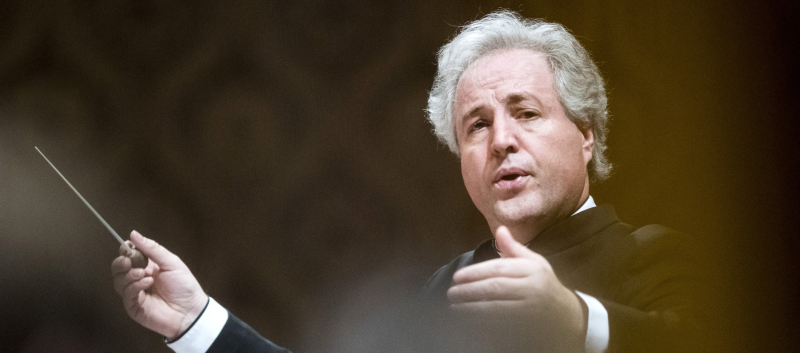
    Manfred-honeck-header

    Maestro Honeck (above) returned to the podium following the interval for the Mahler 1st. In the course of the symphony’s 50-minute span, the Maestro showed himself to be a marvelous Mahler conductor. The huge orchestra played splendidly for him, and the evening ended with yet another resounding ovation.

    From the ultra-soft opening moments of the first symphony, which Mahler described as sounds of nature, not music!”, this evening’s performance drew us in. The offstage trumpet calls seem to issue from a fairy-tale castle deep in a mysterious forest. The Philharmonic’s wind soloists – Robert Langevin, Philip Myers, and Liang Wang among them – seized upon prominent moments: Mr. Wang in fact was a key element in our pure enjoyment of the entire symphony. The pace picks up, and a melody from the composer’s Wayfarer songs shines forth; the music gets quite grand, the horns opulent, the trumpets ringing out, and so on to a triumphant climax.

    The symphony’s second movement, a folkish dance, also finds the horns and trumpets adding to the exuberance. After a false ending, a brief horn transition sends us into a waltzy phase, with winds and strings lilting us along. Then the movement’s initial dance theme returns, accelerates, and rushes to a joyful finish.

    The solemn timpani signals the ‘funeral music’ of the third movement; a doleful round on the tune of “Frère Jacques” ensues, but perhaps this is tongue-in-cheek Mahler. Mr. Wang’s oboe again lures the ear, and a Wayfarer song is heard before a return to the movement’s gloomy opening atmosphere. The unusual intrusion of a brief gypsy-dance motif melts away, and the funeral cortege slowly vanishes into the mist.

    Maestro Honeck took only the briefest of pauses before signaling the dramatic start of the finale. A march, a lyrical theme, a romance that grows passionate: Mahler sends everything our way. After several shifts of mood, it begins to feel like the composer is not quite sure how he wants his symphony to end. Various motifs are heard again, and at last Mahler finds his finish with a celebratory hymn, the horn players rising to blaze forth resoundingly.
  • Brahms & Fauré @ Chamber Music Society

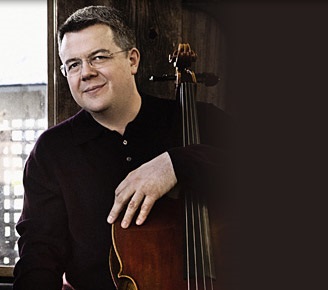
    Paul Watkins

    Above: cellist Paul Watkins

    Sunday January 29th, 2017 – Following an unsettling week, it was particularly reassuring to settle into the embracing space of Alice Tully Hall this evening and be serenaded by four estimable musicians in Chamber Music Society of Lincoln Center‘s program of works by Johannes Brahms and Gabriel Fauré. 

    In 1853, Robert Schumann and Johannes Brahms teamed up with Schumann’s student, Albert Dietrich, to write a “welcome home” sonata for violinist/composer Joseph Joachim, whose travels had kept him away from Düsseldorf for several weeks. The music was set around the notes F-A-E, which stood for Joachim’s personal motto, “Frei, aber einsam” (‘Free, but lonely’). Dietrich wrote the first movement, with Schumann taking on the second and fourth, leaving Brahms with the third.

    Joachim retained the sole copy of the score after performing it; he had the Brahms Scherzo published in 1906, after the composer’s death; the full sonata was not published until much later.

    The complete ‘FAE Sonata‘ is rarely heard these days, but the Brahms Scherzo has become a popular stand-alone work in the chamber music repertoire. It commences in a brisk, passionate mode which returns following an affettuoso interlude. Tonight, violinist Ani Kavafian and pianist Alessio Bax brought great energy to the opening paragraph, subsiding to a gently rhapsodic state in the calm of the central section before setting up a spirited drive to the finish.

    Violist Yura Lee and cellist Paul Watkins then joined Ms. Kavafian and Mr. Bax for the Fauré. A unison string theme opens the quartet, with the entrance of the piano filling out the sonic texture that will keep us enchanted for the next half-hour. Ms. Lee’s wonderfully sensitive playing – a hallmark of the evening – meshed lyrically with the sweetness of Ms. Kavafian’s violin, the quiet rapture of Mr. Watkins’ cello, and the elegant romance of Mr. Bax’s phrasing from the Steinway. The music veers briefly to the dramatic before subsiding into a cushioning warmth from viola and cello whilst the violin wafts on high.

    Plucking strings and a rolling theme from Mr. Bax open the second movement. Later, the piano comments ironically as the strings try to revive the first movement’s main theme in a rather off-kilter manner; the music slows, and then steals away.

    In the Adagio third movement, Yura Lee’s dreamy playing had a transportive quality; Fauré’s student Charles Koechlin has written that “…the viola would have to be invented for this Adagio if it did not already exist…”, and Ms. Lee’s playing underlined the truth of that notion. Moving forward, violin and piano achieve a lovely blend and the music begins to turn passionate; Fauré manages a balance of intensity and calm in this movement that is quite unique.

    A darker and somewhat turbulent mood is created at the start of the quartet’s concluding Allegro molto: Ms. Lee and Mr. Watkins sing a deep theme together before a more lilting quality begins to rise. Mr. Bax commences a dance, drawing the string players in with his rhythmic emphasis as the music builds and dances on to an exuberant end.

    Following the interval, the performance of the Brahms second quartet was somewhat compromised by the high-pitched sound of a faltering hearing-aid battery. After the quartet’s first movement, Ms. Kavafian asked the audience if they were hearing it too, and several people replied in the affirmative. The players took a moment to gather their concentration before proceeding. Annoying as such disruptive sounds are to the audience, it must be doubly difficult to play in such circumstances as the musicians are always listening for one another and the extraneous sound must be particularly jarring. They played on, admirably, and the noise seemed to subside as the performance evolved.

    It was in the Brahms quartet that Mr. Bax seized upon the prominence the composer assigned to the piano’s role and delighted us with truly gorgeous playing; my notes are full of little stars and exclamation marks, and scrawls of “Bax…Bax…Bax!”

    Rhythmic distinctiveness marks the first movement, the four players ever-alert to nuance as cello and violin each have a passage of stepping forward. And then, it’s in the Adagio that we get to the heart of the matter: commencing as a lullaby, the piano’s tranquil, song-like theme was an outstanding Bax passage. The string voices murmur deeply and the piano replies; passions ebb and flow, and the strings unite in a brief trio. Ms. Kavafian and Mr. Watkins play in unison, leading to the development of a big song from which the violinist eventually shimmers upward; a hushed coda aptly rounds out this Adagio dream.

    A simple song opens the Scherzo, which moves on thru various permutations. A transition to a more energetic passage leads to more animated playing, with a Hungarian lilt. This gypsy colouring extends into the quartet’s concluding Allegro, with Ms. Kavafian and Mr. Bax leading the way. The folksy dance motifs, however, are tempered by an unhurried feeling. The music becomes almost gentle at times, before a final build-up.

    We emerged into the cold chill of impending February, jolted back to the realities of life. Now – more than ever – we will seek solace in great music, art, poetry, and dance, looking to concert halls and museums as sanctuaries of reason and compassion.  

    • Brahms Scherzo, WoO 2, from “F-A-E” Sonata for Violin and Piano (1853)
    • Fauré Quartet No. 2 in G minor for Piano, Violin, Viola, and Cello, Op. 45 (1885-86)
    • Brahms Quartet No. 2 in A major for Piano, Violin, Viola, and Cello, Op. 26 (1861)
  • Brahms & Fauré @ Chamber Music Society

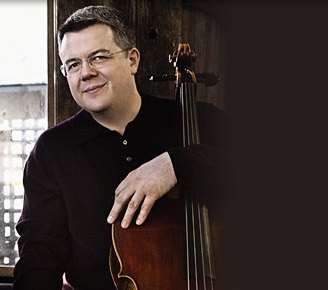
    Paul Watkins

    Above: cellist Paul Watkins

    Sunday January 29th, 2017 – Following an unsettling week, it was particularly reassuring to settle into the embracing space of Alice Tully Hall this evening and be serenaded by four estimable musicians in Chamber Music Society of Lincoln Center‘s program of works by Johannes Brahms and Gabriel Fauré. 

    In 1853, Robert Schumann and Johannes Brahms teamed up with Schumann’s student, Albert Dietrich, to write a “welcome home” sonata for violinist/composer Joseph Joachim, whose travels had kept him away from Düsseldorf for several weeks. The music was set around the notes F-A-E, which stood for Joachim’s personal motto, “Frei, aber einsam” (‘Free, but lonely’). Dietrich wrote the first movement, with Schumann taking on the second and fourth, leaving Brahms with the third.

    Joachim retained the sole copy of the score after performing it; he had the Brahms Scherzo published in 1906, after the composer’s death; the full sonata was not published until much later.

    The complete ‘FAE Sonata‘ is rarely heard these days, but the Brahms Scherzo has become a popular stand-alone work in the chamber music repertoire. It commences in a brisk, passionate mode which returns following an affettuoso interlude. Tonight, violinist Ani Kavafian and pianist Alessio Bax brought great energy to the opening paragraph, subsiding to a gently rhapsodic state in the calm of the central section before setting up a spirited drive to the finish.

    Violist Yura Lee and cellist Paul Watkins then joined Ms. Kavafian and Mr. Bax for the Fauré. A unison string theme opens the quartet, with the entrance of the piano filling out the sonic texture that will keep us enchanted for the next half-hour. Ms. Lee’s wonderfully sensitive playing – a hallmark of the evening – meshed lyrically with the sweetness of Ms. Kavafian’s violin, the quiet rapture of Mr. Watkins’ cello, and the elegant romance of Mr. Bax’s phrasing from the Steinway. The music veers briefly to the dramatic before subsiding into a cushioning warmth from viola and cello whilst the violin wafts on high.

    Plucking strings and a rolling theme from Mr. Bax open the second movement. Later, the piano comments ironically as the strings try to revive the first movement’s main theme in a rather off-kilter manner; the music slows, and then steals away.

    In the Adagio third movement, Yura Lee’s dreamy playing had a transportive quality; Fauré’s student Charles Koechlin has written that “…the viola would have to be invented for this Adagio if it did not already exist…”, and Ms. Lee’s playing underlined the truth of that notion. Moving forward, violin and piano achieve a lovely blend and the music begins to turn passionate; Fauré manages a balance of intensity and calm in this movement that is quite unique.

    A darker and somewhat turbulent mood is created at the start of the quartet’s concluding Allegro molto: Ms. Lee and Mr. Watkins sing a deep theme together before a more lilting quality begins to rise. Mr. Bax commences a dance, drawing the string players in with his rhythmic emphasis as the music builds and dances on to an exuberant end.

    Following the interval, the performance of the Brahms second quartet was somewhat compromised by the high-pitched sound of a faltering hearing-aid battery. After the quartet’s first movement, Ms. Kavafian asked the audience if they were hearing it too, and several people replied in the affirmative. The players took a moment to gather their concentration before proceeding. Annoying as such disruptive sounds are to the audience, it must be doubly difficult to play in such circumstances as the musicians are always listening for one another and the extraneous sound must be particularly jarring. They played on, admirably, and the noise seemed to subside as the performance evolved.

    It was in the Brahms quartet that Mr. Bax seized upon the prominence the composer assigned to the piano’s role and delighted us with truly gorgeous playing; my notes are full of little stars and exclamation marks, and scrawls of “Bax…Bax…Bax!”

    Rhythmic distinctiveness marks the first movement, the four players ever-alert to nuance as cello and violin each have a passage of stepping forward. And then, it’s in the Adagio that we get to the heart of the matter: commencing as a lullaby, the piano’s tranquil, song-like theme was an outstanding Bax passage. The string voices murmur deeply and the piano replies; passions ebb and flow, and the strings unite in a brief trio. Ms. Kavafian and Mr. Watkins play in unison, leading to the development of a big song from which the violinist eventually shimmers upward; a hushed coda aptly rounds out this Adagio dream.

    A simple song opens the Scherzo, which moves on thru various permutations. A transition to a more energetic passage leads to more animated playing, with a Hungarian lilt. This gypsy colouring extends into the quartet’s concluding Allegro, with Ms. Kavafian and Mr. Bax leading the way. The folksy dance motifs, however, are tempered by an unhurried feeling. The music becomes almost gentle at times, before a final build-up.

    We emerged into the cold chill of impending February, jolted back to the realities of life. Now – more than ever – we will seek solace in great music, art, poetry, and dance, looking to concert halls and museums as sanctuaries of reason and compassion.  

    • Brahms Scherzo, WoO 2, from “F-A-E” Sonata for Violin and Piano (1853)
    • Fauré Quartet No. 2 in G minor for Piano, Violin, Viola, and Cello, Op. 45 (1885-86)
    • Brahms Quartet No. 2 in A major for Piano, Violin, Viola, and Cello, Op. 26 (1861)

  • Bronfman|Bychkov ~ Tchaikovsky @ The NY Phil

    Bronfman_TchaikovskyFestival_2520x936

    Above: pianist Yefim Bronfman

    Friday January 27th, 2017 – With Semyon Bychkov on the podium and Yefim Bronfman at the Steinway, we were assured of an exciting evening at The New York Philharmonic. Music by Glinka and Tchaikovsky was played in the grand style under Maestro Bychkov’s magical baton, and Mr. Bronfman brought down the house with his splendid account of Tchaikovsky’s 2nd piano concerto. Throughout this à la Russe program, visions of the splendours of the Tsarist courts filled the imagination.

    The first half of the evening was given over to two scores which inspired George Balanchine to create two choreographic masterworks:  Mikhail Glinka’s brief Valse-Fantaisie, and the Tchaikovsky concerto. The two ballets unfolded clearly in my mind as the music, so familiar to me from innumerable performances at New York City Ballet, filled Geffen Hall in all its romantic glory.

    The infectious, lilting rhythm of the waltz propels the Glinka score; originally written for piano in 1839 and later orchestrated, it is rich in melody and intriguing shifts between major and minor passages, evoking the glamour, chivalry, and mystery of a glittering ball at the Winter Palace. Needless to say, it was sumptuously played under Maestro Bychkov’s masterful leadership.

    Tchaikovsky’s 2nd piano concerto has been a favorite of mine for years, thanks to my great affection for the ballet Balanchine created to it. Written in 1879–1880, the concerto was dedicated to Nikolai Rubinstein; but Rubinstein was never destined to play it, as he died in March 1881. The premiere performance took place in New York City, in November of 1881 with Madeline Schiller as soloist and Theodore Thomas conducted The New York Philharmonic orchestra. The first Russian performance was in Moscow in May 1882, conducted by Anton Rubinstein with Tchaikovsky’s pupil, Sergei Taneyev, at the piano.

    Tonight, Yefim Bronfman’s power and virtuosity enthralled his listeners, who erupted in enthusiastic applause after the concerto’s first movement. The eminent pianist could produce thunderous sounds one moment and soft, murmuring phrases the next; this full dynamic spectrum was explored in the monster cadenza, to mesmerizing effect. A word of mention here of some lovely phrases from flautist Robert Langevin and clarinetist Pascual Martinez Fortenza early in the concerto; in fact, all of the wind soloists were very much on their game tonight.

    In the Andante, a sense of gentle tenderness filled Bronfman’s playing, and his rapport with concertmaster Frank Huang and cellist Carter Brey in the extended passages where they play off one another made me crave an evening of chamber music with these three masters. The concerto sailed on thru the concluding Allegro con fuoco, with its gypsy-dance theme brilliantly set forth by both pianist and orchestra. Maestro Bychkov, who had set all the big, sweeping themes sailing forth grandly into the hall throughout, was particularly delightful in this lively finale. At the end, the audience erupted in a gale of applause and cheers, Mr. Bronfman cordially bringing Mssrs. Huang and Brey forward to share in the ovation. 

    Throughout this awe-inspiring performance, the choreography of Balanchine danced in my head, and visions of Viktoria Tereshkina, Teresa Reichlen, Faye Arthurs, and Jonathan Stafford sprang up, the music inspiring the memory of their sublime dancing in Mr. B’s remarkable setting of this concerto.

    Semyon_bychkov

    After the interval, Maestro Bychkov (above) led an epic performance of Tchaikovsky’s 5th symphony. From the burnished beauty of the horn solo near the start, thru the palpable fervor of the Andante cantabile (with its evocation of the SLEEPING BEAUTY Vision Scene), and on thru the Valse, which moves from sway to elegant ebullience, Maestro Bychckov and the artists of the Philharmonic gloried in one Tchaikovskyian treasure after another.

    The symphony’s finale, right from it’s soulful ‘Russian’ opening theme, seemed to sum up all that had gone before: vivid dancing rhythms from Russian folk music, a march-like tread, a brief interlude. Then the brass call forth, and a tremendous timpani roll heralds a mighty processional. One final pause before a stately repeat of the main theme and a swift, four-chord finish. The audience rightly responded to the Maestro and the musicians with a full-scale standing ovation.

  • Clarinet Trios @ Chamber Music Society

    Clarinettrios

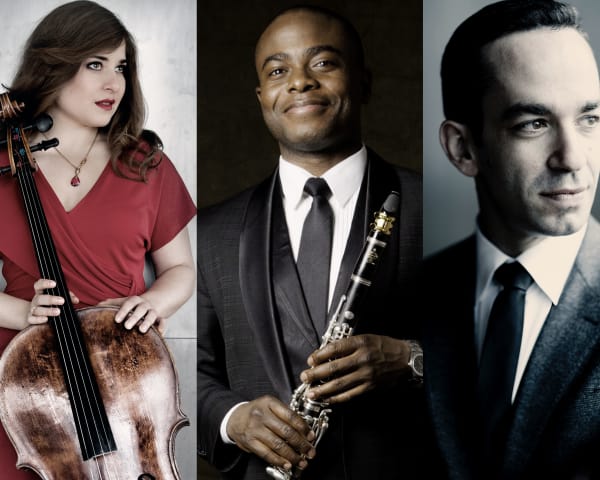
    Tuesday January 24th, 2017 – Cellist Alisa Weilerstein, clarinetist Anthony McGill, and pianist Inon Barnatan sharing the Alice Tully Hall stage in a program of piano trios presented by Chamber Music Society of Lincoln Center. Beloved works by Beethoven and Brahms book-ended the New York premiere of Short Stories for Clarinet, Cello, and Piano by Joseph Hallman. The presence of three such superb artists on the program signaled this as a red-letter event in the current season; I’d been looking forward to this evening for months, and it truly surpassed expectations.

    The three artists took the stage, Ms. Weilerstein in a beautiful deep violet gown, and launched the Beethoven Trio for Clarinet, Cello, and Piano, opus 11; it quickly became evident that we were in for a night of exceptional music-making. In this particular work, exuberance and delicacy alternate in perfect measure, and the three players relished both the propulsive passages and – most enticingly – those moments when nuance is all.

    One of Beethoven’s early masterpieces, this clarinet trio shows the influence of Haydn and Mozart; but once can clearly sense that Beethoven is already finding his own voice. The writing for the three instruments is often conversational, and how lovingly our three musicians this evening spoke to one another.

    The opening Allegro con brio is alive with rhythmic delights, including a touch of syncopated witticism. Mr. Barnatan’s scintillating agility was a constant attraction, and it was a great pleasure to watch the  communication between the three players.

    Ms. Weilerstein opened the Adagio with a cello theme; her heartfelt playing took this simple, straight-forward melody to the heights. She and Mr. McGill duetted tenderly, both playing with great subtlety. The music becomes achingly gorgeous.

    Good humor abounds in the Theme and variations setting of the finale: drawing on an aria wildly popular at the time, “Pria ch’io l’impegno” (“Before I begin, I must eat”) from Joseph Weigl’s opera L’AMOR MARINARO, Beethoven sets up bravura hurdles for the three musicians, all of them joyously over-leapt by our intrepid trio. Mr. Barnatan revels in the cascading piano passages, peaking in a perfect cadenza which ends with king-sized trills. Meanwhile Ms. Weilerstein and Mr. McGill seem to finish each other’s sentences, indulging in an amiable game of “Anything you can play, I can play finer!” Again, the sense of camaraderie, and of the players’ anticipation of the sheer pleasure of playing the next phrase, kept the audience visually engaged.

    Short Stories, the new Hallman work, is a five-movement trio; it might also be called Scenes from a Relationship. One doesn’t, however, need any narrative reference to enjoy this purely as a musical experience, for Mr. Hallman is an excellent craftsman, and a colorist as well. The composer was sitting just a seat away from us; I can only imagine how delighted he must have been to hear his music being played by three such paragons…a veritable dream come true.

    The opening movement, the Break-up, gets off to a stuttering start. The cello shivers before going deep and mournful, whilst the clarinet comments on her predicament. Then they switch roles, like a therapist taking over the couch from his patient. They play in unison, and things turn temporarily witty. But the music ends in the depths.

    familial memories at a funeral opens with Mr. McGill’s clarinet in a whispering, misterioso mood. After briefly perking up, a pensive quality develops with a repeated two-note motif for the piano. The clarinetist’s astounding breath-control and his sustained beauty of tone throughout the dynamic range keep the audience mesmerized.

    back-and-white noir: hardboiled with a heart of gold is the whimsical title of the third story. It begins agitato, developing an off-kilter rhythm. Mr. Barnatan sweeps up to the high register, while the clarinet and cello play a droopy duo. Ms. Weilerstein then descends to her velvety deep range. The music ebbs and flows, both rhythmically and tonally, as the composer explores the coloristic possibilities of the three instruments.

    regret is for the weak is a title that hits home. Mr. Hallman here sets up an eerie, hesitant start. The clarinet percolates briefly, then settles into a very quiet mood whilst the cellist plucks; later, the cello trembles while the piano sounds softly. We seem to be in a moody memory, with Mr. Barnatan drawing forth fleeting surges of melody. Ms. Weilerstein and Mr. McGill sing sadly before the pianist dips down to a punctuating low note.

    In the path of the curve, Mr. Barnatan sometimes reaches inside the piano to manipulate the sound. The music here is very quiet, until the clarinet starts warbling. Fluttering and swirling motifs sneak in, then the music seems to run down and the cello again deepens. The piece ends in a sustained quietude.  

    The only slight reservation I had about Short Stories was that the final movement is perhaps a bit too drawn out; my companion felt the same way. It was unfortunate that, during the work’s quiet closing moments, a cellphone went off directly behind us. At the same time, someone in the from row had a violent coughing fit. Such unfortunate timing. Yet despite these distractions, the Short Stories each cast their own spell, and they were spectacularly played.

    Following the interval, the Brahms trio (opus 114) found the three artists on the heavenly heights of tonal and technical perfection, their playing so generous and emotive. From Ms. Weilerstein’s sublime playing of the yearning opening theme, thru the plaintive entry of Mr. McGill’s clarinet and the ever-expressive beauty Mr. Barnatan drew from keyboard, the music took on an impassioned glow. In my scrawled notes, the word “gorgeous’ appears over a dozen times.

    Mr. McGill’s spellbinding playing of the sweetly serene theme that opens the Adagio was a magical passage, taken up by the soulful spirituality of Ms. Weilerstein’s cello. The luminous qualities of clarinet and cello are set in high relief by the profound tranquillity evoked by Mr. Barnatan. A long-lined clarinet solo leaves one grasping for adjectives to describe the McGill sound, and his ardent tapering of line. One wanted this meditation by the three players to linger on and on.

    A questioning clarinet passage and more marvelous phrasing from Mr. Barnatan set up the waltz-like grace of the Andantino.  After a brief diversion, we dance on towards the movement’s end; unexpectedly, Brahms tucks in a calming coda to make a lovely finish.

    Restraint is cast aside as the trio dig into the concluding Allegro. A tinge of gypsy colour weaves thru this music. Ms. Weilerstein takes up a melody which she passes to Mr. McGill; then they harmonize. Things speed up. “More cello passion!” was my last dashed-off remark; the Brahms sailed on to its joyous conclusion, and the three stellar artists were greeted with immediate shouts of approval. They took a double curtain call, delighting the crowd.

    A thought that recurred to me frequently during the evening was: if Mozart had met McGill, Amadeus would have written DIE ZAUBERKLARINETTE.

    • Beethoven Trio in B-flat major for Clarinet, Cello, and Piano, Op. 11 (1797)
    • Hallman Short Stories for Clarinet, Cello, and Piano (CMS Co-Commission) (New York premiere) (2016)
    • Brahms Trio in A minor for Clarinet, Cello, and Piano, Op. 114 (1891)

  • Sidi Larbi Cherkaoui @ Martha Graham Dance Co

    Unspecified4y

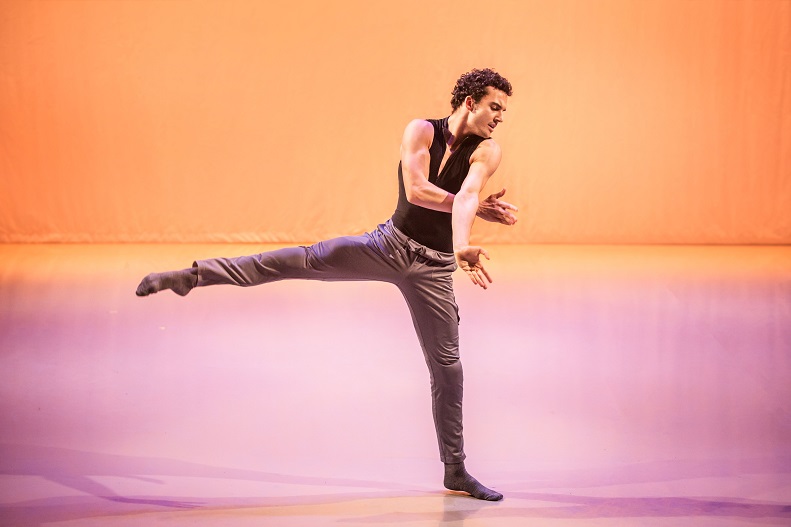
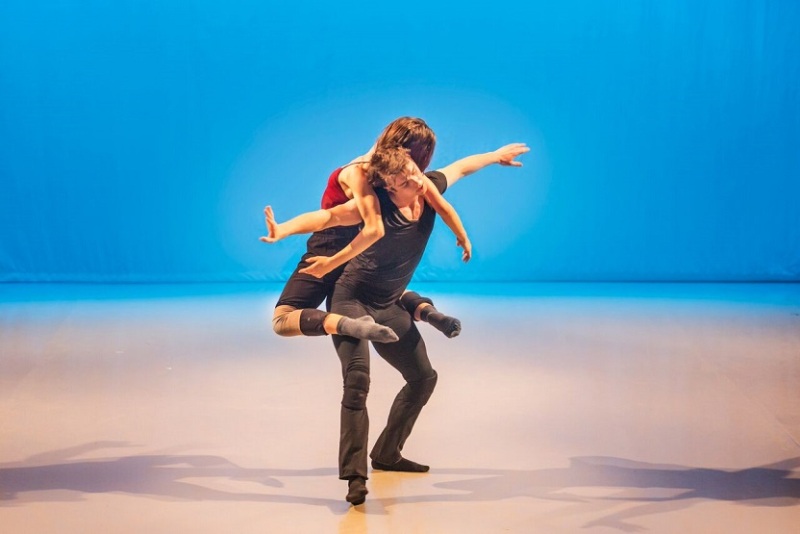
    Above: members of The Martha Graham Dance Company at a studio showing of MOSAIC, a new work being created for the Company by choreographer Sidi Larbi Cherkaoui; photo by Brigid Pierce. MOSAIC will premiere during the upcoming Graham season at The Joyce, which opens on February 14th. Details and tickets here.

    On January 11th, 2017, friends of Graham gathered at the Company’s homespace at Westbeth on Bethune Street for a first look at the new Cherkaoui piece. This is my fourth time experiencing this choreographer’s work: in 2009, Cedar Lake Contemporary Ballet premiered Larbi’s ORBO NOVO; in 2010, his SUTRA was performed as part of the White Lights Festival; and this past Summer, HARBOR ME was performed at the Joyce by LA Dance Project. 

    MOSAIC is danced to a score by Felix Buxton; the choreography has a sultry, swaying, Middle Eastern  feel. Without giving away more than that, I will only say the Graham dancers look sexy as ever in this provocative style. It was really great seeing Jason Kittelberger, an iconic dancer with the late, lamented Cedar Lake Company; Jason is Larbi’s choreographic assistant for MOSAIC and he introduced the work this evening.

    Here are a some images from the showing of MOSAIC; the photographer is Brigid Pierce:

    Unspecified4

    Anne Souder

    Unspecified3

    Leslie Andrea Williams, Lorenzo Pagano, Anne Souder, Lloyd Mayor

    Unspecified4d

    Lorenzo Pagano

    Unspecified5

    Anne Souder, Lloyd Mayor

    Unspecified6

    Anne Souder, Lloyd Mayor

    In addition to MOSAIC, the repertoire for the upcoming Graham season at The Joyce features a premiere by Annie-B Parsons, recent works by Nacho Duato and Pontus Lidberg, a revival of Martha Graham’s PRIMITIVE MYSTERIES, as well as Graham classics MAPLE LEAF RAG, DARK MEADOW SUITE, DIVERSION OF ANGELS, and CLYTEMNESTRA Act II.

    I’m hoping to get to a studio rehearsal before the season at The Joyce begins.

  • Barenboim @ Carnegie: Mozart & Bruckner

    217101-D_340-R

    Above: Daniel Barenboim and the Staatskapelle Berlin at Carnegie Hall; performance photo by Steve J Sherman

    Thursday January 19th, 2017 – The Staatskapalle Berlin in the first of a series of concerts at Carnegie Hall in which Daniel Barenboim appears both as piano soloist and conductor. Each program in the series pairs a Mozart concerto with a Bruckner symphony. Tonight’s was the only performance in the series that I was able to attend, and it proved most valuable as an opportunity to hear not only a great conductor/pianist and orchestra, but also a rare chance to experience Bruckner’s first symphony live.

    The evening marked, almost to the day, the 60th anniversary of Daniel Barenboim’s Carnegie Hall debut; on January 20, 1957, he was the piano soloist on a program conducted by Leopold Stokowski. Over the six decades since that momentous night, Maestro Barenboim has maintained his status as a premiere pianist, and has become one of the great conductors of our time.

    My personal memories of Barenboim as pianist and as conductor are especially meaningful to me: in November 2008, he and James Levine were the de luxe pianists for a performance of Brahms’ Liebeslieder Waltzes at Weill Hall; the singers were members of the Met Young Artists Program. It was a superbly intimate performance. Shortly after this Liebeslieder evening, Barenboim made his long-awaited debut on the podium at The Met in a splendid series of performances of TRISTAN UND ISOLDE: we went twice, returning for a repeat when Waltraud Meier flew in to rescue one performance and made a striking impression as Isolde

    217101-D_216-R

    Above: performance photo by Steve J Sherman

    This evening, Maestro Barenboim appeared first as piano soloist for the Mozart Piano Concerto No. 27 in B-flat Major. From the opening bars, my friend Dmitry and I were struck by how absolutely lovely the orchestra sounded in the Carnegie setting. After the interval, when the much larger contingent of players required by the Bruckner took the stage, the sonic effect remained particularly cordial. It’s a stellar orchestra, and within moments I was regretting that I hadn’t made arrangements to hear them in more concerts from this impressive series.

    In 1791, the final year of Mozart’s life, the composer was at a low point. Poor health (his own, and his wife’s) and financial worries bore down on him, and he felt the Viennese musical public had somewhat lost interest in him.  At the time he was composing his last piano concerto, #27, he wrote to his wife: “I can’t explain to you how I feel…there’s a kind of emptiness which just hurts me: a kind of longing that is never stilled…” His despair shows thru in the 27th concerto, although light still manages to pierce the clouds often enough. First performed on March 4, 1791, it marked Mozart’s last public appearance as a piano soloist.

    With a smallish ensemble – no trumpets, drums, or clarinets – this concerto feels intimate, even in the spaciousness of Carnegie Hall. This impression was sustained by the marvelous subtlety of Maestro Barenboim’s playing, particularly in the cadenzas, where he could fine the tone down to a silken whisper.

    In the melody-rich first movement, the orchestra cushioned the piano line to gorgeous effect, with the solo flute and bassoon displaying great finesse. The flautist continued to impress in the Larghetto which follows. Maestro Barenboim’s playing here was beautifully sustained and thoughtful, and an atmosphere of tranquility laced with gentle melancholy settled over the Hall. Barenboim’s exquisite tapering of the final phrase hung on the air, but an enormous, ill-timed sneeze from an audience member destroyed this magical moment.

    Pianist and orchestra bounced back from this unfortunate intrusion for a perfect rendering of the concerto’s concluding Allegro; Barenboim’s playing here had ample spirit and polish, and the musicians did him proud. This is a somewhat darker finale than Mozart’s usually wrote for his concerti, but it does feature the melody of a little song Mozart was working on: “Sehnsucht nach dem Frühling” (“Longing for Spring“). By late 1791, the composer was fighting for his life; he never saw another Spring, dying on December 5th and thus sadly depriving the world of three or four more decades-worth of magnificent music.

    217101-D_441

    Above: performance photo by Steve J Sherman

    Anton Bruckner’s 1st symphony languished in obscurity for over twenty years. Following a single performance in Linz, Austria, in 1868, it was not heard again until 1891 when it was given in a heavily revised version. Its Carnegie Hall premiere didn’t take place – incredibly enough – until 1985, and performances of it remain comparatively rare. After hearing tonight’s excellent performance, I feel its neglect is unjustified; in fact, I look forward to hearing it again…the sooner, the better.

    Maestro Barenboim’s fondness for this music was evident from start to finish, and the Staatskapelle Berlin gave it a performance by turns lush, subtle, and vigorous. How thrilling to hear (and watch) the orchestra’s eight double-basses playing in unison; and the timpanist was having a field day – I was mesmerized by him throughout the third and fourth movements.

    A march-like cadence sets the opening Allegro on its way; starting almost whimsically, this soon becomes more emphatic. A lull comes as the woodwinds gently introduce a free-flowing violin melody. Suddenly the trombones take control with a mighty fanfare. Distant thunder from the timpani, and the march motif resumes; the movement carries on with an ebb and flow of what feel like climaxes but which subside just short of peaking. Then, after a final rush, we come to an abrupt end. The players’ keen response to Barenboim’s often understated gestures spoke of the natural affinity the maestro and the musicians have established over the years.

    The orchestra’s playing of the Adagio was especially moving. This music builds cinematically to a glorious climax, then evaporates into the heavens in an inspired and inspiring coda. Maintaining a perfect balance between the layered voices, Barenboim again showed that this music is in his very blood.

    The lively Scherzo is particularly engaging: it has the feel of a tribal dance – by turns throbbing and evocative – reminding me a bit of the well-known Scherzo from the Dvořák 6th. The whirlwind subsides for a gentle interlude before the dance springs up again, stomping on to a quick stop.

    Only in the final movement did I feel Bruckner might have been losing his grip somewhat. The music here did not have a cohesive feeling; the structure felt somewhat lacking in tautness, with a couple of walkabouts stemming the flow of the piece. Nevertheless, it was played with utter commitment and a sense of triumph at the close.

    Aside from the sneeze, a late seating after the piano concerto’s first movement caused an unfortunate  break in my concentration. The spectacular performance of the Bruckner helped to set these distractions aside, with Maestro Barenboim and his orchestra basking in a grand ovation at the end of a wonderful evening of music-making.

  • NY Philharmonic Ensembles: International Feast

    Liang

    Above: The New York Philharmonic’s principal oboist Liang Wang

    Sunday November 20th, 2016 – Music by French, Russian, German, and English composers was on offer this afternoon as a stellar ensemble of players from The New York Philharmonic took the stage at Merkin Hall. The group included some of the orchestra’s principals; the playing was divine, and all four works on the program were new to me.

    The matinee opened with the String Trio of Jean Françaix, composed in 1933. Françaix was a child prodigy, writing his first music at age 6 and being published at age 10. His String Trio exemplifies the Neo-classical style which was enjoying favor at the time he wrote it; it consists of four movements, two of which are played with the strings muted. The excellent players – Shanshan Yao (violin), Peter Kenote (viola), and Qiang Tu (cello) – were clearly having a good time with this music, and their enjoyment was transmitted to the audience, who seemed quite taken with the piece.

    The opening Allegretto vivo is a witty conversation among the three players; it has a gentle sway and a touch of jazz. With the musical lines in a state of perpetual motion, there is a sense of delicate charm in play. The following Scherzo – un-muted – is a sprightly dance played with a breezy ‘je ne sais quoi‘ quality. Plucking motifs and changes of pace eventually lead to a congenial if quirky waltz. The mutes are on for the Andante, which commences with wistful harmonies. Ms. Yao leads off with a sweet/sad song, taken up by Qiang Tu’s savorable cello and then by Mr. Kenote’s warm-toned viola: so lovely to hear each voice in succession. In a return to C-major, with the mutes set aside again, the lively start of the finale has an effervescent feeling (Mr. Kenote, in his opening remarks, spoke of a cancan). Things slow down a bit, with the violin playing over a plucked accompaniment. The pace then reaches sizzling speed, subsiding to lethargy before re-bounding to briskness and an actual march before vanishing on a surprisingly soft pizzicato. Such a fun piece! 

    Living in Paris in 1924, Sergei Prokofiev accepted a commission to compose a ballet for a touring  troupe; the director asked for a short work for five instruments with a simple plot revolving around life with the circus. Prokofiev produced a quintet for the players the director had on hand: oboe, clarinet, violin, viola, and double bass. The ballet’s title was Trapeze. Since assembling this particular complement of instruments isn’t always easy, the work is not often performed; hearing it today made me wonder what the choreography would have been like.

    Drawing from the Philharmonic roster, the instrumentation was handily (and expertly) filled out by a lively group of players, led by Anna Rabinova (violin), with Vivek Kamath (viola), Blake Hinson (bass – he also introduced the work) and wind virtuosos Sherry Sylar (oboe) and Pascual Martinez Forteza (clarinet).

    The music definitely has a ‘circus’ atmosphere. A feeling of urban bustle with a slightly Mid-Eastern tinge pervades the opening movement, with oboe and clarinet vying phrase for phrase; the viola and then the violin join the fun, and the bass induces a lumbering motif. The music stalls, and turns pensive before bursting into a fast, flashy dance with violin screeching at us. The striding bass returns us to the opening oboe theme.

    In the second movement, the bass growls at us and there’s an off-kilter feeling. The clarinet moves from burbling sounds to straightforward song; discord resolves into a major chord. The third movement, with a steady pacing, finds the clarinet and oboe trading sound-bytes; a swirling turbulence ensues.

    In the fourth movement, an Adagio, the oboe sounds a bit ominous; the clarinet trills, the violin shivers, the bass creeps about. A violin melody melds into a dense tutti, with the oboe prominent. The plucking bass introduces the light-hearted fifth movement, with ironic gestures from the clarinet and oboe. The strings pluck and slash before Mr. Forteza’s clarinet polishes things off in fine style.

    The final Andantino is whimsically dirge-like; there are clarinet cascades and the oboe gets insistent; the tread of the bass signals a minuet reprise. Suddenly alarms sound, and the piece rumbles raucously to a sudden end.

    Several pages of Beethoven’s Quintet in E-flat major (originally penned in 1793) had gone missing by the time Leopold Zellner took up the task of ‘resuscitating’ it in 1862. Zellner relied strictly on the material evidence he found in Beethoven’s drafts in preparing a performing edition.

    This work utilizes another off-beat assemblage of instruments: three horns, oboe, and bassoon. The horns – Richard Deane, R Allen Spanjer, and Howard Wall – enter in turn; their music veers from jaunty to Autumnal mellowness. As the work progressed, it became evident that the oboe was taking the most prominent position in terms of melodic opportunity: Liang Wang, the Philharmonic’s principal oboist, demonstrated both his striking virtuosity and his coloristic phrasing throughout the piece. Kim Laskowski’s bassoon seemed mostly limited to echo effects and to joining the horns; I kept hoping for a paragraph from her, but only a few phrases peeked thru the full-bodied sound of the horns.

    A horn chorale initiates the Adagio maestoso, with the oboe again very much to the fore – and so attractively played by Mr. Wang. The concluding Minuetto begins brightly and brings us some really rich horn blends. Mr. Wang’s playing was exceptional, and it was a real pleasure to watch and hear him play his extended role here this afternoon, after so often enjoying his solo moments in the big repertory at Geffen Hall.

    The Philharmonic’s principal horn, Philip Myers, introduced the concluding work – Ralph Vaughan Williams’ D-major Quintet – with a genuinely amusing speech in which he lamented the relative scarcity of chamber works featuring the horn and spoke of how he seized on the opportunity to play the Vaughan Williams today…which he did, to perfection.

    Ralph Vaughan Williams’ Quintet in D-major had been withdrawn from circulation by the composer. He instructed his first wife not to publish it, but his second wife went ahead and did so, and thus we have this unusual work to enjoy today, more than a century after its premiere.

    A deluxe quintet of Philharmonic artists gathered to perform the piece: alongside the resplendent sound of Mr. Myers’ horn, principal Anthony McGill’s clarinet playing was simply dazzling; violinist Lisa Kim (violin) and cellist Eileen Moon (my artistic crush) seized on the string passages to fine effect, whilst John Novacek underscored the ensemble beautifully from the keyboard, and relished his solo moments with some very cordial playing.

    The four-movement quintet opens with an Allegro moderato initiated by clarinet and piano. A rolling theme for the ensemble sets up a round-robin of voices: piano, violin, clarinet, a horn summons, and cello speak up in turn. Things turn big and emphatic, and Phil Myers’ lush playing here was really grand, with Mr. Novacek ideally supportive. Cello, violin, and clarinet have another say before a shimmering motif from Mr. Novacek and a sustained phrase from Mr. Myers bring the movement to a close.

    The second movement takes the form of an intermezzo; it has the feel of a Viennese waltz. Ms. Moon’s cello blends with the piano; later, Myers and McGill play in unison as the music sails on, with the piano taking up the waltz while Ms. Kim plays elegantly, incorporating a brief cadenza.

    The velvety sound of the Myers horn sets up the Andantino, with Mr. Novacek’s evocative playing and another lovely passage from Ms. Kim leading into a melodic outpouring from all the voices. Fanfare-like motifs sound forth, and then a rich blending of timbres to savor. The horn plays over a rolling cello figure, and the music turns quite grand. Clarinet and violin descend, and the horn and piano glow gorgeously in a nostalgic theme.

    The final Allegro molto induces toe-tapping from note one. Big horn-playing reigns, the clarinet and violin lead a merry dance, and a McGill cadenza with a perky trill delights us before the quintet reaches its boisterous end.

    The Repertory:

    FRANÇAIX – String Trio
    PROKOFIEV – Quintet in G minor for Oboe, Clarinet, Violin, Viola, and Double Bass
    BEETHOVEN – Quintet in E-flat major for Oboe, Three Horns, and Bassoon
    VAUGHAN WILLIAMS – Quintet in D major for Clarinet, Horn, Violin, Cello, and Piano

    The Participating Artists:

    Richard Deane, horn

    Pascual Martínez Forteza, clarinet

    Blake Hinson, bass

    Vivek Kamath, viola

    Peter Kenote, viola

    Lisa Kim, violin

    Kim Laskowski, bassoon

    Anthony McGill, clarinet

    Eileen Moon, cello

    Philip Myers, horn

    John Novacek, piano

    Anna Rabinova, violin

    R. Allen Spanjer, horn

    Sherry Sylar, oboe

    Qiang Tu, cello

    Howard Wall, horn

    Liang Wang, oboe

    Shanshan Yao, violin

  • Frank Huang Plays Bruch @ The NY Phil

    Frank Huang

    Thursday October 27th, 2016 – The New York Philharmonic‘s concertmaster, Frank Huang (above), dazzled the audience at Geffen Hall tonight with his playing of Bruch’s first violin concerto; the highly enjoyable program also featured works by Bartók and Dvořák; Pablo Heras-Casado was on the podium.

    Béla Bartók’s Dance Suite opened the evening. These delightful dancing miniatures display the composer’s signature inventiveness in terms of colour and rhythm whilst providing numerous opportunities for individual players to shine: it’s a wonder they are not programmed more often. Maestro Heras-Casado seemed to have the lilt and sweep of the music in his blood, and the orchestra gave a vibrant performance every dance-step of the way.

    Written in 1923, the suite is listed as being in six movements, though they seem – with a brief pause here or there – to flow into one another. A droll bassoon theme starts things off; the horns sound and the string players tap their bows on their instruments. Big energy develops, only to subside. Lovely passage for violins and harp, the clarinet interjects, and a merry jogging sets forth. Ear-tingling combinations – oboe and bass clarinet, flute and harp – keep cropping up, as do the piano and celesta. A wind choir leads into a high violin passage (Sheryl Staples, tonight’s concertmaster) and when things turn dreamy, Cynthia Phelps’ viola mingles with the harp. Big brass plunges in, and the music takes on a bouncing swagger.

    This suite made an outstanding impression. I do regret that I cannot name the individual players of the various solo wind passages; tonight more than ever I wished these sections of the orchestra were on risers so we could watch them as they play. I did get a glimpse of Liang Wang, who played the numerous Bartok solo phrases with his customary clarity and warmth…wonderful!

    Mr. Huang then appeared for the Bruch. We are accustomed to seeing him as a somewhat reserved figure in his role of concertmaster; stepping into soloist mode, Mr. Huang becomes very animated, bending and swaying as the music impels him. His passionate performance was captivating both to hear and to watch.

    A recording of the Bruch #1 was the first non-operatic CD I ever bought – paired with the Barber concerto, and played by Anne Akiko Myers. The Bruch was thus familiar to me well before I ever ventured to listen to the Tchaikovsky, Sibelius, or Beethoven concerti; and this evening’s performance – my first time experiencing it live – reminded me of what a great piece it is. 

    From the concerto’s initial rising solo passage, Mr. Huang’s tone was most alluring: lustrous at all dynamic levels, and displaying a sensuous quality which he allowed to permeate the music in just the right measure, at just the right moments. A sentimental melody gives way to a filigree of rising trills, and a blend with horn is simply gorgeous. Rising and descending scales from the violin develop into a sweeping orchestral passage. A two-part cadenza and the poignant melody that follows found Mr. Huang at his most persuasive. Excellent!

    The Prelude has flowed directly into the Adagio, making a very long ‘play’ for the soloist, and causing the composer to wonder if he ought not refer to the whole work a fantasy rather than a concerto. He was persuaded otherwise by the great violinist Joseph Joachim.

    In the concluding Allegro energico, Mr. Huang took up the familiar dancelike theme with a nice gypsy swing; decorative threads of coloratura were un-spooled by the violinist with elegant virtuosity, his tone ever-lovely and his articulation showing effortless clarity. The audience, one of the most attentive in recent memory, were clearly much taken with Mr. Huang’s performance: vociferous bravos filled the hall from the moment the concerto ended, and at his solo bow the whole house stood up and cheered whilst his colleagues onstage joined enthusiastically in the ovation.

    Heras- casado

    Following the interval, Maestro Haras-Casado (above) and the players treated us to an outstanding performance of the Dvořák 7th. This familiar work seemed fresh and vital this evening, with plenty of expert solo playing along the way – though the horns were running hot-and-cold throughout. The big, yearning theme of the first movement was especially pleasing to hear tonight, as was the woodwind chorale over plucking strings in the Adagio. Things turn blithe in the folk-dance flavor of the Scherzo, but the composer turns more pensive again as the Finale commences. The rise of a Slavonic march, and the taking up of a new, lyrical theme, led onward to the symphony’s optimistic conclusion.

  • Recital: Violinist In Mo Yang

    Maxresdefaulta

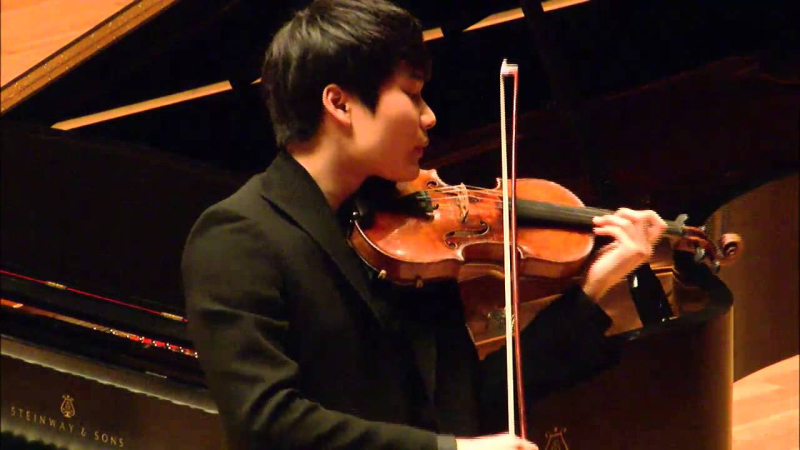
    Above: violinist In Mo Yang

    Tuesday September 27th, 2016 – In Mo Yang, a young violinist of Korean heritage, in recital with pianist Renana Gutman at Merkin Hall.

    It’s only rarely that I do something really spontaneous; my schedule is always so full (and commitments made so far in advance) that there are seldom any opportunities to do things that haven’t been planned weeks in advance. But as I was researching something on the Merkin Hall website, I noticed a violin recital listed for this afternoon. The repertory looked very inviting and there were still a few tickets available, so I headed downtown. It was an impressive and thoroughly enjoyable concert in every regard.

    In Mo Yang is the First Prize Winner of the Concert Artists Guild Competition. In 2015, he also earned First Prize at the 54th International Violin Competition “Premio Paganini” in Genoa, Italy, marking the first time since 2006 that the Paganini Competition jury has awarded the top prize.

    In Mo Yong, in addition to a very impressive technique, has the gift of playing from the heart. After only a few measures of the opening Bach, I knew I was in the presence of a musician of the finest calibre; by the end of the recital, his name was hovering in my highest echelon of favorite musicians.

    The forlorn beauty of the opening theme of the Adagio of Bach’s solo Violin Sonata No.1 in G minor immediately revealed the key elements of In Mo Yong’s playing: radiant and sweetly resonant tone, a mastery of dynamic finesse, innate expressiveness, and seamless phrasing. In the second movement, a minor-key dance, the violinist produced cascades of notes with admirable clarity. A sense of grace tinged with sadness marked his playing of the Siciliana, and in the final Presto, he reeled off reams of coloratura, perfectly defined and beautifully articulated, creating a magical atmosphere.

    Pianist Renana Gutman then joined In Mo Yang for the violin sonata of Leoš Janáček. Ms. Gutman’s poised musicality and her attentiveness to details of phrasing were a great boon for the young violinist.

    As In Mo Yang noted in his remarks, the flow of lyricism in this Janáček work is constantly interrupted by injections of turbulence or wit. There was a wondrous immediacy to the playing of the two musicians, drawing us in to the many felicities of this quite extraordinary piece. The opening Con moto found the violinist’s passion well met by the pianist’s sense of rapture, right from the outset. In the Ballada that follows, the shimmering piano sets off the singing violin. Sustained beauty of tone as the music’s passion soars, then sinks into a delicate reverie. In Mo Yang ended this movement on an exquisitely sustained, evaporating high note.

    In the Allegretto, the music is agitated and pensive by turns; these the mood swings were well-captured by our two players. The concluding Adagio begins hesitantly; then an enchanting melody looms up, only to stall and then re-start. A vibrant theme over glimmering piano leads to alternating passages of agitation and calm before the piece reaches its hushed ending. Splendid playing from In Mo Yang and Ms. Gutman: a really impressive performance.

    Karol Szymanowski’s setting of three ‘Paganini’ caprices followed the interval. The first, in D-major, features a high, sweet melody which gives way to an energetic passage before returning to its initial mood. In Mo Yang’s lingering final note was a moment of pure poetry. The second caprice, in A-major, begins in a state of musical density. The violin ascends to a high, aching theme which increases in passion; here In Mo Yang’s mastery of control in the stratospheric register was so evocative. The most familiar of the three caprices, the A-minor, is loaded at first with brisk, swirling motifs. Its sparkle and ironic wit suddenly go deep and mysterious, then things get playful, and then dreamy. This traversal of moods was finely differentiated by the two musicians. After some dazzlingly ping-y plucking from the violin, there’s a false ending; In Mo Yang then ascends again to the high, hazy glow of his upper range before charging on with Ms. Gutman to the grand finale.

    All of the qualities that make Felix Mendelssohn one of my favorite composers were evidenced in his violin sonata in F major, written and premiered in 1838. It was not published in the composer’s lifetime, but was ‘rescued’ in 1953 by Yehudi Menuhin, who accordingly tinkered with it before having it published.

    After a gallant piano introduction opens the Allegro vivace, a pulsing motif develops as the piano and violin alternately switch from melody to rhythm. Charming variants of major and minor keys – and a lovely sense of Mendelssohnian flow – gave me a lot of listening pleasure.

    Ms. Gutman sounds a low song which the violin takes up as the central Adagio casts its spell. Such expressive playing here; and then the music sails forward. And yet again, the heart-rending quality of In Mo Yang’s upper-range playing was a marvel.

    Joyous flights of fancy abound in the concluding Assai vivace, the players shifting effortlessly between liveliness and subtlety. With stunning dexterity, In Mo Yang reveled in high-velocity playing here that filled me with smiling admiration. 

    Sheer gorgeousness to end the afternoon: a Karl Schumann romance was offered as an encore: exceptional playing with a high emotional value.