Category: Dance

  • Lydia Johnson’s WHAT COUNTS on Vimeo

    10433842_10203005424350583_5996794059085397772_n

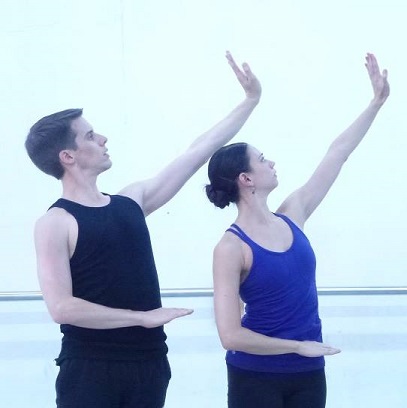
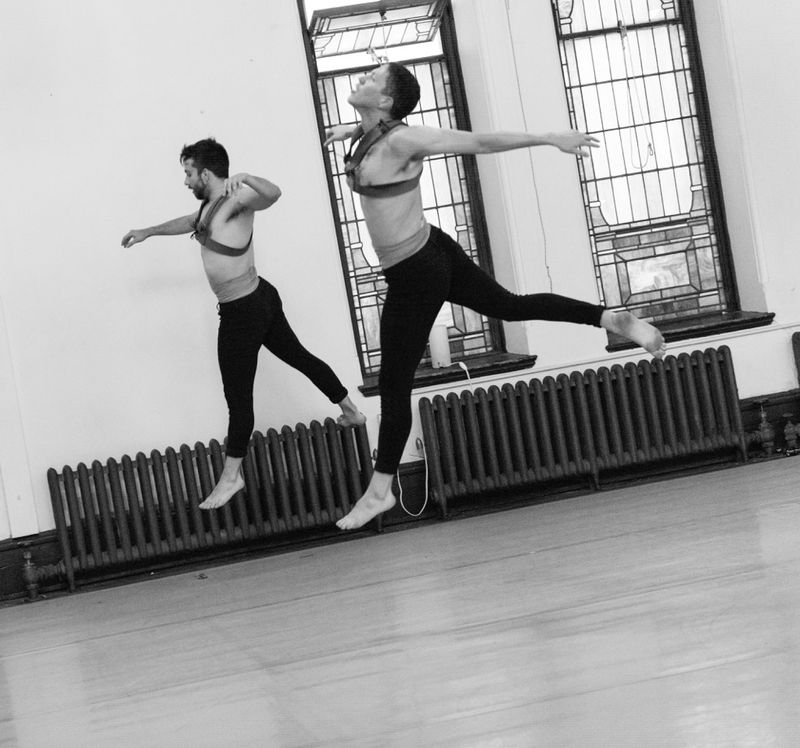
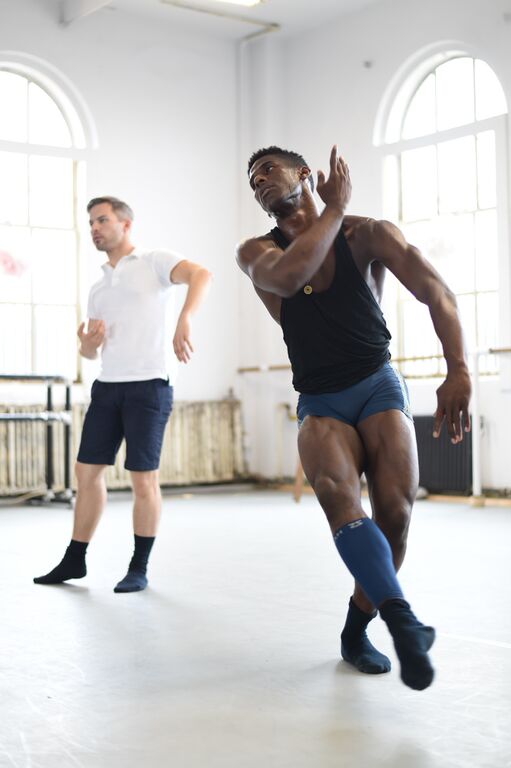
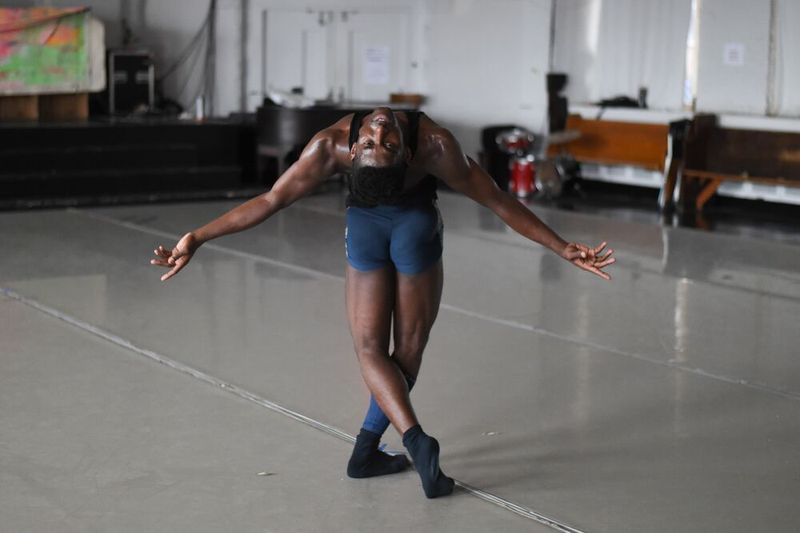
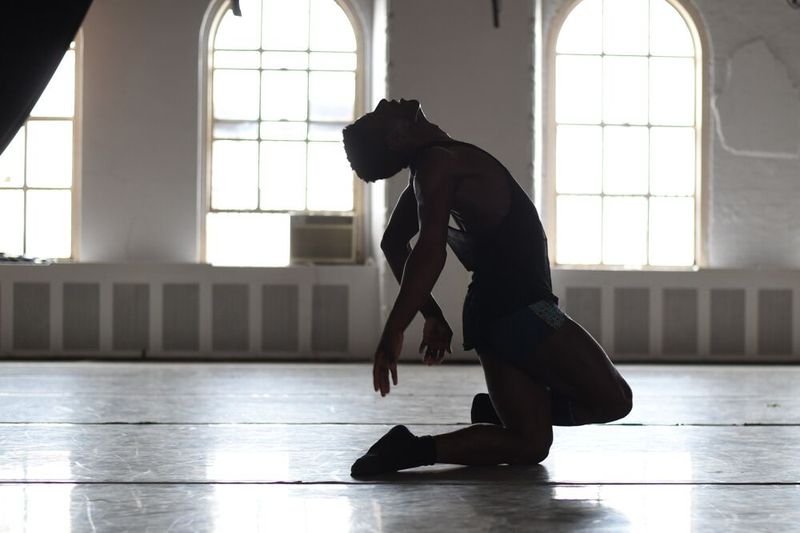
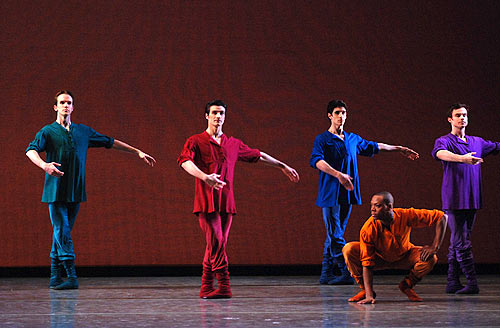
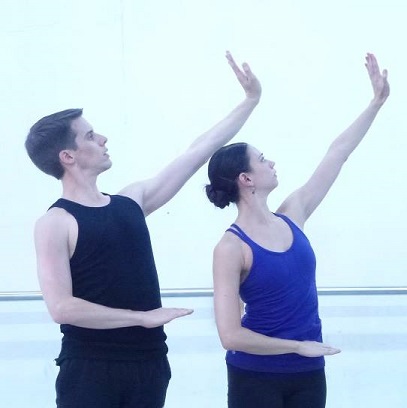
    Above: Blake Hennessy-York and Sarah Pon of Lydia Johnson Dance rehearsing WHAT COUNTS

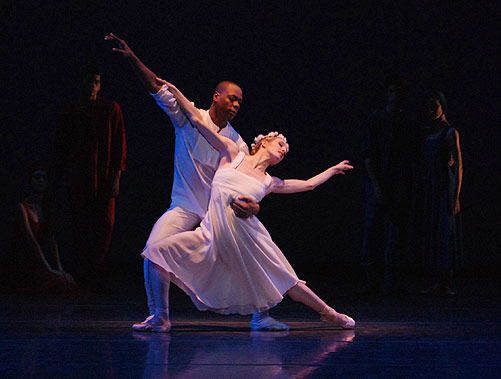
    A hit at its New York City premiere performances in June, 2015, choreographer Lydia Johnson’s WHAT COUNTS is now available for watching on Vimeo. Tune in here.

    The jazzy score comes to us from The Bad Plus, and the ballet is performed by a quintet of Lydia Johnson Dance’s distinctive dancers: Sarah Pon, Blake Hennessy-York, Laura DiOrio, Katie Martin-Lohiya, and Chazz Fenner-McBride.  

  • Lydia Johnson’s WHAT COUNTS on Vimeo

    10433842_10203005424350583_5996794059085397772_n

    Above: Blake Hennessy-York and Sarah Pon of Lydia Johnson Dance rehearsing WHAT COUNTS

    A hit at its New York City premiere performances in June, 2015, choreographer Lydia Johnson’s WHAT COUNTS is now available for watching on Vimeo. Tune in here.

    The jazzy score comes to us from The Bad Plus, and the ballet is performed by a quintet of Lydia Johnson Dance’s distinctive dancers: Sarah Pon, Blake Hennessy-York, Laura DiOrio, Katie Martin-Lohiya, and Chazz Fenner-McBride.  

  • CMS: Summer Evenings III

    Sitkovesky WuQian

    Above: violinist Alexander Sitkovetsky and pianist Wu Qian, featured performers at tonight’s Chamber Music Society of Lincoln Center concert

    Wednesday July 22nd, 2015 – Chamber Music Society of Lincoln Center‘s inaugural Summer Series wrapped up this evening with a most impressive and enjoyable programme. The formula for these Summer concerts (as for all of the Society’s concerts, really) was a simple one: great music played in a wonderful space by first-rate musicians. That the series was a genuine success came as no surprise to me; and the best news is, planning for a Summer Series 2016 at CMS seems already to be in the works as I write this.

    The Society draws from an A-list roster of musical artists, sometimes featuring established ensembles – such as the Amphion String Quartet who headlined the second concert in the Summer Series – and sometimes gathering together players from diverse musical backgrounds to illuminate a particular convergence of works. For tonight’s programme, pianist Wu Qian and violinist Alexander Sitkovetsky were the central figures; this husband-and-wife team (who make up two-thirds of The Sitkovetsky Trio) played in all three works. Joining them were the delightful young violinist Danbi Um, viola paragon Richard O’Neill, and the distinguished veteran cellist Laurence Lesser.

    Antonín Dvořák’s Bagatelles for Two Violins, Cello, and Keyboard, Op. 47, opened the evening; this series of miniatures alternates spirited dance rhythms with soulful slower movements, all drawing upon the folk music which so often inspired the composer. Plucking cello, rhapsodic violins, and flowing piano motifs are among the attractions of these five small wonders. Wu Qian was at the keyboard, with the two violinists and Mr. Lesser’s amiable cello assuring a most appealing exploration of the unfolding thematic material which abounds in these charming, deftly scored bagatelles. 

    Robert Schumann’s Sonata in D minor for Violin and Piano, Op. 121 was given a remarkable performance by Mr. Sitkovetsky and Wu Qian. Although stationed in a way that seemed to preclude eye contact, the two developed an extraordinary telepathic rapport. Mr. Sitkovetsky had removed his white dinner jacket and, all in black, he proved as fascinating to watch as to hear, with expressive body English and moving in an almost choreographic response to the music.

    Following a passionate, slashing start, Mr. Sitkovetsky intoned a heartfelt solo passage before the eruption of energy that propels the sonata’s first movement. The violinist’s playing is wonderfully rich, plumbing the depths of feeling with his resonant tone. For the energetic opening of the second movement, the violin/piano collaboration was rhythmically driven, though lapsing at one point into a melodious interlude.

    A mandolin-like plucking motif opens the third movement, which evolves into a haunting theme: here Mr. Sitkovetsky’s Olde World sound and his ability to transform melody into poetry was at its most moving. In the final movement’s expansive variety of themes and energies, violinist and pianist were simply thrilling, causing the audience to celebrate their joint artistry with prolonged applause and calling the duo out for a second bow. 

    Danbi Um, in a glamorous deep emerald gown with a diamond clasp, looks as elegant as she plays. She took the first chair for the evening’s concluding Brahms (the Quintet in F minor for Piano, Two Violins, Viola, and Cello, Op. 34) and, with her ravishing ascents to the upper range, graced the music at every moment. The big singing themes of this work were delivered with striking lushness by the players – Mr. Sitkovetsky and Wu Qian, violist Richard O’Neill, and cellist Laurence Lesser joining Ms. Um; they sometimes created the sonic illusion of a much larger ensemble with their plush tone. 

    The performance was brimming with marvelous moments, including (in the first movement) a lovely violin/viola ‘conversation’ and a luminous moment when Ms. Um, with her refined tone, passed the melody to Mr. Lesser who took it up with achingly beautiful expressiveness.

    The somewhat hesitant opening of the second movement – with Mr. Lesser’s subtle plucking motif – took a few moments to bloom into melody. Mr. O’Neill, a player we can admire as much for his artistry as for his humanitarian and charitable work, had a deeply moving theme with which to entice; then Mr. Lesser’s cello took a series of ever-deepening plunges. At the piano Wu Qian’s gently lilting playing underscored the ensuing rise of the string voices. In a moment of sheer perfection, Ms. Um and Mr. O’Neill jointly tapered the movement’s final note til it vanished into the air. 

    After some treading in a minor key, the third movement bursts forth; the pianist continually sounds a heraldry of march-like calls to action. Later, Wu Qian’s piano segues into a more lyrical passage where she is met by the Mr. Lesser’s genial cello…but their encounter is fleeting before another onrush of almost military vigor. Things calm down again momentarily, only to surge forward again with a triumphant feeling.

    A pensive – almost eerie – feeling pervades the opening of the quintet’s finale. In music that is passionate and harmonically rich, we experience a mixture of vivid dance themes and passages of almost tragic-sounding lyricism. 

    As our estimable ensemble of players drew the evening to its close, the audience hailed them with sincere appreciation and affection. The evening was perhaps best summarized by a remark the man seated behind me made to his wife just as the house lights went down for the Brahms: “This is the place to be!”

    The Repertory: 

    The Participating Artists: 


  • BalaSole Presents SALMAGUNDI

    BalaSole_Dance_-_Salmagundi

    Above: Alexandra Jacob, a guest soloist in tonight’s performance by BalaSole Dance Company

    Friday July 17th, 2015 – The word “salmagundi” refers to a type of salad, but also to any kind of assortment, medley, or montage. Celebrating their fifth anniversary season tonight at Ailey Citigroup, Roberto Villanueva’s Balasole Dance Company offered a smorgasbord of dance, with a tasty array of solos – everything from tap to toe shoes – in a skillfully arranged and nicely lit production.

    As is the custom at BalaSole performances, the evening opened and closed with ensemble works which are prepared and danced by all the participating soloists and emerging artists in the week leading up to the show. Roberto often uses baroque music for these group dances, but this time around he chose contemporary music with a seductive throb; the dancers seemed very much at home in this milieu.

    LAURA ASSANTE was the first soloist; her piece entitled “Cancelled Stamp” was danced to the voice of the inimitable Nina Simone singing her classic “Love me or leave me”. Ms. Assante, a lively blonde with a great range of facial expressions, filled the song – which has a long piano riff midway thru – with energy and charm. 

    ANNA CUFFARI performed a pensive, searching solo entitled “Maktub“. She awakens in a pool of light to the sound of a harp. As the music expands into a passionate romantic theme, the dancer made excellent use of the space with her questing movement and expressive face and hands.

    FREDRICK DAVIS (from Dance Theatre of Harlem, making a guest appearance tonight) displayed his striking classic technique in an excerpt from  “Undisputed Love“. Set to the celestial sounds of Arvo Part’s “Fratres”, the danseur, in tights and a white shirt, seemed like a contemporary Albrecht lamenting his lost Giselle. Fredrick’s dancing had a fine sense of nobility and quiet ecstasy. 

    The comely ANDREA SAMONILOVA appeared next, reciting poetry for her solo entitled “Možná Jednou” (translation: ‘Maybe One Day’). Meshed with the spoken words is the sound of water flowing. The sad poetess seems like a lost soul as she stares into the audience, in search of someone. A winsome melody evokes memories of another time and place to which she cannot return. This solo, and Ms. Samonilova’s dancing of it, was both moving and mysterious.

    XAVIER TOWNSEND made remarkable moves in his solo “Return”, including some risky B-boy passages that had the audience gasping. Running in place and enmeshed in a struggle for self-expression, the lithe and handsome dancer was able to combine his explosive energy with more lyrical moments to make his solo a big hit with the crowd. 

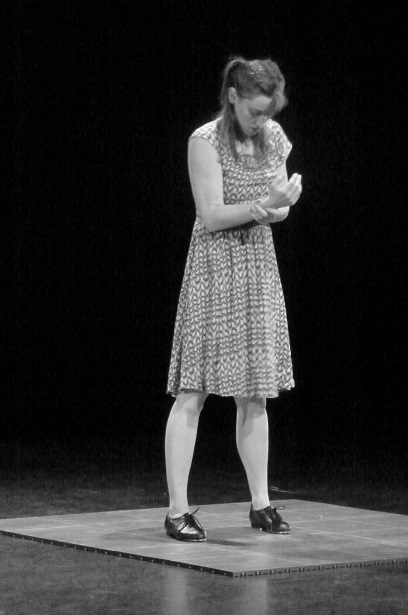
    CAMILLE SCHMOEKER performed a tap solo “Gilgal“, to an arrangement of the old gospel song “Joshua Fit The Battle of Jericho”. Using subtle shifts in the speed and volume of her tapping, the dancer, in a simple country frock, sometimes evoked line dancing in this solo which had a taste of Americana as well as a feeling of personal narrative.

    The powerful physique of ELIJAH LAURANT made a commanding impression in “Delimited Connection“; music from Kangding Ray underscored the dancing with a pounding beat, but the dancer steered clear of literalism and held our interest with his unfolding, expressive moves and the strength of his technique. 

    ALEXANDRA JACOB, a guest soloist, was for a decade a star of Dance Theatre of Harlem. Tonight, she performed “Anástasis” (translation: ‘Resurrection’), choreographed on her by Roberto Villanueva. Clad in midnight blue and with her hair flowing free, Ms. Jacob’s on-pointe dancing showed a luminous quality as she moved among pools of light. Music by Olafur Arnalds, rather ominous of mood, set the dancer on her path: a restless feeling imbued with lyricism, and a gorgeous ability to communicate directly with the audience thru the poetry of movement.

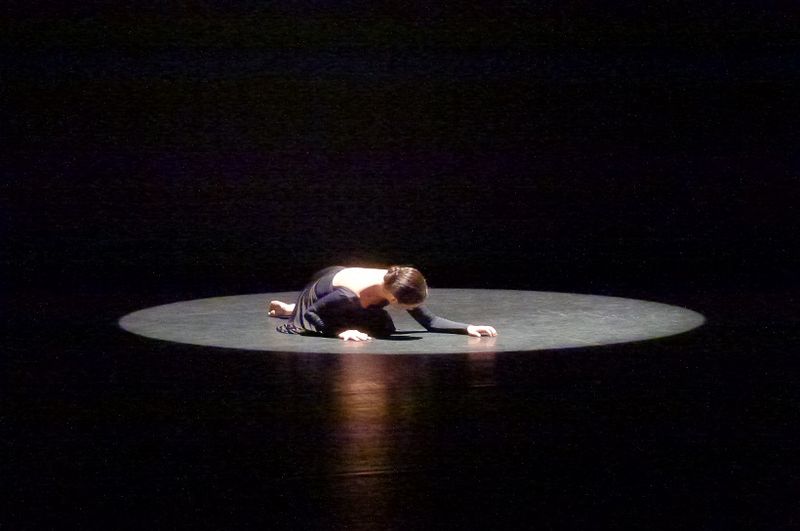
    BRIANA BUTLER enters in silence; on the ground, she pulls herself into a circle of light. Her solo,  “Unstoppable“, is danced to music that is alternately mystical and thunderous. Ms. Butler’s strength and control developed the solo with propulsive energy, and she added some impressive gymnastic elements along the way before things settled again into silence.

    ROBERTO VILLANUEVA always dances the closing solo at all BalaSole performances, and invariably his solos are highlights of the show. Today, his ‘awakening’ solo, “Air”, was danced to music by Max Richter. Roberto’s solos have an improvisational air but they are always carried off with the polished artistry and committed musicality of a born mover. 

    Prior to the show I watched the dress rehearsal, hoping to get some useful photos of all the participants; but that did not go so well for me and my camera today. I include a few here, but it’s totally random and I’m sorry to say not all the dancers are represented in their solos.
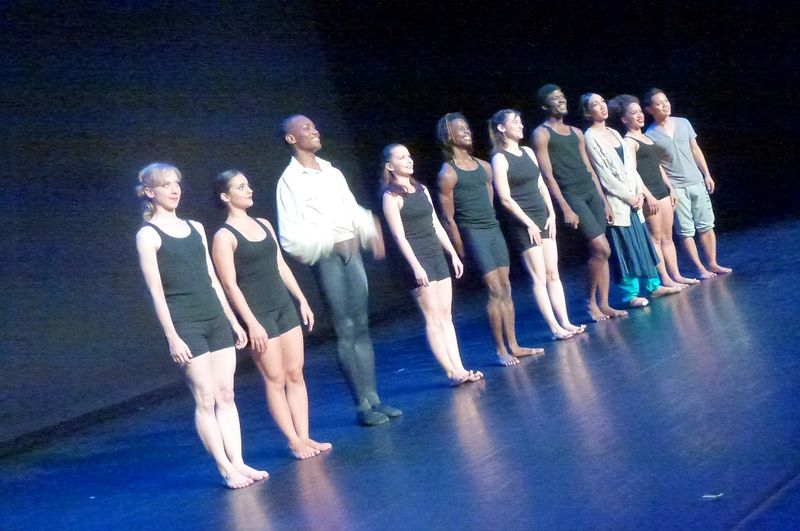
    L1580631

    Above: the soloists, lined up in performance order – Assante, Cuffari, Davis, Samonilova, Townsend, Schmoeker, Laurent, Jacob,  Butler, Villanueva

    L1580630

    Above: the emerging/re-emerging artists – these dancers appeared in the ensemble works at the start and end of the performance. They are (left to right) Gabriella Perez, Sasha Smith, Laurel Higa, and Ezra Goh.

    L1580683

    Above: Laura Assante

    L1580692

    Above: Anna Cuffari

    L1580778

    Above: Camille Schmoeker

    L1580801

    Above: Elijah Laurant

    L1580835

    Above: Briana Butler

    L1580888

    Above: Roberto Villanueva

    L1580901

    Above: the guest artists, Alexandra Jacob and Fredrick Davis, taking a bow
  • Pillow Prep: MADBOOTS

    GetInline.aspxh

    Above: studio showing of (SAD BOYS), the newest work from MADBOOTS; photo by Travis Magee

    Thursday July 9th, 2015 – MADBOOTS, the daring and unique all-male dance company founded by Austin Diaz and Jonathan Campbell, will be presenting their newest work (SAD BOYS) from August 26th – 30th, 2015, at the Doris Duke Theatre at the Jacob’s Pillow Dance Festival. Tickets and more performance information here. Support this production by donating here.
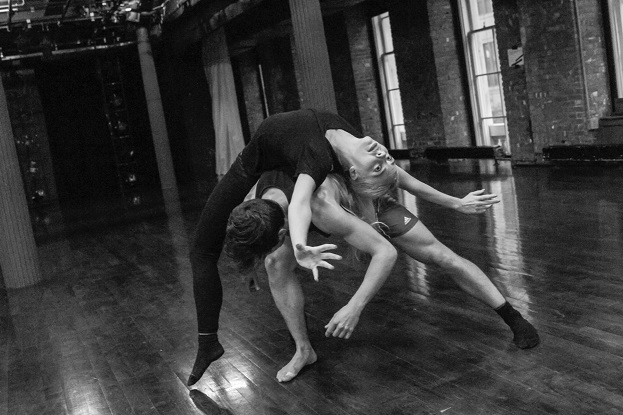
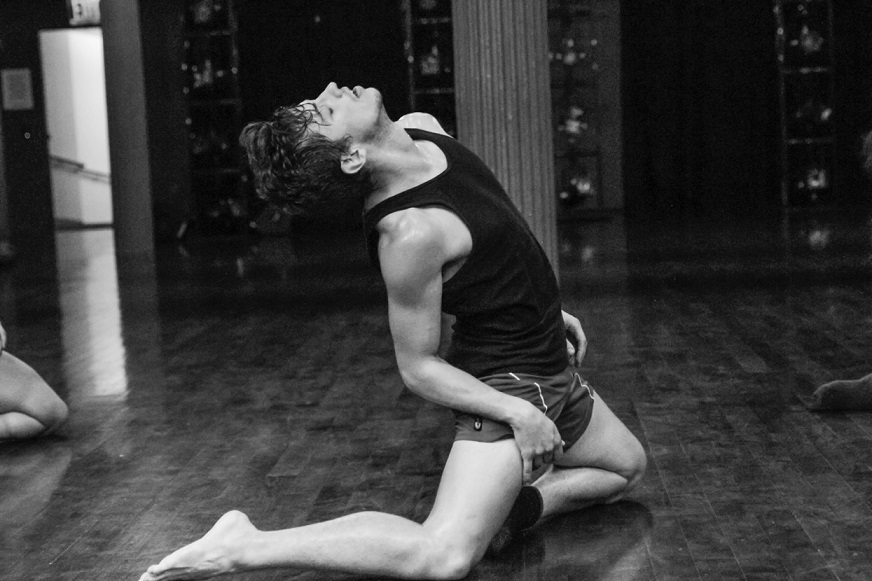
    Today MADBOOTS hosted a studio showing of (SAD BOYS) for friends of the Company; my photographer/friend Travis Magee met me there to document the event. Joining Austin and Jonathan for (SAD BOYS) are dancers Robbie Moore, Dan Walczak, and Chuck Wilt.

    Performed to a deftly assembled musical suite, (SAD BOYS) runs nearly an hour and unfolds in sequences of madly passionate movement laced with interludes of reflective stillness. It explores so many facets of the transition from youth to manhood: the desire for companionship, the hesitant awakening of sexual awareness, and the harsh lessons of mistaken affection. Tenderness, amiable horseplay fraught with desire, betrayal, brutality, and soul-rending despair are all elements of this journey which so many of us have made over the years. (SAD BOYS) resonates with both the wary pleasures and the terror of self-discovery.

    The choreography is space-filling, alternating raw physicality with unexpected passages of lyricism. The five dancers are unabashed in the athleticism of their dancing and in the intimacy of their interaction. As the dance progresses, the boys gradually shed their clothing, leaving themselves in a state of touching vulnerability by the end.

    Without giving away anything more about (SAD BOYS), here are some of Travis Magee’s images from the studio showing:

    GetInline.aspxd

    Jonathan Campbell and Austin Diaz

    GetInline.aspxe

    Austin Diaz and Dan Walczak

    GetInline.aspxf

    Dan Walczak

    GetInline.aspxi

    Chuck Wilt

    GetInline.aspxj

    Robbie Moore, Jonathan Campbell, Austin Diaz

    GetInline.aspxl

    Dan Walczak, Austin Diaz

    GetInline.aspxn

    Dan Walczak, Jonathan Campbell

    GetInline.aspxo

    Dan Walczak

    GetInline.aspxp

    Jonathan, Chuck, Dan, and Robbie

    GetInline.aspxq

    Jonathan Campbell, Chuck Wilt

  • Rehearsal: Knight/Beamish DANCE FOR NEPAL

    RQkHE0rinYhBWzy3nyyINzvkyHZx9FaaA39gtXrj1P0

    Above: Lloyd Knight rehearsing a new Joshua Beamish solo, ‘Adoration‘, for the upcoming gala benefit DANCE FOR NEPAL; photo by Nir Arieli

    Saturday June 27th, 2015 – On Tuesday June 30th, 2015, DANCE FOR NEPAL will be presented at the Union Square Theatre. The program, conceived by Simona Ferrera, is under the artistic direction of Lloyd Knight, principal dancer of The Martha Graham Dance Company.  All proceeds from this gala performance will benefit the survivors of the devastating earthquake that struck Nepal on April 25th, 2015. A stellar group of dancers will perform; tickets and more information here.

    On an overcast afternoon, photographer Nir Arieli and I dropped in at the Martha Graham studios for a rehearsal/preview of the new Beamish solo work. The choreographer has chosen the adagio from Haydn’s concerto in C-Major for cello and orchestra: a perfect setting for his fluent and expressive choreography and for Lloyd Knight’s powerful, emotive dancing. Demanding in its physicality, the solo has a deeply spiritual quality which gives Lloyd a perfect impetus for his interpretation: a striking mixture of muscularity and grace. 

    TCR4KqNouwnDvDmxEFTFrhjmF-FbmRKr7P20ePSuMqI

    Joshua Beamish (above, with Lloyd), the Canadian dancer/choreographer and founder of MOVE: the company, was recently seen here in New York City as one of Wendy Whelan’s choreographer-cavaliers in her RESTLESS CREATURE presentation at The Joyce. In August 2015, Josh will be presenting MOVE: the company for two performances at The Joyce. Details here.

    The studio atmosphere today was paradoxically calm and intense; I could have gone on watching endlessly since the combination of the music, Josh’s mapping of the movement, and Lloyd’s inspiring dancing were a welcome balm to the spirit.

    Here’s a gallery of Nir Arieli’s images from this rehearsal; I have chosen quite a few since they really capture the atmosphere:

    8GZwnZiFpnA8OML-Pn8HNZhHGPDqmTZuchV4pMfnz3s

    0H2SF4HwRQwA0R7DnkafO-z7iuCoGVFsJJ92iICWsA8

    A85gt2XQQUUmZnzGgRt25eyTiKQhCQlUcwUChXyvOkM

    DCy8A44bjllEbSPubFFO4aKrulekbGxt0OdY8ibIKlQ

    J7BWpa-lUIn3Pu3As2Fw_lc2uPivLK2eNPxY9YwdgSY

    YWKMLoVR-hRpAeO7E7BBFN5HrSk0Idjm6H9Zj2eX0xU

    FzS_IKv-9glcZ6gZEOhlITmE-V65aEekhGWN_jdDydI

    Ud_M-qKWg4ZTdgq7zJzzZRbYHMcLOR7zEa0Msyr7zm4

    MxEmtICm8SL2ikzFKnKwl0A59IyBV5Wgcr_TovHheSw

    NcBQ_rJxbrPZLlO4vcgkhncqjmQpIkt2aqdruFMR9LE

    Click on each image to enlarge.

  • Beloved Albert

    6a00d8341c4e3853ef00e5523b71cf8833-800wi

    Above: Albert Evans with Wendy Whelan in Ratmansky’s RUSSIAN SEASONS, photo by John Ross

    Tuesday June 23rd, 2015 – I don’t want to be writing this.

    It seems impossible that Albert Evans has passed away. News of his death came this morning in an e-mail from a fellow balletomane; my initial reaction was that it must be some other Albert Evans because our Albert’s life force was too vibrant to have been extinguished.

    The news is still sinking in. These days, I am constantly hearing of the passing of dancers, singers, and musicians whose artistry made an impression on my life; but these are people in their 80s and 90s who have lived out their lives to the fullest. One would certainly have expected Albert to be with us for many, many more years. That’s why his passing is so tragic. It reminds us that we must never take for granted the presence of the people in our lives.

    It’s true that Albert’s passing brings back a flood of dance memories, and yet – as with all my favorite dancers – recollections of his performances have frequently sprung to mind in the days since his retirement.

    6a00d8341c4e3853ef013484aab3f8970c

    Among his most felicitous roles was Puck in Balanchine’s MIDSUMMER NIGHT’S DREAM (with Arch Higgins and Alexandra Ansanelli, above, in a Paul Kolnik photo). In a role often undertaken by dancers of smaller physical stature, Albert made his own indelible mark with his brilliant characterization and marvelous, cat-like landings. The ‘Rhinestone Cowboy’ in WESTERN SYMPHONY was another Evans gem, as were his performances in AGON, THE FOUR TEMPERAMENTS, STRAVINSKY VIOLIN CONCERTO, and EPISODES. Albert frequently appeared in new repertory too, with Dove’s RED ANGELS, Ratmansky’s RUSSIAN SEASONS and Wheeldon’s LITURGY and KLAVIER among the most memorable. And who could forget his epic Rothbart in Peter Martins’ SWAN LAKE?

    6a00d8341c4e3853ef00e552536a7d8834-800wi

    Above: Albert in Ratmansky’s RUSSIAN SEASONS with NYCB colleagues Jonathan Stafford, Antonio Carmena, Sean Suozzi, and Adam Hendrickson. Photo: John Ross

    After his 2010 farewell to dancing at New York City Ballet, Albert continued working there as a ballet master. I would still run into him sometimes in the Lincoln Center area and there was always a smile and a friendly greeting. 

    6a00d8341c4e3853ef01348366cad2970c-800wi

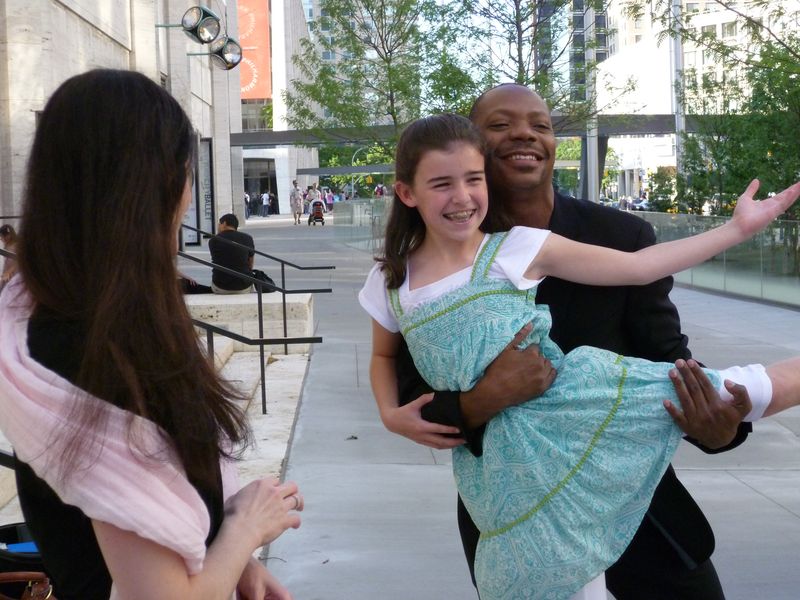
    Albert was always such a thoughtful person, always illuminating other people’s lives in a special way. After Yvonne Borree’s NYC Ballet farewell, Albert amazed a young dance student outside the stage door by sweeping her up into a pas de deux pose. It was such a happy moment, and that’s how I want to remember him.

    34127_1422702001586_4885590_n

    Above: curtain call at Albert’s NYCB farewell

  • Polish National Ballet @ The Joyce

    Ec34f50a48674b29a8d072cb4db0ae00

    Above: dancers of The Polish National Ballet in MOVING ROOMS; Photo: Ewa Krasucka

    Sunday June 21st, 2015 matinee – The Polish National Ballet in their New York debut performances at The Joyce with three contemporary works, bringing to New York City some two dozen dancers from their 90-member Company. While the inclusion of something more classical from their vast repertory might have given us a fuller picture of what The Polish National Ballet are about, it was nonetheless an exhilarating afternoon, thanks in no small part to the sleek energy of the dancers who brought ballet-based vitality to these modern works.

    Krysztof Pastor’s ADAGIO & SCHERZO, a setting of two movements from Schubert’s C-major string quartet, introduced us to the dancers; they are first seen in a sculpted cluster, evocatively lit. To the achingly poignant themes of the adagio, we meet them as individuals, as couples, and in small units as they come and go from the space. There’s some very poised and polished pointe work from the girls, and some impressive partnering motifs from the couples as the choreographer wraps an au courant feeling around the classical ballet vocabulary.

    The dancers re-form the opening cluster at the end of the adagio, then move on to fast-paced allegro dancing for the scherzo. In passages of stylized bravura, the ballet sweeps forward;  we may wish to linger our gaze on certain dancers but as they sail across the stage it’s clear there isn’t a weak link anywhere: they are all exciting to watch.

    A thorough change of mood as Emanuel Gat’s RITE OF SPRING unfolds before us. Performed by three women and two men in a space defined by an illuminated red carpet, this Rite is improbably set in a South American dance club. After a few initial moments of sizing one another up, the dancers go into ballroom/tango-based moves; partnerings come and go, and there’s always a woman left on her own. The work, nearly 40-minutes in length, maintained its pull on the viewer thanks to the charisma of the five dancers. It ends as one of the women slowly lets her hair down, lays down on the carpet, and falls asleep. Throughout this piece, I kept thinking of the riot caused by Stravinsky’s music when the ballet was premiered in the Nijinsky setting in Paris in 1913. The score is still provocative, but…to have caused a riot…?

    PolishNationalBallet1

    Above: from MOVING ROOMS; photo: Ewa Krasucka

    Krysztof Pastor’s MOVING ROOMS gave the afternoon its powerful finale. Set to music of Alfred Schnittke and Henryk Górecki (his fascinating harpsichord concerto), this ballet opens with a solo male dancer, superbly illuminated, and soon expands to a giant light-defined chessboard on which the full complement of dancers move in mixed combinations, a dynamic structure of comings and goings that continually lures the eye in one direction, then another. In-sync ensemble passages are especially impressive to watch, filling the stage with unified movement.

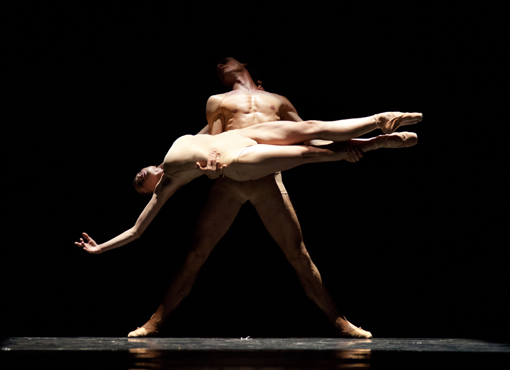
    Eventually the ballet goes ‘nude’ – or, more precisely, the dancers appear nude in dance belts and sheer body tights. Their taut physiques seem both vulnerable and savourable; the dancing is sexy and ecstatic. 

    A large audience watched the performance in attentive silence and cheered the dancers roundly during the bows. I hope The Polish National Ballet will be back in Gotham in the near future; they certainly made a vivid impression today.

  • Roschman Dance + SAAKASU

    11270215_10155584728285554_6005642330318231725_o

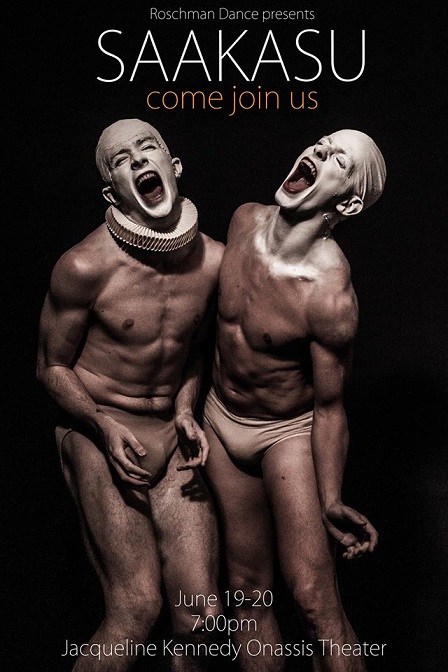
    Friday June 19th, 2015 – I’d never been to the Jacqueline Kennedy Onassis Theatre before. It’s a very nice venue for dance, with a proscenium stage and amphitheater seating, and tonight Roschman Dance (new to me) presented two works there, along with “Saakasu“, choreographed by Omar Roman de Jesus. 

    Roschman Dance’s 2012 work, “Learning To Fold“, opened the evening. Danced to music by Ethel, this piece showed the Roschman dancers to advantage with choreography that looks fresh and spacious. The six white-and-blue clad dancers shared a natural affinity for the sheer joy of movement. Aside from brief moments of reflection, the work is mostly a swirl of activity as the dancers come and go, connecting with one another in fleeting partnerships before sweeping onward. A stylized unison passage to the plucking of strings and a trio for the three women stood out, but for the most part “Learning To Fold” kept up its forward impetus: celebratory dance, performed with sincerity.

    Omar Roman De Jesus, who performs with Parsons Dance, offered  “Saakasu” (‘Circus’ in Japanese); earlier in the week photographer Travis Magee and I had dropped in at Omar’s rehearsal where his Parsons colleagues Ian Spring, Geena Pacareu Rijnsburger, and Eoghan Dillon along with a lively ensemble of young dancers were putting finishing touches on “Saakasu“.

    Seen onstage, with its sexy costuming and dramatic lighting, “Saakasu” makes a vivid impression. It opens with Ian Spring alone onstage. In his seasons with Parsons Dance, Ian has developed from an energetic boy-next-door into a charismatic dancer of the first order: one of New York’s finest. Wearing only a dance belt, a ruffled collar, and powdered hair, Ian takes on the timeless persona of the traveling player: visions of old Japanese theatre, the commedia dell’arte, and the tragic Pagliaccio smearing on his white greasepaint are evoked. 

    The music of a kozmic hurdy-gurdy sets the mood; Ian, in a pool of light, emits a profound scream: his inner animal wants to emerge. Eoghan Dillon and two girls have a stylized trio; more screams, and the full ensemble take the stage with the wary eageress of animals who have escaped their cages. Ian and Zoey Anderson have a sensuous duet to a piano theme, and then the tribe return, stomping their feet and slapping their thighs in a primitive ritual. 

    Ian crosses the stage singing a famous circus song. The music goes big and industrial; he and Geena have a duet. Meanwhile Eoghan has been crawling among the savage dancers and he finally finds a means of escape, though he simply ends up running in place since nightmares rarely allow for escape. 

    The dancers rush about in a circle, leaping. Things slow to near stillness. Debussy’s immortal “Clair de lune” is heard as Ian dances a compelling solo with very subtle images of Nijinsky’s faune woven in. This reverie ends as the ensemble re-enter, stamping their feet. They shimmy, shake, and exalt around Ian, lifting their arms to summon some pagan god. They hit the floor as the music goes pensive, only to rise again and collectively stomp upstage as silence and darkness fall.

    I wasn’t familiar with Omar Roman de Jesus’s choreographic background, but with “Saakasu” he’s really onto something: vivid in its theatricality and demanding of the dancers in terms of both technique and expression, it’s a piece to be seen again. The audience reacted with shouts of enthusiasm. 

    Contrast is a valuable asset in a mixed program of dance and so, after the interval, Sean Roschman’s “Crooked Creek” (a world premiere) was a fine counterpoise to the large-scale and darkly sexy de Jesus work. Set to an ‘Americana’ score, Roschman Dance‘s latest work seems on the surface a simple presentation of young people at a dance in a rural community, maybe in the inter-war years of the 20th century. Yet there is an underlying sense of dread, as if something is not quite right.

    Three couples waltz to an innocent, hummed tune, and then the fiddle summons up a square dance. A woman is abandoned by her partner; she lingers to watch another couple’s duet. Agitated passages follow: a trio of women and an in-sync duet for two girls; always there is a sense of being observed.

    Cascades of fiddling urge the dancers onward: various pairings and shifting solo moments, stillness offset by activity. A buzzing musical motif, and one of the girls collapses as if infected; her sad solo evolves to a trio for the women, and then to a pas de quatre for two couples. The tempo picks up for a duet, then the sound of the cello sets up a solo for one of the women. The dancers rush about as if possessed before collapsing, and the lights go out. But in an postlude, one woman sits up, unsure of what has happened. Her questioning gaze is held as a final darkness falls.

    Seeing a new Company, it’s perhaps unfair to single out a particular dancer: but in the two Roschman works I was especially impressed by Christian Deluna-Zuno, a Mexican guy with a high-flying extension and a handsome stage presence.

  • Rehearsal: Omar Roman de Jesus’s SAAKASU

    IMG_9372

    Above: “Saakasu” rehearsal, photo by Travis Magee

    Sunday June 13th, 2014 – Omar Roman de Jesus, who dances with Parsons Dance, presents “Saakasu” at the Jacqueline Kennedy Onassis Theater, 120 West 46th Street, on June 19th and 20th, 2015, at 7:00 PM. The program is under the auspices of Roschman Dance who will be premiering a new piece, “Crooked Creek”, and a revival of their 2012 work, “Learning To Fold”. Tickets here.

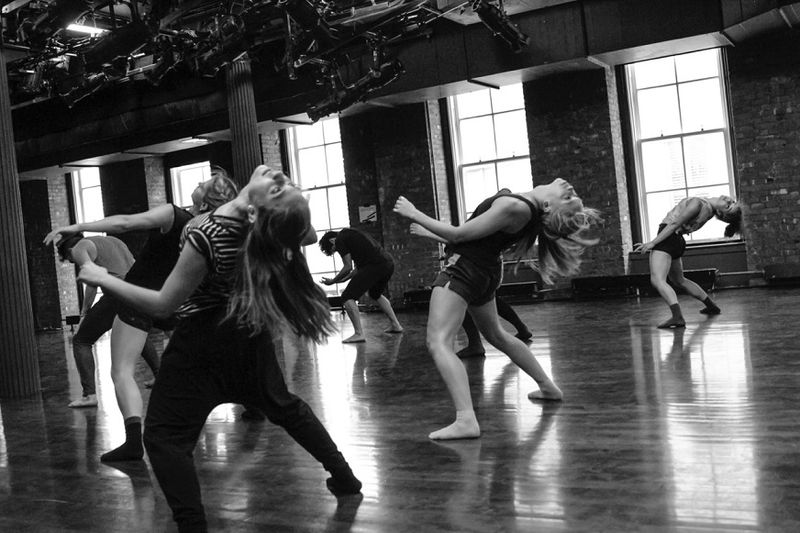
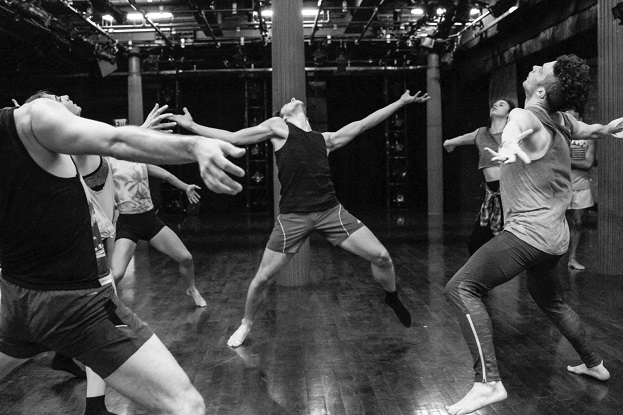
    This evening, Omar invited photographer Travis Magee and me to a rehearsal of “Saakasu“, which  translates to “circus” in Japanese; Omar’s dancework presents “a nightmarish vision of animalistic transformation”.

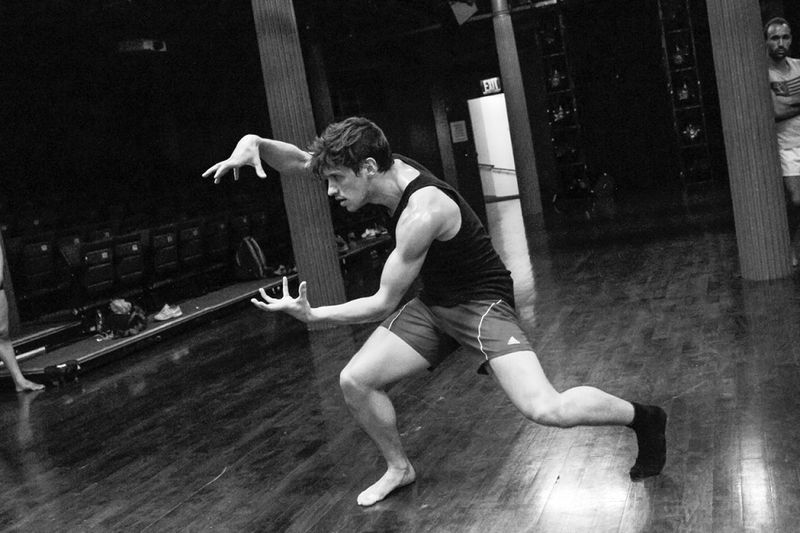
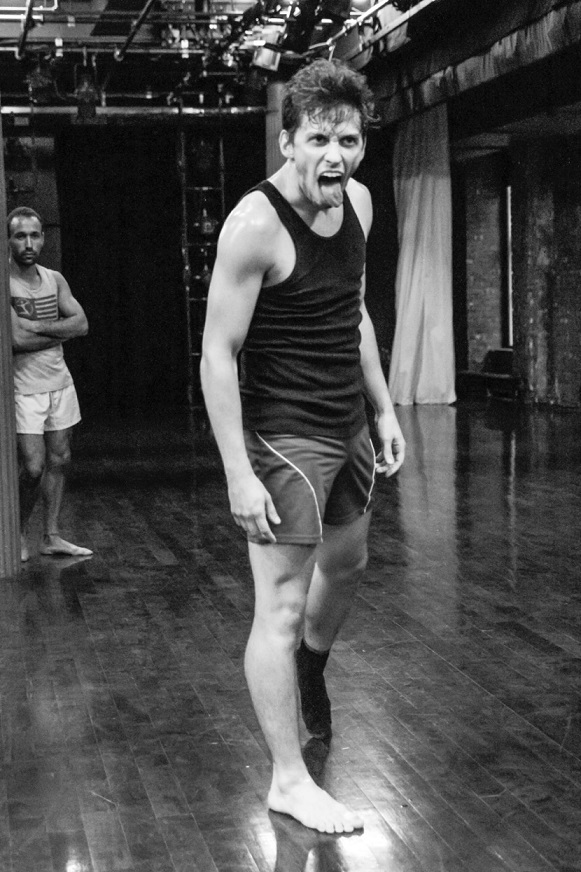
    Ian Spring (above) of Parsons Dance has a pivotal role in “Saakasu”; his Parsons colleagues Geena Pacareu Rijnsburger and Eoghan Dillon are also in the work, along with an ensemble of dynamic young dancers.

    Travis’s photos from the rehearsal:

    IMG_0655

    Ian Spring (center) and the ensemble

    IMG_0662

    IMG_0463

    Above: Eoghan Dillon

    IMG_0262

    Above: a duet for Zoey Anderson and Ian Spring…

    …and more of Ian Spring:

    IMG_0548

    IMG_0625

    IMG_0702

    All photos by Travis Magee