Category: Dance

  • Nomad: A Contemporary Ballet Film

    IMG_6646 copy

    Above: Kristen McGrew, choreographer and artistic director of Nomad Contemporary Ballet; photo by Melissa Bartucci

    Last summer, last I attended Nomad’s premiere performance and I have kept in touch with the Company’s photographer, Melissa Bartucci. I ran into Kristen and Melissa last week and they told me about an exciting new project they are involved in: Joshua MacLeod, executive editor of Vesper magazine, is creating a film in collaboration with Nomad Contemporary Ballet. They invited me to a workshop which is part of the creative process for the film.

    IMG_6700 copy

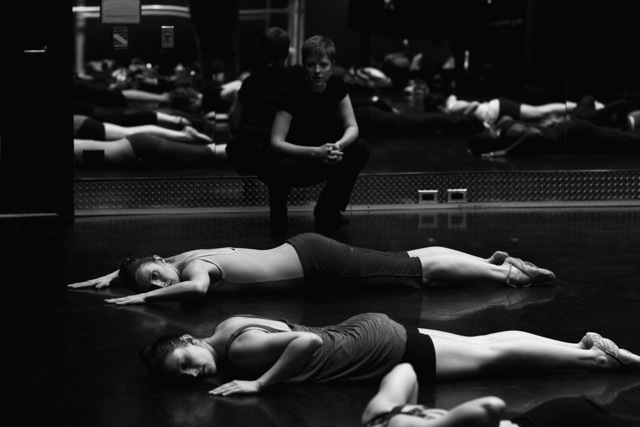
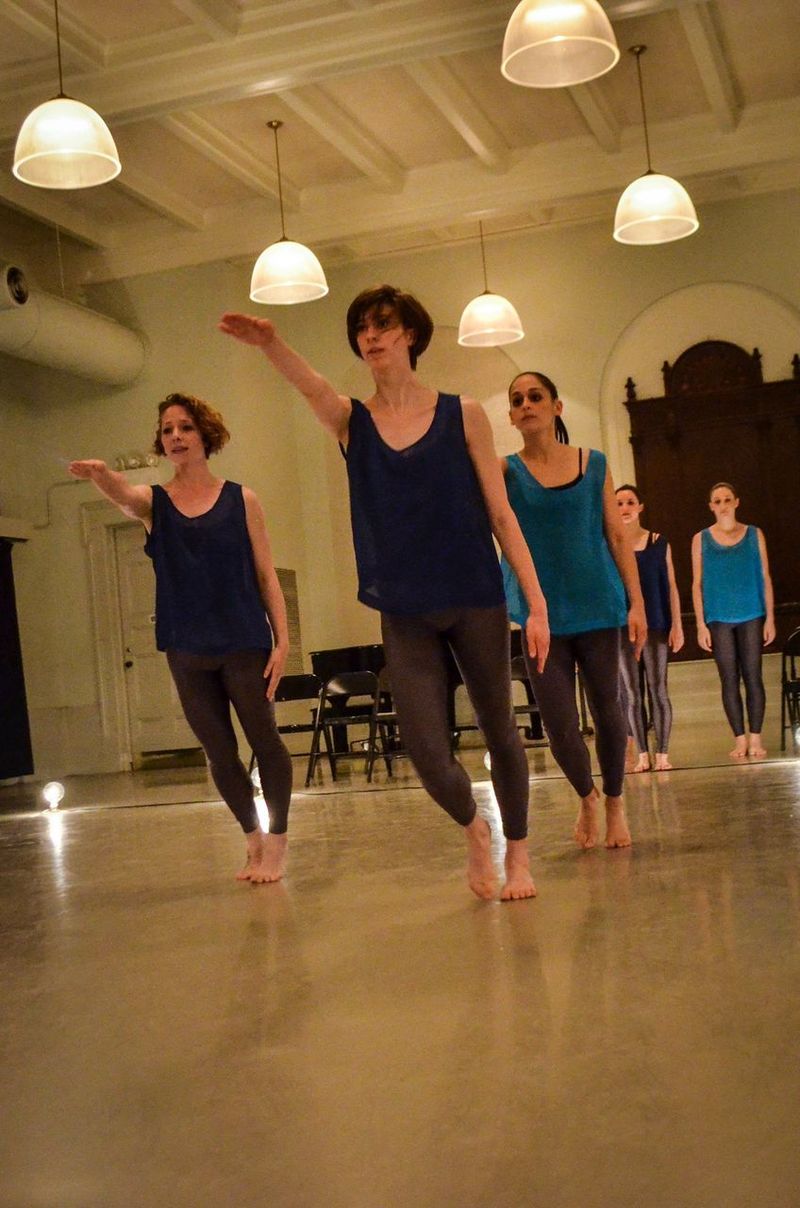
    The workshop ran for three days at MMAC; I went on the final day. Joshua and the magazine’s art director Lalique Martinez were there filming and shooting, along with Melissa who provided me with the images for this article. The work being filmed is Kristen McGrew’s newest choreographic creation, Wind Spirits.

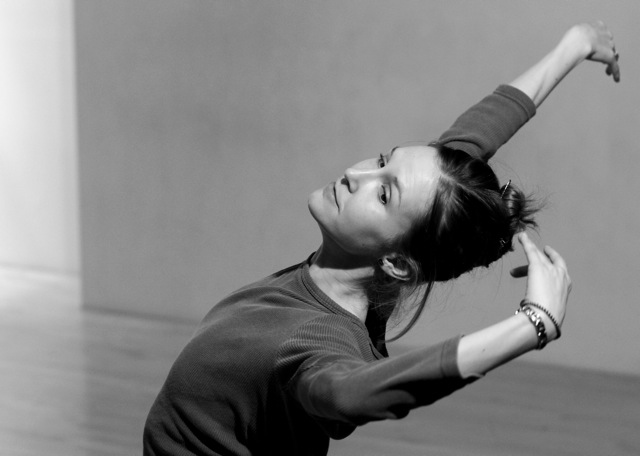
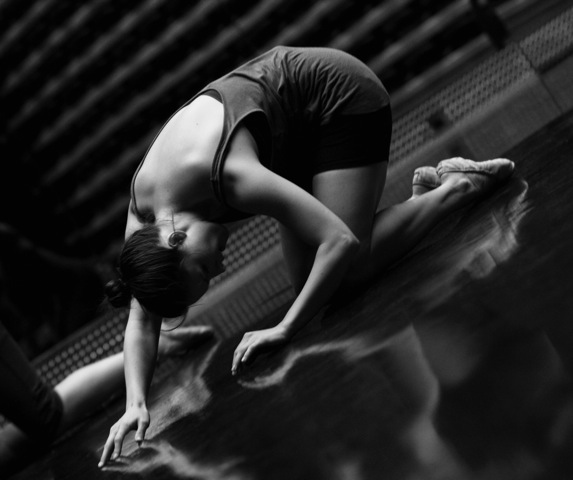
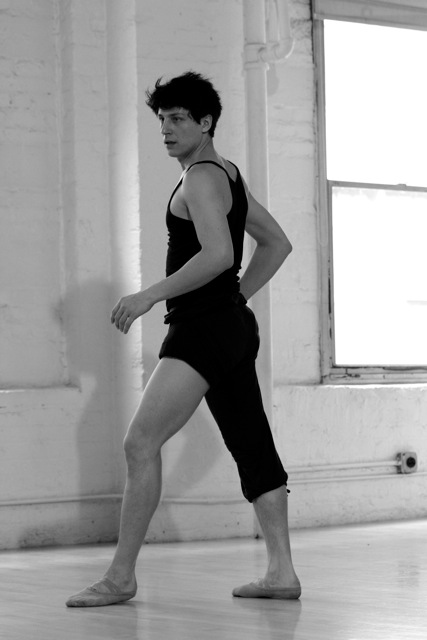
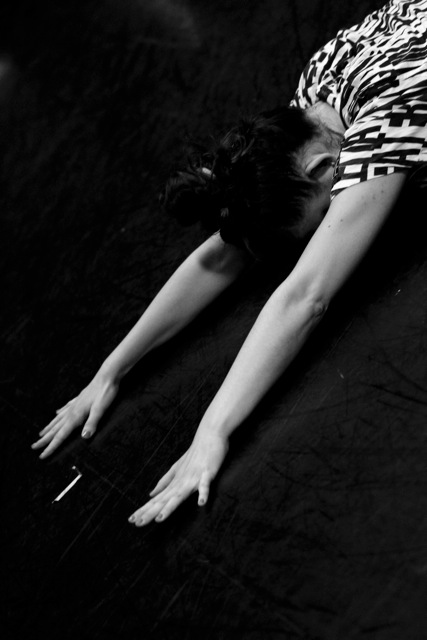
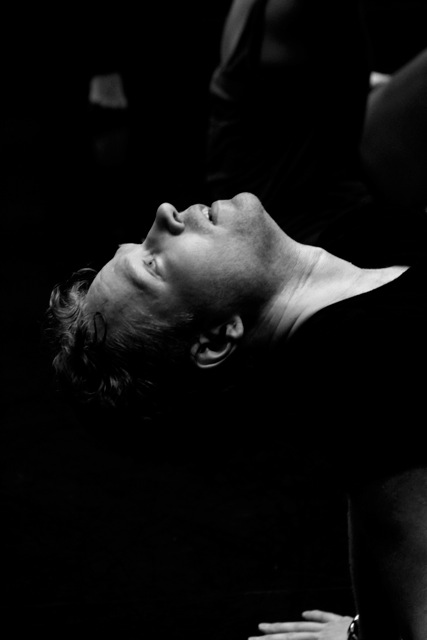
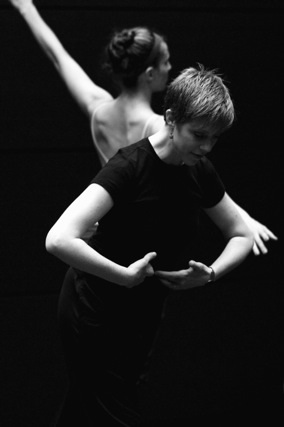
    Here are Melissa Bartucci’s images of some the dancers who took part in the workshop or who are members of the Nomad company:

    IMG_0744 copy

    Erin Ginn

    IMG_6709 copy

    Elise Ritzel

    IMG_0602 copy

    Joel Levy

    IMG_6698 copy

    Alessandra Giambelli

    IMG_6887 copy

    Eric Vlach

    IMG_6804 copy

    Ursula Verduzco

    IMG_6994 copy

    Kevin Tate

    IMG_7004 copy

    Shannon Maynor

    IMG_6934 copy

    Courtney Conigatti

    IMG_6653 copy

    Choreographer Kristen McGrew

    More information about this film with be forthcoming as the process evolves.

    Photography by Melissa Bartucci.

  • Bountiful Balanchine @ New York City Ballet

    6a00e3982574bd8833013487f8adad970c-800wi

    Above: New York City Ballet principal ballerina Ashley Bouder in a Matt Murphy portrait

    Friday May 24th, 2013 – A panoramic vision of George Balanchine’s choreographic artistry was on display this evening at New York City Ballet: an iconic classic, a quirky and mysterious series of danced vignettes, a spirited showpiece pas de deux, and a masterwork set in a luminous Chagall decor.

    It must be a memorable landmark in a NYCB ballerina’s career to be cast in one of the principal roles in SERENADE. Sterling Hyltin, who recently took on the Russian Girl, was tonight making her debut as the Waltz Girl. Sterling has her own brand of youthful elegance and sophistication as well as the mature depth of artistry to bring something very personal to this role. As the inherent drama of the ballet evolved, Sterling’s sure sense of the music and her nuanced conveyance of its romantic beauty made a poetic impression, enhanced by the angelic fall of her hair. 

    Jared Angle was a perfect cavalier for Sterling in their Waltz, and his airy solo passage was beautifully crafted. Megan LeCrone’s unique persona and wonderfully fluid movement continually found inspiration in the Tchaikovsky score, and Adrian Danchig-Waring was again a marvel of physique and presence.

    I’ve seen Megan Fairchild as the Russian Girl many times and I felt that tonight she surpassed her own high standards in the role; every phrase had a serene quality and in matters of expressiveness she found the exact hues in her dancing to enhance the lyrical glow of the music. It was a very pleasing interpretation in terms of both technique and artistry.    

    C35663-8_Ivesiana_Laraceyrr

    Above: newly-promoted to soloist, Ashley Laracey – one of the Company’s most distinctive dancers – in IVESIANA; photo by Paul Kolnik. The opening section of this ballet, entitled In Central Park, commences with a convergence of almost zombie-like women wandering the park at night. Ms. Laracey, in virginal white, moves among them – a blind girl feeling her way in the darkness. She encounters the broodingly handsome Zachary Catazaro and falls prey to his sexual desire, but it’s all very subtly manifested.

    6a00d8341c4e3853ef017eeafd0416970d-800wi

    Above: Anthony Huxley and Janie Taylor in The Unanswered Question from IVESIANA; photo by Paul Kolnik. In this duet, the barefoot ballerina is borne aloft by unseen carriers while the desperate young man pursues her in vain. I’m reminded of a similar Balanchine duet, PORTE ET SOUPIR, in which the female character appears ever beyond reach. The two ballets end differently, but the mystery and allure evoked are provocative in both works. Anthony Huxley, beautifully vulnerable, gives a charismatic youthfulness to the questing boy and his thwarted desires, while the divine Janie Taylor, wrapped in an enigma, entrances with her pale skin and iconic hair. 

    In a sudden snap-out-of-it burst of reality, Teresa Reichlen and Amar Ramasar appear in a vaudeville-like duet. Playful and unromantic, they trade solo passages before shaking hands and going their separate ways. Confident and super-attractive, Tess and Amar give IVESIANA its only bright spot, for the ballet ends in deep twilight with the corps now walking about on their knees, downcast and anonymous.

    The programme then did a volte face and gave us Balanchine at his most witty and entertaining with TARANTELLA, a virtuoso courting duet with a Neopolitan flair. Daniel Ulbricht gave a dynamic and high-flying performance, the crowd with him every step of the way as he leapt and swirled about the stage in uncanny combinations. Not to be outdone, the charming Erica Pereira brought a delicate but spicy air to her performance: her fancy footwork matched Daniel’s, and she showed off some very pretty attitude turns. As the pas de deux sails forward, the zils started to fly off from Daniel’s tambourine causing much mirth in the audience. The two dancers swept offstage after Daniel’s victorious kiss, then returned to an avalanche of applause. They were called out four times by the delighted crowd.

    It’s not often we see a fourth curtain call after a ballet at NYCB, but it happened a second time tonight as Ashley Bouder delivered a brilliant Firebird to end the evening. Ashley’s boundless technique is matched by her insightful dramatic interpretation, filled with subtle detail and highly personal musicality. She created a vibrant and magical atmosphere, topped off by a striking manege of full-stretched jetes. But then she also summoned up the gentle rapture needed in the whispering bourees of the Berceuse. Fortunate ballet-goers to have experienced two superb Firebirds – Ashley’s and Maria Kowroski’s – in a single week. They are as different as two birds of a feather could be, yet each seems perfect.

    Justin Peck was the wide-eyed and courtly Prince and Gwyneth Muller the willowy, enchanting Princess. Blessings on my lovely girls in the Dance of the Captive Maidens. Conductor Leif Bjaland and the NYCB players gave a jewel-like rendering of this fascinating Stravinsky score.  

    SERENADE: Hyltin, M. Fairchild, LeCrone, J. Angle, Danchig-Waring  [Guest Conductor: Bjaland]
    IVESIANA: Laracey, Catazaro, Taylor, Huxley, Reichlen, Ramasar  [Conductor: Sill]
    TARANTELLA: Pereira, Ulbricht  [Conductor: Sill, Solo Piano: Chelton]
    FIREBIRD: Bouder, J. Peck, Muller, Scordato  [Guest Conductor: Bjaland]

  • Ian Spencer Bell’s PASTE-UP

    Paste-up (LJ, JT, CL, SO)

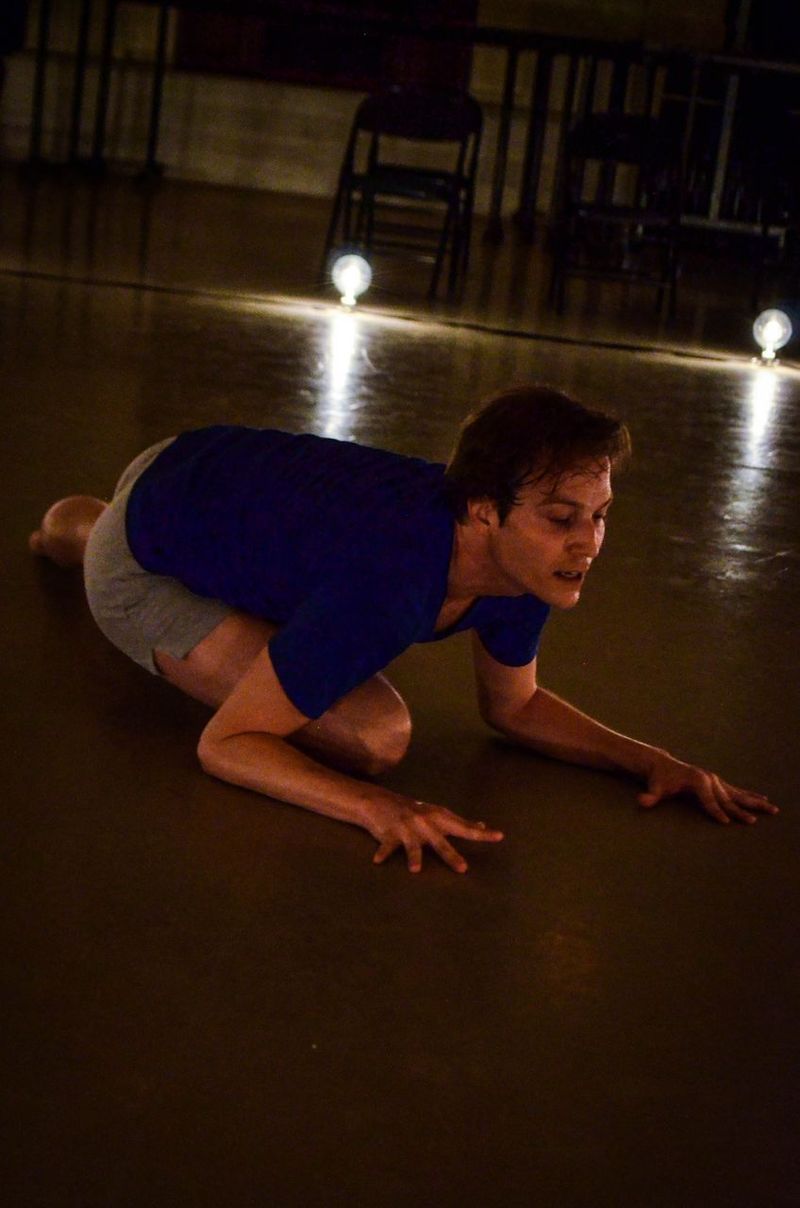
    Wednesday May 22, 2013 – Ian Spencer Bell’s PASTE-UP was performed at City Center Studios this evening. On entering the studio, the dancing area has been created: a square has been taped off on the floor, studded along its perimeter with large light bulbs. The viewers are seated along all four sides of the square; as the house lights dim, the self-illuminated space comes to life.

    There is no music for PASTE-UP though one of its sources of inspiration is Benjamin Britten’s Young Person’s Guide to the Orchestra. The only sounds we hear are the voices of the dancers calling out individual words.

    The ballet commences with the ten dancers leaping across the space one by one; they repeatedly execute flying jetés from one side of the square to the other, or on the diagonals. As each dancer’s jump reaches its apex, he/she calls out the word “Lift!”. Yes, I know: it sounds terribly simplistic – even naive – but in fact it weaves a particular spell.

    Paste-up (ISB, LJ, JT)

    A trio evolves, danced by Ian Spencer Bell, Lindsey Jones and Joshua Tuason (above), and the word being said now is “Left!”. The movement vocabulary expands cautiously, with straight-armed salutes and more variety of steps and self-expression.

    Switching to “Loft!”, the full company enter the space; they begin to touch one another, there are partnering elements and lifts along with seemingly improvisational self-contained solos. The work’s opening leaping patterns are repeated, now executed in trios.

    Paste-up (ISB)

    Introspection comes in Ian’s solo; we seem to be eaves-dropping on the dancer as he works alone in the space. He’s talking to himself: musing on Britten and on the music only he can hear, quietly infatuated with the sound of his own voice. Other dancers intrude, calling out things like “a beautiful melody!” where there is none.

    Paste-up (SO, LJ, CL, MD, DB)

    Above: Stevie Oaks, Lindsey Jones and Courtney Lopes

    In an animated quartet – Lindsey, Joshua, Courtney Lopes and Stevie Oakes – the individual instruments of the orchestra are named along with descriptive words. The finale builds with the full ensemble, their voices becoming more urgent and their dancing more extroverted and complex. One by one the dancers exit, leaving Ian alone in the twilight, his voice fading to nothing. 

    I have described the facts of PASTE-UP but it’s rather more complicated to describe the atmosphere of the piece which has an odd intensity and a dreamlike quality. It evokes memories of innocence and of the simplicity of dancing alone, unobserved, discovering oneself with music that comes from within.

    Ian’s works are distinctive and seem to evolve from simple and highly personal musings, finding a connection to the viewer thru the movement and the expressive gifts of his individual dancers. He certainly has a unique place in the current NYC dance scene and I look forward to seeing more of his work. 

    Appearing in PASTE-UP are: Ian Spencer Bell, Lindsey Jones, Courtney Lopes, Stevie Oaks, Mara Driscoll, Debra Bona, Oceane Hooks-Camilleri, Sally Kreimendahl, Vani Ramaraj, Joshua Tuason, and Justin Rivera. The lighting design is by Nicholas Houfek.

    Photos by Taylor Crichton.

  • RIOULT Studio Showing

    6a00d8341c4e3853ef017ee4254b71970d-800wi

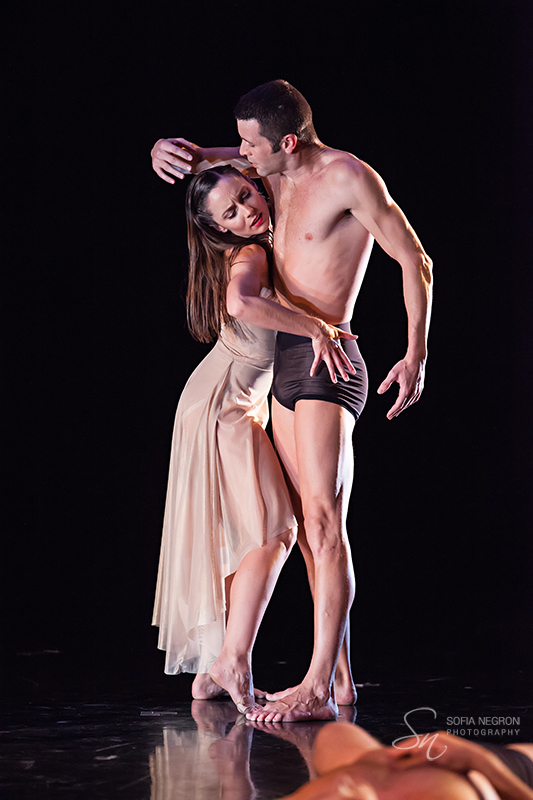
    Above: Charis Haines and Brian Flynn in Pascal Rioult’s ON DISTANT SHORES; photo by Sofia Negron

    Monday April 29, 2013 – For me, there are few choreographers currently creating who can rival Pascal Rioult for musicality, structure and dramatic nuance. This evening at the Paul Taylor Studios an invited audience watched an excerpt from one of Pascal’s most perfect works, ON DISTANT SHORES; and we were then treated to a preview of his current work-in-progress, set to a score by Michael Torke. Both ballets draw their inspiration from the stories of legendary women: Helen of Troy for DISTANT SHORES and Iphigenia for the new creation.

    The except from ON DISTANT SHORES was danced this evening by Charis Haines, a charismatic and mysterious beauty; seeing her as the iconic Helen seems like a providential case of type-casting, for her presence is as mesmerizing as her face. She is surrounded by the spirits of four warriors, Greek or Trojan, with the torsos of demi-gods and each with his own indivdual allure: Jere Hunt, Brian Flynn, Holt Wilbourn and Josiah Guitian. The ballet is set to an ethereal and evocative score by Aaron Jay Kernis.

    The dancers have been up at Katsbaan preparing IPHIGENIA; the Michael Torke score for this ballet will be performed live when it premieres at The Joyce in June. This new work is something of a fresh departure for Pascal Rioult in that it takes on the aspects of a dance-drama; there will be a spoken narrative, and the dancers’ acting skills will be to the fore. In this evening’s preview-showing the four principal roles were danced by Jane Sato, Marianna Tsartolia, Brian Flynn and Jere Hunt – all looking splendid, and vibrantly committed – while the other dancers of the Company take on the classic duties of the Greek chorus.

    RIOULT will be at The Joyce June 9th thru 14th, 2013. Information here. Ah, and they are doing BOLERO…yet another of Pascal’s masterpieces.

  • At the Miller Theatre: Baroque Vanguard

    K_bezuidenhout_wide-b5b77ed093080035c7e24bf4f5b150b17823af5a-s40

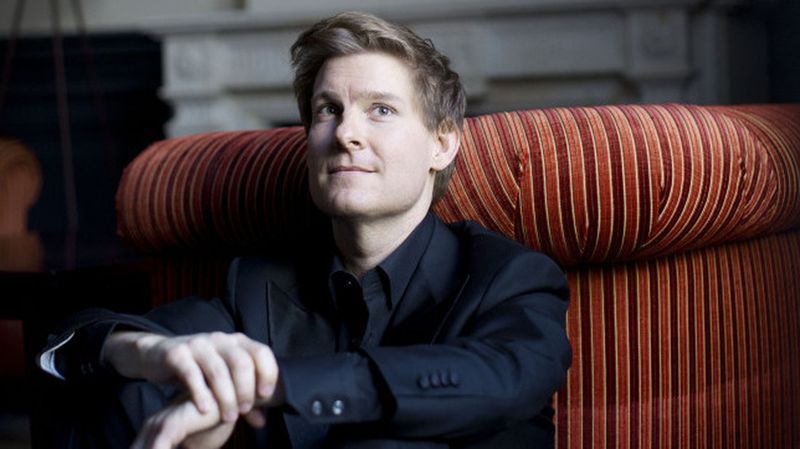
    Saturday April 27th, 2013 – The brilliant South African harpsichordist Kristian Bezuidenhout (above, in a Marco Borggreve photo) teamed up with Ensemble Signal to present an intriguing programme at Columbia University’s Miller Theatre. The event had been on my calendar for months and it lived up to expectations in every way.

    Two hundred and sixty years separate the composition dates of the evening’s opening and closing works. In this fusion of olde and new, Mr. Bezuidenhout and the Ensemble’s conductor Brad Lubman shook hands across the centuries, commencing the performance with the wildly discordant and precursive opening statement of Jean-Fery Rebel‘s “Chaos” from LES ELEMENTS. The work, which dates from 1737, has a startling freshness, even when it subsides into a more expected Baroque feeling. Despite its forward-looking beginning, this piece also seems to look back to the late Renaissance and the composer explores all the musical facets with a keen imagination.

    Two of the sons of Johann Sebastian Bach were represented next by a pair of sinfonias, the first by Carl Philipp Emanuel Bach (in D major, composed in the 1770s) and the second by Wilhelm Friedemann Bach (in D minor, dating from the 1740s). In the first, a complement of wind players join the strings and keyboard: horns, flutes, oboe and bassoon; the flutes remain to play the second sinfonia as well. The music is all delightful and superbly rendered, yet the work of the father which followed the intermission showed that the sons never quite attained the miraculous level of Johann Sebastian’s perfection.

    The harpsichord concerto in D-minor (1738) found Mr. Bezuidenhout at his most elegant in the gently rippling cadenzas, while the musicians of the Ensemble gave full-toned and scrupulously musical support. The harpsichordist’s speed and accuracy were dazzling, and he played with a passion and intensity that drove out any notion of this music as being a dry technical exercise.

    The harpsichord then vanished and six players (violins, viola, cello and double bass) ranged themselves in a semi-circle to tackle Michael Gordon’s devilsihly delightful WEATHER ONE. Dating from 1997, this work was inspired by chaotic shifts in weather patterns; the aural wind machine starts cranking up in the bass range and soon all six musicians are bowing furiously thru the swirling motifs in a staggering, shifting skyscape of rhythmic and textural elements. As the twenty-minute work finally subsided into calm, the audience erupted in cheers for Mr. Lubman and his valiant players: this score seems a great test of both concentration and physical stamina for the musicians. The composer appeared onstage, embracing each of the players in turn. I was left to imagine what sort of dancework could be made to this fantastical piece; the counts alone would be a major challenge for the dancers.

    As the Bach concerto was being played, I was recalling my childhood wish to play the harpsichord. My mother had bought me a recording entitled ‘Said The Piano to The Harpsichord‘ and I played it til it wore out. I had been playing the piano by ear starting at a very young age, but once I heard this recording I started asking for a harpsichord; my parents had no idea of where or how to get one in our god-forsaken little town, but the sound of the instrument always brings back this memory. Amazingly, I found the ancient recording on YouTube.

    The repertory of tonight’s Baroque Vanguard concert:

    Rebel: Chaos from Les Elements
    C.P.E. Bach: Sinfonia in D Major, Wq 183
    W.F. Bach: Sinfonia in D minor, F. 65
    J.S. Bach: Concerto in D minor, BWV 1052
    Michael Gordon: Weather One

  • New York Choral Society: A SEA SYMPHONY

    Ship at sea

    Thursday April 25, 2013 – “Behold the sea!” is the ecstatic phrase intoned by the chorus at the start of Ralph Vaughan Williams’ epic A SEA SYMPHONY. This evening the New York Choral Society offered this masterpiece at Carnegie Hall, along with Beethoven’s CALM SEA AND PROSPEROUS VOYAGE.

    The Beethoven unfortunately went for naught this evening because the people seated behind us could not settle themselves during the marvelous hush of the work’s opening section; they continued to squirm and whisper throughout the 8-minute duration of the piece. Fortunately we were able to move further down our row to a quieter place for the Symphony.

    A SEA SYMPHONY, which premiered in 1910 (on Vaughan
    Williams’ 38th birthday; and he conducted the premiere himself),
    established the composer as a legitimate successor to Edward Elgar in
    the pantheon of British musical giants.

    There are four movements:

    I. A Song for All Seas, All Ships – Moderato maestoso
    II. On the Beach at Night, Alone – Largo sostenuto
    III. Scherzo: The Waves – Allegro brillante
    IV. The Explorers – Grave e molto adagio – Andante con moto

    In A Sea Symphony, Vaughan Williams evokes the days when Britain ruled the waves and her Empire spanned the planet. It is a sweepingly heroic pæan to the world’s oceans and sailors, the Walt Whitman texts summoning up visions of billowing sails and flags flying aloft: …”of dashing spray
    and the winds piping and blowing”.

    Tonight’s performance unfurled splendidly under David Hayes’ baton; the shining qualities of the Vaughan Williams score emerged through the finely-textured playing of the musicians and the rich harmonies of the choral writing. Chorus and orchestra have the symphony’s Scherzo all to themselves and delivered optimum music-making in this evocative passage.

    Actress Kathleen Turner, with her signature huskiness of voice, read the Whitman poems before each of the symphony’s four movements. Clad all in black and taking on a professorial aspect as she donned her eyeglasses, she was a lecturer whose stance and gestures took on a seasoned and theatrical expansiveness as the evening progressed.

    The raven-haired soprano Jennifer Forni appropriately chose a very pretty aquamarine gown for tonight’s concert; the singer, who recently debuted at The Met as the First Esquire in the new production of PARSIFAL, displayed an unusually rich quality in her lyric-soprano voice. She sang with clarity, warmth and an attractive upper register. Undoubtedly she’ll be asked for spinto roles thanks to the unexpected and appealing density of her timbre; I hope wisdom will prevail and that she will move carefully into the repertory, assuring herself of a sustained career. The soprano’s singing was well-matched by the baritone Jordan Shanahan; his performance managed to tread a fine line between boyish eagerness and a more mature sense of vocal dignity. His poetic rendering of “On the beach at night, alone” was a highlight of the evening. Mr. Shanahan’s vocal power and clarity were in ample evidence, and when the two singers joined in unison during the symphony’s final movement, the combined effect of their voices was particularly pleasing.

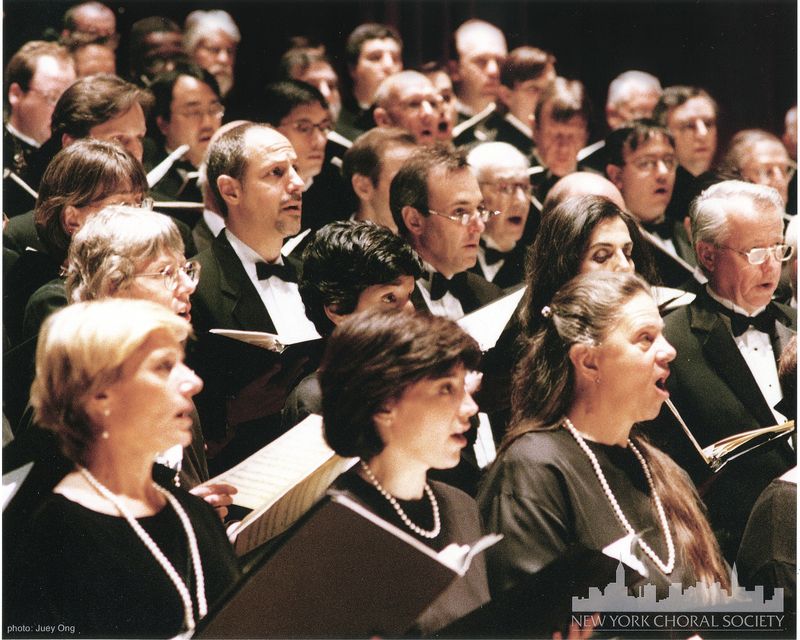
    NYCSchorus

    Founded in 1958, the New York Choral Society have presented many of the masterworks in the choral genre, as well as offering eleven world premieres; and they have commissioned works by Paul
    Alan Levi, Morton Gould, Stephen Paulus, and Robert De Cormier. I love these lines from the Society’s mission statement:

    “Our passion is music.

    Our belief is that choral music lifts the human spirit. It is a language that spans borders and cultures.

    Our goal is inspiring and excellent performance.

    Our great hope is that future generations will share our passion for choral singing.”

    Dance-lovers who follow my blog will note with pleasure that the long listing of choral artists of the Society includes the name of the great ballerina Martine van Hamel. I’ll never forget a conversation I had with her one day when I was working at Tower; she was seeking some choral music on CD and explained to me that she’d been taking voice lessons and had joined the Society, pursuing a fresh aspect in her artistic career. I had to smile when I saw her name listed in the Playbill this evening, bringing back memories of that lovely encounter.

    The concert’s participating artists were:

    David Hayes, Music Director and Conductor

    Kathleen Turner, speaker

    Jennifer Forni, soprano
    Jordan Shanahan, baritone

    Chorus and orchestra of the Society

  • Watching Yuki @ Dixon Place

    549369_3885594357018_791351648_n

    Wednesday April 24th, 2013 – Certain dancers seem to grab our attention no matter what they are dancing. I’ve been following Yuki Ishiguro’s work here in New York City for a few seasons now and he’s a dancer I’ll often go out of my way to see. Tonight he was performing in a piece by Charly Wenzel in a mixed programme at Dixon Place; the evening was part of the NYC10 Festival.

    Yuki began his dance-life break-dancing in Japan. Since coming to New York City, he has danced with isadoraNow (where I first saw him), for Darcy Naganuma, Sunhwa Chung, and Emery LeCrone; he appeared in a witty work with Yoo and Dancers and he’s currently involved in Cori Marquis’ The Nines. Yuki performed his poignant solo ANOTHER WORLD with BalaSole Dance Company, and was photographed by Kokyat while rehearsing a duet with Kentaro Kikuchi.

    What makes Yuki so intrguing – beyond his style of movement – is his enigmatic quality. There’s no other dancer quite like him on the Gotham dance scene. Tonight he appeared in an excerpt from Charly Wenzel’s mysterious Light and Breath and Life and Thought, a work for small ensemble which incorporates hand-held lights and tiny mirror-discs sewn to the costumes which create starry patterns as they catch the light. Yuki danced beautifully in a role that featured elements of break-dancing, a form in which his combination of technical skills and artistry make him a stand-out. 

    My plan this evening was to go, watch the piece that Yuki was in, and leave. It turned out that Yuki was on next-to-last but it didn’t matter because I ended up enjoying the entire programme. Here is a brief commentary on each of the participating companies:

    The Beat Club – a tremendous and diverse large ensemble of gorgeous young people; they closed the evening with a fantastic performance; combining many genres, their energy was unstoppable in this brilliant and often auto-biographical work combining spoken narrative and infectious rhythms.   

    Charly Wenzel & Dancers
    – at once dark and luminous; a mystery-filled excerpt which makes me want to see more.

    NonaLee Dance Theatre
    – four dancers in tightly-hooded body suits dancing excellent moves, with appropriate-energy music. I liked this a lot.

    Sublime Dance Company
    – really inventive, very well-danced, and an interesting ‘script’ actually spoken by the dancers. Nice individual performances; I know dancers don’t like talking as a rule but they handled it very well. 

    SUNPROJECT – fantastic send-up of SWAN LAKE with four black-leather and boldly-sassy swans doing wildly provocative moves to Tchaikovsky; hugely entertaining, and I was smitten with Keiji Kubo.  

    Sunny Nova Dance
    – very fine choreography and super-good dancing, the music was a bit anonymous but the dancers carried it really well.

    MJM Dance
    – the most thought-provoking work, very well-executed; it’s the story of a tragic 1911 sweatshop fire in New York City that killed over 140 workers. Nice ensemble work from the all-female cast.

    DanceSpora
    – four distinctively beautiful women on pointe; really enjoyed this choreography and all the dancers, despite an innocuous musical score. The movement and individual personalities were very pleasing.

    Billy Bell’s Lunge Dance Collective – a powerful, sensuous and violent pas de deux danced magnificently by Billy Bell and McKenna Birmingham; everything here was engrossing except the music, the anonymity of which somewhat undemined the power of the piece. Nevertheless, a fascinating and disturbing work, and Billy Bell is tantalizing
    in his cruelty shaded with guilt while Ms Birmingham gives a courageous performance.

    Yoo and Dancers – a truly original work in which a young woman deconstructs and re-builds a male statue; live piano music enhanced the performances of Mary-Elizabeth Fenn and Sean Hatch, who carried out the choreographer’s idea with a lovely seriousness of intent.

    So, because of a single dancer – Yuki – I met a whole lot of new choreographers and dancers, including some I definitely want to see again. It was a really good evening.

  • Deborah Wingert @ Lydia Johnson Dance

    IMG_2986 copy

    Above: dancers Sarah Pon and Anthony Bocconi of Lydia Johnson Dance being coached by Deborah Wingert; photo by Melissa Bartucci

    Deborah Wingert, one of New York City’s foremost ballet teachers, has been working in the studio with the dancers of Lydia Johnson Dance, coaching them particularly in the nuances of partnering in the works that Lydia is preparing to show in her June 2013 performances.

    Deborah Wingert, a former New York City Ballet dancer and presently one of an elite group of stagers of Balanchine repertoire for the Balanchine Trust, is deeply involved as an instructor, choreographer and mentor for the young dancers of Manhattan Youth Ballet. Her depth of knowledge and her understanding of dance from both a technical and an emotional point of view make her a priceless treasure. 

    I asked photographer Melissa Bartucci to document Deborah’s first day in the studio with Lydia Johnson Dance; then, a week later, I was able to get to the studio myself and observe the process first- hand. It didn’t surprise me to find that Lydia and Deborah were very much on the same wave-length, since for both of them their work in dance stems from a spiritual connection with music and movement.

    It was hard to imagine that someone could make Lydia’s beautiful troupe of dancers look even better, but in the most subtle ways – and often in an expressive rather than a technical context – that is what Deborah was able to accomplish.

    Here are some of Melissa Bartucci’s images:

    IMG_2835 copy

    Lydia Johnson, Deborah Wingert

    IMG_2702 copy

    Dancers Kerry Shea and Eric Williams

    IMG_2908 copy

    Anthony Bocconi and Sarah Pon

    IMG_3007 copy

    Lydia observing Sarah and Anthony

    IMG_2957 copy

    Anthony Bocconi

    IMG_3048 copy

    The dance is in the details

    IMG_3057 copy

    Lydia, Kerry, Eric and Deborah

    IMG_3056 copy

    Eric and Kerry watched by Deborah and Lydia

    Lydia Johnson Dance will have their New York season on June 6th, 7th and 8th, 2013 at the Ailey Citigroup Theater. Works set to music of Gorecki, Golijov, Schubert and Bach will be performed. Details will be forthcoming.

  • Ballet Hispanico @ The Joyce

    Jardi 2

    Above: Min-Tzu Li and Jamal Rashann Callender of Ballet Hispanico in Nacho Duato’s JARDI TANCAT. Photo by Jeaux McCormick.

    Sunday April 21, 2013 matinee – A recent visit to a Ballet Hispanico rehearsal was an ideal introduction for me to this vivid and delightful Company. Today at The Joyce I got to see them in full regalia: lights, costumes, the works. It was an exhilirating afternoon.

    Nacho Duato’s JARDI TANCAT finds its roots in folk tales from Catalonia, transformed into songs sung by Spanish singer Maria del Mar Bonet. The ballet opens in silence with six dancers in a patch of sunlight on a darkened plain; they are simple countryfolk who work the barren land,
    praying to God for the rain that does not come:

    “Water, we have asked for water

    And You, Oh Lord, You gave us wind

    And You turn Your back on us

    As though You will not listen to us”

    As the music begins, the sun brightens further and the choreographer presents us with passages of ensemble work in which the dancers capture the spirit of the land and the longing for relief from the hardships of their lives. Despite the bleakness of their daily labours, they seem to find a quiet joy in their sense of community. 

    In three stunningly beautiful duets, Duato extends the art of partnering in fresh ways and the Ballet Hispanico dancers respond to his vision with clarity and passion. The three couples today were: Melissa Fernandez with Donald Borror, Martina Calcagno with Mario Ismael Espinoza, and Min-Tzu Li with Jamal Rashann Callender. JARDI TANCAT is a spell-binding work, holding the audience in a keenly attentive state. The moment it ended I was ready to watch it again: and how often can we say that of a dancework?

    Vitrola

    Above: from TANGO VITROLA, photo by Paula Lobo. Click on the image to enlarge.

    An old gramophone sits illuminated on a high pedastal at the back of the stage as Donald Borror, his dorsal muscles expressive in the golden light, dances the opening solo of TANGO VITROLA. This magical tango-ballet unfolds against a sonic tapestry of scratchy old 78s; among the songs from the 1920s are “Rosendo”
    and “La Cumparista” by Orquesta Típica Criolla de Vincente Creco; and
    “El Llorón,” “Pena Mulata” and “El Porteñito” by Roberto Firpo.

    Magnificently lit by Joshua Preston, the dancers – the women in slinky black frocks and stiletto heels and the men bare-chested in black trousers and wearing fedoras – weave thru choreographer Alejandro Cervera’s intoxicatingly seductive patterns, periodically retreating to watch the others dance from rows of cafe chairs at either side of the stage. Desire and provocation tingle in the air of this dreamlike nightclub where the sexy atmosphere is over-laid with the almost formal courting rituals of the tango. Attitude is all as the dancers revel in their own attractiveness.

    Nube blanco

    Above: from NUBE BLANCO, photo by Rosalie O’Connor

    Theatrical elements come into play for the final NUBE BLANCO; again Mr. Preston’s lighting is a vital factor in this work set by choreographer Annabelle Lopez Ochoa to recordings of Maria Dolores Pradera. The dancers, all in bright red shoes, are called upon to act and vocalize along with executing the earthy moves, hand-clapping and foot-stomping culled from the flamenco vocabulary. Meanwhile an allusion to ballet comes in the fluffy white tutus worn by the women. A particularly riotous male quartet (“uno! dos! tres! cuatro!”) clearly caught the audience’s fancy, as did a charming mimetic vignette by Mario Ismael Espinoza, one of the Gotham dance scene’s sexiest guys. In the end the dancers stagger in, each wearing one shoe with the other foot bare; one of the girls has put on all the white tutus at once, tramsforming herself into a giant animated snowball. Her final arabesque, foot pointing to heaven, gave NUBE BLANCO its concluding mirthful image. As the dancers stepped out for their bows, I found myself whooping and screaming along with the rest of the crowd.

    120416_bhispanico_08971

    Above: Mario Ismael Espinoza in NUBE BLANCO, photo by Rosalie O’Connor

    An absorbing, sexy and vastly pleasing afternoon of dance. Ballet Hispanico continue their season at The Joyce for another week: performance and ticket information here.

    I give Ballet Hispanico six stars out of a possible five: go, and be seduced.

  • Rehearsal: Zvi @ Steps Repertory Ensemble

    L1080268

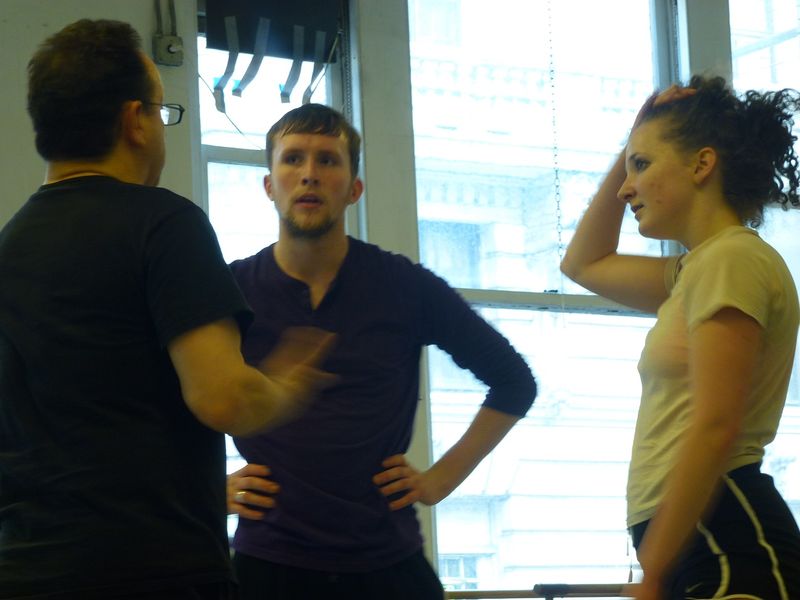
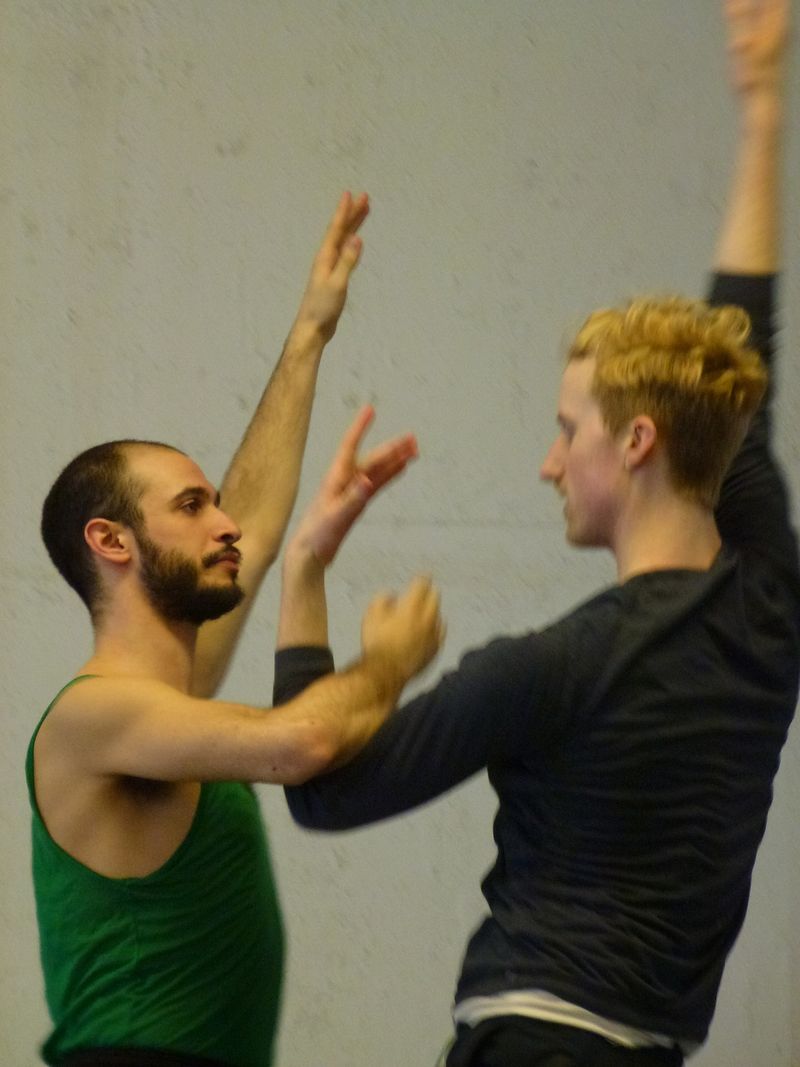
    Wednesday March 27th, 2013 – Choreographer Zvi Gotheiner is setting his dancework “Chairs”, which premiered in 1992, on the Steps Repertory Ensemble who will be performing it during their upcoming season at Ailey Citigroup Theater. My friend Joe and I dropped in at a rehearsal today to see how things are developing.

    For this dancework, Zvi uses music culled from film soundtracks, Rachmaninoff etudes, and Russian Orthodox
    sacred music. Today we were watching the dancers work on specific passages…

    L1080260

    …stopping periodically to refer to a video of a live performance which gave us an idea of how the work will feel when it’s costumed and lit. Mindy Upin and Lane Haplerin, above, having a look.

    There’s a tremendous sense of energetic flow in the choreography, particularly in a quartet passage…

    L1080318

    …and Zvi spent some time working out partnering details with dancers Jake Bone and Lane Halperin (above); their duet has a restless, space-covering energy.

    L1080219

    We’d just missed a sampling of a duet for two men (David Scarantino and Clinton Edward Martin, above) but just from the phrases we saw, and a few sneak peeks at the video, “Chairs” is clearly a very interesting piece.

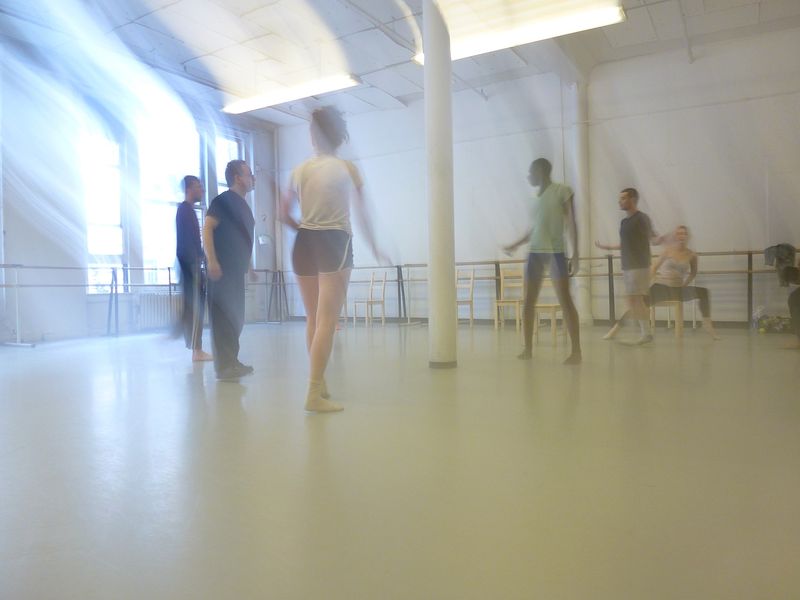
    Most of my photos today looked like this:

    L1080235

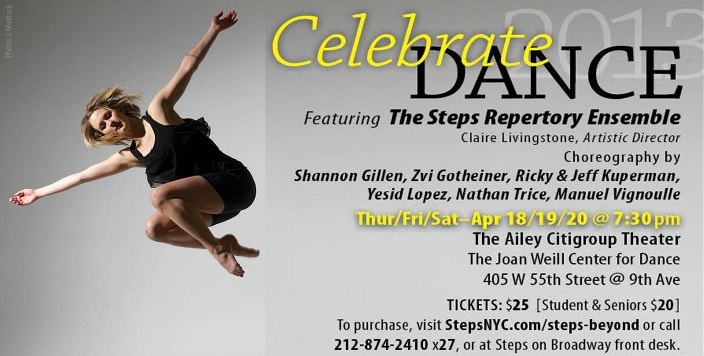
    So we’ll have to wait for the performances to get the full impact of what “Chairs” will look like. Just as I did a few months when I checked out Manuel Vignoulle’s rehearsal, I really loved the atmosphere at the Steps Rep studio. And it’s lovely to chat with the Company’s director Claire Livingstone.

    In addition to Zvi’s “Chairs”, and the Vignoulle creation, the programme will feature works by Shannon Gillen, Ricky and Jeff Kuperman, Yesid Lopez and Nathan Trice.

    188405_435059263251133_2135932523_n