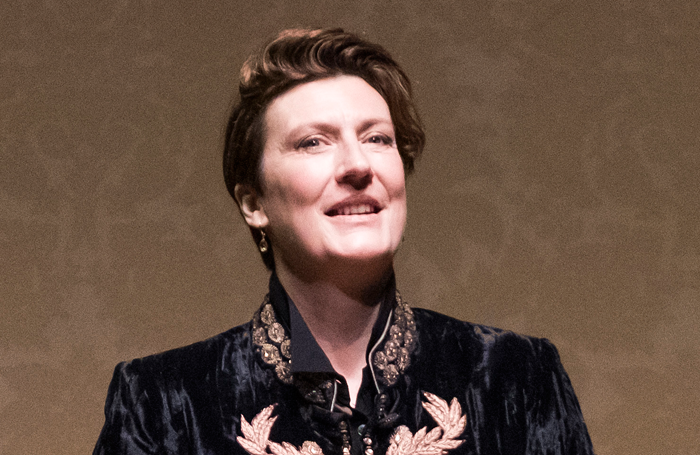
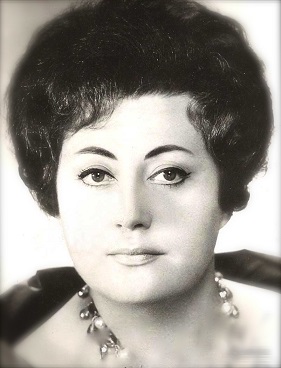
Category: Music

  • Transfigured Night @ Chamber Music Society

    Arnold_Schonberg_Richard_Gerstl

    Above: portrait of Arnold Schoenberg by Richard Gerstl

    ~ Author: Oberon

    Friday March 18th, 2022 – Whenever Arnold Schoenberg’s Verklärte Nacht (“Transfigured Night”) is being performed in Manhattan, I will try to be there. This evening, it was the closing work on an imaginative program of ‘music of the night’ put together by Chamber Music Society of Lincoln Center.

    Opening the evening was Luigi Boccherini’s Quintet in C-major for Two Violins, Viola, and Two Cellos, G. 324, “La musica notturna delle strade di Madrid”  which was composed in 1780. As my friend Ben Weaver remarked after hearing it tonight: “This music is so ahead of its time…it could have been composed yesterday!” To be sure, it is very inventive work, and there’s so much packed into its 12-minute duration.

    Tonight, this Boccherini gem was performed to perfection by Yura Lee (having exchanged her more usual viola for the violin this evening), violinist Stella Chen, violist Matthew Lipman, and cellists Nicholas Cannellakis and Sinhao He. The best-known section of the work, the Minuet, caused a ripple of recognition to run thru the hall. Elsewhere, plucking and shivering motifs provide accompaniments as the melodies spin out; it ends with a regal section as Retreat is sounded and the guardsmen return to barracks.

    Franz Schubert wrote his Notturno in E-flat major for Piano, Violin, and Cello, D. 897, Op. 148, in 1828. It is sublimely beautiful, and was played tonight by three extraordinary musicians: Yura Lee (violin), Sihao He (cello), and Michael Brown (piano).

    The piano commences a slow waltz, the violin and cello harmonizing. Then roles are reversed: the strings take up a plucking rhythm as the pianist assumes the melody. From gentleness, there comes a rise of passion, with rippling keyboard figurations. The opening melody is repeated, becomes expansive, fades briefly, is revived, and then on to a quiet ending. Throughout the ten-minute work, I greatly enjoyed watching the silent communication between the three players.
    James+Austin+Smith

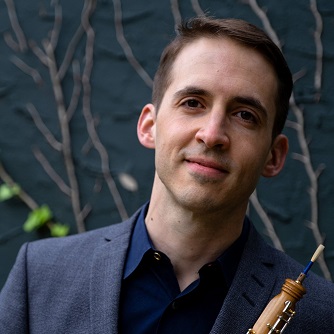
    Above: oboist James Austin Smith

    This evening brought my second hearing of Benjamin Britten’s Phantasy Quartet for Oboe, Violin, Viola, and Cello, Op. 2,  which. was written in 1932 for a competition for single-movement chamber works established in 1905 by Walter Wilson Cobbett,

    When I heard this work in 2013, James Austin Smith was the oboist; and he was back tonight, playing it so clearly and thoughtfully. He was joined by violinist Stella Chen (elegantly gowned in purple and white), violist Hsin-Yun Huang (very chic in a halter top and toreador trousers), and cellist Nicholas Cannellakis. 

    The piece commences with short, dotty cello notes, and then a march develops. The oboe takes up a songful passage. A swift and vibrant allegro is followed by a string trio before the oboist picks up where he left off, and the music marches off into the air as magically as it appeared. Mr. Smith’s delicious, multi-hued playing was – as always – a delight to hear.

    After the interval, the Society’s Executive Director, Suzanne Davidson, gave a brief speech, dedicating the concert to the heroic people of Ukraine. The crowd’s reaction was loud and clear.
    Maxresdefault

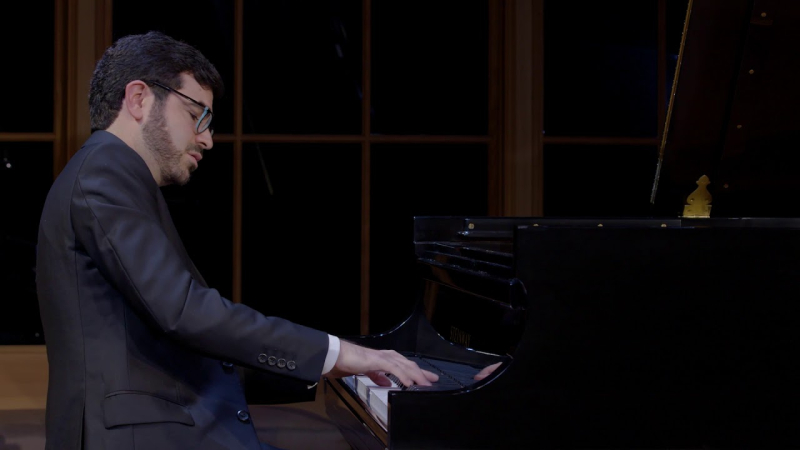
    The program continued as Michael Brown (above) took the stage alone to ravish the ear with his magical playing of two piano works by Claude DebussyLa terrasse des audiences du clair de lune” from Préludes, Book II (1913), and “Clair de lune” from Suite bergamasque (circa 1890; revised in 1905).

    In the first, Mr. Brown’s incredibly hushed pianissimo playing cast a spell of rapture and mystery over us; his control was astounding. As the prélude reached its tranquil end, Mr. Brown kept his hands poised over the keyboard momentarily and then embarked on an intoxicating rendering of the “Clair de lune”.. I found myself wishing that this poignant dream could go on and on… 

    Huang_

    Above: violist Hsin-Yun Huang

    To end this fascinating program, Arnold Schoenberg’s Verklärte Nacht (“Transfigured Night”) was magnificently played by a string sextet of the highest order: Yura Lee and Stella Chen (violins), Hsin-Yun Huang and Matthew Lipman (violas), and Nicholas.Cannellakis and Sinhao He (cellos).

    The composer drew inspiration for this work from a poem by the Austrian poet Richard Dehmel which tells of a man and woman wandering together late into the evening. The woman confesses to her lover that she is pregnant by another man. In the shadowy forest, the man consoles his beloved and, through his forgiveness, her guilt us assuaged. He assures her that he will care for the child as his own. Their love is transfigured through this night of communion they have shared, and they look to the future with hope.

    In its thirty-minute time span, Verklärte Nacht traces the lovers’ journey with incandescent harmonies and haunting melodies that sing of the redemption of forgiveness and the enduring power of love, The music traces the arc of the poem from its first line – “Two people walk through a bare, cold wood;” to its last: “Two people walk on through the high, bright night.” For a die-hard romantic like myself, few other works can compare.

    One of the most wonderful things about this work is the way Schoenberg distributes the musical treasures in his score: each of the six players has ample opportunity to display their tone and artistry as melodies are passed about and harmonies mingle on the air. As the music wends towards its finish, a great flow of lyricism rises up.
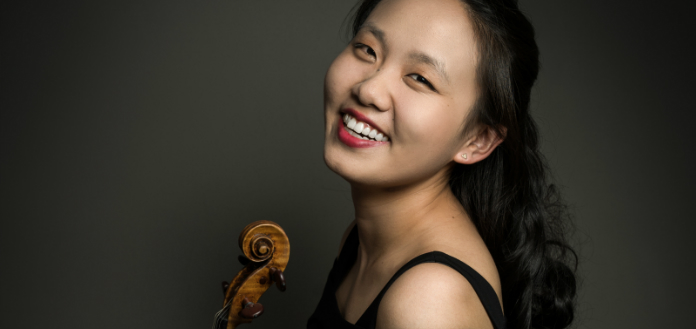
    Stella-Chen-

    Above: violinist Stella Chen

    This evening’s performance was so richly rewarding; the players captured every nuance of this profoundly moving score. At the end, a standing ovation was the only possible audience reaction; onstage, the artists quietly embraced one another during the bows.

    The cumulative effect of Verklärte Nacht tonight was to pull me – at least for a time – out of a deep feeling of world-weariness that has weighed on me in recent weeks, due to the lingering pandemic, the downward spiral of our great democracy, and a war started by a power-mad fiend. Indeed, it has, at times, felt like life is no longer worth living.

    To the musicians who played tonight: please know the great value of your music-making, and what it means to us. You provide a ray of light in an ever-darkening world. . 

    ~ Oberon
  • Chen/Honeck @ The NY Philharmonic

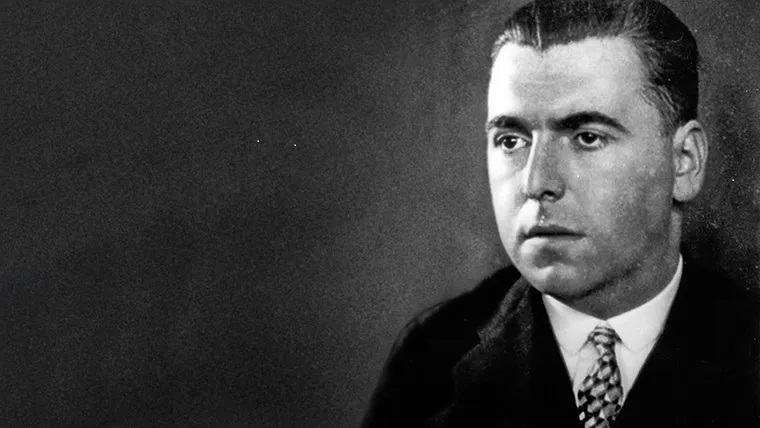
    Schulhoff

    Above: composer Erwin Schulhoff

    ~ Author: Ben Weaver

    Thursday February 24th, 2022 – Conductor Manfred Honeck returned to the New York Philharmonic with a thrilling concert of old chestnuts and a fresh take on an unfamiliar classic. Maestro Honeck and composer Tomáš Ille have created some marvelous orchestral arrangements of familiar pieces like a suite of Richard Strauss’ Elektra, Dvořák’s Rusalka, among others. In 2021 they premiered what may be their most successful collaboration yet: an orchestral arrangement of Erwin Schulhoff’s Five Pieces for String Quartet, composed in 1923 (and dedicated to Darius Milhaud).

    Shulhoff’s marvelous composition, a collection of dances (including a valse, a tango, and a tarantella), is a lively and inventive piece. Honeck and Ille created a highly imaginative suite, filled with a wide range of colors, with a touch of jazz (a style of music Schulhoff loved). Each movement – featuring a great deal of fun percussive instruments (including a marimba, a vibraphone, woodblock, tambourines, tom-toms, and castanets) – burst at the seams with excitement. A playful Alla Serenata gives way to a blousy Czeca. A soulful and passionate Tango milonga (with a lovely solo played by concertmaster Sheryl Staples) is followed by a head-spinning Tarantella, all played magnificently by the orchestra. Special kudos to the percussion section who juggled their instruments with aplomb.  And more kudos to Honeck and Ille for giving this wonderful pieces new life.

    Schulhoff is not as known as he should be. He was born Ervín Šulhov (Erwin Schulhoff being the Germanized version of the name) in 1894 in Bohemia. When he was 6 years old, Antonín Dvořák told his family to prepare their child for a musical career. Schulhoff was friends with people like Alban Berg. Schulhoff was arrested by the Nazis in 1941 and died in the Wülzberg Concentration Camp in Bavaria on August 18, 1942.

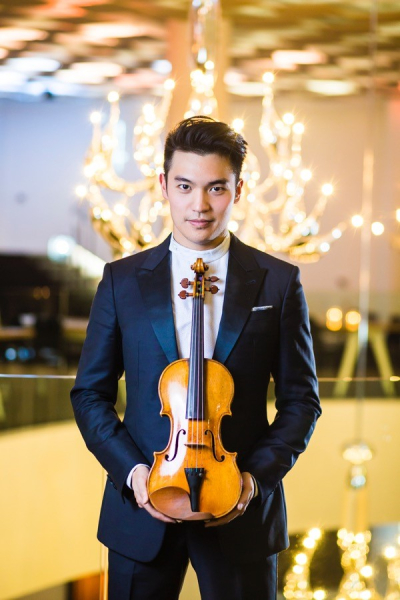
    Ray chen

    Above: violinist Ray Chen

    Felix Mendelssohn’s famous E minor Violin Concerto, composed in 1844, is one of the standard violin concertos in the repertoire. Young violinist Ray Chen was making his Philharmonic debut this season and there’s alway ssome risk playing a work as familiar as this because everyone has heard it numerous times and no doubt has some favorites already in mind. Chen was dazzling. His playing is gorgeous and secure, with beautifully honeyed tones from the violin, and a very passionate and committed interpretation. He received wonderful support from Maestro Honeck, who supported the soloist at every turn. The audience greeted Chen enthusiastically. As an encore, he played dazzling variations on Waltzing Matilda, the unofficial anthem of Australia, the country of Chen’s birth. 

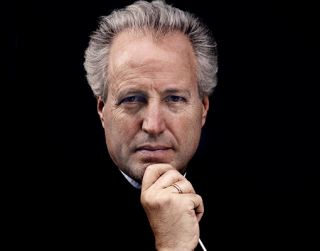
    Manfred_Honeck Felix_Broede

    Above: Maestro Manfred Honeck, in a Felix Broede portrait

    Antonín Dvořák’s cheerful Symphony No. 8 (composed in 1889), is one of his most enduring works. I’ve always called it Dvořák’s “Pastoral” symphony. Filled with sunshine and joy, melodies you feel like you’ve known your entire life (including a magical Waltz of the third movement), it came as a big contrast from the dark and stormy Symphony No. 7. Maestro Honeck clearly loves his work (he conducted it without a score), etching every moment and phrase with relish. The orchestra (including another wonderful solo from Sheryl Staples) was on peak form once again. A rousing ovation was well-deserved.

    ~ Ben Weaver

  • Antonietta Stella Has Passed Away

    Antonietta_Stella

    February 23rd, 2022 – I have just read of the death of the Italian soprano Antonietta Stella; she passed away on this date at the age of 92.

    In 1950, she made her operatic debut at Spoleto as Leonora in TROVATORE and soon after was singing at the opera houses of Rome, Florence, Naples, Parma, Turin, Catania, Venice, and the Arena di Verona.

    Stella trovatore

    Above: Antonietta Stella as Leonora in TROVATORE

    In 1954, Ms. Stella debuted at the Teatro alla La Scala in Milan as Desdemona in OTELLO; she continued to sing at La Scala thru 1963 in the great soprano roles of Verdi and Puccini, and as Maddalena in ANDREA CHENIER. In 1955, she made debuts at the Wiener Staatsoper, the Royal Opera House in London, the Paris Opera, La Monnaie, and the Lyric Opera of Chicago.

    She came to the Metropolitan Opera in 1956 as Aida, and went on to sing there thru 1960 as Cio-Cio-San, Violetta, Tosca, Elisabetta in DON CARLO, Leonora in TROVATORE,and Amelia in BALLO IN MASCHERA.

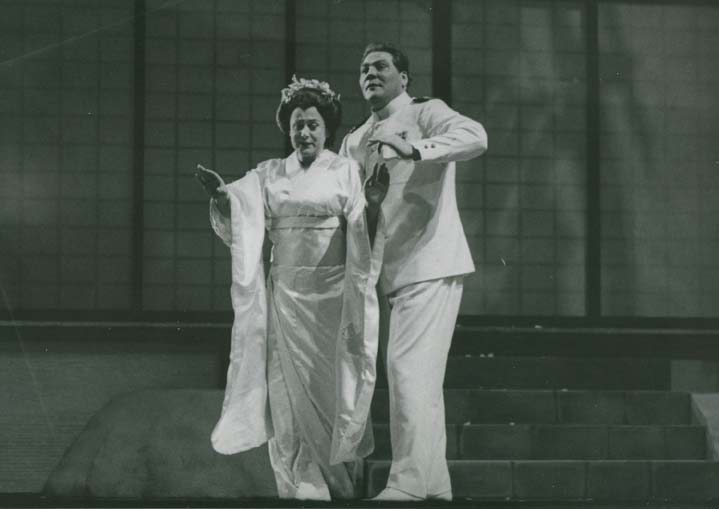
    Stella fernando butterfly

    Above: Antonietta Stella and Eugenio Fernandi in the Aoyama BUTTERFLY at The Met

    In 1958, Ms. Stella portrayed the title-character in Yoshio Aoyama’s classic production of MADAMA BUTTERFLY; the production remained in the Met repertoire thru the 1990s.

    Antonietta Stella – Un bel di – BUTTERFLY – Met bcast 1958

    Among Antonietta Stella’s commercial recordings, her DON CARLO (with Flaviano Labo, Fiorenza Cossotto, and Boris Christoff), her TROVATORE (with Cossotto and Carlo Bergonzi), and especially her ANDREA CHENIER (with Franco Corelliand Mario Sereni) are my special favorites.  She is also heard on several “pirate” recordings.

    Ms. Stella sang Minnie in the televised Japanese premiere performance of Puccini’s FANCIULLA DEL WEST (The Girl of the Golden West) given at Tokyo on November 2nd, 1963. The NHK Symphony Orchestra is conducted by Oliviero De Fabritiis.

    Watch and listen here.

    CAST:

    Minnie: Antonietta Stella
    Dick Johnson: Gastone Limarilli
    Jack Rance: Anselmo Colzani
    Nick: Mario Guggia
    Ashby/Jake Wallace: Bruno Marangoni
    Sonora: Arturo La Porta
    Wowkle: Anna Di Stasio
    Sid/Billy Jackrabbit/Jose Castro: Giorgio Onesti
    Trin: Antonio Saba
    Bello: Marco Scotti
    Harry: Augusto Pedroni
    Joe: Antonio Pirino
    Happy: Paolo Mazzotta
    Larkens: Mario Rinaudo
    Postman: Takeshi Nakamura

    And here is part of the Act II duet of Violetta and Germont from TRAVIATA with Ms. Stella and Tito Gobbi:

    Antonietta Stella & Tito Gobbi – Dite alla giovine ~ TRAVIATA

  • Romantic Perspectives @ Chamber Music Society

    Wu Han

    Above: pianist Wu Han

    Sunday January 39th, 2022 – This evening’s program at Chamber Music Society of Lincoln Center, entitled Romantic Perspectives, was truly a soul-warming experience, following a week of cold weather and a gusty snowstorm the previous day.

    The program got off to an exciting start with a performance of the Scherzo from Johannes Brahms’s “F-A-E” Sonata for Violin and Piano, dating from 1853. With Wu Han at the piano, violinist Chad Hoopes brought real flair to his playing. From the buzzy opening, the two musicians were in perfect sync. This Scherzo has a lyrical interlude, wherein the players’ dynamics meshed ideally; then, back to a lively allegro. What an exhilarating way to start a concert!

    Next came a spectacular performance of Gustav Mahler’s sole work in the chamber music genre: the Quartet in A-minor for Piano, Violin, Viola, and Cello, composed in 1876. Violinist Danbi Um, elegant in a ruffled ultramarine tulle gown, led her colleagues onstage. Before taking her place at the Steinway, Wu Han stepped forward to introduce us to two young musicians making their CMS debuts this evening: violist Timothy Ridout, and cellist Sihao He

    No pianist can establish a musical mood quite like like Wu Han does; with the deep, brooding opening measures of the Mahler, she immediately drew us in. The fabulous sound Sihao He summons from his cello was soon blending with Mr. Ridout’s handsome viola tone and the silken magic of Ms. Um’s violin. As the single movement progressed, the four musicians took us deeper and deeper into the music, their playing resplendently full-bodied and thrillingly intense. Passions ebb and flow, and then a darkish calm settles over us. Ms. Um’s exquisite playing, and the extraordinarily poetic phrasing of Mssrs. Ridout and He, were all underscored by Wu Han’s captivating dynamic mastery. It seemed impossible to think that only four players could produce such an ‘orchestral’ sound; their performance moved me deeply.

    Ridout

    Above: violist Timothy Ridout

    Composed in 1861, Antonín Dvořák‘s Quintet in A-minor for Two Violins, Two Violas, and Cello, Op.1, brought together the evening’s full string contingent: violinists Danbi Um and Chad Hoopes, violists Paul Neubauer and Timothy Ridout, and cellist Sihao He.

    Written when Dvořák was twenty years old, this quintet was the first of his works to be ascribed an opus number. In the opening Adagio — Allegro ma non troppo, the unison slow introduction gives way to a dancing, animated feeling. The tone qualities of the five musicians were perfectly integrated, with Mr. Hoopes excelling in the numerous melodic flights for violin, nimbly seconded by Ms. Um; and Sihao He amplified the beautiful impression he had made in the Mahler. This movement has an unusual ending.

    The ensuing Lento brings forth cantabile melodies; the main theme is taken up by Mr. Ridout’s viola (Dvořák’s own instrument) playing over a rhythmical accompaniment provided by the other players. The middle section of the movement provides a fresh theme, after which we hear a reprise of the introductory melody. The composer gives both violists ample opportunity here, and the contrasting timbres of Mssrs. Neubauer and Ridout were savourable indeed. The violins play in unison, then Mr. Hoopes again moved me with a high-lying passage. A swaying mood develops, and a rising violin motif leads us to the movement’s finish

    The quartet’s Finale – Allegro con brio involves three primary themes. The marvelous sound of Sihao He’s cello was continually alluring to the ear, and Mr. Ridout again shone in a songful passage. The superb blend these five artists achieved carried us on to the work’s ending, hailed by the crowd with warm applause.

    It is interesting to note that Dvořák seemingly never heard his opus 1; its first public performance came seventeen years after his death, and it was not published until 1943.

    Sihao he

    Above: cellist Sihao He

    Having recently enjoyed Maxim Vengerov’s stunning performance of César Franck‘s Violin Concerto at Carnegie Hall, I was definitely in the mood for more of Franck’s music. This evening’s CMS program ended with the composer’s Quintet in F-minor for Piano, Two Violins, Viola, and Cello, dating from 1879.

    With a descending phrase from Danbi Um, the passionate slow introduction to the first movement is underway. Wu Han’s gorgeous entry has a hesitant feeling, as if the composer is not quite sure where he wants to take us; a rather fitful acceleration finally achieves Allegro status. Now all five players begin to pass the melodies from one to another. Mr. Neubauer’s dusky viola, Wu Han’s magical piano, the lovely sense of longing from Danbi Um’s violin, the poignant sound of Sihao He’s cello…all combined as the music turns huge. In this movement, a melody of chromatic half-steps is heard, creating a musical tension which  our players today clearly relished.

    The second movement, marked Lento, con molto sentimento, begins with a haunting theme from Wu Han’s keyboard, and sublime lyricism from Danbi Um. The chromaticism which awoke in the opening movement becomes more pervasive now, with Ms. Um and Mr. He trading phrases. Wu Han’s playing is heavenly, and the cellist is simply stunning. The music builds in grandeur and then dissipates, becoming celestial. Mr. Neubauer’s lovely viola passage, ethereal sounds from the piano, and Danbi Um’s haunting violin draw the movement to a tender finish.

    Chad Hoopes opens the final movement with a bustling motif, joined by Ms. Um in an agitato mode. The strings play the work’s main melody in unison, with a vibrant crescendo. A brief, sweet song from Danbi Um leads to a big build-up of sound and emotion as the quintet sails onward to an epic finale.

    A full-house standing ovation greeted the players, who were called back for a second bow, much to everyone’s delight.

    ~ Oberon

  • Maureen Forrester ~ Kindertotenlieder

    Forrester

    The great Canadian contralto Maureen Forrester sings Gustav Mahler’s Kindertotenlieder, which she recorded with the Boston Symphony Orchestra under Charles Munch’s baton in 1958.

    Listen here.

  • Strings Only @ Chamber Music Society

    K lee

    Above: violinist Kristin Lee

    Tuesday January 18th, 2022 – Chamber Music Society of Lincoln Center brought together six virtuoso string players from their stellar roster for a program of music by Beethoven, Schulhoff, and Dvořák at Alice Tully Hall.

    Beethoven’s Quintet in C-minor for Two Violins, Two Violas, and Cello, Op. 104, started life as a piano trio composed in 1794–95; the composer arranged the work for string quintet in 1817.

    An almost waltzy feeling springs up for the opening of the Allegro con brio. The music spills forth with contrasting passages of animation and lyricism, which tonight’s five musicians graced with delicious harmonies and finely-judged dynamics. Violist Matthew Lipman’s playing (all evening) was of particular note.

    A gentle flow of melody opens the Andante cantabile. Ensuing variations include a sad interlude and some boisterous passages; Mr. Lipman and cellist Keith Robinson seize on their opportunities. The irresistible magic of Beethoven abounds here. The Menuetto has a courtly feeling, but fabulous flourishes from Kristin Lee’s violin add a spicy touch. Later, some charming echo effects are heard.

    Ms. Lee takes the lead in the quintet’s Finale: Prestissimo. Here I found myself deriving great joy from watching the five musicians reveling in the pleasure of playing such marvelous music. After all that has gone before, Beethoven pulls off a final magic trick: the quintet ends quietly.   

    Erwin-Schulhoff

    Above: composer Erwin Schulhoff

    The centerpiece if this evening’s program was Czech composer Erwin Schulhoff‘s Sextet for Two Violins, Two Violas, and Two Cellos, composed in the early 1920s. This evening was my first hearing of this work, and it was an engrossing, revelatory experience. My only other Schulhoff encounter was a powerful performance of the composer’s 5th symphony by the American Symphony orchestra in 2017.

    Schuhoff’s Sextet opens with an Allegro risoluto, the musicians digging in and then trudging along with numerous dramatic effects. The music calms, with wisps of melody woven in; our two violists (Mssrs. Lipman and Neubauer) have much to do here, with plucking and tremolo passages. The music has hauntingly somber harmonics and brusque accents.

    In the eerie Tranquillo: Andante which follows, the music is spine-tingling: unsettling yet beautiful. Mr. Neubauer and cellist Keith Robinson share an evocative exchange, and Kristin Lee spins a silky violin theme over a rocking motif. A solo from Mr. Robinson sustains the mood, and then a creepy, insectuous theme yields to a hushed atmosphere. The cello sings low, and then, with fantastic control, a final passage for viola and cello. “Wow!” I scrawled in my notes.  

    An agitato movement, marked Burlesca. Allegro molto con spirito brought forth fun, lively rhythms and some fiery playing from Matthew Lipman. The tempo speeds up for a propulsive unison passage at the finish.

    Inbal Segev’s deep, dolorous cello sound opens the concluding Molto adagio; the music has a dense, plaintive quality. Mr. Sussmann and Ms. Lee exchange lamenting themes; and while the violas sustain a tremolo effect, Mr. Robinson joins: his cello imitates the sound of a pendulum clock. An uneasy quietude settles over the hall as the music takes a long fade, and Mr. Robinson’s cello has a last utterance.
     
    This magnificent rendering of the Schulhoff will linger long in my memory.

    Arnaud-Sussmann-Photo-V-Photo-Credit-Carlin-Ma jpg

    Above: violinist Arnaud Sussmann, photographed by Carlin Ma

    To close the evening, Antonin Dvořák’s Sextet in A-major for Two Violins, Two Violas, and Two Cellos, Op. 48 (1878) was gorgeously played by our six artists.

    From the start, this sextet is a veritable font of melody. And the dance rhythms are indeed toe-tappingly appealing. But after a while, it all becomes so very pleasant, and I began to think back to the jarring fascination of the Schulhoff. As time goes by, I find that Dvořák’s music seldom draws a deep response from me.

    Despite such quibbles, I was so glad to stand up and cheer at the end of the concert, joining my fellow music-lovers in a heartfelt homage to these six great musicians. 

    ~ Oberon

  • Dame Sarah Connolly ~ La Mort de Cléopâtre

    Sarah-Connolly

    Dame Sarah Connolly sings Hector Berlioz’s La Mort de Cléopâtre at the Barbican Hall, London, in May, 2015, with the BBC Symphony Orchestra, conducted by Sir Andrew Davis.

    Listen here.

  • Régine Crespin ~ Le Spectre de la Rose

    Crespin2

    Régine Crespin sings Berlioz’s Le Spectre de la Rose from LES NUITS D’ÉTÉ from a televised concert given by the Orchestre Philharmonique de l’ORTF in 1966. The conductor is Jean Claude Hartemann.

    Watch and listen here.

  • Biebl ~ Ave Maria

    Voces8

    Voces8 perform Franz Biebl’s Ave Maria. It sounds like ‘early music’, but the composer was born in Germany in 1906 and passed away in 2001. Read about him here.

    Watch and listen here.

  • CMS Brandenburgs ~ 2021

    Bach

    Sunday December 19th, 2021 – Chamber Music Society of Lincoln Center‘s annual Yuletide performances of Bach’s immortal Brandenburg Concertos are always a highlight of the New York musical season. Music lovers turn out on droves for each of the program’s three presentations, giving themselves an early Christmas gift.

    One tradition at the CMS Brandenburgs is the annual reshuffling of the order in which the six concetros are played. This year, the odd-numbered concertos were played first, with the even-numbered ones coming after the interval.

    The 1st Brandenburg (in F-major) briought together the program’s largest ensemble of players, which produced a wonderful fullness of sound. The wind instrument lineup tonight was impressive indeed: there are three oboes, led by Stephen Taylor with Randall Ellis and Mr. Smith, two mellow horns (David Byrd-Marrow and Stewart Rose); and Marc Goldberg’s rich-toned bassoon. On the string team, led by violinist Daniel Philllips (excellent in the Adagio), Arnaud Sussmann and Sean Lee (violins) were joined by Che-Yen Chen (viola) and Dimitri Atapine (cello). The outstanding continuo duo – Kenneth Weiss (harpsichord) and Joseph Conyers (double bass)- made marvelous music all evening. Mr. Phillips made a lovely thing of the Adagio, where he and Mr. Taylor duetted cordially. The bustling Allegro drew a warm round of applause, but then comes a built-in ‘encore’, in which the wind players outdid themselves.

    The 3rd concerto, in G-major, is unique in that the anticipated central slow movement is replaced by a mere couple of chords and a violin flourish before going immediately on to the exhilarating Allegro. Bach calls for three trios of strings: violinists Sean Lee, Arnaud Sussmann, and Alexander Sitkovetsky gave us lively playing in the opening movement, whilst Mr. Phillips traded his violin for his viola to join Mr. Chen and Yura Lee. Add the cello trio of Timothy Eddy, Mr. Atapine, and Inbal Segev, and you have a veritable string-fest. My companion, Cherylyn Lavagnino and I were much taken with Mr. Conyers’ rich and nimble bass playing. The final Allegro sailed blithely onward: so many notes! 

    In the 5th concerto (in D-major), harpsichordist Kenneth Weiss mesmerized the crowd with his fantastic playing of the long cadenza; people stood up and cheered when he stepped forward for a bow at the end of the evening’s first half. From its familiar opening theme, the 5th concerto puts the violin (Sean Lee) and the flute (Ransom Wilson) in the spotlight; these two gentlemen played the central Affetuoso divinely, whilst Mr. Weiss’s harpsichord cunningly etched a filigree around their melodies. In the concerto’s light and lively final Allegro, Mssrs. Sitkovetsky, Phillips, Eddy, and Conyers were a top-class ensemble. 

    Following the interval, flautist Tara Helen O’Connor drew a warm welcome as she walked out onto the Tully Hall stage, goddess-like in a glimmering red gown. Yura Lee and Inbal Segev had also chosen red frocks for the evening, giving the scene a festive Yuletide glow.  In the 2nd concerto (in F-major), dazzling trumpet virtuosity from David Washburn set the hall alight, whilst Ms. O’Connor’s timbre had its familiar crystalline clarity.

    In the Andante, the quartet of Ms. O’Connor, James Austin Smith (oboe), Arnaud Sussmann (violin), and Timothy Eddy (cello) wove a tapestry of sound that warmed the soul: simply perfect. Then Mr. Washburn’s trumpet calls rang out, summoning us to revel in the concerto’s festive finale. A rock-star ovation saluted these extraordinary musicians as they returned for a bow.

    Yura Lee and Che-Yen Chen put us under a viola spell with their playing of the 6th concerto (B-flat major) – the one in which no violins are heard: a trio of cellists (Mr. Atapine, Ms. Segev, and Mr Eddy) and the continuo players are all Bach needed here. The Adagio – one of Bach’s most moving and melodious inventions – was entrancing as Ms. Lee and Mr. Chen exchanged phrases. This could have gone on and on – such a balm to the ear – but the closing Allegro sweeps us inexorably forward with its thrice familiar theme..

    The evening ended with the fourth concerto (in G-major), in which Alexander Sitkovetsky dazzled us with his silky tone and incredible dexterity. Duetting flautists Ransom Wilson and Tara Helen O’Connor displayed jewel-like qualities in their playing of the animated phrases of the outer movements, whilst bringing a sweet sadness to the harmonies of the central Andante. Mr. Conyers’ double bass and Ms. Segev’s cello provided a resonant counterpoise to the high voices of the flutes and violin. Then we are down to the final Presto: a fugue-like race in which Mr. Sitkovetsky’s fabulous virtuosity led his colleagues in a final sprint to a victorious finish. The audience saluted the musicians with a vociferous standing ovation, recalling them for a second bow.

    Leaving Alice Tully Hall, which has become dear to me over these past few years as a refuge of peace and beauty in an increasingly perilous world, we stepped out into the brisk evening air, feeling on top of the world. How wonderful to experience this concert with my friend Ms. Lavagnino, who is truly a kindred spirit.

    ~ Oberon