Category: Music

  • CMS Summer Evenings 2025 – Concert VI

    Viano 2 da ping luo

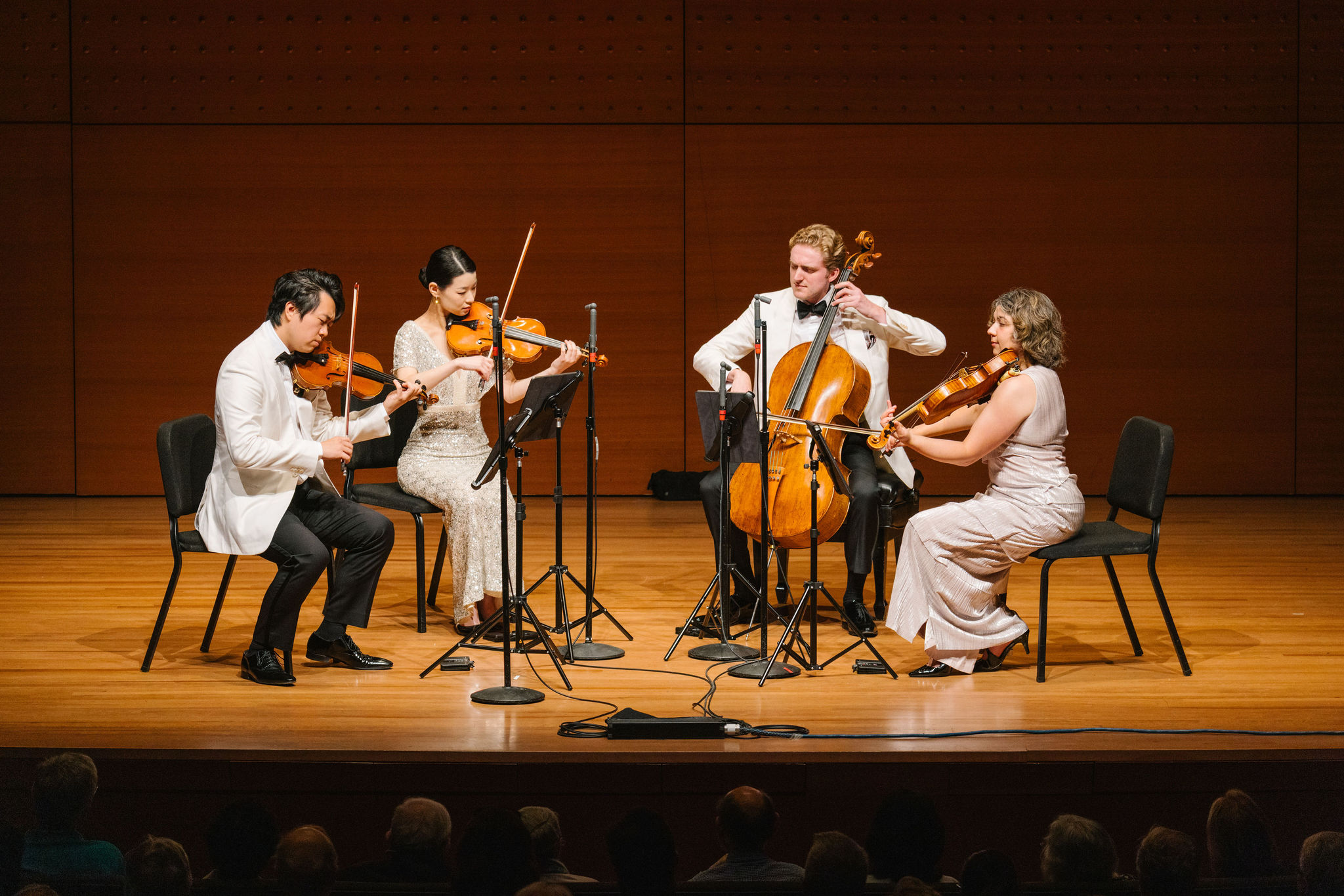
    Above, the Viano Quartet: Hao Zhou & Lucy Wang (violins); Tate Zawadiuk (cello); and Aiden Kane (viola). Photo by Da Ping Luo.

    ~ Author: Ben Weaver

    Sunday July 27th, 2025 – The oppressive heat of the summer was broken for a few hours by the Chamber Society of Lincoln Center with the last of their summer concerts at Alice Tully Hall. The Viano Quartet – Lucy Wang & Hao Zhou, violins; Aiden Kane, viola; Tate Zawadiuk, cello – played a wonderful program of Haydn, Mozart, Mendelssohn, and Schumann to a sold out hall.

    First half of the program was for the classical era – Haydn and Mozart. I think many think of Haydn music as preceding Mozart, and Haydn was certainly older. But he outlived Mozart and his String Quartet in D minor, Hob. III:83, heard tonight, was composed 21 years after Mozart’s. Consisting of only two movements, Haydn did intend to compose the traditional four, but his failing health prevented its completion. It opens with a graceful, charming Andante grazioso, although the movement is briefly interrupted by a more driven middle section, before reprising the light first theme. The Minuet is more dramatic and the Vianos revealed a muscular sound. First violinist Hao Zhou dominated the proceedings, but Tate Zawadiuk was given a few solo passages to show off his warm cello playing.

    Mr. Zhou remained in the first violin chair for Mozart’s G major String Quartet, K. 387. This was one of Mozart’s so-called “Haydn Quartets,” which he dedicated to the older master. The opening Allegro vivacious assai is also a light and elegant, and Mozart lets the second violin (Lucy Wang, who would move into the first chair for the second half of the program) take some wonderfully soaring solo turns. The movement ends gently, almost as if in the middle of a thought. The playful Menuetto was interrupted by a ringing cell phone, as was the lovely slow movement that followed. Mozart gives all the instruments turns to shine on their own, and every member of the Viano Quartet is a first-rate soloist. The closing movement consists of two fugatos, with each instrument passing melodies to one another and then back again.

    Felix Mendelssohn’s Fugue in E-flat major, Op. 81 is the final of the Four Pieces for String Quartet, which were published posthumously, though Mendelssohn composed the Fugue when he was just 18. (The other pieces in the collection were composed 20 years later.) It opens somberly with the viola before the others join in. Mendelssohn’s layering of the melodies is masterly, and not just for one so young. Mendelssohn’s mastery of the form – and the occasionally wild nature of the writing – reminded me somewhat of Beethoven’s demented Grosse Fugue.

    Robert Schumann’s magnificent Quartet in A major, Op. 41, No. 3 closed the program and brought down the house. Schumann opens with work with a brief slow introduction before unleashing a yearning, romantic melody, which is said to represent his wife Clara. The rest of the piece is filled with anxiety, restlessness and thunderous outbursts, with occasional humorous and romantic reprieves.

    The Viano Quartet produces a big, dominating sound. There’s a raw, visceral energy and bite to their performances, though they are capable of tenderness that makes you lean in. It’s always so interesting to hear how the same four instruments can combine to create such different sounds depending on the four musicians and their approach to music-making. The Vianos’s energy and drive reminded me of the great Belcea Quartet, who also manage to pack a wallop.

    As an encore the quartet performed a lovely arrangement of Debussy’s beloved Claire de lune, before everyone made their way out to the simmering NYC streets.

    CMS will stream a video recording of this wonderful concert in the coming weeks, so check out their web-site.
    Viano 3 da ping luo

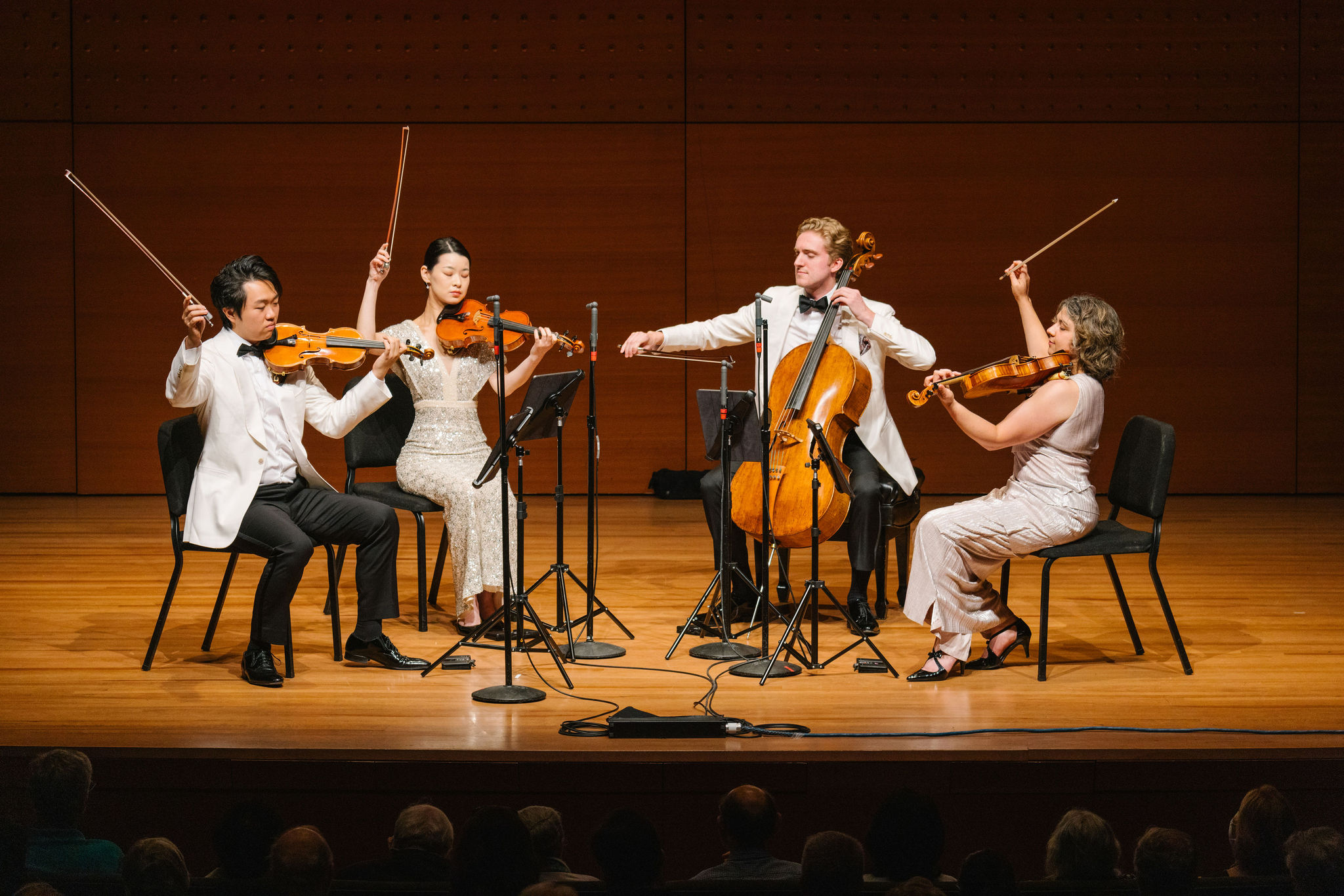
    Performance photo by Da Ping Luo

    ~ Ben Weaver

    (Concert photos by Da Ping Luo, courtesy of Chamber Music Society of Lincoln Center…with our thanks to Beverly Greenfield)  

  • CMS Summer Evenings 2025 ~ Concert V

    Anna Geniushene c

    ~ Author: Oberon

    Tuesday July 22nd, 2025 – I wasn’t feeling well but decided to go to this evening’s Chamber Music Society concert because I was especially keen to hear the Arensky quartet that was the closing work on the program. The prevailing heat and humidity had exhausted me, but now we had had a cooler day, and I was glad to get out of the house. In the event, I didn’t make it to the end of the evening.

    Mikhail Glinka’s Variations on a Theme of Mozart, as played by Anna Geniushene (photo above), got the evening off to a dazzling start. From its extraordinarily subtle opening bars,  the music soon turns fanciful. Ms. Geniushene’s technical command made for a fascinating aural experience as her mastery of piano/pianissimo colorations and touches of rubato constantly enticed the ear; her extraordinary delicacy of touch was a testament to her amazing control. Just as she was polishing off the final bar of music, someone sneezed loudly. Yes, I know these things can happen, but really spoiled the atmosphere in the hall. 

    During the ensuing performance of Beethoven’s Variations in G-major for Piano, Violin, and Cello, Op. 121a, “Kakadu”, my evening began to unravel. A couple sitting in front of me began sharing whispers, and even cuddled a bit, whilst two women next to me fanned themselves briskly with their Playbills. I managed to tune these distractions out – at least momentarily – as Ms. Geniushene was joined by violinist Francisco Fullana and cellist Sterling Elliott for the Beethoven.

    After a unison start, the pianist sets a gentle pace; the strings veer between intensity and lyricism, the violin tender, the cello deep. Moments of drama alternate with delicious subtleties as the music turns dancelike.

    Now the variations commence: the first for solo piano, the second for nimble violin & piano, the third for mellow cello & piano. Scale passages from the Steinway underscore themes traded between the string voices in the fourth, The fifth has a lyrical flow, the sixth is witty, with the strings making slashing attacks. Violin and cello are charming in the seventh variation, and Ms. Geniushene plays wistfully in the eighth, soon joined by the strings. Then a merry dance strikes up and the finale is quite grand. The three musicians were warmly cheered. 

    Schubert’s Adagio and rondo concertante in F-major for Piano, Violin, Viola, and Cello, D. 487, commenced with violist Lawrence Dutton and the gorgeous cellist Inbal Segev cellist joining Ms. Geniushene and Mr. Fullana for some sublime music-making. But the chatterboxes in front of me could not sit still, and now the man behind kept whispering to his companion, whilst the two women to my right had fallen asleep. As the Schubert reached its brilliant finish, to hearty applause, I decided to head home, not having heard the Arensky, which is why I was there in the first place.

    ~ Oberon

  • Britten’s WAR REQUIEM at the BBC Proms ~ 2024

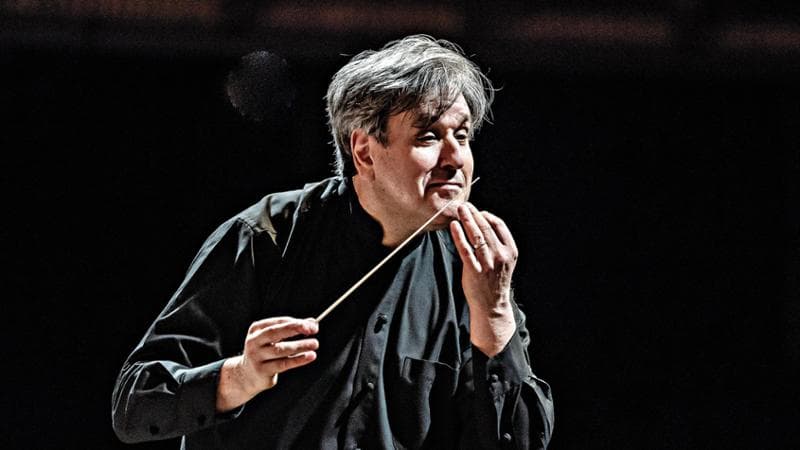
    Pappano

    Benjamin Britten’s WAR REQUIEM performed at the 2024 BBC Proms with soloists Natalya Romaniw, Allan Clayton, and Will Liverman and the London Symphony Chorus, BBC Symphony Chorus and Tiffin’ Boy’s Choir, under the baton of Sir Antonio Pappano (photo above).

    Watch and listen here.

  • The Crossing: The Book of Never

    The+Crossing +Summer+2024+(credit_+Charles+Grove)+

    Above: The Crossing; photo by Charles Grove

    ~ Author: Lili Tobias

    Friday June 20th, 2025 – The Crossing, conducted by Donald Nally, presented the New York premiere of Aaron Helgeson’s The Book of Never, along with selections from Gavin Bryars’s The Last Days of Immanuel Kant—two adventurous works of music! The program was presented by the Arts and Architecture Conservancy at Saint Peter’s.

    The Last Days of Immanuel Kant began the concert, the text of which is drawn from Thomas DeQuincey’s book of the same title. Bryars set the words true to the rhythms of the original prose, with flowing sentence-shaped phrases. The lush harmonies were full of suspended notes, some resolving and others remaining in a state of lingering uncertainty. But no matter what happened eventually, the result was always beautiful!


    In the program notes for “II. Prologue,” Bryars notes “DeQuincey’s astonishing assumption: ‘I take it for granted that every person of education will acknowledge some interest in the personal history of Immanuel Kant.’ I, for one, do not have any particular interest in Immanuel Kant, but that didn’t detract from my enjoyment of the music at all. Without the historical context, the text could have been about any regular person in their final stages of life. The singers describe mundane activities like recording conversations on scrap paper in order to remember them, difficulty sleeping, visiting a friend’s garden, etc.—all things that are shared by many in the process of aging and dying, no matter if you’re a famous philosopher or ordinary person.


    04+Sam+Gehrke


    Above: Aaron Helgeson, photo by Sam Gehrke


    The text for The Book of Never also originates from an unconventional source. Composer Aaron Helgeson sets the fragmented remains of the Novgorod Codex, at the same time weaving in text from a variety of other sources (including Gertrude Stein and the Rolling Stones, to name a few). Themes of exile tie the patchwork of text and personal histories of the authors together, and the powerful vocalizations of The Crossing brought Helgeson’s musical realization to life. All proceeds from this concert were donated to Safe Passage 4 Ukraine, an organization which helps Ukrainians displaced from the war find safety and new homes.


    Helgeson describes the contents of the Novgorod Codex in part as like “the chanting of a vindictive spell,” and the music certainly embodied that. The singers recited words one after the other on the same pitches or oscillated across wide intervals. Textures like this often punctuated more polyphonic sections, inciting a sense of urgency (like the near shouting of “And you bow down” in “III. Burns I’d Like to Forget…”). The harmonies, too, were mysteriously intriguing. Helgeson upended the traditional distinctions of “consonance” and “dissonance” (which are completely relative anyway) with notes and melodies drawn from a collection of hymns associated with the Novgorod Codex. During any moment of silence within the piece, the haunting echoes of dense cluster chords lingered in the air.


    All in all, The Book of Never is true choir music. Not just because it’s written for singers, but because Helgeson achieves an assembly of notes, words, vocal expression, and meaning that only a choir can facilitate. Arranged for any other ensemble, I feel that the music would lose a significant amount of the deep emotional nuance it has in its original form. Many of the movements feature different sequences of words sung nearly simultaneously, the listener’s attention shifting from one phrase to the next and back again but absorbing the meaning of both at the same time.


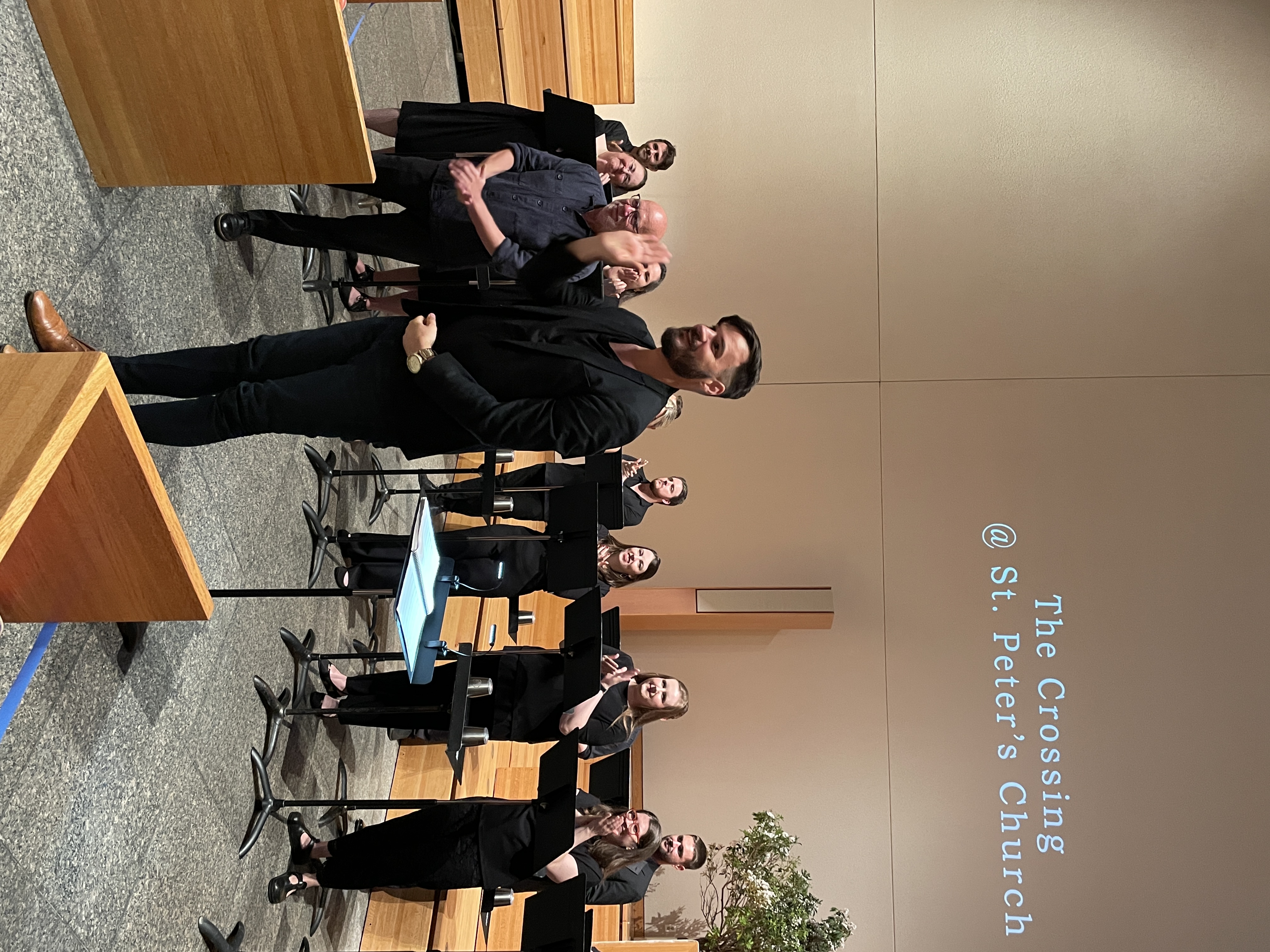
    A Helgeson - TBON curtain call


    Above: The Crossing and Aaron Helgeson, photo by Steven Swartz


    The final movement, “VII. Names of Things I Once Believed…,” exhibited this truly non-linear presentation of ideas to the extreme. Half the choir sustained multiple words at once (“all/always,” “why/waiting, “end/ever,” etc.) while the other half chanted longer, more descriptive phrases of resilience amidst suffering and self doubt. The intricate layers of music illuminated the complicated contradictions of existence in a world that does not value everybody’s existence. From start to finish, Helgeson’s innovative choral writing brought The Book of Never to an entirely new dimension of comprehension, and it was an absolutely exhilarating space to inhabit!

    ~ Lili Tobias

  • Mira Zakai’s haunting “Urlicht”

    This is from Solti’s magnificent recording of the Mahler 2nd:

    Long ago, Mira Zakai had made a beautiful recital disc. I was playing it one day about ten years ago, and I looked her up on-line…I found she was teaching at a university in Israel, and her faculty bio included an e-mail address, so I sent her a message to say I was listening to – and loving – her voice. A couple of hours later, she sent me a lovely reply.

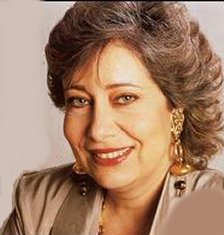
    Zakai-Mira-5

    A unique artist, Mira passed away in 2019.

  • Shostakovich Sonatas @ Carnegie Hall

    Shostakovich

    ~ Author: Oberon

    Wednesday May 28th, 2025 – Evgeny Kissin was joined by three renowned string soloists for a program of Shostakovich sonatas this evening at Carnegie Hall. It was one of the most thrilling concerts I have ever attended. The atmosphere in the Hall was palpable; aside from some cellphones going off at the the wrong moments, silence reigned. The musicians seemed bent on preventing applause between movements, keeping their bows poised over the strings in order to sustain the atmosphere. The three sonatas were presented in order of their composition: cello first (1934), followed by the violin (1968), with the viola (1975) played following the interval.

    Gautier Capuçon and Mr. Kissin strode onto the Carnegie Hall stage to a warm greeting. Dmitri Shostakovich’s Cello Sonata in D-minor, Op. 40, was composed composed during a period of political and social upheaval in the Soviet Union, and the music reflects the unsettled atmosphere of the time…and of ours, now. The cellist sometimes allowed a touch of grittiness into his tone, which was truly evocative.

    The opening Allegro non troppo is gently introduced by Mr. Kissin at the Steinway. A lovely theme gives way to vivid animation from both players. The mood gets dreamy, with M. Capuçon taking up a gorgeous cello melody that turns passionate. A super-pianissimo moment briefly interrupts the music’s flow, and then a sense of longing grows from repeated cello tones, displaying Mr. Capuçon’s marvelous control. Plucking introduces a dance, and mood swings continue – one such bringing a haunting theme: quiet and mysterious. Single notes from the piano invite deep cello playing; Kissin’s tone takes on an almost grumpy sound. Fantastic!

    Staying in an Allegro mode, scintillating piano and dancing cello illuminate the second movement. Cello glissandi and insistent keyboard rhythms pop up as the dance sails onward. A sudden stop, and then the Largo commences with incredibly hushed music from M. Capuçon’s cello. The players’ quiet intensity creates a mysterious atmosphere. The cello tears at my heart, rising from its lowest range in music filled with longing and then bursting with passion before returning to the depths. A remarkable quietude fills the Hall, then a crescendo before a fade-out, with the piano on high longing for peace. Things darken; spellbinding control from both musicians casts a spell over us.

    With dancing motifs played as if compelled by an unseen force, the final Allegro lets us savour Mr. Kissin’s glorious virtuosity, whilst M. Capuçon produces an amazing stuttering effect with his cello as these two paragons delight us with their magical partnership, bringing the first of the concert’s enthusiastic ovations.

    Gidon Kremer walked out onto the Carnegie stage cautiously, to an welcome. Now 78 (two years older than myself!), the legendary violinist responded to Menthisiastic r. Kissin’s straightforward piano introduction of the Shostakovich opus 134 with a sinuous theme. For a while, simple musical lines are exchanged, and then a sprightly dance emerges. The music is subtly playful until there’s a rise of passion. The buzzy tone of the violin then resumes the dance, somewhat hesitantly. The high-register violin filigree creates an insectuous sound before a slow fade-away.

    The ensuing Allegretto opens with a nervous dance; this movement is lively, witty, and ironic. It’s music that veers high and dips low, with some sparkly effects from the violin. A sense of urgency takes over as the music presses forward, Kissin playing high and bright as Mr. Kremer handles the music with with amazing dexterity. The violin whines, the piano swirls onward: high, fast, phenomenal music-making!

    The sonata concludes with a Largo, the pianist striking single, dotty notes as the violinist plucks away. Mr. Kremer’s playing turns ethereal, poised on high with amazing control. A keyboard dance rhythm draws restless playing from the violin. Now Mr. Kissin introduces a sense of grandeur into the music, leading to an angular violin cadenza. A rocking motif from both players carries them into a series of tremelos as the sonata ends. The Kremer/Kissin duo elicited a fervent ovation from the crowd.  

    After the interval, an artist new to me – the Ukrainian-British violist/conductor Maxim Rysanov – joined Mr. Kissin for a revelatory performance of the Shostakovich Viola Sonata, opus 147. This fascinating work, which I have only heard played live two or three times previously, really got to my soul tonight: the kind of deeply immersive musical experience that happens so rarely. 

    The opening Moderato begins very quietly, with soft viola plucking – slow and pensive – as the piano joins, dark and rather ominous. A dirge-like sense of foreboding develops leading to a burst of power. Restlessness overtakes the music; a piano solo and eerie, shivering resonances from the viola develop into a flash of grandeur before an extraordinarily subtle viola passage is heard, ending with staccati, and a sustained fading away.

    Now comes the Allegretto, commencing with a dance à la Russe. Mr. Rysanov’s playing is so suave and assured. Boldness from the Kissin keyboard and plucking from the violist lead to a heartfelt unison song, which gets quite grand.

    After a pause, the Adagio commences with a sorrowing viola theme which gains poignant support from the piano. Every note from both players seemed like a thing of value, something to treasure…such incredible playing. The spirit of Beethoven hovers on the air as the rhythmic signature of the Moonlight Sonata casts its spell overall. A viola cadenza – lovingly fashioned by Mr. Rysanov – draws us on to the sonata’s magnificent finish. Throughout this movement, I had been in another time and place, far from the chaotic madness of the world. A massive, roaring standing ovation filled the Hall, and it was still resounding as we emerged into the downpour…

    ~ Oberon

  • John Adams: ANTONY & CLEOPATRA @ The Met

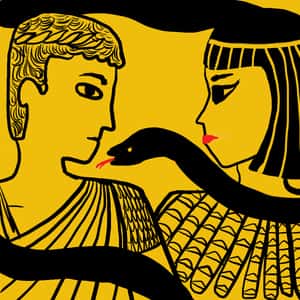
    Antony-and-cleopatra

    ~ Author: Oberon

    Saturday May 24th, 2025 matinee – I hadn’t originally planned to go to a performance of John Adams’ Antony & Cleopatra, but some singers I especially like were in the cast, so I got a score desk – even though I was scoreless – for today’s matinee. My previous experiences with the composer’s operas have both disappointed (though the second was enthralling for the first 40 minutes); you can read about my reaction to The Death of Klinghoffer here and to El Niño here.

    The Met’s first incarnation of the Shakespearean tale of Antony and Cleopatra was the opera by Samuel Barber which opened the New Met in 1966. In the late summer of that year, I had made my first solo trip to New York City in order to buy tickets to some of the performances in the first few weeks of the season, and Antony & Cleopatra was on my list. 

    On the evening of September 16th, 1966, in my little room in the little town, I was tuned in for the live broadcast of the new opera. I was on pins and needles because the Met Orchestra had announced an impending strike; they’d agreed to play the opening night as it was drawing international attention in the music world. Luminaries had flown in from other nations, and Lady Bird Johnson was to be the guest of honor. For two acts, I was feeling more and more certain that the performances I’d bought tickets for would never take place: rumors indicated that the standoff could not be resolved, and that both sides were standing firm. Then, before the start of Act III, Sir Rudolf Bing appeared before the gold curtain to announce that a settlement had been reached and to welcome the musicians back “as friends”. I ran screaming thru the house; my mother thought – not for the first time – that I was deranged. 

    On December 1st, 1966, I saw the last Met performance of the Barber Antony & Cleopatra to date. I’d learned a lot of the music from repeated playings of the reel-to-reel tape I had made of the opening night broadcast, and I was thrilled to experience the voices of Leontyne Price, Justino Diaz, Jess Thomas, Ezio Flagello, and Rosalind Elias in this music ‘live‘; I was able to silently sing along with them much of the time. 

    Though the Met never revived the opera, a production given at the Juilliard School, staged by Gian Carlo Menotti and conducted by James Conlon, kept much of the music intact, whilst introducing a love duet for the title-characters. Then, in 2009, the New York City Opera presented a concert performance of the Barber opera at Carnegie Hall, with Lauren Flanigan and Teddy Tahu Rhodes in the leading roles. Read about it here

    In the ensuing years, I’ve kept favorite passages of the opera in my mind: not just the big themes and the weighty arias, but the delicious (and later cut) scene for the eunuch slave Mardian and Cleopatra’s handmaidens, full of one-liners; the haunting, poetic beauty of Antony’s young attendant Eros’s suicide (“Thus do I escape the sorrow of Antony’s death...”), and most especially the opera’s original ending, with Charmian finishing Cleopatra’s last line, “What? Should I stay…?” “…in this vile world?  Now boast ye, Death, for in thy bosom lies a lass unparalleled…your crown’s awry! I’ll mend it, then play til Doomsday...” as intoned by the sumptuous voice of Rosalind Elias. And of course, the glorious sound of Leontyne Price is forever bound to the music of Cleopatra.

    Enough nostalgia, and forgive me for rambling on. 

    So this afternoon, I am sitting alone in the great darkened hall that had reverberated to the Barber score some sixty years ago, hoping to be similarly captivated by the new Adams opera. As it turned out, I was far more fascinated with the orchestral writing than with the vocal. The composer had written a very long program note, but the print was so small I could not read it. Even while the players were tuning and warming up in the pit, the sounds of such instruments as celeste, harmonium, harpsichord, mandolin, glockenspiel, vibraphone, tam-tam, flexatone (which creates glissando effects), and numberless bells, chimes, and drums, teased my ear. Adams put all of these to cunning use, creating textures that sustained my interest throughout the 90-minute first act.

    The composer reportedly stipulates that amplification of the singing be used when his operas are presented. It’s OK by me, but the mixing board (taking up one of the parterre boxes) sometimes allowed the voices to be covered by the orchestra despite the singers being miked. A few times, the lower range of Julia Bullock (Cleopatra) took on a reverb feeling from over-amplification. I also noted that the cast’s diction was not always clear.

    A restless orchestral prelude opens the opera, wherein Antony (Gerald Finley, the superb baritone) ignites Cleopatra’s fury when he tells her he must return to Rome due to the death of this wife, Fulvia. Between un-interesting vocal writing and patches where the singers were covered by orchestral volume, this scene was basically expendable. 

    A noisy interlude takes us to Rome, where Antony is greeted coolly by his ‘boss’, Caesar (the clear, lyrical tenor Paul Appleby). To patch things up between the two men, it is suggested that Antony marry Caesar’s sister, Octavia. Agrippa, the match-maker (sung by Jarrett Ott, whose clear diction was a joy) gives way to Enobarbus (that superb basso Alfred Walker) whose description of Cleopatra sailing on the Cydnus is more a sung narrative than a melodious “aria”. 

    Back in Alexandria, Cleopatra’s voicing of “O happy horse, to bear the weight of Antony!” is no match for Samuel Barber’s setting of the text, which Leontyne Price savoured so smoulderingly. Told by Eros (Brenton Ryan) of Antony’s marriage to Octavia sets off a wild reaction from Cleopatra, though it is expressed more by the orchestra than by Ms. Bullock’s parlando and her furious song, which goes on too long…though finely rendered by the soprano.

    After an orchestral interlude, a big, beaty, turbulent theme is launched as Octavia (the plush-toned mezzo Elizabeth DeShong) cannot decide between loyalty to her brother Caesar and the appeal of Antony. Tired of her vacillating, Antony divorces her on the spot and rushes back Cleopatra. Ms DeShong brings vocal glamour to her singing, though at times the orchestra covered her. Caesar’s fury at Antony’s treatment of his sister is another case of the fascinating orchestration trumping the vocal line. When Octavia/deShong reveals (with some gorgeous measures of vocalism) that she is pregnant, her brother declares war on Antony. 

    A wondrously wrought orchestral interlude leads to a musical depiction of a disastrous sea battle, in which Antony miscalculates and Cleopatra erroneously calls off her own fleet of ships; there is a brief vocal highlight wherein Mr. Finley’s lament blends with a soaring phrase from Ms. Bullock; but it’s over almost as soon as it begins. Lights flash thru the hall as the orchestra pounds away at themes of battle in an endless ending to the opera’s first act. 

    In the 90-minute span of this opening act, memorable vocal moments have been few and far-between, whilst the orchestra has shone brilliantly. The voices were there, ready to make much of the music, but the composer’s lack of “lyric musing” (program note) deprives them of opportunities.     

    ~ Oberon

  • CMS: Beethoven Quartet Cycle ~ Finale

    Calidore_Beethoven

    Above: the Calidore String Quartet, photo by Frank Impelluso

    ~ Author: Ben Weaver

    Sunday May 18th, 2025 – Chamber Society of Lincoln Center reached the end of its 2024-25 Beethoven String Quartets cycle, performed by the the outstanding Calidore String Quartet. For the sixth and final concert the quartet – violinists Jeffrey Meyers and Ryan Meehan, violist Jeremy Berry, and cellist Estelle Choi – performed Beethoven’s quartets Nos. 14 and 16.

    String Quartet No. 14 in C-sharp minor, Op. 131, composed in 1825-1836, and has been studied and individually praised by the likes of Richard Wagner, Robert Schumann, and Franz Schubert – who had it played for him privately a week before his death. Composed in seven movements played without a break, it opens with a somber melody on the first violin. The rest of the musicians enter one by one, the music remaining austere and calm, perhaps reflecting Beethoven’s deep faith as it resembles parts of his earlier Missa Solemnis. Wagner once wrote that this was “the saddest thing ever said in notes.” The Calidores played this beautifully, with extreme care and dedication. The music shifts to a playful dance and then back to darkness, and then back again and again. The playful Scherzo (marked Presto), with its charming melody, zooms around like a playful puppy, lovingly played by the Calidores. There’s a memorable moment towards its conclusion where all four instruments play pianissimo in their highest registers, then the volume is quickly raised, which felt like being suspended in zero gravity and then quickly falling down. The Finale is a violent march with occasional soaring melodies to break up the clouds.

    The Quartet No. 16 in F major, Op. 135 ended up being Beethoven’s almost-last composition for the string quartet. (The only thing remaining was the new final movement for Quartet No. 13, which ended up being the very last piece Beethoven ever composed.) It opens once again with a somber melody, but unlike the darkness of the earlier quartets, this one is simply mournful and lovely. The Calidores held the audience in thrall with the beauty of their playing. The second movement, Vivace, is wonderfully chaotic, as if ready to unravel at any point. The following Lento assai, cantabile e tranquillo is Beethoven at his most lyrical, full of stops and starts, like breathing of a dying man. And the Finale: Grave, ma non trope tratto, begins ominously and violently, but ends on a lighter, even triumphant, note.

    The terrific musicians of the Calidore Quartet undertook a monumental challenge, performing all sixteen of Beethoven’s String Quartets in a single season. The works themselves are the Mount Everest of the string quartet repertoire and the challenges are enormous. Beethoven wrote his string quartets in three batches of his life and career: early, middle, and late. They show a profound progress of an artist who became the leading figure of Romanticism, sturm und drang; but also a musician of frequently surprising humor. Mssrs. Meyers, Meehan, Berry, and Ms. Choi combine all the elements needed to bring these million faces of Beethoven to life.

    ~ Ben Weaver

  • Jadwiga Rappé Has Passed Away

    Rappe

    One of my favorite contraltos, the Polish concert and opera singer Jadwiga Rappé (above), has passed away at the age of 73. Ms. Rappé performed at the most prestigious venues in Europe, Asia, and North America, and she leaves behind more than fifty recordings. She worked with such illustrious conductors as Chailly, Sir Colin Davies, Harnoncourt, Nagano, Janowski, and Antoni Wit.

    I first became intrigued by Ms. Rappé’s voice after hearing a recording of her singing in Krzysztof Penderecki’s Seven Gates of Jerusalem – a work in which she had sung the world premiere performance at Jerusalem in 1997 under the baton of Loren Maazel. In 2001, she sang the premiere performance of Wojciech Kilar’s Missa pro pace at Warsaw, conducted by Kazimierz Kord. Works were composed specially for her contralto voice by Juliusz Łuciuk, Piotr Moss, and Krzysztof Baculewski. In 2008, in Prague, she took part in the world premiere of Ladislav Kubik’s Gong ~ Sinfonietta for solo mezzo-soprano, Mixed choir and orchestra, and in July 2011 she premiered Paweł Mykietyn’s Symphony no.3 at the National Philharmonic in Warsaw.

    Jadwiga Rappé’s operatic repertoire included works by Gluck, Handel, Ponchielli, Verdi, Wagner, and Richard Strauss. Erda in Wagner’s RING Cycle was her most frequent stage role: she appeared in nine different premiere productions of the cycle at opera houses around the world, and she recorded the role for EMI under the baton of Bernard Haitink. She scored  successes as Gaea in Strauss’s Daphne, and as Clytemnestra.

    Her discography includes recordings on several labels: BMG Music, Teldec, Erato, Denon, Orfeo, Philips, Decca, Chandos, CD-Accords, and Naxos.

    After retiring from performing, Jadwiga Rappé taught at the Fryderyk Chopin University of Music, and later headed the board of the Witold Lutosławski Society.

    Ms. Rappé sings the aria “Weh ihnen, dass sie von mir weichen” from Mendelssohn’s ELIAS here.

    And here is “Zasmuconej” by Mieczysław Karłowicz.

    The contralto sings Cagion son io del mio dolore” from Handel’s SERSE here.

  • Dame Sarah Connolly/Berlioz

    maxresdefault

    Dame Sarah Connolly sings Hector Berlioz’s La Mort de Cléopâtre at the Barbican Hall, London, in May, 2015, with the BBC Symphony Orchestra, conducted by Sir Andrew Davis.

    Listen here.