Category: Music

  • EUGENE ONEGIN ~ Ottawa 1983

    Bouleyn

    Above: Kathryn Bouleyn

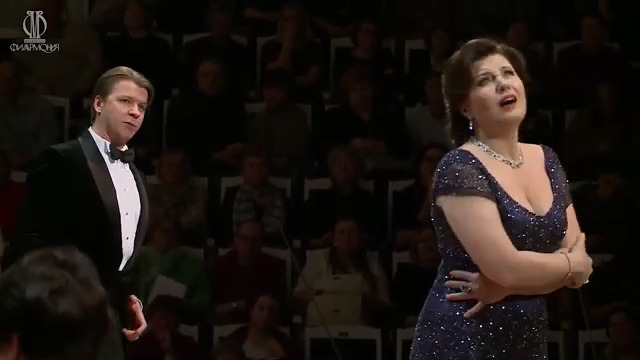
    An English-language production of Tchaikovsky’s EUGENE ONEGIN given in 1983 at the National Arts Centre, Ottawa, Canada. Watch and listen here.

    Neeme Järvi conducts this performance, staged by John Copley. 

    The singers are Thomas Allen, Kathryn Bouleyn, David Rendall, Don Garrard, Diane Loeb, Gabrielle Lavigne, Lois Marshall, and Bernard Fitch 

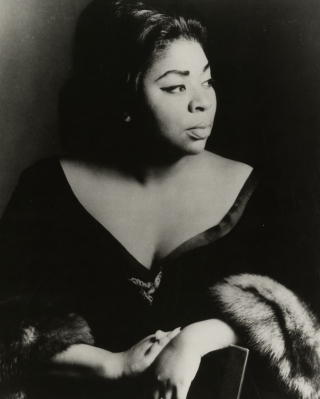
    I am especially glad to have this souvenir of the wonderful soprano Kathryn Bouleyn, who I saw at the New York City Opera as Countess Almaviva. It is also lovely to see Lois Marshall as Filipyevna; this great singer had a highly successful concert career but rarely appeared in staged opera. Mssrs. Allen, Rendall, and Garrard are excellent.

  • Timo Andres @ Merkin Hall

    Andres jpg

    Thursday December 16th, 2021 – Pianist/composer Timo Andres (above) in recital at Merkin Hall. This evening’s program, part of The Kaufman Music Center’s Piano Dialogues series, grew out of the musical friendship of Mr. Andres with his fellow composers, Sarah Goldfeather and Eric Shanfield. Honoring the continuing influence of Robert Schumann’s piano music, Mr. Andres performed the composer’s Waldszenen.  Ms. Goldfeather’s new work for Mr. Andres, and Mr. Shanfield’s aptly titled new work, Timo Variations, based on a theme which Mr. Andres composed for Eric in 2019, completed the program.

    Sarah Goldfeather

    I simply loved the new work by Sarah Goldfeather, entitled Fern Canyon, which opened the evening in its world premiere performance. Ms. Goldfeather could not have asked for a finer interpreter of her new work than Mr. Andres, a tall, bookish-looking fellow with beautiful hands.

    Fern Canyon is at first whimsical and repetitive at the start, keeping in the piano’s mid-range. Little flourishes turn up, and then the music gets more lyrical. Mr. Andres then lingers in the high range, with delicate figurations tickling the ear. Suddenly, the music turns grand, and Rachmaninoff springs immediately to mind. But the piece ends magically, with Mr. Andres keeping his foot on the pedal to sustain the sound of the final note, which hung beautifully on the air. Fern Canyon would make a wonderful dancework, in my view.

    Without taking a break, Mr. Andres then commenced Schumann’s Waldszenen, Opus 82. These nine short solo piano pieces were inspired by the German woodlands. In the Teutonic imagination, forests are ancient, restful, and – sometimes – eerily haunted places. Schumann’s nine miniatures conjure up such visions of the woods.

    Composed in 1849, this series of intimate scenes from Nature begins with Eintritt, the entry into a cool and shaded grove filled with forest murmurs. A simple, folkish tune emerges as the forest-stroller’s eye wanders about.

    Horn calls and the sounds of rifle-fire herald the human invasion of Nature’s sanctuary; in Jäger auf der Lauer, huntsmen who have been stalking their prey break into wild pursuit. The music conveys the thrills of the chase.

    The two ‘flower’ pieces that follow are very different in feeling: the simplicity of Einsame Blumen (Lonely Flowers) leads to the shadowy, flowing Verrufene Stelle (Haunted Places) which describes a dark red flower that draws its colour from Earth saturated with human blood.

    Things brighten with Freundliche Landschaft (Friendly Landscape) while the coziness of sitting before the fire with a pint are evoked in the almost hymn-like Herberge (The Inn).

    The best-known of the Waldszenen is Vogel als Prophet (Bird as Prophet), which captures a sonic image of forest birds, flitting from tree to tree. A central, more poetic passage praises the mystical powers of the forest’s avian dwellers.

    Then the music sings of hunters again: in Jagdlied (Hunting Song) the woodland sportsmen look forward to feasting on their catch of the day. The final Abschied (Farewell) was so affectingly played, but the jarring sound of a cellphone came at the worst possible moment.

    Throughout this Schumann cycle, Mr. Andres’s playing moved from the poetic to the passionate with a lovely mastery of dynamics, and an unfailingly distinctive style. 

    E shanfield

    Eric Shanfield‘s Timo Variations brought the program to an end. The theme was Mr. Andres’ own creation, brief and uncomplicated; thereafter the pianist embarked on a 9-variation journey, with a closing Aria.  Theme I, Scheletrica (“emaciated, meager”) features sharp accents. A reference to the Waldszenen comes next, in a brisk and brusk reply to Schumann’s Vogel als Prophet. Then, bell-like sounds give way to rippling effects in the 3rd variation. 

    Variation 4 is marked Espressivo (‘ritmico ma no meccanico’) – “rhythmic but not mechanical”  – wherein Mr. Andres followed those instructions to the letter. Variation 5 begins with a pulsing feeling, later flowing freely. Continuum (Variation 6) maintains a steadiness, then gives over to a fluttering feeling in Variation 7, which ends up expansively. In the 8th Variation, entitled Kreisleriana, flourishes are played over sustained notes before the music turns quite majestic. The ‘delicate and precise’ music of the 9th Variation is really fun to hear. 

    Each of these variations is rather longer than one might expect, but they are very inventive and pleasing to hear. Mr. Andres reveled in each of the variations Mr. Shanfield crafted for him. The Timo Variations end with a final Aria which is marked “Elegante“, a word that truly describes Mr. Andres’s playing.   

    I usually don’t stay for post-performance talks, but this evening I was in no rush to get home, so we stayed to hear what Mssrs. Andres and Shanfield and Ms. Goldfeather had to say. Being well-acquainted with one another, the three hardly needed a moderator. They chatted blithely, and some interesting things popped up along the way: Ms. Goldfeather noted the influence of Rachmaninoff on Fern Canyon, and also revealed that she does not own a piano. Mr. Shanfield said that he owns a piano, but admits to being “a terrible pianist”. 

    ~ Oberon

  • ONEGIN ~ Final Scene ~ Rebeka/Shushakov

    Snapshot onegin

    Marina Rebeka and Konstantin Shushakov in the dramatic final meeting of Tatyana and Onegin from Tchaikovsky’s EUGENE ONEGIN at a concert by the Svetlanov Symphony Orchestra conducted by Vassily Sinaisky. The performance took place at the Tchaikovsky Concert Hall in Moscow in 2020.

    Watch and listen here.

  • Alessandro Scarlatti ~ Exultate Deo

    Snapshot stockholm

    The Stockholm Singers, conducted by Bo Aurehl, perform Alessandro Scarlatti’s Exultate Deo at the Strängnäs Cathedral. The concert took place in June 2018.

    Watch and listen here.

  • Shostakovich/Tchaikovsky @ The NY Phil

    Dmitri_Slobodeniouk_Photo_Credit_Marco_Borggreve-1024x683

    Above: conductor Dima Slobodeniouk, photo by Marco Borggreve

    Thursday November 18th, 2021 – It was wonderful to re-connect with The New York Philharmonic this evening when they offered a program of music by Shostakovich and Tchaikovsky at Alice Tully Hall. As the hall slowly filled to capacity, I loved seeing so many of my favorite musicians again, taking their places onstage after the long months of isolation. Sheryl Staples was the concert-master tonight, and a sense of anticipation seemed to fill the Hall.

    I was not sure how these big works would fare in the rather intimate space of Tully Hall, where we’re accustomed to hearing chamber music. But in fact, the sonic effect of the large ensemble was wonderful to experience: rich and deep; and when solo moments came along for the principals, the clarity was vivid. The risers for the winds and percussion were abandoned in this space. Most of the string players remained masked throughout the evening.

    As the date of the concert drew near, an announcement was made that the scheduled conductor, Semyon Bychkov, would be replaced by Dima Slobodeniouk, who is making his Philharmonic debut with these performances.

    Shostakovich wrote his first violin concerto 1947-48, but the composer hid it away until 1955, when it had its premiere performance by with the Leningrad Philharmonic, with David Oistrakh as soloist. It is to Oistrakh that Shostakovich dedicated the concerto.

    It had not been safe for Shostakovich to bring forth this piece until Josef Stalin had been dead for two years. The 1946 Zhdanov Doctrine had warned that the post-war divide between US imperialism and the democratic Soviet Union had produced a conflict in Soviet culture: a conflict between good and best. Shostakovich knew that “best” meant: ‘…adhering to cultural standards specified by the government.’ And he also knew that this concerto would not have been deemed “acceptable”. He had already been previously condemned by Stalin, and he knew enough not to tempt fate.

    Gomyo

    Violinist Karen Gomyo (above) opened the evening, playing the Shostakovich 1st violin concerto in her debut NY Philharmonic performances. And what a triumph she had in this exceptionally demanding piece! Ms. Gomyo is a native of Tokyo; she studied at the Juilliard School with Dorothy DeLay. She looked gorgeous tonight in her midnight-blue frock, upon which tiny silver sequins sparkled like diamonds.

    The concerto’s opening movement is entitled Nocturne. The deep strings underscore a low, doleful melody for the solo violin; as the music moves into a higher range, a sense of longing takes over.  The winds, and then the violins, accompany the soloist’s ascent. Harp notes sound, the basses growl, and the winds create darkish textures, with a particularly rich solo passage for bass clarinet. Now the soloist rises to a shimmering, sustained high note.

    The second movement, Scherzo, bounces out in agitato mode, the soloist deftly handling her tricky passages over the sound of plucking strings. Rhythms are brisk and uneven, taken at high speed, and the xylophone, horns, and clarinet add to the colorful palette of sound. The music breaks into a dance as the scherzo runs on to a big finish.

    The third movement, Andante, is a passacaglia; after a deep, dramatic start, the music becomes dirge-like, with the basses and low winds maintaining an almost ominous feeling. The solo violin sings a poignant lament; the horn has a solo passage, plushy played, and then the plodding basses are joined by their celli brothers. The violin embarks on a gigantic cadenza, which ranges from the depths to the heights and calls for exceptional technical mastery; Ms. Gomyo’s staggering virtuosity kept the audience spellbound during this incredible solo.

    The finale, a Burlesque marked allegro con brio, is introduced by the drums, with the xylophone again kicking in. How sweet to hear Anthony McGill’s clarinet singing forth! Ms. Gomyo makes a brilliant entrance.  Orchestra and soloist have frequent interactions, with the Passacaglia theme popping up out of nowhere, now animated in a presto setting. The finale dances along its bravura way to a dazzling conclusion.

    Ms. Gomyo was as riveting to watch as to hear: throughout her performance, her intensity and deep commitment could be read on her face. The audience responded to her thrilling performance with a vociferous standing ovation, the Philharmonic players joining in enthusiastically: a wonderful, celebratory atmosphere in the Hall.   

    After the interval, Tchaikovsky’s first symphony, known as “Winter Dreams” was sumptuously played by the orchestra, conducted with passion and great attention to detail by Maestro Slobodeniouk.

    While I have always thought of Tchaikovsky as one of my favorite composers, for me the first symphony is not one of his finest works. I’d only heard it played live once before, by this same orchestra; at that time I found it pleasant enough. But maybe that is all it is: pleasant.

    The first movement really felt over-long this evening; basically it seemed to be heading nowhere. Likewise, the fourth movement takes forever to get going, with various detours and a slow revving of the engines before the Allegro maestoso finally bursts forth  The highlights of this performance were the passages that Tchaikovsky assigned to the principals: Robert Langevin (flute), Liang Wang (oboe), Anthony McGill (clarinet), and Judith LeClair (bassoon). Liang Wang’s solo in the second movement, which becomes entwined with the sound of the Langevin flute, was a little slice of heaven.  Section by section, too, the orchestra simply sounded great: the viola and cello themes in the Adagio really glowed, and the richness of the cellos and basses in the final movement was truly savourable.

    Yet, despite superb playing, tonight the Tchaikovsky 1st joined the Beethoven Pastoral on my list of symphonies to avoid in future. I think Tchaikovsky did Winter better in THE NUTCRACKER.

    ~ Oberon

  • Stephen Powell ~ Why Do The Nations

    Snapshot

    Stephen Powell at the piano; photo by Shannon Finney

    Acis Productions have released a new recording from baritone Stephen Powell, Why Do The Nations, which brings us 27 songs in ten languages, with the singer accompanying himself at the piano. When I first read of it, I wasn’t quite sure how I would feel about it. It’s a lot of ground to cover, for one thing. And then: is Mr. Powell as fine a pianist as he is a singer?

    An initial playing of the disc dispelled any misgivings I might have had. The songs weave a multi-hued sonic tapestry of languages and styles. And – as it turns out – Mr. Powell’s an excellent pianist. I wept, I laughed…I derived great pleasure from this collection. So many of the songs – and Stephen’s singing of them – reached me on a very personal level.

    Stephen Powell talks with Brad Cresswell about how Why Do The Nations came to be here.

    The disc offers a mix of the very familiar with several songs I’ve never heard, and a couple of composers I’d never heard of.

    Four of Germany’s lords of lieder – Schubert, Brahms, Wolf, and Strauss – are represented. Of their songs on this disc, only Schubert’s “Die Forelle” was familiar to me; Mr. Powell sings it so well, and his pianistic skills are impressive, too. Hugo Wolf’s “Auch Kleine Dinge“, about a delight in small things, is sung with an appealing subtlety. A truly beautiful Strauss song that I’d never heard, “Ich Trage Meine Minne”, speaks of the sustaining power of love; after a somewhat darker second verse, the song returns to light and joy with the memorable line: “I carry my love in silent bliss”.  From Johannes Brahms, Mr. Powell brings us “Meine Liebe ist grün”, which celebrates the Springtime of love, wherein the poet is intoxicated by the scent of lilacssomething to which I can easily relate.

    From France, we have songs by Maurice Ravel, Gabriel Fauré, and Émile Paladilhe, the last-named being only a name to me. His song, “Petits Enfants“, receives its world premiere recording on Mr. Powell’s disc. The poem, about the beauty of young children, is by Alphonse Daudet. The song has a delicate piano accompaniment, and Mr. Powell’s sweet upper notes sustain the atmosphere. Maurice Ravel’s boisterous drinking song, “Chanson à boire” comes from the well-beloved song cycle Don Quichotte à Dulcinée. It’s full of laughter, and ends with the piano on its own. Mr. Powell gives a fresh feeling to Fauré‘s familiar “Mandoline“, sung with a light touch, and with the piano part deftly handled.

    Three of America’s greatest 20th century composers are heard from: Samuel Barber, Charles Ives, and Aaron Copland. Barber’s I Hear An Army, composed in 1937, has an aggressively dynamic accompaniment over which the words of James Joyce compare the end of an intimate relationship to the galloping hooves of an attacking troop of cavalrymen.

    In 1952, Aaron Copland adapted Zion’s Walls, originally a folk song that became popular at camp meetings in Georgia; Copland eventually used the song in his opera THE TENDER LAND. On first hearing Mr. Powell’s rendering of Zion’s Walls, I simply wrote: “This Is Great!”

    Charles Ives wrote Majority in 1921; Mr. Powell chose it as the final song on the disc. It’s a sort of toiling dirge, but with a reassuring ending.

    The two kings of Italian opera turn up in canzoni mode: Giuseppe Verdi and Giacomo Puccini are allotted two songs each. Verdi”s La Seduzione (a seduced-and-abandoned tale) and the touching Il Poveretto (“The Poor Man”) have an operatic feeling to them. The latter tells of a poor veteran who, having served his country, is now reduced to begging. The song was written in 1847, but the problem still exists today. An ironic waltz springs up, only to halt as Mr. Powell movingly voices the line, “My country has forgotten me!” 

    The disc’s other Verdi song, La Seduzione, starts with a slow waltz and becomes more animated, with the telling line: “Nine moons moaned the betrayed…” The singer’s voice becomes tearful as he tells of the disgraced woman’s lonely, anonymous death.

    It’s to Puccini that Stephen Powell turns for his opening song: Morire? (“To die?”). The text is by Giuseppe Adami, the composer’s librettist for LA RONDINE, IL TABARRO, and TURANDOT. It’s a poem that reflects on the meaning of death; one curious feature of this song is that the piano drops out for most of the final verse. The voice goes on high at the end.

    Puccini’s Terra e mare did what a song often does for me: it put me in mind of a beloved literary passage, in this case from JRR Tolkien’s Lord of the Rings:

    Legolas Greenleaf long under tree, In joy thou hast lived, Beware of the Sea! If thou hearest the cry of the gull on the shore, Thy heart shall then rest in the forest no more.”

    In this Puccini song, a man falls asleep, lulled by the sound of the wind in the poplar trees, which he dreamily mistakes for the sound of the sea. It’s a restless song, and both the piano and the voice capture the sensations of the lyrics perfectly.

    Russian jewels by Peter Ilyich Tchaikovsky and Sergei Rachmaninoff bring forth some of Mr. Powell’s most engaging singing. Tchaikovsky’s “Nights of frenzy, sleepless nights”, a lament for a lost love of long ago, is particularly fine. In Rachmaninoff’s familiar “Spring Waters“, the singer conveys an almost operatic sense of vocal authority. The same composer’s “The Soldier’s Wife” is one of the collection’s saddest songs: the lament of a woman who married the man she loved, only to have him be taken from her by army recruiters. The song, with its deep sorrow,  covers a wide vocal range and ends with a vocalise

    Benjamin Britten and Michael Head represent the United Kingdom. Two contrasting Britten songs are heard: the wryly humorous The Brisk Young Widow (which benefits greatly from Mr. Powell’s very clear diction), and the more pensive Every Night and Every Morn, with words by William Blake. In this song, the accompaniment seems somehow unsettling. There’s a rise in drama as the song nears its end…and then a questioning air at the finish. Composer Michael Head is new to me; his song Money, O!, written in 1928, covers a big vocal range, going deep. It sings of some of the advantages of being poor.

    Meu Amor Me Disse Adeus (“My love told me goodbye forever“) by the Brazilian composer Cláudio Santoro hit me right where it hurts as the tenth anniversary of a bitter parting looms before for me. Like so many songs in this collection, this one is intensely personal, and Mr. Powell’s affecting singing of it makes it even more so.

    The songs from the Asian lands are of special interest to me, in part because my spouse is Chinese, and in part because I’ve never heard them before. All three – one each from China, Japan, and Korea – could easily come from the pen of a Western composer, though the tell-tale harmonies say otherwise. I imagine Western singers might be happy to explore more song literature from these lands, but mastering the languages is not easy.

    Listening to Mr. Powell sing Rentarō Taki‘s dreamlike Kōjō no Tsuki (“Moonlight Over the Ruined Castle”) – one of the most evocative songs on the disc made me wish that my late friend, the contralto Makiko Narumi, was still here to sing me some Japanese songs.

    The Korean composer Dong Jin Kim gives us a remarkably beautiful song, Gagopa (“I Want to Go Back“), full of longing for the days of childhood. The poet recalls the place of his birth, which he left long ago: “I want to recapture those days that had no tears.”

    I asked my husband, Gotham’s premier Chinese tutor and translator, to listen to Mr. Powell’s recording of Zhao Yuanren’s “How Can I Not Think of Her“, wherein everything in nature reminds the poet of his lost love.  I asked Wei to rate the singer’s diction. After a line or two, he said: “Good…very good…very clear!”. Then he asked to hear the song again, and he began to sing along.

    From Spain, songs by Fernando Obradors, Manuel de Falla, and Xavier Montsalvage have a particular appeal in Mr. Powell’s interpretations. Fernando Obradors’ ¿Corazón porqué pasáis…? a brief delight of a song about affairs of the heart. The accompaniment is particularly pleasing, while a central passage of wordless vocalizing seems to say: “Don’t take this song too seriously.”

    Manuel de Falla’s ironic El paño moruno (“The Moorish Cloth” ) is the shortest song in the collection. To very familiar melody, the story tells of a tiny stain on a piece of fine cloth that diminishes its value. 

    As with every song recital disc, there’s bound to be a favorite track. From Stephen Powell, we get the most hauntingly beautiful rendering of Xavier Montsalvage’s dusky lullaby “Cancion de cuna para dormir a un negrito” from Tres Canciones Negras that I have ever heard.

    ~ Oberon
  • Johanna Meier Sings Strauss & Mahler

    Johanna meier

    I love finding any recordings by Johanna Meier. Despite the missing part of the first Strauss song, her vocalism is so pleasing in this 1982 recording from a concert by the Milwaukee Symphony conducted by Lukas Foss.

    Listen here.

    One of my all-time favorite sopranos, I saw Ms. Meier frequently at The Met and New York City Opera. She made a memorable impression in so many roles: as Puccini’s Musetta and Tosca, as Strauss’s Countess Madeleine, Marschallin, Ariadne, Kaiserin, Chrysothemis (both at The Met and at Tanglewood), as Rosalinda, Marguerite in FAUST, as Mozart’s Donna Anna, and Countess Almaviva, and as Wagner’s Elisabeth, WALKURE Brunnhilde, and – most especially – as Sieglinde.

  • Cellist Zlatomir Fung @ Weill Hall

    Zlatomir-Fung

    Tuesday October 19th, 2021 – One of my favorite musicians, Zlatomir Fung, made his Carnegie debut this evening at Weill Hall, a red-letter event for me. Zlatomir, whose unique name derives from his Bulgarian and Chinese-American parentage, was the first American in four decades – and the youngest cellist ever – to win first prize at the International Tchaikovsky Competition in 2019.

    I first heard Mr. Fung in a Young Concert Artists recital at Merkin Hall in February 2019, and was captivated by his remarkable talent. Read about the evening here.

    Mishka

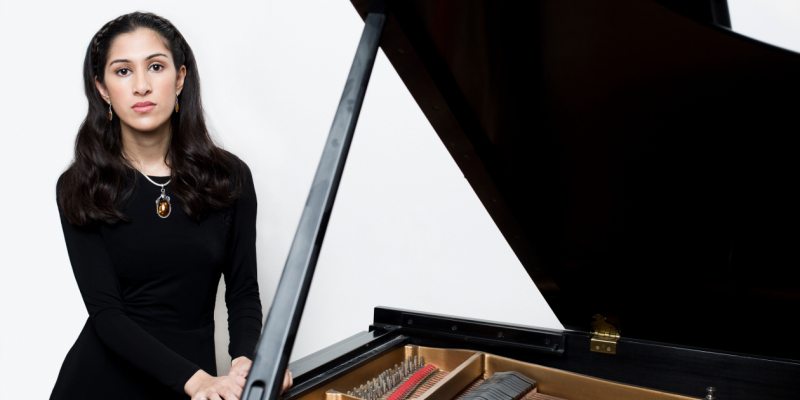
    Joined at Weill Hall this evening by pianist Mishka Rushdie Momen (above), the cellist gave us a marvelous program of classics from the Romantic period. The concert was sold out, and the audience’s rapt attention was a tribute both to the music and to the musicians. 

    Robert Schumann’s Adagio and Allegro, Op. 70, was composed in 1849. The pensive adagio, heart-tugging in its emotional expressiveness, gives way to the lively and passionate allegro, a deft flow of music that sometimes looks back to the opening movement. From note one, I was transfixed by Mr. Fung’s achingly beautiful playing, which drew me – and my fellow audience members – immediately in to the music.

    Franz Schubert’s Sonata in A-Minor, D. 821, “Arpeggione“, was written in 1824, soon after the beloved song cycle Die Schöne Müllerin and shortly before the C-major symphony.

    The sonata’s opening movement is a songful allegro moderato, tinged with a feel of nostalgia. A dance springs up, with a folkish flavor, and a passage of staccati from the cello aligns with sparkling notes from the piano. The movement continues, shifting between sadness and joy…a sort of reflection on the times in which we are living. 

    From its poignant opening, the sonata’s central adagio found Mr. Fung at his most persuasively eloquent as the music carried him across a wide dynamic range, leaving the listener in awe of his sustained, finely nuanced phrasing. Ms. Momen was a ideal companion. This was music-making of the highest calibre.  

    The concluding allegretto is energetic, at times having with a somewhat jaunty feel; both players displayed great  nimbleness, dancing us along to a surprisingly subdued finish. 

    Antonín Dvořák’s “Silent Woods“, Op. 68, No. 5, was – to me – the heart of the evening; subtle dynamic shadings from both players constantly allured the ear, and the astonishing resonance in Mr. Fung’s playing reached the depths of my soul. A dance-like passage gives way to a wave of passion; this subsides only to sweep over us again moments later. Mr. Fung’s glorious descending phrase at the end was thrilling.

    The musicians took only the briefest of breaks between works, but they seemed wonderfully fresh as they returned to the Weill Hall stage for the program’s concluding work: César Franck’s epic and very demanding Sonata in A-major. The cellist Jules Delsart was so moved when he first heard this sonata in its original violin setting that he obtained the composer’s permission to arrange the work for his own instrument. This arrangement was published in 1887.

    The sonata’s opening Allegretto ben moderato joins two themes: one for the cello and one for piano. These themes, especially the cello’s, will return in the following movements. The players seemed to gently bend the melodies, putting a personal stamp on this familiar music. 

    Turbulence rises for the second movement, a dramatic scherzo, in which the restless piano is over-lain with a vivid, dramatic passage for the violin. Lyrical moments, featuring this sonata’s second well-loved theme, come and go. From a veritable feast of notes, passion rises with the great melody sounding forth. Becalmed, deep resonance from the cello lingers briefly, then another rise to a triumphant finish.

    The Recitativo-Fantasia brings back sonic images from the previous movements. There is a feeling of improvisation here which leads in a slow buildup to another haunting melody for the cello. Then the final Allegretto con moto commences with the piano and cello seemingly exchanging thematic thoughts. Things grow turbulent again, and earlier themes resurface, all leading to a vibrant, joyous ending.

    Enthusiastic applause, the audience standing, brought Mr. Fung and Ms. Momen back for an encore: a Nocturne by Alexander Borodin which was unfamiliar to me. This was elegantly played, with appealing dynamic shifts and a spine-tingling tremelo passage from the cellist. As throughout the evening, I loved watching Mr. Fung’s expressive face as he played; he seemed to be communing with Saint Cecilia, all to the greater glory of the music.

    ~ Oberon

  • Verdi REQUIEM ~ San Francisco 1973

    Arroyo (2)

    Seiji Ozawa leads the San Francisco Symphony Orchestra and Chorus in a 1973 performance of the Verdi REQUIEM with soloists Martina Arroyo (photo), Maureen Forrester, Placido Domingo, and Martti Talvela.

    Listen here.

  • Francis Poulenc’s STABAT MATER

    Snapshot monteverdi

    The Monteverdi Choir, with soloist Christine Wolff, perform Francis Poulenc’s STABAT MATER, conducted by Matthias Beckert, at a 2012 concert at the Neubaukirche in Würzburg, Germany.

    Watch and listen here.

    This work is new to me, and I love it!