Category: Music

  • Young Concert Artists: Zlatomir Fung

    Fung_Zlatomir5CreditMattDine-1140x642

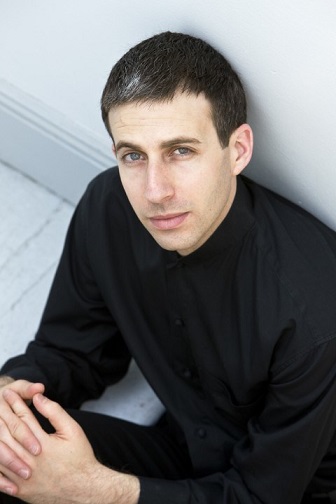
    Above: cellist Zlatomir Fung, in a Matt Dine photo

    ~ Author: Oberon

    Tuesday February 19th, 2019 – Young Concert Artists presenting cellist Zlatiomir Fung in his New York debut recital at Merkin Hall. Tengku Irfan was the pianist for this wide-ranging, thrillingly-played program.

    “Young” was the operative word tonight. And both of these musicians disprove the old adage that ‘youth is wasted on the young’; they have spent their teen years developing their talent, and building impressive performance résumés. Now they are ready for anything.

    Mr. Fung, a native of Oregon, reveals a charming personality in this Q & A from the Violin Channel. Of Bulgarian and Chinese heritage, the earnest 19-year-old cellist was greeted by enthusiastic cheers from the packed house when he walked onstage at Merkin Hall tonight. In the course of his opening work – four of the Eleven Capricci for Solo Cello by Joseph Dall’Abaco – Zlatomir Fung established himself as both a poet and virtuoso of the highest order.

    These Dall’Abaco works are a very pleasant alternatives to the Bach cello suites with which cellists so often open their recital programs. Mr. Fung displayed clean, warmly resonant tone, a gift for dynamic finesse, and a depth of feeling that seemed remarkable in one so young. In the first Capriccio, trills and grace notes were deftly etched into the musical line. To end his set of four, Mr. Fung chose the 11th, which includes passages of demented agitato, played with great fervor. As applause engulfed the cellist, he took a spot among my top five players of the instrument…or maybe even…my top three? 

    Pianist Tengku Irfan – slender of frame and looking far younger than his score of years – then joined Mr. Fung for a revelatory performance of Enest Bloch’s Baal Shem. This music was new to me; the passion and tenderness with which the two artists played it made a direct connection to my soul.

    Ernest Bloch, a native of Switzerland, was a young violinist on tour in the USA when, falling short of money, he got stranded in New York City and decided to stay here. Moved by a Hasidic Jewish service he attended in 1919, Bloch wrote the Baal Shem, subtitled “Three Pictures of Hasidic Life.

    During the opening Vidui, I was so mesmerized by the playing of Mssrs. Fung and Tengku that I couldn’t write even the briefest note about the music; all I can say is that it moved me deeply – both the music itself and the playing of it. The piano introduction to the ensuing Nigun – masterfully played by Irfan Tengku – leads to music-making of searing intensity from both players. A series of descending trills for the cello took my breath away. In a complete mood swing, the concluding Simchas Torah has a very optimistic feel: an almost romantic-style passage leads to dancing and ultimately to passion. With a tumult of cheers and applause, the audience saluted the two musicians after this spell-binding performance. 

    In a remarkable display of what a cello can do, Mr. Fung gave a triumphant performance of Luciano Berio’s Sequenza. From his opening tapping, patting, and slapping of his cello, Mr. Fung creates all manner of sound effects – shivering, squeaking, barking, scratching, gliding – as the piece proceeds. Mixed in are brief touches of whispered pianissississimo, including an ultra-quiet ending. This bravura showcase knocked the audience for a loop; Mr. Fung took a bow amid a din of enthusiasm.

    Following the interval, the pianist and cellist gave the premiere performance of Prelude by Katherine Balch, the current YCA Composer-in-Residence. This was my second hearing of music by Ms. Balch, and again it struck me as finely-crafted music from a composer who has perhaps not yet found her own distinctive voice.

    From a turbulent start, we go on a magical mystery tour and – via some strong accents – to noisy music that works both players into a frenzy. The gimmick of having the pianist reach inside the piano to produce isolated sounds has been done before – I never get the point of it – but a mad cello cadenza gives the piece a spark. An amusing sour taste sets in as some intentionally ambivalent pitches crop up. Drifting onward, Prelude leads without pause into the evening’s final work: the Brahms Cello Sonata in E-minor, Opus 38.

    TengkuIrfanpianolad001_1533856206

    Above: pianist Tengku Irfan, photo by Owee Ah Chun

    In the Brahms, the partnership of cellist and pianist showed yet again how finely matched these two musicians are. It’s a bit of an odd sonata, in that there’s really not a ‘slow’ movement per se. But the opening Allegro non troppo (actually very ‘non troppo’) makes up for it: it has a darkish glow with a poignant, wistful melodic line. The pianist here was a marvel, and Mr. Fung summoned incredible depth of tone from his cello. The second movement is a Menuetto that sometimes teasingly has the air of a waltz; the musicians play at times in unison. Mr. Tengku had the Steinway in full flourish for the concluding Allegro, and Mr. Fung sealed his New York debut triumph with spectacular playing.

    As an encore, these two young artists offered a luminous rendering of Gabriel Fauré’s “Après un rêve“. The sheer enthralling beauty of their playing held the audience in a state of breathless awe.

    ~ Oberon

  • Philharmonic Ensembles: Bach/Debussy/Fauré

    Kuanchengluwn

    Above: violinist Kuan Cheng Lu of The New York Philharmonic

    ~ Author: Oberon

    Sunday February 17th, 2019 – Artists of The New York Philharmonic performing works by Bach, Debussy, and Fauré at Merkin Hall. This was originally going to be an all-French program, but somewhere along the way, Arthur Honegger’s Sonatine for Violin and Cello – which I was very curious to hear – turned into Bach’s Trio Sonata in C-major, BWV 529.

    The switch soon became irrelevant, as the Bach was vividly performed by Kuan Cheng Lu (violin), Robert Rhinehart (viola), and David J. Grossman (bass). The opening Allegro was dynamically played, with some sustained bass notes giving the music an anchor. To the rather forlorn Largo, Kuan Cheng Lu brought lovely subtleties of phrase; this movement – without a formal ending – leads immediately into the lively concluding Allegro.

    M_srcset.php

    Claude Debussy’s Piano Trio followed, with guest artist Hélène Jeanney (above) at the Steinway; violinist Kuan Cheng Lu (the only artist to appear twice this afternoon) and cellist Qiang Tu joined her for this work, which was composed during the Summer of 1880 in Fiesole, Italy, when Debussy was 18 years old. At the time, he was the musical traveling companion and maître de musique of Nadezhda von Meck, Tchaikovsky’s generous patroness. Most of the autograph material for this trio was thought to have been lost, and was only discovered a century later, in 1982, among the papers of Debussy’s pupil Maurice Dumesnil.

    If we were to hear this music without knowing who wrote it, we’d never guess it’s by Debussy; the young composer had yet to find his own voice. This trio is entertaining salon music, which might be mistaken for Bizet or Delibes. For all that, just hearing it gives a lot of pleasure – especially when played as beautifully as it was today.

    Ms. Jeanney’s playing gives the music a Springtime freshness; the opening Andantino con molto allegro will later turn moody, even passionate. But overall, loveliness prevails. A song-like melody from Mr. Tu’s cello is taken up in turn by Mr. Lu’s violin: both these artists display smooth, savourable tone. Things turn rhapsodic, and the pianist’s expressive playing carries us along.

    The ensuing Scherzo opens with pizzicati from the strings and the piano playing a dancing tune that evoked fanciful marionettes with its wit and sense of irony. Charm is abundant here. Then on to the Andante espressivo, where the cellist again inaugurates a theme that is passed on to the violin. Ms. Jeanney’s playing is so delightful here, full of grace and colour. The blend of the three players becomes quite intense as the music builds, only to recede into another violin passage. The movement ends in a blissful state.

    The final Appassionato commences in a minor-key, agitated state. Things calm to a passage of melodious strings and rippling piano. An interlude of cello pizzicati followed by a jaunty passage lead on to fair finish; the musicians were robustly applauded by the packed house.

    Press-6878

    Following the interval, Gabriel Fauré’s Piano Quartet in G-minor brought forth another excellent pianist: Banjamin Hochman (above). He was joined by Quan Ge (violin), Dorian Rence (viola), and Ru-Pei Yeh (cello).
     
    The first movement, Allegro molto moderato, has a sense of urgency. It begins passionately, almost grandly; a unison melody for the strings is offset by the turbulent piano. Ms. Rence’s autumn-hued viola takes up a sustained melody that is passed on to Ms. Ge’s violin; the piano continues to provide restless undercurrents. Ru-Pei Yeh’s beauteous cello sound blends with Ms. Rence’s viola, then Ms. Ge’s violin sings a silken theme over the shimmering piano. The music turns rapturous. 
     
    The Scherzo features animated passages for the piano; the strings are plucked before moving on to a unison passage. The pianist alternates strong accents with flowing scales. For the Adagio non troppo, Fauré found inspiration in his memory of hearing distant church bells during his childhood. The music has the feel of a luxuriant daydream, the viola playing a pensive melody. The blending of the four instruments here was deeply affecting. 
     
    The closing Allegro molto again finds the piano in a rather agitated state as the strings play a deep, swaying theme. Various flickers of melody gleam and swirl about from player to player, the viola and cello in a darkish mood.
     
    At the end, the audience saluted the players with well-deserved cheers. We met Ms. Jeanney briefly, and are keen now to hear her in recital.
     
    ~ Oberon

  • Sanford Sylvan Has Passed Away

    Sylvan

    Sanford Sylvan’s was one of my favorite voices of all time. It wasn’t simply beautiful and expressive: it had a personal quality, as if he was singing just to you. Very few singers have reached me on that level – Victoria de los Angeles and Dame Janet Baker come to mind – and it is so sad to think that Sandy’s voice has been stilled, at the age of 66. 

    I met Sanford Sylvan long before his name came to prominence in the vocal music field. In the early 1970s, while he was a student at the Manhattan School of Music, Sandy worked as an usher at The Met. At that time, he had long blonde hair that flowed down his back to his waist, and ice-blue, incredible eyes.

    Those were the great, heady years of my opera-loving career; I would make frequent 4-day trips from Syracuse to New York City, staying at the Henry Hudson Hotel and hearing the great singers of the last Golden Age at both New York City Opera and The Met. I had fallen in with a group of deranged young fans – about a dozen of us – who went crazy over such titans as Sills, Nilsson, Cossotto, and Bergonzi. We spent intermissions arguing over who was the best Violetta or Dutchman; we waited patiently at the stage door to meet our idols, and then adjourned to the old O’Neill’s for fondue and more discussion, into the wee hours. And then on to an all-nite diner at Columbus Circle where we listened to the house tapes we had made.

    We all of us, both guys and girls, had a crush on Sandy Sylvan. Since he saw us at the opera all the time, he became friendly with us. We would always invite him to O’Neill’s, and a couple of times he joined us. He was on the quiet side; we knew he was a voice student, but then…wasn’t everyone? Who would have guessed that, years later, he’d be at New York City Opera and making marvelous recordings.

    I first saw Sanford Sylvan onstage at the 1987 summer fest at Purchase, New York, as Mozart’s Figaro in the Peter Sellars production, set at Trump Tower. In the seasons to come, he sang Leporello, the Speaker in MAGIC FLUTE, the King of Scotland in Handel’s ARIODANTE, and Collatinus in Britten’s RAPE OF LUCRETIA at New York City Opera. In each of these diverse roles, he made a vivid impression.

    A champion of the music of John Adams, Sanford appeared in NIXON IN CHINA and THE DEATH OF KLINGHOFFER. In 1989, the baritone premiered Adams’s The Wound Dresser, settings of Walt Whitman’s Civil War poems, which had been composed specially for him.

    In May 2011, I finally had an opportunity to experience Sanford Sylvan’s iconic performance of The Wound Dresser live, in an concert given by the Oregon Symphony at Carnegie Hall. Both vocally and verbally, his was a remarkable interpretation, with a deeply personal resonance. He sang so beautifully, and I had every reason to believe I’d be hearing him again. 

    The baritone voice has always had a special appeal for me; from the very first opera LP I owned as a pre-teenager, featuring the great baritones of the day – Leonard Warren and Robert Merrill – this sonorous vocal range has seemed to have a hot-wire to the human spirit.

    Over time, two baritones came to epitomize for me all that can be enriching in the art of singing: Dmitry Hvorostovsky and Sanford Sylvan. They were so different in repertory and in the scope of their respective careers, but both moved me to the core. And now they are gone.

    From Samuel Barber’s Hermit Songs, “The Desire for Hermitage” tells me everything I love about Sanford Sylvan’s voice:

    Sanford Sylvan – Barber ~ The Desire for Hermitage

    “Ah! To be all alone in a little cell
    with nobody near me;
    beloved that pilgrimage before the last pilgrimage to death.
    Singing the passing hours to cloudy Heaven;
    Feeding upon dry bread and water from the cold spring.
    That will be an end to evil when I am alone
    in a lovely little corner among tombs
    far from the houses of the great.
    Ah! To be all alone in a little cell, to be alone, all alone:
    Alone I came into the world
    alone I shall go from it.”

  • Esteemed Ensemble @ Chamber Music Society

    51295376_23843411079570734_7199686573439320064_n.png

    Above: the artists of today’s esteemed ensemble – Wu Han, Daniel Hope, Paul Neubauer, and David Finckel – at Chamber Music Society of Lincoln Center

    ~ Author: Oberon

    Sunday January 27th, 2019 – Four great musicians joined forces this evening at Alice Tully Hall as Chamber Music Society of Lincoln Center continued their season with a program of works by Josef Suk, Johannes Brahms, and Antonín Dvořák.

    A-1120029-1275043084.jpeg

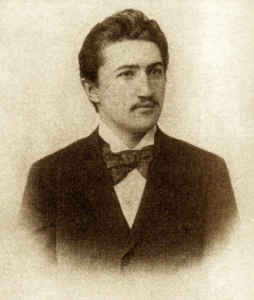
    Josef Suk (above), the least-known of the three composers, was a prominent violinist and Dvořák’s son-in-law. Suk’s Quartet in A minor, Op. 1, dates from 1891; it was his first published work.

    From its passionate start, with the strings playing a unison theme from which David Finckel’s cello and Daniel Hope’s violin emerge in prominent solo lines, this vivid music abounds in gorgeousness . Wu Han at the Steinway brings the tempo down a bit and a flow of melodies commences. Paul Neubauer’s viola heralds a brief drama – a tempest that soon subsides, though a subtle agitation lingers. Cellist David Finckel’s darkish timbre contrasts with the high silkiness of Mr. Hope’s violin. The strings united provide a rich texture that gives the impression of a full string orchestra in play, whilst Wu Han relishes Suk’s appealing writing for the piano. A passage of soul-filling passion brings the first movement to a glorious end.

    The extraordinary softness of Wu Han’s touch at the Steinway lures us into the central Adagio. Then a cello theme of great richness is brought forth by Mr. Finckel, taken up by Mr. Hope’s violin singing sweetly on high, echoed by the Neubauer viola. The strings have a beautifully blended passage: luminous playing from all. With the rippling piano and gleaming violin, a feeling of rapture rises up. The music stops, then the cello and piano lead us into a new dream. Violin and viola harmonize as the cello offers a plucked accompaniment. The Adagio – in which the magical essence of chamber music seems to be sublimely enshrined – reaches its heavenly end, fading into bliss.

    But there’s no time for reverie: Wu Han launches the concluding Allegro con fuoco at once, the strings offering sharp accents along the way. Later the pianist produces a high shimmer – a sparkling delicacy over which the strings harmonize. Things turn folkish, with a gypsy dance getting quite expansive before a lull of calm; then on to a grand finish. 

    This was my second hearing of Josef Suk’s Opus 1 and the second time it has had the same magical effect on my. Why is this composer’s music not heard more often?  

    Next on the program was Johannes Brahms’ Quartet No. 3, Op. 60 which was written in 1855-56 and revised in 1874. The period in which Brahms began sketching this work was a very difficult time, for his friend Robert Schumann had been confined in a mental hospital; Brahms was in a highly emotional state.

    The dramatic, sorrowing phrases that open the Allegro con fuoco attest to Brahms’s troubled spirit. But the music swirls forward on the wings of a piano theme; it becomes almost celebratory but then retreats to a doleful conclusion.

    The piano is the motivating force of the ensuing Scherzo; the music is agitated, almost angry. The Andante commences with a long cello solo, expressively played by Mr. Finckel. Mr. Hope then duets with the cello; Mr. Neubauer joins in an entwining string trio; the piano has a lovely part to play. A sense of longing builds.

    The concluding Allegro, which begins with a restless motif played by Wu han and Mr. Hope. Far from the traditional upbeat finale, this one by Brahms lingers in a serious, rather pensive mood, ending with an abrupt chord.

    After the interval, Dvořák’s Quartet in E-flat major, Op. 87 (1889) was splendidly played. This quartet has its folksong aspects, especially in the outer movements. The opening Allegro con fuoco is thematically abundant, with trade-offs among the string voices and lovely piano passages. After a big, thrilling buildup, the music simmers down; there’s a very effective tremolo motif exchanged by the violin and viola before the first movement comes to its finish.

    David Finckel opened the Lento with a poetic cello melody, which is carried onward by Mr. Hope’s violin. The piano has a lyrical part to play here – charmingly rendered by Wu Han – as the themes pass thru sublime modulations. A slow dance commences, with plucked strings, and the movement finds its resolution.

    The third movement, Allegro moderato, has the feel of a waltz. From its exciting start, the music presses forward with rustic elements: the piano takes on the aspect of a hammer dulcimer. Mssrs. Hope and Neubauer match subtleties, and the violist has a final say as the movement concludes.

    The zesty Finale is a real crowd-pleaser, and, when played as it was tonight, assures itself of a vociferous reaction from an appreciative audience.

    For all the excellence of the Brahms and Dvořák, it was the opening Suk that lingered in my mind.

    ~ Oberon

  • Esteemed Ensemble @ Chamber Music Society

    51295376_23843411079570734_7199686573439320064_n.png

    Above: the artists of today’s esteemed ensemble – Wu Han, Daniel Hope, Paul Neubauer, and David Finckel – at Chamber Music Society of Lincoln Center

    ~ Author: Oberon

    Sunday January 27th, 2019 – Four great musicians joined forces this evening at Alice Tully Hall as Chamber Music Society of Lincoln Center continued their season with a program of works by Josef Suk, Johannes Brahms, and Antonín Dvořák.

    A-1120029-1275043084.jpeg

    Josef Suk (above), the least-known of the three composers, was a prominent violinist and Dvořák’s son-in-law. Suk’s Quartet in A minor, Op. 1, dates from 1891; it was his first published work.

    From its passionate start, with the strings playing a unison theme from which David Finckel’s cello and Daniel Hope’s violin emerge in prominent solo lines, this vivid music abounds in gorgeousness . Wu Han at the Steinway brings the tempo down a bit and a flow of melodies commences. Paul Neubauer’s viola heralds a brief drama – a tempest that soon subsides, though a subtle agitation lingers. Cellist David Finckel’s darkish timbre contrasts with the high silkiness of Mr. Hope’s violin. The strings united provide a rich texture that gives the impression of a full string orchestra in play, whilst Wu Han relishes Suk’s appealing writing for the piano. A passage of soul-filling passion brings the first movement to a glorious end.

    The extraordinary softness of Wu Han’s touch at the Steinway lures us into the central Adagio. Then a cello theme of great richness is brought forth by Mr. Finckel, taken up by Mr. Hope’s violin singing sweetly on high, echoed by the Neubauer viola. The strings have a beautifully blended passage: luminous playing from all. With the rippling piano and gleaming violin, a feeling of rapture rises up. The music stops, then the cello and piano lead us into a new dream. Violin and viola harmonize as the cello offers a plucked accompaniment. The Adagio – in which the magical essence of chamber music seems to be sublimely enshrined – reaches its heavenly end, fading into bliss.

    But there’s no time for reverie: Wu Han launches the concluding Allegro con fuoco at once, the strings offering sharp accents along the way. Later the pianist produces a high shimmer – a sparkling delicacy over which the strings harmonize. Things turn folkish, with a gypsy dance getting quite expansive before a lull of calm; then on to a grand finish. 

    This was my second hearing of Josef Suk’s Opus 1 and the second time it has had the same magical effect on my. Why is this composer’s music not heard more often?  

    Next on the program was Johannes Brahms’ Quartet No. 3, Op. 60 which was written in 1855-56 and revised in 1874. The period in which Brahms began sketching this work was a very difficult time, for his friend Robert Schumann had been confined in a mental hospital; Brahms was in a highly emotional state.

    The dramatic, sorrowing phrases that open the Allegro con fuoco attest to Brahms’s troubled spirit. But the music swirls forward on the wings of a piano theme; it becomes almost celebratory but then retreats to a doleful conclusion.

    The piano is the motivating force of the ensuing Scherzo; the music is agitated, almost angry. The Andante commences with a long cello solo, expressively played by Mr. Finckel. Mr. Hope then duets with the cello; Mr. Neubauer joins in an entwining string trio; the piano has a lovely part to play. A sense of longing builds.

    The concluding Allegro, which begins with a restless motif played by Wu han and Mr. Hope. Far from the traditional upbeat finale, this one by Brahms lingers in a serious, rather pensive mood, ending with an abrupt chord.

    After the interval, Dvořák’s Quartet in E-flat major, Op. 87 (1889) was splendidly played. This quartet has its folksong aspects, especially in the outer movements. The opening Allegro con fuoco is thematically abundant, with trade-offs among the string voices and lovely piano passages. After a big, thrilling buildup, the music simmers down; there’s a very effective tremolo motif exchanged by the violin and viola before the first movement comes to its finish.

    David Finckel opened the Lento with a poetic cello melody, which is carried onward by Mr. Hope’s violin. The piano has a lyrical part to play here – charmingly rendered by Wu Han – as the themes pass thru sublime modulations. A slow dance commences, with plucked strings, and the movement finds its resolution.

    The third movement, Allegro moderato, has the feel of a waltz. From its exciting start, the music presses forward with rustic elements: the piano takes on the aspect of a hammer dulcimer. Mssrs. Hope and Neubauer match subtleties, and the violist has a final say as the movement concludes.

    The zesty Finale is a real crowd-pleaser, and, when played as it was tonight, assures itself of a vociferous reaction from an appreciative audience.

    For all the excellence of the Brahms and Dvořák, it was the opening Suk that lingered in my mind.

    ~ Oberon

  • Joshua Bell|NY String Orchestra

    JoshuaBell-696x329

    Above: Joshua Bell

    ~ Author: Oberon

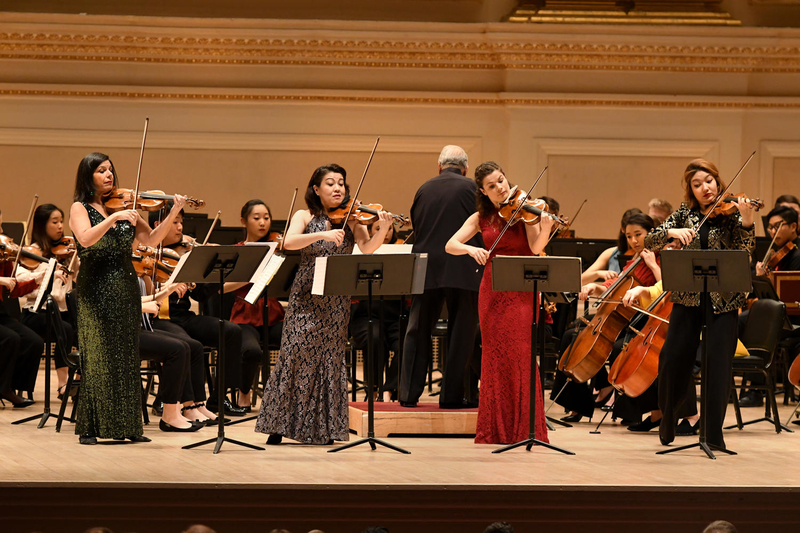
    Friday December 28th, 2018 – Holding forth at Carnegie Hall over the holidays, the New York String Orchestra presented a Christmas Eve concert (which Ben Weaver wrote about here) and then followed up with this evening’s program which brought us Joshua Bell as soloist for the Brahms Violin Concerto, book-ended by George Walker’s Lyric and Tchaikovsky’s Pathétique Symphony.

    George Walker‘s Lyric for Strings opened the program. From its very soft opening, this music was drawing us in and clearing our minds of the worries and woes that abound in these troubled times. Guest conductor Karina Canellakis and the young musicians savoured the rich themes, the Romantic Era yet still contemporary-sounding harmonies, the beautiful layering of arching violins and darkish basses. The music quietens, then a new melodic journey commences. After some thoughtful hesitations, the work finds a gentle ending: we are in a tranquil place. 

    Joshua Bell gave a knockout performance of the Brahms Violin Concerto in D-Major, Op. 77. The concerto’s first movement (Allegro non troppo) is especially rich in themes; following a unison opening passage, the music becomes quite grand. An excellent contingent of wind players joined the ensemble. Joshua Bell’s intense playing – and his feel for the dramatic – found a counterpoise in the ravishing sheen of his highest range, his pinpoint dynamic control, and his pliantly persuasive phrasing.
     
    A recurring theme, which make us think of springtime, found the violinist at his most lyrical, while in the demanding cadenza, Mr. Bell’s masterful dispatching of flurries of notes covering a vast range reached its end with a shimmering trill. The movement’s final measures were sublime.
     
    The winds set the mood of the Adagio. A marvelous oboe solo and – later – an impressive passage of bassoon playing – fell sweetly on the ear. Mr. Bell’s silken sounds in the upper register cast a spell over the hall, his exquisite control giving me chills of delight. In his mixture of passion and refinement, the music seemed so alive. Without pause, Maestro Jaime Laredo took us directly into the final movement; here, in the familiar theme, the rhythmic vitality of the orchestra and Mr. Bell’s bravura playing combined to winning effect.
     
    A full-house standing ovation greeted Joshua Bell’s stunning performance; hopes for an encore had the audience calling him back for repeated bows. But perhaps he felt that nothing really could follow the Brahms, especially after such a thrilling rendition.
     
    Following the interval, several alumni of the New York String Orchestra joined the current ensemble for a tonally lush rendering of Tchaikovsky’s Symphony No. 6, Pathétique. Among these alumni were several of today’s finest artists – people like violinist Pamela Frank, violist Steven Tennenbom, cellists Peter Wiley and Nicholas Canellakis, bass player Timothy Cobb, and clarinetist Anthony McGill. These musicians did not take over the principal chairs from the current players, but simply joined the ranks of the orchestra, seated interspersed among their young colleagues. I can only imagine how inspiring it must be for these emerging musicians to be playing alongside David Kim or Kurt Muroki.

    Maestro Laredo crafted a rich-hued, passionate performance, and the musicians played their hearts out. As the symphony unfolded – really impressively played – I found the first two movements to be magnificent in every regard. The Allegro molto vivace – which Tchaikovsky seems to have referred to as a ‘scherzo‘ and which one writer described as “a waltz with a limp” – seemed to go on too long. And as affecting as the final Adagio lamentoso is, there are themes in SWAN LAKE, SLEEPING BEAUTY and the Serenade for Strings that I find far more moving.

    Over time, people have sometimes felt that the Adagio lamentoso, with its faltering heartbeat at the end, presages the composer’s death. Within nine days after conducting the first performance of his the epic Sixth, Tchaikovsky would in fact be dead. There are various theories about the cause of the composer’s sudden demise: cholera from drinking tainted water, suicide induced by depression, or a sentence of death imposed on him by a ‘Court of Honor’ when his affair/infatuation with a young nobleman, Prince Vladimir Argutinsky (whose father was a high-placed official in the tsar’s court) came to light. In this third scenario, Tchaikovsky took poison after the Court’s verdict was handed down.

    Tchaikovsky & argutinsky
     
    Above: Tchaikovsky with Prince Vladimir Argutinsky
     
    Applause between movements somewhat spoiled the atmosphere tonight, even though after the Allegro non troppo of the Brahms it was understandable that the full house wanted to to applaud Mr. Bell. But premature applause at the end of the Tchaikovsky was a more serious mood breaker.
     
    ~ Oberon

  • Irene Dalis as Fricka

    Walkure6465.05

    The great dramatic mezzo-soprano Irene Dalis in the scene of confrontation between Fricka and Wotan from Act II of Wagner’s DIE WALKURE:

    Irene Dalis as Fricka – WALKURE – w Birgit Nilsson & Otto Edelmann – Leinsdorf cond – Met bcast 1961

    From her 1957 debut there, Irene Dalis sang some 275 performances with the Metropolitan Opera Company – in New York City and on tour – during her twenty-year Met career. Her greatest roles were The Nurse in DIE FRAU OHNE SCHATTEN and Amneris in AIDA. In 1969, her electrifying performance of Verdi’s Egyptian princess at a concert performance at the Sheep Meadow, Central Park, drew an estimated  crowd of 50,000; Dalis’s super-charged singing in the Judgement Scene evoked a thunderous ovation.

    6a00d8341c4e3853ef00e54f20ad648833-800wi

    Following her retirement from singing, Irene Dalis founded Opera San Jose, which she ran with great success for over two decades.

    In August 2007, I wrote an appreciation of Irene Dalis, which she eventually found and read; she sent me a lovely message of thanks.

    ~ Oberon

  • Christmas Eve @ Carnegie Hall

    CH1464970_Medium_res_comp

    Above, violinists for Vivaldi: Pamela Frank, Kyoko Takezawa, Bella Hristova, and Jinjoo Cho; photo by Pete Cecchia

    ~ Author: Ben Weaver

    Monday December 24th, 2018 – Christmas Eve at Carnegie Hall was a nearly sold-out performance by the New York String Orchestra, a program organized by the Mannes School of Music each year: its 50th incarnation this year was marked by mayor Bill De Blasio declaring it the New York String Orchestra Day in NYC. Under the baton of Jaime Laredo, the 64-member orchestra, made up of young musicians from around the world (ages 16-23) presented an ambitious program of Mendelssohn, Vivaldi and Beethoven.

    Mendelssohn’s popular Hebrides Overture is one of his most famous compositions: the moody, dark opening from the low strings, evoking the churning waves of the ocean, is an instantly recognizable tune. There are several of those in the work, heard by all in numerous commercials and movies over the years. The young musicians, following Maestro Laredo’s relaxed tempo, created an evocative, almost creepy, aural landscape.

    Vivaldi’s thrilling Concerto for Four Violins from his famed collection of 12 concertos entitled L’estro armonico, was so admired by J.S. Bach that he transcribed it for four harpsichords. Requiring a quartet of star soloists to pull it off, the New York String Orchestra delivered four with unimpeachable credentials: Jinjoo Cho, Pamela Frank, Bella Hristova, and Kyoto Takezawa. The soloists both compete and complement one another throughout the work. Dazzling displays of virtuosity and unpredictable rhythms of the first movement give way to a yearning slow moments, where the four soloists play by turn in unison and in solo passages, then the fiery finale brings down the curtain. Certainly the four soloists leave nothing to be desired and the orchestra provided thrilling support.

    CH1464968_Medium_res_comp

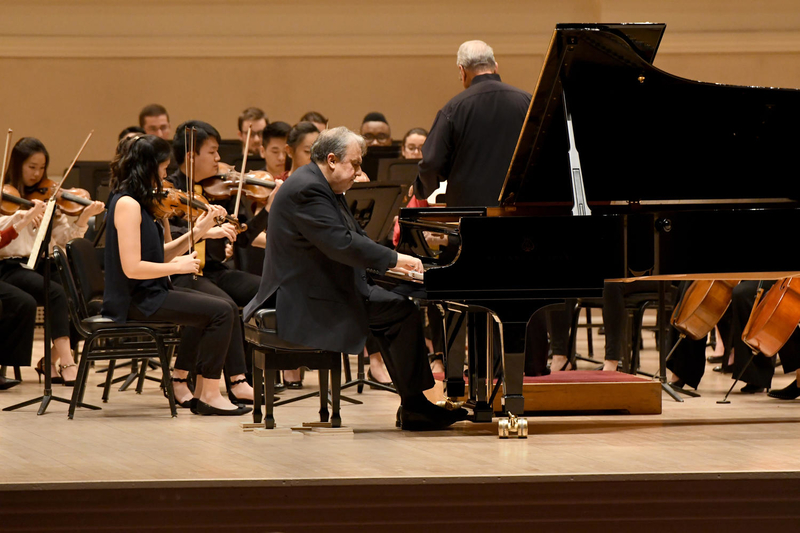
    Without stopping for an intermission (a welcome move), the piano was immediately set up for Beethoven’s great Piano Concerto #4 with Yefim Bronfman (above, photo by Pete Cecchia) at the piano. Mr. Bronfman has long been one of our favorite artists on this blog: he a musician of singular musical sensitivity and imagination. His gentle solo introduction of the concerto before the orchestra picks up the melody was like meeting an old friend. Beethoven’s melodies come in waves. Bronfman handles the running scales effortlessly. Maestro Laredo’s expansive tempo was especially rewarding in the Andante con moto movement where Bronfman’s soulful playing could move anyone to tears. Here, too, the young musicians provided wonderful support.

    Performance photos by Pete Cecchia, courtesy of Carnegie Hall.

    ~ Ben Weaver

  • Licia’s Last Butterfly

    Albanese

    On Friday, November 26, 1965, I went to a performance of MADAMA BUTTERFLY at the Metropolitan Opera House. On the following day, I had an operatic double-header: a matinee of ELISIR D’AMORE and an evening performance of FAUST. That Saturday marked the last time I ever set foot in the Old Met. The venerable theatre had been marked for demolition, while a New Met was rising at Lincoln Center.

    The eight performances I saw at the Old House are very special memories for me. The singers I saw there had become gods and goddesses to me thru their singing on the Texaco Metropolitan Opera radio broadcasts; I was now experiencing ‘live‘ the rituals Milton Cross described each week over the airwaves: the house lights going down, the applause greeting the conductor, the great gold curtain being drawn back for the curtain calls. It was like a dream come true.

    Licia Albanese’s was one of the first operatic voices I became familiar with. She was one of the singers on the first 2-LP set of opera arias and duets that I owned. She sang Liu on a memorable Met broadcast of TURANDOT in 1962, opposite Nilsson and Corelli. And my parents had taken me to see her as Violetta (her 100th performance of the role) at the Cincinnati Zoo Opera in 1963.

    In all honesty, Albanese’s voice was never really among my favorites; it was more her expressive intensity of communication and her endearing persona that I found appealing. But I understood her importance as a singer in the grand tradition, and if her singing of the Violetta and Butterfly that I saw could turn dry and almost ghostly, I can still vividly recall her stage presence and her instinctive if Olde School acting.

    What I did not realize as I watched Licia Albanese taking her bows after that 1965 Butterfly was that it was the final time she ever sang the role. After playing Cio-Cio-San some eighty times on that stage, this was to be the last. Like many performances I have experienced, the evening became iconic over time when measured as part of the singer’s career.

    I met La Licia after the performance – I was one of a sizeable group of admirers who had waited for her – and she was of course elegantly gowned and coiffed, chattering away to her fans in Italian. She signed my program with a flourish: 

    Scanned Section 7-1

    It was a happy crowd of fans and friends, and no mention was made of it being “her last Butterfly”. She did sing one more complete role at The Met: Manon Lescaut; and the following Summer she sang Mimi in LA BOHEME with Barry Morell in a concert presented by The Met at the Newport Festival. 

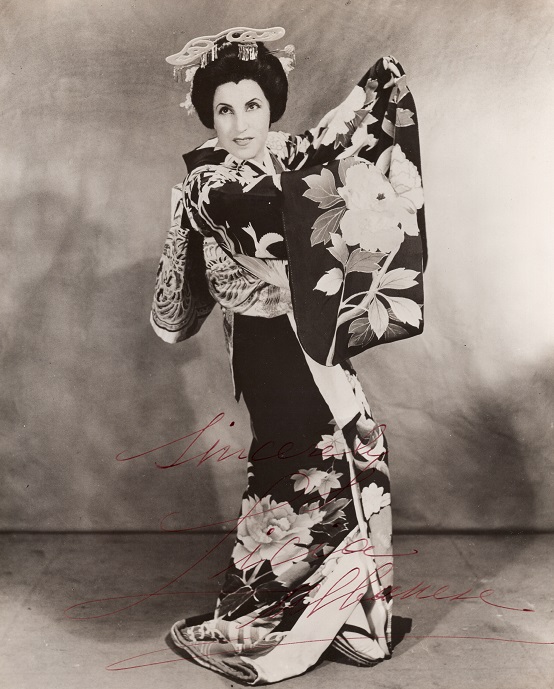
    A few days after the performance, I sent her a fan letter and received this photo in return, along with her calling card:

    Scanned Section 11-1

    Licia Albanese – Ancora un passo or via ~ MADAMA BUTTERFLY

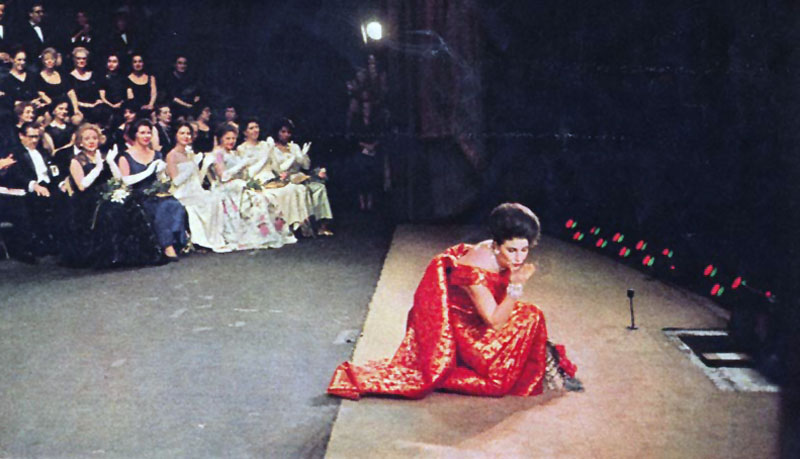
    There were two further memorable moments related to the Old Met and to MADAMA BUTTERFLY in Albanese’s extraordinary life: at the gala farewell concert that marked the closing of the Old Met on April 16th, 1966, Licia sang the aria “Un bel di” and, during the applause, she knelt to place a kiss on the stage where she had appeared so frequently since her debut in 1940:

    Old met farewell

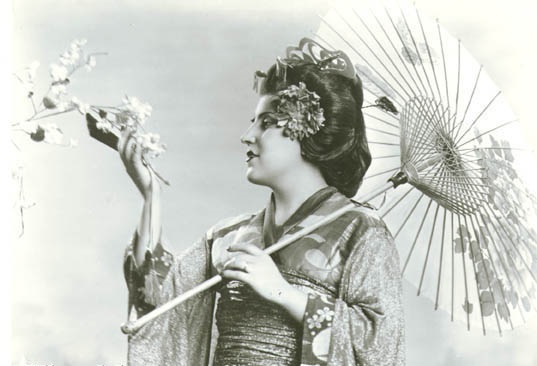
    Once the demolition of the ‘old yellow brewery’ began, Licia donned her kimono and sang “Un bel di” one last time amid the ruins.

    But my connection with the legendary diva was not over. One evening during the first season at the New Met, I saw her among the audience on the Grand Tier during intermission. She was talking with another elegantly-gown lady as I approached them hesitantly. The other woman gave me an encouraging smile, so I took Madame Albanese’s hand and awkwardly told her of having seen her Violetta and Butterfly. She thanked me quietly, but kept hold of my hand. Then she turned to her friend and said, in her charming accent: “It is so wonderful to be remembered! He’s so young, he will tell people about me many years from now.”

    Then, some thirty-five years on, I was holding down the fort in the opera room at Tower Records one dreary afternoon when Licia Albanese came in with a companion; the soprano was rather feeble by that point in time, but when I greeted her, she smiled silently. I said to her, “I saw your one hundredth Violetta at the Cincinnati Zoo Opera!” She was silent for a moment, and I thought my remark had not registered. Her friend gave me a look as if to say that Madame’s mind might not be perfectly clear.

    “The Zoo!” said the diva firmly. Then she began to roar like a lion and sing little birdcalls and make noises like chattering monkeys. Anyone who has ever attended a performance at the Cincinnati Zoo will know that these sounds were always a continuous obbligato to the opera being performed. We all laughed. And then I bade the two women goodbye, thinking to myself – as I have so often – “What a life I am living!”

    920x920

    Above: Licia Albanese at age 93; she passed away in 2014 at the age of 105. 

    ~ Oberon

  • Licia’s Last Butterfly

    Albanese

    On Friday, November 26, 1965, I went to a performance of MADAMA BUTTERFLY at the Metropolitan Opera House. On the following day, I had an operatic double-header: a matinee of ELISIR D’AMORE and an evening performance of FAUST. That Saturday marked the last time I ever set foot in the Old Met. The venerable theatre had been marked for demolition, while a New Met was rising at Lincoln Center.

    The eight performances I saw at the Old House are very special memories for me. The singers I saw there had become gods and goddesses to me thru their singing on the Texaco Metropolitan Opera radio broadcasts; I was now experiencing ‘live‘ the rituals Milton Cross described each week over the airwaves: the house lights going down, the applause greeting the conductor, the great gold curtain being drawn back for the curtain calls. It was like a dream come true.

    Licia Albanese’s was one of the first operatic voices I became familiar with. She was one of the singers on the first 2-LP set of opera arias and duets that I owned. She sang Liu on a memorable Met broadcast of TURANDOT in 1962, opposite Nilsson and Corelli. And my parents had taken me to see her as Violetta (her 100th performance of the role) at the Cincinnati Zoo Opera in 1963.

    In all honesty, Albanese’s voice was never really among my favorites; it was more her expressive intensity of communication and her endearing persona that I found appealing. But I understood her importance as a singer in the grand tradition, and if her singing of the Violetta and Butterfly that I saw could turn dry and almost ghostly, I can still vividly recall her stage presence and her instinctive if Olde School acting.

    What I did not realize as I watched Licia Albanese taking her bows after that 1965 Butterfly was that it was the final time she ever sang the role. After playing Cio-Cio-San some eighty times on that stage, this was to be the last. Like many performances I have experienced, the evening became iconic over time when measured as part of the singer’s career.

    I met La Licia after the performance – I was one of a sizeable group of admirers who had waited for her – and she was of course elegantly gowned and coiffed, chattering away to her fans in Italian. She signed my program with a flourish: 

    Scanned Section 7-1

    It was a happy crowd of fans and friends, and no mention was made of it being “her last Butterfly”. She did sing one more complete role at The Met: Manon Lescaut; and the following Summer she sang Mimi in LA BOHEME with Barry Morell in a concert presented by The Met at the Newport Festival. 

    A few days after the performance, I sent her a fan letter and received this photo in return, along with her calling card:

    Scanned Section 11-1

    Licia Albanese – Ancora un passo or via ~ MADAMA BUTTERFLY

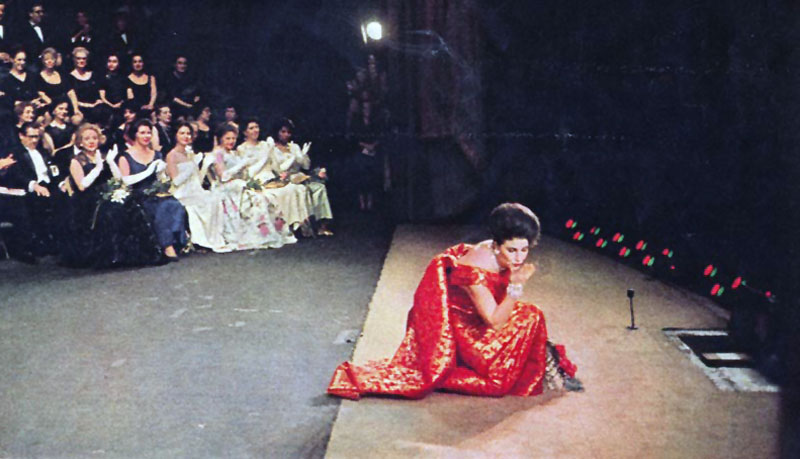
    There were two further memorable moments related to the Old Met and to MADAMA BUTTERFLY in Albanese’s extraordinary life: at the gala farewell concert that marked the closing of the Old Met on April 16th, 1966, Licia sang the aria “Un bel di” and, during the applause, she knelt to place a kiss on the stage where she had appeared so frequently since her debut in 1940:

    Old met farewell

    Once the demolition of the ‘old yellow brewery’ began, Licia donned her kimono and sang “Un bel di” one last time amid the ruins.

    But my connection with the legendary diva was not over. One evening during the first season at the New Met, I saw her among the audience on the Grand Tier during intermission. She was talking with another elegantly-gown lady as I approached them hesitantly. The other woman gave me an encouraging smile, so I took Madame Albanese’s hand and awkwardly told her of having seen her Violetta and Butterfly. She thanked me quietly, but kept hold of my hand. Then she turned to her friend and said, in her charming accent: “It is so wonderful to be remembered! He’s so young, he will tell people about me many years from now.”

    Then, some thirty-five years on, I was holding down the fort in the opera room at Tower Records one dreary afternoon when Licia Albanese came in with a companion; the soprano was rather feeble by that point in time, but when I greeted her, she smiled silently. I said to her, “I saw your one hundredth Violetta at the Cincinnati Zoo Opera!” She was silent for a moment, and I thought my remark had not registered. Her friend gave me a look as if to say that Madame’s mind might not be perfectly clear.

    “The Zoo!” said the diva firmly. Then she began to roar like a lion and sing little birdcalls and make noises like chattering monkeys. Anyone who has ever attended a performance at the Cincinnati Zoo will know that these sounds were always a continuous obbligato to the opera being performed. We all laughed. And then I bade the two women goodbye, thinking to myself – as I have so often – “What a life I am living!”

    920x920

    Above: Licia Albanese at age 93; she passed away in 2014 at the age of 105. 

    ~ Oberon