Category: Music

  • LYRIC OPERA OF CHICAGO ~ 25th ANNIVERSARY

    Loc

    A gala concert celebrating the 25th anniversary of the Lyric Opera of Chicago was given on October 14th, 1979.

    The participating conductors were George Prêtre, Nicola Rescigno, Riccardo Chailly, Bruno Bartoletti, Sir John Pritchard, and Krzysztof Penderecki, and the line-up of singers was impressive indeed.

    Listen here.

  • Mother and Child Reunion

    (A re-post from Oberon’s Grove, dating from 2007)

    My friend Mollie, who lives in Fareham, England, sent me this story about meeting her mother after 71 years! Mollie and I have known each other for over 3 decades, since the time I answered her small ad in the British magazine OPERA. She was looking for tapes of Frederica von Stade and I happened to have a real rarity: a recital Flicka gave in Syracuse, NY on her first tour as a professional singer.

    Mollie came to the USA several times over the years and once she had the good fortune to have Flicka invite her to a working rehearsal of IDOMENEO at the Met. Mollie and Flicka have stayed in touch to this day.

    Each summer Mollie sends me the tapes of the Cardiff Singer of the World Competition and so it was that I was one of the first people on these shores to hear the voices of Dmitri Hvorostovsky and Bryn Terfel within a week of the famous ‘battle of the baritones’ in 1989.

    The last time Mollie was here, she met my late friend the Japanese contralto Makiko Narumi  who was at that time on the brink of the big career that never happened. 

    I knew that Mollie had not been raised by her real parents but I had no idea of the story behind it, or that she had located her mother who is now 93 years old. I’ll let Mollie tell the story; Jeremy is Mollie’s son and Syd is Jeremy’s daughter.

    mollie and her mom

    Tuesday, November 27, 2007

    “HI dears…just to send on this fantastic photo of me and MY REAL MOTHER!!! After 71 years!!! A  sad story and we did not stay long. Jeremy was great and knocked on the door and when she answered he said she was not to be upset at what he had to say, but that he was her grandson. She went to say ‘go away’ [nicely] but he said, “Before you say anything I have to say we just would like to put a face to a name and have waited a long time to do so but we will go away after that”. She was explaining that she lives alone and was RAPED by my drunken Irish father..that accounted for her never wanting to know about me.

    I then got out of the car and went over and said it was so kind of her to see us and we would not stay but may we just have a photo? She said that since 1920 she had lived here in the family home. She had a little smile and twinkle in her eye and said, “He is very handsome isn’t he?”…meaning Jeremy, who was charm himself…glad he took me!!!

    Anyway, she made us promise not to come again and said it is too much for her…at 93!! Very sprightly!!! She said she had driven until she was 80 but has severe athritis in her hands and knees. When we were leaving she called me back and gave me two photos of herself…and she gladly took the latest school photo of Syd which Jeremy happened to have in the car…so…we were all exhausted but exhilarated…especially as although it took 2.4 hrs to get to Ash it took another hour or more along single lanes to find the house..and only then because a lady drew us a map!!!!!

    Home exhausted…Jeremy had driven for 7 hours…so was kindness itself..he was as excited at me at finding his grandmother as he has none and hasn’t since he was 4!! That’s all folks but just wanted to share my good news…”

  • Franz Welser-Möst and the Cleveland Orchestra Make a Statement @ Carnegie Hall

    CH11527596

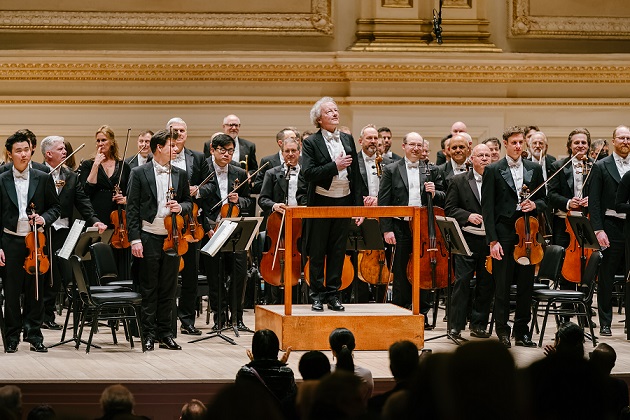
    Above: Maestro Welser-Möst and the Cleveland Orchestra onstage at Carnegie Hall; photo by Fadi Kheir

    ~ Author: Lane Raffaldini Rubin

    Tuesday March 18th, 2025 – Tuesday March 18th, 2025 – Franz Welser-Möst led The Cleveland Orchestra tonight in the first of two back-to-back Carnegie Hall performances. The second concert will feature music of Stravinsky and Tchaikovsky, but the Orchestra was forced to make a major change in the program of tonight’s concert after Asmik Grigorian announced her withdrawal for personal reasons. Ms. Grigorian, the Lithuanian soprano, was set to sing Richard Strauss’s Four Last Songs and the final scene from Puccini’s Suor Angelica with the Clevelanders.


    Missing a chance to hear the Four Last Songs is a real shame, but Welser-Möst took this opportunity instead to make a timely political statement in what might be one of his last Carnegie Hall appearances before his retirement in 2027:

    “This program change has given us a chance to say something important about our world today. As people fight for freedom everywhere, these pieces tell that same human story. Beethoven’s Fifth shows us the journey from darkness to light. Janáček’s From the House of the Dead reveals how human dignity survives even in the most desolate of circumstances. And the Leonore Overture is, to me, simply the greatest music about freedom ever written. These works together create a profound statement that I believe will resonate deeply with our audiences in both Cleveland and New York.”

    The first notes of the performance were the V-for-victory theme of Beethoven’s Fifth Symphony. Besides being perhaps the world’s most famous four notes, this music represents Allied Europe’s victory over the Axis in World War II. (Russia, are you listening?)

    CH11527621

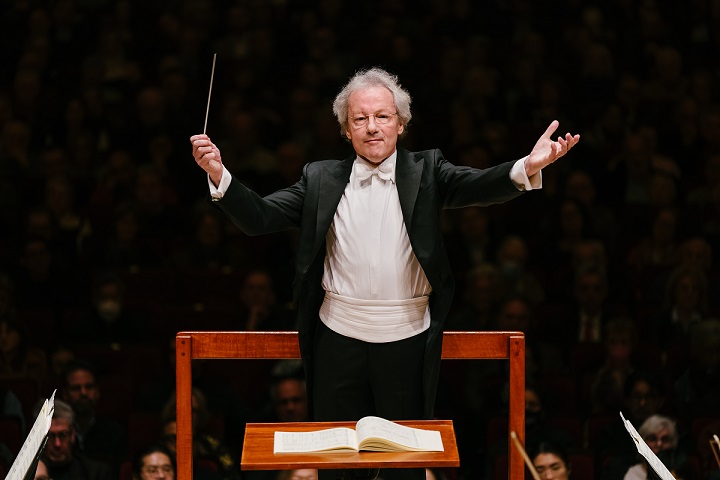
    Maestro Welser-Möst (above, photo by Fadi Kheir) mobilized the full forces of the Cleveland Orchestra for the Fifth, making it an orchestra more than twice the size of that envisioned by Beethoven. The result was an impressive, explosive sonority at the expense of contrast and transparency. In the first movement the Clevelanders’ sound was burnished and energetic as it traversed Beethoven’s volatile landscape of darkness and light.

    The second movement was beautifully elegant, with notable vibrato-less hushed passages and flawless string crossings throughout the later variations of the theme. The finale was brisk without being breathless and avoided the Indiana Jones clichés that this movement often receives.

    The second half of the program featured the suite (arranged by František Jílek) from Leoš Janáček’s final opera From the House of the Dead as well as Beethoven’s Leonore Overture No. 3. These pieces both come from larger dramas about imprisonment and the liberation of the steadfast human body and spirit. If Beethoven’s Fifth Symphony lays out a hero’s abstract journey through conflict toward triumph, the latter two pieces give a much more visceral view into their protagonists’ struggles against adversity and fate.

    Janáček’s suite is wonderfully off-kilter and begins with a herculean violin solo—a free-associating kind of playing that involves an almost desperate sawing away at the top of the instrument’s register. Chaotic passages of music played by smaller sections of instruments are interspersed between bursts of the full orchestra with towering clusters of sound, always grounded by the low strings and brass. Inventive sounds made by rachet noisemakers, wood clappers, percussively plucked strings, and relentless repetitive figures all have the effect of boring a hole into one’s skull, slipping toward madness.

    Passages drawn from a scene in the opera in which the prisoners stage a play feature macabre oom-pah-pahs, vaudeville fragments, and whiffs of a klezmer band. The final movement of the suite is a fauvist palette of blurry chords, a luxuriously strange and gorgeously dissonant tableau that concludes too optimistically considering all that came before.

    It seems odd, then, to conclude the concert with an overture. Rare, too, is the chance to hear Beethoven after Janáček. But the Leonore Overture—from the opera that would become Fidelio—is a concise encapsulation of Welser-Möst’s message for the evening.

    This piece was better suited than the Fifth to the large orchestra, which was able to achieve subtle shades ranging from the bright fanfare of the full orchestra (in C-major, like the final movement of the Fifth) to the eerie distance in the flute after the portentous off-stage trumpet call.

    Fidelio is ultimately about the triumph of enlightenment values over despotism. Although Welser-Möst’s program had the potential to come off as trite and facile, his linking of these two Beethoven scores to Janáček’s and his reversal of the obvious order of their performance charted an intelligent, moving, and novel course that he hopes—despite our current administration’s unenlightened displays of power—might be followed in Europe.

    ~ Lane Raffaldini Rubin

    Performance photos by Fadi Kheir, courtesy of Carnegie Hall

  • PEARL FISHERS Duet ~ Kraus & McDaniel

    Les-pecheurs-de-perles

    Alfredo Kraus and Barry McDaniel sing the great duet “Au Fond du Temple Saint” from Bizet’s Les Pêcheurs de Perles from a televised concert.

    Watch and listen here.

  • Israeli Chamber Project @ Merkin Hall ~ 2025

    Israeli chamber project 2025

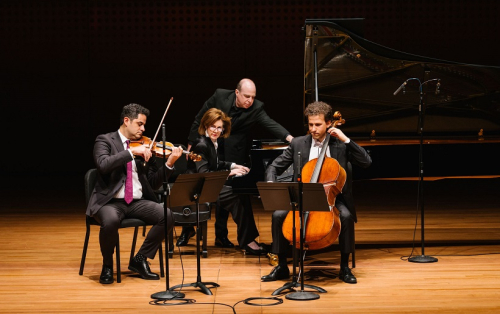
    Above: cellist Michal Korman and harpist Sivan Magen

    ~ Author: Oberon

    Thursday February 27th, 2025 – My previous encounter with the Israeli Chamber Project, in April of 2024, was nothing short of revelatory. Read about that concert here. Hoping to be similarly transported tonight, I was settling in when I realized there was no heat in the hall. It was so uncomfortable that I actually considered leaving at the intermission. Thank goodness I stayed, as the concluding Shostakovich was simply spectacular.  

    This evening’s program, entitled ORPHEUS’ HARP, featured four works in which the Project’s harpist, Sivan Magen, regaled us with his extraordinary artistry. Completing the program were piano trios by Shostakovich and Paul Ben-Haim.

    To open the concert, Mr. Magen was joined by violinist Itamar Zorman and the lovely cellist, Michal Korman, for Orpheus, Symphonic Poem for Violin, Cello and Harp by Franz Liszt/Camille Saint-Saëns. String chords sound, soon joined by the rhapsodic harp: Mr. Magen’s playing is truly delectable, his mastery of dynamics and his agility are spellbinding. The music begins to flow, with alternating currents of major and minor. The plush blend of timbres is a balm to the ear: the unison strings are rapturous, the harp magical. Large scale tremelos from cello and violin lend a sense of drama. The cello goes deep, heralding a lamenting passage; through a series of chords, the piece reaches a pianissimo conclusion. 

    Jacques Ibert’s Two Interludes for Clarinet, Cello and Harp dates from 1946. Tibi Cziger’s clarinet joins Ms. Korman and Mr. Magen in the wistful opening of the Andante espressivo; the music becomes increasingly sensuous, with the dusky sound of the Korman cello wonderfully alluring. Mr. Cziger’s rich timbre, his savorable piani, and his ravishing trills are entwined with Mr. Magen’s entrancing harp passages. The second interlude, Allegro vivo, has a Spanish lilt; it is music both lively and mysterious. The cello sounds sexy, the clarinet enticing, the harp exotic; their harmonies are so evocative.

    Paul Ben-Haim’s Variations on a Hebrew Melody for Piano Trio was composed in 1939. Read about the Munich-born composer here. Pianist Assaff Weisman joins Mr. Zorman and Ms. Korman in the work’s tumultuous opening; the doom-ladened cello, sizzling violin, and darkling piano create a creepy – even ominous – atmosphere. Unison, sighing strings give way to an enchanting piano solo, wherein Mr. Weisman slowly darkens the atmosphere before a rise of passion brings forth his trills and high filigree. Mr. Zorman introduces a dance filled with mood swings; the music turns waltzy. The piano sneaks up on us, suddenly sounding alarms. This is fabulous music, marked by an epic piano glissando

    The violin plays high over cello staccati, the pianist regales us with more magic before launching another dance, which comes to a dramatic halt. Mr. Weisman now introduces Ms. Korman, whose cello takes up a poignant lullaby in which Mr. Zorman joins. The music turns dreamy as this bittersweet work reaches its sublime finish.

    Following the interval, Robert Schumann’s Three Fantasy Pieces, Op. 73 for Clarinet and Harp were presented by Mssrs. Cziger and Magen. In the first movement we could enjoy the clarinetist’s dulcet tone and his elegant finesse. The music is spellbinding; Mr. Magen’s playing is nothing less than sublime, and the music finds a magical finish. Fanciful harping and lyrical themes from the clarinet mesh in the second movement, which proceeds with some expert coloratura from Mr. Cziger. The third song has an exuberant start which calms to a melodic flow. An interlude veers into minor mode before we come to a swift, sweet finish. The communication between the two artists was delightful to watch from my front-row seat.

    Mssrs. Magen and Weisman then took up Carlos Salzedo‘s Sonata for Harp and Piano which dates from 1922. A harpist himself, the composer ironically played the piano for the work’s premiere. The music leans towards modernism; from its fast, fun start, the piano plays a major role. A delicious sense of mystery develops, with subtle, intriguing harp motifs and trilling from both, as the instruments converse. Dynamic variety keeps the music ever-engaging; drama takes over with some extroverted keyboard passages, and then subtleties emerge. Mr. Weisman regales us with cascades of notes, and Mr. Magen has a passage with ‘prepared’ strings that alter the mood. Melismas herald an ethereal, pianissimo mood wherein a mystical atmosphere pervades. Some very delicate plucking follows; after a brief speed-up, a pacing motif leads to a dirge until some violent slashings seem to portend a dramatic finish; instead the music fades, as if it had all been a dream.

    The concert ended with a thrilling rendering of Dmitri Shostakovich’s Piano Trio No. 1 in C-minor, Op. 8, played to perfection by Ms. Korman and Mssrs. Zorman and Weisman. Cast in a single movement, this music has an immediate beauty; a pensive start turns playful as the fiddle commences a dance. Order is restored, but then things again get jaunty…and briefly urgent. A charming violin passage leaves Ms. Korman to a heartfelt cello solo, with the delicate piano lending support as Mr. Zorman then takes over, his high register shining. A more animated mood evolves, and Mr. Weisman’s playing gets quite grand. Buzzing strings intrude, and some wild violin measures turn into a dialogue with cello.

    There is a full stop, and then a caressive melody is passed from violin to piano before the cello joins. In cantabile mode, Mr. Zorman sounds divine…and then Ms. Korman takes up the theme, with the Weisman piano adding more colours. Lush, melodious music for the strings is embellished with shimmering sounds from the piano. Passion now rises, almost to madness; epic grandeur leads on to a swift finish.

    This concert reassured me of the power of music – especially when it’s so gorgeously played – to sustain us in an increasingly dismal world. I fear so much will be lost to us in the months ahead, but music can always help us find light in the darkness. Thank you, artists of the Israeli Chamber Project, for a truly uplifting evening.

    ~ Oberon

  • Mendelssohn Evening @ CMS

    F m

    Above: Felix Mendelssohn

    ~ Author: Oberon

    Tuesday February 25th, 2025 – Chamber Music Society of Lincoln Center offering an all-Mendelssohn evening featuring a de luxe ensemble of musicians: pianist Anne-Marie McDermott, violinist Arnaud Sussmann, cellist Nicholas Canellakis, and the Escher Quartet.

    This concert was a much-needed lift of my spirits after weeks of unbearably frigid weather and a weekend of unsettling health issues. Just setting foot in Alice Tully Hall made me feel better; and then the music – and the musicians – provided just the right antidote to my malaise. By the end of the program, I was thoroughly rejuvenated. 

    20250225_CMS_Mendelssohn_DressRehearsal__Preview_045

    Mr. Canellakis and Ms. McDermott (above photo by Da Ping Luo) opened the program with the Sonata No. 1 in B-flat major, Op. 45. The sonata’s Allegro vivace commences with a unison passage; a rolling melody emerges, in which he cello’s lower range is explored. Moving into minor mode, the music becomes insistent. Arpeggios from the Canellakis cello turn into long tones sustained over a roaming piano. The music turns passionate, then grand, leading to a brisk finish full of Ms. McDermott’s marvelous playing.

    The winsome piano introduction to the Andante signals the appearance of a familiar theme. Nick’s melodious cello sings over elegant passages from the Steinway; Ms. McDermott then plays a delicate dance accompanied by plucked cello figurations. An increase of passion lasts only moments; the piano resumes its lightness and the music fades away.

    The concluding Allegro assai brings a flow of melody; things get more animated, sweeping forward with lyrical, haunting passages. An energetic ending looms, but Mendelssohn instead provides a peace-filled finish. 

    20250225_CMS_Mendelssohn_DressRehearsal__Preview_063

    Above, the Escher Quartet: Adam Barnett-Hart, Brendan Speltz, Brook Speltz, Pierre Lapointe; photo by Da Ping Luo

    The Eschers then took the stage for the Quartet in F-minor for Strings, Op. 80.

    Fanny Mendelssohn, Felix Mendelssohn’s beloved older sister, had died unexpectedly at the age of 41 in May of 1847. Felix, devastated, was unable to attend the funeral; he went to Switzerland to recover. There, he hiked and painted, and forced himself to compose, managing to compete his F-minor quartet. It would be one of his last completed works; he died on  November 4th at the age of 38.

    The Allegro vivace assai has an agitated feel: fast, fantastical music with sentimental pauses woven in. The Eschers’ trademark blend is at its most persuasive, viola and cello emerging with darker hues. Classic harmonies abound, and then the foursome become speed demons.

    Unison passages open the familiar Scherzo; while energetic, the music abounds in subtleties that hint at deeper underlying thoughts. Viola and cello sing in unison before the scherzo reaches what seems like a delicate finish, only to be extended by a sort of coda.

    Anguish overtakes the mood in the Adagio as Brook Speltz’s velvety cello sings a poignant melody. This is music full of longing. Themes are passed about, each of the four voices distinctively expressive. The quartet’s dynamic range is lovingly in evidence. Almost unbearably beautiful harmonies are set forth, with violist Pierre Lapointe in a lamenting passage before before Adam Barnett-Hart’s violin makes a final, poignant ascent.

    The minor mode feels ominous as the finale commences. The insistent cello carries the musicians to fresh themes, with shifts from major to minor seeming to evoke Mendelssohn’s struggle with his emotions in his mourning state. Mr. Barnett-Hart’s marvelous artistry shines in the work’s concluding measures. The Eschers, ever immaculate in their music-making, were warmly hailed by the packed house.

    Following the interval, the Eschers re-appeared for an Andante and Scherzo culled from Four Pieces for String Quartet, Op. 81, opening with an Andante sostenuto filled with courtly elegance. Mr. Lapointe savors a solo viola melody, and then things speed up. Sweet violin phrases are met by animation from the cello. Mr. Barnett-Hart’s cadenza leads to a da capo, and the music comes to a pretty finish.

    Next on offer was more music from Opus 81: a Scherzo in Midsummer Night’s Dream mode which introduces duetting from Mr. Barnett-Hart and his fellow violinist, Brendan Speltz. This is witty and wonderful music, thoroughly captivating.

    20250225_CMS_Mendelssohn_DressRehearsal__Preview_006

    Above: Arnaud Sussmann, Anne-Marie McDermott, and Nick Canellakis; photo by Da Ping Luo

    To conclude the evening, the Trio No. 2 in C-minor for piano, violin, and cello, Op. 66, was given a thrilling rendering by Ms. McDermott, joined by violinist Arnaud Sussmann and Mr. Canellakis.

    Rolling piano motifs and restless strings open the main theme of the first movement, in which melodious themes are passed among the three musicians. Ms. McDermott, in some of the most amazing playing I have ever heard from her, set forth cascading keyboard passages – filled with both passion and subtlety – to dazzling effect. The Canellakis cello has a tender melody, taken up by the Sussmann violin, with magical support from Ms. McDermott; her playing was epic, and the trio swept onward with interwoven harmonies from the gentlemen. Bravi, bravi, bravi!!

    The gentle Andante espressivo, with its nostalgic piano introduction, becomes waltz-like as the strings join lovingly. Piano interludes enchant; Mr. Canellakis delights with his poetic playing, while the sheer perfection of Mr. Sussmann’s artistry creates a simply gorgeous atmosphere in which we can linger and dream. Passion rises, only to settle into bliss. 

    Next, music that shows us why Mendelssohn is the King of the Scherzo…it’s swift and sure, the playing dazzling. The musicians seemed to be having a blast here.

    The cello, and then violin, set the mood of the concluding Allegro appassionato…and passion is indeed the byword here. Bending minor-key themes are intriguing; Ms. McDemott is simply sensational at every moment. Crazy fun! But then a reverential interlude suddenly emerges, Mr. Sussmann’s violin singing sweetly over the piano accompaniment. This introspection gives way to thrilling build-up of emotion, with Ms. McDemott’s keyboard on the verge of bursting into flame.

    As the last note sounded, the audience rose to salute the players with a roaring ovation that brought them forth for a second bow, much to everyone’s delight. I literally felt reborn. 

    ~ Oberon

  • TRISTAN UND ISOLDE ~ Act II ~ Auckland Philharmonia

    Karneus

    Above: Katarina Karnéus singing Brangäne in a concert performance of Act II of Wagner’s TRISTAN UND ISOLDE by the Auckland Philharmonia, conducted by Giordano Bellincampi.

    CAST:

    Tristan – Simon O’Neill; Isolde – Ricarda Merbeth; Brangäne – Katarina Karnéus; Kurwenal – Johan Reuter; King Marke – Albert Dohmen; Melot – Jared Holtin

    Watch and listen here.

  • Polina Osetinskaya ~ Prokofiev Piano Concerto #1

    Polina

    Pianist Polina Osetinskaya (above) plays my favorite piano concerto – the Prokofiev 1st – at a 2016 concert with the Saint Petersburg Philharmonic, conducted by Vladimir Altshuller.

    Watch and listen here.

  • Amina Edris ~ “Dis-moi que je suis belle”

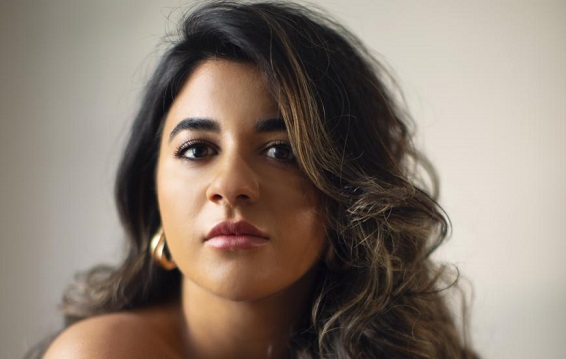
    Amina_edris_capucine_de_chocqueuse_0

    Egyptian-born soprano Amina Edris (above, photo by Capucine de Chocqueuse) sings “Dis-moi que je suis belle” from Massenet’s Thaïs at a concert in Prague with the Prague Philharmonia, conducted by Lukasz Borowicz.

    Watch and listen here.

    Ms. Edris will be making her Metropolitan Opera debut in April 2025 as Mimi in La Boheme.

  • Wagner: Siegfried Idyll ~ Toronto Symphony Orchestra

    Snapshot si 2

    A performance of Richard Wagner’s SIEGFRIED IDYLL by the Toronto Symphony Orchestra conducted by Peter Oundjian.

    Watch and listen here.