Category: Music

  • The Beethoven Quartets @ CMS

    Cms

    Above: the Calidore String Quartet at Alice Tully Hall; photo by Da Ping Luo

    ~ Author: Ben Weaver

    October 22nd & 27th, 2024 – Throughout the 2024-25 season, the Chamber Music Society of Lincoln Center is hosting a traversal of the complete Beethoven String Quartets at Alice Tully Hall, performed by a single ensemble: New York-based Calidore String Quartet. The ensemble is Jeffrey Meyers and Ryan Meehan on violins, Jeremy Berry on the viola, and Estelle Choi on the cello. The first two evenings of the cycle – October 22nd and 27th – included three quartets on each night.

    The 27-year-old Ludwig van Beethoven was commissioned to compose six String Quartets, alongside his former teacher Franz Joseph Haydn, who was considered the father of the string quartet. Haydn was ultimately only able to finish 2 of the 6 quartets he was supposed to compose, but Beethoven dove head-first into his first string quartets which became his Op. 18. By the time Beethoven reached the end of his life, he composed 16 string quartets, which have become the Mount Everest of the genre, arguably only equaled by Dmitri Shostakovich’s 15 String Quartets composed more than a century later.

    Commonly the Op. 18 String Quartets are called the Early String Quartets. Even though Beethoven was already exploring his more explosive and adventurous musical nature in other musical genres, most notably his piano sonatas, with these first forays into the string quartet, he harkened back to his predecessor masters of the genre, Haydn and Mozart. The Calidore Quartet are performing the works in the order they were composed, not numbered in the published score. The sequence is Nos. 3, 1, 2, 5, 4 and 6.

    By and large, these early six quartets are light in nature, with the first violin dominating the procedures. Happily, first violin Jeffrey Myers is an exceptional musician, the sweet sound of his instrument effortlessly filling the concert hall. Quartet No. 3 in D major opens with a charming melody, lovingly shaped by the Calidores, the lush and warm sound of their ensemble emphasizing the Classical and early Romantic nature of the works. (By contrast, for example, when the Danish String Quartet performed a full cycle of the Quartets at CMS in 2020, they leaned into their more modern sound, closer to Beethoven’s last quartets.) 

    Quartet No. 1 in F major also opens with a graceful, contagious melody – an obvious common thread running through all six of these works. Here, but especially in the second movement, cellist Estelle Choi, gets several key moments to stand out with a dark, glowing sound. There’s a depth to this movement that foreshadows Beethoven’s Romantic nature, one he would unleash in later compositions. He said this sorrowful movement was inspired by the ending of Shakespeare’s “Romeo and Juliet.” 

    The Calidores took most of the faster movements at a wonderfully quick pace: delirious, never chaotic. The beautiful coordination between the four partners kept them in perfect sync. This was most evident in the Quartet No. 2 in G major, the most humorous and closest in spirit to Haydn from the bunch.

    Quartet No. 5 in A major is thoughtful in its first two movements, with unexpected dramatic outbursts that bring surprising drama. Violist Jeremy Berry’s lovely solos shine in the second movement, as jagged stabs from the violins interrupt him. Second violin Ryan Meehan’s slightly sharper tone (not pitch) being a great contrast to Meyers’ sweeter sound. The third movement is a set of variations, the last of which is a tune that you can’t help but tap your toes to.

    Quartets No. 4 in C minor and No. 6 in B-flat major come closest to the Beethoven who would redefine Romanticism. Both of full drama and unexpected turns. No. 4 omits a traditional slow movement altogether, instead containing a Scherzo and Minuet in the middle. The Calidores darkened their sound for the dramatic outbursts, but kept their sense of humor for the quartet’s surprising and unexpected pizzicato close. 

    Quartet No. 6 in B-flat major, which closes this series of the Early Quartets, gives greater voice to the second violin and cello, with Meehan and Choi balancing Beethoven’s growing darkness, while the first violin soars above them. The final movement is an extraordinary piece by itself, with an extended grave “introduction” Beethoven titled “La Malinconia” (Melancholy.) It’s movement that lets us look into the future of Beethoven’s progress. The Calidores’ performance brought the full house to its feet.It should be noted that, especially on the 27th, the audience was remarkably quiet, hypnotized by these wonderful performances that made us all eagerly await the continuation of the cycle.

    The Calidore String Quartet will perform the Middle Quartets at Alice Tully Hall on January 28 and February 4, 2025. The Late Quartets, including the somewhat demented Große Fugue, will be performed on May 9 and 18, 2025. I recommend that anyone who missed these performances make sure to not miss rest of what is already an excellent cycle. 

    ~ Ben Weaver

  • Rectangles and Circumstance @ 92nd Street Y

    Thumbnail_So Percussion-0014

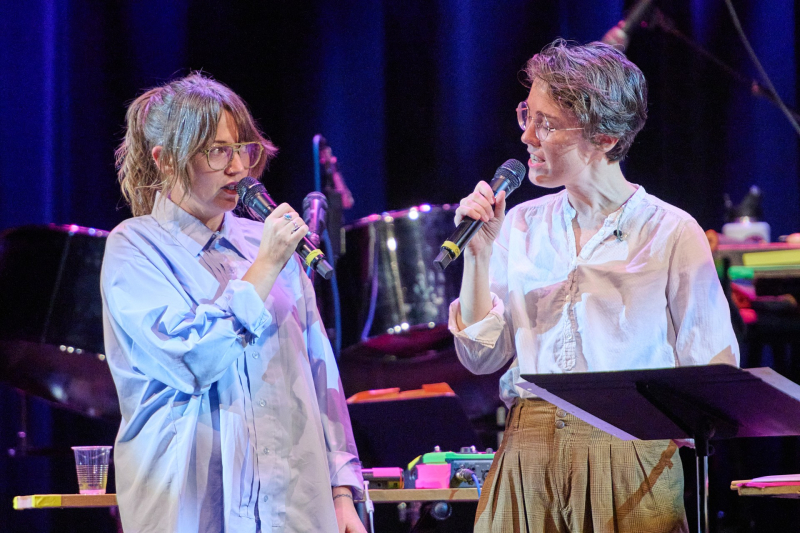
    Above: Caroline Shaw; performance photo by Joseph Sinnott

    ~ Author: Lili Tobias

    Wednesday October 23rd, 2024 – As part of a tour of the new album Rectangles and Circumstance, Caroline Shaw and Sō Percussion performed a concert at the 92nd Street Y’s Kaufmann Concert Hall this past Wednesday. The concert was split into two halves—the two sides of the record—plus a performance in between of Shaw’s 2017 piece for Sō Percussion, Narrow Sea.

    As I walked into the concert hall, my eyes were immediately drawn to the immense set-up of musical instruments. There were truly so much stuff on stage that was hard to pinpoint exactly what was making what noise most of the time, leaving the origin of many of the sounds a mystery to me. Regardless of the specifics, I thought that Shaw and Sō Percussion were able to craft incredibly effective transitions from phases of primarily vocals (sung by Shaw herself) to mostly instrumentals to a balance of both. I’m curious how this performance might feel in a smaller venue though, so that the audience could get a better view of the instruments.


    Thumbnail_So Percussion-0693


    Singer Alicia Olatuja joined Sō Percussion (above, photo by Joseph Sinnott) for the performance of Narrow Sea. Her voice was quite different from Shaw’s, and it was cool to hear the contrast in how it blended with the percussion. Water also played a large part in both Narrow Sea and Rectangles and Circumstance. The final song on the first half of Rectangles and Circumstance was “The Parting Glass,” which is a Scottish/Irish folk song. During the performance of this song, a pitcher water was poured into a bowl, which one of the percussionists then dipped a set of crotales (I think) into. This had the effect of bending the pitch downwards and dampening the sound—very cool! In Narrow Sea, Olatuja multi-tasked by pouring water into bowls, all while still singing. The percussionists then hit the bowls with mallets as the water filled them up.


    Shaw is definitely no stranger to setting interesting lyrics, and the lyrics on Rectangles and Circumstance were especially intriguing. They were largely inspired by nineteenth-century poems, taken in new directions by Shaw and the members of the quartet. In many of the songs, the repetition and extra-grammatical usage of the words felt mesmerizingly surreal. Shaw often sang into some kind of vocoder that added harmonies or looped her singing. She was also joined by another singer (whose name unfortunately doesn’t appear in the program!) on a few of the songs, and the two of their voices were balanced so well that it almost sounded like the vocoder, but more natural.


    Thumbnail_So Percussion-0254


    Performance photo by Joseph Sinnott


    I was blown away by the cover of Schubert’s “An die Musik,” which ended the concert (and the album). The ensemble seamlessly transitioned into this final song through a long sustained rumbling sound that I could literally feel echoing through my body as it radiated through the hall. Going with a water metaphor (since that seemed to be a theme in this performance) I felt like I was submerged in water but the water was music, fragments of melody floating by on the waves of sound. As the song came to its end, Shaw introduced some distorting effects on her vocals. It was almost as if I was drifting off to sleep while listening to the song playing on an old record player in another room. The perfect end to the evening!


    While I had only heard Shaw’s more “classical” music in the past, I felt so much resemblance in her compositional language to the music tonight as well. In particular, I’ve always admired how Shaw handles very simple sounds in her music. She’s able to tread the line between simple and complex sounds exceedingly well, never over-complicating anything that doesn’t need to be. I also find that she is able to create very effective transitions between contrasting parts of her music, bringing the listener to the new sonic environment in a completely instinctive way. She and the members of Sō Percussion seemed to gel really well on stage, and that strong partnership was apparent in the music itself too. It was wonderful to hear a different side of Shaw’s music, and side full of collaboration, that felt both new and also familiar at the same time! 


    ~ Lili Tobias

  • Parlando: Night Music @ Merkin Hall

    Merkin

    ~ Author: Lili Tobias

    Thursday September 26th, 2024 – A wonderful night to spend listening to Parlando’s Night Music! Led by conductor Ian Niederhoffer, Parlando is a one-of-a-kind orchestra that strives to introduce listeners to underrepresented works through inventive programming and spoken introductions that provide context for each piece. As is standard for the ensemble, Thursday’s program featured a wide range of classical music all united under the theme of “night” (and this concert covered a span of just over 200 years!).

    The concert opened with the Nocturne from Fauré’s The Shylock Suite, Op. 57. I was unfamiliar with this piece, but it was a pleasure to hear for the first time. The orchestra played with an exceedingly delicate and precise tone. Though the piece was quiet all the way through, every note was clearly audible throughout the hall.


    Next was Takemitsu’s By The Sea, which I was really looking forward to (and it didn’t disappoint)! In the past, I’ve seen some of Takemitsu’s chamber music scores and have always been blown away by how beautiful the written music itself is. This was my first time hearing any piece of his live, and any conception of how I thought the written music might sound was eclipsed by the incredible real-life sounds of the orchestra and two soloists. When introducing By The Sea, Niederhoffer mentioned that the first version of this piece was a duo between flute and guitar, and I could still feel the chamber music-like qualities present in the orchestral re-arrangement. The soloists and the strings lead each other back and forth in a constant ebb and flow of dynamic swells—just like the waves of the ocean the piece was inspired by.


    Parlando


    Flautist Yoobin Son and harpist Parker Ramsay (photo above by Crios Photography) then joined the orchestra once more for the second movement from Mozart’s Concerto for Flute, Harp, and Orchestra in C Major, K. 299. I was especially impressed with Son’s incredible phrasing and expressive playing, which brought this intensely lyrical movement to another level. (She also wore a stunning lilac dress from designer Issey Miyake which seemed to float and dance along to the music.)


    The final piece on the program, Bartók’s Music for Strings, Percussion, and Celesta, Sz. 106, was a pleasant surprise. As someone who is not generally a fan of Bartók, I happened to love this piece. However, even after learning a bit about the social context surrounding its composition, I had a very different emotional response to the music. While the first movement wasn’t quite my cup of tea (especially after having had to sightread the fugue subject once for a musicianship class in college!), I greatly enjoyed the second, third, and fourth movements. The second and fourth I found especially fun—a stark contrast with the anguish Bartok may have intended it to convey. My ears latched onto the driving rhythms and confident percussive attacks and interpreted the music as lively and powerful, in a predominantly positive way.


    The orchestra was met with a well-deserved standing ovation at the end, and the concert was followed by a lively reception. While there was talk during the reception of finding a larger venue for future Parlando concerts, I actually think that smaller-scale performances could be a huge benefit towards Niederhoffer’s vision. A more intimate concert space could help open up dialogue between the musicians, audience, and even composers if they’re still living. As an audience member, I felt a bit boxed in by the spoken introductions to each piece—almost as if I was being told what to feel rather than encouraged to react to the music in my own way. While I completely understand the value in providing this musical context to the audience, I think there is a lot of further potential to create a more multi-faceted dialogue that draws from the diverse backgrounds and unique interpretations of both the musicians and the audience members. I’m excited to see what the future of Parlando holds!


    ~ Lili Tobias

  • ETHEL @ Merkin Hall

    Persist-photo

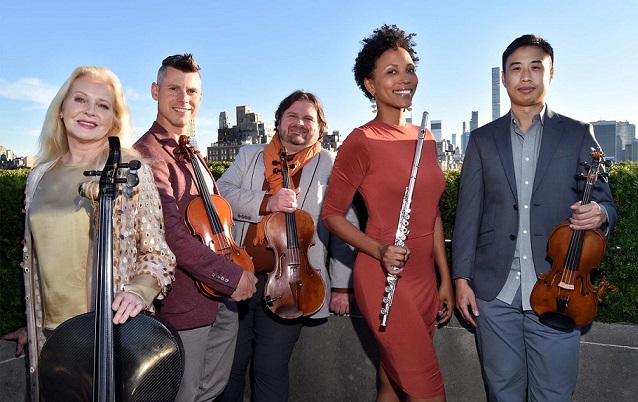
    Above: the members of ETHEL – Dorothy Lawson, Kip Jones, Ralph Farris, and Corin Lee – with flautist Allison Loggins-Hull; photo from the ensemble’s website

    ~ Author: Shoshana Klein

    Tuesday September 24th, 2024 – In the middle of a busy week, I got to hear the legendary string quartet ETHEL as well as flautist/composer Allison Loggins-Hull at Merkin Hall – the beginning of their official season as well as mine! Somehow I hadn’t crossed paths with ETHEL before, although I have known about them for a while – as one of the few dedicated new-music string quartets.

    PXL_20240924_235056666


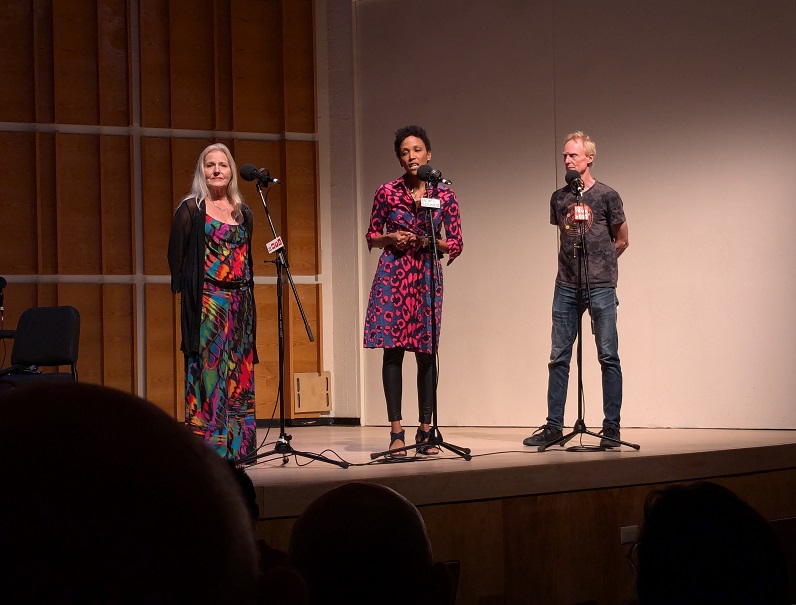
    Above: interview with Dorothy Lawson, Allison Loggins-Hull, and John Schaefer


    This concert was also a New Sounds live broadcast, so in between each piece there were interviews by John Schafer with members of the ensemble. While I’m not a die-hard New Sounds listener, I’ve heard enough to be excited to hear it happening live.


    Another interesting note is that the ensemble was set up a little differently than you’d expect – with the viola on the left, the cello on the right and then the violins flanking the flute, which was in the middle. It makes for a bit more of a balanced sound than the usual string quartet, which has the violins on one side and the two lower voices on the other.


    The first piece, by Sam Wu, called Terraria, was in a very familiar new-music tonality that it feels like we use a lot nowadays, but there were enough different soundscapes for it to be interesting and engaging. It felt very much descriptive of a type of landscape and was a good opening piece.


    The second piece was by Migiwa “Miggy” Miyajima, who is Japanese – the piece was in four movements and she has a jazz background that was evident but not overwhelming. Each movement was distinct and interesting, and my favorite might have been one in which members of the string quartet vocalized a drone while Allison played an alto-flute melody over the top.


    The next piece was by Leilehua Lanzilloti – the composer on the program I was most familiar with – and was introduced with some information about Hawaii and US imperialism. They talked a lot about how the music had a lot of the “island music” feeling and that definitely came through – partially through some layered rhythmic plucking textures in the strings. Another really interesting effect was one in which the strings used multiple strings playing the same note and oscillated back and forth – sort of the string equivalent of what I’d call a timbral trill on the oboe, in which you slightly change the note so that it’s only vaguely perceptible. 


    The piece by Xavier Muzik was fun and energetic – it definitely had a different energy than the pieces before it even though it started somewhat similarly to some of the others. The last piece, by Ms. Loggins-Hull, had electronics and started with a fixed media drum beat that was kind of intense. It was a really nice piece that had a lot of variation and she certainly didn’t seem to give herself an easy part, which she of course performed flawlessly.


    I’m going to be honest: this concert was in the middle of a really busy time and I can’t say that I gave it the attention it deserved, but I was able to tell that all the music was really high quality and of course the performers are as well. It was well curated and nice to have one experience that was about an hour and a half interspersed with engaging interviews about the music. It always takes me a minute to get used to an amplified string quartet, but the sound was really well done and sounded exactly like listening to new sounds, which was both comforting and exciting to hear while seeing the music being made.


    ~ Shoshana Klein


  • A Beautiful Aria, Beautifully Sung

    Credit Emilie Brouchon

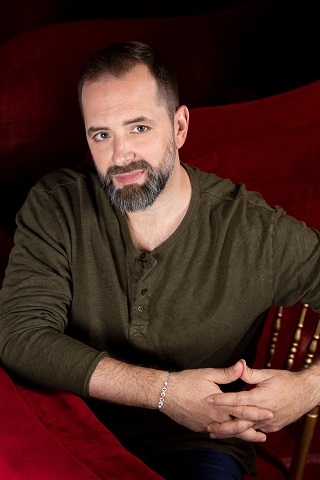
    Étienne Dupuis (above, in an Emilie Brouchon portrait) sings Hérode’s great aria “Vision fugitive” from Massenet’s HÉRODIADE at a concert given at the Théâtre des Champs-Élysées, Paris, in November 2022. The Orchestra of the Opéra de Lyon is led by Daniele Rustioni.

    Watch and listen here.

  • Nicola Benedetti: Korngold’s “Marietta’s Lied”

    Nicola

    Violinist Nicola Benedetti gives a luxuriant rendering of Marietta’s Lied from Erich Korngold’s opera DIE TOTE STADT at the BBC Proms 2015, with the Bournemouth Symphony Orchestra under the baton of Kirill Karabits.

    Watch and listen here.

  • Nicola Benedetti: Korngold’s “Marietta’s Lied”

    Nicola

    Violinist Nicola Benedetti gives a luxuriant rendering of Marietta’s Lied from Erich Korngold’s opera DIE TOTE STADT at the BBC Proms 2015, with the Bournemouth Symphony Orchestra under the baton of Kirill Karabits.

    Watch and listen here.

  • Lucine Amara Has Passed Away

    Lucine

    Above: Lucine Amara as Aida; she signed the photo for me after a Met performance of PAGLIACCI

    The death of soprano Lucine Amara at the age of 99 has been announced. A native of Hartford, Connecticut, Ms. Amara was raised in San Francisco and sang with the San Francisco Opera chorus from 1944-1946; she made her professional concert debut in 1946.

    She made her Metropolitan Opera debut on November 6, 1950, as the Celestial Voice in Verdi’s DON CARLO, a performance that marked the start of Sir Rudolf Bing’s tenure as General Manager of The Met. From that date thru 1991, Ms. Amara sang 750 performances with The Met in New York City and on tour.

    The soprano’s vast repertoire included Wellgunde in the RING Cycle, Pamina, Liu, Nedda, Antonia in TALES OF HOFFMAN, both the Verdi Leonoras, Aida, Micaela, Contessa Almaviva, Eva in MEISTERSINGER, Alice Ford, Maddalena (and later, Madelon) in ANDREA CHENIER, Cio-Cio-San, Elsa in LOHENGRIN, Mimi, Donna Elvira, Amelia in BALLO IN MASCHERA, Tchaikovsky’s Tatyana, Ellen Orford, Tosca, Marguerite in FAUST, Fiordiligi, Luisa Miller, Mother Marie in DIALOGUES OF THE CARMELITES, Gertrude in HANSEL AND GRETEL, and Mascagni’s Santuzza.

    6a00d8341c4e3853ef022ad3e2833f200b-800wi

    My first experience of hearing Lucine Amara live was at the Old Met as Liu in TURANDOT in 1965. She sang gorgeously, with a lovely sense of lyricism and some finely-spun pianissimi. I met her after the performance (my only backstage visit at the Old House), and she was very happy to meet a young – but already very keen – opera enthusiast. (I was 16 at the time…)

    In the ensuing seasons at the New Met, I enjoyed Lucine’s Aida, Nedda, TROVATORE Leonora, and Cio-Cio-San. On April 22nd, 1972, she returned to her Met debut role as the Celestial Voice in DON CARLO to mark the final matinee broadcast of the Bing Era, which I attended. That evening, she sang the LOMBARDI trio at the Bing farewell gala. Her final Met appearance was as Madelon in 1991.

    The soprano left us some very fine recordings: the Verdi REQUIEM conducted by Eugene Ormandy, Musetta in the classic Beecham BOHEME, Nedda in PAGLIIACCI with Franco Corelli, and Elsa in LOHENGRIN under the baton of Erich Leinsdorf.  

    Here some samplings of Lucine Amara’s singing:

    As the TROVATORE Leonora:

    Lucine Amara – TROVATORE aria – Met 6~3~71

    Tatyana’s Letter Scene (in English) from EUGENE ONEGIN:

    Lucine Amara – Tatyana’s Letter Scene ~ ONEGIN – in English – Met 1957

    Duet from LA GIOCONDA from The Met’s 100th anniversary gala in 1983, with Bianca Berini:

    Lucine Amara & Bianca Berini – GIOCONDA ~ duet – Met Gala 1983

    And from her commercial recording of the Verdi REQUIEM:

    Lucine Amara – Requiem aeternam ~ Verdi REQUIEM

    Watch a video of the final scene of PAGLIACCI with Lucine and Richard Tucker from the Bell Telephone Hour, with Donald Voorhees conducting, here.

    One afternoon, while working in the opera room at Tower Records, I was playing the Leinsdorf LOHENGRIN on the overhead speakers. Four rather boisterous opera fans from Munich, who were in town for some Met performances, came in and were browsing the shelves while chatting away. As Lucine’s voice commenced Elsa’s ‘dream’ aria, the four fell silent. They stood listening as if under a spell. Then one of them came over to me and asked: “Who is this soprano?” They’d never heard of Lucine Amara. I told them of her Met career and her extensive repertoire. “This is a perfect Elsa voice! If we had had this singer in Europe, she would have been highly esteemed. It’s a heavenly sound.” 

    In the months that followed, I kept hoping Lucine might come in the store so I could tell her this story. But I never got the chance. 

  • Jaap van Zweden ~ PARSIFAL Act III

    Parsifal chorus

    Jaap van Zweden conducts the Netherlands Radio Philharmonic Orchestra and Chorus in a concert performance of Act III of Wagner’s PARSIFAL given at the Concertgebouw, Amsterdam, in 2010. Klaus Florian Vogt is Parsifal, Falk Struckmann is Amfortas, Robert Holl is Gurnemanz, and Katarina Dalayman is Kundry.

    Watch and listen here.

  • Beth Taylor ~ Voce di Donna

    Beth2

    Scottish mezzo-soprano Beth Taylor sings La Cieca’s aria “Voce di Donna” from Ponchielli’s LA GIOCONDA from a concert performance given by the Deutsche Oper Berlin in 2020, during the pandemic.

    Watch and listen here.

    In 2023, Beth was a finalist at the Cardiff Singer of the World competition; many people, myself included, felt she was the rightful winner.

    In May 2025, Beth will be at Carnegie Hall with the English Concert under Harry Bicket’s baton, singing Cornelia in Handel’s GIULIO CESARE. Details here