Category: Opera

  • Oberlin Orchestra & Choral Ensembles/Carnegie Hall

    001-CHR-OC-Carnegie-012023

    Above: Maestro Raphael Jiménez with the Oberlin Orchestra at Carnegie Hall; photo by Fadi Kheir

    Author: Brad S Ross

    Friday January 20th, 2023 – On Friday evening, New York audiences were once again treated to a fine performance by the Oberlin Orchestra and Choral Ensembles as they returned to Carnegie Hall for the first time (publicly, anyway) since January 19, 2019. They were conducted by Oberlin Orchestras Director Raphael Jiménez, who led the performers in a unique program that included one repertory standard, one New York City premiere, and one buried gem.

    The evening began with long—very long—opening remarks by Oberlin College and Conservatory President Carmen Twillie Ambar and Oberlin Conservatory Dean William Quillen.

    Ambar’s remarks focused on two of the evening’s headlining pieces having been written by minority composers and therefore made all the requisite extollations about the need for representing historically marginalized groups. As important as this message is, it would be nice to hear the music of under-appreciated composers like Will Marion Cook, William Dawson, Florence Price, George Walker, etc., without this ever-obligatory preamble. My continued hope is that someday we will be able to let their music simply speak for itself.

    Quillen’s remarks, while less political, were a seemingly endless list of “thank you”s, not unlike an Oscar acceptance speech—only this time, there was no hope of the music playing him off. All the parents and staff in attendance no doubt appreciated the acknowledgements, but after a full quarter hour of talking I was getting pretty antsy for things to move along.

    Nevertheless, once the opening remarks concluded, the Oberlin musicians were finally able to grace the Isaac Stern Auditorium with their abilities—and what a pleasure they were to hear!

    First on the program was Johannes Brahms’s Tragic Overture, Op. 81, from 1880. There’s not much one can say about this work that hasn’t already been expressed over the last one hundred and forty years, so I won’t labor on it here. It’s a pleasant and undemanding symphonic poem, lasting about fourteen minutes and chock-full of the lyrical gestures typical of that Romantic master. Needless to say, the Oberlin musicians tackled the piece expertly, but it did leave me wanting to hear more of their technical skills.

    I was not left wanting for long, however, as the second work of the evening—the New York premiere of Iván Enrique Rodríguez’s A Metaphor for Power—immediately livened up the proceedings.

    Written in 2018, A Metaphor for Power is a single-movement essay for orchestra lasting about thirteen minutes. Rodríguez—a 32-year-old Puerto Rican native—composed the piece as a comment on the turbulence and inequalities of contemporary life in the United States, despite the promise of its founding (the title, indeed, comes from a quote by James Baldwin). His use of social commentary through music was much more subtle than that of other recent protest works, however (Anthony Davis’s quite overt You Have the Right to Remain Silent comes to mind), making for a composition that was both cleverly referential and electrifying to hear.

    The music opened with a bang before quickly diminuendoing into dream-like textures, complete with harp, mallets, and woodwind writing that sounded as though they had descended straight from Maurice Ravel’s Daphnis et Chloé. A contemplative middle section featured, among other memorable effects, distorted quotations from “America the Beautiful” and unsettling vocalizations from the orchestra as they recited overlapping lines from the Declaration of Independence. A great crescendo announced the beginning of the third, final section, which was marked by dramatic gestures that were almost filmic in execution. It all came to an energetic and wickedly engaging ending that lit up the room with excitement.
    002-CHR-OC-Carnegie-012023

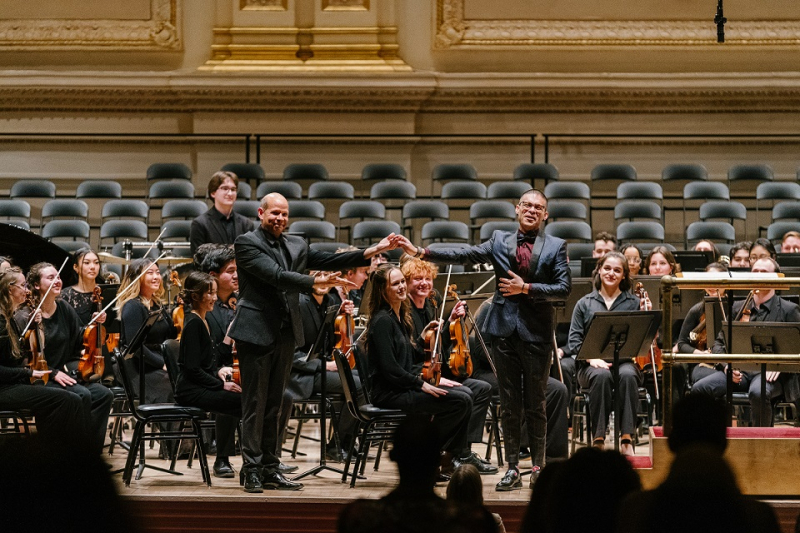
    Above: Maestro Jiménez and composer Iván Enrique Rodríguez take a bow; photo by Fadi Kheir

    The composer practically leapt from his seat and ran to the stage to share an emotional embrace with Jiménez before they took their bows together. The moment was as touching as it was well-earned. The composer having been unknown to me until that evening, I must say that I look forward to hearing much more from him in the future.

    003-CHR-OC-Carnegie-012023

    Above: the vocal soloists for the Dett oratorio: Chabrelle Williams, Ronnita Miller, Limmie Pulliam, and Eric Greene; photo by Fadi Kheir

    The final and most substantial work of the evening was Robert Nathaniel Dett’s oratorio The Ordering of Moses. Dett, a Canadian-born American composer of the early 20th century, became the first black man to graduate with a double major from the Oberlin Conservatory in 1908. He initially wrote The Ordering of Moses as a thesis project while completing his Masters of Music from the Eastman School of Music in Rochester in 1932. Dett later revised and expanded the work, however, and it was premiered in its final form by the Cincinnati Symphony Orchestra under Eugene Goosens in 1937.

    Clocking just under an hour, the oratorio is divided into nine sections and is cast for orchestra, chorus, and four vocal soloists. Joining the Oberlin musicians for this performance were soprano Chabrelle Williams, mezzo-soprano Ronnita Miller, tenor Limmie Pulliam, and baritone Eric Greene.

    020-CHR-OC-Carnegie-012023

    Above: soloists Ronnita Miller and Eric Greene; photo by Fadi Kheir

    The first section opened on warm instrumentation that favored the lower voices of the orchestra. A lone cello voice emerged for an occasional solo before Greene’s sonorous tones took center stage as “The Word,” describing the bondage of the Israelites under the Pharaoh. He was joined briefly by Miller, who cried out for mercy as the voice of the Israelites. The music was rather languid here, until a great exclamation of “Mercy, Lord” announced an upbeat transition into the second section, “Go Down Moses.”

    010-CHR-OC-Carnegie-012023

    A recent last-minute Metropolitan Opera debutant, tenor Limmie Pulliam (above, in a Fadu Kheir photo) then entered as the voice of the reluctant Moses, who is given the famous command by God, “Go down Moses, way down in Egypt’s land; tell Pharaoh: ‘Let my people go!’” (this section featured a particularly cheeky musical joke where Moses sings “I am slow of tongue!” at the most sluggish pace imaginable). The drama then moved fairly seamlessly into the third section “Is it not I, Jehovah!” as God affirms his edicts to Moses.

    This was followed by a mostly uneventful instrumental interlude as the story was transported forward to Moses’s parting of the Red Sea (“And When Moses Smote the Water”). This exuberant, celebratory section was followed by two more instrumental interludes: “The March of the Israelites through the Red Sea” and “The Egyptians Pursue.” The former was an almost jaunty affair, complete with military snare and wordless chorus, while the latter featured brassy blasts and dramatic descending runs as the crashing waters swept away the pursuers.

    021-CHR-OC-Carnegie-012023

    Above: soprano Chabrelle Williams; photo by Fadi Kheir

    Ms. Williams’s soaring vocals finally entered the proceedings in the waltz-like “The Word,” as the Israelites jovially sang praises to Jehovah. All forces joined for the triumphant finale “Sing Ye to Jehovah,” as the oratorio built to a final satisfying tutti instrumental blast.

    Everyone performed splendidly throughout and the piece was met with one of the most enthusiastic standing ovations I’ve seen in a while, yet I couldn’t help feeling slightly underwhelmed by the music itself. Considering the scale of forces at work, the writing was not terribly economical. The instrumentation was often sparse and seldom were all of the elements brought together for fuller effect. The solo parts also heavily favored the male voices, leaving Williams and Miller very little to do for most of its duration.

    This isn’t to say it was bad—far from it—, but it did leave me wanting a little bit more. Had Dett not died of a heart attack at the relatively young age of 60 in 1943, one cannot help but wonder what other and more exciting large scale works he might have brought to the concert hall. Nevertheless, it was exciting as always to hear a buried musical gem such as this get dusted off and given new life. It was a grand conclusion to another memorable concert by the Oberlin Conservatory musicians, who will hopefully return again soon to grace New York City audiences with another memorable program.

    014-CHR-OC-Carnegie-012023

    All performance photos by Fadi Kheir.

    ~ Brad S Ross

  • MAGIC FLUTE @ The Met

    Joelle Harvey

    Above: soprano Joélle Harvey, this evening’s Pamina

    Monday December 26th, 2022 – The Met’s pared-down, English-language MAGIC FLUTE always offers a chance to hear interesting singers, from veterans to debutantes. Tonight’s cast featured a longtime favorite, Alan Held, as the Speaker, and the Polish soprano Aleksandra Olczyk as the Queen of the Night in her Met debut season.

    Under Duncan Ward’s baton, the opera flew by. A packed house gave only meager applause to the arias (Ms. Olczyk’s “wrath of hell” aria being the exception). But at the curtain calls, it was Joélle Harvey who received the greatest barrage of cheers…and rightly so, for she sang exquisitely.

    Ben Bliss was an excellent Tamino, finely shaping and enunciating his Portrait Aria (which is cruelly shortened in this production) and truly impressive at “O endless night…”, the opening phrase of Tamino’s great scene with The Speaker. For me, this is the pivotal passage of the opera, and Mr. Held’s responses to Mr. Bliss’s questions had gravity and meaning. Excellent, gentlemen!

    The Three Ladies (Jessica Faselt, Megan Marino, and Carolyn Sproule) sounded overly-vibrant at first, but soon smoothed things out and did some fine singing. I especially liked Ms. Sproule’s timbre: it is the lowest voice that gives the Ladies’ trios their moving parts.  The Three Spirits were rather weak at first, but they later perked up. I love their advice to the suicidal Papageno: “You have a life, so live it while you can!”

    Joshua Hopkins was again a very enjoyable Papageno, sure of voice and clear of diction. Soloman Howard sang Sarastro’s two great arias with nobility and rich tone, and – at the opposite end of the vocal spectrum – Aleksandra Olczyk tossed off the Queen of the NIght’s pyrotechnics successfully: the voice brightens at the top, making the high-Fs easy targets for her.  A bit of pitchiness did not deter from her success.

    Rodell Rosel repeated his crafty Monastatos, and Lindsey Ohse’s spirited Papagena showed her lustiness in the spoken dialogue: I think she will be wearing the pants in that marriage.

    Ms. Harvey walked away with top honors this evening; Pamina’s aria had a tonal shimmer that fascinated me, especially in the floated piani notes, which gave me goosebumps. The soprano’s luminous sound at “Be truthful…be truthful...” was matched soon after with her radiant “Tamino mine…”

    ~ Oberon

  • Britten’s CEREMONY OF CAROLS

    Xmas

    Perfect music for the Yuletide: Benjamin Britten’s CEREMONY OF CAROLS performed by The Singers, Matthew Culloton, conductor. Soloists are Min Kim, Harp; Jessie Braaten, soprano; Susanna Mennicke; soprano, Diane Koschak; sorpano, Britta Fitzer, alto; and Jessica Bandelin, alto.

    Watch and listen here.

  • Britten’s CEREMONY OF CAROLS

    Xmas

    Perfect music for the Yuletide: Benjamin Britten’s CEREMONY OF CAROLS performed by The Singers, Matthew Culloton, conductor. Soloists are Min Kim, Harp; Jessie Braaten, soprano; Susanna Mennicke; soprano, Diane Koschak; sorpano, Britta Fitzer, alto; and Jessica Bandelin, alto.

    Watch and listen here.

  • Stéphane Degout ~ Chansons Madécasses

    Snapshot degout

    Maurice Ravel’s Chansons Madécasses performed by baritone Stéphane Degout with Michaël Guido (piano), Matteo Cesari (flute), and Alexis Descharmes (cello). The concert took place at the Amphithéâtre Bastille, Paris, in May of 2015.

    Watch and listen here.

  • Uta-Maria Flake ~ Träume

    Wesendonck

    German soprano Uta-Maria Flake (1951-1995) sings “Träume” from Richard Wagner’s Wesendonck-Lieder; her interpretation is rather unusual, but I like it.

    Listen here.

    “Ms. Flake studied at the Hamburg University of Music and, as a scholarship holder of the Hamburg State Opera, at Indiana University in Bloomington (USA). Further training by Tito Gobbi in Florence and by Mario del Monaco in Lancenigo. As early as 1971 she took part in a television recording of Offenbach’s ORPHEUS IN THE UNDERWORLD from the Hamburg Opera. In 1973 she won first prize in the national singing competition, and in 1974 she was a prizewinner at a concours in Montepulciano. She began her actual stage career in 1975 at the Stadttheater in Ulm, where she made her debut as Leonora in Verdi’s FORZA DEL DESTINO. From 1976-80 she was a member of the Dortmund Opera House. Here in 1979 she sang Eve in the German premiere of the opera PARADISE LOST by Penderecki; this was followed by guest appearances in this role at the Munich State Opera, at the Warsaw Opera and (in concert version) at the Salzburg Festival. From 1980-83 she was engaged at the Staatsoper Stuttgart, where she sang her great roles: Beethoven’s Leonore and Weber’s Agathe, Wagner’s Elsa and Eva, and Offenbach’s Giulietta.

    She made successful guest performances at the State Theater in Hanover, at the Deutsche Oper am Rhein Düsseldorf-Duisburg, at the State Opera (as Lisa in PIQUE DAME) and at the Deutsche Oper Berlin (as Leonore), at the Covent Garden Opera London (as Elsa and as Freia), at the Teatro San Carlos Lisbon (Freia, Sieglinde, Gutrune and 3rd Norn), at the Cologne Opera House (Tchaikovsky’s Lisa), and at the Teatro Verdi in Trieste and at the Stadttheater in Basel as Sieglinde in WALKURE. Ms. Flake was also a concert soloist and lieder recitalist.”

  • Benjamin Bernheim in RIGOLETTO @ The Met

    Feola bernheim rigoletto

    Above: Rosa Feola and Benjamin Bernheim in RIGOLETTO at The Met

    Author: Oberon

    Saturday November 26th, 2022 matinee – After reading several glowing reviews of the French tenor Benjamin Bernheim over the past few years, and hearing of his recent success in LUCIA DI LAMMERMOOR opposite Lisette Oropesa at Vienna and Zurich, I decided to add today’s Met matinee of RIGOLETTO to my schedule. And I’m glad I did! This afternoon’s performance was strongly cast, from the title-role down to the Page and Guard.

    This was my first time to see the Bartlett Sher production. The staging is inoffensive, with some interesting ideas; but the scene of Gilda’s sacrifice at the inn was clumsily managed. The set sometimes revolves like a carousel on high speed. Having been brought to the palace by the courtiers, Gilda seems eager when the duke comes to her, but then she seems humiliated when she emerges from the bedroom soon after. Having a bloodstain on her white nightgown might have been a telling touch.

    In my estimation, Mr. Bernheim carried off top vocal honors. The voice is wonderfully clear and well-projected, with top notes that bloom. He is capable of ravishing soft singing, and he keeps the music fresh with subtle dynamic shifts. His performance was stylish and assured; I certainly hope we will hear more of him at The Met. 

    Kelsey

    Quinn Kelsey’s Rigoletto (photo above) was sung with great power and commitment. His incredibly sustained “Ah no, è follia!” at the end of the “Pari siamo!” monolog was one of the afternoon’s great thrills, and throughout the opera, his vocal generosity seemed boundless. Whether it was the baritone’s decision or the conductor’s, “Cortigiani, vil razza dannato!” was taken at an absurdly fast pace, giving it a surface urgency rather than a deeper sense of feeling; but when “Miei signori…” was reached, the great beauty and tenderness of the Kelsey voice was at its most impressive. There were a few rather husky notes as the opera progressed, but overall Kelsey’s Rigoletto was a stunning performance. (I should mention here the beautiful playing of the cellist in the “Miei signori…” section).

    Rosa Feola had many lovely passages as Gilda, though the sound of the voice is not truly distinctive. To me, she seems more of a lyric rather than a coloratura soprano, and some of the topmost notes tested her a bit. It would be nice to hear her as Liu or Mimi.  

    Aside from Mr. Bernheim, John Relyea’s Sparafucile was a big draw for me. The basso cuts a fine figure as the assassin, and his dark timbre is perfect for this music. At the end of his Act I encounter with Rigoletto, Mr. Relyea’s incredibly sustained low-F drew a round of applause.

    In her Met debut role of Maddalena, Aigul Akhmetshina displayed an attractive presence and a plushy voice; she merits more Met opportunities. I consider Monterone to be a very important character in the opera; though his scenes are relatively brief, if they are powerfully delivered they can make a great impact. Today Bradley Garvin sang the role with vivid authority. As the courtiers, Scott Scully (Borsa), Jeongcheol Cha (Marullo), and Paul Corona and Brittany Renee (the Cepranos) were all excellent, and Edyta Kulczak’s Giovanna – clearly on the Duke’s payroll – had a memorable moment: as Rigoletto stands aghast at having been an accomplice in the kidnapping of this own daughter, the nurse flees the house with her suitcase. Brilliant! 

    How many times over the decades that I have been going to the opera have the singers of the Page and the Guard in RIGOLETTO captured my attention? Today was the first! Met choristers Andrea Coleman and Yohan Yi each stepped up to bat, and each hit a home run. Ms. Coleman has a bit more to sing, and she sang it prettily indeed; and Mr. Yi’s “Schiudete: ire al carcere Monteron dee!” was strikingly voiced. I borrowed this photo of Mr. Yi and Ms. Coleman from the Met Chorus’s Facebook page:

    Yi and coleman

    I met Speranza Scapucci when she was at Juilliiard; several of my young singer-friends who were studying there at the time spoke highly of her. Lately, she has come into her own, with prestigious productions on her resumé, including a debut at La Scala conducting Bellini’s CAPULETI ED I MONTECCHI featuring Ms. Oropesa as Giulietta. This run of RIGOLETTO marked her Met debut performances.

    From the pit, Ms. Scapucci certainly gave us a lively RIGOLETTO; the opera swept by with a feeling of inevitability, yet she also had a handle on the more reflective passages. The only drawback, really, was her tendency to let the brass players cover the voices; things got out of hand in the ‘storm’ trio in the final act, where Mlles. Feola and Akhmetshina and Mr. Relyea were giving their all, to no avail.

    Metropolitan Opera House
    Saturday November 26th, 2022 matinee

    RIGOLETTO
    Giuseppe Verdi

    Rigoletto...............Quinn Kelsey
    Gilda...................Rosa Feola
    Duke of Mantua..........Benjamin Bernheim
    Maddalena...............Aigul Akhmetshina
    Sparafucile.............John Relyea
    Monterone...............Bradley Garvin
    Borsa...................Scott Scully
    Marullo.................Jeongcheol Cha
    Count Ceprano...........Paul Corona
    Countess Ceprano........Brittany Renee
    Giovanna................Edyta Kulczak
    Page....................Andrea Coleman
    Guard...................Yohan Yi

    Conductor...............Speranza Scappucci

    ~ Oberon 

  • Margreta Elkins ~ Elgar’s Sea Pictures

    Elkins

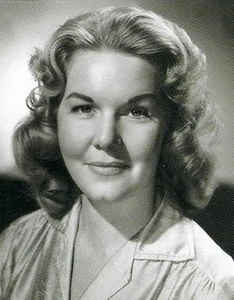
    Mezzo soprano Margreta Elkins (above) sings Sir Edward Elgar’s Sea Pictures with the Queensland Symphony Orchestra, conducted by Werner Andreas Albert, recorded in 1983. Listen here.

    Ms. Elkins, born in Brisbane, was a favorite colleague of her compatriot Dame Joan Sutherland. They sang together at Covent Garden (where Elkins was for ten years a principal artist) and toured Australia together with the Sutherland-Williamson Opera Company in 1965.  A regular member of Australian Opera, Margreta Elkins enjoyed a special success there in 1976 as Sieglinde.

    She also appeared at Dublin, the Liceu, Boston, Philadelphia, and New Orleans, and was an admired recitalist, particularly in her native land.

  • Margreta Elkins ~ Elgar’s Sea Pictures

    Elkins

    Mezzo soprano Margreta Elkins (above) sings Sir Edward Elgar’s Sea Pictures with the Queensland Symphony Orchestra, conducted by Werner Andreas Albert, recorded in 1983. Listen here.

    Ms. Elkins, born in Brisbane, was a favorite colleague of her compatriot Dame Joan Sutherland. They sang together at Covent Garden (where Elkins was for ten years a principal artist) and toured Australia together with the Sutherland-Williamson Opera Company in 1965.  A regular member of Australian Opera, Margreta Elkins enjoyed a special success there in 1976 as Sieglinde.

    She also appeared at Dublin, the Liceu, Boston, Philadelphia, and New Orleans, and was an admired recitalist, particularly in her native land.

  • Orchestra of St. Luke’s: All-Mendelssohn Program

    Benjamin Grosvenor

    Above: pianist Benjamin Grosvenor

    Author: Ben Weaver

    Thursday November 17th, 2022 – The Orchestra of St. Luke’s and conductor Harry Bicket continued their multi-season traversal of the works of Felix Mendelssohn on Thursday evening at Carnegie Hall.

    British pianist Benjamin Grosvenor was the soloist in Mendelssohn’s Piano Concerto No. 1 in G-minor, Op. 25, composed in 1831. The 22-year-old composer’s Piano Concerto is not a standard piece in the concerto repertoire and that’s rather inexplicable. It’s a well-crafted work, with wonderful melodies, wide range of moods, and plenty for a soloist to dig into. A stormy opening from the orchestra and a quick, dramatic entry for the soloist set the tone for a wild ride. Grosvenor is an accomplished pianist and his dazzling playing was never lacking in beauty and excitement. The concerto is written without a pause between movements, effortlessly flowing from the tumultuous first to the lyrical second movement. One thing that stands out is the lack of sentimentality from Mendelssohn: he is earnest without cheap effects, and Grosvenor reflected that wonderfully. An especially lovely passage in the Andante movement passes the melody from the piano to lower strings, and here Grosvenor and the string players of the orchestra were spellbinding. A seamless transition into a quirky final movement was nicely handled, and Grosvenor continued his dazzling playing. Perhaps only a bit of humor was lacking in the whole proceeding, but I’ll place the blame for his on Maestro Bicket because this also marred an otherwise wonderful performance of Mendelssohn’s most famous work, incidental music to A Midsummer Night’s Dream.

    Mendelssohn composed the famous Concert Overture when he was 18 years old and it became a staple of the concert repertoire quickly: a magnificent work filled with whimsy, drama, and endlessly hummable tunes, it conquered the world. 15 years later Mendelssohn was commissioned to write additional music for Shakespeare’s play and – remarkably – the now mature composer managed to time-travel to his youth and compose a score as magical as the Overture had been. After a shimmering playing of the Overture, Bicket and the Orchestra of St. Luke’s launched into the Scherzo – a lively wind section driven ode to fairies (excellent playing by the flutes especially).

    Hiding among the players all along was actor David Hyde Pierce, appearing seemingly from nowhere as Puck: which is, obviously, the best way for Puck to appear. Hyde Pierce’s performance of selected sections of the text were delightful: by turns dramatic (Titania shocked to discover her husband’s tricks), a wryly delightful Puck, and gravely pompous Oberon, the real ass of the play. The veteran actor and comedian of TV, film, and stage, moved effortlessly from one mood to the next, sometimes without taking a breath. A marvelous performance! I have always enjoyed Mendelssohn’s music for these melodramas in the work, and so many recordings omit them, alas. So it was a pleasure to hear this music, especially as sensitively played as it was. 

    Soprano Elena Villalón and mezzo-soprano Cecelia Hall were most excellent Fairies, one wishes Mendelssohn had written more music for the singers. Members of the The Choir of the Trinity Wall Street were also excellent in their music; I especially appreciated their very clear diction.

    The Orchestra of St. Luke’s played extremely well all night. The only difficulties came in the beautiful Notturno. Featuring extensive writing for the horns, perhaps the players got tired. The only thing missing in the whole – as I mentioned above – was a sense of humor in the proceedings. The dramatic and lyrical passages were magnificent, but a somewhat lighter touch would have been welcome. Since this afflicted both the Piano Concerto and A Midsummer Night’s Dream, I’ll place this squarely on the shoulders of Maestro Bicket. Maybe he was just having one of those days; let’s blame it on a spell.

    ~ Ben Weaver