Category: Opera

  • Fauré ~ REQUIEM – Festival de Saint Denis 2010

    Snapshot faure

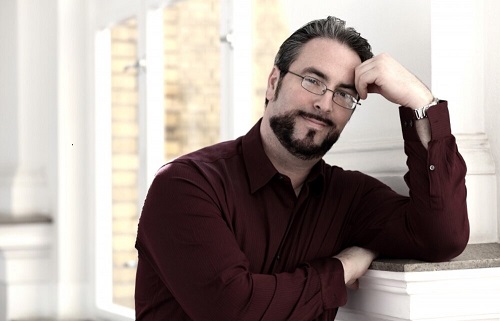
    Above: soloists David Bizic and Karina Gauvin, and conductor Laurence Equilbey

    A performance of Gabriel Fauré’s REQUIEM from the Festival de Saint Denis, 2010.

    Watch and listen here.

    Karina Gauvin, soprano
    David Bizic, baritone

    Ensemble Orchestral de Paris
    Choeur Accentus

    Laurence Equilbey, conductor

  • TURANDOT ~ RAI Roma 1965

    Mcknight

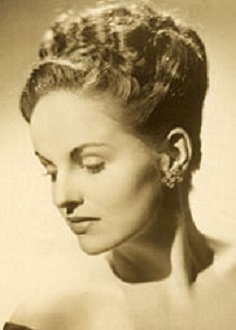
    Above: soprano Anne McKnight, aka Anna de Cavalieri

    A very interesting audio-only performance of TURANDOT from a 1965 RAI broadcast has turned up on YouTube. Listen here.

    Anna de Cavalieri was the Italian stage-name of the American soprano Anne McKnight. Read about her here. Giuseppe Valdegno was Toscanini’s Amonasro, Iago, and Falstaff. I wrote briefly about Lydia Marimpietri here.

    CAST

    Turandot – Anna Di Cavalieri; Calaf – Gianfranco Cecchele; Liù – Lydia Marimpietrl; Ping – Giuseppe Valdengo; Pang – Mario Carlin; Pong – Tommaso Frascati; Timur – Elio Castellano; Emperor Altoum – Mario Binci; Mandarin – Giandomenico Alunno

    Conductor: Ferruccio Scaglia

  • PRINCE IGOR @ Chicago Lyric Opera ~ 1962

    Danon

    Oskar Danon (above) conducts a 1962 performance of Borodin’s PRINCE IGOR from Chicago Lyric Opera, with a very interesting cast:

    Yaroslavna – Consuelo Rubio
    Konchakovna – Carol Smith
    Polovtsian Girl – Jeanne Diamond
    Nurse – Prudencija Bickus
    Vladimir – David Poleri
    Eroshka – Mariano Caruso
    Ovlur – Rudolf Knoll
    Prince Igor – Igor Gorin
    Prince Galitsky – Boris Christoff
    Skula – Renato Cesari
    Khan Konchak – Boris Christoff

    Listen here.

  • Callas @ Dallas/1957

    Snapshot

    In 1957, Maria Callas sang a concert with the Dallas Symphony under the baton of Nicola Rescigno. Someone snuck a tape recorder into one of the rehearsals for this concert, and the resulting “Callas/Rehearsal in Dallas 1957” made the rounds of reel-to-reel tape-traders back in the 1960s.

    David Abramowitz, my very first opera-friend, gave me a copy of the rehearsal tape and I enjoyed it, despite being somewhat frustrated with the stops-and-starts as Callas and Rescigno worked out the interpretive details. I was especially impressed by the different takes on passages from the entrance scena – sometimes referred to as the Letter Scene – of Lady Macbeth from Verdi’s MACBETH.

    It occurred to me to patch these phrases together and create a complete run-thru of the recitative and aria. Years later, when I was getting rid of my reel-to-reel collection, it was one of the few things I saved. The voice of Maestro Rescigno can sometimes be heard, and there’s some static at first, and a bit of tape drag. But once she’s into the aria proper, it gets better.

    Maria Callas – MACBETH aria – rehearsal composite – Dallas 1957

  • Rysanek’s 25th Anniversary @ The Met

    Leonie

    So many wonderful things have popped up on YouTube during the pandemic. An audio-only recording of the Leonie Rysanek 25th Anniversary Gala at the Metropolitan Opera House in 1984 provides a document of a truly exciting performance…which I attended. 

    Listen here.

    Before the performance began, I heard people seated near us asking: “Do you think she will scream?” The general consensus was that, being a concert performance, she would refrain from including her trademark screams as both Kundry and Sieglinde.

    She screamed.

  • Rysanek’s 25th Anniversary @ The Met

    Leonie

    So many wonderful things have popped up on YouTube during the pandemic. An audio-only recording of the Leonie Rysanek 25th Anniversary Gala at the Metropolitan Opera House in 1984 provides a document of a truly exciting performance…which I attended. 

    Listen here.

    Before the performance began, I heard people seated near us asking: “Do you think she will scream?” The general consensus was that, being a concert performance, she would refrain from including her trademark screams as both Kundry and Sieglinde.

    She screamed.

  • Violinist Richard Lin ~ Carnegie Hall Recital

    Richard_lin

    Friday June 24th, 2022 – Richard Lin (above), Gold Medalist at the 2018 International Violin Competition of Indianapolis, in recital at Carnegie Hall, with Thomas Hoppe at the Steinway.

    Earlier this season I heard Mr. Lin in his debut performance with Chamber Music Society of Lincoln Center and was very impressed with his playing. I met Thomas Hoppe many years ago while he was at Juilliard; he has since developed a stellar reputation as a collaborative pianist and teacher.

    The concert fell on a day when a life-altering ruling by the Supreme Court cast a pall over everything…a ruling that bodes ill for my humble desire to live out my remaining days in peace. How did it come to this? My companion for the evening and I were extremely depressed and angry, and we debated skipping the concert; but in the end we found peace – at least for a couple of hours – in the sanctuary of Carnegie Hall and in the timeless beauty of the music, so marvelously played by Mssrs. Lin and Hoppe.

    T.A. Vitali’s Chaconne in G-Minor opened the program; this captivating piece opens with ghostly music from the piano; the violinist then takes up a yearning melody. As the music become  more animated, the combined artistry of the two players makes for a very pleasing sonic experience; they share a gift for dynamic variety and for great clarity, especially in some delicate fiorature. And there is a gorgeous sheen on Mr. Lin’s timbre.

    Richard Strauss’ Violin Sonata in E-flat Major, Op. 18, a chamber work by the composer of my two favorite operas, was an engrossing experience as played by Mssrs. Lin and Hoppe tonight. From its joyous start, the opening Allegro, ma non troppo, was filled with wonderful and subtle passages: with rippling keyboard figurations, exquisite themes in the violin’s high range, moments of dreamy softness…and the occasional touch of drama.

    The central movement brings us a Viennese-style cantabile, possibly a bow to the composer’s ardent love for the soprano Pauline de Ahna, who he had met in the year of the sonata’s composition (1888) and who he would later marry. In fact, Strauss eventually allowed this movement to be published separately. Mr. Hoppe’s perfect playing here entwined with the sweet song of the violin, creating an enchantment of piano/pianissimo music-making of great poetic appeal.  A flurry of agitato may presage the storminess that sometimes developed in the Strauss/de Ahna marriage. The extreme delicacy achieved by the players as the music moved on was a display of their amazing control.

    The sonata’s finale begins with a hushed, almost sombre prelude for the piano; then the music bursts forth in the energetic main theme, which is audibly related to the opening (and closing) passages of the first movement. The music is both emotionally and technically demanding; a sort of downhill piano cadenza leads to the sonata’s thrilling finish. The audience, wonderfully attentive throughout the evening’s first half, called the players back for a bow with persistent applause.

    Thomas+hoppe

    Above: pianist Thomas Hoppe

    The second half of the program was less interesting musically, though impeccably played. Pairing Corigliano with a Igor Frolov’s arrangement of tunes from Gershwin’s Porgy and Bess had the feeling of a pops concert. Both of these pieces place high demands on the players, but the music – while entertaining – is not engaging on a deeper level.

    John Corigliano’s Violin Sonata, written during 1962-63, is a long piece in four movements. Originally entitled Duo, it treats the two instruments as co-partners. Virtuosity is called for, but it seems lacquered on rather than an integral part of the piece. There’s some quirky technical stuff to be dealt with, and traces of blues influence. The third movement, Lento, feels overly long, despite being superbly played, and with a remarkable final sustained note from the violinist. The sonata’s final Allegro is exuberant, full of light and dazzle, but it later calms and overstays its welcome.

    To end his recital, Mr. Lin gave us Igor Frolov’s “Concert Fantasy on Themes from Gershwin’s Porgy and Bess”;  here, one by one, the celebrated Gershwin tunes are rolled out in sterling renditions by Mssrs. Lin and Hoppe: “Bess, You Is My Woman Now”; “My Man’s Gone Now”; “I Got Plenty of Nuthin’”; “Summertime”, and “It Ain’t Necessarily So”. Mr. Lin’s violin soared with distinction it it highest range, and the two players seemed to urge one another on to feats of virtuosity.

    To eager applause, the players returned for two encores:  Debussy’s “Beau soir” was luminously played, and they followed this with the demanding Kreisler showpiece, “Tambourin Chinois“. It seemed a third encore was in the offing as we left the Hall.

    Mr. Lin will be back with Chamber Music Society of Lincoln Center next season, and I look forward to hearing him again.

    ~ Oberon

  • La Scala in Japan ~ Verdi REQUIEM 1981

    Snapshot a t-s

    Above: soprano Anna Tomowa-Sintow

    Maestro Claudio Abbado conducts the orchestra and chorus of La Scala in a performance of the Verdi REQUIEM given at Tokyo in 1981. The soloists are Anna Tomowa-Sintow, Lucia Valentini-Terrani, Veriano Lucchetti, and Nicolai Ghiaurov.

    Watch and listen here.

  • György Ligeti ~ Requiem

    Snapshot ligeti

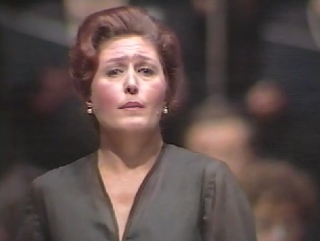
    Above: soloists Victoire Brunel and Makeda Monnet

    A performance of György Ligeti’s Requiem from Paris, 2018. Watch and listen here.

    Makeda Monnet, soprano / Victoire Bunel, mezzo-soprano
    Chœur National Hongrois / Csaba Somos, Chef de chœur
    Orchestre du Conservatoire de Paris / Ensemble intercontemporain
    Matthias Pintscher, direction 

    Snapshot ligeti 2

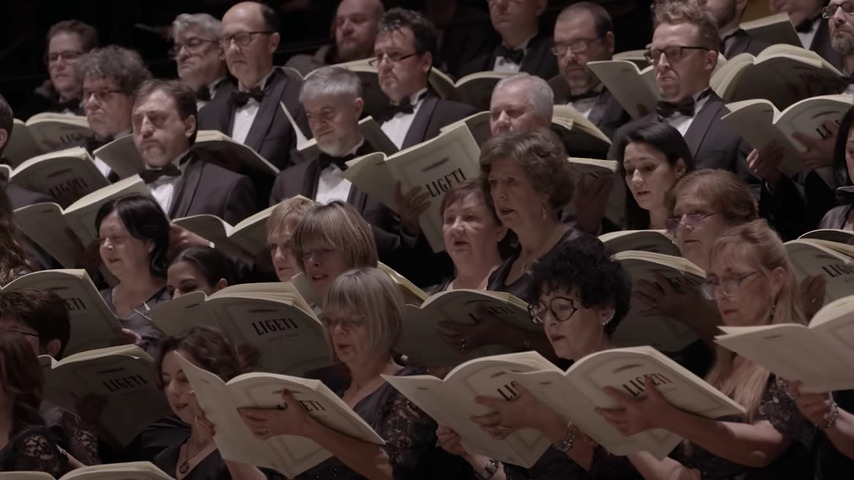
    Above: members of the Chœur National Hongrois

    I first took an interest in the music of György Ligeti (1923-2006) after seeing Christopher Wheeldon’s 2001 masterpiece POLYPHONIA at New York City Ballet. Chris turned to the music of Ligeti again for his 2002 ballet MORPHOSES. Both these danceworks featured the beloved NYCB partnership of Wendy Whelan and Jock Soto.

  • Gerda Lissner Foundation ~ Winners Concert 2022

    Feldmann jpg

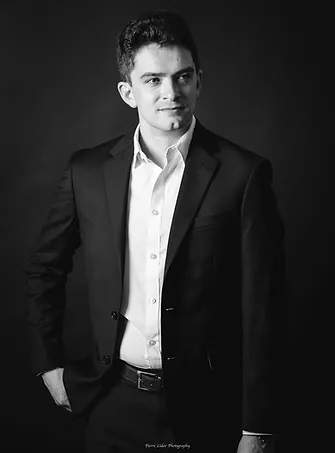
    Above: baritone Gregory Feldmann, photographed by Pierre Lidar

    Author: Oberon

    Sunday May 22nd, 2022 matinee – It feels like ages have passed since we attended the Gerda Lissner Foundation’s 2016 Winners Concert, where the male voices held sway. This is the thing about the pandemic: it has warped our sense of the passing of time. This afternoon, we were back in Carnegie’s cordial Zankel Hall to hear the 2021-2022 Winners. Today’s concert was dedicated to the memory of two longtime friends of the Foundation, Stephen DeMaio and Brian Kellow.

    Overall it was a very good concert, though we might have wished for more singing, less talking. Midge Woolsey was the “hostess with the mostess”; but does this type of event really need a host? Apart from a speech of welcome, the audience can get all the information they require from a printed program.

    The prizes are awarded in two main categories: the Lieder Song Vocal Competition and the International Vocal Competition. The latter is split into two divisions: the General Division and the Operetta & Zarzuela Division. So we heard a wide variety of music, including three singers in zarzuela repertoire. Two expert pianists – Mary Pinto and Arlene Shrut – provided first-rate support for the vocalists.

    Third prize winner in the Lieder Song category, soprano Yvette Keong, set the afternoon beautifully on its way. Looking like a Vogue model in her black gown, with ruby-red appliqué at the hem, and slit to thigh, Ms. Keong sounded as lovely as she looked. She opened the program with Rachmaninoff’s “To Her”, sung with a sense of ecstasy, and then offered Stephen Foster’s “Beautiful Dreamer”, a song I have known since childhood when my parents gave me a Swiss music box that played the melody. Ms. Keong’s clear lyricism was most enjoyable to hear.

    Mezzo-soprano Alma Neuhaus was unable to join the other winners at the concert today; how I would love to have heard her Fauré and Grieg selections.

    It did not surprise me in the least that baritone Gregory Feldmann had won first-prize in the Lieder Song Competition: Mr. Feldmann’s recital with pianist Nathaniel LaNasa at Weill Hall in February 2020 – just days before the pandemic caused everything to go awry – was a solid gold evening. This afternoon, Mr. Fekdmann performed “Citadel” by William Grant Still, and Franz Schubert’s “Auf den Bruck”. This young man has a way of drawing the listener in to whatever he is singing, so that you feel that he is ‘speaking’ just to you. In the Schubert, Mary Pinto played the demanding piano part with distinction. Mr. Feldmann’s handsome tone, excellent diction, and wonderfully sincere delivery make him a most engaging artist, one I will hope to hear often in the future in both lieder and opera.

    Next came the three Zarzuela arias, commencing with soprano Evelyn Saavedra who looked stylish in a red frock, red stilettos, a red flower in her jet-black hair, and a decorative fan in her hand. She sang my favorite zarzuela aria,” De España vengo” from El Niño Judío by Pablo Luna (1879-1942), and made a vivid impression.  

    Costa Rican baritone Kevin Godínez, a handsome fellow with an easy stage presence, captivated the crowd with “Junto al puente de la Peña” from La Cancion del Olvido by José Serrano. The song tells of a man who is attracted to the town’s prettiest courtesan and is confident that he will have her. Mr. Godínez is an assured singer with a very pleasing timbre, making me wish these zarzuela artists had each been allotted a second song.

    The Mexican soprano Ethel Trujillo did indeed get to sing an extra aria, which was not listed in the program, before delighting us with “Me llaman la Primarosa’ from Gerónimo Giménez’s zarzuela El Barbero de Sevilla. Ms. Trujillo, first-prize winner in her Division, has a very pretty voice with an ear-teasing Spanish vibrato. At times, she reminded me a bit of Lisette Oropesa, which is high praise indeed. Ms. Trujillo’s voice can phrase a line and colour its words to make the music all the more alluring; and the voice can fly easily to the top. On top of all that, she has a charming personality.

    Following the interval, it was opera…opera…opera.

    Mezzo-soprano Shannon Keegan kicked things off with the aria “O petite étoile” from opera Emmanuel Chabrier’s delightful opera L’étoile. I saw this work when Juilliard staged it with my beloved friend, the late Makiko Narumi, and again when New York City Opera presented it. Ms. Keegan has a pleasing voice to begin with, but within seconds we were carried away by her dramatic instincts, her dynamic control, and her expansive top range. She turned her aria into a triumph of voice and personality. And…Ms. Keegan gets an extra bouquet of roses for coping admirably with the disruption of someone’s cellphone sending an alert which lasted thru much of her aria. 

    Soprano Teresa Perrotta made a marvelous impression with her rendering of the demanding aria “Come scoglio” from Mozart’s Cosi fan tutte. A beauteous, majestic blonde, Ms. Perrotta was in complete command from start to finish as Mozart’s aria carried her across a 2-octave range. Luminous top notes and a creamy (rather than booming) chest register were skillfully linked by a voice that moves fluently thru the aria’s coloratura passages. She struck me as a singer who will go far.

    Cuban baritone Eleomar Cuello brought his good looks, poised demeanor, and a natural feeling for poetry  to the haunting “Pierrot’s Tanzlied” from Korngold’s Die Tote Stadt. I was truly moved by Mr. Cuello’s singing, and especially by his ability to hone the voice down to a sweet softness at the aria’s wistful ending.

    Just the day before this concert, tenor Eric Ferring had made a very fine impression in the brief but demanding role of Arturo in Donizetti’s Lucia di Lammermoor at The Met. I was in the House, and the voice spoke to me clearly in the big space. Today, Mr. Ferring graciously added an aria – the ravishing “Le Rêve” from Massenet’s Manon to his scheduled Handel piece. The Massenet was simply gorgeous: deeply felt, lovingly phrased, and with magically floated soft high tones, whilst pianist Arlene Shrut matched the tenor’s interpretation with her elegant pianissimo playing. Mr. Ferring then turned to Handel for “Il tuo sangue” from Ariodante. In this dramatic piece, the tenor showed another side of his artistry with his mastery of dynamics and finely-voiced fiorature

    All of the singers then returned to the stage for a specially-prepared encore: the title-song from Stephen Sondheim’s Sunday In The Park With George, with Ms. Pinto at the piano.

    ~ Oberon