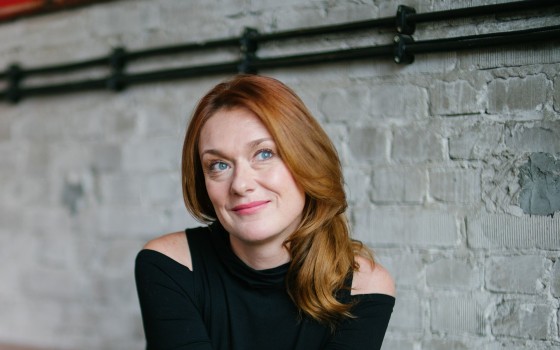
Mezzo-soprano Magdalena Kožená (above), violist Amihai Grosz, and pianist Sir Simon Rattle perform Johannes Brahms’ Zwei Gesänge für eine Altstimme, Viola, und Klavier for Arte TV’s Hope@Home series, in April, 2020.
Watch and listen here.
Mezzo-soprano Magdalena Kožená (above), violist Amihai Grosz, and pianist Sir Simon Rattle perform Johannes Brahms’ Zwei Gesänge für eine Altstimme, Viola, und Klavier for Arte TV’s Hope@Home series, in April, 2020.
Watch and listen here.
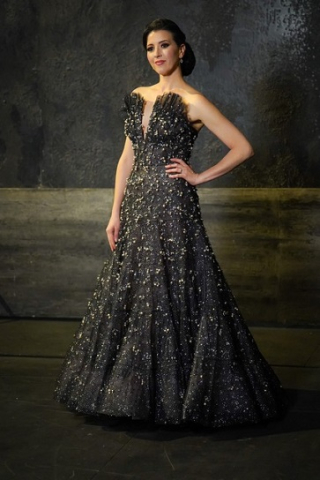
When the COVID-19 pandemic forced the Teatro alla Scala to abandon their planned opening night performance of a new production of LUCIA DI LAMMERMOOR with Lisette Oropesa in the title-role, the theatre instead honored their traditional opening date – December 7th, the Feast of Saint Ambrose – with a televised gala featuring a number of prominent singers performing arias pre-filmed on the Scala stage, without an audience.
Lisette, wearing an Armani gown, sang Lucia’s Act I aria. Watch and listen here.
The Cuban-American soprano is currently in Barcelona for performances of Verdi’s LA TRAVIATA.
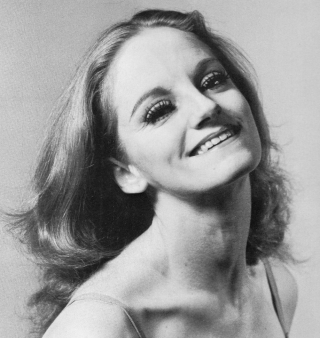
Above: former New York City Ballet principal dancer Sara Leland has passed away.
In the Autumn of 1974, I had moved into TJ’s dorm room at Sarah Lawrence College, pretending to be a student; he and I were making frequent trips into Manhattan for the opera. We’d spent the Summer on Cape Cod, performing with a small ballet company. I had never liked ballet until I got caught up in it by dancing in COPPELIA. Now that we were living within range of Lincoln Center, TJ began taking me to see The New York City Ballet.
It was a heady time at NYCB, with Kay Mazzo, Patricia McBride, Karin von Aroldingen, and Violette Verdy as reigning ballerinas. And on our third visit to the House of Mr. B that season, Suzanne Farrell returned to the Company after five years in exile following her falling out with Balanchine…yes, we were there that night.
Whilst these lovely ladies were giving one spectacular performance after another, both TJ and I had a special affection for Sara Leland, a truly unique ballerina. I first saw Sara in the Valse Mélanconique of TCHAIKOVSKY SUITE #3; a few days later, she danced the third movement of SYMPHONY IN C in Farrell’s return performance.
In May of 1975, I saw my first JEWELS, and it was RUBIES that most dazzled me, with Ms. Leland and Marnee Morris, another favorite, in the leading roles. Robert Weiss stepped in on very short notice for Edward Villella that night. Read about it here.

We went on to see Sara Leland in Balanchine’s UNION JACK (above, with Helgi Tomasson), SYMPHONY IN THREE MOVEMENTS, and VIENNA WALTZES, and in Robbins’ DANCES AT A GATHERING (in Apricot), SCHERZO FANTASTIQUE, GOLDBERG VARIATIONS, AN EVENING’S WALTZES, and THE CONCERT.
Both TJ and I were especially fascinated whenever Sara danced with Bart Cook. They had a kind of offbeat sexiness, and they somehow could be both edgy and poetic at the same time:

Another of Sara’s frequent partners, John Clifford, posted a film of SYMPHONY IN C, third movement; watch it here.

Sara Leland’s romantic side shines thru in this lovely photo of her with William Weslow in Balanchine’s LA VALSE.
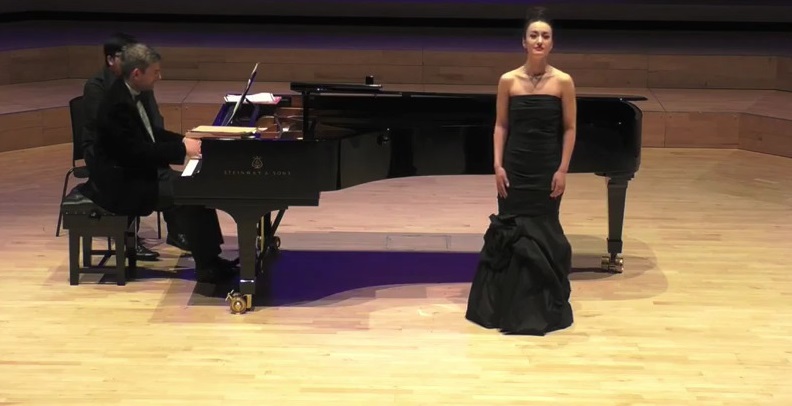
Soprano Julia Smith sings a Richard Strauss rarity, ‘Epheu’, with Jonathan Fisher at the piano, at the Elizabeth Harwood Prize Competition at The Royal Northern College of Music in March 2020.
Watch and listen here.

The Hymn to the Sun from Pietro Mascagni’s opera IRIS, performed in 1996 at the Palazzo del Quirinale in Rome by the orchestra and chorus of the Teatro San Carlo, Naples. The conductor is Paolo Carignani.
Watch and listen here.

French soprano Sabine Devieilhe sings Olympia’s showpiece “Les Oiseaux dans la Charmille” from Offenbach’s CONTES D’HOFFMANN. Watch and listen here.
In January 2019, Mlle. Devieilhe gave a recital at Weill Hall here in New York City that was simply delightful.
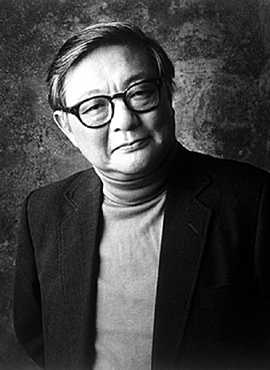
I was very sorry to read this morning of the passing of the great scenic designer Ming Cho Lee. A native of Shanghai, he died on October 23rd, 2020, at the age of 90.
He designed award-winning sets for dozens of operas and plays, including eight productions for the Metropolitan Opera. Among his Met credits were his classic BORIS GODUNOV (1974); the Sutherland/Pavarotti PURITANI (1976), a controversial but often striking LOHENGRIN (1976), and the 1985 KHOVANSCHINA with it’s stunning final tableau.
Ming Cho Lee also designed thirty productions for Joseph Papp at The Public Theatre. A wonderful article about his life and work, with images of his designs, may be found here.
During the years that I worked in the opera room at Tower Records, Ming Cho Lee was a frequent (and favorite) customer. Upon coming into the room, he would bow to me – and I to him – and then he would spend an hour or more browsing the shelves. We hardly ever spoke, but he would sometimes hold up a disc and I would shake my head, “yes” or “no”. He would stack up his selections on the counter, one by one, and when the piles got teeteringly high, he would do a sort-thru. I would then help him carry his purchases to the cashier. I always stood by until he left, so that we could bow to one another – “…until next time!” he would say quietly. I will always remember his twinkling eyes and wry smile.
One winter day, a couple of years after Tower closed, I took the train to New Haven to meet friends for lunch. Coming out of Union Station, I saw Ming Cho Lee, all bundled up, hailing a cab (he had taught at Yale for several years). I greeted him, and after a moment he remembered me. Surprisingly, as we had always been bowing acquaintances, he extended his hand and shook mine cordially.
Ming Cho Lee was such a calm, dignified gentleman; it was an honor and pleasure for me to have known him in this rather formal capacity.
Soprano Isobel Buchanan sings two ‘Autumn’ songs by Gabriel Fauré:

Above: Ángeles Gulín as Gioconda and Montserrat Aparici as Cieca
A slam-bang performance of one of my favorite Italian operas, LA GIOCONDA, from the Liceu, Barcelona, in 1978. The singers simply go at it.
Watch and listen here.
Gioconda: Ángeles Gulín; Laura: Bruna Baglioni; Cieca: Montserrat Aparici; Enzo: Nunzio Todesco; Barnaba: Sabin Markov; Alvise: Ivo Vinco.
I only heard Ángeles Gulín live once: she sang Valentine in HUGUENOTS at Carnegie Hall in 1969; Beverly Sills was Marguerite de Valois and Tony Poncet was Raoul. Ms. Gulín had an enormous voice and she
used it unsparingly.
This GIOCONDA has the right knives-out, heart-on-sleeve passion. It’s that kind of all-or-nothing opera. As Gioconda sings of her love for Enzo in Act I: “My destiny is this: to love him, or to die!”
~ Oberon
Soprano Olga Mykytenko and pianist Anastasiya Titovych in a 2016 performance of Robert Schumann’s Frauenliebe und -leben.
Watch and listen here.

 Oberon's Glade