Category: Opera

  • Monteverdi’s L’ORFEO @ Alice Tully Hall

    Monteverdi ORFEO

    ~ Author: Oberon

    Wednesday October 18th, 2017 – Tonight marked the first event in our Great Performers at Lincoln Center subscription series: Monteverdi’s L’ORFEO was performed by the Monteverdi Choir and the English Baroque Soloists under the baton of Sir John Eliot Gardiner. Tenor Krystian Adam appeared as Orfeo, enjoying great personal success in the role. The large cast was peopled by fine singing-actors who made their characters come alive in a semi-staged setting. There was some off-pitch singing in the course of the evening, but by the final moresca all was forgiven.

    The opera, which was fiirst performed in 1607 as the ducal court of Mantua, charts the story of the singer Orfeo’s love for Euridice, her death from a snake bite, and Orfeo’s journey to hell to bring his beloved back. Moved by Orfeo’s despair and devotion, Plutone allows Euridice to leave the underworld – with the stipulation that Orfeo not look at her during their journey. Orfeo cannot resist, and by gazing at his beloved, he causes her second death. The intervention of Orfeo’s father, Apollo, sends Orfeo heavenward, where he can spend eternity observing Euridice in the afterlife.

    Soprano Hana Blažíková opened the prologue as La Musica (she later also appeared as Euridice). At first Ms. Blažíková’s voice seemed too large – almost Tosca-like – but she settled in quickly and did some really impressive, controlled singing in her solo with the excellent harpist Gwyneth Wentink. The story then unfolds. 

    I hated the semi-staging, at least in the opening scenes where the costumed nymphs and shepherds cavorted in fake camaraderie that had the air of a high-school play. They seemed self-conscious as they embraced one another endlessly, whilst singing repeatedly about how very happy they were for Orfeo. When the story turns darker, things improved considerably. Thenceforth, everyone was clad in black and moved in stylized formations, with the musicians sometimes part of the action. 

    Mr. Adam as Orfeo made a vivid impression from his first lines. As the character moves from joy to despair, the tenor’s palette of vocal colour provided phrase after phrase of deeply satisfying singing. His long scena upon losing his Euridice for a second time was a vocal marvel, with the words and his poignant phrasing of the music all of a piece.

    Basso Gianluca Buratto, a masterful singing-actor, doubled as Caronte and Plutone. As Caronte, having  denied Orfeo entrance to the underworld, moved eerily around the stage, intrigued by the sounds of the musical instruments and the people playing them. Mr. Buratto’s large, inky bass sound was superbly inflected, making his scenes highlights of the evening.

    A third fascinating voice was that of Korean counter-tenor Kangmin Justin Kim who – as Speranza – sang from the mezzanine. The voice is clear, steady, mystical. There was also fine singing from Lea Desandre (Messagera) and Francesca Boncompagni (Prosperina) – each with a lovely face and form – and notable beauty of tone in Gareth Treseder’s Eco, sung from above with a voice that hung on the air.

    Under Sir John Eliot Gardiner’s expert leadership, the evening musically provided endless pleasures. The instrumental ensemble played superbly and there was so much fine vocalism to savour. L’ORFEO was played straight thru in a 2-hour+ stretch, but it flew by.

    ~ Oberon

  • Opening Night @ The Met: NORMA

    881x425_membership_bucket

    ~ Author: Oberon

    Monday September 25th, 2017 – I took a score desk for this evening’s NORMA at The Met; if memory serves, this the first time I’ve ever attended an opening night.

    In 2013, Sondra Radvanovsky gave a sensational portrayal of Norma at the Met. She has sung a great deal since then, and in very demanding roles. One hoped very much that her success tonight might equal or even surpass her prior Met outing as Bellini’s noble and tragic priestess.

    The evening started out on a sour note: with a scheduled start-time of 6:30 PM, the hall should have been open for seating by 6:00 PM or very shortly thereafter. Instead, ticket-holders were left standing outside closed doors for nearly 25 minutes. Balcony and Family Circle patrons were packed into the hot, airless area outside the auditorium, and many elderly people found this truly unpleasant. No announcement or explanation was given.

    The house was not full as we settled in. Following the playing of the National Anthem, during which no one seemed to be kneeling but some soprano took the ‘Licia Albanese option’, there was a long pause, and at last the opera began. Then there was an immediate disruption in my area as a late-arriving patron was seated by a flashlight-wielding usher.

    As I was at score desk, I cannot report on the production, but I do want to see it at some point later in the season: a friend who had attended the dress rehearsal assured me that it’s the kind of production I will like.

    Carlo Rizzi has never been more than a routinier; he was absent from The Met for nine years (from 2007 to 2016) but now he’s back, conducting a new production on opening night. This was actually one of the better Rizzi experiences I have had over the years, though still not really inspired. There were some cuts taken, and also a couple of very weird re-arrangements of things, of which there were no signs in the score I was following. The orchestra played quite beautifully all evening – notably the flute solo that introduces “Casta diva” – and the chorus seemed at their best.   

    Michelle Bradley sang Clothilde – we’ll have to wait to hear her in something bigger to get an idea of the voice, but it seems promising – and Adam Diegel was a vocally strong and assured Flavio.
    5780b6e8cf49e

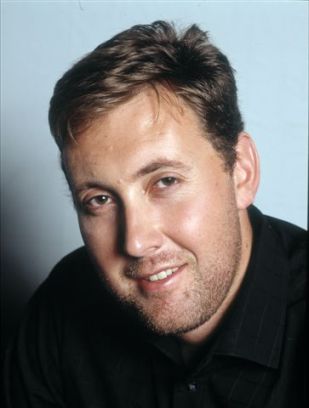
    Matthew Rose (above) was a splendid Oroveso, covering the wide range impressively and bringing the role very much to prominence. Both his great scenes – “Ite sul colle” and “Ah, del Tebro” – were vocal highlights of the evening, and in an story full of broken hearts, Mr. Rose reminded us of Oroveso’s own heartache with his expressive singing in the final pages of the opera.

    As Pollione, Joseph Calleja’s voice sounded huge in his opening phrases. I love the sound of his voice, and his phrasing, inflections, and mastery of working piano/pianissimo shadings into the vocal line were truly impressive. Unfortunately, much of his vocalism all evening was beset by a tendency to sing sharp, and this offset the positive aspects of his performance.

    I’ve always felt that Adalgisa should be sung by a soprano; despite the thrill of hearing the voice of a Simionato, Horne, or Cossotto in this music, both its range and the character’s supposed youthfulness seem to call for a lighter quality. Joyce DiDonato’s somewhat slender voice definitely has a sopranoish quality to it, and from her first soft entry, her opening monolog (it’s not really an aria) was extremely impressive both as singing and as a portrait of the character: young, hopeful, vacillating in her romantic turmoil. Ms. DiDonato was able to bring a sense of drama to everything while remaining scrupulously musical.

    Screen-Shot-2016-11-07-at-8.16.24-PM-600x400

    Above: Joyce DiDonato

    In the exciting duet for Adalgisa and Pollione that concludes the opera’s first scene there developed a remarkable atmosphere mixing desire with apprehension: Ms. Di Donato’s excellent colourings brought the young priestess’s dilemma to high relief. Stating that she must never see Pollione again draws his query: “E il nostro amor?” (“And what of our love?”) to which Ms. DiDonato replied on an exquisitely sustained top-A: “Ah…l’obbliai!” (” Let it be forgotten!”). Later, Mr. Calleja had one of his loveliest moments as he asked her, sweetly, “Abbandonarmi cosi?” (“You would abandon me, then?”). Later, Ms. DiDonato interpolated an exciting volley at “Mi lascia!” (“Leave me!”), and the end of their duet drew thunderous applause. 

    From this point forward, Adalgisa’s music is tightly meshed with Norma’s, so I will digress now to discuss Sondra Radvanovsky’s performance of the high priestess’s great opening scena. Establishing her authority at once, the soprano’s well-measured recitative “Sediziose voci” set the groundwork for all that will follow. Calming her people’s cries for war against the Romans, she assures them that Rome will perish – not thru their uprising but “like a viper self-stung…” Then comes the evening’s first great moment of Radvanovsky magic: a simply ravishing, sustained pianissimo high-A on “…io mieto.”

    Sondra’s “Casta diva” this evening was one of the most moving and fascinating musical experiences of the past two decades: not only was it beautifully phrased and enunciated: it transcended the act of singing and took us to a higher spiritual level. At first, following along with my score, I was mesmerized not only by the soprano’s unique timbre but also by her ideal turns of phrase: it’s how I’ve always imagined this aria could be sung. I became aware of the palpable hush that had fallen over the House: the entire audience seemed spellbound, afraid to even breathe lest the spell be broken. A singer with the power to hold an opera house in the palm of her hand is a rarity today; in this heartfelt and ever-so-timely prayer for peace, Sondra’s voice seemed like a beacon of hope. 

    Reassuring the populace that the Roman proconsul will fall with her stunning “Cadra! Punirlo io posso!“, Sondra now sings the cabalettaAh bello a me, ritorna” expressing her hope that she can again find joy in her love for Pollione which has of late been strained for some reason she can’t comprehend. Despite a few passing phases where her coloratura was a bit imprecise, Sondra swept thru the first verse with aplomb, then took a cadenza up to a gorgeous ppp high-C before commencing an embellished second verse; this she crowned with a massive high-C. 

    In the opera’s second scene, the reason for the perceived rift between Norma and Pollione is revealed: he has fallen in love with the younger Adalgisa. In their meeting, as Adalgisa explains her predicament to Norma, the older woman is at first sympathetic; but when it’s revealed that Adalgisa’s suitor is “a Roman”, all hell breaks loose.

    In this duet, Norma reassures Adalgisa with the phrase “Ah si, fa core” (“Take heart…!) which carries her up to a sustained top-C. Normally, Adalgisa repeats this phrase and mirrors Norma’s high note; tonight, instead, we went off on some interpolated tangent I’d never heard before. Finally, the two women blend voices in a harmonized cadenza: Radvanovsky and DiDonato matched up very well indeed.

    When Pollione shows up (drawing titters from the audience), Sondra launches Norma’s vicious “Oh, non tremare!” with its dual assaults on high-Cs that are simply ballistic. A trace of flatness intruded at “O di qual sei tu vittima” but was quickly set to rights. The ensuing trio is given the full treatment, including a sometimes-cut ‘verse’ for Adalgisa. The stretta is then thrillingly rendered, with Sondra latching on to a stupendous high-D.

    How beautifully the Met strings ‘sang’ the melody of “Teneri figli” (“Beloved children..”) at the start of Act II. In the monolog where Norma ponders killing her sons, Sondra made cunning use of chest voice. She sang the long lines of “Teneri figli” with moving inflections.

    Adagisa, awash with guilt at having hurt Norma, is shocked to hear Norma ask her to take the children to Pollione and remain with him: “Pei figli suoi…” as Sondra sings with such dazzling control: “…for the sake of his children…” Ms. Di Donato again skirted a high-C that echoes Norma’s, though she seems to have the note in her range.

    If my ears played me true, “Mira, O Norma” was sung in F; it might have been better taken down a have-tone as Ms. DiDonato’s voice seemed to be tiring just a bit (though still mighty attractive) and some of her highest notes seemed a bit opaque. Norma’s “Ah perche, perche…” found Sondra at her most marvelous, and together the two women achieved a truly sweet blend. The second verse of “Si, fino al’ora” included some appealing rubato effects. The audience showered the two singers with well-deserved cheers and applause.

    NORM_3836c-768x512

    Above: Sondra Radvanovsky as Norma in a Ken Howard/Met Opera photo

    In the final scene, Norma still has so much to sing, and here Sondra pulled out all the stops and sealed her triumph in no uncertain terms. At first hopeful that Adalgisa might persuade Pollione to come back to the mother of his children (Sondra’s spun-out ppp high-C at “…del primo amore“), such hopes are dashed: Adalgisa has been unsuccessful and Pollione has vowed kidnap his beloved from the Druid temple. Now Norma’s wrath is unleashed: Roman blood shall flow in torrents –  a titanic Radvanovsky high-C at “…sangue Romano!” as her warriors emit a surprising, lusty war cry. Rizzi takes the “Guerra” chorus at breakneck speed, but includes the “dawn” ending with Sondra’s floated final note. 

    Pollione is captured and Norma is to interrogate him. He asks only for a swift death. But in the great duet “In mia man alfin tu sei” (“Your fate is in my hands…”) she taunts him, threatening to kill his children and to reveal Adalgisa’s deceit to the people: deceit punishable by death. Using chest voice to great effect, as well as bewitching softness at “Preghi alfin?”, Sondra is simply at her peak here. Mr. Calleja’s continuing sharpness was a distraction, though.

    About to name Adalgisa as a traitor, Norma is gripped by her conscience – how can she accuse the girl of the same crime she herself has committed? When the people cry out for the name of the guilty person, Norma replies “Son io!” (“It is I!”): Sondra taking my breath away yet again. In “Qual core tradisti…”, Pollione sees Norma for the noble, honest woman she is and repents his actions. They will die together at the stake. Sondra’s remarkable piano singing in this ensemble, and her majestic top-B, can be added to the endless list of vocal jewels in her performance.

    The end is reached: Norma and Pollione face the pyre together. Then Norma remembers her children: she knows they will be executed as Roman bastards. She confesses the fact of her motherhood to her father, Oroveso, who at first shuns her.  Then, in a final overwhelming plea, “Deh, non volerli vittime” (“Do not let them be the victims of my own misdeeds..”), Norma slowly wins her father over. From her piano first pleadings to the overwhelming power of her joy when Oroveso relents, Sondra transforms this passage into the crowning glory of her magnificent performance.

    DKaw98fV4AEkdWQ.jpg large

    Above: Sondra Radvanovsky as Norma at The Met

    Catch the curtain calls here.

    ~ Oberon

  • The Labèque Sisters|van Zweden|NY Philharmonic

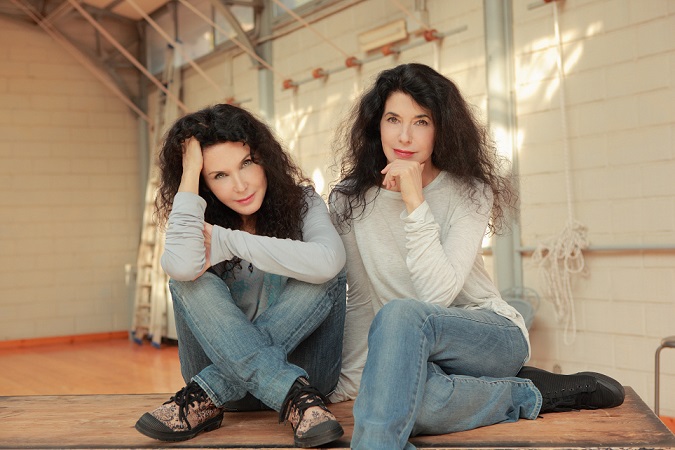
    Labeque-01

    Above: Katia and Marielle Labèque

    Author: Oberon

    Saturday September 23rd, 2017 – The first thing we noticed upon taking our seats at The New York Philharmonic this evening was that the seating arrangement for the orchestra had changed: risers are now in use. Hopefully this is a permanent enhancement, as it is so pleasing to be able to actually see people like Judith LeClair, Robert Langevin, Anthony McGill, and Liang Wang while they are playing. 

    This week has marked the start of the Jaap van Zweden era at the Philharmonic, even though it’s not until next season that the appendage “Designate” will be dropped from the title “Music Director”.  The orchestra played superbly for the Maestro, and if the vociferous standing ovation that erupted the moment the Mahler 5th ended is any indication, the audience is embracing Mr. van Zweden in no uncertain terms.

    The New York premiere of Philip Glass’s Concerto for Two Pianos and Orchestra opened the program. The Labèque sisters, in fitted black trousers and be-spangled sweaters, were warmly greeted by the crowd; they have been top-rank musicians for a long time and they still look sensationally slender and attractive…and their playing retains its accustomed verve and grace.

    Glass calls for a huge orchestra for this most recent of his creations; no fewer than seven percussionists take part, along with vast troupes of string, wind, and brass players. The concerto is in three movements and sets out from a jazzy opening that develops into a feeling of a giant hurdy-gurdy playing as a kozmic merry-go-round swirls madly. Pulsing waves of sound, in dense textures, wash over us.  From this turbulence, a lovely misterioso motif for the pianos emerges, with a gong struck softly as an undertone.

    The pianists playing in their lower ranges open the second movement, with wooden clappers beating time. The trumpets and flutes join voices; at this point a cellphone went off in the audience but it merged into the musical texture. Rhythmic and textural variety sustain this central movement. The concerto concludes with a sort of adagio of somewhat darkish hues.

    The new concerto is appealing in its way, but I can’t say it’s particularly distinctive or memorable. The pianos do not take the prominence one might expect in a concerto setting, but rather they are simply one constant voice in the overall chorus of instruments, given a few solo/duo passages along the way. I was hoping for an encore from the Labèque sisters, or possibly an appearance by Philip Glass, but after a couple of bows, the intermission commenced.

    Van-zweden-jaap-banner

    Above: Jaap van Zweden

    Mahler’s Fifth Symphony was composed during the summers of 1901 and 1902, during his annual holiday from his job as director of the Vienna Court Opera. It was in Vienna the winter prior to beginning his fifth symphony that Mahler had met Alma Schindler, the beautiful daughter of a famous landscape painter. Mahler proposed to her in the Autumn of 1901, and the symphony, with its journey from mourning thru the dreamworld of the Adagietto to happy triumph seems to mirror the composer’s state of mind with his new-found love.

    The symphony’s brilliant opening trumpet fanfare was excitingly introduced by Christopher Martin. As the first three movements of this very long symphony progressed, the Philharmonic players responded thrillingly to Maestro van Zweden’s intense, almost daemonic vision of the score. In the beloved Adagietto, for strings and harp, the conductor’s gentle pace and his summoning of luminous textures from the musicians created a depth of beauty in which we could – for a few minutes – forget the dark dangers of living in today’s uncertain world. In the grandeur of the symphony’s dazzling Rondo-Finale, the maestro and his musicians swept the celebratory feeling forward, pausing only for a couple of momentary roundabouts, and on to its epic conclusion. The audience went wild.

    ~ Oberon

  • Otakar Kraus as Alberich

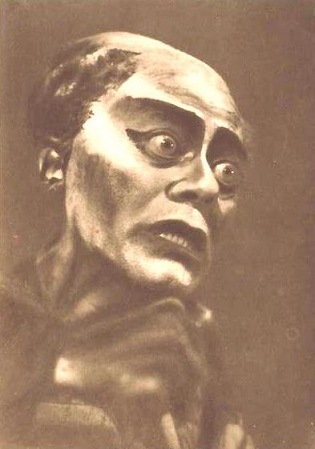
    O Kraus

    Above: Otakar Kraus as Alberich

    Baritone Otakar Kraus (1909–1980) was born at Prague; he later became a naturalized citizen of Great Britain. Kraus made his operatic début as Amonasro at Brno in 1935, and was a member of the Bratislava Opera from 1936 to 1939. At the outbreak of World war II, he moved to Britain and joined the touring Carl Rosa Company in 1940.

    As a member of the English Opera Group in 1946, Otakar Kraus created the role of Tarquinius in Britten’s The Rape of Lucretia at Glyndebourne, and later sang the role of the Vicar in Albert Herring, and Lockit in Britten’s realization of The Beggar’s Opera. Kraus created the role of Nick Shadow in Stravinsky’s The Rake’s Progress at Venice in 1951. For the next 22 years, he was associated with the Royal Opera House, Covent Garden. There he sang most of the principal baritone parts in addition to creating Diomede in Walton’s Troilus and Cressida in 1954 and King Fisher in Tippett’s The Midsummer Marriage the following year. Otakar Kraus sang Alberich in the Ring Cycle at Bayreuth from 1960-1962.

    Kraus retired from the stage in 1973 to teach. In that same year, he was made an Officer of the Order of the British Empire. His pupils have included Robert Lloyd CBE, Sir Willard White, and Sir John Tomlinson.

    Otakar Kraus passed away in 1980. The Otakar Kraus Music Trust was founded in his honor.

    Otakar Kraus – Bin ich nun frei ~ RHEINGOLD – Bayreuth 1960

  • Confrontation

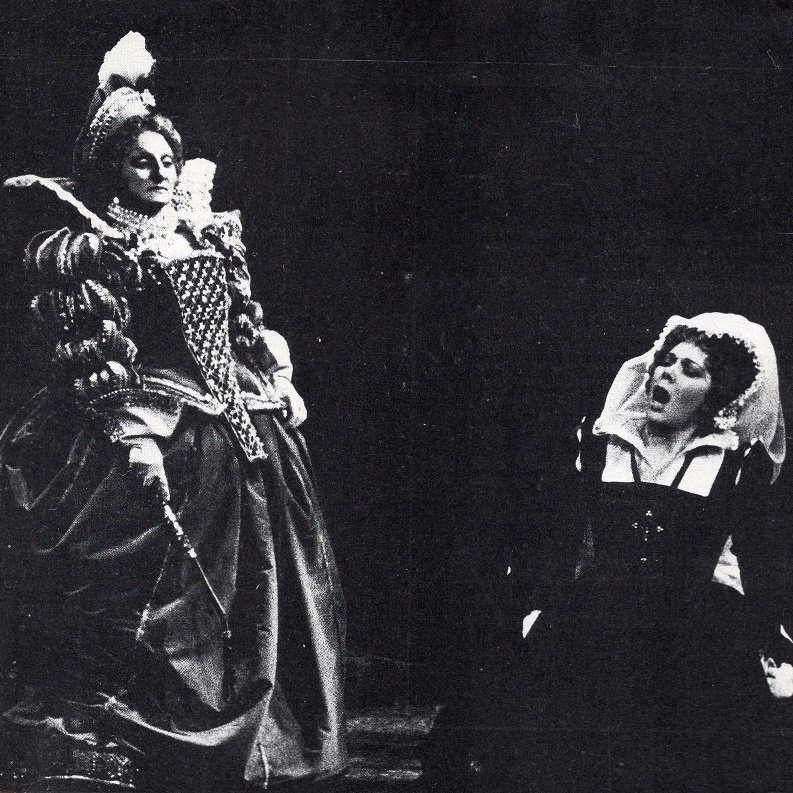
    Scanned Section 2-1

    The fictitious meeting of Elizabeth I (Pauline Tinsley) and Mary Stuart (Dame Janet Baker) from Donizetti’s opera MARIA STUARDA, sung in English.

    MARY STUART – Confrontation Scene – in English – Dame Janet Baker – Pauline Tinsley – ENO 1973

  • John Osborn: A Tribute to Gilbert Duprez

    DE3532Cover-1024x1024

    Tenor John Osborn has released a new disc of operatic arias on the Delos label, and it’s a beauty. While three of the four composers represented are Italian, all of the selections are sung in French. The operas from which the arias are culled were all associated with Gilbert Duprez (1806-1896), who has always been credited with inventing the “do di petto” (the high-C from the chest).

    Mr. Osborn had an exciting success as Rodrigo di Dhu in Rossini’s LA DONNA DEL LAGO at The Met in 2015; his singing on the night I saw it really perked up a pleasing but rather staid evening. The new Delos album shows the tenor’s artistry to striking effect, and he receives admirable support from Maestro Constantine Orbelian, the Kaunas City Symphony, and – in Arnold’s great scène from GUILLAUME TELL – the Kaunas State Chorus.

    The disc begins with two arias from JERUSALEM, the adaptation of his 1843 opera I LOMBARDI that Verdi made for Paris in 1847. The first of these, “Je veux encore entendre ta voix“, is a lilting melody so familiar in its Italian setting (“La mia letizia infondere“). The opera’s hero Gaston, captured and imprisoned while on the Crusade, sings of his longing for his far-away beloved Hélène. The aria is a perfect introduction to Mr. Osborn’s singing, which is graceful, poetic, and full of affecting colors. Dynamic control is this tenor’s long suit, and his beautifully tapered phrases fall sublimely on the ear. Maestro Orbelian conspires with the singer to conjure up some lovely rubato effects, and the first Duprez-like foray to the top is really impressive. Mr. Osborn finishes off the aria with an easy ascent to a ringing high third before the final cadence. 

    The second JERUSALEM selection is less well-known: “Ô mes amis, mes frères d’armes“, in which Gaston, wrongly accused of murder, pleads with his comrades-in-arms to end his dishonored life. One again, Mr. Osborn shows a heartfelt mastery of mood, shading his singing with a sense of vulnerability. For all the drama of the situation, the tenor’s vocalism is wonderfully fragrant, most especially at the phrase “Je pleure, hélas, comme une femme…”

    The first of the disc’s four Donizetti arias is next: the poignant “Ange si pur” from LA FAVORITE. Fernand, on the eve of his marriage to his beloved Leonor, learns that she has been the mistress of the king. He seeks refuge in a monastery where he recalls his brief happiness and laments the shattering of his dream. Mr. Osborn’s rendering of this aria ranks with the best I have heard: imbuing his singing with such sweet sadness, the tenor astonishes with his ascent to the aria’s treacherous high-C. A remarkable cadenza and the singer’s spectacular mastery of the dynamic spectrum left me in a state of awe.

    LES MARTYRS was Donizetti’s French treatment of his opera POLIUTO, a story of Christian martyrdom which met with censorship just before its Italian premiere in 1838. Withdrawing from the fray, the composer moved to Paris and revised the opera specifically for Gilbert Duprez. In the aria “Oui, j’irai dans leur temple“, the Christian leader Polyeucte vows to go to the Roman temple to fulfill a vow of faith, despite the promise of martyrdom. The aria is a statement of resolve and a call to action; with God’s protection, Polyeucte will cast down the Roman idols. Mr. Osborn delivers it magnificently, reveling in the Duprez-inspired high notes and ending in thrilling fashion.

    Inexplicably, I have never listened to Hector Berlioz’s epic BENVENUTO CELLINI all the way thru; this makes no sense, as the composer’s TROYENS, BEATRICE ET BENEDICT, La Captive, and the magical Les nuits d’été are among my all-time favorite works. In the two CELLINI arias which John Osborn includes on his disc are so cordially sung that my curiosity to hear the full opera is now piqued (though finding the time will be another matter…) 

    La gloire était ma seule idole” finds the sculptor Benvenuto Cellini anticipating the arrival of his beautiful mistress Teresa. This expressive aria begins over a delicate accompaniment but soon blooms into a paean to the artist’s beloved. John Osborn brings a delicious feeling of tenderness to his singing here. The second verse is more extroverted, and ends with a prayer that heaven may protect Teresa, and protect their love. Here Mr. Osborn does some of his most affecting singing in an already-affecting program.

    The second CELLINI aria, “Sur les monts, les plus sauvages” is this disc’s ‘secret treasure’. It begins with a very Berliozian introduction leading to a pensive recitative in which we can again savour John Osborn’s gift for colour and verbal acuity. As the drama builds, Cellini rails against his destiny as an artist. When the aria proper begins, the sculptor longs for the life of a simple shepherd; herein, Mr. Osborn treats us to  beautifully sustained and reflective singing with a deliciously plaintive quality. The music becomes slightly more restless, and I am put in mind of Hylas’s lovely aria of longing for his homeland: “Vallon sonore” from LES TROYENS. In the second verse of Cellini’s aria, Mr. Osborn’s vocal control is so impressive, and the music’s rising passion brings us some superbly sustained notes and the singer’s congenial flexing of his dynamic muscles. The aria’s conclusion is superbly rendered.

    From Donizetti’s LUCIE DI LAMMERMOOR, we have Edgard’s great final aria of lament for his ill-fated love for Lucie; here given in the “Duprez/French” setting as “Bientôt l’herbe des champs croîtra“, the desolate young man awaits a duel with Lucie’s brother among the graves of his forefathers. 

    Though it may seem like an over-abundance of praise, I must again remark on Mr. Osborn’s fascinating account of this very familiar scene, for he begins the opening recitative “Tombs of my ancestors…” in an incredibly hushed piano, and his sense of exquisite grief is palpable; his despair over his thwarted love draws us in deeply. A plangent swelling of the tone marks at the recitative conclusion marks Edgard’s hapless expression of longing for death.

    The aria proper is awash with heartbreak, the tenor’s phrasing so persuasive, ravishing in its eloquence. The concluding cadenza is nothing less than fabulously passionate, yet Mr. Osborn then sinks the voice to a sustained delicacy before a final expression of hopelessness. Masterful!

    In Donizetti’s DOM SEBASTIEN, the title character is the king of Portugal. Following a devastating battle against the Moors, he stands alone on the battlefield, surrounded by the dead of both armies, and longs for the consoling sight of his beloved. With its atmospheric harp introduction, the aria is unusually lovely for it’s sad setting. Mr. Osborn’s phrasing is elegiac, and his meshing of the top note into the fabric of the melody is so skillfully handled. The cadenza here again left me in a state of true admiration for the singer.

    The program concludes with the GUILLAUME TELL scene in which Arnold summons his courage – and that of his Swiss countrymen – to throw off the yoke of the cruel Austrian governor Gessler. Constantine Orbelian and his players set the scene in the melancholy introduction, and Mr. Osborn commences the recitative’s “Do not abandon me, hope of revenge” with sublime softness. 

    A GISELLE-like motif sets the aria proper – Asile héréditaire – on its way, with John Osborn’s easy ascents to the high range impressively handled. The melody expands in breadth before a gentle reprise; the tenor’s tender coloration of the phrase “…pour le derniere fois…” is yet another moment to savour. Then comes the fiery cabaletta, “Amis! Amis, secondez ma vengeance!“, an irresistible call to arms which Mr. Osborn ends on a triumphantly sustained high-C.

    To say that this new Delos offering pleased me greatly would be an under-statement. Perhaps the highest praise I can give is to say that the disc joins my long-time favorite tenor collections – Carlo Bergonzi’s first Decca album and Luciano Pavarotti’s all-Donizetti program – to form a triumvirate of tenor trophies which I will turn to often.        

    ~~~~~~~~~~~~~~~~~~~~~~~~~~~~~~~~~~~~~~~~~~~~~~~~~~~~~~~~~~~~~~~~~~~~~~~~~~~~~~~~~~~~~~~~~~~~~

    GilbertDuprez

    Gilbert Duprez (above), the tenor who inspired the new Delos disc, was born in Paris in 1806, studied there, and made his operatic debut at the Odéon in 1825. When his career failed to develop, he sought greener pastures in Italy and was most successful there in Bellini’s IL PIRATA. In 1831, at Lucca, Duprez sang Arnold in the Italian-language premiere of Rossini’s GUGLIELMO TELL and stunned the audience by introducing a high-C from the chest (as opposed to the falsetto approach to top notes which was then the custom). Thenceforth, the tenor’s Italian career burgeoned, including the premiere of Donizetti’s LUCIA DI LAMMERMOOR in 1835.

    Duprez returned in triumph to Paris in 1837 and became a great favorite of Parisian audiences. But by 1844, his voice was beginning to decline, and by 1851 he had stopped singing. It was thought that, despite his revolutionizing of a new sound to high notes, his overall technique was insufficiently grounded.

    He lived on to the grand old age of 90.

  • Jon Crain

    J crain

    Tenor Jon Crain sang with the New York City Opera and at The Met, where his roles included Don Jose, Narraboth in SALOME, and Matteo in ARABELLA. He also participated in a studio recording of CAROUSEL with Roberta Peters, Alfred Drake, Claramae Turner, and Norman Treigle, and in an abridged English-language recording of TALES OF HOFFMANN issued by The Metropolitan Opera. Crain appeared on radio programs devoted to opera and song. 

    Following his retirement, the tenor joined the music faculty at West Virginia University. He passed away in 2003.

    Jon Crain ~ Ariadne auf Naxos – excerpt in English ~ 1958

  • John Stewart

    John Stewart

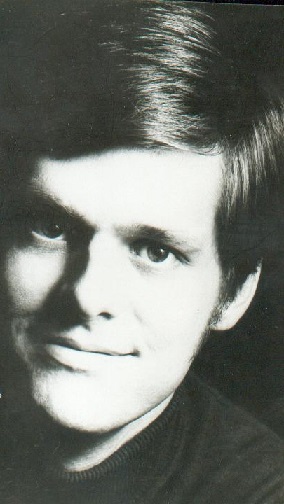
    The American tenor John Stewart made his professional debut at Santa Fe in 1964. Over the ensuing years, he returned often to Santa Fe in a wide-ranging repertory. He made his New York City Opera debut in 1968 and sang many roles there, including Albert Herring, Tamino, and Nanki-Poo. At the Metropolitan Opera, he appeared as Don Ottavio and as Alfred in FLEDERMAUS.

    It was at the New York City Opera that I had the pleasure of hearing John Stewart as Pinkerton, Alfredo in TRAVIATA, Sali in A VILLAGE ROMEO AND JULIET, and Mozart’s Tito.

    In 1972, he sang Mathan in Handel’s ATHALIA with the Handel Society at Carnegie Hall. The cast further featured Elinor Ross, Maureen Forrester, and Ara Berberian. Mr. Stewart’s singing of the aria “Gentle airs, melodious strains” that evening remains a cherished memory of mine.

    In 1974, John Stewart joined the Frankfurt Opera where he sang until his retirement in 1990. He currently teaches voice in New York City.

    John Stewart – ROI D’YS aria – Lexington KY 1970

  • Vladimir Kastorsky

    65882

    Born in 1870, Vladimir Kastorsky entered the St. Petersburg Conservatory in 1893. A year later he was expelled for “voicelessness and incompetence”. But he persevered, and made his operatic debut at the Opera House of Pskov in 1894; he went on to a career of nearly 50 years.

    Kastorsky was a star of both the Mariinsky and Bolshoi Theatres. He sang all the great Russian basso roles as well as Mozart’s Count Almaviva and Leporello, Nilakantha in LAKME, and Wagner’s Wotan and Wolfram.

    In 1907-1908, Kastorsky participated in Sergei Diaghilev’s Russian seasons in Paris. He also was heard at La Scala, Prague, Berlin, Rome, Munich, London, Kiev, Odessa, and Tiflis. Later in life, he taught at Mariinsky Theatre, Leningrad’s Art Studio and at the Saint Petersburg Conservatory. Kastorsky continued to give recitals of Russian songs and German lieder into his old age. He died on July 2, 1948…one day before I was born.

    Vladimir Kastorsky – Pimen’s Monologue from BORIS GODUNOV

    Vladimir Kastorsky ~ Eugene Onegin – Prince Gremin’s Aria

  • dell’Arte Opera Ensemble: LA CALISTO

    CAVALLI

    ~ Author: Oberon

    Sunday August 20th, 2017 matinee – Francesco Cavalli (above) wrote about 30 operas, and of them LA CALISTO has become a favorite with contemporary audiences. Premiered in 1651, the opera’s brief and richly-varied musical numbers – and its sensuous, lusty characters – seem wonderfully fresh and relevant to us today, especially in a performance such as was offered this afternoon by the enterprising dell’Arte Opera Ensemble down at the La MaMa Theater.

    A brief synopsis of the opera will help sort out the twists of plot and the infatuations and motivations of the various characters:

    THE PROLOGUE
    Nature and Eternity celebrate those mortals who have climbed the path to immortality. Destiny insists that the name of Calisto be added to the list.

    THE OPERA
    A thunderbolt hurled by Giove has gone awry and decimated a portion of the valley of Arcadia. The god comes down with his sidekick Mercurio to inspect the damage They find the nymph Calisto, desperately seeking water. Giove causes a stream to gush up. He then attempts to seduce Calisto, who is a follower of Diana – the goddess of the hunt – and a staunch virgin. She rejects Giove’s advances, but later succumbs when he disguises himself as Diana. Meanwhile, the real Diana, because of her vow of chastity, cannot return the love of the handsome shepherd boy Endimione. Diana relies on the help of her attendant nymph, Linfea, who desires a husband but spurns the advances of a young satyr.

    On Mount Lycaeus, Endimione sings to the moon, the symbol of Diana. As he sleeps, Diana covers him with kisses. He awakes and they sing of their love. Jove’s infidelity is discovered by his wife Juno, while Diana’s secret is found out by Pane, the god of the forest, who has long desired her. Endimione is persecuted by Pane and his satyrs.

    The Furies turn Calisto into a bear at the command of the indignant Juno. Giove sadly confesses all to Calisto: she must live the rest of her life as a bear, but eventually he will raise her to the stars. Diana rescues Endmione and they agree that, while their kissing-fest was enjoyable, they will leave it at that. Giove and Mercurio celebrate Calisto’s ascension to her heavenly home in the constellation Ursa Major

    ~~~~~~~~~~~~~~~~~~~~~~~~~~~~~~~~~~~~~~~~~~~~~~~~~~~~~~~~~~~~~~~~~~~~~~~

    Sung in the original Italian, with English surtitles, the dell’Arte production is directed with wit and affection by Brittany Goodwin, who let the bawdiness of certain scenes play out without lapsing into vulgarity. The costumes by Claire Townsend mix modern-day wear with fantasy elements. The scenic design is by You-Shin Chen, and the atmospheric lighting by Dante Olivia Smith.

    The score was played by an expert period-instrument ensemble led by Charles Weaver, with Mr. Weaver and Adam Cockerham playing lutes, violinists Dongmyung Ahn and Sarah Kenner, cellist Matt Zucker, and Jeffrey Grossman at the harpsichord. Their unfailing grace and perceptive dramatic accents brought Cavalli’s music into our time in all its glory.  

    20768180_10107878883186965_3866968242292011471_n

    Vocally, the afternoon got off to a splendid start as Allison Gish (above, in a backstage portrait) intoned the lines of La Natura with a voice that evoked thoughts of the great contraltos of bygone days.

    In a scene which anticipates Wagner’s GOTTERDAMMERUNG Norns (even down to having a contralto sing first), Ms. Gish’s La Natura is joined by Elyse Kakacek as L’Eternità and Jungje Xu as Il Destino. Ms. Kakacek looked striking as she sang from the mezzanine; the voice is full and wide-ranging, pinging out into the theater space. Jungje Xu’s voice is lyrical, and she sang very well as she pleaded Destiny’s case for giving Calisto a place in the heavens. When these three singers blended voices, the effect was superb. Later in the opera, they portrayed the stream which sprang up to quench Calisto’s thirst, and – later still – were Furies, minions of the goddess Juno, who revel in a scene where they torment Calisto.

    20747980_10154800303580777_7132399321096474619_o

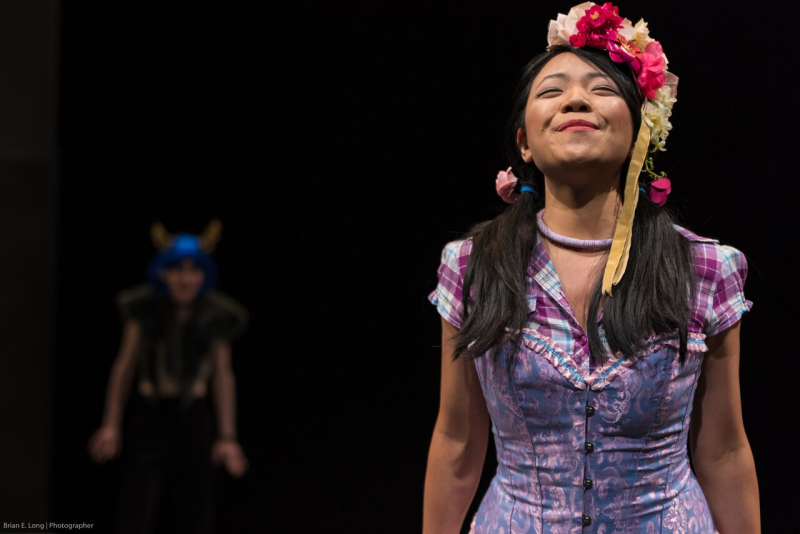
    Above: Emily Hughes as Calisto, with her fellow archers of Diana’s entourage, in a Brian Long photo. Ms. Hughes was the lovely focal-point of the story; with her clear, appealing timbre and a charming streak of vulnerability in her personification of the role, the young soprano made Jupiter’s infatuation entirely understandable. Her long aria in the opera’s second half was particularly pleasing.  

    Mason Jarboe as Giove (Jupiter) – handsome in appearance and authoritative of voice – was an ideal matching of singer to role. My only wish was that he’d had more to sing. The same might be said of tenor Brady DelVecchio as Mercurio; his characterful singing, easy stage demeanor, and pimp-like persona were much appreciated. Both gentlemen savoured their every moment onstage.

    EmilyHughes_AdriaCaffaro

    Above: Emily Hughes as Calisto with Adria Caffaro, who appears both as Diana and as Giove disguised as Diana. Ms. Caffaro was able to subtly differentiate vocally between her two roles; the voice is warm, sizable and pliant, with a touch of earthiness. And she exuded goddess-like confidence. After an episode of heated kissing between Calisto and Giove in his Diana guise, Ms. Caffaro returns as ‘Diana herself’ and is amused – and then annoyed – by Calisto’s description of ‘their’ smooching session and the implication that Diana might have same-sex desires: Ms. Caffaro here turned fiery, making the scene one of the highlights of the afternoon. 

    PadraicCostello

    Above: Padraic Costello as Endimione. Mr. Costello’s honeyed counter-tenor and gift for persuasive phrasing fell graciously on the ear. His portrayal of the shepherd, infatuated with Diana, was as expressive as his singing. As the most human character in the story, and the one for whom love is truly all, Mr. Costello was as moving in his sincerity as in the beauty of sound he produced.   

    JoyceLin

    Above: Joyce Yin as Linfea, one of Diana’s handmaidens who is torn between preserving her chastity and losing it. Satirino, a lusty satyr, offers to solve Linfea’s dilemma for her, but she fends him off. Ms. Yin’s voice is clear and assertive, pealing forth to express her excitement. Stage-wise, she was a bundle of energy, and very amusing when she ‘remembered’ to strike the required archer’s poses.

    RaymondStorms

    Above: Raymond Storms as Pane. This is the opera’s second counter-tenor role and Mr. Storms excelled in the music, which veered from passionate declaration to soft, sweet turns of phrase. His acting was spot-on as yet another frustrated lover of Diana (she’s so popular!).

    Pane’s pals are Shawn Palmer as Satirino (the satyr who tried to have his way with Linfea earlier) and Angky Budiardjono as Silvano. This trio’s scenes recall the rustics in MIDSUMMER NIGHT’S DREAM…and all three are actors who can sing.

    Ms. Palmer looked androgynous with her lithe, long-legged figure and glossy blue bob-wig. Her cantering walk and occasional pawing of the ground revealed her animal nature. Her rather long dramatic aria showed a deeper side to the character, and she sang it so well.

    Mr. Budiardjono’s singing was wide-ranging and ample-toned, a very pleasing sound to be sure. In Part II of the opera, Mssrs. Storms and Budiardjono have a duet that really showed off their talents; Ms. Palmer then joined them in a trio that was sheer fun to see and hear.

    Sophie Delphis as the goddess Giunone, wife of Jove, did not descend from the heavens until the start of Part II. Clad in an elaborate haute couture dress, spike heels, and a flame-red hat, Ms. Delphis’ appearance was as striking as her singing and acting. A complete immersion into the character made her every note, word, and movement vivid. In a vindictive rage upon learning her husband has been unfaithful, Ms. Delphis unleashed her anger like a sylvan Santuzza. The voice has a real bite to it.

    Diana’s archers also served as stagehands, quickly maneuvering floor platforms into different configurations and nimbly transforming swaths of long, hanging sheer-white fabric into clouds, canopies, or pillars.

    The afternoon flew by; all too soon we were hearing what seemed to be a choral finale with all the characters mingling voices as Giove showed Calisto the firmament…her future home. But the voices fade away and the opera ends on a parlando passage from Giove.

    Production photos by Brian Long.

    ~ Oberon