Category: Opera

  • American Symphony Orchestra Presents ‘Hollow Victory’

    Weinberg

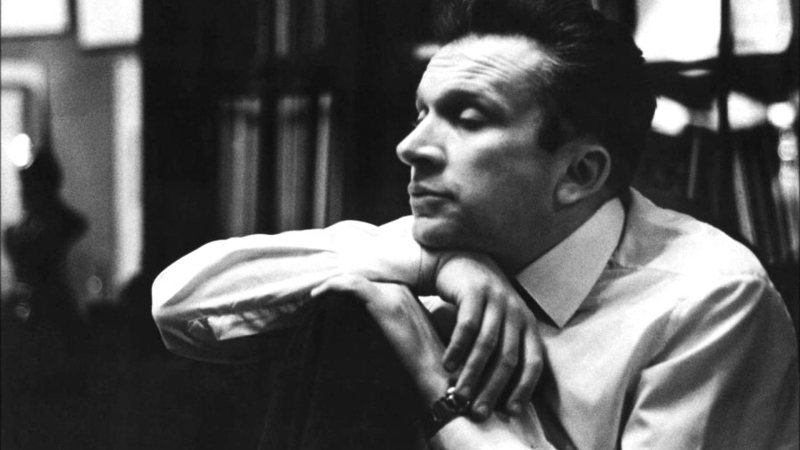
    Above: composer Mieczysław Weinberg

    ~ Author: Ben Weaver 

    Sunday February 29th, 2018 – Leon Botstein and his American Symphony Orchestra always present interesting programming of rarely-performed works. On January 28th, the theme was “Jews in Soviet Russia after the World War” and was perhaps one of their finest concerts. Presented were three works by two composers: first half was dedicated to Mieczysław Weinberg and second half to Vieniamin Fleishman. Both men were close friends with Dmitri Shostakovich, whose influence can be heard in their works.

    Mieczysław Weinberg is perhaps the better-known of the two. Born in 1919 in Warsaw, Poland into an artistic family (his father was a conductor and composer of the Yiddish theater and his Ukrainian-born mother was an actress.) During the war his parents and younger sister were interned in the Lodz ghetto and died in the Trawnicki concentration camp. After the war, in the Soviet Union where he settled, Weinberg was arrested by the KGB in 1953. Shostakovich’s personal appeal to Lavrenti Beria – and Stalin’s death soon thereafter – saved Weinberg’s life. Weinberg’s vast musical output includes 22 symphonies, 17 string quartets, 9 violin sonatas, 7 operas, 40 film and animation scores (including for the Palm d’Or-winning film “The Cranes are Flying.”)

    Leon Botstein began the concert with Weinberg’s “Rhapsody on Moldavian Themes,” composed in 1949. An ancient state – forced to be one of the Soviet Union’s republics between 1940 and 1991 – Moldavia’s culture is closely related to Romania’s and it’s folk melodies sometimes will bring to mind folk melodies Brahms and Dvořák used in their famous collection of dances. Weinberg’s Rhapsody begins with a drive from the low strings and then an oboe introduces the first mournful theme. The Rhapsody moves easily between the mournful and infectious dance tunes, alternating soaring full string section and solos for individual instruments. There is a definite Klezmer dance tune near the end, which brings the work to an exciting close.

    Weinberg’s substantial Symphony No. 5, composed in 1962, without a doubt takes inspiration from Shostakovich’s Symphony No. 4, which though it was premiered in 1961 was composed 25 years earlier, and Weinberg and Shostakovich used to play a two piano arrangement of it for friends long before the premiere. The work opens with a slow “siren,” two repeated notes, from the violins. This motif returns over and over throughout the symphony like a wail of doom, sometimes picked up by other instruments. There are sudden interruptions from the timpani, bringing to mind Mahler’s 6th Symphony. There are beautiful and beautifully-played solos for various instruments, most notably the flute (Yevgeny Faniuk is listed as principal flautist) and horn (Zohar Schondorf)). The Symphony ends with a hushed march, growling trombones and a mysterious celesta.

    Veniamin Fleischman was born in 1913 and entered the Leningrad Conservatory in 1939. His teacher, Shostakovich, called Fleishman his favorite student. While a student, on Shostakovich’s suggestion, Fleishman began composing the opera “Rothschild’s Violin,” from a short story by Chekhov. (Fleishman wrote his own libretto.) When the Nazis invaded the USSR in the summer of 1941 Fleishman enlisted in the Red Army and was killed on September 14 near Leningrad. Shostakovich went to great lengths to retrieve Fleishman’s manuscript of the opera. He completed and orchestrated the work in 1943-44, and later went to great lengths to have it performed, though without much success. Its sympathetic portrayal of Jewish people no doubt did not fit comfortably with the Soviet regime. There was one concert performance in Moscow in 1960 and a staged performance did not take place until 1968. Shostakovich wrote in his memoirs: “It’s a marvelous opera – sensitive and sad. There are no cheap effects in it; it is wise and very Chekhovian. I’m sorry that theatres pass over Fleishman’s opera. It’s certainly not the fault of the music, as far as I can see.” 

    The main character, a Christian coffin maker Yakov Ivanov, undergoes a spiritual crises and something of an awakening. After Yakov’s wife Marfa informs him that she is dying, they both reminisce about their dead child, and Yakov realizes he will have to build his own wife’s coffin. “Life is all loss, only death is gain,” he says. Though Yakov quarrels with Rothschild, the young flautist in the local Jewish orchestra, at the end he leaves Rothschild his most prized possession: the violin, which Rothschild begins to play as the opera ends.

    Rothschild’s Violin” is a magnificent opera. Fleishman, editing Chekov’s story, brilliantly removed all secondary characters and stories, keeping only the story of the coffin-maker. We know nothing even about the young Jew to whom Yakov leaves his violin; nor about Yakov’s wife Marfa, who is dying. This is a story of one man, there are no loungers or pauses in the narrative. It moves quickly through monologues and dialogues, only pausing for Yakov’s final apotheosis where he comes to understand his life and losses. Though the characters, especially Marfa, feel sorry for themselves, there is no sentimentality or cheap dramatic effects. The simplicity of it is what gives the work so much power.
    220px-Mikhail_Svetlov_bass.jpg_300_(2)

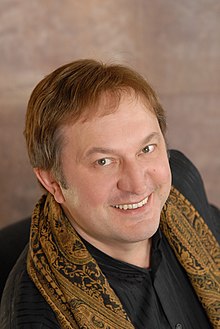
    The quartet of singers assembled for the opera was perfect. Bass Mikhail Svetlov (above) was a deeply moving and beautifully sung Yakov. The only native Russian speaker in the cast, he projected the text and all its nuances in a way few can. His is a big, rich voice, with an easy top.

    Index

    Mezzo-soprano Jennifer Roderer (above) was a plum-voiced Marfa; managing to be both a nagging self-pitying wife and a woman who, perhaps on her deathbed, has obviously suffered so much. What kept flying through my head as she was singing is that Ms. Roderer’s large, beautiful and booming mezzo would make a fantastic Fricka; it is a role she sings and we can only hope she is able to sing it at the Metropolitan Opera (which is supposed to bring back its Ring cycle soon.)
    M heller

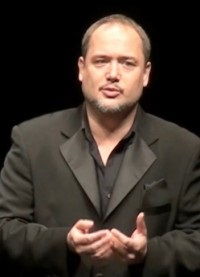
    Tenor Marc Heller (above), singing the role of the leader of the Jewish orchestra, would make a pretty good Siegfried. The huge, ringing voice flew easily over the orchestra and Maestro Botstein’s rather unforgiving volume.

    AaronBlake200

    Lyric tenor Aaron Blake (above) was a lovely and nervous young Rothschild. There is actually very little for Rothschild to sing, so Mr. Blake made up for it with pantomime acting, particularly at the end after Yakov has gifted him his fiddle (kindly loaned for the proceedings by a violinist on stage), and an extended orchestral postlude (including lovely solo violin playing by concertmaster Gabrielle Fink) summarizes not only Yakov’s sacrifice, but Rothschild’s future. Intentionally or not, there was something quite poetic and moving in the fact that a member of the orchestra gave up her violin and was not able to play the extended orchestral passage in the end, mirroring Yakov’s own losses.

    It is also worth nothing that the final orchestral passage goes from being lightly scored and transparent to having a very close resemblance to the searing final moments of Shostakovich’s 5th Symphony.

    Rothschild’s Violin” is a great opera; it deserves to be staged.

    ~ Ben Weaver
  • Brahms & Dvořák @ Chamber Music Society

    BrahmsDvorak400px

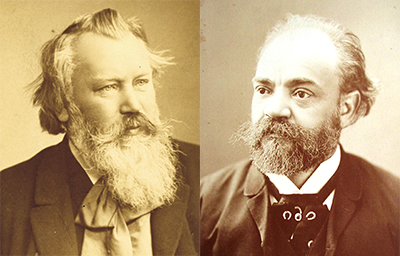
    Above: Johannes Brahms and Antonín Dvořák

    ~ Author: Oberon

    Tuesday January 30, 2018 – This evening’s highly enjoyable program offered by Chamber Music Society of Lincoln Center brought us works by Johannes Brahms and Antonín Dvořák: music for piano 4-hands by each composer, with a piano trio from Brahms and a piano quintet from Dvořák. Six excellent musicians were on hand to delight an audience who had chosen great music over the SOTU. 

    Pianists Wu Han and Michael Brown shared the Steinway for the opening work: selections from Dvořák’s Slavonic Dances. Wu Han – clad is brilliant red – presided over the lower octaves and Mr. Brown the higher. The chosen Dances, two from opus 46 and two from opus 72, formed a perfect set.

    With the joyous opening of opus 46, #1, the cares and concerns of daily life were swept away; this Presto in C-major moves from exuberance to subtlety and back again. The players clearly enjoyed sharing the keyboard: in his program note, Mr. Brown compared playing 4-hands with playing doubles in tennis. And he further remarked that “…sharing one pedal is as strange as someone else brushing your teeth!” This duo got on like a house afire, vying in technical brilliance and relishing the more thoughtful passages. Opus 46, #2 has a darker, E-minor start, but then turns sprightly; Dvořák alternately accelerates and then pumps the brakes throughout this Allegretto scherzando.

    The dances of opus 72 are in general less extroverted and rambunctious than those of the 46. The pianists kept to E-minor with #2 which has a lyrical sadness and an emotional pull at first but later becomes sparkly and charming. They rounded off this opening Dvořák set with opus 72, #1, Molto vivace in B-major. This commences with a rocking rhythm and shows fresh vitality before it quietens with some lovely upper-range shimmers only to re-ignite as it hastens to its finish.

    For the Piano Trio in C-minor, Op. 101 of Johannes Brahms, Mr. Brown was joined by violinist Paul Huang and cellist Dmitri Atapine. This trio was composed in 1886 while the composer was summering at Hofstetten, Switzerland, and it was premiered in December of that year, with the composer at the piano, Jeno Hubay playing violin, and David Popper as cellist.

    The opening Allegro energico begins passionately, and the strings play often in unison. Following an animated passage, there comes a deep melody; the movement ends almost abruptly. 

    The trio’s second movement starts very quietly, almost hesitantly, the strings are muted and given over to almost sneaky plucking as the piano holds forth. Then violin and cello have a dialogue. The pizzicati recur, and the sotto voce atmosphere of the music is sustained.

    The Andante develops yet another conversation: this time between the duetting strings and the piano. All three musicians showed lovely dynamic gradations throughout. Mr. Brown’s dreamy and evocative playing drew sighing motifs from the violin and cello. A sudden burst of passion ends the Andante

    The rhythmic vitality of the concluding Allegro molto undergoes a mood change in an interlude where Mr. Huang’s polished tone could be savoured. Melodious exchanges lead on to a fervent finish. The three players’ sense of fraternity was evinced as they bowed to the audience’s sincere applause.

    Following the interval, our two pianists played three of Brahms’ Hungarian Dances. Wu Han and Mr. Brown had switched places on the piano bench, giving Mr. Brown the deeper registers whilst Wu Han shone in the soprano range.

    The Poco sostenuto in F-minor commences with a brooding quality, but then speeds up. A witty, almost ‘toy piano’ feeling charms in the central section before a return to the starting point. The music dances on to a fun finale. The Allegretto in A-major has a droll start and some playful hesitations: the two pianists seemed like co-conspirators here. Mr. Brown relished the low melody of the Allegro molto in G-minor whilst Wu Han’s sweetly struck higher notes felt like raindrops. The music then grows lively, with a gypsy lilt.

    A sterling performance of Dvořák’s Piano Quintet in A-major, Op. 81 (dating from 1887) made for the evening’s perfect finale, with violinists Chad Hoopes and Paul Huang, violist Matthew Lipman, and cellist Dmitri Atapine joining Wu Han.  

    Mr. Atapine sets the opening Allegro ma non tanto in motion with a nobly-played cello theme; there follows a warm tutti passage where we’re assured of a beautifully blended performance. Wu Han’s gorgeous playing (throughout) underscores the silken high range of Mr. Hoopes’ violin; then Mr. Lipman takes up a viola theme which is passed to Mr. Hoopes. Pulsing strings lead to an expansive passage; the Hoopes violin sings deliciously. We can revel in the intertwined voices for a few moments before the movement dashes to an ending.  

    The second movement, Andante con moto, was a source of true magic tonight, with Wu Han again displaying her gifts for creating atmosphere. Mr. Lipman has the melody; a tempo increase brings us duetting violins. Then comes an engrossing passage: Mr. Atapine’s cello sings deep as the violinists pluck; then Mssrs. Hoopes and Atapine sound a gentle, rolling motif in support of Wu Han’s luminous playing. Mr. Lipman takes up the main theme with rich lyricism. A sudden animation is calmed by the limpid piano, and then the ‘engrossing passage’ is repeated, with unbelievable subtlety.

    Chad Hoopes sends the Scherzo off with a light touch; Wu Han’s dazzling playing has me under a spell. The viola and cello engage us, Mr. Atapine’s attentiveness and sense of joy in his playing is inspiring to behold. Following a luminous interlude, the cellist propels the Scherzo to a lively finish.

    The Finale: Allegro starts with a petite into, and then embarks on a flowing dance. I absolutely loved watching Wu Han here, ever-alert and eyeing her colleagues with affection, she was clearly having a marvelous time of it. The mood shifts unexpectedly as Mr. Hoopes plays what seems like a hymn…or a prayer. Then the music goes on its lilting way to a jubilant close. 

    ~ Oberon

  • @ My Met Score Desk for TOSCA

    E874b757ab6d27cdce90e262524cf12e

    ~ Author: Oberon

    Saturday January 27th, 2018 matinee – The Met have fortunately replaced their unsightly and theatrically tedious Luc Bondy production of TOSCA with a traditional setting of the “shabby little shocker”; it opened on New Year’s Eve with a cast and conductor that had undergone changes in the run up to the prima.

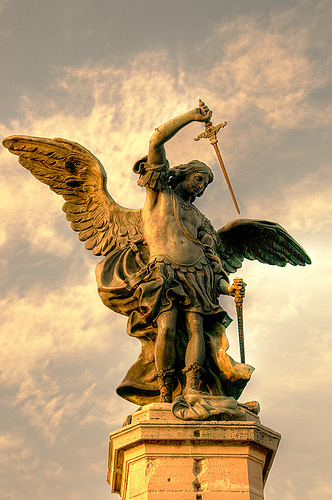
    Aside from the dramatic show curtain depicting the Archangel Michael with blood-red wings, I could not see anything of the sets and costumes from my score desk. In April, I’ll get a full-view when the ‘second cast’ takes over.

    Other than at performances of TURANDOT, this was the fullest house I have seen at The Met in the past few seasons. Apparently many in the audience found the MetTitles in Act I to be hilarious today, for there was much unbridled laughter.

    The orchestra sounded great, and I’ve always liked Emmanuel Villaume’s conducting both in the opera house and the concert hall. His TOSCA was on the grand scale, painted in broad strokes, with tempi that pressed forward; yet there were also the needed lyrical respites where orchestral detail could be savoured. Villaume also allowed his singers to cling to favorite notes, without losing the shape of the music. A volcanic eruption of orchestral sound as the ‘Scarpia Chords’ heralded the Baron’s entry was actually thrilling.

    Sonya Yoncheva has been singing her first career Toscas in the present run. My past experiences with her in the theater have been as a pleasant Mimi and a moderately attractive Desdemona. In both those roles, a rather generic timbre and a tendency to sing slightly above pitch rather frequently offset her physical appeal and pretty but unexceptional vocalism. Making a sudden leap (oops!) to Tosca seemed like an unwise move for her; but, since I’m not a fan, do I really care if she blows her voice out?

    Her Tosca was sung with unrelenting loudness; it’s a one-colour voice to begin with, and she seemed indifferent to the markings in the score, seldom if ever singing less than mezzo-forte. Being a shade sharp much of the time did not help matters. She’s pushing the lower range, and the top now tends to waver a bit. Overall there was a sense of forcing to fill the big hall.

    The “Vissi d’arte” was over-sung, without the pulling back at “Nell’ora del dolore…” that personalizes the aria. In terms of declamation, Ms. Yoncheva  melodramatically veered from ‘shrilling’ on “Tu non l’avrai stasera…giuro!” to shouting on “Sogghigno di demone!”  Overall, she often seemed fully-extended. Yet her big aria won her a big applause, and I feel she’ll be encouraged to make further forays into roles calling for a more dramatic sound than is hers by nature. I would guess in three or four years she will find herself in a similar situation vocally to the woman she replaced in these performances.

    Vittorio Grigolo’s Cavaradossi is likewise a step or two in vocal heft beyond the roles we’ve heard him sing to date. A generous singer, Grigolo pleases the crowd with his unfettered sound; he can zing out top notes that have a real spark but – unlike Ms. Yoncheva – he does on occasion throw in a piano note or turn a phrase more gently.

    In the past, Željko Lučić has sometimes annoyed me with his errant sense of pitch in the Verdi roles, but today as Scarpia that problem cropped up only in passing. Following the thundering chords that announce Scarpia’s arrival in the Church of Sant’Andrea della Valle, Mr. Lučić unleashed his own thunderbolt with “Un tal baccano in chiesa?!”, catapulting to a house-filling top note. He alone of the three principals seemed to be doing something with the the words, and his singing veered from ripe power to velvety insinuation. As Tosca fled the scene after their encounter, Mr. Lučić’s Scarpia laid the groundwork for his plot. In the ensuing Te Deum, baritone, chorus, and orchestra combined forces for genuinely exciting finale to the first act.

    Lučić continued to impress in Act II, despite the occasional flat note. Ferocious in his questioning of Cavaradossi, feigning cordiality as he drew Tosca to the bargaining table, brazenly expounding on his lechery in “Gia, mi dicon venal”, the Serbian baritone joined the ranks of my favoured Scarpias over the decades: Anselmo Colzani, Cornell MacNeil, Sherrill Milnes, Robert Hale, Frederick Burchinal, and Justino Diaz.

    It’s rare to hear a Sacristan who really sings: Patrick Carfizzi put the emphasis on the notes, and let the comedic aspects of the character take care of themselves. He sounded fantastic.

    I was planning to stay for the third act, but as so often happens at The Met, the endless intermission got on my nerves and so, after a while, I packed up and headed home.

    ~ Oberon

  • Ehnes/Denève: All-Prokofiev @ The NY Phil

    James ehnes

    Above: violinist James Ehnes

    ~ Author: Oberon

    Thursday January 25th, 2018 – A composer we love, an orchestra we love, a violinist we love, a conductor we love: my friend Dmitry and I had a great time at The New York Philharmonic tonight.

    For this all-Prokofiev concert, The Love for Three Oranges Suite proved an imaginative opener. I’ve seen this opera only once, in Maurice Sendak’s clever 1985 production for New York City Opera, and enjoyed it immensely. It was wonderful to encounter this music again, especially in Stéphane Denève’s witty and wonder-filled interpretation.

    The suite is in six movements, starting with Ridiculous Fellows which opens big and then gets subtle; the music is filled with a sense of irony, as is the entire opera. The Infernal Scene –  a card-game played by Tchelio and Fata Morgana – sounds ominous and develops a churning feeling. Fanfares herald the famous March, which begins softly and soon struts boldly. The xylophone and muted trumpets add a toy-like sound, and the winds play over pulsing violins; this March is droll, almost tipsy. Limpid fluting from Yoobin Son delights in the Scherzo, and there’s a really lovely viola passage for Cynthia Phelps. The violins and horns play in unison. The suite ends with Flight, an allegro with an agitated air. Maestro Denève was perfectly in his element for this coloristic music, and he gallantly drew Ms. Phelps to her feet for a solo bow, graciously kissing her hand.

    James Ehnes’s playing of the Prokofiev Violin Concerto No. 1 was truly ravishing. This concerto has become very familiar to me over time in Jerome Robbins’s balletic setting, Opus 19/The Dreamer, for New York City Ballet; it’s my favorite of all Robbins ballets.

    The music commences with a soft shivering tingle, and the violinist takes up a plaintive melody. Mr. Ehnes plays with an innate sense of rhythmic surety and delicious subtlety of dynamics. The music is dreamlike (hence the title of the Robbins ballet) with the soloist playing over soft tremolos from the violas. From this shimmering atmosphere, the flute sings while the violinist plays in his highest range. Really luminous.

    The Scherzo was taken at super speed, giving the music a wild quality. Mr. Ehnes’s superbly scrappy attacks propel things forward; the music buzzes and the violin slithers. The last movement commences with Judith LeClair’s bassoon theme, into which the solo violin insinuates itself in a melodic rise. Liang Wang’s oboe enchants, and the music grows ethereal, with an atmosphere of swooning beauty. Prokofiev brings in the high harp, and the violinst plays gliding scales. A series of delicate, jewel-like trills in the stratosphere display Mr. Ehnes’s clarity and control; the concerto ends in an iridescent glow.

    Mr. Ehnes’s sustaining of the intriguingly glistening atmosphere of the final movement held the audience under his spell; a warm ovation ensued, and Maestro Denève seated himself among the players as the violinist offered a heartfelt Bach encore. Called back for yet another bow, Mr. Ehnes was hailed by all the Philharmonic string players tapping their bows in unison: a lovely gesture of musical congeniality.

    Deneve_Stephane_PC_GenevieveCaron_e_300_preview

    Above: Stéphane Denève, in a Genevieve Caron portrait

    Selections from Romeo and Juliet completed the program. Myself, I think Cinderella is the more interesting of Prokofiev’s two full-length ballet scores. But audiences never seem to tire of the familiar tunes of the composer’s setting of the Shakespeare classic, and there was much brilliant playing in this evening’s presentation; it’s music Maestro Maestro Denève clearly savours.

    This cinematic score impresses from the start, where a violent opening gives way to tender delicacy. Prokofiev’s orchestration provides one delight after another; the solo clarinet, saxophone, and harp each summon up unique emotions, while a passage for flute and celeste and another for unison basses and celli are particularly ear-catching. The tender dawn music as the ‘balcony scene’ ends puts a lump in the throat every time. Although I could not glimpse all the solo players, special kudos to Liang Wang, Robert Langevin (flute), and Pascual Martinez Fortenza (clarinet). Artists of this calibre add so much to every New York Philharmonic concert.

    We had greatly enjoyed our first encounter with Stéphane Denève’s conducting in 2015, when he made his Philharmonic debut in a program we still talk about. I hope he will return often in future seasons.

    This evening, the orchestra welcomed the Zarin Mehta Fellows: ten young musicians from the Music Academy of the West who have spent a week in New York City participating in an immersive program covering all aspects of the life of an orchestral player. One can only imagine their excitement at being onstage and playing with the wonderful artists of the Philharmonic.

    ~ Oberon

  • Gatti/Royal Concertgebouw: Wagner & Bruckner

    Daniele Gatti

    Above: conductor Daniele Gatti

    Author: Oberon

    Wednesday January 17th, 2018 – This long-awaited Carnegie Hall concert by the Royal Concertgebouw under the baton of Daniele Gatti paired two of my favorite composers – Wagner and Bruckner – and my expectations for the performance were very high indeed. Wagner-starved as my friend Dmitry and I have been in recent seasons, hearing the Prelude to Act III and Good Friday Spell from PARSIFAL was alone reason to anticipate this concert for months in advance. That Bruckner’s 9th Symphony would complete the program gave reason to feel this was destined to be a thrilling evening. Both works were played magnificently by this great orchestra, and Maestro Gatti again upheld our esteem for him as one of the greatest conductors of our time.

    But in practice – as opposed to in theory – I felt, as the evening progressed, that putting these two masterpieces on the same program didn’t work out nearly as well as I’d expected. About midway thru the Bruckner, I felt my interest waning. In attempting to reason it out, I came to this conclusion: Wagner is a great composer, and Bruckner is a very good one. This certainly does not mean that Bruckner’s music isn’t wonderful, and meaningful. But there’s a depth of feeling in Wagner’s writing that – for me – eludes Bruckner.   

    Wagner’s two ‘Grail’ operas – one about the father (PARSIFAL) and the other about the son (LOHENGRIN) – both contain music of other-worldly beauty. The composer wrote: “It is reserved for Art to save the spirit of religion.” [“Religion and Art” (1880)]. In these two operas, Wagner’s music expresses the inexpressible in ways that make non-believers like myself wonder if we’ve got it right…or not.

    Maestro Gatti’s gift for evoking mythic times and places (his Metropolitan Opera AIDAs in 2009 were fascinating in this regard) meant that the music from PARSIFAL performed tonight was truly transportive. As with his Met performances of the Wagner opera in 2013, Gatti’s pacing seemed ideal. The gorgeously integrated sound of the Concertgebouw, with its velvety-resonant basses, leads us to Monsalvat, where – with Parsifal’s return – the long Winter gives way to Spring. For a blessèd time, we are far from the dismal present, watching the flowers bloom is that legendary realm, as Kundry weeps. Poetry without words.  

    Bruckner’s unfinished 9th symphony impressed me deeply when I first heard it performed live in 2014, and I expected the same reaction tonight. For much of the first movement, I was thoroughly engaged and experiencing the tingles of appreciation that Bruckner’s music usually produces. I confess that I like the ‘purple’ parts of Bruckner’s music best, and perhaps my eventual zone-out began with the Scherzo.

    In the Adagio, I grew restless; the repetitions became tiresome. A few people got up and left, and others had fallen asleep. I continued to attempt to re-engage with the superb playing and Maestro Gatti’s interpretation, but honestly I could not wait for the symphony to end; and I made a mental note to skip an upcoming performance of it.

    The irony of tonight’s situation struck me as I was pondering the experience on the train going home. How is it that Wagner, a non-believer, is able to put us in touch with the divine whereas the pious Bruckner, a devout Catholic who dedicated the 9th symphony “To God”, seems only to be knocking on heaven’s door?

    Now, more than ever, I look forward to the upcoming PARSIFAL performances at The Met.

    ~ Oberon

  • Gatti/Royal Concertgebouw: Wagner & Bruckner

    Daniele Gatti

    Above: conductor Daniele Gatti

    Author: Oberon

    Wednesday January 17th, 2018 – This long-awaited Carnegie Hall concert by the Royal Concertgebouw under the baton of Daniele Gatti paired two of my favorite composers – Wagner and Bruckner – and my expectations for the performance were very high indeed. Wagner-starved as my friend Dmitry and I have been in recent seasons, hearing the Prelude to Act III and Good Friday Spell from PARSIFAL was alone reason to anticipate this concert for months in advance. That Bruckner’s 9th Symphony would complete the program gave reason to feel this was destined to be a thrilling evening. Both works were played magnificently by this great orchestra, and Maestro Gatti again upheld our esteem for him as one of the greatest conductors of our time.

    But in practice – as opposed to in theory – I felt, as the evening progressed, that putting these two masterpieces on the same program didn’t work out nearly as well as I’d expected. About midway thru the Bruckner, I felt my interest waning. In attempting to reason it out, I came to this conclusion: Wagner is a great composer, and Bruckner is a very good one. This certainly does not mean that Bruckner’s music isn’t wonderful, and meaningful. But there’s a depth of feeling in Wagner’s writing that – for me – eludes Bruckner.   

    Wagner’s two ‘Grail’ operas – one about the father (PARSIFAL) and the other about the son (LOHENGRIN) – both contain music of other-worldly beauty. The composer wrote: “It is reserved for Art to save the spirit of religion.” [“Religion and Art” (1880)]. In these two operas, Wagner’s music expresses the inexpressible in ways that make non-believers like myself wonder if we’ve got it right…or not.

    Maestro Gatti’s gift for evoking mythic times and places (his Metropolitan Opera AIDAs in 2009 were fascinating in this regard) meant that the music from PARSIFAL performed tonight was truly transportive. As with his Met performances of the Wagner opera in 2013, Gatti’s pacing seemed ideal. The gorgeously integrated sound of the Concertgebouw, with its velvety-resonant basses, leads us to Monsalvat, where – with Parsifal’s return – the long Winter gives way to Spring. For a blessèd time, we are far from the dismal present, watching the flowers bloom is that legendary realm, as Kundry weeps. Poetry without words.  

    Bruckner’s unfinished 9th symphony impressed me deeply when I first heard it performed live in 2014, and I expected the same reaction tonight. For much of the first movement, I was thoroughly engaged and experiencing the tingles of appreciation that Bruckner’s music usually produces. I confess that I like the ‘purple’ parts of Bruckner’s music best, and perhaps my eventual zone-out began with the Scherzo.

    In the Adagio, I grew restless; the repetitions became tiresome. A few people got up and left, and others had fallen asleep. I continued to attempt to re-engage with the superb playing and Maestro Gatti’s interpretation, but honestly I could not wait for the symphony to end; and I made a mental note to skip an upcoming performance of it.

    The irony of tonight’s situation struck me as I was pondering the experience on the train going home. How is it that Wagner, a non-believer, is able to put us in touch with the divine whereas the pious Bruckner, a devout Catholic who dedicated the 9th symphony “To God”, seems only to be knocking on heaven’s door?

    Now, more than ever, I look forward to the upcoming PARSIFAL performances at The Met.

    ~ Oberon

  • Big Basso Note

    Hqdefault

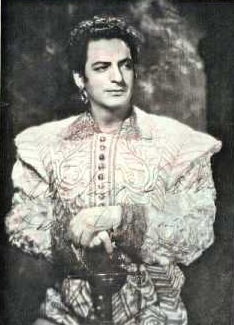
    Above: basso Roberto Silva as Don Giovanni

    Lots of opera lovers are familiar with recordings of the 1951 Mexico City AIDA because it includes an interpolated high E-flat from Maria Callas at the conclusion of the Triumphal Scene. Despite middling sound-quality, there’s actually quite a lot to sustain interest in the performance as a whole – not least the voice-risking, full-throttle Amneris of Oralia Dominguez. Dominguez was only 26 at the time, and singing her first Amneris; she spends the voice so recklessly, including some cavernous chest-tones, that it’s a wonder she was able to ever sing anything again. But in fact she had a career that lasted into the 1970s, and is best-remembered as Erda in the Karajan RING Cycle recording.

    There’s another impressive voice to be heard in this Mexico City performance: basso Roberto Silva, who sings Ramfis. Silva sustains a powerful note in the phrase “Per tua man diventi ai nemici terror, folgore…morte!” during the Temple Scene. Silva holds his own against the Radames of Mario del Monaco.

    Mario del Monaco & Roberto Silva – Temple Scene ~ AIDA – Mexico City 1951

    I went in search of information about Señor Silva, though I could not find much in the way of biographical detail. He sang in LUCIA DI LAMMERMOOR, RIGOLETTO and PURITANI with Callas during her Mexico City seasons, and there is a listing of him as Geronte in MANON LESCAUT (also at the Palacio de Bellas Artes, in 1951) opposite Clara Petrella. It seems he also had a career as a film actor.

    The only other souvenir I could find of Roberto Silva is this rendering of Colline’s “Coat Aria” from BOHEME. It’s quite nice, actually.

  • Big Basso Note

    Hqdefault

    Above: basso Roberto Silva as Don Giovanni

    Lots of opera lovers are familiar with recordings of the 1951 Mexico City AIDA because it includes an interpolated high E-flat from Maria Callas at the conclusion of the Triumphal Scene. Despite middling sound-quality, there’s actually quite a lot to sustain interest in the performance as a whole – not least the voice-risking, full-throttle Amneris of Oralia Dominguez. Dominguez was only 26 at the time, and singing her first Amneris; she spends the voice so recklessly, including some cavernous chest-tones, that it’s a wonder she was able to ever sing anything again. But in fact she had a career that lasted into the 1970s, and is best-remembered as Erda in the Karajan RING Cycle recording.

    There’s another impressive voice to be heard in this Mexico City performance: basso Roberto Silva, who sings Ramfis. Silva sustains a powerful note in the phrase “Per tua man diventi ai nemici terror, folgore…morte!” during the Temple Scene. Silva holds his own against the Radames of Mario del Monaco.

    Mario del Monaco & Roberto Silva – Temple Scene ~ AIDA – Mexico City 1951

    I went in search of information about Señor Silva, though I could not find much in the way of biographical detail. He sang in LUCIA DI LAMMERMOOR, RIGOLETTO and PURITANI with Callas during her Mexico City seasons, and there is a listing of him as Geronte in MANON LESCAUT (also at the Palacio de Bellas Artes, in 1951) opposite Clara Petrella. It seems he also had a career as a film actor.

    The only other souvenir I could find of Roberto Silva is this rendering of Colline’s “Coat Aria” from BOHEME. It’s quite nice, actually.

  • Bronfman’s Bartok @ The NY Philharmonic

    Bronfman

    Above: pianist Yefim Bronfman

    ~ Author: Oberon

    Wednesday December 27th, 2017 – My friend Dmitry and I are fans of Yefim Bronfman, so this evening’s concert by The New York Philharmonic was a perfect classical-music finale for the year 2017.

    The evening opened with the overture to Smetana’s opera THE BARTERED BRIDE. I first heard this overture played live when James Levine chose it to open the Metropolitan Opera’s 100th anniversary gala in 1983. The gala (in two parts – matinee and evening) was telecast worldwide, but I was fortunate to have been in the House for the afternoon program. Let’s just say, they don’t make opera galas like that any more.

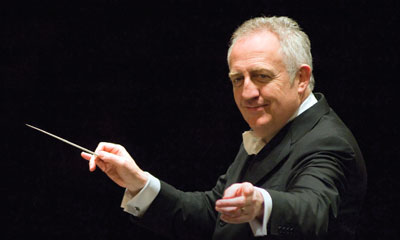
    It was great fun to hear the jolly, rambunctious Smetana overture again tonight under Bramwell Tovey’s baton; the Maestro set an exhilarating, ultra-fast pace for this music, and the Philharmonic artists took up his challenge: they played brilliantly and seemed truly to be having fun into the bargain. The music passes thru many modulations along the way, and solo moments sparkle forth – notably from Sherry Sylar’s oboe – as we are danced along in a lively manner. Really, an ideal concert-opener.

    Mr. Bronfman then appeared for the Bartok 2nd piano concerto. Following an ascending flourish from the Steinway, the first movement commences with rather wild brass fanfares. The piano sounds restless, set against winds; the turbulence builds only to subside, and Mr. Brofman’s playing turns subtle. Following another brass and piano build-up, there’s a full stop. Thereafter the music seems more melodious, though droll and ironic. The brass get quite noisy before the pianist silences them with a cadenza that flows up and down the keyboard. After a passage for flutes and piano, the soloist plays a double rising motif.

    Pensive strings introduce the the Adagio which develops into a marvelous duet for piano and timpani. Here Mr. Bronfman and timpanist Marcus Rhoten created an incredible atmosphere: moody and a bit ominous. Suddenly things perk up without warning and we are in a scherzo-like realm with an agitato feeling and with the pianist finding unusual delicacies. Mr. Bronfman then commences a remarkable pianissimo trill that goes on and on over misterioso strings.

    For the concerto’s finale, Bartók gets almost jazzy – in a slightly darkish way – and we hear from the trumpets; a feeling of a kind of war dance evolves. Another piano/percussion duet crops up – this time it’s Steinway vs bass drum – before the music turns unexpectedly dreamy. But the dream is short-lived as the trumpets re-awaken and the concerto ends brightly. Mr. Bronfman was well in his element throughout, his playing agile and multi-hued, with fine dynamic contrasts. The orchestra did their soloist proud.

    By way of perfect contrast to his grand-scale playing of the Bartók, Mr. Bronfman chose for an encore Chopin’s Étude in E Major, Op.10, No.3. The opening melody of this work, thought to have been Chopin’s favorite among the études, was later the source of a vocal song arranged by the soprano Félia Litvinne and recorded famously by Litvinne’s pupil, the tragic Germaine Lubin. This evening, Mr. Bronfman’s poetic rendering of the full étude cast a thoughtful spell over the hall. This magical experience, like so many others in recent years, was sadly spoilt in its most poignant passage by the ringing of a cellphone. Yet Mr. Bronfman continued, unperturbed, and left me a beautiful memory to cherish.

    94-ef6ab60c90ba3fb6a7911b7999dd5f4e

    Above: Bramwell Tovey

    Following the interval, an exciting performance of Mussorgsky’s Pictures at an Exposition (in the Ravel orchestration) again found the orchestra on peak form. Opening with a brass chorale Promenade, which recurs with variations during the first seven movements, the suite conjures up visions of the works of Viktor Hartmann. Upon Hartmann’s death in 1874 at the young age of 39, an exhibition of his work was mounted at St. Petersburg. Mussorgsky visited the exhibit and was inspired by what he saw to write a set of miniatures for piano. In 1922, Maurice Ravel orchestrated the pieces.

    A huge orchestra is in play, including five percussionists, two harps, and celesta. The ponderous Gnome, the child-like and playful Tuileries, the plodding Ox-Cart, the mini-scherzo of the Ballet of Unhatched Chicks, the bustling Marketplace at Limoges, the Roman Catacombs (deep brass), and the fanciful Hut of Baba-Yaga are all evoked in coloristic settings which the Philharmonic players delivered with evident affection.

    The movement which most impressed me was Il Vecchio Castello (The Old Castle) in which flutes, oboe, and bassoon were joined by the mellow, distinctive voice of the alto saxophone. This music was so evocative that I got lost in it. 

    The suite ends on a grand note with The Great Gate of Kiev. Sumptuously played, it brought a year full of music to an imperial finish.

    ~ Oberon

  • Bronfman’s Bartok @ The NY Philharmonic

    Bronfman

    Above: pianist Yefim Bronfman

    ~ Author: Oberon

    Wednesday December 27th, 2017 – My friend Dmitry and I are fans of Yefim Bronfman, so this evening’s concert by The New York Philharmonic was a perfect classical-music finale for the year 2017.

    The evening opened with the overture to Smetana’s opera THE BARTERED BRIDE. I first heard this overture played live when James Levine chose it to open the Metropolitan Opera’s 100th anniversary gala in 1983. The gala (in two parts – matinee and evening) was telecast worldwide, but I was fortunate to have been in the House for the afternoon program. Let’s just say, they don’t make opera galas like that any more.

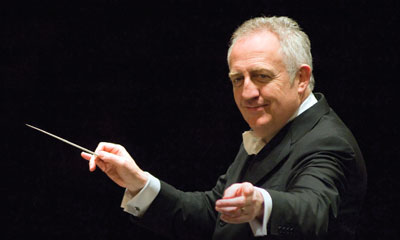
    It was great fun to hear the jolly, rambunctious Smetana overture again tonight under Bramwell Tovey’s baton; the Maestro set an exhilarating, ultra-fast pace for this music, and the Philharmonic artists took up his challenge: they played brilliantly and seemed truly to be having fun into the bargain. The music passes thru many modulations along the way, and solo moments sparkle forth – notably from Sherry Sylar’s oboe – as we are danced along in a lively manner. Really, an ideal concert-opener.

    Mr. Bronfman then appeared for the Bartok 2nd piano concerto. Following an ascending flourish from the Steinway, the first movement commences with rather wild brass fanfares. The piano sounds restless, set against winds; the turbulence builds only to subside, and Mr. Brofman’s playing turns subtle. Following another brass and piano build-up, there’s a full stop. Thereafter the music seems more melodious, though droll and ironic. The brass get quite noisy before the pianist silences them with a cadenza that flows up and down the keyboard. After a passage for flutes and piano, the soloist plays a double rising motif.

    Pensive strings introduce the the Adagio which develops into a marvelous duet for piano and timpani. Here Mr. Bronfman and timpanist Marcus Rhoten created an incredible atmosphere: moody and a bit ominous. Suddenly things perk up without warning and we are in a scherzo-like realm with an agitato feeling and with the pianist finding unusual delicacies. Mr. Bronfman then commences a remarkable pianissimo trill that goes on and on over misterioso strings.

    For the concerto’s finale, Bartók gets almost jazzy – in a slightly darkish way – and we hear from the trumpets; a feeling of a kind of war dance evolves. Another piano/percussion duet crops up – this time it’s Steinway vs bass drum – before the music turns unexpectedly dreamy. But the dream is short-lived as the trumpets re-awaken and the concerto ends brightly. Mr. Bronfman was well in his element throughout, his playing agile and multi-hued, with fine dynamic contrasts. The orchestra did their soloist proud.

    By way of perfect contrast to his grand-scale playing of the Bartók, Mr. Bronfman chose for an encore Chopin’s Étude in E Major, Op.10, No.3. The opening melody of this work, thought to have been Chopin’s favorite among the études, was later the source of a vocal song arranged by the soprano Félia Litvinne and recorded famously by Litvinne’s pupil, the tragic Germaine Lubin. This evening, Mr. Bronfman’s poetic rendering of the full étude cast a thoughtful spell over the hall. This magical experience, like so many others in recent years, was sadly spoilt in its most poignant passage by the ringing of a cellphone. Yet Mr. Bronfman continued, unperturbed, and left me a beautiful memory to cherish.

    94-ef6ab60c90ba3fb6a7911b7999dd5f4e

    Above: Bramwell Tovey

    Following the interval, an exciting performance of Mussorgsky’s Pictures at an Exposition (in the Ravel orchestration) again found the orchestra on peak form. Opening with a brass chorale Promenade, which recurs with variations during the first seven movements, the suite conjures up visions of the works of Viktor Hartmann. Upon Hartmann’s death in 1874 at the young age of 39, an exhibition of his work was mounted at St. Petersburg. Mussorgsky visited the exhibit and was inspired by what he saw to write a set of miniatures for piano. In 1922, Maurice Ravel orchestrated the pieces.

    A huge orchestra is in play, including five percussionists, two harps, and celesta. The ponderous Gnome, the child-like and playful Tuileries, the plodding Ox-Cart, the mini-scherzo of the Ballet of Unhatched Chicks, the bustling Marketplace at Limoges, the Roman Catacombs (deep brass), and the fanciful Hut of Baba-Yaga are all evoked in coloristic settings which the Philharmonic players delivered with evident affection.

    The movement which most impressed me was Il Vecchio Castello (The Old Castle) in which flutes, oboe, and bassoon were joined by the mellow, distinctive voice of the alto saxophone. This music was so evocative that I got lost in it. 

    The suite ends on a grand note with The Great Gate of Kiev. Sumptuously played, it brought a year full of music to an imperial finish.

    ~ Oberon