Category: Opera

  • The Schumann Quartet @ Chamber Music Society

    30738946_10155657104388666_6425725551075393536_n

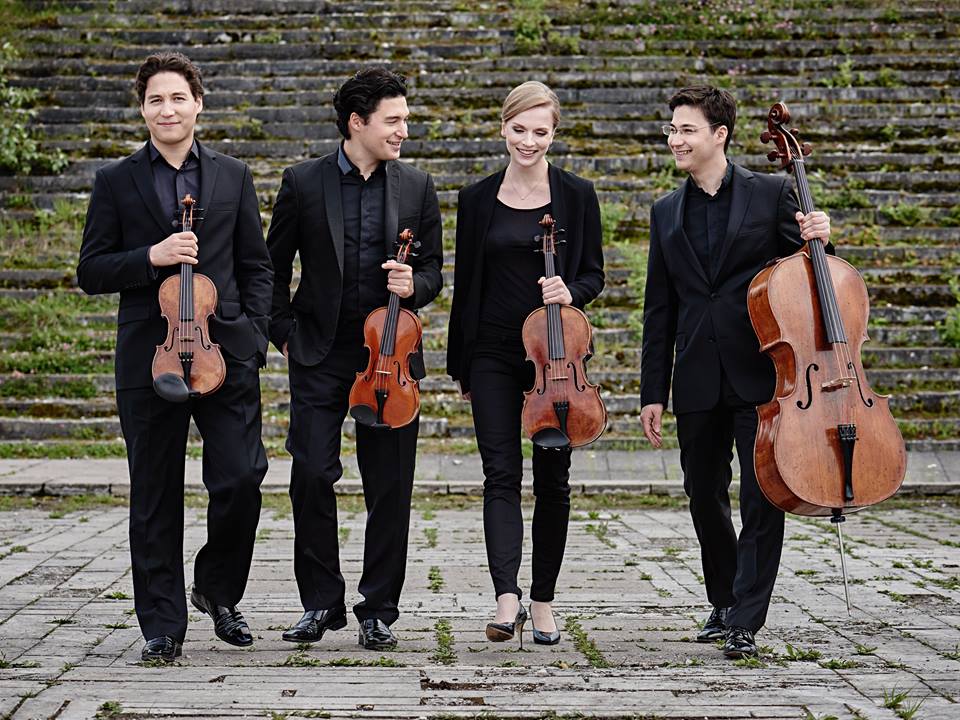
    Above: The Schumann Quartet

    ~ Author: Oberon

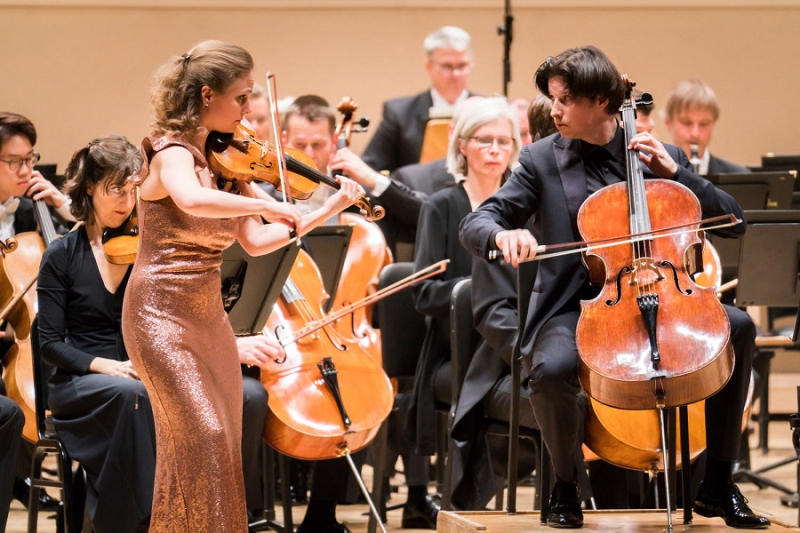
    Sunday April 29th, 2018 – The Schumann Quartet‘s finely-contrasted program at Chamber Music Society this evening brought us works composed in four different centuries, including the US premiere of a piece composed in 2006 by Aribert Reimann.

    One of the (many) nice things about attending Chamber Music Society frequently: your opinions on various composers change. Over the past few seasons, being exposed often to the music of Haydn has altered my feelings towards his music, which had always seemed to me attractive and well-crafted but lacking in the emotional qualities that make Mozart, Beethoven, and Brahms so satisfying. 

    So this evening’s opening Haydn – the Quartet in B-flat major for Strings, Hob. III:78, Op. 76, No. 4, “Sunrise” (1797) – didn’t give me the old reaction: “If only they’d programmed _____________ instead,” but rather a feeling of appreciation, especially as it was so finely played. Each member of the Schumann Quartet has a beautiful ‘voice’, and as they blended in this music the effect was heavenly.

    The “Sunrise” Quartet is indeed worthy of its name: seconds into the piece, an ascending phrase from the violin depicts the moment of dawning day. Soon afterward, the music turns lively, and the players show off their expert sense of timing. When the music turns darkish, the layering of the four musical lines is truly atmospheric.

    In the Adagio which follows, a lovely sense of calm pervades. The high violin sings serenely over the warmth of the lower mix; modulations are graciously set forth, the cello with glowing tone. The Menuetto has an oddly ‘Scottish’ feeling, and in a da capo, subtly charming hesitations are felt. The quartet then dove immediately into the final Allegro, ma non troppo – ‘non troppo‘ being the key, for the pacing had a gentle lilt. As things turn more lively, the harmonizing violins bring a witty touch. A sudden gear shift sets up a super-fast conclusion.

    The Schumann Quartet then moved on to Bartók: his Quartet No. 2 for Strings, BB 75, Op. 17 (1914-17), a wartime work which was given a remarkable interpretation by the young musicians: thoroughly engrossing.

    The Bartók 2nd’s three movements each seem to represent an emotional state: solitary life, joy, sorrow. An eerie sense of restlessness sets the mood of the opening Moderato; contrasting passages of intensity and somber beauty find the Schumanns at their most expressive, the probing cello making a special impression. Tonal richness wells up, angst and poignant longings are finely delineated. A rocking motif, plucked cello, duetting violins, and dusky viola drift thru our consciousness before the music takes on a searing quality. This subsides to movement’s sudden, near-silent finish.

    The Allegro is scrambling, animated, constantly pulsing. The Schumanns relish the passages of plucking with brief bits of melody tucked in. The music becomes driven, then suddenly stalls. Following more hesitations, staccati, and snatched commentary, energy is restored. Trilling, the music plunges on. But we are not there yet: another pause, and some agitato scurrying before a big finish. The rhythmic vitality of the Schumanns gave this Allegro just the perfect sense of dancing. 

    An alien sense of gloom descends over the concluding Lento as a bleak melodic motif is passed violin to violin to viola to cello. From muted, pensive blendings, the violin rises to the heights. Intense harmonies bring a density of sound that is suddenly stilled. From quietude, another unsettling passage builds. Plucked notes bring us to a whispered ending.

    Throughout the Bartók, I was deeply engaged by the Schumanns’ playing, sitting forward to catch every nuance. My focus was so intense that the hall and everyone around me seemed to vanish; it was just me and the music – a rare, profound feeling.

    I confess to never having listened to much of Aribert Reimann’s music; I took a recording of his opera LEAR from the library a few years ago and found it off-putting in the extreme. I cannot say that the composer’s Adagio zum Gedenken an Robert Schumann for String Quartet – in its US premiere performance this evening – did anything to make me want to explore more of the composer’s work, despite the excellence of the playing.

    Dark viola and cello and powerful staccati from the violins open the piece. The music becomes woozy; at times it sounds seasick. Moments of beauty in the richness of the lower voices, and high-lying phrases from the second violin are welcome. The cellist taps his cello. 

    From nowhere, a hymn-like melody appears, then goes askew; these motifs alternate for a bit before the music turns metallic. High violin notes and strange harmonies carry the 8-minute work forward. As an imagining of what music Robert Schumann in his madness might have heard in his head, Reimann’s Adagio is touching; this alone might make it worth hearing again in future.

    To round out the evening, Robert Schumann’s Quartet in F major for Strings, Op. 41, No. 2 (1842). This was Schumann’s first effort in the quartet genre, and both my companion and I had a sense that the composer was rather feeling his way into it: sometimes the flow of musical ideas seems a bit disjointed. However, there are plenty of passages to savour – and a wonderfully deft Scherzo – which the players brought forth in their polished, melodious performance.

    ~ Oberon

  • Classical Evolution @ Chamber Music Society

    2aaf32_c2a51dd8031d4d7cab51a39159e29b1e~mv2_d_4048_3215_s_4_2

    Above: Tommaso Lonquich, photographed by Anna Grudinina

    ~ Author: Oberon

    Friday April 27th, 2018 – Chamber Music Society of Lincoln Center brought together clarinet phenomenon Tommaso Lonquich, the outstanding pianist Gilles Vonsattel, and a quartet of sterling string players for an evening of music-making that was by turns stimulating and soothing. Audience distractions were annoying, but the music prevailed.  

    According to one of his students at the time, Mozart wrote his Trio in E-flat major for Clarinet, Viola, and Piano, K. 498, “…on 10 sheets (19 pages)…” in Vienna, dating it August 5, 1786. It’s not clear how the nickname “Kegelstatt” came to be applied to this trio; the word refers to ‘a place where skittles are played’ – skittles in those days referring not to the colorful candies but rather to a nine-pins bowling game which Mozart sometimes enjoyed. At any rate, the name stuck, and thus has the trio come down to us today.

    Home music-making being all the rage in Vienna at the time, the trio was first played at a ‘house concert’ in the von Jacquin family’s residence: Anton Stadler played clarinet, Mozart the viola, and Franziska von Jacquin – a pupil of Mozart’s to whom the piece is dedicated – the piano. The clarinet at that time was only just coming into its own, so an alternate version of the trio with the clarinet part transcribed for violin was also published.

    This evening, clarinetist Tommaso Lonquich joined violist Yura Lee and pianist Gilles Vonsattel for an first-rate performance of this delightful trio. Mr. Lonquich, whose playing made a truly memorable impression when I first heard him in 2015, displayed all the same fascinating qualities of his artistry tonight: prodigious breath-control, a wonderful sense of melodic flow, and a magical finesse of the dynamic range. He and his two colleagues here were very nicely matched, for Mr. Vonsattel’s playing readily displays both verve and nuance – his tapered phrases so elegant – whilst Ms. Lee, ever a joy to encounter, aligned her tonal quality to the clarinetist’s, making their harmonizing especially attractive.

    The Menuetto was particularly enjoyable tonight; after a big start, the music simmers down and the three musicians seemed to vie with one another to see who could play the softest. Then the viola sets up an animated figuration, keeping things lively. Detail-oriented playing from all three – and their keen awareness of one another – put a smile on my face.

    In the concluding Rondeaux: Allegretto, a rolling song sets forth; clarinet and piano sing to one another. Mr. Vonsattel’s summons up sparkling sounds from the Steinway before turning more lyrical. Ms. Lee introduces a viola theme which is passed about and harmonized. Throughout, the dynamic arc keeps the ear on the alert: some glowing pianissimo motifs from the keyboard captured my imagination.

    Mr. Lonquich then took the lead in Carl Maria von Weber’s Quintet in B-flat major, Op. 34 (1811-15), with a stylish string quartet: Erin Keefe, Ida Kavafian, Yura Lee, and Nicholas Cannellakis. Like Adolphe Adam’s score for GISELLE, von Weber’s music is very operatic: one continually imagines a baritone launching a cavatina, or a soprano doling out elaborate roulades in some kind of auf Deutsch mad scene. It is perhaps this operatic connection that makes Weber’s music so appealing to me.

    After a hesitant opening of string chords, the clarinet enters very softly and takes an impressive crescendo on a single note. From here, Mr. Lonquich embarked on his astonishing performance, his tone dulcet in every register, his swift coloratura and dizzyingly accurate scales full of life and light. Cellist Nick Canellakis takes up a theme of ‘vocal’ quality; later, his gorgeous tone will be a steadying element as Mr. Lonquich continues to revel in mad bravura.

    Mr. Canellakis’s somber-sounding cello opens the Fantasia: Adagio ma non troppo, with Mr. Lonquich taking up a poignant melody; there’s heartfelt beauty in his thoughtful measuring out of the tone. Meanwhile, Mr. Canellakis continues to savour each cello passage. Clarinet scales and long, soft phrases develop, and then things come to a halt. The strings play a lament; the clarinet’s re-entry will bring us more delicate scales and whispered pianissimi before the elegant melody is resumed.

    The lively Menuetto features delightful warbling effects from Mr. Lonquich’s clarinet, along with madcap zips up to his high range; in contrast, some ultra-soft playing a bit later hung gorgeously on the air. Erin Keefe’s violin introduces a cordial interlude, followed by the clarinet resuming his fanciful warbling.

    As the concluding Rondo: Allegro giocoso commenced with the rhythm of a gentle galop, I scrawled “A treat!” across my Playbill. Mr. Lonquich sounded forth brightly, the clarinet melody drawing us forward to his spectacular scale-forays to the top before reeling off fantastic passages of fiorature in a marvelous bravura display.

    As the players sailed on their merry way thru this vastly enjoyable music, one sensed a build-up of excitement in the hall: Mr. Lonquich’s virtuosity dazzled, and the crowd’s reaction was a vociferous standing ovation, with the players called out twice as a feeling of sheer joy filled the hall.

    Main

    Following the interval, Mr.Vonsattel (above) returned to the Steinway for a perfectly polished rendering of the Brahms Quintet in F minor for Piano, Two Violins, Viola, and Cello, Op. 34 (1862), with Ms. Kavafian now in the first chair.

    At first we are lulled by a melodious start, but suddenly: drama – a big theme takes over. The string voices come alive: silky violin, mellow viola, rich cello. Mr. Vonsattel, Ms. Kavafian, and Mr. Canellakis play in unison; the piano gets rapturous before a lull, whereupon a hush sets.  Softly Mr. Vonsattel lures in a thread of sound from the violin and a warmer depth from the cello. The music builds to a mysterious dance, with glimmering piano. Intoxicated by the music and the detailed playing, I recalled a state we sometimes achieved back in the Flower-Power era: of being blissed out.

    The gentle start of the Adagio, hampered by thoughtless audience activity, nevertheless made its mark. Lovely harmonies rose, Ms. Lee and Mr. Canellakis mellifluous, with Mlles. Kavafian and Keefe duetting sweetly. The movement concludes with a tender fade-away.

    The Scherzo begins with a low cello pulse, and suddenly a big theme explodes that is both mysterious and passionate. A marziale motif takes over, a paean – to music? to life? – which subsides into a calm interlude. When things re-bound, Mr. Vonsattel at the keyboard turns sprightly as a rise in propulsion takes us to an emphatic end.

    Mr. Canellakis – shall we say here what a simply terrific cellist he is? – commences the concluding movement in a surprisingly sorrowful mood, and Mr. Vonsattel at the piano sounds richly. Now the dancing Rondo commences, veering from impetuous quietness to nervy turbulence. Themes are rewoven, and we are being borne along towards the finish when, at the worst possible moment – and with only a minute of music left to go – someone noisily began unwrapping a snack.

    ~ Oberon

  • New Music @ Rose Studio

    ~Author: Scoresby

    Thursday April 26 2018 – At the Chamber Music Society of Lincoln Center’s last New Music concert of the season, the Schumann Quartet and pianist Gloria Chien gave a wide-ranging performance. The first piece on the program was the last movement of Swiss composer Helena Winkelman‘s Quadriga Quartet for Strings titled “Sleipnir the eight-legged” based on the eponymous horse in Norse mythology. While only the last movement of the quartet, Ms. Winkleman is open to it being played alone. It is a rollicking piece that includes references to Bartok, jazz, metal, and Swiss folk music all in a contemporary idiom.

    The Schumann Quartet played through the virtuosic material with enthusiasm, indulging in all the fun timbres Ms. Winkleman imbeds in the score and still able to bring out the lyricism that punctuates the more cacophonous moments. In fact, violist Liisa Randalu and cellist Mark Schumann seemed to blend incredibly well as duo – matching each other to create a delicious backdrop for first violinist Erik Schumann and second violinist Ken Schumann’s lyrical melodies. Through the work, the rhythmic pulse sounds like a frenetic horse stomping through – it is a shame we only got to hear one movement of this quartet. I look forward to hearing more of Ms. Winkleman’s music soon.

    Screen Shot 2018-05-01 at 5.25.18 PM

    Above: Schumann Quartet; Photo Credit: Kaupo Kikkas

    The second work on the program was Timo Andres’s five continuous movement work Quintet for Piano, Two Violins, Viola, and Cello. The aptly named first movement Cannons and Fables, sounds like an upbeat riff on minimalist Schumann. The most interesting was the second movement, which is based on large dusty tremolos in all of the instruments. The quartet’s tight and structured sound contrasted the more rustic sounding piano part. While interesting to listen to – this doesn’t seem to Mr. Andres’s most interesting work.

    Henze’s brief “Sonatina for Violin and Piano” seemed highly structured and a completely different sound world than the earlier Andres. Second violinist Ken Schumann and Ms. Chien presented the work based off of themes from one of his operas. The Allegretto has an active piano work full of counterpoint and dissonance, with what seem to be quotes from Messiaen’s Quartet for the End of Time. Mr. K Schumann captured the almost romantic nostalgia in the second movement, his mute letting him produce a supple ghostly sound and his phrasing emphasizing the lyrical quality of the music. Ms. Chien in the last movement embraced the drama in the piano part and gave heft to the huge chords that end the piece below Mr. K Schumann’s highpitched violin.  

    After the rigidly structured world of Henze, the program moved into two selections from “Piano Etudes” by Augusta Read Thomas. The first (etude 3), titled Cathedral Waterfall – Homage to Messiaen, is a spacious work that uses the extreme reaches of the piano and heavy use of pedal to evoke a large cathedral. Ms. Chien let the piano boom in these chords, making the small space seem like an echo chamber. She managed to let the color of each chord be clear without blending into the next – thus producing a chiming sound. This effect sounded at once like Feldman’s sparse tone mixed with the large spaciousness that Crumb’s Makrosomos evoke. The second work (etude 2) called “Fire Waltz – Homage to Bartók” is a thrillingly fun Ligeti-esque work. Ms. Chien seemed to stick to its incisive rhythm and sound like a machine that kept getting interrupted. It was a fun reading that seemed to relish in Ms. Thomas’s jazzy composition style.

    Screen Shot 2018-05-01 at 5.22.19 PM

    Pianist: Gloria Chien

    The most well-known piece on the program was Arvo Pärt’s Fratres. Mr. Pärt originally composed the work in 1977 and has rearranged it over 15 times for different instrument combinations. While all share a structural chord sequence and something percussive, each one has a slightly different sound. In her speech beforehand, Ms. Randalu shared that Mr. Pärt thought of his music as existing not for a particular timbre or instrument, but in absolute forms – structural music. All four members of the quartet gave a dedicated performance. 

    Mr. K Schumann held the same note for all 10 minutes of the performance, letting everyone blend around and atop his drone. This version of Fratres is more spiritual and less earthy than other versions of the piece. They took the chords slowly, the instruments started in the high harmonics and over the course of the piece moved to the lowest notes through the chord sequence – Mr. M Schumann’s warm cello pizzicato breaking up the sequence. The lack of contrast in this version of the work, makes it much more sparse – perhaps intentional to evoke a choir. While certainly a beautiful work and given a detailed rendering here, it seemed like an odd way to end such an exciting program – perhaps it would have been better served an opener? Nonetheless, it capped another great performance in the CMS New Music Series.

  • Huguette Tourangeau Has Passed Away

    Tourangeau

    Above: Huguette Tourangeau as Parséïs in Massenet’s ESCLARMONDE at The Met

    It’s sad to read of the death of the French-Canadian mezzo-soprano Huguette Tourangeau, a strikingly attractive woman possessed of a truly unique voice. Her sound was sensuous, her lower range incredibly resonant. I saw her at The Met as Nicklausse in CONTES D’HOFFMANN and as Parséïs in Massenet’s ESCLARMONDE in the 1970s.

    OPERA NEWS caught up with Mlle. Tourangeau in 2011: read the article here.

    A frequent colleague of Dame Joan Sutherland, Huguette Tourangeau scored a great personal triumph as Elisabetta in Donizetti’s MARIA STUARDA opposite the Australian diva at San Francisco in 1971.

    Huguette Tourangeau – scena d’Elisabetta – MARIA STUARDA~Act I – San Francisco 1971

  • Pierrot Lunaire @ Carnegie Hall

    ~Author: Scoresby

    Thursday April 19 2018 – On a rather chilly Spring day, Carnegie Hall’s Ensemble Connect had one of its last Weill Hall performances of the season. Every two years the ensemble changes over its fellows and this particular set of musicians will move on in June. As this is the last Ensemble Connect concert I was attending this season, it was interesting to see the contrast between when these players first joined and how they play now.

    The program began with Mozart’s incredibly difficult six movement Divertimento for Violin, Viola, and Cello in E-flat Major, K. 563. The program book seemed to have a typo, listing this work as only 15 minutes long (instead of 45) – perhaps thinking of one of the far shorter and earlier Divertimento for String Quartet. This is a virtuosic tour-de-force piece for all involved because it has incredible exposure for all the instruments, here Rebecca Anderson on Violin, Andrew Gonzalez on viola, and Julia Yang on cello. Ms. Yang’s warm, robust sound stood out immediately – she managed to blend well with Ms. Gonzalez and Ms. Anderson matching vibrato perfectly. 

    Screen Shot 2018-05-04 at 12.55.23 PM
    Above: Ensemble Connect

    Stylistically, the group kept the Allegro light and bouncing. During the Adagio Ms. Anderson’s solo passages were played with a touch of sweetness while Ms. Yang’s ascending cello motifs brought a touch of nostalgia. The Andante (the fourth movement) is a charming set of variations – while every instrument gets its line to shine most impressive were the blending between Mr. Gonzalez and Ms. Yang during the active violin variation. They created a supple backdrop for Ms. Anderson to play the sweet melody. In the fifth movement, the group let the music seemed to have fun with the light bouncy textures and brought the music’s humor out by letting the phrases breathe. The duet between Ms. Anderson and Mr. Gonzalez was fully of energy and light-hearted spirit. While there were a few technical glitches – it was a fun performance of a difficult work. 

    The after-intermission performance demonstrated how much the players in ensemble have grown – it was not only a successful performance of Schoenberg’s Pierrot Lunaire – but one of the best performances I’ve heard this year. The instrumentalists were Rosie Gallagher on flute, Bixby Kennedy, on clarinet, Mari Lee on violin, Madeline Fayette on cello, and Mika Sasaki on piano. As is tradition in Ensemble Connect, before the work began there was a short talk about the music – only here Mari Lee interviewed ‘Schoenberg’s Ghost’, who was wearing a Pierrot-like mask. It was a fun and creative way to introduce the music that a more traditional group wouldn’t have dared to do and Ms. Lee’s earnest questions gave both humor and seriousness to it. It seems Ms. Lee adapted some of the material from her own project Salon Séance for the interview.

    Pierrot is one of the landmark works of the twentieth century. Not quite theatre, not quite music – it lies somewhere in-between in a chamber setting. It was Schoenberg’s first major work using free atonality and is before he came up with his twelve-tone system. Musically it is a piece at the height of German Expressionism, set to the brooding poems of Albert Giraud to paint different fragments of the psyche. It feels at once dream-like and nightmarish with extremes of emotion. In order to enhance this feeling, the group used simple lighting to heighten the drama –  they turned off the regular house lights and replaced them with white spotlights during the first section, blood red lights during the second, and back to white spotlights for third. In this darker atmosphere with the glittering Viennese style chandeliers, one really felt immersed into Schoenberg’s world.

    Unfortunately soprano Mellissa Hughes who was originally supposed to sing the soprano part withdrew due to illness. Luckily, Ensemble Connect managed to get one of the most venerable Pierrot singers alive today: Lucy Shelton.  She was simply spellbinding and elevated the level of the young players to match her. In Columbine the Ms. Lee and Ms. Sasaki’s violin and piano duo gave heft to match Ms. Shelton’s Meine banges Leid (my pain) and immediately changed dynamics to match the zu lindern (soothing). Such precise dynamics from moments like that were the hallmark of this performance – but at the same time the players swelled to match the more crazed sections of the piece.  Ms. Shelton for her part, embodied the music taking a no-holds-barred style. Using hand gestures to and acting to portray the different facets of the characters, from the wisps of nostalgia in the last movement to the crazed laughter and anxiety in the Rote Messe to the cackling gossip in the Gallows Song, Ms. Shelton seemed like she was a witch reciting an incantation and with the dream-like lighting she was spellbinding. In the small hall, her voice filled the entire space and one felt completely immersed – it felt like she was telling you a story and drawing you into her world complete with horrors, traumas, sweetness, and nostalgia for the past. Rather than just a “crazy” approach as many singers bring to this piece, Ms. Shelton captured all the nuance of emotions embedded in both the text and music. Her yearning for the past in the end sounded sweet and  wistful as she whispered “And dream beyond for blissful stretches, O old perfume–from fabled times!”

    Screen Shot 2018-05-04 at 12.54.11 PM
    Above: Soprano Lucy Shelton

    The instrumentalists were no less into the music. While perhaps the could have captured some of the softer tones and romanticism in the third book, they were all precise and together.  A powerful moment at the end of the third movement, Ms. Gallagher’s impressive fluttering as Ms. Shelton sung “With a ghostly moonbeam” – Ms. Gallagher capturing the timbres with precise but soft tones. Ms. Fayette during her nervous outburst in Rote Messe mimicked Ms. Shelton’s crazed line. In the interlude before the last song of the second book, Mr. Bixby deep clarinet melded with Ms. Gallagher’s playing. In that last song, Ms. Lee captured the same timbre as Ms. Shelton’s singing – sounding like a dreamed echo. Ms. Sasaki let the piano. During Gemeinheit Ms. Fayette and Ms. Gallagher matched their vibrato perfectly, creating an ethereal dream-like texture. 

    In the Barcarole, Ms. Lee, Ms. Sasaki, and Ms. Gallagher created a disorienting backdrop of what sounded like a drunken boat ride. All in all, this group of musicians worked hard to create an excellent performance – a great end to the last Ensemble Connect performance in Weill.

  • Petrenko|Bayerisches Staatsorchester @ Carnegie Hall

    CH1375937

    Above: Kirill Petrenko on the Carnegie Hall podium; photo by Chris Lee

    ~ Author: Ben Weaver

    Wednesday March 28th, 2018 – Kirill Petrenko is finishing his term as the Generalmusikdirector of the Bavarian State Opera and in the 2019-20 season will take over as the chief conductor of the world’s most prestigious orchestra, Berlin Philharmonic. It is with the Bavarian State Opera forces (in the concert hall dubbed Bayerisches Staatsorchester) that Petrenko is making his Carnegie Hall debut this season. His only previous NYC appearances were at the Metropolitan Opera where he led a very memorable revival of Ariadne auf Naxos in 2005 and Khovanschina in 2012. For this Carnegie debut concert, Petrenko programmed two oft-forgotten works by two very famous composers: Johannes Brahms’ Double Concerto and Pyotr Tchaikovsky’s Manfred Symphony.

    Brahms composed the Concerto for Violin, Cello and Orchestra, Op. 102, in 1887. It was his last orchestral composition and it was greeted coolly even by ardent supporters like Eduard Hanslick. Soon Brahms himself was dismissing it as “folly” in letters to Clara Schumann. Neglected for many years, it certainly deserves to be heard more often; it surrenders nothing to his famed violin concerto in inspiration, melody and excitement. The writing may not seem as virtuosic as the violin concerto perhaps because Brahms composed a truly double concerto. The two instruments don’t have the kind of virtuosic writing that concertos often do. The music is more of a dialogue for violin and cello – and orchestra, too. It takes a great deal of camaraderie between the two soloists and conductor to bring the pieces together. Maybe it’s the lack of true star turns for the soloists that keeps some musicians away. But when played as superbly as it was by Julia Fischer and Daniel Müller-Schott, with Maestro Petrenko on the podium, the results are breathtaking.

    CH1375954

    Above: Julia Fischer and Daniel Müller-Schott playing the Brahms Double Concerto, with Maestro Petrenko; a Chris Lee photo

    The work begins with a dramatic and brief orchestral opening and immediately the cello launches into an extended solo. One of the few passages of this kind in the work, Müller-Schott immediately established himself as an artist. Rich and velvety notes poured from the instrument. Julia Fischer, a former child prodigy who has grown into a true artist of the violin, soon joined in for one of the concerto’s many extended conversations between the two instruments. Ms. Fischer’s sound is delicate and sweet, the notes rolling effortlessly from her bow. Fischer and Müller-Schott have collaborated many times over the years. Their discography together includes a lot of chamber music, as well as the Brahms concerto. Their musical partnership came across beautifully in the performance, whether playing in unison or handing off music back and forth, it’s the sort of relationship that takes time to develop. The hushed, pastoral-ish second movement was wondrous and the Bohemian inspired dances of the Finale were perfect. Maestro Petrenko and the superb Bayerisches Staatsorchester forces were excellent partners.

    Ms. Fischer and Mr. Müller-Schott gave an encore: an extended virtuoso piece: Passacaglia by Johann Halvorsen. It was really great!

    CH1375936

    Above: Julia Fischer and Daniel Müller-Schott, photo by Chris Lee

    Tchaikovsky’s largest orchestral work, the Manfred Symphony was composed in 1885, between his more famous 4th and 5th Symphonies. Inspired by Byron’s poem (Schumann composed a famous overture based on it as well), Tchaikovsky – already master of the large orchestral forces – outdid himself with sheer size of forces needed, including a harmonium (typically replaced by an organ in performances and recordings.) Initially Tchaikovsky considered it to be his finest composition, but after a mixed reception from critics and the public, in what was a common refrain of his life, turned on it and declared it awful; even considered destroying everything but the first movement. Fortunately his instinct to burn it did not come to pass because it is certainly one of his greatest works. And I often think it may be his greatest symphony.

    What I find astonishing about the Manfred Symphony is the sheer amount of invention – melodic and orchestration. In some ways it reminds me of Verdi’s Falstaff. Some complain that Verdi’s last opera is lacking in melody, but it might actually contain more melodies than all of his other works combined. They simply fly by and disappear so quickly that one can fail to notice. That’s my view of Tchaikovsky’s Manfred. The melodies and brilliant orchestration can be so sudden, so novel and so brief that it’s all gone and moved on to something else entirely before you realize what you just heard. It is truly a work that demands repeated hearings.

    The dark first movement depicts Manfred’s anguished wanderings in the Alps; “His life shattered…”, as the program note (by Mily Balakirev) describes. With halting phrases, Tchaikovsky depicts a peaceful pastoral one moment, Manfred’s pain the next. The explosive climax – one of Tchaikovsky’s most beautiful melodies – is hair-raising. I often hear it as a perfect musical accompaniment to the moment in Wuthering Heights where Heathcliff is found dead in Catherine’s room, thunder and lightning blaring outside. The two middle movements are, by contrast, blasts of light. The light fairy music of the Scherzo (in the program a fairy of the Alps appears to Manfred splashing in a waterfall) would have pleased Mendelssohn, I think. The slow third movement presents a portrait of a peaceful nature, something Beethoven would have recognized perhaps. And in the final movement, again a darkness descends. The music swirls and growls as Manfred visits the caves of Arimanes. And the anguished love theme from the first movement returns to signal Manfred’s death – greeted with an organ playing a hymn.

    The forces of the Bayerisches Staatsorchester played the work superbly. Kirill Petrenko led an all-around thrilling performance, goading the players to play bigger and louder (I was reminded of the famous story of Richard Strauss rehearsing Elektra and yelling to the players: “Louder, louder! I can still hear Madam Schumann-Heink!”) But effortlessly bringing volume and emotion down to a whisper when needed as well. Though Manfred has long been neglected (many complete recorded cycles of Tchaikovsky’s symphonies do not include it), over the past few years it has been heard in NYC several times. New York Philharmonic played it with Semyon Bychkov (one of Petrenko’s mentors) and Vienna Philharmonic played it at Carnegie with Valery Gergiev. Perhaps Maestro Bychkov’s performance was bigger. The NY Philharmonic’s heavier sound might account for the bigger bombast. Bayerisches Staatsorchester has a leaner, more pointed sound overall. It provided greater transparency in the more heavily orchestrated parts (and there are many.) Personal tastes will vary on the preferred sound. But no doubt Kirill Petrenko led a superb night of music-making. His future with the Berlin Philharmonic is very exciting.

    CH1375935

    Above: Kirill Petrenko and the musicians of the Bayerisches Staatsorchester acknowledge the applause at the close of this evening’s concert; photo by Chris Lee

    ~ Ben Weaver

  • CMS Winter Festival 2018 – #3

    Shanghai-Quartet-Header

    Above: the Shanghai Quartet

    ~ Author: Oberon

    Tuesday March 27th, 2018 – The last concert of Chamber Music Society of Lincoln Center‘s Winter festival, entitled Chamber Music Vienna.

    Ignaz Schuppenzigh (1776-1830) is credited with pioneering the ‘chamber music series’. Schuppenzigh was a violinist and a friend of Beethoven who presented over a hundred chamber music concerts in Vienna between 1823 and 1828. Works of Haydn, Mozart, and Beethoven were prominently featured in the programming, and it is precisely those three composers whose music we heard this evening.

    But tonight’s concert had a deeper significance, for it duplicated exactly the program Schuppenzigh offered in Vienna on March 26th, 1827 – the very day that Beethoven passed away. In fact, it has been determined that the moving Largo con espressione from Beethoven’s Trio in G major, Op. 1, No, 2, was being played the exact time of the great man’s passing. 

    The Shanghai Quartet opened this evening’s concert with Haydn’s Quartet in G major for Strings, Hob. III:81, Op. 77, No. 1 (1799). The Shanghai have their own distinctive sound, cool and concise, suited well to both their Haydn and Mozart offerings on this program.

    The opening movement of the G major quartet, marked Allegro moderato, has a feeling of perpetual motion, somewhere between a march and a dance. There are ingratiating modulations and the writing is quite florid. By contrast, the Adagio, with its unison opening, has an almost operatic feeling. Courtly, and with gracious harmonies, the first violin sings forth and then engages in a duet with the deepening cello. Rising modulations – with the cello ever-prominent – bring a da capo which, with varying harmonics, reaches an emotional level I don’t often feel in Haydn’s music. The Shanghai made much of this movement’s sheer beauty.

    The Minuet has the genuine air of a scherzo; it’s fun, with swirls of notes carrying the violin on high. The swift, unison start of the Finale: Presto brings some very nimble playing from the Shanghai’s 1st violinist, Weigang Li; the music becomes genuinely exhilarating.

    Next came Mozart: his Quartet in D-major for Strings, K. 575, is one of the “Prussian” quartets (dating from 1789) and as such features the cello as a nod to the cello-playing king, Friedrick Wilhelm II. In the opening Allegretto, it is the cello that presents the second theme; here, and throughout the piece, the Shanghai’s Nicholas Tzavaras shone.

    While the Andante clearly showcases the cello, Mozart doesn’t shirk on opportunities for the violist – Honggang Li – or the violins, Weigang Li and Yi-Wen Jiang. Mr. Tzavaras is really in his element with the melodies, and at one point a matched phrase is passed from voice to voice. Quite inventive.

    Following the light, jesting feeling of the Menuetto (Allegretto), the concluding Allegretto‘s theme takes the cello to its high register. A decorative canon pops up before we reach the finale. 

    785535479-ludwig-van-beethoven-central-cemetery-tomb-vienna-austria

    Above: Beethoven’s tomb in Vienna’s Central Cemetary

    The evening ended with Beethoven’s Trio in G major for Piano, Violin, and Cello, Op. 1, No. 2. Pianist Gilbert Kalish, violinist Arnaud Sussmann, and cellist Paul Watkins took the stage for a first-rate performance of this work from a still-young composer.

    Following a slow introduction, in which the lovely blend of the strings and the stylish Steinway work of Mr. Kalish heralded delights to come, the first movement goes Allegro in quite a lively, sometimes folkish manner. The writing has its witty aspects, but the two women in front of us decided they’d never heard anything so hilarious, and they struck up a running conversation, laced with chuckles. Shushing was to no avail.

    Arnaud Sussmann’s absolutely gorgeous tone made a glowing impact in the Largo con espressione, inter-weaving with the bounteous beauty of Mr. Watkins’s cello to irresistible effect as refined romance bloomed from the keyboard. This Largo is considered to be Beethoven’s first great slow movement.

    Following the Scherzo, which bounces from major to minor and back, light-weight agitation marks the Finale: Presto. One violin motif seems like a pre-echo from Rossini’s GUILLAUME TELL overture. With its rhythmic vitality and breezy, devil-may-care lilt, the Presto comes to a vivacious end.

    ~ Oberon

  • CMS Winter Festival 2018 – #3

    Shanghai-Quartet-Header

    Above: the Shanghai Quartet

    ~ Author: Oberon

    Tuesday March 27th, 2018 – The last concert of Chamber Music Society of Lincoln Center‘s Winter festival, entitled Chamber Music Vienna.

    Ignaz Schuppenzigh (1776-1830) is credited with pioneering the ‘chamber music series’. Schuppenzigh was a violinist and a friend of Beethoven who presented over a hundred chamber music concerts in Vienna between 1823 and 1828. Works of Haydn, Mozart, and Beethoven were prominently featured in the programming, and it is precisely those three composers whose music we heard this evening.

    But tonight’s concert had a deeper significance, for it duplicated exactly the program Schuppenzigh offered in Vienna on March 26th, 1827 – the very day that Beethoven passed away. In fact, it has been determined that the moving Largo con espressione from Beethoven’s Trio in G major, Op. 1, No, 2, was being played the exact time of the great man’s passing. 

    The Shanghai Quartet opened this evening’s concert with Haydn’s Quartet in G major for Strings, Hob. III:81, Op. 77, No. 1 (1799). The Shanghai have their own distinctive sound, cool and concise, suited well to both their Haydn and Mozart offerings on this program.

    The opening movement of the G major quartet, marked Allegro moderato, has a feeling of perpetual motion, somewhere between a march and a dance. There are ingratiating modulations and the writing is quite florid. By contrast, the Adagio, with its unison opening, has an almost operatic feeling. Courtly, and with gracious harmonies, the first violin sings forth and then engages in a duet with the deepening cello. Rising modulations – with the cello ever-prominent – bring a da capo which, with varying harmonics, reaches an emotional level I don’t often feel in Haydn’s music. The Shanghai made much of this movement’s sheer beauty.

    The Minuet has the genuine air of a scherzo; it’s fun, with swirls of notes carrying the violin on high. The swift, unison start of the Finale: Presto brings some very nimble playing from the Shanghai’s 1st violinist, Weigang Li; the music becomes genuinely exhilarating.

    Next came Mozart: his Quartet in D-major for Strings, K. 575, is one of the “Prussian” quartets (dating from 1789) and as such features the cello as a nod to the cello-playing king, Friedrick Wilhelm II. In the opening Allegretto, it is the cello that presents the second theme; here, and throughout the piece, the Shanghai’s Nicholas Tzavaras shone.

    While the Andante clearly showcases the cello, Mozart doesn’t shirk on opportunities for the violist – Honggang Li – or the violins, Weigang Li and Yi-Wen Jiang. Mr. Tzavaras is really in his element with the melodies, and at one point a matched phrase is passed from voice to voice. Quite inventive.

    Following the light, jesting feeling of the Menuetto (Allegretto), the concluding Allegretto‘s theme takes the cello to its high register. A decorative canon pops up before we reach the finale. 

    785535479-ludwig-van-beethoven-central-cemetery-tomb-vienna-austria

    Above: Beethoven’s tomb in Vienna’s Central Cemetary

    The evening ended with Beethoven’s Trio in G major for Piano, Violin, and Cello, Op. 1, No. 2. Pianist Gilbert Kalish, violinist Arnaud Sussmann, and cellist Paul Watkins took the stage for a first-rate performance of this work from a still-young composer.

    Following a slow introduction, in which the lovely blend of the strings and the stylish Steinway work of Mr. Kalish heralded delights to come, the first movement goes Allegro in quite a lively, sometimes folkish manner. The writing has its witty aspects, but the two women in front of us decided they’d never heard anything so hilarious, and they struck up a running conversation, laced with chuckles. Shushing was to no avail.

    Arnaud Sussmann’s absolutely gorgeous tone made a glowing impact in the Largo con espressione, inter-weaving with the bounteous beauty of Mr. Watkins’s cello to irresistible effect as refined romance bloomed from the keyboard. This Largo is considered to be Beethoven’s first great slow movement.

    Following the Scherzo, which bounces from major to minor and back, light-weight agitation marks the Finale: Presto. One violin motif seems like a pre-echo from Rossini’s GUILLAUME TELL overture. With its rhythmic vitality and breezy, devil-may-care lilt, the Presto comes to a vivacious end.

    ~ Oberon

  • Marina Prudenskaya

    Xl_avatar

    Born in St. Petersburg, Marina Prudenskaya’s career has centered at Stuttgart (2007-2013) and more recently at the Berlin State Opera. Her vast repertoire has included Bradamante (Alcina), Clitemnestre (Iphigénie en Aulide), Adalgisa (Norma), Fenena (Nabucco), Federica (Luisa Miller), Amneris (Aida), Carmen, Waltraute (Götterdämmerung), Octavian, Azucena, Eboli, Ulrica, Venus in Tannhäuser, Brangäne (Tristan und Isolde), Lyubasha (The Tsar’s Bride), Marie (Wozzeck), Composer (Ariadne auf Naxos), Hansel, and Mother Goose (The Rake’s Progress). 

    She has sung at La Scala, the Mariinsky, and Bayreuth, and in 2017 she sang Amneris at Washington DC. Ms. Prudenskaya caught my attention while watching a DVD of Rheingold from La Scala, conducted by Daniel Barenboim: as Flosshilde (a role she’s also sung at Bayreuth), the mezzo sings lushly and moves with the grace of a dancer.

    Marina Prudenskaya – Rimsky-Korsakov ~ Across the Midnight Sky