Category: Opera

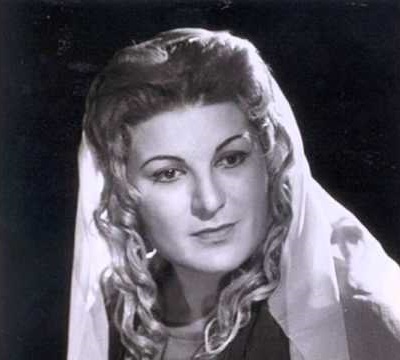
  • Nadine Denize as Geneviève

    16283512

    Currently enjoying my re-discovery of mezzo-soprano Nadine Denize, I was recalling the only time I saw her onstage: as Geneviève in Debussy’s PELLÉAS ET MÉLISANDE at The Met in October 2000.

    This was my diary entry, written the morning after the performance:

    “The Met’s PELLÉAS was a tremendous evening, the gorgeous score played with great clarity and haunting beauty by The Met orchestra. This is one of James Levine’s best operas, and he wove the marvelous sound-tapestry with superb control. The production is exceptionally atmospheric: the slow, timeless world of Allemonde is ever in shadow; unanswered questions hang over the hyper-civilized, stifling palace like a brooding cloud.

    In an outstanding cast, Dwayne Croft as Pelléas gave an outstanding performance: the warmth of his darkish sound seeped into the music, producing long stretches of incredible vocal beauty. Susanne Mentzer was not an innocent Mélisande but a young woman whose experiences have left her dazed and shell-shocked…an engrossing interpretation, exquisitely sung…so full of lyricism and vulnerability.

    It was thrilling to see José van Dam on the Met stage again. He is one of our greatest singers, and his Golaud is perfection in its sheer naturalness of vocalism and austere, haunted presence. In the unaccompanied plea to his wife for forgiveness in the opera’s final scene, the house was held enraptured as van Dam sustained a gossamer pianissimo welling up from the depths of his soul.

    As Geneviève, Nadine Denize’s wine-coloured contralto and splendid diction made her ‘letter scene’ a vocal highlight of the evening. Her dignified presence in the opera’s final scene was so moving. Sheer vocal magnificence made Robert Lloyd’s Arkel the anchor of the evening musically, his moving portrayal of the old king culminating in his wistful acceptance of Mélisande’s death and his silent departure from the bed-chamber.

    Alfred Walker sang well as the Physician, and James Danner did a fine job as Yniold. The singing all evening flowed over the orchestra with speech-like ease and natural, un-theatrical simplicity. A great evening!

    Nadine Denize – Pelléas et Mélisande ~ Voici ce qu’il écrit à son frère Pelléas

  • Kristine Jepson Has Passed Away

    Roh-ariadne-2

    Above: Kristine Jepson as the Composer in ARIADNE AUF NAXOS at Covent Garden in 2008. Photo by Clive Barda.

    It is very sad to note the passing of Kristine Jepson, a wonderful singer and stage presence, after a long battle with cancer. The mezzo-soprano made her Met debut in Britten’s DEATH IN VENICE is 1994 and subsequently sang over 100 performances at The Met, where her roles included Cherubino and Octavian.

    It was as the Composer in Strauss’s ARIADNE AUF NAXOS that Kristine Jepson first intrigued me with the youthful glow of her voice and her wonderfully natural portrayal when she sang the role at Boston in 1991 – the very production that marked the ascendancy of Deborah Voigt, who sang the title-role. In 2003, Ms. Jepson again excelled in this role at The Met in a splendid performance that featured the Met debut of Christine Brewer.

    In 2006, Kristine Jepson sang Idamante in Mozart’s IDOMENEO at The Met; her performance was truly impressive, but sadly these were to be her last appearances on that stage.

    Here is Kristine Jepson in the ‘Presentation of the Silver Rose‘ from DER ROSENKAVALIER from a performance at Genoa in 2008. Patrizia Ciofi is Sophie, and Fabio Luisi conducts.

    Kristine Jepson & Patrizia Ciofi – DER ROSENKAVALIER scene – Fabio Luisi cond – Genoa 2008

  • Raina Kabaivanska as Amelia Grimaldi

    Kabaivanska

    Above: soprano Raina Kabaivanska

    Teatro All Scala gave a two-week season at The Kennedy Center in Washington DC in September 1976, a highlight of the Center’s Bicentennial Celebration. The performances marked La Scala’s first appearance in the United States with an exclusive engagement at the Opera House. The repertory: Verdi’s Macbeth, starring mezzo-soprano Shirley Verrett, La Bohème, La Cenerentola, and Simon Boccanegra.

    By chance, I happened to catch a broadcast of the Boccanegra and recorded a bit of it, despite some radio interference from a late summer storm. Raina Kabaivanska sang Amelia, Piero Cappuccilli was Simon Boccanegra, and Claudio Abbado conducted.

    Here is the beautiful ‘recognition’ duet, where Simon is re-united with his long-lost daughter:

    BOCCANEGRA duet – Kabaivanska & Cappuccilli – Scala at Washington DC – 1976

  • Natalia Troitskaya as Adriana Lecouvreur

    00323174

    Natalia Troitskaya, born in Belgrade of Russian descent, had a major career as a lirico-spinto soprano during the 1980s. She sang at many major European houses, having a long association with both the Vienna State Opera and the Staatsoper Hamburg. She sang in South America, and in the USA at Washington DC and Los Angeles.

    Troitskaya seemed to vanish from the operatic world around 1991; later, I learned that she had passed away in 2006 at the age of 55 following a long illness. She left hardly any commercial recordings, but there are some live performances that were preserved from broadcasts.

    Natalia Troitskaya – ADRIANA LECOUVREUR – Adriana’s entrance – Barbican~London 1987

  • Patricia Brooks as Violetta

    6a00d8341c4e3853ef00e54ff4f69f8833-800wi

    I’ve seen more than a eighty different sopranos in the title-role of Verdi’s TRAVIATA over the years. Patricia Brooks’s interpretation of the role of Violetta in Frank Corsaro’s memorable production for the New York City Opera in 1966, with Placido Domingo as Alfredo, remains at the top of the list. Employing her rather slender and agile voice to optimum effect, she created a portrait of the doomed courtesan that has resonated over the decades. Paradoxically feverish and fragile, Brooks moved audiences – literally – to tears.

    Listening again, nearly fifty years on, to my in-house recording of the Act I scena brings back a flood of memories of the myriad nuances – both vocal and dramatic – that gave the Brooks Violetta its unique place in the opera’s performance history.

    One thing about Ms. Brooks in this role: she was forever making tiny changes in both her singing and her acting of the role, maintaining its freshness over the half-dozen times I saw her in the role. As Matthew Epstein, a great Brooks admirer, said: “No two Brooks Violettas are alike!”

    Patricia Brooks as Violetta – w Molese – NYCO – 9~28~69

    There were other Violettas who moved and thrilled me, but none quite reached the soul of the desperate woman who sacrifices her own happiness so that someone else may be happy.

  • The First Time I Heard GÖTTERDÄMMERUNG

    Herbert-Ralph-02[d]

    Above: American bass-baritone Ralph Herbert

    Still being held captive by the evil sorceress Sciatica, I decided I needed a different “front page” article for my blog.

    Coming randomly upon an excerpt from Act II of Wagner’s GÖTTERDÄMMERUNG – from my premiere encounter with that opera – I was taken back over the decades to a wintry afternoon in January, 1962, when I heard Wagner’s “grand finale of the RING Cycle” for the very first time. At age fourteen, I had already been an opera-lover for three years when the complete RING was broadcast via the Texaco-Metropolitan Opera Radio Network.

    I never missed a Texaco matinee in the first 20 or so years of my operatic ‘career’, my first one having been Sutherland’s “debut season” LUCIA broadcast. I would sit alone in the family rec room, and no one was allowed to disturb me; the phone was taken off the hook. Once in a great while, if a particular opera was not grabbing my attention, my grandmother and I would play Honeymoon Bridge as the sun went down. We always loved Milton Cross’s narration of the curtain calls. 

    The RING Cycle of course became a great favorite work of mine over time; but at first, allured as was by by BUTTERFLY, TROVATORE, and GIOCONDA, it wasn’t easy to comprehend.

    RHEINGOLD was not very accessible for me: too much “male” singing. I did better with DIE WALKÜRE, in part because the story had more meaning for me, and three singers I already knew and liked – Birgit Nilsson, Gladys Kuchta, and Jon Vickers – had leading roles. Hearing Milton Cross describe the final scene of WALKÜRE prompted me to go out into the field behind our house and make a circle of empty boxes, newspapers, etc on the snow-covered ground. I set it afire in four different places and then realized I was in the middle of the ring.

    SIEGFRIED was something of a trial, at least until Jean Madeira (Erda) and Birgit Nilsson (Brunnhilde) started to sing. I remember liking the Norn Scene from GÖTTERDÄMMERUNG quite a bit, wherein Madeira was joined by Irene Dalis and Martina Arroyo; and the Dawn Duet was fun, thanks to Birgit’s lightning bolt high-C, but my mind began to wander during much of the rest of Act I, re-engaging when Nilsson and Irene Dalis met as the sundered Valkyrie sisters.

    Neu-frick-2-640x3001

    Above: bass Gottlob Frick

    I can remember distinctly being drawn into the mystery of the opening of Act II, especially as Milton Cross had described Alberich’s dreamlike appearance to his slumbering son, Hagen, sung by Gottlob Frick, who over the ensuing years has always been my idea of a great Wagner basso.

    In this eerie scene, Mr. Frick is joined by baritone Ralph Herbert as Alberich:

    Ralph Herbert & Gottlob Frick – Götterdämmerung ~ Act II Scene 1 – Met 1962 – Leinsdorf cond

    Of course, Birgit’s Immolation Scene was exciting, though at the time it seemed too long; now it sometimes seems too short.

    Erich Leinsdorf conducted this RING Cycle; a grand master of the Wagner repertoire, he had made his Met debut in 1938 (!) conducting WALKÜRE with Flagstad as Brunnhilde and Elizabeth Rethberg as Sieglinde, and made his farewell to The Met in 1983, conducting ARABELLA with Dame Kiri Te Kanawa. In all, Leinsdorf led nearly 500 performances for The Met, both at home and on tour.

    ONGotterdammerung196162

    It was fun coming across the Opera News cast page (above) for this particular broadcast, and to see that Ms. Dalis had sent me an autographed copy of the same head-shot used in the magazine:

    6a00d8341c4e3853ef00e54f21231a8833-800wi

    And here are Nilsson and Dalis in final part of the scene where Waltraute has asked Brunnhilde to give up the ring. It begins with Brunnhilde’s “Welch’ banger Träume Mären meldest du Traurige mir!” (“What tales of tortured dreams do you tell in such distress?”)

    Götterdämmerung ~ Birgit Nilsson & Irene Dalis – Leinsdorf cond – Met 1962

    Recalling those first few seasons of broadcasts, I remember one of my grandmother’s great comeback lines. Sutherland was singing Amina in SONNAMBULA and at the end of “Sovra il sen” I said: “Grandma, Joan Sutherland just hit E-flat above high-C!” “That’s nothin’…” she retorted, “…once I got up to P and held it all night!”

    ~~~~~~~~~~~~~~~~~~~~~~~~~~~~~~~~~~~~~~~~~~~~~~~~~~~~~~~~~~~~~~~~~~~~~~~~~~~~~~~~~~~~~~~~~~~~~

    I’m sorry not to be attending performances at this time, and blogging about them; hopefully I will become more mobile in the next few days, and start venturing out. I appreciate everyone continuing to visit Oberon’s Grove and finding things to read.

  • Celebrating Alan Gilbert’s 50th Birthday

    1617_GilbertBdayFeb23_3240x1256

    Thursday February 23rd, 2017 – An array of stars from the classical music firmament were on hand to celebrate the 50th birthday of The New York Philharmonic‘s Music Director Alan Gilbert. Click on the above photo to enlarge.

    “Life begins at 50!”…at least it did for me: the life I’d always hoped to live, here in New York City with my beloved, with everything I enjoy – music, dance, art, food, a nearby park – at my fingertips, and good friends to share things with. Alan Gilbert’s tenure as Music Director coincides with my own embrace of The Philharmonic. I would go once in a while during the Mehta-Boulez-Masur-Maazel years, but in recent seasons I have rarely missed a program; I have become an admirer of several of the orchestra’s musicians, and of Alan’s leadership. He’ll soon be embarking on a new phase of his career, and so it was truly pleasing to be there tonight, joining with the stellar party guests onstage to salute the Maestro.

    The first half of the evening was devoted to music of the Three Bs: Bach, Beethoven, and Brahms. After welcoming speeches, Alan Gilbert strode out to a warm greeting from the packed house. Paolo Bordignon was at the harpsichord as Pamela Frank and Frank Huang took up the opening Vivace of Bach’s Concerto for Two Violins in D minor, BWV 1043, playing with festive vitality. Pamela Frank was then joined by Joshua Bell for the Largo ma non tanto, and how beautifully their timbres blended: deeply satisfying music-making. I’d hoped Alan Gilbert might play tonight, but the third movement of the Bach brought forth Lisa Batiashvili and Mr. Huang in the vivacious Allegro

    I think this was the first time I have heard this piece outside of its ballet setting: Balanchine’s masterpiece CONCERTO BAROCCO is frequently given across the Plaza. Throughout tonight’s concert rendering, the choreography danced in my head.

    Phenomenal back-to-back performances by two of the world’s great pianists followed: Emanuel Ax cast a magic spell over the music of Brahms: the Andante from the 2nd piano concerto. How gently Mr. Ax caressed this music, and how poignant was the sound of Carter Brey’s cello in his long solo passage. The cello returns near the end of the movement as Mr. Ax plays a series of delicate trills.

    Yefim Bronfman then took command of the Steinway in a thrillingly virtuosic Allegro con brio from Beethoven’s Piano Concerto No. 3. With some wonderful interjections from the Philharmonic’s wind soloists along the way, the pianist brought both passion and nuance to his playing. As his spectacular rendering of the cadenza drew to its close on a series of gossamer trills, the orchestra re-entered creating an exquisite sense of quietude. 

    Joshua Bell’s fiery playing and unbridled physicality evoked the audience’s rousing ovation for his performance of the Allegro energico from Max Bruch’s first violin concerto. Moments later, a very different aspect of Mr. Bell’s artistry was gorgeously evidenced as he joined Renée Fleming for Richard Strauss’s “Morgen!“; the warmth of the soprano’s voice and the silken serenity of Mr. Bell’s phrasing created a tranquil atmosphere, like basking in sunlight on some distant seashore.

    Ms. Fleming then gave one of her trademark arias, “Marietta’s Lied” from Erich Korngold’s DIE TOTE STADT; the song’s romance and mystery were conveyed by the soprano in the high-rising arcs of the vocal line over a dreamlike orchestration that features harp, piano, and celesta. The music becomes passionate; then the singer speaks a couple of lines, as she tries to recall the words of the second verse. Once again the haunting melody is sung, followed by an evocative postlude. Intoxicating moments.

    Lisa Batiashvili offered “Goin’ Home“, the ‘spiritual’ that was drawn from the principal theme of the Largo of Antonin Dvořák’s New World symphony, arranged by Fritz Kreisler, and adapted by T. Batiashvili. This was played with rich emotion and lovely tone by the comely Ms. Batiashvili; the only problem is that the song is quite brief, leaving us craving more Batiashvili.

    Gershwin’s An American in Paris, a favorite work of Alan Gilbert’s, was the closing work of the evening; not my cup of tea, but of course superbly played. 

    Frock watch: being a party night, the women of the Philharmonic did not all wear regulation black; Cynthia Phelps looked radiant in a “gamorous” slit-skirt emerald green number. Pamela Frank wore a black gown shot with silver, and be-jeweled shoes which would have made Cinderella envious. Lisa Batiashvili, ever the picture of elegance, wore a sleek, satiny gun-metal creation with a hint of Grecian style. And Renée Fleming looked every inch the diva in vermilion with a long golden shawl.

    Renée led us in singing ‘Happy Birthday, Dear Alan’ with the standing audience saluting the conductor and everyone singing full-voice. Maestro Gilbert basked in the embraces of the great musicians who had gathered to honor him; then they all seemed to be heading off together to continue the party into the wee hours as Alan waved goodbye to the crowd.

  • Peter Meven

    Meven-portrait71

    Operatic basso Peter Meven was born in Cologne, Germany in 1929. After training at his hometown, he sang at Hagen, Mainz, and Wiesbaden before joining the Rheinoper, Düsseldorf, in 1964, where he remained a member of the ensemble for over 30 years until his retirement in 1994. He also sang frequently at the Staatsoper, Vienna, from 1972 to 1989, and he made numerous recordings.

    Peter Meven passed away in August 2003 at his residence in the Eifel.

    Peter Meven – Ich weiss ein wildes Geschlecht ~ WALKURE – Dusseldorf 1974

  • YCA Presents Samuel Hasselhorn

    SamuelHasselhorn

    Wednesday February 15th, 2017 – Baritone Samuel Hasselhorn (above) presented by Young Concert Artists in recital at Merkin Hall. With Renate Rohlfing at the Steinway, the evening was a definitive success for both the tall singer and his lovely, expressive pianist. The imaginative program, which included both the familiar and the rare, was both beautifully sung and emotionally engaging.

    In my 50+ years of recital-going, baritones have invariably giving me lasting memories: Wolfgang Holzmair, Dmitri Hvorstovsky, the two Thomases (Allen and Hampson), Bo Skovhus, Matthias Goerne, Sanford Sylvan, Kurt Ollmann, Christopheren Nomura, Randall Scarlata, Keith Phares, John Michael Moore, David Won, Shenyang, Thomas Cannon – their voices echo in the mind and heart. Mr. Hasselhorn now joins that distinguished list.

    In their opening Schumann set, Mr. Hasselhorn and Ms. Rohlfing explored a wide range of moods: from the urgency of Tragödie I and the pensive resignation of Tragödie II, they progressed to the vivid narrative of Belsazar (Mr. Hasselhorn operatically powerful, with Ms. Rohlfing excelling), and the rather unusual Mein wagen rollet langsam. The effect of the defeat of Napoleon on two of his faithful foot-soldiers was marvelously depicted in song by Mr. Hasselhorn in Die beiden Grenadiere, with its sounding of the Marseillaise. Passionate desire fills Lehn’ deine Wang, and the contrasts of poetic and turbulent love were superbly expressed by baritone and pianist in Du bist wie eine Blume and Es leuchtet meine liebe, the latter ending with Ms. Rohlfing’s finely-played postlude.

    In charmingly accented and very clear English, Mr. Hasselhorn delighted us with Britten’s ironic Oliver Cromwell and The foggy, foggy dew. The singer’s exceptional control was manifested in his poignant rendering of O waly, waly with Ms. Rohlfing giving tender support. A long comic Britten narrative, The Crocodile, ended the evening’s first half.

    Addressing the audience before commencing the evening’s second half, Mr. Hasselhorn spoke of the woes of our planet today, thrown into further chaos by recent events. The plight of refugees worldwide, and the threats posed by war and terrorism to a hopeful humanity prompted the baritone to devise a set of works especially meaningful to him on a personal level; these he now offered to us with singing of real sincerity and depth of feeling.

    The juxtaposition of Hugo Wolf’s madly dramatic Die Feuerreiter (‘The Fireman’) and Franz Schubert’s haunting Litanei auf das Allerseelen (‘Litany for All-Saints’) was a masterstroke of programming beyond anything I’ve ever experienced in a recital. The fierceness and wild desperation of the Wolf was memorably contrasted with the sublime prayer for peace penned by Schubert. Mr. Hasselhorn and Ms. Rohlfing were simply thrilling: the pianist in a virtuoso rendering of the Wolf whilst the singer’s urgency in the narrative reached a feverish level. By contrast, the Schubert was heart-rending in its lyricism and spirituality. By taking only a brief pause between these two, our two artists cast a veritable spell over the house.

    Renate-Rohlfing

    Above: pianist Renate Rohlfing

    Three Poulenc songs, reflections on the Nazi occupation of Paris, showed the Hasselhorn/Rohlfing partnership at its most persuasive. The pre-dawn removal of (fictional) freedom-fighter André Platard in La disparu, a prayer to the Virgin in Priez pour pays (the pianist truly sublime here), and the return from the front of an exhausted sergeant in Le retour de sergent made a triptych – painted in the inimitable Poulenc style – which perfectly encapsulates a specific time and place. 

    The singer and pianist then sent chills thru me with the devastating emotional power of their performance of Schubert’s Erlkönig. Mr. Hasselhorn summoned up the three contrasting characters of the narrative with subtle rather than overly-theatrical variants of tone-colour – simply splendid singing! – and Ms. Rohlfing gave the piano’s role, with its contrast of relentlessness, desperation, and cruel seduction, full rein. A luminously intense performance.

    In the brief Wanderers Nachtlied II, poetry seeped gently into the air from Ms. Rohlfing’s keyboard, to be handsomely taken up by Mr. Hasselhorn like a benediction. Lingering on the heights of expressiveness, singer and pianist brought me to tears with the poignant song of Der blinde kind (‘The Blind Boy’), a youth who refuses to wallow in self-pity over his affliction. Mr. Hasselhorn’s gestures, stance, and expressive features portrayed the boy’s physical and emotional state movingly, evoking understanding rather than pity: such a touching song, superbly rendered.

    Schubert’s last song, Die taubenpost (‘The carrier-pigeon’), seems like a simple avowal of young love as the poet sends his trusty pigeon bearing messages to his beloved. The pigeon’s name Sehnsucht – that magical word for ‘longing’ – and he is the messenger of fidelity. For those of us who love from afar, the song takes on a sweet depth of meaning. True to all that has gone before, Mr. Hasselhorn and Ms. Rohlfing were perfect here. Their encore, the blessed An die musik (‘To Music’), served as a summarizing of this exceptional evening of song.

    I shall hope to hear Mr. Hasselhorn here in New York City again soon; how I should love to hear his voice in Schumann’s Dichterliebe! It also seems to me that there are many operatic roles in which he could shine at The Met. For this evening, I again express gratitude to Susan Wadsworth and Young Concert Artists for bringing us another in their series of exemplary recitals.

  • Renata Scotto’s “Ah! non giunge”

    Scotto

    At the end of October 1972, Renata Scotto was alternating performances of Amina in SONNAMBULA and the title-role of LUCIA DI LAMMERMOOR at The Met. I came down from Syracuse NY to see her as Amina on a Thursday night and her Lucia two nights later. Her tenor co-stars were Nicolai Gedda (Elvino) and Alfredo Kraus (Edgardo). The diva scored back-to-back triumphs.

    SONNAMBULA ends with Amina’s joyous cabaletta “Ah! non giunge”. Scotto, having held a rapt audience in the palm of her hand throughout the opera, now came down past the prompter’s box to the very edge of the stage and sang directly to us. As the second verse progressed, the house lights were slowly raised to full brightness; and so, in the end, singer and audience were “…uniti in una speme.

    Scotto sings ‘Ah non giunge!’ – SONNAMBULA – Met 10~28~72(1)