Category: Opera

  • US Open Qualifiers 2016

    L1760385

    Above: US Open ball-boys waiting for the first match of the day

    Wednesday August 24th, 2016 – Last summer, I only made it out to the US Tennis Center for two days of the 2015 US Open Qualifying Tournament. This year, I was hoping to make it three days, but looking at the schedule for Tuesday it seemed that none of the players I am most interested in seeing were going to play til Wednesday, so I decided to skip the opener (despite perfect weather) and head out to Queens for day 2.

    After a sluggish ride on the #7 train, I got to the Center with time to do a walkabout before my first match. Major changes have been made: the new Grandstand is ready for use, walkways have been widened, and the addition of more restrooms and drinking fountains will be a boon when the crowds pour in for the main tournament next week.

    L1760341

    I couldn’t have asked for a more enjoyable day of tennis than what today offered. Mercifully, there’s been a lull in the recent heatwave, though temperatures will soon start creeping upwards again; hopefully last year’s catastrophic Hell-like conditions at the Open won’t be repeated. Honestly, I don’t know how the players do it: especially on certain courts, the sun is utterly merciless and there is no place to hide from it.

    L1760407

    My day started with checking out a new (to me) player: China’s Yan Bai (above). He was facing the American Noah Rubin, who was a huge favorite with the very large crowd that had gathered for this qualifying match. Yan Bai seemed out-of-sorts, and after watching him lose three games in a row, I wandered over to have a look at his compatriot Ying-Ying Duan. I later learned that Yan Bai retired from his match, leaving Rubin to proceed into the second round.

    L1760414

    Things were rosier for Ying-Ying Duan (above). After losing a tight first set to the Tunisian Ons Jabeur, the Chinese woman’s athleticism and power prevailed: she dominated in the two remaining sets.

    I then went out to the far courts to have a look at the new Grandstand; while there, I could hear the sound of some really big hitting coming from court 4, so I went to see who was playing, and found a really exciting match in progress.

    L1760423

    The players were João Souza (Brazil), above…

    L1760429

    …and Andrew Whittington (Australia), above.

    Whittington has a cracking serve which Souza was pretty much able to reply to: they pounded away on point after point. The Aussie’s tendency to over-hit allowed the Brazilian to take the upper hand; if Whittington can develop the accuracy to match his power, he will be a force to be reckoned with. 

    L1760438

    Souza reveled in his return-of-serve ability; his own serve (above) has an almost operatic quality: a slow build-up leading to a walloping bang! The final score of 6-4, 6-4 doesn’t quite reflect the threat Whittington posed, but Souza carried the day. It was a hard-fought match, and the forceful, charismatic Brazilian enjoyed vociferous support from his fans.

    L1760446

    Above: João Souza takes a celebratory selfie with fans after the match.

    The rest of my day was vastly pleasing, as three of my favorite players notched up straight-set victories over combative opponents.

    L1760451

    Japan’s Yuichi Sugita (above) was the #1 seed among the qualifiers this year, and in his spirited match against the Frenchman Alexandre Sidorenko, the handsome Japanese displayed the wonderfully neat and crafty aspects of his game that make him a formidable opponent.

    L1760465

    Sugita is a stylish player who likes to maintain cool control over his matches. That he can also dig deep and show a ferocious willpower was displayed in the sixth game of the first set where Sugita came from being 0-40 down on his serve to win the game in a series of impressively-constructed points. I truly enjoyed watching him play.

    L1760488

    Above: Steve Darcis

    I made it over to Court 17 (“The Oven”) just in time for the start of the Steve Darcis match. Steve is a Belgian player who I have admired since first seeing him play at the 2007 US Open Qualifiers. In the ensuing years, his career has been something of a roller-coaster: once ranked as high as #44 worldwide, he seems to have been hampered by injuries which have kept him from attaining the position in the tennis world one might expect from him, given his skills. When he’s on, he is ON…he plays textbook, winning  tennis, and he’s a joy to watch.

    L1760484

    And that is exactly what we saw today: Steve Darcis methodically dismantled the game of American Tommy Paul, a bigger and stronger player. Undeterred by the blistering mid-day heat, the Belgian found his rhythm immediately and played some gorgeous points: his shot placement is just so much fun, and he can vary the pace by sumptuously floating the ball over the net, achieving enviable depth and control.L1760497

    The crowd was very pro-Paul; Steve barely got a hand-clap when his name was announced. A bit later, a group of enthusiastic Darcis supporters arrived at the court, supporting him with shouts of “Allez! Allez, Steve!” Darcis marched to victory as if it was pre-destined. I was able to catch up with him on his walk back to the clubhouse; literally drowning in sweat, he thanked me for my congratulations. 

    L1760591

    After the exhilaration of the Darcis win, I wanted the best possible finish to my wonderful day of tennis, and it was Japan’s Go Soeda (above) who gave me just what I was looking for. The day had turned sublime: a breeze had kicked up, shadows fell atmospherically across the courts, most of the children had been taken home, and a crowd of serious tennis-lovers ringed Court 6 for Go’s match against the Roumanian Marius Copil.

    L1760559

    Go Soeda would probably be considered a veteran player at this point, yet his still-boyish looks, taut physique, and bursts of energetic bravado remain intact; I’ve seen him play so many times, but never better than today. Copil was a strong opponent – and who knew there were so many Roumanian fans in Gotham? – who took Go to a tie-breaker in the first set. The second set was pretty much dominated by the Japanese, and I sat in the high bleachers savoring the beautiful evening and the brilliance of Go’s playing.

    L1760610

    Above: Go Soeda

    Overall, this was one of my happiest US Open experiences since I started going in 1998. The drawbacks were relatively minor, though annoying: cellphones, babbling bystanders who indulge in lengthy court-side conversations with friends while ignoring the match at hand, and – this year more than ever – huge number of babies being carried about by earnest moms. I wonder if it’s a good idea to bring tiny children out on such torrid days, a-glare with inescapable sunshine.

    I also wondered if the linesmen should be required to take an eye exam each year: there were so many bad calls along the way.

    My plan to return for the Thursday session was abandoned after I realized how sunburnt I had gotten on Wednesday. Hopefully some of my Wednesday heroes will continue to move onward.

  • The Rhinemaidens

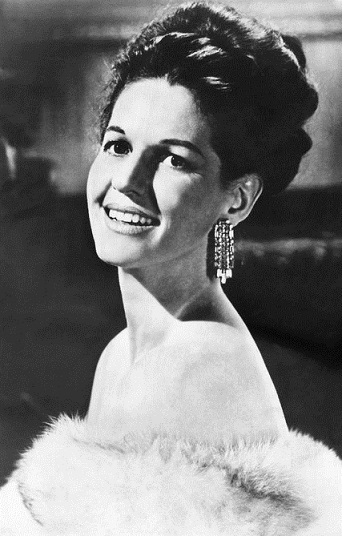
    Heidi krall

    Soprano Heidi Krall (above) leads a distinctive trio of Rhinemaidens in this excerpt from a 1957 Met RHEINGOLD:

    The Rhinemaidens ~ Das Rheingold – Heidi Krall – Rosalind Elias – Sandra Warfield – with Lawrence Davidson – Met bcast 1957 – Steidry cond

    Ms. Krall sang nearly 300 performances with the Metropolitan Opera Company, both at the Old Met and on tour. While usually heard in roles like Frasquita or The Priestess in AIDA, she did sing several Musettas, as well as appearing as Micaela, Donna Elvira, Nedda, and the 1st Lady in ZAUBERFLOETE.

  • Maralin as Marguerite

    M niska

    Maralin Niska (above), the American soprano who passed away on July 9th, 2016, was one of a handful of singers whose performances could induce me to travel – first from Syracuse, NY, to see her in several roles at New York City Opera, and later from Hartford, CT – where TJ and I had settled in the mid-1970s – to Lincoln Center, where she was singing at both the State Theatre and The Met.

    Once, she even came to Hartford to sing Violetta, replacing another soprano on short notice. We were so excited when we arrived at The Bushnell and saw the announcement of the cast change; we rushed to the stage door to leave her a message, and en route we found her, just thirty minutes before curtain time, banging desperately on what she thought was the stage door. She was so happy to see us, not least because we were able to lead her to the proper entrance.

    Violetta, Mimi, Tosca, Butterfly, Nedda, Countess Almaviva…these were some of the roles from the standard repertoire in which Niska thrilled me. Her triumphs in such great dramatic vehicles as Cherubini’s Medea, Strauss’s Salome, and Janacek’s Emilia Marty were the stuff of operatic legend. In roles as diverse as Yaroslavna in PRINCE IGOR, the Composer in ARIADNE AUF NAXOS, Rosalinda in FLEDERMAUS, and Elisabetta I in MARIA STUARDA, she achieved miracles of characterization and of voice.

    Yet for all that, is was – curiously enough – as Marguerite in FAUST that Maralin gave a (somewhat unexpectedly) sensational performance that has lingered so clearly in my mind over the ensuing years. In the unforgettable Frank Corsaro production – in which the devil wins – Maralin left the notion of Marguerite as a shrinking violet in the dust. Faust’s love for the girl signaled not only her romantic but also her sexual awakening.

    In the Garden Scene, on the brink of having her, Faust backs off, causing Maralin/Marguerite to burst into frantic sobs of frustration; when he reappears after Marguerite’s ecstatic invocation, there’s no going back. 

    As the opera draws to its end, Faust comes to rescue Marguerite from prison, where she awaits execution for murdering her child. The demented girl imagines they are back in the garden; she ignores Faust’s pleas to come away. When Mephistopheles appears to urge theme to hurry, Marguerite sees him for what he is and turns to fervent prayer. Faust tries one last time to persuade her to flee, but she turns on him, crying: “Pourquoi ces mains rouge de sang? Va! … tu me fais horreur!”  (“Why are your hands red with blood? Go!…you fill me with horror!”) No soprano has done that last line quite like Maralin.

    Heavenly voices declare Marguerite’s salvation; she begins to climb a steep staircase, but at the top of it, double doors fly open, and instead of an angelic host she is greeted by a towering executioner, masked and carrying an monstrous axe. Faust rushes up the steps to try to save her, but the doors are slammed shut in his face. Mephistopheles steps out of the shadows, calling Faust’s name quietly, and waving the contract with which Faust had sold away his soul to the devil in Act I.

    I’ve been able to preserve some excerpts from one of Maralin’s performances in this role at NYC Opera; the date was March 15, 1970, and her colleagues were Nicholas di Virgilio (Faust) and Norman Treigle (Mephistopheles). The original tapes are in a fragile state – I was lucky they played well enough to save them to MP3. The sound quality leaves much to be desired, but hearing these scenes brings back wonderful memories for me:

    Niska – FAUST aria – NYCO 3

    FAUST – Garden Scene exc – Niska – di Virgilio – Treigle – NYCO 3

    Maralin Niska & Norman Treigle – scene from FAUST – NYCO 3~15~70

    FAUST – finale – Niska – di Virgilio – Treigle – NYCO 3

    Photographer Beth Bergman has created a beautiful memorial in photos to Maralin Niska on her website: visit the page here.

  • The Illuminated Heart @ Mostly Mozart

    1980x1012_MMFO-11802_copyright Jennifer Taylor

    Above: Maestro Louis Langrée, surrounded by members of the Mostly Mozart Festival Orchestra; photo © Jennifer Taylor

    Tuesday July 26th, 2016 – Opera director and video artist Netia Jones has created The Illuminated Heart, a program of arias and ensembles from Mozart’s operas performed live in a multi-media installation with video projections: this was the opening offering of the 2016 Mostly Mozart Festival. The Festival’s well-loved music director, Louis Langrée, presided over the 90-minute evening (presented without intermission) marking the 50th anniversary of Mostly Mozart.

    The Mostly Mozart musicians were in the pit and the Geffen Hall stage was taken up by a large, white, simple room. Imaginative projections – including fanciful flights of birds during Papageno’s aria – filled the space, and English translations of the pieces being sung moved unobtrusively across the rear wall. As Maestro Langrée led a lively NOZZE DI FIGARO overture, “Susanna” appeared, removing dust-covers from stage furnishings and polishing up. Fortuntely, no attempt was made to turn the random operatic selections into a narrative, as the Met did so tediously with THE ENCHANTED ISLAND. Each solo, duet, or ensemble was done as a free-standing set piece, the singers costumed in a ‘timeless’ style.

    Following the overture, things got off to a rather raw start: the voices seemed very harsh (I almost thought they were being miked) and there was a feeling of relentlessness to the singing, with little elegance or refinement to be heard. Nadine Sierra, singing Susanna to Peter Mattei’s Almaviva in the Act I NOZZE duet, wore a dress that made her look pregnant. Christopher Maltman, in Papageno’s Act I aria, seemed to be auditioning for Wotan: more than ample sound, to be sure, but lacking in charm. The Act I finale of COSI FAN TUTTE doesn’t play well out of context. 

    Ms. Sierra sang the ‘rarest’ work of the evening: “Ruhe sanft, mein holdes Leben” from ZAIDE. She has the right feeling for the music, and did some attractive soft singing, but to me she often seems to hover just a bit sharp of the pitch.

    Ana Maria Martinez’s performance of “Mi tradi” from DON GIOVANNI signaled the start of a progression of four arias that formed the vocal centerpiece of the evening. Ms. Martinez’s voice has a nice weight for this music, and she was able to carry off the more florid passages with assurance whilst bringing dramatic urgency to her singing.
    Une-pleiade-de-concerts-gratuits-pour-tous_282178_510x255

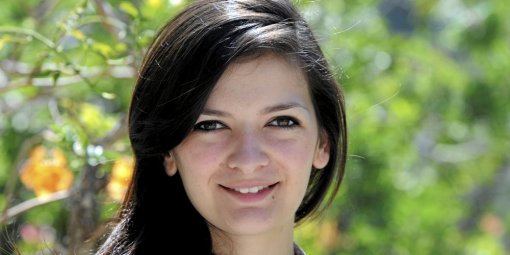
    New to me was the distinctive voice of Marianne Crebassa (above); this comely French-born mezzo-soprano gave a performance of “Parto, parto” from LA CLEMENZA DI TITO that could stand comfortably beside such wonderful versions of this aria as those of Teresa Berganza, Tatiana Troyanos, Anne Sofie von Otter, and Elina Garanca. Ms. Crebassa’s timbre is unique, with a nice duskiness in the lower range, and she sailed thru the coloratura passages with deft surety. Matching the mezzo in expression and poised musical embroidery was the excellent clarinetist Jon Manasse.

    2a4fcf0f033be538df20736eca38e9c6

    Simply superb: Peter Mattei (above) sang Count Almaviva’s “Hai gia vinto la causa…” from NOZZE with plush, commanding sound and vivid dramatic inflections, handling the speedy passage-work as the aria rushes to its close with aplomb. A masterful performance!
    MatthewPolenzani

    Matthew Polenzani (above) gave the evening’s most moving singing with his heartfelt “Dalla sua pace” from DON GIOVANNI. Kneeling at the back of the performing space, Polenzani sang with great tenderness and refinement; his touching command of piano nuances, and his wonderfully sincere rendering of the words made for a spell-binding performance. His Idomeneo at The Met cannot get here soon enough. Bravo, bravo, bravo…

    Ms. Martinez and mezzo-soprano Daniela Mack sounded fine in the COSI trio, “Soave sia il vento”, but it was Mr. Mattei’s singing as Don Alfonso that dominated: so rich, firm, and lovingly phrased. An ensemble from CLEMENZA – nicely sung by Christine Goerke, Mlles. Sierra and Crebassa, and Mr. Polenzani – seemed a bit aimless out of context. Moving immediately into Elettra’s aria might have made things seem more cohesive, but instead Ms. Goerke remained onstage, pondering, whilst Mr. Maltman popped out – wine bottle in hand – to sing Don Giovanni’s vigorous “Finch’an del vino”. 

    Ms. Goerke then came forward for Elettra’s “O smania, O furie!” Her vivid declamation was spot on, and   she brilliantly conveyed the character’s dementia in “‘Oreste, D’Ajace”. But the voice tightens as she goes higher up, and so the effect of this mad scene’s climax was somewhat compromised.

    Everyone joined in for the NOZZE DI FIGARO finale,including soprano Kiera Duffy, who had had no real opportunity to shine vocally in the course of the evening.

    Overall, The Illuminated Heart worked quite well. I would have chosen some slightly different pieces, and maybe slightly different singers, and would have included a basso to sing one of Sarastro’s arias. The 90-minute time-span, without intermission, was ideal. Mr. Maestro Langrée’s propulsive pacing and the swift staging transformations from one number to the next made the concert fly by.
  • Britten’s Endgame

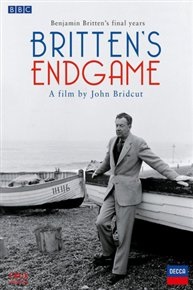
    9007000059671_1

    Tuesday July 19th, 2016 – I pulled this John Bridcut/BBC film off the shelf at the Performing Arts Library at Lincoln Center today, played it immediately on getting home, and found it thoroughly engrossing. The documentary focuses of the final years of the great composer’s life when – despite failing health – he churned out such masterworks as DEATH IN VENICE, the cantata PHAEDRA, and the 3rd String Quartet.

    Archival footage of Britten – conducting, playing the piano, chatting and performing with his life-companion Peter Pears, and greeting Queen Elizabeth II at the Aldeburgh Festival – is interspersed with interviews with both music-world luminaries (Dame Janet Baker, Steuart Bedford, Sir Charles Mackerras, Mark-Anthony Turnage) and people who knew the composer personally or were care-givers (David Hemmings, Sue Phipps, Rosamund Strode, his surgeon Dr. Michael Petch, and the tirelessly dedicated Rita Thomson). Thru their words and the reading of intimate letters, the film gives us a vividly personal portrait of Britten in the last three years of his life. 

    Then there are the superb musical excerpts, seemingly staged in the studio specially for this DVD. Absolutely splendid choral work from the Schola Cantorum of Oxford, including parts of Hymn to the Virgin, written when Britten was 16 years old. Tenor John Graham-Hall is most impressive as Aschenbach in scenes from DEATH IN VENICE; another tenor, Allan Clayton, joins horn player Michael Thompson in some gorgeous passages from the Serenade for Tenor, Horn, and Strings; the Fitzwilliam String Quartet’s ravishing playing of portions of the String Quartet #3 makes us doubly regretful that it was Britten’s last substantial work.

    In a magnificent performance, mezzo-soprano Sarah Connolly is a thrilling Phaedra; her singing is juxtaposed with Dame Janet Baker’s spoken recollections of collaborating with Britten on the cantata’s creation.

    Uk1.31.4

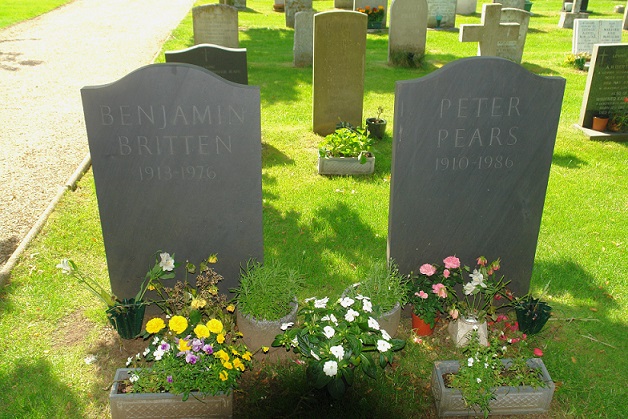
    Britten died of heart disease in 1976 at the age of 63, five years younger than I am now. He is buried next to Peter Pears in the Parish Churchyard, Aldeburgh.

  • Safe in Beulah Land

    84F301FE-E65B-4CC7-9B8F-8F3FE85A6D84_w268

    On November 13th, 1969, Beverly Sills sang one of her signature roles, Baby Doe in Douglas Moore’s opera THE BALLAD OF BABY DOE, for what I believe was the last time in her career. It was the date of her mother’s birthday, and she had asked her mom what role she would like to have sung for her on her special day; “Baby Doe,” was the answer, and the performance was a sensation from start to finish.

    Sills Mania was in full flourish at that time, and as the members of the Snowstorm Crew gathered in the 5th Ring of the New York State Theatre on that November evening, the anticipation was palpable. Beverly’s first entrance drew a round of welcoming applause, and each of Baby Doe’s arias – and especially the the Willow Song – stopped the show.

    The opera is based on the story of Horace Tabor, who made a fortune in silver mining in Colorado in the 1880s. Tabor owned the Matchless Mine in Leadville, and he and his wife Augusta were leading figures in the community. Horace met and became infatuated with Elizabeth “Baby” Doe, a young divorced woman who was twenty-five years his junior. Baby Doe was shunned by high society, being viewed as a fortune-huntress. Horace Tabor divorced Augusta in 1883 and married Baby Doe. They had two daughters.

    In 1893, Tabor lost everything when the United States adopted the gold standard. He was named postmaster of the city of Denver, but his spirit was broken and he died in 1899. On his deathbed, he made Baby Doe promise that she would “always hold on to the Matchless Mine.”

    True to her word, Baby Doe lived in a tiny cabin at the entrance to the mine until 1935, when, following a severe snowstorm, her body was found frozen to death on the cabin floor. She was buried next to Horace in the Mt. Olivet Cemetery in Jefferson County, Colorado.

    Douglas Moore’s operatic setting of the story (libretto by John Latouche) ends with Horace’s death; cradling his body, Baby Doe sings the gentle lullaby, “Always Thru The Changing of Sun and Shadow”. As the aria progresses, the scenery fades away and snow begins to fall, foreshadowing Baby’s eventual demise.

    On that November evening – now nearly a half-century ago – Beverly held the audience in the palm of her hand as she sang this song of dedication and undying love.

    The ovation was endless, and our ‘snowstorm’ of paper confetti was massive. After several minutes of applause, we all started singing “Happy birthday, Mrs. Silverman!” I wish I had let the tape run to include that.

  • RIOULT @ The Joyce ~ June 2016

    Nyseason_885x518

    Wednesday June 22nd, 2016 – RIOULT at The Joyce, offering a very pleasing evening of dance from Pascal Rioult’s excellent troupe, with exceptional dancing from both established Company members and relative newcomers. The program was well-varied musically, and the evening was enhanced throughout by fine lighting and canny use of visual effects.

    Tchaikovsky’s Orchestral Suite #2 in C-major is the setting for Dream Suite which opened the program; this coloristic ballet – with gorgeously distinctive lighting by Jim French – is a visual treat. The inimitable Charis Haines is the Dreamer, and her dreams veer from lyrical to witty to mystical.

    Against a backdrop which shifts from pumpkin-coloured to vivid red, ten dancers move thru Charis’s dreamworld in quirky combinations, sometimes stopping to strike amusingly ironic poses. Masked characters appear: a bull, and ancient reptilian birds. Undercurrents of sexual fantasy are woven in and, as is often the case in dreams, things seem disjointed at times.

    The choreography overall is disarmingly simple – when the dancers simply form a circle, the effect is stunning – and Charis Haines excels in her solo passages. Colour – radiant and saturated – is everything. The striking image of a woman stretched out in a flat plank and borne aloft by her partner across the upstage space seems to signal a magical end to the ballet, but there’s another movement to come; that image, though, remains fixed in the memory.

    Selected Preludes and Fugues from Bach’s Well-Tempered Clavier (seemingly the Glenn Gould recordings, as there is much extraneous vocalism along the way) are the basis of Polymorphous, a stylized dancework which opened before a gridwork backdrop against neutral colours, with costumes of the same visual texture. Four dancers – Brian Flynn, Charis Haines, Jere Hunt, and Sara Elizabeth Seger – move in sync, almost like automatons. In two duets that follow, the first is accompanied by a ghostly negative-image film of the dancers projected above while during the second, multiple shadow images appear as echoes of the choreography.

    Duets, Sacred and Profane opened the evening’s second half; here we meet pairs of the RIOULT dancers in more personalized settings. In the first duet, from Kansas City Orfeo (1996), Sabatino A Verlezza as Orfeo attempts to revive his dead wife, Euridice (Catherine Cooch), to the appropriate music from the Gluck opera; this put me very much in mind of David Grenke’s powerful duet, Vespers.

    One of the Company’s newest members, Corinna Nicholson, made a really lovely impression dancing a duet from The Great Mass (2009) with Sara Elizabeth Seger. The girls wear gossamer ‘Baroque’ dresses, and they bring an air of courtliness to this charming piece.

    Two of RIOULT‘s most vivid dancers, Jere Hunt and Michael Spencer Phillips, were magnificent in a pas de deux from Te Deum (1995). To the music of Arvo Pärt, Michael – in a dark suit and white shirt – partners Jere, clad in black briefs, in an intimate duet. Though devoid of erotic overtones, the dance is both sensual and spiritual. Various imagined scenarios might be applied – two lovers, two brothers, a father and son, a guardian angel and his charge. Jere Hunt’s muscular physique speaks powerfully in its own right; a vein of poetic vulnerability which runs thru his work as a dancer gives his performances a deeply personal resonance. Michael’s handsomeness and the strength of his movement are captivating to behold: this is a dancer who can express both courage and tenderness. Together, the two men thrilled the audience.

    Something special needed to follow this male duet, and we found it the charismatic pairing of Charis Haines and Holt Walborn in a sublime Bach duet from Views of the Fleeting World (2008). Their expressiveness and their sense of the mutual devotion of this couple created a beautiful atmosphere.

    For a remarkable finale, Pascal Rioult’s unique setting of Ravel’s Bolero sparked an eruption of cheers from the mesmerized crowd at its end. Against a backdrop by Harry Feiner – a fanciful rendering of architecture à lespagnole – eight dancers perform endless repetitions of gestural motifs while periodically moving from one formation to another. Woven into these geometric configurations are illuminated solos which are luxuriantly slow and sometimes self-caressive. The dancers – Mlles. Cooch, Haines, Nicholson, and Seger with Mssrs. Flynn, Hunt, Phillips, and Verlezza – went thru their hypnotic paces with machine-like precision, whilst basking in the more voluptuous solo moments. Brilliant!

  • Sumptuous Strings @ Chamber Music Society

    Photo

    Above: violist Yura Lee

    Sunday May 22nd, 2016 – Bringing together a sextet of first-class string players, Chamber Music Society of Lincoln Center presented the final program of their Alice Tully Hall season (a program which will be repeated on Tuesday, May 24th); music by Richard Strauss, Brahms, and Dvořák was on offer.

    In Richard Strauss’s intimate opera CAPRICCIO, a rehearsal of Flamand’s newly-composed string sextet is in progress as the curtain rises on the salon of the Countess Madeleine’s château. As the opera evolves, the Countess will be called upon by her rival suitors – the composer Flamand and the poet Olivier – to answer the eternal question, “Which is the greater art, poetry or music?”, and thus to determine which of the two gentleman she favors. The opera, which includes the beloved Moonlight Music and ends with the Countess’s ravishing final aria, has been a vehicle for such beloved sopranos as Lisa Della Casa, Dame Kiri Te Kanawa, and Renee Fleming.

    It was a real treat to hear the string sextet this evening in a concert setting, and especially as it was given such a radiant performance by today’s ensemble…an ensemble of stars. Erin Keefe, wearing a striking pleated gown of gunmetal grey which set off her auburn hair, displayed (all evening, really) her ability to spin out magical phrases over a vast dynamic spectrum: she can taper her tone down to a shimmering piano/pianissimo only to soar in full-bodied melody moments later. Across from Ms. Keefe, Yura Lee, in a deep persimmon shawl and be-jeweled stilettos, summoned heartfelt sounds from her viola. A delicious “trembling” motif heralded Nicholas Canellakis’ solo, with his lustrous depth of tone.

    As Wu Han remarked in a program note, one of the things players love most about performing string sextets is: you have a mate playing the same instrument sitting next to you. And when – as in today’s Strauss – these are musicians of the calibre of Ani Kavafian (violin), Matthew Lipman (viola), and David Finckel (cello), the level of music-making is off the charts. Such gorgeous and immaculate blendings of sound, and such congenial lyricism.

    From the Strauss, so deeply engaging both musically and emotionally, the players turned to Johannes Brahms’ String Quintet No. 1. This piece was a particular favorite of the composer himself, or at least that is the impression he gave in writing this to his publisher: “You have never before had such a beautiful work from me.”

    Ms. Kavafian took the lead here, playing with her signature grace and expressiveness; she and Ms. Keefe formed a de luxe violin duo, their voices mingling with engaging clarity and savoring their many pinpoint dynamic nuances. In the melodically abounding first movement of this work, Yura Lee’s viola sings – three times – a melody that brings to mind some of the composer’s most beloved lieder. At one point, Yura and Ani ‘converse’ with one another. Nick Canellakis’s cello gives the music its resonant grounding, whilst Mr. Lipman’s evident enjoyment of the music he is playing makes him a musician as pleasing to watch as to hear. 

    In the quintet’s second movement, the instrumental voices created a lovely chorale-like atmosphere; a more animated interlude soon gives way to a return to wistfulness, and then fades mysteriously away. For the concluding Allegro energico, the five players could cavort amiably thru the rhythmic shifts with zestful playing and much mutual eye-contact as the piece sailed on to its merry conclusion.

    Following the interval, Antonin  Dvořák’s Sextet in A-major, with its goodly portion of folkish elements, found all six players on optimum form. Right from the start, with Erin Keefe’s shining tone in the opening theme, one could sense we were in for a special treat. Nick Canellakis took up the melodic thread as the Allegro moderato proceeded thru some very imaginative harmonies.

    [A cellphone went off, but at least it was between movements…and it was a ‘classical-music’ ringtone.]

    In the second movement, Dumka: Elegie; Poco allegretto, a dance which is at once both droll and dolorous is heard. The music has a sad gypsy lilt. David Finckel’s cello sets up a treading motif, over which a lament from his fellow players suggests a walk to the graveyard. In a swift change of mood, the Furiant: Presto is lively as fleeting snatches of melody pass from voice to voice. A swaying feeling pervades the music.

    The resonantly poetic sound of Matthew Lipman’s viola sets forth the theme of the final movement; variations follow where we could again savour the silver-lit sheen of Ms. Keefe’s playing and delight once more in her ability to colour phrases with her dynamic gradations.

    A sprightly dance gives way to a thoughtful cello theme from Mr. Canellakis; things intensify before subtle turns of phrase draw us to a lingering fade-out. Ms. Keefe weaves a new variation on the melody as Mr. Finckel and the violas offer plucking support. And then a high-energy dance bursts forth, only to accelerate to double-time before an urgent rising motif sends us on to a grand finish.

    The players were called out twice by the delighted audience; both the players and their admirers seemed reluctant for the concert – and the season – to end.

    Now we will have a hiatus from CMS concerts, though the musicians we’ve come to love will stay busy playing here, there, and everywhere worldwide. For the second year, the Society will offer a Summer festival at Alice Tully Hall – details here – which will help to sustain us til the Autumn.

    The Repertory:

    The Participating Artists:

  • The Last Song of Richard Strauss

    Jeritza strauss

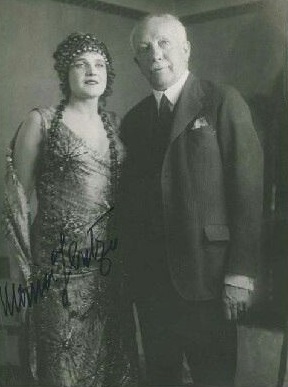
    Above: Maria Jeritza, in costume for The Egyptian Helen, with Richard Strauss

    Richard Strauss’s Vier letze lieder were for many years thought to have been the composer’s last completed work. But in November of 1948, the composer wrote a song entitled Malven (“Mallows”); he dedicated it to soprano Maria Jeritza and sent her the only known copy.

    The manuscript turned up Mme. Jeritza’s papers following her death in 1982. Read an article about the discovery of the Malven here

    The world premiere of Malven was given at a New York Philharmonic concert (that I attended) in 1985. Dame Kiri Te Kanawa was the first to sing the song in public; as Malven had never been orchestrated, Dame Kiri was accompanied by pianist Martin Katz. The program further included the soprano’s sterling performance of the Vier letze lieder, conducted by Zubin Mehta.

  • Encore: ELEKTRA @ The Met

    Mask-of-agamemnon

    Above: The Mask of Agamemnon

    Saturday April 30th, 2016 matinee – Since ELEKTRA is one of my favorite operas – sometimes I think it is my favorite opera – I planned to see The Met’s new production of it once, and then to hear it again from a score desk.

    Some people had issues with the voices of Nina Stemme and Adrianne Pieczonka at the production’s Met premiere on April 14th: squally, shrill, and flat were among descriptive words I heard being tossed about. There were also complaints that Waltraud Meier, as Klytemnestra, was “inaudible” or at least seriously under-powered vocally. So when my friend Dmitry and I attended the second performance on April 18th, we were pleased to find that both Stemme and Pieczonka sounded much better than we’d been expecting, and that Meier, though vocally restrained when compared to such past exponents of the role as Resnik, Rysanek, Fassbaender, Christa Ludwig, or Mignon Dunn, was able to make something of the music thru diction and vocal colour.

    This afternoon, the three principal women all seemed rather out of sorts vocally. Stemme sounded frayed and effortful, the highest notes sometimes just a shade flat and her vibrato more intrusive than at the earlier performance. Ms. Pieczonka was likewise on lesser form, tending to sound shrill under pressure, and the voices of both sopranos seemed smaller and less free that I remembered. Ms. Meier was – honestly (and I am a big fan of hers) – nearly inaudible much of the time; a lot of her verbal detail didn’t penetrate the orchestra. (Since the performance was being broadcast, undoubtedly Ms. Meier made a much more vivid impression over the airwaves).

    Stemme and Pieczonka did achieve a higher level as the afternoon wore on; their most exciting singing came after the murder of Aegisth and on thru to the end of the opera. But compared to their earlier performance, they were both a bit disappointing. Of course, we have to take into account that these are two of the most fearsome and challenging roles in the soprano repertoire, and are being sung over a huge orchestra in a vast space. The wear and tear on their instruments must be incredible.

    The audience at large were undeterred by concerns over vocal matters, and they lustily cheered the three women at the curtain calls; the ovation for Ms. Stemme – well-merited for her generosity and courage – was enormous, and the house lights were turned on so she could see everyone standing and screaming for her.

    For me, it was the opera itself – and Esa-Pekka Salonen’s conducting of it – that made the performance memorable. The orchestra played spectacularly, and if Maestro Salonen sped thru some of the music (the Recognition Scene seemed really fast) it sort of added to the sense of exhilaration I was experiencing just from hearing the opera live again. 

    Eric Owens made an outstanding impression as Orestes today; his first lines established a powerful and rather creepy vocal presence, and at “Lass den Orest…” he was truly splendid. He has the right amplitude for this music in this house, and was deservedly hailed at his solo bow. 

    Special mention to Bonita Hyman for her rich, deep contralto singing as the First Maid, and to the remarkable Roberta Alexander, who again made such a moving impression as the Fifth Maid, a Chéreau ‘invention’ that paid off handsomely.

    Metropolitan Opera House
    April 30th, 2016 Matinee

    ELEKTRA
    Richard Strauss

    Elektra....................Nina Stemme
    Chrysothemis...............Adrianne Pieczonka
    Klytämnestra...............Waltraud Meier
    Orest......................Eric Owens
    Aegisth....................Burkhard Ulrich
    Overseer...................Susan Neves
    Serving Woman..............Bonita Hyman
    Serving Woman..............Maya Lahyani
    Serving Woman..............Andrea Hill
    Serving Woman..............Claudia Waite
    Serving Woman..............Roberta Alexander
    Confidant..................Susan Neves
    Trainbearer................Andrea Hill
    Young Servant..............Mark Schowalter
    Old Servant................James Courtney
    Guardian...................Kevin Short

    Conductor..................Esa-Pekka Salonen