Category: Opera

  • CMS Beethoven Cycle: The Danish!

    Danish string quartet

    Above: the Danish String Quartet, photo by Caroline Bitten

    Sunday February 21st, 2016 – Chamber Music Society of Lincoln Center‘s festival performances of the Beethoven string quartets drew to its close today with the Danish String Quartet playing the last music Beethoven ever wrote.

    This was my first encounter with The Danish. Their story is probably unique among music-making ensembles, for three of them met as kids and fellow foot-ballers: so they literally grew up together. This may account for their wonderfully integrated sound. Along the way, a Norwegian cellist joined the family, fitting in perfectly.

    This evening, as each voice was introduced to us at the start of the C-sharp minor quartet, I felt transfixed. I suddenly didn’t want to take notes, but rather to immerse myself in the music that was casting a spell over the wonderfully hushed, packed-to-the rafters Tully Hall.

    The C-sharp minor quartet evidently seemed incomprehensible when it was first heard publicly in 1835, after the composer had already passed away. Certainly a first glance at the Playbill listing strikes one as very odd: seven movements?  But Beethoven had been experimenting with structure over the years, and so she set this Opus 131 in seven sections, to be played without pause.

    Richard Wagner, reflecting on the first of these seven movements, said that it “reveals the most melancholy sentiment expressed in music”. Today it perhaps seems more pensive than sorrowful. The second movement, marked Allegro molto vivace, is lively and extroverted. Following a brief ensemble recitative, we come to the slow movement, so expressive of yearning and tenderness.

    In the Presto that follows – a whirlwind scherzo really – wit prevails in a lively, scurrying mode: here the Danes were at their most charming, and as this merry movement raced to its conclusion, the audience, thinking an end had been reached, were on the verge of unleashing a gust of applause. Then, with tongue-in-cheek irony, the players go on to a brooding Adagio and then a brilliant finale.

    Upon finishing, the members of the Danish String Quartet were engulfed in a flood of applause and cheers. They were called out three times, a rather unprecedented happening.

    During the intermission, I sat thinking about how – from my eleventh year until rather recently – so much of my musical focus has been on opera. Beethoven’s FIDELIO has never really attracted me – aside from Leonore’s glorious “Abscheulicher!” – and so the composer’s other works, iconic as they might be, have never really lured me. In fact, it’s only in the past three or four years – since I started attending Chamber Music Society and The New York Philharmonic regularly – that Beethoven’s music has begun to attract me. Better late than never!

    Earlier in this CMS Beethoven cycle, the Miró Quartet’s playing of the “Razumovsky” quartets was a revelation. Of the symphonies, I’m most enamored of the 4th at present…something other music-lovers will find odd, I’m sure. But: enough rambling. Back to the matter at hand!

    Of his final completed full work – the F-major quartet, Opus 135 – Beethoven reportedly stated that it was short because the commissioning fee was ‘short’; the sponsor would get what he paid for. And it was here, in the third movement marked Lento assai, cantante and tranquillo, that I found the Beethoven I’ve been searching for all these years – without knowing it. This music, which The Danish played so lovingly, really spoke to me. The entire piece, more traditional in both its structure and style than Opus 131, held the Tully audience in a state of rapt attentiveness: and the playing was marvelous throughout.

    The concert concluded with the last music Beethoven ever completed: a ‘Finale: Allegro‘ which would serve as an alternate ending for the B-flat major quartet Opus 130. Here the players of The Danish were at full sail, clearly savouring both the music and the audience’s delight in listening to them. 

    The triple curtain call after Opus 131 was not a fluke, for the four blonde members of the Danish String Quartet reaped a full-house standing ovation at the close of this grand evening.

    As so often happens nowadays, this great music – and the Quartet’s playing of it – turned gloomy thoughts of a world full of strife and woe into an optimistic notion that there’s still hope for humanity. 

    Meet The Danish String Quartet here.

    The Artists:

    Violin: Frederik Øland and Rune Tonsgaard Sørensen

    Viola: Asbjørn Nørgaard

    Cello: Fredrik Schøyen Sjölin

    The Repertory:


  • New York Philharmonic: Bronfman/Valčuha

    Yefim bronfman

    Above: pianist Yefim Bronfman

    Thursday February 18th, 2016 – In recent seasons, as I’ve gradually moved away from opera and dance and into the realm of symphonic and chamber music, concerts featuring the great pianist Yefim Bronfman have consistently been outstanding events; we still talk about these evenings – and about the pianist – with great admiration and affection. To me, Mr. Bronfman is a unique musician: an artist in the highest echelon of great performers today.

    This evening’s concert at The New York Philharmonic is something my friend Dmitry and I have been looking forward to since it was announced. Maestro Juraj Valčuha was on the podium tonight as Mr. Bronfman performed Liszt’s Piano Concerto #2 on a program that further featured works of Kodály, Dvořák, and Ravel.

    Opening the concert with Kodály’s Dances of Galánta; the Philharmonic had played this piece in 2013 and I was happy to experience this music again: it’s happy music!  Zoltán Kodály wrote his Dances of Galánta to celebrate the 80th anniversary of the Budapest Philharmonic Orchestra. Galánta is a small village in Hungary where the composer spent seven years of his childhood and where, thanks to the town’s popular gypsy band, the young Kodály became aware of of the style and motifs of gypsy music.

    Launched by a clarinet tune from the Philharmonic’s inimitable Anthony McGill, Dances of Galánta has a wonderful lilt and swagger. Flautist Robert Langevin and oboist Liang Wang pipe up charmingly, and the big, passionate main theme is irresistible. Maestro Valčuha – tall, handsome, and with an elegant baton technique – drew out all the vivid colours of the score, which ends with a romping folk dance.

    Mr. Bronfman then appeared, to a congenial welcome from the Philharmonic audience. Meticulous of technique and warmly confident in stage demeanor, the pianist’s performance of the Liszt Piano Concerto No. 2 was impressive in its virtuosic clarity and in its meshing of the piano line with the orchestra. Maestro Valčuha’s feeling for balance and pacing was spot-on. 

    The concerto, which Liszt tinkered with endlessly between 1839 and 1861, is particularly congenial to experience as it sweeps forward in one continuous movement over a span of about 20 minutes; yet it has the feel of a more traditionally structured concerto. Along the way, Liszt pairs the piano with various orchestral voices – a gorgeous piano/cello lullabye; rippling piano motifs as the oboe sings; high and delicate piano filigree over gentle violins; horns and cymbals sounding forth as the piano flourishes triumphantly. 

    Mr. Bronfman’s fluency in the rapid passages was a delight: sprightly in a high-lying scherzo passage, then swirling and cascading up and down the keyboard with joyous bravado. The concerto further alternates moments of big drama with passages of sheer melodic glow, all of which Mr. Bronfman delivered to us with his customary assurance and polish. 

    Audience and orchestra alike embraced the pianist with a prolonged ovation; an encore was given which elicited even more applause, and the affable Mr. Bronfman was called out twice again. Next season, he’s down for the Tchaikovsky 2nd with The Phil: it’s already on my calendar, circled in red. 

    Valcuha-Juraj

    Following the interval, Maestro Valčuha (above) and the Philharmonic players further displayed their cordial rapport in two well-contrasted “tone poems”:  Dvořák’s folkish and finely-orchestrated The Water Golbin (curiously enough, having its Philharmonic premiere tonight – some 120 years after it was written) and Ravel’s darkly magical La Valse, which always makes me think of Rachel Rutherford and Janie Taylor.

    While it seemed a bit odd not to have a symphony on the program, the two shorter works in the second half of the evening worked well together, were beautifully played, and allowed us to savor Maestro Valčuha‘s conducting from both a musical and visual standpoint.
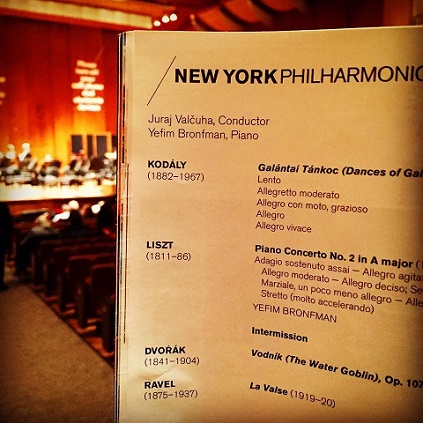
    12742079_10153914529104761_5025851178161479995_n

    Photo by Dmitry.

  • Dmitri Hvorostovsky @ Carnegie Hall

    20110128_dmitri-hvorostovsky-3

    Wednesday February 17th, 2016 – No one in the realm of classical music needs to be told the background of tonight’s Carnegie Hall recital by the great baritone Dmitri Hvorostovsky. He has, since his 1989 winning of the Cardiff Competition, become one of the most admired and beloved of artists; his current personal health battle has his devotees worldwide praying for him and pulling for him. Now, for the second time since his diagnosis, he has come to New York City to honor his commitments to sing for us.

    Carnegie Hall was completely sold out, and the applause greeting Dima and his pianist, the excellent Ivari Ilja, was particularly warm. The program was a taxing one for the voice – songs by Glinka, Rimsky-Korsakov, Tchaikovsky, and Richard Strauss – and Hvorostovsky sang with his characteristic generosity, tenderness, and passion. It is – and always has been – a uniquely beautiful voice, one of the very very few today that gives such constant and pleasing rewards. 

    A bit of sharpness in the first Glinka song soon vanished as the voice warmed to the hall. As the Glinka set continued, the caressive warmth of the voice came to the fore. Always a singer possessed of a vast dynamic range, Dima tonight moved impressively from haunting soft passages to thrillingly sustained, powerful top notes, and everything was coloured with emotional hues from longing to tranquility to regret.

    Rimsky-Korsakov’s “Not the wind, blowing from the heights” was an especially marvelous rendering in the evening’s first half, and – after the interval – Hvorostovsky gave us some of the Tchaikovsky romances that have been among his signature pieces: songs that he has helped to popularize throughout the world. These were beautifully voiced.

    In the evening’s concluding group of Strauss songs, so familiar yet so welcome in these hauntingly sung interpretations, Hvorostovsky expressiveness was at full flourish. 

    One audience distraction after another intruded on the evening, but these complaints we will set aside for now, and feel instead a sense of gladness just to have been there.

  • TURANDOT at The Met – 4th of 4

    Backstage

    Above: a Met TURANDOT blast-from-the-past with Birgit, Franco (Z, not C), Jimmy, Eva, Liz, and Placi

    Saturday January 30th, 2016 matinee – I took a score desk this afternoon to hear the fourth of four sopranos who have sung the role of Turandot during the current Met season. My history of Turandots at The Met goes back to the Old House, where Mary Curtis-Verna was the first soprano I heard in the role. Since then, I have witnessed almost every singer to tackle this part in New York City, from The Big B (Birgit Nilsson) to sopranos you never heard of, several of them at New York City Opera where a perfectly nice Beni Montresor production held forth for many seasons. 

    At The Met, where Franco Zeffirelli’s extravaganza (which replaced Birgit’s Cecil Beaton setting in 1987) has been home to such post-Birgit divas as Eva Marton, Dame Gwyneth Jones, Ghena Dimitrova, and Jane Eaglen, audiences still cheer – as they did today – the massive vision of the royal palace as it comes into view midway thru Act II.

    Act I today was very pleasing to hear: after a dragging tempo for the opening scene of the Mandarin’s address (grandly declaimed by David Crawford, who had the breath control to fill out the slo-mo phrases), conductor Paolo Carignani had everything just about right. The score is a marvel of orchestration: so much detail, so many textured layers of sound. I simply love listening to this music, especially passages like “O taciturna!” where Carignani drew forth such evocative colours from his players.

    Anita Hartig sang very attractively as Liu, her voice reminding me just a bit of the wonderful Teresa Zylis-Gara’s. Hartig did not do a lot of piano/pianissimo singing, which can be so very appealing in this music, but she had the power to carry easily over the first act’s concluding ensemble. The Romanian soprano’s concluding B-flat in “Signore ascolta” was first taken in straight tone; she then allowed the vibrato to seep in: quite a lovely moment.  Hartig’s voice has an unusual timbre and just a touch of flutter to bring out the vulnerability of the character.

    I was likewise very impressed and moved by the singing of Alexander Tsymbalyuk as Timur: mellow and warm of tone, and with a deep sense of humanity. 

    Whilst not holding a candle to such past Calafs as Corelli, Tucker, McCracken, Domingo, or Pav, Marco Berti did very well in Act I: his idiomatic singing carried well (though Carignani swamped him a couple of times, unnecessarily), and his piano approach to the opening phrases of “Non piangere, Liu” was finely judged. Berti firmly sustained his final call of “Turandot!” at the act’s conclusion.  

    The three ministers – Dwayne Croft, Tony Stevenson, and Eduardo Valdes – did well, especially as they reminded Berti/Calaf that La vita è così bella! These three singers, as far as I know, sang these trio roles at every performance of TURANDOT this season and made a fine job of it; but a ‘second cast’ might have been given an opportunity. Variety is the spice of operatic life, after all.

    After the ridiculously long intermission, Act II started well but then things began to unravel a bit. Mr. Croft experienced some hoarseness, and Mr. Berti didn’t sound solid in the vocally oddly-placed lines at “Figlio del cielo!” where he re-affirms to the old Emperor his desire to play Turandot’s riddle game. A silence of anticipation filled the house just as Nina Stemme was about to commence “In questa reggia“, but the moment was spoilt by voices from the lighting bay at the top of the hall shouting “Have you got her?” The chatter continued through the opening measures of the aria.

    Ms. Stemme’s now-prominent vibrato sounded squally at first; the phrasing was uneven and frankly the singing had a rather elderly quality. The top notes were rather cautiously approached and seemed a bit unstable, though she was mostly able to disguise the effort. Concerns about producing the tone seemed infringe on her diction, with some odd results. The opening challenge of the riddle scene – “Straniero! Ascolta!” – did not have the desired ring. 

    Stemme’s posing of the riddles was a mixed bag vocally – and Berti’s responses were clipped, with traces of hoarseness creeping in. By the third riddle, the soprano seemed to be gaining steadiness. In the great moment after her defeat when Turandot is called upon by Puccini to blaze forth with two high-Cs over the chorus, Stemme made no impact on the first one and was assisted by the chorus soprani for the second.  Berti responded with a skin-of-his-teeth high-C on “…ti voglio tutto ardente d’amor!” but the tenor came thru with a pleasingly tender “…all’alba morirò…” before the chorus drew the act to a close.

    I debated staying for the third act, mainly to hear Hartig and Tsymbalyuk, but the thought of another 40-minute intermission persuaded me otherwise. Returning home, I found a message from a friend: “So, who was the best of the Met’s four Turandots?” The laurel wreath would go to Lise Lindstrom. Jennifer Wilson in her one Met outing was vocally savvy but it would have been better to have heard her a few years earlier. The role didn’t seem a good fit for Goerke or Stemme, who expended considerable vocal effort to make the music work for them (Goerke more successfully, to my mind) but both would have perhaps been wiser to apply their energy to roles better suited to their gifts (namely, Wagner and Strauss). Still, it was sporting of them to give La Principessa a go.

    As with the three earlier TURANDOTs I attended this season, and the many I’ve experienced in this Zeffirelli setting over the years, the house was packed today. Even Family Circle standing room was densely populated. To me, this indicates the opera-going public’s desire for the grand operas to be grandly staged.

    There’s a rumor circulating that today’s performance marked the final time this classic production will be seen. It seems a mistake to discard it, since it originated fully-underwritten by Mrs. Donald D. Harrington, revivals have always been generously supported by major Met donors, and it obviously does well at the box office. Why put a cash cow out to pasture? It’s already been suggested that the next Met TURANDOT production will be set in Chinatown in the early 1900s and will star Anna Netrebko and Jonas Kaufmann (who will cancel), with Domingo as Altoum.

    Metropolitan Opera House
    January 30th, 2016 matinee

    Giacomo Puccini's TURANDOT

    Turandot................Nina Stemme
    Calàf...................Marco Berti
    Liù.....................Anita Hartig
    Timur...................Alexander Tsymbalyuk
    Ping....................Dwayne Croft
    Pang....................Tony Stevenson
    Pong....................Eduardo Valdes
    Emperor Altoum..........Ronald Naldi
    Mandarin................David Crawford
    Maid....................Anne Nonnemacher
    Maid....................Mary Hughes
    Prince of Persia........Sasha Semin
    Executioner.............Arthur Lazalde
    Three Masks: Elliott Reiland, Andrew Robinson, Amir Levy
    Temptresses: Jennifer Cadden, Oriada Islami Prifti, Rachel Schuette, Sarah Weber-Gallo

    Conductor...............Paolo Carignani

  • The Orchestra Now (TŌN): Carnegie Debut

    Piers Lane 08_Keith Saunders photo

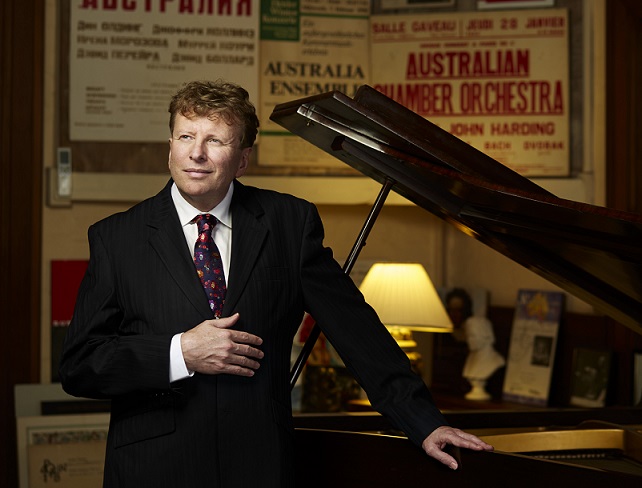
    Above: pianist Piers Lane, in a Keith Saunders photo; Mr. Lane was the guest soloist in this evening’s concert at Carnegie Hall

    Friday January 29th, 2016 – The Orchestra Now (TŌN) in their Carnegie Hall debut, playing works by Beethoven and his contemporaries, under the baton of Leon Botstein. Piers Lane was the soloist in Ferdinand Ries’ piano concerto #8, having its New York premiere tonight – some 190 years after it was written.

    The Orchestra Now is a new orchestra, comprised of young musicians who are transitioning from conservatory to career. With the women of the orchestra all wearing dresses in shades of blue, yet each one unique, the ensemble is as appealing to the eye as to the ear. 

    The program was perhaps more interesting as a concept than as a musical experience: the Cherubini overture was a good choice, and the Ries piano concerto was a pleasant surprise. But the longish Reicha symphony, having its US premiere tonight, meandered forward amiably enough but seemed something of a waste of preparation time for the young musicians since it’s unlikely they’ll ever be called on to play it again.

    278109.501

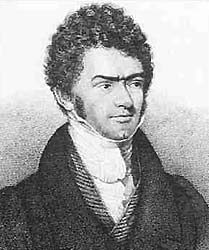
    Luigi Cherubini (above), best known for his opera Medea, was a composer greatly admired by Beethoven. Thus tonight’s program, subtitled Beethoven’s “Likes”, opened with the overture to another Cherubini opera, Les Deux Journées. This dramatic piece takes a while to gain traction, but it was well-played by the young musicians. 

    220px-Reicha

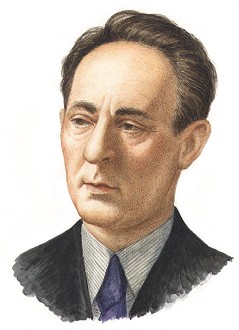
    Anton Reicha (above),
    an exact contemporary and good friend of Beethoven, left us a large catalog of chamber music as well as eight symphonies, eight operas, and some large-scale choral works. As professor of counterpoint and fugue at the Paris Conservatory, Reicha numbered among his pupils Berlioz, Liszt, Gounod, and Franck.
     
    Reicha’s 3rd symphony in F-major dates from the same year as Beethoven’s famous 5th, but that’s about the only thing they have in common. Aside from a rather nice clarinet solo in the Adagio, nothing in the Reicha really grabbed my attention. It’s an elegant work, and perfectly pleasant, but lacking in the peaks and valleys that make for a memorable symphonic experience. As Maestro Botstein remarked before he took up the baton for this work: “You’ll never hear it again!”
     
    EleveRies01
     
    Ferdinand Ries’ piano concerto No. 8 on the other hand was a lovely discovery. In his brief remarks prior to playing the concerto, pianist Piers Lane said the music would remind us of works by several other composers but that Ries (above) has crafted it in a way very much his own. He was right!
     
    The concerto’s manuscript  bears the inscription ‘Gruss an den Rhein‘ (‘Greetings From The Rhine’) – a tribute to the river Ries he grew up near – and indeed the first movement does evoke the gentle flow of the river along its broad banks. In the Larghetto that follows, there seems to be a heralding of the Romantic age in some of Ries’ very appealing melodic and harmonic writing. The concluding Allegro molto, its mega-abundance of rapid notes brilliantly tossed off by Mr. Lane, had the infectious and vivacious charm of an opera buffa cabaletta.  Throughout, the genial pianist made the strongest possible case for the concerto, winning the audience’s  joyous appreciation at the end.
     
    Sad to say, our enjoyment in experiencing this “new/old” concerto was compromised by a trio of young people who took seats in front of us as the houselights went down following intermission. They obviously had friends onstage – or perhaps they were members of the orchestra who were off-duty for the second half of the program –  and they spent the entire time-span of the concerto whispering and nudging one another while the girls shared a bottle of water. We decided to leave after the concerto, our evening having been spoilt by their thoughtlessness.

  • Delia Reinhardt

    6a00d8341c4e3853ef01a3fd15ffce970b-800wi

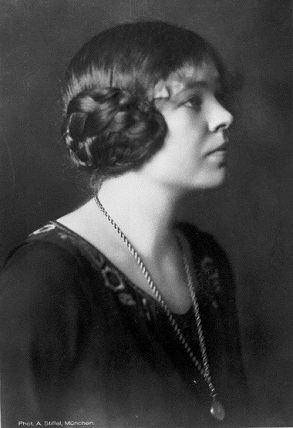
    Delia Reinhardt, mostly forgotten today, was born in 1892. She was ‘discovered’ by Bruno Walter, who invited her to join the Munich Court Opera. In the mid 1920s she moved on to the Berlin State Opera, where she became a very popular soprano.

    Reinhardt’s career suffered under the Nazi regime because her second husband was Jewish; she was an out-spoken critic of Hitler. Reinhardt survived the war, despite her house having been destroyed by a bomb in 1943. With the help of Bruno Walter, with whom she was romantically involved, she managed to flee Germany to Switzerland. and then to America, where she became fairly well-known for her paintings. She later moved back to Switzerland, where she died in 1974.

    These excerpts from Act I of WALKURE show Reinhardt’s deeply feminine vocal quality and wonderful expressiveness: an ideal Sieglinde.

    Delia Reinhardt as Sieglinde


  • Lorri Lail

    Lail-Lorri-02[1948]

    The Norwegian mezzo-soprano, Lorri Lail (née Laurie Lyle) was born in Oslo of Scottish descent. She made her debut as a concert singer around 1935. Her operatic roles included Ulrica in Verdi’s UN BALLO IN MASCHERA and Bianca in Britten’s THE RAPE OF LUCRETIA, but she is mainly remembered as a recitalist and oratorio singer.

    Lorri Lail – Sibelius song ~ Den första kyssen

    Lorri Lail made several North American concert tours with great success (the first in 1948). Her church concerts in Sweden, Norway and Finland were widely admired. From around 1950 to 1968 she lived in England, touring Europe and America as well as making recordings. Lail was considered an expert interpreter of the works of J S Bach. In 1968 she moved to Sweden, where she died in 1978.

    In 1953, Lorri Lail’s wonderful recording of Mahler’s Kindertotelieder was released on the Urania label. It has been copied from LP and can be heard on YouTube here.

  • Philharmonic Ensembles: In A Fishbowl

    Martinu
    Above: composer Bohuslav Martinů

    Sunday January 17th, 2016 matinee – Yet another highly enjoyable concert in the Philharmonic Ensembles series at Merkin Hall: artists from The New York Philharmonic performing chamber music in an intimate setting.

    These days, more than ever, I am looking to music to lift my spirits and help alleviate the symptoms of weltschmerz that threaten to overwhelm me. Feeling particularly low this morning, part of me wanted simply to stay home; but I headed down to Merkin and just a few moments into the opening Martinů, the dark pall began to lift. By the end of the concert, I felt fortified and ready to face another week. 

    MARTINŮ  –  Duo No. 1 for Violin and Cello, H.157
    Joo Young Oh, violin; Alexei Yupanqui Gonzales, cello

    The afternoon’s opening work was composed by Bohuslav Martinů in 1927 while he was living in Paris, studying with composer Albert Roussel. It’s a delightful two-movement piece – the first soulful, the second a lively dance. Superbly performed by violinist Joo Young Oh and cellist Alexei Yupanqui Gonzales, the slow movement impelled my rejuvenation process after just a few bars with its heartfelt melodies and lovely meshing of the two voices. In the second movement, a long cello solo was really a joy to hear; I thought the violin might have an equal opportunity, but instead the piece danced on to its ending. The two players had a fine rapport, the violinist reaching over to shift the cellist’s score as the cello ‘cadenza’ was launched. 

    John SICHEL  –  Fishbowl Diaries No. 3
    Vladimir Tsypin, violin; Blake Hinson, bass; John A. Sichel, narrator

    In something of a departure, John Sichel’s Fishbowl Diaries #3 featured a spoken narrative, delivered by the composer himself. The three short vignettes were accompanied by the Philharmonic’s Vladimir Tsypin, violin, and  Blake Hinson, bass. The first tale, entitled Heather From Card Member Services, was truly droll and had the audience laughing aloud. Juliet of The Rats, a story of thwarted infatuation in a laboratory setting, had Shakesperian allusions. The third and final setting, Dolphin Man: Mwa-ha-ha-ha-ha, struck close to home: it tells of that moment in childhood when those of us who are ‘different’ realize that people are laughing at us, either gently or cruelly. Mine happened when I was nine or ten years old, and it put a damper on my self-confidence that has stayed with me to this day. It’s kind of amazing that Mr. Sichel has hit this nail so perfectly on the head.

    DVOŘÁK  –  Piano Trio in E minor, Op. 90, Dumky
    Anna Rabinova, violin; Patrick Jee, cello; Wei-Yi Yang, piano 

    Totally engrossing, uplifting, and thought-provoking was the experience of hearing today’s playing of the Dvořák Dumky trio. “Dumka” literally means “thought”, and the word also refers to a type of Slavic folk-song that veers in mood from mournful to euphoric. Each of the six dumka that Dvořák has strung together for us in this imaginative and marvelous work is a feast in and of itself: poignant melodies abound, only to swirl unexpectedly into vigorous dance passages. 

    The music calls for both deeply emotional colours and exuberant virtuosity. Anna Rabinova’s passionately expressive playing of the violin line found a complimentary spirit in the rich piano textures of Wei-Yi Yang, whilst heart-stoppingly gorgeous tone from cellist Patrick Jee gave the music its soulful core. The three musicians moved me deeply in this fantastic performance. Bravi, bravi, bravi
         
    BEETHOVEN  –  Quintet for Piano and Winds
    Sherry Sylar, oboe; Pascual Martínez Forteza, clarinet; Kim Laskowski, bassoon; R. Allen Spanjer, horn; Yi-Fang Huang, piano

    Still more delights followed the interval with a performance of the Beethoven Quintet for Piano and Winds. Here, Yi-Fang Huang was the lyrically deft pianist, and the wind voices gave us an especially mellow blend in the Andante cantabile. R. Allen Spanger, who I met and enjoyed chatting with often while I was working at Tower (he’s an avid opera fan) produced that autumnally luminous sound that I always strove for in my horn-playing years but never achieved. The three reed players were congenially matched: Sherry Sylar (oboe), Pascual Martinez Fortenza (clarinet), and Kim Laskowski (bassoon) traded melodies and mingled their timbres in a performance rich in sonic rewards.

    We emerged from the hall into a gentle snowfall. The music had worked its magic. My sincere gratitude to all the participating artists.  

  • Joshua Bell’s Mendelssohn @ The NY Phil

    Josh-bell-violin

    Wednesday December 30th, 2015 – Joshua Bell (above) played Mendelssohn’s violin concerto with The New York Philharmonic tonight on a program that was otherwise an all-Sibelius affair, in celebration of the Finnish composer’s 150th birthday.

    Sibelius’s The Swan of Tuonela, which opened the evening, was originally to have been included in an opera the composer was working on. It later became one of the Four Legendsthe best-known of the four and often played as a stand-alone work.  Tuonela, the realm of the dead in Finnish mythology, is surrounded by a dark-water moat on which the swan of Tuonela floats majestically, singing.

    This is music of somber gorgeousness. Sibelius structures the work on a cushioning of strings; Carter Brey’s mournful cello theme sets the tone. An evocative English horn passage (played, I believe, by Robert Botti – though we didn’t catch sight of him) leads to a brief brightening of mood. But the swan glides back into the gloom and her voice fades away to a mysterious heartbeat. At the composer’s wish, The Swan of Tuonela was performed at his own funeral.

    Alan Gilbert spoke to us before commencing the Sibelius Symphony No. 4. He seemed to veer from personal enthusiasm for the piece to apologizing for its depressing qualities. The symphony was written while the composer was dealing with problems stemming from alcoholism. This probably accounts for the work’s disjointed qualities.

    Forward-looking harmonically, the 4th does not sound like most of the other music that has given Sibelius lasting popularity over the years. Carter Brey again had a leading theme – played with striking lyricism – in the first movement. Later, as the ensuing movements unfold, the oboe, clarinet, and flute will all have their moments to shine forth. Maestro Gilbert referred to the second movement as a Scherzo, but if it’s a joke it stems from a very dark sense of humour; oddly, it includes a brief gavotte motif for flute duo…charming, but it goes un-developed. The big, deep theme of the Adagio comes closest to what we could think of as Sibelian. The agitated opening of the final Allegro – which includes the unexpected introduction of the glockenspiel – does not resolve in a positive way.

    Overall, the Sibelius 4th seemed an odd inclusion on a holiday-season program. Interestingly, it had not been played by the Philharmonic for nearly 30 years. Tonight’s audience reacted with a mixture of admiration for the playing and uncertainty as to whether they really liked the piece or not.

    Following the interval, Joshua Bell appeared for the Mendelssohn violin concerto. This was the composer’s last completed orchestral work: within three years of its premiere in 1845, he had died at the age of 38 following a series of strokes.

    Mendelssohn’s violin concerto is innovative in that its three movements are played without pause, preventing mood-breaking applause. Eschewing gratuitous technical flourishes, the composer instead goes in for heartfelt melody. There are brilliant and demanding passages to be sure, but they are more conscientiously woven into the musical fabric than tacked on to display the violinist’s deftness. 

    The concerto in fact seemed like a conversation between soloist and orchestra and, in the course of playing it, Mr. Bell often turned towards the musicians to keep the dialogue flowing in both directions. It goes without saying that the orchestra played superbly, and that Maestro Gilbert was in his particular element here – especially in the Adagio, where he and Mr. Bell communed in an almost balletic pas de deux.

    Throughout, in fact, the black-clad violinist wove, bent, and swayed in a dance that had just a trace of the satanic about it as he drew the music from his 1713 Stradivarius. Right from the start – in that lovely and rather restless opening theme – Mr. Bell assured us we were in the presence of a musician of matchless technique, inspired artistry, and deep commitment. His capacity for subtle nuance was spine-tingling, and the satiny lustre of his sustained playing in the Adagio was – in a word – magical.

    Among the many felicities in this performance, I particularly liked Maestro Gilbert’s up-sweep of tempo as the first movement neared its conclusion, and some dashing attacks from Mr. Bell in the finale. It was a performance to treasure, and the audience could not suppress their enthusiasm: the applause erupted a split second before the final note could fade away. Mr. Bell was called out three times, and could easily have served up an encore or two: I liked instead that he let the concerto stand as his year-end gift to us. Bravo! 

    Returning to Sibelius to end the evening, Maestro Gilbert and the Philharmonic gave us a soul-stirring rendering of the composer’s Finlandia: a sure-fire crowd-pleaser, performed with resonant grandeur.

  • Chausson & Debussy

    9b0488c8

    Above: Ernest Chausson turning pages for Claude Debussy, at Luzancy in 1893

    The composers Ernest Chausson and Claude Debussy were great friends, and their admiration for one another’s music continued even after Chausson took Debussy to task for his debauched lifestyle.

    In the Summer of 1893, Chausson has rented a house in Luzancy and invited Debussy to come for a long stay. Knowing of Debussy’s keen interest on the music of Modest Moussorgsky, Chausson had sent off for a score of the Russian composer’s BORIS GODUNOV and Debussy spent many hours at the piano, playing thru the opera, with Chausson seated to his left, turning the pages. 

    Chausson’s catalog of compositions is relatively brief, for his life was cut short by a bicycling accident in 1899. he was killed instantly, at the age of 44.

    Chausson left us one great symphony, one opera (LE ROI ARTHUS), the gorgeous Poème de l’amour et de la Mer; the haunting Poème for violin and orchestra (used by Anthony Tudor for his ballet JARDIN AUX LILAS); chamber works, and songs.

    Here is one of Chausson’s best-known works:

    Chausson~Chanson perpetuelle – Sandra Porter – BBC 1996