Category: Opera

  • Chausson & Debussy

    9b0488c8

    Above: Ernest Chausson turning pages for Claude Debussy, at Luzancy in 1893

    The composers Ernest Chausson and Claude Debussy were great friends, and their admiration for one another’s music continued even after Chausson took Debussy to task for his debauched lifestyle.

    In the Summer of 1893, Chausson has rented a house in Luzancy and invited Debussy to come for a long stay. Knowing of Debussy’s keen interest on the music of Modest Moussorgsky, Chausson had sent off for a score of the Russian composer’s BORIS GODUNOV and Debussy spent many hours at the piano, playing thru the opera, with Chausson seated to his left, turning the pages. 

    Chausson’s catalog of compositions is relatively brief, for his life was cut short by a bicycling accident in 1899. he was killed instantly, at the age of 44.

    Chausson left us one great symphony, one opera (LE ROI ARTHUS), the gorgeous Poème de l’amour et de la Mer; the haunting Poème for violin and orchestra (used by Anthony Tudor for his ballet JARDIN AUX LILAS); chamber works, and songs.

    Here is one of Chausson’s best-known works:

    Chausson~Chanson perpetuelle – Sandra Porter – BBC 1996


  • Unseen: Not Just Another TOSCA @ The Met

    Joseph Colaneri

    Above: Maestro Joseph Colaneri

    Saturday November 28th, 2015 matinee – Arriving at The Met for today’s matinee of TOSCA, I found that patrons are now being ‘wanded’ by security forces on entering the house. Once inside, I watched the auditorium not fill up: at curtain time there were an alarming number of empty seats. If a Saturday matinee of a popular opera on a holiday weekend cannot sell better than this, what’s to be done?  From my score desk, I avoided the dreariness of the Luc Bondy production, instead letting this exciting traversal of the score play out dramatically in my theatre of the mind. Later in the day, news came of Mr. Bondy’s death – he’s the same age as me. 

    Liudmyla Monastyrska’s 2012 Aida at The Met was interesting enough draw me back to the House this afternoon to hear her as Tosca. Roberto Aronica, a idiomatically solid Cavaradossi in a performance I attended earlier this season, and Marco Vratogna, new to me, shared the stage with the Ukrainian soprano. All three sang passionately, and they had the right sized voices for their roles in the big space. But in the end it was the opera itself, and conductor Joseph Colaneri’s marvelous feeling for the music, that kept me on to the end and had me shouting bravo! for the Maestro at the curtain calls.

    Colaneri is a real opera conductor: he knows that the voices come first and he can immediately establish a dynamic range to suit whatever cast he’s presiding over. Every singer is always heard, and if in the heat of the moment someone in the cast should rush ahead or linger too long on a note, Colaneri can immediately adjust and keep the flow of the music steady. My hat is off to him for this TOSCA, which seemed so fresh and alive, almost as if I was hearing it for the first time instead of the 500th.

    Today’s TOSCA was much more the sort of performance of this opera that I want to hear than the one I attended earlier this month, where Angela Gheorghiu’s walking-on-eggshells singing of the title role siphoned off much of the excitement. Today, Ms. Monastyrska displayed the needed vocal amplitude for the music of Tosca, and she and her colleagues sang with generosity and commitment all afternoon.

    Two powerful bassos each made their mark in the first act: Richard Bernstein (Angelotti) and John Del Carlo (Sacristan) both sounded huge, declaiming their lines vividly. Later, in Act III, Connor Tsui sang the song of the shepherd so impressively that I felt like applauding.

    Mr. Aronica, first of the principals to appear, has a sturdy, masculine sound which he flung into the house confidently. Some passing flatness at the passaggio was not a serious detriment to his performance. Having had to rein his voice in somewhat when singing opposite Mme. Gheorghiu in the earlier performance, he was today much better matched with Ms. Monastyrska and together they poured out the big melodies of the love duet with apt Puccinian fervor. Later, vowing to aid Angelotti, Aronica speared a triumphant high-B on “La vita mi costasse!” and held onto it.

    As the diva playing the diva, Ms. Monastyrska established her vocal credentials with her commanding offstage cries of “Mario! Mario!”. Once onstage, her voice revealed a slightly throaty throb, and a bit of flutter that quickly endeared itself as it gave a trace of vulnerability to the character. The Monastyrska sound sails easily into the hall, especially as she ventures to the upper end of her range. She puts very little pressure in the lower notes, and showed good instincts in lightening the voice for “Non la sospiri” and the playful banter about the colour of the Attavanti’s eyes. Some rather odd diction along the way didn’t bother me in the least, especially when she and Mr. Aronica cut loose to exciting effect in the climaxes of their duet.

    Diction and its effectiveness played a good part of the success of Marco Vratogna’s Scarpia. His voice has a darkish, menacing quality and his creepy verbal nuances revealed the sadism lurking under his quasi-elegant veneer. For all his dramatic bite, Vratogna could also deliver real, sustained vocalism when it suited him: his “Tosca divina, la mano mia…” was musically reassuring. The Attavanti fan having done its work, Ms. Monastyrska – her voice now at full flourish – gave a walloping shout at “Tu non l’avrai stasera…GIURO!” and went on to an exciting crescendo at “…egli vede ch’io piango!”  Maestro Colaneri then marshaled the orchestra and chorus for the grandiose finale, giving the music its full sweep but never overwhelming Mr. Vratogna’s relishing of the text as he salivates over his plan for Tosca’s ultimate surrender.

    Mr. Vratogna impressed at the start of Act II with his greasily subtle musings on being so close to having Tosca in his trap; increasingly angry with Spoletta, the baritone understandably blustered a bit. Cavaradossi is brought in and then taken off to be tortured and the cat-and-mouse game between Tosca and Scarpia begins.

    Ms. Monastyrska monumental high-A on “Solo, si!” was soon followed by one of her rare ventures into chest voice at “Sogghigno di demone!”…very effective. Maestro Colaneri built the drama thrillingly as Scarpia baited Tosca mercilessly; from a bold and brassy top C down to a plaintive murmur at “Che v’ho fatto in vita mia..?” Monastyrska had really gotten into it.

    Tosca blurts out the truth about Angelotti’s hiding place to Scarpia; her lover, on discovering she’s caved in, is about to disown her when news of Bonaparte’s victory at Marengo throws Scarpia for a loop. Colaneri in a great moment drove the orchestra relentlessly and Aronica tackled a passionate top-A on “Vittoria!”. The Monastyrska high-C as she sees her lover dragged away was massive – slightly raw, but thrilling.

    A false calm is restored. Scarpia/Vratogna offers his bargain. Describing his lust for Tosca, the baritone was slightly taxed by the highish tessitura here but verbally makes it all work. Monastyrska began the “Vissi d’arte” softly, slowly opening the voice and phrasing throughout with lovely modulations of colour and volume; she went totally lyric at “Diedi gioielli della Madonna al manto…” before the build-up to a house-filling B-flat, followed immediately by a pulling back on the A-flat and then a stunning crescendo to triple forte on the G. I’ve never heard it done this way, but the soprano pulled it off impressively.

    The murder scene was less effective than some I have heard – Monastyrska’s parlando phrases were not really effectively rendered – but Colaneri and his orchestra’s superb playing of the postlude to the murder was so atmospheric.

    Fantastic work from The Met horns at the opening of Act III; the prelude was yet another Colaneri jewel, evolving to the amazingly deep sounds that precede the introduction of the “E lucevan le stelle…” theme. Basso Tyler Simpson made his mark as the jailer, and then the haunting prelude to the tenor’s aria commences. Mr. Aronica was at his finest here, with an intense and passionate ending which won him sustained applause. 

    Monastyrska/Tosca arrives; she describes the murder of Scarpia vividly, culminating in a blindingly bright and very long high-C at “Io quella lama…”. Maestro Colaneri and his players sustained their high level as the soprano and tenor joined in a flowing duet before soaring to a stentorian high-B just before their unison “Trionfal!” And then Scarpia’s last trick is played out and the opera ends in a flash.

    The tedium of two Gelb-intermissions was relieved by chatting up a young pianist from Montreal, visiting the Met – and our City – for the first time. 

    Metropolitan Opera House
    November 28th, 2015 matinee

    TOSCA
    Giacomo Puccini

    Tosca...................Liudmyla Monastyrska
    Cavaradossi.............Roberto Aronica
    Scarpia.................Marco Vratogna
    Sacristan...............John Del Carlo
    Spoletta................Eduardo Valdes
    Angelotti...............Richard Bernstein
    Sciarrone...............Jeffrey Wells
    Shepherd................Connor Tsui
    Jailer..................Tyler Simpson

    Conductor...............Joseph Colaneri
  • At Home With Wagner IX

    Wagner

    What looked quite enticing on paper – a 1963 WALKURE from Stockholm – proved frustrating, not because the performance was sub-par in any way, but because it turned out to be mis-labled and incomplete.

    The recording starts mid-way thru Act I. Michael Gielen, a conductor I know little about, has the score well in hand although the orchestra isn’t always up to Wagner’s demands. Arne Tyrén is a less boisterous Hunding than some I have heard, and his voice can take on a wonderfully spooky quality. Birgit Nilsson’s ‘Ho-Jo-To-Ho’ is a marvel, her voice bright and fresh: she makes this daunting opening passage sound easy. Unfortunately, there’s not much more to be said of her performance here, since the Todesverkundigung is ruined by what seems to have been the wayward speed of the source machine used to tape the performance. The pitch rolls up and down with a seasick effect. Then, the third act is missing entirely!

    Nordmo loevberg

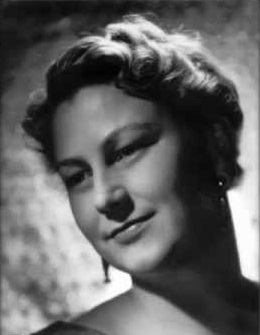
    The Wälsung twins are appealingly sung by Aase Nordmo-Lövberg (above) and Kolbjörn Höiseth. Ms. Nordmo-Lövberg, a very fine Elsa in Nicolai Gedda’s only performances of Lohengrin, brings poised lyricism and a fine sense of the words to the role of Sieglinde. 

    Kolbjorn-Hoiseth-300px

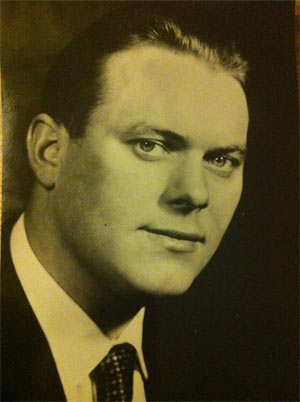
    Mr. Höiseth (above) sang briefly at The Met in 1975: he debuted as Froh in RHEINGOLD and repeated that role once; then he stepped in once for an indisposed colleague as Loge and once for an ailing Jon Vickers as Siegmund. I saw him in both the RHEINGOLD roles and he made a favorable impression. Here, as Siegmund, he is a good match for Nordmo-Lövberg – their voices are lyrically compatible. The tenor does experience a couple of random pitch problems, and seems just a shade tired vocally at the end of Act I – understandable, after such a taxing sing. But he makes a good effect in both the Sword Monologue and in the Winterstürme and also in the Act II scene where he attempts to calm to delirious Sieglinde as they flee from her pursuing husband. It’s a pity that the Todesverkundigung is so garbled: I would like to have heard Nilsson and Höiseth in this scene which is my favorite part of the opera.

    20011018-094545

    The mezzo-soprano Kerstin Meyer (above) had a more extensive Met career than her tenor colleague: she sang the Composer in the Met premiere of ARIADNE AUF NAXOS and also appeared as Carmen and Gluck’s Orfeo at the Old House. Here, as Fricka, she is impressive indeed: she begins lyrically – subtle and sure – and soon works herself into a state of righteous indignation. Her victory over Wotan is a triumph of will. Meyer sings quite beautifully, with clear expressiveness.

    Bjoerling-portrait

    Beautiful vocalism also marks the Wotan of Sigurd Björling (above). The voice is not stentorian, though he can punch out some impressive notes; the monologue is internalized, sung with a sense of hopelessness that is quite haunting. Despite errant pitch at times, Björling’s performance is moving and makes me truly regret that the third act is missing.

    ~~~~~~~~~~~~~~~~~~~~~~~~~~~~~~~~~~~~~~~~~~~~~~~~~~~~~~~~~~~~~~~~~~~~~~~~~~~~~~~~~~~~~~~~~~~

    Emc66-002-MF

    Above: Wolfgang Sawallisch

    A tremendous performance of GÖTTERDÄMMERUNG from Munich 1977 gave me a great deal of listening pleasure. I spent several hours with this recording, listening to whole acts repeatedly and zeroing in on favorite scenes to savor the individual characterizations of the very fine cast. Maestro Wolfgang Sawallisch’s shaping of the glorious score had a great deal to do with sustaining the air of excitement around this performance.

    This GÖTTERDÄMMERUNG was clearly recorded in-house; the sound of the microphone being fumbled with sometimes intrudes, and there are passages where a singer is too far off-mike to make a vocal impact…and other times when the recordist seems to be sitting literally in the singers’ laps.

    The first voice we hear is – incredibly – that of Astrid Varnay; essaying the role of the First Norn, Varnay sounds a bit matronly at times, but she is so authoritative and dramatically alert that it hardly matters. Her diction and word-colourings are endlessly admirable, and her low notes have deep, natural power – most especially on her final “Hinab!” As the Second Norn, Hildegard Hillebrecht is a bit unsettled vocally at times (the role lays low for her). Ruth Falcon’s singing of the Third Norn is more lyrical than some who have essayed the role.

    Sawallisch’s forward flow provides a nice build-up to Brunnhilde’s first entry; off-mike at first, it soon becomes evident that Ingrid Bjoner is on peak form for this performance. The voice won’t be to all tastes, but its silvery power, impressive lower range, and sustained phrasing which Bjoner brings forth are thrilling to me, a long-time fan. Jean Cox as Siegfried doesn’t quite equal his 1975 Bayreuth performance of the role, but he’s so sure of himself and has both the heft and the vocal stamina that’s needed. As Sawallisch builds the Dawn Duet with passionate urgency, Bjoner spears a couple of splendid high B-flats before her brightly attacked, sustained climactic high-C. 

    At the Gibichung Hall we meet the excellent Gunther of Hans Günther Nöcker and the vocally less-impressive but involved Gutrune of Leonore Kirchstein (near the end of the opera, she emits a gruesome scream on discovering the truth about Siegfried’s death). The dominating vocal force of the opera from here on in – along with Bjoner – is the resplendently sung and theatrically vivid Hagen of Karl Ridderbusch. The basso’s rendering of ‘The Watch’ is simply incredible. 

    Ae3fa3b49cd1956fc73b780d984a5e39

    Another potent performance is the splendid Waltraute of Ortrun Wenkel, who attained international fame for her remarkable performance as Erda in Pierre Chéreau’s 1976 production of the RING Cycle for Bayreuth which was telecast in its entirety and is preserved on DVD. Wenkel’s abundant tone and vivid sense of the character make her scene with the equally thrilling Bjoner Brunnhilde an outstanding part of this performance. If Waltraute’s parting high-A – always a thorny note for a contralto essaying this role – is cut short, it scarcely distracts from the excitement the Bjoner/Wenkel sister-scene has generated. 

    Bjoner is staunch in her defense of the ring from the attacking Gunther-Siegfried; abetted by Sawallisch and Mr. Cox, the soprano brings the first act of this performance to an exciting close.

    But then things soar even higher, for in an Act II that borders on insanity, the maestro and his cast all seemed to be in the grip of madness. The act begins with the eerie scene where Alberich (creepy singing from Zoltan Kelemen) appears as a vision to the sleeping Hagen. The summoning of the vassals is massively impressive, and later, in the great scene of oath-swearing, Cox and Bjoner blaze away. Throughout the act, the ever-keen Sawallisch guides his forces with a masterful hand. Simply thrilling.

    A nicely-blended trio of Rhinemaidens (Lotte Schädle, Marianne Seibel, and Liliana Netschewa) give us a lyrical interlude at the start of Act III: all three vocal parts are clearly distinguishable and they are finely supported by the atmospheric playing of the orchestra, with the horn calls very well-managed. Jean Cox is very much on-mike as he encounters the girls: his big, leathery high-C is sustained…and then he chuckles to himself.

    Following Hagen’s betrayal, Cox’s farewell to life and to Brunnhilde is wonderfully supported by Sawallisch: the orchestra playing here is so impressive, the tenderness of the final greeting so lovingly conveyed. 

    Now Sawallish takes up a deep, glowering rendition of the prelude to the Funeral March; contrasts of weight and colour add to the sonic build-up until the great theme bursts forth in its full-blown grandeur. The spot-on trumpet fanfare and the solid assurance of the horns are a great asset here.

    Ridderbusch is terrifying in vocal power and cruelty as he seizes control of the scene, but the raising of the hand of the dead Siegfried when Hagen goes for the ring puts Alberich’s son in his place at last. The cleansing descending scale sets the scene for Brunnhilde, and even though Bjoner is off-mike for the opening of the Immolation Scene, she is vocally unassailable: by “Wie sonne laute…” the  mike has found her and she shows both great power and great subtlety in this music. Bjoner’s low notes are vivid, her sustained, lyrical thoughts of the ravens imaginatively expressed, and her noble “Ruhe…ruhe, du Gott!” has a benedictive quality and is very moving. Following her passionate disavowal of the ring, the soprano surges forward with a thrilling greeting of Grane and some exalting top notes to seal her great success in this arduous role. Then Sawallisch and the orchestra bring the opera to a mighty close.

    6a00d8341c4e3853ef0192ac79f9a2970d-800wi

    Above: Jean Cox and Ingrid Bjoner

  • Vinson Cole

    Vinson cole

    Tenor Vinson Cole sings Richard Strauss’s Morgen.

    Vinson Cole – Morgen – Richard Strauss

    “And tomorrow the sun will shine once more, and on the path that I will take it will unite us – we fortunate ones – upon this sun-drenched Earth. And to the broad shore with its blue waves we will quietly go down; we will look into one another’s eyes, and the silence of happiness will descend upon us.”

  • TURANDOT at The Met – 2nd of 4

    385682_332777790113678_298965728_n

    Above: Lise Lindstrom in the Metropolitan Opera’s production of TURANDOT

    Monday October 26th, 2015 – It’s always fun to bring someone to the opera who hasn’t been in a while or who is unfamiliar with a particular work. When my choreographer/friend Lydia Johnson and I decided to spend an evening at The Met, I quickly settled on Franco Zeffirelli’s classic production of TURANDOT. In an age where less is supposedly more when it comes to opera stagings, this TURANDOT clings to the forbidden notion that grand opera should still be grand. Is this the sort of thing the public really wants to see? A virtually full house, including tons of young people, seemed to be saying “Yes!”

    It was a good performance, but in the end it was the opera itself that was the star of the evening. Beyond the Chinoiserie which decorates the score, we have Puccini – the master-orchestrator – creating harmonies and textures that are so atmospheric. Lydia was fascinated by what she was hearing; I told her she must try FANCIULLA DEL WEST next.

    The Met Orchestra were on optimum form – and the chorus, too. Both forces were capable of lusty vigor one moment and subtle delicacy the next. Conductor Paolo Carignani paced the opera superbly and brought forth much detail from the musicians; a tendency to cover the singers at times should have been resolved by this point in the run, but instead the conductor went blithely on, seemingly unable to comprehend that a forte for Marcelo Alvarez is not the same as a forte for Mario del Monaco.

    For all that, the singing for the most part was pleasing and well-tuned to the drama of the work. David Crawford was an excellent Mandarin, ample-toned and investing the words with proper authority. Ronald Naldi as the Emperor Altoum projected successfully from his throne on Amsterdam Avenue, and Eduardo Valdes, Tony Stevenson, and – especially – Dwayne Croft made the most of the Ping-Pang-Pong scene.

    James Morris’ aged timbre made a touching effect in the music of the blind king Timur. Leah Crocetto’s soprano sounded a bit fluttery at the start, but she moved the audience with her lovingly-shaped “Signore ascolta” and was excellent in her third act scene, winning the evening’s loudest cheers at curtain call. While Marcelo Alvarez is clearly over-parted by Calaf’s music, a more thoughtful conductor could have aided the tenor in turning his lyrical approach to the role into something perfectly viable. But that didn’t happen, and while there were many handsome moments in Alvarez’s singing, at the climax of “Nessun dorma” the conductor was of no help. There was no applause after this beloved aria, even though it was actually quite beautifully sung.

    Lise Lindstrom is undoubtedly the most physically appealing Turandot I have ever beheld, and she also manages to make the character something more than a cardboard ice queen. Lindstrom’s lithe, attractive figure and her natural grace of movement were great assets in her portrayal; she looked particularly fetching in those scenes where she’s divested of the heavy robes and headpieces and seems like a young princess, almost vulnerable in her sky-blue gown and long black hair.

    After a couple of warm-up phrases in which there was a trace of cloudiness in her upper-middle voice, Lindstrom’s singing took on its characteristic high-flying power as she pulled the treacherous high notes out of thin air with assured attacks. The narrative “In questa reggia” was presented as both a vocal and verbal auto-biography, her upper range zinging over the orchestra. Lindstrom’s Riddle Scene was vividly dramatic; having experienced defeat, her plea to Altoum was urgent and moving, and the she advanced downstage to deliver the two shining top-Cs over the massed chorus. Her acting as Calaf offered her a way out was detailed and thoughtful. 

    In Act III Lindstrom was totally assured vocally, with a persuasive melting at Calaf’s kiss and a nuanced rendering of “Del primo pianto”; in the high phrases following the prince’s revelation of his name, the soprano was very much at home. She ended the opera on a high B-flat attacked softly and then expanded to a glistening brilliance.

    Lydia was very moved by the opera – and especially taken with the gestural language of Chiang Ching’s choreography – and we stayed to cheer the singers. She agreed with me, though, that dramatically the “happy ending” is incomprehensible. That Calaf should want to marry a woman who has sent dozens of men to their deaths, threatened to torture his own father, and caused the suicide of the faithful Liu just doesn’t make sense. But then, fairy tales seldom do.

    Metropolitan Opera House
    October 26th, 2015

    TURANDOT

    Giacomo Puccini

    Turandot................Lise Lindstrom
    Calàf...................Marcelo Álvarez
    Liù.....................Leah Crocetto
    Timur...................James Morris
    Ping....................Dwayne Croft
    Pang....................Tony Stevenson
    Pong....................Eduardo Valdes
    Emperor Altoum..........Ronald Naldi
    Mandarin................David Crawford
    Maid....................Anne Nonnemacher
    Maid....................Mary Hughes
    Prince of Persia........Sasha Semin
    Executioner.............Arthur Lazalde
    Three Masks: Elliott Reiland, Andrew Robinson, Amir Levy
    Temptresses: Jennifer Cadden, Oriada Islami Prifti, Rachel Schuette, Sarah Weber-Gallo

    Conductor...............Paolo Carignani

  • TURANDOT at The Met – 2nd of 4

    385682_332777790113678_298965728_n

    Above: Lise Lindstrom in the Metropolitan Opera’s production of TURANDOT

    Monday October 26th, 2015 – It’s always fun to bring someone to the opera who hasn’t been in a while or who is unfamiliar with a particular work. When my choreographer/friend Lydia Johnson and I decided to spend an evening at The Met, I quickly settled on Franco Zeffirelli’s classic production of TURANDOT. In an age where less is supposedly more when it comes to opera stagings, this TURANDOT clings to the forbidden notion that grand opera should still be grand. Is this the sort of thing the public really wants to see? A virtually full house, including tons of young people, seemed to be saying “Yes!”

    It was a good performance, but in the end it was the opera itself that was the star of the evening. Beyond the Chinoiserie which decorates the score, we have Puccini – the master-orchestrator – creating harmonies and textures that are so atmospheric. Lydia was fascinated by what she was hearing; I told her she must try FANCIULLA DEL WEST next.

    The Met Orchestra were on optimum form – and the chorus, too. Both forces were capable of lusty vigor one moment and subtle delicacy the next. Conductor Paolo Carignani paced the opera superbly and brought forth much detail from the musicians; a tendency to cover the singers at times should have been resolved by this point in the run, but instead the conductor went blithely on, seemingly unable to comprehend that a forte for Marcelo Alvarez is not the same as a forte for Mario del Monaco.

    For all that, the singing for the most part was pleasing and well-tuned to the drama of the work. David Crawford was an excellent Mandarin, ample-toned and investing the words with proper authority. Ronald Naldi as the Emperor Altoum projected successfully from his throne on Amsterdam Avenue, and Eduardo Valdes, Tony Stevenson, and – especially – Dwayne Croft made the most of the Ping-Pang-Pong scene.

    James Morris’ aged timbre made a touching effect in the music of the blind king Timur. Leah Crocetto’s soprano sounded a bit fluttery at the start, but she moved the audience with her lovingly-shaped “Signore ascolta” and was excellent in her third act scene, winning the evening’s loudest cheers at curtain call. While Marcelo Alvarez is clearly over-parted by Calaf’s music, a more thoughtful conductor could have aided the tenor in turning his lyrical approach to the role into something perfectly viable. But that didn’t happen, and while there were many handsome moments in Alvarez’s singing, at the climax of “Nessun dorma” the conductor was of no help. There was no applause after this beloved aria, even though it was actually quite beautifully sung.

    Lise Lindstrom is undoubtedly the most physically appealing Turandot I have ever beheld, and she also manages to make the character something more than a cardboard ice queen. Lindstrom’s lithe, attractive figure and her natural grace of movement were great assets in her portrayal; she looked particularly fetching in those scenes where she’s divested of the heavy robes and headpieces and seems like a young princess, almost vulnerable in her sky-blue gown and long black hair.

    After a couple of warm-up phrases in which there was a trace of cloudiness in her upper-middle voice, Lindstrom’s singing took on its characteristic high-flying power as she pulled the treacherous high notes out of thin air with assured attacks. The narrative “In questa reggia” was presented as both a vocal and verbal auto-biography, her upper range zinging over the orchestra. Lindstrom’s Riddle Scene was vividly dramatic; having experienced defeat, her plea to Altoum was urgent and moving, and the she advanced downstage to deliver the two shining top-Cs over the massed chorus. Her acting as Calaf offered her a way out was detailed and thoughtful. 

    In Act III Lindstrom was totally assured vocally, with a persuasive melting at Calaf’s kiss and a nuanced rendering of “Del primo pianto”; in the high phrases following the prince’s revelation of his name, the soprano was very much at home. She ended the opera on a high B-flat attacked softly and then expanded to a glistening brilliance.

    Lydia was very moved by the opera – and especially taken with the gestural language of Chiang Ching’s choreography – and we stayed to cheer the singers. She agreed with me, though, that dramatically the “happy ending” is incomprehensible. That Calaf should want to marry a woman who has sent dozens of men to their deaths, threatened to torture his own father, and caused the suicide of the faithful Liu just doesn’t make sense. But then, fairy tales seldom do.

    Metropolitan Opera House
    October 26th, 2015

    TURANDOT

    Giacomo Puccini

    Turandot................Lise Lindstrom
    Calàf...................Marcelo Álvarez
    Liù.....................Leah Crocetto
    Timur...................James Morris
    Ping....................Dwayne Croft
    Pang....................Tony Stevenson
    Pong....................Eduardo Valdes
    Emperor Altoum..........Ronald Naldi
    Mandarin................David Crawford
    Maid....................Anne Nonnemacher
    Maid....................Mary Hughes
    Prince of Persia........Sasha Semin
    Executioner.............Arthur Lazalde
    Three Masks: Elliott Reiland, Andrew Robinson, Amir Levy
    Temptresses: Jennifer Cadden, Oriada Islami Prifti, Rachel Schuette, Sarah Weber-Gallo

    Conductor...............Paolo Carignani

  • BSO: ELEKTRA @ Carnegie Hall

    Andris-Nelsons-Conductor-007

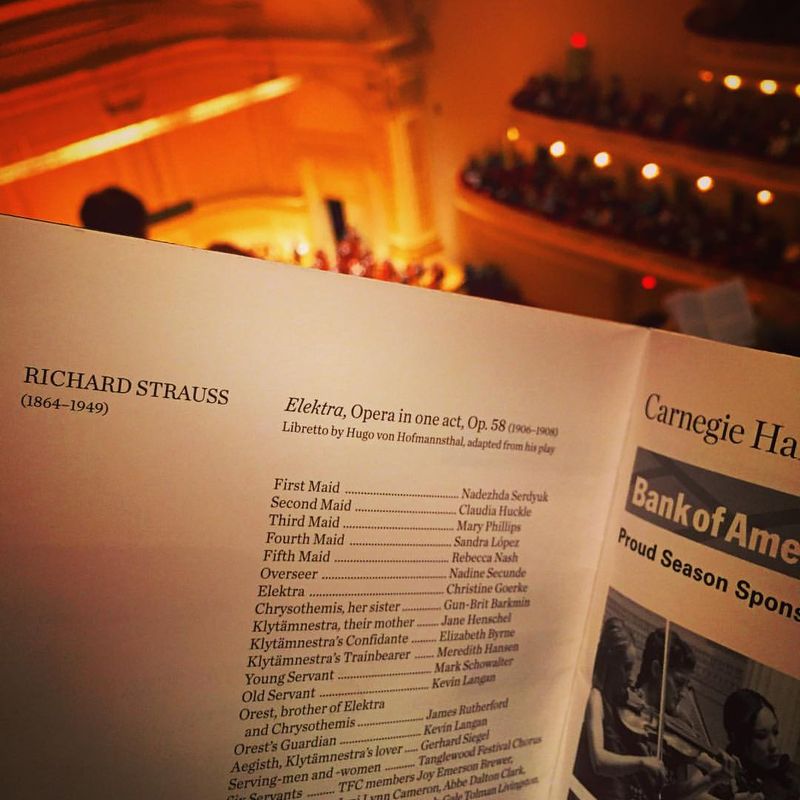
    Wednesday October 21st, 2015 – Conductor Andris Nelsons (above) leading a powerful concert performance of Richard Strauss’s ELEKTRA given by the Boston Symphony Orchestra at Carnegie Hall. The evening was a great personal triumph for soprano Christine Goerke, who gave a vocally and physically super-charged rendering of one of opera’s most demanding roles.

    Strauss calls for a massive orchestra for this, his most demented work; the Boston players were sprawled across the entire space of the Carnegie stage, with the chorus at the end singing from an upper tier of the hall. The musicians played their hearts out and, under Nelsons’ authoritative baton, they delivered the music with tremendous flair in all its glistening glory. There were also superbly refined stretches, notably in the Klytaemnestra scene where the maestro and musicians painted a neurotic sound setting for an amazingly nuanced performance of the role by Jane Henschel.

    The large cast included some names to reckon with in the smaller roles: Nadine Secunde (Overseer), Elizabeth Byrne (Confidante), the Met’s Mark Schowalter (Young Servant) and stalwart basso Kevin Langan (Old Servant/Orestes’ Guardian).

    In the opening scene, the psychopathic maids were a raucous lot; as they carried on their vile gossip session about Elektra – the royal princess reduced to the status of a caged animal in her own home – Ms. Goerke, in a striking blood-red gown, strode among the violins in a state of fevered anxiousness. At last the maids hauled off the fifth of their number to be beaten for defending Elektra, and Ms. Goerke took center stage.

    She began the great monolog with sounds of deep, guttural anguish. As in her recent Met Turandot, Goerke’s voice narrowed as she ventured higher and some of the upper notes were covered by the orchestra. This necessitated an adjustment for those of us inured to the likes of Nilsson, Behrens, and Dame Gwyneth Jones in this music. Yet Goerke knew what she was doing and she went about the music on her own terms; by the scene with Klytaemnestra, the Goerke voice was firing on all cylinders and she delivered a performance on a par with her career-defining portrayal of the Dyer’s Wife at The Met in 2013.

    Cg

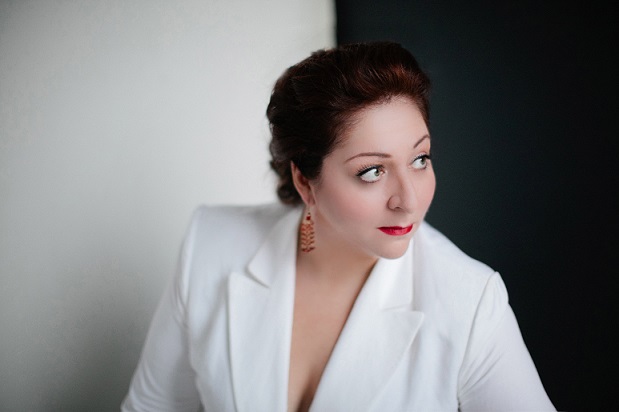
    Above: Christine Goerke

    The soprano’s portrayal of Elektra was so committed and intense: she entered into the physicality of the role as if in a staged performance, interacting brilliantly with her colleagues and even including a frantic, manic dance at the end. Vocally she sailed forth undaunted by the orchestra’s volume and hurling out the character’s dramatic punch lines (“Triff noch einmal!”) with force. Summoning up a colossal effort for the last sprint, Goerke packed a final punch with her ecstatic “Schweig, und tanze!” before collapsing into her chair. The ensuing ovation for the intrepid soprano was epic, and very much well-deserved.

    As the hapless Chrysothemis, Gun-Brit Barkmin made a far better impression than she had as Salome in this same hall in 2014. Slender of frame and of voice, she nevertheless finds a way of projecting over the orchestra and her shining top notes made me think she might be a good SIEGFRIED Brunnhilde. Errant pitch was sometimes evident, but overall Ms. Barkmin did well and was a good foil for Ms. Goerke. 

    Henschel

    Jane Henschel (above), though the top of her voice must now be handled with care, gave such a illuminatingly subtle and detailed performance as the demented Klytaemnestra – playing off the words and using a kozmic array of vocal colours – that a few random strained notes were only of passing worry. She and Goerke made their encounter crackle with verbal vibrancy: the most dramatically engrossing passage of the evening.

    James Rutherford was a sturdy-voiced but not especially imaginative Orestes. The great Recognition Scene was not persuasively staged, though Goerke’s singing after the revelation was wonderful….and deeply felt; and here the orchestra playing was sublime. Gerhard Siegel was a capital Aegisth, vividly neurotic and strongly sung: his final “Weh mir!”, voiced onstage, was a lightning bolt rather than a last gasp.

    Auth.aspx

  • Young Concert Artists: Seiya Ueno/Wendy Chen

    Ueno

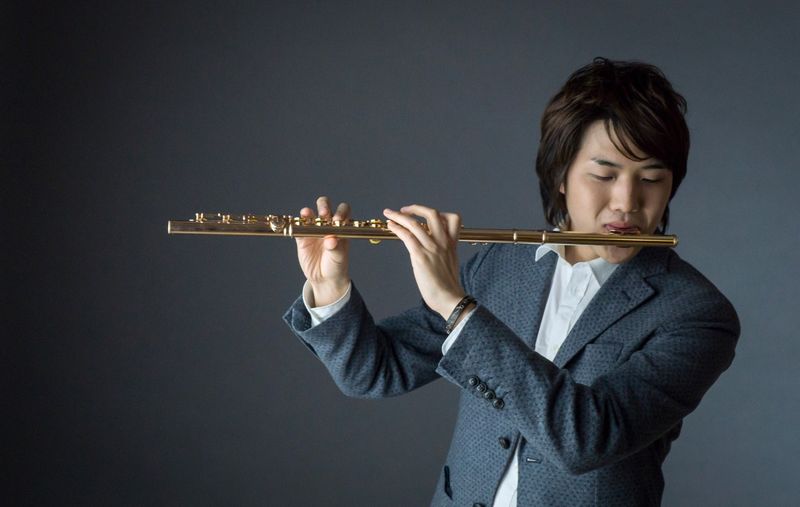
    Tuesday October 20th, 2015 – The Japanese flautist Seiya Ueno (above, in a Matt Dine photo) with guest artist Wendy Chen at the keyboard for the opening event of the Young Concert Artists season. Tonight at Zankel Hall, these two exceptional artists presented a programme that spanned the centuries from Bach to Boulez.

    Susan Wadsworth, the founder and director of Young Concert Artists, greeted us at this inaugural concert of her 55th season concert series; what this woman has done for music and for young musicians deserves our deepest gratitude.

    The artists then appeared, Mr. Ueno elegant in tail-coat tuxedo, and Ms. Chen simply luminous in a soft sea-green frock. They commenced at once on the Bach Sonata in B minor, BWV 1030, and immediately established a lyrical rapport both with one another and with the audience. Mr. Ueno’s playing is stylish and deft, and his assured technique makes him capable of anything, including some captivating soft attacks. Watching Ms. Chen’s extraordinarily graceful hands move up and down the keyboard became a prime visual aspect of the evening. 

    Sinking into the dreamy world of Debussy’s Prélude à l’aprés-midi d’un faune, the two artists painted in sensuous Monet hues. Mr. Ueno’s soft attacks and hushed taperings of line were ideally seconded from Ms. Chen’s piano, evoking images from the ballet which caused such a scandal at its premiere.

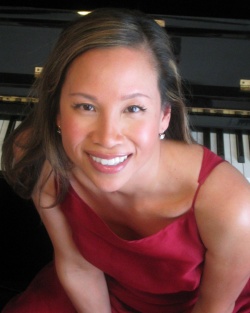
    Wendy_chen_01_category

    Above: pianist Wendy Chen

    The duo scored a huge success with Pierre Boulez’s Sonatine, a work filled with challenges for both players. Mr. Ueno is called upon to create rasping, burbling effects; the music whirrs and shrills and pauses on long trills; Ms. Chen meanwhile is weaving her own spell from the Steinway, maintaining an attentive connection to the sounds of the flute. Their superb playing of this complex and demanding work drew enthusiastic bravos from the crowd.

    Much as I love the operas of Richard Strauss, his Sonata in E-flat major, Op. 18 for flute and piano was actually new to me. Ms. Chen’s somber opening phrases soon give way to a burst of energy and the duo are off in an infectious allegro. The score is chock full of lovely themes, many of them whispering of ROSENKAVALIER and ARIADNE AUF NAXOS. Mr. Ueno seized on these melodies and lavished them with plush, full-toned ‘singing’, and in the final movement he warbled deliciously as Ms. Chen maintained the varying rhythmic patterns with élan.

    There have been many fantasies created on themes from Bizet’s opera CARMEN; tonight Mr. Ueno brought forth François Borne’s Carmen Fantasie whichde rigueurincludes such chestnuts as the ‘fate’ motif, the Habanera, the Toreador Song and the Chanson Boheme but also seeks out less obvious passages from the opera, such as Micaela’s tune from her Act I duet with Don Jose, and the latter’s pleading “Ne me quittez pas” which was deliciously embroidered upon by the flautist. As the fantasy progresses, the demands for bravura embellishments increase: cascading scales at break-neck speed and whirlwind flourishes of notes were delivered with remarkable clarity and vivacity by Mr. Ueno, with Ms. Chen yet again a flawless partner.

    Responding to the audience’s warm applause, Mr. Ueno appeared alone and in a charming, rather halting speech thanked us for sharing the evening with him and ended with the heartfelt declaration: “I love music..and I love you!” He then offered a ravishing Debussy encore, Syrinx.

    I realized as the evening drew to its close that this was – incredibly – my first-ever flute recital So, even in our senior years, there are still new experiences to be enjoyed in classical music!

  • ASO Season Opens @ Carnegie Hall

    Strauss

    Above: Richard Strauss, the composer of Also sprach Zarathustra

    Friday October 16th, 2015 – The American Symphony Orchestra opened their 2015-2016 season at Carnegie Hall with a program entitled Mimesis: Musical Representations.

    Gunther Schuller’s 7 Studies on Themes of Paul Klee opened the program, and what a brilliant and highly imaginative piece it is. The seven songs are vividly differentiated in instrumentation and rhythm, becoming aural counterparts for seven paintings by the Swiss modernist Paul Klee (1879-1940). “Each of the seven pieces bears a slightly different relationship to the original Klee picture from which it stems,” Schuller wrote. “Some relate to the actual design, shape, or color scheme of the painting, while others take the general mode of the picture or its title as a point of departure.”

    In “Antique Harmonies” Schuller’s music is sombre and dense. An immediate contract comes in “Abstract Trio” with whimsical winds and a single pluck of the strings. “Little Blue Devil” is captivatingly jazzy, with thrumming bass, muted trumpet, xylophone. Insectuous sounds pervade “The Twittering Machine” with edgy woodwinds and a wood-on-wood tone block marking time. “Arab Village” is an absolute delight, with a flautist playing from offstage; her ‘voice’ inspires a magical dance for harp, viola and, as the full orchestra plays very softly. They play even softer for the opening of “An Eerie Moment” which eventually rumbles grandly before fading away. For the final “Pastorale”, the violins play a repetitive two-note figure while the winds sigh, rather mournfully.

    The Schuller really is a great piece; I’ve only encountered his music rarely over the years…I need to seek it out.

    1869781

    Henri Dutilleux’s Correspondances brought forth the beauteous soprano Sophia Burgos (above). In this cycle of five songs, the composer draws on a variety of texts: poems by Rilke and Mukherjee, and letters written by Solzhenitsyn to the Rostropovichs and by Vincent van Gogh to his brother Theo.

    The singer’s agile, silvery timbre is shot thru with gem-like flecks of colour; she has an extensive range and her voice was beautifully set off by the marvelous instrumental combinations Dutilleux has employed. Countless entrancing passages for various instrumental combinations keep the ear pricked up: an especially appealing tuba outing in the Interlude, and the cunning use of accordion.

    Ms. Burgos moved with thorough vocal command from urgency to passion to evocation; the audience, very taken with her, broke in with applause during the cycle, and Maestro Botstein took it in stride, nodding approvingly. In the final song, the soprano was at her most poignantly expressive: an affecting descending vocalise is heard over the shimmering strings before things take a dramatic turn and she soars to an ecstatic concluding high note. Brava! And bravi to the players as well. 

    Following the interval, Nico Muhly’s Seeing is Believing seemed to me – and to my pianist-companion – the least interesting work on the program. A sort of tone poem for electric violin (played by virtuoso Tracy Silverman) and orchestra, the work stretched out over 25 minutes of rather ‘same-y’ sounds and repetitive motifs.

    According to the program notes, Muhly’s inspiration for the work was the practice of mapping the stars in the sky; yet I could detect no sense of the wonderment one would expect to experience is questing the heavens. Instead the music seemed earth-bound and tended to wallow in its own density. Mr. Silverman was in total command of his electrified instrument, producing some striking effects in the layered, echoing passages. Having been impressed by Muhly’s orchestrational skills in his opera. The Dark Sisters, I was disappointed with tonight’s offering. The composer was present and took a bow from his box. To me, the audience seemed to embrace the violinist without embracing the music he had just played.

    Richard Strauss’s Also Sprach Zarathustra closed the evening on an epic note. Beyond its super-familiar but always impressive opening statement, the work is a rich and royal sonic tapestry into which Strauss has woven one appealing thread after another. Abounding in solo opportunities for individual instruments, this thrilling work further features a gorgeous tutti theme for celli and violins, and some interjections for organ to Westernize its spiritual aspects; an entrancing Viennese waltz looks forward to ROSENKAVALIER in no uncertain terms.

    Overall, a grand finale for an impressively-played concert. And the American Symphony Orchestra‘s next concert, on December 17th, looks fascinating to me.  

  • La Mia Gilda!

    6a00d8341c4e3853ef00e553c65d718833-800wi

    A lovely lady with a lovely voice, Gilda Cruz-Romo became my friend in 1969 around the time of her New York City Opera debut. We have stayed in touch ever since, and today I want to share this brief sample of her singing:

    Gilda Cruz-Romo – In quelle trine morbide – MANON LESCAUT -Met dress rehearsal 1973