Category: Opera

  • Mario Sereni Has Passed Away

    MI0002863986

    Above: Mario Sereni as Giorgio Germont in Verdi’s LA TRAVIATA

    Mario Sereni, the Italian baritone who sang over 550 performances with The Metropolitan Opera between 1957 and 1984, has reportedly died at the age of 87.

    Sereni had a warm, rich sound with an easy top, and an instinctive feel for phrasing off the words of his native language. I first saw him at the Old Met as Belcore in L’ELISIR D’AMORE (with Freni, Gedda, and Corena, no less!); once the new House opened and I was going to the opera frequently, Sereni was a singer I saw often. He was popular with the fans, and always very cordial when we greeted him after a performance.

    Although he sang many of the great Verdi roles – Germont in TRAVIATA being particularly well-suited to his voice, and he also appeared as Amonasro, Count di Luna, Posa, Ford in FALSTAFF and Don Carlo in LA FORZA DEL DESTINO – it was in the more verismo-oriented operas that Sereni made his best impression, at least for me. His Tonio in PAGLIACCI was outstanding, and he was often cast in the sympathetic roles of Sharpless (MADAMA BUTTERFLY) and Marcello (LA BOHEME). One performance that I recall with special affection was his Carlo Gerard in ANDREA CHENIER, where he appeared opposite Raina Kabaivanska in her only Met performance as Maddalena. In the French repertoire, Sereni sang Valentin in FAUST and Escamillo in CARMEN; he even made a foray into Wagner, as the Herald in LOHENGRIN. Among other Sereni roles were Rossini’s Figaro, Donizetti’s Malatesta (DON PASQUALE) and Enrico (LUCIA), and Lescaut in the Puccini opera. Near the end of his Met career, he sang several performances of Schaunard in BOHEME, and that was the role of his final Met performance in 1984.

    Mario Sereni appears on several complete opera recordings; my personal favorite is (again) his Carlo Gerard in CHENIER on EMI, opposite Antonietta Stella and Franco Corelli. Also on EMI, he sings with Victoria de los Angeles on her classic recordings of BUTTERFLY and TRAVIATA. And he is in fine fettle on the RCA recording of LUCIA DI LAMMERMOOR, with Anna Moffo and Carlo Bergonzi. Here is the Wolfscrag Scene from that recording, in which Bergonzi and Sereni make such a vivid impression, both vocally and dramatically.

  • CMS: Summer Evenings II

    Amphion+String+Quartet+classical+concerts+online

    Above: the musicians of the Amphion String Quartet; left to right: David Southorn, Mihai Marcia, Katie Hyun, and Wei-Yang Andy Lin

    Sunday July 19th, 2015 – The second in Chamber Music Society of Lincoln Center‘s 3-concert summer series took place on a sweltering day. Outdoors, people were wilting from the intense heat and humidity, but in the cool, classical cavern of Alice Tully Hall, another capacity audience drew both physical comfort and spiritual sustenance from a well-devised and admirably played programme.

    Putting Haydn and Mozart on the same bill of fare can sometimes result in Papa Haydn’s music being somewhat overshadowed by the younger composer’s. But that was not the case today, thanks to the Amphion String Quartet’s lovingly crafted rendering of Haydn’s penultimate completed string quartet: in G major, Op. 77, No. 1.

    In the opening Allegro moderato, the Amphions brought both crisp clarity of articulation and a silky blend of timbres. The Adagio – which to me draws upon a depth of feeling that Haydn’s music does not always attain – produced some striking modulations and resonant pauses as the players, so sure of one another, seemed to breathe and phrase as one. Special mention must be made of the enticing sheen of cellist Mihai Marica’s playing. In the scurrying third movement of the Haydn, and also in its propulsive finale, the Amphion’s virtuosity and sense of fun were amply evident.

    6966796790_9e54190321_n

    Above: pianist Gilles Vonsattel

    Felix Mendelssohn is sometimes referred to as “the romantic classicist,” and this concert’s back-to-back programming of the Haydn (dating from 1799) and Mendelssohn’s Piano Quartet No. 3 in B minor, Opus 3, written a quarter-century later, showed most vividly the leap from Classicism to Romanticism that marked the arrival of the 19th century.

    Mendelssohn’s music is really unlike anyone else’s; it has a wonderful freshness and vitality, and the composer’s enchanting trademark sound, affectionately referred to as ‘faerie music,’ has a charm all its own. It was a chance hearing of a Mendelssohn piano trio on the radio many, many years ago that opened my mind to the pleasures of chamber music; it was only after decades of devoting myself to opera that I got to the point where I had both the time and the energy to explore the chamber music repertoire, a genre of mind-boggling variety and endless reward.

    Curiously, I’m finding these days that it’s instrumental soloists and chamber artists who have taken the place of great singers in my affection and admiration. I’ve always had a strong streak of unabashed ‘fanhood’; if I like a singer/dancer/musician, I really become an admirer and they become an idol. That happened for me today as Gilles Vonsattel played his way into my echelon of favorites in the Mendelssohn. In 2014, the Swiss-born American pianist participated in a memorable CMS performance of Messiaen’s ‘Quartet for the End of Time’. Playing my beloved Mendelssohn this evening, Mr. Vonsattel’s quicksilver technique and masterful turns of phrase kept me constantly drawn to the keyboard. 

    This Mendelssohn quartet is a veritable font of melody and shows a sophistication of musical imagination that seems extraordinary in a composer still in his teens. The second movement (Andante) is vastly pleasing to hear, opening with a lovely piano statement which gives way to lulling rhythms, with gently developing themes of longing from the violin (Ms. Hyun) and of pensive soulfulness from the cello (Mr. Marica). The third movement (Allegro molto) opens with an injection of Midsummer Night’s magic, proceeds to swelling melodies and becomes a big dance. In the finale, Mr. Vonsattel’s mercurial playing was simply irresistible. 

    400x300.fitandcrop

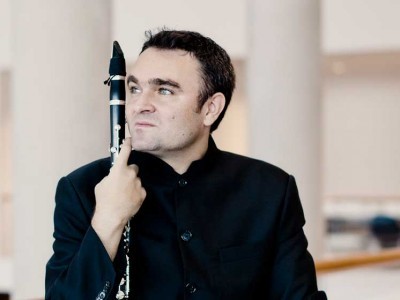
    Above: clarinetist Jörg Widmann

    For the evening’s concluding Mozart, the ‘Clarinet Quartet’, Jörg Widmann (who also took part – splendidly – in that ‘Quartet for the End of Time‘ mentioned above) displayed an engagingly natural feel for legato, his tone having a mellow glow. In both featured clarinet passages and in his sharing of ensemble moments, Mr. Widmann’s clarity and his impressive affinity for dynamic colourings drew the audience’s deep and concentrated attention.

    David Southorn took up the violin 1 position in the Mozart, especially appealing in the first movement’s solo theme set against Mr. Marica’s plucked cello pacing. In the Quintet’s heart-filling Adagio, Messrs. Southorn and Widmann traded melodic phrases to beautiful effect, whilst in the variations that are part of the work’s finale, Wei-Yang Andy Lin drew forth a weeping quality from his viola.

    Throughout the Quintet, Mr. Widmann and his colleagues conveyed the enormous richness of Mozart’s writing, providing a musical experience in which virtuosity and emotion seemed ideally blended.

    The Repertory:

    The Participating Artists:

    Gilles Vonsattel, piano; Jörg Widmann, clarinet; Amphion String Quartet, ensemble

  • Kochetkova/Cornejo SWAN LAKE @ ABT

    ABT_Swan_Lake_14_event

    Friday June 26th, 2015 – This evening my 2014-2015 officially ended with a bang when Maria Kochetkova and Herman Cornejo gave the ABT audience a SWAN LAKE to cheer about. The two dancers were recently paired in a very fine performance of BAYADERE and now, having established a lovely rapport, they must be seen in GISELLE, COPPELIA, and ROMEO & JULIET.

    ABT really needs a new SWAN LAKE, and their audiences deserve it. Though at fifteen years of age the production is not old by ballet standards (think of Balanchine’s NUTCRACKER or MIDSUMMER NIGHT’S DREAM), so much of it looks merely random and dutiful rather than dramatic and intriguing. Its main redeeming value is that any incoming pair of principals can step into the classic elements of the white/black/white scenes and feel perfectly at home; it’s the court scenes that really need freshening.

    Tonight in the opening scene we had a superbly-danced pas de trois from Sarah Lane, Skylar Brandt, and Joseph Gorak; all three had ample technique and charm, and Mr. Gorak’s beautifully pointed feet were an added delight. The national dancers in the Black Swan scene are burdened with over-costuming and funny fake moustaches; tonight, only Nicole Graniero (in Hungarian) managed to seize my opera glasses with her vivid performance. Later, as Herman Cornejo was anguishing over which unwanted princess to choose, I wanted to text him and suggest that he grab Nicole and elope to Morocco.

    James Whiteside was wonderfully alluring in the solo where he glamors every woman in the hall (and probably some of the men); yet however well this solo is performed, I always feel Rothbart doesn’t need to be humanized and that the less the character does, the more potent his force seems.

    But all these quibbles vanished in the face of the wonderful telling of the central love story from Ms. Kochetkova and Mr. Cornejo. Having sailed thru some high-flying combinations in the opening scene, it was at the lakeside that Herman’s Siegfried took on the poetic expressiveness that made his performance so compelling. Such a handsome young prince with the cheekbones, the silken mop of hair, the dark eyes filled with wonder – and later with despair. Slowly overcoming her fear of this ardent youth, Ms. Kochetkova surrendered to his tenderness in an adagio filled with haunting romantic nuance. The ballerina’s pin-pointe turns and poised balances wove a spell thru Odette’s music.

    In the Black Swan, the Kochetkova/Cornejo duo simply soared; the detailed courtship and Kochetkova/Odile’s brazen mimicking of the Odette motifs made for a vivid narrative in the adagio. Herman’s solo was a virtuoso show-stopper – igniting a volley of cheers and applause – and in her solo turn, the ballerina displayed her agility and technical command to impressive effect. Then the couple whipped the crowd into fits of rapture in the coda, where Kochetkova’s dazzling speed-of-light fouettés had real sparkle, with Herman taking up the challenge with his own barrage of pirouettes. A roar went up as they struck the final pose.

    In the last scene by the lake, the hapless lovers take final leave of one another; their joint suicide leads to the breaking of the curse and Rothbart’s destruction by the swans. The pink sunrise, with the lovers shown embracing in some afterlife, is a final miscalculation in this production. But as Kochetkova and Cornejo came forward for their bows, nothing else mattered: the audience, pleased as punch, were still screaming as I headed up the aisle.

  • The Royal Ballet: Mendelssohn & Mahler

    C7bc4191abf4460d877244cfebd694b0

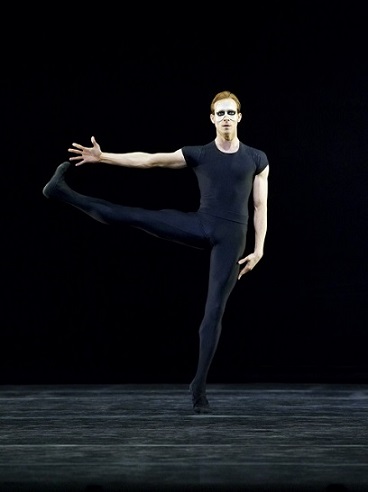
    Above: Edward Watson in the Royal Ballet’s production of SONG OF THE EARTH; photo by Johan Persson

    Thursday June 25th, 2015 – The Royal Ballet are presently at Lincoln Center, and this evening’s double-bill of Sir Frederick Ashton’s THE DREAM and Sir Kenneth MacMillan’s SONG OF THE EARTH seemed particularly appealing to me, not least for the music of two of my favorite composers: Felix Mendelssohn and Gustav Mahler. The fact that Edward Watson would be appearing in the MacMillan made an appealing prospect irresistible.

    Ashton’s THE DREAM was the first ballet I ever saw live, performed by The Joffrey at New York’s City Center on October 16th, 1974; Rebecca Wright, Burton Taylor, and Russell Sultzbach had the principal roles that evening. I’ve not seen the ballet again since that performance.

    The Royal Ballet’s production of the Ashton boasts a particularly evocative and gorgeous set, and lovely costumes – notably those for the corps of ‘adult’ fairies (unlike in Balanchine’s version, there are no children to be seen in the Ashton, aside from the Changling Boy). Ashton tells the story in a more abbreviated rendering than Mr B – Ashton’s mortal couples are less-fully-fleshed-out as characters than Balanchine’s; Ashton’s Titania has a more sensuous quality and his Puck is more annoying (in a good way) than their Balanchine counterparts. Ashton sometimes has Oberon and Puck doing virtuoso passages at the same time, and they oddly seem to cancel one another out.

    The Mendelssohn score (played by the New York City Ballet orchestra – though in a different arrangement than that used for the Balanchine), sounded as charm-filled as ever, with some lovely singing from the Brooklyn Youth Chorus.

    Golding oberon

    Above: Matthew Golding as Oberon in THE DREAM; photo by Bill Cooper

    Matthew Golding’s tall, long-limbed Oberon, with beautifully up-right pirouettes, was handsomely characterized with a mixture of nobility and sexiness. Natalia Osipova was a lushly sensuous Titania, with an interesting touch of earthiness. Dancing in oddly-battered toe shoes, she had just polished off a lovely solo passage when suddenly she slipped and fell to the floor; she re-bounded at once and went on to a winning performance, beautifully meshed with Mr. Golding in their pas de deux.

    Valentino Zucchetti was a sprightly Puck; his performance was a big hit with the audience and though I prefer the Balanchine portrait of this character, Zucchetti’s dancing had plenty of verve. Jonathan Howells met the challenge of dancing Bottom on pointe. The mortal couples were finely danced, making the most of their fleeting vignettes: a special bravo to Ryoichi Hirano for his excellent Lysander. A pretty quartet of principal fairies, given their Shakespearean names, added yet another delectable element to the performance.

    17055613604_41fabbcb30

    Above: Edward Watson, Laura Morera, and Nehemiah Kish in SONG OF THE EARTH; photo from The Royal Ballet‘s website

    I had no idea what to expect from Kenneth MacMillan’s SONG OF THE EARTH. In pondering what it might be like, my first thought was that Mahler’s score is singularly unsuited to dance. But how wrong I was! I ended up being thoroughly mesmerized by the unexpected ‘rightness’ of MacMillan’s setting of the music, and by the superb dancing of the three principals.

    9848827a-c4de-491d-8c48-63368e0b21ec

    If there’s a more distinctive danseur on the planet than Edward Watson (above), I’ve yet to find him. The lithe muscularity, the pale skin, the ginger hair, and the hypnotic eyes – clearly gleaming thru a half-masque tonight as MacMillan’s Messenger of Death – combined with a lyrically powerful technique make his performances (far too rare here in Gotham) something to cherish. The moment I saw his name listed for this evening’s performance I knew I had to be there.

    D74f4800af5876ce8dca814c00c1e26c

    A great pleasure to see Nehemiah Kish (above) again; he danced with MORPHOSES in their premiere New York season. Tall and with an easy command of space, his role in the MacMillan serves as both a compliment and a counter-poise to Edward Watson’s character: at the very end of the ballet, Mr. Kish appears masked, clearly ‘marked’ by Mr. Watson’s influence.

    13467865565_8cf990feaa

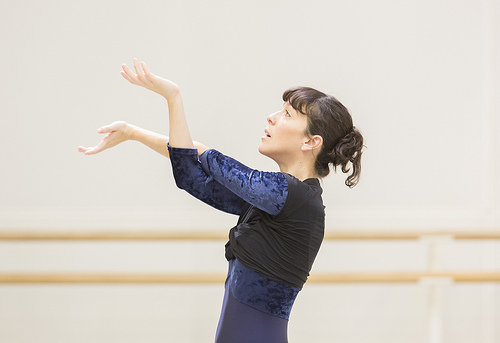
    New to me and making a magnificent impression was Laura Morera, a Spanish-born ballerina whose clarity of steps and of gesture as well as a radiant, far-searching gaze, marked her as a unique presence: despite the overwhelming allure of Mssers. Watson and Kish, I found it hard to take my eyes off Ms. Morera. She showed a deep connection to the music, and a blessed freedom from theatricality. (The rehearsal photo of Laura Morera above is from The Royal Ballet website…I simply love it…and her!)

    The Mahler score of Das Lied von der Erde calls for two vocal soloists: they alternate in singing the songs. For his ballet, MacMillan has them unobtrusively step out from the opposite sides of the  proscenium to sing; thus the focus remains on the dancers throughout. Tenor Thomas Randle seemed a bit stressed by the vocal demands cruelly placed on him by Mahler, but he managed well enough. Katherine Goeldner, who a few seasons back was an excellent Carmen on this very stage, summoned up some very expressive vocalism, making an especially haunting effect in the final passages of the work as she repeats the word “Ewig…” (‘Forever’) in gradations from piano to lingering pianissimo.

    To attempt to describe for New York dance-goers the overall look of the choreography MacMillan devised for this musically epic piece one might say it combines the stripped-down immediacy of Balanchine’s black-and-white ballets with the ritualistic aspects of Martha Graham’s mythic masterworks.

    In the abstract yet curiously meaningful passages for the corps, MacMillan has created a stylized world thru which the principals and soloists come and go with alternating sensations of urgency and angular introspection. Irony manifests itself at times, but overall the work takes itself very seriously and that in itself makes it all the more compelling.

    There were times when I wished for a bit more sense of unity of movement from the ensemble; of course Mahler’s endless thematic ebbs and flows don’t provide a real rhythmic blueprint for synchronization of steps and gestures. Nevertheless, everyone looked wonderfully handsome and attractive, individual personalities emerging even in the regimented sequences.

    To the splendid performances from Ms. Morera, Mr. Watson, and Mr. Kish were added some radiant dancing from Yuhui Choe and Lara Turk. There were others, too, who caught the questing gaze of my opera glasses but I’m not familiar enough with the Company to single them out.

    In a week that brought the news of Albert Evans’ untimely death, it was moving to be back in the theatre where I saw him dance hundreds of times. So lovely, too, to run into Wendy Whelan, who shared that stage with Albert on countless evenings. My feeling is that Albert would not want us to stop dancing…not even for a moment.

  • Kerstin Meyer

    Meyer_abcd100

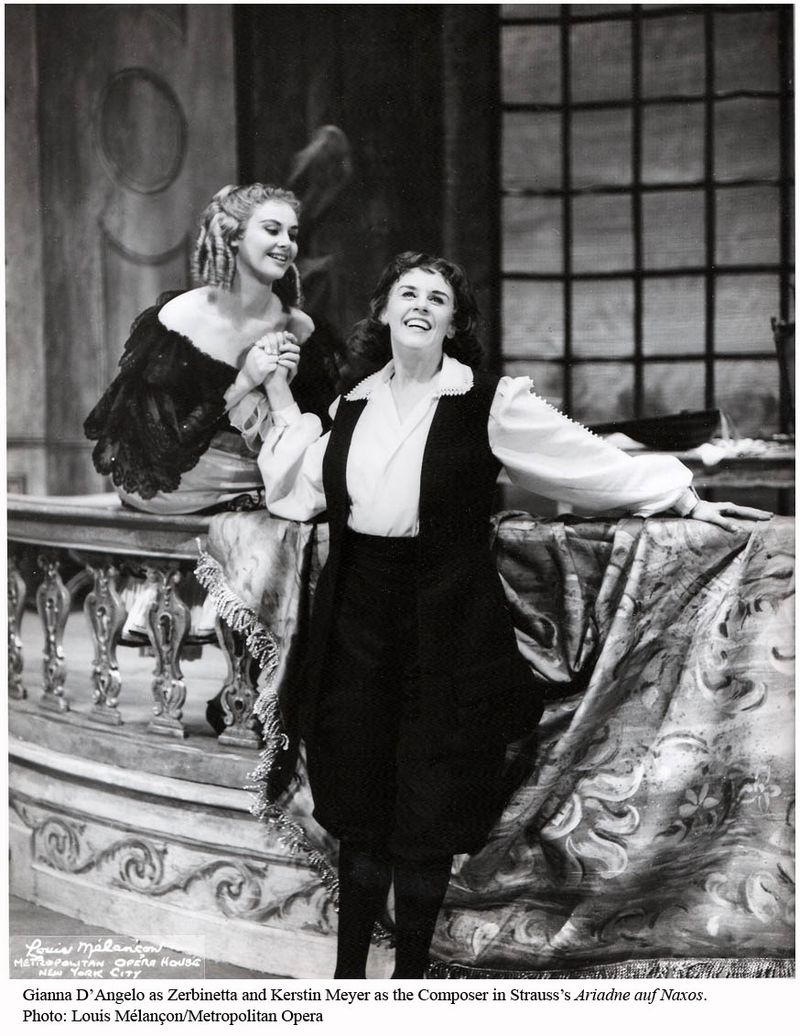
    Kerstin Meyer sings Konchakovna’s cavatina from Borodin’s PRINCE IGOR. Meyer sang the role of the Composer in the Metropolitan Opera premiere of Strauss’s ARIADNE AUF NAXOS in 1962, having previously appeared there as Carmen and Gluck’s Orfeo. 

    Ariadne6263.04

  • Philharmonic Finale: JOAN OF ARC

    Joanpiffard

    Above: Joan of Arc, a late-19th century painting by Harold H. Piffard

    Saturday June 13th, 2015 – Jeanne dArc au bûcher (Joan of Arc at the Stake), an oratorio by Arthur Honegger, was the final offering of the New York Philharmonic’s 2014-2015 season. Leave it to Alan Gilbert to end an exciting season with a big bang: Honegger’s epic work unfolded in a staged version which captured both the gravitas and the insouciant sarcasm of the score.

    Jeanne dArc au bûcher was originally commissioned by Ida Rubinstein, who had enflamed Paris when she appeared with Diaghilev’s Ballets Russes in the title role of Cléopâtre in 1909, and Zobéide in Scheherazade in 1910. Rubinstein premiered Jeanne d’Arc with her own Company at Basel in 1938; she bade farewell to the stage in the same work in 1939.

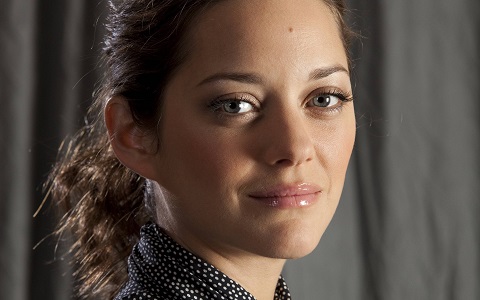
    The New York Philharmonic last performed the oratorio in 1994 with Marthe Keller in the title role. For the current performances, the superb French actress Marion Cotillard has taken on the role of Jeanne which she has previously performed at Orléans and Barcelona, and most recently on a tour of Monaco, Toulouse and Paris in the present production by Côme de Bellescize.

    Arthur Honegger’s setting of Claudel’s text centers on Joan of Arc’s last moments of life at the stake, where she sees the events of her life pass before her eyes before succumbing to a terrifyingly painful death. Her confessor, Brother Dominique, reads to her from the book of her life, starting with her trial and conviction for heresy and witchcraft in 1431 and goes back even further, beyond Charles VII’s coronation, to her awakening to the voices of the saints – Catherine and Margaret – in her country garden as a young maiden. Honegger’s theatrical setting calls for three speaking actors – as Joan, Brother Dominique, and a Narrator, respectively – as well as singing soloists and adult and children’s choruses.

    The often quirky score includes parts for saxophone, piano, and the electronic ondes martenot, and the musical influences range from plain chant and Baroque to folksong and jazz. The Philharmonic musicians were at their customary high level of play, and Maestro Gilbert’s detailed handling of the score made the best possible case for this unusual work.

    A runway wraps around the partially sunken orchestra, with the children’s chorus and various players coming into close range of the audience. Behind the orchestra, the adult chorus on risers loom up on either side of the grim stake, which rests on a small platform where Brother Dominique attempts to ease the horror of Joan’s impending torturous death by reminding her of her past good deeds and the notion of heavenly reward.

    The mood of the piece veers sharpy from piety to farce, with the presiding dignitaries at Joan’s sham trial portrayed as a pig and a donkey. The evening’s most memorable moments came at the end, as deep red light representing the consuming flames filled not only the stage but much of the auditorium. As everything faded to black, every chorister and musicians held up a small faerie light, leaving us with a vision of the eternal stars.

    Marion-Cotillard

    Above: Marion Cotillard; her portrayal of Joan was a tour de force, her wonderful voice encompassing both the irony and the terror of her speeches. From girlish sing-song to her witty responses to her captors thru to the earthy, guttural expressions of her fear of death, and at last her final ecstasy, Cotillard gave a masterful performance, as touching to watch as to hear. 

    Her fellow actors – Eric Génovèse as Brother Dominique and Christian Gonon (as narrator, and in multiple smaller roles ) – were ideally cast both in terms of their voicing of the lines and their characterizations. Among the various supporting roles, two singers stood out: soprano Erin Morley, radiant-toned in the high-lying phrases of the Virgin, and tenor Thomas Blondelle who sang fearlessly and with clear projection in the taxing tessitura of Porcus, the pig-magistrate, and in other smaller roles. Everyone, in fact, sounded well in this sometimes tricky music, and both choruses – the adults and the children – made a very fine effect.

  • At Home With Wagner VIII

    1310368-Richard_Wagner

    In 1968, Lorin Maazel conducted the RING Cycle at Bayreuth and from that cycle, the WALKURE looked especially tempting to me: not only are the ever-thrilling pairing of Leonie Rysanek and James King cast as the Wälsungs and such stalwart Wagnerians as Berit Lindholm, Theo Adam and Josef Greindl featured, but a rare performance as Fricka by Janis Martin – a singer in whom I’ve recently taken a renewed interest and who in December 2014 passed away – drew me to purchase this set. It’s an exciting performance in many ways, and Ms. Martin’s Fricka is one of the best-sung I have heard.

    Leonie Rysanek and James King sang Sieglinde and Siegmund together often, including on the commercial release of the entire Cycle conducted by Karl Böhm; the two singers know these roles inside-out but somehow they always manage to make the music seem fresh and genuinely exciting. Rysanek, always a powerhouse singer at The Met, scales down her voice here to suit the more intimate space of the Bayreuth Festspielhaus. She creates many poetic effects but when the emotional temperature of the drama rises, Rysanek – as ever – turns up the voltage. In Act I she produces her trademark hair-curling top notes and the famous scream (at Wieland Wagner’s bidding) as the sword is pulled from the tree. 

    James King is in superb voice; he sings with tireless generosity – his Sword Monolog one of the finest I’ve heard, with his astonishing cries of “Walse! Walse!” sustained with epic fervor – and he’s always vivid in the expressing the passions of the final pages of Act I. That pillar of Wagnerian basso singing, Josef Greindl, is as ever a strong and fearsome Hunding. The three singers, with vital support from Masetro Maazel (his tempos tending towards speed rather than breadth) make for a truly stimulating rendering of this act.

    As Wotan, Theo Adam’s powerful voice greets his favorite daughter; Berit Lindholm is bright and true in Brunnhilde’s battle cry, and then Janis Martin as Fricka arrives to throw a monkey-wrench into her husband’s plans. Ms. Martin, at this point in her career about to transition from mezzo to soprano (in the 1970s she was to be my first in-house Sieglinde, Kundry and Marie in WOZZECK); thus the highest notes of Fricka’s music hold no terrors for her. Her singing is clean, wide-ranging, and impressive. As she and Mr. Adam debate the matters at hand, Lorin Maazel’s orchestra underscores both sides of the argument. Ms. Martin exits, secure in her triumph.
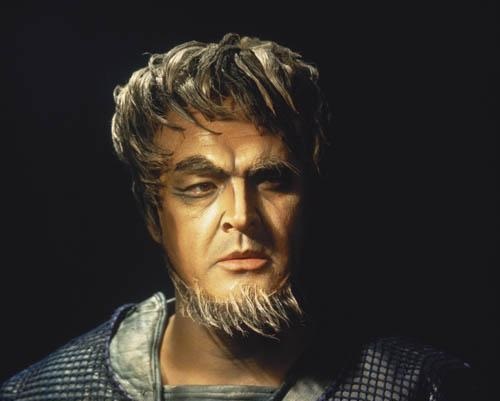
    T adam

    Theo Adam (above) was my very first Wotan at The Met in RHEINGOLD in 1969, and I saw him some 20 years later, still very impressive in WALKURE. His sound per se is not highly individualized – it’s basically darkish and grainy – but he always manages to use it to optimum effect. His long monolog, with keen support from Maazel and increasingly urgent responses from Lindholm, is appropriately central to the drama of the performance.

    Rushing on, pursued by Hunding’s hounds, Rysanek and King make much of their scene together. For Ryssanek, moments of lyric tenderness veer off to outbursts of hysteria; King is heroically comforting. Rysanek emits a demented, curdled scream at the sound of Hunding’s approaching horns, and as she swoons, King sings “Schwester! Geliebte” as tenderly as I have ever heard it done. 

    In the great Todesverkundigung scene (the Annuncation of Death, where Brunnhilde appears as in a vision and warns Siegmund of his impending death in battle), Maazel brings weightiness without impeding the forward flow. A doom-ladened feeling of tension and barely controlled urgency underscores the exchange between soprano and tenor, with Ms. Lindholm expressing increasing desperation as she feels herself losing control of the situation. Maazel brilliantly emphasizes Brunnhilde’s shift of allegiance: a feeling of high drama as she rushes off. 

    The poignant cello ‘lullabye’ as Siegmund blesses Sieginde’s slumber is taken up by the orchestra with a rich sense of yearning, til Hunding’s horns intrude to terrifying effect. Awakening in a daze before grasping the situation, Rysanek’s mad scene reaches fever pitch. Adam thunders forth Wotan’s intercession, Rysanek screams as Siegmund is slain. After Wotan has dispatched Hunding with great contempt, Adam and Maazel rise to a thunderous finish as Wotan storms away to catch the traitorous Brunnhilde.

    Synek_Portrait1a

    Above: Liane Synek

    An excellent Helmwige from Liane Synek (sample her singing here, as Brunnhilde in a passage from a WALKURE performance in Montevideo 1959): she stands out from some rowdy singing by her sister-Valkyries. 

    Sieglinde’s desperate plea to be slain turns to joy as Brunnhilde informs her that she is with child, giving wing to Leonie Rysanek’s cresting ‘O hehrstes Wunder!’, the crowning moment of one of the soprano’s greatest roles.

    The scene is then set for the final father-daughter encounter; both Lindholm and Adam have moments of unsteadiness and the sound-quality is sometimes marred by overload. But both singers are truly engaged in what they are singing, with Theo Adam particularly marvelous in the long Act III passage starting at “So tatest du, was so gern zu tun ich begehrt…” (“So you did what I wanted so much to do…”) Once Brunnhilde has fallen into slumber, the bass-baritone and Maestro Maazel give an emotionally vibrant performance of Wotan’s farewell.

    ~~~~~~~~~~~~~~~~~~~~~~~~~~~~~~~~~~~~~~~~~~~~~~~~~~~~~~~~~~~~~~~~~~~~~~~~~~~~~~~~~~~~~~~~~~~

    Lilowa

    Above: mezzo-soprano Margarita Lilowa

    A RHEINGOLD from Vienna 1976 piqued my curiosity – mainly to experience the conducting of Horst Stein whose superb 1975 Bayreuth GOTTERDAMMERNG I wrote about here. I was also wanting to hear Margarita Lilowa’s Erda, having recently really enjoyed her singing as Mary in a recording of FLIEGENDE HOLLANDER, and Peter Hofmann in what is said to be his Vienna debut performance, as Loge.

    The recording is clearly not from a broadcast but rather was recorded in-house; the sound varies – some overload in spots, some distancing of the voice, a couple of dropouts – and in quieter passages the breathing of the person making the recording can be heard: an unsettling effect. Also during the Alberich/Mime scene there’s some annoying mike noise. But overall, with steadfast concentration, the performance has many rewards. And chief among them is Maestro Stein’s expert shaping of the score.

    The Rhinemaidens are Lotte Rysanek (Leonie’s sister, who sometimes sounds a bit like her famous sibling), Rohangiz Yachmi, and Axelle Gall. Their more attractive moments come in solo lines rather than in a vocal blend. Zoltán Kelemen, the Alberich of the era, is superb here. He paints a full vocal portrait of the dwarf, from his early semi-playful pursuit of the Rhinemaidens thru the rape of the Gold, on to the vanity of his bullying Lord of Nibelheim, his shattering fall into Loge’s trap, and the vividly expressed narrative leading up to the Curse.

    Grace Hoffmann and Theo Adam are experienced Wagnerians who inhabit their roles thoroughly. The mezzo’s voice is no longer at its freshest (she was in the twenty-fifth year of her career here) but she is authoritative in characterization. Adam, strong and true of voice, makes a fine impression throughout, especially in his final hailing of Valhalla.

    Hannelore Bode’s voice seems too weighty and unwieldy for Freia, but the giants who pursue her are impressive indeed: Karl Ridderbusch and Bengt Rundgren are so completely at home as Fasolt and Fafner, and their dark, ample voices fill the music richly. Hale and hearty one moment, and wonderfully subtle the next, both bassos make all their music vivid. A lyric Froh (Josef Hopferweiser) and an ample-toned Donner (Reid Bunger – his “Heda! Hedo” has a nicely sustained quality) are well-cast.      

    Peter-Hofmann-calendar-250x350px

    Above: tenor Peter Hofmann

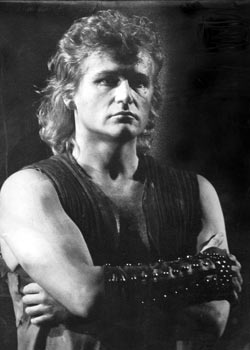
    Peter Hofmann’s Loge has a baritonal quality, and he blusters a bit but soon settles in to give a sturdy if not very imaginative performance of the Lord of Fire. The Nibelheim scene finds Adam, Hofmann, and Kelemen all at their keenest in sense of dramatic nuance, and Heinz Zednik is a capital Mime, well-voiced and inflecting the text with eerie colours.

    Ms. Lilowa’s Erda, sounding from a distance at first, comes into focus after her first line or two and has a round-toned, steady voice, making the most of her brief but important scene.

    Horst Stein’s overall vision of the score seems nearly ideal to me, and there are a number of particularly satisfying passages: his underscoring of the big lyric themes in Loge’s narrative, the detailing of the orchestral parts at Loge’s mention of Freia’s apples, the descent to Nibelheim. And once in Alberich’s domain, Stein shows keen mastery of nuance, both in colorfully supporting the dialogue and in a truly ominous “dragon” theme for Alberich’s transformation. Throughout the performance, it’s Stein who keeps us keenly focused on this marvelous score.

    ~~~~~~~~~~~~~~~~~~~~~~~~~~~~~~~~~~~~~~~~~~~~~~~~~~~~~~~~~~~~~~~~~~~~~~~~~~~~~~~~~~~~~~~~~~~
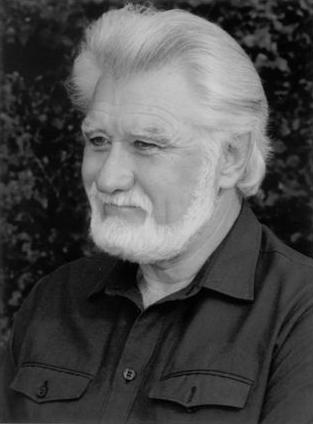
    Mcintyre

    Above: Sir Donald McIntyre

    Another RHEINGOLD – a recording of a performance I actually attended – is from a Met broadcast of February 15th, 1975. It’s interesting to compare my reactions to the recording with what I had written in my opera diary on the day of the performance, some forty years earlier.

    The 1974-75 season was a rich one for me; I was living (though not enrolled) at Sarah Lawrence College with TJ. We’d had our summer on Cape Cod together and, as we prepared to part company and resume our separate lives, we found we’d become so attached to one another that, only a few days after I’d returned to the tiny town and he’d moved into the college dorm, we threw caution to the wind and I went down and got a temp job at IBM in Westchester County and slept with him in his twin bed (he had drawn, luckily, one of the few ‘private’ room on the entire campus). We went down to Manhattan for the opera and the ballet three or four times a week.

    The Met were doing the RING Cycle that season, with Sixten Ehrling conducting. The virtues (or not) of his readings of the scores were hotly debated by the fans; he was sometimes booed when entering the pit, and sometimes cheered when he took his bows at the end of each opera. I thought at the time his conducting was “maybe lacking in grandeur, but well-paced and considerate of the singers.” Listening to it now, his RHEINGOLD seems perfectly fine, with many very satisfying passages…despite some fluffs from the horns here and there.
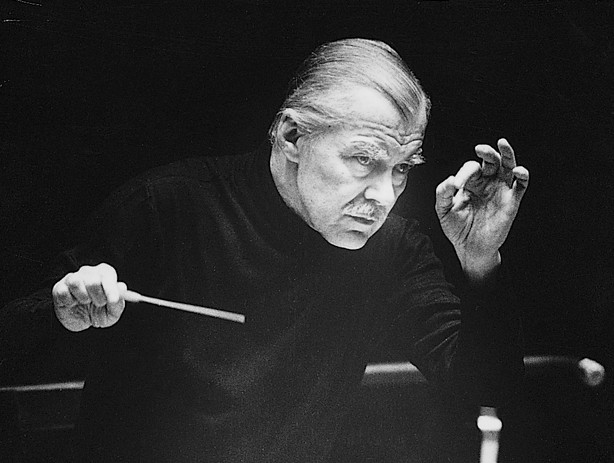
    Ehrling-Sixten-05

    Above: Sixten Ehrling

    (Note: in 1998, when I started working at Tower Records, I met Maestro Ehrling and his charming wife, a former ballerina. The first day I met him, he was in a cantankerous mood because all the clerks were busy and he was in a rush. I stepped up, greeted him with a little bow, and immediately began to talk to him about his RING Cycle. He became a regular customer and regaled me with all sorts of wonderful stories about the singers he had worked with. He also liked to correct my pronunciation; when I referred to Wotan’s daughter as “Broon-HILL-da” he yelled: “BROON-hil-d…” I ended up really enjoying our little friendship, and missed him when he became too ill to come to the store…though he’d often send his wife to us, with strict instructions as to what to buy for him. He passed away in 2005.)  

    Christine Weidinger, Marcia Baldwin, and – especially – Batyah Godfrey are good Rhinemaidens; they raise the performance level starting with the first appearance of the ‘gold’ motif. Marius Rintzler seems at first to be a bass-oriented Alberich (though later his topmost notes are wonderfully secure) and he becomes actually scary as his plan to steal the treasure takes over his mind. Abetted by Ehrling, the scene of the rape of the gold is dramatically vivid.

    Ehrling scores again in his super-reading of the descent to Nibeheim. Rintzler as Alberich, in his own domain, lords it fabulously over his brother and his slaves. Later, betrayed, Rintzler’s performance rings true in its desperation and his powerful declaiming of the curse.

    The opera’s second scene shows Ehrling at his best, with a nice sense of propulsion and excellent support of his singers. This matinee marked the Met debut of Donald McIntyre as Wotan; he would become known and beloved worldwide a few years later when the Chereau RING was filmed for international telecast at the Bayreuth Festival. On this afternoon in 1975, he makes a superb impression: he begins a bit sleepily (Fricka has just awakened him) but once he claps eyes on the finished Valhalla, his godliness rises to full stature. His singing throughout is generously sustained; by turns imperious and subtle, he makes an ever-commanding dramatic impression. McIntyre’s final scene, hailing the new home of the gods and dismissing the Rhinemaidens who plead from below for the return of the ring, is really exciting.

    Mignon Dunn, always a great favorite of mine, is an immediately distinctive Fricka. The role is rather brief, but Mignon makes the most of every opportunity, and her gift for vocal seduction manifests itself near the end, as she lures Wotan’s thoughts away from the mysterious Erda and turns them instead towards Valhalla (where she hopes to keep him on a tighter tether…but, it doesn’t work.)

    Glade Peterson, as Loge, seems rather declamatory at first. His ample voice serves him well in the monolog, despite some moments of errant pitch. He lacks a bit of the subtlety that can make Loge’s music so entrancing. As the hapless Mime, Ragnar Ulfung is both note-conscious and characterful; he makes a string impression though once or twice he too wanders off-pitch.

    The giants are simply great: John Macurdy’s Fafner is darkly effective – he has less to sing than his brother Fasolt, but he will eventually get the upper hand…violently. Bengt Rundgren as the more tender-hearted of the two is truly authoritative, with page after page of finely inflected basso singing.

    Mary Ellen Pracht, a Met stalwart, does well as Freia, and William Dooley is a splendid Donner…his dramatic, full-voiced cries of “Heda, Hedo!” are in fact a high point if the opera, and are punctuated by a fantastical thunder-blast. Tenor Kolbjørn Høiseth is rather a fuller-toned Froh than we sometimes hear; there’s something rather ‘slow’ about his delivery. (A few days later, he sang a single Loge at The Met, and then a single Siegmund.)

    In the house, the amplifying of Erda’s Warning ruined the moment musically, but this does not affect the broadcast which is picked up directly from the stage mikes. And so Lili Chookasian makes an absolutely stunning effect with her rich, deep tones. Where are such voices as hers today? After “Alles was ist, endet!” and “Meide den Ring!”, one feels chills running up and down the spine. Magnificent!

  • Berlioz’s THE TROJANS @ Covent Garden 1957

    Thebomtroj

    A recording of the Royal Opera’s 1957 English-language production of Hector Berlioz’s monumental opera THE TROJANS has come my way and it has many felicitous elements. The translation appropriately relies on Early Modern English pronouns (thee/thou/thine) to evoke the ancient kingdoms of Troy and Carthage. With a few passing cuts in this epic opus, Rafael Kubelik helms the performance impressively and the sound quality is quite good for a recording made 50+ years ago.

    For years after I discovered opera in 1959, I subscribed to the British magazine OPERA. The cast of this TROJANS is full of ‘Covent Garden’ names that were familiar to me thru the magazine long before I heard any of their actual voices: people like Amy Shuard, Forbes Robinson, Noreen Berry, Marie Collier, Joan Carlyle, Michael Langdon, and Lauris Elms.

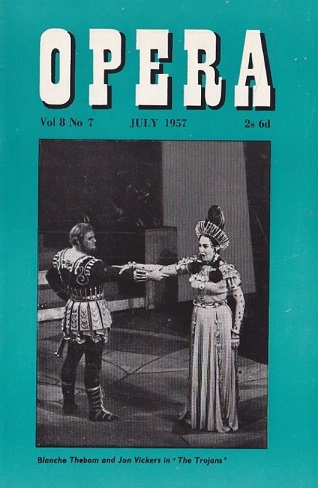
    At The Met, Blanche Thebom was an established star (Met debut 1944) by the time she appeared as Dido in London, and Jon Vickers made his role-debut as Aeneas in this ’57 performance, which became a signature part for the great tenor.

    Curiously, this is a performance in which each of the three principal singers proves less than ideal, yet the overall performance – thanks to Maestro Kubelik and the strong supporting cast – still makes a vivid impression. 

    Amy Shuard does not seem absolutely at home in the role of Cassandra; she has passing pitch problems and some of the music seems to lay too low for her to make her finest impression. Her commitment is undoubted, and her sense of the drama and her fine high notes are positive aspects. But often one just wants more power and colour in the lower-middle and lowest ranges of this music, which rather awkwardly straddles the mezzo/soprano divide.

    Blanche Thebom as Dido has the right aristocratic feeling for Dido’s music; she becomes more passionate as her love for Aeneas is inflamed – and then thwarted – by destiny. Thebom’s strong top notes stand out, and she fills scene after scene with perfectly good singing; yet her voice sometimes seems matronly and a bit lacking in tonal bloom. 

    It would be nice to be able to say that Jon Vickers’ first Aeneas was an unalloyed triumph, but despite his excellent diction and superbly individual voice – which amply conveys the the character’s innate humanity and rather grizzled tenderness – and his sense of vocal identification with every aspect of the hero’s personality, he is not at ease in the role’s top-most notes. He omits the highest vocal arc of the love duet, reveals some effort in the demanding “Inutiles Regrets!” and seems rather uncomfortable in his final  cry of “Italie!” As Vickers sang the role in the ensuing years, his voice found itself increasingly at home in this demanding music; and indeed even here in 1957 there is much impressive singing.

    Despite some reservations about both Thebom and Vickers, they do achieve some especially fine soft harmonies as they sing of the mysterious wonders of love in the great duet “Nuit d’ivresse.”

    The stalwart baritone Jess Walters sings strongly as Chorebus; his duet with Ms. Shuard is full of apt dramatic touches from both singers – and the soprano’s concluding top-B is her best note of the performance.

    Lauris-elms

    Lauris Elms (above) makes an especially lovely impression as Dido’s sister, Anna. Anna’s role includes two wonderful duets: the first, with Dido, in which she urges her widowed sister to consider opening her heart to another love; and the second, with Dido’s minister Narbal. Narbal’s concerns about the effects of the Dido/Aeneas attachment on Dido’s ability to rule are brushed off by her sister who is so delighted at Dido’s new-found happiness. Ms. Elms has a full-throated lyric mezzo sound and dips into her lower range without over-emphasis; her voice is clear and so is her diction. I keep going back to Anna’s two duets, just to enjoy Ms. Elms’ vocalism.

    Joining Lauris Elms in the Anna/Narbal duet, basso David Kelly – who was an indispensable Covent Garden regular for fifteen years – is a perfect match for the mezzo; his diction and well-produced voice make for a very effective portrayal.

    Verreau-Richard-2

    I was particularly pleased with the Iopas of Richard Verreau (above); this French-Canadian tenor was my first Faust in a performance at the Old Met in 1963. He sings the high-lying solo “O blonde Cérès” quite beautifully, in a more passionate and extroverted interpretation of the aria than is sometimes heard. In the second of LES TROYENS’ two taxing and exposed solos for lyric tenors, Irishman Dermot Troy sings the plaintive aria of the homesick sailor Hylas with attractive lyricism.

    TROYENS is such a unique and treasure-filled opera; whatever concerns this recording raises, I am sure I will return to it time and again.

  • Berlioz’s THE TROJANS @ Covent Garden 1957

    Thebomtroj

    A recording of the Royal Opera’s 1957 English-language production of Hector Berlioz’s monumental opera THE TROJANS has come my way and it has many felicitous elements. The translation appropriately relies on Early Modern English pronouns (thee/thou/thine) to evoke the ancient kingdoms of Troy and Carthage. With a few passing cuts in this epic opus, Rafael Kubelik helms the performance impressively and the sound quality is quite good for a recording made 50+ years ago.

    For years after I discovered opera in 1959, I subscribed to the British magazine OPERA. The cast of this TROJANS is full of ‘Covent Garden’ names that were familiar to me thru the magazine long before I heard any of their actual voices: people like Amy Shuard, Forbes Robinson, Noreen Berry, Marie Collier, Joan Carlyle, Michael Langdon, and Lauris Elms.

    At The Met, Blanche Thebom was an established star (Met debut 1944) by the time she appeared as Dido in London, and Jon Vickers made his role-debut as Aeneas in this ’57 performance, which became a signature part for the great tenor.

    Curiously, this is a performance in which each of the three principal singers proves less than ideal, yet the overall performance – thanks to Maestro Kubelik and the strong supporting cast – still makes a vivid impression. 

    Amy Shuard does not seem absolutely at home in the role of Cassandra; she has passing pitch problems and some of the music seems to lay too low for her to make her finest impression. Her commitment is undoubted, and her sense of the drama and her fine high notes are positive aspects. But often one just wants more power and colour in the lower-middle and lowest ranges of this music, which rather awkwardly straddles the mezzo/soprano divide.

    Blanche Thebom as Dido has the right aristocratic feeling for Dido’s music; she becomes more passionate as her love for Aeneas is inflamed – and then thwarted – by destiny. Thebom’s strong top notes stand out, and she fills scene after scene with perfectly good singing; yet her voice sometimes seems matronly and a bit lacking in tonal bloom. 

    It would be nice to be able to say that Jon Vickers’ first Aeneas was an unalloyed triumph, but despite his excellent diction and superbly individual voice – which amply conveys the the character’s innate humanity and rather grizzled tenderness – and his sense of vocal identification with every aspect of the hero’s personality, he is not at ease in the role’s top-most notes. He omits the highest vocal arc of the love duet, reveals some effort in the demanding “Inutiles Regrets!” and seems rather uncomfortable in his final  cry of “Italie!” As Vickers sang the role in the ensuing years, his voice found itself increasingly at home in this demanding music; and indeed even here in 1957 there is much impressive singing.

    Despite some reservations about both Thebom and Vickers, they do achieve some especially fine soft harmonies as they sing of the mysterious wonders of love in the great duet “Nuit d’ivresse.”

    The stalwart baritone Jess Walters sings strongly as Chorebus; his duet with Ms. Shuard is full of apt dramatic touches from both singers – and the soprano’s concluding top-B is her best note of the performance.

    Lauris-elms

    Lauris Elms (above) makes an especially lovely impression as Dido’s sister, Anna. Anna’s role includes two wonderful duets: the first, with Dido, in which she urges her widowed sister to consider opening her heart to another love; and the second, with Dido’s minister Narbal. Narbal’s concerns about the effects of the Dido/Aeneas attachment on Dido’s ability to rule are brushed off by her sister who is so delighted at Dido’s new-found happiness. Ms. Elms has a full-throated lyric mezzo sound and dips into her lower range without over-emphasis; her voice is clear and so is her diction. I keep going back to Anna’s two duets, just to enjoy Ms. Elms’ vocalism.

    Joining Lauris Elms in the Anna/Narbal duet, basso David Kelly – who was an indispensable Covent Garden regular for fifteen years – is a perfect match for the mezzo; his diction and well-produced voice make for a very effective portrayal.

    Verreau-Richard-2

    I was particularly pleased with the Iopas of Richard Verreau (above); this French-Canadian tenor was my first Faust in a performance at the Old Met in 1963. He sings the high-lying solo “O blonde Cérès” quite beautifully, in a more passionate and extroverted interpretation of the aria than is sometimes heard. In the second of LES TROYENS’ two taxing and exposed solos for lyric tenors, Irishman Dermot Troy sings the plaintive aria of the homesick sailor Hylas with attractive lyricism.

    TROYENS is such a unique and treasure-filled opera; whatever concerns this recording raises, I am sure I will return to it time and again.

  • Season Finale: Score Desk for BALLO IN MASCHERA

    -hvorostovsky-radvanovsky

    Above: Dmitry Hvorostovsky and Sondra Radvanovsky

    Tuesday April 28th, 2015 – For my final Met performance of the current season, Verdi’s BALLO IN MASCHERA with probably the strongest overall cast of any opera produced at the Met this season. I felt no need to see the Met’s mixed-bag, neither-here-nor-there production again, so I was back at my score desk. Of the twenty-plus performances I attended at the Met this season, most were experienced from score desks; there is less and less of a need to actually see what it happening onstage, so why spend the money on a ‘room with a view’? And besides, I hardly ever stay to the end of anything thanks to the slow agony of the Gelb-length intermissions. Tonight, though, my two amusing friends Adi and Craig helped make the long breaks somewhat more tolerable.

    Tonight’s audience was one of the largest I’ve seen at the opera all season. The Met’s always been a ‘singers house’; the box office is voice-driven and has been since the days of de Reszke and Caruso. There was Flagstad, and Birgit and Franco; and there was Pav, and now there’s Netrebko and Kaufmann. People come for the singing because that’s what opera is all about.

    The evening began with an announcement that James Levine would be replaced on the podium by John Keenan. This may have been a rather last-minute decision since Levine’s special wheelchair platform was in place. Keenan is a very fine Wagner conductor, but in the Italian repertoire Joseph Colaneri would be my choice if Levine is ailing. Much of Act I tonight had an unkempt quality; the singers seemed to want different tempi than Keenan was offering them, and they tended to speed ahead, leaving the orchestra to catch up.

    Piotr Beczala – superb in IOLANTA earlier in the season – sounded a bit tired in Act I. His opening aria was not smooth and the climactic top A-sharp was tight and veered above pitch. He began to settle in vocally at Ulrica’s, though the (written) low notes in “Di tu se fedele” were clumsily handled – no one would have cared if he’d sung them up an octave. By the time he reached the great love duet, Beczala was sounding much more like his usual self, and his “Non sai tu che se l’anima mia” was particularly fine. Spurred on by his resplendent soprano, the Polish tenor invested the rest of the duet with vibrant, passionate singing.

    As Ulrica, Dolora Zajick was exciting: the voice has its familiar amplitude and earthy chest notes intact and she also sang some beautiful piani, observing Verdi’s markings. It’s not her fault that the production idiotically calls for amplification of her deep call for “Silenzio!” at the end of her aria. Dolora’s chest tones don’t need artificial enhancement.

    Heidi Stober was a serviceable Oscar; her highest notes could take on a brassy edge and overall she lacked vocal charm. Memories of Reri Grist, Roberta Peters, Judith Blegen, Lyubov Petrova, and Kathleen Kim kept getting in my ear, perhaps unfairly.

    Dmitry Hvorostovsky as Count Anckarström was in splendid voice from note one, and his opening aria “Alla vita che t’arride” was beautifully phrased with a suave legato, the cadenza rising up to a majestically sustained high note. In the scene at the gallows (or rather – as this production places it – “in an abandoned warehouse…”) the baritone was vividly involved, first as a loyal friend urging his king to flee and later as the shamed, betrayed husband.

    Sondra Radvanovsky, who in 2013 gave us a truly impressive Norma at The Met, was – like the baritone – on top form. With a voice utterly distinctive and unlike any other, and with the seemingly innate ability to find the emotional core of any role she takes on, Radvanovsky has a quality of vocal glamour that makes her undoubtedly the most exciting soprano before the public today. What makes her all the more captivating is that, if a random note has a passing huskiness or isn’t quite sounding as she wants it to, she’s able to make pinpoint adjustments and forge ahead. This makes her singing interesting and keeps us on high alert, wondering what she’ll do next. Thus she generates a kind of anticipatory excitement that is rare these days.

    Launching Amelia’s “Consentimi o signore’ in the Act I trio, Sondra shows off the Verdian line of which she alone today seems true mistress. When we next meet her, she is out on her terrified search for the magical herb. Unfurling the grand recitative “Ecco l’orrido campo…” with instinctive dramatic accents, she draws us into Amelia’s plight. The great aria that follows is a marvel of expressiveness (though I do wish she would eliminate the little simpering whimpers during the orchestral bridge…a pointless touch of verismo); and then terror seizes her and she goes momentarily mad before calming herself with the great prayerful ascent to the high-C. The ensuing cadenza was both highly emotional and superbly voiced.

    In the love duet, with Beczala now vocally aflame, Sondra gave some of her most incredibly nuanced, sustained singing at “Ma tu, nobile…”- astounding control –  before the two singers sailed on to the impetuous release of the duet’s celebratory finale and ended on a joint high-C.

    Amelia’s husband unexpectedly appears to warn the king that his enemies are lurking; after Gustavo has fled (has Sondra ever contemplated taking a high-D at the end of the trio here? I’ve heard it done…), soprano and baritone kept the excitement level at fever pitch during the scene with the conspirators: page after page of Verdian drama marvelously voiced, ending with a rich high B-flat from the soprano as she is hauled off to be punished.

    I hate the break in continuity here: ideally we would follow the couple home and the intensity level would suffer no letdown; instead we have another over-long intermission.

    But the mood was quickly re-established when the curtain next rose: Hvorostovsky thundering and growling while Radvanovsky pleads for mercy. Now the evening reached a peak of vocal splendour as the soprano sang her wrenchingly poignant plea “Morro, ma prima in grazia…” Displaying a fascinating command of vocal colour and of dynamics that ranged from ravishing piani to gleaming forte, the soprano was in her greatest glory here, with a spectacular cadenza launched from a sublime piano C-flat before plunging into the heartfelt depths and resolving in a ravishingly sustained note of despair.

    Hvorostovsky then seized the stage. In one of Verdi’s most thrilling soliloquies, the character moves from fury to heartbreak. After the snarling anger of “Eri tu”, Dima came to the heart of the matter: using his peerless legato and vast palette of dynamic shadings, he made “O dolcezze perdute, o memorie…”  so affecting in its tragic lyricism before moving to a state of resignation and finishing on a gorgeously sustained final note. In the scene of the drawing of lots, Hvorostovsky capped his triumph with an exultant “Il mio nome! O giustizia del fato!” – “My name! O the justice of fate: revenge shall be mine!” His revenge will bring only remorse. 

    We left after this scene, taking with us the fresh memory of these two great singers – Radvanovsky and Hvorostovsky – having shown us why opera remains a vital force in our lives.  

    Metropolitan Opera House
    April 28, 2015

    UN BALLO IN MASCHERA
    Giuseppe Verdi

    Amelia.............................Sondra Radvanovsky
    Riccardo (Gustavo III).............Piotr Beczala
    Renato (Count Anckarström).........Dmitri Hvorostovsky
    Ulrica (Madame Ulrica Arvidsson)...Dolora Zajick
    Oscar..............................Heidi Stober
    Samuel (Count Ribbing).............Keith Miller
    Tom (Count Horn)...................David Crawford
    Silvano (Cristiano)................Trevor Scheunemann
    Judge..............................Mark Schowalter
    Servant............................Scott Scully

    Conductor..........................John Keenan