Category: Opera

  • American Symphony Orchestra’s MUSIC U

    Cd_cover460

    Sunday April 19th, 2015 – This note from the press release describes the inspiration for today’s programme, entitled ‘MUSIC U’, by the American Symphony Orchestra: “In a country without kings and courts, universities have served as the patrons for many of America’s greatest composers.” Leon Botstein and the ASO were joined by the Cornell University Glee Club & Chorus in a celebration of five Ivy League composers.

    RandallThompson480

    In 1940, Randall Thompson (above) who taught at Harvard and was director of the Curtis Institute, was commissioned to compose a choral work for the opening exercises of the new Berkshire Music Center at Tanglewood, to be performed by the entire student body. The composer offered a setting of the Alleluia. Distraught over the Nazi invasion of France, Thompson could not bring himself to compose a joyous fanfare. Instead, he produced this solemnly beautiful and introspective piece, inspired by the Biblical passage (Job 1:21): “The Lord gave and the Lord has taken away; blessed be the name of the Lord.”

    Performing a cappella under the direction of Robert Isaacs, the young singers from Cornell displayed a lovely vocal blend in the heavenly harmonies of this slow, lilting choral miniature. The gentle pace quickens somewhat near the work’s end, but falls back into calm with a very sustained final note that hung on the air.

    Parker

    After a rather long pause, the concert continued with the oldest work (late 19th century) on the programme: the cantata Dream-King and his Love by Horatio Parker (above), one-time Dean of Music at Yale. This cantata won first prize in its category in a competition judged by Dvořák himself. A fanciful romantic text tells the tale of a maiden visited in her dream by a kingly lover.

    The work is melody-filled and seems to echo some of the exotic works of Jules Massenet. From the lyrical opening (the harp is prominent) thru passages dance-like, rapturous, and triumphant by turns, the music opens out like a perfumed lotus blossom. The naturally youthful sound of tenor soloist Phillip Fargo fell pleasingly in the ear, and the singers from Cornell again gave of their best.

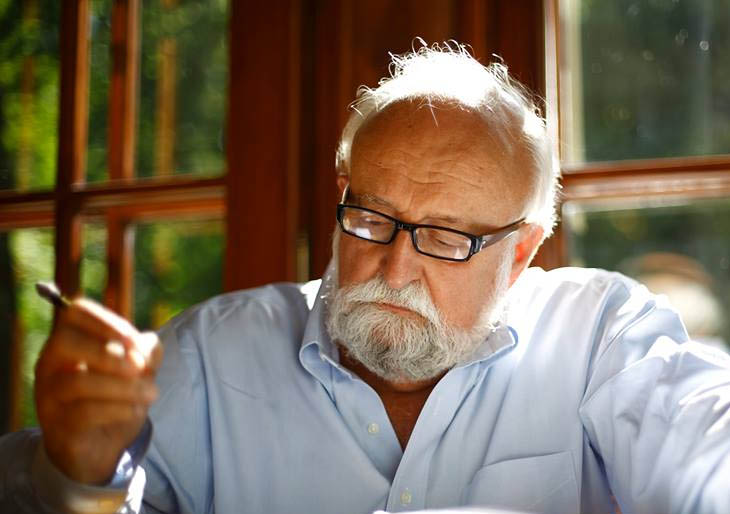
    Rochberg-George-01

    The Symphony No. 2 by George Rochberg (above), who ran the music department at the University of Pennsylvania, was the longest work on the programme. Composed in 1955-1956, this symphony today sounds like a generic work from an era when classical music was not quite sure what direction it was headed in. It’s a big-scale piece, one which seems to take itself very seriously. One can sense such influences as Prokofiev, Stravinsky and Schönberg in the writing, and the composer’s fine craftsmanship is never in doubt. Yet despite its rhythmic variety and interesting sonic textures – oboe and horns are well-employed – the piece seemed over-extended. Melody is pretty much banished – a promising duet passage for two violas evaporated after a few seconds – and although melody is not essential, it is inevitably gratifying. Maestro Botstein’s commitment to the work and the excellent playing of the ASO – many fleeting bits of solo work are strewn throughout the score – made as strong a case for the symphony as one could hope to hear.
    300h

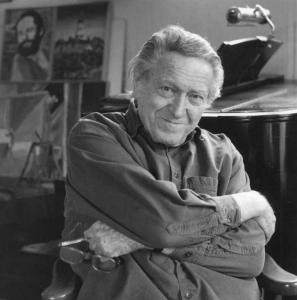
    Music for Cello and Orchestra by Harvard’s Leon Kirchner (above)…
    Nicholas-Canellakis

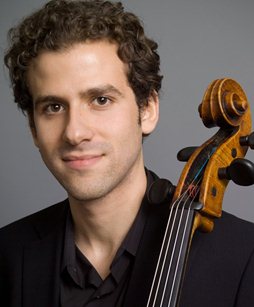
    …with soloist Nicholas Canellakis (above) opened the second half of the concert. The cellist is a frequent participant in Chamber Music Society of Lincoln Center‘s superb concerts.

    Today, Kirchner’s music seemed to me to have found what was missing from the Rochberg: a connection to the heart. Throughout the Kirchner, the solo cello gives his piece a sense of unity and purpose that – to my ears – the Rochberg lacks. Kirchner’s orchestration is colorful and dense, with excellent use of percussion, and the music sometimes takes on a cinematic quality. I love hearing a piano mixed into an orchestral ensemble work, and at the reference to TRISTAN UND ISOLDE, my friend Adi and I exchanged smiles.

    Mr. Canellakis was simply breathtaking right from the cello’s passionate opening statement. He was deeply involved in the music, moving seamlessly from a gleaming upper register to the soulful singing of his middle range. Capable of both redolent lyricism and energetic, jagged flourishes, Nicholas’s playing seemed so at home in the venerable Hall. The audience gave him lusty and well-deserved round of applause as he was called back to the stage after his exceptional performance.   

    Robertosierraheadshot

    The chorus then returned to the stage for the concert’s grand finale: the world premiere of Cantares by Roberto Sierra (above), which Cornell University commissioned for this concert in celebration of their 150th anniversary. In this panoramic work, the cultures of the African, Spanish, Native Peruvian, and Aztec peoples are entwined in vivid musical settings of texts dating back to the 16th and 17th centuries. The composer has re-imagined these invocations and narratives for the contemporary world; for this piece, the Cornell choristers leapt readily from Quechua to Spanish.

    A long sustained tone opens Cantares; then, emerging from dark turbulence, the chorus begins to ‘speak’. A trumpet call, a wandering xylophone, a celestial harp, an oddly ominous rattle: these are all heard as kozmic sound-clouds drift by. The music is mystical and – with the under-pacing of rhythmic chant – takes on an other-worldly feeling.

    The second movement evokes African ritual and that continent’s ancient connection to Cuba. The music seems to echo thru time in its heavenly, ecstatic vibrations. Somehow Chausson’s Poeme de l’amour et de la Mer came to mind.

    An orchestral interlude has the flutter of birdsong and a dense-jungle yet transparent appeal and leads into the final Suerte lamentosa, an epic of dueling cultures told from both the winners’ and the losers’ points of view.

    The work is perhaps a trifle too long, but the composer has been successful in drawing us to contemplate the oft-forgotten (or ignored) events surrounding the injection of Christianity into the Western Hemisphere. And musically it’s truly brilliant.

  • American Symphony Orchestra’s MUSIC U

    Cd_cover460

    Sunday April 19th, 2015 – This note from the press release describes the inspiration for today’s programme, entitled ‘MUSIC U’, by the American Symphony Orchestra: “In a country without kings and courts, universities have served as the patrons for many of America’s greatest composers.” Leon Botstein and the ASO were joined by the Cornell University Glee Club & Chorus in a celebration of five Ivy League composers.

    RandallThompson480

    In 1940, Randall Thompson (above) who taught at Harvard and was director of the Curtis Institute, was commissioned to compose a choral work for the opening exercises of the new Berkshire Music Center at Tanglewood, to be performed by the entire student body. The composer offered a setting of the Alleluia. Distraught over the Nazi invasion of France, Thompson could not bring himself to compose a joyous fanfare. Instead, he produced this solemnly beautiful and introspective piece, inspired by the Biblical passage (Job 1:21): “The Lord gave and the Lord has taken away; blessed be the name of the Lord.”

    Performing a cappella under the direction of Robert Isaacs, the young singers from Cornell displayed a lovely vocal blend in the heavenly harmonies of this slow, lilting choral miniature. The gentle pace quickens somewhat near the work’s end, but falls back into calm with a very sustained final note that hung on the air.

    Parker

    After a rather long pause, the concert continued with the oldest work (late 19th century) on the programme: the cantata Dream-King and his Love by Horatio Parker (above), one-time Dean of Music at Yale. This cantata won first prize in its category in a competition judged by Dvořák himself. A fanciful romantic text tells the tale of a maiden visited in her dream by a kingly lover.

    The work is melody-filled and seems to echo some of the exotic works of Jules Massenet. From the lyrical opening (the harp is prominent) thru passages dance-like, rapturous, and triumphant by turns, the music opens out like a perfumed lotus blossom. The naturally youthful sound of tenor soloist Phillip Fargo fell pleasingly in the ear, and the singers from Cornell again gave of their best.

    Rochberg-George-01

    The Symphony No. 2 by George Rochberg (above), who ran the music department at the University of Pennsylvania, was the longest work on the programme. Composed in 1955-1956, this symphony today sounds like a generic work from an era when classical music was not quite sure what direction it was headed in. It’s a big-scale piece, one which seems to take itself very seriously. One can sense such influences as Prokofiev, Stravinsky and Schönberg in the writing, and the composer’s fine craftsmanship is never in doubt. Yet despite its rhythmic variety and interesting sonic textures – oboe and horns are well-employed – the piece seemed over-extended. Melody is pretty much banished – a promising duet passage for two violas evaporated after a few seconds – and although melody is not essential, it is inevitably gratifying. Maestro Botstein’s commitment to the work and the excellent playing of the ASO – many fleeting bits of solo work are strewn throughout the score – made as strong a case for the symphony as one could hope to hear.

    300h

    Music for Cello and Orchestra by Harvard’s Leon Kirchner (above)…

    Nicholas-Canellakis

    …with soloist Nicholas Canellakis (above) opened the second half of the concert. The cellist is a frequent participant in Chamber Music Society of Lincoln Center‘s superb concerts.

    Today, Kirchner’s music seemed to me to have found what was missing from the Rochberg: a connection to the heart. Throughout the Kirchner, the solo cello gives his piece a sense of unity and purpose that – to my ears – the Rochberg lacks. Kirchner’s orchestration is colorful and dense, with excellent use of percussion, and the music sometimes takes on a cinematic quality. I love hearing a piano mixed into an orchestral ensemble work, and at the reference to TRISTAN UND ISOLDE, my friend Adi and I exchanged smiles.

    Mr. Canellakis was simply breathtaking right from the cello’s passionate opening statement. He was deeply involved in the music, moving seamlessly from a gleaming upper register to the soulful singing of his middle range. Capable of both redolent lyricism and energetic, jagged flourishes, Nicholas’s playing seemed so at home in the venerable Hall. The audience gave him lusty and well-deserved round of applause as he was called back to the stage after his exceptional performance.   

    Robertosierraheadshot

    The chorus then returned to the stage for the concert’s grand finale: the world premiere of Cantares by Roberto Sierra (above), which Cornell University commissioned for this concert in celebration of their 150th anniversary. In this panoramic work, the cultures of the African, Spanish, Native Peruvian, and Aztec peoples are entwined in vivid musical settings of texts dating back to the 16th and 17th centuries. The composer has re-imagined these invocations and narratives for the contemporary world; for this piece, the Cornell choristers leapt readily from Quechua to Spanish.

    A long sustained tone opens Cantares; then, emerging from dark turbulence, the chorus begins to ‘speak’. A trumpet call, a wandering xylophone, a celestial harp, an oddly ominous rattle: these are all heard as kozmic sound-clouds drift by. The music is mystical and – with the under-pacing of rhythmic chant – takes on an other-worldly feeling.

    The second movement evokes African ritual and that continent’s ancient connection to Cuba. The music seems to echo thru time in its heavenly, ecstatic vibrations. Somehow Chausson’s Poeme de l’amour et de la Mer came to mind.

    An orchestral interlude has the flutter of birdsong and a dense-jungle yet transparent appeal and leads into the final Suerte lamentosa, an epic of dueling cultures told from both the winners’ and the losers’ points of view.

    The work is perhaps a trifle too long, but the composer has been successful in drawing us to contemplate the oft-forgotten (or ignored) events surrounding the injection of Christianity into the Western Hemisphere. And musically it’s truly brilliant.
  • The Tempest Songbook @ The Met Museum

    RTRH4C0927 copy

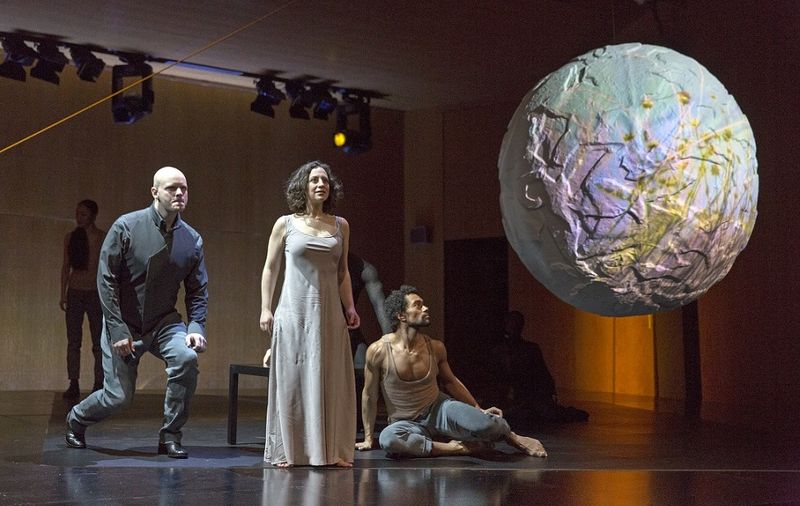
    Above: from THE TEMPEST SONGBOOK, singers Jennifer Zetlan and Thomas Richards, and dancers PeiJu Chien-Pott and Abdiel Jacobsen; photo by Richard Termine. Click on the image to enlarge.

    Saturday March 28th, 2015 – This long-awaited evening proved to be every bit as engrossing as I imagined it would be. Following last season’s stunning production of THE RAVEN, Gotham Chamber Opera’s Neal Goren again called upon choreographer/director Luca Veggetti for THE TEMPEST SONGBOOK, an imaginative fusion of song, dance, and drama performed with unfettered directness of purpose at the Grace Rainey Rogers Auditorium in the Metropolitan Museum of Art.

    RTRH4C0334A copy

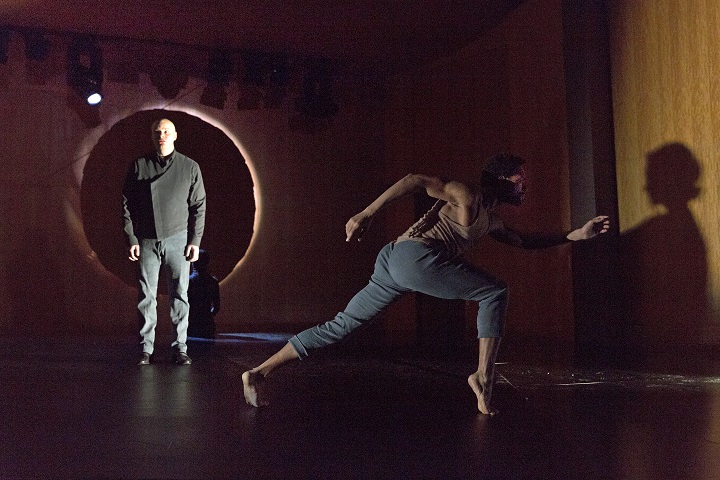
    Above: from THE TEMPEST SONGBOOK, production photo by Richard Termine

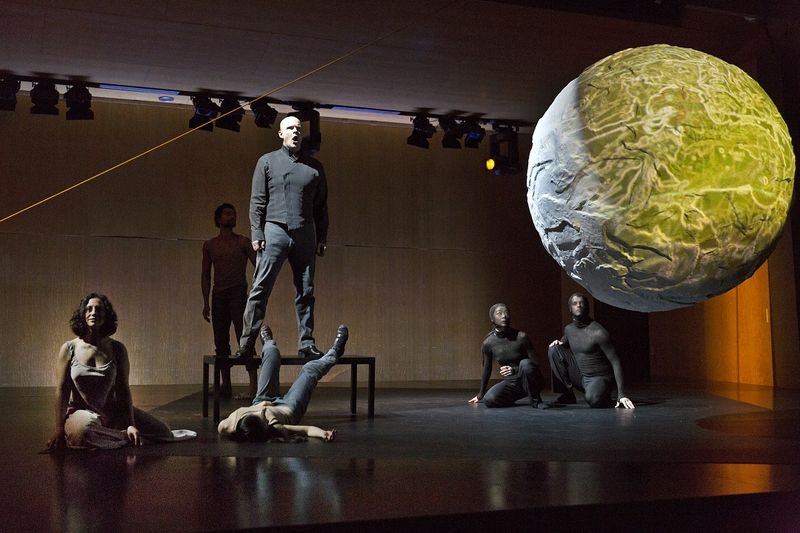
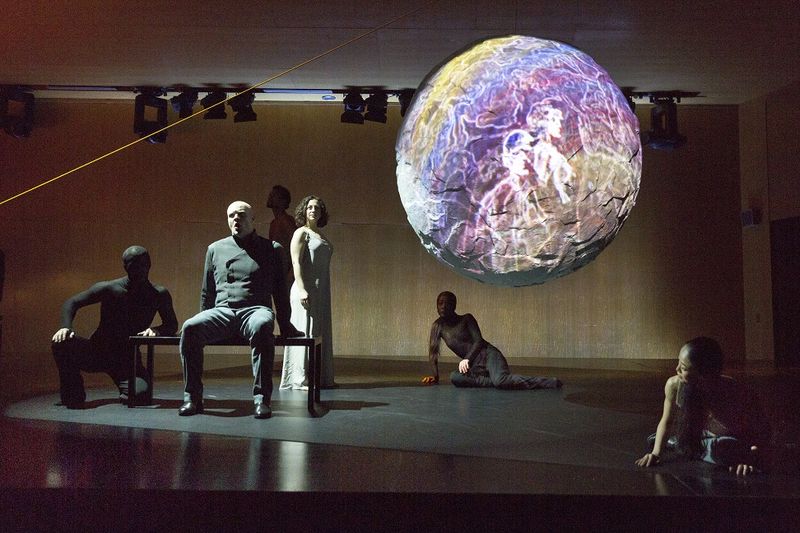
    As in THE RAVEN, this production of THE TEMPEST SONGBOOK is pared down to a sublime simplicity: no sets, no elaborate costumes or cluttered staging: just pure music – excellently played and sung – and sleek, expressive choreography performed by four of the dance world’s most captivating artists. The only element of set decor, aside from a bench, was a large luminous orb suspended over the stage. On its textured surface, Jean-Baptiste Barrière’s dreamlike projections – some of them real-time moving images of the onstage action – created an atmospheric element without detracting from the action of the singers and dancers. The simple, timeless costume designs (Peter Speliopoulos) flattered the wearers and allowed for ease of movement. Clifton Taylor’s lighting at times cast dancing shadows upon the walls.   

    RTRH4C0188 copy

    Above: Thomas Richards, Jennifer Zetlan, and the dancers; photo by Richard Termine

    The score is a felicitous blending of the olde and the new: music attributed to Henry Purcell for a 1712 production of The Tempest has been woven together with the contemporary Finnish composer Kaija Saariaho‘s song cycle The Tempest Songbook in such a persuasive manner that a cohesive new opera has been born. The rhythmic variety and melodic richness of Purcell found a counter-poise in Ms. Saariaho’s sometimes declamatory/sometimes other-worldly vocal settings.

    RTRH4C0270 copy

    Above: Jennifer Zetlan, Abdiel Jacobsen; photo by Richard Termine

    The period instrument ensemble, seated onstage, drew us into this Tempest world immediately with a strikingly resonant prelude. The two singers, Jennifer Zetlan and Thomas Richards, showed consummate musicianship and were able to move effortlessly between the Purcell and Saariaho styles in the twinkling of an ear. Ms. Zetlan, petite and lovely – and possessed of a distinctive vocal energy – can sound girlish one moment and amply dramatic the next whilst Mr. Richards – voluminous of voice yet capable of honing his tone down to long-fading pianissimi with admirable control – was a commanding presence both vocally and physically. Both singers are blessed with crystal-clear diction, making the sub-titles unnecessary; they entered into the action with élan.

    RTRH4C0298 copy

    Above: Thomas Richards, Jennifer Zetlan, Abdiel Jacobsen

    Luca Veggetti has been working frequently with the Martha Graham dancers in the last couple of seasons, and for THE TEMPEST SONGBOOK, four of this incredible Company’s finest were called upon. Ying Xin and Lloyd Mayor were a shadow-couple: totally dressed in black and their faces veiled, they seemed by turns sinister or supportive as they moved deftly about the space in Luca’s unique, trademark maneuvers. My only regret was that their masques withheld their beautiful faces from us…until the curtain calls.

    RTRH4C0544 copy

    Above:Thomas Richards, Abdiel Jacobsen; photo by Richard Termine

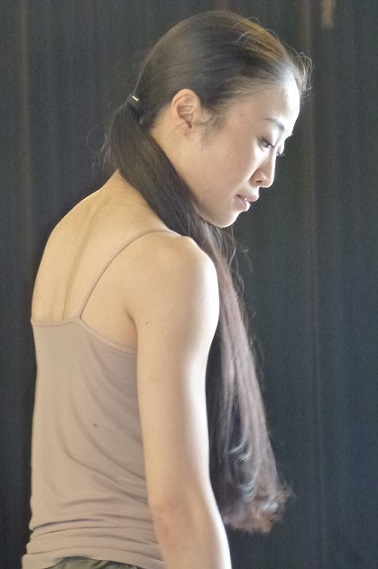
    PeiJu Chien-Pott and Abdiel Jacobsen were more of this world; they both danced (and partnered) with the power and commitment that make their Graham performances so impressive. Abdiel used his entire body as an expressive instrument, and his face has a poetic, visionary aspect that makes watching him such a complete pleasure. PeiJu gave an astonishing performance; lithe and elegant of frame and silken of hair, she displayed extraordinary flexibility and a heaven-reaching extension. Her black boots gave her a grounded look, but her dancing soared. All four dancers, indeed, were thoroughly sublime: no wonder the Graham Company holds such an exalted place in my dance pantheon.

    L1540443

    Above: PeiJu Chien-Pott portrait, from Oberon’s Grove

    RTRH4C0090 copy

    Above: production photo by Richard Termine

    In its Diaghilevian spirit of gathering the muses of music, dance, mime, and art together, Gotham Chamber Opera have given us yet another memorable production. The wondrous silence of the large audience as the work unfolded is testament to the spell cast by this exceptional presentation. Roses and champagne for everyone involved!

  • Verdi REQUIEM at St John the Divine

    164572_1653439729885_6792945_n

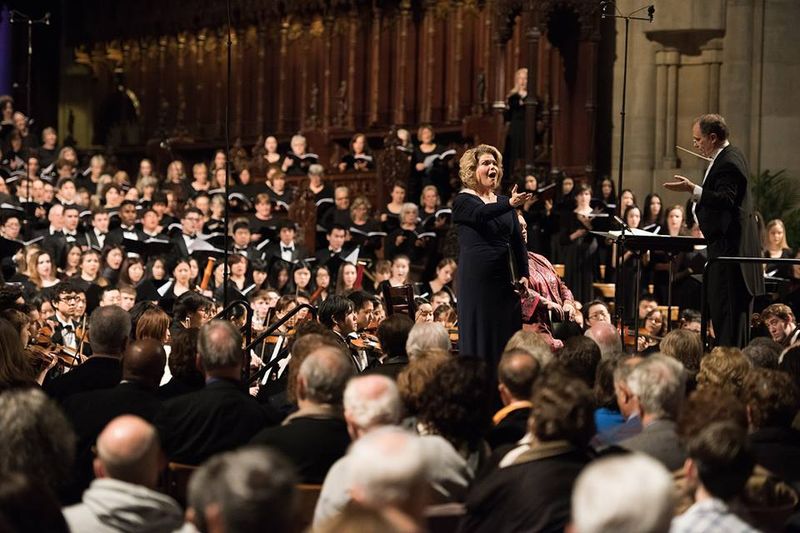
    Thursday March 26th, 2015 – Oratorio Society of New York presenting the Verdi REQUIEM at the Cathedral of St John the Divine. This was my second experience of this magnificent work in a sacred setting: many years ago I attended a performance of it in the Chapel at Trinity College, Hartford CT. On that evening, an organ and a small ensemble of instrumentalists played in lieu of a full orchestra, but the work still made a vivid impression. Tonight we had the admirable young musicians of the Manhattan School of Music Orchestra (and their symphonic chorus) joining the Oratorio Society for a full-force rendering of Verdi’s ‘sacred opera’.

    A huge audience – an overflow crowd, actually – filled the cathedral and (except for one cellphone beeping at a particularly inopportune moment) they listened in reverential silence. It was overall a very fine performance of the REQUIEM but sonically it was problematic in that the reverberant echoing throughout the huge space often turned the music into a blur. Much of the music’s definition was lost, and much detail from the inner orchestral voices vanished in the clouds of echo. There was the illusion of notes being played twice, and the music sometimes seemed to be fighting itself.

    Kent Tritle conducted, and a strong quartet of soloists took part:

    Jennifer Check, soprano
    Sara Murphy, mezzo-soprano
    Alex Richardson, tenor
    Matthew Boehler, bass

    These four singers often seemed to me to be swamped by the sound of the orchestra and chorus flowing over them in both directions. How they managed to pick up their cues, I will never know. Nevertheless, there were many savorable vocal passages. Mr. Boehler, who made a fine impression recently in IOLANTA at The Met, projected the text with vivid dynamic detail, and Mr. Richardson sang musically and with passion.

    Sara Murphy, whose opulent mezzo made a marvelous impact when she sang Ligeti and Schnittke with the American Symphony Orchestra earlier this season, was very impressive tonight both for beauty of tone and clarity of projection. So much music I want to hear her sing! 

    11111962_913591532037896_5248156677226624389_n

    Jennifer Check (above, photo by Brian Hatton), who stepped in to the soprano part rather late in the day, sounded lovely. Her voice has power but also a silvery lyrical quality, and in the Offertorio she produced a spine-tingling sustained piano E-natural (which modulates magically to an E-flat…one of the most felicitous moments in this glorious work). For the great final ‘aria’, Requiem aeternam, Ms. Check closed her score and gave an intense, very personal performance of this prayerful solo; using her right hand in gently expressive gestures, she seemed to send forth a benediction of peace and tranquility.

  • Schubert & Schnittke @ CMS

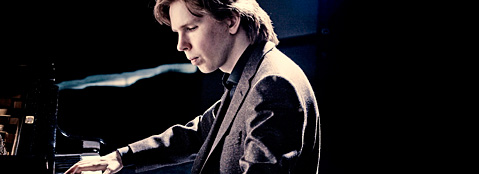
    JuhoPohjonen

    Above: Juho Pohjonen

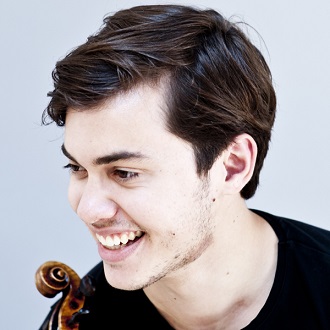
    Friday March 20th, 2015 – Three outstanding artists joined forces this evening at Alice Tully Hall as Chamber Music Society of Lincoln Center presented yet another outstanding programme in their Intimate Expressions series.  Pianist Juho Pohjonen joined violinist Benjamin Beilman for Schubert and cellist Jan Vogler for Schnittke; then all three musicians concluded the performance with Schubert’s trio #1 in B-flat major.

    Despite a late-Winter snowfall and chilling winds, a large audience filled Tully Hall, and it was in a marvelous state of silent anticipation that the listeners opened their hearts and minds to the extraordinary music coming from the stage. This state of mutual communication, where the players can’t help but be aware of the spell they are casting over the Hall, is one of the great pleasures of Chamber Music Society‘s presentations.

    The level of artistry today was extraordinarily high. When Benjamin Beilman and Juho Pojhonen walked onstage we were struck by their youthful appearance and a trace of shyness as they acknowledged the welcoming applause. But as soon as they began to play, their surety of technique and depth of musicality drew us in to their compelling delivery of the opening Schubert. 

    Benjamin_beilman_artistpage

    Above: Benjamin Beilman

    The Schubert Fantasy in C-major (1827) is a long work in seven inter-connected movements and it places extraordinary demands on the violinist while also requiring a pianist who is far more than an accompanist, but rather a partner in expressiveness.

    The extraordinary delicacy of Mr. Pohjonen’s opening measures showed us at once that we were in the presence of a master of dynamic control; the silken seamlessness of his playing was ideally taken up by Mr. Beilman in his opening lyrical flight. As the sonata progresses, the violin’s poignant theme of longing shifts to a dynamic dancelike passage. In a set of variations, Mr. Beilman showed his skill in alternate plucking and bowing, as well as in flourishes of fast fiorature and rolling cascades of melody. A rapturous theme for violin and piano has a heart-rending quality, and soon we return to the still calm of the work’s opening statements. The gallantly graceful pace of the finale lulls into a last evocative slow passage before a dash to the finish. The audience embraced the two young paragons with warm enthusiasm for their savorable performance.

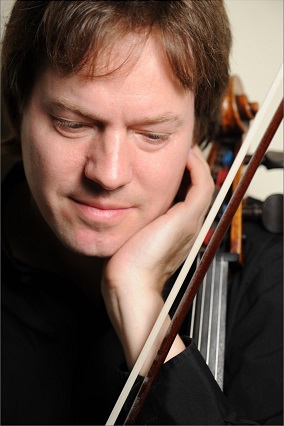
    29782

    Above: Jan Vogler

    Jan Vogler was making his CMS debut today, and a welcome event it was: he took on the the daunting combination of angularity and soulfulness that make the Schnittke sonata so remarkable, and again Mr. Pojhonen at the Steinway was an ideal accomplice.

    Commencing with a rather ominous cello theme, this sonata often has a dreamlike (even nightmarish) sense of mystery. The cellist at one point slithers up and down a snakelike scale passage with a creepiness that evokes thoughts of the eerie prelude to Klytemnestra’s murder in Strauss’s ELEKTRA. In fact, the Schnittke might be said to echo the Strauss opera in its mixture of violence and unexpected flashes of  lyricism. 

    I scrawled several brief notes, not wanting to take my eyes off our intrepid players: “march-like piano”, “rambunctious cello”, “bizarre waltz”, “restless quest”…and then suddenly Mr. Pohjonen lays into the lowest notes of the keyboard to produce a violent sonic boom. He then immediately swirls upward to the highest range, whilst Mr. Vogler takes up a desolate theme. The cello goes to the depths – and such resonant depths – interrupted by an aching/annoying 2-note motif before ending up on a very sustained tone. A brief, mysterious plucked passage before settling back into the deep while the piano creates a soft cloud of starshine in the highest range.

    Let’s have Mr. Vogler back for the second Schnittke sonata, at the earliest opportunity.

    After the interval, the three gentlemen set to a performance of Schubert’s Trio in B flat major, immediately establishing the kind of congenial rapport that makes a great piece of music even greater.

    The trio was probably written in 1827; the original autograph score is lost. It is in four movements, and I can’t imagine a more pleasing rendition than tonight’s with its fusion of the three voices constantly sending those delightful little chills up the spine. The nostalgic theme that opens the Andante expanded into a vivid emotional experience with playing that was subtle and full of nuance. The three gentlemen were in a playful mood for the witty and sparkling Scherzo – with its lovely surprise of a slower interlude – and then moved on to the sprightly dance of the final Rondo, which includes an unusual ‘fluttery’ motif.

    In this trio, the three players showed both graceful dexterity and a mutual desire to draw forth each thread of melody for our delight. Both in programming and in the choice of artists, Chamber Music Society sets the highest standard. I entered Alice Tully Hall tonight with great expectations, only to find they were not simply met, but surpassed. Incredibly, that seems to be the norm here at CMS.

    The Repertory:

    The Participating Artists: Juho Pohjonen (piano); Benjamin Beilman (violin); Jan Vogler (cello)

  • Score Desk for DONNA DEL LAGO

    Loch_Katrine

    Above: Loch Katrine, Scotland – the setting of LA DONNA DEL LAGO

    Saturday February 28th, 2015 matinee – This performance of Rossini’s LA DONNA DEL LAGO was a late addition to my opera plans for the season. The Rossini repertory no longer interests me much, but I thought it might be good to experience one of his operas again in-house, and I’ve always liked Juan Diego Florez, so…why not?

    Back in 1982, I heard Rossini’s LA DONNA DEL LAGO in a concert performance at Carnegie Hall; the principal roles were taken by Frederica von Stade, Marilyn Horne, Rockwell Blake, and Dano Raffanti. It was quite a night. Then in 2007, the New York City Opera staged it with a cast that included fine performances by mezzo-soprano Laura Vlasak Nolen, and tenors Barry Banks and Robert McPherson.

    After taking some cuts in the prelude, conductor Michele Mariotti rushed the opening chorus with some resulting disunity. Someone tried to start entrance applause for Joyce DiDonato, but it didn’t catch on; it might have been the same person who tried to get some applause going after her opening aria, but he ended up with three solo hand-claps.

    It seemed to me today that Elena (the opera’s eponymous heroine and triple love-interest) suits Ms. DiDonato much better than Donizetti’s Maria Stuarda did. She did some genuinely lovely singing – with persuasive coloratura – along the way; a slight flutter in her timbre at low-to-mid volume sometimes intrudes on complete enjoyment of her singing. But overall this is a fine role for her. 

    Juan Diego Florez sang with his usual fluency and expressiveness, tossing off added high notes and blending beautifully with Ms. DiDonato. Fleeting traces of sharpness in the tenor’s singing didn’t detract from the overall handsomeness of his vocalism, I should have stayed to hear the luminous aria “O fiamma soave” in Act II, but I didn’t.

    I can recall the favorable impression Daniela Barcellona made singing Maddalena in RIGOLETTO at a special all-Verdi concert performance which The Met offered on September 22, 2001, as a benefit for the families of 9/11 first responders. She subsequently sang Bellini’s Adalgisa twice at The Met (also in 2001), and has since had an extensive career in Europe. Her return to The Met as Rossini’s Malcolm Groeme was a main factor in my decision to go to today’s matinee, but alas her voice now shows a widening vibrato – and a quick look at her bio shows the telltale reasons: Amneris and Santuzza are not roles one would think of for her type of voice, and once ventured it is not easy to switch back to bel canto. She had some beautiful low notes today, and managed the coloratura quite well. But sustained notes revealed an unsteady quality.

    John Osborn (Rodrigo di Dhu) pricked up our ears and perked up the performance with his powerful forays to the top register and the overall conviction of his singing. It is not the most ingratiating tenor sound you will hear, but he knows what to do with it in this demanding music, Oren Gradus, though not a bel canto specialist, did what he could with the role of Duglas D’Angus.

    Musically, the opera moves in fits and starts. A ravishing melody or brilliant passages of fiorature will be followed by rum-ti-tum filler. Rossini’s idea of introducing a solo harp into the Act I finale stirs our interest, but the vocal melody that follows in pedestrian. This is followed by a jog-trot stretta to end the act.

    It it hadn’t been for the looming Gelb intermission, I would most likely have stayed on to hear that Florez cavatina in Act II. The house was reasonably full and very attentive, but I did notice several fellow-defectors after the first act.

    Metropolitan Opera House
    February 28, 2015 Matinee

    LA DONNA DEL LAGO
    Gioachino Rossini

    Elena...................Joyce DiDonato
    Giacomo V/Uberto........Juan Diego Flórez
    Malcolm Groeme..........Daniela Barcellona
    Rodrigo Di Dhu..........John Osborn
    Duglas..................Oren Gradus
    Albina..................Olga Makarina
    Serano..................Eduardo Valdes
    Bertram.................Gregory Schmidt

    Conductor...............Michele Mariotti

  • Schubert’s WINTERREISE @ CMS

    Huber-Gerharer

    Above: Gerold Huber and Christian Gerhaher

    Tuesday February 24th, 2014 – Baritone Christian Gerhaher and pianist Gerold Huber performing Schubert’s immortal masterpiece, Winterreise, as part of Chamber Music Society of Lincoln Center‘s Winter Festival, Intimate Expressions. The performance comes to us in the midst of a particularly cold and somber Winter.

    Composed in 1827, when Franz Schubert was 30 years old and had less than two years remaining in his life, the twenty-four songs of Winterreise are set to poems of Wilhelm Müller. The poet, who had earlier provided the texts for the composer’s song cycle, Die schöne Müllerin, was a nearly-exact and equally short-lived contemporary of Schubert. They never met, and Müller died just as Schubert was beginning work on Winterreise.

    Winterreise is not a narrative song cycle, but rather a collection of vocal miniatures on themes of solitude and despair, set against a relentless and unforgiving wintry landscape. Though the subject matter is overall quite gloomy, there is some variety of tempo and rhythm among the songs. But in the final twelve of the Winterreise songs, we experience a feeling of darkness gathering about Schubert, and his sense of impending doom. The last Winterreise songs evoke feelings of great beauty overshadowed by death. The composer died in 1828.

    Tonight’s performance had all the makings of a superb musical experience – which, in fact, it was – yet the overall effect of the cycle was somewhat compromised. In her opening remarks, CMS co-artistic director Wu Han announced that the pianist Gerold Huber was suffering from a heavy cold. He had generously agreed to perform, but we were cautioned that he might be in need of taking a break midway thru the cycle. This was indeed the case; after about a half-hour, pianist and singer walked offstage and the audience took the opportunity to stretch, chat, and check their cellphones. This intrusion of reality broke the spell of the music. When the artists returned, it took a while for the hall to settle in again, and there were further minor disruptions in the second half of the performance, with a corresponding decline in focus.

    Mr. Gerhaher has a wonderful lyric instrument capable of both power and shaded nuance; and yet it was the pianist – Mr. Huber – who most thoroughly entranced me with the subtle delicacy of his playing in the cycle’s most intimate moments. Together the two gave as fine a rendering of Winterreise as one might hope under the circumstances. The great benefit for me was, it sent my estimation of this cycle, which I have never previously appreciated and have in fact avoided, soaring. Perhaps that is one of the gifts of growing older.

    I look forward to hearing Mr. Gerhaher on March 1st singing the Brahms GERMAN REQUIEM at Carnegie Hall. And I will hope to encounter Mr. Huber again at some point for he is an artist of intrinsic expressiveness.

  • ASO: Max von Schillings’ MONA LISA

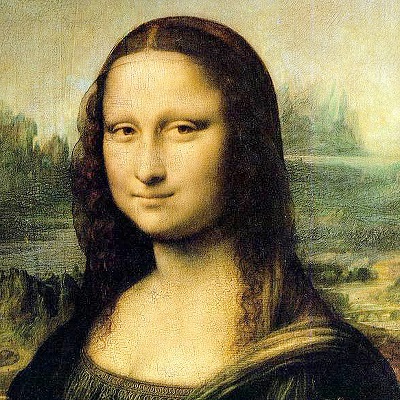
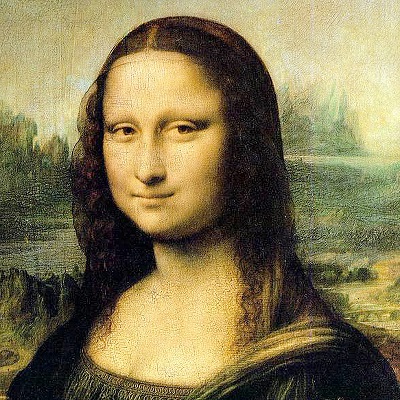
    Mona_Lisa

    Friday February 20th, 2015 – An opportunity to hear a forgotten opera, Max von Schillings’ MONA LISA, came about thanks to conductor Leon Botstein and the American Symphony Orchestra. Bringing us operatic rarities is one of Maestro Botstein’s specialties, and tonight MONA LISA proved a wonderful discovery.

    The opera was vastly popular in its day; in the fifteen years following its 1915 premiere, it was performed more than 1,200 times, including in St. Petersburg and at New York’s Metropolitan Opera. The composer’s embrace of Nazism has since cast him as an unsavory individual and, upon his death in 1933, he and his music were essentially forgotten.

    von Schillings was considered a neo-Wagnerian, but in MONA LISA we experience a link with Italian verismo; both in its Renaissance setting and its musical style, I was most often put in mind of Zandonai’s FRANCESCA DA RIMINI. The influence of Strauss and Zemlinsky may also be felt. von Schillings successfully blends a variety of stylistic elements into music that evokes the Age of da Vinci from a Germanic viewpoint. 

    The story is a Mona Lisa fantasy and revolves around her jealous husband, Francesco del Giocondo, and her former lover, Giovanni de Salviati who arrives at the del Giocondo palazzo on an errand from the pope: to purchase a rare pearl. Mona Lisa and Giovanni had once been lovers, and the flame is re-kindled.

    The pearl is kept in a small, air-tight chamber. After arranging the purchase, Giovanni covertly persuades Mona Lisa that they should run away together when he comes to collect the pearl. Her husband notices the mysterious smile on his wife’s face – a smile she has never shone on him in their years of marriage –  and suspects Giovanni as a rival. To avoid being caught, Giovanni hides in the pearl-chamber, which Francesco then locks. Mona Lisa knows that Giovanni will suffocate, but she keeps her cool and the next morning she tells her husband says she will wear the pearl. When Francesco enters the chamber to fetch the jewel for her, she slams the door shut behind him and locks it.

    The opera is set during carnival season which gives rise to some passages of courtly entertainment. And, subtly, the libretto refers to Madama Borgia as being Mona Lisa’s friend. Thus the notion of dispatching an unwanted husband would come naturally to Mona Lisa.

    The score abounds with melody and the opera is impressively orchestrated, bringing in harp, celeste, mandolin and organ…even castanets are heard at one point. The ASO‘s concertmaster Erica Kiesewetter seized several opportunities to bring forth beautiful solo violin passages.

    The opera was well-cast with singers intent on characterizing their music. In the title-role, soprano Petra Maria Schnitzer, despite a less-than-comfortable upper register, blended lyricism with passionate declamation. As Francesco, the charismatic Michael Anthony McGee, delighted in the vocal art of insinuation, his genial vocal veneer covering a soul of brooding jealousy and duplicity. In a performance of intense power and commitment, tenor Paul McNamara scored a great success as he met the Wagnerian demands of the role of Giovanni; his vocalism made a strong impact in the Hall.

    A quintet of courtiers, led by tenor Robert Chafin as Arrigo Oldofredi, provided ongoing commentary in Act I, with bursts of song woven into the tapestry. John Easterlin, Justin Hopkins, Christopher Burchett, and Michael Scarcelle kept their scenes lively with characterful singing and good dramatic interaction. An appealing trio of young women gave a vocal counter-balance to the men’s ensemble: Lucy Fitz Gibbon and Katherine Maysek sang attractively, and Ilana Davidson had a lovely vocal vignette, portraying Venus in a carnival pageant. The Bard Festival Chorale had rather less to do than one might have wished, but they did it well indeed.

    THE CAST

    Foreigner/Francesco del Giocondo: Michael Anthony McGee, bass-baritone
    Woman/Mona Fiordalisa: Petra Maria Schnitzer, soprano
    Lay Brother/Giovanni de Salviati: Paul McNamara, tenor
    Pietro Tumoni: Justin Hopkins, bass-baritone
    Arrigo Oldofredi: Robert Chafin, tenor
    Alessio Beneventi: John Easterlin, tenor
    Sandro da Luzzano: Christopher Burchett, baritone
    Masolino Pedruzzi: Michael Scarcelle, bass-baritone
    Mona Ginevra: Ilana Davidson, soprano
    Dianora: Lucy Fitz Gibbon, soprano
    Piccarda: Katherine Maysek, mezzo-soprano

    Bard Festival Chorale (James Bagwell, director)

    Conductor: Leon Botstein

  • ASO: Max von Schillings’ MONA LISA

    Mona_Lisa

    Friday February 20th, 2015 – An opportunity to hear a forgotten opera, Max von Schillings’ MONA LISA, came about thanks to conductor Leon Botstein and the American Symphony Orchestra. Bringing us operatic rarities is one of Maestro Botstein’s specialties, and tonight MONA LISA proved a wonderful discovery.

    The opera was vastly popular in its day; in the fifteen years following its 1915 premiere, it was performed more than 1,200 times, including in St. Petersburg and at New York’s Metropolitan Opera. The composer’s embrace of Nazism has since cast him as an unsavory individual and, upon his death in 1933, he and his music were essentially forgotten.

    von Schillings was considered a neo-Wagnerian, but in MONA LISA we experience a link with Italian verismo; both in its Renaissance setting and its musical style, I was most often put in mind of Zandonai’s FRANCESCA DA RIMINI. The influence of Strauss and Zemlinsky may also be felt. von Schillings successfully blends a variety of stylistic elements into music that evokes the Age of da Vinci from a Germanic viewpoint. 

    The story is a Mona Lisa fantasy and revolves around her jealous husband, Francesco del Giocondo, and her former lover, Giovanni de Salviati who arrives at the del Giocondo palazzo on an errand from the pope: to purchase a rare pearl. Mona Lisa and Giovanni had once been lovers, and the flame is re-kindled.

    The pearl is kept in a small, air-tight chamber. After arranging the purchase, Giovanni covertly persuades Mona Lisa that they should run away together when he comes to collect the pearl. Her husband notices the mysterious smile on his wife’s face – a smile she has never shone on him in their years of marriage –  and suspects Giovanni as a rival. To avoid being caught, Giovanni hides in the pearl-chamber, which Francesco then locks. Mona Lisa knows that Giovanni will suffocate, but she keeps her cool and the next morning she tells her husband says she will wear the pearl. When Francesco enters the chamber to fetch the jewel for her, she slams the door shut behind him and locks it.

    The opera is set during carnival season which gives rise to some passages of courtly entertainment. And, subtly, the libretto refers to Madama Borgia as being Mona Lisa’s friend. Thus the notion of dispatching an unwanted husband would come naturally to Mona Lisa.

    The score abounds with melody and the opera is impressively orchestrated, bringing in harp, celeste, mandolin and organ…even castanets are heard at one point. The ASO‘s concertmaster Erica Kiesewetter seized several opportunities to bring forth beautiful solo violin passages.

    The opera was well-cast with singers intent on characterizing their music. In the title-role, soprano Petra Maria Schnitzer, despite a less-than-comfortable upper register, blended lyricism with passionate declamation. As Francesco, the charismatic Michael Anthony McGee, delighted in the vocal art of insinuation, his genial vocal veneer covering a soul of brooding jealousy and duplicity. In a performance of intense power and commitment, tenor Paul McNamara scored a great success as he met the Wagnerian demands of the role of Giovanni; his vocalism made a strong impact in the Hall.

    A quintet of courtiers, led by tenor Robert Chafin as Arrigo Oldofredi, provided ongoing commentary in Act I, with bursts of song woven into the tapestry. John Easterlin, Justin Hopkins, Christopher Burchett, and Michael Scarcelle kept their scenes lively with characterful singing and good dramatic interaction. An appealing trio of young women gave a vocal counter-balance to the men’s ensemble: Lucy Fitz Gibbon and Katherine Maysek sang attractively, and Ilana Davidson had a lovely vocal vignette, portraying Venus in a carnival pageant. The Bard Festival Chorale had rather less to do than one might have wished, but they did it well indeed.

    THE CAST

    Foreigner/Francesco del Giocondo: Michael Anthony McGee, bass-baritone
    Woman/Mona Fiordalisa: Petra Maria Schnitzer, soprano
    Lay Brother/Giovanni de Salviati: Paul McNamara, tenor
    Pietro Tumoni: Justin Hopkins, bass-baritone
    Arrigo Oldofredi: Robert Chafin, tenor
    Alessio Beneventi: John Easterlin, tenor
    Sandro da Luzzano: Christopher Burchett, baritone
    Masolino Pedruzzi: Michael Scarcelle, bass-baritone
    Mona Ginevra: Ilana Davidson, soprano
    Dianora: Lucy Fitz Gibbon, soprano
    Piccarda: Katherine Maysek, mezzo-soprano

    Bard Festival Chorale (James Bagwell, director)

    Conductor: Leon Botstein

  • IOLANTA/BLUEBEARD’S CASTLE @ The Met

    7-133410_gallery

    Above: Boris Kudlicka’s set design for The Met’s production of Bartok’s BLUEBEARD’S CASTLE

    Wednesday February 18th, 2015 – This pairing of ‘short’ operas by Tchaikovsky and Bartok at The Met didn’t really work. IOLANTA is an awkward work: too short to stand alone but too long to be successfully coupled with another opera. BLUEBEARD, so intense musically and rather static dramatically, is best paired with something like Schoenberg’s ERWARTUNG or Stravinsky’s OEDIPUS REX. Aside from the musical mismatch, the evening was further spoilt by an endless intermission.

    Tchaikovsky’s IOLANTA is full of nice melodies and is perfectly palatable but at no point do we feel connected to the story or the characters as we do with ONEGIN or PIQUE-DAME. The production is gloomy, with a central ‘box’ (Iolanta’s bedroom) which periodically (and rather annoyingly) rotates. The stage direction was random and incoherent, the minor characters popping in and out, and then a big choral finale populated by men in waiters’ aprons. Nothing made much sense, really.

    Musically, IOLANTA was given a not-very-inspired reading by Pavel Smelkov. It took Anna Netrebko a while to warm up; her singing became more persuasive as the evening wore on. She was attractive to watch and did what she could dramatically with a limited character and a dreary production. Mzia Nioradze was a sturdily-sung Marta. Among the male roles, Matt Boehler stood out vocally as Bertrand. Neither Vladimir Chmelo (Ibn-Hakia) nor Alexei Tanovitski (King Rene) seemed to be Met-caliber singers, and Maxim Aniskin’s Duke Robert was pleasant enough vocally though of smallish scale in the big House.

    IOLANTA was in fact only saved by a superb performance as Vaudemont by Piotr Beczala. From the moment of his first entrance, the tenor’s generous and appealing sound and his commanding stage presence lifted the clouds of tedious mediocrity that had settled over the scene. As his most Gedda-like vocally, Beczala seemed to enflame Ms. Netrebko and their big duet had a fine sense of triumph.

    The House, which was quite full for the Tchaikovsky, thinned out a bit at intermission. Those who stayed for the Bartok were treated to an impressive musical performance thwarted to an extent by busy, awkward staging. Mr. Smelkov seemed more in his element here than in the Tchaikovsky; the orchestra played Bartok’s gorgeous score for all it’s worth, and that’s saying a lot.

    After the eerie, ominous spoken prologue, we enter Bluebeard’s dark domain. Where we should see seven doors, we instead see an automatic garage door closing. Then begins the long conversation between Bluebeard and Judith which will end with her bound in permanent captivity with his other wives.

    The staging did the two singers – Michaela Martens and Mikhail Petrenko – no favors; periodically they appeared – for no apparent reason – in an isolated ‘cupboard’ high up at extreme stage left while the central space was filled with the filmed image of a gaping elevator shaft (see photo at the top of this article). The opening of each each ‘door’ was staged as a series of odd vignettes. Nothing made much sense. The final scene was ugly and failed to project the sense of mystery that should hover over Judith’s fate.

    Both Ms. Martens and Mr. Petrenko were on fine vocal form, and both brought unusual warmth and unexpected lyricism to much of their music. They sang powerfully, the mezzo showing a large and expressive middle register and resonant lower notes, with the basso having both power and tonal beauty at his command.

    At several points along the way, their singing seemed somewhat compromised by the staging; and never more so than in Judith’s famous high-C. At this moment, the director placed the singer far upstage – almost on Amsterdam Avenue – and so although Ms. Martens nailed the note, she was too far back to crest the orchestra. I suspect it was staged this way as a covering device for the vocal unreliability of the production’s earlier Judith, Nadja Michael. 

    But overall, Ms. Martens and Mr. Petrenko each made a distinctive vocal showing; and it was they, the Met orchestra, and Piotr Beczala’s Vaudemont earlier in the performance that gave the evening its lustre and saved it from sinking into the murky depths. Attempts to show some kind of link between the two operas by means of certain stage effects proved unconvincing. The Bartok, especially, deserves so much better.  

    Metropolitan Opera House
    February 18, 2015

    IOLANTA
    P I Tchaikovsky

    Iolanta....................Anna Netrebko
    Vaudémont..................Piotr Beczala
    Robert.....................Maxim Aniskin
    King René..................Alexei Tanovitski
    Bertrand...................Matt Boehler
    Alméric....................Keith Jameson
    Ibn-Hakia..................Vladimir Chmelo
    Marta......................Mzia Nioradze
    Brigitte...................Katherine Whyte
    Laura......................Cassandra Zoé Velasco

    BLUEBEARD'S CASTLE
    Béla Bartók

    Judith.....................Michaela Martens
    Bluebeard..................Mikhail Petrenko

    Conductor..................Pavel Smelkov