Category: Reviews

  • Bringing Down the House

    Tucker

    Richard Tucker elicits an ovation after singing “Cielo e mar!” in a performance of LA GIOCONDA at the Teatro Colon in Buenos Aires in 1966. Tucker was one of the most generous singers I ever encountered, as his singing here attests.

    Richard Tucker – Cielo e mar! – GIOCONDA – Buenos Aires 1966

    And, speaking of Richard Tucker, the annual Tucker Gala will be held on Sunday, October 21st, 2018, at 6:00 PM at Carnegie Hall. Information and tickets here.

  • Rudolf Knoll

    A-870624-1523602270-9499.jpeg

    German baritone Rudolf Knoll had an extensive career in Europe, singing at the Vienna State Opera, Zurich, and major German houses. He made several recordings of opera and lieder.

    He was less well-known in America, where his Met career consisted of two roles – Kothner in MEISTERSINGER and Faninal in ROSENKAVALIER – sung over a two-year span. He was in the casts of the first performances of those two operas I ever experienced, the ROSENKAVALIER being particularly stellar: his colleagues were Marion Lippert, Reri Grist, Christa Ludwig, Walter Berry, and George Shirley, with Karl Böhm conducting.

    In Europe, Knoll’s repertoire ranged from Alberich, Beckmesser, Pizarro, and Mandryka to Iago, Count di Luna, and Rigoletto. After retiring from opera, he taught at the Salzburg Mozarteum; among the singers he worked with was the prominent baritone Sir Simon Keenlyside.

    The only photo I am able to find of Mr. Knoll is from his teaching days (above).

    Rudolf Knoll as Donner – Rheingold

    Rudolf Knoll – Cortigiani vil razza dannata ~ RIGOLETTO

    Rudolf Knoll passed away in 2007.

  • “Tristan!”…”Isolde!”…

    Alfred Roller - Set design for Act II - Wagner - Tristan und Isolde

    Above: Alfred Roller’s 1903 set design for Act II of TRISTAN UND ISOLDE

    Ben Weaver writes about some of his favorite recordings (and a DVD) of Wagner’s TRISTAN UND ISOLDE. Ben, a longtime TRISTAN addict, helped me to break down my resistance to this opera when we stood thru three performances of it – including Waltraud Meier’s only Met Isolde – in 2008. Prior to that, I had only seen the opera once, in 1971, with a stellar cast in a then-new production. In part, it was the magic of that performance that kept me from seeing it again for so many years: I felt nothing could compare.

    Earlier this year, I watched several video versions of the opera, becoming thoroughly immersed. The Met’s DVD, in the production that has moved me so much, is rightly hailed by Ben Weaver at the end of his article. Levine and the orchestra are splendid, and if Jane Eaglen and Ben Heppner are not physically everyone’s idea of how the lovers should look and move, to me they create all that is needed with their voices. Add Dalayman, and Pape, and the marvelous settings, and…voilà!…TRISTAN!

    Here is Ben’s article:

    Richard Wagner’s 1859 opera Tristan und Isolde was declared unplayable by orchestra musicians and un-singable by singers. Wagner spent nearly 6 years after completing it trying to get it staged. He failed repeatedly. Rio de Janiero, Strasbourg, Paris, Karlsruhe, Dresden, Weimar, Prague were all failures. Over 70 rehearsals in Vienna led to cancellation of the scheduled premiere. Finally the generosity of King Ludwig II of Bavaria – who would also pay for Wagner’s theater in Bayreuth – allowed the world premiere to take place in Munich on June 10, 1865 with the husband and wife team of Ludwig and Malvina Schnorr von Carolsfeld singing the title roles, with Hans von Bülow – with whose wife Wagner was having an affair – conducting. After only 4 performances, on July 21st, the tenor suddenly collapsed and died. Rumors began circulating that the exertion of singing the part of Tristan killed him. That’s probably not true, although the opera did additionally claim the lives of two conductors: both died in the orchestra pit during Act 2 – Felix Mottl in 1911 and Joseph Keilberth in 1968.

    Tristan is certainly one of the most challenging operas in the repertoire, and great Tristans and Isoldes do not come around very often. There are even fewer who can sing the voice-wrecking parts for long without damaging  their voices beyond repair. Some opera houses have gone decades without mounting it for lack of adequate singers. On record, the opera has fared better, in part because some singers who never attempted it in the theater agreed to sing it for a microphone.
     
    The first complete studio recording of Tristan und Isolde came in 1952 courtesy of EMI and the great Wagnerian Wilhelm Furtwängler. Furtwängler’s take on the opera is uber-Romantic. His conducting style could be traced back to von Bülow. Furtwängler’s tempos are slow, but the music never sags and never loses its pulse. His grasp of the totality of the work – the control over Wagner’s revolutionary redefining of tonality and chromaticism – is total. Sometimes the slow tempos reveal facets of the narrative that other, speedier performances don’t: for example when the sailors mock Isolde in Act 1 – the deliberateness of the tempo under Furtwängler makes their words far more threatening than the usual light mocking laughter. The Philharmonia Orchestra – at the time one of the finest ensembles in the world – plays exceptionally well. The opening Vorspiel builds magnificently, its climax washes over like an ocean wave.

    Kirsten Flagstad, who by 1952 had been singing Isolde for decades (albeit usually in heavily abridged form) and would soon retire from the stage altogether, is Furtwängler’s regal Isolde. But though her large voice is still in fine shape – warm, rich, for the most part even throughout the range – Flagstad is more of an aging Queen Isolde, not a spirited princess. And her highest notes can turn acidic and tight. (There’s a myth that Flagstad’s high C in Isolde’s Curse was actually sung by Elisabeth Schwarzkopf.) Flagstad’s exchanges with a youthful Blanche Thebom as Brangäne rather emphasize her advanced age. Tenor Ludwig Suthaus is an excellent Tristan: a true heldentenor, his voice is big, warm and rich. And he is tireless in Act 3. He has excellent grasp of the words too, doing far more word-painting than Flagstad. For all her considerable stage experience with the role Flagstad can be indifferent to details; for the big moments she always finds the necessary vocal and dramatic bite, but some of the longer monologues – her Act 1 confrontation with Tristan – can cause drowsiness. Even masterful orchestral accompaniment and Furtwängler’s genius can’t make up for a sometimes absent soprano. The young Dietrich Fischer-Dieskau is a superb Kurwenal: cocky in Act 1 and terrified for his master in Act 3.
     
    A note on the 1952 recording, produced by Walter Legge: disappointing…the mono sound, though clean and full, in the louder moments loses a lot of detail, especially where the voices are concerned. In spite of its historical significance, the chance to have a complete Isolde from Flagstad (alas, too late) and the superb musicianship of Wilhelm Furtwängler, this famous recording would not be a first choice in a collection.
     
    Nilsson

    Above: Birgit Nilsson recorded Isolde commercially twice
     
    As Flagstad retreated from the stage, legendary Swedish soprano Birgit Nilsson became the leading Isolde (and Brünnhilde) of the post-war era. Her huge, tireless, piercing Nordic soprano – soaring effortlessly over any orchestra and conductor – was known to pin listeners to their theater seats. She sang Isolde in any opera house worth its reputation. Her debut as Isolde at the Metropolitan in 1959 made the front page of the New York Times. One staffer at the Royal Opera House in London once told Gramophone magazine that everyone was always surprised to find the back wall still standing after a Nilsson performance.  But for all her vocal supremacy, Nilsson was also often criticized for being too cold and generalized in her interpretations. She was not a natural-born dramatist and in the theater the singular glory of her voice may have been enough, but how do her interpretations fare on record?  
     
    Nilsson recorded the role of Isolde on two official sets (and numerous pirates.) The earlier Nilsson recording captures her in the early stages of her stardom with conductor Georg Solti. Made in Vienna in 1960, just as he began committing his legendary Ring to disc with producer John Culshaw, Solti’s Tristan (also produced by Culshaw, but lacking the Ring’s sound-effects orgy) is very much in keeping with Solti’s general approach to music making: the fiery Hungarian could whip an orchestra into a frenzy like no one else. And “frenzy” doesn’t necessarily mean speed. Some conductors think they are achieving excitement by playing fast. The fury Solti could bring out from musicians was a combination of volume and sheer intensity of feeling. The apocalypse was never far off the page in a Solti performance. But he was not incapable of introspection and tenderness. That was one of the glories of a great Solti performance.
     
    So it is with his Tristan und Isolde. It is a great Solti performance, with the glorious Vienna Philharmonic making each note glow, seethe and sigh. The Prelude is a gorgeously executed tone poem, recorded with crystal clarity by Culshaw. The plucking strings are like hammer blows, which is dramatically apropos. Birgit Nilsson establishes her vocal supremacy right off the bat. Her steady, steely voice presents a resentful Irish princess you don’t want to mess with. At the end of Isolde’s Curse, Nilsson launches fearless and fearsome vocal daggers – perhaps unequaled by another soprano. Nilsson’s voice is in supreme shape here. But the criticisms of coldness are not invalid. While Nilsson’s fury can be second to none because of the natural power of her voice, in her interactions with the Tristan of Fritz Uhl, Nilsson hints at but never fully embraces tenderness and desperation. In many ways she’s the perfect foil for Solti. Their approaches to music and drama are on the same page. To achieve true pathos Solti needs a naturally dramatic performer and he does not have that in a young Nilsson. By focusing on Nilsson’s natural vocal strengths he does not help her bring out Isolde’s love for Tristan or true transfiguration in her Liebestod – which is magnificently sung, but cool. 
     
    Fritz Uhl, today a nearly forgotten Austrian tenor, comes much closer to true pathos as Tristan. Uhl had a warm, sturdy voice, with weight and power and easy high notes, and his transformations from a cold soldier who swore to bring his friend King Marke a beautiful bride in the first half of Act 1 – to a surprised lover after drinking the potion – to a lovesick romantic in Act 2 and finally to a tortured and abandoned lover in Act 3 – are mostly believable, even if they lack the very last ounce of conviction to be complete.

    The Brangäne of Regina Resnik is a matronly disappointment here; she sounds like Isolde’s nagging grandmother (though Resnik was actually younger than Nilsson.) Perhaps she would have been a better partner for Flagstad. Tom Krause is a fine Kurwenal and Arnold van Mill’s booming bass is perfectly acceptable and unexceptional. The great tenor Waldemar Kmentt appears in the brief role of the Young Sailor.
     
    Nilsson’s second official recording of the opera – made live in Bayreuth in 1966 with conductor Karl Böhm – is one of the great performances of any opera committed to record. Here Nilsson found a perfect foil in Böhm, whose ability to inspire singers to feel was far greater than Solti’s. Böhm’s is a less hectic reading, too; it may come as a surprise that Böhm’s tempos are actually significantly faster: he clocks in at 20 minutes under Solti. And yet, for all his speed, Böhm manages to present a warmer reading of the score, a more romantic one, with more ebbs and flows than Solti. With that, Böhm surrenders nothing on intensity in the opera’s dramatic moments. There are passages of unforgettable power: Nilsson puts to rest accusations of dramatic indifference. Her Isolde here is a complete portrait. Haughty in Act 1, shattering rage and fury in her Curse and melting tenderness after taking the potion and in the Love Duet in Act 2. The sorrow of her Liebestod is transformative. And she is in spectacular vocal shape as well, tossing off every high note effortlessly, her middle shimmering with warmth.
     
    Nilsson’s partner is Wolfgang Windgassen, the most famous Wagner tenor of the post-war era. Wolfgang Wagner once joked that “When Windgassen stops singing we might as well close the Festspielhaus.” Windgassen’s voice is an acquired taste. He was singing essentially outside of his natural vocal abilities, but sheer will power and strong technique kept him signing Wagner’s voice-wrecking roles for many years. He can sometimes sound dry and frequently at the absolute limit of his abilities. But his command of the role is undisputed. In the Love Duet, Windgassen and Nilsson sing as if truly only to one another. And in Act 3 Windgassen creates a devastating portrait of a man coming undone.
     
    518d2650910c3f555f4e118d89f3f63c
     
    Above: Christa Ludwig as Brangäne, with her potions
     
    The supporting cast could hardly be improved: Christa Ludwig’s Brangäne (her perfectly-judged fussiness in Act 1, heavenly warnings to the lovers in Act 2), Eberhard Wächter’s gruff Kurwenal and Matti Talvela’s youthful, devastated King Marke (the shimmer and sob in his voice could melt stone) are vocally and dramatically perfect. Also lovely to have a young Peter Schreier as the Young Sailor to open the opera. The Bayreuth Festival Orchestra is magnificent too, though coming from the covered pit of the Festspielhaus the recording creates a far different soundscape than Solti’s studio balanced Vienna Philharmonic. Many have commented that Böhm’s Tristan provides a great example of Bayreuth’s famed acoustic. The fully integrated sound between voices and orchestra, often imitated but never duplicated, was beautifully captured by the engineers.
     
    Karajan vickers 1967
     
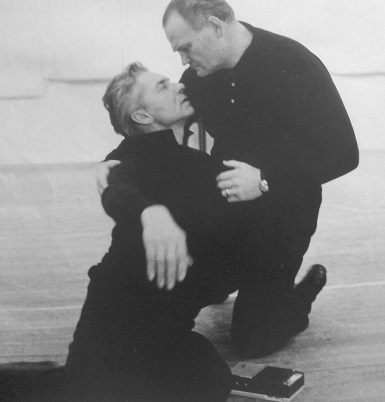
    Above: Herbert von Karajan and Jon Vickers rehearsing for Karajan’s Walküre production, 1967
     
    Herbert von Karajan’s recordings of the Ring in the late 1960s surprised many listeners because Karajan took what many called the “chamber” approach to the scores. He lightened and thinned out the textures to reveal hidden layers. They are magnificent performances and fascinating recordings. If anyone expected Karajan’s Tristan to do something similar with Wagner, they were sorely disappointed. Karajan’s Tristan is like granite: heavy and humorless. This would not be a problem if only the recording’s producer, Michel Glotz (no doubt with the conductor’s approval), did not create a highly manipulated soundscape with the volume of the magnificent Berlin Philharmonic flying from extreme ‘Is anybody making a sound?’ to ‘Holy shit, my ears are bleeding.’ The extreme – very extreme – dynamic range makes the recording practically unlistenable. It is an exercise in futility to find some sort of middle ground with the volume knob. Perhaps future remastering of this recording will give listeners something more aurally reasonable. 

    When it comes to the performance itself, it is echt-Karajan as he began entering his autumn years: there’s a heaviness and a lack of flexibility, no matter how virtuosic the orchestra. Although I find this to be more true of his recordings made for EMI in the 1970s (like this Tristan, but also his Fidelio and Der fliegende Holländer) than for DG. (The one happy exception was Karajan/EMI’s stunning, lights as a summer breeze Die Meistersinger von Nürnberg with the Staatskapelle Dresden.)
     
    Karajan found the perfect Tristan to match his heavy approach: Canadian tenor Jon Vickers. Vickers’ Tristan has, frankly, never been equaled on record. His is an overwhelming, searing portrayal of a proud Knight who sacrifices his pride for love. Vickers’ Act 3 is the stuff of nightmares; his anger, rage, misery and hopelessness will send chills down a spine. No other tenor, no matter how good he is, has come close to the devastation Vickers leaves in his wake. 
     
    It’s almost unfair to the rest of the cast, but they manage to hold their own. The Isolde is Helga Dernesch and though Dernesch sang many heavy soprano roles – including Brünnhilde and Beethoven’s Leonora for Karajan – she was not a true soprano. In fact, in just a few years she transitioned to the more comfortable mezzo roles and sang for many more years. There are signs of vocal strain in her Isolde; Karajan’s leisurely tempos certainly don’t help her cope with Wagner’s demands. But Dernesch is an imaginative, sensitive actress and her shimmering, moving performance only needed a more sensitive conductor. Christa Ludwig repeats her familiar Brangäne, but everything about her performance was better for Böhm. Walter Berry is a reliably excitable and sensitive Kurwenal, and Karl Ridderbusch’s magnificently sung Marke is one of the finest on record.

    About 10 years would pass before another new Tristan would surface on record. Carlos Kleiber’s notoriously limited repertoire fortunately did include Tristan. He conducted it for several seasons in the 1970s at the Bayreuth Festival and recorded it for DG in the early 1980s with the glorious Staatskapelle Dresden. Always the meticulous musician not prone to cheap thrills, Kleiber’s performance is cerebral, fast and lean. His tempos occasionally feel rushed, but overall his performance clocks in close to Solti’s. The Staatskapelle Dresden, producing one of the most unique orchestral sounds in the world, is a balm for the ear. Not even Vienna and Berlin Philharmonics could produce such consistently gorgeous, warm sounds and they respond to Kleiber’s aristocratic view magnificently. The real uniqueness of this performance, though, are the singers, all of whom had extensive experience with Lieder. Kleiber’s is the most word-conscious and conversational Tristan on record. Every word is etched out by the cast as if writing in stone, every reaction is rooted in the words that came before. Tristan is at its core a series of dialogues and no other group of singers on record has collectively paid the kind of attention to Wagner’s text as Kleiber’s singers do. 
     
    Price M
     
    The Welsh soprano Dame Margaret Price (above) was Kleiber’s surprising choice to sing Isolde. It’s a part she never sang on stage and Wagner was not part of her repertoire. A true Mozartian, Price possessed one of the most beautiful voices in opera. Rich, pure, warm, lyrical, even throughout its extensive range, Price never produced an ugly sound. Her Isolde is the most feminine princess of all. At the most dramatic moments she is singing at capacity, but never falters. Her faithful companion Brangäne is sung by the great Brigitte Fassbaender and their conversations in Act 1 and 2 are truly conversations: there’s an intimacy and warmth between them other singers don’t replicate. Tristan is sung by the veteran heldentenor René Kollo. Kollo’s is not a traditionally beautiful tenor. (But he is a real tenor). There’s a rawness to his sound and occasional unsteadiness in the upper reaches of the voice. But he’s an intelligent enough of an artist to make Tristan truly interesting. He never approaches Vickers’ overwhelming hysteria, but this is a different type of performance. Kollo fits perfectly into Kleiber’s Lieder interpretation. Kollo’s confrontation with Isolde in Act 1 borders on the angry, but in the Love Duet (the orchestra shimmering as if stars themselves were singing) Kollo and Price are glorious. They nearly whisper their lines. Kollo’s Act 3 hallucinations expose his ravaged voice, but his commitment to the drama and the beauty of the orchestral accompaniment wash the vocal flaws away.
     
    The same is also true of Dietrich Fischer-Dieskau’s Kurwenal. Long past his vocal prime, if anyone can claim the crown of Lieder King, it’s Fischer-Dieskau. Vocally gruff, he makes every utterance count. And then there’s the Marke of Kurt Moll. Possessing one of the most extraordinary and unique voices in opera – ever – Moll is a giant among basses. He could sing the phone book and I would want to bask in the beauty of the sound. The fact that he is such a moving actor makes his Marke’s Monolog one of the most glorious things ever recorded. 

    Other notable recordings of Tristan include Leonard Bernstein’s: the conducting is stunning. Karl Böhm is said to have attended some rehearsals and declared it to be the finest Wagner conducting he’s ever heard. Bernstein is fortunate to have a deeply moving Isolde of Hildegard Behrens. But the tenor Peter Hoffman is really not to everyone’s taste – he certainly is not to mine. His mushy, core-less voice all but ruins what could have been an all-around great performance. 
     
    Daniel Barenboim’s very fine recording with the Berlin Philharmonic is beautifully conducted as well. Barenboim is one of our finest living Wagnerians. His interpretation is broad and dramatic; and it is wonderfully recorded. Waltraud Meier delivers a powerful Isolde; it became a signature role for Meier, one of the most intelligent and powerful singing actresses of our time. (Meier’s performance of Isolde’s Narrative and Curse at James Levine’s 25th Anniversary Gala at the Met is truly one of the most memorable operatic performances. Everyone watching collectively held their breath for 10 minutes.) Here she is perhaps slightly studio-bound, but the comfort of the studio also lets her sing without fear. Meier is really a high mezzo, definitely not a soprano, so her extensive forays into the soprano realm (Isolde, Sieglinde, Beethoven’s Leonora, Berg’s Marie) came with some risk and occasional concern. Not so here: she sings gloriously. Siegfried Jerusalem’s Tristan is a predictably solid interpretation: he is vocally secure and dramatically sensitive. Matti Salminen’s majestic Marke is unforgettable.

    Antonio Pappano’s studio recording boasts a unique Tristan of legendary tenor Plácido Domingo. It is a role Domingo never attempted on stage and perhaps he waited just a little too long to take on the role. He is slightly paternal to the youthful Isolde of the young Swede Nina Stemme. But Domingo sings – lord, does he sing it! The warm, rich Italianate tenor, a lifetime of singing bel canto and Verdi, truly shows. He understands the drama too, even if he doesn’t have the word-painting of Vickers and Kollo. Nina Stemme, just starting her international career, is in glorious voice as Isolde. A tad too young for Domingo, but she can sing it beautifully too. The voice is rich and steady, even throughout the range, and beautiful in its slightly icy Nordic timbre. 
     
    Christian Thielemann’s live Vienna recording of the opera is surprisingly forgettable for a conductor as good as he is. All the notes are there and Vienna Philharmonic, of course, knows their way around the score. But there’s little sympathy between conductor and his singers. The star of the set is Deborah Voigt, who sings quite movingly and beautifully. But the whole proceeding is thrown into chaos with the opera’s final note: Voigt lands on the final note way off pitch. These things happen, of course, and this is a live performance. But why would Deutsche Grammophone not fix this before releasing it commercially? Why would Voigt not insist on fixing this glaring mistake which is the last impression we have of the whole thing?
     
    24 eaglen-heppner
     
    Above: Jane Eaglen and Ben Heppner in The Met’s DVD recording of Tristan und Isolde
     
    And very much worth mentioning is the video recording of Tristan from the Metropolitan in 1999, conducted by James Levine. With these performances the Met broke a 20 year drought of Tristan – last time they staged staged the opera was in the early 1980s because they did not think anyone after that was up for the challenge … until the arrival of Jane Eaglen and Ben Heppner. Eaglen’s voice – large, rich, feminine, with a solid middle and bottom and an easy top – all effortlessly produced – was perfect for the role. And her successes singing parts like Bellini’s Norma and Mozart’s Donna Anna, Eaglen had the much needed flexibility and warmth. Because she was a very heavy woman, and not a particularly graceful one, inspiring many mean-spirited comments from nasty nobodies, people often project dullness to her dramatic involvement and musicality. That has always been simply false. Eaglen was, in fact, an extremely musical singer with a keen sense of drama and humor. I have listened to audio-only recordings of her performances (Isolde and Brunnhilde from the Met especially) and the care Eaglen puts into her reading of the text is really beyond reproach. And her singing is marvelous too. She truly was a unique Wagnerian soprano who combined a big, easy sound with a beautiful voice and stamina to sound like she could do another round at the end of every performance.
     
    Ben Heppner was a frequent partner for Eaglen. Though Tristan was perhaps just a tad too heavy for him – and I often feared that he would not make it through the performance (he almost always did) – Heppner always sang beautifully and intelligently. He and Eaglen made a glorious couple. The Met production, staged by Dieter Dorn and designed by Jürgen Rose with lights by Max Keller, was one of the most greatest things in the Met’s arsenal. Dorn staged it perfectly for Eaglen and Heppner, taking their physical limitations (especially Eaglen’s) and using them as strengths, and the stunning semi-abstract designs by Rose and magnificent lighting Keller created truly unforgettable imagery. (Magically, Eaglen and Happen sing the Love Duet in the dark.) The supporting cast of Katarina Dalayman as a superb Brangäne and a searing Marke of René Pape – with the glory that was the Met Orchestra under Levine in what we now recognize was everybody’s heyday – make this video one of the finest the Met ever produced and the finest video recording of Tristan und Isolde. What a shame that Peter Gelb threw it out – after only 20 performances – for something vastly inferior.”

    ~ Ben Weaver

  • The Search for a Symphony @ Merkin Hall

    Brahms

    Above: Johannes Brahms

    ~ Author: Oberon

    Tuesday June 19th, 2018 – The last concert the St Luke’s Chamber Ensemble‘s series, Facets of Brahms, at Merkin Hall brought us Andy Stein’s octet-arrangement of the Beethoven Symphony No. 2 in D Major, Op. 36, and Alan Boustead’s nonet-reconstruction of Johannes Brahms’s Serenade No. 1 in D Major, Op. 11, which – in its orchestrated form – might have been designated as the composer’s first symphony.

    Brahms seems to have been hesitant to attempt composing a symphony in large part because he could hear “the footsteps of a giant” – Beethoven – walking behind him. Brahms’s anxiety meant that it wasn’t until 1876 that his 1st symphony premiered, some 14 years after he’d made preliminary sketches.

    This evening, the St. Luke’s Chamber Ensemble opened with Beethoven 2nd Symphony in an octet realization conceived by Andy Stein. Two violins, one viola, a cello, a bass, and clarinet, bassoon, and horn made up the ensemble. Their full, rich playing did not give a feeling of a ‘reduction’ in any sense of the word. Instead, it was a very pleasing, absorbing experience; and Mr. Klein was called to the stage for a bow, warmly greeted by the crowd.  

    The 2nd opens with a slow introduction which in a flash turns into a lively Allegro; this is ‘glad music’, rich in melodies. In the Larghetto, Beethoven churns out cordial, lyrical themes. The music summons up thoughts of Springtime, flowering meadows, and blue skies. The Scherzo shows the composer’s sense of humour, which to me seems even more evident in the witty opening of the final Allegro molto, which seems to have a touch of sarcasm.

    248630_web_Jon-Manasse

    Above: Jon Manasse

    In tonight’s ensemble, Jon Manasse’s clarinet playing made a superb impression: I have heard him play often in recent seasons and he makes the music so alive, with his fragrant tone and attention to dynamic detail. His subtle playing in the final movement gave me a smile.  Of equal note was the sound of Marc Goldberg’s mellow bassoon. Violinist Krista Bennion Feeney, so fine in last week’s concert, impressed again, as did bassist John Feeney.

    The Brahms 1st Serenade is in six movements. The composer noted it as a ‘Sinfonie-Serenade‘, later enlarging it for full orchestra at the urging of Clara Schumann. Alan Boustead gives the music back to its chamber roots in his excellent rendering.

    Jesse Mills was the principal violinist in this work tonight, with Ms. Bennion Feeney, violist David Cerutti, cellist Daire FitzGerald along with Mr. Feeney’s bass filling out the string contingent. Joseph Anderer provided warm-toned horn-playing, and clarinetist Dean LeBlanc joined Mr. Manasse. Elizabeth Mann’s flute sang forth with serene, appealing tone.

    The first three movements of this Serenade each felt a bit long tonight, as if the composer wanted to keep presenting his admittedly lovely themes to us again and again. By the fourth movement, a double Menuetto featuring the winds, Brahms was showing more economy. Ms. Fitzgerald and Mr. Anderer made the most of the ‘hunting call’ motif of the Scherzo, whilst Ms. Mann’s playing in the Rondo~Allegro was very pretty indeed. And throughout, Mr. Manasse continued to display the artistry that makes him such a valuable player on the Gotham scene. 

    ~ Oberon

  • Brahms & The Schumanns @ Merkin Hall

    214053_750

    Above: pianist Pedja Mužijević, photographed by Jacob Blickenstaff

    ~ Author: Oberon

    Tuesday June 12th, 2018 – Works by Johannes Brahms, Robert Schumann, and Clara Schumann were on offer as musicians from the Orchestra of St Luke’s joined pianist Pedja Mužijević in this concert at Merkin Hall which is part of a series entitled Facets of Brahms.

    Johannes Brahms, Clara Schumann, and Robert Schumann were close friends and confidantes. Schumann had pronounced Brahms the heir of Beethoven, marking him out as third of the Three Bs. Following Schumann’s mental deterioration and his eventual death in an asylum, Brahms and Clara continued a flirtatious friendship that endured for many years.

    Johannes Brahms’ Scherzo from the Sonatensatz in C-Minor was the composer’s share in an 1863  collaborative musical gift for the violinist Joseph Joachim; Robert Schumann and Albert Hermann Dietrich each contributed movements of their own.

    In this evening’s performance, violinist Krista Bennion Feeney joined Mr. Mužijević. We were seated very close to the stage, and at the Scherzo‘s animated start, the sound of the piano seemed often to overwhelm the violin. Ms. Bennion Feeney is a subtle artist, and it took a few moments for the balance between the two instruments to be achieved. Thereafter, the performance became distinctive, with alternating currents of passion and lyricism. Ms. Bennion Feeney’s arching tonal glow in the central violin theme was most appealing; the piece then moves on to a big finish. 

    Returning with cellist Myron Lutzke – whose playing with the St Luke’s orchestra has often endeared itself to me – the violinst and pianist gave a wonderfully simpatico rendering of the Schumann Piano Trio No.1, Op. 63. Mr. Lutzke’s dusky timbre and his Olde World cordiality of style seemed beautifully matched to Ms. Bennion Feeney’s superb control of dynamics whilst Mr. Mužijević at the Steinway reveled in the many marvelous piano passages Schumann has provided.  

    The opening movement is marked, “Mit Energie und Leidenschaft” (‘With energy and passion’). Throughout the first movement, achingly expressive passages from the violin over piano arpeggios alternate with dramatic outbursts. The cello’s incursions are relatively brief but telling. A change of mood near the end builds slowly to a kind of grandeur. Deep tones from the cello then have a calming effect, before another build-up leads to a return to the first theme, now altered and lovingly styled by Ms. Bennion Feeney. The music flows on to a rather unusual minor-key finish. 

    The second movement has a lively, scherzo-like quality. Its repeated rising theme and sense of rhythmic drive have a wonderfully familiar feeling. The rising motif returns in the Trio section, although here it is slower and more thoughtful. Violin and cello sing up and down the scale, then we zoom back to the original ascending theme, to a sudden ending.

    Marked “Langsam, mit inniger Empfindungen” (‘Slowly, with inner feeling’), the third movement ravishes with a poignant violin melody, the cello providing a tender harmony. Things grow more animated; the violin hands over the melody to the cello and their voices entwine. This music drew me in deeply as it lingered sadly, with sustained low cello notes. The movement ends softly, and the three musicians went directly into the Finale, with its joyous song. An exhilarating rush to the finish brought warm applause for the three players.

    As the audience members returned to their seats after the interval, it was apparent that our neighbors had stepped out for a cigarette: the smell was dense and unpleasant. We made a quick dash to the balcony where the usher was welcoming. We found a quiet – though chilly – spot from which to enjoy the concert’s second half.

    Ms. Bennion Feeney and Mr. Mužijević’s radiant performance of Clara Schumann’s Romances for Violin, Op. 22, assured that Frau Schumann’s music more than held its own when set amidst that of her more celebrated husband and the masterful Brahms.

    From its lovely start, the first Andante molto has a sense of yearning, the violinist bringing both depth of tone and gentle subtlety. Lightness of mood marks the Allegretto, with its passing shifts to minor, decorative trills, and a wry ending. A lilting feeling commences the final movement, melodious and – again – modulating between major and minor passages. The piano takes up the melody, and all too soon the Romances have ended.

    Ms. Bennion Feeney and Mr. Mužijević rounded out their busy evening with the Brahms Horn Trio, Op. 40, joined by Stewart Rose. Mr. Rose’s tone can be robust or refined, depending on the musical mood of the moment. A few passing fluffed notes go with the territory: as a frustrated horn-player, I know it all too well.

    I did find myself wishing that the violinist and horn player had been seated during this piece; I think it makes for a more intimate mix with the piano. The music veers from the pastoral to the poignant, from rich lyricism to sparkling liveliness, and the ‘hunting horn’ motifs in the final Allegro con brio always give me a smile. The three players made this quintessential Brahms work the crowning finale of a very pleasing evening.

    ~ Oberon
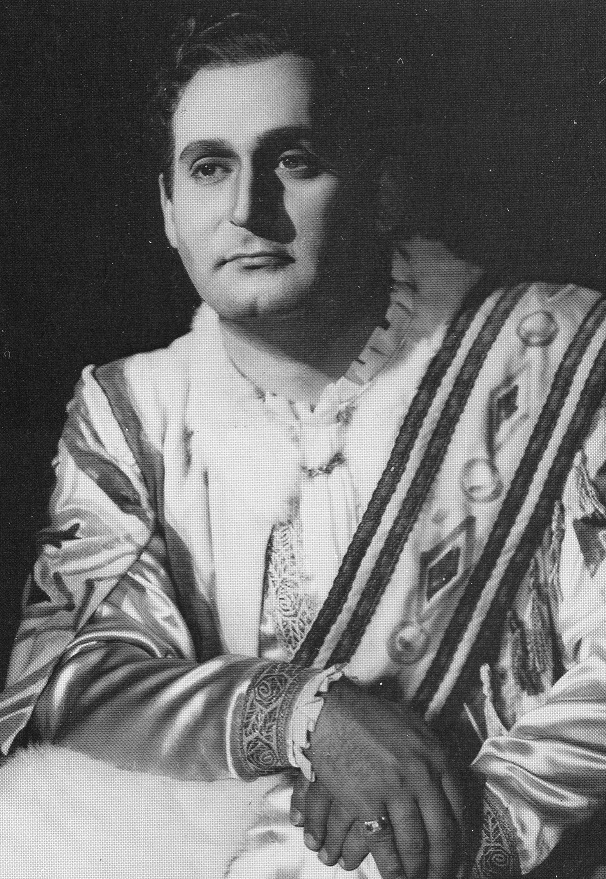
  • Bonaldo Giaiotti Has Passed Away

    Maxresdefault-752x490

    ~ Author: Oberon

    Bonaldo Giaiotti (photo above) was my favorite basso. Though he sang at a time when several wonderful bassos were to be heard at both of the houses at Lincoln Center – Tozzi, Siepi, Hines, Treigle, Ghiaurov, Raimondi, Moll, and Ramey, among others – there was something about Giaiotti’s voice that I simply loved. Even in relatively brief roles like the Commendatore in DON GIOVANNI or Monterone in RIGOLETTO, he always made a distinctive mark.

    Over a span of nearly 30 years – beginning with his Met debut as the High Priest in NABUCCO on opening night, 1960, and concluding with a performance of Don Basilio in BARBIERE DI SIVIGLIA in 1989 – Giaiotti sang more than 400 performances with the Metropolitan Opera Company in New York City and on tour.

    I first saw Giaiotti onstage in what was to become one of his signature roles – Timur in TURANDOT – at the Old Met in 1965. He performed it over 50 times with The Met, and countless times worldwide. How movingly Giaiotti conveyed the character’s heartbreak:

    Bonaldo Giaiotti as Timur in Puccini’s TURANDOT

    In 1964, Giaiotti sang a magnificent Banco in Verdi’s MACBETH on a Texaco/Met broadcast.

    Bonaldo Giaiotti – Come dal ciel precipita ~ MACBETH

    Once the New Met had opened in 1966, I saw Giaiotti often in such roles as Timur, Colline in BOHEME, Ramfis in AIDA, Raimondo in LUCIA DI LAMMERMOOR, and King Henry in LOHENGRIN. He was particularly impressive as Alvise in LA GIOCONDA where he more than held his own amidst such powerhouse co-stars as Tebaldi, Corelli or Tucker, MacNeil, and Cossotto.

    Scanned Section 18-1a

    Roles Giaiotti sang at The Met less frequently – and in which I sadly never saw him – included Mephistopheles in FAUST, Prince Gremin in EUGENE ONEGIN, Philip II in DON CARLO, and Sarastro in ZAUBERFLOETE.

    Here are more samples of Giaiotti’s singing:

    Franco Corelli & Bonaldo Giaiotti – Nume custode e vindice ~ AIDA – Rome 1966

    LOHENGRIN – King Henry’s address & finale Act I – Bonaldo Giaiotti – w Kollo – McIntyre – Lorengar – M Dunn – Met bcast 1976

    Though not of the best sound quality, this aria from BOCCANEGRA shows the basso’s ability to bring down the house:

    BOCCANEGRA aria – Bonaldo Giaiotti – NY 1968

    Would that we had an Italian basso today of Giaiotti’s caliber and versatility.

    ~ Oberon

  • Berio Sinfonia@NY Phil

    Author: ~Scoresby

    Thursday May 24 2018 – “The unexpected is always upon us. Well, I must have said this before since I say it now” says Berio’s sprawling five movement work for orchestra and microphoned vocal octet: Sinfonia2018 marks the 50th anniversary of Berio’s opus magnum. It was commissioned by the NY Philharmonic for its 125th anniversary (Berio delivered the score a year late) and the work, more than most, feels like a stamp of its time. Written for Leonard Bernstein and the jazzy pop group the Swingle Singers originally, the music has a wide range references, from Mahler to Boulez. The text draws from Beckett, Lévi-Strauss, and Berio’s own writings. Some of the words are purposely difficult to hear, moving in and out of focus at Berio’s will. With music that is both funny and saturated with anxiety of events of 1968, the meaning of this piece is purposely obscured. 

    Screen Shot 2018-05-30 at 2.15.20 PM

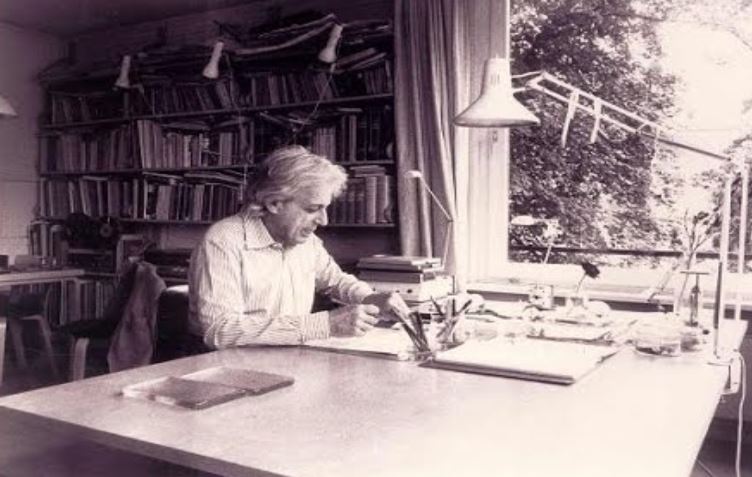
    From the Archives: Composer Luciano Berio

    It is a commentary both in a universal sense and a musical sense (the performers even narrate the music in real time, almost like a sports commentator in the third movement). 50 years later, it feels both relevant and a glimpse into a specific period. Philosopher Walter Benjamin wrote in his Thesis on the Philosophy of History: 

              This is how one pictures the angel of history. His face is turned toward the past . . . The storm irresistibly propels him into the future to which his back is turned, while the pile of debris before him grows skyward.  

    I never thought I’d hear a musical representation of Benjamin’s words, but Berio is able to so in this piece.

    Each of the first four movements (the fifth was added a few years later) has its own feel and exists in a completely different sound world then the others. The fifth ties the disparate entities together in a sort of amalgam of the movements. This evening, the New York Philharmonic presented the work with Seymon Bychkov conducting his second week in a row and the young new music ensemble Roomful of Teeth in its New York Philharmonic debut. It should be said, because this work has such a textual importance it was surprising that the NY Philharmonic opted to not use either supertitles or issue a libretto – particularly for the third movement of the piece. While in English, Berio’s tricky text is important and purposely difficult to hear at times. 

    In the mysterious opening of first movement, Mr. Bychkov managed to guide the orchestra with an incisive sound while blending with the organ-like Roomful of Teeth. Speech is incredibly important to Berio, in his works he always mimics it. Here, the Philharmonic took this to heart. As a singer would finish a line, the instrumentalists would pick up the melody imitating the singer’s timbre and speech pattern. It was an impressive transformation from speech to music and vice versa, making the weaving textures of the piece wonderful to hear. This magical effect reminded me a lot of Boulez’s Répons, composed nearly twelve years later. This is the only performance of the work I’ve heard where I could clearly hear all of the singers – the Philharmonic’s sensitive accompaniment surely the reason. The second movement comprises of a memorial to Martin Luther King Jr. The precise and pouncing brass/percussion outbursts balanced the more Gregorian chant-like singing texture that sits below – at once given the impression of being static and lurching forward. Mr. Bychkov drew a wide range of color from the orchestra, balancing the many textures while still making the outbursts sound percussive. The music briefly devolves into a march near the end before dissipating and here the orchestra seemed to blend into quietness of the hall.

    Screen Shot 2018-05-30 at 2.17.19 PM
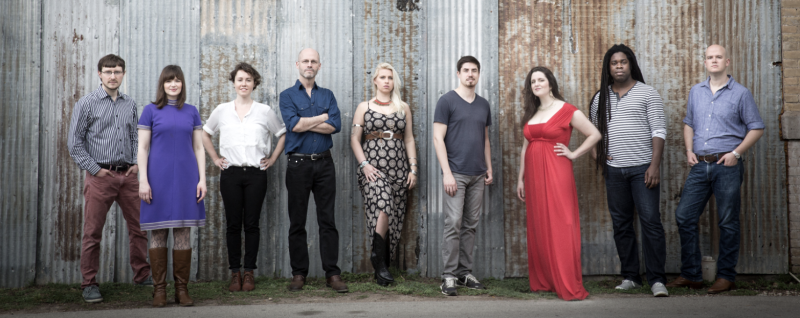
    Above: Some of the members of vocal group Roomful of Teeth; Photo Credit: Bonica Ayala of BONICA AYALA PHOTOGRAPHY

    The third movement is the most experimental music Berio wrote. It has the third movement of Mahler’s Symphony No. 2 underlying it (which is in itself a setting of Mahler’s St. Anthony’s Sermon to the Fish from Das Knaben Wunderhorn) with many additions. Berio makes sure that the Mahler is never lost through the entire movement, but it comes in out of focus while the singers do everything from congratulating the conductor to singing about the anxiety of the role of art in politics. Mr. Bychkov managed to untangle the chaos of the music by making each texture transparent and audible, even in the most cacophonous sections. Whether through melody or rhythm, the Mahler was easily heard as were the slew of extra-musical references. Roomful of Teeth for their part, made the movement at once entertaining and somber, even getting laughs from some audience members. During the serious moments, such as questioning the point of art, they took a dedicated tone. This is incredibly difficult music to perform, but I can’t imagine it being rendered better. 

    In the fourth movement which has many short outbursts and feels comparatively sparse and calm, Mr. Bychkov’s precise conducting and the orchestra’s sharp sound provided a respite. The fifth movement’s recollections brought in bits of each of the other movements, almost like a summary of the entire work. It was wonderful to hear because it felt like a retrospective that tied everything together. The much younger looking crowd than usual (many hipster looking men in their late 20’s/early 30’s, likely do to Roomful of Teeth’s dedicated following) gave a well-deserved enthusiastic applause. Mr. Bychkov, Roomful of Teeth, and the NY Philharmonic couldn’t have performed the piece better, showing why at 50 this remains one of the most important symphonic works composed.

    Returning from intermission, the New York Philharmonic did its annual Milestones speeches, honoring members of the New York Philharmonic who are retiring and who have been a part of the orchestra for a certain number of years. This year, they honored the 25th anniversaries of Oboist Robert Botti, Principal Violist Cynthia Phelps, violist Robert Rinehart, and horn player R. Allen Spanjer. They also retiring members Mark Schmoockler (44 years), Vladimir Tsypin (35 years), and Archivist Barbara Haws (34 years). Ms. Haws gave a stirring speech about the importance of history and the connections that occur from a true institution like the New York Philharmonic. Her speech dovetailed perfectly with the Sinfonia, “The present honors the past. 100 years ago, seems like today.” 

    Screen Shot 2018-05-30 at 2.20.50 PM
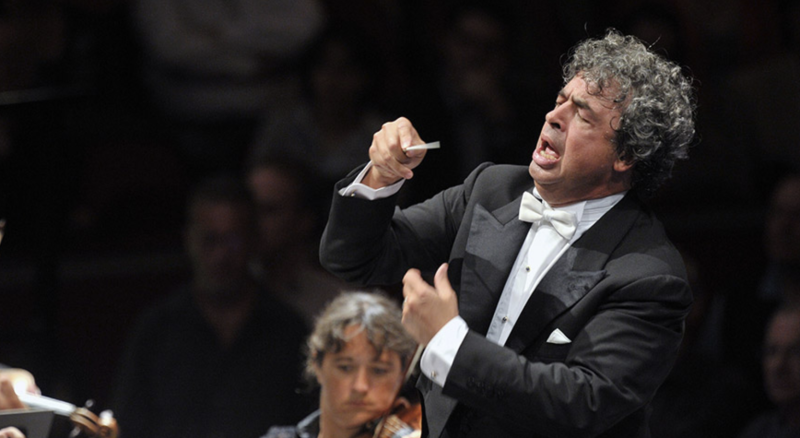
    Above: Conductor Semyon Bychkov; Photo credit: Chris Christodoulou

    After, the group performed Strauss’s last tone poem: An Alpine Symphony. The pairing of these two seemingly unrelated works comes from a line in the Sinfonia when the main narrator in the third movement makes a sarcastic jibe about the Alpine Symphony, saying something the effect of maybe a grand work like the Alpine Symphony will grow flowers (while discussing the lack of political potency music has). Mr. Bychkov and the Philharmonic were in top form. While this is personally my least favorite Strauss piece, Mr. Bychkov gave one of the best interpretations one could want. He made the strings sound vigorous, the brass warm, and the music layered. The orchestra crafted a round, gentle, and rolling sound – which contrasted the first half’s incisiveness well. During the exciting stormy sections, it was fun watching the percussionist get up to play the Thunder Sheet for its brief appearance. It was clear after this performance that Mr. Bychkov can get this orchestra to sound its best – I look forward to hearing him again soon.

  • Wang @ Carnegie

    ~ Author: Scoresby

    Thursday May 17th, 2018 – It is truly a rare occasion to see Carnegie Hall‘s Stern Auditorium completely sold out. It is even rarer to see this happen with stage seating too as was the case with pianist Yuja Wang‘s recital last week. Only Ms. Wang could do so with an unrelenting program like the one she played, with dark, not necessarily crowd pleasing works by Rachmaninoff, Scriabin, Ligeti, and Prokofiev. I haven’t enjoyed Ms. Wang’s solo performances as much in the past, but this felt like a completely different atmosphere than her usual fair. For one, the repertoire was much more intellectual and music lover oriented than her usual programs. For another, this program really seemed to be a statement. If it was any indication of how Ms. Wang’s Perspectives series will be at Carnegie Hall next season, I look forward to being able to attend the many events. 

    Capture
    Above: Pianist Yuja Wang; Photo Credit: Kirk Edwards

    Ms. Wang began the performance with a series of seven Rachmaninoff’s smaller works, all in minor keys and repeated keys back to back (except for the opening g minor prelude). Despite clapping from the audience in-between the works, it was obvious Ms. Wang wanted to play them as one giant set. These set up the rest of the concert incredibly well – she drew in the crowd with a sense of mystery, making Rachmaninoff’s writing sound much more modern than it typically is treated. Emphasizing dissonances and unstable textures, Ms. Wang’s Étude-tableau in C minor, Op. 39 No. 1 sounded like a torrent in the right hand with crisply articulated left hand percussion. But here the blurs and ripples took control – while the notes were clear, Ms. Wang managed to make the voicing fade behind the accompaniment making the piece more modernist.

    In the Prelude in B Minor, Op. 32 No. 10, Ms. Wang’s sensitive dynamic range and languid playing made the romantic climax seem less important than the surrounding, Debussy-like material. The best part of the evening was the Étude-tableau in E-flat Minor, Op. 39 No. 5 which ended the set. Here Ms. Wang had an unparalleled light touch which managed to let the melody sing through the storm of darker undercurrent. This was the opposite of virtuoso playing – many pianists hammer this etude out without much subtlety. Instead, Ms. Wang let the music’s storminess speak for itself, which led perfectly into the Scriabin that came next.

    The next work on the program was Scriabin Sonata No. 10, Op. 70. This is one of Scriabin last five pieces written for piano and has his characteristic mystical sound world in the extreme. While work is in much stricter sonata form than the other late piano sonatas, it still has a mysterious, almost ghostly atmosphere. Ms. Wang wove through the dense textures with ease, making both the structure clear and letting the ambiguous atmosphere seem full of color. Her notes never sounded crisp or grounded; they instead were washed with an ethereal sheen. Just as the magical trills that appear before the work launches into its second theme began to be played, someone’s cellphone ringer featuring a trilling bird went off.

    Capture
    From the Archive: Alexander Scriabin

    While admirably Ms. Wang continued to play, it was a funny indication of the music. The trills begin to take over the more melodic portions of the piece before the climactic recapitulation where tremolos and trills rule in all registers – as Scriabin put it “a blinding light”. Ms. Wang’s glossy playing made this piece seem remote in the best way possible – someone taking you into their isolated world. Adding to this effect was the stage seating. In order to accommodate everyone on the stage without disrupting the performance, Carnegie lowered the lights so there was just a small circle of light around Ms. Wang – making her seem in that same realm as Scriabin.

    ​To finish the first half of the program, Ms. Wang performed three short, but difficult Ligeti Etudes: No. 3 Touches bloquées, No. 9 Vertige, and No. 1 Désordre. To be clear, the Ligeti Etudes are some of the hardest pieces for piano ever written, but each one is also a musical world into itself. After the otherworldly Scriabin piece, Touches bloquées offered a different kind of isolation: that of machinery. The work sounds like a giant machine jerking around – Ligeti gets this odd rhythmic effect by having the pianist strike some keys silently in order to build in a particular rhythm to the piece.

    Ms. Wang gave a committed performance that captured all of this convulsive sound. Vertige is modeled after a falling Shepard’s Tone with many chromatic notes lined up and falling forever. Ms. Wang player her way through this exhausting etude with verve – plucking out each of punchy chords in-between the falling. Finally, the first half ended with the jazzy and punchy disorder, a funny musical joke by Ms. Wang after such a dark/intellectual first half. 

    Capture

    From the Archives: Composer Györg Ligeti

    After what seemed more like a 30 or so minute intermission, the final work on the program was Piano Sonata No. 8 in B-flat Major, Op. 84. Despite the program notes saying that this was Prokofiev’s most optimistic of the war-time sonatas – the sprawling first movement of this piece a moody, wandering work. Ms. Wang’s performance captured the eccentric melody lines and temperamental well. She used a similar remote style of playing that she used in the Rachmaninoff and Scriabin here, but with well timed percussive outbursts in the bass that gave a contrasting mood.

    In the Allegro moderato sections of the first movement Ms. Wang’s rapid fire style of playing was thrilling to watch, bringing the movement to a climax. More impressive though was Ms. Wang’s sense of space and silence at the end of the movement. In the romantic second movement, Ms. Wang seemed at her warmest of the night in the lighthearted theme before plunging into the electric final movement. Here, Ms. Wang plucked out precise articulation with a lithe sound, speeding through the virtuosic sections. The highlight was the mysterious coda-esque moment before the last outburst. Here Ms. Wang seemed relish in the atmosphere before the crashing ending (which had all the tight control of the rest of the performance).

    While a thrilling recital from start to finish, I do wonder if her diverse crowd found it as satisfying. In many ways this was her at her most introspective – no crowd pleasing works like her usual programs and while certainly virtuosic playing, emphasizing the ephemeral instead of flash. Ms. Wang has a history of extensive encores, as such the crowd didn’t seem surprised when she brought out five of her favorite show-stopper type pieces. The crowd seemed enthused with these – much more so than the pieces on the actual program. While Ms. Wang wasn’t indifferent to her crowd, she certainly seemed all-business this evening with brusque bows and a sense of pushing forward. As a final gesture she played Liszt’s transcription of Schubert’s Gretchen am Spinnrade, going back to that dark place of the rest of the concert and seemingly shunning the audience there to hear her – it was like magic.

    ~ Scoresby

  • Fellner|Eschenbach|NY Philharmonic

    Till-Fellner Gabriela Brandenstein

    Above: pianist Till Fellner, photographed by Gabriela Brandenstein

    ~ Author: Ben Weaver

    Saturday April 21st, 2018 – The great Austrian pianist Till Fellner made his belated NY Philharmonic debut last week with an unforgettable performance of Mozart’s Piano Concerto No. 22. Composed in 1785, while he was also composing Le Nozze di Figaro, the E-flat major concerto was following one of Mozart’s most famous works: the 21st concerto’s famous slow movement (two centuries later dubbed “Elvira Madigan” after it was used in a movie of that name.) 

    Whatever the 22nd lacks in fame, it most certainly is one of Mozart’s masterpieces. A big and extended orchestral introduction, which includes timpani and horns, leads to piano’s debut solo. There are several points in the concerto – not cadenzas – that showcase the piano playing without orchestral accompaniment. Mr. Fellner’s beautifully light and quick playing was superb. I have long been a big fan of is artistry: the clarity of his playing, the beauty of sound, perfectly controlled volume and runs, have long placed him among the best pianists of our time. In many ways he reminds me of Murray Perahia at his finest; that’s about the highest compliment I could pay a pianist. Fellner’s playing of this evening’s Mozart was as good as one could expect from anyone. Each note was like a pearl in sunlight. The depth of feeling in the leaping octaves of the slow movement were like love-sick sighs. I think this Andante may actually be Mozart’s most perfect slow movement. And the Allegro finale was thrilling, with some key contributions from flautist Robert Langevin and bassoonist Judith LeClair.

    Having a great concert pianist-cum-conductor Christoph Eschenbach on the podium was a great added bonus. Eschenbach, leading reduced forces of the NY Philharmonic, understands how to accompany the piano and showed extraordinary sensitivity, never rushing or fighting the solo instrument, allowing the piano to sing and lead. It was wonderful to finally have Mr. Fellner with the NY Phil, and I hope he will return regularly in the future.

    As an encore, Mr. Fellner played Liszt’s “Le lac de Wallenstadt” from “Album d’une voyageur“; he played it wonderfully.

    (Just as a side note: The magnificent final movement of the 22nd concerto was among works featured prominently in Miloš Forman’s film adaptation of “Amadeus.” The great Czech/American auteur, who also directed films  “One Flew Over The Cuckoo’s Nest” and “People vs. Larry Flynt,” and led the Columbia University film school for many years, passed away on April 13th.)

    Eschenbach

    Maestro Eschenbach (above) returned to the podium following the interval for Bruckner’s last, unfinished Symphony No. 9. In failing health for the entire composition of this work, Bruckner completed the first three movements and struggled with the finale for a year. He worked on it on the last day of his life, October 11, 1896. But he only left behind sketches (some fully scored) which were not enough for anyone to be able to legitimately piece together a full movement. (Though several have tried, none of the completions are more than curiosities.) Bruckner once suggested that his Te Deum should be performed as the finale if he did not finish the work; most people realize it was not a serious suggestion for a few reasons, one of which being that a choral finale would lead to comparisons to Beethoven’s 9th, which Bruckner would not have wanted. So the work is almost always performed in only three completed movements.

    The symphony begins with murmuring strings, interrupted by horns, like calls to battle. The brass section always gets big workouts playing Bruckner, and this evening they did not disappoint. Overall the orchestra were on spectacular form, and Maestro Eschenbach was able to corral the massive forces into a thundering wave. Bruckner had a truly unique gift for creating columns and walls of sound that sound like no one else’s. Many other composers could compose loud music, but there is something so unique and specific to Bruckner when he unleashes the full orchestra. As a listener, I often feel like I’m inside a cathedral and the walls are shaking with the voice of God. Of the great symphonists, Beethoven was able to represent musically the sounds of Earth. Sibelius is second to none to making us feel the chill of Mother Nature. Mahler could recreate the sounds of heaven. Shostakovich gave us sounds of man, in all his misery and triumph. Bruckner was a deeply religious man and I am not, but in these moments – and they exist in all of Bruckner’s works – I can imagine if God had a voice, he would sound like this.

    In the second movement, the Scherzo, the thundering march of doom is one of Bruckner’s most memorable moments. The relentless pounding of percussion and strings is stuff of nightmares. No doubt John Williams was aware of this Scherzo when he was scoring “Star Wars.” And the final Adagio is the perfect musical farewell, its conclusion sounding like a clock slowly running down.

    It is nice to have the orchestra seated on risers (a welcome change since Jaap van Zweden took over the Philharmonic as principal conductor) so one can see the various players in the back. Maestro Eschenbach also rearranged the cello and viola sections (for both Mozart and Bruckner) to have cellos on the right and violas in the middle next to the violins. Whether this was Eschenbach’s preference or a new full-time arrangement, we shall see.

    ~ Ben Weaver

  • Tetzlaff @ Tully

    ~ Author: Scoresby

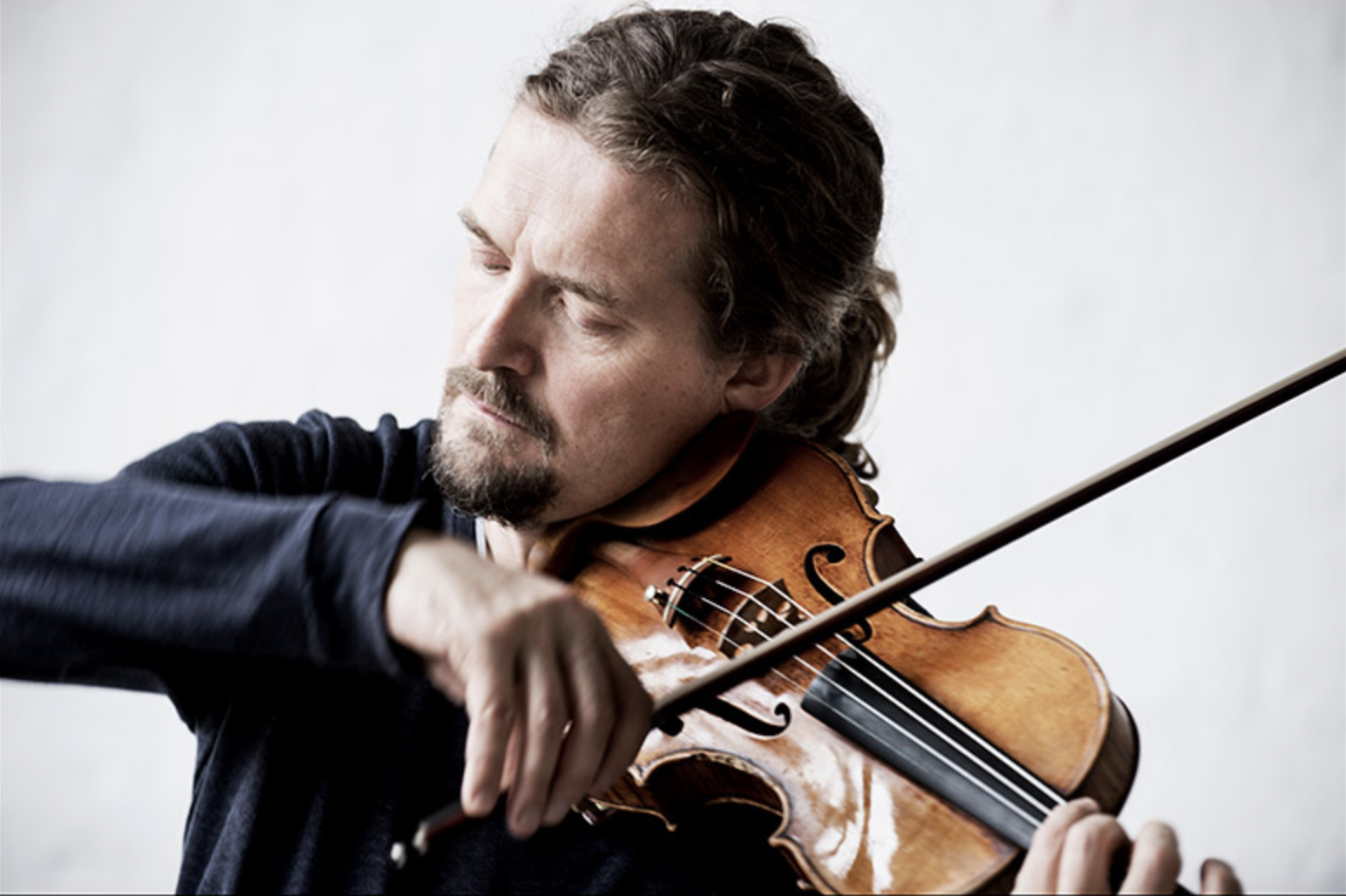
    Wednesday March 28th, 2018 – It is difficult to write about Bach’s Sonatas and Partitas for Solo Violin, especially live performances. It is stunning music with too many layers to write about, nearly impossible to play well live (recordings polish all the difficulties away), and something that many people are familiar with. Of course it is far harder to play them in an evening – the endurance required is a feat that few violinists attempt. As part of the Lincoln Center Great Performers series in Alice Tully Hall, violinist Christian Tetzlaff gave a solo recital of two thirds of the set. Mr. Teztlaff has a history of performing these works every few years in NY, he has played them twice in full at the 92nd Street Y before (both of which I regretfully missed) and just issued his second recording of the set last year. Thus it seemed like the perfect opportunity to sit down and listen.

    Mr. Tetzlaff was all business this evening, walking out on stage and starting to play the Grave of Sonata No. 2 in A minor, BWV 1003 before the audience had even stopped clapping. The audience took this entire movement before settling in (people were still rustling in their seats, whispering, etc…). He took a brisk tempo and sounded almost improvisatory with this opening. The sound was clean and had almost no vibrato. Without a pause he jumped straight in to the Fuga, making the two movements sound like something out of the Well-Tempered Clavier

    The fugue was orchestral in scale and each down-bow was emphasized to give the piece its own internal rhythm. The effect was hypnotic, drawing the listener into Mr. Tetzlaff’s world. While not clean playing by any means, that’s not the point when listening to Mr. Tetzlaff. He is able to build large structures without making the music sound pretentious – his playing is fluid and with ease all at once.

    Giorgia Bertazzi
    Above: violinist Christian Tetzlaff; photo credit: Giorgia Bertazzi

    The Andante was the highlight of the concert. Again a faster pace than is typically played, Mr. Tetzlaff used this to bring out the accompanying pulse in the bass. Just by playing it faster, the piece sounded more orchestral and unified without losing its charm. Many violinists eschew this pulse for the main melody, but Mr. Tetzlaff gave them equal importance making the melody sound like a baroque soloist sitting atop an accompanying recorder. Despite that large sonority, Mr. Tetzlaff was unassuming in his playing – not injecting anything besides bringing out that counter-melody. There was basically no tension nor ornamentation, just the soft padding of the pedal point and the beautiful melody sitting atop. It is moving to hear music played that joyously and humbly; the happiness was contagious.

    In the sunnier second half of the program with Sonata No. 3 in C major, BWV 1005 and Partita No. 3 in E major, BWV 1006, Mr. Tetzlaff was more at home. His unpretentious, almost folksy sound worked well with both of these works. The Fuga of Bach’s 3rd sonata is one of Bach’s most complex fugues. It starts with a simple theme that is put through the wringer of different techniques that would be difficult on a keyboard, let alone a violin. Mr. Tetzlaff navigated its complexity by highlighting the inner voices and given a soft bowing, making this work sound more intimate despite a slew of mistakes. The dense chords became chorale like. 

    The other highlight of the program was the fourth movement of this sonata. Mr. Tetzlaff played the Allegro assai with ease, eliminating all of the rough sonorities that torment other violinists. His tone was understated, quiet, and made every voice entirely visible. His bowing was magical to watch, it looked (and sound) as if there was no tension – just gliding through the technical piece like water pours into a glass. This allowed him to make each key shift stand out and take on its own timbre – a brilliant way of playing Bach. The last Partita fit Mr. Tetzlaff’s down-to-Earth sensibilities. He played with a delicate sensibility letting the music unravel on its own through various bursts of speed and thoughtful passagework. He eschewed almost all ornamentation and just played the music.

    After the performance one person nearby me said ‘Well, he can’t play all the notes’, to which I gladly agree. Instead his performance was human, vulnerable, and humble. In spite of some of his idiosyncratic rhythms, this performance showed that he is the antithesis of a virtuoso, something all too rare. 

    ~ Scoresby