Category: Reviews

  • The Met @ Lincoln Center: 50 Years On

    1380x591_50th_anniversary

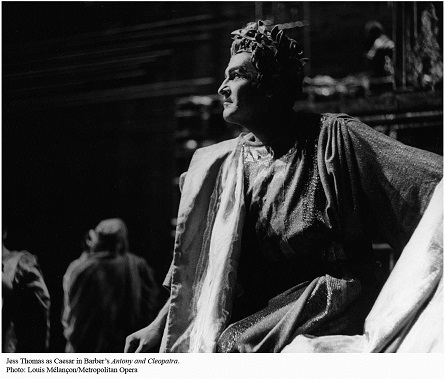
    September 16th, 2016 – Fifty years ago tonight, the Metropolitan Opera opened at their new home at Lincoln Center with the world premiere performance of Samuel Barber’s ANTONY AND CLEOPATRA starring Leontyne Price, Justino Diaz, and Jess Thomas, conducted by Thomas Schippers. The performance was broadcast live, and – needless to say – I was tuned in.

    Antony6667.04

    I remember listening in my little room in the big house in tiny Hannibal, New York, where I grew up. The possibility of a strike by the musicians of The Met’s orchestra had left the future of the season beyond this first night up in the air; but during the intermission, Rudolf Bing stepped out before the gold curtain to announce that the strike had been averted and new contracts signed. I – always so reticent – let out a whoop and raced downstairs, excitedly telling my parents the news; they thought I was deranged, but that was nothing new.

    Antony6667.10

    But I had a vested interest in the outcome of The Met’s contract negotiations, because in August I had made my first solo trip to New York City and I had tickets to several upcoming performances, including the final ANTONY AND CLEOPATRA of the run. So now my plans were a “go”, and I was soon making frequent pilgrimages to Lincoln Center and falling in love with the City where I would eventually live.

    Read an article about my experience on the first ticket line for The Met at Lincoln Center here.

  • The Rhinemaidens

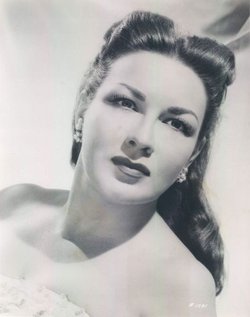
    Heidi krall

    Soprano Heidi Krall (above) leads a distinctive trio of Rhinemaidens in this excerpt from a 1957 Met RHEINGOLD:

    The Rhinemaidens ~ Das Rheingold – Heidi Krall – Rosalind Elias – Sandra Warfield – with Lawrence Davidson – Met bcast 1957 – Steidry cond

    Ms. Krall sang nearly 300 performances with the Metropolitan Opera Company, both at the Old Met and on tour. While usually heard in roles like Frasquita or The Priestess in AIDA, she did sing several Musettas, as well as appearing as Micaela, Donna Elvira, Nedda, and the 1st Lady in ZAUBERFLOETE.

  • Maralin as Marguerite

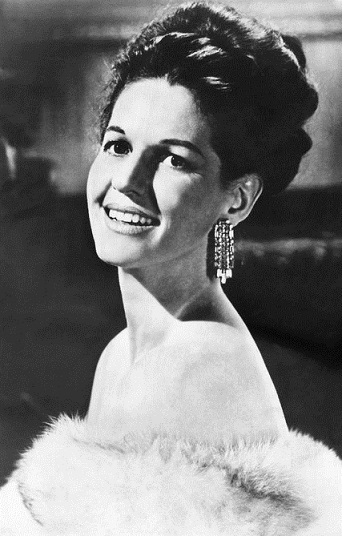
    M niska

    Maralin Niska (above), the American soprano who passed away on July 9th, 2016, was one of a handful of singers whose performances could induce me to travel – first from Syracuse, NY, to see her in several roles at New York City Opera, and later from Hartford, CT – where TJ and I had settled in the mid-1970s – to Lincoln Center, where she was singing at both the State Theatre and The Met.

    Once, she even came to Hartford to sing Violetta, replacing another soprano on short notice. We were so excited when we arrived at The Bushnell and saw the announcement of the cast change; we rushed to the stage door to leave her a message, and en route we found her, just thirty minutes before curtain time, banging desperately on what she thought was the stage door. She was so happy to see us, not least because we were able to lead her to the proper entrance.

    Violetta, Mimi, Tosca, Butterfly, Nedda, Countess Almaviva…these were some of the roles from the standard repertoire in which Niska thrilled me. Her triumphs in such great dramatic vehicles as Cherubini’s Medea, Strauss’s Salome, and Janacek’s Emilia Marty were the stuff of operatic legend. In roles as diverse as Yaroslavna in PRINCE IGOR, the Composer in ARIADNE AUF NAXOS, Rosalinda in FLEDERMAUS, and Elisabetta I in MARIA STUARDA, she achieved miracles of characterization and of voice.

    Yet for all that, is was – curiously enough – as Marguerite in FAUST that Maralin gave a (somewhat unexpectedly) sensational performance that has lingered so clearly in my mind over the ensuing years. In the unforgettable Frank Corsaro production – in which the devil wins – Maralin left the notion of Marguerite as a shrinking violet in the dust. Faust’s love for the girl signaled not only her romantic but also her sexual awakening.

    In the Garden Scene, on the brink of having her, Faust backs off, causing Maralin/Marguerite to burst into frantic sobs of frustration; when he reappears after Marguerite’s ecstatic invocation, there’s no going back. 

    As the opera draws to its end, Faust comes to rescue Marguerite from prison, where she awaits execution for murdering her child. The demented girl imagines they are back in the garden; she ignores Faust’s pleas to come away. When Mephistopheles appears to urge theme to hurry, Marguerite sees him for what he is and turns to fervent prayer. Faust tries one last time to persuade her to flee, but she turns on him, crying: “Pourquoi ces mains rouge de sang? Va! … tu me fais horreur!”  (“Why are your hands red with blood? Go!…you fill me with horror!”) No soprano has done that last line quite like Maralin.

    Heavenly voices declare Marguerite’s salvation; she begins to climb a steep staircase, but at the top of it, double doors fly open, and instead of an angelic host she is greeted by a towering executioner, masked and carrying an monstrous axe. Faust rushes up the steps to try to save her, but the doors are slammed shut in his face. Mephistopheles steps out of the shadows, calling Faust’s name quietly, and waving the contract with which Faust had sold away his soul to the devil in Act I.

    I’ve been able to preserve some excerpts from one of Maralin’s performances in this role at NYC Opera; the date was March 15, 1970, and her colleagues were Nicholas di Virgilio (Faust) and Norman Treigle (Mephistopheles). The original tapes are in a fragile state – I was lucky they played well enough to save them to MP3. The sound quality leaves much to be desired, but hearing these scenes brings back wonderful memories for me:

    Niska – FAUST aria – NYCO 3

    FAUST – Garden Scene exc – Niska – di Virgilio – Treigle – NYCO 3

    Maralin Niska & Norman Treigle – scene from FAUST – NYCO 3~15~70

    FAUST – finale – Niska – di Virgilio – Treigle – NYCO 3

    Photographer Beth Bergman has created a beautiful memorial in photos to Maralin Niska on her website: visit the page here.

  • Fantastic Finckel

    1200x1200-75

    It’s during the months of High Summer that I find time to listen to music at home. The rest of the year is taken up with live music, and with writing (and reading!) about it. But on these long, hot August afternoons, I am in my cool cavern of a room with CDs playing.

    I have a huge stack of music yet to be listened to – and even larger stacks of un-read books – but one disc that I’d been really looking to hearing was my focus yesterday: a recording by cellist David Finckel of Antonín Dvořák’s cello concerto, paired with Augusta Read Thomas’s 1999 work, Ritual Incantations, and featuring the Taipei Symphony Orchestra conducted by Felix Chiu-Sen Chen. The disc – on the Artist Led label – may be purchased here.

    The familiar Dvořák is – needless to say – beautifully played, and the concerto sounded wonderfully fresh to me. It’s the Thomas that I am savouring now, being of a type of music that is particularly appealing to me. David Finckel premiered Ritual Incantations at Aspen in 1999.

    In March 2015, Augusta Read Thomas was the subject of one of The Miller Theatre’s Composer Portraits. My friend Monica and I were drawn into Ms. Thomas’s musical world, as well as much taken with her as a personality.

    Ritual Incantations opens with solo cello in a fanfare-like summons, followed by a mystical, plaintive passage which Mr. Finckel plays gorgeously. Bells of varying textures are heard in an animated section before the cello takes up a soulful solo; incantatory chimes summon us as to prayer, and the harp lends a feeling of enchantment. Wind voices and cello converse, taking Mr. Finckel’s voice to the depths.

    The music turns lively, urgent and emphatic. There are jabs and sudden bursts from various instruments, and then again the cello sings longingly, rising upwards. A glassy shimmer ends the work abruptly. The other-worldly aspects of the music evoke uncharted distances whilst the passionate beauty of the cello writing wraps itself around the soul. I can’t stop listening to it.

  • Safe in Beulah Land

    84F301FE-E65B-4CC7-9B8F-8F3FE85A6D84_w268

    On November 13th, 1969, Beverly Sills sang one of her signature roles, Baby Doe in Douglas Moore’s opera THE BALLAD OF BABY DOE, for what I believe was the last time in her career. It was the date of her mother’s birthday, and she had asked her mom what role she would like to have sung for her on her special day; “Baby Doe,” was the answer, and the performance was a sensation from start to finish.

    Sills Mania was in full flourish at that time, and as the members of the Snowstorm Crew gathered in the 5th Ring of the New York State Theatre on that November evening, the anticipation was palpable. Beverly’s first entrance drew a round of welcoming applause, and each of Baby Doe’s arias – and especially the the Willow Song – stopped the show.

    The opera is based on the story of Horace Tabor, who made a fortune in silver mining in Colorado in the 1880s. Tabor owned the Matchless Mine in Leadville, and he and his wife Augusta were leading figures in the community. Horace met and became infatuated with Elizabeth “Baby” Doe, a young divorced woman who was twenty-five years his junior. Baby Doe was shunned by high society, being viewed as a fortune-huntress. Horace Tabor divorced Augusta in 1883 and married Baby Doe. They had two daughters.

    In 1893, Tabor lost everything when the United States adopted the gold standard. He was named postmaster of the city of Denver, but his spirit was broken and he died in 1899. On his deathbed, he made Baby Doe promise that she would “always hold on to the Matchless Mine.”

    True to her word, Baby Doe lived in a tiny cabin at the entrance to the mine until 1935, when, following a severe snowstorm, her body was found frozen to death on the cabin floor. She was buried next to Horace in the Mt. Olivet Cemetery in Jefferson County, Colorado.

    Douglas Moore’s operatic setting of the story (libretto by John Latouche) ends with Horace’s death; cradling his body, Baby Doe sings the gentle lullaby, “Always Thru The Changing of Sun and Shadow”. As the aria progresses, the scenery fades away and snow begins to fall, foreshadowing Baby’s eventual demise.

    On that November evening – now nearly a half-century ago – Beverly held the audience in the palm of her hand as she sang this song of dedication and undying love.

    The ovation was endless, and our ‘snowstorm’ of paper confetti was massive. After several minutes of applause, we all started singing “Happy birthday, Mrs. Silverman!” I wish I had let the tape run to include that.

  • Bronfman & Braunstein @ Zankel Hall

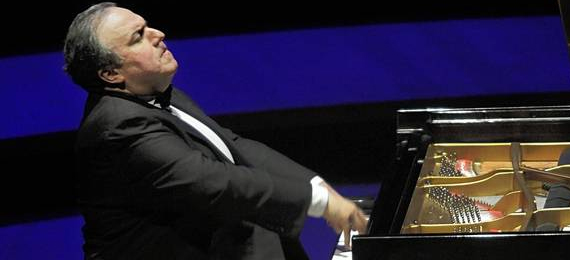
    Yefim-Bronfman

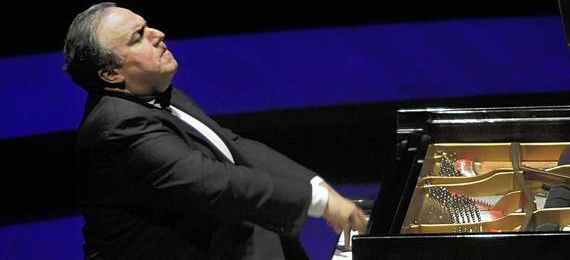
    Saturday June 18th, 2016 – Yefim Bronfman (above) concluding a Prokofiev piano sonata cycle at Zankel Hall this evening, playing the 5th and 9th sonatas. Violinist Guy Braunstein joined Mr. Bronfman for the two Prokofiev violin sonatas.

    After passing some days in a state of reclusive depression over the Orlando shootings, I ventured out tonight even though I was not really in the mood for it. But Bronfman is one of my most-admired musicians, and Prokofiev among my favorite composers, so I felt a strong desire to be there. Prokofiev’s music is not consoling, as a rule, though there are passages that reach to the soul, especially in the Andante of the second violin sonata, where Mr. Braunstein was at his finest this evening.

    Watching Yefim Bronfman perform is a particularly pleasing experience for me. He walks out, bows genially, sits down, and he and the keyboard become one. There are no frills, and no theatricality in his playing: it’s all about the music and his communing with it. Very brief pauses between movements keep the impetus of the music – and our delight in it – in true focus.

    Bronfman’s rendering of the 5th piano sonata was deeply satisfying, the audience engrossed as he immersed himself in the music’s ever-shifting melodic and rhythmic elements. This was exactly the ‘great escape’ from world-weariness I so desperately needed tonight. From its songful start, the opening Allegro tranquillo was a complete delight: the touches of dissonance adding spice, with wit, irony, and drama all having their say. A delicate march heralds the Andantino, with fetching trills, before things get darker and more emphatic, leading to a low-rumbling of a finish. By turns jaunty, lyrical, and pungent, the concluding Poco allegretto was polished off with Bronfman’s inimitable clarity and grace, the music seeming to vanish into a dream at the end.

    Hqdefault

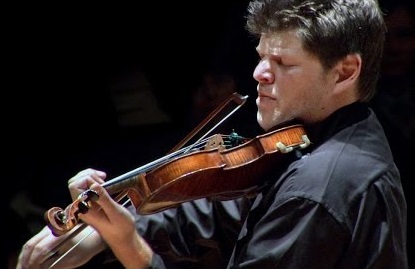
    Above: Guy Braunstein

    Mr. Braunstein then joined the pianist for the violin sonata #1. Here the piano’s somber opening of the Andante assai gives way to a rather hesitant start for the violin, with some buzzing trills before things expand to a rather labored passage. Then the piano’s misterioso murmurs underpin the violin’s sliding scales. The emphatic start of the Allegro brusco drew some energetic foot stamping from Mr. Braunstein as the turbulence envelops us; and then suddenly his violin sings a lusty song. After re-grouping and re-energizing, the music turns more pensive – but only briefly: a riotous dance ensues, subsiding into lyricism before another dramatic surge.

    The Andante features a shimmering piano motif as the violin sings in the alto range; both instruments move to the higher spheres in a unison passage, which eventually goes very high indeed. Back to the alto colourings for more of the violin’s forlorn phrases. High and lilting, the piano signals the movement’s soft ending. A sprightly jig sets off the finale, calming eventually and leading to a delicate pizzicati paragraph. Some lively scrambling makes us think the end is nigh, but instead the violin’s mute goes on and rolling scales summon an impression of “the wind in a graveyard”; the sonata ends sadly.

    The performance drew an enthusiastic response from the sold-out house; a bit of iffy intonation from the violin in places mattered little in the end, since Braunstein’s mixture of poetry and vigor made the music so savorable. 

    Following the interval, Mr. Bronfman returned for the 9th piano sonata. The first movement starts gently, and continues amiably, though there’s an underlying restlessness. More expansive passages, and some low, rumbling scales lead to an eventual quiet finish. The second movement is scherzo-like, with rippling scales and a jogging rhythm; a pensive passage, more jogging, and another soft ending.

    The Andante tranquillo brought forth more Bronfman magic: a wistful melody, followed by a glittering brilliance that subsides to mystery and then to sadness. From deep rumblings, the music rises to a high melancholy. After a big start, the Allegro finale turns ironic; “shining” music gleams forth, surrendering to mirth, percolating on high, whispering a farewell. Here Bronfman’s virtuosity and subtle colorations were at their most alluring.

    To end the evening, Prokofiev’s second violin sonata, which had started life as a flute sonata, and which David Oistrakh had prevailed on the composer to re-cast for violin in 1943. This familiar work was played with a wonderful melding of the two instruments, the players so alert to one another and marking the beauty of the Andante with glowing sound. Traces of my earlier concerns about pitch in the violin line cropped up again, but my pianist-companion seemed to feel that the issue was minor, and so I let the energy and optimism of the Allegro con brio the finale carry me along…together with the rest of the crowd, who swept to their feet at the finish to salute the generous playing and the final expression of joie de vivre from the two players.

  • Bronfman & Braunstein @ Zankel Hall

    Yefim-Bronfman

    Saturday June 18th, 2016 – Yefim Bronfman (above) concluding a Prokofiev piano sonata cycle at Zankel Hall this evening, playing the 5th and 9th sonatas. Violinist Guy Braunstein joined Mr. Bronfman for the two Prokofiev violin sonatas.

    After passing some days in a state of reclusive depression over the Orlando shootings, I ventured out tonight even though I was not really in the mood for it. But Bronfman is one of my most-admired musicians, and Prokofiev among my favorite composers, so I felt a strong desire to be there. Prokofiev’s music is not consoling, as a rule, though there are passages that reach to the soul, especially in the Andante of the second violin sonata, where Mr. Braunstein was at his finest this evening.

    Watching Yefim Bronfman perform is a particularly pleasing experience for me. He walks out, bows genially, sits down, and he and the keyboard become one. There are no frills, and no theatricality in his playing: it’s all about the music and his communing with it. Very brief pauses between movements keep the impetus of the music – and our delight in it – in true focus.

    Bronfman’s rendering of the 5th piano sonata was deeply satisfying, the audience engrossed as he immersed himself in the music’s ever-shifting melodic and rhythmic elements. This was exactly the ‘great escape’ from world-weariness I so desperately needed tonight. From its songful start, the opening Allegro tranquillo was a complete delight: the touches of dissonance adding spice, with wit, irony, and drama all having their say. A delicate march heralds the Andantino, with fetching trills, before things get darker and more emphatic, leading to a low-rumbling of a finish. By turns jaunty, lyrical, and pungent, the concluding Poco allegretto was polished off with Bronfman’s inimitable clarity and grace, the music seeming to vanish into a dream at the end.

    Hqdefault

    Above: Guy Braunstein

    Mr. Braunstein then joined the pianist for the violin sonata #1. Here the piano’s somber opening of the Andante assai gives way to a rather hesitant start for the violin, with some buzzing trills before things expand to a rather labored passage. Then the piano’s misterioso murmurs underpin the violin’s sliding scales. The emphatic start of the Allegro brusco drew some energetic foot stamping from Mr. Braunstein as the turbulence envelops us; and then suddenly his violin sings a lusty song. After re-grouping and re-energizing, the music turns more pensive – but only briefly: a riotous dance ensues, subsiding into lyricism before another dramatic surge.

    The Andante features a shimmering piano motif as the violin sings in the alto range; both instruments move to the higher spheres in a unison passage, which eventually goes very high indeed. Back to the alto colourings for more of the violin’s forlorn phrases. High and lilting, the piano signals the movement’s soft ending. A sprightly jig sets off the finale, calming eventually and leading to a delicate pizzicati paragraph. Some lively scrambling makes us think the end is nigh, but instead the violin’s mute goes on and rolling scales summon an impression of “the wind in a graveyard”; the sonata ends sadly.

    The performance drew an enthusiastic response from the sold-out house; a bit of iffy intonation from the violin in places mattered little in the end, since Braunstein’s mixture of poetry and vigor made the music so savorable. 

    Following the interval, Mr. Bronfman returned for the 9th piano sonata. The first movement starts gently, and continues amiably, though there’s an underlying restlessness. More expansive passages, and some low, rumbling scales lead to an eventual quiet finish. The second movement is scherzo-like, with rippling scales and a jogging rhythm; a pensive passage, more jogging, and another soft ending.

    The Andante tranquillo brought forth more Bronfman magic: a wistful melody, followed by a glittering brilliance that subsides to mystery and then to sadness. From deep rumblings, the music rises to a high melancholy. After a big start, the Allegro finale turns ironic; “shining” music gleams forth, surrendering to mirth, percolating on high, whispering a farewell. Here Bronfman’s virtuosity and subtle colorations were at their most alluring.

    To end the evening, Prokofiev’s second violin sonata, which had started life as a flute sonata, and which David Oistrakh had prevailed on the composer to re-cast for violin in 1943. This familiar work was played with a wonderful melding of the two instruments, the players so alert to one another and marking the beauty of the Andante with glowing sound. Traces of my earlier concerns about pitch in the violin line cropped up again, but my pianist-companion seemed to feel that the issue was minor, and so I let the energy and optimism of the Allegro con brio the finale carry me along…together with the rest of the crowd, who swept to their feet at the finish to salute the generous playing and the final expression of joie de vivre from the two players.
  • Encore: ELEKTRA @ The Met

    Mask-of-agamemnon

    Above: The Mask of Agamemnon

    Saturday April 30th, 2016 matinee – Since ELEKTRA is one of my favorite operas – sometimes I think it is my favorite opera – I planned to see The Met’s new production of it once, and then to hear it again from a score desk.

    Some people had issues with the voices of Nina Stemme and Adrianne Pieczonka at the production’s Met premiere on April 14th: squally, shrill, and flat were among descriptive words I heard being tossed about. There were also complaints that Waltraud Meier, as Klytemnestra, was “inaudible” or at least seriously under-powered vocally. So when my friend Dmitry and I attended the second performance on April 18th, we were pleased to find that both Stemme and Pieczonka sounded much better than we’d been expecting, and that Meier, though vocally restrained when compared to such past exponents of the role as Resnik, Rysanek, Fassbaender, Christa Ludwig, or Mignon Dunn, was able to make something of the music thru diction and vocal colour.

    This afternoon, the three principal women all seemed rather out of sorts vocally. Stemme sounded frayed and effortful, the highest notes sometimes just a shade flat and her vibrato more intrusive than at the earlier performance. Ms. Pieczonka was likewise on lesser form, tending to sound shrill under pressure, and the voices of both sopranos seemed smaller and less free that I remembered. Ms. Meier was – honestly (and I am a big fan of hers) – nearly inaudible much of the time; a lot of her verbal detail didn’t penetrate the orchestra. (Since the performance was being broadcast, undoubtedly Ms. Meier made a much more vivid impression over the airwaves).

    Stemme and Pieczonka did achieve a higher level as the afternoon wore on; their most exciting singing came after the murder of Aegisth and on thru to the end of the opera. But compared to their earlier performance, they were both a bit disappointing. Of course, we have to take into account that these are two of the most fearsome and challenging roles in the soprano repertoire, and are being sung over a huge orchestra in a vast space. The wear and tear on their instruments must be incredible.

    The audience at large were undeterred by concerns over vocal matters, and they lustily cheered the three women at the curtain calls; the ovation for Ms. Stemme – well-merited for her generosity and courage – was enormous, and the house lights were turned on so she could see everyone standing and screaming for her.

    For me, it was the opera itself – and Esa-Pekka Salonen’s conducting of it – that made the performance memorable. The orchestra played spectacularly, and if Maestro Salonen sped thru some of the music (the Recognition Scene seemed really fast) it sort of added to the sense of exhilaration I was experiencing just from hearing the opera live again. 

    Eric Owens made an outstanding impression as Orestes today; his first lines established a powerful and rather creepy vocal presence, and at “Lass den Orest…” he was truly splendid. He has the right amplitude for this music in this house, and was deservedly hailed at his solo bow. 

    Special mention to Bonita Hyman for her rich, deep contralto singing as the First Maid, and to the remarkable Roberta Alexander, who again made such a moving impression as the Fifth Maid, a Chéreau ‘invention’ that paid off handsomely.

    Metropolitan Opera House
    April 30th, 2016 Matinee

    ELEKTRA
    Richard Strauss

    Elektra....................Nina Stemme
    Chrysothemis...............Adrianne Pieczonka
    Klytämnestra...............Waltraud Meier
    Orest......................Eric Owens
    Aegisth....................Burkhard Ulrich
    Overseer...................Susan Neves
    Serving Woman..............Bonita Hyman
    Serving Woman..............Maya Lahyani
    Serving Woman..............Andrea Hill
    Serving Woman..............Claudia Waite
    Serving Woman..............Roberta Alexander
    Confidant..................Susan Neves
    Trainbearer................Andrea Hill
    Young Servant..............Mark Schowalter
    Old Servant................James Courtney
    Guardian...................Kevin Short

    Conductor..................Esa-Pekka Salonen

  • Matinee @ The Met: OTELLO

    Hibla

    Saturday April 23rd, 2016 matinee – I went to this performance of OTELLO at The Met expressly to hear Hibla Gerzmava (above) as Desdemona. Feeling no need to see the production, I took a score desk. Since I could not see the stage, I missed a cast change that took place spontaneously between Acts III and IV.

    Aleksandrs Antonenko started out strongly, seeming to be in better voice as Otello than at the earlier performance I had heard; but by the end of Act III he was taking stuff down an octave and speaking the lines. A substitute sang Act IV while Antonenko acted the role.

    CK24Try3SVw

    The cover, named Francesco Anile (above), sounded more Italianate and his vibrato was less prominent than Antonenko’s; but since I was unaware of the change, I just thought – from what I was hearing – that Antonenko had gotten a second wind and was making a final push. A spokesperson for the Met came onstage before the curtain calls started to explain what had happened (this was also needed for the radio audience). Then Antonenko and Gerzmava bowed together…she seemed to be trying to console him…and finally Anile came out in jeans and sneakers with an old robe thrown over his shoulders.

    Antonenko’s uneven performance in the first half of the evening included a some really nice passages mixed in with the more effortful ones. But I wondered – as I had at the earlier performance I saw – whether he merited a new production (for an opening night) at The Met, considering his less-than-stellar vocalism. Since Domingo retired the role, only Johan Botha has been more than a serviceable Otello at The Met. Heppner, Galouzine, and Cura were variable, at best. Without a world-class exponent of the title-role around these days, new productions seem unwarranted.

    Ms. Gerzmava’s voice is beautifully ‘present’ in the big Met space. Her singing has a darkish glow, she phrases appealingly, and incorporates piano effects nicely, if rather sparingly (I kept hoping for more). A trace of sharpness was evident here and there, and the final A-flat of the Ave Maria would have been more effective if held just a bit longer.

    As has sometimes happened before at The Met, the sound of voices from the lighting bay in the auditorium’s ceiling ruined much of the Willow Song and Ave Maria; it was around the same time that a cellphone also went off.

    All of the wonderful things about Željko Lučić – the authentic Met-sized voice, the uninhibited range, the dramatic nuances he brings to his singing – are undone by continuous problems of pitch. So many thrilling moments in Lučić’s Iago today were offset by his seeming inability to control this serious defect.

    Chad Shelton’s Roderigo stood out – both in terms of voice and inflection – among the supporting cast today. Jennifer Johnson Cano (Emilia), Alexey Dolgov (Cassio), Jeff Mattsey (Montano), and Tyler Duncan (A Herald who is ready for bigger roles) all did well. And that beloved Wotan and Hans Sachs, James Morris, was warmly greeted at his curtain call in the role of Lodovico.

    Conductor Adam Fischer set the opera on its way with a stimulatingly powerful treatment of the storm music; The Met chorus and orchestra were ship-shape all afternoon. 

    A fun article about Signor Anile’s stepping in here.

    Metropolitan Opera House
    April 23rd, 2016 matinee

    OTELLO
    Giuseppe Verdi

    Otello..................Aleksandrs Antonenko/Francesco Anile (Act IV)
    Desdemona...............Hibla Gerzmava
    Iago....................Zeljko Lucic
    Emilia..................Jennifer Johnson Cano
    Cassio..................Alexey Dolgov
    Lodovico................James Morris
    Montàno.................Jeff Mattsey
    Roderigo................Chad Shelton
    Herald..................Tyler Duncan

    Conductor...............Adam Fischer

  • The Young Björling

    1467513_330_449

    Jussi Björling’s was the first tenor voice I fell in love with. After I had discovered opera in 1959, my parents gifted me with a two-LP set of excerpts from RCA’s Verdi and Puccini catalog. The singers on those records –  Licia Albanese, Roberta Peters, Zinka Milanov, Jan Peerce, Robert Merrill, Leonard Warren, and Giorgio Tozzi, in addition to Björling – assumed god-like status for me.

    It was the plaintive sweetness of Björling’s voice that really ignited my imagination; and thru the ensuing years, it has often been the tenors – Tucker, Bergonzi, Corelli, Vickers, Pavarotti, Domingo – who provided the greatest thrills and chills in the many performances I have seen and heard.

    In the early 1930s, Björling made his first aria recordings, in Swedish. On a quiet afternoon yesterday, I was listening to – and savoring – the youthful lyricism of this remarkable voice; he had turned twenty in 1931:

    Jussi Björling – TOSCA aria – in Swedish

    By the end of that decade, Björling’s career was well underway, his voice was in full bloom, and he was singing in Italian:

    Jussi Björling – O Paradiso – L’AFRICANA

    He made many recordings in the ensuing years, including the Verdi REQUIEM under Fritz Reiner, which was recorded in June 1960; three months later, Björling died.

    Björlings_grav

    The great tenor was buried at Stora Tuna in the Dalarna province of his native land.

    Two decades before the Reiner recording of the REQUIEM was made, Björling recorded the Ingemisco from the Verdi masterpiece:

    Jussi Björling – Ingemisco – from Verdi REQUIEM